Pick your zone and the dates re-calibrate.
The Guide Fruit trees Vol. 004

Apricot

in Zone 5, this week

An apricot is a fruit tree that drops its leaves each winter and gives you fruit you can let ripen right on the branch, which is where apricots taste their best, and they ripen earlier than peaches. One tree fruits on its own, so you do not need a second one. The big thing to know is that apricots bloom earlier than almost any other fruit tree, so a late frost can kill the flowers most years unless you plant in a spot that does not get frosty and choose a late-blooming variety. Apricots also take steady work: prune the tree every winter into an open vase shape, manage diseases (brown rot most of all), thin off the extra little fruit so the rest grow big, and give the tree a cold-enough winter. With a dry-summer or frost-safe spot and that care, a backyard apricot gives you fruit far better than the store. Apricot is a deciduous stone-fruit tree (Prunus armeniaca) prized for fruit that ripens best tree-ripened at home, where it can hang to full flavor rather than being picked firm for shipping. It is self-fruitful, so a single tree bears, and it ripens earlier than peach. Its defining trait, and its defining challenge, is that it blooms earlier than almost any other fruit tree: the open flowers meet late frosts most springs on a frost-prone site, so variety choice and a frost-aware location matter more than anything. It also asks for real work: an annual dormant pruning to an open center, disease management (brown rot above all, plus bacterial canker and shot hole), early fruit thinning, and enough winter chill to break dormancy. Given a dry-summer or frost-safe site and that care, a backyard apricot rewards you with fruit grocery shelves cannot match.

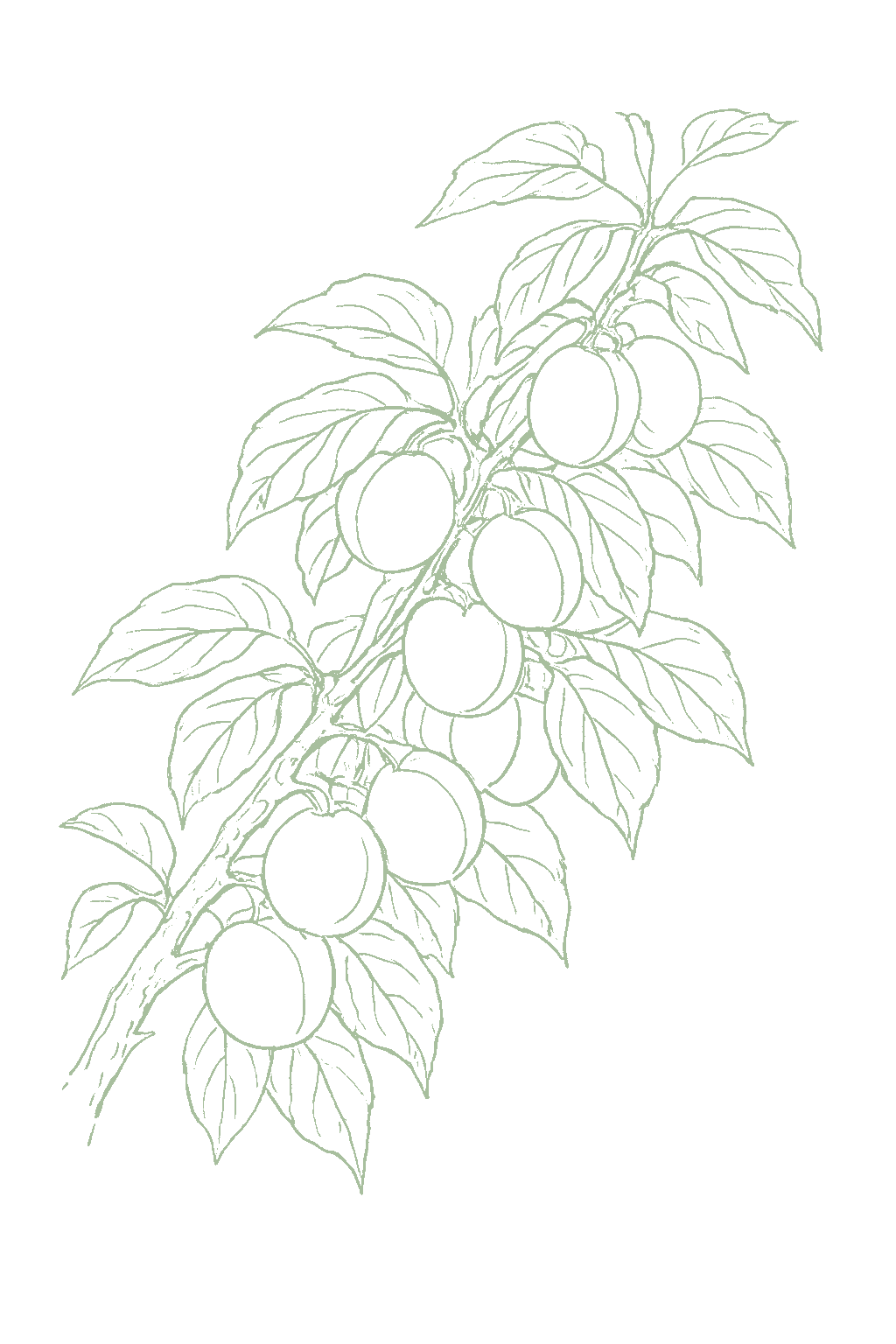
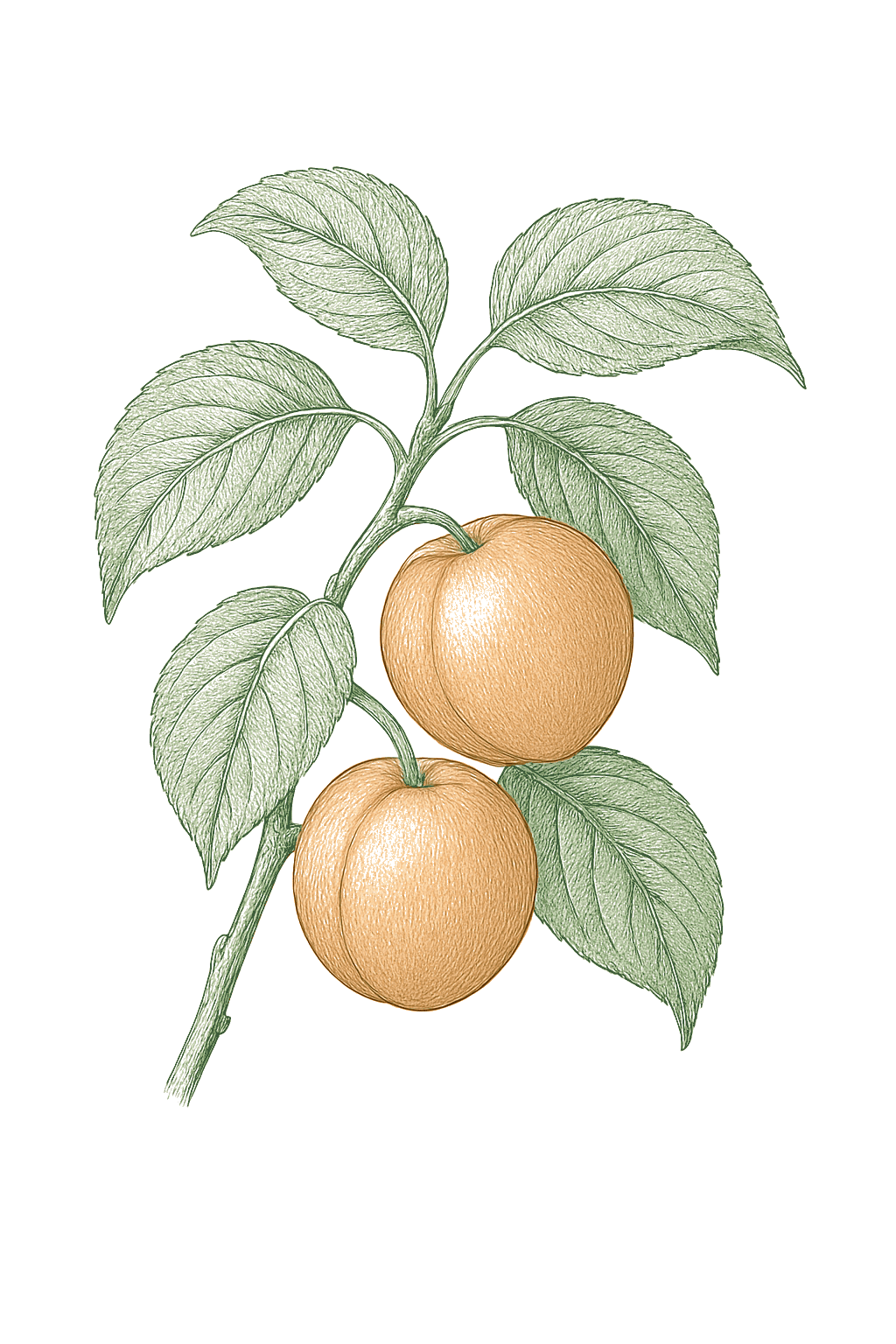
Apricot mature plant
Fig. 01 · Apricot, mature Zone 5
First fruit
2-4 yrs
to first harvest
Sunlight
Full sun
8-12 hrs daily
Water
Moderate
Spacing
18-22 ft
between trees
Soil pH
6-7
slightly acidic
Hardiness & fruiting range

Will it actually fruit here?

Hardiness tells you the tree will survive your winters. It does not tell you whether you will get fruit. Each zone carries its own verdict. Yours is marked.

3
survives,
rarely fruits
4
survives,
rarely fruits
Your zone
5
survives,
rarely fruits
6
survives,
rarely fruits
7
survives,
rarely fruits
8
reliable
9
reliable
10
reliable
11
survives,
low chill
Fruits reliably
Fruits reliably Survives only Too warm
← colder winterswarmer, less chill →
! Zone 5: Apricots can fruit in zone 5 in good years on a hardy, late-blooming variety planted on high, open ground, but a late frost will cost you the crop in many springs.Zone 5 is a marginal edge for apricot. The tree is hardy and chill is ample, but the early bloom meets late frost in many springs, so plant the latest-blooming cultivars on high, frost-safe ground and expect off years.
The growing year

Your apricot year, month by month

Northern Tier, Zone 5. Winters bank about 900 to 1400 chill hours; these varieties need about 350 to 900 chill hours. Apricots can fruit in zone 5 in good years on a hardy, late-blooming variety planted on high, open ground, but a late frost will cost you the crop in many springs.Zone 5 is a marginal edge for apricot. The tree is hardy and chill is ample, but the early bloom meets late frost in many springs, so plant the latest-blooming cultivars on high, frost-safe ground and expect off years.

A fruit tree runs on the same rhythm every year: rest, prune, bloom, grow, harvest, then settle in again.

Jan
Feb
Mar
Apr
May
Jun
Jul
Aug
Sep
Oct
Nov
Dec
▲ We are here
Tree’s year
rest
prune
bloom
growing
harvest
care
rest
Plant new tree
plant
plant
Dormant rest Prune Bloom Growing fruit Harvest Post-harvest care
Plant bare-root
Apr - May
Bloom
Apr 10 - Apr 30
Harvest
Jul 10 - Aug 10
Chill hours

Will your winter be cold enough?

Apricot trees need enough cold winter hours, called chill hours, before they will bloom properly in spring. Most kinds want about 600 to 900 hours, and a few low-chill types like Katy need only about 350. Apricot needs less winter cold than most fruit trees, which is part of why it blooms so early. In mild-winter areas, choose a low-chill variety so it blooms evenly; in cold areas, a higher-chill, late-blooming variety both fits your winters and helps the tree bloom later, after the worst frosts have passed.Apricots need a stretch of winter cold, counted as chill hours (hours between 32°F and 45°F), to break dormancy and bloom evenly. Most cultivars want about 600 to 900 hours, with a few low-chill types (Katy) bearing on roughly 350. Apricot's chill requirement is on the low side for a stone fruit, which is exactly why it satisfies its chill and blooms so early, and why late frost, not chill, is usually the crop-limiting factor. In mild-winter regions choose a low-chill cultivar so bloom is at least even; in cold regions a higher-chill, late-blooming cultivar both fits the chill and delays bloom past the worst frosts.

Your winter ~900 – 1400 hrs
0 250 500 750 1000
Dependable here
Katy350Blenheim (Royal)450Tilton600Moorpark650Chinese (Mormon)700Goldrich700Harglow650
!Borderline in a warm winter
None. Every variety in this roster gets enough chill here.
Bloom timing & cross-pollination

One tree is usually enough

Most apricots are self-fruitful: a single tree sets a full crop with its own pollen, so you don’t need a second variety to get fruit. Bees still move the pollen from blossom to blossom, so strong pollinator activity through bloom is what drives a heavy set.

Moorpark blooms mid season and is self-fruitful, setting a full crop on its own.Blooms alongside: Tilton.

Bar length shows how long each variety blooms, roughly 8 to 14 days. Bars that overlap bloom at the same time.

▲ Tap a variety to see its bloom timing

Very early Early Mid Late Very late
Katy✓ same time
Blenheim (Royal)✓ same time
Tilton✓ same time
Moorpark✓ same time
Chinese (Mormon)✓ same time
Goldrich✓ same time
Harglow✓ same time
The pollination rule

Most apricots are self-fruitful, which means one tree makes fruit by itself with no second tree needed. This is different from many cherries and apples, which do need a partner. A few kinds, mainly Moorpark, make a fuller crop when a second apricot blooms nearby, but even they fruit on their own, so a partner is a bonus and not a must. Bees do the pollinating, so anything that helps bees be active during the short, early bloom helps the tree set fruit, even a single tree.Most apricots are self-fruitful, so a single tree sets a full crop on its own without a pollinizer; this is the inverse of many sweet cherries and apples, which require cross-pollination. A few cultivars, chiefly Moorpark, set a heavier crop with a compatible second variety blooming at the same time, but even they fruit alone, so a pollinizer is an optional bonus rather than a requirement. Apricots are insect-pollinated, mainly by bees, so supporting pollinator activity during the short, very early bloom helps set even on a lone tree, especially in cool springs.

Pick your variety

Recommended varieties

Pick an apricot variety first by when it blooms, because apricots flower very early and their biggest problem is losing the flowers to a late frost. Later-blooming, cold-hardy kinds (Chinese/Mormon, Goldrich, Harglow) are the safest choice if spring frosts are a worry where you live. Next, match chill hours, the amount of winter cold a variety needs: most apricots want 600 to 900 hours, and a few low-chill types like Katy need only about 350 for mild-winter areas. The famous-flavor kinds (Blenheim, Moorpark) bloom early and do best in dry-summer areas with steady springs. One tree makes fruit on its own; a second variety is just a bonus for the few that want a partner, like Moorpark.Choose an apricot variety first by BLOOM TIMING, because apricot's defining problem is that it blooms earlier than almost any other fruit tree and loses its crop to late frost. Later-blooming, cold-hardy cultivars (Chinese/Mormon, Goldrich, Harglow) are the safest bet wherever spring frosts are a risk. Match chill next: most apricots want 600 to 900 hours, with a few low-chill types (Katy) bearing on about 350. The famous flavor cultivars (Blenheim, Moorpark) are early-blooming and best reserved for dry-summer regions with dependable springs. A single tree fruits; a second variety is an optional bonus for the few that respond, such as Moorpark.

Katy
fresh eating
Blenheim (Royal)
fresh eating, drying, canning
Tilton
canning, drying
Moorpark
fresh eating
Chinese (Mormon)
fresh eating, cold zones
Goldrich
fresh eating, canning
Harglow
fresh eating
Rootstock & size

How big will it get?

Pick a rootstock for your soil and pests, not for tree size; standard apricot rootstocks do not dwarf the tree. Myrobalan tolerates a range of soils but is canker-prone, so on well-drained ground apricot seedling or a peach seedling (more canker-tolerant) can be better.

Apricot seedling standard
Mature height
15–20 ft
Bears
year 2–4
Container
in-ground
Myrobalan (plum) standard
Mature height
15–22 ft
Bears
year 2–4
Container
in-ground
Marianna 2624 (plum) standard
Mature height
15–22 ft
Bears
year 2–4
Container
in-ground
Lovell (peach seedling) standard
Mature height
15–25 ft
Bears
year 2–4
Container
in-ground
Ask the nursery

Ask for your variety on apricot seedling for deep, well-drained soils.

From seed to fruit

The growing journey

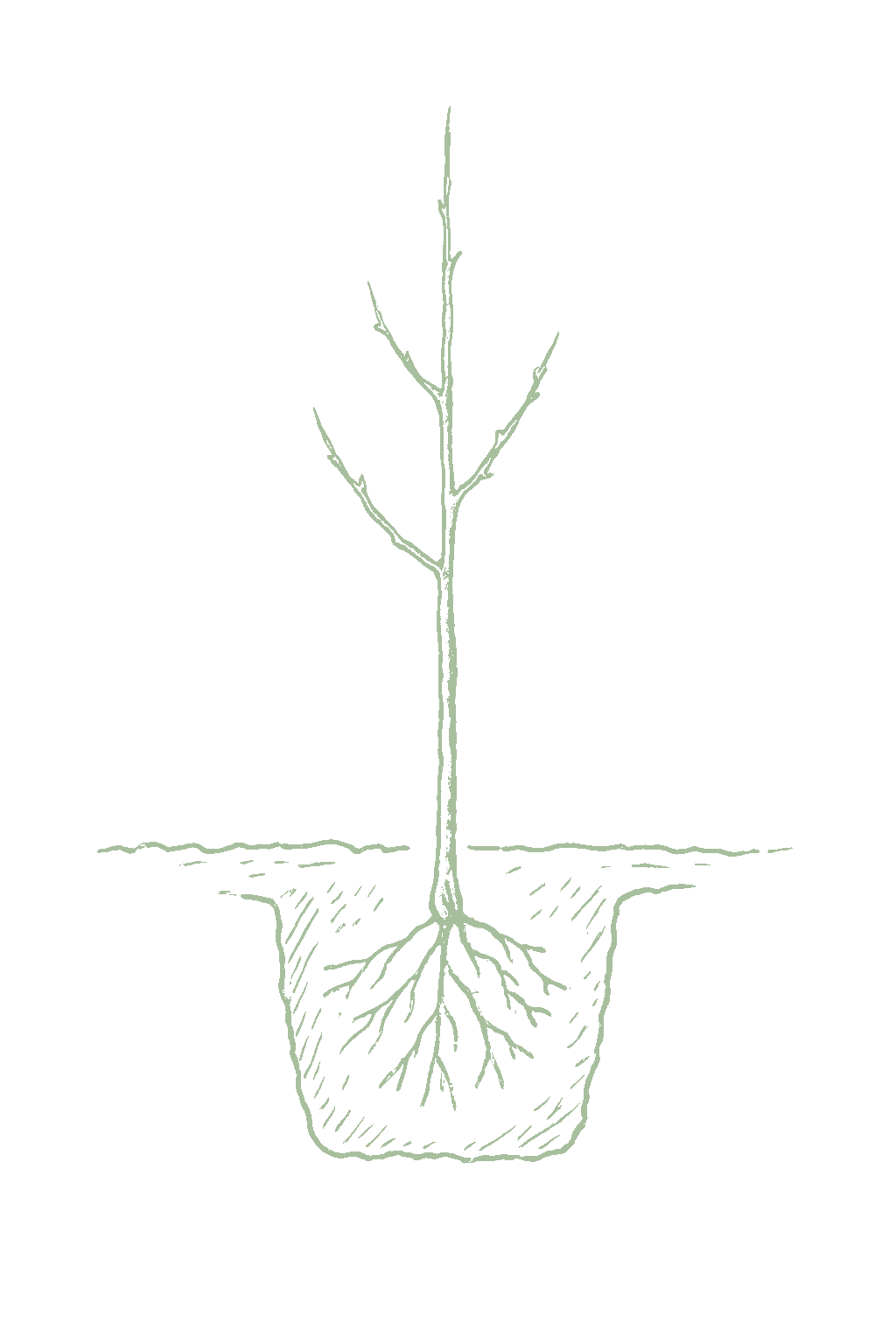
Stage 01 · Planting (bare-root, dormant)
01
Planting (bare-root, dormant)
A leafless young tree with firm buds and healthy roots. Find the graft union, the swollen joint low on the trunk where your apricot variety was joined to its rootstock. Keep that joint a couple of inches above the soil when you plant.A dormant bare-root whip or branched tree with firm, plump buds and healthy, unbroken roots. The graft union (the swollen joint where the variety meets the rootstock) should sit a couple of inches above the final soil line.
Dig a hole wide enough for the roots to spread and only as deep as they were growing before. Set the tree at that same depth, keeping the graft joint above the soil, and pick a spot that is not a low frosty dip. Fill in with the soil you dug out, water well, and never pile soil up the trunk.Dig a hole as wide as the roots spread and no deeper than they sat in the nursery, spread the roots, and set the tree at the same depth with the graft union above grade. Choose a spot out of frost pockets. Backfill with native soil, water in well, and do not bury the trunk.
FROM PLANT · Keep the graft joint (where your variety meets its rootstock) two to three inches above the soil. If you bury it, the top can grow its own roots and you lose the benefit of the rootstock.Set the graft union two to three inches above the final soil line. Burying it lets the scion root and defeats the rootstock you chose.
FROM PLANT · Plant where the tree gets full sun and the soil drains well, and stay out of low frosty spots. Apricot flowers very early, so a dip where cold air settles will lose the flowers to frost most years.Plant in full sun on a well-drained site and AVOID frost pockets. Apricot blooms earlier than any other fruit tree, so a low spot where cold air settles loses the crop to late frost most years.
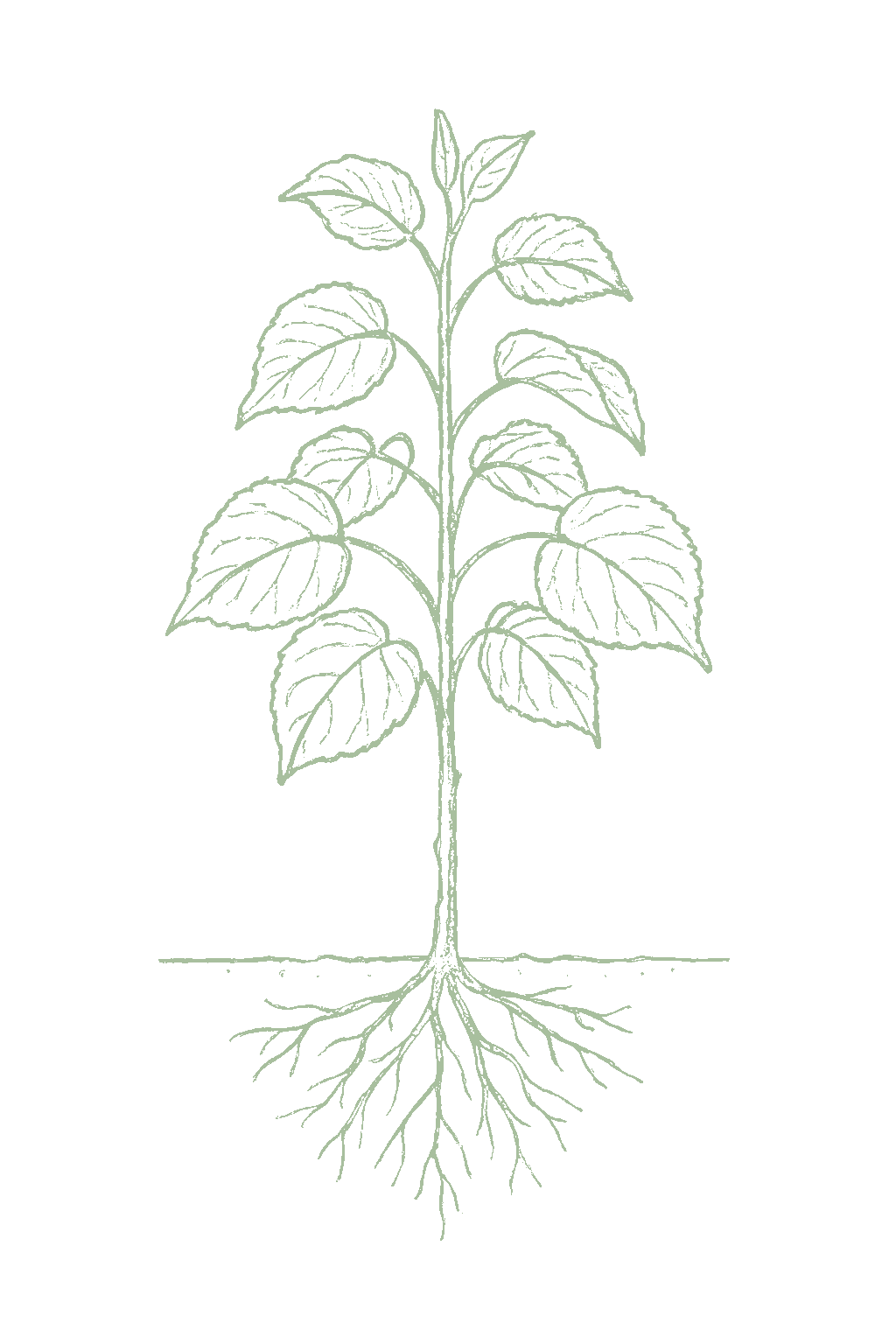
02
Year-one establishment
Healthy new shoots and a tree settling in. If it tries to flower in this first year, pick the flowers off so the tree puts its energy into roots and branches instead of fruit.Steady new shoot growth and a strengthening root system. Any blossoms that form in the first year should be removed so the tree spends its energy on roots and framework rather than fruit.
Water deeply and often this first season, since a new tree needs steady water to get its roots going. Keep a mulched, weed-free circle around the trunk, but keep the mulch off the bark. Remove any flowers this year, and begin shaping the branches with light pruning.Water deeply and regularly through the first season so the roots establish (this is the tree's most water-sensitive period), keep a weed-free, mulched circle around the trunk without piling mulch against the bark, and remove first-year flowers. Begin training the framework with light formative pruning.
FROM PLANT · Pick off all the flowers the first year. If a brand-new tree fruits, it spends energy it needs for roots and branches, and it cannot make that up.Remove every blossom the first year. A first-year tree that fruits diverts energy from root and scaffold development it cannot get back.
FROM PLANT · Water deeply and often all through the first season. A new tree needs steady water to get its roots going before you can rely on rain.The first season is the tree's most water-sensitive period; water deeply and regularly so roots establish before the tree is left to rainfall.
03
Scaffold formation (years one to three)
Apricots are usually trained to an open-center or vase shape: three to four evenly spaced main branches (called scaffolds) from a short trunk, with an open middle. Apricot fruits on short spurs that live several years as well as on last year's wood, so it needs less hard pruning than a peach.Apricots are trained to an open-center (vase) shape: three to four well-spaced main scaffold limbs from a short trunk, with an open middle that lets light and air reach the fruit. Apricot bears on long-lived spurs as well as one-year shoots, so it is pruned more lightly than peach.
Each year in late winter, keep the best-placed main branches and cut away ones that cross, crowd, or grow inward, keeping the center open. Prune more gently than you would a peach, because apricot fruits on short spurs that keep producing for a few years.Each late dormant season, select and keep the best-placed scaffolds and remove competing, crossing, and inward growth to maintain the open center. Renew a portion of the fruiting wood, but do not prune as hard as a peach, since apricot fruits largely on spurs that bear for several years.
FROM PLANT · Shape the tree to an open vase with three or four main branches, and prune more gently than a peach. Apricot fruits on short spurs that keep producing for a few years, so it does not need heavy yearly cutting.Train to an open center with three to four scaffolds, and prune more lightly than a peach: apricot fruits on spurs that bear for several years, not only on one-year wood.
04
Winter dormancy
A bare, resting tree. Through these cold months the tree is collecting chill hours, the cold time it needs (hours between 32 and 45°F) before it will bloom. Apricot needs less of this cold than most fruit trees, so it wakes up and blooms early, which is why late frosts are such a threat.A leafless tree at rest. During these cold months the tree accumulates chill hours (time between 32 and 45°F) that it needs to break dormancy and bloom evenly. Apricot has a relatively low chill requirement, so it satisfies it and wants to bloom earlier than most fruit, which is the root of its frost problem.
Not much to do beyond winter cleanup: clear away any dried mummy fruit and fallen leaves that carry disease, and if shot hole or scale is a problem in your area, put on a dormant copper or oil spray. An established tree needs very little water now.Little is required beyond dormant-season tasks: clear any mummified fruit and fallen debris that harbor disease, apply a dormant copper spray where shot hole is a concern, and a dormant oil spray where scale or aphids are chronic. Established trees need minimal water now.
FROM PLANT · Apricot needs less winter cold than most fruit and blooms very early, so pick a late-blooming, cold-hardy variety if late frosts are a risk where you live. That is the single best way to actually get a crop.Apricot has a low chill requirement and blooms very early, so match your variety to your springs: a late-blooming, cold-hardy cultivar dodges the late frosts that are apricot's chief crop risk.
FROM PLANT · Clear away any dried-up mummy fruit and fallen leaves during winter, since they carry brown rot and shot hole into next season. A copper spray on the bare tree helps where shot hole is common.Clear mummified fruit and fallen leaves over winter; these are the overwintering sources of brown rot and shot hole. A dormant copper spray protects against shot hole where it is established.
05
Dormant pruning
Bare branches, so you can see the whole shape of the tree. This is the easiest time to judge the framework and the fruiting wood before the buds swell.Bare branches that show the tree's structure. This is the moment to read the open-center framework and the mix of fruiting spurs and one-year wood before the buds swell.
Keep the center open, cut out dead, diseased, crossing, and downward branches, and shorten some growth, but do not cut as hard as you would a peach, since apricot fruits on spurs that last several years. Make clean cuts, because ragged wounds invite borers and canker, and in wet-spring areas prune in summer instead.Prune to maintain the open center, remove dead, diseased, crossing, and downward wood, and renew a share of fruiting wood, but more lightly than peach since apricot bears on multi-year spurs. Make clean cuts to avoid the wounds that invite borers and canker; in canker-prone regions, prefer dry summer pruning.
FROM PLANT · Apricot fruits on short spurs that last several years as well as on last year's wood, so it needs less cutting than a peach. Keep the middle open and do not strip off the spur wood that carries the crop.Apricot bears on long-lived spurs plus one-year wood, so it needs lighter renewal pruning than peach. Keep the center open and do not over-thin the spur-bearing wood.
FROM PLANT · Make clean cuts and remove any dead, sunken cankered bark. In wet-spring areas, prune in summer instead, because bacterial canker gets into fresh cuts during cool, wet weather.Make clean cuts and remove cankered wood. In canker-prone wet-spring regions, prune in dry summer weather instead, since bacterial canker enters fresh cool-wet-season wounds.
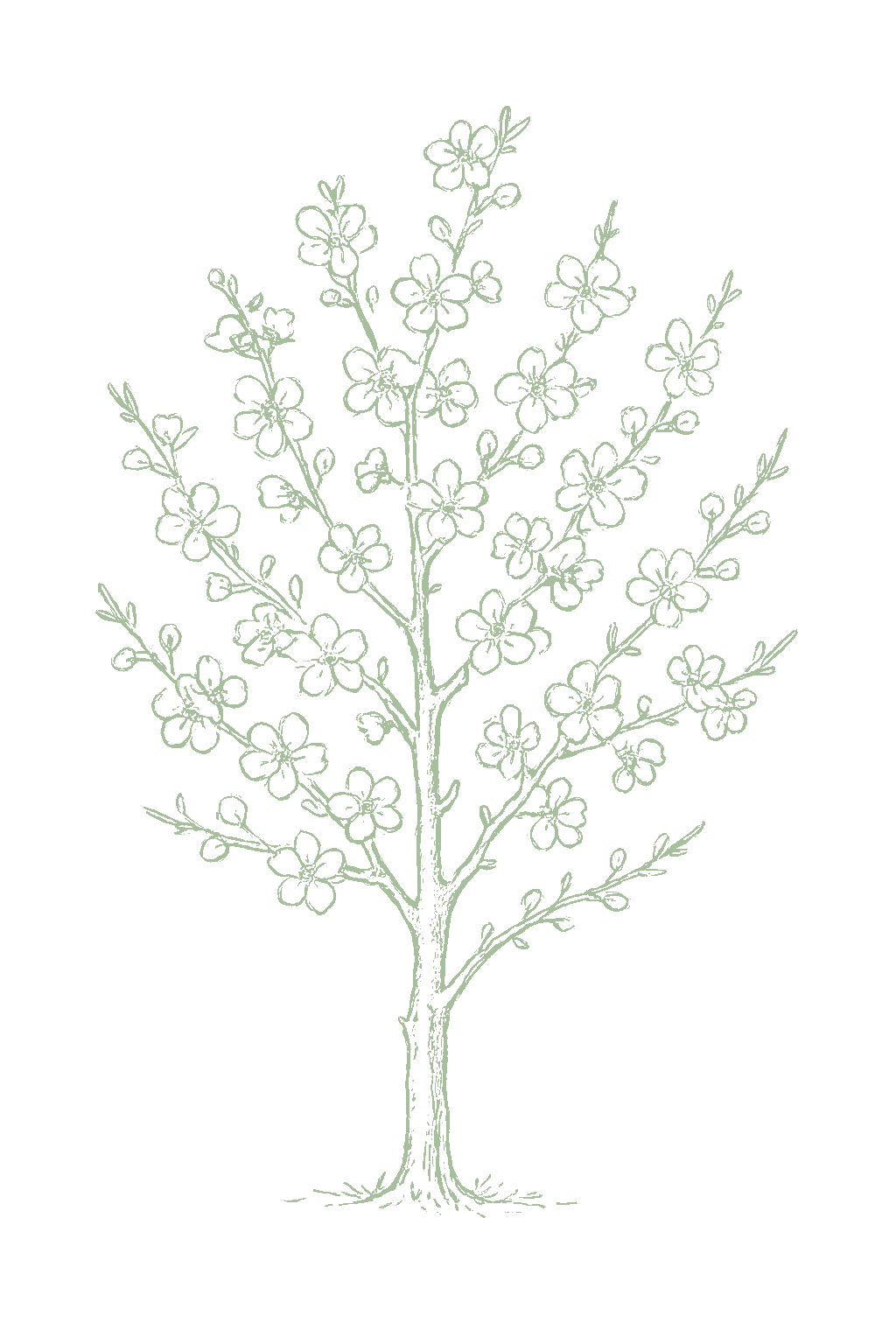
06
Bloom
White or pale-pink flowers opening all over the tree, often before the leaves come out. Apricot is self-fruitful, meaning one tree can set fruit by itself. This is the riskiest time for frost, and because apricot blooms so early, it is in danger more often than other fruit trees.White to pale-pink blossoms opening across the tree, often before the leaves. Apricot is self-fruitful, so a single tree sets fruit on its own. This is by far the most frost-vulnerable moment of the year, and because apricot blooms so early it is at risk more often than other fruit.
Keep a close eye on the frost forecast. If a hard frost is coming while the tree is in bloom, you can sometimes protect a small tree by covering it overnight, and watering the ground first helps hold warmth. If bloom is wet, this is the time for a brown-rot spray. Otherwise just let the tree set its fruit.Watch the frost forecast closely; if a hard frost threatens open bloom, a backyard tree can sometimes be protected with a cover overnight, and watering the soil beforehand helps. In a wet bloom, this is the window for a brown-rot blossom spray. Otherwise let the tree set its own crop.
FROM PLANT · When the tree is in bloom it is most at risk from frost, and apricot blooms earlier than other fruit. Watch the forecast, and if a hard frost is coming, cover a small tree overnight to protect the flowers.Open bloom is the most frost-vulnerable moment, and apricot reaches it earlier than any other fruit. Track the forecast and cover a small tree overnight if a hard frost threatens the flowers.
FROM PLANT · Apricot is self-fruitful, so one tree fruits on its own. A second variety is just a bonus for the few kinds, like Moorpark, that set a fuller crop with a partner nearby.Apricot is self-fruitful, so a single tree sets a crop alone. A second variety is an optional bonus for the few cultivars (Moorpark) that set more heavily with a pollinizer.
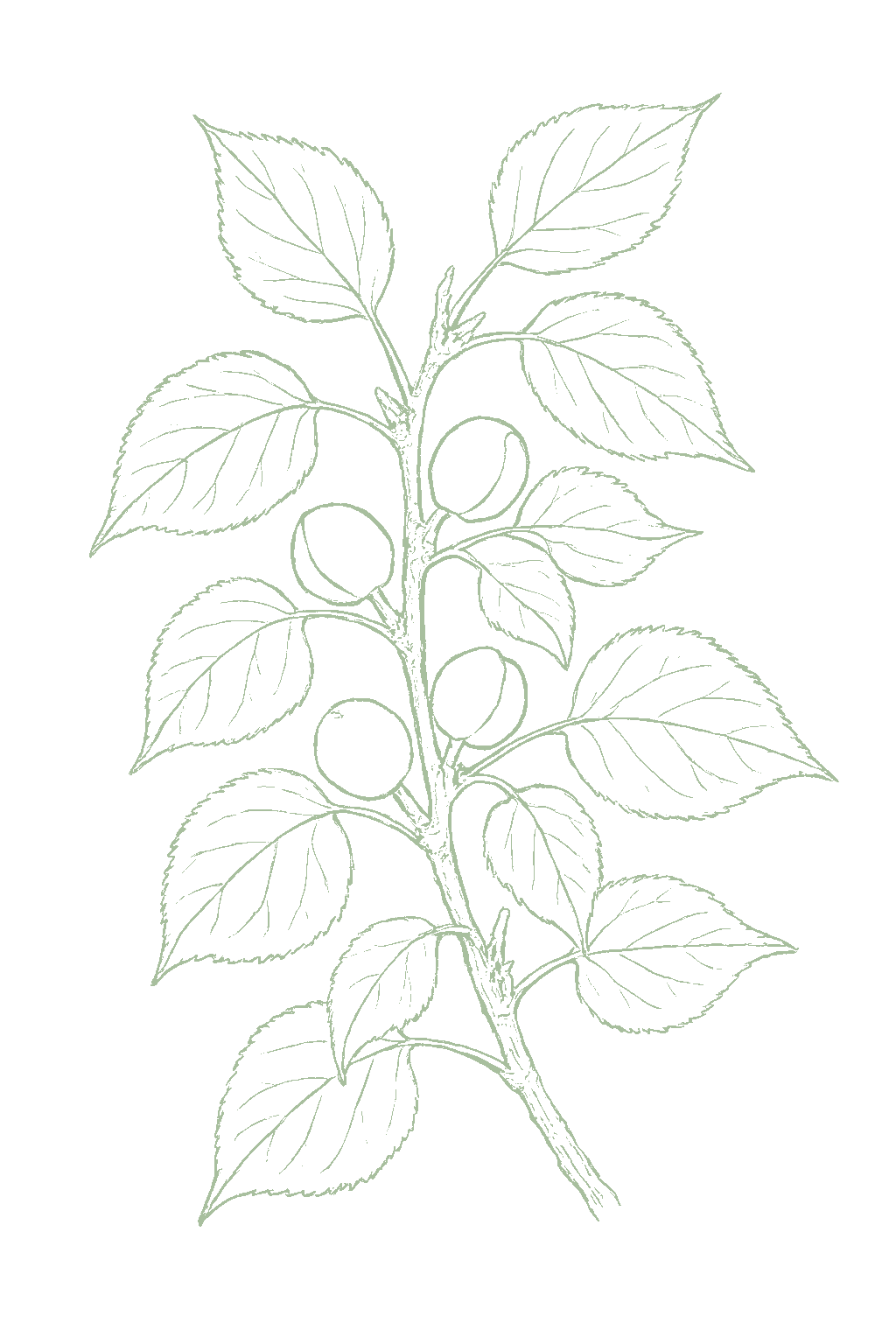
07
Fruit set and thinning
Lots of small green apricots, often crowded. Apricot sets more fruit than it can size well in a good year, so without thinning you get many small fruit, branches can break, and the tree may swing between a heavy year and a light year.Clusters of small green fruit. Apricot oversets in a good year, and an unthinned tree produces many small fruit, risks limb breakage, and tends toward biennial bearing (a heavy year followed by a light one).
Thin the little fruits so that about one apricot is left every 4 to 6 inches along each branch, picking off the extras while they are small. This one step does the most for fruit size, keeps branches from breaking, and helps the tree crop more evenly each year. It also lets you remove damaged fruit early.Thin the young fruit to roughly one apricot every 4 to 6 inches along the branch, removing the rest while they are small. This is the single biggest lever on fruit size, it protects the limbs, and it evens out year-to-year cropping. Thinning also removes some insect-damaged fruit early.
FROM PLANT · Thin the little apricots to about one every 4 to 6 inches along the branch. Thinning does the most for fruit size, keeps branches from breaking, and helps the tree crop evenly instead of a big year then a bare year.Thin young fruit to one apricot every 4 to 6 inches. Thinning is the biggest lever on fruit size, protects limbs, and helps prevent the biennial (on-year/off-year) swing apricot is prone to.
FROM PLANT · Thin while the fruit is small, and remove any with insect scars as you go. Taking off the curculio-marked apricots early also means fewer beetles next year.Thin while fruit is still small, and take off insect-scarred fruit as you go. Early removal of curculio-marked fruit also lowers next year's pressure.
08
Harvest
A ripe apricot shows full yellow-to-orange color, loses any green tinge, gives a little when gently squeezed, and comes off with a slight twist. A ripe smell is a good sign. The tree ripens over one to three weeks rather than all at once, so you pick it a few times. Pick a bit firm if you plan to dry or move the fruit.Ripe apricots take on full variety color (yellow to deep orange), lose any green undertone, give slightly to gentle pressure, and pull free with a light twist. Aroma is a strong cue. A tree ripens over one to three weeks, so it is picked in several passes; fruit for drying or shipping is picked slightly firm.
Pick over several days as the apricots ripen, handling them gently so they do not bruise (bruises invite brown rot). Eat, dry, or use ripe fruit quickly, or put it in the fridge. Pick up any rotted or dropped fruit so it does not spread disease.Pick in several passes as fruit ripens, handling gently to avoid bruises that invite brown rot. Eat, dry, or use tree-ripe fruit quickly, or chill promptly. Clear any rotted or dropped fruit as you go so it does not seed disease.
FROM PLANT · The tree ripens over one to three weeks, so pick it a few times. A ripe apricot is fully orange-yellow, gives a little when squeezed, and twists off easily. Pick a bit firm if you plan to dry or carry the fruit.A tree ripens over one to three weeks; pick in several passes. Ripe fruit shows full orange-yellow color, gives slightly, and pulls free with a gentle twist. Pick slightly firm for drying or handling.
FROM PLANT · Handle the fruit gently. Bruises let brown rot in, and fully ripe apricots are delicate. Chill, dry, or use them soon. Apricots are one of the best fruits for drying and freezing.Handle gently. Bruises are entry points for brown rot, and tree-ripe apricots are fragile; cool, dry, or use the fruit promptly. Apricots dry and freeze exceptionally well.
FROM PLANT · After harvest, clear every leftover and dropped apricot. Fruit left to dry into mummies on the tree or ground is the main source of brown rot next year.Clear all remaining and dropped fruit after harvest. Fruit left to mummify on the tree or ground is the primary brown-rot inoculum for next year.
The specs

Care guide

The numbers that matter, at a glance.

Sunlight
full sun · 8-12 hrs/day
Water
moderate
Spacing
216-264 inches
Soil
loam
Soil pH
6 to 7
Container OK?
No
Soil chemistry

Soil pH for apricot

Preferred
6 to 7
Tolerated
6 to 8

Apricot grows best in a near-neutral soil, around pH 6.0 to 7.0, and tolerates from about 6.0 to 8.0 (pH just measures how acidic or alkaline the soil is). It leans more tolerant of alkaline soil than most stone fruit, but on strongly alkaline western soils it often shows iron chlorosis, a yellowing between the leaf veins. Test your soil before planting and adjust slowly if needed: garden lime raises the pH if the soil is too acidic, and elemental sulfur lowers it if it is too alkaline. Mix any of this in before you plant, because pH changes slowly and is far easier to fix before the permanent tree goes in.Apricot does best in a near-neutral soil, roughly pH 6.0 to 7.0, and tolerates about 6.0 to 8.0. It is somewhat more alkaline-tolerant than peach or cherry, but on the high-pH soils of the arid West it is notably prone to iron chlorosis (interveinal yellowing). Test the soil before planting and adjust gradually if needed: lime raises a too-acidic pH, elemental sulfur lowers one that is too alkaline. Work amendments in ahead of planting, since pH shifts slowly and is far easier to correct before the permanent tree is in the ground.

Verified · 1 source View
Steady hand on the hose

Watering

When & how much
Frequency
Water deeply now and then instead of a little every day. Plan on about once or twice a week while a young tree is getting established, easing to about once a week for a fruiting tree in summer heat, adjusting for rain and your soil. Apricot hates soggy soil, so let the surface dry out between waterings. In winter, when the tree is resting, it needs very little and rain usually covers it.Water deep-and-infrequent rather than little-and-often: about once or twice a week while a young tree establishes, easing to roughly weekly (a deep soak) for a bearing tree in summer heat, always adjusted for rain and soil. Apricot resents constantly wet soil, so let the top of the root zone dry between soaks. Through winter dormancy water need drops sharply and rainfall usually suffices.
Amount
Each time you water, give a deep soak that reaches all the way down to the roots, not just a splash on top. A young tree wants about 3 to 5 gallons per soak. An older, fruiting tree wants roughly an inch of water a week through the season, and more when it is hot, given as deep soaks. Steady water while the fruit is filling out makes bigger apricots.Water deeply each time so moisture reaches the full root zone, not just the surface. For an establishing tree, on the order of 3 to 5 gallons per soak; for a bearing tree, roughly the equivalent of an inch of water per week through the season, more in heat, delivered as deep soaks to a 3-foot depth. Steady moisture through the final swell sizes the fruit.
Method
Water at the ground around the roots with a drip line or soaker hose, and keep the leaves and fruit dry. Spraying water over the top wets the leaves and helps diseases like brown rot and shot hole, so put the water on the soil, not the tree. Spread it across the root area out to the edge of the branches, not just right at the trunk.Water at the root zone by drip or soaker and keep the canopy and fruit dry. Overhead watering that wets the leaves feeds brown rot, shot hole, and bacterial canker, so deliver water to the soil, not the tree. Apply it across the root area out toward the drip line rather than only at the trunk.
Signs of trouble
Too much water
Too much water, or soil that drains poorly, shows up as yellowing leaves, wilting that does not go away even when the soil is wet, and a tree that slowly goes downhill, because the roots cannot breathe. In apricot, soil that stays wet also brings on crown and root rot and the serious disease bacterial canker. Soil that never dries out between waterings is your warning to back off.Overwatering and poor drainage show as yellowing leaves, wilting that persists even in wet soil, and a declining tree, since apricot roots suffocate in soggy ground. Chronically wet soil also brings on crown and root rot and predisposes the trunk to bacterial canker, both often fatal. Soil that never dries between waterings is the warning sign to act on.
Too little water
Too little water shows as wilting, dull curling leaves, slower growth, and leaves dropping early in a long dry spell. The clearest sign is in the fruit: a tree that runs short of water while the apricots are sizing up makes small, less sweet fruit, even though the tree itself lives through it. Try to catch the dry stress before the fruit suffers for it.Underwatering shows as wilting, dull curling leaves, slowed shoot growth, and early leaf drop in a long dry spell. The most telling symptom is on the fruit: a tree short of water during the final swell sizes its apricots poorly, leaving them small and less sweet even though the tree survives. Catch the dry stress before the fruit pays for it.
Feeding rhythm

Feeding

Frequency
1x per year
Type
balanced granular (e.g. 10-10-10)
When to start
early spring before bud break

Feed once in early spring before the tree starts growing. Scatter the fertilizer evenly on the soil around the tree out to where the branches reach, keep it off the trunk, and water it in. Apricot does not need heavy feeding, so go light: if the tree is making plenty of new growth, it may need none at all. If the leaves yellow between the veins (common on western alkaline soils), that is an iron problem, not a nitrogen one, so use a chelated iron product instead of more fertilizer. Never feed late in the year, because soft late growth gets damaged by winter cold.Feed lightly in early spring before growth begins, broadcasting evenly around the root zone out to the drip line, off the trunk, and watering it in. Apricot needs modest nitrogen: judge by shoot growth and ease off if the tree is already vigorous. On the alkaline soils of the arid West, watch for iron chlorosis (interveinal yellowing) and correct it with a chelated iron rather than piling on nitrogen. Never feed late in the season, since late nitrogen pushes soft growth that winter cold injures and that canker enters.

N · P · K = 10-10-10

A balanced fertilizer like 10-10-10 (the three numbers are nitrogen, phosphorus, and potassium) works for backyard apricots, used sparingly. Do not overdo nitrogen, the first number, because too much pushes leafy growth that is more prone to disease and winter damage.A balanced ratio such as 10-10-10 suits backyard apricots, applied modestly. Avoid high-nitrogen feeding, which drives soft, disease-prone, overly vigorous growth at the expense of fruiting and winter hardiness.

Try 10-10-10 balanced fertilizer
Who grows well together

Companion planting

Apricot is self-fruitful, which means one tree makes fruit on its own and you do not need a second tree to pollinate it. A few varieties, notably Moorpark, set a heavier crop when a second apricot blooms nearby, but even they fruit alone, so a lone tree is fine. Beyond that, what matters for a tree is the root zone, not the usual vegetable pairings: keep grass and weeds pulled back from under the branches, since lawn competes hard with a young tree, and a mulched, weed-free area helps it settle in. The one site rule is replant disease: do not plant an apricot where another apricot, peach, plum, cherry, or nectarine was recently growing. Apricot is self-fruitful, so a single tree sets a crop on its own with no pollinizer required; a handful of cultivars (Moorpark is the classic) set more heavily with a compatible second variety, but none actually need one. Past pollination, the interactions that matter for a tree are at the root zone, not classic vegetable companions: keep turf and weeds cleared back from under the canopy, since they compete hard with a young tree, and a mulched, competition-free root area establishes it faster. The one site rule is replant disease: do not follow stone fruit with stone fruit on the same ground.

Other
A second apricot variety (optional pollinizer; one self-fruitful tree still fruits)
Unlike most sweet cherries, apricot does not need a mate: a single self-fruitful tree sets a full crop alone. A second variety blooming at the same time is an OPTIONAL upgrade that can improve set and fruit size, and it is worth it for the varieties that respond, chiefly Moorpark. If you have room for only one tree, plant it with confidence. If you add a pollinizer, match bloom timing, since apricot's bloom window is short and very early. Research-backed
Flowering herbs and pollinator plants
A skirt of flowering herbs and pollinator plants around an apricot supports fruit set and orchard-floor health. Apricot is self-fruitful, so the pollinator draw is a help rather than a requirement, but strong bee activity during its short, very early bloom improves set in cool springs, and the same flowers recruit the hoverflies, lacewings, and parasitic wasps that keep aphids in check. Choose species that bloom around apricot bloom and keep them out toward the drip line rather than crowding the trunk. Traditional
Keep apart from
Other stone fruit in old stone-fruit ground Replanting an apricot, or any stone fruit, into ground that recently grew apricots, peaches, plums, cherries, or nectarines is a documented mistake. Old stone-fruit ground carries elevated ring-nematode populations and the replant-disease complex, and nearby infected trees can harbor bacterial canker, which apricot on a plum rootstock is especially prone to. Plant in fresh ground, or replace a generous soil volume and remove infected neighbors first; rotating to a different SITE, not just a different variety, is the fix. Research-backed
Provenance tagged inline · see methodology for the labeling system Key
Harvest signals

When to pick

An apricot is ripe when the whole fruit turns from green to a warm yellow or orange, gives a little when you press gently, smells sweet, and comes off the branch with a gentle twist instead of a hard pull. A pink blush alone does not mean ripe. If you need to carry, store, or dry them, pick when fully colored but still a little firm and let them soften on the counter. For eating right away, pick when they give to a gentle squeeze. The tree ripens over one to three weeks, so pick it a few times.An apricot is ready when the ground color shifts fully from green to a warm yellow or deep orange, the flesh gives slightly to gentle pressure, the aroma turns full and sweet, and the fruit separates from the spur with a light twist. Any pink blush is not ripeness by itself. Pick slightly firm if you need to handle, ship, or dry the fruit, and let it finish softening on the counter; pick at full give for eating that day. A tree ripens over one to three weeks, so pick in several passes.

Verified · 2 sources View
Yield

What to expect

A grown apricot tree (about year 4 onward) can give roughly 50 to 150 pounds of fruit in a good year, which is a lot of apricots. The catch is that apricots often lose all or part of the crop to a late frost, so some years you get plenty and some years very little, more than with most fruit trees.A mature standard apricot (roughly years 4 and up) commonly yields about 1 to 3 bushels per tree, on the order of 50 to 150 pounds in a good year, depending on variety, thinning, and above all whether spring frost spared the bloom. Because frost so often thins the crop for you, apricot yields swing more year to year than most fruit.

An apricot tree hits its full production around years 4 to 6 and keeps producing for twenty years or more, as long as you prune, thin, and manage diseases. How much you actually pick depends most on dodging spring frost and on thinning, which helps the tree crop evenly instead of a big year then a light one.Trees reach full bearing around years 4 to 6 and stay productive for two decades or more, given annual pruning, thinning, and disease control. Realized yield is governed less by feeding than by frost escape and by thinning to counter apricot's tendency toward biennial bearing. Do not expect apricots the first year, or really the second. If a few fruit form early, pick them off so the young tree can build roots and strong branches instead. Your first real harvest usually comes in about two to four years, with full crops by years 4 to 6.Expect no crop in the planting year and little to none in year 2. Remove any fruit that sets early so the tree puts its energy into roots and a strong scaffold; the first meaningful harvest typically comes in years 2 to 4, with full bearing by years 4 to 6.

What changes yield
variety bloom timing and frost escapelate-frost damage at bloomfruit thinning (also curbs biennial bearing)winter chill accumulationannual open-center pruningdisease control (brown rot, canker, shot hole)tree age and establishment
Verified · 2 sources View
Off the vine

Storing your harvest

Room temp
Leave firm apricots on the counter, out of direct sun, to soften the rest of the way, usually 1 to 3 days, until they give to a gentle squeeze and smell sweet. Apricots you picked already soft will only keep a day or two out, so eat or refrigerate them soon.Hold firm-picked apricots at room temperature out of direct sun to finish softening, typically 1 to 3 days, until they yield to gentle pressure and smell fragrant. Tree-ripe fruit picked soft will only last a day or two on the counter, so plan to eat or refrigerate it promptly.
Fridge
Put apricots in the fridge only after they are ripe, and eat them within about 3 to 5 days. Chilling an unripe apricot can leave it dry and grainy once you take it out, so let it soften on the counter first. For the best taste, let cold apricots warm back to room temperature before you eat them.Refrigerate apricots only once they are ripe, then eat within about 3 to 5 days. As with peach, refrigerating an underripe apricot risks chilling injury (dry, mealy flesh once it warms), so counter-ripen first. Bring cold apricots back to room temperature before serving for the best flavor.
Freezer
Apricots freeze nicely if you halve and pit them first. Toss the halves with a little lemon juice so they do not brown, spread them on a tray to freeze, then pack them into freezer bags. They keep for several months and are best for cooking, baking, and smoothies. Apricots are also one of the best fruits for drying.Apricots freeze well halved and pitted. Toss the halves with a little lemon juice or an ascorbic-acid dip to limit browning, freeze them in a single layer on a tray, then transfer to freezer bags. Frozen apricots keep their quality for several months and are best used for cooking, baking, and smoothies. Apricots also dry exceptionally well.
Verified · 1 source View
When something goes wrong

Common problems

The tree flowered but I got almost no apricotsTree bloomed but set little or no fruit
01 of 04
What happened The tree flowered but barely fruited. On apricots the usual reason is a late frost while the tree was blooming, which kills the flowers and tiny fruit. Apricot blooms earlier than other fruit, so this happens a lot on frosty sites. People often think it needed a partner tree, but apricot is self-fruitful and one tree should fruit by itself. The real fixes are where and what you plant: avoid low frost-pocket spots, cover the tree against a hard late frost when you can, and choose a late-blooming, cold-hardy variety.The tree flowered well but few or no apricots formed. On apricot the overwhelming cause is a late frost during or just after bloom: apricot blooms earlier than any other fruit tree, so a hard freeze catches the open flowers and tiny fruit most years on a frost-prone site. It is often blamed on pollination, but apricot is self-fruitful and a lone tree should set on its own. The fix is site and variety: avoid frost-pocket planting sites, protect bloom from hard late frosts where you can, and plant a late-blooming, cold-hardy cultivar. Next season Plant a late-blooming, cold-hardy variety away from low frost pockets, and keep a cover handy for bloom-time frosts. That matters more than anything else for actually getting apricots.Plant a late-blooming, cold-hardy variety on a frost-aware site, and keep a frost cover ready for bloom; these do more than anything else to secure an apricot crop.
The apricots rotted quickly and dried into hard lumpsFruit rotted fast with tan fuzz and dried into mummies
02 of 04
What happened Ripe apricots got brown spots that spread fast, grew a tan fuzz, and dried into hard little mummies stuck to the tree. This is brown rot, a fungus apricot catches very easily. It survives winter in those dried mummies and in dead twig patches, so leaving them is what causes it again. The fix is cleanup and dry leaves: pick off every mummy, cut out the gummy dead twigs, keep the tree open so it dries fast, water at the ground, and in wet climates spray at bloom and near harvest.Ripening apricots developed brown spots that spread within a day or two, grew a dusty tan fuzz, and shriveled into hard mummies clinging to the tree. This is brown rot (Monilinia), and apricot is among the most susceptible of all fruit. It overwinters in those mummies and in twig cankers, so leaving them is the mistake that seeds next year. The corrective action is sanitation plus a drier canopy: remove every mummy, prune out gummy cankers, open the tree for fast drying, water only at the root zone, and in humid regions spray at bloom and before harvest. Next season Clean off every dried mummy and cut out gummy dead twigs over winter, keep the tree open so it dries quickly, and in wet climates spray at bloom and near harvest, because apricot catches this disease so easily.Remove all mummies and cankers over winter, keep the canopy open and dry, and in humid regions plan an organic-approved bloom and pre-harvest fungicide program, since apricot's susceptibility makes sanitation alone insufficient there.
Lots of tiny, low-quality apricotsMany small, poor-quality apricots
03 of 04
What happened The tree had lots of small, bland apricots, and maybe a bare year after. Apricot sets far more fruit than it can size in a good year, and that also makes it swing between a heavy year and a light one. It is tempting to think it needs more food or water, but the real problem is too many fruit. The fix is thinning: remove the small fruit early down to about one every 4 to 6 inches so the rest grow large and sweet and the tree crops more evenly.The tree carried a heavy crop of small, poorly flavored fruit, and perhaps swung to a light crop the next year. Apricot oversets in a good year and divides its resources among too many fruit, which also drives biennial (on-year/off-year) bearing. It is easy to assume the tree needs more feeding or water, but the limiting factor is fruit number. The corrective action is thinning: remove young fruit early to about one apricot every 4 to 6 inches so the remainder size and sweeten and the tree crops more evenly. Next season Thin the small fruit early to about one every 4 to 6 inches. This one step does more for size and taste than extra food or water, and it helps the tree crop evenly each year.Thin young fruit early and firmly to one apricot every 4 to 6 inches; this single step does more for size and flavor than feeding or watering, and it evens out year-to-year cropping.
Leaves turning yellow but the veins stay greenLeaves yellowing between green veins
04 of 04
What happened The new leaves turned yellow but the veins stayed green, worst on the youngest growth. This is an iron problem called iron chlorosis. Apricot gets it easily on the alkaline (high-pH) soils common in the dry West, and soggy soil makes it worse by keeping the roots from taking up iron. People often think it needs more fertilizer and feed it nitrogen, which does not fix it. The fix is better drainage, less water, and a chelated iron product; over time, adding elemental sulfur to lower the soil pH helps.New leaves turned yellow while the veins stayed green, worst on the youngest growth. This is iron chlorosis, and apricot is notably prone to it on the high-pH, alkaline soils common in the arid West, often made worse by overwatering or waterlogged ground that keeps roots from taking up iron. It is easy to misread as a nitrogen shortage and over-fertilize, which does not help. The corrective action is to improve drainage, ease off water, and apply a chelated iron; longer term, lowering soil pH with elemental sulfur helps. Next season Fix the drainage and stop overwatering, use a chelated iron to green it back up, and over time add elemental sulfur to lower the soil pH if your soil is alkaline.Improve drainage and avoid overwatering, apply a chelated iron to green the tree up, and lower soil pH over time with elemental sulfur on alkaline western soils.
The usual suspects

Pests & diseases

Pests
Plum curculio
P · 01
Symptoms On small developing apricots, look for a curved, crescent-shaped scar, the mark the beetle leaves when it lays an egg. Damaged fruit often drops early, and some that stays on the tree ends up misshapen or has a grub inside. You see this soon after the petals fall.Small young fruit carries a distinctive crescent-shaped scar where the female cut a slit to lay an egg. Infested fruit often drops early; fruit that hangs on may be gnarled or have a grub tunneling inside near the pit. Damage appears shortly after petal fall and is heaviest east of the Rockies. Cause A small beetle with a long snout called the plum curculio. The adults show up around bloom and start damaging the little fruits right after the petals drop, laying eggs inside them. The larvae then feed within the fruit. It is mostly an eastern problem and rare in dry western climates.The plum curculio (Conotrachelus nenuphar), a small snout beetle native to eastern North America. Adults emerge around bloom and attack fruit from petal fall onward, laying eggs in the developing fruit; the larvae feed inside. There is little pressure in the arid West. Organic treatment Early in the morning the beetles are slow. Spread a sheet under the tree, tap the branches so the beetles fall, and destroy them. Pick up and throw away any dropped fruit promptly so the larvae inside do not mature. A kaolin clay spray (a fine white mineral coating) starting at petal fall helps keep them off.For a backyard tree, jarring the limbs over a sheet in the early morning when the beetles are sluggish, then destroying what drops, reduces the population. Promptly gather and dispose of dropped infested fruit to break the cycle. Kaolin clay applied from petal fall is an organic deterrent. Prevention The main thing is cleanup. Pick up fallen fruit all season so the larvae inside cannot finish growing in the soil under the tree. Keeping the ground clear lowers the number of beetles the next year.Sanitation is the backbone: remove dropped fruit through the season so larvae cannot complete development in the soil beneath the tree. A clean orchard floor and prompt fruit pickup steadily lower pressure year over year.
Peachtree borer
P · 02
Symptoms Look at the very bottom of the trunk where it meets the soil. Peachtree borers leave a sticky, gummy ooze mixed with what looks like wet sawdust (called frass). You may see a small mound of gum and frass at the base. A young tree with several borers can be killed in one season, so this is one to catch early.Gummy ooze mixed with sawdust-like frass at the base of the trunk, right around the soil line, often with a mounded look where the bark meets the ground. Larvae tunnel the inner bark at the crown; several borers can girdle and kill a young apricot in a single season, and the wounds also open the door to canker. Cause The larvae (young, grub-like stage) of the peachtree borer, a moth whose adults look like wasps and fly during the day. The adults lay eggs on the lower trunk in summer, and the larvae burrow into the bark at and below the soil line. Trees with existing wounds are hit hardest, but a healthy tree can be attacked too.Larvae of the peachtree borer (Synanthedon exitiosa), a clearwing moth whose adults are day-flying and wasp-like. Eggs are laid on the lower trunk in summer; the larvae tunnel the inner bark at and just below the soil line. It attacks all stone fruit, apricot included, and hits stressed or wounded trees first. Organic treatment Once the larvae are inside, no spray reaches them. The backyard fix is to scrape soil away from the base in late summer or fall, find the holes marked by gum and frass, and kill the larvae with a thin, stiff wire pushed into each hole. Then smooth the soil back. Avoid nicking the trunk base with mowers or trimmers.There is no rescue spray once larvae are tunneling inside. The practical home control is to expose the crown in late summer or fall, find the entry holes by the gum and frass, and kill larvae by hand with a thin wire (worming). Keep the trunk base free of wounds and paint it white against sunscald cracks. Prevention Keep mowers and string trimmers away from the trunk; the wounds they leave attract the egg-laying moths, and white trunk paint prevents the sunburn cracks they enter. Keep grass and weeds cleared from the base so you can see the soil line, and check it every late summer for fresh gummy ooze.Protect the lower trunk from mechanical injury and sunscald (a white trunk paint helps), keep the tree vigorous, and clear weeds and tall grass from the base so the crown stays open and easy to inspect. Check the soil line each late summer for fresh gum so an infestation is caught in its first year.
Aphids
P · 03
Symptoms Clusters of small green or gray soft-bodied insects on the tips of new spring growth, curling and twisting the young leaves, with a sticky coating below that turns black and moldy. It is worst on young trees and mainly stunts new growth rather than ruining fruit.Dense colonies of green or mealy-gray aphids on the tips of new spring shoots, curling and distorting young leaves, with sticky honeydew below that blackens into sooty mold. Heaviest on vigorous young trees; it slows shoot growth but rarely harms fruit directly. Cause Small sap-sucking insects (green peach aphid and mealy plum aphid). Their eggs overwinter on the tree and the young hatch to feed on the soft new spring growth. The numbers usually drop on their own by midsummer as the shoots toughen and ladybugs and other helpers move in.Chiefly the green peach aphid and the mealy plum aphid. They overwinter as eggs on the tree and explode on the tender spring flush, feeding on sap; populations usually crash by midsummer as shoots harden and natural enemies build up. Organic treatment Often you can leave it alone, since ladybugs and other helpers clear it by midsummer. On a young tree that is badly hit, blast the colonies off with a hose, or spray the curled tips with insecticidal soap or horticultural oil. Do not over-fertilize, since lush new growth is what the aphids love.Often no action is needed, since beneficials clean it up by midsummer. For a heavy infestation on a young tree, a strong jet of water knocks colonies off, or insecticidal soap or horticultural oil applied to the curled tips works; protect the ladybugs and lacewings that do most of the control. Avoid high-nitrogen feeding, which fuels the soft growth aphids prefer. Prevention Avoid heavy feeding that pushes the soft growth aphids love, welcome ladybugs and lacewings, and do not panic over the spring leaf-curl, which usually does not hurt the crop. A dormant oil spray in late winter cuts down the overwintering eggs.Keep trees vigorous but not over-fed (high nitrogen invites aphids), encourage beneficial insects, and tolerate the early-season curl, which rarely affects the crop. A dormant oil spray reduces overwintering eggs where the pest is chronic.
San Jose scale
P · 04
Symptoms Tiny gray bumps crusting the bark of twigs and branches, and small red-ringed spots on the fruit. A bad case can weaken branches and even kill them, and it spots the fruit. The scales are easy to miss because each one is barely the size of a pinhead.Tiny gray, cone-shaped scales encrusting bark on twigs and scaffolds, sometimes with a reddish halo, and small red-ringed spots on the fruit skin. Heavy infestations weaken and can kill branches, and the fruit blemishes downgrade the crop. Cause A tiny armored insect called San Jose scale that sits under a waxy cover and sucks sap from the bark. It has several rounds a year. The young, called crawlers, are the only stage that moves around and the only one a spray can hit.San Jose scale (Diaspidiotus perniciosus), an armored scale insect that feeds on sap under a waxy cover. It has several overlapping generations a year; the mobile crawler stage is the point at which it spreads and the only stage a spray reaches. Organic treatment The main control is a good horticultural oil spray while the tree is bare and dormant, coating the twigs and branches to smother the scale. During the season, prune out and destroy any branches that are heavily crusted. Keeping the tree open and vigorous helps.A thorough dormant-season horticultural oil spray, applied to the leafless tree so it coats twigs and scaffolds, smothers overwintering scale and is the mainstay backyard control. In-season, time any additional oil to the crawler stage. Prune out and destroy heavily encrusted wood. Prevention A yearly dormant oil spray in late winter keeps scale from building up. Avoid harsh insecticides so the natural enemies that eat scale can do their work, and keep the tree pruned open so any spray reaches all the bark.An annual dormant oil spray keeps scale from building up. Encourage the tiny parasitic wasps and predatory beetles that attack scale by avoiding broad-spectrum insecticides, and prune to keep the canopy open and easy to cover thoroughly.
Catfacing insects (stink bugs and plant bugs)
P · 05
Symptoms Ripe apricots have sunken, puckered, dimpled patches, a look growers call catfacing. It comes from insects feeding on the fruit when it was small. The fruit is still usable; the damage is mostly on the surface and does not spread.Mature fruit shows sunken, dimpled, corky distortions, the puckered catfaced look, where feeding occurred on young fruit. The damage is cosmetic on the surface but can run into the flesh; it does not spread or rot on its own. Cause A handful of insects, chiefly stink bugs and the small tarnished plant bug, that poke the young apricots to feed. The spot they feed on stops growing while the rest of the fruit swells around it, leaving a dimple. Because apricots set fruit early, the little fruit is out just as these bugs get going in spring.Several true bugs, mainly stink bugs and the tarnished plant bug, that puncture small apricots to feed. Tissue at each feeding point stops growing while the surrounding flesh keeps swelling, so the mature fruit is left puckered and corky. Apricot ripens early, so the vulnerable young-fruit stage overlaps the spring buildup of these bugs. Organic treatment Spraying a single tree does not help much, because these bugs come in from weeds and brush nearby. The better fix is to take away their hiding spots: mow and pull the broadleaf weeds around the tree, especially in spring while the fruit is small.Spraying one tree does little, since these bugs commute in from nearby weeds and brush. The practical control is to deny them that harborage: mow and clear the broadleaf weeds around the tree, especially through spring when young fruit is most vulnerable. Prevention Keep the ground around the tree mowed and clear of broadleaf weeds, which is where these bugs live and breed. A clean, grassy area around the tree means fewer of them ever reach your apricots.Keep the surrounding ground mowed and free of the broadleaf weeds these bugs breed in; a clean, grassy strip around the tree is the single biggest thing that lowers how many reach the fruit.
Diseases
Brown rot
D · 01
Symptoms At bloom, flowers go limp and brown and small gummy dead patches form on the nearby spurs. As apricots ripen, brown spots appear and spread quickly, sometimes rotting a whole fruit in a day or two in warm, wet weather, with a dusty tan fuzz on top. Rotted fruit shrivels into a hard mummy that hangs on. Apricot catches brown rot more easily than almost any other fruit.At bloom, infected blossoms wilt and brown and the infection runs into the spur to form a small gummy canker. As fruit ripens, firm brown spots appear and spread fast, rotting a whole apricot within a day or two in warm, wet weather, with a dusty tan spore mass on the surface. Rotted fruit dries into a clinging mummy. Apricot is among the most brown-rot-susceptible of all stone fruit. Cause A fungus called Monilinia. It survives winter in dried mummy fruit and dead twig patches, then releases spores at bloom that infect the flowers, which later cause the fruit to rot. Warm, wet weather makes it spread fast, which is why apricots do much better in dry-summer climates than in humid ones.The fungus Monilinia (M. fructicola and M. laxa). It overwinters in mummies and twig cankers; spores at bloom infect flowers, and those infections later seed the fruit rot. Warm, humid, wet weather drives it, which is a large part of why apricot is a poor risk in the humid Southeast and better in dry western summers. Organic treatment Cleanup is the main control: take off and destroy every dried mummy from the tree and ground and prune out the gummy dead twig patches, which hold the spores. If bloom is wet, an organic-approved spray at bloom helps protect the flowers. Pick on time, handle gently, and throw out any rotting fruit right away.Sanitation is the core control: remove and destroy every mummy from the tree and ground and prune out gummy twig cankers, since these are the spore sources. In a wet bloom, an organic-approved bloom-time fungicide reduces blossom blight. Pick promptly, handle gently, and remove any rotting fruit at once; an open, fast-drying canopy is a standing defense. Prevention Cleaning up all year prevents most of it: never leave dried mummies over winter, prune so the tree is open and dries fast after rain, and pick on time. In wet climates you will likely need an organic-approved spray at bloom and again near harvest, because apricot is so prone to this disease.Year-round sanitation prevents most loss: never leave mummies over winter, keep the canopy open with pruning so fruit dries fast after rain, harvest promptly, and favor a dry-summer site. In humid regions, plan on a bloom and pre-harvest fungicide program, since apricot's high susceptibility makes sanitation alone insufficient.
Bacterial canker
D · 02
Symptoms Sunken, dark, gummy patches (cankers) on the trunk and branches that ooze amber sap, often killing the branch above them. In spring, flowers and buds may blacken and die, and some buds never open. It is one of the worst apricot diseases and hits harder on trees grown on plum rootstocks.Sunken, dark, gummy cankers on trunk, scaffolds, and spurs that ooze amber gum, often girdling and killing limbs; in spring, blossoms and spurs blast (blacken and die) and dormant buds fail to open. It is one of the most serious apricot diseases and is worse on trees grown on plum rootstocks (Myrobalan, Marianna), which are especially susceptible. Cause A bacterium (a microscopic organism) called Pseudomonas syringae. It gets in through wounds, leaf scars, and frost damage during cool, wet weather, and is worse on stressed trees, those in wet soil, hit by frost, or pushed with too much nitrogen. Apricot blooms so early that its tender new growth often meets the cold, wet weather this disease loves.The bacterium Pseudomonas syringae. It infects through wounds, leaf scars, and frost-injured tissue in cool, wet spring and fall weather, and is worsened by anything that stresses the tree: poor drainage, ring nematodes, frost, and high-nitrogen soft growth. Apricot's very early bloom exposes fresh tissue to exactly the cold, wet spells that favor it. Organic treatment There is no cure once it sets in. The approach is prevention: cut out the cankered wood well below the dead patch during dry summer weather (not in wet spring), clean your tools between cuts, and pull out a badly infected young tree. Keep the tree healthy, unstressed, and on well-drained ground; copper sprays only help a little.There is no cure once a tree is infected. Management is preventive: cut out cankered wood well below the canker in dry summer weather (not in wet spring), disinfecting tools between cuts, and remove badly infected young trees. Keep the tree unstressed and well drained; copper sprays give only partial protection and resistance is common. Prevention Prevention is everything: plant where the soil drains well, pick a more resistant rootstock (a peach seedling like Lovell resists it better than plum rootstocks), avoid frosty low spots and trunk wounds, paint the trunk white to prevent sunburn cracks, prune only in dry summer weather, and do not over-feed. A healthy, unstressed tree on good ground shrugs it off best.Prevention is everything: plant on well-drained ground, choose a tolerant rootstock (a peach seedling such as Lovell is more canker-tolerant than the plum stocks), avoid frost-pocket sites and trunk wounds, paint the trunk white against sunscald cracks, prune only in dry summer weather, and never push soft growth with late nitrogen.
Bacterial spot
D · 03
Symptoms Leaves get small angular water-soaked spots that turn brown and fall out, leaving little holes, called a shot-hole look. Bad cases turn leaves yellow and thin out the tree. On the fruit, small sunken spots and skin cracks form. How badly a tree is hit depends a lot on the variety and on how humid your area is.Small angular, water-soaked spots on leaves turn brown and drop out, leaving a shot-hole look; heavy infection yellows and thins the canopy. On fruit, small sunken spots and cracks develop on the skin. Susceptibility varies by cultivar, and pressure is highest in warm, humid regions. Cause A bacterium (a microscopic organism, not a fungus) called Xanthomonas. It spreads in warm, wet weather and builds up when there are other susceptible stone-fruit trees close by. Its leaf holes can look like the fungal shot hole disease, which is a different problem.The bacterium Xanthomonas arboricola pv. pruni. It spreads in warm, wet weather and builds up where susceptible stone fruit grow nearby. On apricot the leaf and fruit spotting is sometimes confused with the fungal shot hole (Coryneum blight). Organic treatment There is no good home cure once it shows up. Copper sprays help a little as prevention but can hurt the tree if overused, so they are not a dependable fix. The best you can do is keep the tree healthy and open so the leaves dry fast.Home options are limited once symptoms appear: copper sprays help more as prevention than cure and can injure the tree if overused, so they are not a reliable home fix. Keeping the tree vigorous and the canopy open and dry helps it tolerate the disease. Prevention The best prevention is the variety and the site you pick. A tolerant variety on a spot with dry summers and good airflow avoids most of the trouble, so it is a decision to make before planting. A healthy, open tree also helps.The most effective measure is choosing a resistant or tolerant cultivar and a dry-summer site; this is largely a decision made before the tree goes in. Good airflow, an open canopy, and tree vigor reduce severity.
Shot hole (Coryneum blight)
D · 04
Symptoms Small reddish-purple spots on the leaves whose brown centers fall out, leaving neat round holes that look like the leaf was hit with birdshot. It also spots the fruit and can kill buds. A bad case drops a lot of leaves and weakens the tree. Apricot is one of its favorite hosts.Small reddish-purple spots on leaves whose centers turn brown, die, and drop out, leaving clean round holes as if shot with birdshot. It also spots the fruit and can kill dormant buds and cause small twig cankers with gumming. Heavy infection defoliates and weakens the tree; apricot is a classic host. Cause A fungus (Coryneum blight) that spends winter in infected buds and twigs and spreads in cool, wet spring weather and wherever water splashes the leaves. Overhead sprinklers that wet the tree make it much worse.The fungus Wilsonomyces carpophilus (Coryneum blight). It overwinters in infected buds and twig lesions and spreads in cool, wet spring weather and by splashing water and overhead irrigation. Wet springs and sprinkler wetting of the canopy drive it. Organic treatment Cut out infected twigs, rake up and destroy fallen spotted leaves, and water at the ground rather than over the top so the leaves stay dry. A copper spray on the bare, dormant tree in late winter is the main way to protect it where this disease is common.Prune out infected twigs and buds, rake and destroy fallen infected leaves, and switch irrigation to the root zone so the canopy stays dry. A dormant application of fixed copper on the leafless tree is the main protective spray where the disease is established. Prevention The biggest thing is keeping the leaves dry: water at the ground, not over the tree, prune so air moves through, and clean up fallen leaves. In wet-spring areas, a copper spray on the bare tree in late winter protects it.Keep water off the canopy (drip or soaker, never overhead), prune for airflow, clear fallen leaves, and apply a dormant copper spray in wet-spring regions. Dry-summer irrigation discipline is the single biggest lever.
Verified · 4 sources View
Seasoned
Where to plant next year

Crop rotation

If you have no choice but to replant where a stone fruit was, dig out and replace a big area of soil, pick a tougher rootstock, and expect the tree to start slower. The simplest fix is to plant in a new spot instead.If an apricot must go where a stone fruit was removed, replace a generous volume of soil, choose a tolerant rootstock, and expect slower establishment. Best practice is simply to pick a new location.

Family
Rosaceae (Prunus)
Avoid following
You do not rotate an apricot tree the way you rotate vegetables, because it stays in one spot for many years. What matters instead is replant disease: do not plant a new apricot where an apricot, peach, plum, cherry, or nectarine just came out. Planting a stone fruit right back where another stone fruit grew leads to weak, stunted trees, and old spots can hold pests and diseases that hurt the new tree.Annual crop rotation does not apply to an apricot: the tree holds its site for decades. The real concern is replant disease. Do not plant a new apricot (or other stone fruit) where an apricot, peach, plum, cherry, or nectarine was recently growing, since Prunus-after-Prunus replanting causes stunting and poor establishment, and old sites can carry ring nematodes and bacterial canker.
Plant after
a fresh site with no recent stone-fruit history (no apricot, peach, plum, cherry, or nectarine)
Verified · 2 sources View
Ask the gardener

Common questions

Got a question we missed?

We're building this guide with real growers. Got a question we missed? Ask here. We read every one and add the best answers right to this page.

Grown this before?

Share a tip

Learned something the hard way? Pass it on. Real growers' tips make this guide better for the next person, and we credit you by name when yours goes live.

Seasoned
Spot something wrong?

Report a problem

If you've grown this crop and you see a date, a temperature, a companion claim, or a recommendation that doesn't match your experience, tell us. Real growers' corrections make this guide better for the next person.

How we built this guide

Methodology & sources

Every date, temperature, spacing, and recommendation on this page is sourced from university cooperative extension publications, peer-reviewed agricultural research, NOAA climate data, and direct extension calendars. Where claims are softer (traditional gardening wisdom not formally documented), we say so.

Research-backed Documented in cooperative extension publications or peer-reviewed research
Well-grounded A known agronomic principle, but not formally tested for this specific pair
Traditional Time-tested gardening wisdom, limited formal research support
Last reviewed
June 30, 2026
Data version
crops_data_final · v1.0 · schema 2.9
Sources cited on this page
16 publications
Verified entries
Companion-planting claims tagged inline · zone dates verified against 5+ extensions
See all sources cited on this page
  • University of Minnesota Extension umn_ext
  • University of Maryland Extension umd_ext
  • Cornell Cooperative Extension cornell_ext
  • Iowa State University Extension iastate_ext
  • Michigan State University Extension msu_ext
  • NC State Extension ncsu_ext
  • Penn State Extension psu_ext
  • U. of Illinois Urbana-Champaign Extension uiuc_ext
  • UC Davis Postharvest Center ucd_postharvest
  • Texas A&M AgriLife Extension tamu_agrilife
  • Virginia Cooperative Extension 426-331 vce_426_331
  • Piedmont Master Gardeners piedmont_mg
  • UGA Vegetable Garden Calendar uga_calendar
  • Clemson Home & Garden Information Center clemson_hgic
  • UC IPM Statewide IPM Program uc_ipm
  • NOAA 1991-2020 Climate Normals noaa_normals

Growing notes, weekly.

Zone-aware seasonal nudges, what's worth planting now, and the occasional recipe from the harvest. No spam, ever.

Vol. 004 · Apricot · plant.lifestyle