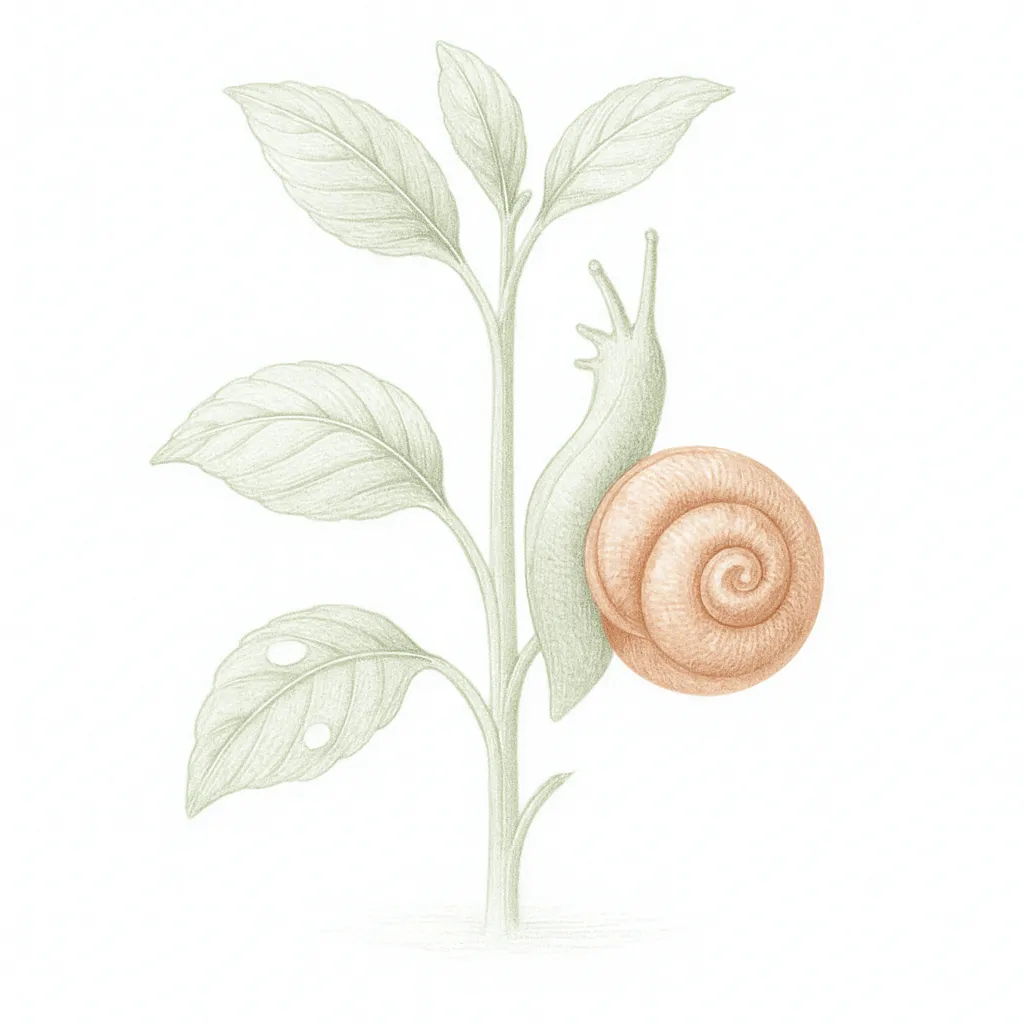
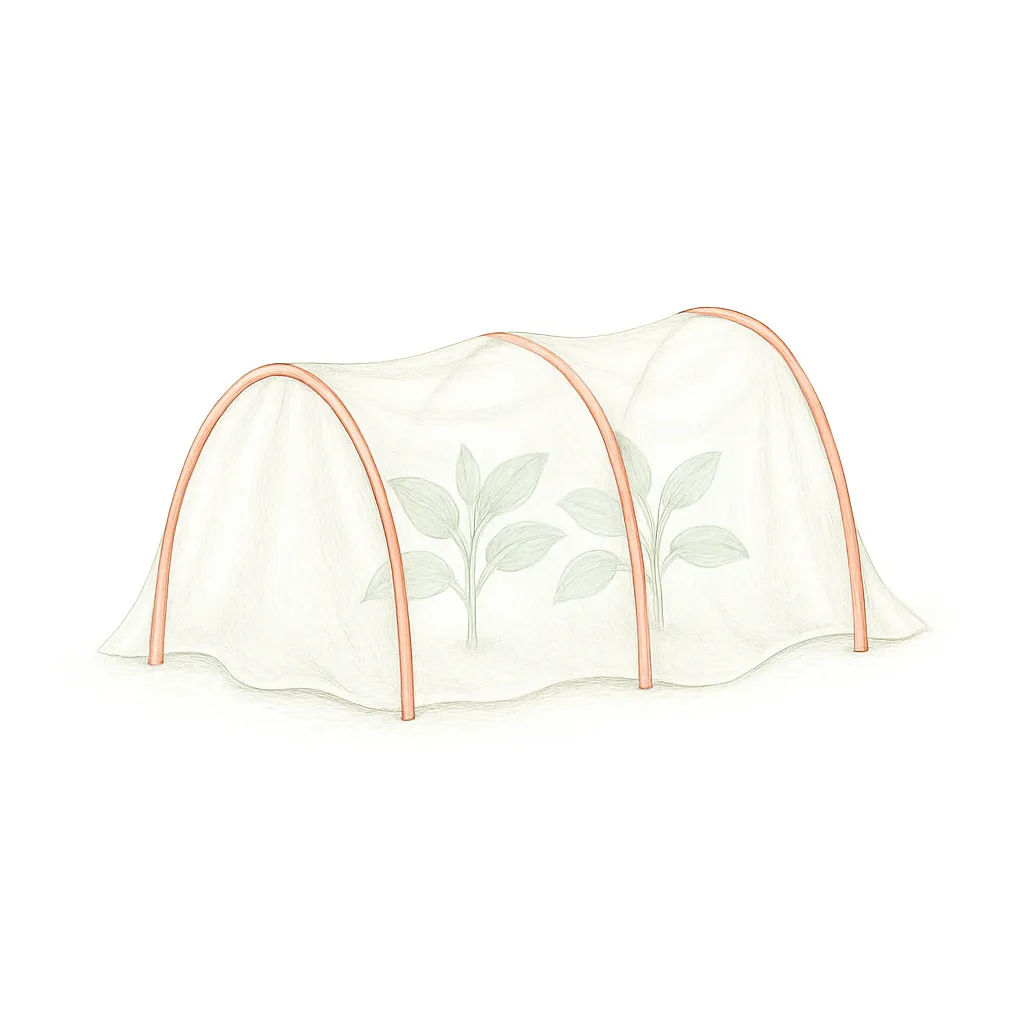
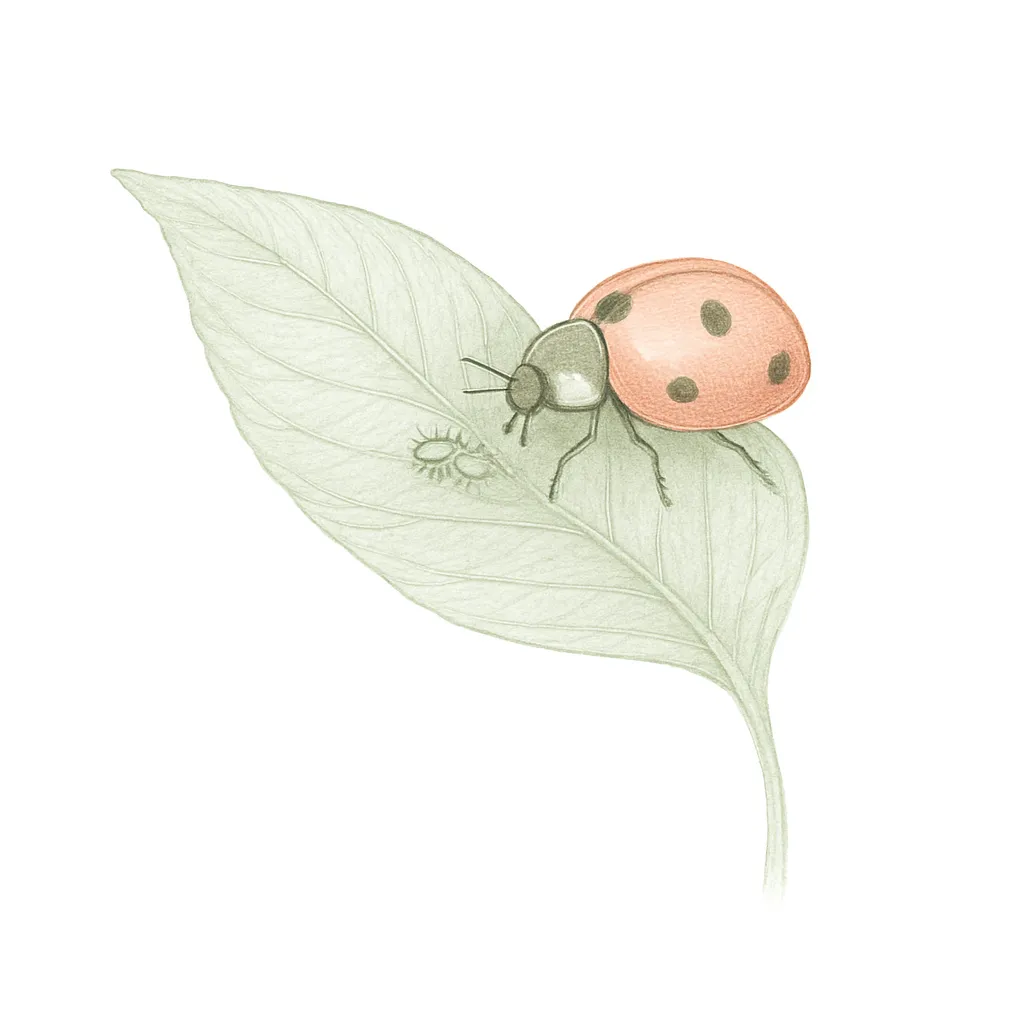
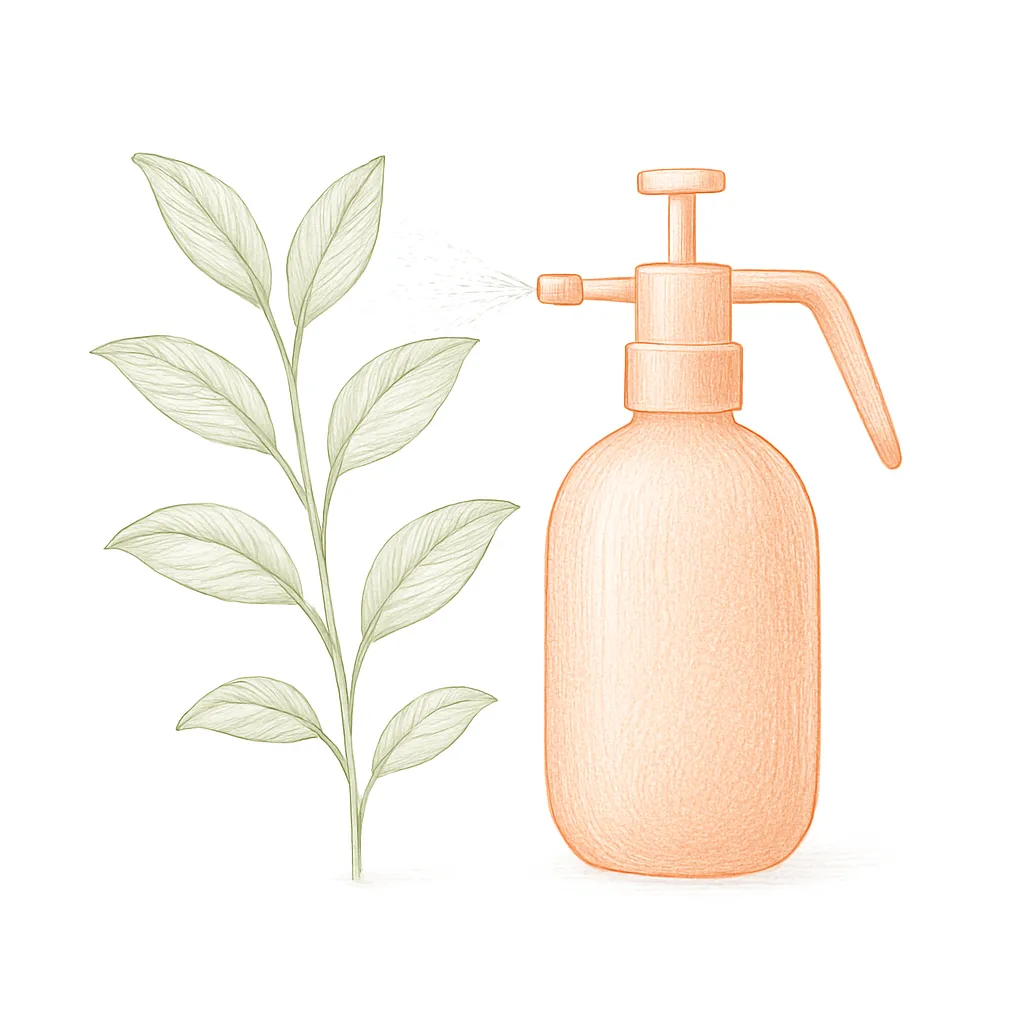
Habits & prevention
Crop rotation
Starve soil pests out
Move each plant family to a new spot every year so soil pests and disease germs that built up under last year's crop have nothing to feed on when the new crop arrives.Rotating a bed out of a plant family for several seasons starves soilborne pathogens and root pests that lack an alternate host, letting soil inoculum decline before a susceptible crop returns.
When to reach for it. A season-to-season foundation wherever a problem survives in the bed between crops, whether it waits in the soil or in last year's debris. Clubroot, black rot and cabbage maggot are the classic cases, and the same move works on cucumber beetles and on the leaf diseases that carry over in old vines.
- Free and preventive; no inputs and no spraying
- Works on soilborne problems that no spray can cure, such as clubroot and black rot
- Slow: soil inoculum takes years to decline, so it prevents rather than rescues
- Needs enough garden space to move families apart, which is hard in a small plot
Clubroot resting spores persist in soil for years, so a rotation of 5 to 7 years away from the cabbage family is needed to help
Verified · Clemson Cooperative Extension Home & Garden Information Center · University of California Agriculture and Natural Resources · University of Minnesota Extension
Garden sanitation
No winter shelter for pests
Clear away old, diseased, or pest-ridden plants and debris so germs and insects have nowhere to shelter and overwinter near next season's crop.Removing and destroying infected residue, culls, and volunteer hosts strips the pathogen and pest reservoir between crops, lowering both starting inoculum and the overwintering population.
When to reach for it. End-of-season cleanup, plus pulling the first affected leaves or fruit during the season. It is the backbone step for anything that spends the winter in the debris you leave behind, from black rot and other diseases with no chemical cure to beetles, borers and slugs sheltering in what is still standing.
- Free and preventive; cuts the carryover of both pests and disease
- The main line of defense where no spray works, as with black rot
- Prevents rather than rescues; it lowers pressure but will not clear an active infection
- Only as good as your thoroughness; missed debris or nearby weeds keep the reservoir alive
Destroy diseased debris rather than leaving or burying it; infected tissue can still carry the pathogen to the next crop
Verified · Clemson Cooperative Extension Home & Garden Information Center · University of California Agriculture and Natural Resources · University of Minnesota Extension
Resistant varieties
Pick a tough crop
Choose a variety bred to shrug off a disease your garden struggles with, so the plant defends itself and you may never need to spray.Cultivars carrying genetic resistance or tolerance resist infection or limit disease development, making variety choice the cheapest and most durable control and the first line of defense.
When to reach for it. Chosen at seed-buying time, and worth checking first for any problem that returns year after year. Most often disease resistance, such as clubroot, downy mildew and black rot, but it also covers varieties a pest is less drawn to, like a tight corn husk against earworm. The natural handoff to variety-level resistance data.
- Built-in protection with no spraying, cost, or labor once chosen
- The first line of defense, and often the only practical control for stubborn soilborne diseases
- Only helps for the specific disease bred against; no variety resists everything
- Resistance can be partial or be overcome by local pathogen strains, so it is not a guarantee
Clubroot-resistant varieties tolerate rather than fully resist the disease
Verified · Clemson Cooperative Extension Home & Garden Information Center · University of California Agriculture and Natural Resources · University of Minnesota Extension
Balanced nitrogen feeding
Lush growth invites pests
Avoid overfeeding with high-nitrogen fertilizer. The soft, sappy new growth that too much nitrogen pushes out is exactly what aphids multiply on, and on a bushy or vining crop that same heavy growth packs the leaves in so tightly that they stay damp long after rain or watering. That damp, crowded growth is what several rots need to get started. Feeding steadily rather than heavily holds down both.One habit, two mechanisms. Excess nitrogen drives flushes of tender growth rich in the soluble nitrogen aphids feed on, boosting their reproduction; feeding modestly with a less soluble form in small portions keeps growth steady and populations lower. On the disease side the lever is canopy architecture rather than tissue chemistry: UC IPM's dry bean guidance is to avoid heavy applications of nitrogen, which can produce excessive canopies, and Clemson writes of watery soft rot that too much fertilizer favors heavy vine growth and creates conditions for the disease to develop. A closed canopy holds leaf wetness and slows drying, which is the microclimate white mold and similar rots need.
When to reach for it. A preventive feeding habit anywhere aphids and other soft-bodied sap-suckers turn up most years, and on bushy or vining crops with a history of canopy rots such as white mold. Heavy nitrogen pushes out both the soft new growth aphids multiply on and the dense growth that keeps a canopy wet, whatever the crop.
- Costs nothing; it is simply not overfeeding
- Improves plant health while lowering both aphid pressure and the canopy density that favors rots
- Preventive only; it lowers aphid buildup and canopy density but will not clear an established colony or infection
- Underfeeding hurts yield, so it is a balance, not a cut
Verified · Clemson Cooperative Extension Home & Garden Information Center · UC IPM -- White Mold (Dry Beans) · University of California Agriculture and Natural Resources
Raise soil pH (liming)
Lime out the clubroot
Add lime to sweeten acidic soil up toward pH 7.2. Clubroot germinates and infects best in sour soil, so raising the pH slows it down.Liming to pH 7.2 or above suppresses clubroot spore germination and root infection; the effect is partial and needs annual reapplication where the pathogen is established, since clubroot favors acidic soil below pH 7.0.
When to reach for it. For clubroot in the cabbage family, paired with long rotation and resistant varieties; there is no chemical cure, so this is a core cultural tool.
- Directly suppresses clubroot, a disease with no chemical cure
- Also corrects overly acidic soil, helping most vegetables grow better
- Partial control; liming slows clubroot but will not eradicate an established infestation
- Slow to act and must be reapplied annually to hold the pH up
Lime this high only to fight clubroot or to correct a tested deficiency; most vegetables prefer a pH near 6.0 to 6.8, so do not over-lime the whole garden
Verified · University of California Agriculture and Natural Resources · University of Minnesota Extension
Airflow and spacing
Let leaves dry out
Give plants room and a sunny, breezy spot so leaves dry quickly after rain or dew. Most leaf diseases need long wet periods to take hold.Wider spacing, pruning excess foliage, and good sun and air movement shorten leaf-wetness duration, denying foliar fungal and bacterial pathogens the sustained moisture they need to infect and sporulate.
When to reach for it. Preventive layout for the diseases that need damp, still air, set at planting by spacing and site choice. Downy mildew and the celery leaf-spot blights are typical, and the same room helps against gray mold, powdery mildew and damping-off in a crowded tray.
- Free and preventive; reduces a wide range of foliar diseases at once
- No inputs and no residue, and it improves light and yield too
- Prevents rather than cures; it slows disease onset but will not stop an active outbreak
- Wider spacing means fewer plants per bed
Verified · Clemson Cooperative Extension Home & Garden Information Center · University of California Agriculture and Natural Resources
Bottom watering
Keep the surface dry
Water from below so the surface of the mix stays drier. A dry surface discourages the damping-off fungi and fungus gnat larvae that need constant moisture.Watering from the tray and letting the media surface dry between waterings denies the saturated top layer that damping-off fungi and fungus gnat larvae exploit, while still keeping the root zone moist; good drainage and avoiding overwatering are the point.
When to reach for it. Indoor trays and seedlings, especially microgreens, where a wet surface drives damping-off and fungus gnats and there is no rescue spray for a raw crop.
- Cuts damping-off and fungus gnats at once by keeping the surface dry
- Simple, free, and leaves no residue on an about-to-eat crop
- Preventive only; it will not save seedlings already collapsing from damping-off
- Needs attention; overwatering the tray undoes the benefit
Verified · University of California Agriculture and Natural Resources · University of Minnesota Extension
Sensible seeding rate
Crowding breeds damping-off
Do not sow seeds too thickly. Crowded seedlings stay damp and stuffy, which is exactly what the damping-off fungi that topple seedlings need.Sowing at a sensible density keeps air moving and humidity down among seedlings, denying damping-off pathogens such as Pythium and Rhizoctonia the stagnant, saturated microclimate they exploit; overcrowded seedbeds are where damping-off typically starts.
When to reach for it. Prevention for damping-off in trays, seedbeds, and dense crops such as microgreens, set at sowing by not overseeding.
- Free and preventive; cuts damping-off and improves seedling vigor
- No inputs and nothing to eat on the crop
- Preventive only; it will not save seedlings already collapsing from damping-off
- Fewer seedlings per tray than a heavy sow
Verified · Penn State Extension · University of Minnesota Extension
Even watering
Steady water, fewer disorders
Keep the soil evenly moist so the plant can move calcium steadily to its fast-growing center. Wild swings between wet and dry are what trigger disorders such as celery blackheart. The same steady watering does a second job on potatoes and beets: the organism behind common scab gets its hold while the soil is dry as the roots are sizing up, so keeping that stretch moist is half of what keeps the skins clean.Uniform soil moisture sustains the transpiration-driven calcium flow to rapidly growing tissue; blackheart and blossom-end rot are localized calcium-deficiency disorders that appear when moisture swings or rapid growth outpace calcium delivery, not usually from low soil calcium. A separate mechanism applies to common scab, caused by the soil bacterium Streptomyces scabies: Clemson records that scab is favored under low soil moisture and that the soil must be kept moist through the active growing period of the tubers, roughly 4 to 9 weeks after planting, and the PNW handbook reports high soil moisture from a week before emergence through eight weeks after reducing scab in trials. Moisture is the half of scab control that acts during the season; holding soil pH down is the other, and neither substitutes for the other. It also holds spider mites down, since they build up fastest on plants that have been left dry and stressed.
When to reach for it. Steady soil moisture instead of a swing between soaked and bone dry. It prevents the calcium-movement disorders such as celery blackheart and blossom-end rot, at roughly 1 to 2 inches per week on shallow-rooted crops, and it holds spider mites down too, since they build up fastest on plants that have been left dry and stressed. On potatoes and beets it is also half of common scab control, where dry soil while the roots are sizing is what lets the scab organism take hold; pair it there with holding the soil pH down, which is the other half.
- Prevents a disorder that no spray can fix, at no cost
- Also steadies growth and yield across the crop
- On a scab-prone bed it is the one control that acts during the season, when the pH decision has already been made
- Preventive only; damaged hearts or fruit will not recover
- Hard to hold steady in hot, dry, fast-growth spells when demand spikes
- The scab benefit is tied to a particular stretch, the weeks when the roots are sizing, so watering that is steady only outside that window buys little
Blackheart can strike even with adequate soil calcium if watering is uneven, so consistent moisture matters more than adding calcium
Verified · Clemson Cooperative Extension Home & Garden Information Center · Michigan State University Extension · Oregon State University Extension · UC IPM Pest Notes -- Spider Mites · University of Maryland Extension
Straw mulch
A layer of straw around and between strawberry plants keeps the ripening berries up off the wet soil. Fruit that is not sitting on damp ground is far less likely to rot with gray mold, and the straw also cuts down on mud splashing onto the fruit.A good layer of straw mulch acts as a barrier that reduces fruit contact with the soil, which helps control fruit rots such as gray mold; keeping berries off wet ground and reducing rain and irrigation splash lowers Botrytis pressure. Pair it with wide spacing and restrained nitrogen so the canopy dries quickly.
When to reach for it. A foundational cultural step for gray mold and fruit rots on strawberries, laid to keep the berries off the soil and reduce splash, alongside good spacing and airflow.
- Keeps fruit off wet soil, which aids greatly in controlling fruit rots such as gray mold
- Reduces rain and irrigation splash and keeps berries cleaner, with no spraying
- Reduces rather than eliminates fruit rot, so it is one part of the program, not a cure
- Works only alongside wide spacing, good airflow, and restrained nitrogen, since a dense damp canopy still rots
Verified · NC State Extension · Ohio State University Extension (Ohioline)
Improve drainage
Root rots need wet soil, and they can get going in as little as four to eight hours of saturated ground. Raised beds, a better-drained spot, and watering that lets the soil drain between soakings remove the condition the disease depends on. There is no spray for this; drainage is the control.Phytophthora and the other soilborne rots are water-mold diseases: free water in the pore space is what lets them move and infect. UC IPM names proper irrigation the single most important preventive measure, and puts the saturation window at four to eight hours. Raised beds are the standard fix for vegetables on heavy ground.
When to reach for it. Any bed with a history of plants wilting and not recovering after watering, and as standard practice on heavy or low-lying ground before planting anything susceptible.
- Removes the condition the disease needs rather than treating the plant
- Costs nothing on a site you have not planted yet, and helps every crop in the bed
- Does nothing for a plant already infected; there is no rescue once roots have rotted
- Rebuilding a bed or changing a site is real work, and not always possible
Verified · University of California Agriculture and Natural Resources
Reflective mulch
Silver-colored mulch laid on the bed bounces light upward and confuses aphids looking for somewhere to land, so fewer settle on young plants. That matters most because aphids carry plant viruses from one plant to the next, and a virus has no cure once it is in. Use it while plants are small; it does less as the canopy closes over it.Silver reflective mulches have been shown to reduce transmission of aphid-borne viruses in summer squash, melon and other susceptible vegetables, by repelling incoming alates rather than by killing anything. The documented benefit is specifically on seedlings and small plants, so the window is early and closes as foliage covers the mulch.
When to reach for it. Vegetables with a local history of aphid-transmitted virus, laid at planting while the crop is still small. Squash, melon and cucumber are the documented cases.
Find it at the store. Sold as silver or metallized plastic mulch; aluminum foil laid on the bed does the same job on a small scale.
- Reduces virus transmission, which no spray can do once a plant is infected
- Kills nothing, so natural enemies are untouched
- The benefit is documented on seedlings and small plants, and fades as the canopy grows over the mulch
- Plastic sheeting to lay, hold down and remove at the end of the season
Verified · University of California Agriculture and Natural Resources
Mulch to steady soil moisture
Lay an inch or two of mulch over the bed once the soil has warmed. It is not there to stop disease; it is there to stop the soil swinging between soaked and bone dry. Those swings are what interrupt the flow of calcium into developing fruit, which is what causes the sunken dark patch on the blossom end. Mulch also keeps the soil cooler and holds the weeds down, so you disturb the roots less.A moisture buffer, not a splash barrier. Calcium moves with water, so the disorder tracks the variance of soil moisture rather than its average, and mulch flattens that variance between irrigations. It pairs with a steady watering schedule rather than replacing one: the mulch smooths what the schedule delivers.
When to reach for it. Fruiting crops with a history of blossom end rot or of splitting, mulched at planting. Distinct from the straw mulch used under strawberries, which is a splash and contact barrier for fruit rots rather than a moisture buffer.
Find it at the store. Straw, shredded leaves, or compost. Anything that holds a loose layer without matting down works; avoid piling it against the stems.
- Addresses the cause of the disorder, which no spray can do
- Also suppresses weeds, so there is less root disturbance from cultivating
- Does nothing for fruit already showing the damage; those are set and will not recover
- Laid too early over cold soil it slows warming, which sets the crop back
Verified · Clemson Cooperative Extension Home & Garden Information Center
Avoid ammonium fertilizers
When you feed a fruiting crop partway through the season, check what form the nitrogen is in. Ammonium-based fertilizers compete with calcium for uptake, so feeding with one can bring on the sunken dark patch on the blossom end even when there is plenty of calcium in the soil. A calcium nitrate feed does the same job without the competition.Cation competition at the root surface, not a soil calcium shortage: ammonium, potassium and magnesium all compete with calcium for uptake, so a heavy sidedress of any of them can trigger the disorder on soil that tests adequate. This is a different lever from balancing nitrogen for soft growth, which is about the flush of tender tissue that soft-bodied pests feed on.
When to reach for it. Sidedressing tomatoes, peppers and other fruiting crops where blossom end rot has appeared before, especially early in the season when fruit is sizing.
Find it at the store. Read the label for the nitrogen source. Ammonium sulfate and ammonium nitrate are the ones to skip mid-season; calcium nitrate is the usual substitute.
- Costs nothing, since it is a choice between products you were buying anyway
- Works on soil that already tests adequate for calcium, where adding more does nothing
- Only relevant if you sidedress at all; it changes nothing for an unfed crop
- Does not fix fruit already affected, and will not help if the real problem is uneven watering
Soil pH governs how much calcium is available in the first place, so a soil test is worth more than a fertilizer swap if the disorder recurs every year.
Verified · Clemson Cooperative Extension Home & Garden Information Center
Water at the base
Put the water on the ground at the foot of the plant instead of spraying it over the leaves. Most leaf diseases travel in splashing droplets and need the foliage to stay wet to take hold, so a plant whose leaves stay dry gives them far less to work with. Watering early in the day helps for the same reason: the surface has hours to dry.Two mechanisms, not one. Directing irrigation to the soil removes the splash that carries spores and bacteria from soil and lower foliage onto clean tissue, and it shortens the leaf-wetness period that most foliar pathogens need to germinate. On a damp-loving pest such as a slug it works differently again, by drying the surface before the nocturnal feeding window rather than by interrupting any infection.
When to reach for it. Outdoor plantings with splash-dispersed foliar disease, and beds where slugs are sustained by a surface that stays damp. Distinct from bottom watering, which is a tray and seedling technique for keeping a potting mix surface dry.
Find it at the store. A watering can with the rose taken off, a hose laid at the soil, or a soaker line. Anything that keeps the spray off the leaves.
- Removes the dispersal route rather than treating the plant, so it helps every splash-spread problem in the bed at once
- Costs nothing beyond changing how you already water
- Preventive only; it does nothing for tissue already infected
- Rain does the same job as overhead watering, so in a wet spell it buys much less
Verified · Clemson Cooperative Extension Home & Garden Information Center · UC IPM -- Bacterial Speck (Tomato) · UC IPM Pest Notes -- Snails and Slugs
Off-season tillage
Turn the soil over in the bed once the crop is finished. Some caterpillars drop off the plant and spend the winter underground as pupae, the resting stage between caterpillar and moth. Digging the bed opens those chambers up and leaves the pupae exposed to cold, to birds, and to drying out, so fewer moths reach next year's crop.Working the top few inches of a finished bed disrupts the pupal cells of soil-pupating Lepidoptera such as the hornworms, killing some outright and exposing the rest to predation and desiccation. It acts on next season's emerging adults rather than on anything currently feeding, so the payoff is a year out and the timing is after harvest, not during it.
When to reach for it. A finished bed that carried a pest which stays put over the winter, worked once after harvest. That may be pupae in the soil, as with tomato hornworm, or caterpillars inside old stalks, as with European corn borer, where shredding and turning the stalks under is what reaches them. Distinct from garden sanitation, which clears the surface rather than breaking up what sits in it.
- Free, needs no product, and acts on the overwintering stage rather than the feeding one
- One pass after harvest, on ground you are clearing anyway
- Does nothing for the current season's caterpillars, which are already feeding
- Only reaches pests that pupate in the soil of that bed, and adults can fly in from elsewhere
Tillage works against no-dig beds and against soil structure and earthworms, so weigh it where the pest pressure is light and handpicking is keeping up
Verified · University of Minnesota Extension
Clean planting stock
Start the planting from material that is not already carrying the problem: tested or treated seed, healthy bought transplants, or, if you propagate your own, cuttings, crowns or divisions taken only from a clean plant. Several diseases, and a few pests, arrive inside the planting material rather than turning up later, and for most of those there is no cure once a plant has it, so this is the decision that does the work.Seed- and propagule-borne inoculum starts an epidemic inside the planting rather than at its edge, which is why clean stock sits ahead of every in-season measure for these diseases. Basil downy mildew is seed-borne, and seed is now lab-tested and steam treated for it, though basil seed is not amenable to hot-water treatment because it produces a gelatinous exudate in water. Artichoke curly dwarf runs the other way: there is no evidence it is seedborne, so seed and the transplants raised from it are the clean route into new ground where a crown division would carry the virus in. The same logic reaches planting-stock-borne nematodes: the stem and bulb nematode arrives inside infected garlic cloves, and no in-season measure reaches a pest already inside the tissue you planted. It reaches insects on the same footing where the insect spends part of its life inside the tissue being moved: UC IPM states that clean planting stock is needed to reduce the movement of infested plant stock from one field to another for raspberry crown borer, a larva that feeds inside the crown and travels with the plant.
When to reach for it. Problems that travel in the planting material itself: seed-borne foliar and vascular pathogens, viruses carried in cuttings, crowns or divisions, the nematodes that ride inside seed cloves, bulbs and sets, and the insects that overwinter inside crowns, slips and roots. Set once, at purchase or propagation, before anything is in the ground.
Find it at the store. Look for seed and plants sold as certified disease-free or pest-free, pathogen-tested, or steam or hot-water treated; for transplants, slips and crowns, inspect them before buying and pass over any with spotting, mottling, wilt, or holes and tunneling at the base.
- Acts before planting, on problems that have no cure once the plant has them
- One decision covers the whole planting, and it costs nothing extra to inspect a transplant
- Does nothing about the same problem arriving from outside the garden later
- Tested or treated seed is not offered for every crop, and not every treatment suits every seed
Verified · Cornell Cooperative Extension · UC IPM -- Raspberry Crown Borer (Caneberries) · University of California Agriculture and Natural Resources
Prompt harvest
Pick fruit as it ripens instead of letting it hang, and clear away anything that has gone over or dropped. Soft, over-ripe fruit is what draws sap beetles and vinegar flies, and they are what carry the organisms that sour the fruit from the inside. Tightening how often you pick leaves less of that sitting there at any one time.Harvest interval is the control variable. Over-ripe and fallen fruit is the substrate that recruits driedfruit beetles and vinegar flies, which are the primary carriers of the souring organisms, so shortening the interval and removing drops together lower both the attractant and the inoculum. On a crop that ripens over many weeks the planting is exposed repeatedly, which is what makes picking frequency worth treating as a control rather than as harvesting.
When to reach for it. Fruit crops where over-ripe or fallen fruit feeds the problem: fig souring, fruit rots, and sap beetles, and where birds and squirrels take ripe fruit. Distinct from garden sanitation, which removes debris and culls you never intended to eat; this is about taking the crop you do want, sooner.
- Costs nothing and uses a job you are doing anyway
- Acts on the attractant itself, which matters where no spray reaches the organism inside the fruit
- Needs a short, regular interval through ripening, not a single pass
- Does nothing about fruit already affected, which has to come off and be disposed of
Verified · University of California Agriculture and Natural Resources · University of Maryland Extension
Sound sowing practice
Get the seed up fast and it spends less time at risk. Sow fresh seed at the depth it calls for rather than deeper, wait for the soil to warm enough for quick germination, and keep the bed moist without letting it sit wet. Seedlings are vulnerable to damping-off only until they are up and growing, so anything that shortens that window is doing the work.Damping-off risk is a function of how long the seed and hypocotyl sit in the susceptible stage, so depth, seed vigor and soil temperature act together by compressing that window: vigorously growing seedlings pass through it fairly quickly and become established plants. UC IPM puts general planting depth at about twice the width of the seed and favorable germination temperatures at 65 to 70°F for most seeds, and NC State names proper planting depth and soil temperature as the levers that assure rapid emergence. Keeping the medium moist but not saturated denies the pathogens the free water they need without checking growth.
When to reach for it. Direct-sown beds and seed trays with a damping-off history, set at sowing by seed quality, depth, soil warmth and restrained watering. Distinct from sensible seeding rate, which is about sowing DENSITY and crowding rather than about how fast the seed comes up.
Find it at the store. Check the seed packet for its sow-by date and its depth; if a crop has a hard or corky seed, look up whether a presoak is usual for it.
- Free, and it is set once at sowing rather than managed through the season
- There is no home rescue for damping-off once it starts, so the sowing decisions carry the load
- Prevention only; it does nothing for seedlings that have already collapsed
- Waiting for warm-enough soil can mean sowing later than you wanted to
Verified · NC State Extension · University of California Agriculture and Natural Resources
Grafting onto resistant rootstock
A grafted plant is two plants joined: the root system of a variety that resists a soil disease, carrying the top of the variety you actually want to eat. It is the way to keep growing a susceptible favorite on ground where a soil disease is established, since the roots are where these diseases get in.Soilborne vascular pathogens invade through the roots, so a resistant rootstock intercepts the infection court while the scion supplies the fruit. UMN states that varieties without resistance can be grafted onto disease-resistant rootstock, which is what makes it the option for heirlooms on infested ground: they carry none of the bred resistance, and the pathogen survives as resting structures in soil for many years, so rotation alone does not clear a bed.
When to reach for it. A susceptible variety you want to keep growing on ground where a soilborne wilt is already established. Distinct from resistant varieties, which is choosing a different cultivar outright; here you keep the cultivar and change its roots.
- Keeps a susceptible favorite growing on ground a rotation cannot clear
- Acts at the root, which is where soilborne wilts get in
- Grafted plants cost more, and grafting your own takes practice
- Protects against what the rootstock resists and nothing else
Verified · University of Minnesota Extension
Timing the planting
Some insects turn up in one predictable stretch of the season. If the crop gets through its tender stage before they arrive, or starts late enough that they have finished laying eggs, it can miss the worst of the damage without treating the plant at all. Sowing a second, quick crop after the flight is over is the usual form, and sowing very early is the same idea from the other end. It leans on knowing when the insect shows up where you live, so check what your own extension service publishes before moving a sowing date.Phenological avoidance: shift the planting date so the susceptible window falls outside the pest's flight or feeding peak, instead of controlling the insect once it is present. UMN's squash vine borer guidance is the clean case, with adults emerging in late June or early July and a second sowing of summer squash in early July maturing after egg laying has finished. Clemson makes the same move on Mexican bean beetle from the other direction, noting that most damage occurs during July and August and that quick-maturing beans sown very early or during late summer may escape damage. Both rest on a local emergence window, so the dates travel poorly between regions and are worth confirming against local guidance before a sowing plan is built on them.
When to reach for it. A pest whose damage falls in a predictable, locally published stretch of the season, on a crop quick enough to finish before it or start after it. The two documented cases differ in shape: the squash vine borer has a single flight to get behind, while the Mexican bean beetle runs several generations a year whose damage still concentrates in July and August. Distinct from crop rotation, which moves the planting in space; this one moves it in time.
- Costs nothing and adds no material, since the only thing that changes is the sowing date
- Acts before the pest arrives, which matters most where nothing sprayed reaches the insect afterward
- Helps only where the pest has a defined season; one active all season is barely affected
- A shifted sowing date trades against the harvest window, and a late crop can run into frost
Emergence dates shift with the region and the season, so treat a published window as a starting point and confirm it locally rather than carrying a date across regions
Verified · Clemson Cooperative Extension Home & Garden Information Center · University of Minnesota Extension
Staying out of wet foliage
Wait until the leaves have dried before going in to pick, tie, or weed. Bacteria and fungal spores travel in the film of water sitting on a wet leaf, and hands, sleeves, and tools carry that water from an infected plant to a healthy one. Doing the same job a few hours later, once the sun has dried the row, costs nothing and takes that route away.Free moisture on the leaf surface is the transport medium for splash-dispersed bacteria and for many foliar fungi, and a person moving through a wet canopy is an efficient vector: contact carries inoculum along the row in a pattern the pathogen would not reach on its own. Clemson names it directly for the bean bacterial blights, to avoid overhead watering and not touch plants when the foliage is wet, and UMN generalizes it to the home garden, that fungi and bacteria easily spread under these conditions. It is a scheduling rule rather than a treatment: delay picking, staking, and weeding until dew, rain, or irrigation has dried off.
When to reach for it. Any bed carrying a bacterial or splash-spread foliar disease, applied by choosing WHEN you work rather than what you apply. Distinct from watering at the base, which changes where the water goes; this one changes where you go, and it still applies after rain or dew, which no irrigation choice controls.
- Costs nothing and adds no material, since it only moves a job by a few hours
- Covers the case an irrigation change cannot, because rain and dew wet the canopy anyway
- Preventive only; it slows spread and does nothing for tissue that is already infected
- Awkward in a wet spell or a shaded bed, where the foliage may not dry until midday
This lowers the rate of spread rather than stopping an infection that is already established, so it belongs alongside the other steps rather than in place of them
Powdery mildew is the exception and this does not act on it: USU notes that powdery mildews do not spread in rain or free water, needing only high humidity or dew for a few hours, so on that one disease it is airflow and spacing that do the work here, not staying out of a wet planting.
Verified · Clemson Cooperative Extension Home & Garden Information Center · University of Minnesota Extension · Utah State University Extension
Clearing the weeds that host it
Some pests and diseases spend part of the year on weeds in and around the bed, then move onto the crop as it comes up. Clearing those weeds before you sow, and keeping the edges of the bed clear through the season, takes away the place the problem waits in. It helps most where the weeds are close relatives of the crop, because those are the ones that host the same trouble.Weedy alternate hosts are a reservoir, and removing them lowers the starting pressure rather than treating the crop. UC IPM puts the aphid case concretely, that some aphids build up on weeds such as sowthistle and mustards and move onto related crop seedlings after they emerge, and its instruction is to check surrounding areas for sources before planting vegetables and remove them. For thrips it is the same move, to control nearby weeds that are alternate hosts. On the disease side the relationship runs by family: USU's guidance on pea powdery mildew is to remove weeds in the legume family along with infected debris. Timing matters more than thoroughness here, since the clearance is worth most before the crop emerges.
When to reach for it. A bed with a history of aphids, thrips, or a foliar fungus whose weedy relatives grow nearby, cleared before sowing and kept clear at the edges. Distinct from garden sanitation, which removes the CROP's own debris, mostly after harvest; this removes OTHER plants that host the problem, mostly before the crop is up.
- Costs nothing but the weeding you were half doing anyway, and it acts before the crop is exposed
- Lowers the pressure behind several problems at once, since one weedy patch often hosts more than one
- Preventive only; it does nothing about a colony or an infection already on the crop
- Only as good as your reach, since a reservoir over the fence is outside what you can clear
The relationship is host-specific rather than general tidiness, so it is worth knowing which weeds host the problem before clearing ground that was doing no harm
Verified · UC IPM Pest Notes -- Thrips · University of California Agriculture and Natural Resources · Utah State University Extension
Splash-barrier mulch
A layer of mulch over the soil under the plant puts a barrier between the ground and the leaves. Many leaf diseases wait in the soil and ride rain splash up onto the lowest leaves, and mulch stops that ride at the ground.Mulch covering the soil surface interrupts rain-splash dispersal of soilborne inoculum onto the lower canopy; landscape fabric, straw, plastic mulch, or dried leaves all serve, laid before the splash-driven part of the season.
When to reach for it. Under plants whose leaf diseases carry over in the soil and reach the foliage by rain splash, such as the tomato leaf blights and spots, laid at planting. Distinct from moisture buffering mulch, which manages soil moisture swings for disorders such as blossom end rot, and from straw mulch, which is a fruit-contact and splash barrier under strawberries.
Find it at the store. Any common garden mulch works as the barrier: straw, dried leaves, landscape fabric, or plastic mulch from the garden center.
- Blocks the main soil-to-leaf route of splash-dispersed diseases without any spray
- Several everyday materials work: landscape fabric, straw, plastic mulch, or dried leaves
- Does nothing against disease already on the foliage or arriving by air
- Needs to be in place before the splashy weather, not after spots appear
Do not use grass clippings or leaves from a lawn treated with an herbicide; residues carried in the mulch can injure the crop, and tomatoes are sensitive to many lawn herbicides
Verified · University of Minnesota Extension
Trap cropping
A trap crop is a small patch of something the pest likes better than your crop, planted nearby so the insects gather there instead of on the row you care about. It goes in about two weeks ahead of the main crop and a short distance away, because these pests head for whatever is up and flowering first. The patch is meant to be given up rather than harvested. What matters most is the step after that: once the pest has collected on it, you pull the patch out or treat it, and you do that before the insects breed and spread. A loaded patch left standing works as a nursery, raising more of the pest right beside the bed you were trying to protect.A more attractive host is established ahead of the main crop to aggregate a pest away from it. UGA defines a trap crop as a sacrificial plant that draws damaging insects off the desirable crop, and because the trap pulls hardest once it begins to flower or seed, it says to establish it earlier, about two weeks ahead and 8 to 12 feet away; UF/IFAS puts a perimeter planting at a 5 foot minimum. The removal step is what separates a trap from a reservoir. UF/IFAS is explicit that once the insects have established on the trap you have to eradicate them to stop them moving on to the main crop, and UMass states the deadline as a generation, that the trap crop must receive an insecticide application or be mechanically destroyed before eggs hatch. Leave that step out and the tactic inverts: the aggregation is then a local population increase held beside the crop.
When to reach for it. A bed with a recurring insect that has a strong host preference, where the crop's own guidance names a plant that pest prefers and there is room for a patch you intend to sacrifice. Distinct from clearing the weeds that host it, which REMOVES a host plant to lower the pressure; this deliberately ADDS one to concentrate it. Distinct from crop rotation, which moves the crop away from the problem; this leaves the crop where it is and changes what grows beside it. Worth choosing only if the patch will actually be pulled or treated on time, because an untended trap does the reverse of what it was planted for.
Find it at the store. Nothing to buy but seed for the patch, and the plant to use is the one your crop's guidance names: most often mustard for cabbage-family pests, and nasturtium for flea beetles on peppers and eggplant. Cheap, fast seed is the right choice, since the patch is not going to be harvested.
- Costs a packet of seed and a corner of the bed, and it reaches pests that are hard to treat once they are on the crop
- Gathers the pest into one small patch, so handpicking or one spot treatment can do the work of a whole-bed spray
- Suits organic and low-input gardens, because the control step can be pulling the patch rather than spraying it
- Works only where the pest clearly prefers the trap plant over the crop, so the choice of plant carries the result
- Needs space and planning: the patch goes in about two weeks ahead of the crop and a few feet away from it
- Adds work rather than removing it, since the patch has to be watched and then destroyed on time
The patch has to be pulled or treated before the pest breeds. UMass states it as a deadline, that the trap crop must receive an insecticide application or be mechanically destroyed before eggs hatch, and UF/IFAS that once the insects have established on the trap you have to eradicate them to keep them from moving on to the main crop.
A loaded trap left standing works in reverse, raising the local pest population and holding it next to the crop it was meant to protect. If the patch will not be tended and removed on schedule, this is not the rung to choose.
Give the patch some distance rather than tucking it against the row: UGA puts the working separation at 8 to 12 feet and UF/IFAS at a 5 foot minimum for a perimeter planting.
Verified · UMass Extension Vegetable Program · University of Florida IFAS Extension · University of Georgia Cooperative Extension
Disease-escape sowing
Some leaf diseases only get going late in the season, once the weather turns their way. Sowing early means the crop is nearly finished by the time that weather arrives, so there is less for the disease to spoil. It does not stop the disease from showing up; it moves the crop out of its path. The catch sits at the other end of the season: seed sown too early waits in cold, wet soil, where it can rot before it comes up. So this works best on quick crops, sown as early as the soil honestly allows and no earlier, with a resistant variety doing the rest of the work.A sowing date is chosen so the crop completes its vulnerable stretch before a weather-driven foliar epidemic builds. The pressure is seasonal and one-sided: Cornell first observes common rust in New York sweet corn from mid-June onward and calls it prevalent in late season plantings, and WSU states the escape for peas directly, plant peas early, spring crops seldom show serious damage, with powdery mildew often worse in the fall. The escape shortens the overlap between green leaf and disease weather rather than preventing infection, which is why the same sources put resistant varieties beside it. And the race can be lost at the start instead of the end: NC State puts the floor under the early edge, seed planted in moist soil below 50°F will often rot, 60°F for the high-sugar corn genetics, so the date moves to the front of the window the seedbed allows and stops there.
When to reach for it. A quick-maturing, direct-sown crop facing a foliar disease whose weather arrives late in the season, where the crop's own guidance says an early sowing matures ahead of it. Distinct from dodging a pest's flight window, which extension services publish as local calendar or degree-day dates; the epidemic this races is weather-driven with no published start date, so the escape rests on finishing early, not on missing a documented window. Distinct from resistant varieties, which change what you plant rather than when; the two sit together at the front of a ladder and the sources name them in the same breath. Not worth forcing where the seedbed stays cold and wet, because seed rot can cost the stand before the disease would have cost the crop.
Find it at the store. Nothing to buy: this is a decision made at sowing time. Check the seed packet's days to maturity and your area's planting window, and put the sowing at the early end of that window rather than the late end. A soil thermometer is the one cheap tool worth having, since the same early date that beats the disease can be too cold for the seed.
- Costs nothing but a calendar decision, settled once on sowing day
- Shortens the weeks the crop and the disease weather overlap, so even a bad disease year does less damage
- Pairs naturally with a resistant variety, and together they are decisions made before anything is in the ground
- Only helps against a disease that builds late in the season, and does nothing against one that arrives early in your area
- The early end of the window carries its own risk, since seed sown into cold, wet soil can rot before it comes up
- The margin depends on the year, and a season where the disease weather comes early shrinks the escape
The race can be lost at the start instead of the end. Seed sown into cold, wet soil can rot before it emerges: NC State puts the working floor for sweet corn at 50°F soil for standard varieties and 60°F for the high-sugar types, and states that seed planted in moist soil below those temperatures will often rot. Sow at the early edge of what the seedbed allows, not past it.
An early sowing shortens the crop's overlap with the disease weather rather than preventing infection, so it is a companion to a resistant variety, not a substitute for one. The sources that state the escape put resistance first in the same sentence.
This helps only where the disease pressure genuinely builds late, the pattern Cornell documents for sweet corn rust, first seen from mid-June onward and prevalent in late season plantings, and WSU for pea powdery mildew, often worse in the fall. Where the disease arrives early, an early sowing buys little and the cold-soil risk remains.
Verified · Cornell Cooperative Extension · NC State Extension · Washington State University Extension
Cure and store the harvest
Curing is a short holding period right after you lift the crop, before it goes into storage. Held at the right warmth and dampness for its kind, the crop dries its outer skin down and heals over the small nicks and scrapes that digging tends to cause. Those wounds are the way most storage rots get in, so closing them is what buys the months that follow. Then the cured crop goes somewhere with the temperature and dampness that suit it, and anything bruised or already spotted is set aside to eat first rather than put in with the rest. The conditions are different for each crop, so follow the ones on this crop's own page rather than borrowing another's.Curing is a post-harvest wound-healing and skin-set period; storage is holding the cured crop at conditions the pathogens cannot work in. UMass puts the mechanism plainly for alliums: a healthy onion with a well cured neck is rarely infected with neck rot during storage. The same source pairs it with handling, avoiding bruising and other mechanical injury at harvest and inspecting bulbs before storing so symptomatic ones are discarded rather than seeding the bin. UMN describes the potato version as holding tubers warm and ventilated so the skin sets and wounds heal. The conditions are crop-specific and they conflict across crops: alliums cure warm and dry then store just above freezing, potato cures warm then stores cold and damp, and sweet potato cures hot and humid then stores near 50°F to 55°F because it is injured by cold. Take the numbers from the crop, not from this page, and treat a figure carried across crops as a mistake rather than a shortcut.
When to reach for it. Bulb, root and tuber crops lifted to be kept, where the loss shows up in the bin weeks later rather than in the bed. It is the main control available for the storage rots, which have no spray. Distinct from prompt harvest, which is about taking the crop you want sooner, and from garden sanitation, which removes culls and debris you were not going to eat; this one is what you do to the crop you have already lifted.
- The main control there is for storage rots, which have no home spray once they start
- Costs nothing but time and a suitable corner, and it improves eating quality as well as keeping quality
- Does nothing for a crop already infected in the ground; it protects sound produce rather than rescuing damaged produce
- Needs a space you can hold at the right warmth and dampness, which is the hard part in a small household
The curing and storage conditions belong to the crop and they genuinely conflict between crops. Holding sweet potatoes at the temperature that suits onions gives them chilling injury, so take the figures from the crop's own guidance rather than from another crop's
Set aside bruised, cut or spotted produce to use first instead of storing it, since one rotting item spreads to what it touches
Verified · NC State Extension · UMass Extension Vegetable Program · University of Minnesota Extension · Utah State University Extension
Lower soil pH (and hold the lime)
Common scab is a soil organism that does well in sweet soil and poorly in sour soil, so holding the bed on the acid side of neutral takes away the conditions it wants. In practice that mostly means leaving the lime and the wood ashes off this bed rather than adding anything, since both push the soil the wrong way. Test before you change anything: this is a bed-by-bed decision on ground with a scab history, not something to do to a whole garden, because most vegetables want soil closer to neutral than the potatoes do.Common scab is caused by Streptomyces scabies, a filamentous soil bacterium that the PNW handbook records on beet, potato, parsnip, carrot and radish. Neutral and alkaline soils favor it and it persists only briefly in acidic soil, so the control is holding pH down rather than applying anything. Clemson puts the potato target at pH 5.0 to 5.2, notes that scab is most severe above pH 5.5, and draws the practical conclusion: avoid alkaline materials, especially lime and wood ashes. The PNW handbook gives the looser beet-scale version, lower the soil pH where it is at or above 7.0. Scabbed produce is cosmetic and still edible after peeling, so this is a quality control rather than a yield rescue, and it is set before planting by what you do and do not add.
When to reach for it. A bed with a history of common scab on potatoes or beets, decided before planting by holding off on lime and wood ashes rather than by applying a product. Distinct from raising soil pH, which is the clubroot method and moves the soil the opposite way: the two are named alike, point in opposite directions, and reaching for the wrong one makes the problem worse. Pair it with even watering, which carries the soil-moisture half of scab control.
- Acts on the condition the organism needs rather than treating a crop that has no spray control available
- Mostly a decision to leave something out, so it costs nothing on a bed you already know has a scab history
- Slow, since soil pH moves over seasons rather than weeks, and it is prevention for next year's crop rather than a fix for this one
- Partial on its own; the sources pair low pH with steady soil moisture during tuber formation, and skipping that half gives up much of the benefit
Most vegetables prefer soil near pH 6.0 to 6.8, so hold this bed low for the crop that needs it rather than acidifying a whole garden, and test the soil before changing it
Do not confuse this with raising pH for clubroot in the cabbage family, which is a different problem asking for the opposite move
Verified · Clemson Cooperative Extension Home & Garden Information Center · Oregon State University Extension
Barriers & hands-on
Floating row cover
Fence the pests out
A light fabric laid over the plants is a physical fence: the moths, flies, and beetles cannot reach the plants to lay eggs or feed. Put it on right after planting.Floating row cover physically excludes egg-laying adults such as cabbage butterflies and moths, cabbage maggot flies, and flea beetles when installed before the pest's flight; timing to the pest's emergence and sealing the edges are what make it work.
When to reach for it. Preventive exclusion from transplanting until the pest's egg-laying period passes, for cabbageworms, flea beetles and cabbage maggot. It is also the main defense against a disease with no cure once it arrives, such as bacterial wilt, where keeping the carrier insect off young plants is the lever that works. Remove for pollination if the crop needs it.
- Excludes several pests at once with no spraying and no residue
- Very effective when installed before the pest starts to fly
- Must be on before the pest arrives and sealed at the edges, or it fails
- Traps heat and blocks pollinators, so it comes off once the crop needs bees or in hot spells
Do not lay row cover over a bed where the same-family crop grew last year, or emerging soil pests can be trapped under it with the crop
Verified · University of California Agriculture and Natural Resources · University of Minnesota Extension
Handpicking
Oldest trick, still best
Pick the caterpillars, beetles, and their eggs off by hand and drop them into soapy water. In a small garden this alone can keep chewing pests in check.Physically removing larvae, adults, and egg masses, checking leaf undersides, directly lowers the feeding population; most practical at low densities and in small plantings, and best done on a regular scouting schedule.
When to reach for it. Low to moderate numbers of anything big enough to spot and slow enough to catch, on a regular scouting routine: cabbageworms, cutworms, beetles, squash bugs, slugs and snails. Best in a small garden where you walk the rows anyway.
- Free, immediate, and completely selective; no harm to beneficials or the crop
- No residue and safe right up to harvest
- Labor-intensive and impractical at high densities or larger scale
- Misses hidden eggs and tiny larvae, so it must be repeated
Verified · UC IPM Pest Notes -- Snails and Slugs · University of California Agriculture and Natural Resources · University of Minnesota Extension
Stem collars
Armor for young stems
A collar of cardboard or foil around a young transplant's stem, pushed into the soil, blocks cutworms from reaching and cutting the stem at the soil line.A rigid collar of cardboard, stiff paper, or foil set a few inches into the soil and standing several inches above it forms a barrier cutworm larvae cannot cross to girdle the stem; most valuable during the vulnerable transplant-establishment window.
When to reach for it. Protecting individual transplants from cutworms during establishment, most practical in small gardens.
- Cheap, non-toxic, and completely selective
- Protects each transplant through its most vulnerable stage
- Labor-intensive per plant, so it suits small plantings
- Only guards against soil-line stem attackers, and only while the collar is in place
Verified · University of Minnesota Extension
Water spray
Blast aphids off leaves
A strong stream of water from the hose knocks aphids off the plant. Most cannot climb back on, and it costs nothing.A forceful water spray dislodges aphid colonies from sturdy plants, and dislodged aphids largely fail to reestablish; spraying early in the day lets foliage dry quickly and limits disease.
When to reach for it. Early aphid clusters on sturdy plants, as a first physical knock-back before considering any spray.
- Free, immediate, and leaves no residue
- Preserves natural enemies entirely
- Temporary; colonies can rebuild, so it may need repeating
- Not suitable for tender seedlings that a strong stream would damage
Spray early in the day so foliage dries quickly, since prolonged leaf wetness can promote disease
Verified · UC IPM Pest Notes -- Spider Mites · University of California Agriculture and Natural Resources
Yellow sticky traps
Catch the fliers early
Bright yellow cards coated in glue attract and catch flying insects such as fungus gnat adults. They help you monitor and knock down the flying stage.Yellow sticky traps exploit the insects' attraction to yellow to capture and monitor adult flies such as fungus gnats and winged aphids; in containers, small squares on skewers trap emerging adults and gauge population trends.
When to reach for it. Monitoring and reducing adult fungus gnats around trays and houseplants, and catching winged aphids and other small flying pests.
- Cheap, non-toxic monitoring plus modest control of the flying stage
- Gives an early warning of a building population
- Catches only flying adults, not the damaging larvae in the media
- Can also catch some small beneficials
Verified · University of California Agriculture and Natural Resources
Bagging fruit
Slip a small paper bag over each young apple and staple it shut. The bag is a physical wall: codling moths and apple maggot flies cannot reach the fruit to lay their eggs, so the apple grows clean inside.Enclosing individual fruit in standard paper lunch bags about four to six weeks after bloom, when the fruit is 1/2 to 1 inch across, excludes egg-laying codling moth and apple maggot. UC IPM calls it the only nonchemical method effective enough to use alone, even under high pressure; thin to one fruit per cluster, slit the bag bottom, slip the fruit through, and staple it around the stem.
When to reach for it. A spray-free way to protect a manageable number of apples on a backyard tree from codling moth and apple maggot, worth the labor when you do not have too many fruit.
Find it at the store. Use ordinary paper lunch bags (about 7 by 4 inches) from the grocery store and a stapler; special fruit-protection bags and nylon footie sleeves are also sold online.
- Excellent, spray-free control of codling moth and apple maggot, effective enough to use on its own
- No residue, and the fruit inside grows clean
- Very time consuming, since every fruit is bagged by hand, so it suits only a small number of apples
- Red varieties may not color up fully inside the bag, and short-stemmed varieties are hard to bag
Verified · University of California Agriculture and Natural Resources · University of Minnesota Extension
Kaolin clay film
Kaolin clay is a fine white mineral powder you mix with water and spray on the tree. When it dries it leaves a chalky film that irritates insects and hides the fruit, so pests find the tree an unpleasant place to feed or lay eggs and move on.Kaolin, sold as a wettable particle film, dries to a layer of interlocking microscopic particles on leaves and fruit; the particles agitate and repel insects and mask the host visually, deterring feeding and egg-laying. It gives strong control of apple maggot and fair to moderate control of plum curculio and fruit-boring caterpillars such as codling moth, and needs reapplying to keep new growth and washed-off surfaces covered.
When to reach for it. An organic-acceptable repellent barrier for apple maggot, and partial help against plum curculio and codling moth, on backyard trees where you will reapply through the season.
Find it at the store. Sold as a kaolin clay particle film, most commonly under the Surround WP name, in the tree-fruit or organic pest section; look for kaolin clay as the active ingredient.
- Repels several fruit pests at once and is accepted for organic use, giving strong control of apple maggot
- Works as a physical film barrier and repellent rather than a nerve poison
- Only fair to moderate on plum curculio and codling moth, so it reduces rather than eliminates damage
- Leaves a chalky white residue that must be washed off the fruit, and needs frequent reapplication to stay effective
University trials show heavy use can harm beneficial species and lead to a flare-up of European red mites or San Jose scale
Verified · Apples -- Cooperative Extension (apples.extension.org)
Codling moth pheromone traps
A pheromone trap uses the scent of a female codling moth to lure males onto a sticky card. Its main job is to tell you when the moths are flying, so you know the right time to act, rather than to control the moths by itself.Wing traps baited with codling moth sex pheromone catch males and mark the start and peaks of moth flight, which is what times sanitation, bagging, and any sprays to egg hatch. Hung high in the canopy from mid- to late March and checked every few days, they are a monitoring tool; UC IPM notes that trapping on isolated trees might help slightly but is not a reliable way to reduce damage on its own.
When to reach for it. Monitoring moth flight on a backyard apple tree so you can time the other steps well, not as a stand-alone control.
Find it at the store. Sold as codling moth pheromone traps or lures in the orchard-pest section and online; the trap is a sticky delta or wing trap and the lure is a small pheromone cap you replace during the season.
- Cheap, non-toxic way to know exactly when moths are active so you can time other steps well
- Gives early warning of a building codling moth population
- Mainly a monitoring tool: hanging traps is not a reliable way to reduce damage by itself
- Must be hung and checked on schedule to be useful
Verified · University of California Agriculture and Natural Resources
Red sphere apple maggot traps
A dark red ball coated in sticky glue looks like a ripe apple to an apple maggot fly. The fly lands to lay eggs and gets stuck. Hung early and in enough numbers, the traps catch the females before they can sting the real fruit.Red spheres baited with an apple volatile mimic host fruit and capture egg-laying apple maggot females on a sticky coating. Beyond monitoring, hanging baited spheres at roughly one per 100 to 150 fruit from mid-June traps out females and can serve as a control measure in small plantings; add more spheres on a tree carrying more fruit, keeping to that rate of one per 100 to 150 fruit.
When to reach for it. Trapping out apple maggot flies on a backyard tree, using enough baited spheres per tree and hanging them by mid-June before egg-laying begins.
Find it at the store. Sold as red sphere or red ball apple maggot traps, usually with a sticky coating (such as Tanglefoot) and an apple or fruit-scent lure; hang about one sphere for every 100 to 150 fruit on the tree.
- Can trap out egg-laying females and serve as a control measure in a small planting, not just monitoring
- Non-toxic and pesticide-free
- Needs enough traps per tree and must be up by mid-June, or flies slip through
- Traps must be kept sticky and serviced through the season
Verified · Penn State Extension
Pruning out infections
What matters here is where you cut, not that you cut. You take the blade well below the visible damage, into tissue that is still clean, so the part of the infection you cannot see comes off with the part you can. For fire blight there is no spray that cures the tree, so cutting the infected branches out and destroying them is the control.Fire blight strikes are removed by cutting 6 to 8 inches beyond the visible margin of the infection into healthy wood, ideally in summer or winter when the bacteria are not actively moving; on highly susceptible trees, rapidly advancing spring infections should be cut out as soon as they appear. The location of the cut matters more than sterilizing tools, though dipping shears in 10% bleach between cuts is reasonable. Where the affected part is simply removed rather than cut back into clean tissue, a spotted leaf picked off, a rotted fruit taken away, a plant too far gone to save pulled out, that is garden sanitation and not this.
When to reach for it. Cutting an infection out of a stem or branch by taking the cut well beyond the visible margin, back into clean tissue, and destroying what comes off. The core fire blight control on a backyard apple or pear. Distinct from garden sanitation, which is where simply picking off a spotted leaf or a rotted fruit, or pulling a plant that cannot be saved, belongs.
- Physically removes the fire blight bacteria that no spray can cure once they are in the wood
- Cutting well below the strike, in the dormant or dry season, limits further spread
- You must cut 6 to 8 inches below visible damage, so healthy wood is lost with the infected wood
- Missed or late cuts let the infection keep advancing through the tree
Dipping shears in 10% bleach between cuts is wise, but placing the cut far enough below the infection matters more
Verified · University of California Agriculture and Natural Resources
Slug traps and barriers
Slugs hide in cool, damp spots by day and feed at night. You can hunt them after dark with a flashlight, set board or beer traps for them to gather in, and ring beds with copper strips they will not cross. Together these steadily lower their numbers.Nighttime handpicking, board traps raised on runners, and beer-baited pitfall traps concentrate and remove slugs and snails, while copper foil or tape at least 2 inches wide repels them until it tarnishes. Handpicking done thoroughly and regularly, daily at first then weekly once numbers drop, can be very effective; traps need scraping out and refreshing every few days.
When to reach for it. Knocking down slug numbers around a strawberry bed with regular night handpicking, board or beer traps, and copper barriers, alongside removing their daytime hiding places.
- Non-toxic and low-cost, and handpicking done thoroughly on a regular basis can be very effective
- Copper barriers repel slugs and snails from a bed without any bait
- Labor-intensive: traps must be emptied and refreshed every few days and handpicking repeated
- Copper strips stop working once they tarnish, and beer traps only catch slugs that reach them
Verified · University of California Agriculture and Natural Resources
SWD exclusion netting
Spotted wing drosophila is a tiny fly that lays eggs in ripening berries. A very fine mesh net, put over the plants before the fruit starts to color, keeps the flies out so they cannot reach the fruit.Fine mesh, around 0.98 to 1 mm, the size used to screen out no-see-ums, excludes adult spotted wing drosophila when installed before fruit begins to ripen; the netting must completely cover the planting and be sealed at the edges, down to the ground, so flies cannot get under.
When to reach for it. Excluding spotted wing drosophila from a strawberry planting, with fine no-see-um-grade mesh put on before the first fruit colors and sealed at the edges so flies cannot enter.
- Physically keeps the flies off the fruit with no spraying
- Very effective when the fine mesh is in place before fruit ripens and sealed at the edges
- Must be on before fruit starts to color, or flies are trapped inside with the fruit
- It must completely cover the planting and be sealed at every edge and to the ground, since any unsealed gap lets flies reach the fruit
Verified · Michigan State University Extension · University of California Agriculture and Natural Resources
SWD monitoring traps
A cup of apple cider vinegar with a drop of dish soap, hung in the shade near your berries, catches spotted wing drosophila flies. Checking it tells you when the flies have arrived so you can act in time.Traps baited with 1 to 2 inches of pure apple cider vinegar, with a drop of unscented dish soap to break the surface tension, and hung in shade near the crop from early May before fruit ripens, catch adult SWD; check weekly for the small flies with dark wing spots to time harvest and controls. Monitoring, not control, is the purpose.
When to reach for it. Detecting when spotted wing drosophila arrives at a strawberry planting so the other steps are timed right; hang before fruit ripens and check weekly.
Find it at the store. You can build one from a cup or jar with a few small entry holes, baited with pure (not flavored) apple cider vinegar; ready-made SWD traps and lures are also sold.
- Cheap, non-toxic early warning of when the flies arrive so you can time harvest and other steps
- Simple to build from apple cider vinegar and a cup
- A monitoring tool, not a control: trapping alone will not protect the crop
- Must be hung before fruit ripens and checked regularly to be useful
Verified · University of California Agriculture and Natural Resources
Bird netting
Bird netting is a plastic mesh you drape over the plants, ideally on a frame of hoops so it does not lie right on the berries. It is a physical fence that keeps birds from reaching the fruit. Extend it to the ground and tie the ends so birds cannot slip underneath.Netting on a PVC or hoop frame excludes birds from ripening fruit; UC IPM notes that netting laid directly on the plant still lets birds reach fruit through it, so support it off the canopy, extend it to the ground, and tie off all ends to stop birds entering underneath.
When to reach for it. The reliable way to protect ripening strawberries from birds, on a hoop frame that holds the net off the fruit with the edges sealed to the ground.
- Physically excludes birds from the fruit when installed on a frame and sealed
- Reusable season to season and needs no chemicals
- Netting laid straight on the plants lets birds still reach fruit through it, so it needs a frame
- Must be extended to the ground and tied off, or birds get underneath
Verified · University of California Agriculture and Natural Resources
Bird scare devices
Shiny, moving, or noisy objects like foil strips, reflective tape, and scare-eye balloons can frighten birds away from the berries for a while. Birds get used to them, so you have to move them around and swap types often.Visual and noise deterrents, such as mylar streamers, scare-eye balloons, and noisemakers, can frighten some bird species off a planting, but effectiveness varies by species and birds habituate; UC IPM advises rotating device types and not leaving one combination up for more than a week. They reduce pressure rather than exclude birds.
When to reach for it. A cheap first line against birds on a strawberry patch, rotating shiny and noise devices weekly, best paired with netting since birds soon get used to scares.
- Inexpensive and easy to put up as a first response
- Can frighten off some bird species, at least for a while
- Effectiveness varies by species and birds habituate, so it does not reliably protect the crop
- Devices must be rotated and moved at least weekly or birds ignore them
Verified · University of California Agriculture and Natural Resources
Soil solarization
Cover damp, bare soil with clear plastic for four to six weeks in the hottest part of summer and let the sun cook it. Trapped heat can push the top foot of soil to around 140°F, which kills off a lot of what lives down there: soil-borne fungi and bacteria, many weed seeds, and a good share of the microscopic soil worms called nematodes. It costs almost nothing but it costs you the bed for a season.Transparent film, not black, laid over pre-moistened soil; wet soil conducts heat, so moisture is doing as much work as the plastic. Four to six weeks at peak insolation raises the top 12 to 18 inches to lethal temperatures. Effective against soilborne fungi, bacteria and weeds, and useful but weaker against nematodes.
When to reach for it. A bed with a known soil-borne problem, treated in the off season before replanting. Most worthwhile where a nematode or root-rot history has already cost you a crop.
Find it at the store. Clear polyethylene sheeting from a hardware or garden store. Clear, not black: black plastic absorbs the heat instead of letting it through to the soil.
- Nonchemical, and reaches soil-borne problems that sprays cannot touch
- Works on fungi, bacteria, weed seeds and nematodes at the same time
- Less effective on nematodes than on fungi and weeds, because nematodes can move deeper into the soil to escape the heat
- The effect reaches only about the top foot and lasts roughly a year, so it suits annual beds or getting a young plant established, not a permanent fix
- Takes the bed out of production for four to six weeks of your best growing weather
Needs a genuinely hot, sunny stretch. In cool, windy or cloudy conditions the soil may never reach the temperatures that make it work.
Verified · University of California Agriculture and Natural Resources
Exclusion fencing
Some animals cannot be sprayed for or scared off for long, so the answer is a barrier they will not cross. For raccoons in sweet corn that means a low electric fence of two wires run around the patch, close to the ground where the animal pushes through rather than up high where it would climb. Put it up and switch it on before the ears are ready, not after the first raid: once they have found the patch they come back night after night. Fencing out a determined climber is hard, so treat this as your best chance rather than a certainty.A ground-level electrified barrier interrupts the approach rather than the animal, which is why wire height matters more than fence height: raccoons push under and through at ground level. Iowa State puts the two wires at 4 to 6 inches and 12 inches above the ground and has the fence energized about two weeks before the crop reaches the milk stage; Minnesota describes two strands about four inches apart starting five inches up, and notes it is difficult to fence raccoons out at all. Timing is the part growers get wrong: a fence raised after the first raid is trying to break an established nightly habit rather than prevent one.
When to reach for it. Mammals that raid a ripening crop and cannot be sprayed or scared off, above all raccoons in sweet corn, with the fence energized before the crop is ready. Distinct from bird netting, which drapes mesh over the plants themselves against birds; this is a barrier around the bed, set at the height the animal travels.
Find it at the store. Sold as a garden or pet fence energizer with polywire or poly-tape and step-in posts; a low-joule solar unit is enough for a small patch.
- Acts on the one control that works when spraying and scaring do not
- Reusable season after season, and it moves with the planting
- Raccoons are hard to fence out at all, so treat a good result as the aim rather than the expectation
- Needs to be energized before the crop ripens, and vegetation growing into the wires shorts it out
An electric fence is a real shock hazard to children and pets; use a fence energizer sold for the purpose, follow its instructions, and check local rules before installing one
Verified · Iowa State University Extension · University of Minnesota Extension
Stem surgery
Once a grub is tunneling inside the stem, nothing you spray can reach it, so the only move left is to go in after it. Slit the stem lengthwise with a sharp knife, follow the tunnel until you find the grub, and kill it. Then mound damp soil over the cut and keep that spot watered, because the vine can put out fresh roots along the wound and carry on. It does not work every time and you may lose the plant anyway, but the vine is usually lost without it.Once larvae are inside the stem, insecticides no longer reach them, so extraction is the remaining in-season option. Cut lengthwise from the frass hole, destroy the larva or larvae, then mound moist soil over the wound and keep it watered so adventitious roots can form along the cut and carry the plant. Iowa State puts the workable window at July or early August and notes that infested plants are often able to live and produce anyway; UMN is blunter, that you may not be able to save the plant. Treat it as a salvage attempt on a vine you would otherwise lose, not as a control that lowers pressure.
When to reach for it. A vine already wilting or pushing frass, where the grub is inside the stem and past the reach of any spray. Most worth attempting in July or early August, on a plant you would otherwise lose.
- The one option left once a borer is inside the stem, where sprays no longer reach
- Costs nothing but a knife and a few minutes, and the mounded soil can re-root the vine
- It may not save the plant, and the cut sets the vine back even when it works
- Reaches only the larvae you find, and a single stem can hold more than one
Verified · Iowa State University Extension · University of Minnesota Extension
Ant exclusion
Ants farm the sap-sucking insects on your plants. Aphids, soft scale and mealybugs give off honeydew, a sugary waste, and ants collect it. In return the ants drive away the ladybugs, lacewings and tiny parasitic wasps that would otherwise eat those pests, so an ant-tended colony builds up much faster than one left alone. Keeping ants out of the canopy hands the plant back to its own helpers. On a tree, a sticky band around the trunk stops them climbing, and cutting back the low branches that touch the ground, a fence or a wall removes the bridges they use to get around it.Ant tending interrupts biological control. Honeydew from soft scales, mealybugs and aphids is a carbohydrate source ants defend, and in defending it they displace the predators and parasitoids that would otherwise regulate those populations, which is why outbreaks often track ant activity rather than the pest's own biology. Excluding ants restores that regulation rather than substituting for it, so the step belongs below any spray and below the biological rung it exists to make work. A sticky band on the trunk is the standard barrier; skirt pruning, taking off branches within roughly 12 to 30 inches of the ground, closes the routes that bypass it. On a honeydew-driven disease such as sooty mold the same move sits upstream of the fungus, which colonizes the honeydew rather than the plant.
When to reach for it. Any plant where sap-sucking insects are being tended by ants, with soft scale, mealybugs and aphids on a woody plant as the standard case. Also the opening move on sooty mold, whose control begins with the honeydew-producing insect rather than with the fungus. Distinct from beneficial predators, which conserves natural enemies already present: this removes what is suppressing them, so it sits below that rung and is what lets it work. Little reason to reach for it where no ant trail is present.
Find it at the store. Sticky barrier products for tree trunks are sold at garden centers, often under the name Tanglefoot. You also want something to wrap the trunk with first, such as heavy paper or fabric tree wrap, and pruners for the low branches.
- Restores the biological control already on site rather than replacing it, so it makes the predator and parasite rungs above it more effective
- A trunk band is cheap, long-lived through a season, and touches nothing that eats the crop
- Reaches a honeydew-driven disease such as sooty mold upstream, where the fungus itself has no useful target
- Works only on a plant ants must climb to reach, so it does little on low or sprawling growth
- The barrier needs checking and refreshing as it collects dust and debris, and it does nothing about ants already in the canopy when it goes on
- Addresses the tending relationship rather than the pest directly, so a colony that built up before the band went on still takes time to come down
Sticky material goes on a wrap, not on bare bark. UC IPM directs that young or sensitive trunks be collared with heavy paper, duct tape or fabric tree wrap and the sticky material applied to that collar, to avoid injuring the tree.
A band holds only while the alternative routes are closed. Branches touching the ground, a wall or a neighboring plant let ants bypass the trunk entirely, which is why skirt pruning is part of the same step rather than a separate one.
Verified · UC IPM -- Ants (Citrus, UC ANR Pub 3441) · UC IPM Pest Notes -- Ants · UC IPM Pest Notes -- Sooty Mold
Biological allies
Beneficial predators
Let allies do the hunting
Good bugs such as ladybugs, lacewings, and tiny parasitic wasps eat or parasitize pests such as aphids. Protect them and they do the work for free.Conserving resident natural enemies (ladybugs, brown and green lacewings, syrphid larvae, and parasitic wasps such as Aphidius and Diaeretiella) keeps aphids and other soft-bodied pests in check; avoiding broad-spectrum sprays and managing the ants that tend aphids is the key to keeping them working.
When to reach for it. The default living control for aphids and other soft-bodied pests; lean on it before reaching for any spray.
Find it at the store. You can buy live beneficials such as ladybugs or lacewing eggs from garden centers and online, but conserving the ones already in your garden is usually cheaper and more effective, since released insects often just fly away.
- Free, self-sustaining control once populations establish
- No residue and no harm to the crop
- Predators lag behind a fast-building pest outbreak, so they may not act quickly enough
- Broad-spectrum sprays and ant activity undercut them
Avoid broad-spectrum insecticides, which kill the beneficials as well as the pests
Verified · University of California Agriculture and Natural Resources
Bacillus thuringiensis (Bt)
Caterpillars only, bee-safe
Bt is a natural soil bacterium. When a caterpillar eats leaves sprayed with it, the Bt proteins wreck its gut, and it stops feeding and dies. It acts on caterpillars rather than on insects in general, so the risk to bees is low, and it is low in toxicity to people and pets, who cannot activate the proteins the way a caterpillar's gut does. Two things to watch. The spray itself can irritate eyes and skin, so wear gloves and keep it away from your face. And it cannot tell a pest caterpillar from a butterfly one, so spray only the plants that have a pest problem, never a plant you are growing for butterflies.Bt kurstaki produces crystal proteins that, once eaten, are activated in the caterpillar's alkaline gut and destroy the gut lining; it is selective to caterpillars and practically nontoxic to people, pets, bees, and wildlife, but it must be ingested and breaks down in a few days.
When to reach for it. The go-to biological control for caterpillars, from cabbageworms and loopers to hornworms, corn earworm and stalk borers. Spray on young caterpillars and reapply after rain or new growth. It acts on caterpillars as a group, so keep it off plants you are growing for butterflies.
Find it at the store. Sold as a caterpillar spray or dust, often labeled Bt or Btk; common brands are Dipel and Thuricide. Confirm that 'Bacillus thuringiensis' (subspecies kurstaki) is listed as the active ingredient on the label.
- Practically nontoxic to people, pets, bees, and wildlife
- Acts on caterpillars as a group, sparing bees and most other beneficials
- Must be eaten to work, so thorough coverage and good timing on small larvae matter
- Breaks down quickly in sunlight, with a foliage half-life of roughly 1 to 4 days, so it needs reapplication
Bt kurstaki kills the caterpillars of moths and butterflies as a group, including desirable species such as swallowtails and monarchs; spray only plants with a pest problem, never butterfly host plants
Before you spray → Verified · National Pesticide Information Center (NPIC) · University of California Agriculture and Natural Resources
Beneficial nematodes
Hunt grubs underground
These are microscopic good worms you water into the soil. They hunt down and kill soil-dwelling insect larvae, such as fungus gnat larvae, and they cannot infect people, pets, or plants. The EPA considers them safe enough that they are exempt from pesticide registration entirely.Entomopathogenic nematodes (Steinernema feltiae) applied as a soil drench seek out and infect soil-dwelling fly larvae; they are effective in moist media at soil temperatures of roughly 60°F to 90°F.
When to reach for it. For soil-stage larvae such as fungus gnats in trays, drenched into moist media when the soil is warm.
Find it at the store. You buy these as a living product, usually a refrigerated sponge or powder you mix with water, from garden centers or online (sold as beneficial nematodes, for example Steinernema feltiae). Check that it is fresh and unexpired, and apply it soon after buying.
- Targets soil larvae that sprays cannot reach, with no residue
- Cannot infect people, pets, or plants
- Needs moist media and soil temperatures around 60°F to 90°F to work
- A living product with a short shelf life; the effect is temporary and may need repeating
Verified · PNW Pest Management Handbooks -- Entomopathogenic Nematodes · University of California Agriculture and Natural Resources
Buying and releasing natural enemies
You can buy predatory insects and mites, and for some leaf-eating beetles a parasitic wasp, and release them onto an active infestation. It can help, but it is not the strong option it sounds like: the predators need prey already present or they starve or move on, and in a garden they are free to leave. Maryland Extension is blunt about the scale it suits: a release makes most sense in a large planting or a community garden. Making the garden a place resident predators want to stay generally does more, so treat a release as a top-up rather than the plan.Augmentative release supplements resident natural enemies rather than substituting for them. UC IPM puts it plainly: purchase and release can be useful for establishing populations in large plantings or orchards, but the best results come from creating favorable conditions for naturally occurring predators, and released predators starve or migrate elsewhere if prey is not available when they arrive. The commercially available mite predators are the western predatory mite and Phytoseiulus, and a working guideline is roughly one predator for every ten spider mites. The same approach extends to parasitoids of leaf-feeding beetles: UMD's Mexican bean beetle guidance is to purchase and release the beneficial wasp Pediobius foveolatus when larvae are first observed, and calls it most practical in large plantings or community gardens, which is the scale limit worth carrying into any home-garden decision.
When to reach for it. An active, located infestation you can release onto, once conservation is already in place, and realistically a large planting or a shared garden rather than a few rows. Distinct from beneficial predators, which is about CONSERVING the natural enemies already present and costs nothing; this one is bought, and its results are more conditional.
- Puts a living control directly into the canopy on an infestation you can see
- Specific to the pest, so it does not strip out the predators already working
- Released predators starve or move on if prey is not present when they arrive
- Costs money and needs the right ratio and timing, and both sources put the practical scale at a large planting rather than a small bed
Buy a release only for an infestation you have actually found; releasing ahead of the pest wastes it
Verified · University of California Agriculture and Natural Resources · University of Maryland Extension
Biological fungicide
These sprays contain live bacteria rather than a chemical. Applied to the leaves, they settle on the surface and get in the way of the fungus taking hold, so they work best started at the very first spots and repeated on the label's schedule. They are the gentlest thing on the shelf that does anything at all against a leaf fungus, and they ask more of your timing than a stronger spray would. If the mildew is already through the planting, this is not the rung that will turn it around.Bacterial biofungicides, the Bacillus-based products, colonize the leaf surface and interfere with germination and attachment rather than killing established mycelium. UC IPM names the active ingredients as Bacillus subtilis and Bacillus amyloliquifaciens, also known as Bacillus velezensis, and describes them as stopping the fungus from growing and attaching to the plant. The same source is blunt about where they sit: research has not shown these products to be as effective as oils or sulfur in controlling the pathogen. Treat them as a preventive-to-early-curative option chosen for their low impact, not as a substitute for the stronger rung below them.
When to reach for it. The first spots of a leaf fungus on a crop you would rather not put sulfur on, applied early and repeated. Distinct from sulfur, which is more effective and sits one rung further up; reach past this one when the mildew is already established.
Find it at the store. Sold for home gardens as Serenade Garden Disease Control, Monterey Complete Disease Control and Revitalize. Check the label lists your crop before you buy.
- The lowest-impact spray that acts on a leaf fungus at all, with no re-entry worries for a home bed
- Works on the leaf surface rather than in the plant, so it fits early where nothing stronger is wanted yet
- Research has not shown these as effective as oils or sulfur, so a bad year can outrun them
- Preventive to early-curative only, and it needs repeating on the label's interval to do anything
Live cultures have a shelf life and a storage temperature; an old or heat-stored bottle may do nothing at all
Verified · Clemson Cooperative Extension Home & Garden Information Center · University of California Agriculture and Natural Resources
Organic sprays
Insecticidal soap
Soft-bodied pests, on contact
Special soap sprays kill soft-bodied pests such as aphids by smothering them. You have to hit the insect directly, and it stops working once it dries.Potassium salts of fatty acids kill soft-bodied insects on contact by disrupting the cuticle and smothering them; there is no residual, so only insects wetted at spray time are affected and thorough coverage plus repeat applications are needed.
When to reach for it. Early, light aphid or other soft-bodied infestations you can coat directly, when you want minimal impact on beneficials.
Find it at the store. Sold ready-to-use as 'insecticidal soap' (a common brand is Safer); on the label the active ingredient reads as potassium salts of fatty acids. Ordinary dish soap is not the same thing, so look for a product actually labeled insecticidal soap.
- Low toxicity to bees and other pollinators, and accepted for organic use
- Leaves no toxic residue, so beneficials that arrive after the spray are not harmed
- Contact-only with no residual, so it must directly wet the pest and often needs repeating
- Works only on soft-bodied pests, not beetles or caterpillars
Can burn foliage on water-stressed plants or when the temperature is above 90°F
Kills soft-bodied beneficials it directly wets, so spray only where pests are
UC IPM rates acute toxicity to people and other mammals Moderate for potassium salts of fatty acids; wear chemical resistant gloves, long sleeves and goggles when mixing and spraying, since many consumer products do not print protective equipment on the label. Its chronic rating is no known risk, and its honey bee precaution is UC IPM's lowest band.
Before you spray → Verified · UC IPM -- Pesticide Active Ingredients Database (Home and Landscape) · UC IPM Pest Notes -- Spider Mites · University of California Agriculture and Natural Resources
Neem oil
Multi-purpose, use with care
Neem oil is a plant-based spray that coats and smothers soft-bodied pests and disrupts their feeding and growth. Like soap, it mostly works on what it directly wets.Neem, azadirachtin plus the oil, works by contact smothering and as an antifeedant and growth regulator on soft-bodied insects; it is a contact material with little persistent residue, so coverage and timing matter and repeat applications are common.
When to reach for it. Light, early soft-bodied infestations, especially where you want a low-residue option that spares beneficials once it dries.
Find it at the store. Sold as 'neem oil' garden sprays and concentrates; on the label, look for neem oil, or its extract azadirachtin, listed as the active ingredient.
- Low toxicity to people and pets, and accepted for organic use
- Little persistent residue, so it has relatively small impact on beneficials that arrive later
- A contact material with little residual, so it must wet the pest and usually needs repeating
- Can burn foliage in heat or on stressed plants
UC IPM's honey bee precaution for neem oil: do not apply it, or let it drift, onto anything in flower including weeds, except between sunset and midnight where the label allows, and do not let it reach water bees can drink such as puddles.
Do not apply in high heat above 90°F or to drought-stressed plants
Before you spray → Verified · UC IPM -- Pesticide Active Ingredients Database (Home and Landscape) · University of California Agriculture and Natural Resources
Copper fungicide
Hold back the blights
Copper sprays coat the leaf surface and stop fungal and bacterial spores from taking hold. They protect healthy tissue but cannot cure a leaf that is already infected.Fixed copper acts as a protectant contact fungicide and bactericide, releasing copper ions that disrupt spore germination on the leaf surface; it must be on the tissue before infection and reapplied as new growth expands and after rain.
When to reach for it. A preventive, softer-chemical option for foliar diseases such as downy mildew and bacterial leaf spots when cultural steps are not holding; apply before or at the first sign of disease.
Find it at the store. Sold as 'copper fungicide' or 'liquid copper' in the disease-control section; on the label, look for a copper compound such as copper octanoate (often called copper soap) as the active ingredient.
- Broad-spectrum on both fungi and bacteria, and accepted for organic use
- Protects new plantings when disease pressure is high and rotation or spacing alone fall short
- Protectant only; it shields healthy tissue but will not cure an established infection
- Gives only fair control of some diseases such as downy mildew, and needs frequent reapplication
- Builds up in the soil with repeated use because copper binds tightly at the surface and persists
Copper is highly to very highly toxic to fish and aquatic life; do not let spray or runoff reach ponds, streams, or storm drains
Copper accumulates at the soil surface and persists, so limit repeat use over the years
Follow the label rate; too much copper can injure foliage
Which copper compound you buy changes the acute hazard, so read the active ingredient on the label rather than the brand name. UC IPM rates acute toxicity to people and other mammals Low for copper octanoate, the copper soap named on home-garden products, and for copper ammonium complex, Moderate for copper oxychloride sulfate, and High, the DANGER signal-word band, for copper hydroxide; none of the four carries a California Prop 65 or US EPA chronic listing.
Before you spray → Verified · Clemson Cooperative Extension Home & Garden Information Center · National Pesticide Information Center (NPIC) · UC IPM -- Pesticide Active Ingredients Database (Home and Landscape)
Spinosad
The stronger organic option
Spinosad is made by a soil microbe and kills caterpillars, leafminers, and thrips when they eat or touch the treated leaf. It is a strong organic option but is hard on bees while the spray is wet.Spinosad, from the bacterium Saccharopolyspora spinosa, is effective on caterpillars, thrips, and leafminers by ingestion and contact and penetrates leaf tissue; it is accepted for organic use but is toxic to bees and some natural enemies while wet.
When to reach for it. A stronger organic rescue for caterpillar, thrips, or leafminer pressure the softer rungs have not held; time it to spare bees.
Find it at the store. Sold as a garden insect spray with spinosad as the active ingredient; common brands are Captain Jack's Deadbug Brew and Monterey Garden Insect Spray. Look for 'spinosad' on the label, since brand names change but the active ingredient is what tells you what you have.
- Strong control of caterpillars, thrips, and leafminers, and accepted for organic use
- Penetrates leaf tissue to reach protected pests such as leafminers
- Broader than the soaps and oils, so it also hits some beneficials
- Toxic to certain natural enemies such as predatory mites and syrphid larvae for several days after spraying
Toxic to bees when sprayed and for about a day afterward; do not apply to flowering plants, and spray at dusk when bees are not foraging
Before you spray → Verified · University of California Agriculture and Natural Resources
Sulfur
Old-school mildew control
Sulfur dust or spray is an old, simple mineral fungicide that stops powdery mildew and some other leaf diseases from getting started. Put it on before disease shows up.Elemental sulfur acts as a protectant fungicide, and a miticide, interfering with fungal processes on the leaf surface; it is preventive, so timing before infection and thorough coverage matter.
When to reach for it. Preventive control of powdery mildew and some mites on crops that tolerate it, applied when weather favors disease but temperatures are moderate.
Find it at the store. Sold as garden or dusting sulfur, a mineral fungicide; look for 'sulfur' as the active ingredient. This is not the same as the stronger, more caustic lime-sulfur, so check the label.
- Inexpensive, long-used mineral fungicide accepted for organic use
- Also suppresses some mites, and pest resistance to it is rare
- Protectant only; it does not cure existing infections
- Can injure sensitive plants; some crops and varieties are damaged by it
Do not apply when the temperature is near or above 90°F or to drought-stressed plants; sulfur burns foliage in heat
Keep sulfur at least 30 days from any oil spray while the plant is in leaf, and check the oil product's label, since some specify longer
Can harm released predatory (beneficial) mites unless they are sulfur-resistant, disrupting natural mite control
Before you spray → Verified · Purdue Extension BP-69-W -- Using Organic Fungicides · UC IPM Pest Notes -- Spider Mites · University of California Agriculture and Natural Resources
Horticultural oil
Horticultural oil is a light, refined oil you mix with water and spray. It coats and smothers soft-bodied pests such as aphids and spider mites. It only kills what the spray actually wets, so thorough coverage matters.Narrow-range horticultural oils, petroleum- or plant-based, kill soft-bodied insects and mites by smothering on contact; they leave little residue, so coverage, especially leaf undersides, and repeat timing are what make them work. On apple they give partial control of aphids such as woolly apple aphid and knock back spider mites.
When to reach for it. A low-residue contact spray for spider mites and soft-bodied insects such as aphids once the softer steps are not holding, applied for thorough coverage in mild weather.
Find it at the store. Sold as horticultural oil, narrow-range oil, or superior oil in the pest-control section; look for a highly refined petroleum or plant-based oil as the active ingredient.
- Low-residue contact material accepted for organic use, controlling both soft-bodied insects and spider mites
- Works by smothering on contact, a physical mode of action that pests do not build resistance to
- Contact only: it must wet the pest thoroughly and usually needs repeating, giving only partial control of well-protected pests
- Can burn foliage on stressed plants or in heat
Do not use oils on water-stressed plants or when temperatures exceed 90°F
Keep sulfur and horticultural oil at least 30 days apart while the plant is in leaf, since the combination injures foliage, and check the oil product's label, since some specify longer
UC IPM's honey bee precaution for horticultural oil: do not apply it, or let it drift, onto anything in flower including weeds, except between sunset and midnight where the label allows, and do not let it reach water bees can drink such as puddles.
Before you spray → Verified · Purdue Extension BP-69-W -- Using Organic Fungicides · UC IPM -- Pesticide Active Ingredients Database (Home and Landscape) · UC IPM -- Woolly Apple Aphid (home garden) · University of California Agriculture and Natural Resources
Iron phosphate slug bait
Iron phosphate baits are pellets you scatter on the soil. Slugs and snails eat them, stop feeding, and die over the next several days. They are much safer around pets, children, and wildlife than the older metaldehyde baits.Iron phosphate bait causes snails and slugs to stop feeding after ingesting even small amounts, though death takes several days to a week. UC IPM calls it a good fit for an IPM program and safer for use around children, pets, birds, fish, and other wildlife than metaldehyde, which is particularly poisonous to dogs and cats. Baits work best combined with habitat reduction, not alone.
When to reach for it. A lower-risk bait to back up traps and sanitation against slugs in a strawberry bed, scattered on the soil rather than on the plants.
Find it at the store. Sold as iron phosphate or ferric phosphate slug and snail bait pellets; look for iron phosphate as the active ingredient, and note this is not the same as the more hazardous metaldehyde baits.
- Safer for use around children, pets, birds, fish, and other wildlife than metaldehyde baits
- A good choice within an integrated program, causing slugs to stop feeding after eating even a small amount
- Slow: it can take several days to a week for the slugs to die
- Baits alone do not give lasting control without also removing moisture and hiding places
Even a lower-risk bait is still a pesticide; scatter it on the soil, not on the plants, and follow the label
Before you spray → Verified · University of California Agriculture and Natural Resources
Pyrethrin (botanical)
Pyrethrin is an insecticide pressed from chrysanthemum flowers. It hits the insect's nervous system on contact and knocks pests down fast, then breaks apart in sunlight within a day or so, which is why it leaves little behind but often needs repeating.Pyrethrins are a mixture of six related compounds extracted from chrysanthemum flowers that disrupt the insect central nervous system on contact. They degrade rapidly in sunlight, with a half-life near 12 hours on soil and in water and less than 3 percent remaining on treated foliage after five days, so knockdown is quick and residual control is short.
When to reach for it. A fast-knockdown botanical for a severe insect outbreak the softer rungs have not held, on a crop where you want an organically acceptable material with little persistence. Distinct from the synthetic pyrethroids, which are laboratory analogs of this molecule built to last far longer and sit in the conventional tier; this is the short-lived plant extract.
Find it at the store. Sold as pyrethrin or pyrethrum garden insect sprays; on the label look for 'pyrethrins' as the active ingredient. Products combining it with insecticidal soap are common. Note that a similar-looking name, permethrin, is a longer-lasting synthetic, not this.
- Fast knockdown on contact, and acceptable in organic production
- Breaks down quickly in sunlight, so it leaves little residue on the crop
- Contact-only with almost no residual, so it must hit the pest and often needs repeating
- Broad-spectrum: it takes beneficial insects along with the pest wherever it lands
UC IPM puts pyrethrins in its strictest honey bee band: do not apply them, or let them drift, onto anything in flower including weeds, and do not let them reach water bees can drink such as puddles. Being organically acceptable does not soften this; the band is the same one the synthetic insecticides sit in.
Rated Moderate for harm to natural enemies, so a spray can remove the predators that were holding a second pest down
Rated Low to High for water quality risk to aquatic wildlife depending on the product; keep spray and runoff away from ponds, streams and storm drains
UC IPM rates acute toxicity to people and other mammals Low, and the chronic rating is no known risk, so the short term and long term risks to the person spraying are the mild half of this ingredient's picture
Many consumer products do not print protective equipment on the label; wear chemical resistant gloves, long sleeves and goggles regardless
Observe the pre-harvest interval on the label before eating the crop, and read and follow the label every time
Before you spray → Verified · National Pesticide Information Center (NPIC) · UC IPM -- Pesticide Active Ingredients Database (Home and Landscape)