Today · in your zone
What's happening right now
Off-season for banana pepper in zone 12.
Tap to switch. plant calibrates to where you are in the journey.
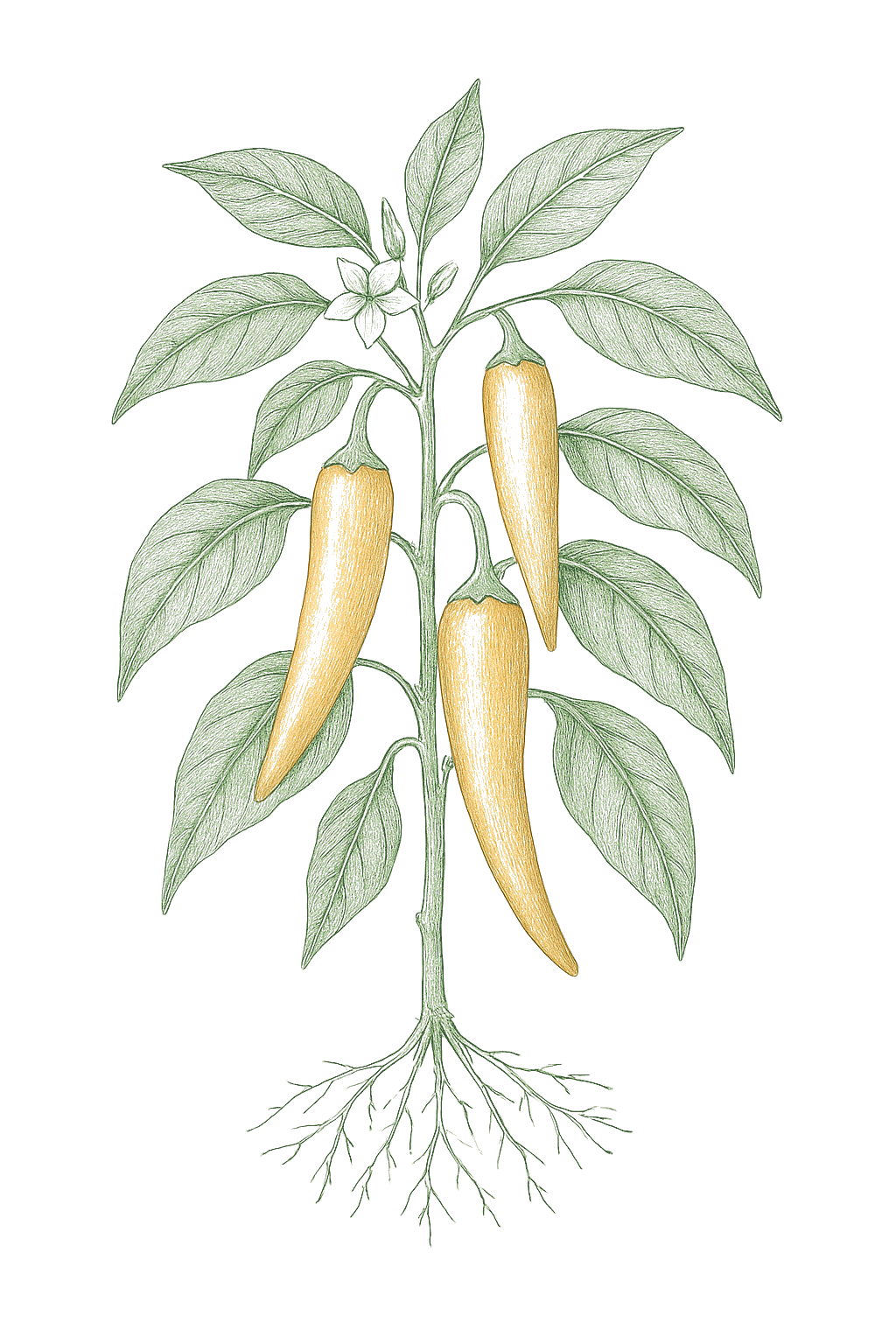
Banana pepper is a warm-season vegetable in the same family as tomatoes and eggplant, grown for its long, tapered fruit that ripens from pale yellow to orange and red. The name covers two kinds that look almost the same: sweet banana peppers are mild, and hot Hungarian wax peppers are spicy and get hotter as they ripen, so it helps to know which you planted. Like most peppers you can pick them at two stages: yellow, or left on the plant to color up and sweeten (or, for the hot ones, get hotter). Banana peppers are heavy producers, they pollinate themselves so one plant will fruit, and they take cool weather a little better than big bell peppers, though they still love warmth and are grown from transplants set into warm soil. They are only light feeders, so going heavy on fertilizer gives you a big leafy plant with few peppers. The two things to watch are blossom-end rot, a dark sunken spot on the bottom of the fruit caused by uneven watering, and sunscald, a pale burned patch on peppers left exposed to strong sun. In very hot weather the flowers drop and the plant stops setting fruit for a while, so in hot climates peppers are grown in spring and fall with a summer break. The main things to get right are warmth, steady and even watering with mulch, modest fertilizer, full sun, and rotating peppers away from where tomatoes, potatoes, or eggplant grew. Banana pepper is a warm-season fruiting vegetable (Capsicum annuum) in the nightshade family, a close relative of tomato and eggplant grown for its long, tapered, waxy fruit that ripens from pale yellow through orange to red. The common name covers two very different peppers that look nearly identical on the plant: the SWEET banana types (Sweet Banana, Sweet Hungarian) are mild and low-heat, among the mildest peppers grown, while the HOT Hungarian wax types (Hungarian Hot Wax) carry real heat that climbs as the fruit ripens, so it pays to know which you planted. Like most peppers the fruit can be picked at two stages: at its pale-yellow stage, or left on the plant to color up and sweeten (or, in the hot types, grow hotter). Banana peppers are prolific setters, self-fertile and largely self-pollinating so a single plant fruits, and a touch more tolerant of cool conditions than the big blocky bells, though still warm-loving and grown from transplants set into warm soil. They are only moderate feeders, easily pushed to leaf by excess nitrogen. Two disorders define the crop's troubles: blossom-end rot, a dark sunken patch on the fruit caused by uneven watering interfering with calcium delivery, and sunscald on fruit exposed by thin foliage. Fruit set itself fails in extreme heat, when daytime highs past about 90°F and warm nights drop the blossoms, so across the hot South and the deserts the crop splits into a spring and a fall planting around a midsummer pause. The pest and disease complex, aphids (and the mosaic viruses they carry), flea beetles, pepper maggot, corn borers, hornworms, and the pepper weevil, plus bacterial leaf spot, Phytophthora blight, and anthracnose, is held off by even moisture, warm well-drained soil, and rotation away from its nightshade relatives.
Off-season for banana pepper in zone 12.
In Zone 12, banana pepper can be planted January through March, then again August through September. Harvest runs April through July.
You plant banana peppers once for the season. A single planting keeps producing all through the warm months, so there is no need to replant every few weeks. In most places a later planting would not have time to fruit before frost. Only in very warm, nearly frost-free areas, or the hot South and desert, can you fit a spring and a fall planting, and that is really two separate seasons.Banana pepper is not a succession crop. One planting produces continuously through the whole warm season, so you set plants out once rather than at intervals. In most zones a later sowing would be caught by frost before its long warm season could finish. Only in the warmest, frost-free or near-frost-free zones, and across the hot South and the deserts where the crop splits around midsummer heat, is a second seasonal window viable, and that is a separate season rather than a true succession.
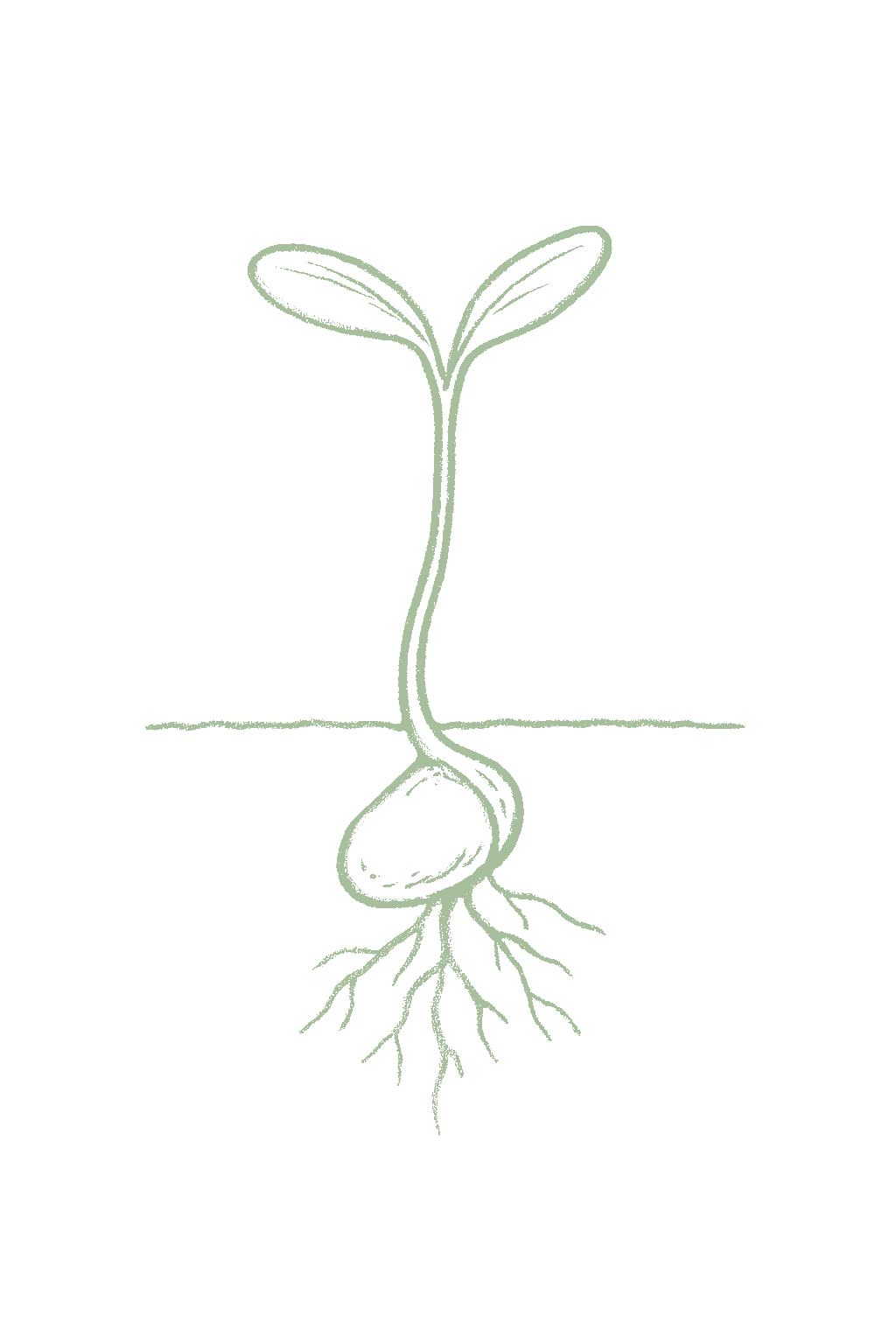
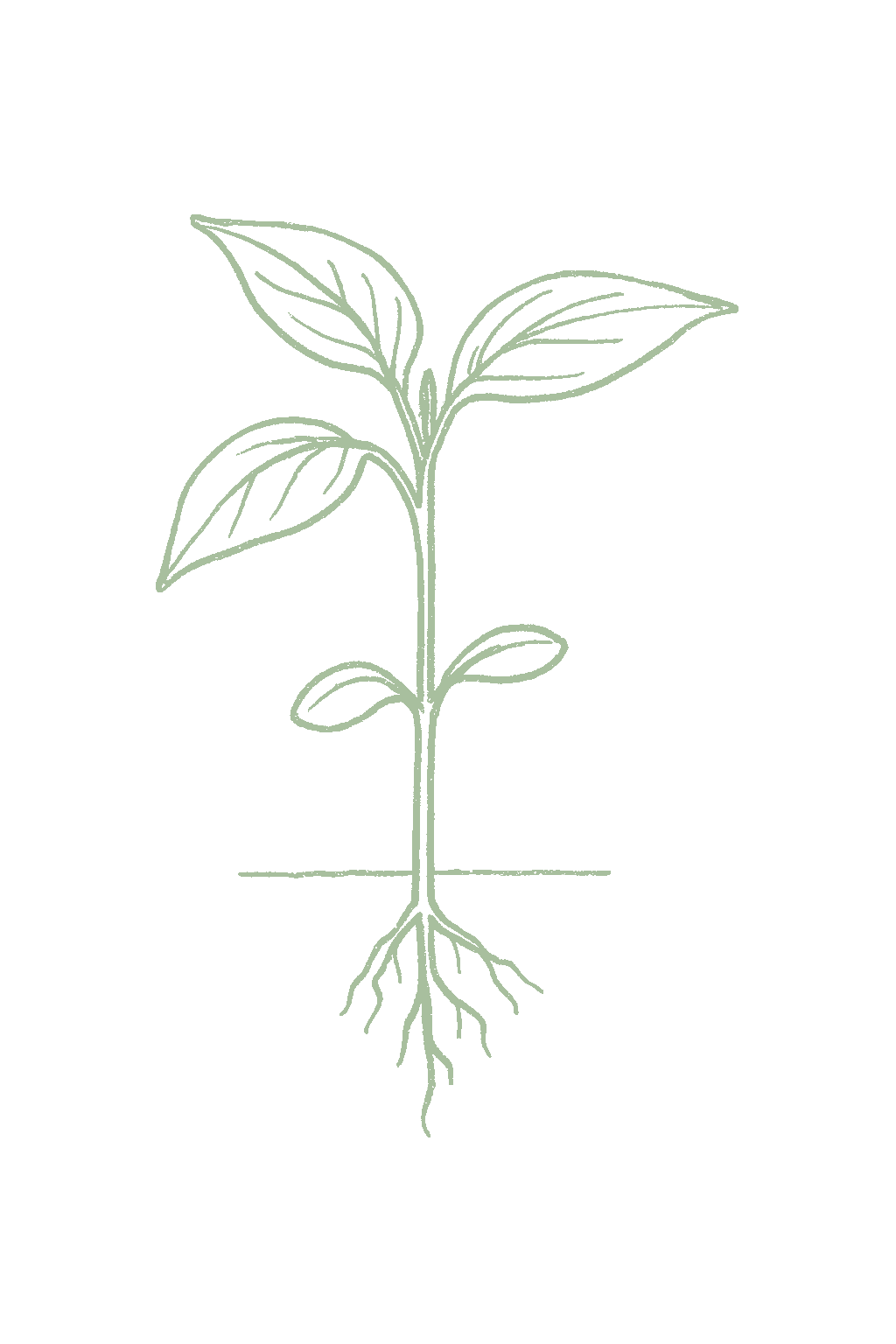
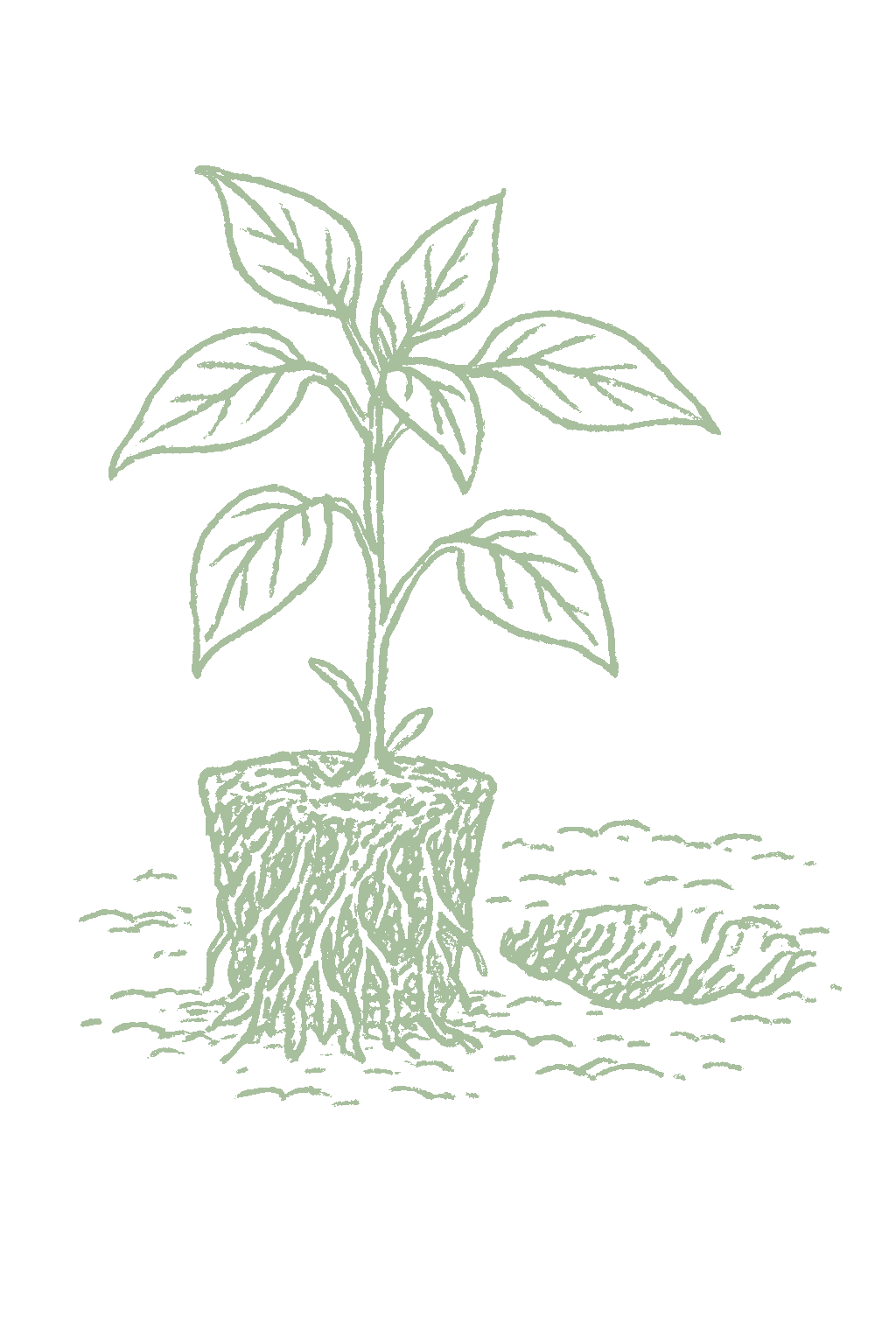
Start banana pepper seeds indoors about 8 weeks before you plan to plant out, keeping them warm (80 to 90°F) to sprout well. Peppers need more warmth and a longer head start than many crops, and they go outside only once the soil is warm (about 60 to 65°F) and nights stay above 50 to 55°F. Use stocky transplants and space them 12 to 18 inches apart.Start banana pepper seeds indoors about 8 weeks before transplanting (Georgia and Clemson use 6 to 8 weeks; Maryland 8 to 10), with bottom heat of 80 to 90°F for fast, even germination. Peppers need warmth and a longer indoor head start than many vegetables and are set out after the soil has warmed to 60 to 65°F and nights hold above 50 to 55°F. Choose sturdy transplants and set them 12 to 18 inches apart in rows about 3 feet apart. Direct sowing is practical only in the longest, warmest regions; nearly everywhere this is a transplant crop.
Not sure what soil you have? Grab a small handful of damp soil from your garden bed and squeeze it. If it crumbles apart easily, it's sandy. If it holds together but breaks when you poke it, it's loam (what most vegetables want). If it stays in a hard, slippery ball, it's clay.
Banana peppers like rich, well-drained soil that warms up in the sun, since they are warm-season plants that dislike cold, soggy ground. Mix in 2 to 3 inches of compost before planting. If your soil is heavy clay or slow to warm, a sheet of black plastic or fabric mulch laid down before planting warms the soil and gives peppers the head start they want. Aim for soil that stays evenly moist but never waterlogged, because uneven watering is what causes the dark, sunken blossom-end rot on the bottom of the fruit.
Mix 2-3 inches of compost into the top 6 inches of your bed before planting. Compost holds moisture (which sandy soil drains too fast) and adds the nutrients sandy soil tends to lack. Repeat each season. Compost breaks down over time.
Mix 2-3 inches of compost AND a few inches of coarse sand or perlite into the top 6 inches of your bed. The compost feeds the plants; the sand breaks up the clay so air and water can move through. Don't add sand without compost. It can compact like concrete.
If amending your soil sounds like too much work, or if your soil is heavy clay, full of rocks, or contaminated, build over it. A raised bed at least 12 inches deep filled with a 50/50 mix of compost and sandy loam gives you ideal growing soil with no battles. A 5-gallon container with quality potting mix does the same for one plant at a time. Both bypass your native soil entirely.
The numbers that matter, at a glance.
Banana peppers like slightly acidic soil, about pH 6.0 to 6.8, and a lot of garden soil is already close. The pH scale runs from acidic to alkaline, and this range is where peppers take up nutrients best, including the calcium that prevents blossom-end rot. If your soil runs alkaline, common in the dry interior West, you may need to add sulfur before planting. An inexpensive soil test from your local extension office tells you where you stand.Banana pepper grows best at a soil pH of about 6.0 to 6.8, with Georgia and Clemson both placing the target near 6.0 to 6.5. In that band the nutrients peppers need, including the calcium that guards against blossom-end rot, stay most available. Peppers tolerate a somewhat wider range, roughly 5.5 to 7.5, but uptake of iron, manganese, and other micronutrients tightens as the soil turns alkaline, showing as yellowing between the veins of the youngest leaves. Alkaline soils common across the interior West often need sulfur worked in ahead of planting; most Eastern and Midwestern soils sit naturally near the target. A soil test from your local extension office settles it before you plant.
Banana peppers like steady but modest feeding, and going heavy on nitrogen backfires. Mix a balanced fertilizer such as 10-10-10 into the soil before planting. Then, a few weeks after planting and again once the first peppers set, feed with a nitrogen fertilizer like calcium nitrate. Do not overdo it: too much nitrogen gives you a large leafy plant with few peppers. Calcium nitrate also supplies calcium, which, along with even watering, helps prevent blossom-end rot.Banana pepper is a moderate feeder that rewards restraint with nitrogen. Work a balanced fertilizer such as 10-10-10 or 13-13-13, about 2 pounds per 100 square feet, into the bed before transplanting, then side-dress with a nitrogen source such as calcium nitrate about three to four weeks after transplanting and again as the first fruits set. Hold nitrogen back early and never overdo it: too much drives a big, bushy, dark-green plant that flowers late and sets little fruit. The calcium nitrate side-dress does double duty, feeding the plant while supplying the calcium that, paired with even watering, heads off blossom-end rot.
Use a balanced fertilizer like 10-10-10 at planting, then a nitrogen feed such as calcium nitrate once the plant is growing well and setting fruit. Do not overdo the nitrogen or you get all leaves and few peppers.A balanced fertilizer such as 10-10-10 worked in at planting, then a calcium nitrate (15.5-0-0) side-dress three to four weeks after transplanting and again at fruit set. Avoid heavy nitrogen, which gives leaf at the expense of fruit.
The most useful pepper companions are strong-smelling herbs and flowers like basil, marigold, and nasturtium, which can help deter or lure away aphids and other pests. The one rule that really matters is to keep banana peppers away from tomatoes, potatoes, and eggplant, which are all close relatives and share the same pests and soil diseases. Most pepper companion pairings are traditional rather than trial-tested. The aromatic-herb and flower companions (basil, marigold, nasturtium, alliums) are grown to deter or trap the aphids and thrips that trouble peppers and to draw beneficial insects, a plausible, habitat-based effect rather than an isolated one. The single firmest rule is a rotation one: keep banana peppers away from their Solanaceae relatives, tomatoes, potatoes, and eggplant, which share the full pepper pest and disease complex.
You can pick banana peppers at two stages, whichever you like. Most people pick sweet banana peppers at the pale yellow stage, once they are full-size and firm; you do not have to wait for them to turn color. If you leave them on the plant, they ripen to orange and red and get sweeter over the next couple of weeks. Picking them yellow keeps the plant making more, while letting them color up slows it down. Cut peppers off with scissors or a knife, leaving a little stem on, instead of pulling, because the branches break easily. Banana peppers are heavy producers, so keep picking. If you grow the hot Hungarian wax kind, note that it gets hotter as it turns red.Banana peppers can be picked at TWO stages, and the choice is yours. The sweet banana types are most often harvested at their pale, waxy yellow stage, once the long, tapered fruit is full-size and firm; you do not need to wait for color. Left on the plant, the same fruit ripens on through orange to red, growing noticeably sweeter over the following weeks. Picking fruit at the yellow stage keeps the plant flowering and setting more, while letting fruit color up ties up the plant's energy and slows further set. Cut peppers with pruners or a knife leaving a short stub of stem, rather than pulling, because the branches are brittle and snap easily. Banana peppers are heavy setters, so pick often. Watch fruit left to color for anthracnose and sunscald if the weather turns hot, wet, or intensely sunny. If you are growing the hot Hungarian wax types, remember the heat climbs as the fruit ripens toward red.
A healthy banana pepper plant is a heavy producer, often giving 20 to 30 or more long peppers over the season, more than a typical bell pepper. Keeping it warm, evenly watered, and in full sun, and picking peppers at the yellow stage so the plant keeps setting more, makes the difference.Banana pepper is a notably prolific setter: a healthy plant carries a heavy load of long, tapered fruit and commonly yields 20 to 30 or more peppers over the season, more than most big blocky bells. Iowa State puts good-management pepper yields at roughly 15 to 20 pounds per 10-foot row. Steady warmth, even moisture, full sun, and picking fruit at the yellow stage regularly carry a plant to the upper end; heat that drops blossoms, uneven water that brings blossom-end rot, or too much nitrogen pulls it down.
Once it gets going, a banana pepper keeps setting fruit through the warm months, though very hot spells make the flowers drop for a while before it picks back up. Picking peppers yellow keeps the plant making more, while letting them ripen to red slows it down. In hot areas you often get a spring crop and a fall crop with a summer lull in between.Peppers set fruit through the warm months once established, but production is punctuated by heat: extreme summer heat drops blossoms and pauses set, which resumes as things moderate. Picking fruit at the yellow stage keeps the plant flowering and setting more, while letting peppers ripen fully to red on the plant ties up its energy and slows new set. In hot regions the crop naturally splits into a spring and a fall flush around midsummer. The things that trip up first-year pepper growers are uneven watering (which causes blossom-end rot), planting too early or through a heat wave (which drops the flowers), and sunburned fruit. Water evenly with mulch, wait for warm weather, do not overdo the fertilizer, and keep picking. And be sure you know whether your plant is a sweet or a hot banana pepper.First-season growers most often lose banana pepper yield to three things: blossom-end rot from uneven watering, blossom drop when heat or cold spoils fruit set, and sunscald on fruit exposed by sparse foliage. Wait for real warmth to plant, mulch and water evenly, keep nitrogen moderate, and the rest is full sun and regular picking. One extra thing to get right with banana peppers: know whether you planted the sweet or the hot type before you take a big bite.
Banana peppers come in two kinds that look almost the same but taste very different, so check the label. The SWEET ones (Sweet Banana, Banana Supreme, Sweet Hungarian) are mild and great for slicing and pickling. The HOT ones, called Hungarian wax peppers (Hungarian Hot Wax, Inferno), look just like them but are spicy, and get hotter as they turn red. Grow whichever you like, but keep them separate in the garden so you do not get a surprise. All of them are productive and do well in pots. If disease has been a problem, look for varieties labeled resistant to bacterial leaf spot or viruses.Choose first by heat, then by season and space, because banana peppers split into two very different camps that look nearly identical on the plant. The SWEET banana types (Sweet Banana, the hybrid Banana Supreme, Sweet Hungarian) are mild and low-heat, grown for slicing, stuffing, and pickling; pick them yellow for firm walls or let them ripen to red for extra sweetness. The HOT Hungarian wax types (Hungarian Hot Wax, the hybrid Inferno) share the same long, tapered, yellow-to-red form but carry real heat that climbs as they ripen. They are easy to confuse once picked, so label your rows. All are heavy setters and do well in containers; the hybrids add yield and uniformity, and some modern peppers carry resistance to bacterial leaf spot and the mosaic viruses, worth seeking where those are a problem.
Move banana peppers to a different part of the garden each year, and do not return them, or their relatives tomato, potato, and eggplant, to the same spot for about three years, longer if you have had Phytophthora blight. Soil diseases build up where nightshades grow, and rotation is the main tool to keep them in check. Clean up old plants and dropped fruit at the end of the season too.Rotate peppers on at least a 3 year cycle, longer where Phytophthora blight has appeared, to break the buildup of bacterial leaf spot, Phytophthora, anthracnose, and southern blight in the soil. The wider Solanaceae, tomato, potato, and eggplant, share that complex, so rotate as a group and avoid following any of them. Clear and remove spent plants at season's end rather than tilling them in, which removes overwintering disease and pest sites, including the dropped fruit that harbors pepper weevil and pepper maggot.
The plant app sends a timely reminder at every critical moment of your banana pepper season. The wording adjusts to whichever you pick: beginner or seasoned. Here are three you'll see in Zone 12.
plant sends the right notification at exactly the right moment, for your zone, your weather, your crops. Founding members lock the rate forever.
We're building this guide with real growers. Got a question we missed? Ask here. We read every one and add the best answers right to this page.
Learned something the hard way? Pass it on. Real growers' tips make this guide better for the next person, and we credit you by name when yours goes live.
If you've grown this crop and you see a date, a temperature, a companion claim, or a recommendation that doesn't match your experience, tell us. Real growers' corrections make this guide better for the next person.
Every date, temperature, spacing, and recommendation on this page is sourced from university cooperative extension publications, peer-reviewed agricultural research, NOAA climate data, and direct extension calendars. Where claims are softer (traditional gardening wisdom not formally documented), we say so.
Spot a data point that doesn't match your experience? Submit a correction; accepted corrections earn full author credit on the page.
Zone-aware seasonal nudges, what's worth planting now, and the occasional recipe from the harvest. No spam, ever.