Pick your zone and the dates re-calibrate.
The Guide Flowers Vol. 003

Bee Balm

in Zone 12, this week

Bee balm is a hardy perennial flower, meaning it comes back every year, grown mostly to bring bees, butterflies, and especially hummingbirds to your garden. It has shaggy, colorful flower heads in red, pink, or purple on tall stems, and minty-smelling leaves you can dry for tea. It blooms in mid to late summer and is very cold-hardy. It spreads by underground roots, so give it room or grow it in a pot. Its one big problem is powdery mildew, a white powder on the leaves, so plant it in full sun, leave space between plants for air, keep the soil moist, and pick mildew-resistant types. Bee balm (Monarda didyma and the native wild bergamot M. fistulosa) is a hardy herbaceous perennial in the mint family (Lamiaceae), native to North America and grown as a top pollinator and hummingbird plant. Clump-forming and spreading by rhizomes, it sends up 2 to 4 foot, square, aromatic stems topped with shaggy, whorled heads of tubular flowers in red, pink, or lavender through mid to late summer. It is cold-hardy (roughly zones 3 to 9), a premier nectar source for bumblebees, long-tongued bees, butterflies, and ruby-throated hummingbirds, and its minty leaves make Oswego tea. Its defining problem is powdery mildew, so the core care is full sun, airflow through spacing and division, even moisture, and mildew-resistant cultivars.
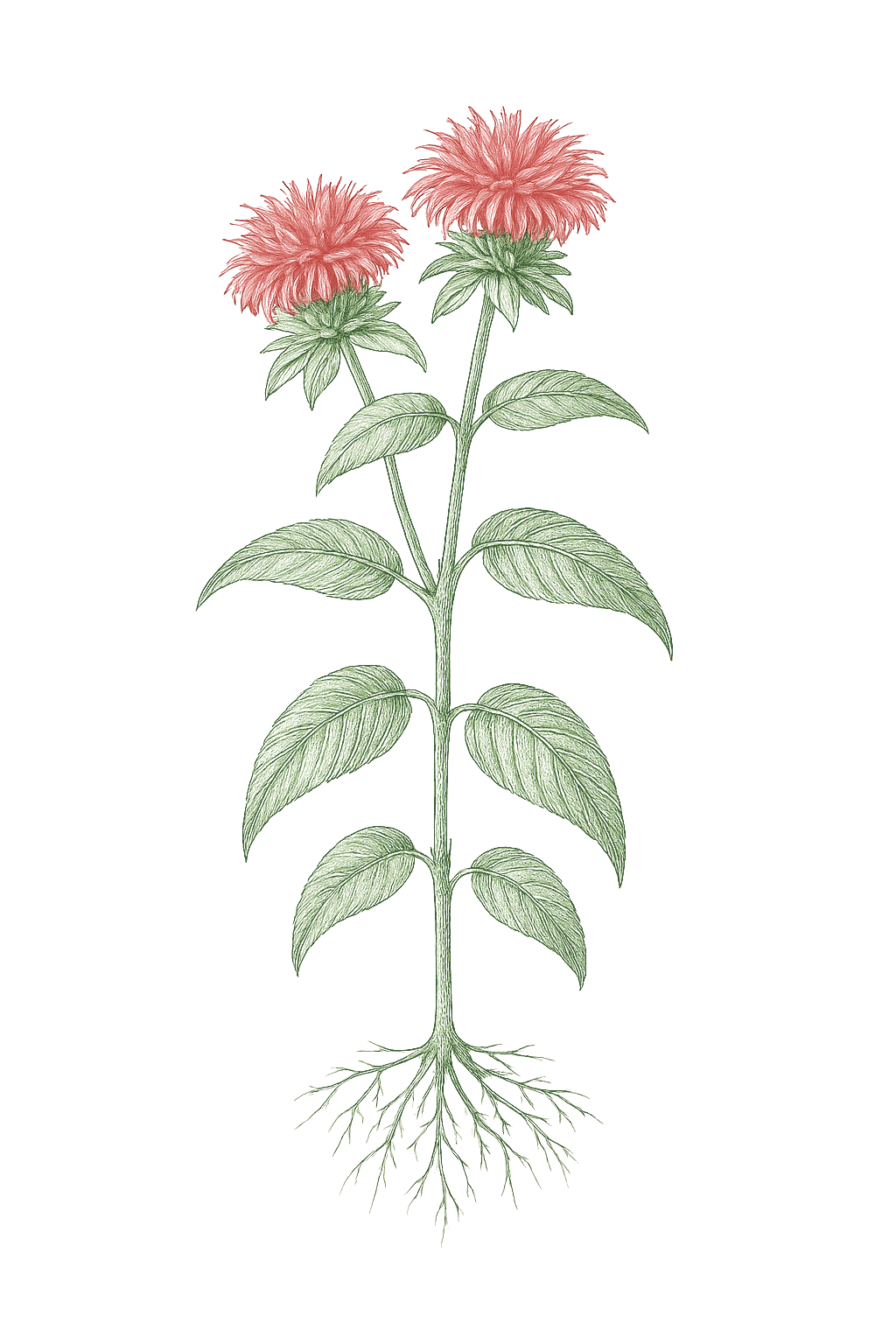
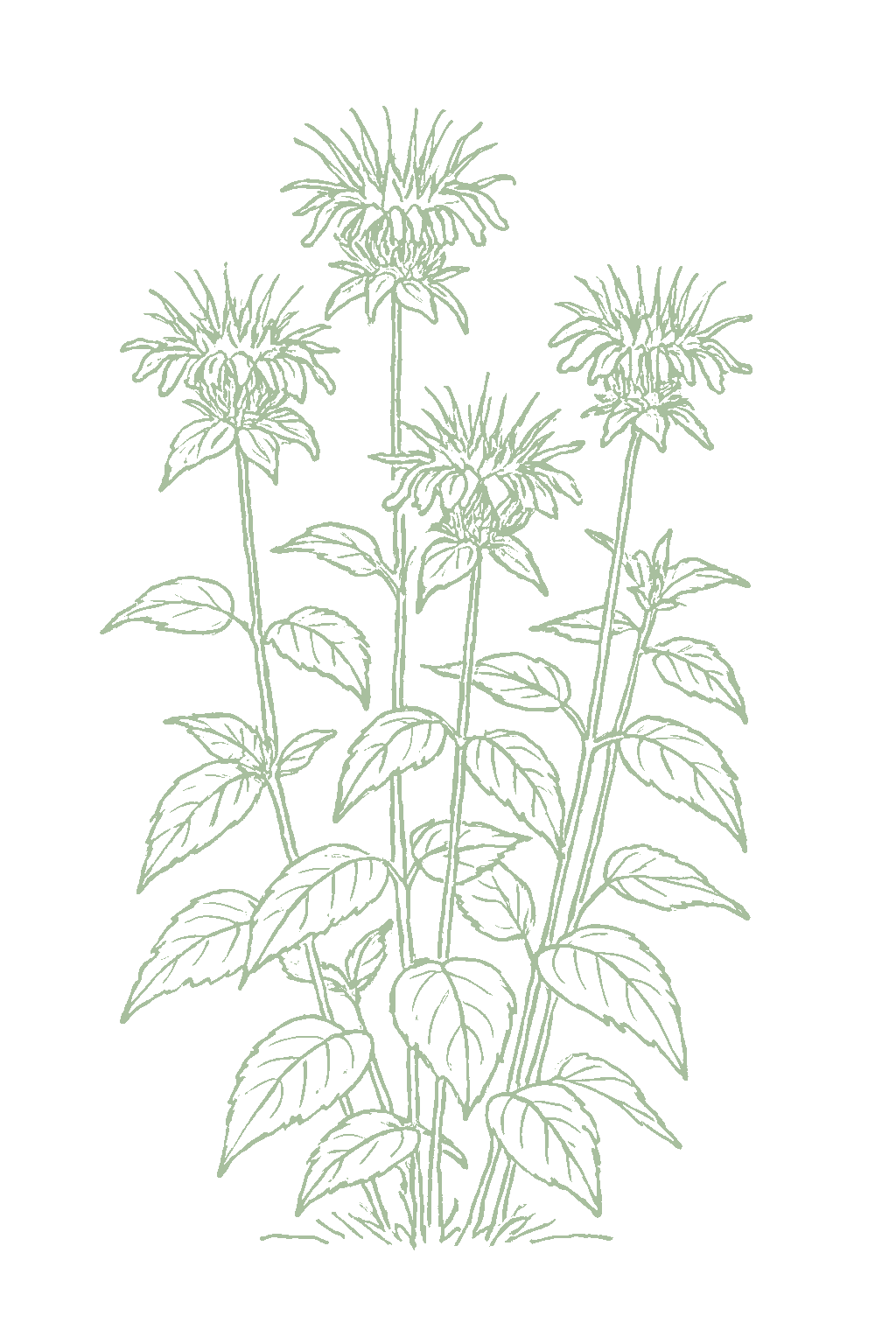
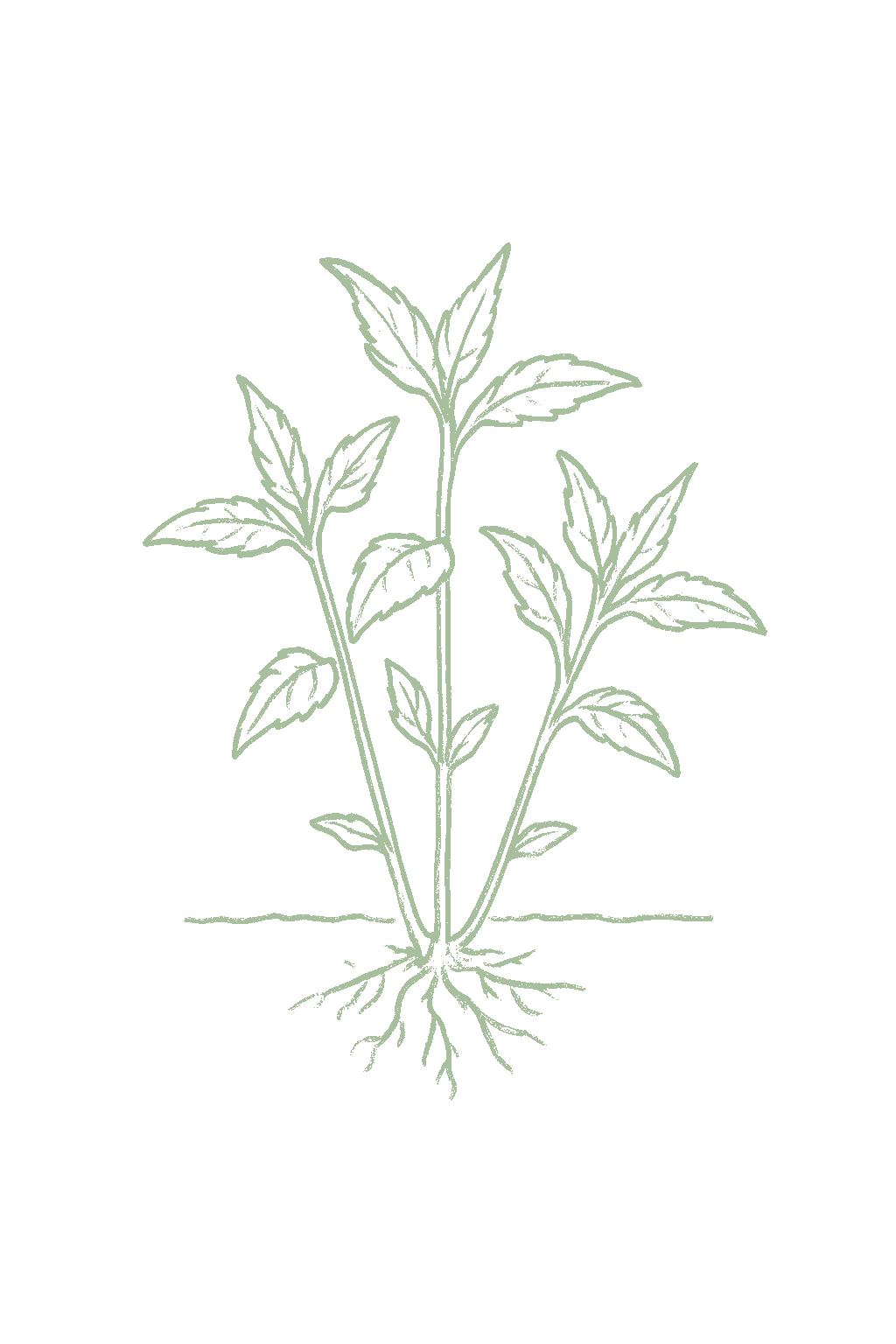
Bee Balm mature plant
Fig. 01 · Bee Balm, mature Zone 12
Mature in
90-120d
from transplant
Sunlight
Full sun to part shade
6-8 hrs daily
Water
Moderate to high
Spacing
18-24"
between plants
Soil pH
6-7
slightly acidic
Today · in your zone

What's happening right now

July 24 · Zone 12 · Stage 01 · Establishment (year one)

Off-season for bee balm in zone 12.

The season at a glance

Planting calendar

In Zone 12, bee balm can be planted January through February. In bloom March through May.

Jan
Feb
Mar
Apr
May
Jun
Jul
Aug
Sep
Oct
Nov
Dec
plant
plant
plant
too late
too late
too late
too cold
too cold
too cold
too cold
too cold
too cold
too cold
bloom
bloom
bloom
bloom
indoors
plant out
bloom
Keep them blooming Deadhead spent blooms through the bloom window to keep new flowers coming.
The season, mapped

Seed to garden

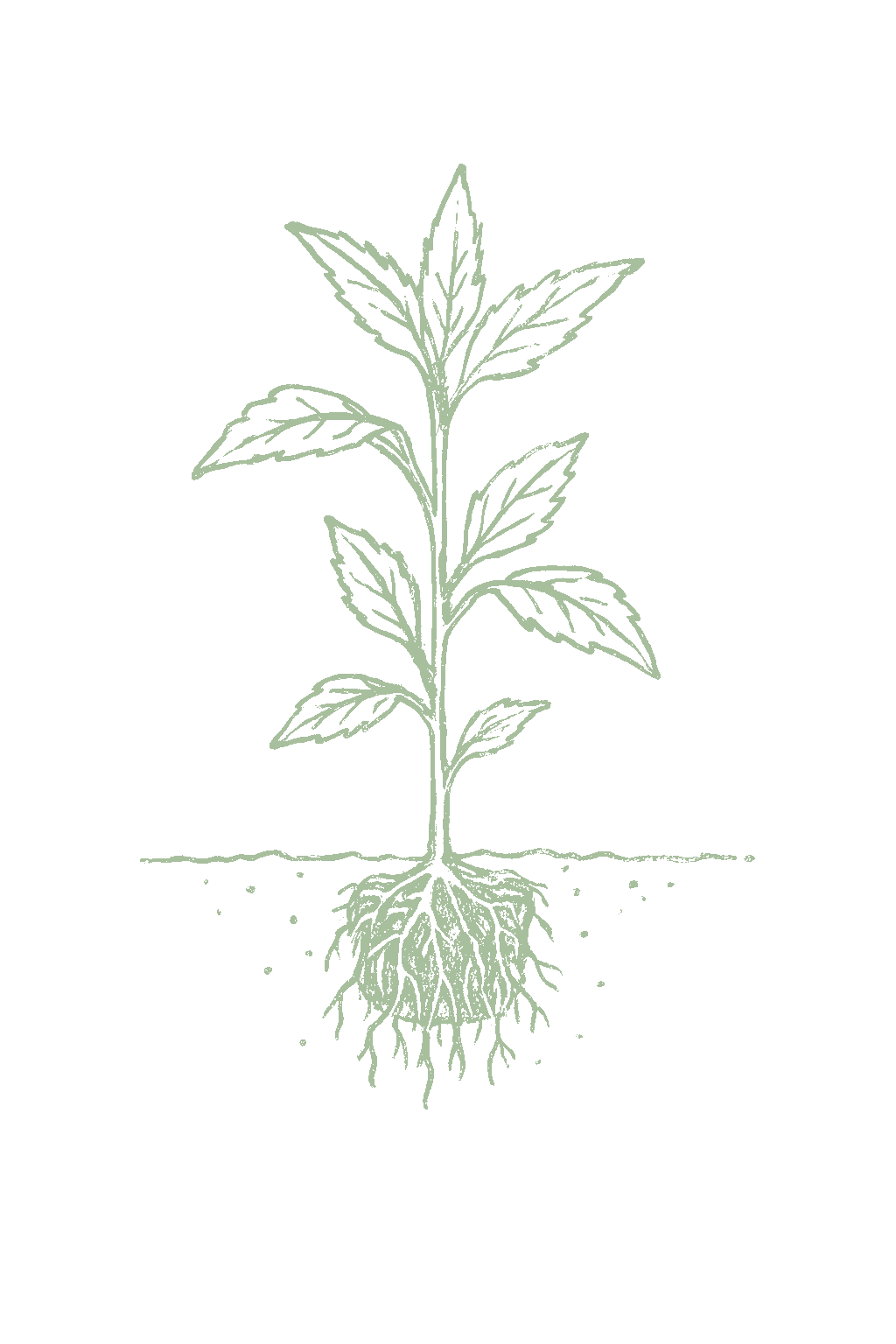
The simplest way to start bee balm is with a nursery plant or a division dug from a friend's clump in spring. Named types do not grow true from seed, so division or a bought plant keeps the variety. You can grow the wild species from seed started indoors about 8 weeks before your last frost, but seed-grown plants often bloom lightly the first year and fill in the next. Pinch the stem tips in late spring for a bushier, more flowery plant.The easiest and most reliable start is a nursery transplant or a spring division of an existing clump; named cultivars are propagated vegetatively and will not come true from seed. To grow the species from seed, start indoors about 8 weeks before last frost (a cool moist period improves germination) or direct-sow, and expect first-year plants to bloom lightly, filling in the following year. Pinch stem tips in late spring to encourage branching and more blooms.
Start method
Transplant
Soil temp
65-75°F
From seed to fruit

The growing journey

Stage 01 · Establishment (year one)
01
Establishment (year one)
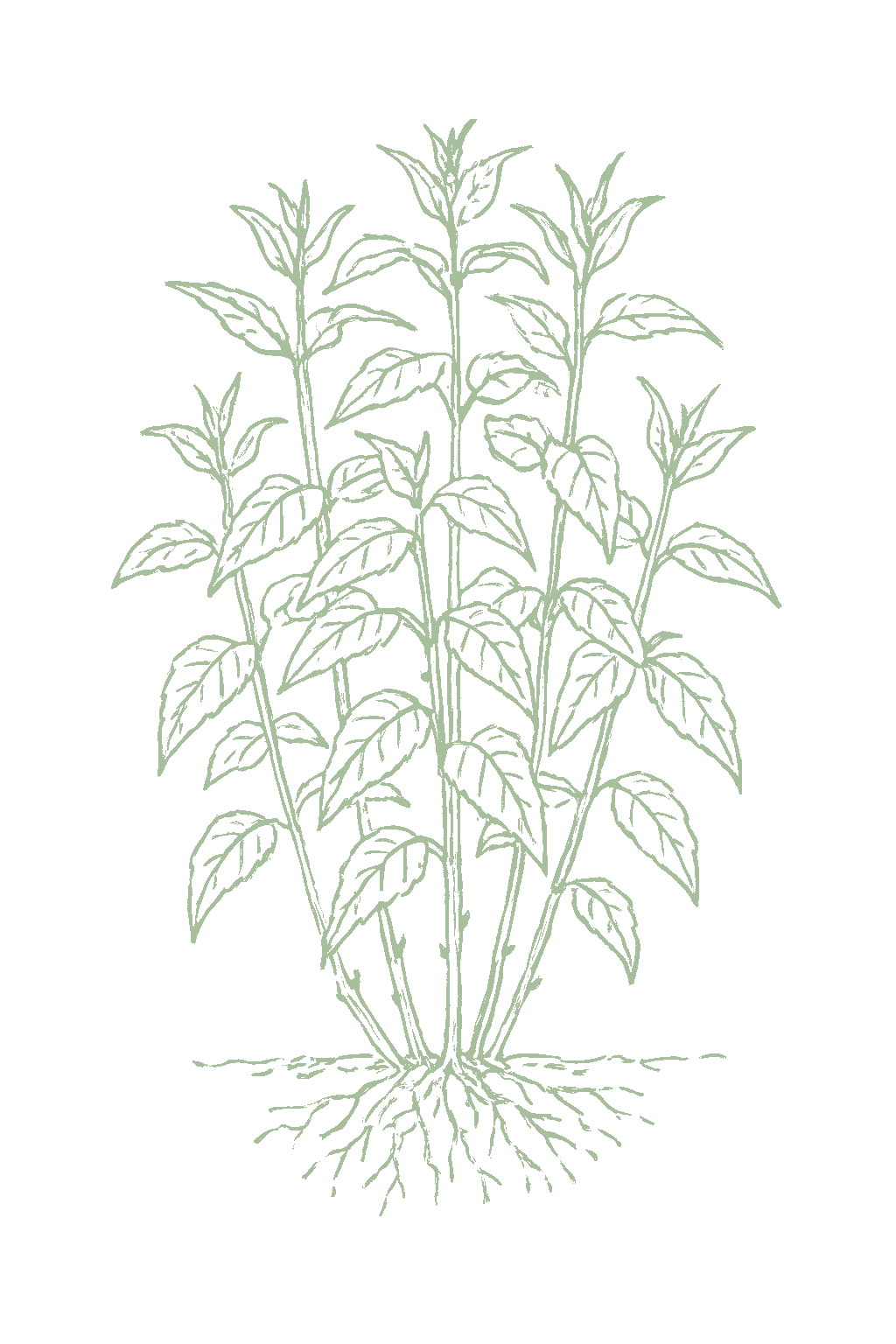
A new plant or division takes root and starts putting out fresh leaves.A newly planted transplant or division settles in, rooting and pushing new leafy shoots.
Keep the soil moist and water the ground, not the leaves. Give it room. It may bloom only a little the first year.Keep the soil evenly moist, water at the base, and space for airflow; expect light bloom the first year.
FROM PLANT · Keep new plants and divisions moist while they take root. Bee balm does not like drying out, so water regularly and give it full sun.Keep newly set transplants and divisions evenly moist while they root; bee balm resents drying out and establishes best with steady moisture in full sun.
FROM PLANT · Give plants plenty of room, about 18 to 24 inches apart, when you plant. Space is one of the best ways to prevent the mildew bee balm often gets.Space plants about 18 to 24 inches apart (2 to 2.5 feet for maximum airflow) at planting; generous spacing is a primary defense against the powdery mildew bee balm is prone to.
02
Spring regrowth
In spring, new shoots push up from the roots that survived winter.New shoots emerge from the overwintering crown and rhizomes as the soil warms in spring.
Clean up last year's dead stems, add a little compost or fertilizer, and split the clump now if it is crowded.Clear old dead stems, top-dress with compost or a light balanced feed, and divide now if the clump is crowded.
FROM PLANT · In early spring, when new shoots come up, divide crowded clumps. Splitting bee balm every 2 to 3 years keeps it open and airy, which helps prevent mildew.Divide crowded clumps in early spring as new shoots appear; dividing every 2 to 3 years relieves congestion and improves airflow, which discourages powdery mildew.
03
Vegetative growth
The plant grows taller and bushier with minty-smelling leaves.Stems lengthen and the clump fills out with aromatic, square-stemmed, opposite-leaved growth.
Pinch the stem tips once to make it bushier, keep the soil moist, and leave space so air moves through.Pinch stem tips once to encourage branching, maintain even moisture, and keep airflow open to head off mildew.
FROM PLANT · Pinch the stem tips once in late spring to make the plant bushier with more flowers, and pull out a few of the most crowded stems so air can move.Pinch stem tips once in late spring to force branching for a fuller, more floriferous plant, and thin the densest stems to keep air moving through the clump.
FROM PLANT · Keep bee balm in full sun, keep the soil moist, and keep it from getting crowded as it fills in. Those three things are what keep mildew and rust away.Maintain full sun, even soil moisture, and open spacing as the clump fills in; together they are the strongest cultural levers against powdery mildew and rust.
04
Budding
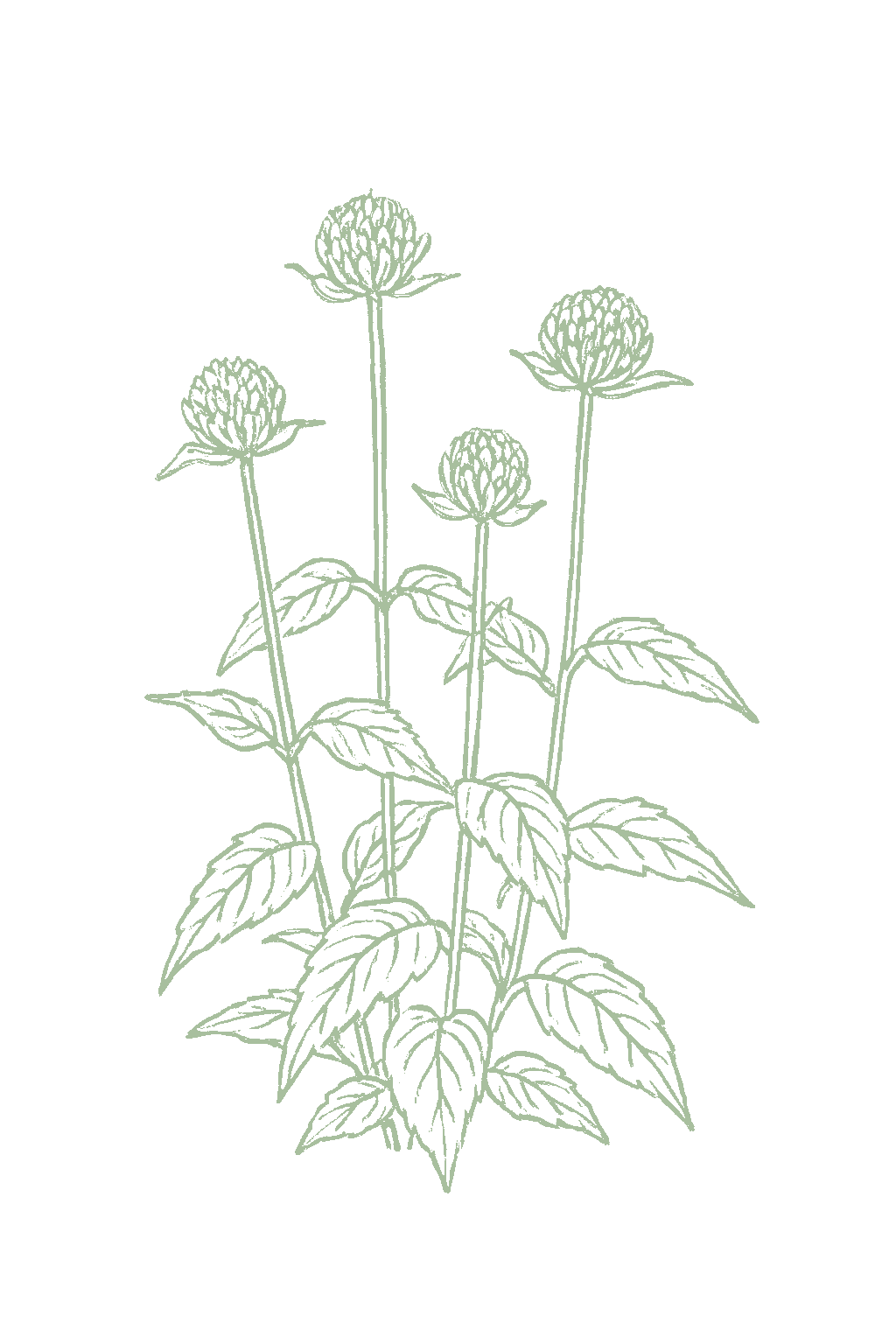
Flower buds form at the tops of the stems before summer bloom.Rounded flower buds form at stem tips ahead of summer bloom.
Keep the soil evenly moist and start checking for mildew and leaf spots.Keep moisture even at bud point and begin scouting for early powdery mildew and rust.
FROM PLANT · As buds form and the plant fills out, check for the white powdery mildew, rust spots, and small holes in stems from borers. Removing affected parts early stops problems spreading.As buds form and the canopy closes, scout for early powdery mildew and rust and for stalk-borer entry holes; removing affected leaves and stems early limits spread.
05
Flowering (summer bloom)
The showy flowers open in summer and buzz with bees, butterflies, and hummingbirds.Shaggy tubular flowerheads open through mid to late summer, drawing bees, butterflies, and hummingbirds.
Snip off faded flowers to keep blooms coming, cut some for a vase, and keep the leaves dry.Deadhead spent heads to prolong bloom and limit self-seeding; cut stems for the vase and keep foliage dry.
FROM PLANT · Snip off faded flowers back to the next set of leaves all summer to keep more blooms coming and stop it seeding around. Cutting flowers for a vase does the same thing.Deadhead spent flowerheads back to the next leaf node through summer to prolong bloom and reduce self-seeding; cutting stems for the vase does the same job.
FROM PLANT · Leave some flowers uncut for the wildlife. Bee balm is one of the best plants for feeding bees, butterflies, and hummingbirds.Leave a share of blooms uncut for pollinators; bee balm is a premier nectar source for bumblebees, long-tongued bees, butterflies, and ruby-throated hummingbirds.
06
Dormancy (fall and winter)
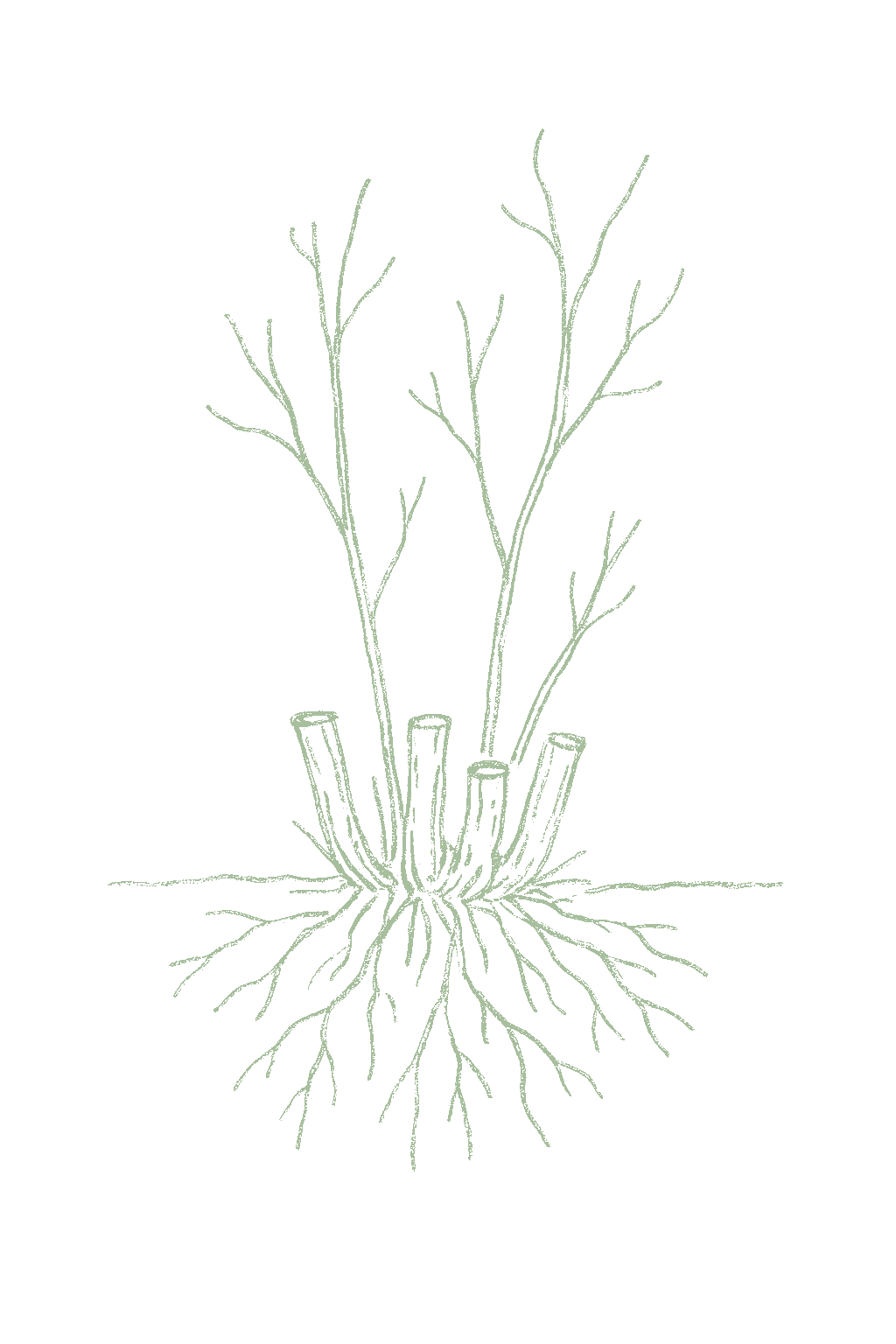
After flowering, the top of the plant dies back and rests underground over winter, returning in spring.After bloom the tops die back; the crown and rhizomes overwinter dormant and resprout the next spring.
Cut the plant back and clear away diseased leaves so problems do not carry over; you can leave a few stems for nesting bees.Cut plants back and remove and destroy infected debris to reduce overwintering disease; leave some stems for stem-nesting bees.
FROM PLANT · After flowering and frost, cut the plant down and clear away diseased leaves so mildew does not come back next year. The roots survive winter and return in spring.After bloom and frost, cut plants back and remove and destroy infected debris to cut overwintering mildew and rust inoculum; the crown overwinters and resprouts in spring.
Beginner
Know your soil

Your soil

Identify yours

Not sure what soil you have? Grab a small handful of damp soil from your garden bed and squeeze it. If it crumbles apart easily, it's sandy. If it holds together but breaks when you poke it, it's loam (what most vegetables want). If it stays in a hard, slippery ball, it's clay.

What this crop wants

Bee balm likes rich, moist soil that does not dry out. Mix compost into the bed before planting to hold moisture and feed the roots. It even handles clay and damp spots, as long as water does not sit and stay pooled. The soil it dislikes most is dry, sandy ground, because plants that go thirsty are the ones that get powdery mildew worst.

If your soil doesn't match

You have sandy soil

Mix 2-3 inches of compost into the top 6 inches of your bed before planting. Compost holds moisture (which sandy soil drains too fast) and adds the nutrients sandy soil tends to lack. Repeat each season. Compost breaks down over time.

You have clay soil

Mix 2-3 inches of compost AND a few inches of coarse sand or perlite into the top 6 inches of your bed. The compost feeds the plants; the sand breaks up the clay so air and water can move through. Don't add sand without compost. It can compact like concrete.

Containers and raised beds

If amending your soil sounds like too much work, or if your soil is heavy clay, full of rocks, or contaminated, build over it. A raised bed at least 12 inches deep filled with a 50/50 mix of compost and sandy loam gives you ideal growing soil with no battles. A 5-gallon container with quality potting mix does the same for one plant at a time. Both bypass your native soil entirely.

Learn more about your soil
The specs

Care guide

The numbers that matter, at a glance.

Sunlight
full sun to part shade · 6-8 hrs/day
Water
Moderate to high
Spacing
18-24 inches
Soil
loam, clay loam
Days to maturity
90-120 days from transplant
Soil pH
6 to 7
Container OK?
Yes · 2+ gal pot
Germination temp
65-75°F
Soil chemistry

Soil pH for bee balm

Preferred
6 to 7
Tolerated
5.5 to 7.5

Bee balm is easygoing about soil pH (how acidic or alkaline the soil is). A normal garden range around 6.0 to 7.0 suits it, and you usually do not need to change anything.Bee balm is not pH-fussy, performing across roughly slightly acidic to neutral soil (about 6.0 to 7.0) and tolerating a bit outside that. No pH adjustment is typically warranted for it specifically.

Verified · 1 source View
Steady hand on the hose

Watering

When & how much
Frequency
Keep the soil evenly moist. Bee balm likes steady moisture and does not handle dry spells well, so water regularly, especially while plants are getting established and while they are blooming in summer. Letting it get too dry brings on mildew and mites.Keep the soil consistently moist; bee balm is a moisture lover and, unlike drought-adapted Mediterranean herbs, resents drying out. Water deeply and regularly, especially during establishment and through the summer bloom, since drought stress both stalls flowering and worsens powdery mildew and spider mites.
Amount
Bee balm likes about one inch of water a week, counting rain, and more in hot weather. Water deeply so the soil stays damp down at the roots, but do not leave it soggy.Aim for roughly one inch of water per week from rain plus irrigation during active growth, more in heat, applied deeply so the moisture reaches the root zone. The goal is soil that stays evenly moist but not waterlogged.
Method
Water the ground around the plant, not the leaves. A soaker hose or watering can at the base works best. If leaves do get wet, water in the morning so they dry by midday, because dry leaves help prevent mildew.Water at the base with drip or a soaker hose and avoid overhead wetting; dry foliage is a primary lever against powdery mildew and rust. If you must use a sprinkler, water in the morning so leaves dry quickly.
Signs of trouble
Too much water
If lower leaves turn yellow, the plant wilts even though the soil is wet, or the base looks mushy, you are likely overwatering or the soil drains poorly.Yellowing lower leaves, wilting despite wet soil, and crown or root rot signal overwatering or standing water; persistently wet foliage also raises leaf-disease pressure.
Too little water
Bee balm that is too dry wilts in the afternoon, looks dull, and quickly gets mildew and tiny mites. It is thirstiest while getting established and while blooming.Wilting in the heat of the day, dulling and curling leaves, and a spike in powdery mildew and spider mites point to underwatering; bee balm shows drought stress quickly and pays for it in disease.
Feeding rhythm

Feeding

Frequency
light
Type
Balanced, all-purpose
When to start
Once in early spring

Bee balm does not need much feeding. A light sprinkle of a balanced all-purpose fertilizer around each plant in early spring, when new shoots appear, is usually enough. Too much fertilizer, especially the high-nitrogen kind, makes soft, crowded growth that gets more mildew, so go easy and let compost in the soil do most of the work.Bee balm is a light feeder; a modest dose of a balanced all-purpose fertilizer as growth resumes in early spring is plenty on ordinary soil. Excess nitrogen pushes soft, crowded growth and can worsen powdery mildew, so favor a single light spring feeding over repeated rich feeding, and rely on compost-improved soil for baseline fertility.

N · P · K = 10-10-10

The three numbers on fertilizer (N-P-K) are nitrogen, phosphorus, and potassium. For bee balm, pick a balanced one like 10-10-10 for a light spring feed, not a high first-number (nitrogen) lawn feed.A balanced ratio such as 10-10-10 applied once in early spring suits bee balm; avoid high-nitrogen feeds, which favor lush growth and heighten mildew susceptibility.

Flower care

Deadheading bee balm

Flower form
tubular florets in dense, shaggy, whorled pompom heads

Deadheading means snipping off flowers once they fade. Do it through the summer, cutting the old bloom back to the next set of leaves, and the plant makes more flowers instead of seeding all over. Cutting flowers for a vase does the same job. Early on, pinch the stem tips once in late spring so the plant grows bushier, and cut the whole plant back after it finishes and frost hits.Deadhead spent flowerheads back to the next leaf node through the bloom season to prolong flowering and limit self-seeding; cutting stems for the vase serves the same purpose. Pinch stem tips once in late spring to force branching for a fuller, more floriferous plant, and cut the whole plant back after bloom and frost for winter.

Who grows well together

Companion planting

Bee balm is one of the best plants you can add to draw pollinators. Its bright, nectar-rich flowers are magnets for bees, butterflies, and especially hummingbirds, so gardeners plant it near vegetables and fruit that need insect pollination (like squash, melons, and cucumbers) and at the edges of beds to pull in bees and helpful predator insects. There is no plant you must keep bee balm away from. The two things to watch are its spread (it travels by underground roots, so give it room or grow it in a pot) and crowding, since packing it against bushy neighbors traps damp air and makes powdery mildew worse. Bee balm's companion role is the pollinator-magnet inversion: it is the plant you site to benefit others. As one of the premier native nectar sources for bumblebees, long-tongued bees, butterflies, and ruby-throated hummingbirds, it is interplanted near insect-pollinated crops and as an insectary border to lift pollinator and beneficial-predator visitation. There is no biologically antagonistic companion to avoid; the real cautions are horticultural. It spreads aggressively by rhizomes, so contain it or divide it to keep it off slower neighbors, and do not crowd it against dense, disease-prone plants, because trapped humidity raises shared powdery-mildew pressure. Site for airflow.

Other
Cucurbits (squash, melon, cucumber)
Squash, melons, and cucumbers need insects to move pollen to set fruit. Bee balm brings in the bees that do that job.This is bee balm's strongest vegetable pairing, because cucurbits depend on insect pollination and bee balm is a reliable, nectar-rich bee magnet through the summer fruiting window. More pollinator traffic means better fruit set. Site it in nearby rows or bed edges so the bees it draws spill onto the crop; keep it contained so its rhizomes do not crowd the vegetables. Well-grounded
Tomatoes
Bee balm draws bees and helpful predator insects that improve pest control near tomatoes.With tomatoes, bee balm's contribution is mostly beneficial insects rather than pollination, since tomatoes self-pollinate. Its nectar draws predators and parasitoids that prey on aphids and other soft-bodied pests. Place it at the bed edge as an insectary strip and expect predator support and color rather than a direct pollination boost; keep the rhizomes contained. Traditional
Fruit trees and berries
Bee balm blooming near fruit brings in more bees and other pollinators to help fruit set.As a long-blooming nectar source, bee balm supports the bee populations that pollinate insect-pollinated tree fruit and brambles, and adds pollinator and beneficial habitat to an orchard understory. Best treated as habitat-level support; site it where it will not compete with young trees and keep it contained. Well-grounded
Native pollinator and cut-flower plantings
Bee balm is a star of pollinator gardens, pairing well with other natives to feed bees, butterflies, and hummingbirds all season.In pollinator and native plantings, bee balm is a premier nectar source for bumblebees, long-tongued bees, butterflies, and ruby-throated hummingbirds, and Monarda fistulosa even supports specialist bees. Combine it with other summer natives for continuous forage; leave some dead stems over winter for stem-nesting bees. Research-backed
Provenance tagged inline · see methodology for the labeling system Key
Cutting for the vase

When to cut

To cut flowers for a vase, snip stems when most of the little flowers on the head are open, in the morning, and put them straight into clean water. To make tea, pick the minty leaves (best just before the plant flowers) or use the flowers, and dry them out of the sun until crisp. Leave some flowers on the plant for the bees, butterflies, and hummingbirds.For the vase, cut stems when the flowerheads are mostly open, in the cool of the morning, into clean water; deadheading and cutting both prolong bloom. For tea, harvest the aromatic leaves at their best just before the plant blooms, or use the edible flowers, and air-dry them out of direct sun until crisp. Leave a share of blooms uncut for the pollinators and hummingbirds that make bee balm worth growing.

Bloom yield

What to expect

One established bee balm plant gives you dozens of flowers over the summer, plus stems to cut for a vase and leaves for tea, and it feeds a lot of bees, butterflies, and hummingbirds. The clump gets bigger each year, and you divide it every 2 to 3 years.A single established clump produces dozens of nectar-rich flowerheads over its summer bloom, plus cutting stems for the vase and aromatic leaves for tea; more importantly it is a high-value pollinator and hummingbird plant. Clumps enlarge yearly by rhizome and are divided every 2 to 3 years.

Bee balm is a perennial, so it may flower only a little the first year, then come back bigger and bloom fully from the second summer on, returning every year after that.As a perennial, bee balm often blooms only lightly its first year from a transplant, division, or seed, then fills in and flowers fully from the second summer onward, returning and spreading each year thereafter.

What changes yield
Cultivar: mildew-resistant selections stay healthier and more floriferous than susceptible older sorts.Mildew management: full sun, spacing, division, and even moisture sustain foliage and bloom; heavy mildew cuts both.Deadheading: removing spent heads prolongs bloom and limits self-seeding.Moisture: bee balm blooms and stays healthiest with steady moisture; drought stress reduces flowering and worsens disease.Division: dividing every 2 to 3 years keeps clumps vigorous and open.
Verified · 2 sources View
Pick your variety

Recommended varieties

If powdery mildew (a white coating on leaves) is common where you garden, the most important choice is the variety. Resistant types like 'Jacob Cline' (red), 'Marshall's Delight' (pink), and 'Raspberry Wine' stay much healthier than older kinds. For pots and small spaces, the dwarf 'Petite Delight' and compact Balmy types are easiest. For a tough native, the wild bergamot types (Monarda fistulosa) such as 'Claire Grace' handle dry spells and bring lavender flowers. All of them are magnets for bees, butterflies, and hummingbirds.Variety choice is the highest-leverage disease decision for bee balm, because powdery mildew is its defining problem. Reach for mildew-resistant cultivars: 'Jacob Cline' (deep red), 'Marshall's Delight' (bright pink), 'Raspberry Wine' (wine red), and 'Grand Marshall' hold up well, and 'Petite Delight' and the compact Balmy series carry resistance in dwarf form for containers and small beds. For a tough native, Monarda fistulosa selections such as 'Claire Grace' add drought tolerance and lavender color. Open, tubular, wide-mouthed flowers serve hummingbirds and long-tongued bees best.

'Jacob Cline'
Monarda didyma, large deep-red flowers, vigorous, good powdery-mildew resistance
'Marshall's Delight'
bright pink, one of the most mildew-resistant cultivars in trials
'Raspberry Wine'
wine to raspberry-red, tall, reputed good mildew resistance
'Claire Grace'
Monarda fistulosa, lavender-purple, native, some mildew resistance
'Grand Marshall'
fuchsia-purple, mildew-resistant
'Petite Delight'
dwarf lavender-pink, compact for containers and small beds
Balmy series
compact, mildew-resistant, a range of colors
In the vase

Vase life

Bee balm is a flower and a tea herb, not food to store, so there is nothing to refrigerate or freeze. For cut flowers, trim the stems, pull off the lower leaves, and use a clean vase; they last several days. To save leaves for tea, pick them (best just before the plant blooms), dry them out of the sun until crisp, and keep them in a sealed jar. The leaves and flowers smell minty and are the classic Oswego tea.Bee balm is an ornamental and herbal-tea plant, so the refrigerate and freeze fields do not really apply. For cut flowers, recut stems, strip lower leaves, and use clean water; expect several days in a vase. To store for tea, harvest leaves (best just before bloom) or flowers, air-dry them out of direct sun until crisp, and keep in an airtight jar. The leaves and edible flowers carry a minty, oregano-like aroma (this is Oswego tea).

Verified · 1 source View
When something goes wrong

Common problems

Leaves got a white, powdery coatingWhite powdery coating on leaves (powdery mildew)
01 of 05
What happened A fungus called powdery mildew spread on the leaves, which happens when plants are crowded, humid, or stressed by drying out.Powdery mildew took hold, favored by humidity, crowding, and drought stress. It is the signature bee balm disease. Next season Give plants more room and divide them, water the soil not the leaves, keep the soil moist, and try resistant types like 'Jacob Cline' or 'Marshall's Delight'.Site in full sun, space and divide for airflow, keep soil evenly moist, water at the base, and choose resistant cultivars such as 'Jacob Cline' or 'Marshall's Delight'.
It took over the bedBee balm spread and crowded out neighbors
02 of 05
What happened Bee balm travels by underground roots and can spread into a big patch, crowding other plants.Bee balm spreads by underground rhizomes and can form broad colonies, crowding slower plants and worsening its own mildew. Next season Grow it in a pot or a sunken barrier, divide it every 2 to 3 years, and pull up stray shoots. Or plant it where spreading is fine.Contain it in a pot or a buried barrier, divide every 2 to 3 years, and pull stray runners; give it a spot where spreading is welcome.
Plants grew tall and leggy with few flowersTall, floppy plants with few blooms
03 of 05
What happened Too much shade or too much fertilizer made soft, leggy growth instead of flowers, and unpinched plants bloom less.Too much shade or excess nitrogen drives soft, leggy growth at the expense of bloom, and unpinched stems flower less. Next season Move it to full sun, go easy on fertilizer, and pinch the tips once in late spring to make it branch and bloom more.Grow in full sun, keep nitrogen modest, and pinch stem tips once in late spring to force branching.
The tops of stems wilted and diedStems wilting from the top (stalk borer)
04 of 05
What happened A caterpillar tunneled inside the stems, so the tops wilted and died.A stalk borer (Papaipema nebris) tunneled inside the stems; the portion above the tunnel wilts and dies. Next season Cut off and throw away the affected stems below the hole, and clean up weeds and old stalks in fall.Cut and destroy affected stems below the entry hole, and clear weeds and old stalks in fall to reduce overwintering eggs.
The clump got weak or did not come back wellClump weak, thin, or slow to return
05 of 05
What happened Bee balm can weaken in very mild or waterlogged spots, or when a clump has not been divided in a long time.Bee balm declines where it is starved of chill and dormancy, sits in poor drainage over winter, or has gone too many years without division. Next season Divide the clump every 2 to 3 years and plant into a spot with good soil and drainage. In very warm, frost-free areas, expect it to be short-lived.Divide every 2 to 3 years into an airy, moisture-retentive but well-drained site; in very mild, frost-free regions treat it as a marginal, shorter-lived perennial.
Verified · 3 sources View
The usual suspects

Pests & diseases

Pests
Stalk borer
P · 01
Spider mites
P · 02
Aphids
P · 03
Diseases
Powdery mildew
D · 01
Rust
D · 02
Seasoned
Where to plant next year

Crop rotation

Because bee balm stays put for years, rotating it is not really a thing. What helps instead is dividing the clump every 2 to 3 years, planting the divisions in a fresh, open spot, and cleaning up diseased leaves at the end of the season so problems do not carry over.Rotation is a minor concern for a permanent perennial. The relevant practices are dividing the clump every 2 to 3 years to relieve crowding, moving divisions to a fresh airy site, and clearing infected foliage at season's end to limit carryover of powdery mildew and rust.

Family
Mint family (Lamiaceae)
Years between
1 years
in the same bed
Avoid following
Bee balm is in the mint family (Lamiaceae). You plant it once and it comes back for years, so yearly rotation does not really apply. When you start a new clump, just avoid a spot where bee balm had bad mildew before, and clean up old diseased leaves first.As a long-lived perennial in the mint family (Lamiaceae), bee balm is planted once rather than rotated annually; the practical guidance is siting. When starting a new clump, avoid a bed where powdery mildew or rust ran heavy, and clear infected debris rather than replanting into it.
Plant after
legumesleafy greens
Verified · 1 source View
In the app · pre-launch

When plant taps you on the shoulder

The plant app sends a timely reminder at every critical moment of your bee balm season. The wording adjusts to whichever you pick: beginner or seasoned. Here are three you'll see in Zone 12.

p
plant
Last frost arrives
Time to plant bee balm
Your last frost has passed, so you can plant bee balm now. Use a plant or a division, put it in a sunny spot with rich, moist soil, and give it room.
p
plant
Vegetative arrives
Pinch your bee balm now
As the stems grow in late spring, pinch off the tops to make the plant bushier, and thin out crowded stems so air can move through and prevent mildew.
p
plant
Flowering arrives
Time to cut and deadhead
Your first flowers are opening. Cut some for a vase and snip off faded ones to get more blooms and stop it from seeding everywhere.
Get personalized alerts.

plant sends the right notification at exactly the right moment, for your zone, your weather, your crops. Founding members lock the rate forever.

Back the Kickstarter →
Ask the gardener

Common questions

Got a question we missed?

We're building this guide with real growers. Got a question we missed? Ask here. We read every one and add the best answers right to this page.

Grown this before?

Share a tip

Learned something the hard way? Pass it on. Real growers' tips make this guide better for the next person, and we credit you by name when yours goes live.

Seasoned
Spot something wrong?

Report a problem

If you've grown this crop and you see a date, a temperature, a companion claim, or a recommendation that doesn't match your experience, tell us. Real growers' corrections make this guide better for the next person.

How we built this guide

Methodology & sources

Every date, temperature, spacing, and recommendation on this page is sourced from university cooperative extension publications, peer-reviewed agricultural research, NOAA climate data, and direct extension calendars. Where claims are softer (traditional gardening wisdom not formally documented), we say so.

Research-backed Documented in cooperative extension publications or peer-reviewed research
Well-grounded A known agronomic principle, but not formally tested for this specific pair
Traditional Time-tested gardening wisdom, limited formal research support
Last reviewed
July 2, 2026
Data version
crops_data_final · v1.0 · schema 2.9
Sources cited on this page
16 publications
Verified entries
Companion-planting claims tagged inline · zone dates verified against 5+ extensions
See all sources cited on this page
  • University of Minnesota Extension umn_ext
  • University of Maryland Extension umd_ext
  • Cornell Cooperative Extension cornell_ext
  • Iowa State University Extension iastate_ext
  • Michigan State University Extension msu_ext
  • NC State Extension ncsu_ext
  • Penn State Extension psu_ext
  • U. of Illinois Urbana-Champaign Extension uiuc_ext
  • UC Davis Postharvest Center ucd_postharvest
  • Texas A&M AgriLife Extension tamu_agrilife
  • Virginia Cooperative Extension 426-331 vce_426_331
  • Piedmont Master Gardeners piedmont_mg
  • UGA Vegetable Garden Calendar uga_calendar
  • Clemson Home & Garden Information Center clemson_hgic
  • UC IPM Statewide IPM Program uc_ipm
  • NOAA 1991-2020 Climate Normals noaa_normals

Growing notes, weekly.

Zone-aware seasonal nudges, what's worth planting now, and the occasional recipe from the harvest. No spam, ever.

Vol. 003 · Bee Balm · plant.lifestyle