Pick your zone and the dates re-calibrate.
The Guide Berries Vol. 003

Blackberry

in Zone 4, this week

Blackberries are one of the fastest, most generous fruits you can grow: plant while dormant and you can be picking within a year or two, with a patch that lasts 15 to 20 years. Two things matter most. First, the cane: the roots live for years, but each cane lives only two, so how you prune depends on whether your type fruits on new canes or year-old canes. Second, the habit: some types stand up on their own, some are huge and need a trellis, and the trailing kinds taste the best but are the least cold-hardy. They pollinate themselves and handle heat far better than raspberries, so they thrive across the South. Blackberries are fast, generous, long-lived perennial cane fruits: a planting set out while dormant can hand you berries within a year or two and keep bearing for 15 to 20 years. Two things define them. First, the biennial cane: roots and crown are permanent, but each cane lives two years, so matching your pruning to whether the type fruits on first-year canes (primocane-fruiting) or second-year canes (summer-bearing) is the whole game. Second, the growth habit, which sets everything about support and spacing: erect types stand on their own and sucker; semi-erect thornless types grow huge and must be trellised; trailing types (marionberry, boysenberry) are the most flavorful but the least cold-hardy. They are self-fertile and much more heat-tolerant than raspberries, which makes them the caneberry of the South.
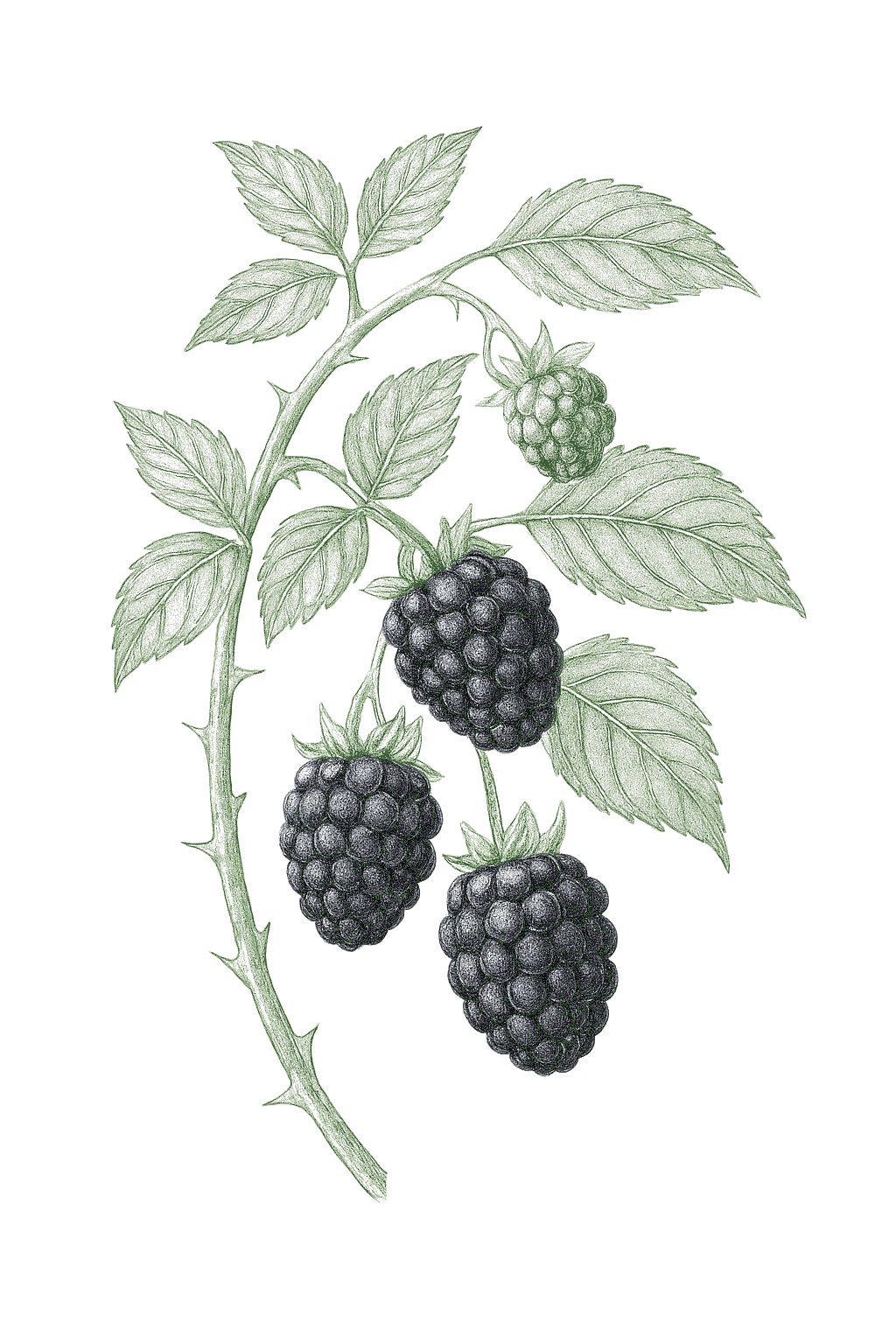
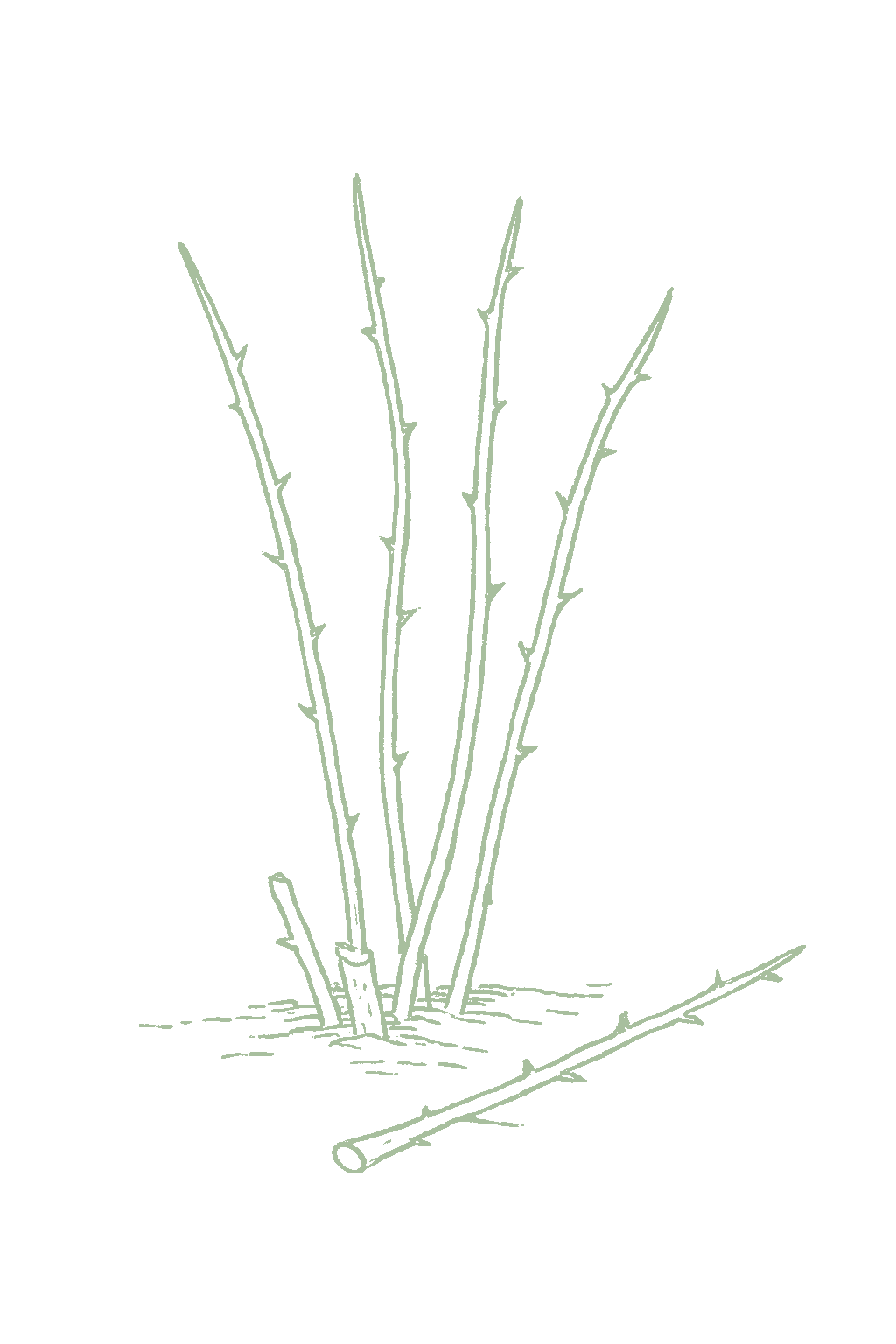
Blackberry mature plant
Fig. 01 · Blackberry, mature Zone 4
Container
15 gal
min 10 gal pot
Sunlight
Full sun
6-8 hrs daily
Water
Moderate
2 inches / week
Spacing
36-72"
between plants
Soil pH
6-6.5
slightly acidic
Today · in your zone

What's happening right now

July 24 · Zone 4 · Stage 01 · Planting

Off-season for blackberry in zone 4.

Chill hours

Will your winter chill these blueberries?

Blackberries need a cold winter rest, measured in chill hours (time below about 45 °F), before they fruit well, but they need less than most raspberries. Low-chill types like Kiowa, Natchez, and Prime-Ark need only a little winter cold, so they grow well in the South. Higher-chill types like Navaho and Chester need a lot more and suit colder regions. If a type does not get the chill it needs, it barely fruits, so match the variety to your climate.Most blackberries need a stretch of winter chill (hours below about 45 °F) to break dormancy and fruit normally, but they are lower-chill than most raspberries. Low-chill Southern types such as Kiowa, Natchez, Ouachita, and the Prime-Ark line need only about 200 to 400 hours, which is why they succeed across the Deep South; higher-chill types such as Navaho, Apache, and Chester want 800 or more and are better suited to colder regions. Too little chill for the type gives weak, erratic budbreak and little fruit, so matching the type's chill requirement to your winter is the main thing, alongside habit, that decides which blackberry to grow.

Your winter banks ~1000 – 1500 hrs
037575011251500
Summer Bearing Best for your chill
Ouachita~300–400Natchez~200–300Navaho~800–900Osage~400Apache~800–900Kiowa~200Arapaho~400–500Triple Crown~500Chester~800Illini Hardy~800Marionberry (Marion)~400–800Boysenberry~400
Everbearing
Prime-Ark Freedom~300Prime-Ark Traveler~300Prime-Ark 45~300
The growing year

Your blackberry year, month by month

Deciduous, drops its leaves in winter Northern Tier, Zone 4

Here a fall-bearing blackberry is cut to the ground each winter with heavy mulch. New canes come up in spring and fruit that fall. It is a cold-edge crop, so pick the hardiest types.Here a hardy fall-bearing blackberry is grown as a deciduous cane fruit cut to the ground each winter; the mulched crown pushes new canes in spring that fruit that fall before frost. It is the safest management at the cold edge of the blackberry range.

Once established, your blueberries follow the same yearly rhythm. Choose a cultivar by chill class above, then use this calendar for the season-to-season timing.


Jan
Feb
Mar
Apr
May
Jun
Jul
Aug
Sep
Oct
Nov
Dec
▲ We are here
Bed’s year
rest
prune
bloom
growing
harvest
care
rest
Plant crowns
plant
plant
Winter restBloomGrowingHarvestPruneCare
Plant crowns
April to May
Bloom
June to July
Harvest
August to September
Protect the blossoms Spring frost is no threat to a fall-bearing crop that blooms in summer; the limits are the short season and winter survival, so mulch heavily and pick early cultivars that finish before the first fall frost.
From seed to fruit

The growing journey

Stage 01 · Planting
01
Planting
Your new blackberry canes going into the ground while dormant, in loose, well-drained soil in full sun, with a trellis or stake ready.Dormant bare-root canes or a potted nursery plant going into a prepared, full-sun, well-drained row with support in place. In most regions this is late winter to early spring in the North, or late fall through winter in mild areas.
Plant the canes 1 to 2 inches deep along your row, cut the old cane back to a few inches, water well, and mulch. Set up a stake or trellis. Buy certified disease-free plants.Set the crown so the roots are 1 to 2 inches deep, space plants for the type (erect closer, semi-erect and trailing wider), cut the old handle cane back to a few inches, water in, and mulch. Put the trellis or support up now. Use certified disease-free stock on ground with no recent nightshade, strawberry, or bramble history.
FROM PLANT · Buy certified disease-free plants and pick a sunny spot that has not grown blackberries, raspberries, tomatoes, or potatoes recently. A clean start matters more than anything.Start with certified disease-free canes on a full-sun site that has not grown blackberries, raspberries, or nightshades recently. A clean start on clean ground is the single biggest factor in how long the planting lives.
02
Establishment (year 1)
In the first year the plant is growing leafy canes and roots, not much fruit yet. New shoots come up from the base or nearby.First-year primocanes growing vegetatively and building the crown and root system. Erect types begin to sucker; semi-erect and trailing types send up long canes to train onto the trellis.
Let the new canes grow and tie trailing or big arching types to a trellis. On upright types, pinch the tips when the canes reach about 3 to 4 feet to make them branch. Water, mulch, and pull up stray shoots.Let the primocanes grow, and tip erect types at 3 to 4 feet in summer to force branching. Train semi-erect and trailing canes onto the trellis. Keep the row narrow, water steadily, mulch, and pull suckers that stray outside the row.
FROM PLANT · Learn your type early. Upright kinds get their tips pinched at 3 to 4 feet so they branch. Big arching or trailing kinds need a trellis or they flop on the ground.Match your training to the habit from day one: tip erect types at 3 to 4 feet to force fruiting laterals, and trellis semi-erect and trailing types, which will sprawl on the ground and root down if left loose.
03
Spring growth and budbreak
In spring the year-old canes leaf out and grow the side shoots that will flower, and brand-new canes start coming up from the ground.Overwintered floricanes leaf out and push fruiting laterals from the buds, while new primocanes emerge from the crown and roots. This is the spring feeding window.
Feed the plants when growth starts, and start tying in the new canes. In the South, watch for strange doubled blossoms (rosette) and cut those canes out right away.Feed a balanced fertilizer as growth begins, shorten winter-pruned laterals if not already done, and begin training the new primocanes. Watch for the distorted broom-like blooms of rosette in the Southeast and cut them out immediately.
FROM PLANT · In the South, watch new spring growth and blossoms for rosette (strange doubled flowers in a broom shape) and cut those canes out right away.In the humid Southeast, scout hard at budbreak and bloom for rosette (double blossom): cut out any cane with the broom-like distorted flowers immediately, before its spores spread.
04
Bloom
White or pale-pink flowers open in clusters on the canes. Bees visit them, and each flower becomes a berry.Clusters of white to pale-pink five-petaled flowers open on the fruiting laterals of the floricanes (or on the primocane tips of everbearing types). Bees work the self-fertile flowers.
Do not spray anything that harms bees while the plants are flowering. In the South, check the blossoms for the strange doubled rosette flowers and cut those canes out. Cover the plants if frost is coming.Protect pollinators by not spraying insecticides during bloom. In the warm South, scout closely for rosette's deformed blooms and rogue out affected canes. Cover the planting if a hard frost threatens open bloom.
FROM PLANT · One blackberry plant will fruit on its own, but bees help each berry fill out fully. Do not spray bug killers while it is flowering.Blackberries are self-fertile, so a single cultivar sets a full crop, but each berry is built from many drupelets and good bee activity fills them all out, so avoid spraying insecticides during bloom.
05
Fruit set and sizing
The flowers turn into small green berries that grow and change from green to red to black. This is when they need steady water.Pollinated flowers form green aggregate fruits that swell and turn from green to red to black. Steady moisture now determines berry size and drupelet fill.
Water steadily while the berries are sizing up. Watch for bugs as the fruit starts to color, and get ready to pick often or net the plants.Keep the soil evenly moist through fruit sizing, the most water-sensitive window. Watch for stink bug damage (hard red segments) and spotted-wing drosophila as the first berries color, and begin netting or a tight harvest schedule.
FROM PLANT · Keep the soil evenly moist while the berries are forming and ripening for full, juicy fruit, and water at the base to keep the leaves dry.Bloom through harvest is the water-critical window; steady moisture as the berries size prevents small, hard, poorly filled fruit, while wet foliage invites disease, so water low and often at the base.
06
Ripening and harvest
Berries turn fully black and lose their shine, then come off easily in your hand. Pick every couple of days while they ripen.Berries turn from glossy red-black to a dull, deep black and detach with a light tug, the whole fruit including its core coming free. Pick every one to three days through the ripening window.
Pick berries that are dull black and slip off easily, in the cool morning, and refrigerate right away. Pick every day or two and clean up any rotten berries to keep fruit flies down.Pick fully ripe (dull black) berries in the cool morning into a shallow container, handling them as little as possible, and refrigerate at once. Harvest completely and often to stay ahead of spotted-wing drosophila; remove any overripe or rotting fruit.
FROM PLANT · A ripe blackberry is dull black, not shiny, and slips off easily. A shiny one is not ready yet and will taste sour, and it will not sweeten after you pick it.Pick when the berry turns from glossy to a dull, deep black and pulls free with its core intact; a shiny black berry is not fully ripe and will be tart, and blackberries do not sweeten after picking.
07
Post-harvest and spent-cane removal
The canes that just fruited will die, but the new canes keep growing for next year. Now is the time to cut out the old fruited canes.The floricanes that just fruited begin to die back, while this year's primocanes continue growing for next year's crop. This is the window to remove spent canes and feed.
Right after picking is done, cut out the canes that fruited (they will die anyway) and take them away. Feed lightly and keep caring for the new canes.Cut spent floricanes to the ground and remove them right after harvest to reduce disease and open the canopy. Give a light post-harvest feeding, and keep training and watering the primocanes.
FROM PLANT · As soon as picking is done, cut out the canes that fruited and take them away. They die anyway, and removing them keeps the planting healthier.Cut spent floricanes to the ground and remove them right after harvest: they are dead anyway, and clearing them opens the canopy, cuts disease and borer carryover, and gives the primocanes light and air.
08
Winter dormancy and chilling
In winter the plant loses its leaves and rests. It needs a stretch of cold (chill hours) to fruit well next year. The least hardy types can be damaged by hard freezes.The canes drop their leaves and rest through winter, accumulating the chill hours the plant needs to break bud and fruit normally. Trailing and tender types are most at risk from hard freezes.
Do not water much in winter. Protect the least hardy types from hard freezes with mulch or cover. The cold rest is what lets the plant fruit next year.Little to no watering is needed in cold regions. Protect trailing and tender types from hard freezes with mulch, row cover, or by laying canes down under cover where practical. Let the plant bank its winter chill.
FROM PLANT · Blackberries need a cold winter rest to fruit next year, so let them get cold, but protect the least hardy trailing types from hard freezes with mulch or a cover.Blackberries need winter chill to fruit, so let them rest cold, but protect the least hardy trailing and primocane types from hard freezes with mulch or cover; trailing types can be damaged below about 13 °F.
09
Dormant-season pruning and training
In late winter, before growth starts, you shorten the side shoots, thin to the strongest canes, cut out any damaged wood, and tie canes to the support. Fall-bearing types can be cut all the way down for one fall crop.Late winter is the window to shorten fruiting laterals, thin canes to the recommended density, remove any weak or diseased wood, and tie canes to the trellis before budbreak. Everbearing types can be mowed to the ground now for a single fall crop.
Trim the side shoots back to about 12 to 18 inches, keep only the strongest few canes, cut out damaged wood, and tie the canes to the trellis. For fall-bearing types you want one crop from, cut every cane to the ground.Shorten laterals to about 12 to 18 inches, thin to 4 to 6 canes per foot for erect types or 6 to 8 strong canes per crown for semi-erect, remove weak and diseased canes, and tie everything to the trellis. For a primocane-fruiting type grown for a single crop, mow all canes to the ground.
FROM PLANT · In late winter, trim the side shoots back and keep only the strongest canes. For fall-bearing types you want one crop from, just cut everything to the ground.In late winter shorten fruiting laterals to 12 to 18 inches and thin to a few strong canes for light and air; for a primocane-fruiting type grown for a single crop, simply mow every cane to the ground.
Beginner
Know your soil

Your soil

Identify yours

Not sure what soil you have? Grab a small handful of damp soil from your garden bed and squeeze it. If it crumbles apart easily, it's sandy. If it holds together but breaks when you poke it, it's loam (what most vegetables want). If it stays in a hard, slippery ball, it's clay.

What this crop wants

Blackberries want loose, well-drained soil rich in organic matter and full sun. A slightly acidic pH around 6.0 to 6.5 is ideal and most gardens already have it. Mixing in compost and planting on a slightly raised row before planting helps a lot, because the roots will not stand wet feet.

If your soil doesn't match

You have sandy soil

Mix 2-3 inches of compost into the top 6 inches of your bed before planting. Compost holds moisture (which sandy soil drains too fast) and adds the nutrients sandy soil tends to lack. Repeat each season. Compost breaks down over time.

You have clay soil

Mix 2-3 inches of compost AND a few inches of coarse sand or perlite into the top 6 inches of your bed. The compost feeds the plants; the sand breaks up the clay so air and water can move through. Don't add sand without compost. It can compact like concrete.

Containers and raised beds

If amending your soil sounds like too much work, or if your soil is heavy clay, full of rocks, or contaminated, build over it. A raised bed at least 12 inches deep filled with a 50/50 mix of compost and sandy loam gives you ideal growing soil with no battles. A 5-gallon container with quality potting mix does the same for one plant at a time. Both bypass your native soil entirely.

Learn more about your soil
The specs

Care guide

The numbers that matter, at a glance.

Sunlight
Full sun · 6-8 hrs/day
Water
moderate
Spacing
36-72 inches
Soil pH
6 to 6.5
Container OK?
Yes · 10+ gal pot
Soil chemistry

Soil pH for blackberry

Preferred
6 to 6.5
Tolerated
5.5 to 7

Blackberries like soil that is slightly acidic, about pH 6.0 to 6.5, which is what most gardens already have. Unlike blueberries, they need no special acidic soil. If your soil is very alkaline and the leaves yellow between the veins, work in compost and use a chelated-iron product.Blackberries prefer a slightly acidic soil, roughly pH 6.0 to 6.5, and tolerate about 5.5 to 7.0. This is close to what most vegetable gardens already carry, so no special acidification is needed, unlike a blueberry. In strongly alkaline soils above about 7.5 the plants can develop iron chlorosis (yellowing between the veins), best corrected with added organic matter and a chelated-iron product rather than a drastic pH change.

Verified · 2 sources View
Steady hand on the hose

Watering

When & how much
Frequency
Water regularly so the soil stays evenly moist but never soggy, roughly 1 to 2 inches a week, and more during hot, dry spells.Keep the soil consistently moist, about 1 to 2 inches of water per week, more in heat. The most water-sensitive window runs from bloom through harvest, when the developing berries need steady moisture to size and stay plump.
Amount
About 1 to 2 inches a week, including rain, and more often in the heat.1 to 2 inches per week, adjusted for rainfall, heat, and soil drainage; twice-weekly watering may be needed in summer heat and on sandy soils.
Method
A soaker hose or drip line at the base works best and keeps the leaves and berries dry. A mulch layer along the row holds moisture between waterings.Drip or soaker irrigation keeps the shallow root zone evenly moist without wetting the canes and fruit, which reduces fruit rot, cane disease, and spotted-wing drosophila. Mulch along the row to hold moisture and keep roots cool.
Signs of trouble
Too much water
If the leaves yellow and wilt while the soil stays wet and heavy, the roots may be drowning. Blackberries hate soggy soil.Yellowing, wilting despite wet soil, and collapsing canes point to overwatering or poor drainage; blackberries will not tolerate saturated soil and quickly develop root rot.
Too little water
Small, dry, seedy berries and crispy leaf edges mean the plant is too dry, especially while the fruit is forming.Drought stress shows as small, seedy, hard berries with poor drupelet fill and scorched leaf margins; berry size suffers most during the bloom-to-harvest window.
Feeding rhythm

Feeding

Frequency
Once or twice per year
Type
Balanced, nitrogen-forward in spring
When to start
early spring as growth begins, with a second feeding just after harvest

Feed blackberries in early spring when growth starts, using a balanced fertilizer or some composted manure spread along the row, and again lightly right after you finish picking. That feeding fuels the new canes for next year. Go easy late in the season, since too much makes weak, floppy canes.Blackberries are moderate feeders. Apply a balanced fertilizer or well-rotted manure in early spring as new growth begins, banded along the row rather than against the crowns, and a second, lighter feeding right after harvest to build the primocanes that carry next year's crop. Nitrogen drives cane vigor, but too much late in the season produces soft, disease-prone canes, so feed early and taper off by late summer. A soil test guides the rate.

N · P · K = 10-10-10

Use a balanced fertilizer such as 10-10-10, or composted manure.A balanced complete fertilizer with enough nitrogen to drive primocane growth; roughly a 10-10-10, or composted manure along the row.

Try a balanced 10-10-10, or composted manure worked in along the row
Who grows well together

Companion planting

Blackberries do not need companion plants to do well. The important rules are what to avoid: do not plant them where tomatoes, potatoes, peppers, eggplant, or strawberries grew recently (they share a soil disease called Verticillium wilt), and pull out any wild brambles nearby, which spread disease and pests. If you want neighbors, garlic along the edge and clover between rows are easy, low-risk choices. Blackberry is not a heavy-companion crop; the siting rules that matter most are about what to keep it away from. Do not plant it where tomatoes, potatoes, peppers, eggplant, or strawberries have grown in the last few years, because all share Verticillium wilt, and clear out nearby wild brambles that carry rosette, orange rust, viruses, and spotted-wing drosophila. Good neighbors are modest: traditional allium edges and a mowed legume cover in the row middles for soil and weeds. The bigger gains come from full sun, spacing, drainage, and a clean start, not from companions.

Other
Garlic and onions
Alliums like garlic and onions are a traditional bramble neighbor, thought to help mask the planting from some pests, and they take up little room along the row.Garlic and onions are a traditional companion along a bramble row, valued by many growers for pungent foliage thought to confuse or deter some browsing and sucking pests. The benefit is folk practice rather than a measured yield gain, but alliums are shallow, undemanding, and easy to tuck along the planting edge without competing with the canes, so there is little downside to trying them. Traditional
Soil
Clover or low legume cover
A low living mulch of clover in the row middles fixes a little nitrogen, holds soil, and suppresses the weeds that otherwise compete with the vigorous but shallow blackberry roots. Keep it mowed and out of the crop row so it does not invade the crowns or the sucker zone. Well-grounded
anytime
Keep apart from
Tomatoes, potatoes, peppers, eggplant, and strawberries Keep blackberries away from current or recent plantings of tomato, potato, pepper, eggplant, and strawberry. All host Verticillium wilt, a soil fungus that also kills blackberries; planting brambles on ground that grew nightshades or strawberries within the last few years carries the disease into the new planting. Research-backed
Wild brambles and old blackberry or raspberry plantings Remove nearby wild blackberries, dewberries, and abandoned brambles before planting. Wild Rubus is the single biggest reservoir for the diseases and pests that shorten a blackberry patch's life, harboring rosette (double blossom), orange rust, viruses, and spotted-wing drosophila that move straight into a new planting. Research-backed
Provenance tagged inline · see methodology for the labeling system Key
Harvest signals

When to pick

A blackberry is ready when it turns fully black and loses its shine, going dull, and pulls off easily into your hand with the core still inside (unlike a raspberry, which leaves a hollow center). A shiny black berry is not ripe yet and will be sour, and it will not sweeten after picking. Pick every one to three days in the cool morning, be gentle, and refrigerate right away.A ripe blackberry turns from glossy red-black to a dull, deep black and detaches with a light tug, the whole fruit including its white core coming free (unlike a raspberry, which leaves its core behind as a hollow cap). A shiny black berry is not fully ripe and will taste tart, and it will not sweeten off the plant. Pick over the planting every one to three days in the cool morning after dew dries, handling the soft fruit as little as possible, and refrigerate at once.

Yield

What to expect

Each blackberry plant gives roughly 4 to 15 pounds a season once established, with the big semi-erect thornless types producing the most. A few plants quickly add up to plenty of berries.A mature blackberry plant yields roughly 4 to 15 pounds of fruit per season depending on type, with vigorous semi-erect thornless types (Triple Crown, Chester) at the high end and erect types more modest. A well-managed row produces on the order of a few pounds per linear foot. Yields build over the first few years as the planting fills in.

Blackberries produce fast. Summer types fruit the second year; fall-bearing types can give berries the first fall. Both hit full swing around years 2 to 3 and keep producing for 15 to 20 years if you prune and care for them.Blackberries crop quickly compared with tree fruit. A summer-bearing planting gives its first real crop in the second year; a primocane-fruiting type can fruit its first fall. Both reach full production around years 2 to 3 and then stay productive for about 15 to 20 years with steady pruning and renewal. Whether you get fruit the first year depends on the type. Summer-bearing blackberries make no fruit the first year and start the next summer. Fall-bearing (primocane) types can give you a small crop that same fall, so they are the quickest to your first berries.What you get the first year depends on type. A summer-bearing (floricane) planting makes essentially no fruit the first year, since it fruits on second-year canes; expect the first real crop the following summer. A primocane-fruiting (everbearing) planting set out while dormant can ripen a modest crop on its new canes that first fall, which is the fast route to a first harvest.

What changes yield
Growth habit: vigorous semi-erect thornless types (Triple Crown, Chester) far outyield compact erect types, but need a trellis and more room.Cane type: summer-bearing gives one heavier crop on second-year canes; primocane-fruiting gives a fast first-fall crop and the simplest pruning.Pruning and training: summer-tipping erect canes, shortening laterals, and thinning to the right density is the biggest lever on berry size and yield.Full sun and spacing: at least 6 to 8 hours of sun and an open, trellised canopy sustain fruit size and cut disease and spotted-wing drosophila losses.Drainage and water: shallow roots need steady moisture but rot in wet soil, so both drought and waterlogging cut yield.Disease and pest pressure: rosette (in the Southeast), orange rust, spotted-wing drosophila, borers, and viruses all reduce harvest and planting life; a clean start on clean ground preserves yield.
Verified · 3 sources View
Pick your variety

Recommended varieties

Pick by habit first. ERECT blackberries stand up on their own, spread by shoots from the roots, and are the easiest and hardiest, with thornless choices like Ouachita and Navaho. SEMI-ERECT thornless types like Triple Crown and Chester grow huge and productive but need a trellis. TRAILING types like Marionberry and Boysenberry taste the best but are the least cold-hardy and must be trellised, so they suit mild coastal areas. Most give one summer crop on year-old canes; primocane (everbearing) types like Prime-Ark fruit on new canes in fall and let you just mow everything down each winter. Match the variety to your winters (low-chill kinds for the South, extra-hardy kinds for cold areas), and buy certified disease-free plants.Choose first by growth habit, then by thorniness, cane type, and chill. ERECT blackberries have stiff, self-supporting canes, sucker from the roots to form a hedgerow, and are the hardiest and easiest without a trellis (Ouachita, Navaho, Osage, Arapaho thornless; Apache, Kiowa thorny). SEMI-ERECT thornless types (Triple Crown, Chester) are the most vigorous and productive, form a crown rather than suckering, and must be trellised. TRAILING types (Marionberry, Boysenberry) have the earliest, most intensely flavored fruit but the least cold hardiness and must be trellised, so they suit mild coastal regions. Most are summer-bearing (floricane), fruiting on second-year canes; primocane-fruiting (everbearing) types such as the Arkansas Prime-Ark line fruit on first-year canes and can be mowed to the ground for one clean fall crop. Match the chill requirement to your winter (low-chill Natchez, Kiowa, Ouachita for the South; high-chill Illini Hardy, Apache, Chester for cold regions), and always start with certified disease-free stock.

Ouachita
fresh and jam
Natchez
fresh
Navaho
fresh
Osage
fresh
Apache
fresh
Kiowa
fresh
Arapaho
fresh
Triple Crown
fresh and processing
Chester
fresh and processing
Illini Hardy
fresh and jam
Marionberry (Marion)
fresh and processing
Boysenberry
fresh and jam
Prime-Ark Freedom
fresh
Prime-Ark Traveler
fresh and shipping
Prime-Ark 45
fresh and shipping
Off the vine

Storing your harvest

Room temp
Blackberries do not last on the counter; they are delicate and mold fast. Leave them out only while you are eating them and refrigerate the rest right away. They will not get sweeter sitting out.Blackberries are highly perishable; they soften, leak, and mold within a day or two at room temperature. Hold them out only briefly for serving and refrigerate the rest at once. They do not ripen further after picking, so warmth buys nothing.
Fridge
In the fridge, blackberries keep several days, about 3 to 6. Leave them unwashed and dry in a shallow vented container, chill them right after picking, and pick out any mushy ones. Rinse only just before eating.Refrigerated, well-handled blackberries keep about 3 to 6 days, a little longer than raspberries because the fruit is more solid. Store them dry and unwashed in a shallow, vented container so they are not crushed, refrigerate immediately after picking, and sort out any soft or moldy berries that spread decay fast. Wash only just before eating.
Freezer
Blackberries freeze beautifully. Spread them on a tray (do not wash first), freeze until hard, then pour into a freezer bag. They get soft once thawed, so use frozen berries in baking, smoothies, or jam. They keep about a year.Blackberries freeze very well. Dry-pack them whole without washing: spread on a tray, freeze until solid, then bag and seal with the air pressed out. Freezing loose keeps them from clumping. Texture softens on thawing, so use thawed berries in baking, smoothies, cobbler, jam, and sauces; they keep good quality for about a year.
Verified · 2 sources View
When something goes wrong

Common problems

Little or no fruit (often a pruning mistake)
01 of 05
What happened The canes grew fine but you got almost no berries. Usually this is a pruning mistake: cutting a summer type to the ground takes off the canes that fruit. Too much shade, the wrong type for your climate, or rosette can also cause it.The canes grew well but produced few or no berries. The most common cause is pruning the wrong way for the type: cutting a summer-bearing planting to the ground removes the very floricanes that would have fruited. Too little sun, too little winter chill for the type, or rosette can also be at fault. Next season Find out which type you have. For summer types, only cut out the canes that already fruited, never all of them. For fall types, you can cut everything to the ground. Plant in full sun and use certified disease-free plants.Identify your type first. Summer-bearing fruits on second-year canes, so only remove canes that have already fruited and never cut everything down. Primocane-fruiting fruits on first-year canes and can be mowed to the ground for one fall crop. Give the planting full sun, match the chill requirement to your winter, and start with certified disease-free stock.
Strange doubled flowers and no fruit on some canes (rosette)Deformed, broom-like blooms and barren canes (rosette)
02 of 05
What happened Some canes made strange, doubled, wrinkled flowers in a broom shape and then made almost no berries. That is rosette (double blossom), a fungus that is a big problem for blackberries in the humid South.In spring, some canes opened broom-like clusters of distorted, doubled, reddish flowers instead of normal blooms, and those canes set little or no fruit. This is rosette (double blossom), the most serious blackberry disease of the humid Southeast, caused by the fungus Cercosporella rubi. Next season Cut out and throw away any cane with the strange blooms right away. In the South, mowing the whole planting down after harvest to start fresh can help, along with resistant varieties and removing wild brambles nearby.Cut out and destroy affected canes the moment you see the deformed bloom, before spores spread. In badly hit Southern plantings, mow the whole planting to the ground after harvest to regrow clean primocanes, plant more resistant cultivars, remove wild brambles, and start with disease-free stock.
Bright orange powder on the leaf undersides (orange rust)Bright orange powder under the leaves (orange rust)
03 of 05
What happened Some plants sent up weak, spindly shoots with bright orange powder under the leaves. That is orange rust, and it infects the whole plant for life. Blackberries catch it easily and cannot be cured.New shoots came up weak, pale, and spindly in spring, with bright orange powdery pustules coating the leaf undersides. This is orange rust, a systemic fungus that permanently infects the whole plant. Blackberries are especially susceptible, and the plant will never recover. Next season Dig up and destroy any plant with the orange powder, roots and all, before it spreads. Pull out wild brambles nearby and start new plants clean.There is no cure: dig out and destroy infected plants, roots and all, as soon as the orange pustules appear, before they seed spores onto healthy plants. Remove nearby wild brambles, start with clean stock, and favor more resistant cultivars.
Wilting and dying in soggy spots (root rot)Wilting, yellowing, and collapse in wet ground (root rot)
04 of 05
What happened Plants yellowed, wilted, and died, especially in the soggy spots, and the roots were brown and rotten. That is root rot, which happens when the soil stays too wet.Canes yellowed, wilted, and collapsed, worst in low or poorly drained parts of the row, and dug roots were brown and rotted. This is Phytophthora root rot, which attacks roots in saturated soil and is a common cause of blackberry decline on heavy ground. Next season You cannot fix rotted roots, so improve drainage: plant on raised rows, keep water moving away, and never let the soil stay soggy.There is no cure once roots rot, so fix the drainage: replant on tall raised beds or ridges of amended soil, divert surface water, choose tolerant cultivars, and never let blackberries sit in saturated soil.
Berries with maggots, going soft, or vanishing (fruit flies, birds)Wormy, soft berries or fruit disappearing (SWD, birds)
05 of 05
What happened Ripe berries got soft and mushy with tiny maggots inside, or berries disappeared. The maggots are a fruit fly (spotted-wing drosophila), and vanishing fruit is usually birds.Ripe berries went soft and leaky with tiny white maggots inside, or fruit vanished before you could pick it. The maggots are spotted-wing drosophila, the major modern blackberry pest; missing fruit is usually birds, which strip a ripening planting fast. Next season Pick every day or two and clean up fallen berries, keep the planting open and airy, and use netting. Netting also keeps the birds off the ripe fruit.Harvest completely every one to two days, remove and bag all overripe and fallen fruit, keep the canopy open, and use fine exclusion netting and vinegar traps for spotted-wing drosophila. Bird netting over the row protects the ripening crop.
Verified · 4 sources View
The usual suspects

Pests & diseases

Pests
Spotted-wing drosophila (SWD)
P · 01
Symptoms Tiny maggots inside ripe berries, with the fruit going soft and mushy. The adult is a small fly with a spot on each wing.Small white maggots inside ripe and ripening berries; fruit softens, collapses, and leaks when squeezed. The adult is a tiny vinegar-fly-like insect, the male with a dark spot near each wingtip. Late-ripening and fall primocane crops are hit hardest. Cause An invasive fruit fly that lays eggs in good, ripe berries (not just rotten ones), and the maggots feed inside.Spotted-wing drosophila (Drosophila suzukii), an invasive vinegar fly whose females cut into healthy ripe fruit to lay eggs, unlike common fruit flies that use only rotting fruit. It is the major modern blackberry pest and the reason clean, frequent picking now defines a successful patch. Organic treatment Pick ripe berries every day or two and clean up any fallen or overripe ones (seal them in a bag, do not compost). Keep the planting open and airy. A cup of apple cider vinegar makes a simple monitoring trap.Harvest completely and often, every one to two days, so no ripe fruit is left on the cane, and remove and destroy overripe or fallen berries (bag them, do not compost). Open the canopy by pruning and trellising to reduce the cool, humid shelter the fly favors. Fine exclusion netting under 1 mm mesh and apple-cider-vinegar monitoring traps help. Prevention Grow earlier varieties when you can, keep the row open and trellised, and pick often. Clear out wild brambles nearby.Choose early-ripening cultivars to dodge peak fly pressure, keep the planting open and well-trellised, harvest on a tight schedule, and remove nearby wild brambles that host the fly.
Red-necked cane borer
P · 02
Symptoms A swollen, spindle-shaped lump on a new cane, with the cane above it weak or dead. A grub is tunneling inside where the swelling is.A cigar-shaped, spindle-like swelling or gall on a primocane, usually 1 to 3 inches long, with the cane above it weak, stunted, or dead. The gall marks where a larva has tunneled and fed inside the cane, and canes often snap at the swelling. Cause A small beetle whose grub tunnels inside new canes and makes a swollen gall. It is common on blackberries, especially near wild brambles.Red-necked cane borer (Agrilus ruficollis), a small metallic-black beetle with a coppery-red thorax whose larva bores into primocanes and causes the diagnostic gall. It is one of the more common blackberry-specific borers, worse near wild brambles. Organic treatment Cut off and throw away any cane with a swollen gall, cutting below the lump to get the grub. Pick off any beetles you see.Cut out and destroy any cane showing a gall, cutting well below the swelling to remove the larva before it matures, and do this during the dormant season and again through summer as galls appear. Hand-pick the adult beetles. No spray is usually needed in a home planting. Prevention Check new canes for swollen galls and cut them out, and remove wild brambles nearby.Scout primocanes for galls and prune them out promptly, remove wild brambles that harbor the beetle, and keep the planting vigorous so it outgrows light injury.
Raspberry crown borer
P · 03
Symptoms Canes weaken, the leaves redden and wilt, and canes snap off at the base. The crown is tunneled inside. Plants slowly die.Whole canes weaken, leaves redden and wilt, and canes break off easily at the base; the crown and lower cane show tunneling and sawdust-like frass. Plants decline over two seasons and can die. A clearwing moth that mimics a yellowjacket is the adult. Cause A wasp-mimic moth whose grubs tunnel into the crown and base of the canes over two years, killing the plant from below.Raspberry crown borer (Pennisetia marginata), a clearwing moth whose larvae bore into the crown and lower canes of blackberry and raspberry over a two-year life cycle, destroying the base of the plant. Organic treatment Dig out and destroy badly infested plants, because the grubs are hidden inside the crown. Start new plantings with healthy plants on clean ground.Dig and destroy infested crowns, since the larvae are protected inside and hard to reach. Starting with clean nursery stock on a fresh site is the most effective control; keep plants vigorous so they outgrow light injury. Prevention Buy healthy plants, choose a spot with no old brambles, and dig out any plants that get infested.Plant certified, borer-free stock on ground without a recent bramble history, remove wild brambles nearby, and remove and destroy infested crowns to break the two-year cycle.
Stink bugs
P · 04
Symptoms Berries ripen unevenly, with some little bumps staying hard and red while the rest turns black. Shield-shaped green or brown bugs are feeding on the fruit.Individual drupelets on a berry fail to color and stay hard, red, and sour while the rest ripens black, giving a lumpy, unevenly ripened fruit. Shield-shaped green or brown bugs feed on the developing berries, and a musty odor may cling to picked fruit. Cause Shield-shaped bugs that pierce the developing berries and kill little segments, so the fruit ripens lumpy and uneven. They are worse near weeds and in warm regions.Several stink bug species (including the brown marmorated stink bug) pierce developing drupelets to feed, killing individual segments so the berry never ripens evenly. Pressure is highest near weedy edges and in the warm South. Organic treatment Pick the bugs off into soapy water, mow weedy edges, and harvest often. Netting the fruit helps if there are a lot of them.Hand-pick bugs into soapy water, keep weedy borders mowed to reduce shelter, and harvest promptly. Row-edge trap plantings and exclusion netting help where pressure is heavy. Prevention Keep weeds down around the planting, check the berries as they form, and pick often.Mow and clean up weedy field margins, scout the planting during fruit set, and harvest on a tight schedule so fruit does not linger.
Japanese beetle
P · 05
Symptoms Leaves chewed down to lace and berries nibbled, by shiny green-and-copper beetles that feed in groups on warm days.Leaves skeletonized to a lace of veins, and ripening berries chewed, often by clusters of metallic green-and-copper beetles feeding in the open on warm days from early to midsummer. Cause An introduced beetle whose adults eat the leaves and berries; its grubs live in lawns nearby.Japanese beetle (Popillia japonica), an introduced scarab whose adults feed on blackberry foliage and fruit; grubs develop in nearby turf. Organic treatment Knock the beetles into a jar of soapy water in the morning while they are slow. Do not use the bag traps, which attract even more. Net the fruit as it ripens.Hand-pick beetles into soapy water in the cool morning when they are sluggish, the most effective home control. Skip pheromone traps, which draw in more beetles than they catch. Protect ripening fruit with netting. Prevention Pick beetles off regularly while they are active, and keep plants healthy so they shrug off the damage.Keep plants vigorous, hand-pick consistently during the flight, and manage grubs in adjacent lawn areas if pressure is high.
Aphids
P · 06
Symptoms Tiny soft bugs on new shoots and under leaves, sometimes with sticky residue. The bigger risk is the viruses they can spread.Small soft-bodied insects clustered on shoot tips and leaf undersides, sometimes curling new growth and leaving sticky honeydew. Their real danger is spreading the viruses behind blackberry decline, not the feeding itself. Cause Small sap-sucking insects whose main threat is carrying plant viruses from one bramble to another.Several aphid species feed on blackberry sap and can transmit the viruses that build into the crumbly-fruit decline complex over time. Organic treatment Spray them off with water, let ladybugs help, or use insecticidal soap if there are many. Do not over-fertilize.Knock light infestations off with a strong spray of water, support ladybugs and other natural enemies, and use insecticidal soap if needed. Avoid heavy nitrogen, which fuels the soft growth aphids prefer. Prevention Buy certified virus-free plants, pull out wild brambles and any sickly plants nearby, and encourage helpful bugs.Start with certified virus-free plants, remove nearby wild brambles and any virus-symptomatic plants, support beneficial insects, and avoid excess nitrogen.
Diseases
Phytophthora root rot
D · 01
Symptoms Canes are weak, leaves yellow and wilt, and plants die in soggy spots. The roots are brown and rotten.Canes are weak and stunted, leaves yellow or scorch and wilt, and whole canes collapse, worst in low or poorly drained spots. Dug roots are brown to black and rotted, with a reddish-brown discoloration into the crown. Cause A soil disease that rots the roots when the soil stays too wet; a common reason blackberry plantings fail.Soilborne Phytophthora water molds that attack roots in wet, poorly drained soil; a common and damaging cause of blackberry decline, especially on heavy ground and in low spots. Organic treatment You cannot fix rotted roots, so it is all about drainage: plant on raised rows, keep water moving away, and replace dead plants on a drier spot.There is no cure once roots rot, so the response is drainage. Plant on tall raised beds or ridges, divert surface water, and replace dead plants with clean stock on a better-drained site. Prevention Plant on raised rows with good drainage, never let the soil stay soggy, and buy healthy plants.Plant only on well-drained ground or raised beds, choose more tolerant cultivars, never let blackberries sit in saturated soil, and start with disease-free plants.
Rosette (double blossom)
D · 02
Symptoms In spring the flower buds open into strange, doubled, wrinkled reddish blossoms in a broom-like cluster instead of normal flowers, and those canes make almost no fruit.In spring, buds burst into a broom-like cluster of distorted, wrinkled, reddish flowers instead of normal blooms, and the shoot below them proliferates into a bunchy witches' broom. The diseased flowers set little or no fruit, and an infected cane is effectively barren. Cause A fungus (called double blossom) that infects the flower buds and makes the deformed blooms. It is the biggest blackberry problem in the humid Southeast, especially near wild brambles.The fungus Cercosporella rubi (rosette, or double blossom), which infects buds and causes the deformed flowers and witches'-broom growth. It is the most serious blackberry disease of the humid Southeast, spread by spores from infected buds to new growth during bloom, and it is worst on erect thorny types near wild brambles. Organic treatment Cut out and destroy any cane with the strange doubled blossoms right away, before it spreads. In the South, mowing the whole planting down after harvest to start fresh canes is a common fix. Remove badly infected plants entirely.Prune out and destroy every cane showing the broom-like distorted bloom as soon as it appears, before its spores spread to healthy canes; in badly hit Southern plantings, mowing the whole planting to the ground after harvest to grow a fresh, disease-free set of primocanes is a standard reset. Rogue out severely infected plants. Prevention Buy disease-free plants, choose resistant varieties, pull out wild brambles nearby, and check the blossoms closely each spring in the South.Start with disease-free stock and plant resistant cultivars (many primocane-fruiting and some thornless erect types are more tolerant), remove nearby wild brambles, keep the planting open and airy, and scout closely at bloom in the Southeast.
Anthracnose
D · 03
Symptoms Small purple spots on the canes that grow into gray, sunken pits with purple edges, plus spots on the leaves.Small purplish spots on young canes that enlarge into gray-centered, purple-bordered pits; spots also appear on leaves and can crack the bark. Severe infections weaken canes and reduce yield, worst in wet springs and crowded plantings. Cause A fungus that lives on old canes and infects new growth in wet weather, leaving sunken spots on the canes and leaves.The fungus Elsinoe veneta (anthracnose), which overwinters on old canes and infects new growth during wet weather. Crowded, over-fertilized rows and overhead watering make it worse. Organic treatment Cut out old and badly spotted canes, keep the planting open and airy, and water at the base, not over the leaves.Prune out and destroy old fruited canes and the most spotted primocanes, open the canopy for air movement, and avoid overhead watering. A dormant lime-sulfur application before bud break helps in bad cases. Prevention Use healthy plants, keep the row open, remove old canes yearly, and water low.Start with clean plants, keep rows narrow and open, prune out spent canes each year, water at the base, and choose resistant cultivars where available.
Cane and spur blight
D · 04
Symptoms Dark cankers on the canes that make them wilt or snap, and weak or dead fruiting side shoots the next year.Dark brown to purple cankers spread from wounds and leaf nodes, and canes wilt or die back above them, often snapping at the canker. Fruiting laterals on affected canes are weak or fail, and the wilting typically shows the year after infection. Cause Fungi that get into the canes through wounds and crowded growth, causing cankers and weak side shoots.Fungal canker pathogens that enter through pruning wounds and injured or crowded wood; both are worse in dense, wet, over-fertilized plantings. Organic treatment Cut out cankered canes well below the damage, clean your pruners between cuts, and thin the canes so air moves through.Prune out and destroy infected canes well below the canker, disinfecting tools between cuts, and thin canes for air movement. Avoid wounding canes and do not over-fertilize with nitrogen. Prevention Keep the row thin and airy, prune in dry weather, go easy on fertilizer, and remove old fruited canes right after harvest.Keep rows narrow and open, thin to the recommended cane density, prune only in dry weather, avoid excess nitrogen, and remove spent floricanes promptly after harvest.
Orange rust
D · 05
Symptoms Weak, spindly new shoots in spring with bright orange powder coating the undersides of the leaves. The whole plant is infected for good.In spring, new shoots are spindly, pale, and bunchy, and the undersides of the leaves are covered with bright orange, powdery pustules. Affected plants never recover; the fungus is systemic in the whole plant, and blackberries are especially susceptible. Cause A rust fungus that infects the whole plant for life, especially bad on blackberries and wild brambles.A systemic rust fungus that permanently infects the entire plant, most serious on blackberries and on wild brambles that seed spores into a planting. Organic treatment There is no fixing it. Dig up and destroy any plant showing the orange powder, roots and all, before it spreads. Pull out wild brambles nearby.There is no cure: dig out and destroy infected plants, roots and all, as soon as the orange pustules appear, before they shed spores onto healthy plants. Remove nearby wild brambles that carry it. Prevention Buy healthy plants, check new shoots each spring and remove any infected ones right away, and clear out wild brambles.Start with clean nursery stock, inspect new shoots each spring and rogue out any with orange rust immediately, remove wild brambles, and favor more resistant cultivars where rust is common.
Verified · 4 sources View
Seasoned
Where to plant next year

Crop rotation

You do not rotate blackberries each year like vegetables, because a patch lives for many years. What matters is the starting spot: do not plant where tomatoes, potatoes, peppers, eggplant, or strawberries grew recently, and avoid old bramble patches. When a patch wears out, plant the new one somewhere fresh.Crop rotation in the annual sense does not apply, since a blackberry planting stays in place for 15 to 20 years. But site history matters at planting: avoid ground that recently grew Verticillium hosts (tomato, potato, pepper, eggplant, strawberry) or old or wild brambles, which leave behind soil disease and virus reservoirs. When a planting declines, start the new one on fresh ground rather than replanting the same spot.

Avoid following
Do not plant blackberries where tomatoes, potatoes, peppers, eggplant, or strawberries grew in the last few years. They share a soil disease (Verticillium wilt) that can kill blackberries. Pick a fresh spot instead.Do not plant blackberries where tomato, potato, pepper, eggplant, or strawberry has grown in the last three to five years. All host Verticillium wilt, a soil fungus that also kills blackberries, and it persists in the soil. Choose a fresh site with no recent nightshade, strawberry, or bramble history.
Verified · 2 sources View
In the app · pre-launch

When plant taps you on the shoulder

The plant app sends a timely reminder at every critical moment of your blackberry season. The wording adjusts to whichever you pick: beginner or seasoned. Here are three you'll see in Zone 4.

p
plant
0 days after planting
Put up a trellis or stake when you plant
Blackberry canes need support or they flop on the ground and root down. Put in a stake or trellis when you plant, before the roots fill in, so you are not disturbing them later.
p
plant
0 days after first growth
Feed when growth starts in spring
Feed your blackberries when growth starts in spring, spreading a balanced fertilizer along the row. Feed again lightly after harvest, and go easy late in the season.
p
plant
0 days after blossom
Check the blossoms for rosette
In the South, look at the flowers as they open. If any come out as strange doubled, wrinkled blooms in a broom shape, that is rosette. Cut those canes out and throw them away right away.
Get personalized alerts.

plant sends the right notification at exactly the right moment, for your zone, your weather, your crops. Founding members lock the rate forever.

Back the Kickstarter →
Ask the gardener

Common questions

Got a question we missed?

We're building this guide with real growers. Got a question we missed? Ask here. We read every one and add the best answers right to this page.

Grown this before?

Share a tip

Learned something the hard way? Pass it on. Real growers' tips make this guide better for the next person, and we credit you by name when yours goes live.

Seasoned
Spot something wrong?

Report a problem

If you've grown this crop and you see a date, a temperature, a companion claim, or a recommendation that doesn't match your experience, tell us. Real growers' corrections make this guide better for the next person.

How we built this guide

Methodology & sources

Every date, temperature, spacing, and recommendation on this page is sourced from university cooperative extension publications, peer-reviewed agricultural research, NOAA climate data, and direct extension calendars. Where claims are softer (traditional gardening wisdom not formally documented), we say so.

Research-backed Documented in cooperative extension publications or peer-reviewed research
Well-grounded A known agronomic principle, but not formally tested for this specific pair
Traditional Time-tested gardening wisdom, limited formal research support
Last reviewed
June 30, 2026
Data version
crops_data_final · v1.0 · schema 2.9
Sources cited on this page
16 publications
Verified entries
Companion-planting claims tagged inline · zone dates verified against 5+ extensions
See all sources cited on this page
  • University of Minnesota Extension umn_ext
  • University of Maryland Extension umd_ext
  • Cornell Cooperative Extension cornell_ext
  • Iowa State University Extension iastate_ext
  • Michigan State University Extension msu_ext
  • NC State Extension ncsu_ext
  • Penn State Extension psu_ext
  • U. of Illinois Urbana-Champaign Extension uiuc_ext
  • UC Davis Postharvest Center ucd_postharvest
  • Texas A&M AgriLife Extension tamu_agrilife
  • Virginia Cooperative Extension 426-331 vce_426_331
  • Piedmont Master Gardeners piedmont_mg
  • UGA Vegetable Garden Calendar uga_calendar
  • Clemson Home & Garden Information Center clemson_hgic
  • UC IPM Statewide IPM Program uc_ipm
  • NOAA 1991-2020 Climate Normals noaa_normals

Growing notes, weekly.

Zone-aware seasonal nudges, what's worth planting now, and the occasional recipe from the harvest. No spam, ever.

Vol. 003 · Blackberry · plant.lifestyle