Today · in your zone
What's happening right now
Off-season for cantaloupe / rockmelon in zone 9.
Cantaloupe is the sweet, orange-fleshed melon with the tan, netted skin, and it is a heat-loving vine that spreads across the garden through the summer. It needs full sun, warm soil, and a long warm season, so wait for the ground to warm up before planting, or start plants indoors about three weeks early. The big thing to get right is when to pick: cantaloupe is ready at what growers call full slip, when the stem slips cleanly off the melon with a gentle push of your thumb, and the netting is rough and raised, the skin under it has turned tan, and it smells sweet at the stem end. Pick it then, because a cantaloupe does not get any sweeter after you pick it. Its main challenge is disease, especially a wilt spread by cucumber beetles that hits cantaloupe hard, so keep those beetles off the young plants. Give it heat, room to spread, bees to pollinate the flowers, steady water while the melons grow and less near the end, and if your summers are cool or foggy, grow a fast early variety and use black plastic mulch to warm the soil. Cantaloupe, the netted, orange-fleshed muskmelon most Americans call cantaloupe (botanically Cucumis melo, reticulatus group), is a heat-loving, long-season trailing vine grown for its aromatic, sweet summer fruit. It wants full sun, warm soil, and a long warm season of roughly 75 to 90 days, and it does not begin in earnest until the ground is reliably warm, so most gardeners either wait for warm soil to direct sow or set out transplants started about three weeks ahead. The single most important thing to learn is the harvest call: cantaloupe is picked once per fruit, at full slip, when the stem separates cleanly from the melon under light thumb pressure, backed up by coarse raised netting, a background skin that turns from green to tan under the net, and a sweet musky aroma at the stem end. Picked at full slip it is at peak sweetness; picked early it will soften and grow aromatic but never actually sweeten, since the sugar is set on the vine. The crop's defining trouble is disease: cantaloupe is one of the most bacterial-wilt-susceptible cucurbits, far more than watermelon, so keeping cucumber beetles off young plants is the whole game, and it is also prey to Fusarium wilt, gummy stem blight, Alternaria, and the powdery and downy mildews. Give it heat, room to sprawl, bees for pollination, even water through sizing and a dry finish to sweeten, and cool-summer northern and foggy-coastal gardeners should lean on early varieties, transplants, and black plastic mulch.
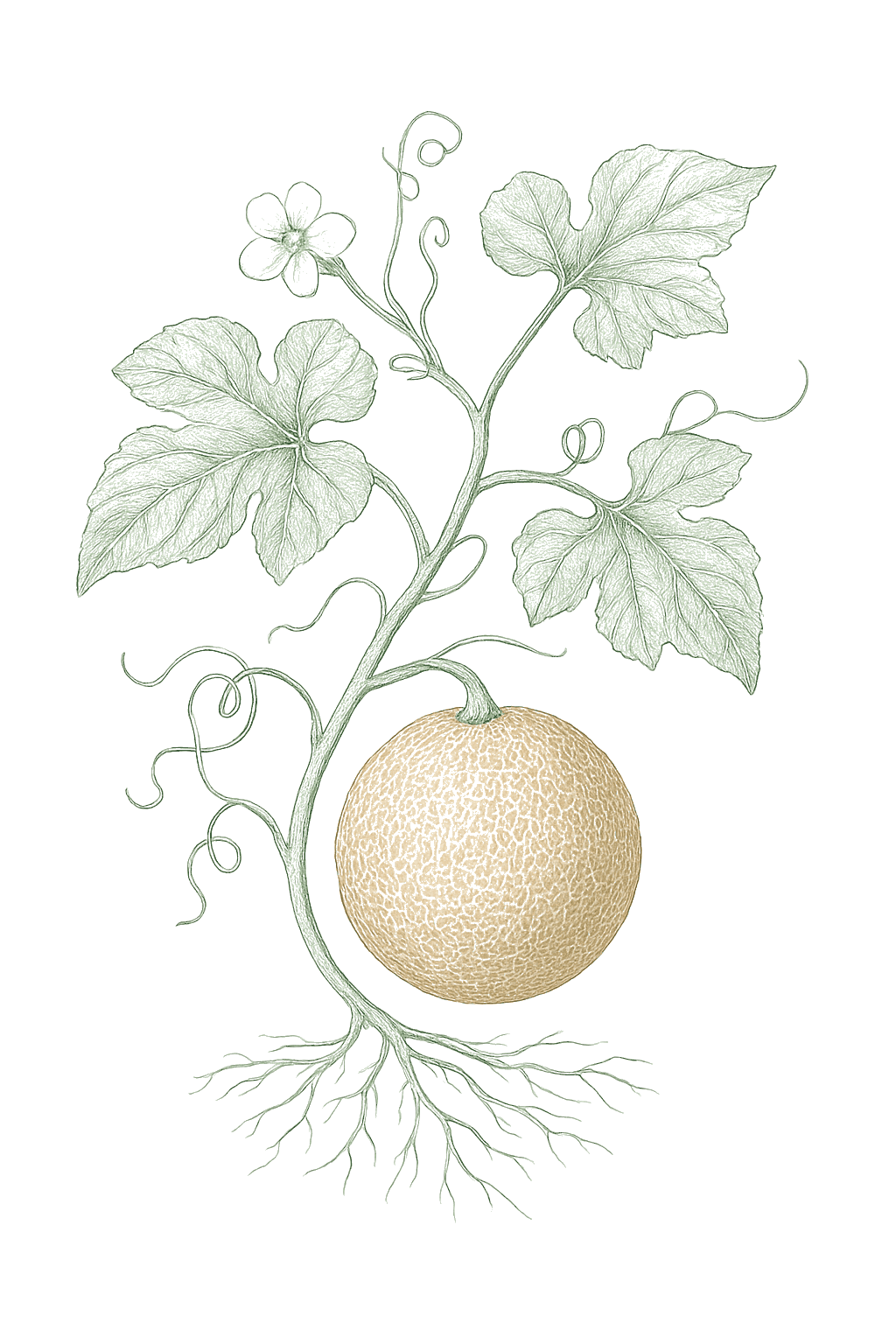
Off-season for cantaloupe / rockmelon in zone 9.
Zone 9 averages a last frost around March 1. Within Zone 9, the colder half (9a, winters down to 20°F) runs about a week later. The warmer half (9b, winters down to 25°F) runs about a week earlier. The plant app picks your subzone from your ZIP.
| Subzone | Last spring | First fall | Growing days | Winter min | Fruits reliably |
|---|---|---|---|---|---|
| 9a | Mar 8 | Nov 24 | ~261 | 20-25°F | Yes · two seasons |
| 9b | Feb 28 | Nov 30 | ~275 | 25-30°F | Yes · two seasons |
Averages from 8 weather stations per subzone, drawn from NOAA 1991-2020 Climate Normals. Your actual frost date can vary by up to two weeks based on elevation, proximity to water, and local topography.
In Zone 9, cantaloupe / rockmelon can be planted April through May. Harvest runs July through September.
In Zone 9, cantaloupe / rockmelon can be planted February through March, then again July through August. Harvest runs May through June.
You plant cantaloupe once for the season. It grows through the summer and ripens its melons in mid to late summer, so there is no need to replant every few weeks. In most places a later planting would not have enough warm days to ripen before fall. Only in very warm areas and the desert can you fit a second, separate planting.Cantaloupe is not a succession crop. It is a single, long-season planting that sets fruit over a few weeks and ripens its crop in mid to late summer, so you sow once per season rather than at intervals. In most zones a second sowing would not have the 75 to 90 frost-free days it needs to ripen before fall. Only in the warmest, near-frost-free zones and the low desert, where a spring crop and a separate late-summer crop both fit, is a second seasonal window viable, and that is a separate season, not a succession.
In Zone 9, cantaloupe / rockmelon can be planted February through March. Harvest runs May through August.
In Zone 9, cantaloupe / rockmelon can be planted May through June. Harvest runs August through September.
In Zone 9, cantaloupe / rockmelon can be planted April through May. Harvest runs July through September.
In Zone 9, cantaloupe / rockmelon can be planted June. Start indoors May 4 - May 18. Harvest runs September through October.
In Zone 9, cantaloupe / rockmelon can be planted March through June. Harvest runs May through September.
In Zone 9, cantaloupe / rockmelon can be planted February through March, then again August through September. Harvest runs May through June.
You plant cantaloupe once for the season. It grows through the summer and ripens its melons in mid to late summer, so there is no need to replant every few weeks. In most places a later planting would not have enough warm days to ripen before fall. Only in very warm areas and the desert can you fit a second, separate planting.Cantaloupe is not a succession crop. It is a single, long-season planting that sets fruit over a few weeks and ripens its crop in mid to late summer, so you sow once per season rather than at intervals. In most zones a second sowing would not have the 75 to 90 frost-free days it needs to ripen before fall. Only in the warmest, near-frost-free zones and the low desert, where a spring crop and a separate late-summer crop both fit, is a second seasonal window viable, and that is a separate season, not a succession.
In Zone 9, cantaloupe / rockmelon can be planted March through April. Harvest runs May through July.
Cantaloupe loves heat, so wait for warm soil (about 65 to 70°F) before planting. You can sow seeds right where they will grow, a few seeds about an inch deep per hill, then keep the strongest two or three. If your summers are short or cool, start seeds indoors about 3 weeks early in peat pots and move them out once it warms up, and use black plastic mulch to warm the soil. Transplants ripen about two weeks sooner than direct-seeded melons.Cantaloupe needs warm soil and a long, warm season. Direct sow once the soil at 2 inches is reliably 65 to 70°F or more (it germinates poorly in cold ground), sowing several seeds about half an inch to an inch deep per hill and thinning to the strongest two or three. In short-season or cooler areas, start transplants indoors about 3 weeks ahead in large peat pots and set them out after the soil warms, using black plastic mulch to warm the ground and gain up to two weeks, and lean on early varieties such as Minnesota Midget or Sarah's Choice. Because transplants mature about two weeks ahead of direct-seeded melons, they are the usual choice in the North.
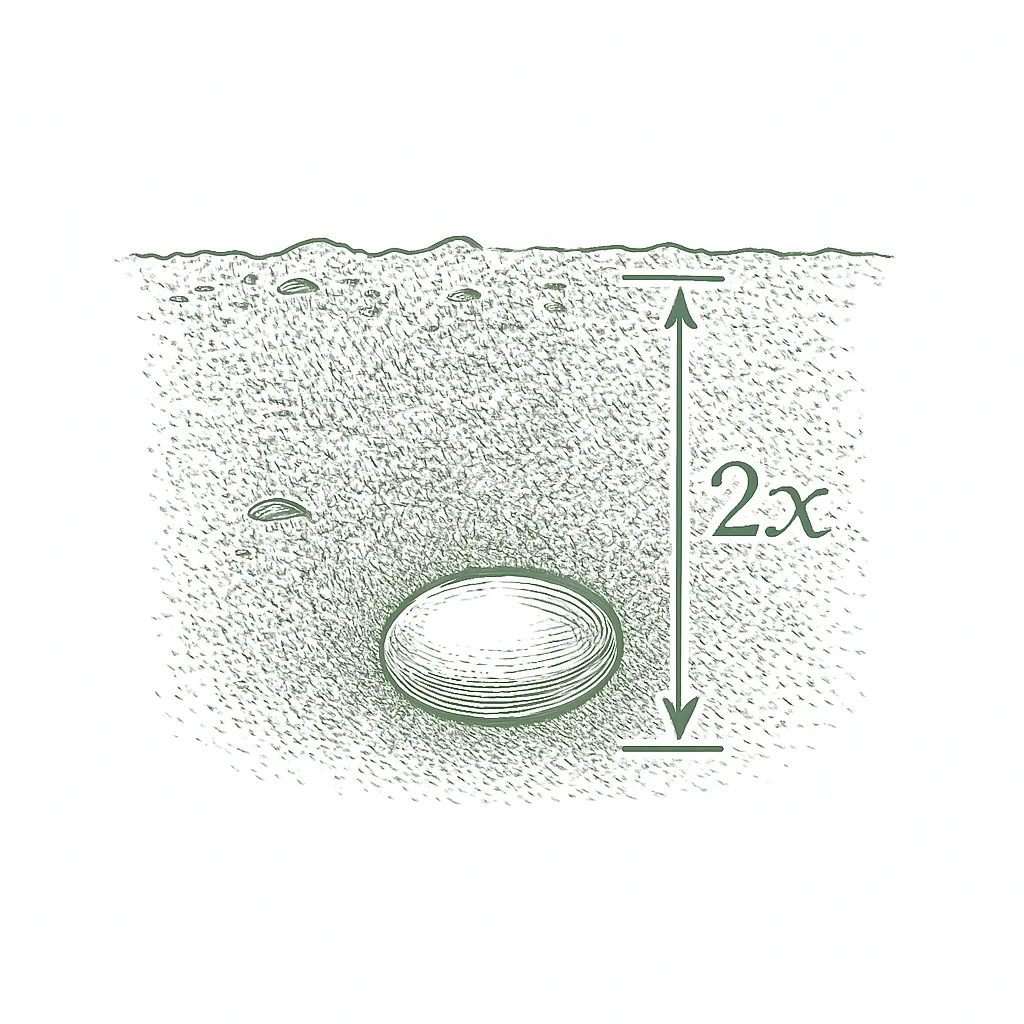
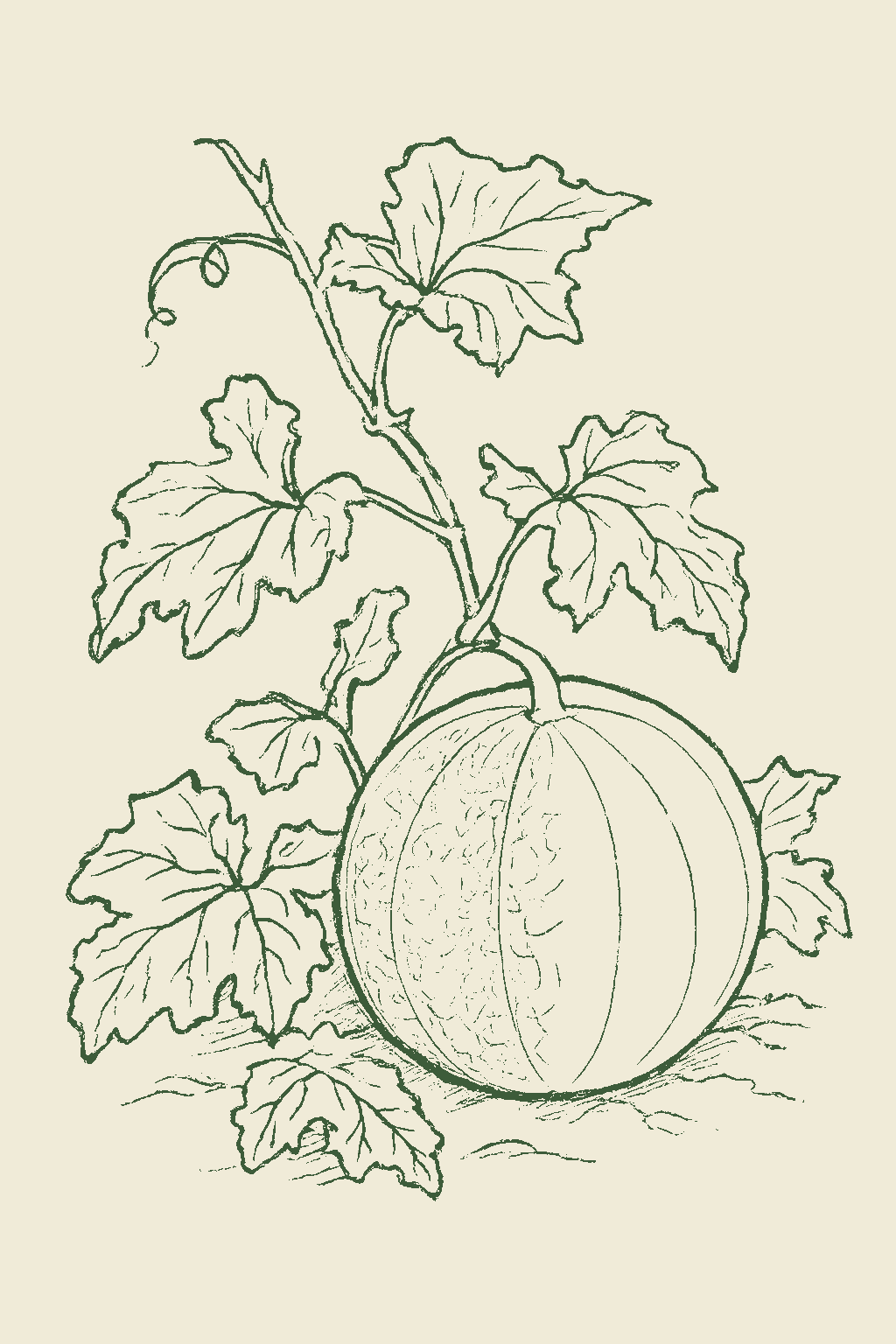











Not sure what soil you have? Grab a small handful of damp soil from your garden bed and squeeze it. If it crumbles apart easily, it's sandy. If it holds together but breaks when you poke it, it's loam (what most vegetables want). If it stays in a hard, slippery ball, it's clay.
Plant cantaloupe in light, well-drained soil that warms up fast, like a sandy loam, with some compost mixed in. Go easy on rich, high-nitrogen material, because that gives you lots of leaves and vine but less fruit and lower sugar. Many gardeners plant on low hills or raised mounds, which warm up and drain better and keep the fruit off soggy ground. If your soil is heavy clay, it stays cold and wet and can bring on disease, so mix in compost and build the soil up into mounds, or pick the sandiest, best-draining spot you have.
Mix 2-3 inches of compost into the top 6 inches of your bed before planting. Compost holds moisture (which sandy soil drains too fast) and adds the nutrients sandy soil tends to lack. Repeat each season. Compost breaks down over time.
Mix 2-3 inches of compost AND a few inches of coarse sand or perlite into the top 6 inches of your bed. The compost feeds the plants; the sand breaks up the clay so air and water can move through. Don't add sand without compost. It can compact like concrete.
If amending your soil sounds like too much work, or if your soil is heavy clay, full of rocks, or contaminated, build over it. A raised bed at least 12 inches deep filled with a 50/50 mix of compost and sandy loam gives you ideal growing soil with no battles. A 5-gallon container with quality potting mix does the same for one plant at a time. Both bypass your native soil entirely.
The numbers that matter, at a glance.
You can grow a cantaloupe in a container, but choose a small, short-vined kind like Minnesota Midget, since full-size vining types are too big. Use a large pot, at least 10 gallons and 12 inches deep, put it in full sun, keep it well watered (pots dry out fast), and feed it regularly. Give the vines room to trail out of the pot or up a sturdy trellis, support each melon in a cloth sling, and water the soil, not the leaves, to help avoid disease.Cantaloupe is a workable container crop if you pick a compact, short-vined variety such as Minnesota Midget and give it a big pot: at least 10 gallons and 12 inches deep, larger is better. Give it full sun and all-day warmth, let the vines trail over the rim or climb a sturdy trellis with each fruit cradled in a cloth sling, water at the base daily in heat, and feed regularly while easing off nitrogen once fruit sets. The container figures here follow general container-vegetable guidance; cantaloupe-specific container numbers are modeled rather than drawn from a dedicated trial.
Minnesota MidgetA compact, short-vined heirloom that ripens small 4-inch melons in as little as 65 days, making it the go-to for short-season northern gardens and containers. Sweet to the rind, open-pollinated, and quick, though the fruit are small.
Sarah's ChoiceAn early, disease-tolerant hybrid with very sweet, aromatic flesh at about 2 to 3 pounds. Earlier and more forgiving than many, with intermediate resistance to powdery mildew and Fusarium wilt, a good balance of flavor and dependability for shorter or tougher seasons.
bush and short-vine types
Ask what your balcony or roof can carry
A balcony or roof can only hold so much weight. Before you set heavy pots there, ask a building architect what it can safely carry.Illinois Extension's guidance is to consult a building architect about weight limits before placing heavy pots on a balcony or rooftop garden. It gives no weight figure.
Never grow food in a container with anything toxic in it
Many kinds of containers can be used. Whatever you choose, keep anything toxic out of it, especially if you are growing food.Colorado State accepts nearly any container material but warns against using a container that holds toxic materials, especially for edible plants. Illinois adds that a vegetable container should be free of chemicals toxic to plants or people, and urges caution with treated lumber when growing food. If you cannot account for what a repurposed container once held, that alone is a reason to keep food out of it.
Secure hanging containers well
Fasten hanging baskets and window or rail boxes securely. Think about what is below them too, since they can drip on people or things underneath.Illinois Extension asks growers to secure hanging containers well and to think through the safety issues of hanging them. Placement matters too, since a hanging container can drip onto people or belongings below.
Cantaloupe likes soil that is slightly acidic to neutral, about pH 6.0 to 6.8, and most garden soil is already close. An inexpensive soil test tells you where you stand and whether you need to adjust it before planting.Cantaloupe grows best in slightly acidic to neutral soil, around pH 6.0 to 6.8, with extension melon guides most often citing a 6.0 to 6.5 sweet spot. It tolerates a somewhat wider band, but strongly acidic or strongly alkaline soil tightens nutrient uptake and can worsen blossom-end and nutrient problems. Test before planting and lime or add sulfur only on the test's advice rather than by guess.
Cantaloupe does not need a lot of nitrogen, and too much gives you big leafy vines but fewer, less sweet melons. Mix a fertilizer that is lower in nitrogen, like a 5-10-10, into the soil before planting, then give the plants a little nitrogen before the vines start to run and again after the flowers bloom. Once the melons start to form, stop pushing nitrogen so the plant puts its energy into growing sweet fruit instead of more leaves.Cantaloupe is a moderate feeder that wants more phosphorus and potassium than nitrogen, since excess nitrogen drives leafy vine at the expense of fruit set and sugar. Work a lower-nitrogen complete fertilizer such as 5-10-10 into the bed before planting (Clemson suggests about 30 pounds per 1,000 square feet), then side-dress with a nitrogen source before the vines start to run, and again lightly after bloom as fruit develops. Ease off nitrogen once fruit has set so the plant pours its energy into sizing and sweetening the melons rather than growing more vine. Pair feeding with even moisture, because the nutrients only help a plant that is not also drought-stressed.
Use a lower-nitrogen fertilizer like 5-10-10 at planting, then a little nitrogen as the vines start to spread. Do not overdo the nitrogen once melons form, or you get leaves instead of fruit.A lower-nitrogen complete fertilizer such as 5-10-10 worked in at planting, then a nitrogen side-dress before the vines run and again lightly after bloom, easing off nitrogen once fruit sets. Too much nitrogen gives vine and leaf at the expense of fruit and sweetness.
The most useful cantaloupe companions are flowers that bring in bees, since cantaloupe needs plenty of bee visits to set fruit. Nasturtiums can lure cucumber beetles away, which is worth doing because those beetles spread a wilt disease that hits cantaloupe hard. Bush beans add a little nitrogen. The one rule that really matters is to keep cantaloupe away from other melons, cucumbers, and squash, which all share the same pests and diseases. Most cantaloupe companion pairings are traditional rather than trial-tested, and the ones worth acting on serve two practical ends: pollination and pest pressure. Because cantaloupe fruit set is strongly pollinator-limited, flowering insectary plants like borage near the patch are a genuine help. A trap planting of nasturtium can divert cucumber beetles, which matters more for cantaloupe than for most cucurbits, since muskmelon is highly susceptible to the bacterial wilt those beetles carry. Bush beans fix nitrogen the crop can use without the heavy feeding that would otherwise grow vine over fruit. The firmest rule is a rotation one: keep cantaloupe away from other cucurbits, which share its pest and disease complex, including cucumber beetle and bacterial wilt, the mildews, and the soilborne Fusarium wilt and foliar gummy stem blight and Alternaria that build up where melons follow melons.
You pick a cantaloupe once, when it is ripe, and the clearest sign is the stem. Give the stem a gentle push with your thumb where it joins the melon: when the melon is ripe, the stem slips off cleanly and leaves a round, dished scar. This is called full slip. Along with it, the netting on the skin gets rough and raised, the skin under the net turns from green to tan, the melon smells sweet at the stem end, and the little tendril nearest the fruit dries and turns brown. Pick at full slip, because a cantaloupe does not get any sweeter after you pick it, though it will soften a little. A ripe cantaloupe goes over the top fast on the vine, so check yours every day as it gets close. Lift it off with a gentle push at the stem, or cut it with a short piece of stem, and keep it in the fridge, since it does not store for long.Cantaloupe is harvested once per fruit, at ripeness, and the signature cue is full slip: press your thumb against the stem where it joins the melon, and a ripe fruit lets the stem separate cleanly, leaving a smooth, round, dished scar. No twisting or pulling should be needed. Read full slip alongside the other signs, which come on together in the last few days: the netting stands up coarse and corky over the whole fruit; the background skin between the netting turns from green to tan, buff, or yellow; a sweet, musky aroma rises at the blossom and stem end; and the tendril nearest the fruit dries and browns. Harvest at full slip for peak sweetness, since cantaloupe does not gain sugar after picking, though it will soften and grow more fragrant on the counter. Because a full-slip melon over-ripens on the vine within a day or two, check ripening melons daily as slip approaches; if you want to hold or ship a melon, pick a hair early at half slip, when the stem is just starting to separate. Lift the melon free with a light thumb push at the stem, or cut it leaving a short stub, then refrigerate promptly since it does not store long.
A cantaloupe plant usually gives you 2 to 4 melons, more on a strong plant in a good season, each around 2 to 5 pounds depending on the variety. Each plant needs a fair amount of room to spread.A healthy cantaloupe vine typically yields 2 to 4 melons, sometimes more on vigorous plants in a long, warm season, with fruit usually running about 2 to 5 pounds depending on variety. Plants need room, roughly 12 to 18 square feet each, and even moisture with modest feeding through sizing builds full, sweet fruit; a dry finish sets the sugar.
Unlike summer squash, cantaloupe does not keep producing all season. The plant sets its fruit over a few weeks and the melons ripen over a stretch in mid to late summer, and you pick each one once, when the stem slips.Cantaloupe does not produce continuously; the plant sets fruit over a few weeks and then sizes and ripens that crop, with the melons coming ready over a window in mid to late summer rather than all season long. Each melon is harvested once, at full slip. The big first-year surprises are how far cantaloupe vines spread, how much they depend on bees, and how important it is to pick at the right moment (it will not get sweeter after picking). Give them room, grow some flowers for the bees, and learn the full-slip stem check.The usual first-year surprises are how much room the vines take, how pollinator-dependent fruit set is, and how much the ripeness call matters, since the melon does not sweeten off the vine. Give plants plenty of space, grow flowers nearby for bees, and learn the full-slip stem test before you pick.
Pick a cantaloupe by your summer and your space. If your season is short or cool, grow a fast, small type like Minnesota Midget or an early hybrid like Sarah's Choice. If you have a long, hot summer, grow a full-flavored one like Hale's Best or Ambrosia. In the South, choose disease-tolerant varieties like Athena. Any single variety will make fruit on its own as long as bees visit the flowers.Choose by season length, space, and disease pressure. Where summers are short or cool, lean on fast, compact types such as Minnesota Midget (about 65 days) and early hybrids like Sarah's Choice; in long, hot regions the full-flavored Hale's Best, Ambrosia, and Hearts of Gold reward the heat. In the disease-prone Southeast, prioritize varieties with Fusarium wilt and powdery mildew tolerance such as Athena and Sarah's Choice. All standard cantaloupes are self-fertile and need only bees, not a second pollinizer variety, so you can grow a single type and still get fruit.
The ladder troubleshoots from the gentlest solution to the strongest. Start with the gentlest option and only move on when and if it doesn't work.
Plant your melons where no squash-family crops grew last year. The beetles spend the winter as adults near old cucurbit ground, so fresh ground puts distance between them and your seedlings.Rotating away from last season's cucurbit ground is the baseline against overwintered adults; aim the effort at the early-season colonizers, since infection before the five-leaf stage is what costs the most on a wilt-prone crop.
Clear weeds and old plants away from the bed, since they give the beetles shelter, and clean up spent vines at the end of the season.Weeds and crop debris shelter the adults that colonize plants early; stripping both trims the population that masses on small seedlings in spring.
Cover the plants with row cover, a light fabric laid over the bed, from planting day, and take it off when the flowers open so bees can pollinate. Cantaloupe catches the wilt these beetles carry more easily than most melons, so keeping them off young plants is the step that matters most.Exclusion from planting covers the cotyledon to five-leaf window, when seedlings are most vulnerable to wilt inoculation through feeding wounds and feces; given cantaloupe's high susceptibility this is the highest-leverage rung. Lift the cover at flowering for pollination.
Pick the beetles off by hand whenever you see them. On cantaloupe even a few are worth removing, since each one can be carrying the wilt.Hand-removal earns its keep because the beetle is a vector first and a defoliator second; on this crop the aim is very low numbers on young plants, not merely tolerable feeding damage.
Kaolin clay, a fine white clay sprayed onto the plants, leaves a coating that helps discourage the beetles. It is a helper alongside the cover and the handpicking, not a replacement for them.A kaolin particle film is named as a supporting measure here; treat it as pressure reduction layered on top of exclusion rather than stand-alone control.
Yellow sticky traps set near the plants catch some beetles and show you how many are around, which tells you whether the other steps are keeping up.Traps thin adults and, more usefully, read as a scouting signal on whether numbers are staying low through the vulnerable seedling stage.
No spray for this one. Prevention is the control.
The ladder troubleshoots from the gentlest solution to the strongest. Start with the gentlest option and only move on when and if it doesn't work.
Go easy on nitrogen fertilizer. Heavy feeding pushes out the soft, sappy growth that aphids settle on and multiply in fastest.Excess nitrogen drives the succulent flush aphids favor and build up on fastest; restrained feeding removes that condition before colonies establish, which typically happens once the vines begin to run.
Lay a reflective or aluminum-foil mulch around the plants while they are still young. The bright surface helps keep aphids from settling on them.Reflective mulch deters incoming aphids while plants are small, worth having down early given that melon aphids also transmit the mosaic viruses that can ruin a crop.
Knock the colonies off with a strong jet of water, aiming at the undersides of the leaves and the new growth where they gather. Repeat every few days as they build back.A forceful jet dislodges colonies from leaf undersides and growing tips; treat it as a repeated knock-back on a few-day cycle rather than a single pass.
Ladybugs, lacewings, and tiny parasitic wasps eat aphids and usually bring them under control on their own, so make them welcome instead of spraying broadly.Resident lady beetles, lacewings, and parasitic wasps usually regulate aphid numbers on their own; conserving them rather than spraying broadly is the control that costs nothing and holds longest.
If the colonies keep building, spray insecticidal soap, a soap-based spray that kills only the insects it touches. Coat the undersides of the leaves well and repeat every few days.Soap is contact-only, so thorough leaf-underside coverage repeated every few days is what carries it, and its light footprint leaves room for the natural enemies to return.
Horticultural oil, a light spray oil, does the same job as the soap. Cover the leaf undersides well and repeat every few days if the aphids persist.Oil is the alternate contact material on identical terms, thorough underside coverage on a several-day repeat; the choice between oil and soap changes little about the technique.
The bottom rungs are products with label rules: timing, pollinators, and days to wait before harvest. Before you spray →
The ladder troubleshoots from the gentlest solution to the strongest. Start with the gentlest option and only move on when and if it doesn't work.
Keep the plants steadily watered through hot spells. Mites hit drought-stressed plants hardest, and a melon patch's long, hot season is exactly the weather they love.Drought-stressed plants take the worst damage, and two-spotted mite populations explode in the hot, dry stretch a melon season delivers; steady moisture removes the stress that feeds the flare.
Spray the plants with a strong stream of water, especially the undersides of the leaves where the mites feed. It knocks them off and raises the humidity they dislike.A forceful rinse to the leaf undersides dislodges mites and raises humidity around the foliage; useful before any spray and worth repeating through hot, dry weather.
Predatory mites and helpful insects normally keep spider mites in check. Avoid broad-spectrum insecticides, meaning sprays that kill many kinds of insects at once, because losing those helpers is what lets mites explode.Predatory mites and generalist insect predators are what normally hold this pest down, and broad-spectrum sprays removing them is the classic outbreak trigger; conservation is the rung to protect even while treating something else.
Insecticidal soap, a soap-based contact spray, works if you coat the undersides of the leaves thoroughly. Put it on early, before the mites peak, and repeat as needed.Soap applied before populations peak, with deliberate underside coverage and repeat applications as needed; heavy feeding bronzes foliage and costs fruit size and sugar, so early timing beats chasing an established outbreak.
Horticultural oil is the other option, applied the same way: thorough coverage of the leaf undersides, repeated as needed.Oil on the same terms as soap, applied ahead of the population peak with the undersides covered; both are contact materials, so coverage decides the outcome.
The bottom rungs are products with label rules: timing, pollinators, and days to wait before harvest. Before you spray →
The ladder troubleshoots from the gentlest solution to the strongest. Start with the gentlest option and only move on when and if it doesn't work.
Move your melons to a different part of the garden each year. Squash bugs prefer squash and pumpkins, but rotating still breaks up the ground they come back to.Rotating cucurbits denies overwintered adults a familiar bed; melons are a secondary host next to squash and pumpkin, which shapes how much pressure this rung has to absorb.
Clean up the old vines and debris after harvest. The adults spend the winter tucked into that litter, so clearing it leaves them far fewer places to shelter.End-of-season removal of vines and debris cuts overwintering sites for the adults, lowering the population that finds the planting the following spring.
Pick off the gray-brown adults and scrape the bronze egg clusters from the undersides of the leaves. A board laid on the soil overnight draws the bugs underneath, so lift it in the morning and destroy what you find.Hand-removal of adults plus crushing the egg masses along the veins is the core, with an overnight board to concentrate bugs for morning collection; scout leaf undersides from early season, before nymphs mature.
Insecticidal soap is for the young, pale bugs, and only when it lands right on them. The adults are tough to kill, so aim at the young.Soap is aimed at young nymphs, the stage it can actually reach; adults tolerate it, so timing sprays to hatch from the egg clusters you have been scouting is what makes the coverage worth doing.
The bottom rungs are products with label rules: timing, pollinators, and days to wait before harvest. Before you spray →
The ladder troubleshoots from the gentlest solution to the strongest. Start with the gentlest option and only move on when and if it doesn't work.
Cantaloupe rarely gets this borer, since the moth mostly leaves melons alone, so heavy defenses are seldom needed. Where borers are bad locally, moving the planting each year helps break up their cycle.Rarely warranted on melons, which the borer largely avoids; where local pressure is severe, rotation contributes by moving the crop off ground holding overwintering pupae.
If borers are a real problem where you live, till the bed in late winter. Turning the soil disturbs the pupae, the moth's resting stage, before they can emerge.Late-winter tillage disrupts overwintering pupae in ground that carried cucurbits; on cantaloupe this is a where-pressure-is-severe measure, not a routine one.
Where borer pressure is severe, cover young plants with row cover, a light fabric laid over the bed, from planting until they flower, then remove it so bees can pollinate. It keeps the egg-laying moths off the stems.Exclusion from planting until flowering blocks the egg-laying moths; reserve it for severe local pressure, since the borer mostly skips melons in the first place.
If a vine wilts and you find sawdust-like specks at a hole near the base, slit the stem lengthwise with a knife, remove the fat white grub, and mound damp soil over the cut so the vine can re-root.For the occasional larva that does enter, slit the stem lengthwise, extract the larva, and bury that node under moist soil to re-root; remove vines too badly damaged to save.
No spray for this one. Prevention is the control.
The ladder troubleshoots from the gentlest solution to the strongest. Start with the gentlest option and only move on when and if it doesn't work.
Pull and destroy any plant that wilts runner by runner in moist soil, especially once the stem check confirms it: cut a wilted stem, press the ends together, and pull them slowly apart to look for a sticky string of ooze. There is no cure once a plant has it, so removal is about protecting the rest. Keep weeds and old vines cleared too.Rogue wilting plants promptly once the stringing-ooze stem test points to it; an infected plant cannot be rescued, and left standing it seeds more beetles with the bacterium. Clearing weeds and debris removes beetle shelter alongside.
Cover seedlings with row cover, a light fabric over the bed, from planting until the flowers open, then remove it for the bees. The disease travels with cucumber beetles, not through soil or seed, so keeping them off young plants is the real defense, and cantaloupe catches this wilt far more easily than watermelon.Management is preventive and aimed at the vector: the bacterium overwinters inside cucumber beetles rather than in soil or seed, so exclusion until flowering, with beetle numbers held very low from emergence through the five-leaf stage, is where the leverage sits. Few home varieties carry useful resistance, which leaves exclusion and early beetle control as the reliable tools.
No spray for this one. Prevention is the control.
The ladder troubleshoots from the gentlest solution to the strongest. Start with the gentlest option and only move on when and if it doesn't work.
Pick a resistant variety when you order seed. Many modern melons carry partial resistance, which takes real pressure off one of the most common late-season problems.Many modern melon varieties carry partial resistance, and against one of the most common late-season melon diseases that seed-order choice is the highest-leverage rung; partial means it lightens pressure rather than closing the door.
Give the plants plenty of room and a spot in full sun. Crowding, still air, and shade are what let this fungus take hold.Generous spacing and a full-sun site work against the crowding, poor airflow, and shade that worsen infection; layout is fixed at planting, so this rung cannot be added mid-season.
Do not overdo nitrogen fertilizer. Heavy feeding builds a thick, crowded mass of leaves where the still, humid air this fungus likes can settle.Excess nitrogen builds the dense canopy that traps the humid air this fungus thrives in; restrained feeding is a preventive habit alongside spacing, not a treatment.
Water the soil, not the leaves. This mildew can start without wet leaves, so this step helps less here than with other diseases, but overhead watering is still worth avoiding.Skip overhead watering. Powdery mildew does not need leaf wetness to infect, so read this as a supporting habit alongside spacing rather than the main lever it is for other foliar diseases.
Pull off the worst-coated leaves as you find them. It does not clear the plant, but it removes the heaviest patches of the fungus.Removing the most heavily colonized leaves lowers the local spore load; once the disease is widespread the realistic aim is damage limitation, protecting fruit size and sugar for what remains of the season.
A biofungicide, a spray of living microbes that work against the fungus, is one of the treatments this crop's guidance names. Use it at the very first white spots, cover both sides of the leaves, and repeat; it cannot catch up once the coating has spread.Named in this crop's guidance alongside sulfur for first-spot treatment; apply early with coverage of both leaf surfaces and repeat, since it will not retrieve an established infection.
Sulfur is a labeled fungicide for this disease. Spray at the first white spots, cover the tops and undersides of the leaves, and start scouting in midsummer so you catch it early. Once the coating is widespread, spraying mostly limits the damage.Sulfur at first symptom with both leaf surfaces covered; midsummer scouting is what makes that timing possible. Once the mildew is widespread, treatment is mostly damage limitation against early defoliation, lost sugar, and sunscald.
The bottom rungs are products with label rules: timing, pollinators, and days to wait before harvest. Before you spray →
The ladder troubleshoots from the gentlest solution to the strongest. Start with the gentlest option and only move on when and if it doesn't work.
Choose a resistant variety where one is offered, especially if downy mildew shows up most years where you live.Resistance where available is the front rung against a wind-borne disease that arrives on weather moving up from the far South rather than carrying over in your own bed.
Give the vines room so air moves through and wet leaves dry out fast after rain or dew. This disease needs wet leaves to infect.Spacing shortens the leaf-wetness periods infection requires; opening the planting is the standing defense against a pathogen that can kill infected leaves within 10 to 14 days once established.
Water at the soil line, not over the leaves. Overhead watering keeps the leaves wet, which is exactly what this disease needs.Overhead irrigation sustains the leaf wetness the water mold needs; base watering keeps the controllable moisture off the foliage while humid weather supplies the rest.
Remove the worst-affected leaves so the plant is not carrying the heaviest infection while the weather favors the disease.Removing badly affected foliage trims spore production in the canopy; a supporting move, since the epidemic arrives and travels on regional weather.
No spray for this one. Prevention is the control.
The ladder troubleshoots from the gentlest solution to the strongest. Start with the gentlest option and only move on when and if it doesn't work.
Plant a resistant variety. The fungus survives in the soil for years, so resistance is the most dependable defense anywhere this disease has shown up before.Resistant cultivars are the most reliable tool on infested ground, with the caveat the source states: several races of the fungus exist and resistance covers only some of them.
Do not grow cantaloupe in the same ground year after year; move it and its melon relatives to new spots. Rotation helps, but because the fungus survives in soil for years it may not solve the problem on its own.A long rotation out of cantaloupe and related cucurbits lowers pressure, but the fungus persists in soil for years, which is why rotation alone often fails and resistance has to carry the load.
Pull and destroy plants that wilt and die. There is no cure once a plant is infected and no spray touches this disease, so removal and prevention are what you have.Remove and destroy infected plants; fungicides do not control a soilborne vascular wilt, so management stays cultural and preventive.
No spray for this one. Prevention is the control.
The ladder troubleshoots from the gentlest solution to the strongest. Start with the gentlest option and only move on when and if it doesn't work.
Start with clean seed from a trusted supplier. This fungus rides on the seed itself, so what you plant decides whether you bring it in.The pathogen is seed-borne, so clean seed closes the most direct route of introduction; a purchase-time decision the in-season steps do not replace.
Pick a resistant variety at the same time you order that clean seed, especially where warm, wet weather makes this disease a regular visitor.Resistant varieties pair with clean seed as the two seed-order rungs; in the warm, rainy southern conditions that drive this disease, variety choice is cheap insurance.
Keep melons and their squash-family relatives out of that bed for several years. The fungus survives in the old plant debris left in the ground.Rotating cucurbits out of the bed for several years outlasts carryover on infected debris, the second survival route alongside seed.
Give the plants room so air moves between them and the leaves dry faster after rain. Long wet spells are what let this disease run.Spacing for airflow shortens the prolonged leaf wetness that drives this warm-weather disease; in an extended rainy stretch the canopy that dries fastest fares best.
Water at the soil line, not over the leaves, to keep the foliage as dry as you can.Base watering keeps foliage dry in a disease driven by prolonged rainy periods and leaf wetness; overhead irrigation adds wet hours the weather is already supplying.
Stay out of the melon patch while the vines are wet from rain or dew. Working among wet plants helps spread the fungus.Avoid working among wet vines; movement through a wet canopy spreads the pathogen, and this discipline still applies after rain and dew, which no irrigation choice controls.
Remove and destroy the worst-affected vines when you find them, and clear out the old debris after harvest, since the fungus survives in it.Rogue badly affected vines in season and destroy crop residue after harvest; infected debris is a survival site, so the cleanup is what carries into next year.
No spray for this one. Prevention is the control.
The ladder troubleshoots from the gentlest solution to the strongest. Start with the gentlest option and only move on when and if it doesn't work.
Choose a resistant variety when you buy seed if one is available in the melon type you want to grow.Resistant cultivars sit at the front of the program alongside clean seed, both settled at ordering time.
Start with disease-free seed, since the fungus can ride on seed as well as on old plant debris.Seed is one of the two overwintering routes the source names, next to infected debris, so certified clean seed closes that half.
Rotate melons and their squash-family relatives out of that bed for several years, since the fungus carries over on the old debris.Several years out of cucurbits outlasts carryover on infected residue, the other overwintering route beside seed.
Give the plants room so air moves and the leaves dry quickly. Long stretches of wet leaves are what this fungus likes.Spacing for airflow shortens leaf wetness on a disease driven by warm, humid, rainy weather and long wet periods on the foliage.
Water the soil, not the leaves, so the foliage stays as dry as possible.Base watering removes the one leaf-wetness source you control in a disease fed by rain and humidity.
Stay out of the melon patch while the vines are wet. Save the weeding and picking for after they dry.Working among wet vines is on the avoid list; the habit costs nothing and lowers spread during the rainy spells that favor infection.
Pick off the worst-spotted leaves early, starting with the older ones near the crown where the disease begins, and clean up plant debris.Remove the worst-affected leaves as spots appear; the disease works from the oldest crown leaves outward and overwinters on infected debris, so in-season removal and cleanup both count.
Chlorothalonil is one of two fungicides this crop's guidance names for this blight. It works as a shield put on at the very first spots, covering the tops and undersides of the leaves; it cannot rescue leaves already infected. It is also the strongest material in this guide, so read its warnings first, and stopping at the steps above is a fair choice.One of the two materials the guidance names, applied at the first spots with both leaf surfaces covered; in wet seasons the protective schedule starts before symptoms appear. Protectant only, so it defends clean tissue and buys nothing applied late. Weigh its cautions, which are heavy, against stopping a rung lower.
Mancozeb is the other fungicide named for this blight, used the same way: on at the first spots as a shield, with both leaf surfaces covered. It carries its own warnings, and choosing neither spray still leaves you a complete plan built on the steps above.The second named material, on the same preventive first-spots terms as chlorothalonil; the two differ in their cautions rather than their timing, so choose by reading both, not by rank.
The bottom rungs are products with label rules: timing, pollinators, and days to wait before harvest. Before you spray →
Try not to grow cantaloupe or its relatives (cucumbers, melons, squash) in the same spot more than once every 3 years, and wait longer if you have had wilt or leaf disease. Moving them around the garden helps avoid a buildup of soil and debris diseases. Note that this does not stop bacterial wilt, which comes from beetles, not the soil. Clean up old vines at the end of the season too.Rotate cantaloupe and its cucurbit relatives on at least a 3 year cycle, and stretch it where Fusarium wilt or gummy stem blight are established, since the muskmelon wilt fungus persists in soil for years and the foliar diseases carry over on debris and seed. A long rotation is an important cultural defense, though it does not touch bacterial wilt, which arrives on beetles rather than from the soil. Clear and remove spent vines at season's end rather than tilling them in, which removes overwintering disease sites.
The plant app sends a timely reminder at every critical moment of your cantaloupe / rockmelon season. The wording adjusts to whichever you pick: beginner or seasoned. Here are three you'll see in Zone 9.
plant sends the right notification at exactly the right moment, for your zone, your weather, your crops. Founding members lock the rate forever.
We're building this guide with real growers. Got a question we missed? Ask here. We read every one and add the best answers right to this page.
Learned something the hard way? Pass it on. Real growers' tips make this guide better for the next person, and we credit you by name when yours goes live.
If you've grown this crop and you see a date, a temperature, a companion claim, or a recommendation that doesn't match your experience, tell us. Real growers' corrections make this guide better for the next person.
Every date, temperature, spacing, and recommendation on this page is sourced from university cooperative extension publications, peer-reviewed agricultural research, NOAA climate data, and direct extension calendars. Where claims are softer (traditional gardening wisdom not formally documented), we say so.
Spot a data point that doesn't match your experience? Submit a correction; accepted corrections earn full author credit on the page.
Zone-aware seasonal nudges, what's worth planting now, and the occasional recipe from the harvest. No spam, ever.