Today · in your zone
What's happening right now
Off-season for cauliflower in zone 4.
Tap to switch. plant calibrates to where you are in the journey.
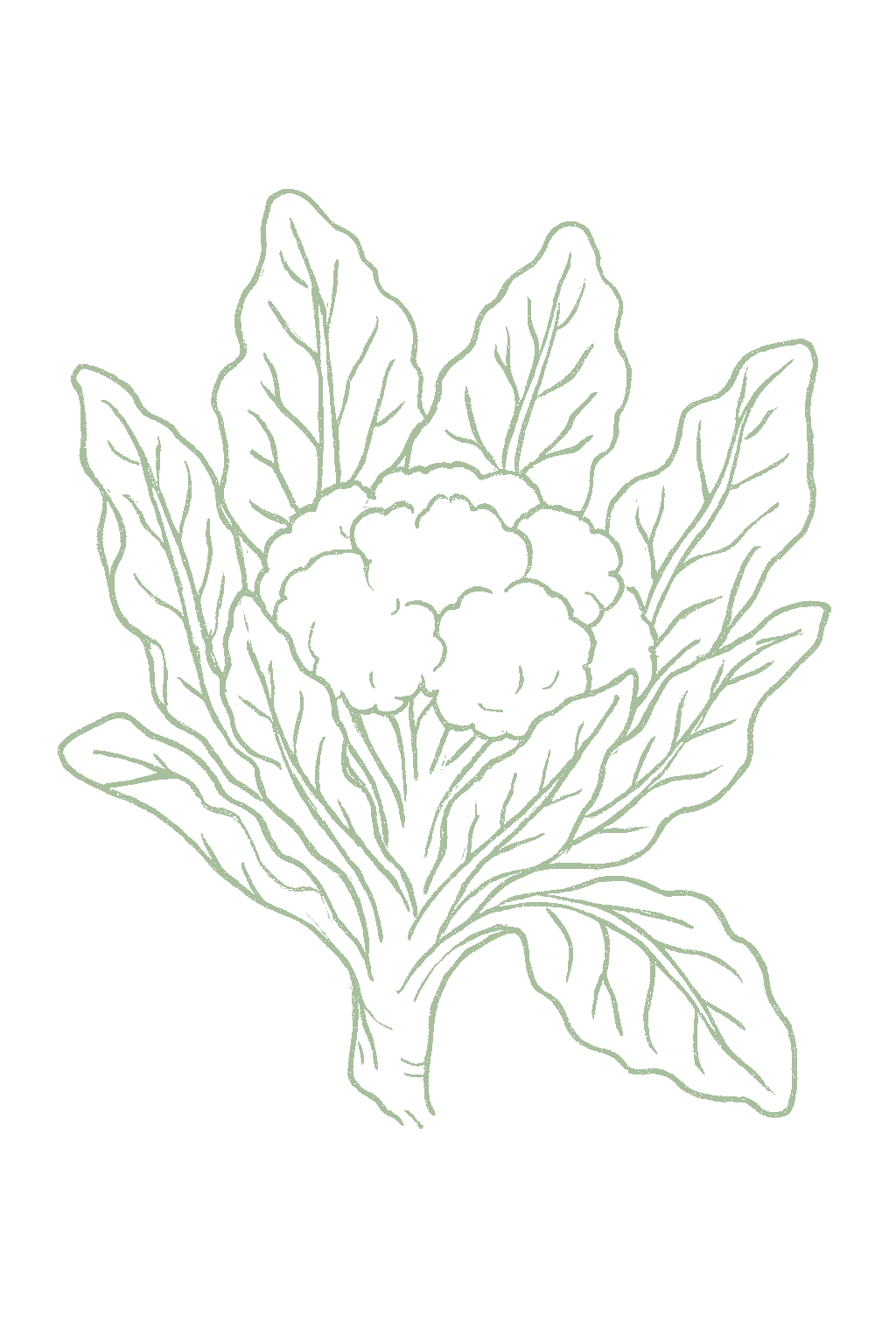
Cauliflower grows one dense, round head (the curd) in the center of the plant. There are white kinds plus fun orange, purple, and spiraled green Romanesco types, taking about 2 to 3 months to mature. It likes steady cool weather, so it is grown in spring and fall, not summer heat. Cauliflower is the trickiest of the cabbage family: it needs to grow without any stress, or it makes a tiny head early (buttoning) or a loose, discolored one. Many white types need blanching, where you tie the outer leaves over the head to keep it white. There are no side shoots like broccoli, so it is one head per plant, and it does not store like cabbage, so use it fresh or freeze it. Cauliflower is a cool-season brassica grown for the single dense white curd, the immature flower head, that forms at the center of the plant. It comes in white types plus orange, purple, and lime-green spiraled Romanesco forms, maturing from about 50 to 100 days, and is grown as a spring crop and a fall crop, timed to mature in cool weather. It is the fussiest of the common cole crops and less cold-hardy than cabbage or broccoli: the curd forms well only in steady cool weather around 60°F to 65°F, and almost any stress (heat, cold, drought, or a checked transplant) causes buttoning (a tiny premature curd) or ricing and discoloration of the head. Many white varieties need blanching, tying the outer leaves over the curd to keep it white, while self-blanching and colored types skip that step. Unlike broccoli it forms no side shoots, so it is a single harvest per plant, and unlike cabbage it does not store, so it is used fresh or frozen.
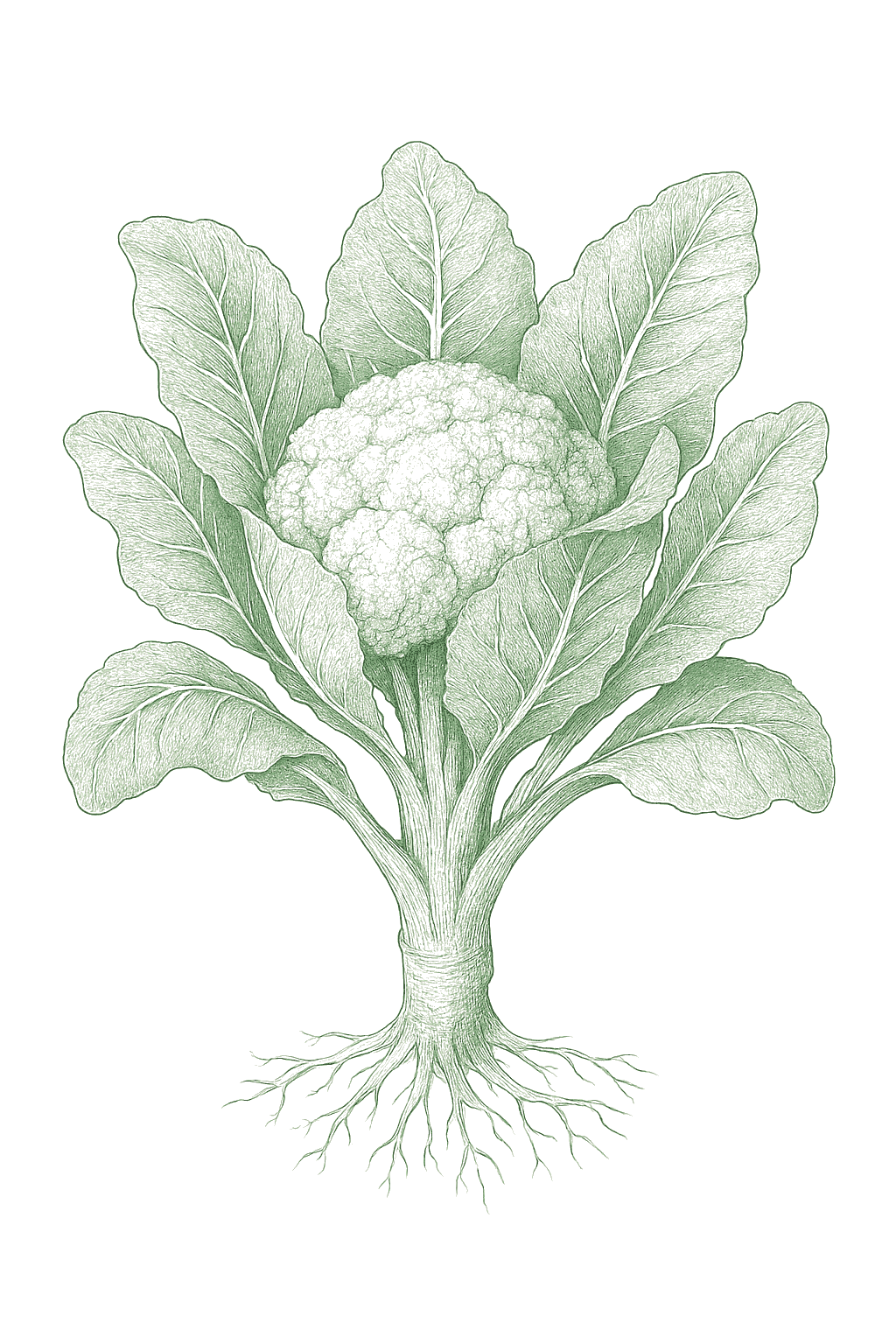
Off-season for cauliflower in zone 4.
In Zone 4, cauliflower can be planted May through July. Start indoors Apr. Harvest runs August through October.
Plant cauliflower in spring and again in late summer for fall, in small batches a couple of weeks apart, instead of all at one time. The fall crop, with the head forming in cool weather, is usually the easier and more reliable one. Skip the hottest part of summer, since cauliflower will not form a good head in the heat.Cauliflower crops in the cool shoulders of the year, so plant in small batches within the spring window and again in late summer for fall, rather than all at once. Because it is so tightly tied to cool weather and so prone to buttoning in heat, the spring window is short and unforgiving: most gardens fit only a sowing or two before midsummer heat shuts it down. The fall planting, with the curd maturing into cooling weather, is usually the more reliable crop. Mixing early and late varieties in one planting also spreads the harvest.
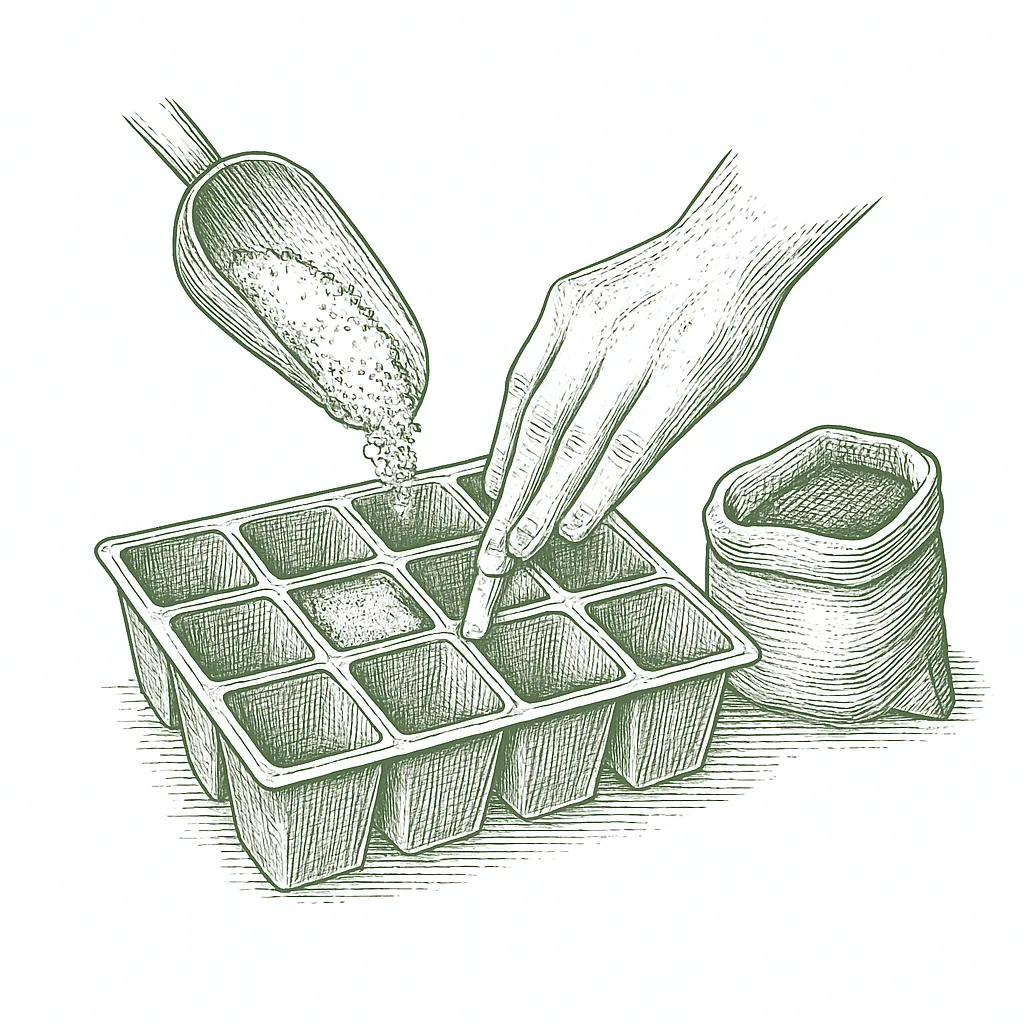
Cauliflower is best grown from transplants, since timing and a smooth, unstressed start are so important. For spring, start seeds indoors about a month before planting out and set the plants out around 2 weeks before your last frost; do not rush them into hard cold, since young cauliflower is touchier than cabbage. For fall, start them in early-to-mid summer. The key is to never let the seedlings get old, root-bound, or chilled, because that stress makes them head early. Let homegrown seedlings get used to the outdoors over a week before planting.Cauliflower is almost always transplanted, since precise timing and an unstressed start matter so much. For spring, start seeds indoors about 4 to 6 weeks before set-out and transplant sturdy young plants out around 2 weeks before the last frost; cauliflower transplants are less cold-hardy than cabbage or broccoli, so do not rush them into hard cold. For fall, start indoors or direct sow in early-to-mid summer and set out so the curd matures in cool fall weather. The single biggest transplant mistake is setting out an old, root-bound, or cold-checked plant: that stress triggers buttoning, where the plant forms a tiny premature curd. Set out stocky plants with 4 to 6 true leaves, harden them off over 7 to 10 days, and keep them growing without a stall.





Not sure what soil you have? Grab a small handful of damp soil from your garden bed and squeeze it. If it crumbles apart easily, it's sandy. If it holds together but breaks when you poke it, it's loam (what most vegetables want). If it stays in a hard, slippery ball, it's clay.
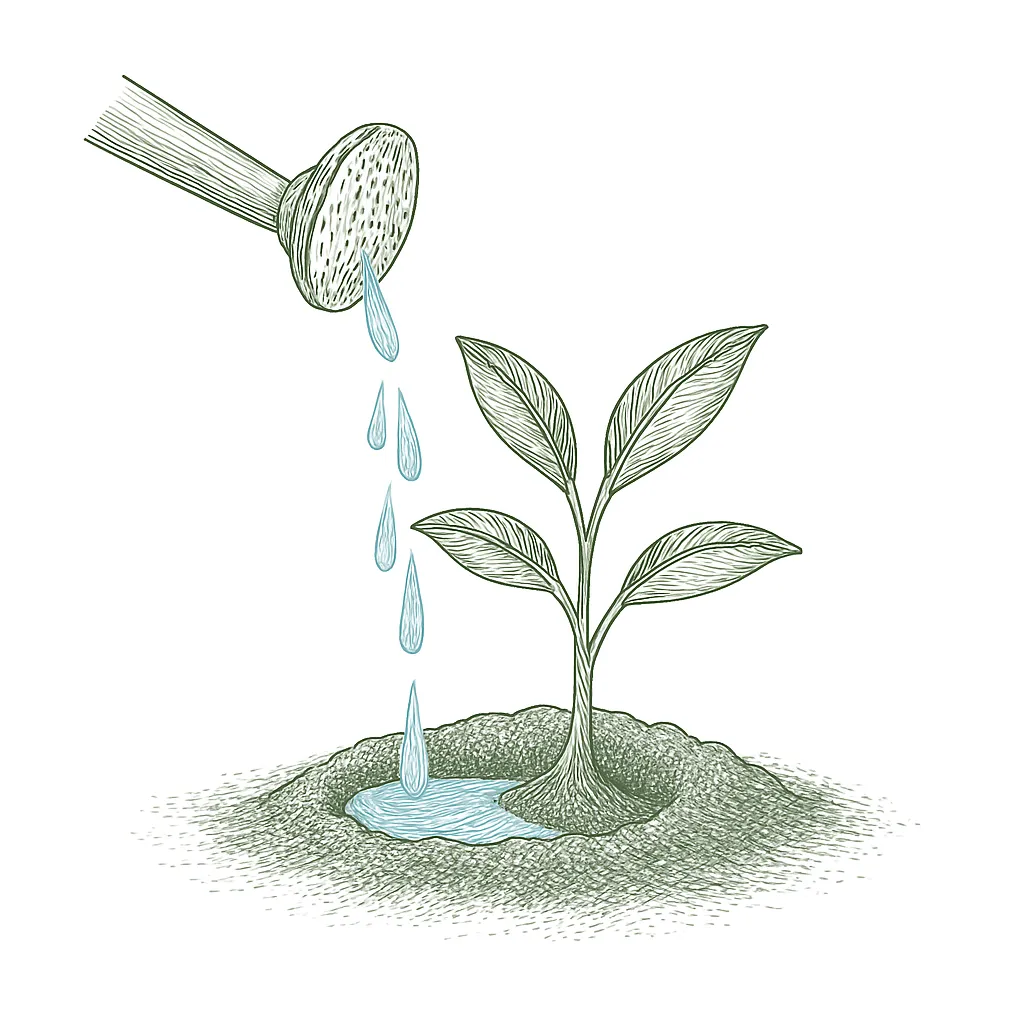
Cauliflower grows best in rich, well-drained soil with lots of compost worked in, and it needs steady, even moisture the whole way. More than most vegetables, cauliflower hates being stressed: if it dries out or runs short on food even briefly, it can quit growing and form a tiny, useless head early (called buttoning). Soil that holds moisture but still drains well is ideal.
Mix 2-3 inches of compost into the top 6 inches of your bed before planting. Compost holds moisture (which sandy soil drains too fast) and adds the nutrients sandy soil tends to lack. Repeat each season. Compost breaks down over time.
Mix 2-3 inches of compost AND a few inches of coarse sand or perlite into the top 6 inches of your bed. The compost feeds the plants; the sand breaks up the clay so air and water can move through. Don't add sand without compost. It can compact like concrete.
If amending your soil sounds like too much work, or if your soil is heavy clay, full of rocks, or contaminated, build over it. A raised bed at least 12 inches deep filled with a 50/50 mix of compost and sandy loam gives you ideal growing soil with no battles. A 5-gallon container with quality potting mix does the same for one plant at a time. Both bypass your native soil entirely.
The numbers that matter, at a glance.
Cauliflower grows best in soil that is slightly acidic to neutral, about 6.0 to 7.0. A simple soil test tells you where you stand. If you have had clubroot, a soil disease, keeping the soil closer to neutral (up toward 7.0) helps hold it back.Aim for a soil pH of about 6.0 to 7.0 (UMN and Iowa State both give 6 to 7; Clemson lists 5.8 to 6.5). Cauliflower tolerates a wider 5.5 to 7.5 band. Clubroot, the major brassica soil disease, is far more likely in acidic soil below about 6.5, so where it is a concern lime acidic ground well ahead of planting and hold the pH toward neutral.
Cauliflower needs rich soil and regular feeding to grow a good head. The big rule is to never let it get hungry or stressed: a plant that runs short on food or water stops growing and makes a tiny, useless head early. Mix a balanced fertilizer into the soil before planting, then feed with a nitrogen fertilizer about 3 to 4 weeks after planting out. Keep it growing steadily the whole way.Cauliflower is a heavy feeder, and steady fertility matters even more than with other cole crops because a hungry plant buttons, forming a tiny premature curd instead of a full one. Work a balanced fertilizer such as 5-10-10 or 10-10-10 into the bed before planting (Clemson: 5-10-10 at 3 pounds per 100 square feet), then side-dress with nitrogen about 3 to 4 weeks after transplanting, using roughly 33-0-0 or calcium nitrate. Keep the plant growing vigorously and without interruption right up to curd formation; the most common cause of failed curds is any stall in growth from low fertility or uneven water. On acid or sandy soils, a boron and molybdenum deficiency can cause hollow stem and whiptail, so a soil rich in organic matter at a near-neutral pH is the best insurance.
Use a balanced fertilizer like 10-10-10 at planting, then a nitrogen feed a few weeks after planting out to keep it growing strong.High N to drive steady, uninterrupted growth to a full curd: a 5-10-10 or 10-10-10 starter worked in before planting, then a nitrogen side-dress such as 33-0-0 or calcium nitrate (15.5-0-0) about 3 to 4 weeks after transplanting.
Cauliflower does well next to aromatic herbs, onions, and quick crops you can tuck in while the plants are small. The most important rule is to keep it away from other cabbage-family plants, which share the same pests and diseases. Most cauliflower companion pairings are traditional rather than trial-tested. The ones worth acting on are practical: aromatic herbs and alliums as scent-based deterrents for cabbage-family pests, small flowering plants such as sweet alyssum and dill to draw the parasitic wasps and hoverflies that attack cabbage aphids and caterpillars (a habitat tactic Clemson recommends for cole crops), and quick crops like lettuce that use the open ground while the cauliflower fills in. The well-grounded caution is to separate cauliflower from other brassicas, which share clubroot and the whole cabbage-family pest complex, a rotation and disease principle more than a tested adjacency effect.
Your cauliflower is ready when the head is full-sized (about 6 to 8 inches), firm, and still tight, smooth, and white, usually a week or two after you tied the leaves over it. Cut the whole head off with a few leaves attached. Don't wait, because the head quickly goes loose and grainy and yellows. Use it within about a week, since it does not keep like cabbage.Cut the curd when it is full-sized (about 6 to 8 inches across), firm, compact, and still smooth and white, usually 1 to 2 weeks after blanching and roughly 50 to 100 days from transplanting depending on the variety. Slice the whole head off at the base with a few wrapper leaves to protect it. Harvest promptly: a curd left too long rices (separates into a loose, grainy surface), discolors, and starts to open toward flower, and that window is only a few days, shorter in warm weather. Refrigerate soon, since cauliflower does not hold in the garden the way cabbage does.
Each plant gives you one head, usually about 1 to 3 pounds. There are no side shoots afterward like broccoli has, so it is one head per plant.One curd per plant, typically about 1 to 3 pounds and 6 to 8 inches across depending on variety, spacing, and how steadily the plant grew. Unlike broccoli, cauliflower does not produce useful side shoots after the main curd is cut, so it is strictly a single harvest.
Each cauliflower makes one head over a few weeks and is cut once, while it is still tight. The best heads form in the cool weather of fall and spring.Each curd matures over a short window in cool spring or fall weather and must be cut promptly before it rices; the crop is a one-time cut per plant. In hot regions the spring crop must beat the summer heat and the fall crop is usually the more reliable one. Cauliflower is the fussiest of the cabbage family, and almost all of its problems come from getting stressed. If it dries out, runs low on food, or hits heat or cold while young, it makes a tiny useless head early (buttoning). The two tricks are to keep it growing smoothly with even water and feeding, and to time it so the head forms in cool weather. Tie the leaves over white heads to keep them white, and cut the head as soon as it is full and still tight.Cauliflower is the most demanding of the common cole crops, and almost every failure traces to one cause: a check to growth. Buttoning (a tiny premature curd) comes from any stress, drought, low fertility, heat, cold, or a root-bound transplant, on a young plant; ricing and discoloration come from heat or harvesting late. The two keys are steady, unbroken growth (even water, steady feeding, no transplant shock) and tight timing so the curd matures in cool weather. Blanch white types by tying the leaves, and harvest the instant the curd is full and still smooth.
Pick the type that fits your patience. For a first try, choose an easy self-blanching or self-wrapping kind like Snow Crown, Amazing, or Self Blanche, which need little or no leaf-tying. The colored kinds are fun and skip blanching completely: orange (Cheddar) and purple (Graffiti) just need full sun, and green Romanesco makes a beautiful spiraled head but takes a long, cool fall to do well.Match the variety to the season and your tolerance for fuss. For a first try, the early self-wrapping or self-blanching hybrids (Snow Crown, Amazing, Self Blanche) are the most forgiving and need the least leaf-tying. Open-pollinated whites (Early Snowball, Snowball Y Improved) are seed-saveable but want blanching. The colored types are the fun ones and skip blanching entirely: orange (Cheddar) and purple (Graffiti, Purple of Sicily) are grown in full sun for their color, and lime-green Romanesco (Veronica) brings a spiraled curd but wants a long, steady cool fall. Days-to-maturity figures are approximate and run from transplanting.
Don't plant cauliflower or other cabbage-family crops in the same spot year after year. Waiting at least 3 years between them, and longer if you have had clubroot, helps avoid soil diseases.Rotate so cauliflower and its brassica relatives do not return to the same ground for at least 3 years, and longer where clubroot is present (UMN advises up to a 7-year break where clubroot is known). Repeated same-family cropping builds soil-borne clubroot, and holding soil pH near neutral also helps suppress it.
The plant app sends a timely reminder at every critical moment of your cauliflower season. The wording adjusts to whichever you pick: beginner or seasoned. Here are three you'll see in Zone 4.
plant sends the right notification at exactly the right moment, for your zone, your weather, your crops. Founding members lock the rate forever.
We're building this guide with real growers. Got a question we missed? Ask here. We read every one and add the best answers right to this page.
Learned something the hard way? Pass it on. Real growers' tips make this guide better for the next person, and we credit you by name when yours goes live.
If you've grown this crop and you see a date, a temperature, a companion claim, or a recommendation that doesn't match your experience, tell us. Real growers' corrections make this guide better for the next person.
Every date, temperature, spacing, and recommendation on this page is sourced from university cooperative extension publications, peer-reviewed agricultural research, NOAA climate data, and direct extension calendars. Where claims are softer (traditional gardening wisdom not formally documented), we say so.
Spot a data point that doesn't match your experience? Submit a correction; accepted corrections earn full author credit on the page.
Zone-aware seasonal nudges, what's worth planting now, and the occasional recipe from the harvest. No spam, ever.