Pick your zone and the dates re-calibrate.
The Guide Flowers Vol. 003

Chamomile

in Zone 12, this week

Chamomile is an easy, cheerful herb grown for the little white daisy flowers you dry to make a soft, apple-scented tea. The common garden kind, called German chamomile, is a fast annual that grows about 2 ft tall with feathery leaves, flowers in early to midsummer, and drops seed so it often comes back on its own. It likes cool weather and well-drained soil, does not need rich soil or much fertilizer, and its flowers bring in bees and helpful insects. There is a second, different plant also called chamomile: Roman chamomile, a low, spreading perennial used as a fragrant ground cover or lawn. For tea flowers, grow German chamomile; for a carpet you can walk on, grow Roman chamomile. Chamomile most often means German chamomile (Matricaria chamomilla, also sold as Matricaria recutita), an easy, quick-growing annual in the Asteraceae family grown for the small white-and-gold daisy flowers used to make a mild, apple-scented tea. It forms erect, branching stems to about 2 ft with fine, ferny foliage, blooms from early to midsummer, and self-seeds so freely that it often returns on its own. It prefers cool conditions and well-drained soil, tolerates poor ground and light frost, and asks for little fertilizer; the open flowers draw bees, hoverflies, and other beneficial insects. A distinct plant, Roman chamomile (Chamaemelum nobile), is a low, mat-forming perennial groundcover used for aromatic chamomile lawns rather than as an upright cutting herb, so choose German chamomile for tea flowers and Roman chamomile for a perennial carpet.
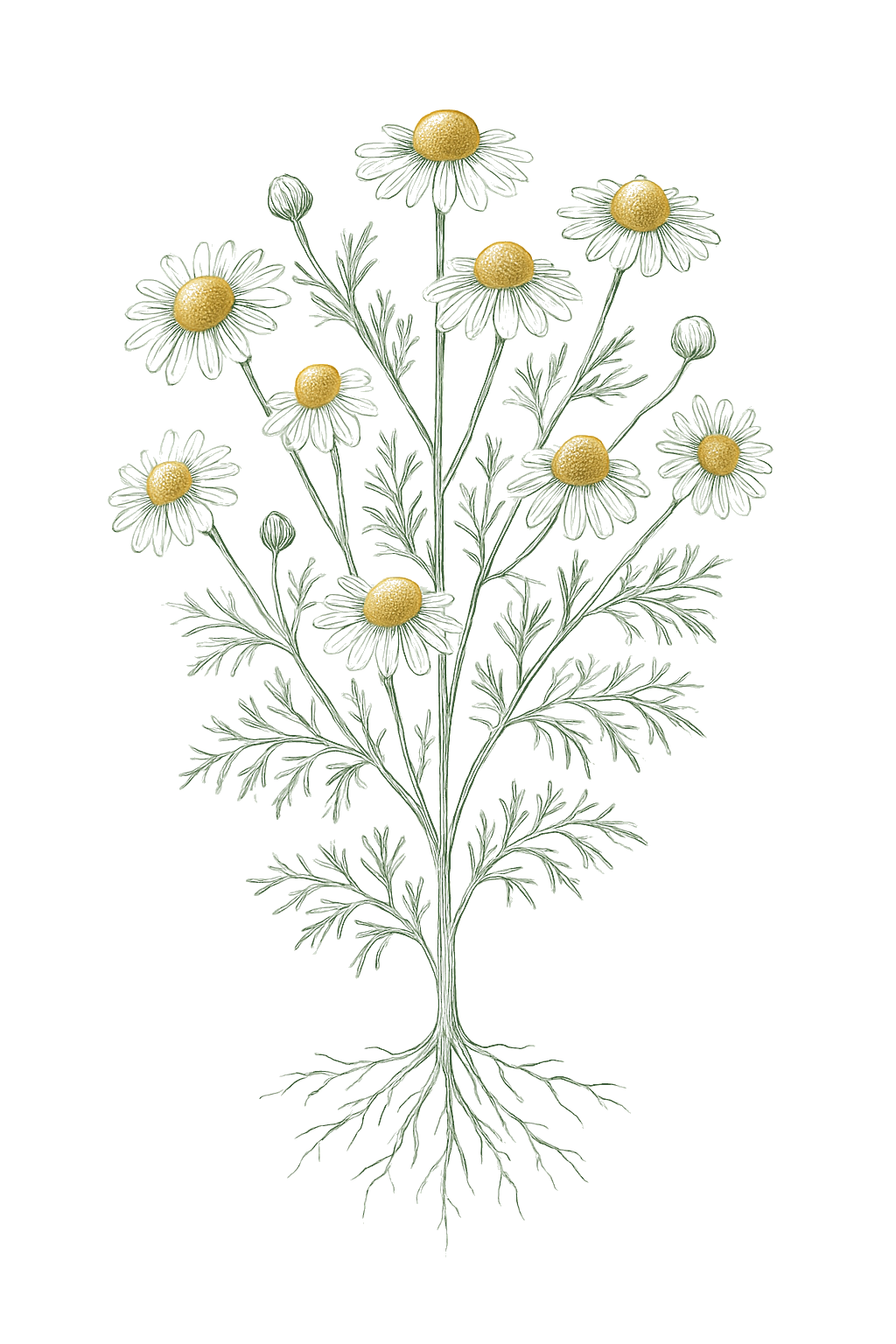
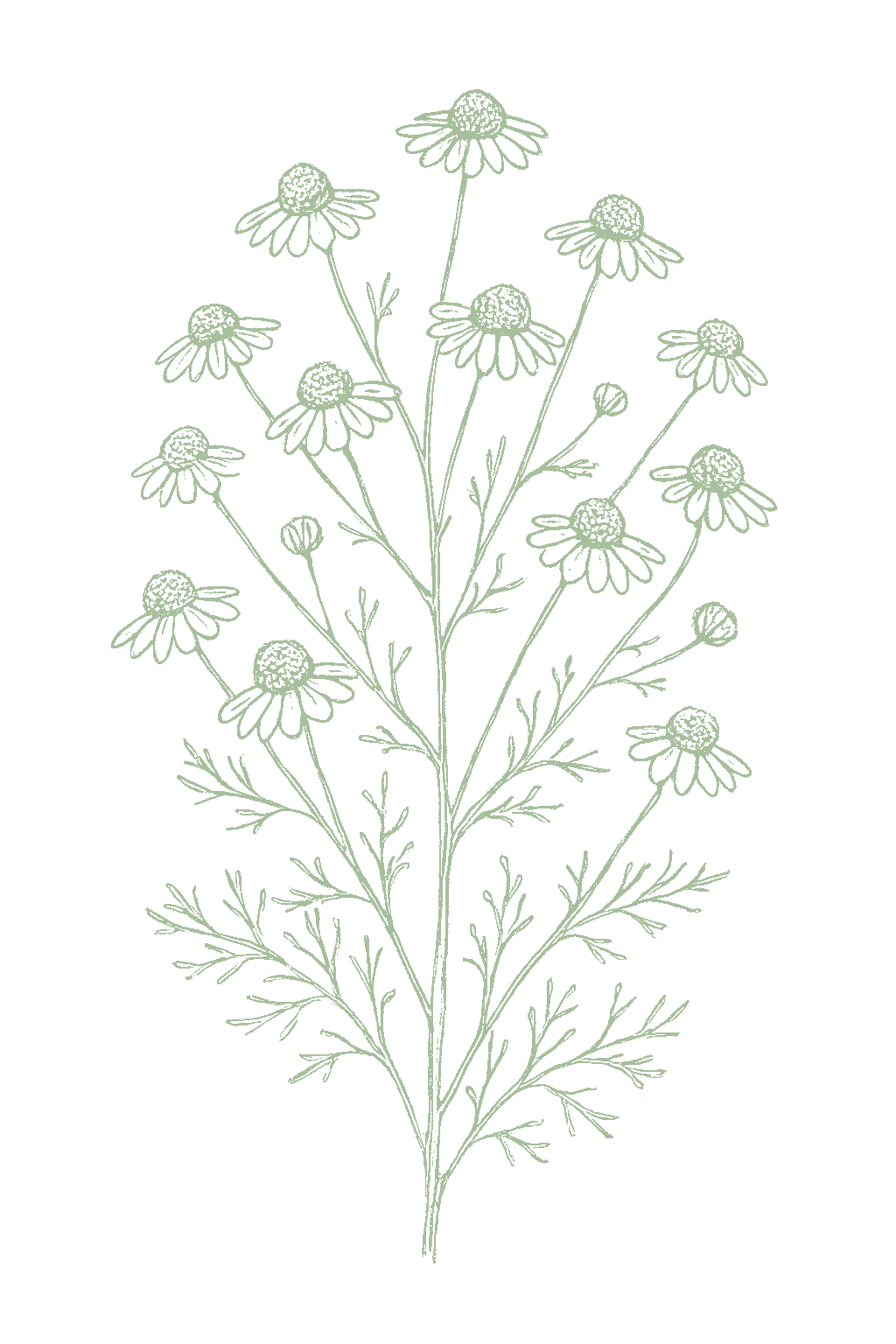
Chamomile mature plant
Fig. 01 · Chamomile, mature Zone 12
Mature in
60-75d
from transplant
Sunlight
Full sun to part shade
6-8 hrs daily
Water
Low to moderate
Spacing
8-12"
between plants
Soil pH
6-7.5
slightly acidic
Today · in your zone

What's happening right now

July 24 · Zone 12 · Stage 01 · Germination

Off-season for chamomile in zone 12.

The season at a glance

Planting calendar

In Zone 12, chamomile can be planted November through December, skipping the summer heat.

Jan
Feb
Mar
Apr
May
Jun
Jul
Aug
Sep
Oct
Nov
Dec
plant
too late
too late
too late
too hot
too hot
too hot
too hot
too hot
too hot
too hot
plant
plant
bloom
bloom
bloom
bloom
bloom
indoors
plant out
bloom
Keep them blooming Deadhead spent blooms through the bloom window to keep new flowers coming.
Seasoned
Stagger your sowings

Succession planting

One chamomile sowing flowers for weeks, and it reseeds itself, so you do not have to resow often. If you want a steady supply, sow a small new batch every 4 weeks through the cool season. In hot areas, stop during the hottest months, when chamomile struggles.Chamomile blooms a long time from one sowing and self-sows, so heavy succession is optional, but a fresh sowing every 4 weeks through the cool windows keeps young, vigorous plants coming into flower. There IS a heat pause in hot regions: stop sowing through the hottest, most humid months, when chamomile declines and molds.

Every 4 weeks · sow a short new rowUp to 9 sowings a seasonToo hot to sow midsummer
Jan
Feb
Mar
Apr
May
Jun
Jul
Aug
Sep
Oct
Nov
Dec
sow
bloom
keep sowing
too hot
continuous bloom
The season, mapped

Seed to garden

The easiest way is to scatter chamomile seeds right on top of cool garden soil (about 55°F) and just press them in, without covering, because the seeds need light to sprout. They come up in one to two weeks. For a head start, sow indoors about 4 to 6 weeks before your last frost and move the young plants out while they are still small, since big plants do not transplant well.Chamomile is easiest direct-sown: scatter the fine seed on the surface of cool soil (around 55°F) and press it in without covering, since light aids germination. It sprouts in about 1 to 2 weeks and self-thins little, so thin to 8 to 12 in. To gain time in short-season areas, start indoors about 4 to 6 weeks before the last frost and transplant while seedlings are small, because larger plants transplant poorly. Sowing in fall lets it overwinter and reseed in mild zones.
Start method
Both
Soil temp
55-70°F
From seed to fruit

The growing journey

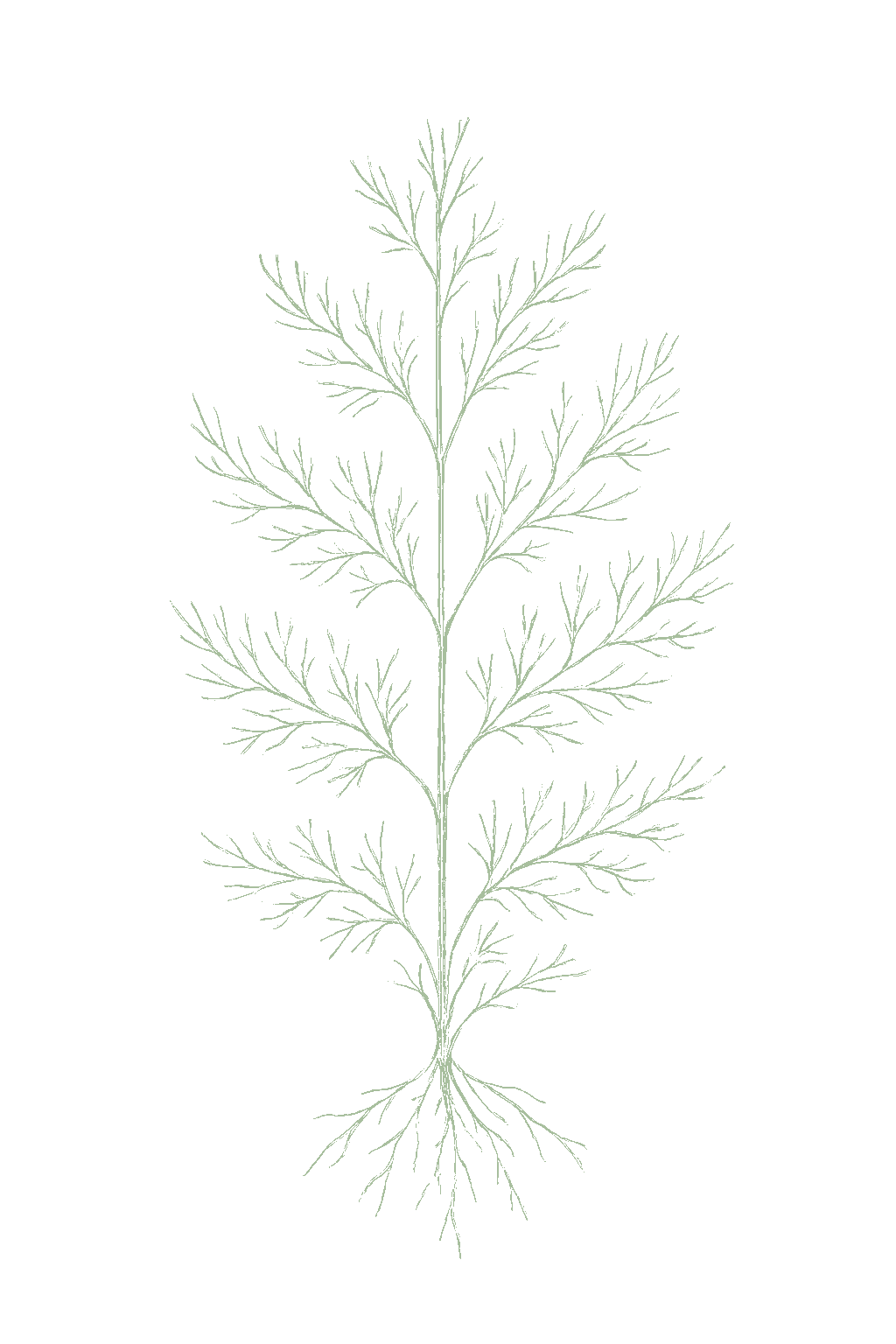
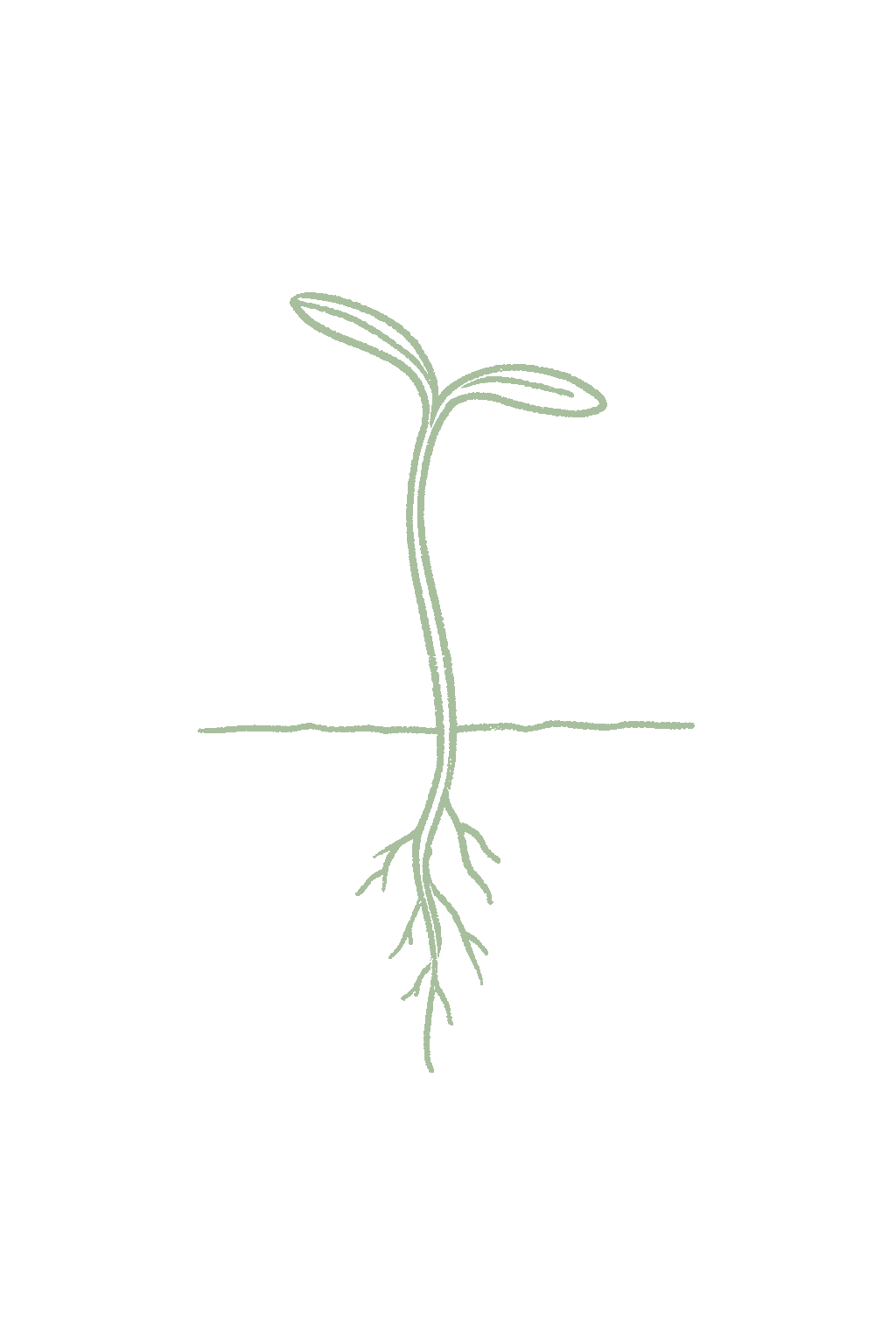
Stage 01 · Germination
01
Germination
Days 7-14 · current stage
The first tiny leaves appear in one to two weeks. The seeds sit on the soil surface, since they need light to sprout.Tiny seed leaves emerge from cool soil within roughly 1 to 2 weeks; the fine seed is surface-sown, because light aids germination, so it must not be buried.
Scatter the seeds on top of the soil, press them in, and do not cover them. Keep the surface damp until they sprout.Surface-sow onto soil near 55°F and press in without covering; keep the surface evenly moist until seedlings appear.
FROM PLANT · Scatter the tiny seeds on top of the soil and press them in, but do not cover them, because chamomile needs light to sprout. In cool soil they come up in one to two weeks.Surface-sow chamomile and press the fine seed in without covering; light aids germination, so do not bury it. In cool soil near 55°F seedlings emerge in about 1 to 2 weeks.
FROM PLANT · Plant chamomile in cool weather, in early spring (or fall where winters are mild). It does not need warm soil. Just keep the surface damp until the little seeds sprout.Sow into cool soil in early spring (or fall in mild zones); chamomile prefers cool conditions and does not need warm soil to start. Keep the surface evenly moist while the fine seed germinates.
02
Seedling
Days 14-30
Feathery real leaves appear and the little plant starts to settle in.Fine, ferny true leaves develop on a small plant that establishes quickly in cool weather.
Thin plants to about 8 to 12 inches apart and water the soil, not the leaves.Thin to 8 to 12 in for airflow; water at the base and watch for aphids and damping-off in damp weather.
FROM PLANT · Once seedlings have a few real leaves, thin them to about 8 to 12 inches apart. Room for air to move helps prevent mildew and mold.Thin seedlings to 8 to 12 in once they have a few true leaves; spacing for airflow is the main defense against powdery mildew, botrytis, and damping-off on a stand of fine-seeded chamomile.
FROM PLANT · Keep young chamomile from drying out, but not soggy, since cold wet soil rots seedlings. Water the soil, not the leaves, and thin crowded ones.Do not let surface-sown seedlings dry out, but avoid keeping them soggy; cold, wet, crowded soil causes damping-off. Water at the base and thin promptly.
03
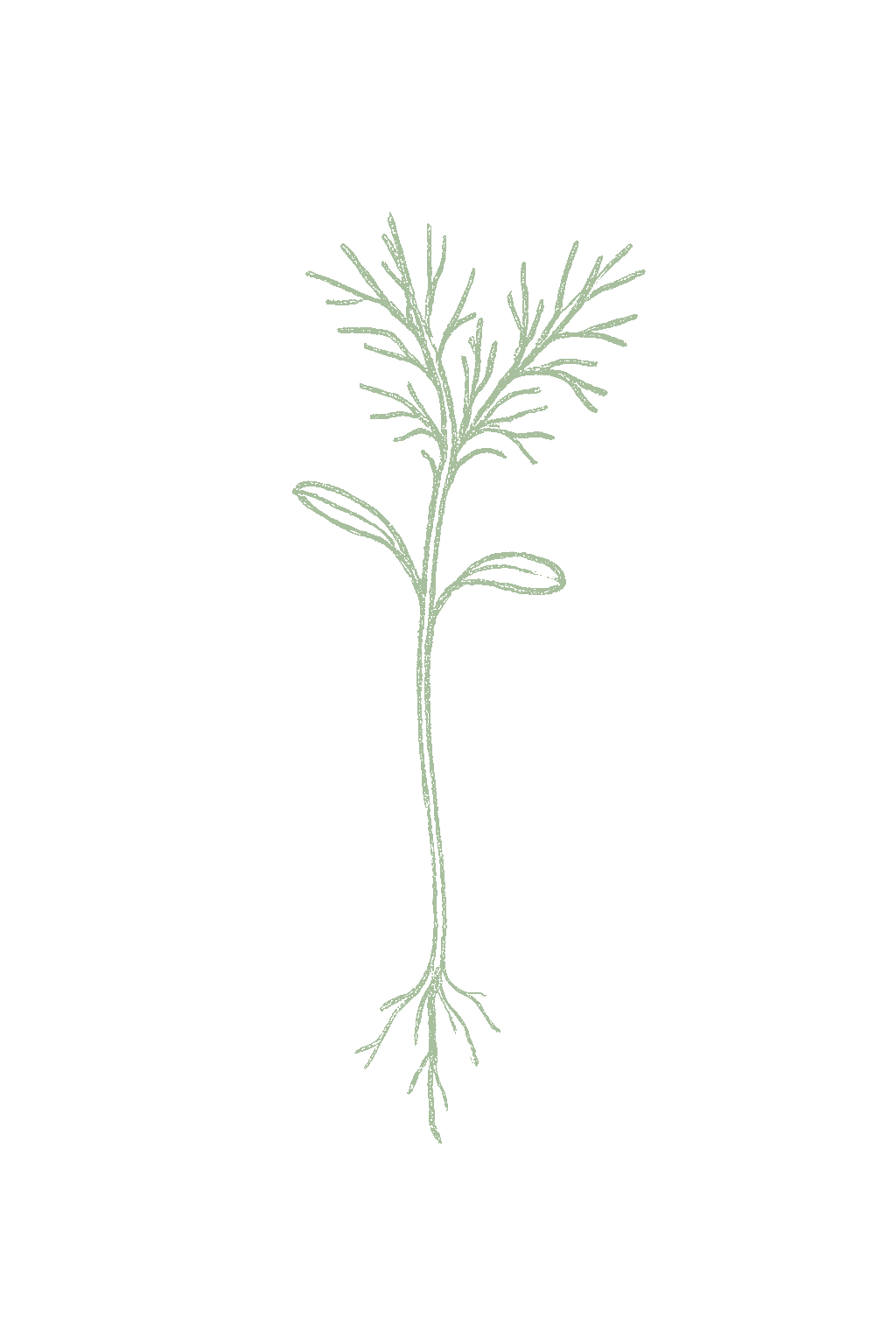
Established / vegetative
Days 28-48
The plant gets taller and bushier, branching into upright stems.Plant grows bushier and branches into erect stems to about 2 ft; a quick grower in cool conditions.
Pinch off the top once to make the plant branch out, and go easy on fertilizer.Pinch the growing tip once for bushier plants; keep fertilizer minimal so plants stay sturdy rather than soft and floppy.
FROM PLANT · Go easy on food and water. Chamomile actually does better in poor soil, and too much fertilizer gives you floppy leaves and more bugs instead of flowers.Keep chamomile lean: it thrives in poor soil and flowers best with little or no fertilizer, while rich soil and excess nitrogen make soft, floppy, aphid- and mildew-prone growth.
FROM PLANT · Pinch off the top once when the plant is young to make it branch out with more flowering stems.Pinch the growing tip once on young plants to encourage branching and more flowering stems; it also makes the airy, upright plant a little sturdier.
04
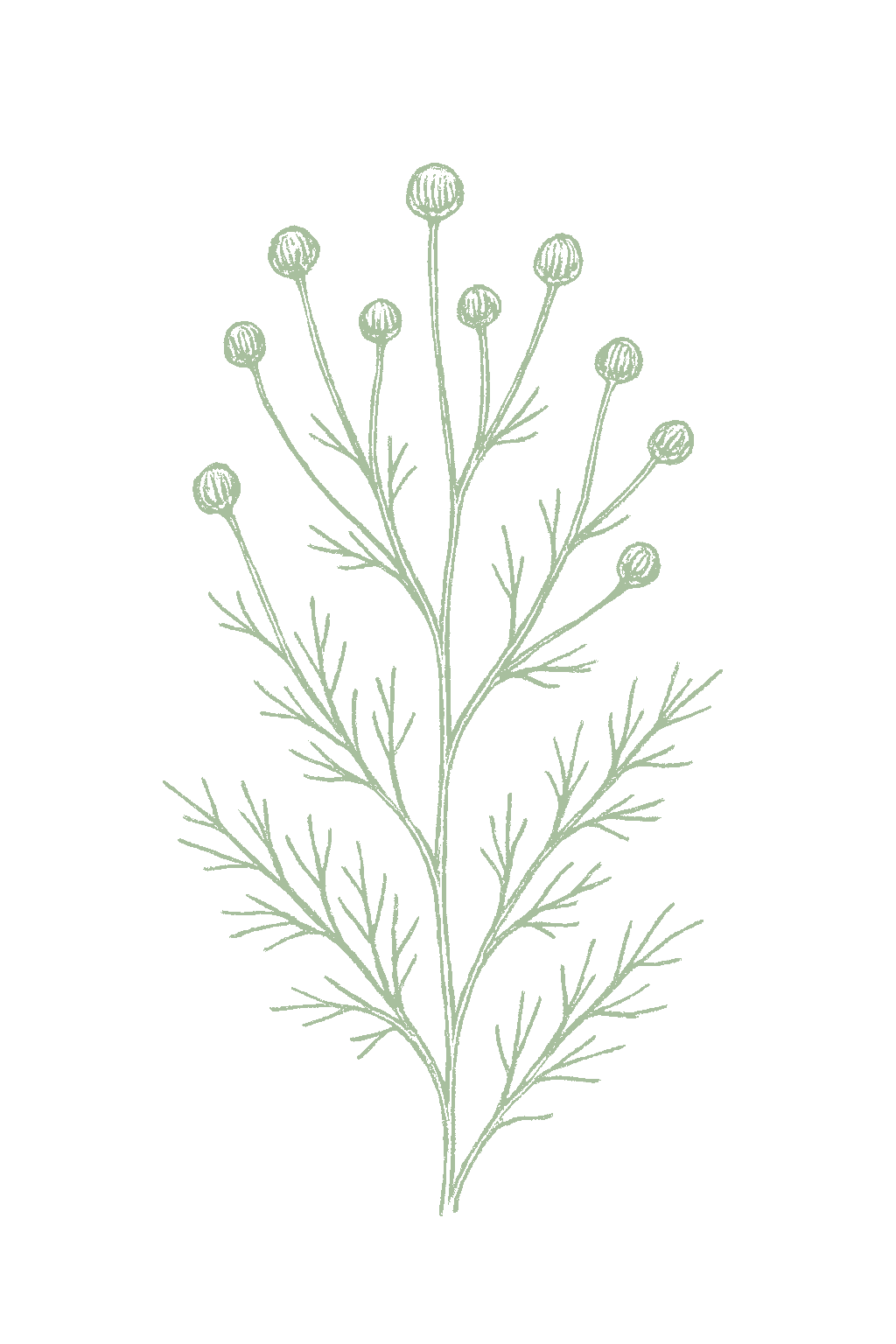
Budding
Days 45-65
Little flower buds start to form at the tops of the stems.Small flower buds form at stem tips; first bloom is roughly 8 to 10 weeks from sowing.
Keep the soil lightly moist and start checking for aphids and any white powdery mildew.Keep moisture even but not wet; begin scouting for aphids and, in humid weather, powdery mildew.
FROM PLANT · As buds form, keep chamomile in sun with room around it and water the soil, not the leaves. Dry, airy plants resist mildew and mold.As buds form, keep plants in full sun with airflow and water at the base; dry, well-spaced foliage is what keeps powdery mildew and botrytis in check as the weather warms and humidifies.
FROM PLANT · As buds form, check the tips for aphids and for any white mildew in warm, damp weather. Catching crowding and wet leaves early keeps both down.Scout buds and tips for aphids and, in warm humid weather, for early powdery mildew; addressing crowding and overhead wetness early limits both on an otherwise trouble-free herb.
05
Flowering
Days 60-75
Lots of little white daisy flowers open, from early to midsummer, and keep coming.Small white-and-gold daisies open in a long, prolific flush from early to midsummer; harvest heads at full open and pick every few days.
Pick the flowers when they are fully open (every few days) to dry for tea. Frequent picking keeps more coming.Pick flowers when just fully open, ideally on a dry morning, snipping only the heads; frequent picking sustains bloom and holds down self-seeding.
FROM PLANT · Pick the flowers when they are fully open, before the petals start to droop and dry, best on a dry morning. Take just the flower heads, and pick every few days to keep more coming.Pick heads when just fully open, before the white rays reflex and dry, ideally on a dry morning, snipping only the flower. Picking every few days sustains bloom and, by removing heads, holds down self-seeding.
FROM PLANT · Dry the flowers right after picking: spread them in one layer on a screen or tray in an airy, shaded spot for a few days, then keep them in a sealed jar out of the light. Only use flowers you have not sprayed.Dry picked flowers promptly in a single layer on a screen, out of direct sun with good airflow, handling gently to avoid discoloration or heating; store airtight, away from light, for tea. Use only unsprayed flowers.
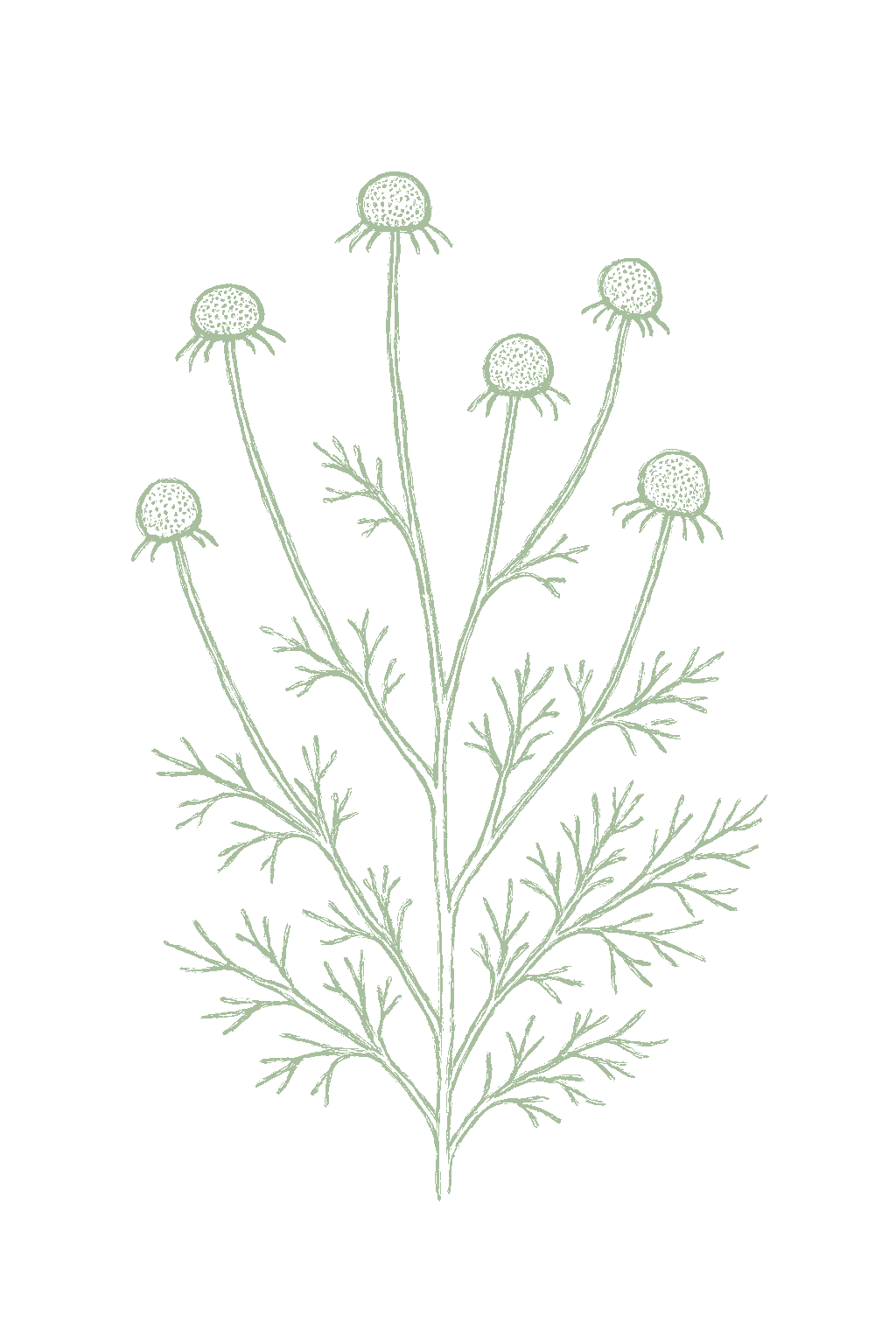
06
Seed saving / self-sow (optional)
Days 80-110
A few flowers left on the plant dry out and drop lots of tiny seeds.Heads left on the plant dry and shed abundant fine seed; German chamomile self-sows freely and can become weedy if never picked.
Leave a few flowers to dry and drop seed for next year, or pick them all if you do not want it spreading.Leave some late heads to dry and self-sow, or collect the fine seed; remove all heads if you want to prevent volunteers.
FROM PLANT · To get chamomile back next year, leave a few flowers on the plant to dry and drop seed. It reseeds itself easily, so pick all the flowers if you do not want it spreading.To let chamomile return, leave some late heads to dry and shed seed; it self-sows freely and can become weedy. To prevent volunteers, pick or remove all heads before they mature.
Beginner
Know your soil

Your soil

Identify yours

Not sure what soil you have? Grab a small handful of damp soil from your garden bed and squeeze it. If it crumbles apart easily, it's sandy. If it holds together but breaks when you poke it, it's loam (what most vegetables want). If it stays in a hard, slippery ball, it's clay.

What this crop wants

Chamomile is easygoing and grows in most ordinary garden soil as long as water drains away and does not pool. Light, well-drained soil is ideal, and it even does well in poor, sandy ground. Heavy, soggy clay is the one thing to avoid, since wet soil rots the roots, so pick a spot that drains well and only add a little compost if your soil is very thin.

If your soil doesn't match

You have sandy soil

Mix 2-3 inches of compost into the top 6 inches of your bed before planting. Compost holds moisture (which sandy soil drains too fast) and adds the nutrients sandy soil tends to lack. Repeat each season. Compost breaks down over time.

You have clay soil

Mix 2-3 inches of compost AND a few inches of coarse sand or perlite into the top 6 inches of your bed. The compost feeds the plants; the sand breaks up the clay so air and water can move through. Don't add sand without compost. It can compact like concrete.

Containers and raised beds

If amending your soil sounds like too much work, or if your soil is heavy clay, full of rocks, or contaminated, build over it. A raised bed at least 12 inches deep filled with a 50/50 mix of compost and sandy loam gives you ideal growing soil with no battles. A 5-gallon container with quality potting mix does the same for one plant at a time. Both bypass your native soil entirely.

Learn more about your soil
The specs

Care guide

The numbers that matter, at a glance.

Sunlight
full sun to part shade · 6-8 hrs/day
Water
low to moderate
Spacing
8-12 inches
Soil
loam, sandy loam
Days to maturity
60-75 days from transplant
Soil pH
6 to 7.5
Container OK?
Yes · 1+ gal pot
Germination temp
55-70°F
Soil chemistry

Soil pH for chamomile

Preferred
6 to 7.5
Tolerated
5.5 to 8

Chamomile is not picky about soil pH (how acidic or alkaline the soil is). Anywhere from about 6.0 to 7.5 is fine, and it even takes slightly alkaline soil, so you usually do not need to change anything.Chamomile is broadly adaptable to soil chemistry and performs well across roughly 6.0 to 7.5, leaning if anything toward the neutral-to-slightly-alkaline end (UC Master Gardeners note a slightly alkaline soil is preferred). pH adjustment is rarely warranted; focus on drainage and lean fertility instead.

Verified · 2 sources View
Steady hand on the hose

Watering

When & how much
Frequency
Keep the soil damp while seeds sprout and plants get going, then water only when the top inch is dry. Grown-up chamomile handles dry spells well and hates soggy soil, so err on the dry side. Water the soil, not the leaves.Keep soil evenly moist through germination and seedling establishment, then water only moderately; established chamomile is fairly drought-tolerant and prefers to run on the dry side rather than sit wet. Water at the base and avoid wetting foliage and flowers to limit powdery mildew and botrytis.
Amount
Chamomile needs less water than most flowers. Water seedlings to keep them going, then give established plants a deep drink only when the soil has dried out on top. About half an inch to an inch a week, counting rain, is plenty.Aim for light, regular watering during establishment, then taper to only what keeps plants from wilting; roughly half to one inch per week from rain plus irrigation is usually ample, and less in cool weather. Let the surface dry between waterings.
Method
Water the ground around the plant, not the leaves or flowers. A soaker hose or a watering can at the base works best, since dry leaves resist mildew. If leaves get wet, water in the morning so they dry by midday.Water at the base with drip or a soaker hose and keep foliage and flowers dry; overhead wetting in warm, humid weather invites powdery mildew and botrytis. If you must sprinkle, do it in the morning so plants dry fast.
Signs of trouble
Too much water
If lower leaves yellow, the plant wilts even though the soil is wet, or the base and flowers look soft or moldy, you are likely overwatering or the soil drains poorly.Yellowing lower leaves, wilting despite wet soil, soft rotting stems, and gray mold on flowers signal overwatering or poor drainage; persistently wet foliage also raises powdery-mildew and damping-off pressure.
Too little water
Chamomile that is too dry wilts in the warmth of the day, looks dull, and makes fewer flowers. It is thirstiest while seeds sprout and plants are young; older plants shrug off short dry spells.Wilting in the day's warmth, dull, grayish foliage, and fewer, smaller flowers indicate underwatering, most critically during germination and establishment; mature plants tolerate short dry spells well.
Feeding rhythm

Feeding

Frequency
minimal
Type
Low-nitrogen or none
When to start
Little to none; lean soil is fine

Chamomile hardly needs feeding and actually does better in poor soil. Mix a little compost in before planting only if your soil is very thin, and otherwise leave it alone. Too much fertilizer, especially the high-nitrogen kind, gives you leaves instead of flowers and more bug and mildew trouble.Chamomile is a light feeder that thrives in poor soil and needs little or no supplemental fertilizer. If the ground is very thin, a modest amount of compost at planting is plenty. Excess nitrogen pushes soft, floppy foliage at the expense of flowers and invites aphids and mildew, so favor lean conditions and skip routine feeding.

N · P · K = 10-10-10

The three numbers on fertilizer (N-P-K) are nitrogen, phosphorus, and potassium. Chamomile barely needs any, but if you feed, pick a balanced one like 10-10-10 rather than a high first-number (nitrogen) lawn feed, which gives leaves instead of flowers.If you feed at all, a balanced ratio such as 10-10-10 at a light rate is enough; a high-nitrogen lawn-type feed favors foliage over flowers and is the wrong choice for a lean-loving herb like chamomile.

Flower care

Deadheading chamomile

Flower form
single daisy-form, small white rays around a domed golden-yellow center, apple-scented

Deadheading chamomile just means picking the flowers. Taking the open flowers for tea keeps the plant making more instead of going to seed, so pick every few days. Leave a few flowers at the end if you want it to drop seed and come back, or pick them all if you do not want it spreading. Pinch young plants once to make them bushier.For chamomile, picking the flowers is the deadheading: removing open heads for tea keeps the plant flowering instead of setting seed and slowing. Pick every few days through the bloom. Leave a few late heads if you want it to self-sow for next year, but remove them if you want to prevent weedy volunteers. Pinch young plants once to force branching and more flowering stems.

Who grows well together

Companion planting

Chamomile is a classic, easygoing companion flower. Its open flowers bring in bees, hoverflies, and other helpful insects, and gardeners have long planted it near cabbage-family crops, onions, and herbs, where tradition says it improves their vigor and flavor (a nice old belief, though not something studies have proven). It asks for little, self-sows, and there is no plant you must keep it away from; just give it sun and room, and pair it with other cool-season crops. Do not let it reseed into beds where you do not want volunteers. Chamomile's best-grounded companion value is pollinator and beneficial-insect support: its open, apple-scented flowers draw bees, hoverflies, and other predators of aphids, so it earns a place as an insectary planting. It also carries a deep well of traditional companion lore, especially as a good neighbor to brassicas, onions, and other herbs and as a general garden tonic (the old name 'the plant's physician'); that tradition is worth passing along but is not formally trialed. As an easy, self-seeding annual it slots naturally among cool-season vegetables and herbs. There is no biologically antagonistic companion to avoid; the main caution is its prolific self-seeding, so site it where volunteers are welcome.

Other
Bees and beneficial insects (insectary planting)
Chamomile flowers a long time and brings in bees and helpful bugs like hoverflies and ladybugs. Their young eat aphids, so a patch or border of chamomile helps the whole garden.Chamomile's best-grounded companion function. Its open, apple-scented flowers recruit bees and aphid predators (hoverflies, lacewings, ladybugs), supporting biological control nearby. Plant it as an insectary edge or interplant; this is a habitat benefit, not a documented pest-repellent effect. Well-grounded
Brassicas, onions, and herbs (traditional companion)
Gardeners have long planted chamomile next to cabbage-family crops, onions, and other herbs, saying it helps them grow better and taste better. It is a lovely old tradition, not something proven, but chamomile is a harmless, pretty neighbor that also feeds pollinators.A traditional companion pairing. Folk practice places chamomile beside brassicas, onions, and herbs as a vigor-and-flavor tonic (the 'plant's physician' lore). The defensible part is the pollinator and beneficial-insect habitat it adds; the direct vigor claim is traditional, not trialed, so grow it for habitat and color rather than a promised yield effect. Traditional
Cool-season vegetables and herbs (habitat companion)
Chamomile grows in the same cool weather as many vegetables and herbs, so it makes an easy, colorful companion that adds flowers and pollinators without crowding them. Keep it to edges so its reseeding does not take over.A cool-season habitat pairing. Chamomile occupies the same mild-weather window as many vegetables and herbs, adding pollinator and beneficial-insect habitat and color with low nutrient competition on lean soil. Keep it to edges and manage its self-seeding so volunteers do not crowd the crop. Traditional
Provenance tagged inline · see methodology for the labeling system Key
Cutting for the vase

When to cut

Chamomile is grown for its little daisy flowers, which you dry for tea. Pick the flowers when they are fully open, before the petals droop and dry, best on a dry morning, taking just the flower heads. Pick every few days to keep more coming. Then dry them spread out in a single layer. Only use flowers that have not been sprayed.Chamomile is grown for tea flowers, a pollinator draw, and a traditional companion. Harvest the small white-and-gold heads when they are just fully open, before the rays reflex and dry, ideally on a dry morning, snipping or stripping only the flowers. Pick every few days through the bloom to keep flowers coming and to limit self-seeding. Dry the flowers promptly in a single layer for tea, and use only unsprayed blooms.

Verified · 2 sources View
Bloom yield

What to expect

One chamomile plant makes lots of little flowers over several weeks, and you pick a handful every few days. A short row gives you plenty of flowers to dry for tea, and it keeps blooming the more you pick.A single chamomile plant carries a long, prolific flush of small daisy flowers from early to midsummer, yielding a steady, repeated harvest of tea heads picked every few days. A short row supplies plenty of flowers for home tea; picking often extends the bloom and self-seeding keeps the patch going.

Chamomile flowers the same season you plant it, about eight to ten weeks after sowing. There is no waiting year, and it usually drops seed and comes back on its own.Chamomile blooms the first season from seed, roughly 8 to 10 weeks after sowing, so there is no establishment year; a cool-season sowing flowers through the season and self-sows for the next.

What changes yield
Season fit: chamomile yields most in cool-to-mild weather and declines in the heat and humidity of a hot-region summer, so a long cool shoulder or mild winter maximizes total bloom.Picking cadence: picking flowers every few days at full open sustains bloom; neglected plants set seed and slow.Soil fertility: lean soil gives sturdy, floriferous plants, while rich, high-nitrogen soil pushes floppy foliage over flowers.Spacing and airflow: adequate spacing limits powdery mildew and botrytis and sustains a longer productive life.Variety: strains such as 'Bodegold' bloom earlier and heavier than the wild type.
Verified · 2 sources View
Pick your variety

Recommended varieties

First decide which chamomile you want. For tea, grow German chamomile, the tall annual with lots of little daisy flowers; 'Bodegold' is a popular type that flowers early and heavily and is easy to pick. Roman chamomile is a different, low, spreading perennial used as a scented ground cover or lawn, not for cutting: 'Treneague' makes a no-mow chamomile lawn because it barely flowers, and 'Flore Pleno' has pretty double cream flowers. German chamomile grows easily from seed and reseeds itself; the Roman kinds are usually bought as small plants.The most important variety choice is which species you want. For tea flowers, grow German chamomile (Matricaria chamomilla), the erect, self-seeding annual; named strains such as 'Bodegold' (upright, earlier and heavier bloom, easy to pick) and 'Bona' (bred for oil content) are selections of it. Roman chamomile (Chamaemelum nobile) is a separate low-growing perennial used as a fragrant groundcover or lawn, not as a cutting herb: 'Treneague' is a non-flowering clone grown for chamomile lawns, and 'Flore Pleno' bears double cream flowers. German chamomile comes readily from seed and self-sows; Roman selections are usually set from plants or divisions.

German chamomile (Matricaria chamomilla / recutita): the common annual tea chamomile; erect to about 2 ft, self-seeding
'Bodegold' (German): an upright strain that blooms a few weeks earlier and heavier, with larger flowers, good for tea and easy picking
'Bona' (German): a productive strain grown for tea flowers
Roman chamomile (Chamaemelum nobile): a distinct low, mat-forming perennial groundcover, not an upright tea annual
'Treneague' (Roman): a non-flowering perennial selection grown as a fragrant chamomile lawn
'Flore Pleno' (Roman): a perennial with showy double, cream-white flowers
In the vase

Vase life

Chamomile is a flower you dry for tea, not a vegetable to store. Pick the little daisy flowers when they are fully open, best on a dry morning, taking just the flower heads. Spread them out in a single layer on a screen or tray in an airy, shaded spot and let them air-dry for a few days, then keep the dried flowers in a sealed jar out of the light. Only use flowers that have not been sprayed. One safety note: chamomile is a daisy-family plant, and people who are allergic to ragweed or daisies can react to it, so be careful with chamomile tea if you have those allergies.Chamomile is grown for tea flowers, a pollinator draw, and a traditional companion, so the refrigerate and freeze fields do not apply as for produce. Pick the flowers when they are just fully open, ideally on a dry morning, snipping or stripping only the heads. Dry them promptly, spread in a single layer on a screen out of direct sun with good airflow, and handle gently so they do not discolor or heat; a few days of air-drying is usual. Store the dried flowers airtight, away from light, for tea. Use only unsprayed flowers. A safety note: chamomile is in the daisy (Asteraceae) family, and NC State cautions it can cause allergic skin reactions or oral swelling in people who are allergic to ragweed and related plants, so anyone with a ragweed or daisy allergy should be cautious with chamomile.

Verified · 3 sources View
When something goes wrong

Common problems

Chamomile faded when it got hot and muggyPlants declined and stopped flowering in summer heat and humidity
01 of 06
What happened Chamomile likes cool weather. When summer got hot and muggy, it faded and stopped flowering well. That is just how this cool-preferring annual behaves in the heat.Chamomile prefers cool conditions; in the heat and humidity of a hot-region summer it declines, stops flowering well, and is prone to powdery mildew and botrytis. This is normal for the annual in a hot climate, not a mistake. Next season In hot areas, plant chamomile in the cool season, fall and late winter, and skip the hot months. In cool-summer areas it keeps going until frost.In hot regions grow chamomile in the cool season, from fall and late-winter sowings, and treat summer as its off-season; in cool-summer regions it runs on to frost.
Leaves got a white coating or the flowers went moldyWhite powdery film or gray mold on leaves and flowers
02 of 06
What happened A white powdery mildew or a gray mold set in, usually because plants were crowded or shaded, the air was humid, or the leaves and flowers stayed wet.Powdery mildew or botrytis took hold, favored by crowding, shade, humidity, and overhead or excess moisture; both worsen in warm, muggy weather and on packed stands. Next season Give plants more room and sun, water the soil not the leaves, do not overwater, and dry picked flowers spread out. In hot areas, grow chamomile in cooler weather.Space plants for airflow, grow in full sun, water at the base, keep soil lean and not soggy, and dry picked flowers in a single layer; grow in the cooler part of the season in hot regions.
Young seedlings fell over and diedSeedlings collapsed at the soil line
03 of 06
What happened A rot at the soil line, from cold, soggy, or crowded conditions, killed the young seedlings. Overwatering and thick sowing are the usual causes.Damping-off struck seedlings in cold, wet, poorly drained, or overcrowded soil; surface-sown chamomile kept too wet is the standing risk. Next season Sow into soil that drains well, do not keep it soggy, and thin crowded seedlings so air can move.Sow into well-drained soil, do not overwater, thin promptly for airflow, and avoid sowing into cold, waterlogged ground.
A hard freeze killed the plantsPlants killed by a hard freeze
04 of 06
What happened Chamomile handles light frost but not a hard, deep freeze. A hard freeze ended the plants.Chamomile tolerates light frost but a hard freeze kills the annual; in cold zones the first hard freeze ends the season. Next season In cold areas, know the first hard freeze ends chamomile. In mild-winter areas a fall planting can grow through winter, and it often reseeds.Expect cold-zone plantings to end at the first hard freeze; in mild zones a fall sowing can grow through winter, and it usually reseeds.
Tiny bugs and sticky leaves (aphids)Sticky, curled tips crawling with aphids
05 of 06
What happened Aphids clustered on the new growth and buds and left everything sticky. Soft, overfed plants attract them most.Aphids colonized soft growth and buds, leaving honeydew; lush, overfed plants are the most susceptible on an otherwise nearly pest-free herb. Next season Spray aphids off with water or use insecticidal soap, and go easy on fertilizer. The flowers also bring in ladybugs that eat them.Hose off aphids or use insecticidal soap, keep nitrogen low to avoid soft growth, and let the beneficials the flowers draw help.
Few or no seeds sproutedSeeds failed to come up
06 of 06
What happened Chamomile seeds did not sprout, usually because they were buried (they need light) or the surface dried out before they came up.Usual causes are seed buried too deep (light aids germination, so it must be surface-sown) or the surface drying out; chamomile germinates best pressed into moist soil in the open. Next season Scatter the seeds on top and press them in without covering, keep the surface damp until they sprout, and plant in cool soil.Surface-sow and press in without covering, keep the surface evenly moist during emergence, and sow into cool soil.
Verified · 3 sources View
The usual suspects

Pests & diseases

Pests
Aphids
P · 01
Thrips
P · 02
Mealybugs
P · 03
Diseases
Powdery mildew
D · 01
Botrytis (gray mold)
D · 02
Damping-off (seedlings)
D · 03
Verified · 3 sources View
Seasoned
Where to plant next year

Crop rotation

Rotating chamomile is not as important as it is for vegetables, but it helps. Plant it in a different spot each year if you can, and clean up old, diseased plants at the end of the season. Chamomile reseeds itself heavily, so you will often get new plants popping up on their own.Rotation matters less for a fast, lean-loving annual herb than for heavy-feeding vegetables, but moving chamomile to a fresh bed and clearing infected debris limits carryover of powdery mildew and botrytis. Because it self-seeds so readily, expect volunteers, and thin or relocate them to keep airflow and to stop it colonizing beds you want for other crops.

Family
Asteraceae
Years between
1 years
in the same bed
Avoid following
Chamomile is in the daisy family (Asteraceae). If it had a lot of mildew or mold, do not plant it, or other daisy-family flowers, in the same spot the very next season, and clean up the old plants. Note that chamomile drops seed and often comes back on its own.As an aster-family (Asteraceae) annual, avoid following chamomile immediately with other susceptible asters in the same bed where powdery mildew or botrytis built up; rotate to an unrelated family for a season if disease was heavy, and clear infected debris at season end. Chamomile self-sows freely, so volunteers may appear regardless of rotation.
Plant after
legumesleafy greens
Verified · 2 sources View
In the app · pre-launch

When plant taps you on the shoulder

The plant app sends a timely reminder at every critical moment of your chamomile season. The wording adjusts to whichever you pick: beginner or seasoned. Here are three you'll see in Zone 12.

p
plant
7 days before last frost
Time to plant chamomile
You can plant chamomile seeds in cool weather, around your last frost, since the seedlings handle light frost. Scatter the tiny seeds on top and press them in, but do not cover them, because they need light to sprout.
p
plant
Seedling arrives
Thin out your seedlings
Thin your chamomile to about 8 to 12 inches apart now so air can move between the plants.
p
plant
Flowering arrives
Time to pick flowers
Your first flowers are opening. Pick them when fully open, every few days, and dry them for tea. Frequent picking keeps more coming.
Get personalized alerts.

plant sends the right notification at exactly the right moment, for your zone, your weather, your crops. Founding members lock the rate forever.

Back the Kickstarter →
Ask the gardener

Common questions

Got a question we missed?

We're building this guide with real growers. Got a question we missed? Ask here. We read every one and add the best answers right to this page.

Grown this before?

Share a tip

Learned something the hard way? Pass it on. Real growers' tips make this guide better for the next person, and we credit you by name when yours goes live.

Seasoned
Spot something wrong?

Report a problem

If you've grown this crop and you see a date, a temperature, a companion claim, or a recommendation that doesn't match your experience, tell us. Real growers' corrections make this guide better for the next person.

How we built this guide

Methodology & sources

Every date, temperature, spacing, and recommendation on this page is sourced from university cooperative extension publications, peer-reviewed agricultural research, NOAA climate data, and direct extension calendars. Where claims are softer (traditional gardening wisdom not formally documented), we say so.

Research-backed Documented in cooperative extension publications or peer-reviewed research
Well-grounded A known agronomic principle, but not formally tested for this specific pair
Traditional Time-tested gardening wisdom, limited formal research support
Last reviewed
July 2, 2026
Data version
crops_data_final · v1.0 · schema 2.9
Sources cited on this page
16 publications
Verified entries
Companion-planting claims tagged inline · zone dates verified against 5+ extensions
See all sources cited on this page
  • University of Minnesota Extension umn_ext
  • University of Maryland Extension umd_ext
  • Cornell Cooperative Extension cornell_ext
  • Iowa State University Extension iastate_ext
  • Michigan State University Extension msu_ext
  • NC State Extension ncsu_ext
  • Penn State Extension psu_ext
  • U. of Illinois Urbana-Champaign Extension uiuc_ext
  • UC Davis Postharvest Center ucd_postharvest
  • Texas A&M AgriLife Extension tamu_agrilife
  • Virginia Cooperative Extension 426-331 vce_426_331
  • Piedmont Master Gardeners piedmont_mg
  • UGA Vegetable Garden Calendar uga_calendar
  • Clemson Home & Garden Information Center clemson_hgic
  • UC IPM Statewide IPM Program uc_ipm
  • NOAA 1991-2020 Climate Normals noaa_normals

Growing notes, weekly.

Zone-aware seasonal nudges, what's worth planting now, and the occasional recipe from the harvest. No spam, ever.

Vol. 003 · Chamomile · plant.lifestyle