Today · in your zone
What's happening right now
Off-season for cucumber in zone 9.
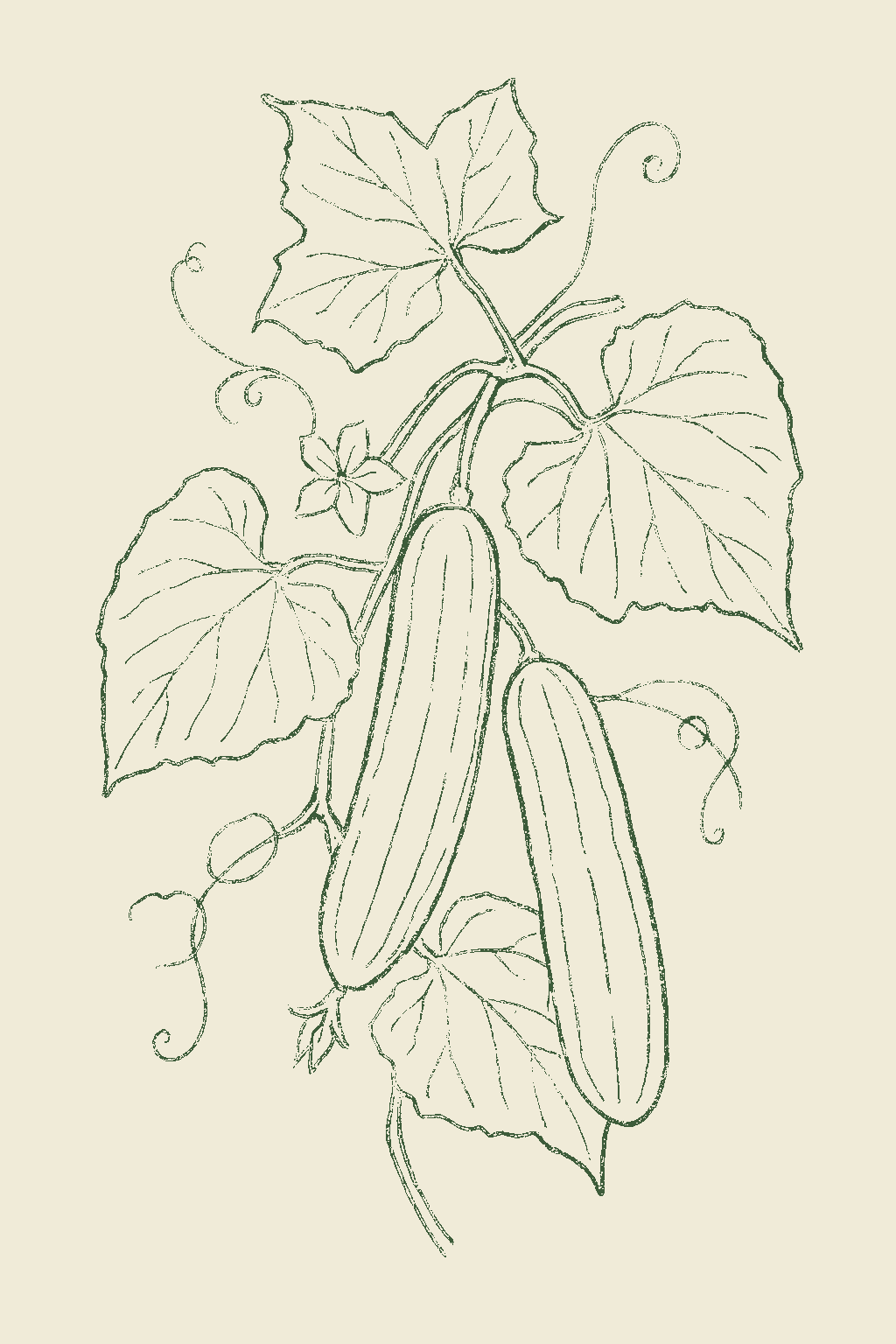
Cucumber is an easy, fast warm-season vegetable grown for its crisp, immature fruit, picked while small and shiny. The plants grow as long vines or compact bushes and produce a lot in a short time. Like zucchini, you pick cucumbers often, every day or two, while they are still young; if you leave one on too long it gets fat, seedy, and yellow, and the plant stops making new ones. You can grow slicing cucumbers for fresh eating, small pickling cucumbers, or burpless and seedless types that are mild and gentle on the stomach. Cucumbers like warm soil, full sun, and steady watering. Letting them get too hot or too dry is what makes them taste bitter. Cucumber is a fast warm-season cucurbit grown for its tender, immature fruit, picked young while the skin is still glossy and the seeds are soft. Plants are vigorous and tendrilled, either long-vining or compact bush types, and they crop heavily over a short window once the heat arrives. Like summer squash, cucumber is a continuous-harvest crop: pick every day or two and the plant keeps setting, but let a fruit oversize and it turns seedy and yellow and the plant slows down. Growers choose among slicing types for fresh eating, blocky pickling types, and burpless or seedless (parthenocarpic) types bred to be mild and easy to digest. Cucumbers want warm soil, full sun, and steady, even moisture; uneven water and heat or drought stress are what turn the fruit bitter and misshapen.
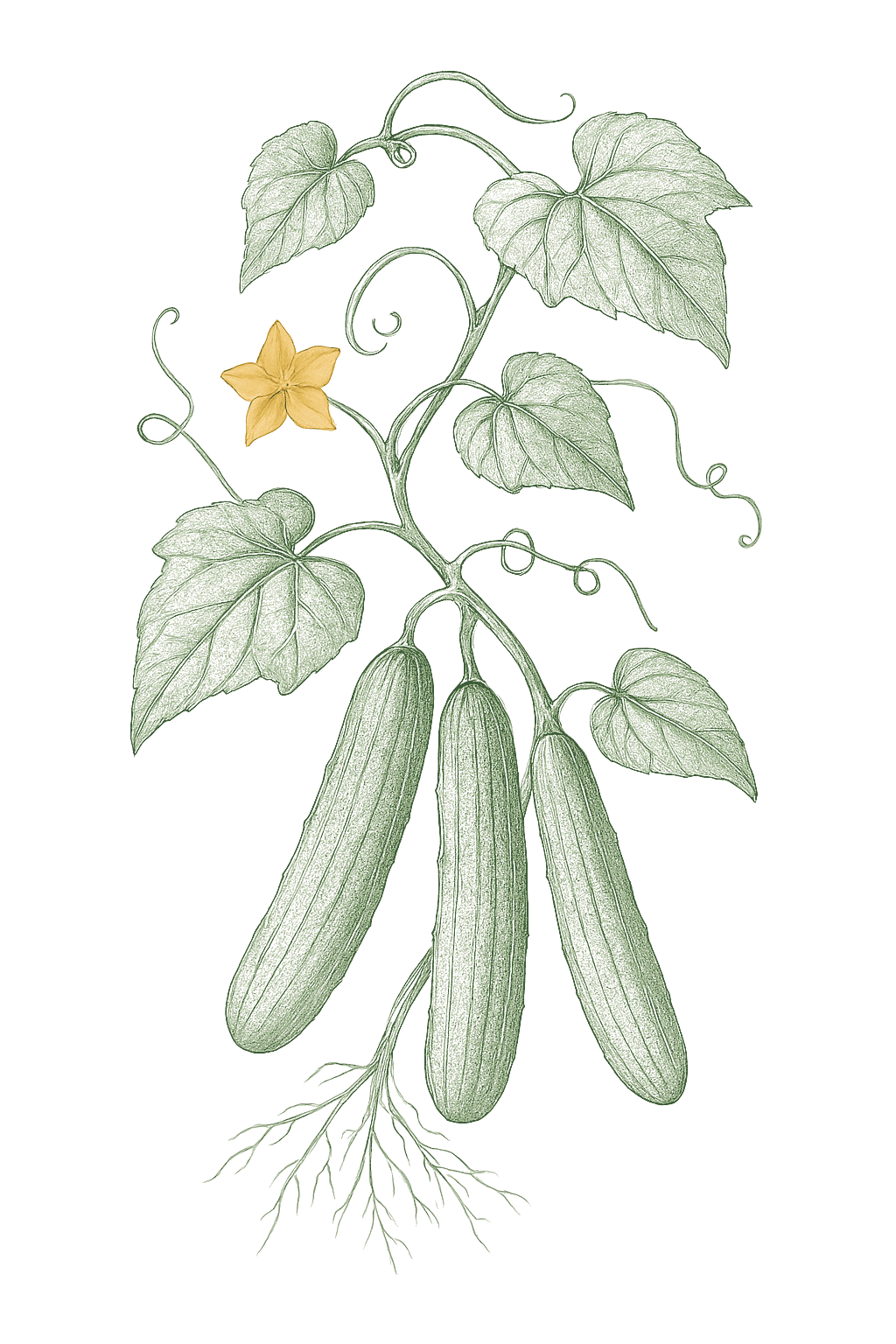
Off-season for cucumber in zone 9.
Zone 9 averages a last frost around March 1. Within Zone 9, the colder half (9a, winters down to 20°F) runs about a week later. The warmer half (9b, winters down to 25°F) runs about a week earlier. The plant app picks your subzone from your ZIP.
| Subzone | Last spring | First fall | Growing days | Winter min | Fruits reliably |
|---|---|---|---|---|---|
| 9a | Mar 8 | Nov 24 | ~261 | 20-25°F | Yes · two seasons |
| 9b | Feb 28 | Nov 30 | ~275 | 25-30°F | Yes · two seasons |
Averages from 8 weather stations per subzone, drawn from NOAA 1991-2020 Climate Normals. Your actual frost date can vary by up to two weeks based on elevation, proximity to water, and local topography.
In Zone 9, cucumber can be planted March through July. Start indoors Feb 15 - Mar 15. Harvest runs May through November.
Cucumbers produce heavily for a few weeks, then slow down, so plant a few seeds now and a few more about three weeks later for a steadier supply. A second planting in summer is a smart backup, since pests and mildew often wear out the first plants by late summer.Cucumbers crop hard for a few weeks and then tire, so succession sowing keeps the supply steady instead of feast-then-famine. A first sowing after your last frost, then a second about three weeks later, spreads the harvest and keeps vigorous plants coming as the originals fade. The real payoff is late season: cucumber beetle, bacterial wilt, and powdery and downy mildew often take down the first planting by midsummer, so a replacement sown in early to midsummer, counting back from your first fall frost so it has time to mature, frequently outproduces the spring crop on cleaner, less stressed plants.
In Zone 9, cucumber can be planted February through June, then again August through September, skipping the summer heat. Harvest runs April through November.
Cucumbers produce heavily for a few weeks, then slow down, so plant a few seeds now and a few more about three weeks later for a steadier supply. A second planting in summer is a smart backup, since pests and mildew often wear out the first plants by late summer.Cucumbers crop hard for a few weeks and then tire, so succession sowing keeps the supply steady instead of feast-then-famine. A first sowing after your last frost, then a second about three weeks later, spreads the harvest and keeps vigorous plants coming as the originals fade. The real payoff is late season: cucumber beetle, bacterial wilt, and powdery and downy mildew often take down the first planting by midsummer, so a replacement sown in early to midsummer, counting back from your first fall frost so it has time to mature, frequently outproduces the spring crop on cleaner, less stressed plants.
In Zone 9, cucumber can be planted February through June, then again September, skipping the summer heat. Harvest runs April through December.
Cucumbers produce heavily for a few weeks, then slow down, so plant a few seeds now and a few more about three weeks later for a steadier supply. A second planting in summer is a smart backup, since pests and mildew often wear out the first plants by late summer.Cucumbers crop hard for a few weeks and then tire, so succession sowing keeps the supply steady instead of feast-then-famine. A first sowing after your last frost, then a second about three weeks later, spreads the harvest and keeps vigorous plants coming as the originals fade. The real payoff is late season: cucumber beetle, bacterial wilt, and powdery and downy mildew often take down the first planting by midsummer, so a replacement sown in early to midsummer, counting back from your first fall frost so it has time to mature, frequently outproduces the spring crop on cleaner, less stressed plants.
In Zone 9, cucumber can be planted May through July. Start indoors Mar 1 - Apr 1. Harvest runs June through November.
Cucumbers produce heavily for a few weeks, then slow down, so plant a few seeds now and a few more about three weeks later for a steadier supply. A second planting in summer is a smart backup, since pests and mildew often wear out the first plants by late summer.Cucumbers crop hard for a few weeks and then tire, so succession sowing keeps the supply steady instead of feast-then-famine. A first sowing after your last frost, then a second about three weeks later, spreads the harvest and keeps vigorous plants coming as the originals fade. The real payoff is late season: cucumber beetle, bacterial wilt, and powdery and downy mildew often take down the first planting by midsummer, so a replacement sown in early to midsummer, counting back from your first fall frost so it has time to mature, frequently outproduces the spring crop on cleaner, less stressed plants.
In Zone 9, cucumber can be planted April through July. Start indoors Mar 1 - Apr 1. Harvest runs June through November.
Cucumbers produce heavily for a few weeks, then slow down, so plant a few seeds now and a few more about three weeks later for a steadier supply. A second planting in summer is a smart backup, since pests and mildew often wear out the first plants by late summer.Cucumbers crop hard for a few weeks and then tire, so succession sowing keeps the supply steady instead of feast-then-famine. A first sowing after your last frost, then a second about three weeks later, spreads the harvest and keeps vigorous plants coming as the originals fade. The real payoff is late season: cucumber beetle, bacterial wilt, and powdery and downy mildew often take down the first planting by midsummer, so a replacement sown in early to midsummer, counting back from your first fall frost so it has time to mature, frequently outproduces the spring crop on cleaner, less stressed plants.
In Zone 9, cucumber can be planted April through June. Start indoors Mar 4 - Jun 2. Harvest runs May through November.
Cucumbers produce heavily for a few weeks, then slow down, so plant a few seeds now and a few more about three weeks later for a steadier supply. A second planting in summer is a smart backup, since pests and mildew often wear out the first plants by late summer.Cucumbers crop hard for a few weeks and then tire, so succession sowing keeps the supply steady instead of feast-then-famine. A first sowing after your last frost, then a second about three weeks later, spreads the harvest and keeps vigorous plants coming as the originals fade. The real payoff is late season: cucumber beetle, bacterial wilt, and powdery and downy mildew often take down the first planting by midsummer, so a replacement sown in early to midsummer, counting back from your first fall frost so it has time to mature, frequently outproduces the spring crop on cleaner, less stressed plants.
In Zone 9, cucumber can be planted March through April, then again August, skipping the summer heat. Harvest runs May through June.
Cucumbers produce heavily for a few weeks, then slow down, so plant a few seeds now and a few more about three weeks later for a steadier supply. A second planting in summer is a smart backup, since pests and mildew often wear out the first plants by late summer.Cucumbers crop hard for a few weeks and then tire, so succession sowing keeps the supply steady instead of feast-then-famine. A first sowing after your last frost, then a second about three weeks later, spreads the harvest and keeps vigorous plants coming as the originals fade. The real payoff is late season: cucumber beetle, bacterial wilt, and powdery and downy mildew often take down the first planting by midsummer, so a replacement sown in early to midsummer, counting back from your first fall frost so it has time to mature, frequently outproduces the spring crop on cleaner, less stressed plants.
In Zone 9, cucumber can be planted February through June, then again August through September, skipping the summer heat. Start indoors Jan 24 - Mar 25. Harvest runs April through November.
Cucumbers produce heavily for a few weeks, then slow down, so plant a few seeds now and a few more about three weeks later for a steadier supply. A second planting in summer is a smart backup, since pests and mildew often wear out the first plants by late summer.Cucumbers crop hard for a few weeks and then tire, so succession sowing keeps the supply steady instead of feast-then-famine. A first sowing after your last frost, then a second about three weeks later, spreads the harvest and keeps vigorous plants coming as the originals fade. The real payoff is late season: cucumber beetle, bacterial wilt, and powdery and downy mildew often take down the first planting by midsummer, so a replacement sown in early to midsummer, counting back from your first fall frost so it has time to mature, frequently outproduces the spring crop on cleaner, less stressed plants.
In Zone 9, cucumber can be planted March through June, then again August through September, skipping the summer heat. Start indoors Feb 15 - Mar 8. Harvest runs May through November.
Cucumbers produce heavily for a few weeks, then slow down, so plant a few seeds now and a few more about three weeks later for a steadier supply. A second planting in summer is a smart backup, since pests and mildew often wear out the first plants by late summer.Cucumbers crop hard for a few weeks and then tire, so succession sowing keeps the supply steady instead of feast-then-famine. A first sowing after your last frost, then a second about three weeks later, spreads the harvest and keeps vigorous plants coming as the originals fade. The real payoff is late season: cucumber beetle, bacterial wilt, and powdery and downy mildew often take down the first planting by midsummer, so a replacement sown in early to midsummer, counting back from your first fall frost so it has time to mature, frequently outproduces the spring crop on cleaner, less stressed plants.
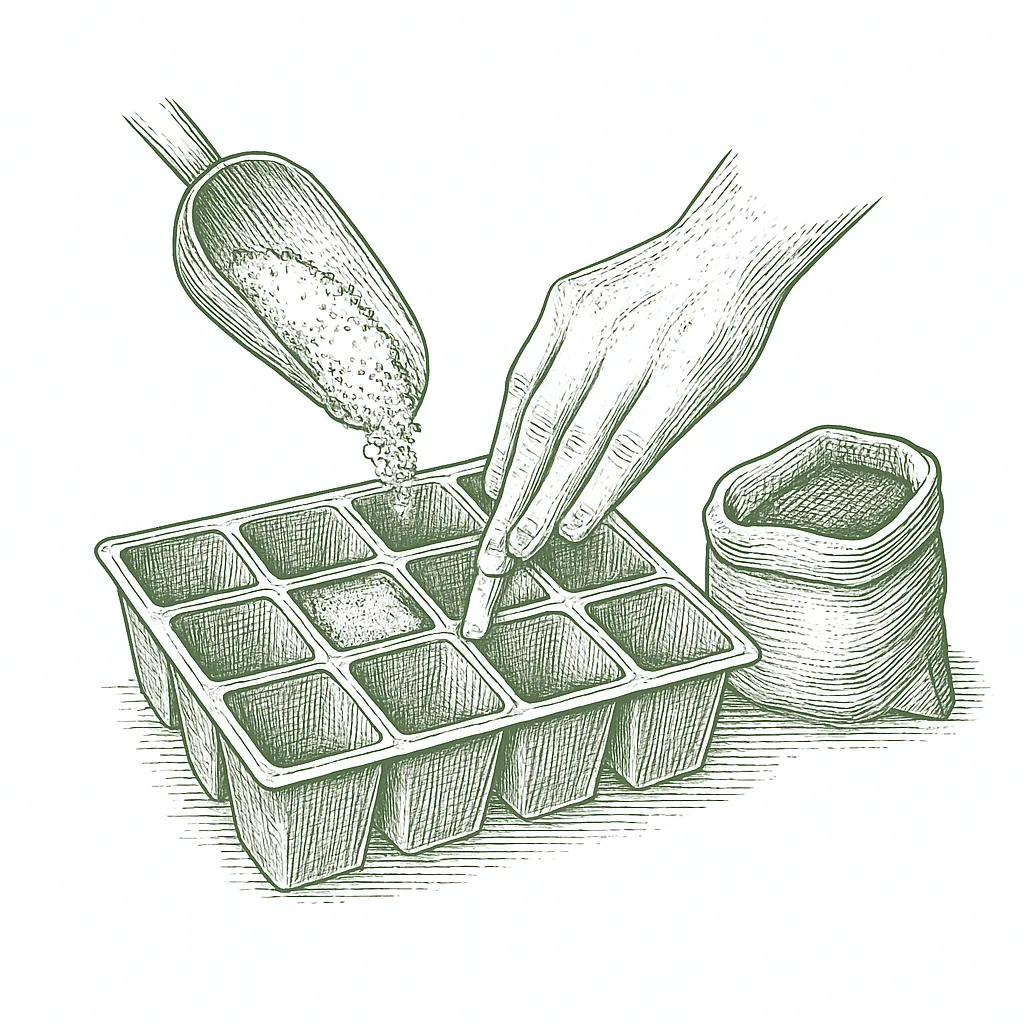
The easiest way to grow cucumbers is to sow seeds right where they will grow, once the soil is warm (about 70°F). Plant a few seeds 1 inch deep in each spot and keep the strongest. Start seeds indoors only if your season is short, about three weeks before planting out, ideally in peat pots you can plant whole, and move them outside while they are still small.Because cucurbits resent root disturbance, direct sowing once the soil is reliably warm (at least 70°F at 2 inches; seed will not germinate below about 50°F) is the simplest, most reliable method, and direct-sown plants quickly catch up. Sow several seeds about 1 inch deep per hill or station and thin to the strongest. Start seeds indoors only to gain two to three weeks in a short season, sowing in peat pots three to four weeks before planting out and setting them out before they outgrow the pot.












Not sure what soil you have? Grab a small handful of damp soil from your garden bed and squeeze it. If it crumbles apart easily, it's sandy. If it holds together but breaks when you poke it, it's loam (what most vegetables want). If it stays in a hard, slippery ball, it's clay.
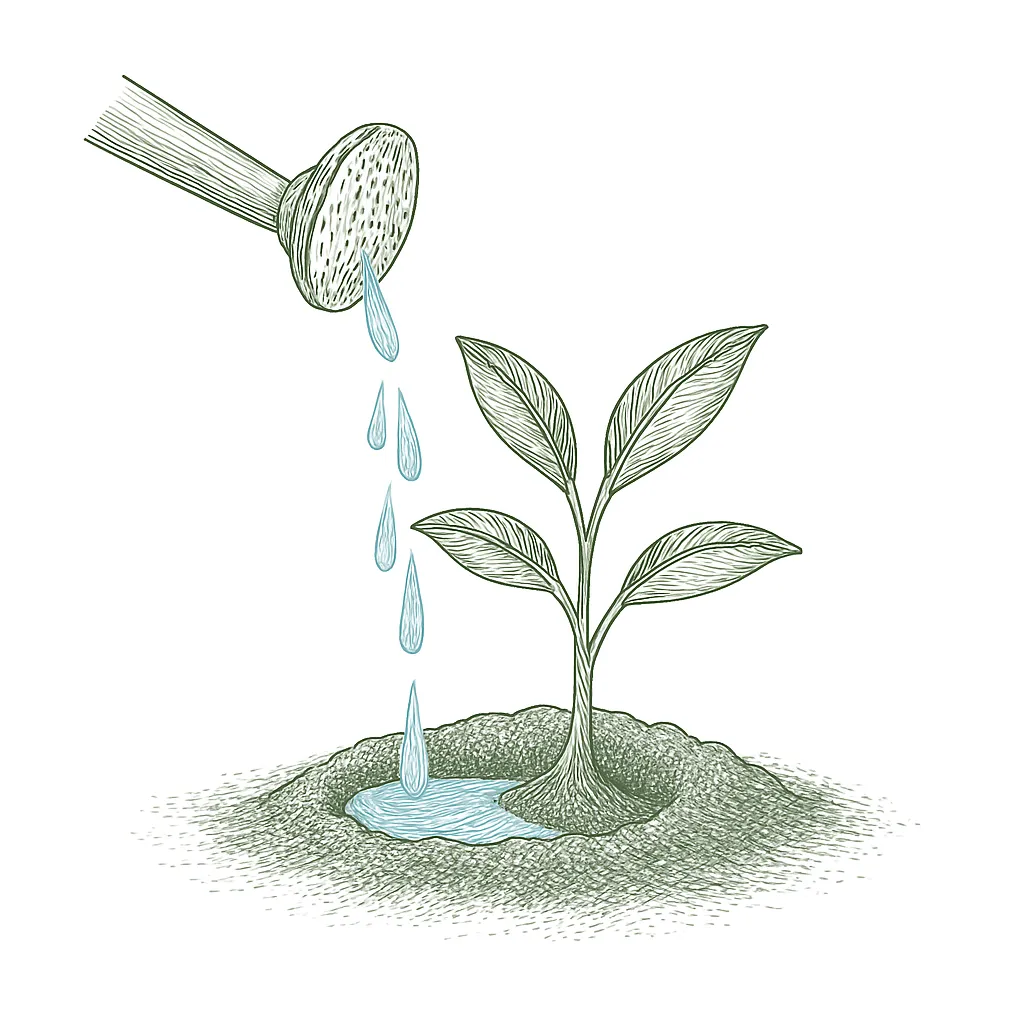
Plant cucumbers in rich, well-drained soil with plenty of compost mixed in. They grow fast and have shallow roots, so they like soil that stays evenly moist but never soggy. Many gardeners plant them on low hills or mounds, which warm up quicker and drain better, and growing them up a trellis keeps the fruit clean and straight. If your soil is heavy or stays wet, build up mounds or use raised beds so the roots do not sit in water.
Mix 2-3 inches of compost into the top 6 inches of your bed before planting. Compost holds moisture (which sandy soil drains too fast) and adds the nutrients sandy soil tends to lack. Repeat each season. Compost breaks down over time.
Mix 2-3 inches of compost AND a few inches of coarse sand or perlite into the top 6 inches of your bed. The compost feeds the plants; the sand breaks up the clay so air and water can move through. Don't add sand without compost. It can compact like concrete.
If amending your soil sounds like too much work, or if your soil is heavy clay, full of rocks, or contaminated, build over it. A raised bed at least 12 inches deep filled with a 50/50 mix of compost and sandy loam gives you ideal growing soil with no battles. A 5-gallon container with quality potting mix does the same for one plant at a time. Both bypass your native soil entirely.
The numbers that matter, at a glance.
Cucumbers grow well in a container if you pick a compact or bush variety and give it a big enough pot, at least 5 gallons and 12 inches deep, with a small trellis or cage for the vines. Put it in full sun, keep it well watered (pots dry out fast, and dry cucumbers turn bitter), and feed it regularly. Water the soil, not the leaves, to help avoid mildew.Cucumbers are one of the better container cucurbits, especially compact or bush types such as Spacemaster, Bush Champion, Salad Bush, or Patio Snacker, and the parthenocarpic types that fruit without pollinators suit a balcony well. They still want a real pot: at least 5 gallons and 12 inches deep, larger is better, with a trellis or cage so the vines climb and the fruit hangs straight. Give it full sun, water at the base daily in heat (a dry pot makes bitter fruit), and feed regularly, since a small soil volume dries and depletes fast over the short, fast season. The container figures here follow general container-vegetable guidance; cucumber-specific container numbers are modeled.
SpacemasterCompact bush slicer on short vines; one of the best choices for containers and small beds while still yielding full-size fruit.
Bush Champion
Salad Bush
Patio Snacker
Pick a Bushel
Ask what your balcony or roof can carry
A balcony or roof can only hold so much weight. Before you set heavy pots there, ask a building architect what it can safely carry.Illinois Extension's guidance is to consult a building architect about weight limits before placing heavy pots on a balcony or rooftop garden. It gives no weight figure.
Never grow food in a container with anything toxic in it
Many kinds of containers can be used. Whatever you choose, keep anything toxic out of it, especially if you are growing food.Colorado State accepts nearly any container material but warns against using a container that holds toxic materials, especially for edible plants. Illinois adds that a vegetable container should be free of chemicals toxic to plants or people, and urges caution with treated lumber when growing food. If you cannot account for what a repurposed container once held, that alone is a reason to keep food out of it.
Secure hanging containers well
Fasten hanging baskets and window or rail boxes securely. Think about what is below them too, since they can drip on people or things underneath.Illinois Extension asks growers to secure hanging containers well and to think through the safety issues of hanging them. Placement matters too, since a hanging container can drip onto people or belongings below.
Cucumbers like soil that is slightly acidic to neutral, about pH 6.0 to 6.5, and most garden soil is already close. An inexpensive soil test tells you where you stand and whether you need to adjust it before planting.Cucumbers do best in slightly acidic to neutral soil, around pH 6.0 to 6.5. They still grow across a wider band, roughly 5.5 to 7.0, but uptake of some nutrients tightens as the soil turns alkaline. Test before planting and lime or add sulfur only on the test's advice rather than by guess.
Cucumbers grow fast and need a moderate amount of feeding, not a lot. Mix a balanced fertilizer or compost into the soil before planting, then feed with a little nitrogen about a week after the flowers start, and again a few weeks later if the plants look pale. Do not overdo the nitrogen, since too much makes leafy vines instead of cucumbers. Keep the plants evenly watered too, because feeding only helps a well-watered plant.Cucumbers are moderate feeders over a short, fast season. Work a balanced fertilizer or several inches of compost into the bed before planting, then side-dress with a little nitrogen about a week after flowering starts and again roughly three weeks later if the plants look pale. The main pitfall is too much nitrogen, which drives lush vines and leaf at the expense of fruit and draws aphids and disease. Pair feeding with steady, even moisture, because the nutrients only help a plant that is not also drought-stressed, and drought stress is what turns cucumbers bitter.
Use a balanced fertilizer with equal numbers, like 10-10-10, at planting, then a little nitrogen once flowers appear. Avoid high-nitrogen lawn fertilizer.A balanced ratio such as 10-10-10 worked in at planting suits cucumbers, followed by a light nitrogen side-dress once they flower. Avoid high-nitrogen lawn-type fertilizers, which push foliage at the expense of fruit.
The most useful cucumber companions are flowers that bring in bees, since cucumbers need bee visits to set fruit, plants like radish and nasturtium that lure pest beetles away, and beans that feed the soil. Sunflowers or corn can act as a natural trellis. The one rule that really matters is to keep cucumbers away from other squash, melons, and pumpkins, which all share the same pests and diseases. Cucumber companions earn their place by drawing pests away, bringing in bees, or feeding the soil, rather than by crowding the bed. Give vining plants room or a trellis, and use companions as a border or light interplanting. The signature cucumber pest is the cucumber beetle, which also vectors bacterial wilt, so radish and nasturtium are traditionally interplanted to lure or deter beetles, and a row of sunflowers or corn can serve as a living trellis and windbreak. Because cucumbers are insect-pollinated, pollinator flowers like borage and dill keep bees working the blooms and improve fruit set. Beans fix nitrogen for the moderately hungry vines. Most of these pairings are traditional or mechanistic rather than trial-proven, and are labeled accordingly. The firmest rule is a rotation one: keep cucumbers away from other cucurbits, which share the whole pest and disease complex.
Pick cucumbers while they are young, firm, and shiny, before the skin dulls or yellows. Pickling cucumbers are usually picked small, around 2 to 4 inches, and slicing cucumbers around 6 to 8 inches, but the size is up to you. Cut or clip the stem instead of pulling, so you do not damage the vine. Check every day or two, because cucumbers grow fast and an over-ripe one turns yellow, seedy, and bitter, and leaving big fruit on the plant makes it stop producing. Pull off any you missed to keep more coming.Harvest cucumbers young and often, while the skin is glossy and firm and the seeds are still soft. Pick pickling types at about 2 to 4 inches, slicing types at about 6 to 8 inches, and burpless types per their variety length; the exact size is your preference, but earlier is more tender. Cut or clip the stem rather than pulling, to avoid tearing the brittle vine. At peak, check every 1 to 2 days, because a fruit left on the vine quickly turns yellow, seedy, and bitter, and a single oversized cucumber signals the plant to stop setting new ones. Remove any oversized or yellowed fruit you missed to keep the plant producing.
One cucumber plant produces a lot over the season, often a dozen or more slicing cucumbers. Two or three plants are plenty for fresh eating, while pickling takes more.A healthy plant yields heavily over its short season, commonly 10 or more slicing cucumbers per vine and many more from pickling types picked small, often 5 pounds or more in a long, warm climate. A few plants are plenty for fresh eating; a pickling project wants a block of them.
At its peak, a cucumber plant makes fruit fast. Pick every day or two, since picking often actually keeps more cucumbers coming.At peak in warm weather a plant sets fruit quickly, and cucumbers size up so fast that picking every 1 to 2 days is essential. Frequent harvest at this stage actually keeps the plant producing; leaving a mature, seedy fruit on the vine signals it to slow down or stop. Cucumber is one of the easier crops for beginners. The two things that catch people out are bitter fruit from letting the plants get dry, and plants suddenly wilting from a beetle-spread disease. Water steadily and watch for beetles early.Cucumber is forgiving and productive even for a first-time grower; the usual first-year surprises are bitterness from letting the plants dry out, and a sudden mid-season collapse from beetle-spread bacterial wilt. Steady water and early beetle control head off both.
Pick a cucumber for how you will use it. Slicing types like Marketmore 76 or Straight Eight are best for fresh eating, pickling types like Boston Pickling are best for pickles and picked small, and burpless or seedless types like Suyo Long or Diva are mild and easy to digest. If you only have a pot or a small bed, choose a compact bush type like Spacemaster. Disease-resistant varieties are worth seeking out, and milder, less-bitter kinds also attract fewer pest beetles.Choose a cucumber by use and space. For fresh eating, slicing types like Marketmore 76 (disease-tolerant and reliable) or Straight Eight are the standards; for pickles, the blocky, bumpy pickling types like Boston Pickling or National Pickling, picked small. Burpless and parthenocarpic types such as Suyo Long and Diva are bred to be mild, thin-skinned, and easy to digest, and the seedless parthenocarpic kinds set fruit without bees, which suits container and covered growing. Compact bush types like Spacemaster fit small beds and pots. Where disease pressure is high, lead with mildew- and wilt-tolerant varieties, and remember that less-bitter varieties also attract fewer cucumber beetles.
The ladder troubleshoots from the gentlest solution to the strongest. Start with the gentlest option and only move on when and if it doesn't work.
Bitter-fruited plants draw more beetles, so pick a variety described as non-bitter when you order seed. This one is settled before anything goes in the ground.Non-bitter cultivars attract fewer beetles, which lowers the early-season colonizing pressure that carries the wilt. A seed-order decision, and it does not replace exclusion at the seedling stage.
Give cucumbers a bed where squash-family crops did not grow the year before. The beetles that matter most are the ones that arrive early in the season, since those are the ones carrying the wilt disease.Rotating out of ground that carried cucurbits reduces pressure from the early-season colonizers, which is the group worth aiming at because they are the wilt vectors.
Pull weeds and clear old plants from around the patch. It belongs in the standing prevention routine here rather than being a once-a-year job.Weed and debris removal around the planting is listed alongside rotation as prevention; it supports exclusion at the seedling stage rather than substituting for it.
Cover seedlings with row cover, a light fabric laid over the plants, right from the start. Take it off once the flowers open so bees can reach them.Row cover over seedlings excludes colonizing adults through the stage when cucumber is most exposed to wilt infection; lift it at flowering for pollination and carry on scouting from there.
Pick beetles off by hand in the cool of the morning, when they are slow and easier to catch.Hand-collecting while adults are sluggish at first light keeps numbers down on a small planting, and it is worth most early in the season against the colonizers that vector wilt.
Yellow sticky traps, cards coated with glue, show you when beetles are about and catch some of them. Where the wilt disease is a known problem in your garden, keeping beetle numbers down is the way to avoid it, because an infected plant cannot be saved.Sticky traps serve both monitoring and some reduction in adult numbers. Where bacterial wilt is established, beetle suppression is the practical route to disease control, since there is no cure once a plant is infected.
No spray for this one. Prevention is the control.
The ladder troubleshoots from the gentlest solution to the strongest. Start with the gentlest option and only move on when and if it doesn't work.
Plant cucumbers somewhere other than the bed that grew squash-family crops last year.Cucurbit rotation is named together with end-of-season cleanup as the pair that lowers carryover from one season into the next.
Clear away old vines and plant debris after harvest. Squash bugs pass the winter as adults tucked into that debris, so taking it out removes their shelter.Post-harvest removal of vines and litter cuts overwintering sites for the adults, which is where the following season's population begins.
Cover young plants with row cover, a light fabric laid over the bed, and leave it on until they flower. Then take it off so bees can pollinate.Row cover holds adults off through establishment; it comes off at flowering, so pair it with scouting from that point onward.
Pick the adults off by hand and scrape the bronze egg clusters off the undersides of the leaves. A board left flat on the ground overnight draws bugs underneath it, so lift it first thing in the morning and destroy what is there. Start checking leaf undersides early in the season, because the bugs get harder to deal with as they grow.Hand-collection plus crushing the egg masses laid along the veins is the core of it, and a board laid overnight concentrates adults and nymphs for morning removal. Scout undersides from early season, since control gets harder once nymphs are large.
If you do spray, insecticidal soap works on the young bugs. The larger ones and the adults are tough to kill with it, so timing matters more than how much you use.Aim soap at small nymphs; large nymphs and adults are hard to kill, so a program that starts after the population has matured tends to disappoint.
The bottom rungs are products with label rules: timing, pollinators, and days to wait before harvest. Before you spray →
The ladder troubleshoots from the gentlest solution to the strongest. Start with the gentlest option and only move on when and if it doesn't work.
Go easy on nitrogen fertilizer. Over-fed plants push soft new growth, and that is the growth aphids build up on fastest.Excess nitrogen drives the succulent growth melon aphid colonizes; restraint on feeding is a prevention habit, not a rescue step.
Reflective mulch, a silver or aluminum-foil sheet laid on the soil, puts aphids off young plants. Lay it while the plants are still small.Reflective or foil mulch deters colonizing aphids from small plants, which carries extra weight here because several aphid species move cucumber mosaic virus.
Knock the colonies off with a strong jet of water from the hose, aimed at the undersides of the leaves where they gather.A forceful water jet dislodges colonies from leaf undersides and growing tips; treat it as the physical pass that comes before anything sprayed.
Ladybugs, lacewings and parasitic wasps eat aphids, and they usually bring a colony down on their own. Leave them alone and skip broad sprays that would take them out along with the aphids.Conserving lady beetles, lacewings and parasitoids is usually what ends an aphid run; spraying broadly removes that pressure, so support the natural enemies first.
If the colonies keep building, treat with insecticidal soap and coat the undersides of the leaves where the aphids sit. Repeat every few days, since it only works where it actually lands.Soap is contact-only, so thorough coverage of leaf undersides decides the outcome; repeat every few days while colonies persist.
Horticultural oil is the other spray option, used the same way: cover the undersides well and repeat every few days.Oil is the alternative contact material at this rung, with the same coverage demand on leaf undersides and the same repeat interval.
The bottom rungs are products with label rules: timing, pollinators, and days to wait before harvest. Before you spray →
The ladder troubleshoots from the gentlest solution to the strongest. Start with the gentlest option and only move on when and if it doesn't work.
Keep cucumbers watered steadily and do not let them go drought-stressed. Mites build up fastest on dry, dusty plants.Steady soil moisture removes the drought stress mites flare on; on a hot, dusty site it separates a slow build from an explosive one.
Spray the undersides of the leaves with a strong jet of water. It knocks mites off and washes dust away, and it is worth doing through hot spells rather than waiting for damage.Hosing leaf undersides dislodges mites and suppresses the dust that favors them; run it as a routine in hot weather, not only after stippling shows.
Predatory mites, ladybugs and minute pirate bugs are the main things holding spider mites in check, so avoid broad insecticides that would kill them off. Mites are not insects anyway, so many insecticides do not touch them.Predatory mites, lady beetles and minute pirate bugs carry most of the control, and broad-spectrum insecticides remove them. Spider mites are not insects, so much of that spraying would miss the target while costing the natural enemies.
Insecticidal soap works if you coat the undersides of the leaves well. Plan on a second treatment about five days after the first.Soap is contact-only against a pest sitting on leaf undersides, so coverage there governs the result; the repeat at roughly five days is part of the treatment rather than an optional follow-up.
Horticultural oil is the other option, used the same way: cover the leaf undersides and repeat in about five days.Oil sits at the same rung on the same twice-at-five-days interval, and coverage of the undersides again decides it.
The bottom rungs are products with label rules: timing, pollinators, and days to wait before harvest. Before you spray →
The ladder troubleshoots from the gentlest solution to the strongest. Start with the gentlest option and only move on when and if it doesn't work.
Start by picking a variety sold as resistant to powdery mildew. It is the easiest way to stay ahead of one of the most common late-season cucumber diseases.Resistant cultivars are the highest-leverage choice for a disease that shows up routinely late in the cucumber season and is hard to reverse once it is widespread.
Give plants generous spacing so air moves between them, and put the patch in full sun. Crowding and shade both make this worse.Spacing and site are set at planting: crowded, shaded, poorly ventilated plantings favor it, and these fungi work in humid air without needing wet leaves to infect.
Put water on the ground at the base of the plants instead of over the top of the foliage.Base watering is specified here even though this fungus can infect without leaf wetness, so treat it as a standing habit rather than a mildew-specific mechanism.
Take off the worst-affected leaves as you find them.Pulling the heaviest-infected leaves reduces what is left to spread from; once the fungus is established this is damage limitation rather than a fix.
Start checking plants in midsummer and treat at the first white spots with a labeled fungicide such as sulfur, covering both the top and the underside of the leaves. Once the coating is over the whole plant it is hard to stop, so acting early is the whole point.Sulfur applied at first symptom, with both leaf surfaces covered, is the window that pays, and scouting from midsummer is what makes that timing possible. Once it is general across the canopy the effort shifts to damage limitation.
The bottom rungs are products with label rules: timing, pollinators, and days to wait before harvest. Before you spray →
The ladder troubleshoots from the gentlest solution to the strongest. Start with the gentlest option and only move on when and if it doesn't work.
If downy mildew turns up most years where you live, choose a resistant variety when one is available for what you want to grow.Cucumber sits among the most susceptible cucurbits, so resistant cultivars, where they exist, are the prevention lever worth seeking out at seed-buying time.
Space plants so air moves between them and the leaves dry off quickly. This disease needs wet leaves to get started.Spacing shortens leaf-wetness periods, and wetness is the infection requirement; crowding plus prolonged wetness is what lets it run through a planting.
Water at the base of the plants. Watering over the top keeps the leaves wet, which is exactly what this disease needs.Overhead irrigation sustains the leaf wetness infection depends on, so watering at the soil line removes that input.
Pull off the badly affected leaves as the spots spread, and do it once the foliage has dried rather than while the vines are wet.Remove the worst leaves when foliage is dry rather than moving through wet vines. It trims what is on hand to spread, though wind-borne spores mean it will not hold the disease on its own.
When wet, humid weather sets in, a labeled copper fungicide can help, sprayed to cover the leaf undersides where the fuzzy growth shows. Put it on as the weather turns rather than after the spots have taken over.Copper applied when conditions favor infection, with leaf undersides covered, is protective; it works alongside airflow and dry foliage rather than in place of them.
If downy mildew keeps moving after the copper, chlorothalonil is the other fungicide this crop's guidance names for it. Cover the undersides of the leaves, since that is the surface it has to protect, and start when the weather turns to what the disease likes rather than once the leaves are already covered. Read this one's warnings before you decide: it is the heaviest thing in this guide, and stopping at the copper is a real choice.The second material named for this disease alongside copper, and applied on the same terms: undersides covered, begun as conditions turn favorable rather than after lesions are established. Protectant only, so it defends clean tissue and does nothing for what is already infected. Weigh the method's own cautions, which are the heaviest carried by anything in this catalog, against stopping one rung lower.
The bottom rungs are products with label rules: timing, pollinators, and days to wait before harvest. Before you spray →
The ladder troubleshoots from the gentlest solution to the strongest. Start with the gentlest option and only move on when and if it doesn't work.
There is no cure once a plant is infected, so pull out wilting plants and destroy them instead of leaving them in the bed. To check first: cut a wilted stem and draw the two cut ends slowly apart, and infected sap pulls into sticky white strings.Prompt removal and destruction of wilting vines is the only in-season action available, since an infected plant cannot be recovered; confirm with the stem-sap strand test before pulling.
The real control is keeping cucumber beetles off the plants, since they carry the germ and infect cucumbers as they chew. Cover seedlings with row cover, a light fabric laid over the bed, and take it off when the flowers open so bees can get in.Excluding the beetle vector from the seedling stage is the effective control of the disease itself, because the beetles are what introduce the bacterium as they feed. The cover comes off at flowering, so beetle management has to continue past that point.
No spray for this one. Prevention is the control.
The ladder troubleshoots from the gentlest solution to the strongest. Start with the gentlest option and only move on when and if it doesn't work.
Buy certified disease-free seed. This one travels on the seed itself, so a clean start matters more here than it does with most leaf diseases.The pathogen is seedborne, so certified clean seed closes the introduction route; skip it and every later step is working against a source you planted.
Pick a resistant variety alongside the clean seed.Variety resistance is named together with clean seed as the pair that sets your starting risk, before any in-season step is available.
Move cucumbers to a new spot and keep squash-family crops out of that bed for three to four years. The bacteria survive the winter in old plant debris.A three to four year cucurbit rotation outlasts survival in crop residue, which is the carryover route left once seed is clean.
Water the soil at the base of the plants. This disease moves in splashing water, so watering overhead spreads it around the patch.Splash dispersal is the in-season spread mechanism, so base watering removes the irrigation half of it; rain will still do the same work.
Take off the worst leaves and clear out old vines at the end of the season. Wait until the plants are dry before you go in, because handling wet vines moves the bacteria around on your hands and clothes.Do leaf removal and post-harvest residue cleanup on dry foliage; handling wet plants is a listed spread route alongside splash, and residue is where the bacterium overwinters. There is no rescue spray that cures this one.
A labeled copper spray used at the first sign can slow the spread. It does not cure the disease, so treat it as a brake while the other steps do the work.Copper at first symptom slows progress rather than curing; bring it in when spots are appearing and the cultural steps are not holding.
The bottom rungs are products with label rules: timing, pollinators, and days to wait before harvest. Before you spray →
The ladder troubleshoots from the gentlest solution to the strongest. Start with the gentlest option and only move on when and if it doesn't work.
Start with disease-free seed, and do not save seed off plants that had it. The fungus can ride infected seed into the next season.Seed transmission is one of the two carryover routes, so clean purchased seed plus a rule against saving seed from infected plants closes it.
Choose a resistant variety when you are buying seed.Variety resistance is listed with clean seed as the pre-season pair, and it is the leverage you have before the wet spells that drive infection arrive.
Keep squash-family crops out of that bed for three years. The fungus survives on old cucurbit residue.A three year rotation out of cucurbits outlasts survival on residue, the carryover route besides seed.
Water the soil rather than the foliage. This fungus spreads in splashing water, so keeping the leaves dry limits how far it travels.Splashing water is the dispersal mechanism, so base irrigation and drier foliage cut spread; the several days of warm, rainy weather infection needs are outside your control.
Remove infected leaves and fruit as you find them, and destroy the old vines and debris after harvest.In-season removal of lesioned leaves and sunken, cankered fruit plus destruction of post-harvest residue addresses both current spread and overwintering on debris.
This is the only spray this crop's guidance names for anthracnose, and it is meant preventively: it goes on ahead of a wet spell rather than after spots show. Notice the gap below it. There is no gentler spray listed for this disease on this crop, so the step under this one is the cleanup, and declining to go further is a reasonable place to stop rather than a rung skipped. Read this method's warnings before you take it, because it is a long way up from the step below.The only material this crop's guidance names for anthracnose, specified preventively in wet spells, which is when the infection periods fall. The escalation runs straight from sanitation to a conventional here because the source offers nothing between the two, so the jump is a property of the evidence rather than a gap in the ladder. Declining it leaves the cultural program as the whole of the control, which is what the source describes for a home crop.
The bottom rungs are products with label rules: timing, pollinators, and days to wait before harvest. Before you spray →
Try not to grow cucumbers or their relatives in the same spot more than once every 3 years or so. Moving them around the garden each year helps avoid a buildup of pests and disease. Clean up old vines at the end of the season too.Rotate cucurbits on a 3 year cycle, and a 3 to 4 year break where angular leaf spot or anthracnose has been a problem, since both persist on residue. The point is to break the buildup of cucumber beetle, beetle-vectored wilt, and soilborne and seedborne disease. Clear and remove spent vines at season's end rather than tilling them in, which removes overwintering pest and disease sites and makes rotation more effective.
The plant app sends a timely reminder at every critical moment of your cucumber season. The wording adjusts to whichever you pick: beginner or seasoned. Here are three you'll see in Zone 9.
plant sends the right notification at exactly the right moment, for your zone, your weather, your crops. Founding members lock the rate forever.
We're building this guide with real growers. Got a question we missed? Ask here. We read every one and add the best answers right to this page.
Learned something the hard way? Pass it on. Real growers' tips make this guide better for the next person, and we credit you by name when yours goes live.
If you've grown this crop and you see a date, a temperature, a companion claim, or a recommendation that doesn't match your experience, tell us. Real growers' corrections make this guide better for the next person.
Every date, temperature, spacing, and recommendation on this page is sourced from university cooperative extension publications, peer-reviewed agricultural research, NOAA climate data, and direct extension calendars. Where claims are softer (traditional gardening wisdom not formally documented), we say so.
Spot a data point that doesn't match your experience? Submit a correction; accepted corrections earn full author credit on the page.
Zone-aware seasonal nudges, what's worth planting now, and the occasional recipe from the harvest. No spam, ever.