Today · in your zone
What's happening right now
Off-season for eggplant / aubergine in zone 6.
Tap to switch. plant calibrates to where you are in the journey.
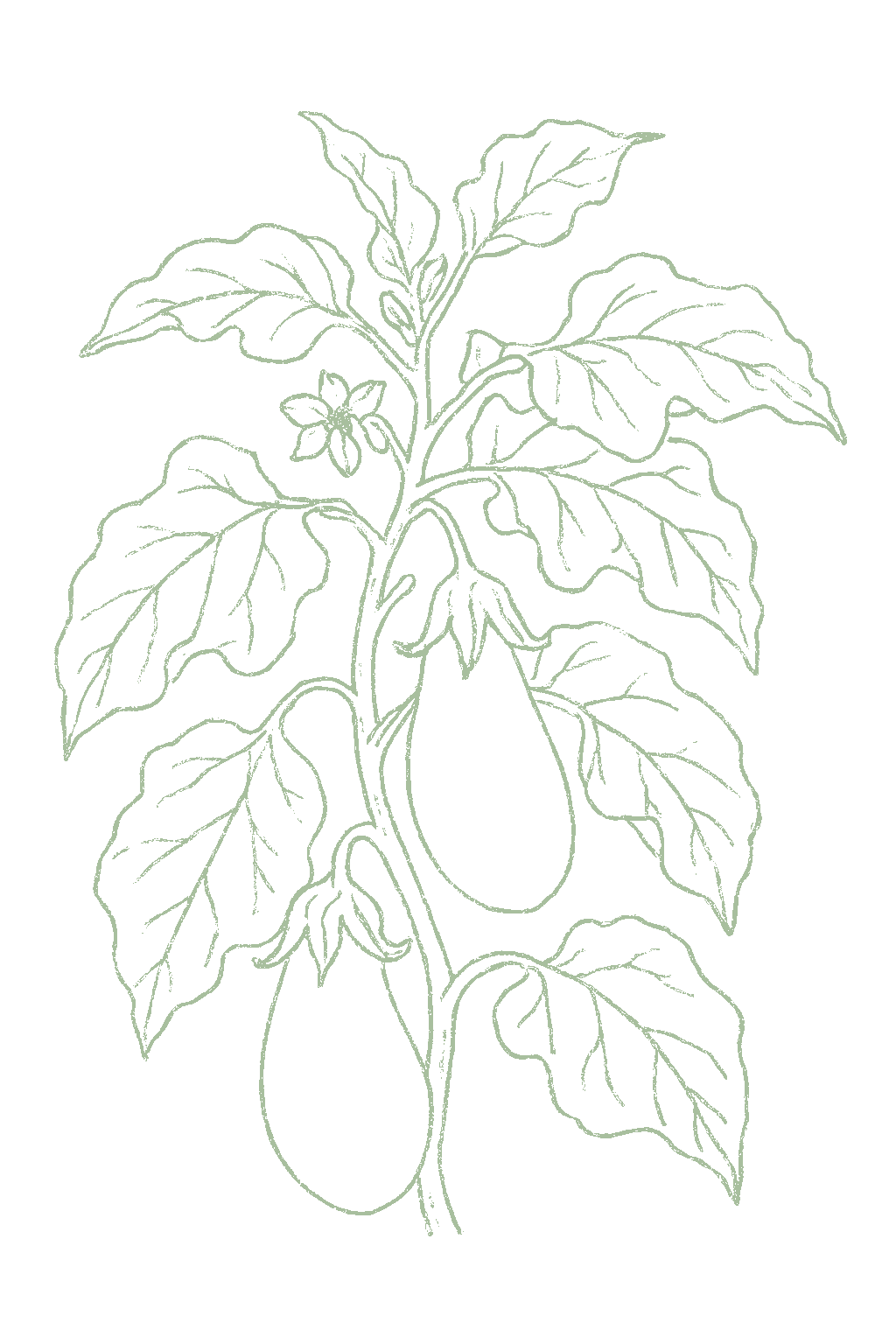
Eggplant is a warm-season vegetable in the same family as tomatoes and peppers, grown for its shiny, smooth fruit. The big thing to know is that eggplant loves heat: it keeps producing through hot summer weather that makes tomatoes struggle, but it really dislikes the cold and will sulk for weeks if planted out too early. It is also slower than a tomato and needs a long, warm season, so you grow it from transplants set into warm soil a week or two after you would plant tomatoes, and you usually stake the plant once it is carrying fruit. You pick eggplant while it is young and glossy, not at its biggest, because once the skin goes dull the inside turns seedy and bitter. There are many kinds: big purple globes like Black Beauty, slim Asian types like Ichiban, beautiful Italian heirlooms like Rosa Bianca, white ones like Casper, and small container types like Patio Baby and Fairy Tale. The main things to get right are warmth (never rush it into cold soil), protecting young plants from flea beetles, watering steadily, and rotating it away from where tomatoes, peppers, or potatoes grew. Eggplant is a warm-season fruiting vegetable (Solanum melongena) in the nightshade family, a close relative of tomato and pepper grown for its glossy, immature fruit. Where it differs from tomato is instructive: eggplant is markedly more heat-loving, thriving and setting fruit through summer heat that makes tomato sulk and drop blossoms, while it is the more cold-sensitive of the two, stalling badly if set out before the soil and nights are reliably warm. It is also slower, wanting a long, warm season (roughly 100 to 120 days from seed, about 65 to 85 from transplant), so it is grown from transplants set into warm soil a week or two after tomatoes. Plants are bushy and often need staking once loaded with fruit. The crop is harvested young and glossy and picked continuously; a dull skin signals an over-mature, seedy, bitter fruit. Types span the large purple-black globes (Black Beauty), slender Asian fruit (Ichiban), Italian heirlooms (Rosa Bianca), white-skinned (Casper), and compact container varieties (Patio Baby, Fairy Tale). The season's shape is set by three things: a long warm runway with no cold checks, the signature early pest pressure of flea beetles on seedlings (plus the Colorado potato beetle later), and the soilborne wilts (verticillium, bacterial wilt) and fruit rots (phomopsis) that rotation and warm, well-drained soil hold off.
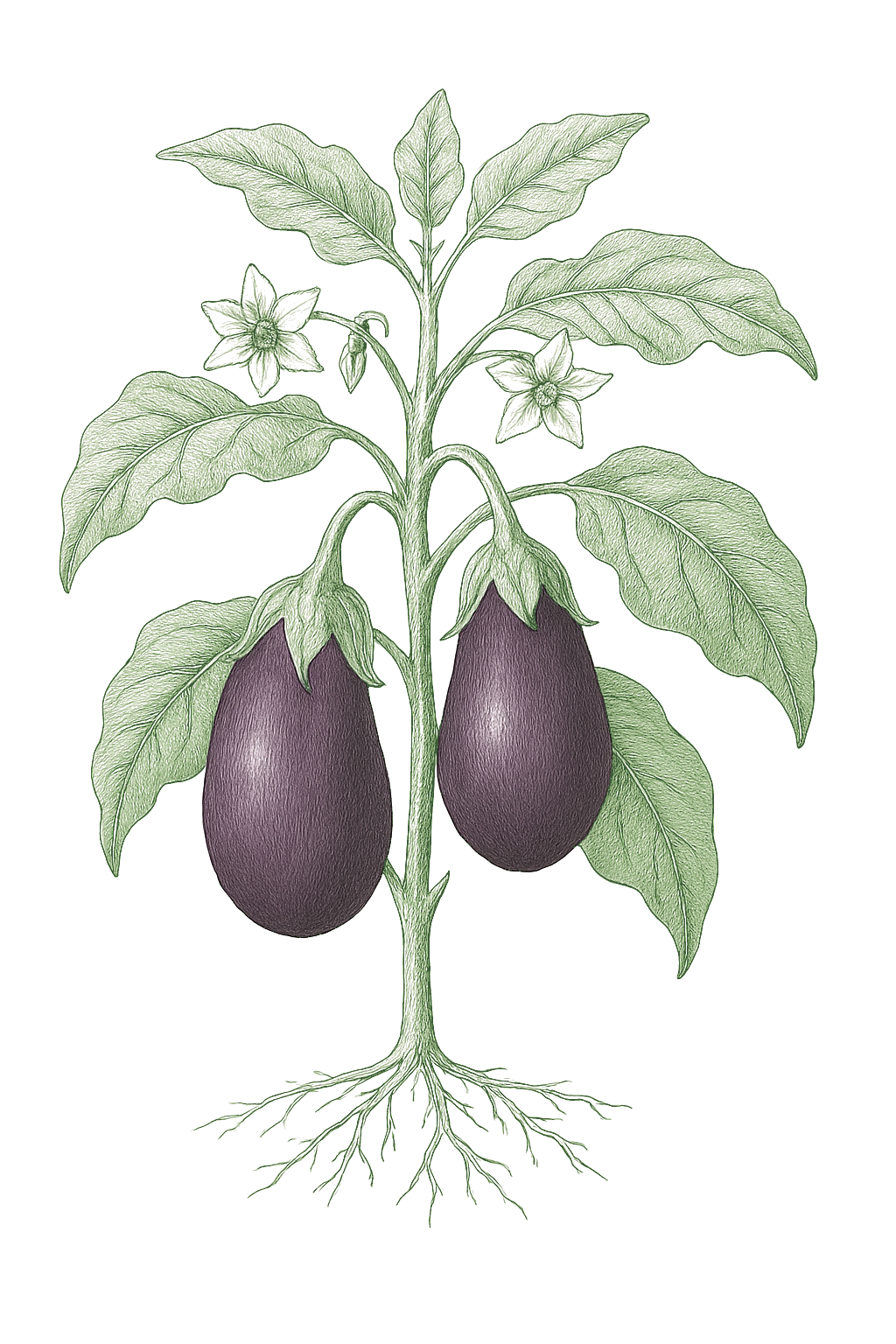
Off-season for eggplant / aubergine in zone 6.
In Zone 6, eggplant / aubergine can be planted May. Start indoors Feb 15 - Mar 1. Harvest runs July through October.
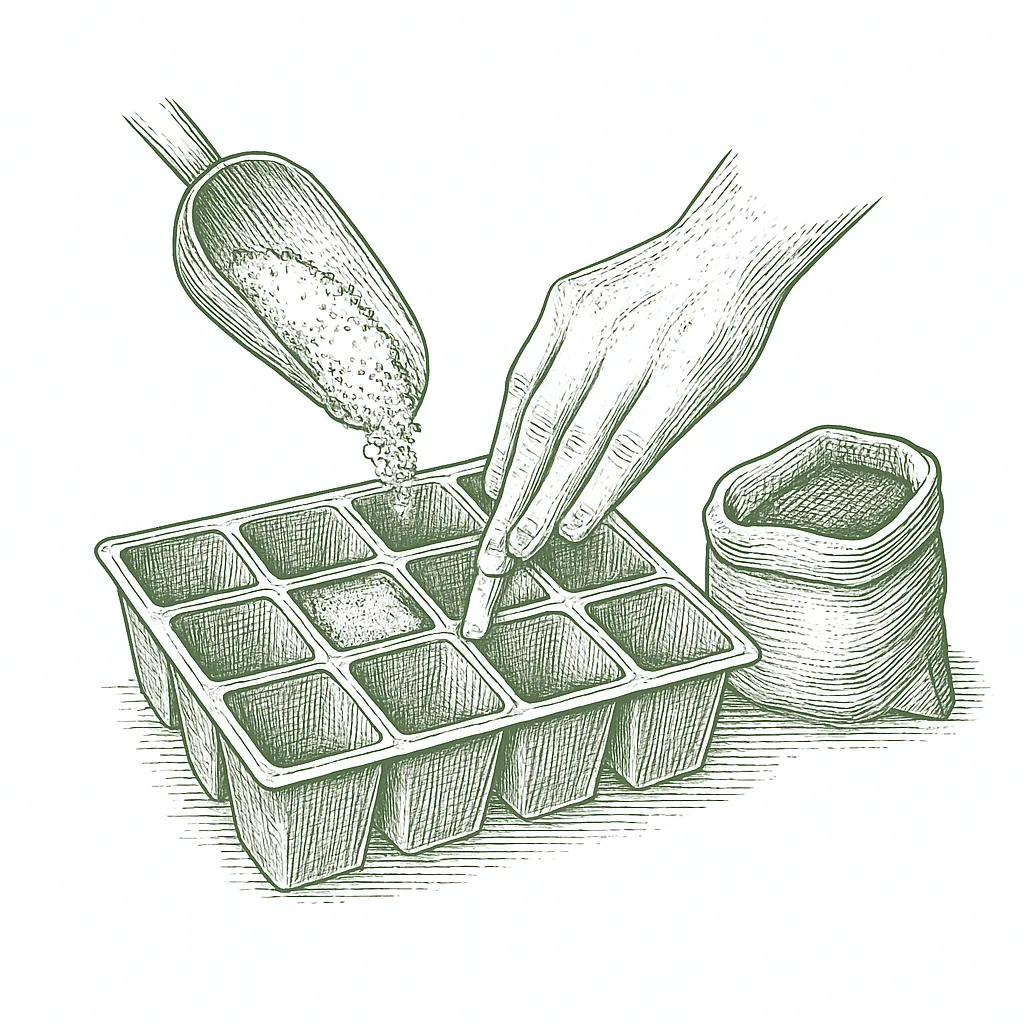
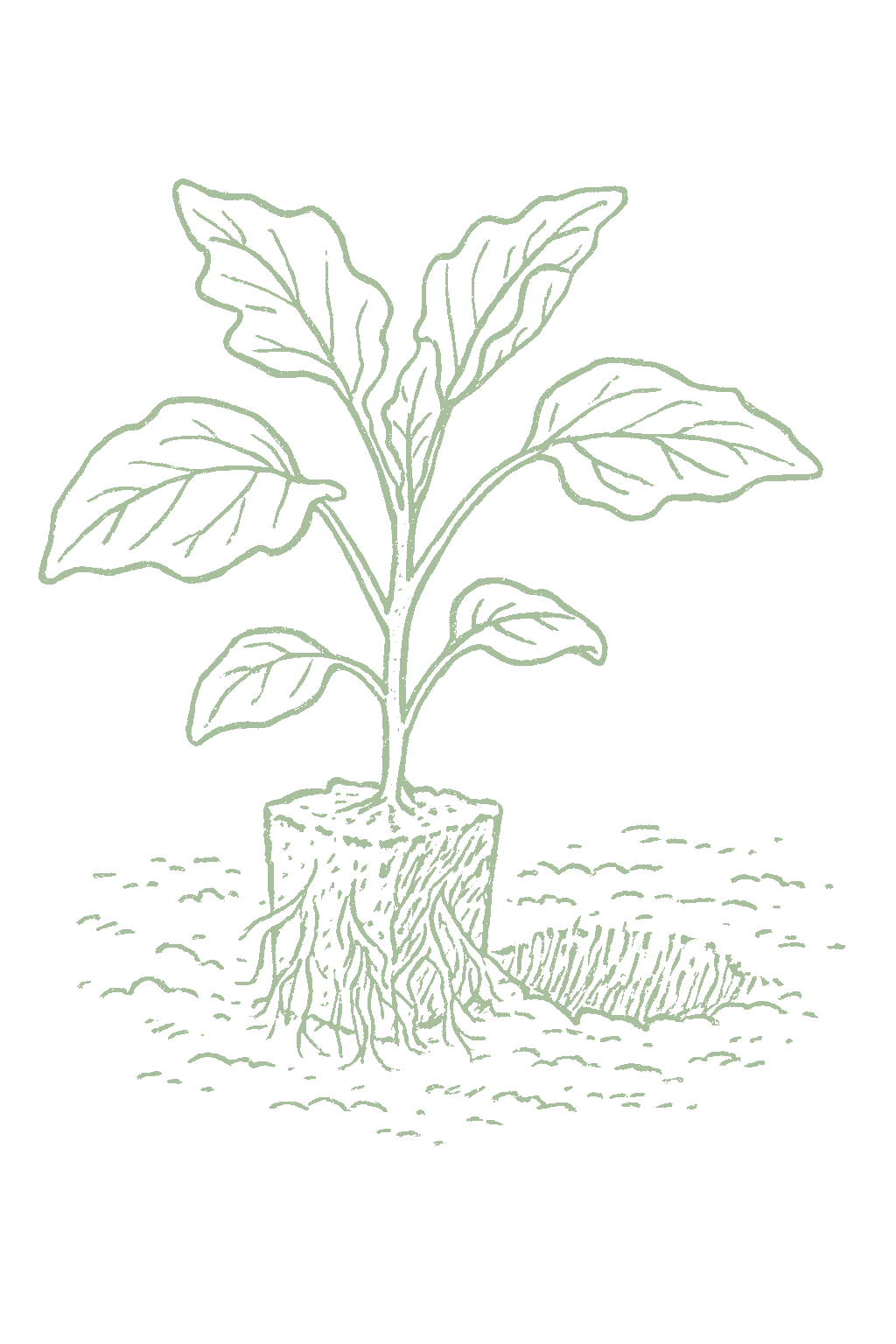
Start eggplant seeds indoors about 8 weeks before you plan to plant out, keeping them warm (75 to 85°F) to sprout well. Eggplant needs more warmth and a longer head start than tomatoes, and it goes outside later, only once nights stay above 50°F and the soil is warm. Use stocky transplants up to a foot tall, and put a stake or cage in at planting time.Start eggplant seeds indoors about 8 weeks before transplanting (UMD uses 8 to 10 week old transplants), with bottom heat of 75 to 85°F for fast, even germination. Eggplant needs a longer, warmer start than tomato and is set out later, once nights hold above 50°F and the soil has warmed to at least 60 to 65°F. Choose sturdy transplants up to a foot tall with stems about pencil thick, and set plant supports at planting. Direct sowing is practical only in the longest, warmest regions; everywhere else this is a transplant crop.





Not sure what soil you have? Grab a small handful of damp soil from your garden bed and squeeze it. If it crumbles apart easily, it's sandy. If it holds together but breaks when you poke it, it's loam (what most vegetables want). If it stays in a hard, slippery ball, it's clay.
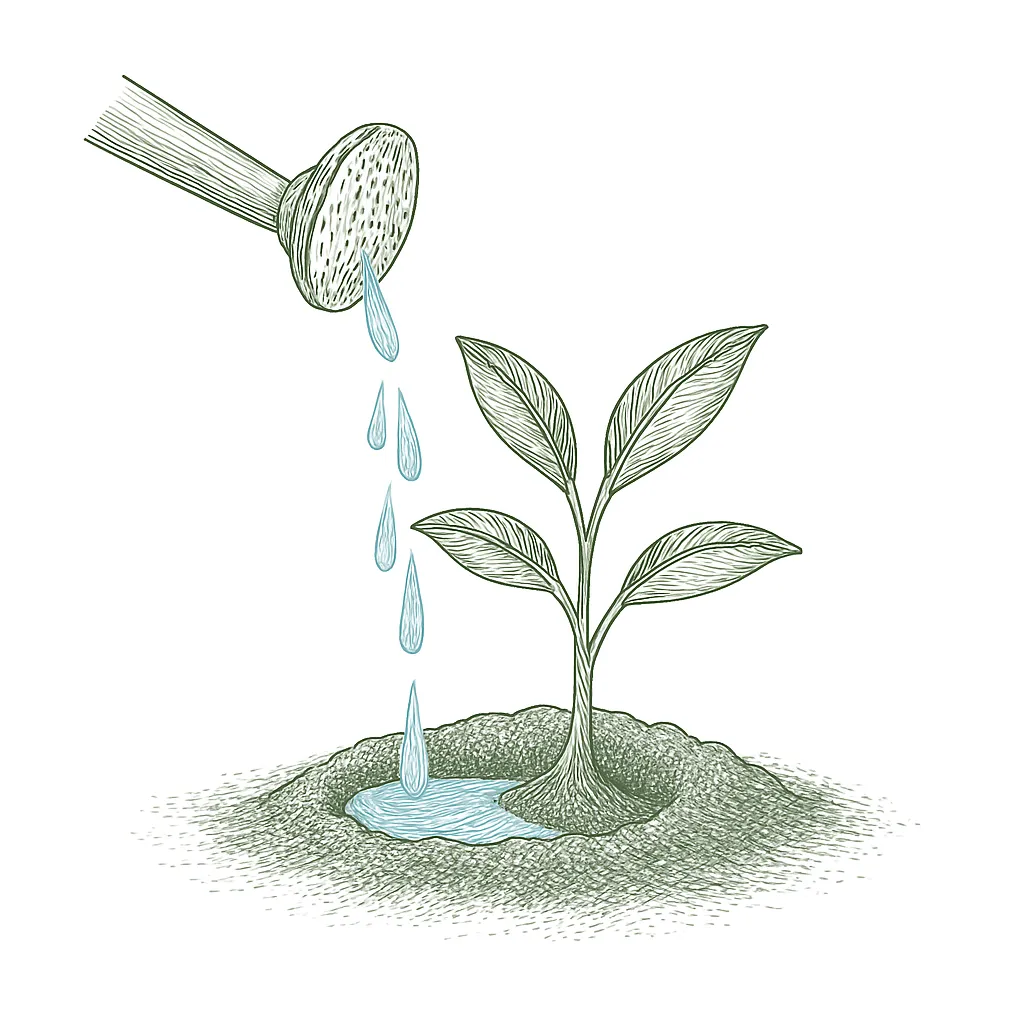
Eggplant likes rich, well-drained soil that warms up well in the sun, since it is a heat-loving plant that hates cold, soggy ground. Mix in 2 to 3 inches of compost before planting. If your soil is heavy clay or slow to warm, a sheet of black plastic or fabric mulch laid down before planting warms the soil and gives eggplant the head start it wants. Aim for soil that stays evenly moist but never waterlogged.
Mix 2-3 inches of compost into the top 6 inches of your bed before planting. Compost holds moisture (which sandy soil drains too fast) and adds the nutrients sandy soil tends to lack. Repeat each season. Compost breaks down over time.
Mix 2-3 inches of compost AND a few inches of coarse sand or perlite into the top 6 inches of your bed. The compost feeds the plants; the sand breaks up the clay so air and water can move through. Don't add sand without compost. It can compact like concrete.
If amending your soil sounds like too much work, or if your soil is heavy clay, full of rocks, or contaminated, build over it. A raised bed at least 12 inches deep filled with a 50/50 mix of compost and sandy loam gives you ideal growing soil with no battles. A 5-gallon container with quality potting mix does the same for one plant at a time. Both bypass your native soil entirely.
The numbers that matter, at a glance.
Eggplant likes slightly acidic soil, about pH 5.5 to 6.8, and a lot of garden soil is already close. The pH scale runs from acidic to alkaline, and this range is where eggplant takes up nutrients best. If your soil runs alkaline (common in the dry interior West), you may need to add sulfur before planting. An inexpensive soil test from your local extension office tells you where you stand.Eggplant grows best at a soil pH of about 5.5 to 6.8, with a sweet spot near 6.0 to 6.5 where the nutrients it needs stay most available. It tolerates a somewhat wider band, up to roughly 7.5, but uptake of iron, manganese, and other micronutrients tightens as the soil turns alkaline, showing up as yellowing between the veins of younger leaves. Alkaline soils common across the interior West often need sulfur worked in before planting; most Eastern and Midwestern soils sit naturally near the target. A simple soil test from your local extension office settles it before you plant.
Eggplant grows for a long time and likes steady feeding, but the timing matters. Mix a balanced fertilizer such as 10-10-10 into the soil before you plant. Then wait: once the first little eggplants have set, feed with a nitrogen fertilizer, and again a few weeks later. Going heavy on fertilizer too early gives you a big leafy plant with few flowers, so save the feeding for after the fruit starts forming.Eggplant is a moderately heavy feeder over a long season. Work a complete fertilizer such as 1 to 2 pounds of 10-10-10 per 100 square feet into the bed before transplanting, then side-dress with nitrogen once the first fruits have set and again three to four weeks later through the harvest. Hold the nitrogen back before fruit set, since too much early on drives leafy growth and few flowers; the time to push it is after the plant starts carrying fruit. Pair feeding with steady moisture, because fertilizer only helps a plant that is not also drought-stressed.
Use a balanced fertilizer like 10-10-10 at planting, then switch to a nitrogen feed once the fruit sets. Do not overdo the nitrogen early or you get all leaves and no eggplants.A complete fertilizer such as 10-10-10 worked in at planting, then a nitrogen side-dress (for example calcium nitrate, 15.5-0-0) once fruit sets. Avoid heavy nitrogen before fruit set, which gives leaf at the expense of flowers.
The most useful eggplant companions help with its two biggest pests, flea beetles and Colorado potato beetles. Aromatic herbs and a ring of nasturtiums or marigolds can draw or shoo those pests away, and bush beans add a little nitrogen. The one rule that really matters is to keep eggplant away from tomatoes, peppers, and potatoes, which are all close relatives and share the same pests and soil diseases. Most eggplant companion pairings are traditional rather than trial-tested, and the ones worth acting on target its two signature problems: flea beetles and the Colorado potato beetle. Aromatic herbs and a border of nasturtium or marigold are the classic deflectors, drawing or repelling flea beetles and aphids off the crop, while bush beans both fix a little nitrogen and serve as a noted trap for the potato beetle. The single firmest rule is a rotation one: keep eggplant away from its Solanaceae relatives, tomatoes, peppers, and potatoes, which share its full pest and disease complex, including verticillium wilt and the flea beetle.
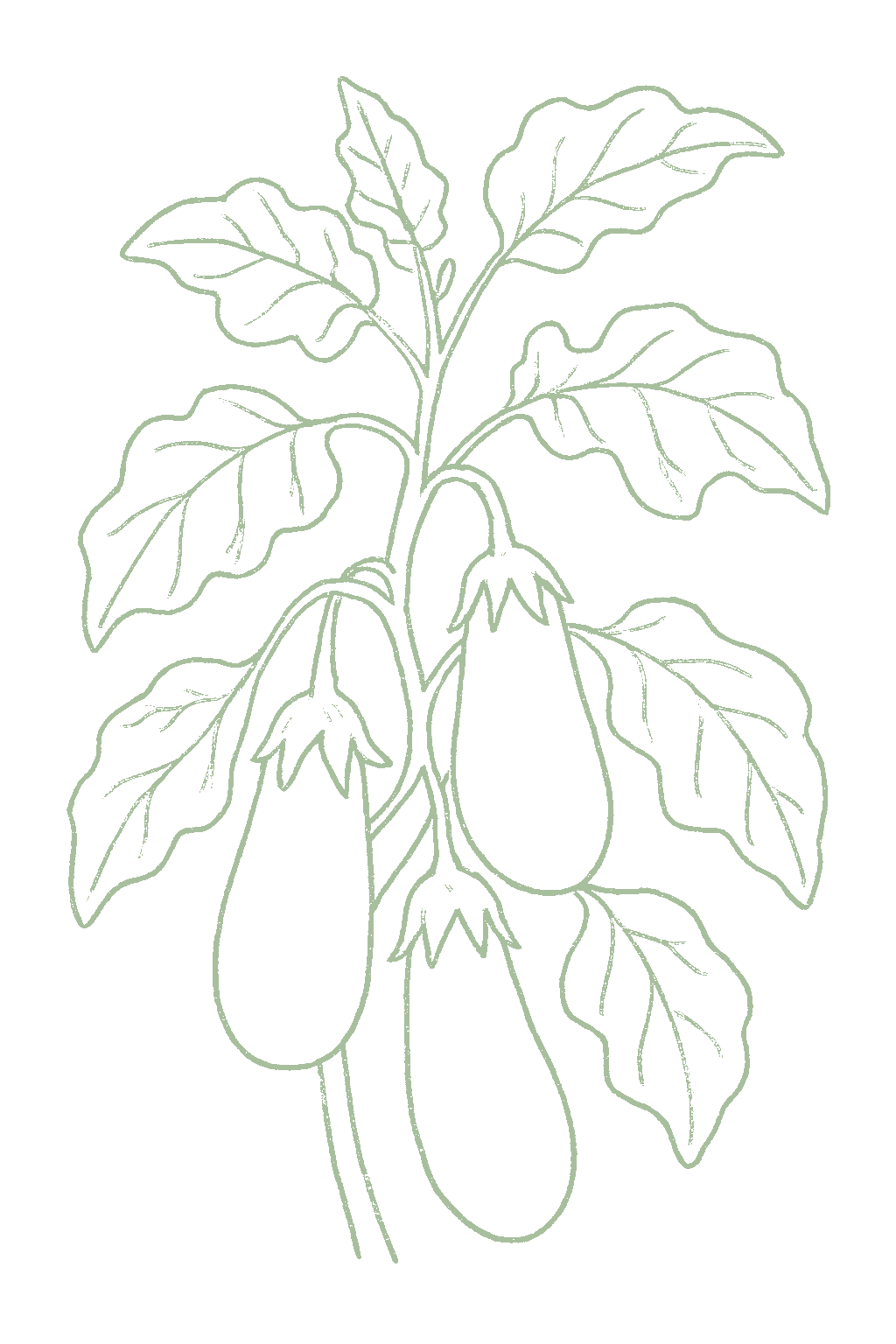
Pick eggplant while it is young and shiny, not when it is biggest. A ready eggplant has firm flesh and a bright, glossy skin, and when you press the side with your thumb the dent springs back. If the skin looks dull instead of shiny, you waited too long: the inside will be seedy, spongy, and bitter. Harvest large oval types when they are firm and glossy and slimmer Asian types at finger or hot-dog size. Cut the fruit off with scissors or a knife, leaving a little stem on, instead of pulling, because the stems are tough and sometimes prickly. Keep picking every few days, since taking the fruit young keeps the plant making more.Harvest eggplant YOUNG and GLOSSY, while the fruit is immature, not at full size. The single best cue is the skin: a ripe eggplant is firm and has a high, mirror-like gloss, and press the side gently with a thumbnail and the dent springs back. Once the skin turns dull or bronzed, the flesh has gone seedy, spongy, and bitter and the dent stays, the sign you waited too long. Pick large oval types from about 2 inches across up to two-thirds of their mature size, and slender Asian types at finger-to-hot-dog size. Cut the fruit with shears or a knife leaving a short piece of the stem and the green calyx attached, rather than pulling, since the stems are tough and often spiny. Harvest regularly, at least once or twice a week, because picking fruit while immature keeps the plant setting more; fruit left to over-ripen shuts down further production.
A healthy eggplant usually gives you several fruit over the season, around 4 to 8 for the big globe types and many more for slim Asian and baby types. Keeping it warm, evenly watered, and regularly picked makes the difference.A healthy full-size eggplant typically yields about 4 to 8 fruit over the season for large globe types, and many more for the slender Asian and small-fruited types, which set heavily and continuously. Steady warmth, even moisture, and regular picking are what carry a plant to the upper end; a single cold check or a flea-beetle-ravaged seedling pulls it down.
Once it gets going, eggplant keeps producing through the warm months, picking up in the heat of summer and slowing as fall cools down. Keep picking the fruit while it is young and shiny, since leaving big fruit on the plant makes it stop setting new ones.Eggplant bears continuously through the warm months once it starts, with production accelerating in midsummer heat (its strength relative to tomato) and slowing as nights cool in fall. Picking fruit while it is still immature and glossy keeps the plant flowering and setting; leaving fruit to over-ripen on the plant shuts down further set. The two things that trip up first-year eggplant growers are planting too early into cold soil and letting flea beetles destroy the young plants. Wait until it is truly warm, cover the seedlings, and then just keep the plant watered, sunny, and picked.First-season growers most often lose eggplant to two things: setting plants out too early into cold soil, which stalls them for weeks, and flea beetles shredding unprotected seedlings. Wait for real warmth, protect young plants with row cover, and the rest is steady water, sun, and regular picking.
Pick an eggplant variety to match your space and season. For the classic big purple eggplant, grow Black Beauty, but give it a long, warm summer. Slim Asian types like Ichiban are easier, earlier, and very productive. Italian heirlooms like Rosa Bianca are beautiful and mild but slower. White types like Casper are eye-catching. If you have a short or cool season, or you are growing in a pot, choose a fast dwarf variety like Fairy Tale or Patio Baby.Choose by type, season, and space. The large globe types (Black Beauty and the many hybrids) give the familiar meaty slicing fruit but need a long, warm season; slender Asian types (Ichiban and kin) are earlier, more productive, tender, and less seedy; Italian heirlooms such as Rosa Bianca offer creamy, mild flesh prized for cooking but are slower. White types (Casper) are mild and striking but want sunscald protection. For containers, short seasons, or cool summers, the early dwarf hybrids Fairy Tale and Patio Baby ripen a crop fast on a compact plant, the safest choice where the warm season is short.
Move eggplant to a different part of the garden each year, and do not return it, or its relatives tomato, pepper, and potato, to the same spot for about four years. Soil diseases like verticillium wilt and the pests that bother eggplant build up where nightshades grow, and rotation is the main tool to keep them in check. Clean up old plants at the end of the season too.Rotate eggplant on a long cycle, returning it to a given bed no sooner than the fourth year, to break the buildup of verticillium and bacterial wilt, phomopsis (which is also seedborne), and the flea and Colorado potato beetles. The wider Solanaceae, tomato, pepper, and potato, share that complex, so rotate as a group and avoid following any of them. Clear and remove spent plants at season's end rather than tilling them in, which removes overwintering pest and disease sites.
The plant app sends a timely reminder at every critical moment of your eggplant / aubergine season. The wording adjusts to whichever you pick: beginner or seasoned. Here are three you'll see in Zone 6.
plant sends the right notification at exactly the right moment, for your zone, your weather, your crops. Founding members lock the rate forever.
We're building this guide with real growers. Got a question we missed? Ask here. We read every one and add the best answers right to this page.
Learned something the hard way? Pass it on. Real growers' tips make this guide better for the next person, and we credit you by name when yours goes live.
If you've grown this crop and you see a date, a temperature, a companion claim, or a recommendation that doesn't match your experience, tell us. Real growers' corrections make this guide better for the next person.
Every date, temperature, spacing, and recommendation on this page is sourced from university cooperative extension publications, peer-reviewed agricultural research, NOAA climate data, and direct extension calendars. Where claims are softer (traditional gardening wisdom not formally documented), we say so.
Spot a data point that doesn't match your experience? Submit a correction; accepted corrections earn full author credit on the page.
Zone-aware seasonal nudges, what's worth planting now, and the occasional recipe from the harvest. No spam, ever.