Pick your zone and the dates re-calibrate.
The Guide Fruit trees Vol. 004

Fig

in Zone 8, this week

A fig (Ficus carica) is a fruit tree that drops its leaves each winter and gives you soft, very sweet fruit that has to ripen on the plant and does not keep, which is why a homegrown fig is so much better than a store one. Where winters are mild, figs are one of the easiest fruit trees to grow: one plant makes fruit all by itself with no pollination needed, it needs very little winter cold, and it loves heat, so warm areas suit it perfectly. The one real limit is cold: the stems are hardy only to about 15°F to 20°F. So figs grow in the ground in zones 7 to 10, need heavy winter protection in zone 6, and are best grown in a pot you bring into shelter for winter where it is colder. Many figs give two crops: a few early figs in summer on last year's stems, and a bigger crop in late summer and fall on the new growth. Fig (Ficus carica) is a deciduous, Mediterranean fruit tree grown on its own roots from cuttings, prized for soft, honey-sweet fruit that must ripen on the plant and does not survive shipping, so a backyard fig gives you something no store can match. It is one of the easiest fruit trees to grow where winters are mild: it is self-fruitful and parthenocarpic (it sets fruit with no pollination at all), needs very little winter chill (about 100 hours), and thrives on heat, which makes warm regions its home, the opposite of a high-chill tree like cherry. The one real limit is cold. Fully dormant wood is hardy only to about 15°F to 20°F, so fig is grown in the ground in zones 7 to 10, given heavy winter protection in zone 6, and kept in a container that overwinters indoors where winters are colder. Many figs carry two crops: a light early-summer breba crop on last year's wood and a larger late-summer to fall main crop on the new growth.

Fig mature plant
Fig. 01 · Fig, mature Zone 8
Container
20 gal
min 15 gal pot
Sunlight
Full sun
8-12 hrs daily
Water
Moderate
1.5 inches / week
Spacing
10-20 ft
between trees
Soil pH
6-6.5
slightly acidic
Hardiness & fruiting range

Will it actually fruit here?

Hardiness tells you the tree will survive your winters. It does not tell you whether you will get fruit. Each zone carries its own verdict. Yours is marked.

3
survives,
rarely fruits
4
survives,
rarely fruits
5
survives,
rarely fruits
6
survives,
rarely fruits
7
reliable
Your zone
8
reliable
9
reliable
10
reliable
11
reliable
Fruits reliably
Fruits reliably Survives only Too warm
← colder winterswarmer, less chill →
Zone 8: Great for figs. Winters are mild enough to grow them as a tree, and the long season ripens an early and a main crop. Pick a tight-eye, rust-tolerant variety like Celeste or LSU Purple and a well-drained spot free of nematodes.Reliable fig country. Winters are mild enough to grow figs in tree form, and the long season ripens both a breba and a full main crop. Choose small-eye, rust-tolerant varieties (Celeste, LSU Purple) and a well-drained, nematode-free site.
The growing year

Your fig year, month by month

Southeast: Gulf, Zone 8. Winters bank about 650 to 1000 chill hours; these varieties need about 100 to 300 chill hours. Great for figs. Winters are mild enough to grow them as a tree, and the long season ripens an early and a main crop. Pick a tight-eye, rust-tolerant variety like Celeste or LSU Purple and a well-drained spot free of nematodes.Reliable fig country. Winters are mild enough to grow figs in tree form, and the long season ripens both a breba and a full main crop. Choose small-eye, rust-tolerant varieties (Celeste, LSU Purple) and a well-drained, nematode-free site.

A fruit tree runs on the same rhythm every year: rest, prune, bloom, grow, harvest, then settle in again.

Jan
Feb
Mar
Apr
May
Jun
Jul
Aug
Sep
Oct
Nov
Dec
▲ We are here
Tree’s year
rest
prune
bloom
growing
harvest
care
rest
Plant new tree
plant
plant
Dormant rest Prune Bloom Growing fruit Harvest Post-harvest care
Plant bare-root
Jan - Feb
Bloom
Mar 1 - Mar 25
Harvest
Jun - Sep
Chill hours

Will your winter be cold enough?

Figs need only a little winter cold, about 100 hours below 45°F, which almost any area that can grow them gets easily. So chill is hardly ever the problem for a fig, and figs do great in mild, warm-winter places that are too warm for high-chill trees like cherry. What actually limits a fig is the other extreme: not too little cold, but too much. Hard freezes below about 15°F to 20°F kill the top of the plant, so the number to match to your area is cold-hardiness, not chill.Figs need very little winter cold, only about 100 hours below 45°F, which nearly every region that can grow them meets easily. That is why chill is almost never the limiting factor for a fig, and why figs do so well in mild, warm-winter areas that are too warm for high-chill trees like cherry. What actually limits a fig is the opposite end of the thermometer: not too little cold, but too much. Hard winter freezes below about 15°F to 20°F kill the top growth, so cold hardiness, not chill, is the number to match to your area.

Your winter ~650 – 1000 hrs
0 250 500 750 1000
Dependable here
Celeste100Brown Turkey100Chicago Hardy100Black Mission100Kadota100LSU Purple100
!Borderline in a warm winter
None. Every variety in this roster gets enough chill here.
Bloom timing & cross-pollination

One tree is usually enough

Most figs are self-fruitful: a single tree sets a full crop with its own pollen, so you don’t need a second variety to get fruit. Bees still move the pollen from blossom to blossom, so strong pollinator activity through bloom is what drives a heavy set.

Bar length shows how long each variety blooms, roughly 8 to 14 days. Bars that overlap bloom at the same time.

▲ Tap a variety to see its bloom timing

Very early Early Mid Late Very late
The pollination rule

Common figs make and ripen fruit with no pollination at all, so one plant is all you need, with no second tree, no bees, and no special wasp. The flowers are inside the fruit, which is why a fig never shows a bloom. A few unusual types (Smyrna and San Pedro) do need a special fig wasp, and that wasp is not around in most of the country, so they just drop their fruit and are not worth planting. Choose a common type like Celeste, Brown Turkey, or Chicago Hardy and you never have to think about pollination.Common home figs are parthenocarpic: they set and ripen fruit with no pollination whatsoever, so a single plant fruits alone with no partner, no bees, and no fig wasp. The flowers are hidden inside the fruit, which is why a fig never shows a visible bloom. The Smyrna and San Pedro types sold in some catalogs are the exception, needing a specific fig wasp (Blastophaga psenes) that is absent across most of the country, so they drop their fruit and are not recommended for home gardens. Stick to the common types (Celeste, Brown Turkey, Chicago Hardy, Black Mission, Kadota) and pollination is simply a non-issue.

Pick your variety

Recommended varieties

All common figs need about the same small amount of winter cold, so you do not pick a fig by chill hours the way you would a peach. Instead, choose by how cold-hardy it is and how well it handles your weather. In cold areas, pick a hardy type like Chicago Hardy or Celeste. In humid areas, pick a small, tight-eye type like Celeste or a rust-tolerant one like LSU Purple to avoid souring and rust. Where it is mild and dry, almost any fig does well, so pick by taste. All of these are common figs that fruit on their own with no pollination.Because all common figs need only about 100 chill hours, choose a variety not by chill (as you would a peach) but by cold-hardiness, disease tolerance, and eye type for your climate. In cold-winter areas favor the hardiest types (Chicago Hardy, Celeste, Marseilles). In humid areas favor a small, closed-eye variety (Celeste) or a rust-tolerant one (LSU Purple) to limit souring and rust. In mild, dry regions almost anything thrives, so pick by flavor and use. All the recommended types are common (parthenocarpic) figs that fruit alone with no pollination.

Celeste
fresh eating, drying
Brown Turkey
fresh eating
Chicago Hardy
fresh eating
Black Mission
fresh eating, drying
Kadota
fresh eating, canning, drying
LSU Purple
fresh eating
Rootstock & size

How big will it get?

Figs are grown on their own roots from cuttings, not grafted, so there is no rootstock to choose and no graft union to keep above the soil.

Recommended
Own-root (from cuttings) standard
Mature height
10–25 ft
Bears
year 1–2
Container
pot OK, 20+ gal
Ask the nursery

Ask for a named common (parthenocarpic) variety on its own roots, as a rooted cutting or container plant; figs are not sold grafted.

From seed to fruit

The growing journey

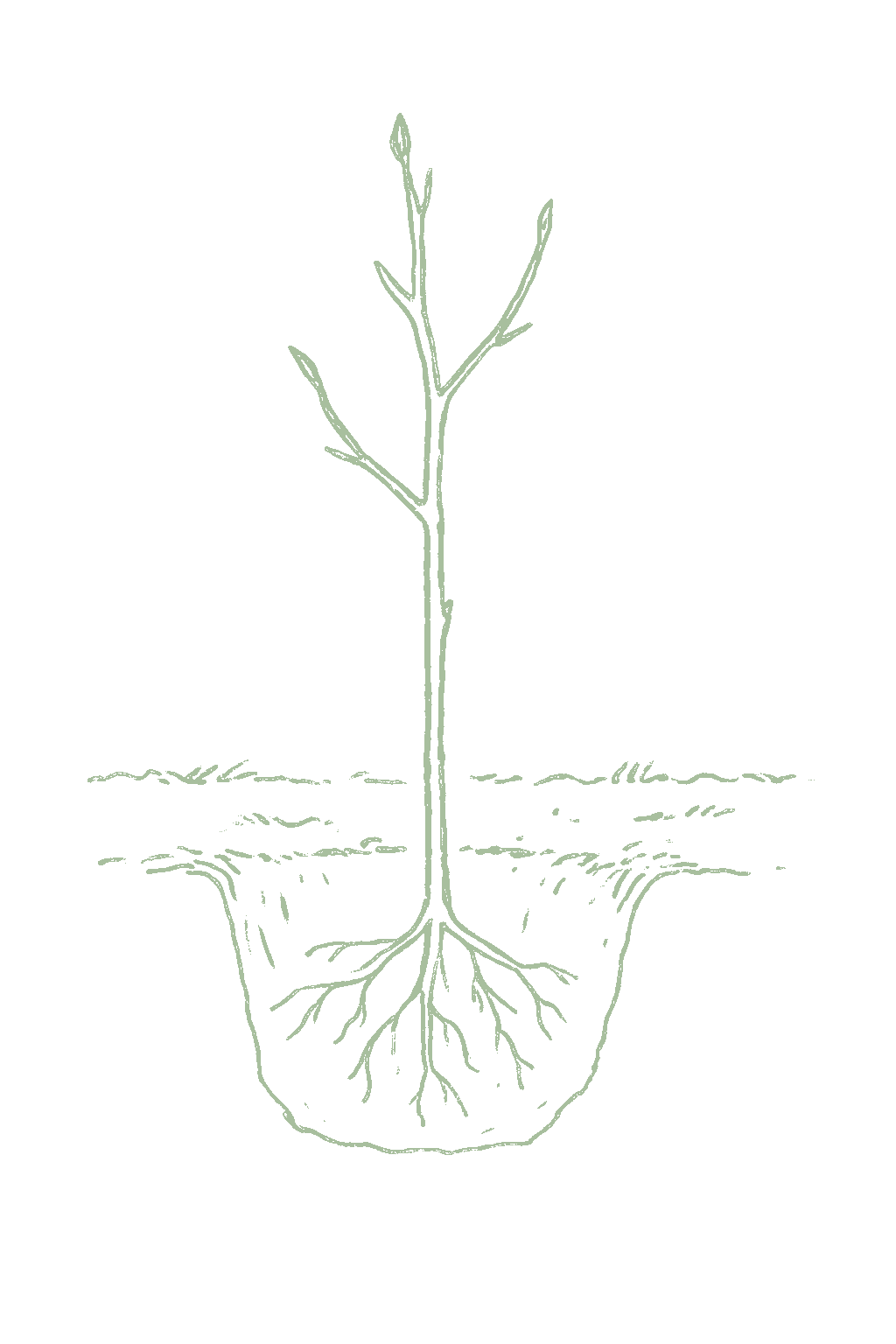
Stage 01 · Planting (dormant, own-root)
01
Planting (dormant, own-root)
A leafless dormant plant with firm stems and good roots. Figs are not grafted, so there is no graft joint to worry about.A dormant, leafless own-rooted plant (bare-root, or a container plant) with firm stems and healthy roots. Figs are not grafted, so there is no graft union to position.
Plant in full sun in well-drained soil. You can set it a little deeper than it grew to help it form a bushy plant. Fill the hole with the same soil, water it well, and mulch, keeping mulch off the stems. In cold areas, plant it against a warm south wall.Plant in full sun in well-drained soil, spreading the roots in a wide hole. You can set the plant an inch or two deeper than it grew to encourage a sturdy multi-stem bush. Backfill with native soil, water in well, and mulch, keeping mulch off the stems. In cold regions, plant against a warm south-facing wall.
FROM PLANT · Figs grow on their own roots, so there is no graft joint to worry about. You can plant a fig a little deeper than it grew to help it form a bushy, well-anchored plant.Figs are grown on their own roots, so there is no graft union to keep above grade; you can even plant an inch or two deeper to encourage a sturdy, multi-stem bush.
FROM PLANT · Plant where it gets full sun and the soil drains well. In cold areas, plant it against a warm south-facing wall, which holds heat and helps protect it in winter.Plant in full sun on well-drained ground, and at the cold edge of the range against a warm, south-facing wall, which banks heat and buys the plant several degrees of winter protection.
02
Year-one establishment
Healthy new shoots and a plant settling in. A few figs may come the first or second year, which is fine.Steady new shoot growth and a strengthening root system. A few figs may form the first or second year; that is fine.
Water deeply and often this first season, keep a mulched, weed-free ring around it, and protect it well its first winter, since a young fig is more cold-tender than an older one.Water deeply and regularly through the first season so roots establish, keep a mulched, weed-free ring around the plant, and protect it well its first winter, since a young fig is the most cold-tender it will ever be.
FROM PLANT · A young fig is more easily hurt by cold than an older one, so protect it well its first winter, even where a bigger plant would be fine.A young fig is the most cold-tender it will ever be; protect it well its first winter even in a zone where an established plant would shrug off the cold.
03
Formative pruning (years one to three)
Figs are usually grown as an open bush with several stems (best where winters are cold, since it grows back fast after dieback) or as a small single-trunk tree where it is mild. Pick the shape you want.Figs are usually trained as an open multi-stem bush (best in cold climates, since it regrows fast after dieback) or as a single-trunk small tree in mild climates. Watch for the framework you want to keep.
For a bush, keep several evenly spaced low stems and cut out weak or crowded ones; for a tree, keep one trunk. Figs fruit on both old and new wood, so prune lightly to shape it, not hard, or you lose the early crop.For a bush, keep several well-spaced low stems and remove weak, crowded, or crossing growth; for a tree, select one trunk. Figs bear on both old and new wood, so prune lightly to shape rather than heading hard, which would cost the breba crop.
FROM PLANT · Where winters are cold, grow the fig as a bush with several low stems, not one trunk. If a hard winter kills the top, a bush grows back fast from the low stems and fruits again much sooner.In cold climates train the plant as an open multi-stem bush rather than a single trunk: if a hard winter kills the top, a bush regrows from several low stems and ripens a main crop far faster than a single-trunk tree.
04
Winter dormancy
A bare, resting plant. Figs need very little winter cold (about 100 hours), so that is never the problem; the real worry in winter is cold damage.A leafless plant at rest. Figs need only about 100 chill hours, so chill is easily met almost anywhere; the real winter issue is cold injury, not chill.
In zone 6 and colder, protect the plant now: wrap the stems, or cut it back and cover it with mulch and leaves, or move a potted fig into an unheated garage or shed. In zone 7 and warmer, just clean up.In zones 6 and colder, protect the plant now: wrap the stems, or cut back and bury under mulch and leaves, or move a container to an unheated garage or shed. In zones 7 and warmer, little is needed beyond winter cleanup.
FROM PLANT · Figs need very little winter cold (about 100 hours), so that is never a problem. The winter job is protecting the plant from hard freezes, since the stems are hardy only to about 15°F to 20°F.Figs need only about 100 chill hours, met almost anywhere, so chill is never the limiter; the winter job is cold protection, since dormant wood is hardy only to about 15°F to 20°F.
FROM PLANT · In zone 6, the ways to get a fig through winter are to wrap the stems, cut it back and cover it with mulch and leaves, or grow it in a pot you move into an unheated garage.In zone 6, the reliable cold-climate options are to wrap the stems, or cut back and bury the plant under mulch and leaves, or grow it in a container moved to an unheated garage.
05
Dormant pruning
Bare stems, so you can see the shape and any wood the winter killed.Bare stems that show the plant's structure. Any wood killed by winter is now visible and easy to remove.
Prune lightly after the worst cold: take out dead, frost-killed, weak, and crowded stems, and keep it open. Do not cut it back hard, because figs fruit on last year's wood too, so heavy pruning costs you the early crop.Prune lightly after the hardest cold has passed: remove dead, frost-killed, weak, and crowded wood, and keep the plant open. Do not head it hard, since figs bear on last year's wood (the breba crop) as well as new wood; heavy pruning trades away the early crop.
FROM PLANT · Prune figs lightly, and wait until the worst cold is over. They fruit on last year's wood too, so cutting hard costs you the early crop.Prune figs lightly and only after the hardest cold has passed: they bear on last year's wood (the breba crop) as well as new wood, so heavy heading trades away the early crop.
06
Leaf-out and breba set
Leaves opening and small early figs (the breba crop) swelling on last year's stems. You will not see any flowers, because a fig's flowers are inside the fruit.Leaves unfolding and, on last year's wood, the small breba figs beginning to swell. A fig shows no visible flowers, since its flowers are hidden inside the fruit.
Not much to do but watch for a late frost that can burn the new growth, and take off any winter wraps once hard frosts are done. The early figs set all on their own, with no pollination needed.Little to do but watch for a late frost that can nip tender new growth, and remove winter wraps once hard frost is past. Because figs are parthenocarpic, the breba fruit sets on its own with no pollination.
FROM PLANT · A fig never shows flowers, because they are hidden inside the fruit. Common figs make their early crop all on their own, with no pollination needed.A fig never shows a visible bloom, since its flowers are inside the fruit; because common figs are parthenocarpic, the breba figs set and ripen with no pollination at all.
07
Main crop development
The main crop forming and swelling where the leaves meet the new stems. Figs do not need thinning. Watch for dryness, which makes them drop fruit.The main crop forming and swelling in the leaf joints of the new growth. Figs need no thinning; the plant carries what it can size. Watch for drought stress, which drops fruit.
Keep the water steady while the figs fill out so they do not drop or split, and go easy on fertilizer. Watch for rust spots on the leaves in humid weather and keep the plant open.Keep water steady through the swell so fruit does not drop, undersize, or split, and keep feeding light. Watch for fig rust in humid weather and keep the canopy open and dry.
FROM PLANT · Figs do not need thinning, but they do need steady water in summer. If they get too dry they drop figs, and if a dry spell ends in a big soak or rain, the figs split and spoil.Figs need no thinning, but they do need steady water through the summer swell: a dry spell drops fruit, and a swing from dry to soaked (or hard rain on ripening figs) splits and sours it.
08
Harvest
Ripe figs get soft, droop down as the neck bends, color up fully, and may show a drop of syrup at the bottom. They ripen a few at a time over weeks and must ripen on the plant, since they do not ripen after you pick them.Ripe figs soften, the neck bends so the fruit droops, color develops fully, and a drop of nectar may show at the eye. Figs ripen a few at a time over many weeks and must ripen on the plant, since they do not ripen after picking.
Pick figs when fully ripe and soft, gently, every day or two, and eat, refrigerate, freeze, or dry them right away since they spoil fast. Clean up any soured or fallen figs, and net the plant against birds.Pick figs fully ripe, gently, every day or two as they soften, and eat, refrigerate, freeze, or dry them promptly since they spoil fast. Remove any soured or dropped fruit, and net against birds.
FROM PLANT · Pick figs only when fully ripe, soft, and drooping, because they do not ripen after you pick them. They spoil in a day or two, so eat, chill, freeze, or dry them right away.Pick figs only when fully ripe, when they soften and droop on a bent neck, since figs do not ripen after picking; they spoil within a day or two, so eat, chill, freeze, or dry them promptly.
FROM PLANT · Cover the plant with bird netting as the figs start to color, and clean up any soured or fallen figs so beetles and rot do not build up.Net the plant against birds as fruit begins to color, and remove soured or dropped fruit as you go so beetles and souring yeasts do not build.
The specs

Care guide

The numbers that matter, at a glance.

Sunlight
full sun · 8-12 hrs/day
Water
moderate
Spacing
120-240 inches
Soil
loam
Soil pH
6 to 6.5
Container OK?
Yes · 15+ gal pot
Soil chemistry

Soil pH for fig

Preferred
6 to 6.5
Tolerated
6 to 7.8

Figs do best in slightly acidic soil, around pH 6.0 to 6.5, but they are easygoing and grow well anywhere from about 6.0 up to 7.8 (pH is just a measure of how acidic or alkaline the soil is). Test your soil before planting and only adjust if it is far off: garden lime raises a too-acidic pH and elemental sulfur lowers one that is too alkaline. Mix any amendment in before you plant.Fig prefers a slightly acidic soil near pH 6.0 to 6.5 but is tolerant across roughly 6.0 to 7.8, handling near-neutral ground without trouble. Test before planting and correct only a real deficiency: lime raises a too-acidic pH, elemental sulfur lowers an alkaline one. Work amendments in ahead of planting, since pH shifts slowly and is easiest to set before the permanent plant goes in.

Verified · 2 sources View
Steady hand on the hose

Watering

When & how much
Frequency
Water deeply now and then instead of a little every day. Aim for about 1 to 1.5 inches of water a week from rain or the hose during the growing season, more when it is hot or the soil is sandy. A new fig needs steady water while it gets its roots going. An older fig can take some dry spells, but the figs come out small and less sweet if it gets too dry.Water deeply and regularly rather than lightly and often: figure roughly 1 to 1.5 inches of water per week from rain or irrigation through the growing season, more in heat and sandy soil, easing off as fruit finishes and through winter dormancy. A newly planted fig needs the most attention while it roots in; an established fig is fairly drought-tolerant but sizes and sweetens fruit poorly when it runs dry.
Amount
Each time you water, give a deep soak that reaches the roots, not just a splash on top. A new fig wants about 10 gallons per soak, two or three times a week its first summer. An older, fruiting fig wants roughly 1 to 1.5 inches of water a week, and more when it is hot.Water deeply each time so moisture reaches the full root zone rather than wetting only the surface. For an establishing fig, UF/IFAS suggests around 10 gallons per soak two to three times a week in the first season; for a bearing plant, aim for the equivalent of about 1 to 1.5 inches per week through the growing season, more in heat.
Method
Water at the ground around the roots with a drip line or soaker hose, and try to keep the leaves and fruit dry, since wet leaves invite disease. Keep the watering steady while the figs are filling out and ripening, because going from dry to very wet, or a hard rain on ripe figs, makes them split and spoil.Water at the root zone with drip or a soaker hose out toward the drip line, keeping the canopy dry to limit fig rust and fruit souring. Keep moisture especially steady as the fruit sizes and ripens, since a swing from dry to soaked (or heavy rain on ripening figs) causes fruit to split and sour.
Signs of trouble
Too much water
Too much water, or soil that stays soggy, shows up as yellowing leaves, wilting even when the soil is wet, and a plant slowly going downhill, because the roots cannot breathe. Figs handle moisture better than a peach but still cannot sit in waterlogged soil. Figs that split and sour after a lot of water or rain are another sign near harvest.Chronically wet, poorly drained soil shows as yellowing leaves, wilting that persists in wet soil, and general decline as waterlogged roots suffocate. Figs tolerate more moisture than stone fruit but still fail in standing water. Fruit that splits and sours after heavy watering or rain is the other overwatering signal near harvest.
Too little water
Too little water shows as wilting, dull yellow leaves, leaves dropping early, and, most clearly, small figs falling off or ripening tiny and less sweet. A fig that gets too dry in summer drops some of its fruit, so try to catch the dryness before the figs suffer.Underwatering shows as wilting, dull and yellowing leaves, early leaf drop, and, most tellingly, fruit that drops while small or ripens undersized and less sweet. A fig short of water during the summer swell aborts part of its crop, so catch the dry stress before the fruit pays for it.
Feeding rhythm

Feeding

Frequency
2-3x per year, spring to midsummer
Type
balanced granular (e.g. 10-10-10)
When to start
early spring as growth resumes, then lightly through early summer; stop by midsummer

Go easy on the fertilizer. Figs need much less than other fruit trees, and too much does more harm than good: lots of leaves and few figs, split fruit, and soft growth that is easily hurt by winter cold. Scatter a balanced fertilizer around the plant out to where the branches reach, keep it off the stems, and water it in. In colder areas use half as much, and stop feeding by midsummer so the plant can toughen up before winter.Feed lightly. Figs need far less fertilizer than most fruit trees, and over-feeding is a common mistake: excess nitrogen pushes rank leafy growth, delays and reduces fruiting, can cause fruit to split, and produces soft wood that winters poorly. Broadcast a balanced granular evenly around the root zone out toward the drip line, keep it off the stems, and water it in. Halve the rate in colder regions to favor hardiness, and never feed past midsummer, since late nitrogen keeps the plant growing when it should be hardening for winter.

N · P · K = 10-10-10

A balanced fertilizer like 10-10-10 or 8-8-8 (the three numbers are nitrogen, phosphorus, and potassium) is all a fig needs. Do not overdo the first number, nitrogen, because too much gives you leaves instead of figs.A balanced ratio such as 10-10-10 or 8-8-8 suits figs; they are light feeders and need no high-nitrogen program. Too much nitrogen (N) is counterproductive, driving leaves over fruit and reducing cold hardiness.

Try 10-10-10 balanced fertilizer
Who grows well together

Companion planting

Figs make fruit on their own with no pollination, so you do not need any companion plants to help them fruit. What matters for a fig is what happens around its roots: keep grass and weeds pulled back and lay down mulch to hold moisture and keep weeds down, and do not plant a fig in soil full of root-knot nematodes (tiny soil pests), because figs cannot fight them off. A mulched, weed-free, pest-free root area is really all a fig asks for. Fig is parthenocarpic and self-fruitful, so there are no pollination companions to plant: a lone tree fruits with no bees and no fig wasp. The interactions that matter for a fig are at the root zone, not classic vegetable pairings. Keep grass and weeds cleared back and mulch the root area, which competes down weeds and holds moisture, and above all keep the plant out of soil heavily infested with root-knot nematodes, which own-rooted figs cannot resist. A well-mulched, weed-free, nematode-free root zone is the whole companion story.

Other
A mulched, weed-free root zone
The single most useful thing around a young fig is not another plant but a clear, mulched ring. A layer of organic mulch kept off the stems holds soil moisture (which figs reward with better fruit set), moderates soil temperature at the shallow fig roots, and suppresses the grass and weeds that compete hard with an establishing plant. It also insulates the roots through winter at the cold edge of the fig's range. Traditional
Keep apart from
Root-knot-nematode ground (old fig or susceptible-crop soil) Do not plant a fig into sandy soil known to carry heavy root-knot nematode populations, or straight into ground where a nematode-declined fig was just removed. Root-knot nematodes are the leading killer of figs in warm sandy regions, and because figs grow on their own roots there is no resistant rootstock to fall back on the way there is for stone fruit. The fix is site selection, not a companion plant: choose the best-drained, least infested ground, or replace a generous volume of soil. Research-backed
Provenance tagged inline · see methodology for the labeling system Key
Harvest signals

When to pick

A fig is ripe when it turns soft, droops down instead of sticking straight out (the neck bends), colors up fully, and maybe shows a drop of syrup at the bottom. A ripe fig gives easily to a gentle squeeze and comes off with the lightest pull. Color by itself does not mean ripe; a fig can be fully colored but still hard and not ready. Since figs do not ripen after you pick them, wait for them to go soft and droop, and pick every day or two, because a plant ripens just a few at a time over many weeks.A fig is ripe when it softens fully, its neck bends so the fruit droops rather than standing out from the stem, it colors up to its full variety color, and a drop of nectar may appear at the eye. Ripe figs feel soft to a gentle squeeze and detach with the barest tug. Color alone is not ripeness; a fig can be fully colored and still firm and unready. Because figs do not ripen after picking, wait for full softness and droop, and pick every day or two, since a plant ripens a few at a time over many weeks.

Verified · 2 sources View
Yield

What to expect

A grown fig (about year 4 and up) often gives roughly 20 to 50 pounds of fruit a year in a good climate, picked a few at a time over many weeks rather than all at once, and a big old plant can give much more. How much you get swings with winter cold, water, and variety, and a plant that had to regrow after a hard winter gives a lighter, later crop that year.A mature fig (roughly year 4 and up) commonly yields on the order of 20 to 50+ pounds of fruit a year in a good climate, spread over many weeks of picking rather than one flush; a large old plant in a warm region can bear far more. Yield swings widely with winter dieback, water, and variety, and a top-killed plant that regrows carries a lighter, later crop that year.

Figs reach full production fast for a fruit tree, around years 3 to 5, and keep bearing for decades where winters allow, as long as you water them and prune lightly each year. In cold areas, the size of the crop depends on how much the winter kills back each year.Figs reach full bearing quickly for a fruit tree, around years 3 to 5, and stay productive for decades where winters allow, given steady water and light annual pruning. In cold-edge zones, peak yield is capped by how much dieback the plant suffers each winter. Do not expect much fruit the first year, though a few figs may form in year 1 or 2. Your first real crop usually comes by year 2 or 3, with full crops by years 3 to 5. In the early years, focus on getting the plant established and protected in winter, not on fruit.Expect little to no fruit the planting year, though a few figs may form in year 1 or 2. The first meaningful crop typically comes by year 2 or 3, with full bearing by years 3 to 5. Focus the early years on establishment and winter protection, not fruit.

What changes yield
variety and cold-hardinesswinter dieback and protectionsummer water during fruit swellmoderate feeding (excess nitrogen cuts fruit)full sun and heatroot-knot nematode pressurebird and beetle losses at harvest
Verified · 2 sources View
Off the vine

Storing your harvest

Room temp
Figs are very perishable and do not ripen after you pick them, so pick them ripe and eat them quickly. On the counter ripe figs last only about a day or two before they go bad, so eat, cook, or refrigerate them the same day you pick.Figs are highly perishable and do not ripen further once picked, so pick them fully ripe and eat them fast. At room temperature ripe figs hold only about a day, sometimes two, before they begin to spoil, so plan to eat, cook, or refrigerate them the day you pick.
Fridge
Put ripe figs in the fridge unwashed, in a single layer so they do not crush, and eat them within about 2 to 3 days. Let them warm up to room temperature before eating for the best taste.Refrigerate ripe figs unwashed in a single layer and use them within about 2 to 3 days. Cold slows the spoilage but figs are fragile; keep them shallow so they do not crush, and bring them to room temperature before eating for the best flavor.
Freezer
Figs freeze nicely whole or cut in half. Rinse and dry them, freeze them on a tray, then pack them into freezer bags. They keep for several months and are great for cooking and jam. Figs also dry very well, which is the traditional way to save a big crop.Figs freeze well whole or halved. Rinse, dry, and freeze them in a single layer on a tray, then transfer to freezer bags; they keep several months and are best for cooking, baking, and preserves. Figs also dry excellently, the classic way to keep a big crop.
Verified · 2 sources View
When something goes wrong

Common problems

The fig died back or died over the winterStems died back or the plant was killed over winter
01 of 04
What happened The winter cold killed the top of the plant. This is the most common fig problem outside the warmest areas, because fig stems are hardy only to about 15°F to 20°F. The good news is the roots are tougher and usually grow back, so a top-killed fig is rarely truly dead, just a year behind. The fixes are about cold: protect the plant in winter, pick a cold-hardy variety, grow it as a bush so it regrows fast, or grow it in a pot you can move to shelter.The top growth was killed by winter cold. This is the single most common fig problem outside the warmest zones: dormant fig wood is hardy only to about 15°F to 20°F, and sustained lows below that injure or kill the stems. The good news is that the roots are hardier and usually resprout, so a top-killed fig is rarely dead, just set back a year. The fixes are all about cold: protect the plant over winter, choose a cold-hardy variety, train it as a bush so it regrows fast, or grow it in a container you can shelter. Next season Protect the plant next winter (wrap it, cover it with mulch and leaves, or shelter a pot), grow a cold-hardy variety like Chicago Hardy or Celeste, and train it as a bush so it grows back fast.Protect the plant next winter (wrap, or cut back and bury under mulch and leaves, or shelter a container), plant a cold-hardy variety like Chicago Hardy or Celeste, and train it as a multi-stem bush for fast recovery.
Figs fall off small, or ripe ones split and go sourFigs drop while small, or ripe figs split and sour
02 of 04
What happened Small figs falling off is usually a sign the plant got too dry in summer, so it drops some of its crop. Ripe figs splitting and souring is usually from a swing in water, a dry spell ended by a big soak or rain, which makes them swell and crack, letting in the pests and rot that sour them. It is easy to blame the variety, but the real fixes are steady water and picking often. Too much fertilizer makes splitting worse too.Small figs dropping usually means water stress: a fig short of water in summer aborts part of its crop. Ripe figs splitting and souring usually means a moisture swing (a dry spell broken by heavy watering or rain) that makes the fruit swell and crack, letting in the beetles and yeasts that sour it. It is easy to blame the variety, but the real levers are steady water and prompt picking. Over-fertilizing also worsens splitting. Next season Keep the water steady while the figs size up and mulch to hold moisture, pick ripe figs promptly, go easy on fertilizer, and in humid areas grow a tight-eye variety like Celeste that resists souring.Keep water steady through the summer swell and mulch to buffer moisture, pick ripe figs promptly, do not over-fertilize, and in humid areas grow a small, closed-eye variety like Celeste that resists souring.
Lots of leaves but hardly any figsLots of leaves but few or no figs
03 of 04
What happened A leafy fig with few figs usually comes from one of three things: too much fertilizer or rich soil (which makes leaves instead of figs), a plant that is still too young (figs often take a year or two to start cropping well), or too much shade. Less often, it is the wrong kind of fig: a Smyrna or San Pedro type needs a special wasp to fruit and just drops everything. Common types fruit on their own in full sun.A vigorous, leafy fig with little fruit usually has one of three causes: too much nitrogen (rich soil or heavy feeding pushes leaves over fruit), a plant still too young (figs often need a year or two, sometimes three, to settle into cropping), or too much shade. A less common cause is the wrong type of fig entirely: a Smyrna or San Pedro variety cannot fruit without its fig wasp and simply drops everything. Common (parthenocarpic) types fruit on their own in full sun. Next season Use less fertilizer, make sure it gets full sun, give a young plant another year, and check that you have a common fig variety, not a Smyrna or San Pedro type that needs a special wasp.Cut back on nitrogen, make sure the plant gets full sun, give a young plant another season, and confirm you are growing a common (parthenocarpic) variety rather than a Smyrna or San Pedro type.
Leaves get rusty spots and fall early in late summerLeaves get rusty spots and drop early in late summer
04 of 04
What happened Yellow-orange spots that turn rusty brown, mostly under the leaves, then early yellowing and leaf drop in late summer, are fig rust, a fungus that likes warm, wet, humid weather. It survives winter on fallen leaves. That year's figs usually still ripen, but losing leaves early year after year wears the plant down, so the aim is to stop the cycle rather than fix this year's leaves.Yellow-orange spots that turn rusty brown, mostly on the leaf undersides, followed by early yellowing and leaf drop in mid to late summer, are fig rust, a fungus that thrives in warm, humid, wet weather. It overwinters on fallen leaves. The current crop usually still ripens, but repeated early defoliation weakens the plant over years, so the goal is to break the cycle rather than cure this year's leaves. Next season Rake up and throw away fallen leaves each year, prune so air moves through the plant, water the ground not the leaves, and where rust is bad use an organic copper spray on the new leaves through the season.Rake up and destroy fallen leaves each year to remove the overwintering source, prune for airflow, water at the ground, and where rust is severe apply a copper or Bordeaux fungicide on the new foliage through the season.
The usual suspects

Pests & diseases

Pests
Root-knot nematode
P · 01
Symptoms The fig slowly goes downhill for no obvious reason: stunted, with thin yellow leaves, dieback, and fewer figs each year. If you dig up a root, you find small knots or swellings on it. Those knots are the damage from the pest.Above ground, a slow, unexplained decline: stunted growth, sparse yellowing leaves, dieback, and poor fruiting that worsens over years. Below ground, the roots carry small knots or galls, and the fine feeder roots are damaged, so the plant cannot take up water and nutrients. Cause Microscopic soil worms called root-knot nematodes that live in the roots and make the knots. They build up in warm, sandy soil and are the number-one killer of figs in warm areas. Because figs grow on their own roots, there is no special root you can buy to resist them and no cure once a plant is badly infested.Root-knot nematodes (Meloidogyne species), microscopic soil roundworms that feed inside the roots and form the galls. They build up in warm, sandy soils and are the leading cause of fig decline and death in the Southeast and other warm sandy regions. Own-rooted figs have no resistant rootstock, so there is no cure once a plant is heavily infested. Organic treatment Once a plant is badly infested there is no fix. The best you can do is keep the fig strong with steady water and a thick mulch so it can shrug off mild damage, and, in bad sandy soil, grow it in a pot of clean potting mix instead of in the ground.There is no rescue treatment for an infested plant. Manage it by keeping the fig vigorous and well watered so it outgrows light damage, mulching heavily to build soil organic matter and beneficial soil life, and, in the worst sandy sites, growing in a container of clean mix instead. A thick organic mulch is the practical home tool. Prevention The main thing is to avoid the problem: do not plant in sandy soil known to have these pests, pick well-drained ground, mulch thickly, and keep the fig healthy. Where the soil is bad, growing the fig in a pot of clean mix avoids the pest completely.Prevention is everything: do not plant into known nematode-heavy sandy soil, choose the best-drained ground, mulch heavily, and keep the plant vigorous. Where nematode pressure is high, container culture in clean mix sidesteps the problem entirely.
Dried fruit beetle and fig souring
P · 02
Symptoms Ripe figs turn sour and mushy inside, with a fizzy or scummy ooze coming out of the little hole at the bottom (the eye) and a vinegary smell. You may see tiny beetles around the soft fruit. The affected figs are ruined.Ripening figs ferment and sour from the inside, oozing a scummy or bubbly liquid from the eye and smelling vinegary or yeasty. Small beetles may be seen at the eye of soft fruit. Affected figs are inedible and drop or rot on the plant. Cause Little beetles called dried fruit beetles are attracted to ripe figs and carry the yeasts that cause souring into the fruit through the open hole at the bottom. It is worst in humid weather and on figs with a big open eye that lets the beetles in.Dried fruit beetles (Carpophilus species) and other sap beetles are drawn to ripe figs and carry souring yeasts and bacteria into the fruit through the open eye. The problem is worst in humid weather and on varieties with a large, open eye, which lets the beetles and moisture in. Organic treatment Pick figs as soon as they are ripe and clean up any soured or fallen fruit right away, so the beetles are not attracted and the souring cannot spread. Growing a variety with a small, tight eye like Celeste helps a lot. No spray fixes souring once it is inside the fig.Pick figs promptly as they ripen and remove any soured or dropped fruit right away so beetles are not drawn in and the yeasts do not build. Choosing varieties with a small or closed eye (such as Celeste) greatly reduces souring. There is no spray that reaches yeasts inside the fruit. Prevention Keep the figs picked and throw away any soured ones, and grow a tight-eye variety like Celeste if your summers are humid. Picking often and keeping the plant open are the best defenses.Keep the plant picked clean during ripening, dispose of soured fruit, and favor closed-eye varieties in humid areas. Good airflow and prompt harvest are the durable controls.
Birds (and squirrels)
P · 03
Symptoms Ripe figs get pecked open, half-eaten, or disappear, usually the best ones up high first. Squirrels can strip a small fig fast. It happens right as the figs start to ripen.Ripe and nearly ripe figs are pecked open, half-eaten, or gone entirely, often the best fruit at the top of the plant first. Squirrels strip fruit and can clear a small tree fast. Damage appears exactly as the crop begins to ripen. Cause Birds and squirrels love ripe figs, and because a fig's fruit is soft, sweet, and out in the open for weeks, they come back again and again. It is one of the most common fig problems.Birds and squirrels find ripe figs irresistible, and a fig's soft, sweet, unprotected fruit ripening over many weeks is an easy, repeated target. This is one of the most common complaints of home fig growers. Organic treatment The best fix is to drape bird netting over the plant as the figs start to color, and to pick ripe figs often so fewer are left hanging. Shiny tape or scare items help for a while. A potted fig can be moved somewhere more protected.Netting the plant (or key branches) as fruit begins to color is the most effective home control; pick ripe figs promptly and often so less hangs waiting. Reflective tape and scare devices help briefly. A container fig can be moved to a more protected spot. Prevention Get the netting ready before the figs ripen, not after the birds find them, and keep the plant small enough to cover and pick easily.Plan for netting before the crop ripens rather than after the losses start, and keep the plant a manageable size so it can be covered and picked easily.
Diseases
Fig rust
D · 01
Symptoms In late summer, leaves get small yellow-orange spots that turn rusty brown, mostly underneath, and then yellow and fall early, sometimes stripping the plant before fall. That year's figs usually still ripen, but losing leaves early year after year wears the plant down.In mid to late summer, leaves develop small yellow-orange spots that turn rusty reddish-brown, most on the underside; heavily spotted leaves yellow and drop early, sometimes defoliating the plant well before fall. The current crop usually still ripens, but repeated early defoliation weakens the plant over years. Cause A fungus called Cerotelium fici. It spreads in warm, wet, humid weather and survives winter on fallen infected leaves, so it is worst in humid areas and wet summers, especially where old leaves pile up under the plant.The fungus Cerotelium fici. It spreads in warm, humid, wet weather and overwinters on fallen infected leaves, so it is most severe in the humid Southeast and in wet summers, building up where litter is left under the plant. Organic treatment Once a leaf is spotted you cannot cure it; the aim is to slow it down and protect next year. Rake up and throw away fallen leaves, and keep the plant open so it dries fast. Where rust is bad, an organic copper spray on the new leaves through the season is the usual treatment.Once leaves are spotted there is no cure for that leaf; the goal is to slow the spread and protect next year. Rake up and destroy fallen leaves to remove the overwintering source, and keep the canopy open and dry. Where rust is severe, a neutral copper or Bordeaux fungicide on the new foliage through the growing season is the standard organic option. Prevention The main prevention is cleanup: rake away fallen leaves every year, prune so air moves through the plant, and water the ground instead of the leaves. In humid areas where rust is common, an organic copper spray starting in spring keeps the leaves protected.Sanitation is the backbone: clear fallen leaves each year, prune for airflow, and water at the ground rather than overhead. In rust-prone humid regions, a preventive copper program from spring protects the foliage.
Fig mosaic
D · 02
Symptoms Leaves get a blotchy, mottled yellow pattern (called a mosaic), and sometimes the fruit is spotted or drops early. It comes and goes with the season and variety. It does not kill the plant, but it can slow it down and cut the crop.Leaves show scattered yellow, blotchy, or ring-like mottling (a mosaic pattern), sometimes with distorted growth; fruit may be spotted or drop early. Symptoms vary with season and variety and often come and go. The virus does not kill the plant but can reduce vigor and crop. Cause Fig mosaic is a virus, spread mostly by a tiny mite (the fig mite) and passed along in cuttings from infected plants. Once a plant has it, it is in the plant for good, because there is no cure for a plant virus.Fig mosaic is a virus complex spread mainly by the tiny fig mite (Aceria ficus) and carried in cuttings taken from infected plants. Once a plant has it, it is systemic and permanent, since there is no cure for a virus in a plant. Organic treatment There is no cure for a plant virus. Just keep the fig healthy and well cared for, since many infected plants still fruit alright. Do not take cuttings from a mottled plant to start new ones, and pull out a plant that is badly stunted and barely fruiting.There is no treatment for a virus in a plant. Manage it by keeping the plant otherwise healthy and vigorous; many infected figs still crop acceptably. Do not propagate cuttings from a mottled plant, and remove a severely stunted, poor-cropping plant. Prevention The best prevention is starting with a healthy plant and controlling the tiny fig mites that spread it. Buy or take cuttings from plants with clean, un-mottled leaves. There is no way to cure a plant once it is infected.Prevention is about clean stock and mite control: start with cuttings or plants from healthy, unmottled sources, and keep fig mites in check since they spread the virus. There is no way to cure an infected plant.
Fig endosepsis (internal fruit rot)
D · 03
Symptoms Figs rot from the inside near the little hole at the bottom, going brown and mushy inside even when the outside still looks okay, then souring and dropping. It goes hand in hand with the souring that beetles cause, and is worst in humid weather on figs with a big open eye.Ripening fruit rots from the inside near the eye, turning brown and mushy internally while the outside may still look sound; affected figs sour, ooze, and drop. It overlaps with beetle-spread souring and is worst in humid weather on open-eye varieties. Cause A rot inside the fruit caused by fungi that get in through the open hole at the bottom, often carried by the same little beetles that cause souring. Humid weather and big-eye varieties make it worse.An internal fruit rot caused by fungi (including Fusarium) carried into the fruit through the open eye, often by the same sap beetles that spread souring. Humid conditions and large-eye varieties make it worse. Organic treatment You cannot cure it inside the fruit. Handle it like souring: pick figs promptly, throw away rotten and dropped ones, and grow a tight-eye variety like Celeste if your area is humid.There is no in-fruit cure. Control it the same way as souring: pick promptly, remove affected and dropped fruit, and favor small or closed-eye varieties (such as Celeste) in humid areas. Prevention Grow a tight-eye variety in humid areas, keep the figs picked and the ground clean, and control the little beetles that carry it.Choose closed-eye varieties in humid regions, keep fruit picked and the ground clean, and manage the sap beetles that carry the fungi.
Verified · 5 sources View
Seasoned
Where to plant next year

Crop rotation

If you have to plant where nematodes might be a problem, pick the best-drained, least sandy spot, dig out and replace a big area of soil, and keep the fig healthy and mulched. Remember there is no special root you can buy to protect a fig from these pests.If a fig must go where nematodes are a concern, choose a site with the least sandy, best-drained soil available, replace a generous volume of soil, keep the plant vigorous and mulched, and accept that own-rooted figs cannot be rootstock-protected the way stone fruit can.

Family
Moraceae (Ficus)
Avoid following
You do not rotate a fig the way you rotate vegetables, since it stays put for many years. What matters is root-knot nematode, a tiny soil pest that is the main killer of figs. Do not plant a fig in sandy soil that is known to be full of these pests, or right where a sick fig just came out, unless you dig out and replace a big area of soil first.Annual crop rotation does not apply to a fig, which holds its site for decades. The real site concern is root-knot nematode. Because own-rooted figs have no resistant rootstock, do not plant a fig into sandy ground known to be heavily infested with root-knot nematodes, or where a nematode-declined fig was just removed, without replacing a generous volume of soil.
Plant after
a well-drained site free of root-knot nematodes, with no recent history of nematode-declined figs
Verified · 2 sources View
Ask the gardener

Common questions

Got a question we missed?

We're building this guide with real growers. Got a question we missed? Ask here. We read every one and add the best answers right to this page.

Grown this before?

Share a tip

Learned something the hard way? Pass it on. Real growers' tips make this guide better for the next person, and we credit you by name when yours goes live.

Seasoned
Spot something wrong?

Report a problem

If you've grown this crop and you see a date, a temperature, a companion claim, or a recommendation that doesn't match your experience, tell us. Real growers' corrections make this guide better for the next person.

How we built this guide

Methodology & sources

Every date, temperature, spacing, and recommendation on this page is sourced from university cooperative extension publications, peer-reviewed agricultural research, NOAA climate data, and direct extension calendars. Where claims are softer (traditional gardening wisdom not formally documented), we say so.

Research-backed Documented in cooperative extension publications or peer-reviewed research
Well-grounded A known agronomic principle, but not formally tested for this specific pair
Traditional Time-tested gardening wisdom, limited formal research support
Last reviewed
June 30, 2026
Data version
crops_data_final · v1.0 · schema 2.9
Sources cited on this page
16 publications
Verified entries
Companion-planting claims tagged inline · zone dates verified against 5+ extensions
See all sources cited on this page
  • University of Minnesota Extension umn_ext
  • University of Maryland Extension umd_ext
  • Cornell Cooperative Extension cornell_ext
  • Iowa State University Extension iastate_ext
  • Michigan State University Extension msu_ext
  • NC State Extension ncsu_ext
  • Penn State Extension psu_ext
  • U. of Illinois Urbana-Champaign Extension uiuc_ext
  • UC Davis Postharvest Center ucd_postharvest
  • Texas A&M AgriLife Extension tamu_agrilife
  • Virginia Cooperative Extension 426-331 vce_426_331
  • Piedmont Master Gardeners piedmont_mg
  • UGA Vegetable Garden Calendar uga_calendar
  • Clemson Home & Garden Information Center clemson_hgic
  • UC IPM Statewide IPM Program uc_ipm
  • NOAA 1991-2020 Climate Normals noaa_normals

Growing notes, weekly.

Zone-aware seasonal nudges, what's worth planting now, and the occasional recipe from the harvest. No spam, ever.

Vol. 004 · Fig · plant.lifestyle