Today · in your zone
What's happening right now
Plants are growing. Harvest opens Aug 1.
Tap to switch. plant calibrates to where you are in the journey.
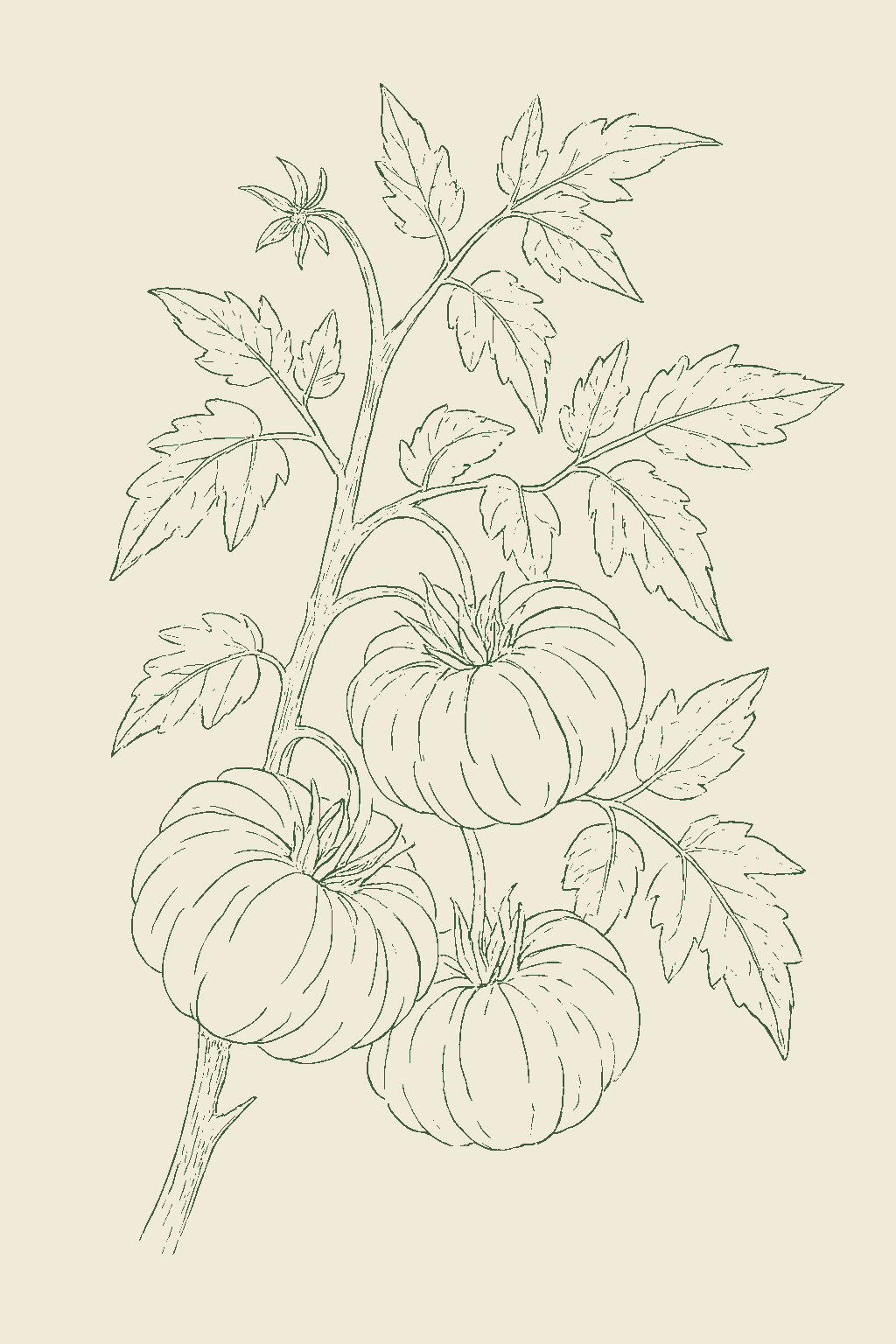
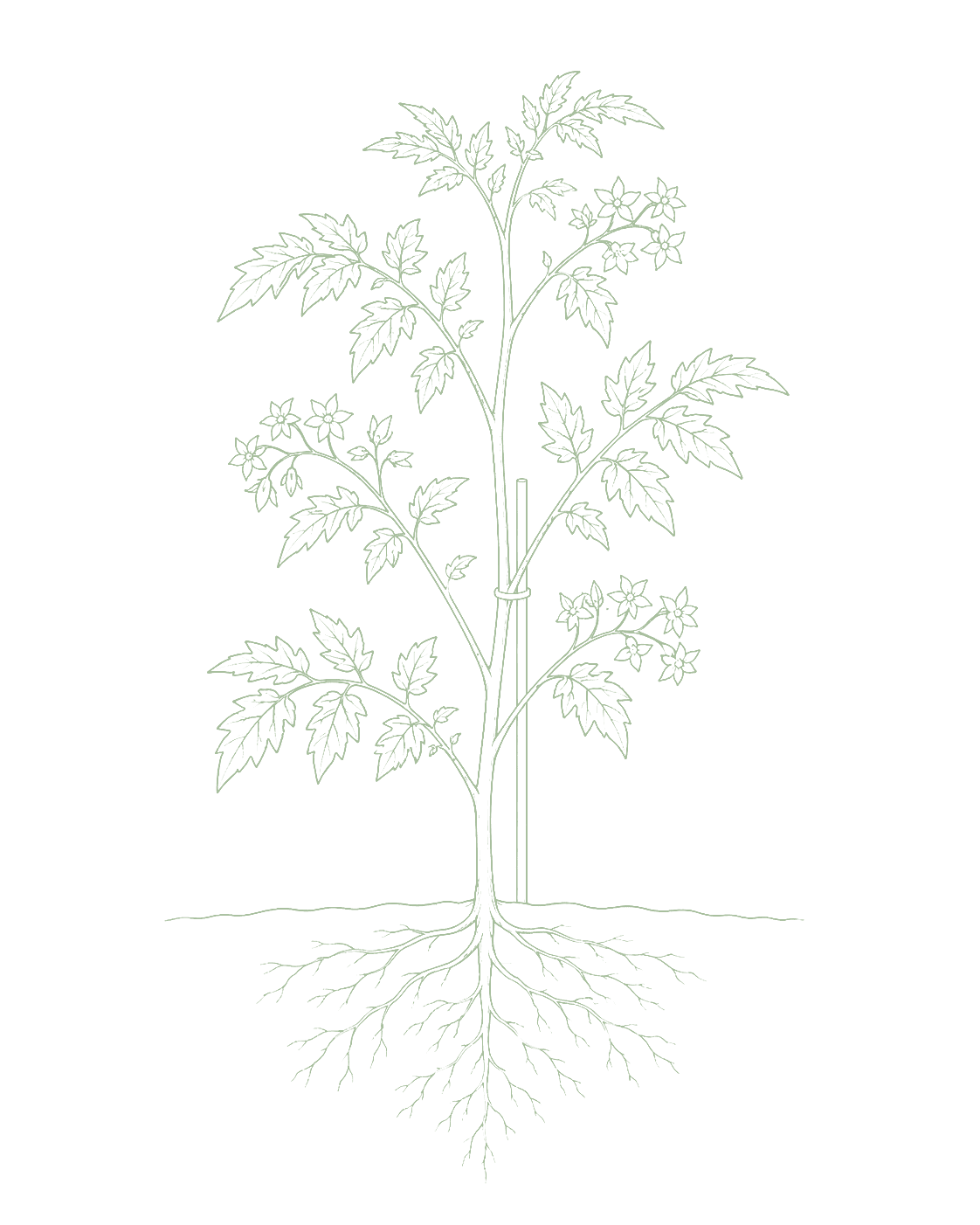
Heirloom tomatoes are open-pollinated varieties, which means you can save their seed and grow the same tomato again next year (hybrid tomatoes do not do this; their saved seed comes up as a mix). They come in an amazing range of colors, shapes, and sizes: deep purple-brown Cherokee Purple and Black Krim, green-striped Green Zebra, huge pink Brandywine and Mortgage Lifter slicers, and slender paste types like San Marzano. Most heirlooms are indeterminate, meaning the plant keeps growing and setting new fruit until frost, so it needs a strong cage or stake from the start; plan for a plant 5 to 6 feet tall or more. The main catch is that heirlooms usually do not have the built-in disease resistance that modern hybrids are bred for, so they are more likely to run into wilt diseases, leaf blights, and cracked fruit. You keep ahead of that with good spacing and airflow, watering at the base, moving your tomatoes to a fresh spot each year, and steady, even watering. The flavor is why people grow them: many gardeners think heirlooms are the best-tasting tomatoes there are. Open-pollinated, mostly indeterminate tomatoes grown for flavor and diversity. The defining trait of an heirloom is that it is open-pollinated: it breeds true from saved seed, so a Brandywine grown from last year's seed comes back as Brandywine, unlike an F1 hybrid whose saved seed segregates into a mix of the parent traits. Heirlooms span an enormous range of size, color, and shape, from the dusky Cherokee Purple and Black Krim, to the green-when-ripe Green Zebra, to two-pound pink Brandywine and Hillbilly slicers, to open-pollinated paste types like San Marzano and Amish Paste. Most classic heirlooms are indeterminate: the vine keeps extending and setting fruit until frost, so it needs strong staking or caging and benefits from pruning to one or two main stems. Days to maturity vary widely by variety, roughly 70 to 90 days from transplant. The main tradeoff is disease: heirlooms generally lack the Verticillium, Fusarium, and nematode resistance (the VFN codes) bred into modern hybrids, so they are more prone to the soilborne wilts, to early and late blight and Septoria leaf spot, and to fruit cracking, and they reward attentive rotation, sanitation, and even watering. Like all tomatoes they need a long frost-free window and set fruit poorly once day temperatures pass the upper 80s°F or nights stay above about 70°F.
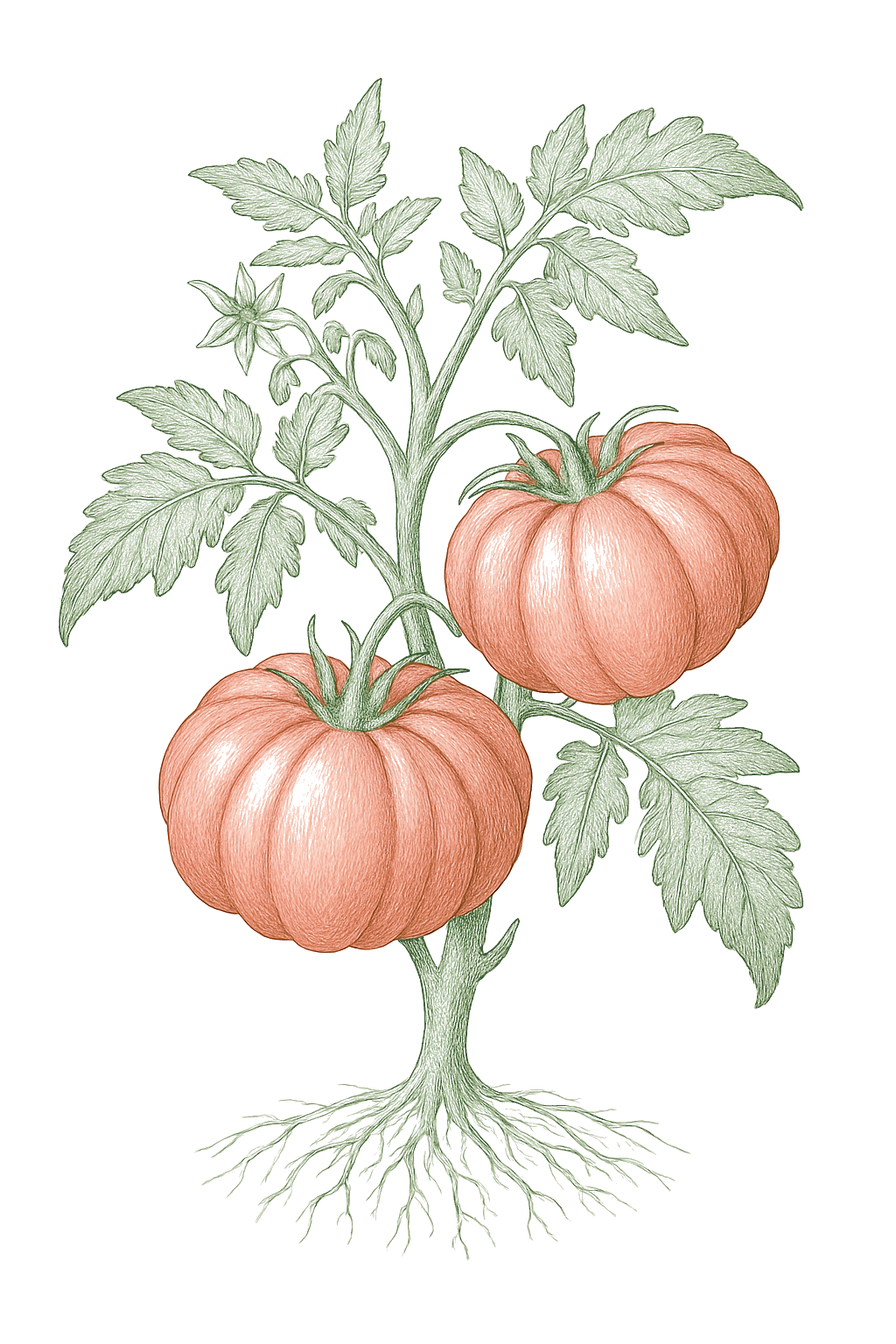
Plants are growing. Harvest opens Aug 1.
In Zone 4, heirloom tomato can be planted May. Start indoors Mar 13 - Mar 20. Harvest runs August through September.
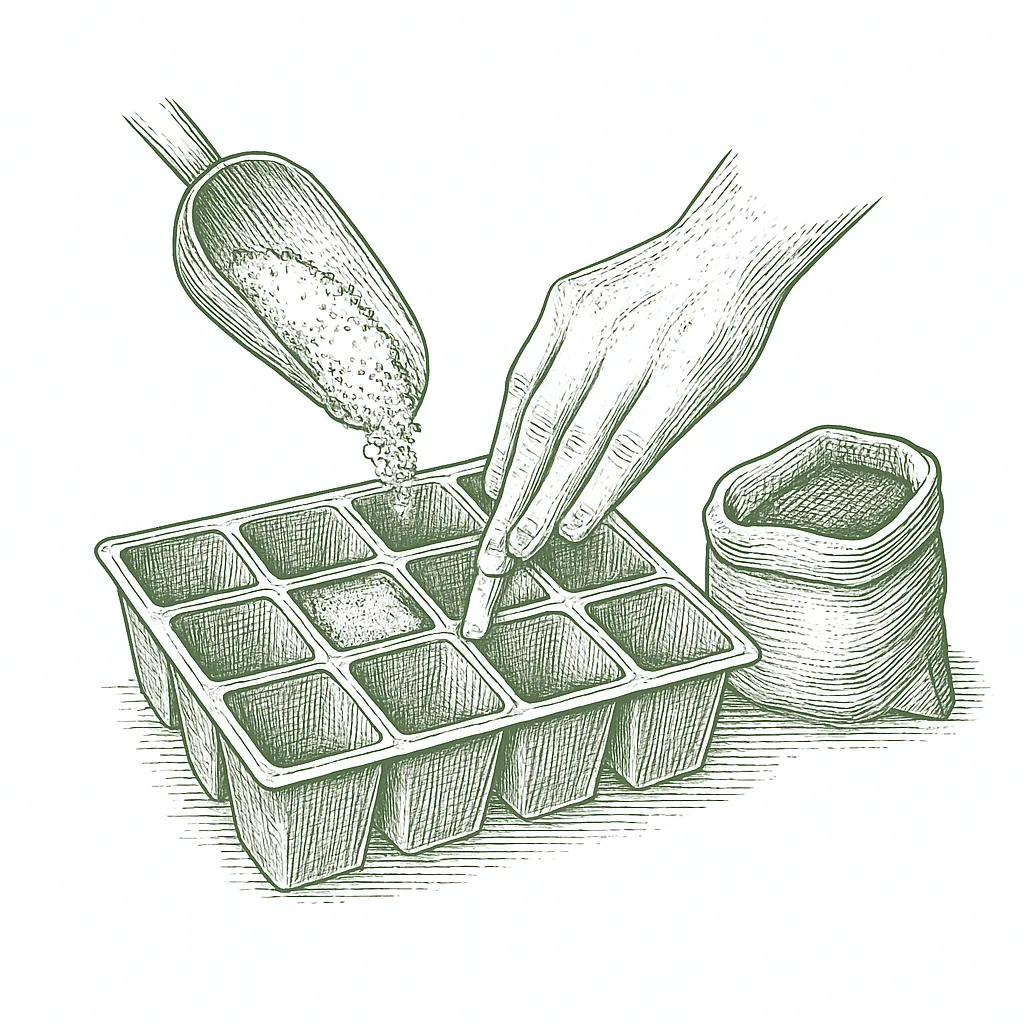
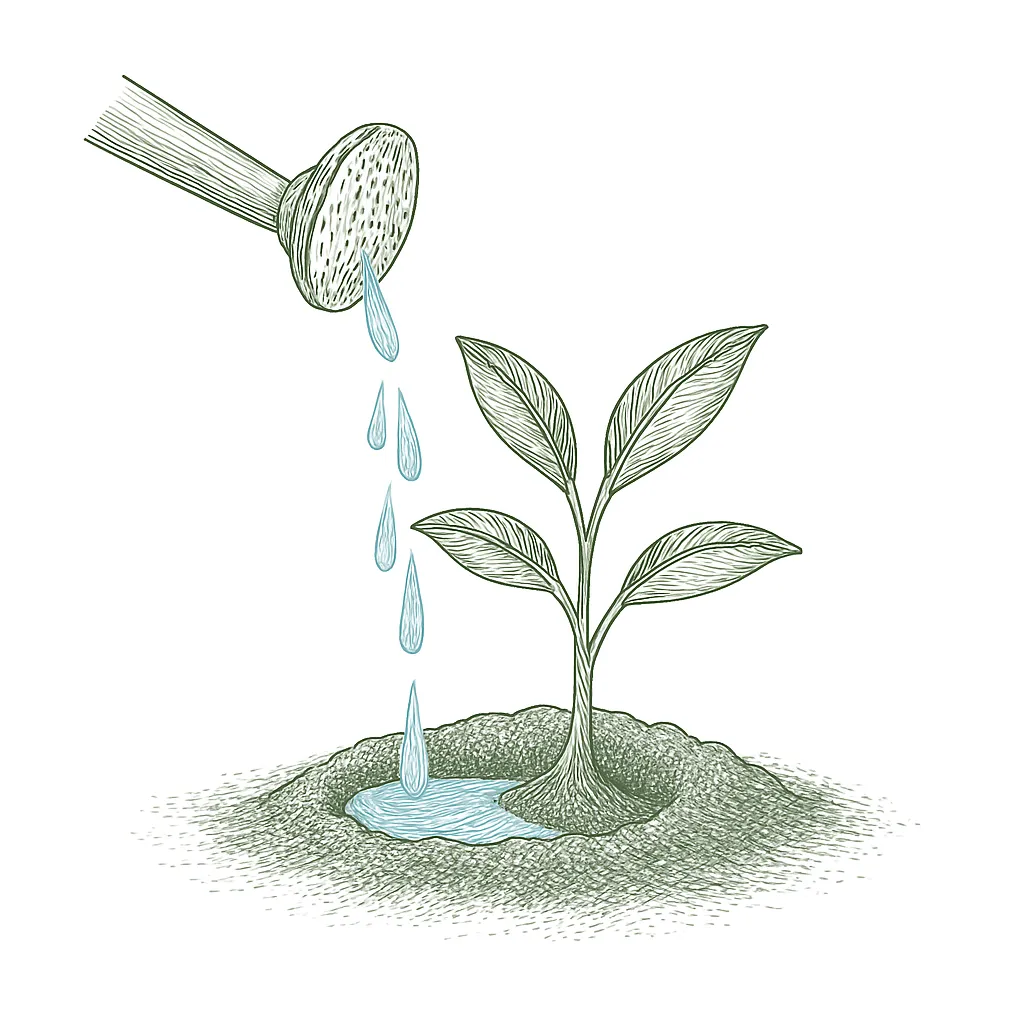
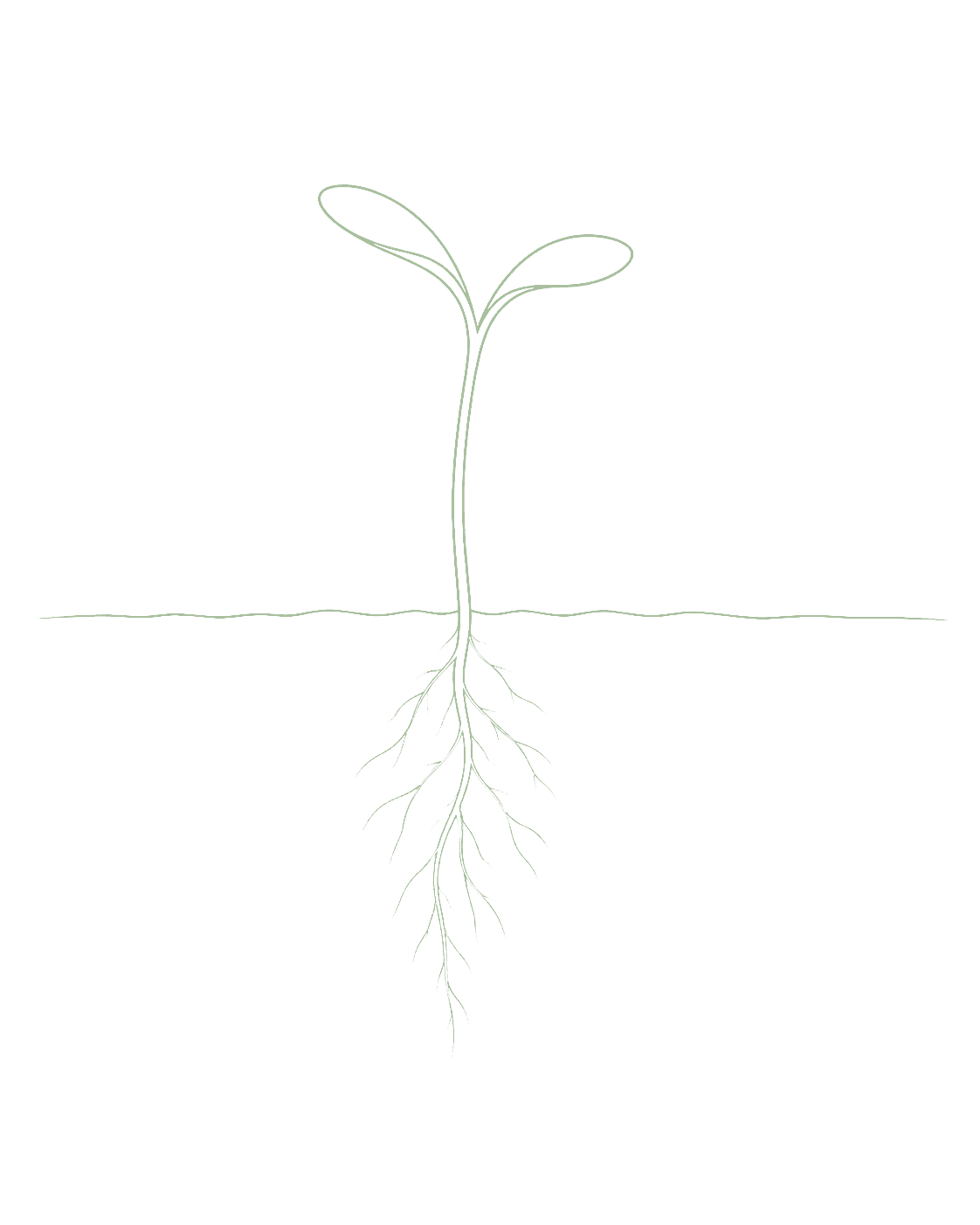
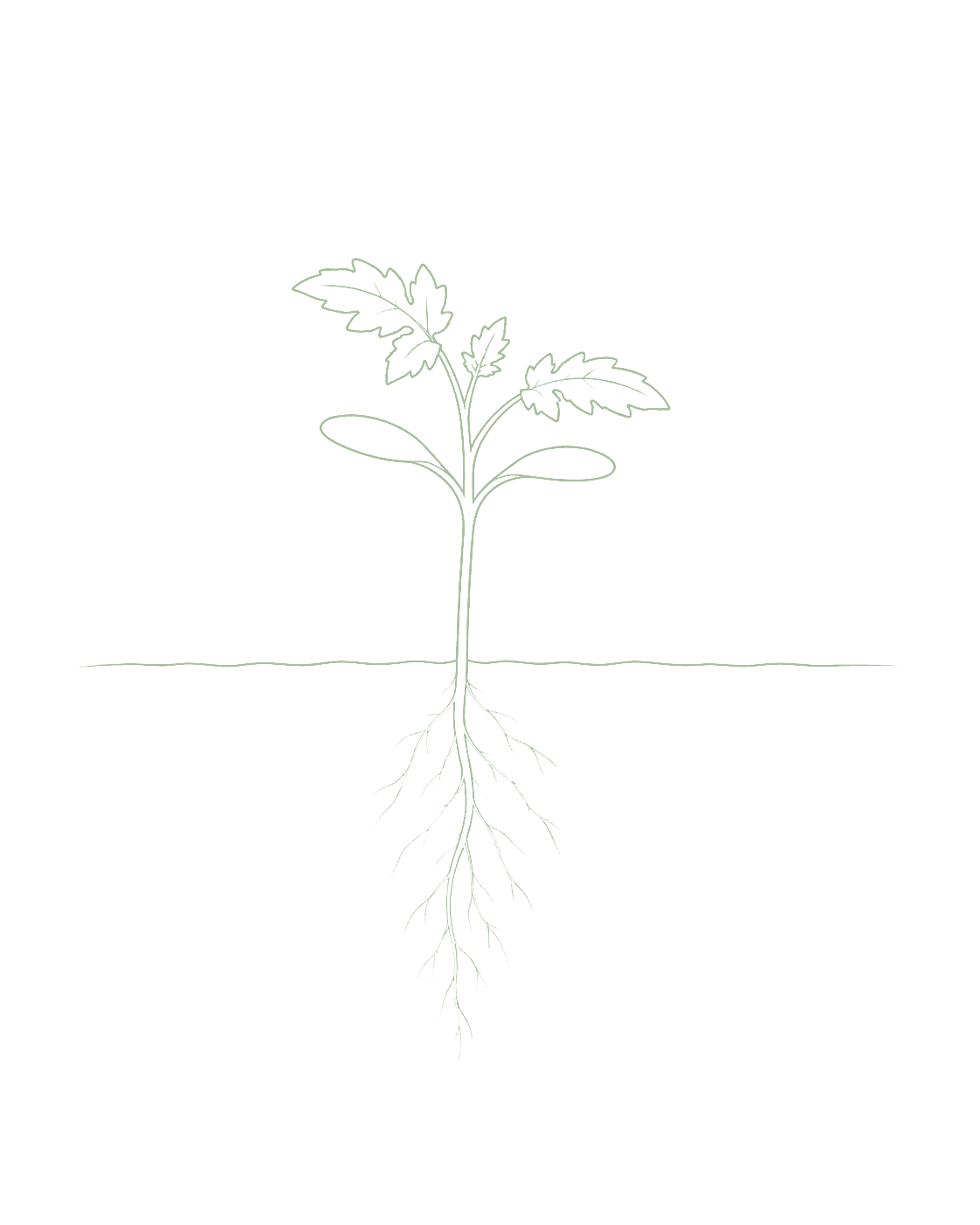
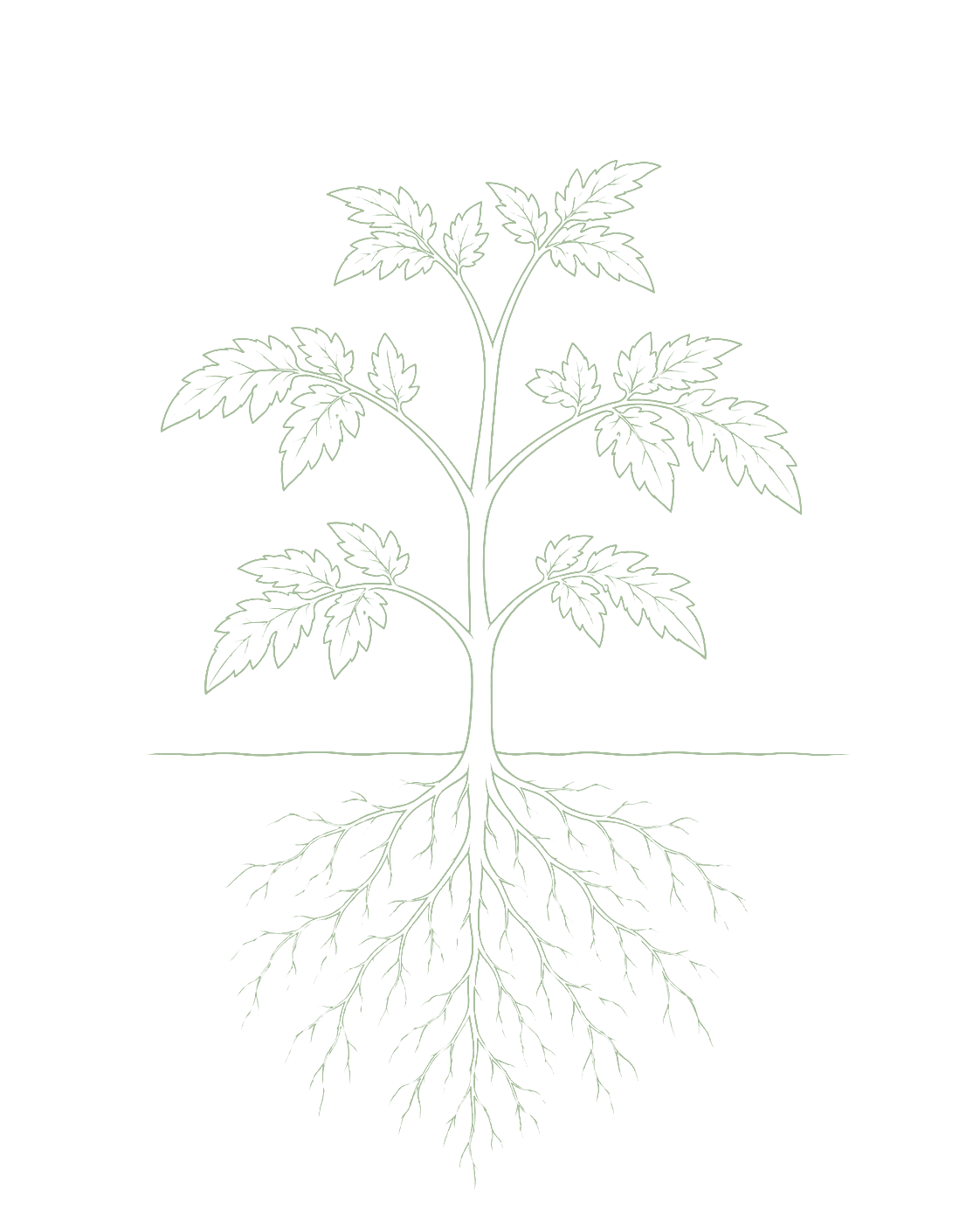
Start seeds 8 weeks before your last frost date; heirloom tomatoes need a long season, so starting on time is important. Plant two seeds per cell about a quarter inch deep in seed-starting mix, somewhere warm (a heat mat helps a lot). At transplant time, bury the stem deeper than it sat in the pot: right up to the lowest set of leaves. New roots will form along the buried stem and give the plant a stronger, more drought-tolerant foundation.Start 8 weeks before last frost; heirlooms need a long season. Harden off carefully. Bury stem deep at transplant.

Not sure what soil you have? Grab a small handful of damp soil from your garden bed and squeeze it. If it crumbles apart easily, it's sandy. If it holds together but breaks when you poke it, it's loam (what most vegetables want). If it stays in a hard, slippery ball, it's clay.
Heirloom tomatoes do best in loose, well-draining soil rich in organic matter: think compost-improved garden beds rather than hard clay. Good drainage matters even more for heirlooms than for hybrids, because most heirlooms have no built-in resistance to the soilborne wilt diseases that thrive in wet, compacted soil. Work in 2 to 3 inches of compost before planting. If water pools after rain and takes more than an hour to soak in, improve the bed or use a raised bed filled with a topsoil-and-compost mix before planting.
Mix 2-3 inches of compost into the top 6 inches of your bed before planting. Compost holds moisture (which sandy soil drains too fast) and adds the nutrients sandy soil tends to lack. Repeat each season. Compost breaks down over time.
Mix 2-3 inches of compost AND a few inches of coarse sand or perlite into the top 6 inches of your bed. The compost feeds the plants; the sand breaks up the clay so air and water can move through. Don't add sand without compost. It can compact like concrete.
If amending your soil sounds like too much work, or if your soil is heavy clay, full of rocks, or contaminated, build over it. A raised bed at least 12 inches deep filled with a 50/50 mix of compost and sandy loam gives you ideal growing soil with no battles. A 5-gallon container with quality potting mix does the same for one plant at a time. Both bypass your native soil entirely.
The numbers that matter, at a glance.
Heirlooms want slightly acidic soil: a pH between 6.0 and 6.8. Outside that range, nutrients the plant needs get locked up in the soil even if they're there. Blossom-end rot (the dark sunken spot on the bottom of the fruit) is often triggered by pH problems limiting how much calcium the plant can absorb. If you've never tested your soil, an inexpensive test kit from a garden center is worth doing before your first season. Many extension offices also offer low-cost testing.Tomatoes are particularly sensitive to pH because it governs the solubility of phosphorus, calcium, and magnesium, three nutrients they consume in large quantities. At pH below 5.5, manganese and aluminum become increasingly available at phytotoxic levels; blossom-end rot risk rises as calcium uptake is impaired. Above 7.0, iron and manganese deficiencies drive interveinal chlorosis on younger leaves. In the alkaline soils common across the interior West and alkaline-irrigation regions, growers routinely need to acidify before planting. Eastern soils often run naturally in the preferred range; Pacific Northwest soils vary widely by parent material.
Heirloom tomatoes are heavy feeders and need regular fertilizing throughout the season. Start with a balanced fertilizer at transplant time, then switch to a fertilizer higher in potassium once flowers appear: look for 'tomato fertilizer' or a formula where the third number on the bag (potassium) is the largest. Feed every two weeks through the fruiting period.Heavy feeder. Start with balanced feed at transplant, switch to high-potassium once flowering begins.
Look for a high-potassium formula, often labeled 'tomato food' or showing a higher third number on the bag (like 5-10-10). That third number is the potassium, which supports fruit development.high K, e.g. 5-10-10
The most reliable companion for heirloom tomatoes is marigolds: plant them around the edges of the bed, not between the tomatoes, since heirloom plants get large and will shade out anything too close. Nasturtiums at the bed perimeter draw aphids away from your tomatoes (aphids prefer the nasturtiums). Keep heirlooms away from fennel, which stunts many neighboring plants, and away from potatoes and eggplant, which share the same diseases and pests. Basil is a popular choice to plant nearby and does well in the same sun and water conditions. Heirloom tomato companions follow the same species-level lore as other tomatoes, with two heirloom-specific nuances. First, heirloom's large plant footprint (24-36 inch spacing, 6-foot cages) shades out many traditional companion candidates; prioritize companions that tolerate partial shade or position them at the drip-line edge rather than between plants. Second, the marigold/nematode connection is the best-documented pairing in this crop's companion set, effective as a dense pre-season cover crop, not as scattered concurrent interplanting. For most growers the practical guidance is: avoid fennel, avoid planting near potatoes or eggplant if disease pressure has been a problem, and consider nasturtiums as an aphid trap crop at the bed perimeter where they won't be shaded.
The tricky part with heirlooms is that many of them are not red when ripe. Cherokee Purple and Black Krim ripen to a dusky purple-brown and keep green shoulders, Green Zebra stays green with a yellow blush, and Brandywine turns deep pink. Learn what your variety looks like ripe, then pick when it has full color, gives a little to a gentle squeeze without being mushy, and the skin looks slightly less shiny than before. Big heirlooms take a few extra days than small ones. Heirlooms split easily, so pick them as soon as they are ripe, especially right after rain.The ripeness cue depends on the variety's ripe color, which for heirlooms is often not red: Cherokee Purple and Black Krim ripen to a dusky brick-purple with shoulders that stay green, Green Zebra ripens green with a yellow blush and softens rather than reddens, and pink types like Brandywine deepen to rose. Across types, pick when the fruit has reached its full variety color, yields to gentle pressure without feeling mushy, and the skin shifts from a hard glossy sheen to a softer, slightly matte surface. Learn each variety's ripe look rather than waiting for red. Large heirloom slicers (12 oz and up) take a few extra days than small types; mass slows the ripening front. Heirlooms crack readily, so pick promptly when ripe, especially after rain.
Expect roughly 8 to 20 pounds of tomatoes per plant over the season, though it depends a lot on the variety: a big Brandywine plant makes fewer, huge fruit, while a paste or Green Zebra plant makes many smaller ones. Heirlooms often yield a bit less than modern hybrids because they catch disease more easily, but most gardeners grow them for the flavor rather than the weight.Highly variety-dependent: an indeterminate heirloom typically yields 8 to 20 lbs over the season, but fruit size ranges enormously, from 2 to 4 oz Green Zebra and paste types to 1 to 2 lb Brandywine and Hillbilly slicers, so per-fruit counts vary widely. In short-season zones (3 to 5) total yield is limited by season length; in zones 7 to 9 a well-managed vine often exceeds 20 lbs. Heirlooms frequently yield somewhat less than disease-resistant hybrids because foliar and wilt disease shortens the productive window, which is the main yield tradeoff for the flavor.
At its peak a healthy plant produces steadily for about 4 to 8 weeks in midsummer, then slows as fall arrives. Big-fruited heirlooms give you a few large tomatoes a week; smaller paste or salad types give you many. Fruit sets best when nights stay between about 55 and 75°F; much colder or hotter than that and the flowers often drop without setting.A healthy indeterminate heirloom at peak produces a steady flow of fruit for roughly 4 to 8 weeks in mid-season, then tapers as fall cools and, for many heirlooms, as foliar disease advances. Weekly counts depend on fruit size: a few large slicers, or many small paste and salad types. Fruit set is most reliable when night temperatures stay between about 55 and 75°F; below 55°F pollen viability drops, and above about 70 to 75°F pollen becomes non-viable and flowers drop. Your first heirloom season will probably feel slow. The plant spends the first half of summer building its root system and vine structure before it really starts setting fruit. Getting 3 to 5 large tomatoes in your first season is a real success; don't measure yourself against experienced gardeners who know every trick. Focus on two things: get a strong cage or stake in place early (before you think you need it), and keep the watering consistent when the plant starts flowering.First-season heirlooms frequently disappoint on yield, not because of mistakes, but because the plant architecture is building for the first half of the season. Getting 3-5 large fruit in a first season is a genuine success. Focus on getting the support structure right early and on consistent watering at fruit set; those two factors drive the difference between a partial and a full-season harvest.
Heirlooms are open-pollinated, so you can save seed from your best fruit and grow the same variety again next year. Good starting choices: Brandywine and Mortgage Lifter for classic big pink slicers, Cherokee Purple and Black Krim for deep, rich flavor, Green Zebra for something tangy and different, and San Marzano or Amish Paste for sauce. If disease has been a problem in your garden, Cherokee Purple tends to hold up a little better than most heirlooms. Brandywine is delicious but slower and a bit fussier, so it makes a great second-season variety once you have the basics down.Heirlooms are open-pollinated cultivars, so seed saved from a healthy fruit grows true to type; that is what lets named heirlooms persist across generations. The class spans the full range of the species: large pink slicers (Brandywine, Mortgage Lifter, Hillbilly), dark or dusky varieties (Cherokee Purple, Black Krim), green-when-ripe types (Green Zebra), and open-pollinated paste tomatoes (San Marzano, Amish Paste). Days to maturity vary widely, roughly 70 to 90 days, with the big pink slicers at the long end. Because almost all heirlooms lack the VFN (Verticillium, Fusarium, nematode) resistance bred into hybrids, expect more disease pressure and lean on rotation, sanitation, and airflow; Cherokee Purple is a notable heirloom with some wilt tolerance.
Salads · 20m · Serves 4
Don't plant tomatoes in the same bed two years in a row. Move them to a fresh spot every year if you can, and wait at least 3 years before coming back to the same location. The same rule applies to peppers, eggplant, and potatoes; they're all in the same family and share the same soil diseases, so rotating one without rotating the others doesn't help much. If you've had plants wilt and die even with good watering, look for disease-resistant varieties: a 'V' or 'F' on the seed packet means the variety is bred to resist the most common soilborne wilts.Rotate nightshades to a fresh bed every 3 years. Fusarium oxysporum and Verticillium dahliae, the two primary soilborne wilts in tomatoes, persist as chlamydospores in soil for 4-6 years and infect through root wounds. Rotation delays pathogen buildup but does not eliminate it; in beds with confirmed wilt history, resistant varieties (coded VF or VFN on seed packets) are the stronger intervention.
The plant app sends a timely reminder at every critical moment of your heirloom tomato season. The wording adjusts to whichever you pick: beginner or seasoned. Here are three you'll see in Zone 4.
plant sends the right notification at exactly the right moment, for your zone, your weather, your crops. Founding members lock the rate forever.
We're building this guide with real growers. Got a question we missed? Ask here. We read every one and add the best answers right to this page.
Learned something the hard way? Pass it on. Real growers' tips make this guide better for the next person, and we credit you by name when yours goes live.
If you've grown this crop and you see a date, a temperature, a companion claim, or a recommendation that doesn't match your experience, tell us. Real growers' corrections make this guide better for the next person.
Every date, temperature, spacing, and recommendation on this page is sourced from university cooperative extension publications, peer-reviewed agricultural research, NOAA climate data, and direct extension calendars. Where claims are softer (traditional gardening wisdom not formally documented), we say so.
Spot a data point that doesn't match your experience? Submit a correction; accepted corrections earn full author credit on the page.
Zone-aware seasonal nudges, what's worth planting now, and the occasional recipe from the harvest. No spam, ever.