Pick your zone and the dates re-calibrate.
The Guide Crops Vol. 003

Leek

in Zone 12, this week

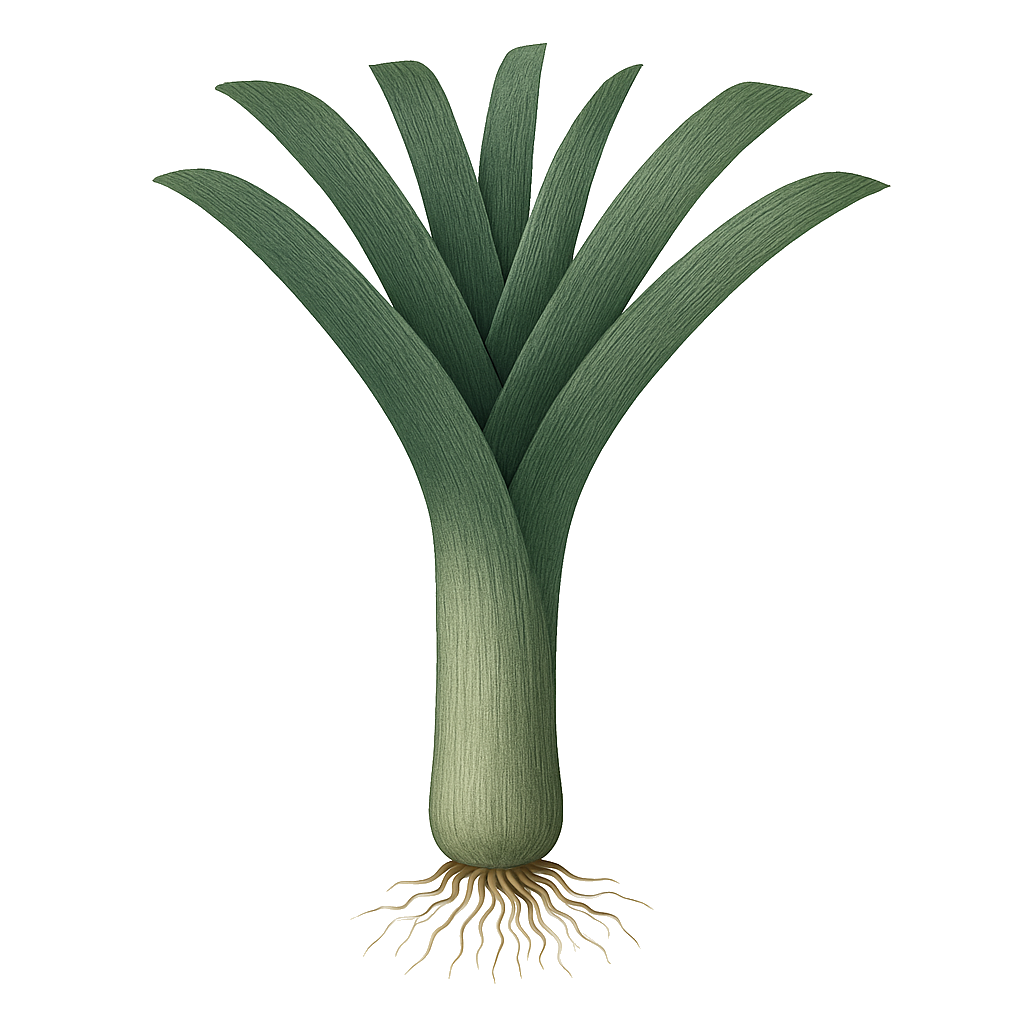
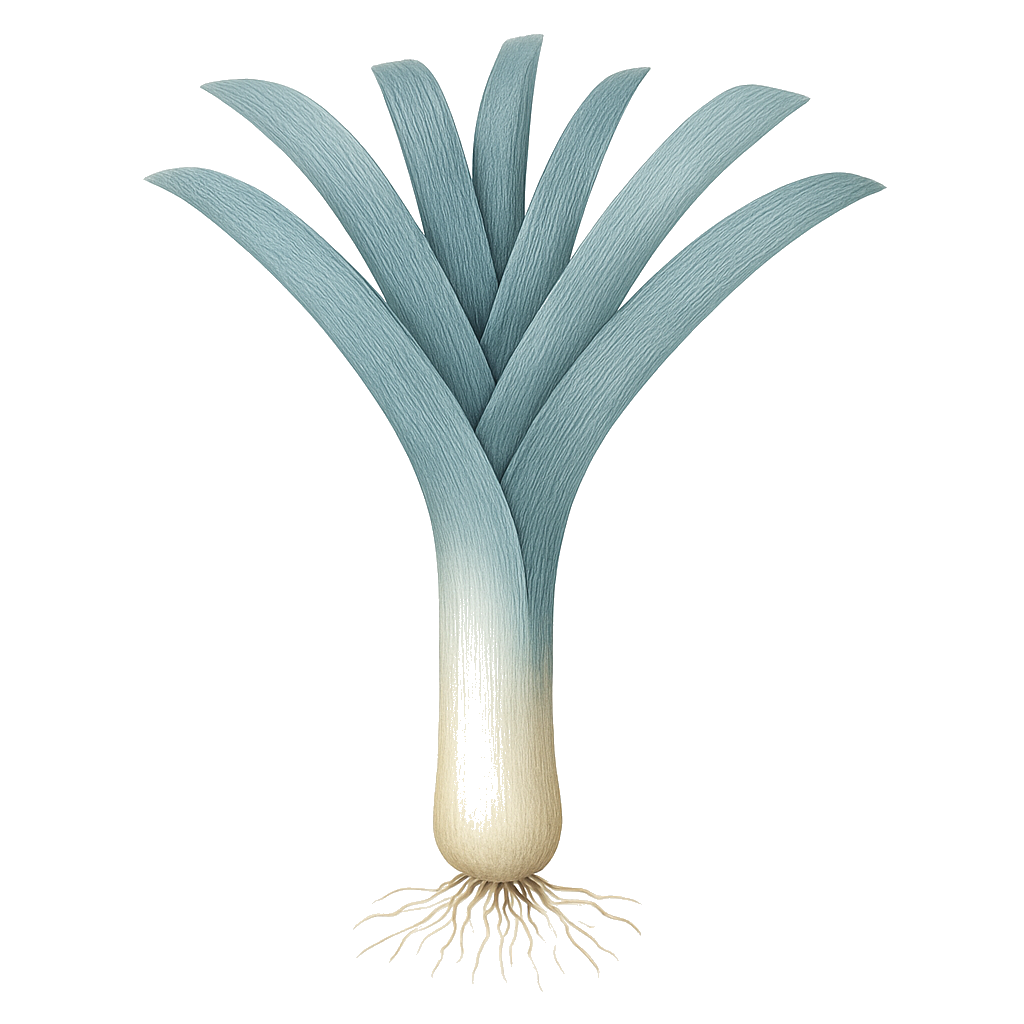
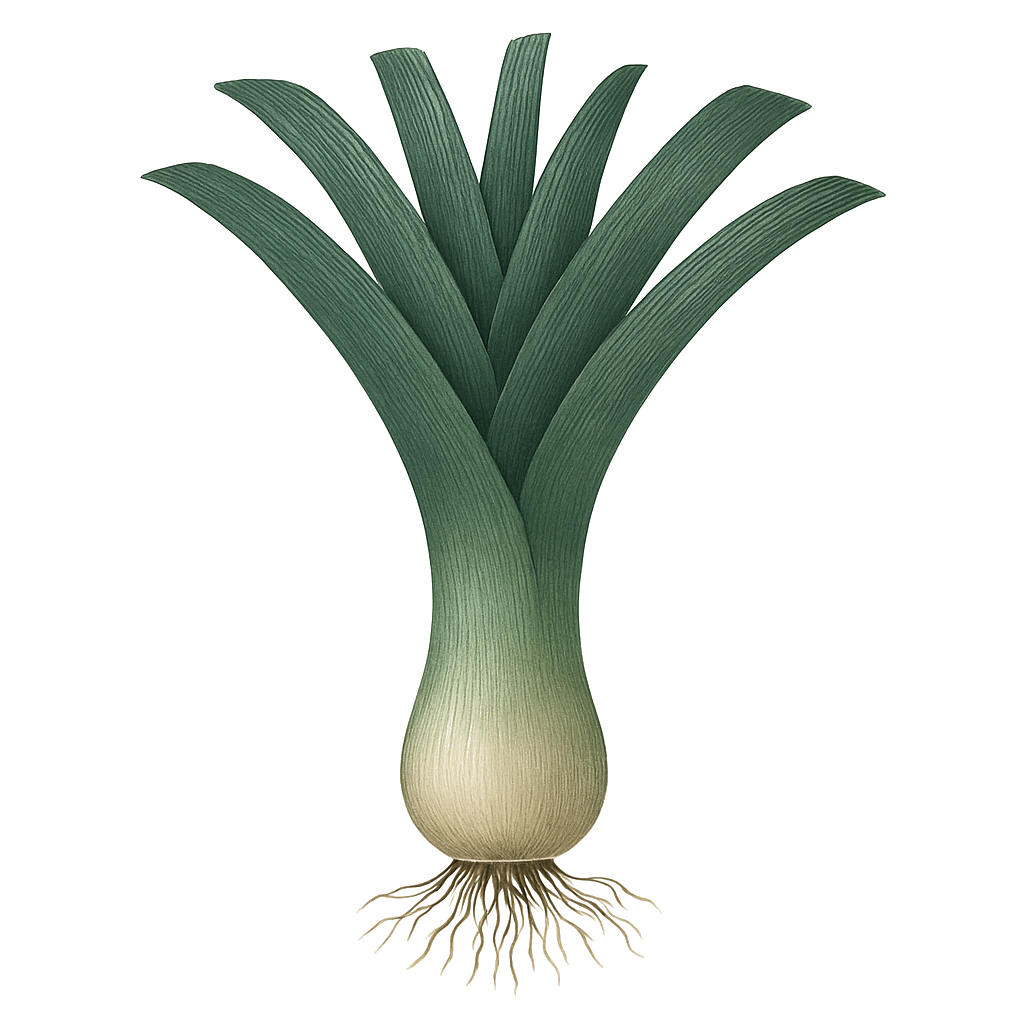
A leek is a mild, sweet relative of the onion, but instead of a bulb you grow and eat the long white stem. Leeks take a long time, so most gardeners start them indoors in late winter and plant them deep, then pull soil up around the stems to keep the bottom part white and tender. The best thing about leeks is that they handle cold: they stand right in the garden through frost and even taste sweeter for it, so you can dig them up fresh from fall into winter instead of all at one time. Which leek you plant sets how late you can harvest: fast early types like King Richard are for late summer and fall, while very hardy overwintering types like Bandit and Giant Musselburgh are bred to stand out in the cold and be dug through winter. Leek (Allium ampeloprasum) is the mild, sweet allium grown not for a bulb but for its long, thick, blanched white stem, or shank. It is a patient, long-season crop, usually started indoors in late winter and transplanted deep so soil can be earthed up around the stem to blanch it. Its great virtue is cold-hardiness: leeks stand in the garden through hard frost, sweetening with the cold, and are dug fresh from fall into winter rather than harvested all at once. There is no bulbing and no day-length requirement, so unlike onions you simply match the variety to how late you want to harvest: an early tender type like King Richard for summer and fall, hardy maincrop types like Lancelot through the fall, and very hardy overwinterers like Bandit or Giant Musselburgh to stand through winter into spring.
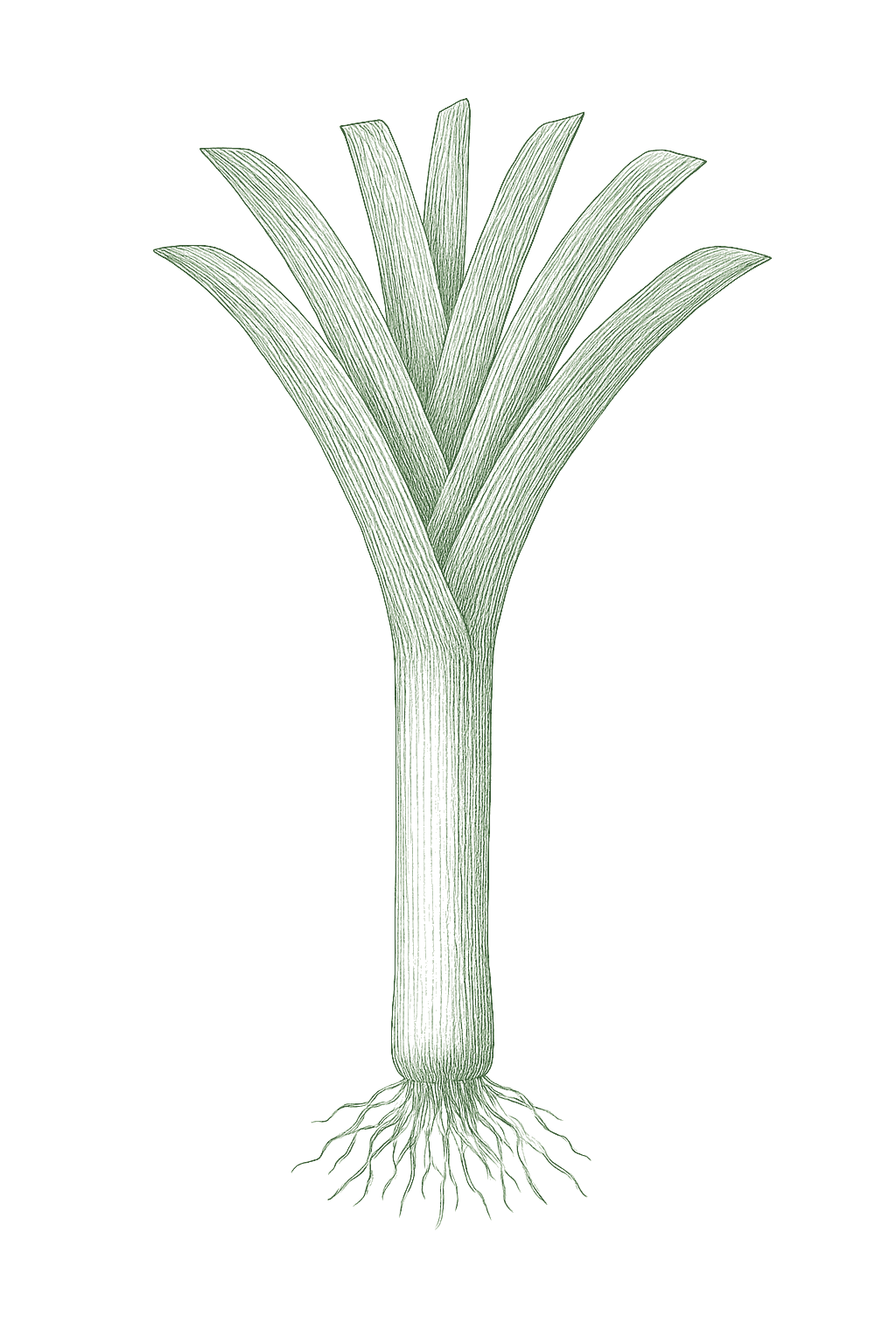
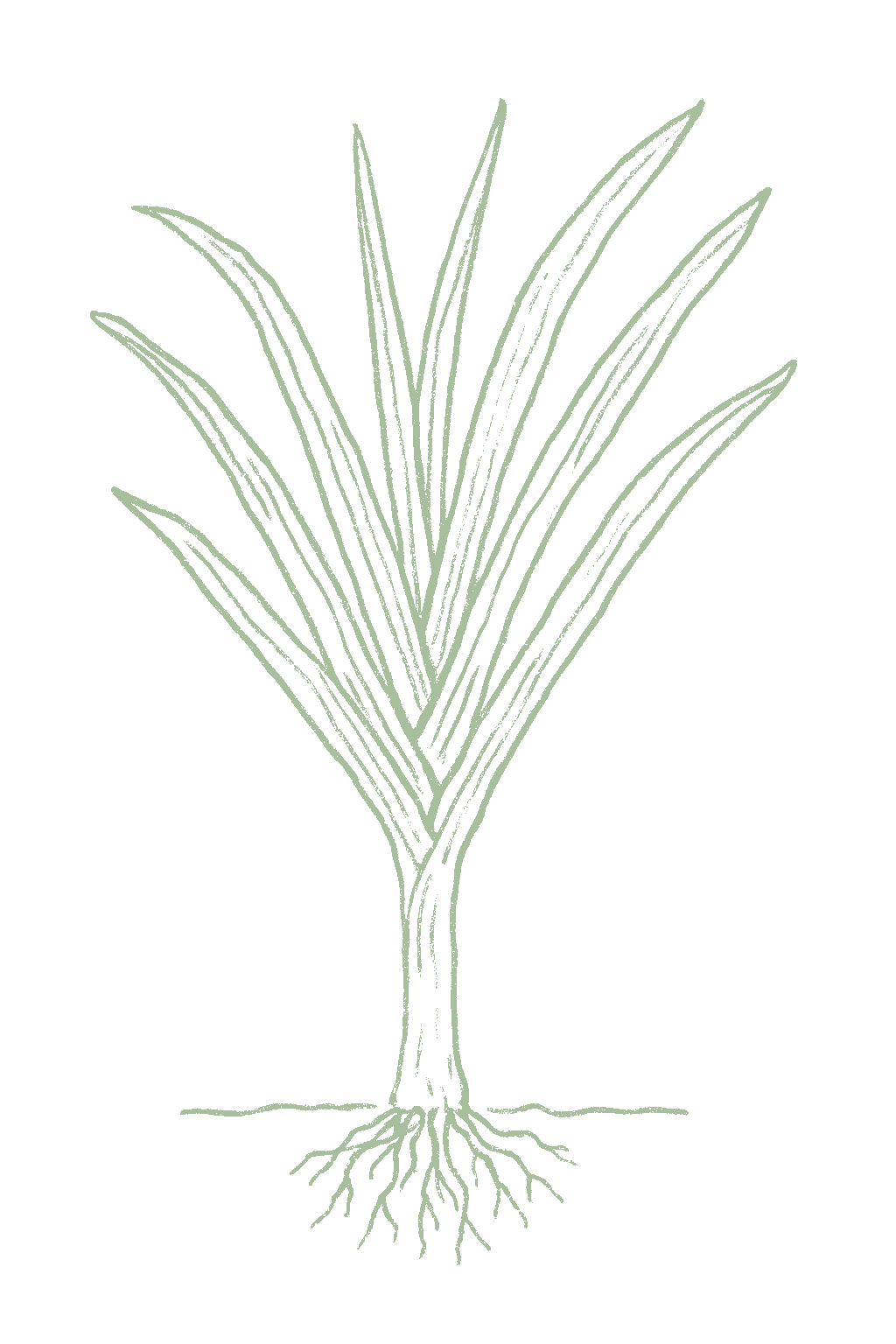
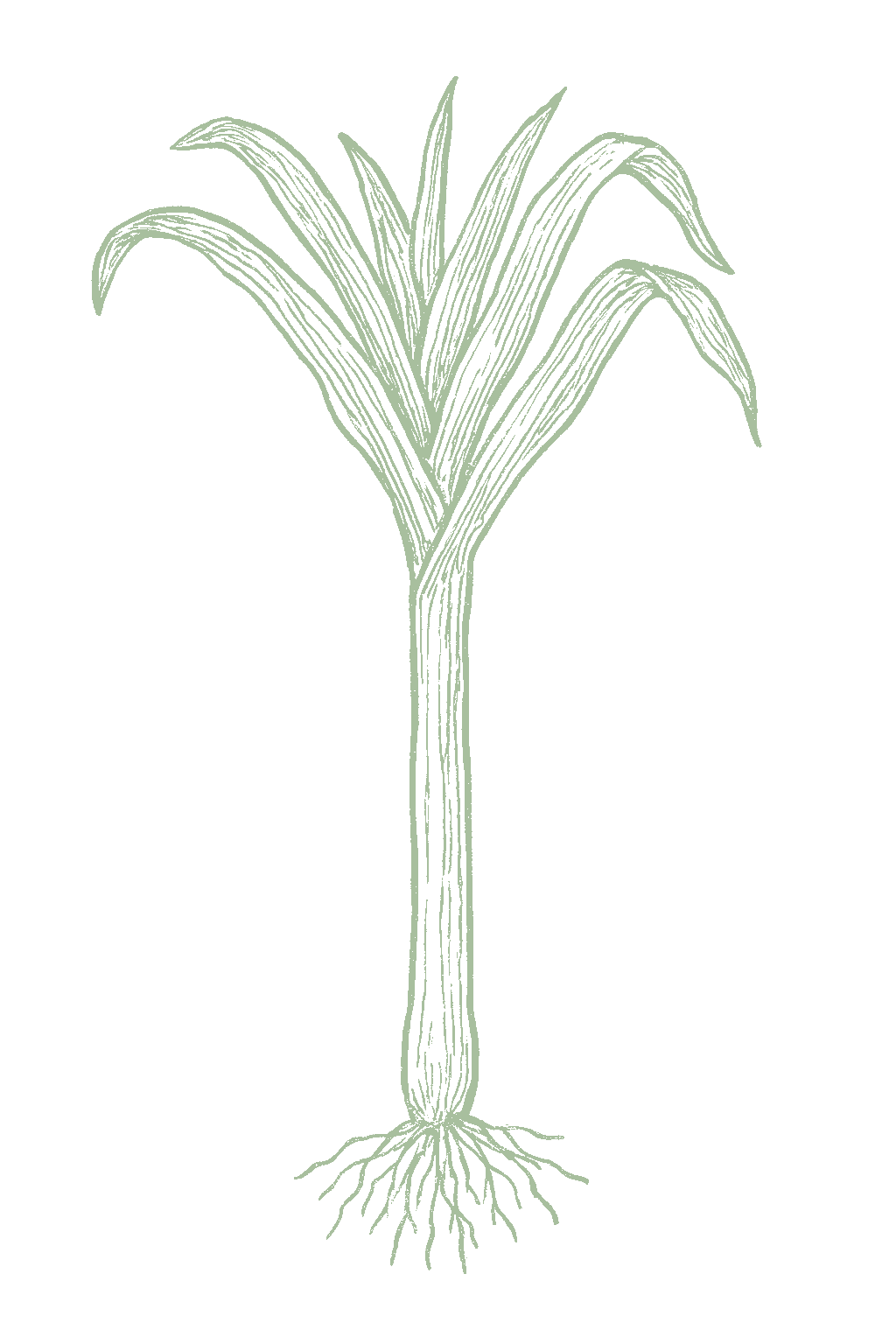
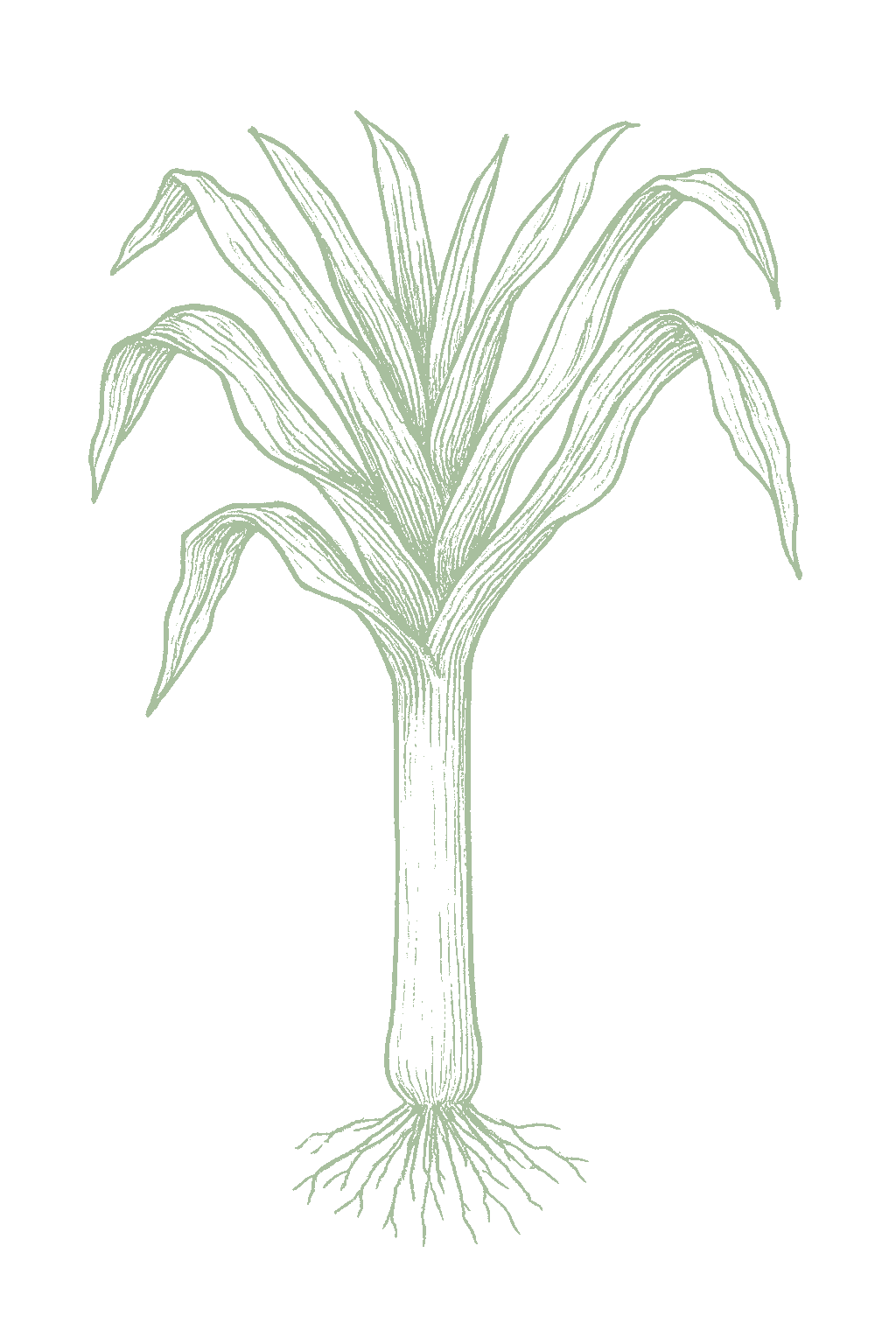
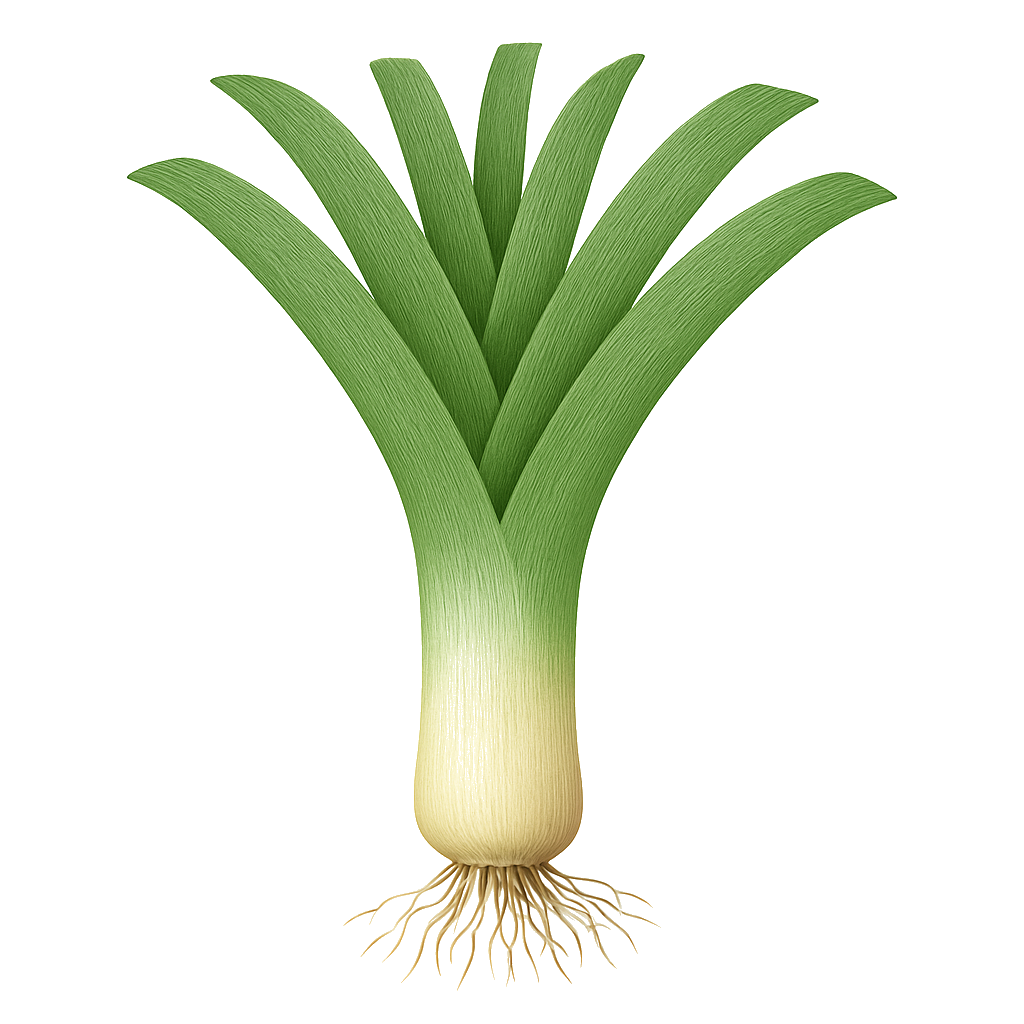
Leek mature plant
Fig. 01 · Leek, mature Zone 12
Mature in
90-150d
from transplant
Sunlight
Full sun
6-10 hrs daily
Water
Consistent
18 inches / week
Spacing
4-6"
between plants
Soil pH
6-7
slightly acidic
Today · in your zone

What's happening right now

July 24 · Zone 12 · Stage 01 · Germination & Emergence

Off-season for leek in zone 12.

The season at a glance

Planting calendar

In Zone 12, leek can be planted October through December. Start indoors Aug 15 - Sep 30. Harvest runs February through May.

Jan
Feb
Mar
Apr
May
Jun
Jul
Aug
Sep
Oct
Nov
Dec
plant
too late
too late
too late
too late
too early
too early
too early
indoors
indoors
plant
plant
plant
harvest
harvest
harvest
harvest
harvest
indoors
plant out
harvest
Above-ground cropBest planted on a none moon
The season, mapped

Seed to garden

Most gardeners start leeks from seed indoors about 10 weeks before planting out, because they grow slowly and need a long season. In mild areas you can also sow seeds straight in the garden. To plant a seedling, make a hole about 6 inches deep with a dibber, drop the seedling in, and just water it; the soil washes in on its own. Planting deep like this starts the long white stem.Two entry points: start seed indoors about 10 weeks before set-out for transplants (the usual approach, since leeks are slow and long-season), or direct-sow in mild, long-season areas. Transplant into a deep dibble hole about 6 inches deep and water gently so soil washes in around the seedling without filling the hole; this sets the seedling deep and starts the blanched shank. Drop the transplant in and do not pack soil around it.

Start method
Both
Soil temp
50-77°F
From seed to fruit

The growing journey

Stage 01 · Germination & Emergence
01
Germination & Emergence
Days 10-21 · current stage
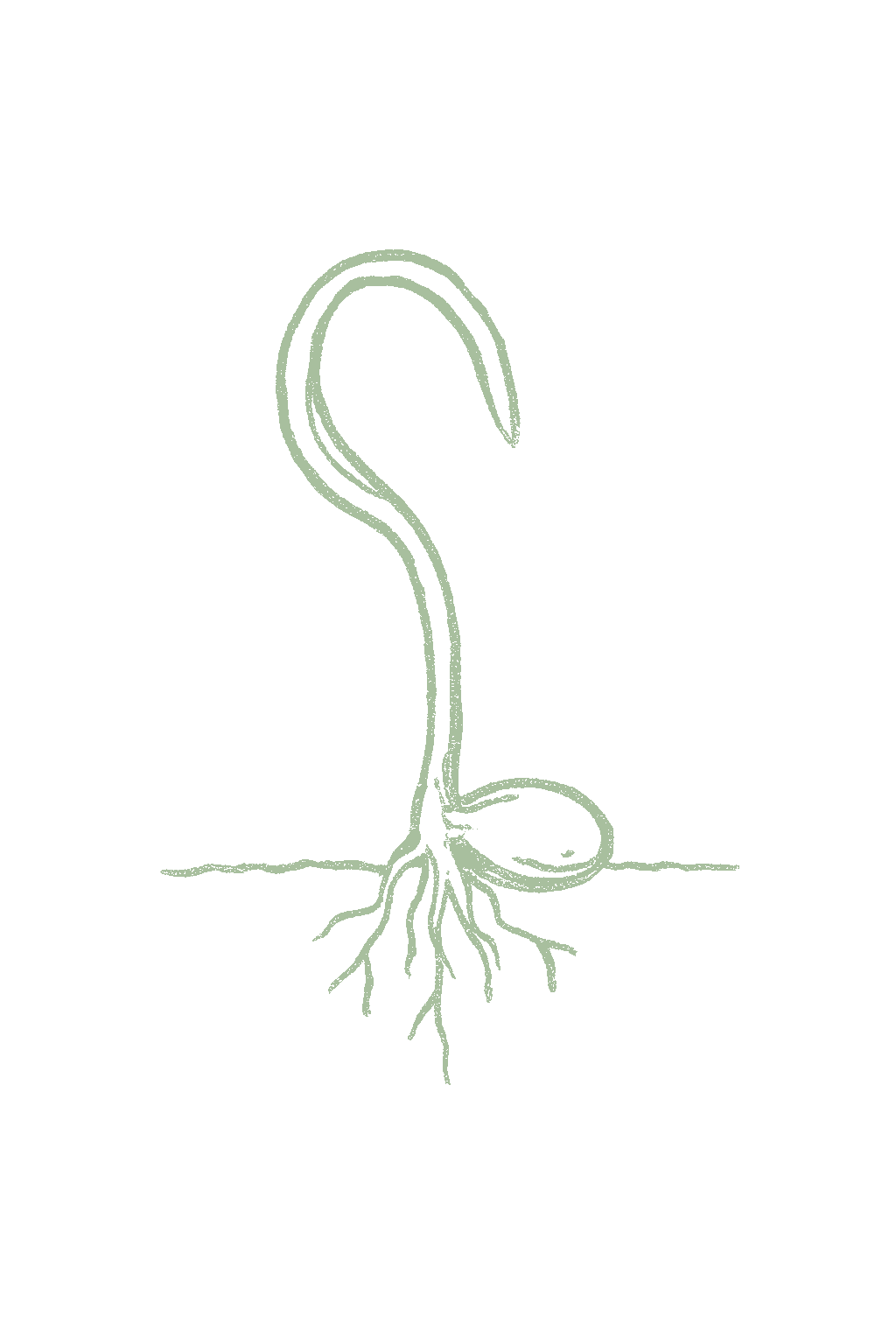
Look for thin, grass-like shoots, each starting bent over in a little loop like a hairpin, then standing up. Leeks sprout slowly, so do not worry if they come up over a week or two rather than all at once.A single looped seed leaf pushes up bent like a hairpin, then straightens into the first slender grass-like blade. Leeks germinate slowly and unevenly over cool to moderate soil, so stands come up over a week or two.
Keep the top of the soil damp so the tiny seeds do not dry out, and pull weeds early. If you planted young plants instead of seeds, you can skip this stage.Keep the surface evenly moist so the fine seed never dries mid-germination, and keep seedlings weed-free; young leeks compete poorly. If you set transplants, this stage is already behind you.
FROM PLANT · Plant leek seeds in moist soil and wait. They sprout slowly and not all at once, so keep the soil surface damp until the little shoots appear.Sow into cool-to-moderate, evenly moist soil and be patient: leek seed germinates slowly and unevenly. Keep the surface from drying while the fine seed comes up.
02
Seedling Growth
Days 21-70
The seedlings grow slowly into thin, upright plants, getting to about pencil thickness and 8 inches tall over a couple of months, usually indoors. Be patient, this is just how leeks grow.Slow, thin, upright seedlings build toward pencil thickness and about 8 inches tall over roughly 8 to 10 weeks, usually indoors or in a nursery bed. This is a patient stage; leeks are deliberate growers.
Keep the seedlings in bright light, water them evenly, and feed a little. Grow them until they are about as thick as a pencil before planting out.Keep seedlings in good light, evenly moist, and lightly fed. Grow them to pencil thickness before transplanting; a stronger seedling makes a thicker shaft later.
FROM PLANT · Let the seedlings grow until they are about as thick as a pencil and 8 inches tall before planting out. Strong seedlings make bigger leeks. Keep them in bright light so they do not get leggy.Grow seedlings to pencil thickness and about 8 inches tall before set-out; a fuller seedling stage builds a thicker final shaft. Keep them in strong light so they do not stretch.
03
Transplant & Establishment
Days 70-100
After you plant the seedling deep in its hole, it settles in and starts growing upright again. The base is sunk deep in the soil, which is what starts the long white stem.After set-out into a deep dibble hole, the transplant roots in and resumes upright growth. Early leaves green up and the base sits deep in its hole, the start of the blanched shank.
Plant each seedling in a deep hole and just water it, letting the soil wash in on its own. Keep weeds out and the soil moist while the plants settle.Plant into a 6-inch dibble hole and water without filling it, so soil washes in gradually. Keep the bed weed-free and evenly moist while plants take hold.
FROM PLANT · Plant each seedling in a deep hole made with a dibber and just water it, so the soil washes in on its own. Planting deep like this is what starts the long white stem.Transplant deep: set seedlings into a 6-inch dibble hole and just water them in, letting soil wash around the stem rather than packing it. Deep setting starts the blanched shank.
04
Shaft Lengthening & Blanching
Days 100-140
Through summer and early fall the plant grows lots of leaves and the white stem gets longer and thicker. This is the main growing time, helped by steady water, feeding, and pulling soil up around the stems to keep them white.Through summer and early fall the plant stacks leaves and the white shaft lengthens and thickens. This is the main growth phase, driven by steady moisture, feeding, and repeated earthing up to blanch the stem.
Keep watering and feeding, and two or three times pull loose soil up around the stems to grow a longer white part. Add only an inch of soil at a time and keep it below where the leaves split.Feed and water steadily, and earth up the stems a couple of times, drawing loose soil up around them (never more than an inch at a time, and not over the leaf joint) to lengthen the blanched white shank.
FROM PLANT · Two or three times during the season, pull loose soil up around the stems to grow a longer white part. Add only about an inch at a time and keep it below where the leaves split, or the stem can rot.Earth up two or three times as the plants grow, drawing loose soil up around the shanks no more than an inch at a time and never above the leaf joint, to lengthen the white shaft and avoid stem rot.
FROM PLANT · Keep watering and feeding steadily through summer. Leeks grow best without interruption, so do not let them dry out or get crowded, or the stems stay thin and short.Keep moisture and feeding steady through summer; an unbroken growth run is what builds long, thick shanks, while drought checks and crowding make them thin and short.
05
Maturity, Harvest & Standing
Days 140-180
The white stems reach about an inch or more across and the leeks are ready. Leeks handle frost, so you can leave them in the ground and dig them up fresh from fall into winter instead of all at once.Shanks reach about an inch or more across and the leeks are ready. Because they are cold-hardy, they hold their quality standing in the ground through frost, so harvest runs from fall into winter as needed rather than all at once.
Harvest by loosening the soil with a fork and lifting the leek out, not yanking. Pick the biggest first and leave the rest growing. In very cold places, pile mulch over them so you can still dig them up.Harvest by loosening with a fork and lifting (do not just pull), starting when shanks are big enough. Leave the rest standing and harvest as needed; in the coldest zones mulch heavily so you can dig through frozen ground.
FROM PLANT · When the stems are about an inch across, loosen the soil with a fork and lift the leeks out, do not yank them. Leave the rest growing. Leeks handle frost, so dig them fresh from fall into winter as you need them.Harvest by loosening with a fork and lifting once shanks are about an inch across; leave the rest standing. Leeks are cold-hardy and hold quality through frost, so harvest from fall into winter as needed.
Beginner
Know your soil

Your soil

Identify yours

Not sure what soil you have? Grab a small handful of damp soil from your garden bed and squeeze it. If it crumbles apart easily, it's sandy. If it holds together but breaks when you poke it, it's loam (what most vegetables want). If it stays in a hard, slippery ball, it's clay.

What this crop wants

Leeks like deep, loose, rich soil with lots of compost worked in. Loose soil matters because you grow the long white part of a leek by pulling soil up around the stem, and that is much easier in soft, crumbly ground than in heavy clay. Keep the soil evenly moist all season.

If your soil doesn't match

You have sandy soil

Mix 2-3 inches of compost into the top 6 inches of your bed before planting. Compost holds moisture (which sandy soil drains too fast) and adds the nutrients sandy soil tends to lack. Repeat each season. Compost breaks down over time.

You have clay soil

Mix 2-3 inches of compost AND a few inches of coarse sand or perlite into the top 6 inches of your bed. The compost feeds the plants; the sand breaks up the clay so air and water can move through. Don't add sand without compost. It can compact like concrete.

Containers and raised beds

If amending your soil sounds like too much work, or if your soil is heavy clay, full of rocks, or contaminated, build over it. A raised bed at least 12 inches deep filled with a 50/50 mix of compost and sandy loam gives you ideal growing soil with no battles. A 5-gallon container with quality potting mix does the same for one plant at a time. Both bypass your native soil entirely.

Learn more about your soil
The specs

Care guide

The numbers that matter, at a glance.

Sunlight
Full sun · 6-10 hrs/day
Water
consistent
Spacing
4-6 inches
Soil
loam, sandy loam
Days to maturity
90-150 days from transplant
Soil pH
6 to 7
Container OK?
Yes · 5+ gal pot
Germination temp
50-77°F
Soil chemistry

Soil pH for leek

Preferred
6 to 7
Tolerated
5.5 to 7.5

Leeks grow best in soil that is slightly acidic to neutral, about 6.0 to 7.0. A simple soil test takes out the guesswork. If your test comes back below about 6.0, adding garden lime brings it up.Aim for a soil pH of about 6.0 to 7.0 (UMN gives 6.0 to 7.0; UF/IFAS lists 6.5 to 7.0 for Florida). Leeks tolerate a wider 5.5 to 7.5 band but dislike strongly acid ground; below about 6.0 a liming amendment helps. Confirm with a soil test before adjusting.

Verified · 2 sources View
Steady hand on the hose

Watering

When & how much
Frequency
Water leeks regularly so the soil stays evenly moist the whole time they grow. Their roots are shallow, so dry spells make the stems shorter and tougher. Unlike onions, you do not stop watering at the end.Keep the soil consistently moist across the whole long season; leeks are shallow-rooted and any drought check shortens and toughens the shaft. They do not need a dry-down at the end the way bulb onions do.
Amount
About an inch of water a week is a good target, and more during hot, dry weather. Steady is better than a flood one week and nothing the next.Aim for about an inch of water per week from rain plus irrigation (USU advises moistening the soil to a depth of about 18 inches every seven days), more in heat or sandy soil, delivered steadily.
Method
Water the soil at the base of the plants, not over the leaves. Keeping the tops dry helps prevent rust.Water at the base with drip or a soaker to keep the foliage dry; lingering leaf wetness and humidity feed leek rust.
Signs of trouble
Too much water
If the soil stays soggy and the bottoms of the plants turn yellow and soft, that is too much water. Sitting in wet soil makes leeks rot.Waterlogged soil with yellowing, mushy bases signals overwatering; standing moisture around the shaft encourages basal and white rots.
Too little water
Wilting, bluish, or brown-tipped leaves mean the leeks are too dry. Leeks that do not get enough water make thin, short, tough stems.Bluish, wilting, or tip-burned leaves and stalled growth mean the plants are short of water; under-watered leeks make thin, short, fibrous shanks.
Feeding rhythm

Feeding

Frequency
Side-dress once or twice during the long season
Type
Balanced base, nitrogen-forward
When to start
Work a balanced feed into the bed at planting, then side-dress with nitrogen through summer

Leeks grow for a long time and are fairly hungry plants. Mix a balanced fertilizer into the soil before planting, then feed once or twice with a nitrogen fertilizer through the summer while the stems are growing. Steady feeding builds thick stems. Do not pile on a lot of fertilizer late in the season, since soft, crowded, well-fed plants get rust more easily.Leeks are long-season, moderately heavy feeders. Work a balanced fertilizer such as 10-10-10 into the bed before planting (UMN suggests about one cup per 10 feet of row mid-season), then side-dress with nitrogen once or twice while the shafts are lengthening. USU gives a quarter pound of ammonium sulfate (21-0-0) per 100 square feet in the middle of May and again in late June. Keep nitrogen steady through summer for thick shanks, but avoid heavy late feeding, which together with crowding and wet leaves worsens leek rust.

N · P · K = 10-10-10

Use a balanced fertilizer like 10-10-10 at planting, then feed with a nitrogen fertilizer once or twice during summer.A balanced base such as 10-10-10 at planting, then nitrogen side-dressings (for example ammonium sulfate, 21-0-0) through summer to build long, thick shanks.

Try 10-10-10 at planting, then ammonium sulfate (21-0-0) or another nitrogen source to side-dress
Who grows well together

Companion planting

Leeks are easygoing neighbors. Their strong allium smell is traditionally said to help hide carrots from the carrot rust fly, and they tuck in nicely beside celery, beets, and lettuce. The main thing to avoid is planting them next to beans or peas, which alliums can slow down. These are helpful traditions, not sure things. Leeks earn their companion reputation mostly through scent, traditionally credited with masking carrots from the carrot rust fly, so the classic leek-and-carrot pairing is the best known. They also share a long cool-season bed comfortably with celery, beets, and lettuce. The firm caution is the legume conflict: alliums are widely held to inhibit beans and peas, so keep leeks away from them. Most of these claims are traditional rather than trial-proven; treat them as low-risk suggestions.

Other
Carrots
Leeks and carrots are a classic pair. The strong onion-family smell of leeks is said to help hide carrots from the carrot rust fly, and the two do not crowd each other.Leeks and carrots are the textbook allium-and-umbellifer pairing. The leek's sulfur scent is traditionally credited with masking carrots from the carrot rust fly, and the two have complementary upright forms that share a bed without crowding. Treat the pest benefit as a plausible tradition rather than a proven effect. Traditional
Celery
Celery and leeks both like the same rich, moist soil and long cool season, so they make easy, undemanding neighbors.Celery and leeks are a traditional bed pairing built on shared culture: both want deep, rich, evenly moist soil and a long cool season, and both are often trenched or earthed up, so they fit the same management. The benefit is compatibility and efficient use of a rich bed, not a documented pest or growth effect. Traditional
Vegetable
Beets
Beets share leeks' cool-season culture and a non-competing form, making them an easy neighbor that uses space efficiently; mostly a good-neighbor pairing with a modest traditional allium pest-repel bonus. Traditional
interplant
Lettuce
Quick, shallow-rooted lettuce fills the row between slow upright leeks and shares the cool season, a space-efficient and traditional intercrop harvested long before the leeks fill in. Traditional
interplant
Keep apart from
Beans and peas Keep leeks away from beans and peas. Onions and their relatives, including leeks, are thought to slow the growth of these legumes.Alliums, including leeks, are traditionally held to inhibit beans and peas, so the long-standing advice is to keep them apart. The mechanism is debated and the effect is not firmly demonstrated, but it is a consistent enough tradition across the onion family to respect as a low-cost precaution. Traditional
Provenance tagged inline · see methodology for the labeling system Key
Harvest signals

When to pick

Leeks are ready when the white stem is about an inch or more thick. You do not have to wait for an exact size, and smaller ones are fine too. Loosen the soil with a fork and lift them out gently. Since leeks handle frost, leave the others in the ground and dig them up fresh from fall into winter as you need them.Leeks are ready once the white shank is about an inch or more across and several inches long; there is no need to wait for a set size, and you can begin earlier for slim leeks. Lift by loosening with a fork rather than pulling. Because they are cold-hardy, leave the rest standing and harvest from fall into winter as needed.

Verified · 2 sources View
Yield

What to expect

Each plant makes one leek. A 10-foot row gives you roughly 20 to 30 leeks, and you dig them over a long stretch from fall into winter, not all at the same time.One leek per plant. At 4-to-6-inch spacing, a 10-foot row yields roughly 20 to 30 leeks, harvested over a long fall-to-winter window rather than all at once.

Leeks do not all finish at once. Because they stand in the garden, you harvest them gradually through fall and winter, and growing both early and late types spreads it out even more.Because leeks stand in the ground and are harvested as needed, there is no single flush: the harvest spreads across fall and winter, and mixing early and overwintering types stretches it further. The most important thing your first year is giving leeks a long, steady season: start the seeds early, keep them watered and fed, and hill soil up for the white part. Leeks that are rushed or stressed stay thin and short.The biggest first-year lever is a long, unbroken growing season: start seed early enough, keep moisture and feeding steady, and earth up for the white shank. Rushed or stop-start leeks make thin, short stems.

What changes yield
long unbroken growing seasonconsistent moisturesteady but not excessive nitrogenearthing up for shaft lengthspacing for airflow against rust
Verified · 2 sources View
Pick your variety

Recommended varieties

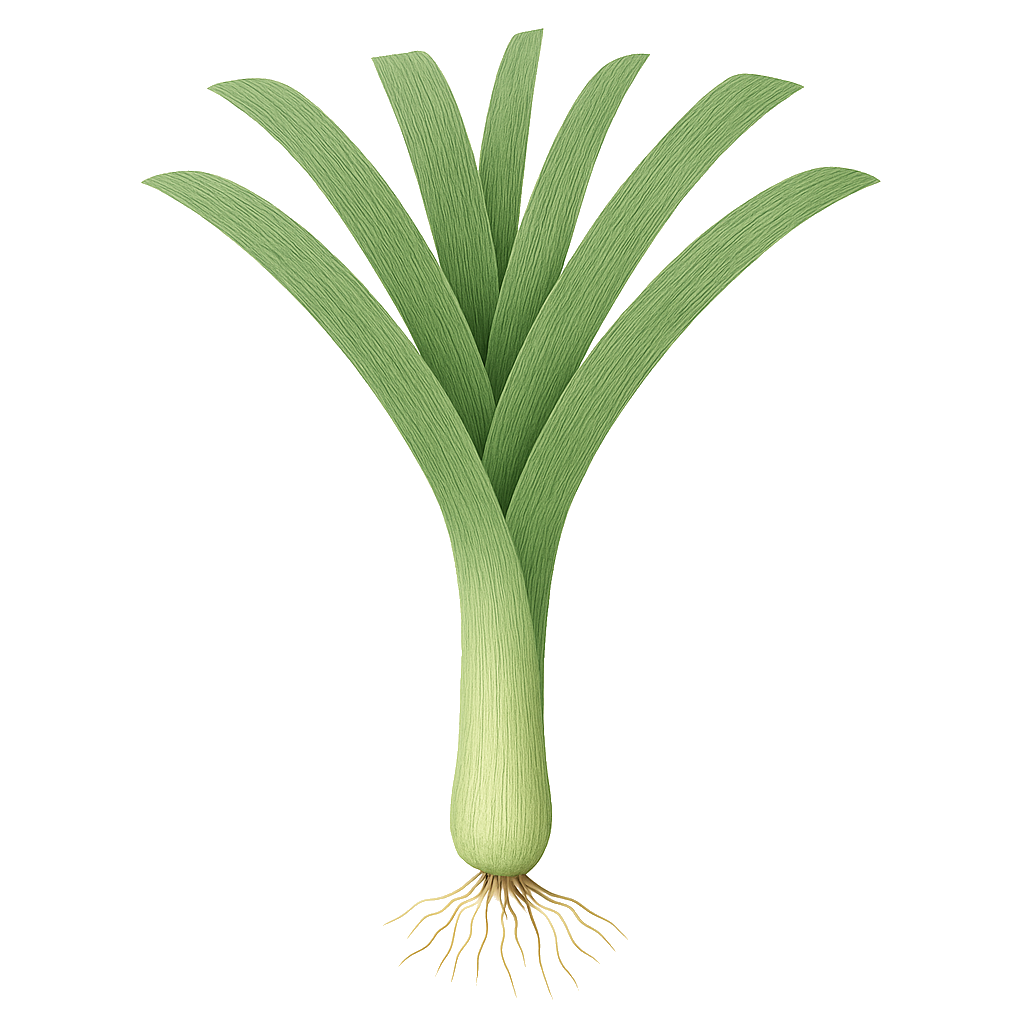
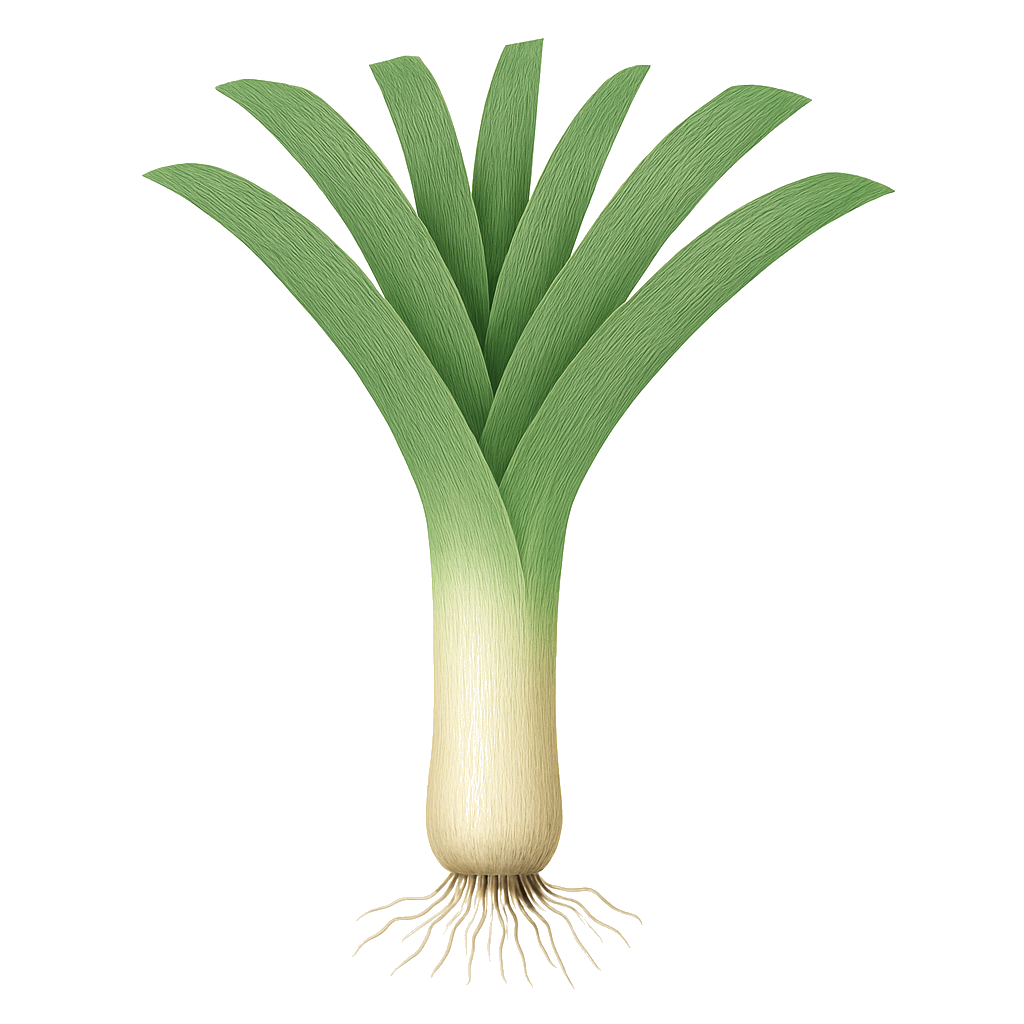
Pick a leek by when you want to harvest. Early types like King Richard grow fast for late summer and fall but are less hardy. Maincrop types like Lancelot or American Flag give the main fall crop. Overwintering types like Bandit or Giant Musselburgh are tougher and slower, made to stand in the garden through winter so you can dig them up fresh in the cold months. Unlike onions, leeks do not care about day length, so just match the type to your season.Choose by season first. Early or summer types (King Richard) are fast and tall but less hardy, for late-summer and fall use. Maincrop types (Lancelot, Large American Flag, Tadorna) carry the main fall harvest. Overwintering types (Bandit, Giant Musselburgh) are slower, shorter, and blue-green but the most cold-hardy, bred to stand in the ground through winter into spring. Matching variety to how late you want to harvest matters far more for leeks than for onions, since leeks have no day-length requirement.
King Richard illustration
King Richard
early fresh use
Lancelot illustration
Lancelot
all-purpose
Large American Flag illustration
Large American Flag
all-purpose heirloom
Tadorna illustration
Tadorna
fall to early winter
Bandit illustration
Bandit
overwintering
Giant Musselburgh illustration
Giant Musselburgh
overwintering heirloom
Off the vine

Storing your harvest

Room temp
Leeks do not keep at room temperature. The best way to store them is to leave them growing in the garden and dig them up as you need them.Leeks are not a long-keeping crop and do not store at room temperature. The best storage is to leave them standing in the garden and harvest as needed; lifted leeks soften quickly in a warm room.
Fridge
In the refrigerator, trimmed leeks last about one to two weeks, best wrapped so they do not dry out. They keep best cold and humid.Trimmed leeks keep about one to two weeks in the refrigerator, ideally wrapped to hold moisture; USU notes they hold best in cold (32 to 40°F), humid conditions.
Freezer
You can slice leeks and freeze them. They go soft after thawing, so use frozen leeks in cooked food like soups, not in salads.Leeks freeze well sliced; texture softens, so use frozen leek in cooked dishes such as soups and stews rather than raw.
Verified · 2 sources View
When something goes wrong

Common problems

01 of 03
02 of 03
03 of 03
Verified · 4 sources View
The usual suspects

Pests & diseases

Pests
Onion thrips
P · 01
Cause A tiny insect called onion thrips. It multiplies fast in hot, dry weather and hides in the tight folds of the leaves, and it bothers stressed plants the most.Onion thrips (Thrips tabaci) build through warm, dry weather and shelter deep in the leaf folds where sprays miss them; weak, drought-stressed leeks are hit hardest.
Leek moth
P · 02
Cause The caterpillars of a small brown moth. The young ones eat the inside of the leaves and the older ones tunnel into the stem, then spin little net-like cocoons on the plant.Larvae of the leek moth (Acrolepiopsis assectella), a small brown moth; young caterpillars mine the foliage and older ones bore into the stems, then pupate in net-like silk cocoons spun on the leaves.
Onion maggot
P · 03
Cause The larvae (maggots) of a small fly that lays eggs at the base of the plant. They survive in leftover allium debris.Larvae of the onion maggot fly (Delia antiqua), whose eggs are laid at the plant base; populations carry over in allium residue left in the ground.
Allium leaf miner
P · 04
Cause A fly called the allium leaf miner. It is active in spring and again in fall, and its maggots tunnel inside, often letting rot set in afterward.The allium leaf miner (Phytomyza gymnostoma), an increasingly widespread fly with two generations a year, active roughly March to April and again September to November; secondary rots often follow the tunneling.
Diseases
Leek rust
D · 01
Cause A fungus that causes orange rust. It spreads in damp, humid weather and is worse when plants are crowded or pushed with too much nitrogen.The fungus Puccinia porri (formerly P. allii); it is worse on crowded plants, in humid weather, and on nitrogen-rich, low-potassium soils.
White rot
D · 02
Cause A soil fungus that attacks onions, garlic, and leeks. Its tiny resting bodies can live in the soil for more than 20 years and wake up when allium roots are near.The soilborne fungus Stromatinia cepivora (Sclerotium cepivorum), whose sclerotia survive in soil for over 20 years and germinate in response to allium roots; even a few sclerotia per soil sample can start the disease.
Pink root
D · 03
Cause A soil fungus that builds up when onions and their relatives are grown in the same ground year after year, especially in warm soil.A soilborne fungus that builds up in continuous allium ground and is favored by warm soil; stressed plants show it worst.
Verified · 6 sources View
Seasoned
Where to plant next year

Crop rotation

Leeks do well planted after leafy greens or beans and peas. Just do not plant beans or peas right next to leeks, since alliums can slow them down.Leeks follow well after a leafy or legume crop. Like other alliums, they are traditionally kept away from beans and peas, which alliums are thought to inhibit.

Family
Allium
Years between
4 years
in the same bed
Avoid following
Do not plant leeks where you grew onions, garlic, or other leeks recently. Some allium diseases live in the soil and build up, and white rot can last over 20 years. Wait at least 3 to 4 years before growing alliums in the same spot again.Avoid following leeks or other alliums (onions, garlic, shallots) in the same ground; several allium diseases, including pink root and especially white rot, persist in soil, white rot for over 20 years. A home garden can target at least 3 to 4 years between allium crops.
Plant after
leafy greens or legumes
Verified · 2 sources View
In the app · pre-launch

When plant taps you on the shoulder

The plant app sends a timely reminder at every critical moment of your leek season. The wording adjusts to whichever you pick: beginner or seasoned. Here are three you'll see in Zone 12.

p
plant
12 weeks before last frost
Time to start leek seeds inside
If you are growing leeks from seed, plant them in trays indoors now, about 10 to 12 weeks before they go outside. Leeks grow slowly and need this head start. In mild areas you can sow straight in the garden instead.
p
plant
2 weeks before last frost
Time to plant leeks outside
Plant your young leeks now, once the soil can be worked, around your last frost. Make a deep hole for each, drop the seedling in, and just water it so the soil washes in. Leeks handle cool weather, so you do not wait for warm soil.
p
plant
0 days after last frost
Pull soil up around your leeks
Start pulling loose soil up around the stems to grow a longer white part. Add only about an inch of soil at a time and keep it below where the leaves split. Do this a few times over the season.
Get personalized alerts.

plant sends the right notification at exactly the right moment, for your zone, your weather, your crops. Founding members lock the rate forever.

Back the Kickstarter →
Ask the gardener

Common questions

Got a question we missed?

We're building this guide with real growers. Got a question we missed? Ask here. We read every one and add the best answers right to this page.

Grown this before?

Share a tip

Learned something the hard way? Pass it on. Real growers' tips make this guide better for the next person, and we credit you by name when yours goes live.

Seasoned
Spot something wrong?

Report a problem

If you've grown this crop and you see a date, a temperature, a companion claim, or a recommendation that doesn't match your experience, tell us. Real growers' corrections make this guide better for the next person.

How we built this guide

Methodology & sources

Every date, temperature, spacing, and recommendation on this page is sourced from university cooperative extension publications, peer-reviewed agricultural research, NOAA climate data, and direct extension calendars. Where claims are softer (traditional gardening wisdom not formally documented), we say so.

Research-backed Documented in cooperative extension publications or peer-reviewed research
Well-grounded A known agronomic principle, but not formally tested for this specific pair
Traditional Time-tested gardening wisdom, limited formal research support
Last reviewed
June 29, 2026
Data version
crops_data_final · v1.0 · schema 2.9
Sources cited on this page
16 publications
Verified entries
Companion-planting claims tagged inline · zone dates verified against 5+ extensions
See all sources cited on this page
  • University of Minnesota Extension umn_ext
  • University of Maryland Extension umd_ext
  • Cornell Cooperative Extension cornell_ext
  • Iowa State University Extension iastate_ext
  • Michigan State University Extension msu_ext
  • NC State Extension ncsu_ext
  • Penn State Extension psu_ext
  • U. of Illinois Urbana-Champaign Extension uiuc_ext
  • UC Davis Postharvest Center ucd_postharvest
  • Texas A&M AgriLife Extension tamu_agrilife
  • Virginia Cooperative Extension 426-331 vce_426_331
  • Piedmont Master Gardeners piedmont_mg
  • UGA Vegetable Garden Calendar uga_calendar
  • Clemson Home & Garden Information Center clemson_hgic
  • UC IPM Statewide IPM Program uc_ipm
  • NOAA 1991-2020 Climate Normals noaa_normals

Growing notes, weekly.

Zone-aware seasonal nudges, what's worth planting now, and the occasional recipe from the harvest. No spam, ever.

Vol. 003 · Leek · plant.lifestyle