Today · in your zone
What's happening right now
Off-season for leek in zone 4.
Tap to switch. plant calibrates to where you are in the journey.
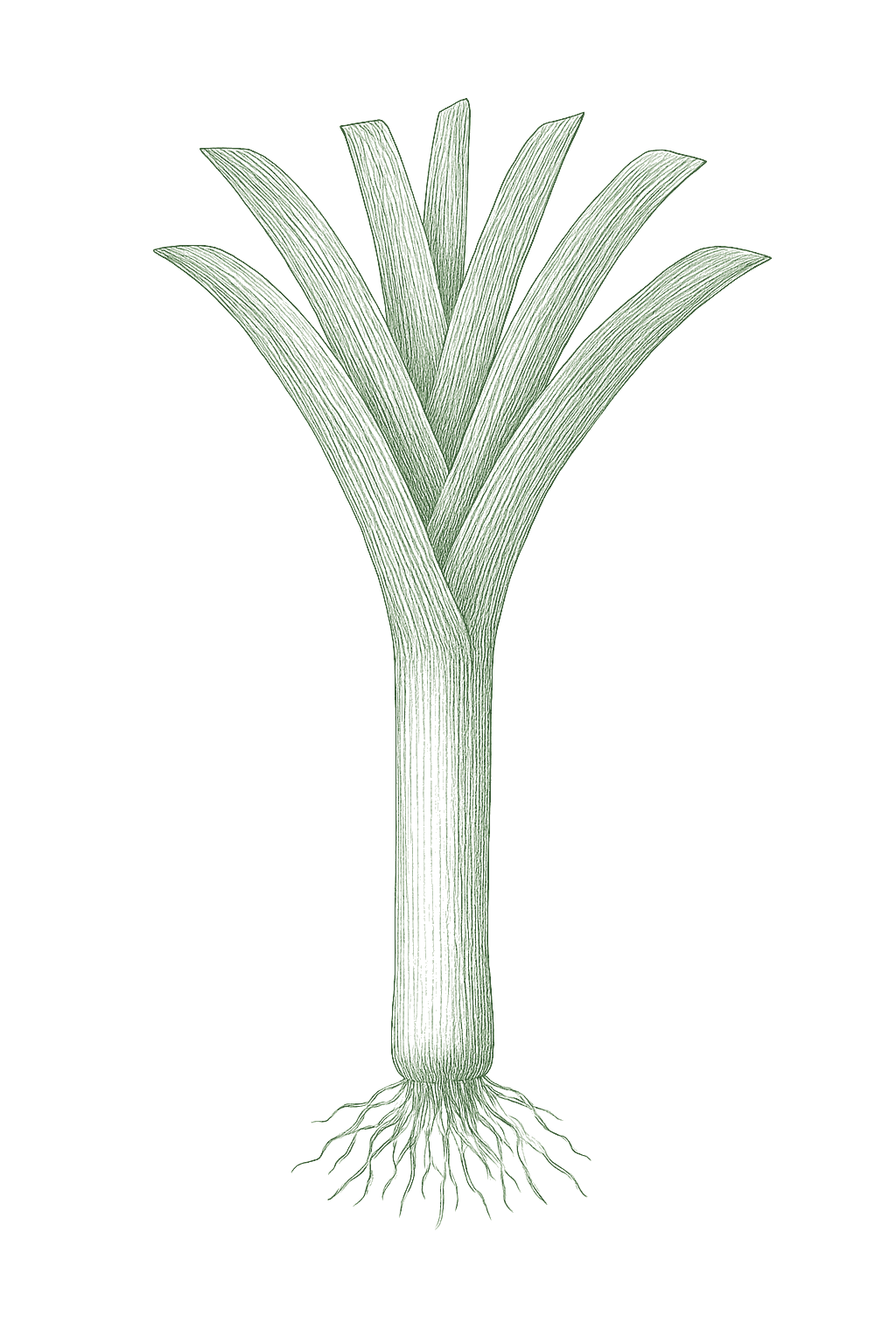
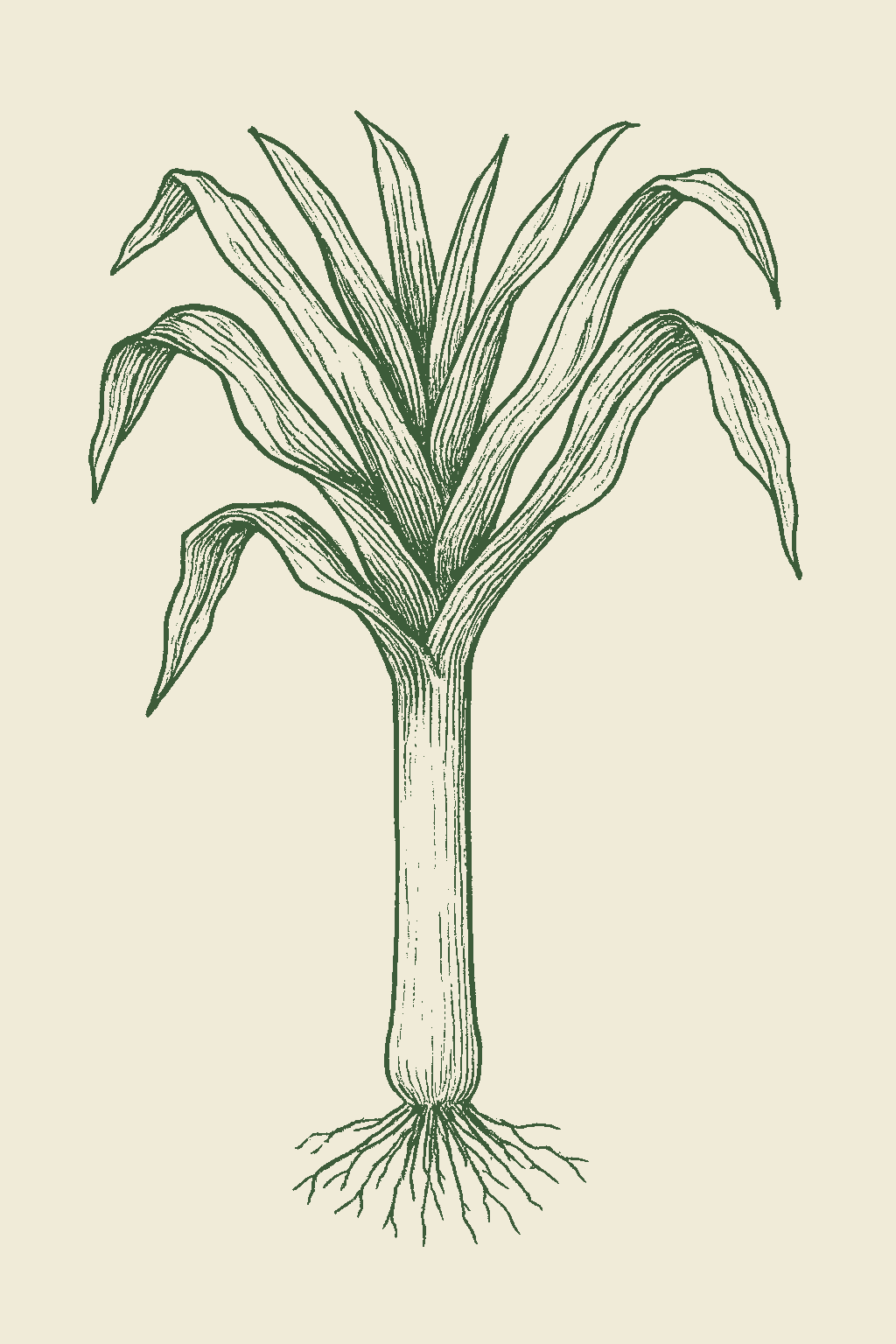
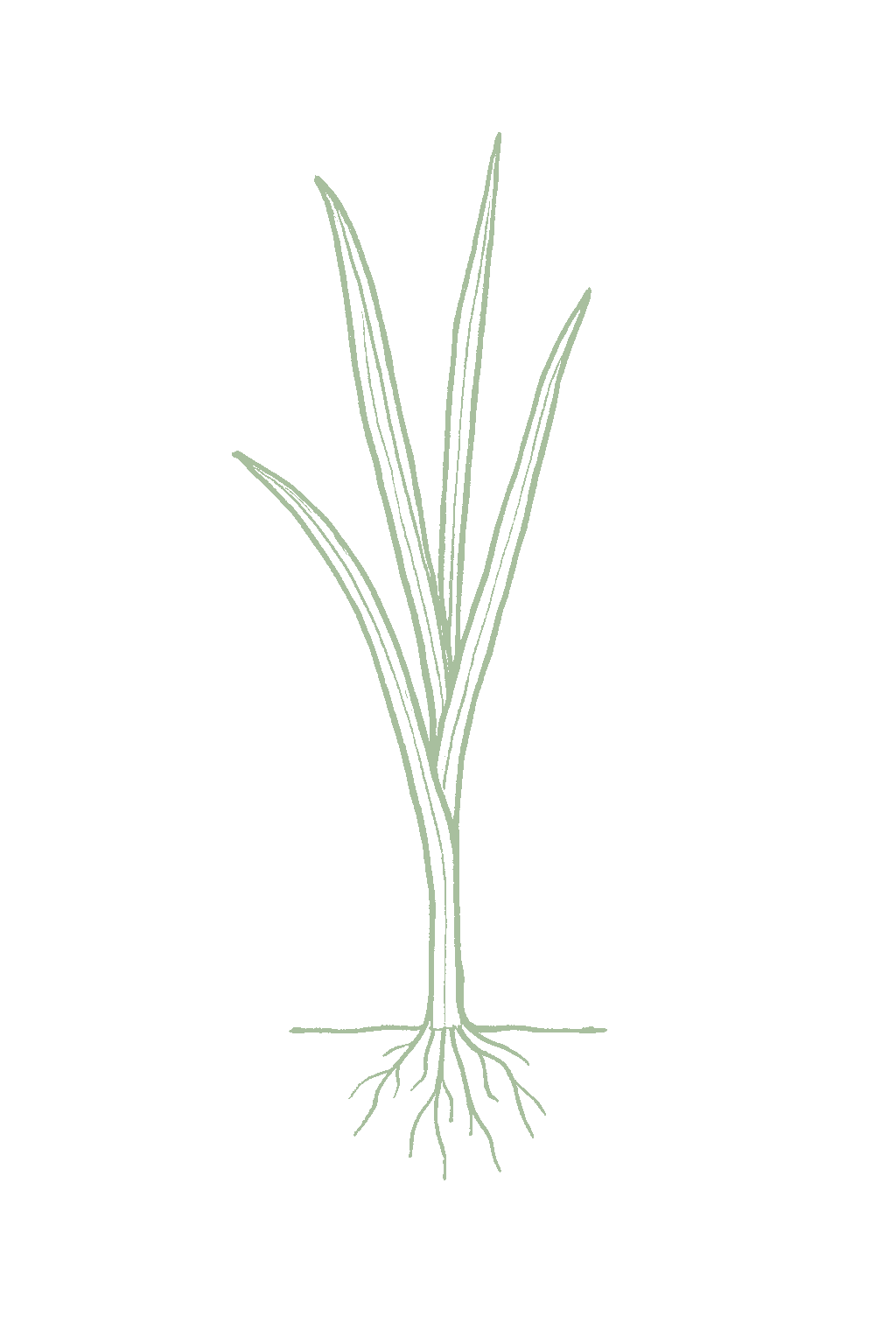
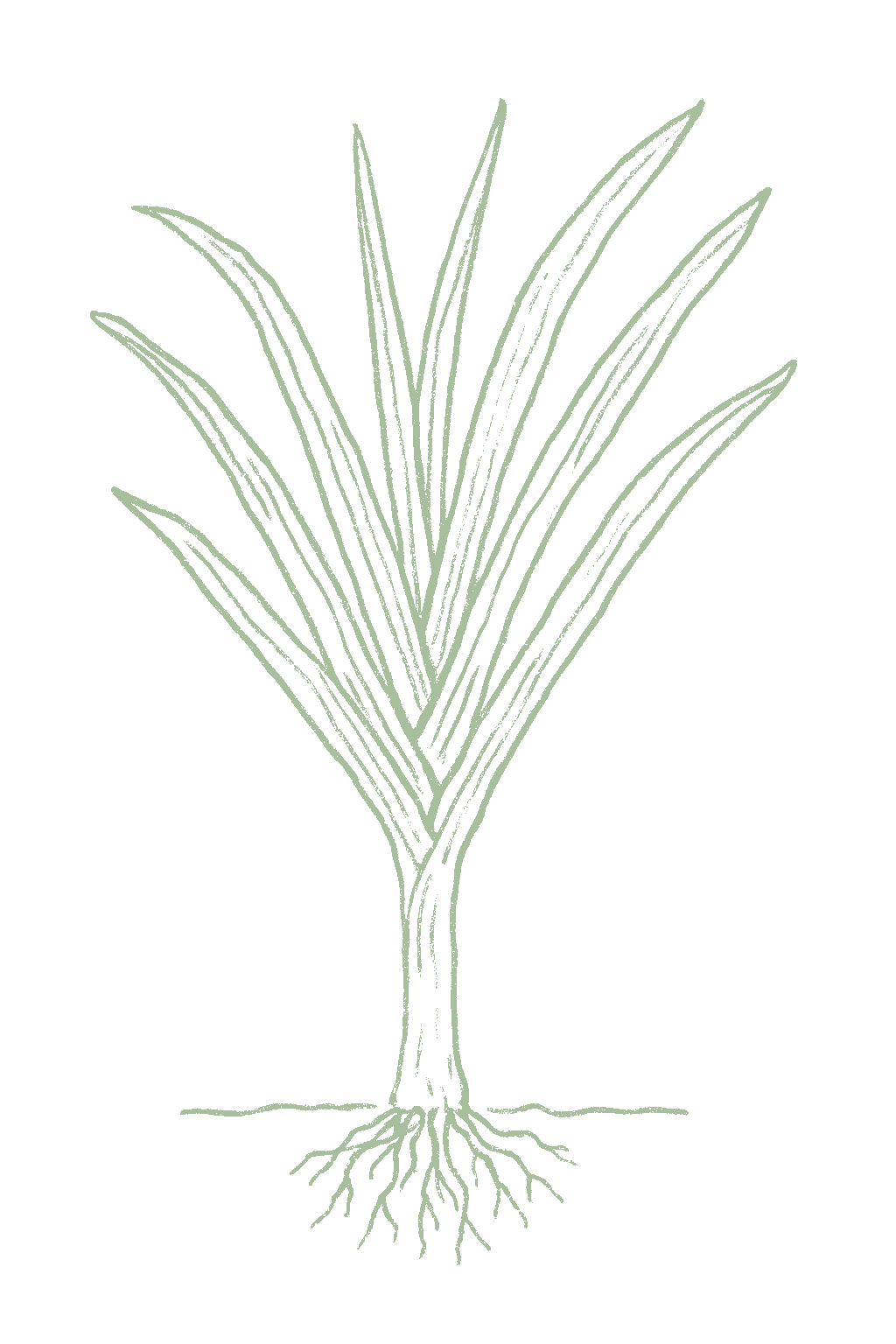
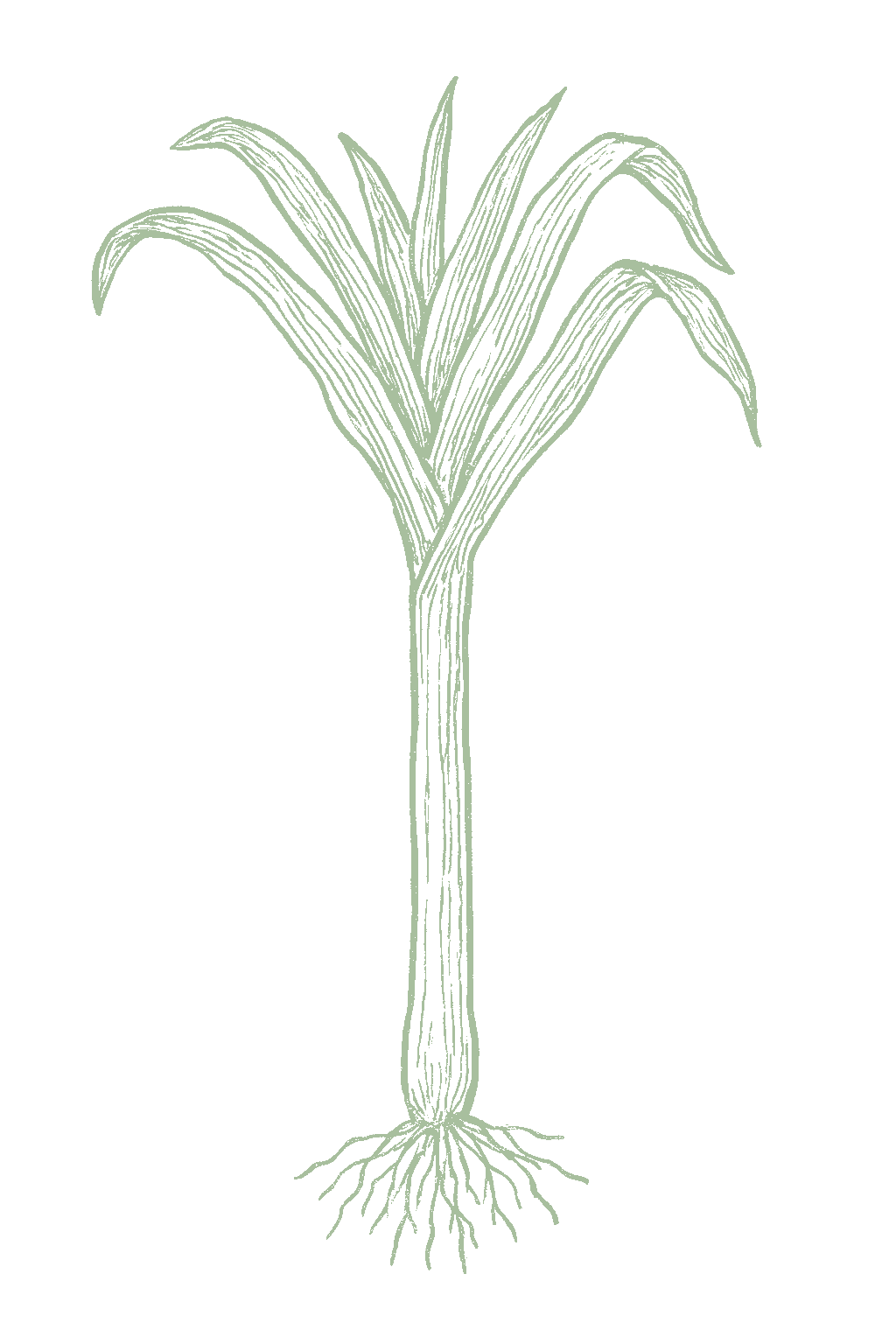
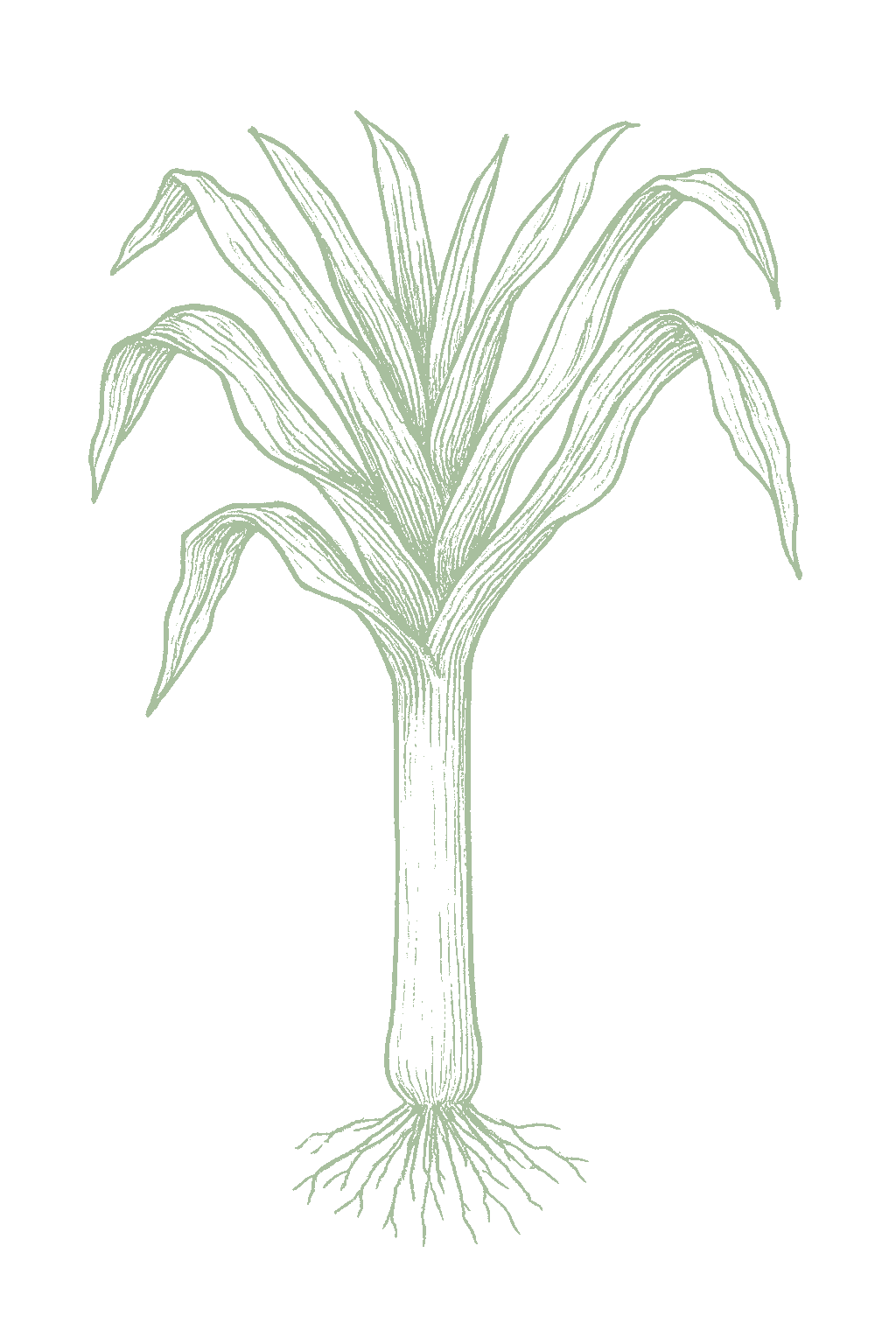
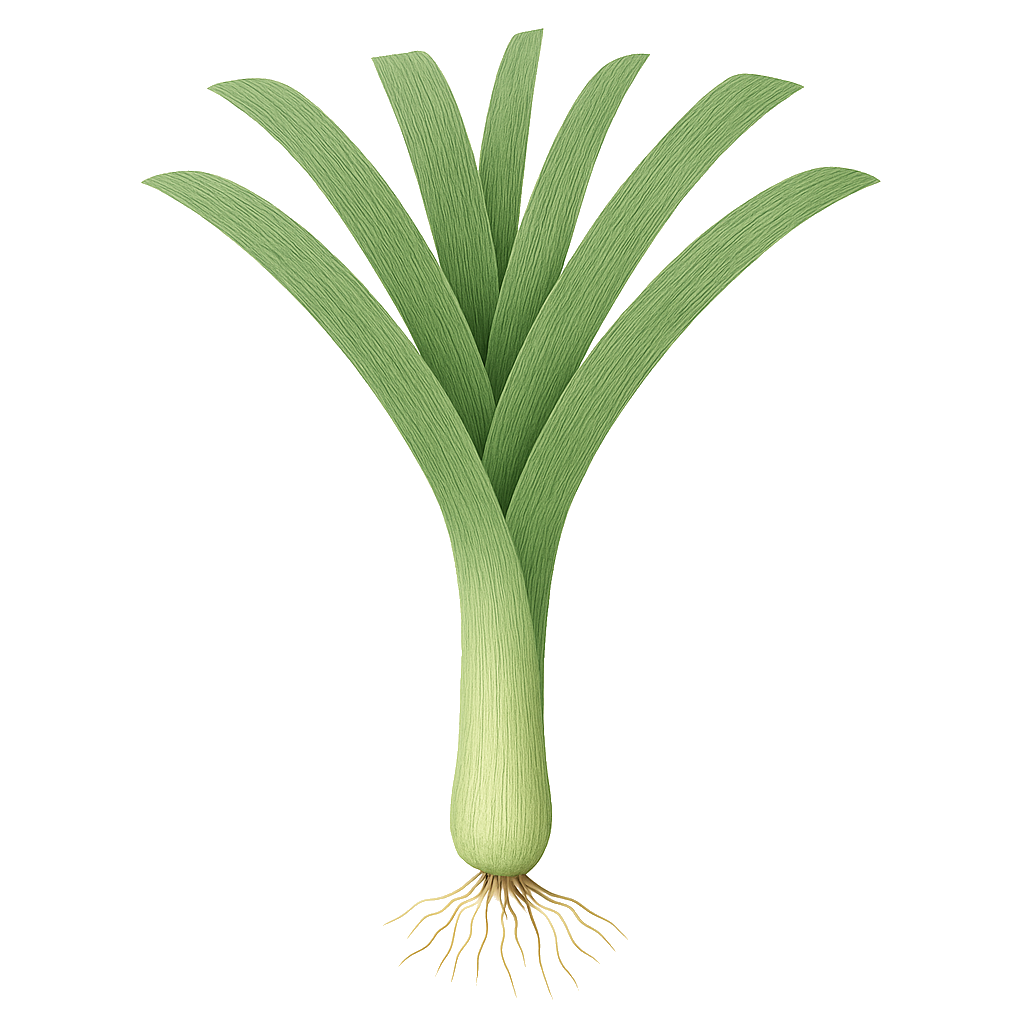
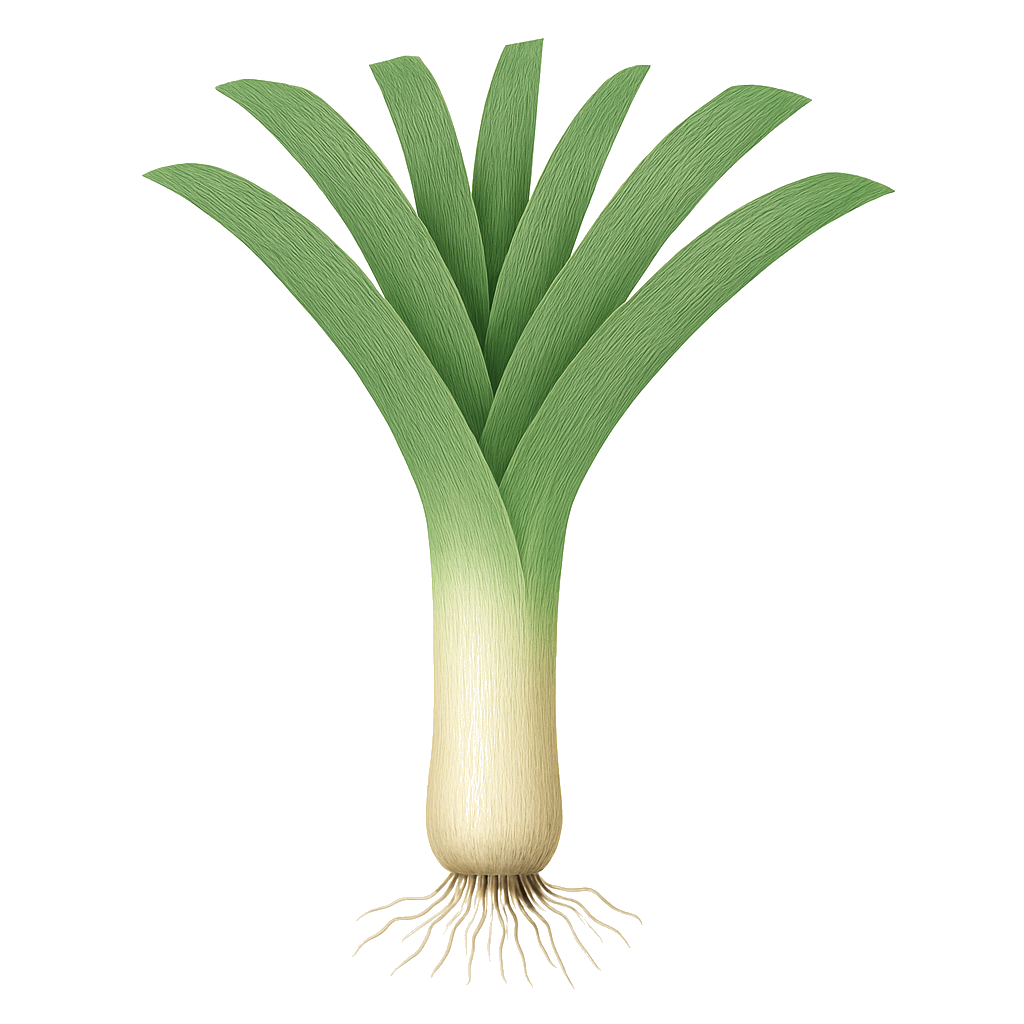
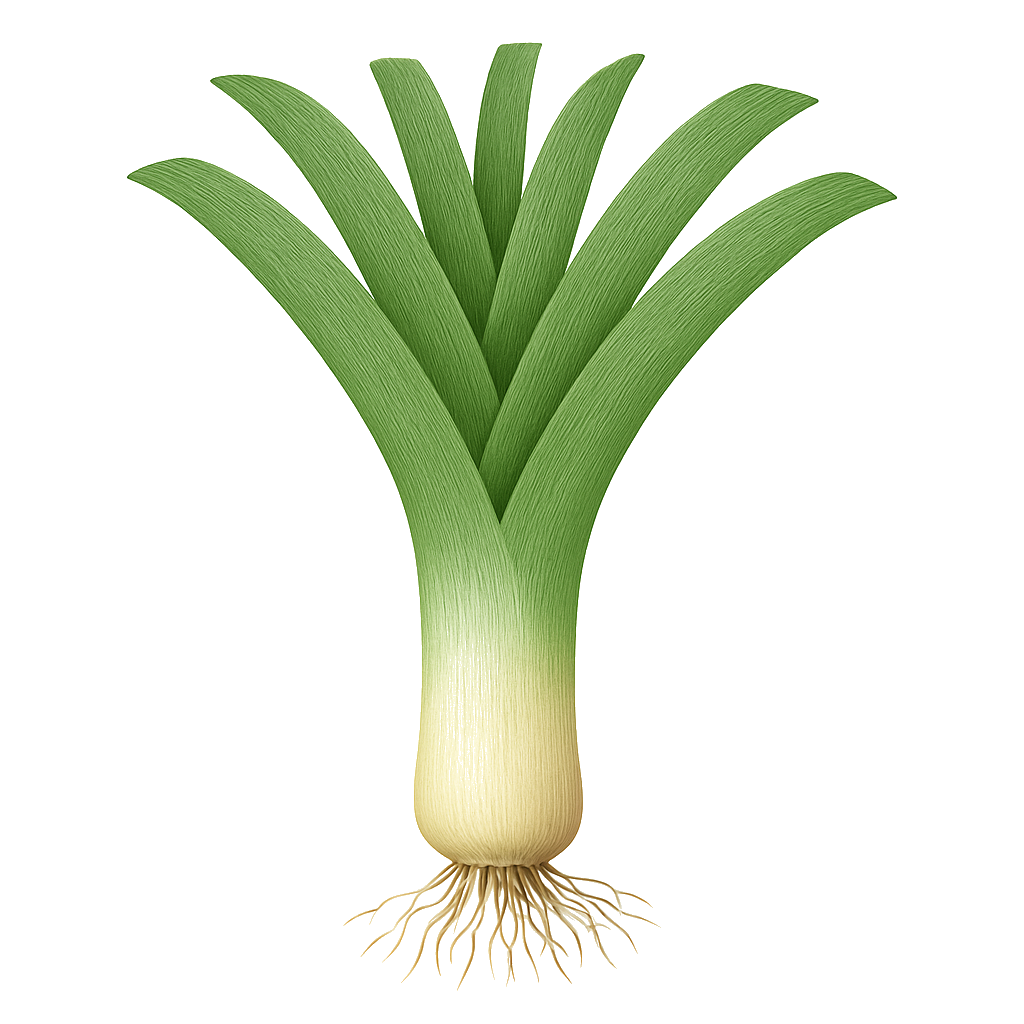
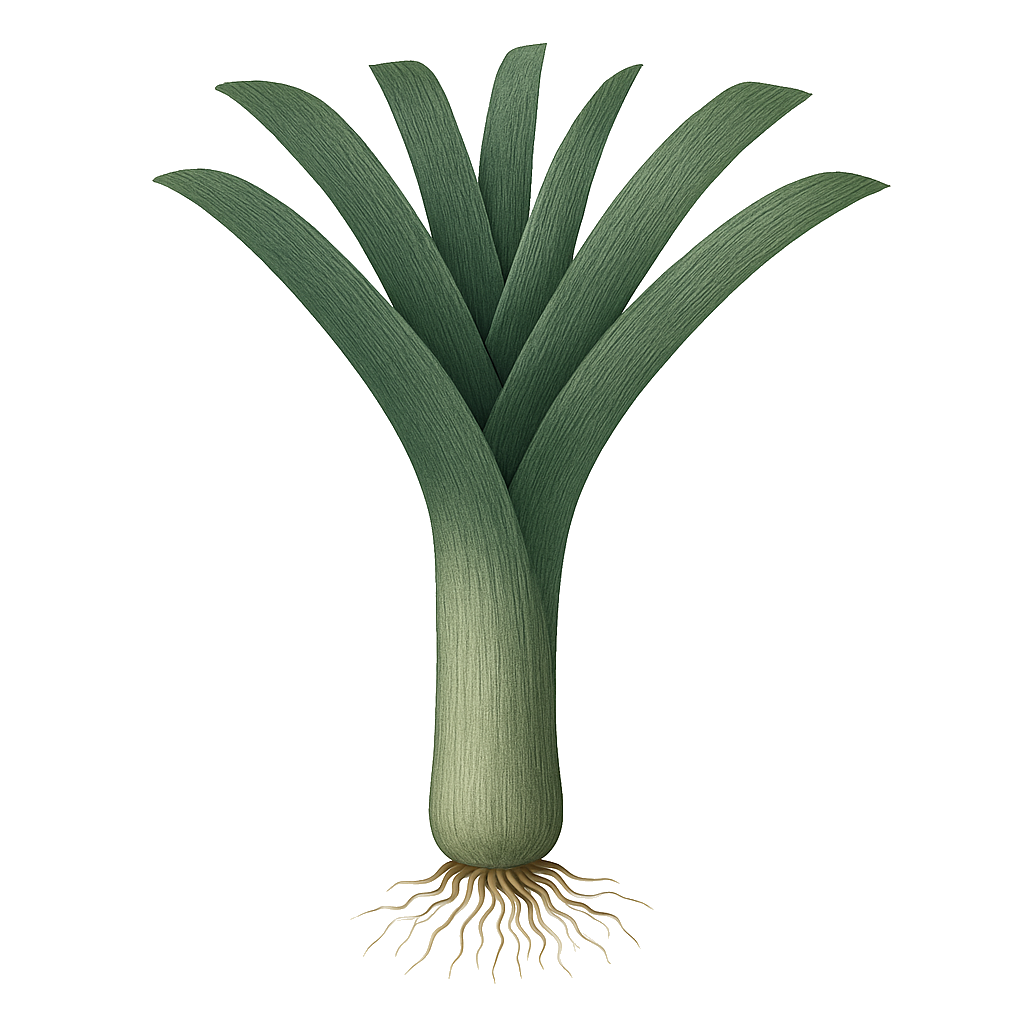
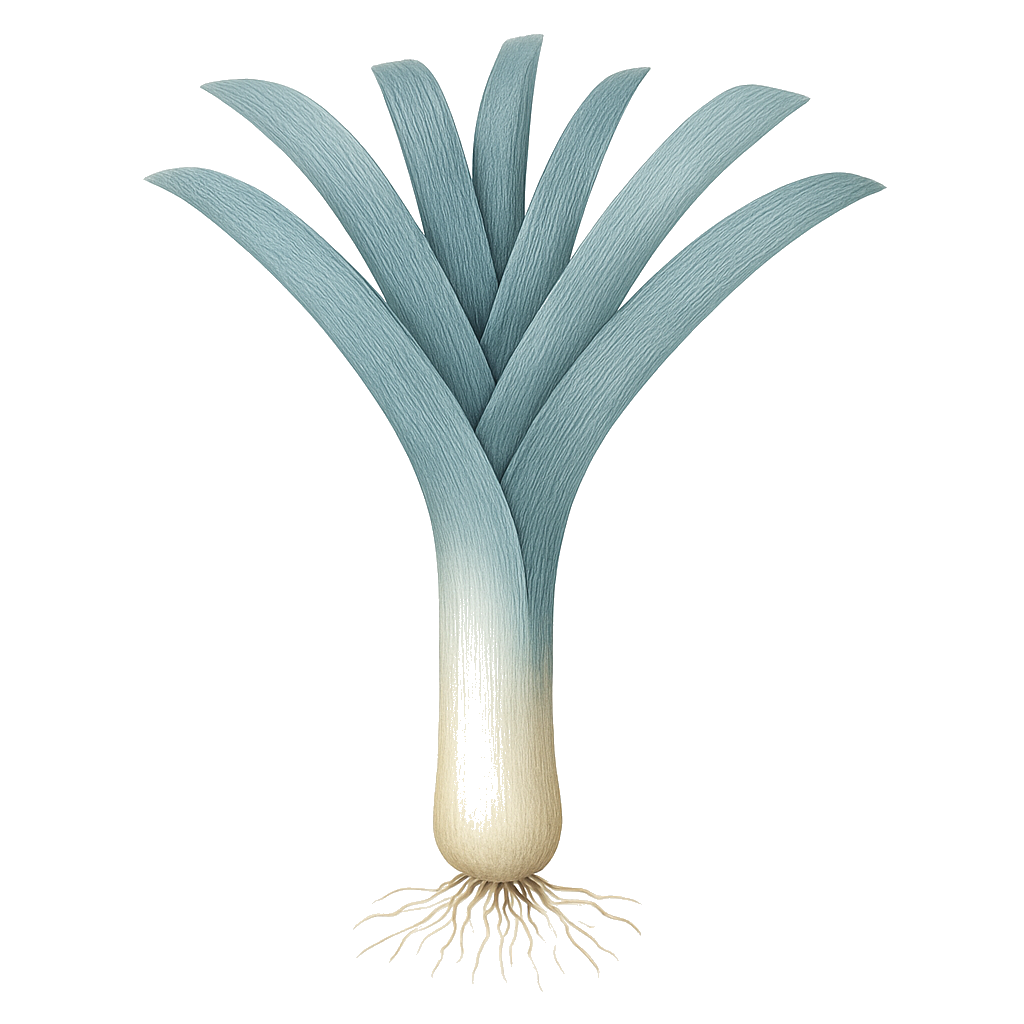
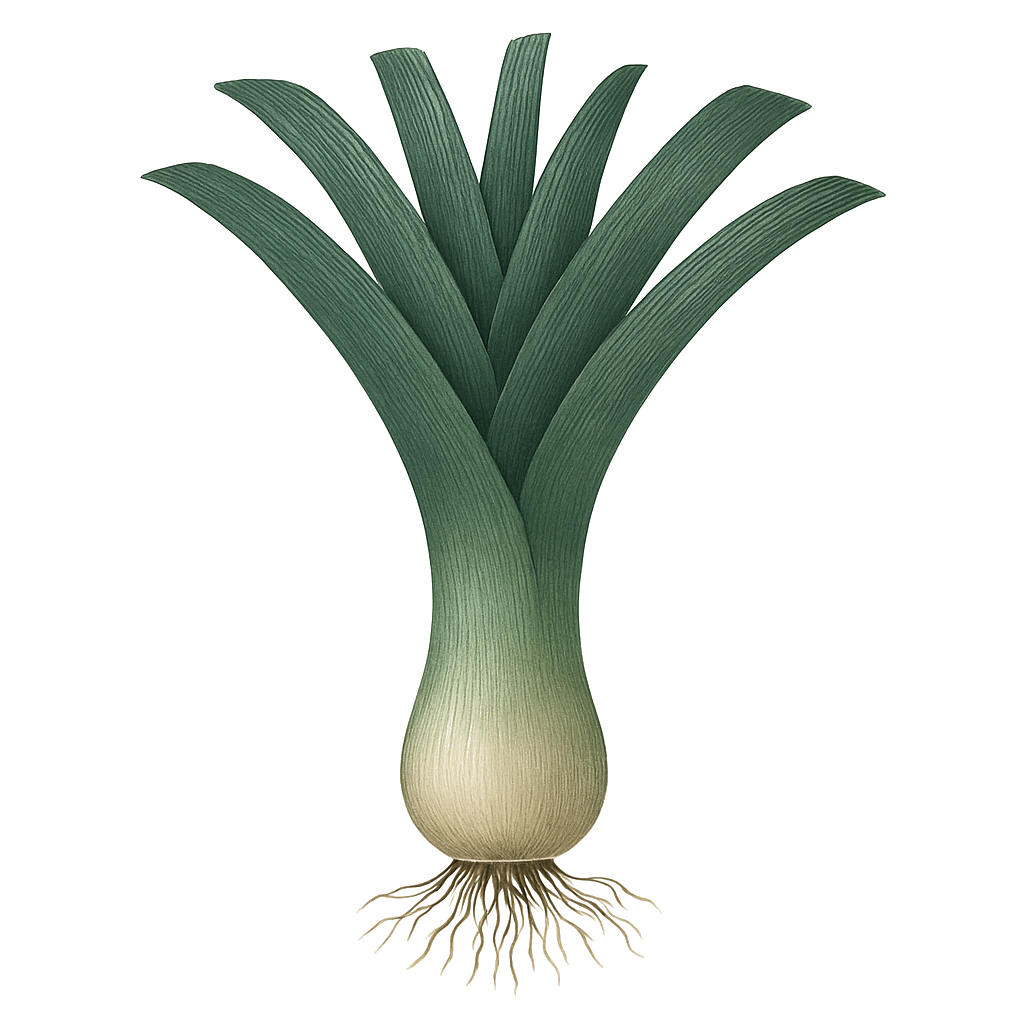
A leek is a mild, sweet relative of the onion, but instead of a bulb you grow and eat the long white stem. Leeks take a long time, so most gardeners start them indoors in late winter and plant them deep, then pull soil up around the stems to keep the bottom part white and tender. The best thing about leeks is that they handle cold: they stand right in the garden through frost and even taste sweeter for it, so you can dig them up fresh from fall into winter instead of all at one time. Which leek you plant sets how late you can harvest: fast early types like King Richard are for late summer and fall, while very hardy overwintering types like Bandit and Giant Musselburgh are bred to stand out in the cold and be dug through winter. Leek (Allium ampeloprasum) is the mild, sweet allium grown not for a bulb but for its long, thick, blanched white stem, or shank. It is a patient, long-season crop, usually started indoors in late winter and transplanted deep so soil can be earthed up around the stem to blanch it. Its great virtue is cold-hardiness: leeks stand in the garden through hard frost, sweetening with the cold, and are dug fresh from fall into winter rather than harvested all at once. There is no bulbing and no day-length requirement, so unlike onions you simply match the variety to how late you want to harvest: an early tender type like King Richard for summer and fall, hardy maincrop types like Lancelot through the fall, and very hardy overwinterers like Bandit or Giant Musselburgh to stand through winter into spring.
Off-season for leek in zone 4.
In Zone 4, leek can be planted April through May. Start indoors Feb 1 - Mar 31. Harvest runs September through November.
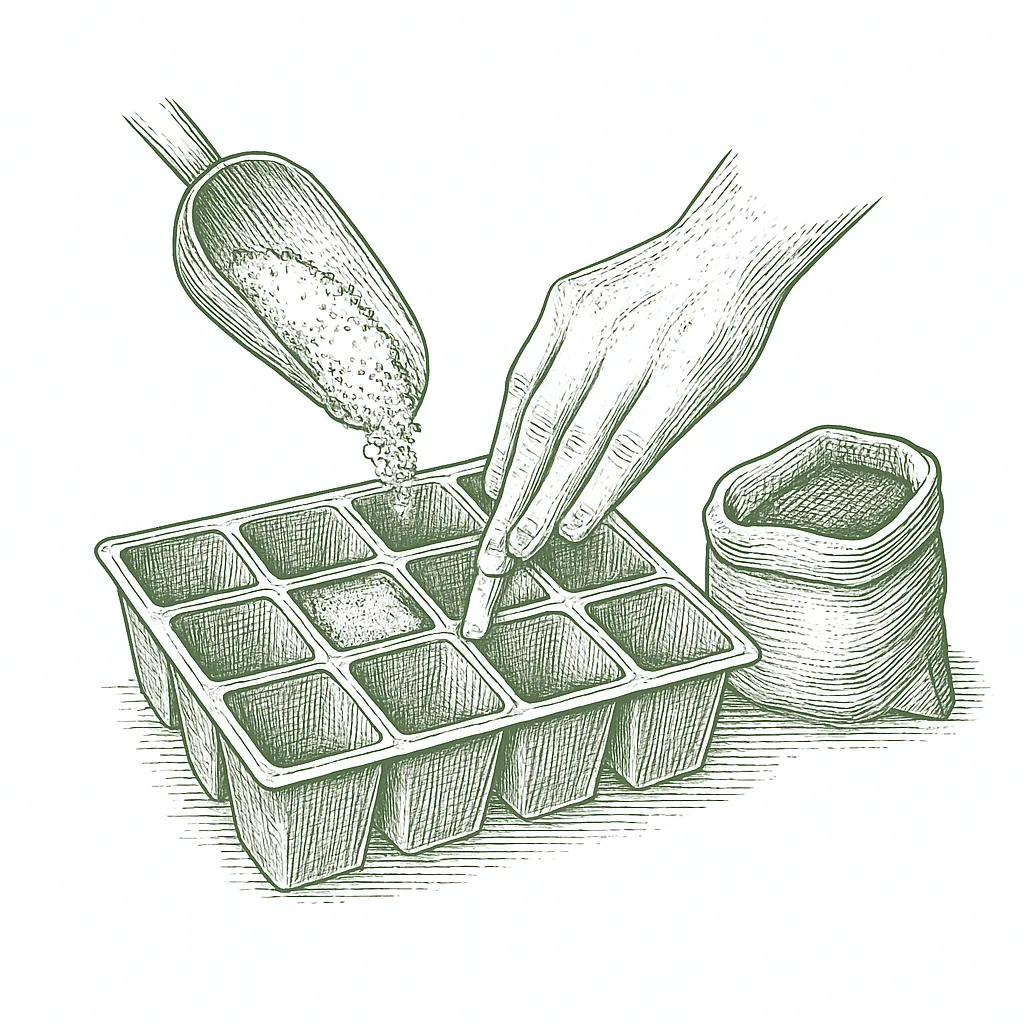
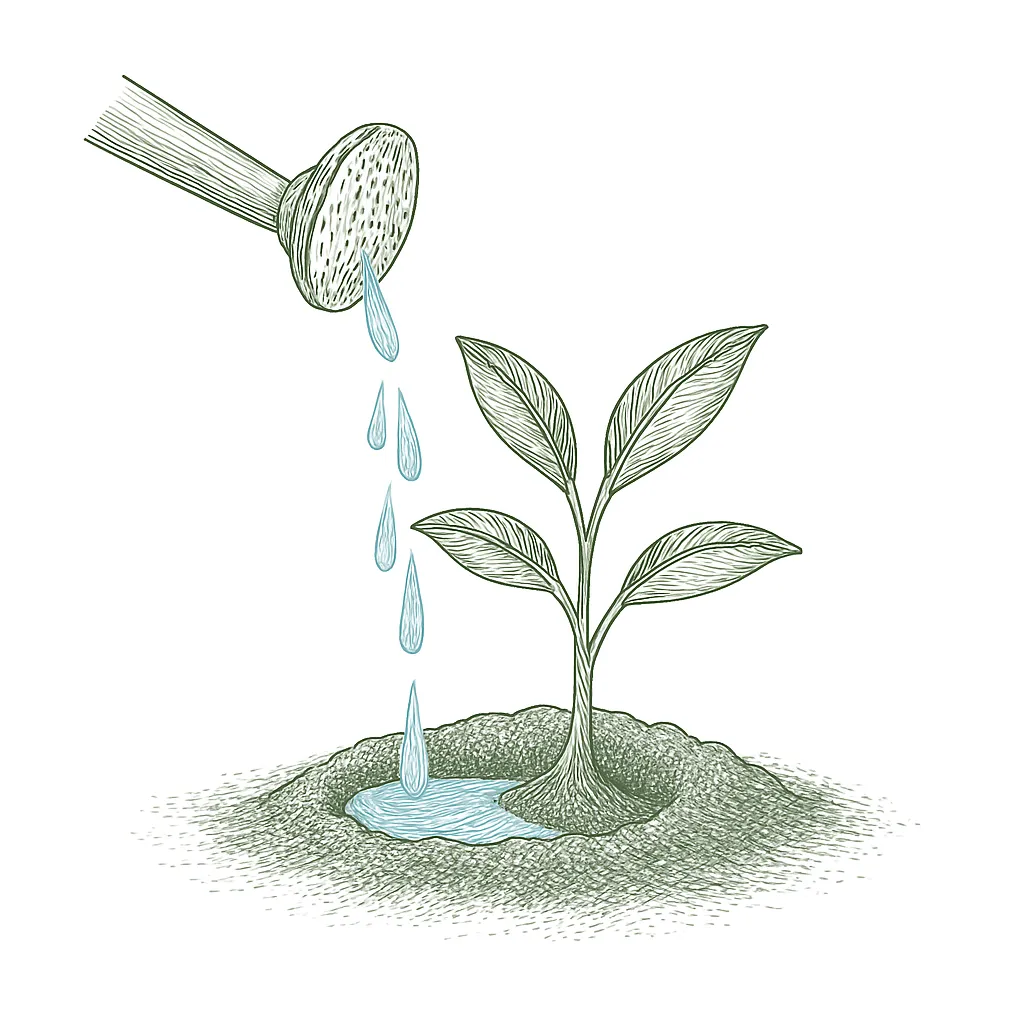
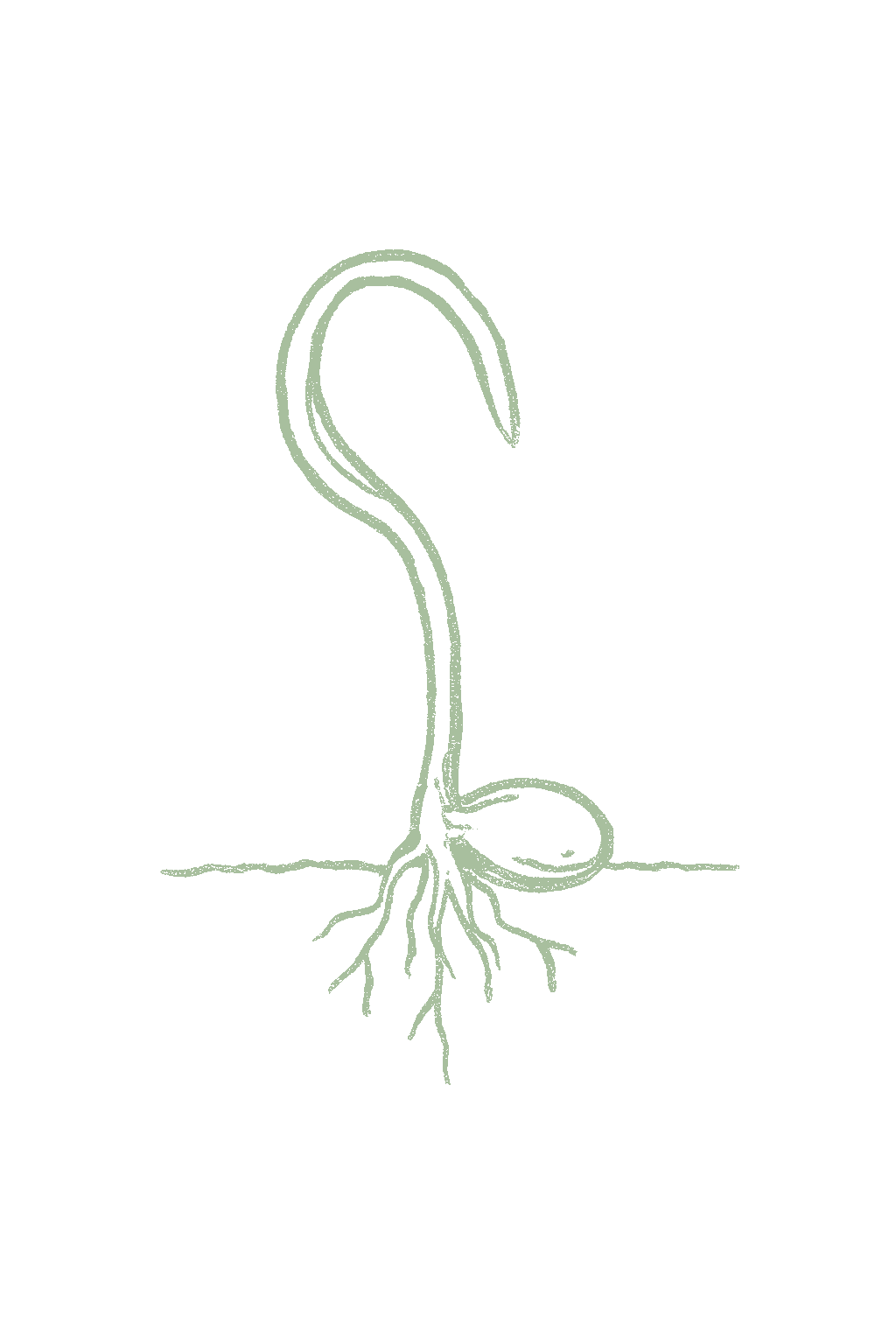
Most gardeners start leeks from seed indoors about 10 weeks before planting out, because they grow slowly and need a long season. In mild areas you can also sow seeds straight in the garden. To plant a seedling, make a hole about 6 inches deep with a dibber, drop the seedling in, and just water it; the soil washes in on its own. Planting deep like this starts the long white stem.Two entry points: start seed indoors about 10 weeks before set-out for transplants (the usual approach, since leeks are slow and long-season), or direct-sow in mild, long-season areas. Transplant into a deep dibble hole about 6 inches deep and water gently so soil washes in around the seedling without filling the hole; this sets the seedling deep and starts the blanched shank. Drop the transplant in and do not pack soil around it.
Not sure what soil you have? Grab a small handful of damp soil from your garden bed and squeeze it. If it crumbles apart easily, it's sandy. If it holds together but breaks when you poke it, it's loam (what most vegetables want). If it stays in a hard, slippery ball, it's clay.
Leeks like deep, loose, rich soil with lots of compost worked in. Loose soil matters because you grow the long white part of a leek by pulling soil up around the stem, and that is much easier in soft, crumbly ground than in heavy clay. Keep the soil evenly moist all season.
Mix 2-3 inches of compost into the top 6 inches of your bed before planting. Compost holds moisture (which sandy soil drains too fast) and adds the nutrients sandy soil tends to lack. Repeat each season. Compost breaks down over time.
Mix 2-3 inches of compost AND a few inches of coarse sand or perlite into the top 6 inches of your bed. The compost feeds the plants; the sand breaks up the clay so air and water can move through. Don't add sand without compost. It can compact like concrete.
If amending your soil sounds like too much work, or if your soil is heavy clay, full of rocks, or contaminated, build over it. A raised bed at least 12 inches deep filled with a 50/50 mix of compost and sandy loam gives you ideal growing soil with no battles. A 5-gallon container with quality potting mix does the same for one plant at a time. Both bypass your native soil entirely.
The numbers that matter, at a glance.
Leeks grow best in soil that is slightly acidic to neutral, about 6.0 to 7.0. A simple soil test takes out the guesswork. If your test comes back below about 6.0, adding garden lime brings it up.Aim for a soil pH of about 6.0 to 7.0 (UMN gives 6.0 to 7.0; UF/IFAS lists 6.5 to 7.0 for Florida). Leeks tolerate a wider 5.5 to 7.5 band but dislike strongly acid ground; below about 6.0 a liming amendment helps. Confirm with a soil test before adjusting.
Leeks grow for a long time and are fairly hungry plants. Mix a balanced fertilizer into the soil before planting, then feed once or twice with a nitrogen fertilizer through the summer while the stems are growing. Steady feeding builds thick stems. Do not pile on a lot of fertilizer late in the season, since soft, crowded, well-fed plants get rust more easily.Leeks are long-season, moderately heavy feeders. Work a balanced fertilizer such as 10-10-10 into the bed before planting (UMN suggests about one cup per 10 feet of row mid-season), then side-dress with nitrogen once or twice while the shafts are lengthening. USU gives a quarter pound of ammonium sulfate (21-0-0) per 100 square feet in the middle of May and again in late June. Keep nitrogen steady through summer for thick shanks, but avoid heavy late feeding, which together with crowding and wet leaves worsens leek rust.
Use a balanced fertilizer like 10-10-10 at planting, then feed with a nitrogen fertilizer once or twice during summer.A balanced base such as 10-10-10 at planting, then nitrogen side-dressings (for example ammonium sulfate, 21-0-0) through summer to build long, thick shanks.
Leeks are easygoing neighbors. Their strong allium smell is traditionally said to help hide carrots from the carrot rust fly, and they tuck in nicely beside celery, beets, and lettuce. The main thing to avoid is planting them next to beans or peas, which alliums can slow down. These are helpful traditions, not sure things. Leeks earn their companion reputation mostly through scent, traditionally credited with masking carrots from the carrot rust fly, so the classic leek-and-carrot pairing is the best known. They also share a long cool-season bed comfortably with celery, beets, and lettuce. The firm caution is the legume conflict: alliums are widely held to inhibit beans and peas, so keep leeks away from them. Most of these claims are traditional rather than trial-proven; treat them as low-risk suggestions.
Leeks are ready when the white stem is about an inch or more thick. You do not have to wait for an exact size, and smaller ones are fine too. Loosen the soil with a fork and lift them out gently. Since leeks handle frost, leave the others in the ground and dig them up fresh from fall into winter as you need them.Leeks are ready once the white shank is about an inch or more across and several inches long; there is no need to wait for a set size, and you can begin earlier for slim leeks. Lift by loosening with a fork rather than pulling. Because they are cold-hardy, leave the rest standing and harvest from fall into winter as needed.
Each plant makes one leek. A 10-foot row gives you roughly 20 to 30 leeks, and you dig them over a long stretch from fall into winter, not all at the same time.One leek per plant. At 4-to-6-inch spacing, a 10-foot row yields roughly 20 to 30 leeks, harvested over a long fall-to-winter window rather than all at once.
Leeks do not all finish at once. Because they stand in the garden, you harvest them gradually through fall and winter, and growing both early and late types spreads it out even more.Because leeks stand in the ground and are harvested as needed, there is no single flush: the harvest spreads across fall and winter, and mixing early and overwintering types stretches it further. The most important thing your first year is giving leeks a long, steady season: start the seeds early, keep them watered and fed, and hill soil up for the white part. Leeks that are rushed or stressed stay thin and short.The biggest first-year lever is a long, unbroken growing season: start seed early enough, keep moisture and feeding steady, and earth up for the white shank. Rushed or stop-start leeks make thin, short stems.
Pick a leek by when you want to harvest. Early types like King Richard grow fast for late summer and fall but are less hardy. Maincrop types like Lancelot or American Flag give the main fall crop. Overwintering types like Bandit or Giant Musselburgh are tougher and slower, made to stand in the garden through winter so you can dig them up fresh in the cold months. Unlike onions, leeks do not care about day length, so just match the type to your season.Choose by season first. Early or summer types (King Richard) are fast and tall but less hardy, for late-summer and fall use. Maincrop types (Lancelot, Large American Flag, Tadorna) carry the main fall harvest. Overwintering types (Bandit, Giant Musselburgh) are slower, shorter, and blue-green but the most cold-hardy, bred to stand in the ground through winter into spring. Matching variety to how late you want to harvest matters far more for leeks than for onions, since leeks have no day-length requirement.
Leeks do well planted after leafy greens or beans and peas. Just do not plant beans or peas right next to leeks, since alliums can slow them down.Leeks follow well after a leafy or legume crop. Like other alliums, they are traditionally kept away from beans and peas, which alliums are thought to inhibit.
The plant app sends a timely reminder at every critical moment of your leek season. The wording adjusts to whichever you pick: beginner or seasoned. Here are three you'll see in Zone 4.
plant sends the right notification at exactly the right moment, for your zone, your weather, your crops. Founding members lock the rate forever.
We're building this guide with real growers. Got a question we missed? Ask here. We read every one and add the best answers right to this page.
Learned something the hard way? Pass it on. Real growers' tips make this guide better for the next person, and we credit you by name when yours goes live.
If you've grown this crop and you see a date, a temperature, a companion claim, or a recommendation that doesn't match your experience, tell us. Real growers' corrections make this guide better for the next person.
Every date, temperature, spacing, and recommendation on this page is sourced from university cooperative extension publications, peer-reviewed agricultural research, NOAA climate data, and direct extension calendars. Where claims are softer (traditional gardening wisdom not formally documented), we say so.
Spot a data point that doesn't match your experience? Submit a correction; accepted corrections earn full author credit on the page.
Zone-aware seasonal nudges, what's worth planting now, and the occasional recipe from the harvest. No spam, ever.