Today · in your zone
What's happening right now
Off-season for leek in zone 9.
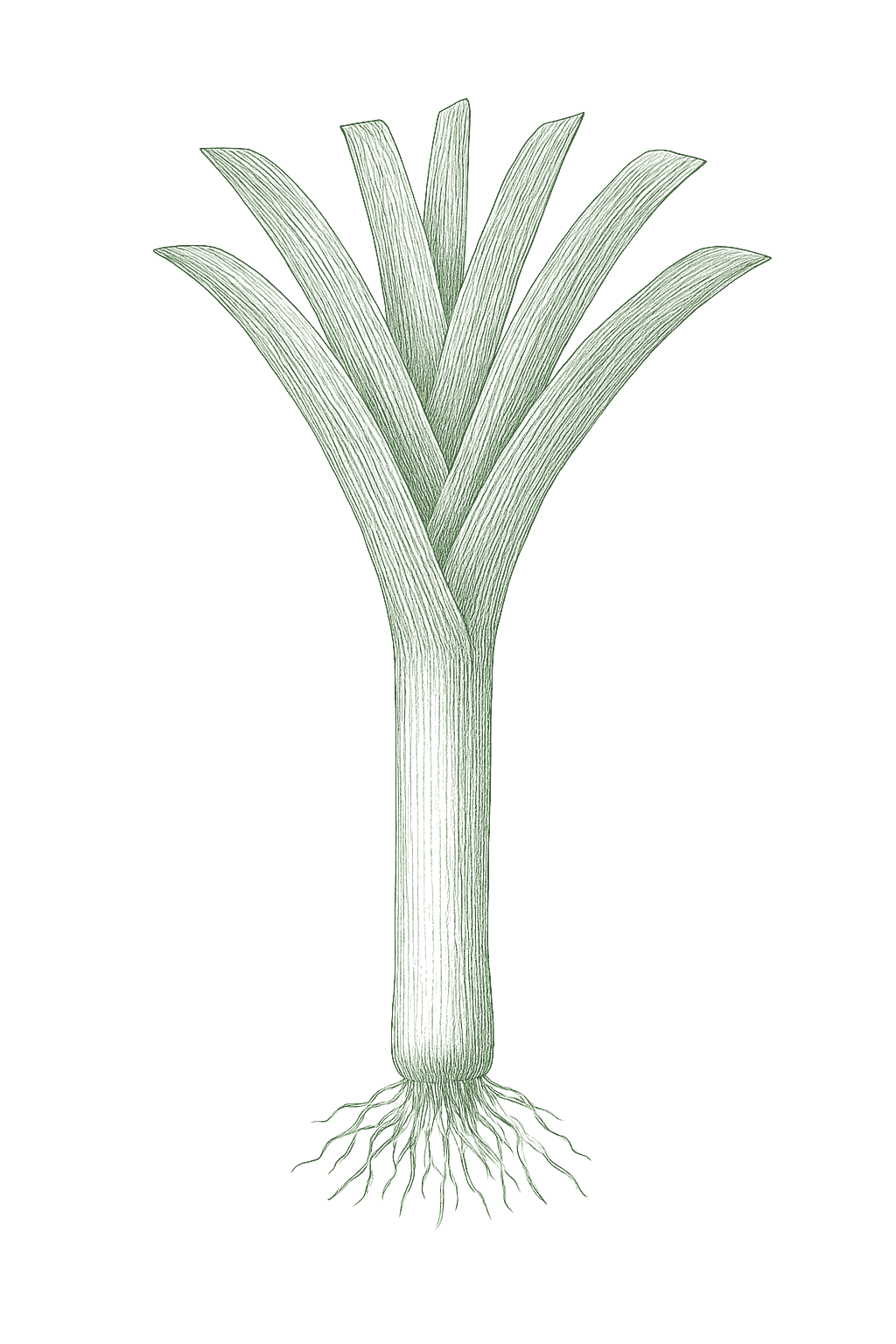
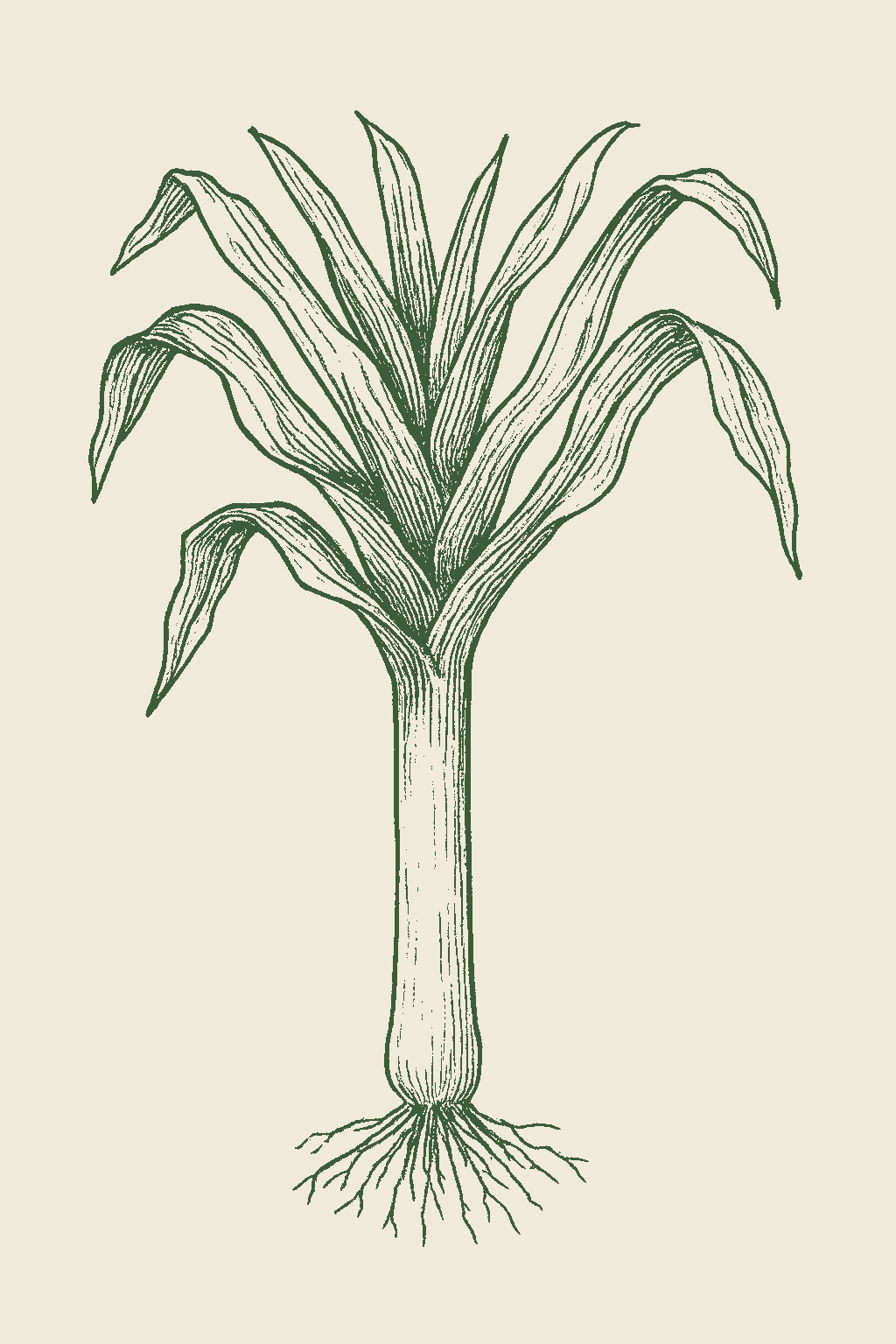
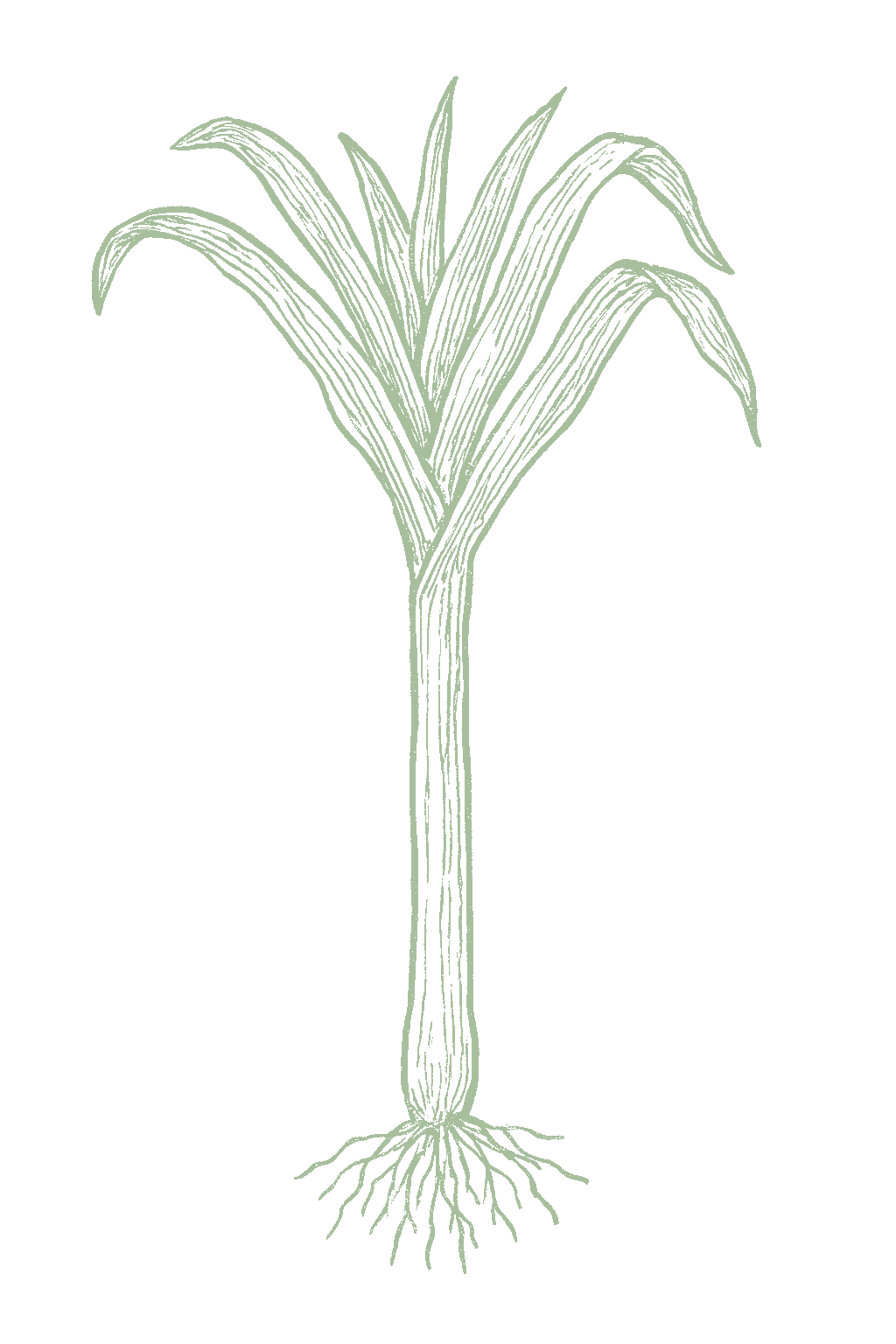
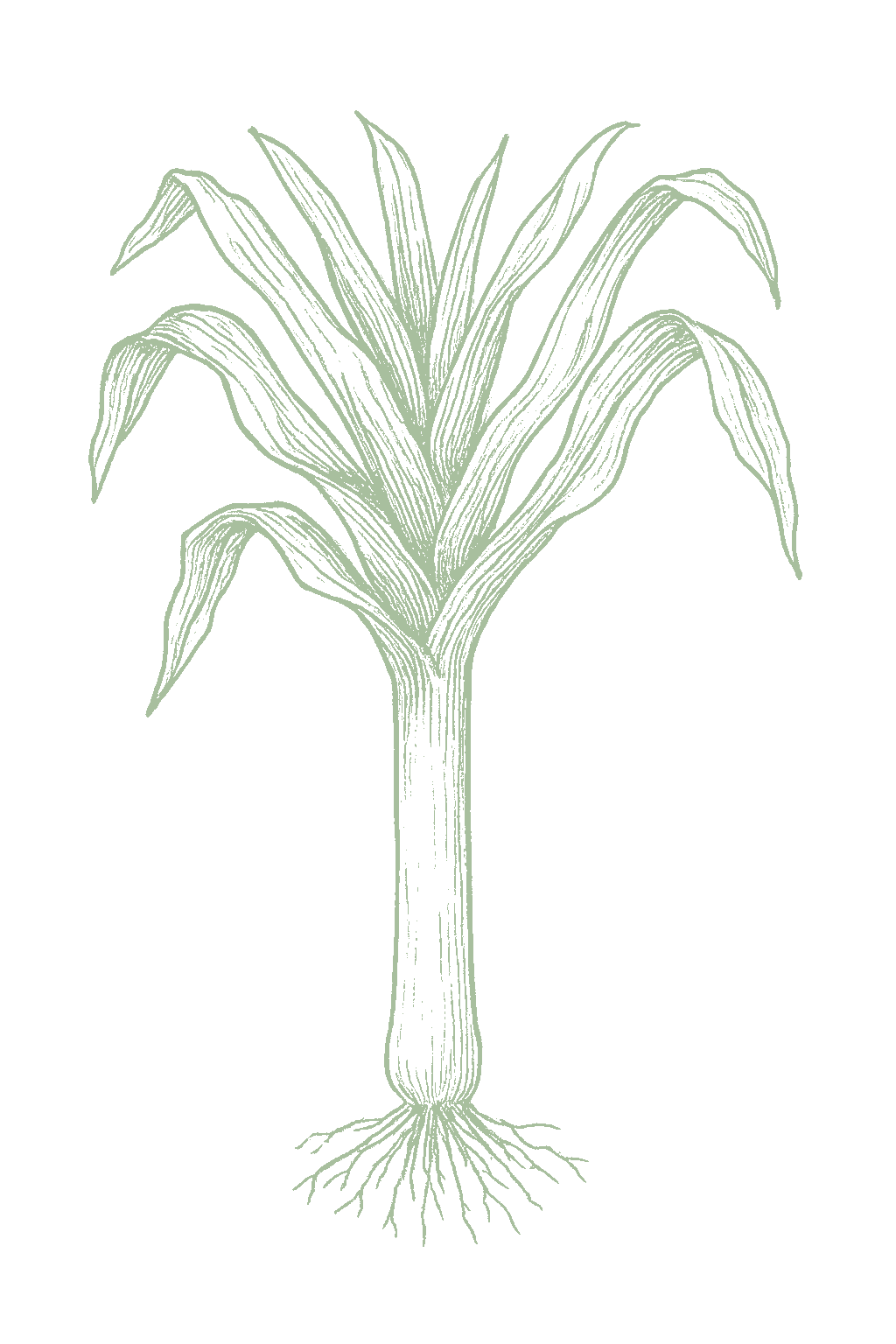
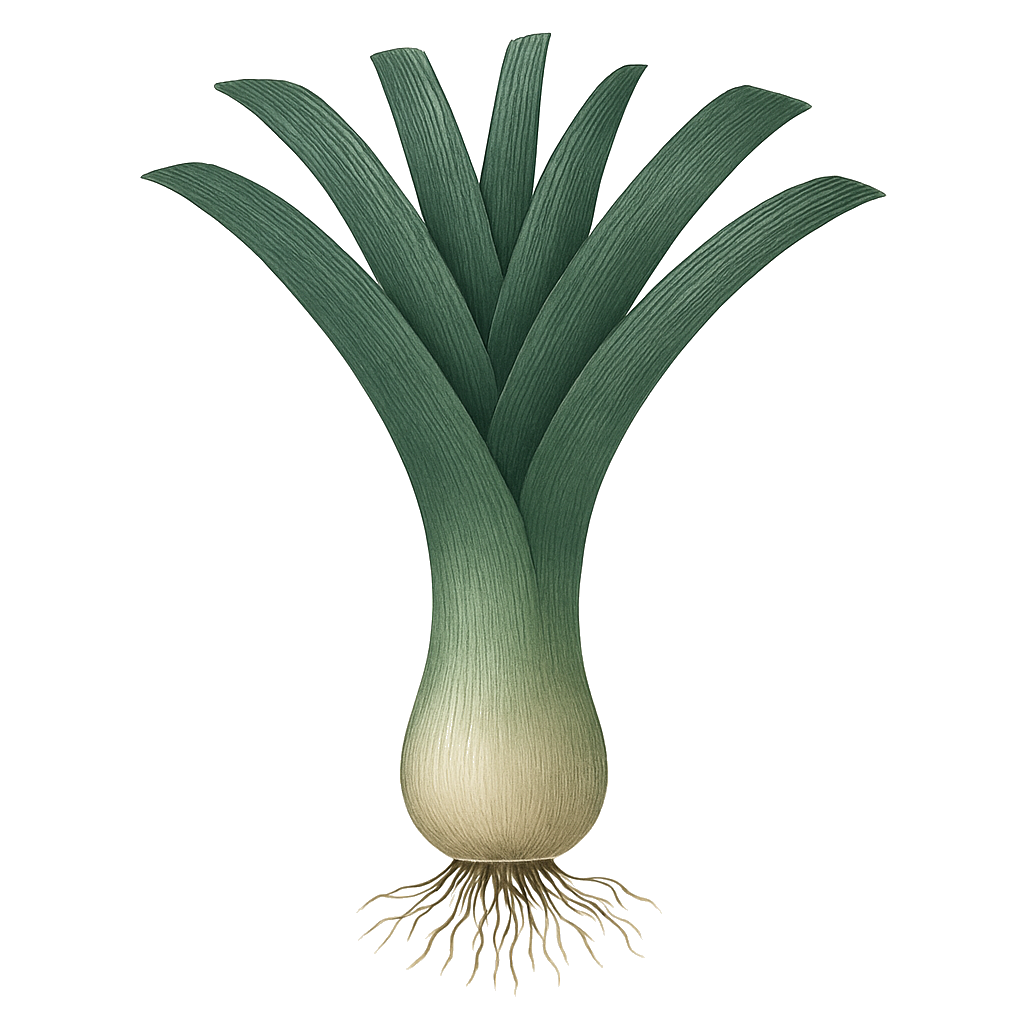
A leek is a mild, sweet relative of the onion, but instead of a bulb you grow and eat the long white stem. Leeks take a long time, so most gardeners start them indoors in late winter and plant them deep, then pull soil up around the stems to keep the bottom part white and tender. The best thing about leeks is that they handle cold: they stand right in the garden through frost and even taste sweeter for it, so you can dig them up fresh from fall into winter instead of all at one time. Which leek you plant sets how late you can harvest: fast early types like King Richard are for late summer and fall, while very hardy overwintering types like Bandit and Giant Musselburgh are bred to stand out in the cold and be dug through winter. Leek (Allium ampeloprasum) is the mild, sweet allium grown not for a bulb but for its long, thick, blanched white stem, or shank. It is a patient, long-season crop, usually started indoors in late winter and transplanted deep so soil can be earthed up around the stem to blanch it. Its great virtue is cold-hardiness: leeks stand in the garden through hard frost, sweetening with the cold, and are dug fresh from fall into winter rather than harvested all at once. There is no bulbing and no day-length requirement, so unlike onions you simply match the variety to how late you want to harvest: an early tender type like King Richard for summer and fall, hardy maincrop types like Lancelot through the fall, and very hardy overwinterers like Bandit or Giant Musselburgh to stand through winter into spring.
Off-season for leek in zone 9.
Zone 9 averages a last frost around March 1. Within Zone 9, the colder half (9a, winters down to 20°F) runs about a week later. The warmer half (9b, winters down to 25°F) runs about a week earlier. The plant app picks your subzone from your ZIP.
| Subzone | Last spring | First fall | Growing days | Winter min | Fruits reliably |
|---|---|---|---|---|---|
| 9a | Mar 8 | Nov 24 | ~261 | 20-25°F | Yes · two seasons |
| 9b | Feb 28 | Nov 30 | ~275 | 25-30°F | Yes · two seasons |
Averages from 8 weather stations per subzone, drawn from NOAA 1991-2020 Climate Normals. Your actual frost date can vary by up to two weeks based on elevation, proximity to water, and local topography.
In Zone 9, leek can be planted October through November. Start indoors Aug 15 - Sep 30. Harvest runs January through April.
In Zone 9, leek can be planted October through December. Start indoors Sep 1 - Sep 30. Harvest runs February through April.
In Zone 9, leek can be planted October through November. Start indoors Aug 15 - Sep 30. Harvest runs January through April.
In Zone 9, leek can be planted March through April. Start indoors Jan 1 - Feb 28. Harvest runs August through December.
In Zone 9, leek can be planted September through November. Start indoors Aug 1 - Sep 15. Harvest runs January through May.
In Zone 9, leek can be planted February through April. Harvest runs August through January.
In Zone 9, leek can be planted February, then again September through October, skipping the summer heat. Start indoors Feb 1 - Feb 15. Harvest runs June through June.
In Zone 9, leek can be planted October through November. Start indoors Aug 6 - Sep 6. Harvest runs December through February.
In Zone 9, leek can be planted September through November. Start indoors Aug 1 - Sep 15. Harvest runs January through April.
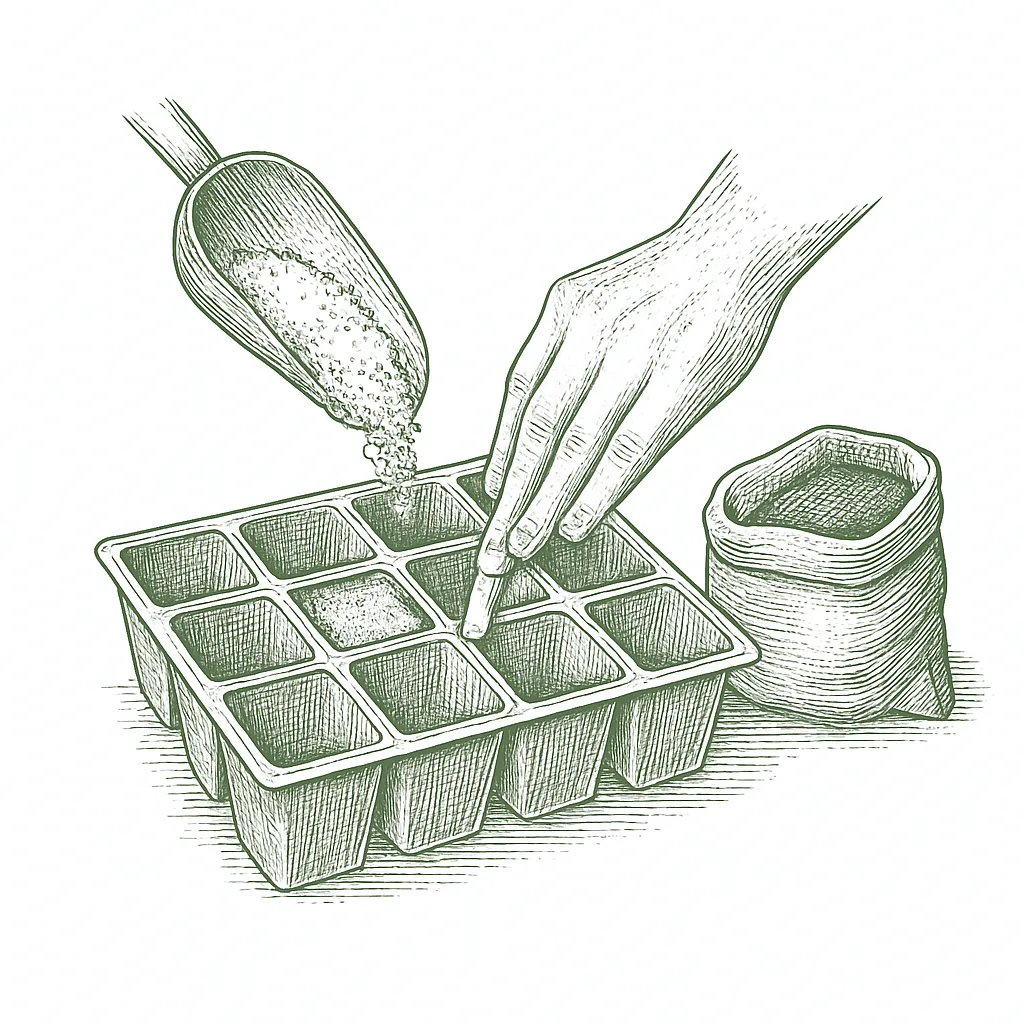
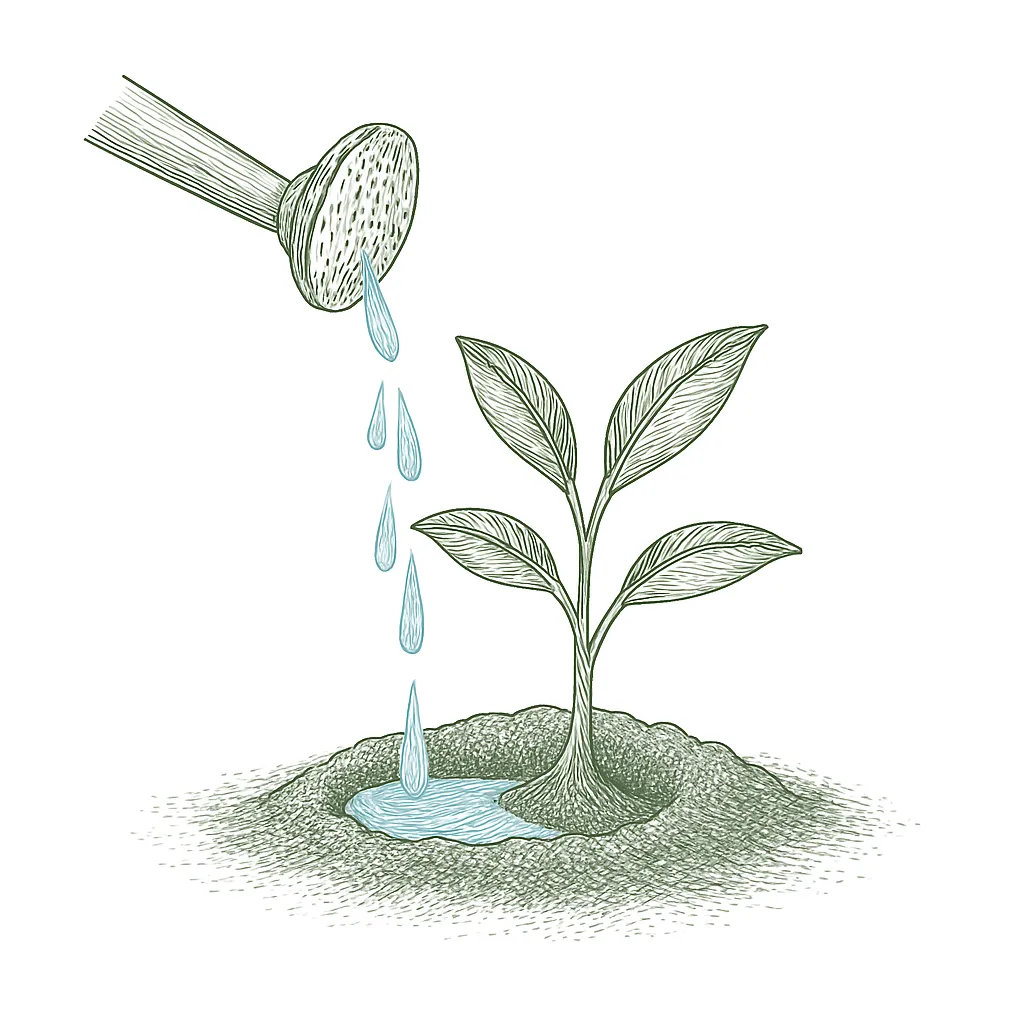
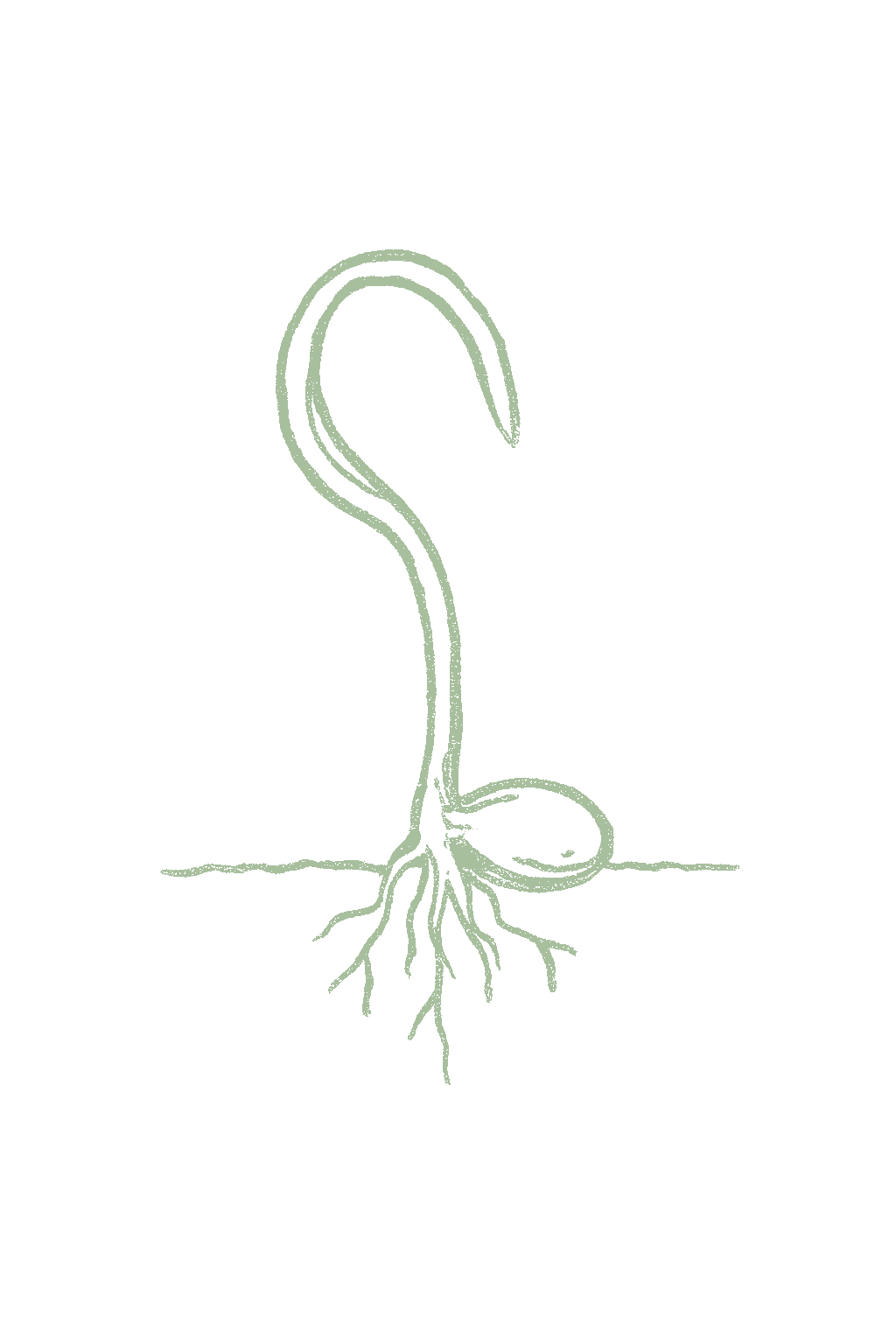
Most gardeners start leeks from seed indoors about 10 weeks before planting out, because they grow slowly and need a long season. In mild areas you can also sow seeds straight in the garden. To plant a seedling, make a hole about 6 inches deep with a dibber, drop the seedling in, and just water it; the soil washes in on its own. Planting deep like this starts the long white stem.Two entry points: start seed indoors about 10 weeks before set-out for transplants (the usual approach, since leeks are slow and long-season), or direct-sow in mild, long-season areas. Transplant into a deep dibble hole about 6 inches deep and water gently so soil washes in around the seedling without filling the hole; this sets the seedling deep and starts the blanched shank. Drop the transplant in and do not pack soil around it.

Not sure what soil you have? Grab a small handful of damp soil from your garden bed and squeeze it. If it crumbles apart easily, it's sandy. If it holds together but breaks when you poke it, it's loam (what most vegetables want). If it stays in a hard, slippery ball, it's clay.
Leeks like deep, loose, rich soil with lots of compost worked in. Loose soil matters because you grow the long white part of a leek by pulling soil up around the stem, and that is much easier in soft, crumbly ground than in heavy clay. Keep the soil evenly moist all season.
Mix 2-3 inches of compost into the top 6 inches of your bed before planting. Compost holds moisture (which sandy soil drains too fast) and adds the nutrients sandy soil tends to lack. Repeat each season. Compost breaks down over time.
Mix 2-3 inches of compost AND a few inches of coarse sand or perlite into the top 6 inches of your bed. The compost feeds the plants; the sand breaks up the clay so air and water can move through. Don't add sand without compost. It can compact like concrete.
If amending your soil sounds like too much work, or if your soil is heavy clay, full of rocks, or contaminated, build over it. A raised bed at least 12 inches deep filled with a 50/50 mix of compost and sandy loam gives you ideal growing soil with no battles. A 5-gallon container with quality potting mix does the same for one plant at a time. Both bypass your native soil entirely.
The numbers that matter, at a glance.
Leeks grow in pots if the pot is deep, because the long white stem needs depth. Use a container at least 12 inches deep with drainage holes, and space plants about 4 to 6 inches apart. Pots dry out fast, so check the soil often and keep it evenly moist, or the stems stay short.Leeks suit a deep, well-drained container at least 12 inches deep so the shaft has room to lengthen, spaced about 4 to 6 inches apart. Containers dry fast and the crop is long, so water before the surface crusts and feed steadily; interrupted growth makes thin, short shanks. You can mound mix up the stems in the pot to blanch them just as in the ground.
Leeks are very cold-hardy, so a deep pot of leeks can sit out and be harvested into winter in mild areas. Where freezes are hard, move the pot to a sheltered spot or mulch around it, since roots in a container get colder than roots in the ground.Leeks are cold-hardy enough to stand in a deep container and be harvested through winter in mild-winter zones. In colder zones, group pots against a wall or mulch them, since a container root zone chills faster than open ground.
Ask what your balcony or roof can carry
A balcony or roof can only hold so much weight. Before you set heavy pots there, ask a building architect what it can safely carry.Illinois Extension's guidance is to consult a building architect about weight limits before placing heavy pots on a balcony or rooftop garden. It gives no weight figure.
Never grow food in a container with anything toxic in it
Many kinds of containers can be used. Whatever you choose, keep anything toxic out of it, especially if you are growing food.Colorado State accepts nearly any container material but warns against using a container that holds toxic materials, especially for edible plants. Illinois adds that a vegetable container should be free of chemicals toxic to plants or people, and urges caution with treated lumber when growing food. If you cannot account for what a repurposed container once held, that alone is a reason to keep food out of it.
Secure hanging containers well
Fasten hanging baskets and window or rail boxes securely. Think about what is below them too, since they can drip on people or things underneath.Illinois Extension asks growers to secure hanging containers well and to think through the safety issues of hanging them. Placement matters too, since a hanging container can drip onto people or belongings below.
Leeks grow best in soil that is slightly acidic to neutral, about 6.0 to 7.0. A simple soil test takes out the guesswork. If your test comes back below about 6.0, adding garden lime brings it up.Aim for a soil pH of about 6.0 to 7.0 (UMN gives 6.0 to 7.0; UF/IFAS lists 6.5 to 7.0 for Florida). Leeks tolerate a wider 5.5 to 7.5 band but dislike strongly acid ground; below about 6.0 a liming amendment helps. Confirm with a soil test before adjusting.
Leeks grow for a long time and are fairly hungry plants. Mix a balanced fertilizer into the soil before planting, then feed once or twice with a nitrogen fertilizer through the summer while the stems are growing. Steady feeding builds thick stems. Do not pile on a lot of fertilizer late in the season, since soft, crowded, well-fed plants get rust more easily.Leeks are long-season, moderately heavy feeders. Work a balanced fertilizer such as 10-10-10 into the bed before planting (UMN suggests about one cup per 10 feet of row mid-season), then side-dress with nitrogen once or twice while the shafts are lengthening. USU gives a quarter pound of ammonium sulfate (21-0-0) per 100 square feet in the middle of May and again in late June. Keep nitrogen steady through summer for thick shanks, but avoid heavy late feeding, which together with crowding and wet leaves worsens leek rust.
Use a balanced fertilizer like 10-10-10 at planting, then feed with a nitrogen fertilizer once or twice during summer.A balanced base such as 10-10-10 at planting, then nitrogen side-dressings (for example ammonium sulfate, 21-0-0) through summer to build long, thick shanks.
Leeks are easygoing neighbors. Their strong allium smell is traditionally said to help hide carrots from the carrot rust fly, and they tuck in nicely beside celery, beets, and lettuce. The main thing to avoid is planting them next to beans or peas, which alliums can slow down. These are helpful traditions, not sure things. Leeks earn their companion reputation mostly through scent, traditionally credited with masking carrots from the carrot rust fly, so the classic leek-and-carrot pairing is the best known. They also share a long cool-season bed comfortably with celery, beets, and lettuce. The firm caution is the legume conflict: alliums are widely held to inhibit beans and peas, so keep leeks away from them. Most of these claims are traditional rather than trial-proven; treat them as low-risk suggestions.
Leeks are ready when the white stem is about an inch or more thick. You do not have to wait for an exact size, and smaller ones are fine too. Loosen the soil with a fork and lift them out gently. Since leeks handle frost, leave the others in the ground and dig them up fresh from fall into winter as you need them.Leeks are ready once the white shank is about an inch or more across and several inches long; there is no need to wait for a set size, and you can begin earlier for slim leeks. Lift by loosening with a fork rather than pulling. Because they are cold-hardy, leave the rest standing and harvest from fall into winter as needed.
Each plant makes one leek. A 10-foot row gives you roughly 20 to 30 leeks, and you dig them over a long stretch from fall into winter, not all at the same time.One leek per plant. At 4-to-6-inch spacing, a 10-foot row yields roughly 20 to 30 leeks, harvested over a long fall-to-winter window rather than all at once.
Leeks do not all finish at once. Because they stand in the garden, you harvest them gradually through fall and winter, and growing both early and late types spreads it out even more.Because leeks stand in the ground and are harvested as needed, there is no single flush: the harvest spreads across fall and winter, and mixing early and overwintering types stretches it further. The most important thing your first year is giving leeks a long, steady season: start the seeds early, keep them watered and fed, and hill soil up for the white part. Leeks that are rushed or stressed stay thin and short.The biggest first-year lever is a long, unbroken growing season: start seed early enough, keep moisture and feeding steady, and earth up for the white shank. Rushed or stop-start leeks make thin, short stems.
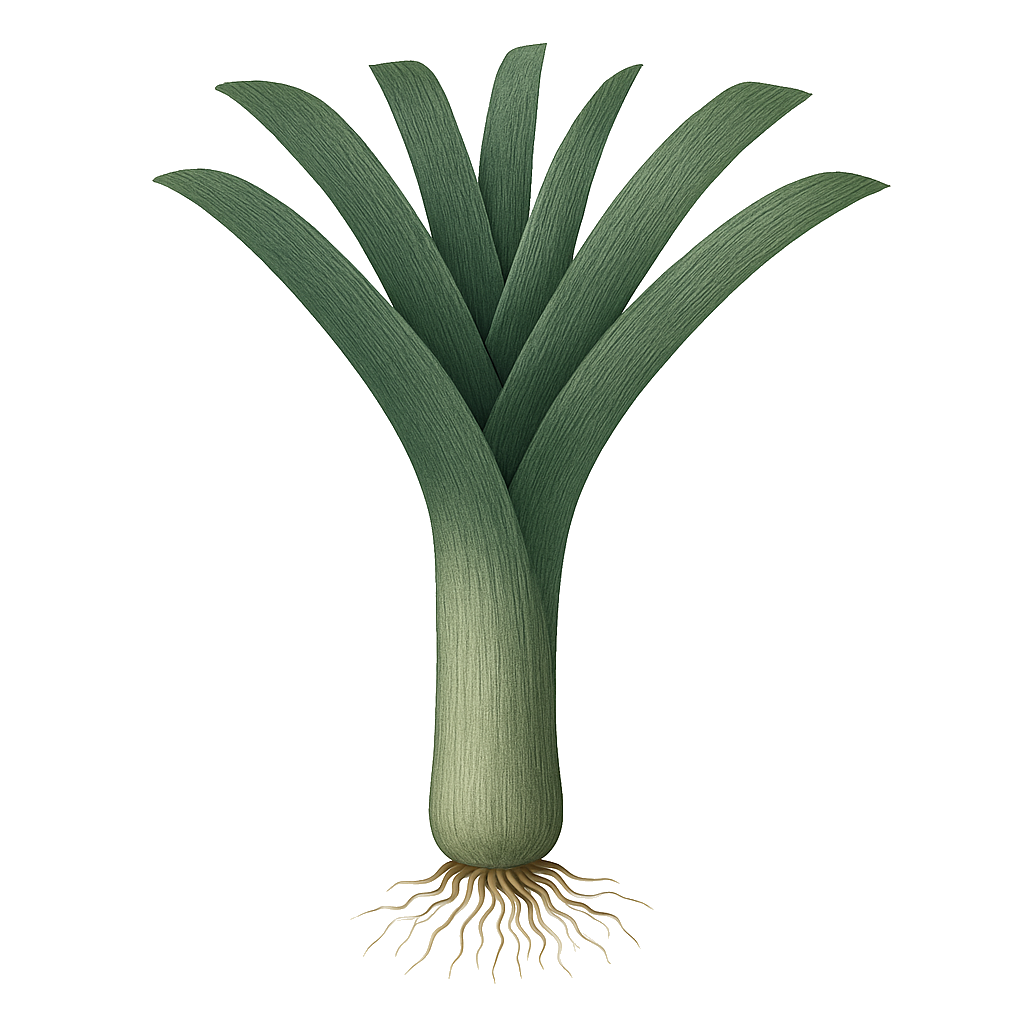
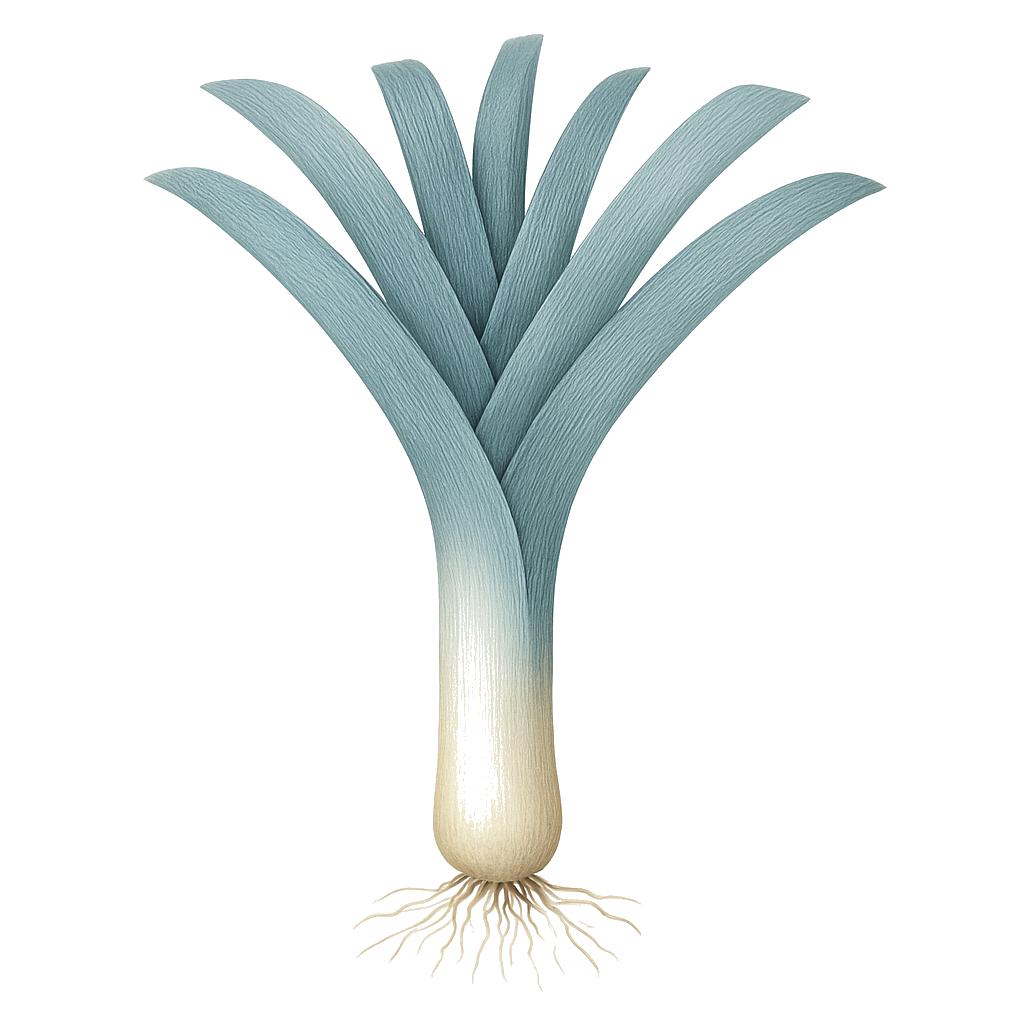
Pick a leek by when you want to harvest. Early types like King Richard grow fast for late summer and fall but are less hardy. Maincrop types like Lancelot or American Flag give the main fall crop. Overwintering types like Bandit or Giant Musselburgh are tougher and slower, made to stand in the garden through winter so you can dig them up fresh in the cold months. Unlike onions, leeks do not care about day length, so just match the type to your season.Choose by season first. Early or summer types (King Richard) are fast and tall but less hardy, for late-summer and fall use. Maincrop types (Lancelot, Large American Flag, Tadorna) carry the main fall harvest. Overwintering types (Bandit, Giant Musselburgh) are slower, shorter, and blue-green but the most cold-hardy, bred to stand in the ground through winter into spring. Matching variety to how late you want to harvest matters far more for leeks than for onions, since leeks have no day-length requirement.
The ladder troubleshoots from the gentlest solution to the strongest. Start with the gentlest option and only move on when and if it doesn't work.
When the season ends, pull up any onion-family plants still standing in the bed, including ones that came up on their own, and clear out the leftover leaves and trimmings. Thrips pass the winter in that material, so what stays on the ground in fall is where next year's thrips start. Get it out of the garden instead of piling it beside the bed.Thrips tabaci overwinters in allium material left on the soil surface, so the end-of-season clearance of leek debris and any volunteer alliums is the practice with the most weight against it. Rogue out volunteer alliums as well, since they bridge one crop to the next. Done in fall it sets the spring starting population, which is a different job from treating a summer outbreak.
Early in the year, before the leeks are up, dig or hoe the weedy edges around the bed rather than leaving them to grow. Weeds that dry down later in the season push thrips off themselves and onto the crop, so a rough margin left standing sends the pest your way. Do this while there is no crop for the thrips to land on; once the leeks are up, leave the edges alone.Cultivate weedy margins early in the year, before the crop is up, because thrips move off weeds as those dry down and onto the crop. Leave the margins alone once the crop is up: the clearance is worth most before the crop emerges, while there is no allium standing for the displaced thrips to move onto. It is preventive only; it does nothing for thrips already in the leaf folds.
Feed leeks enough to grow well and no more. Nitrogen is the part of fertilizer that drives leafy growth, and a heavy dose makes thrips worse, so keep the feeding steady rather than generous. A plant that is fed properly but not pushed also holds up better against what the thrips do to it, and on this pest that toughness is a large part of what you can do.Hold nitrogen at adequate rather than heavy. Excess nitrogen promotes thrips, and the aim of the feeding is vigor, which buys tolerance of the rasping rather than fewer insects on the plant. That distinction matters most in a hot, dry spell, when populations build fastest and a stressed leek shows the silvering and the slowed shaft growth first.
When you first spot a few silvery streaks, wash the thrips out with a hard stream from the hose, pointed down into the creases where the leaves fold together and into the tight neck of the plant, because that is where they hide. Do this in the morning so the leaves dry before evening. It handles a light infestation; if the numbers keep climbing anyway, ask your local extension office what to use in your area.A forceful jet of water into the leaf folds and the neck of the shaft knocks a light infestation back, and those folds are the place to aim, since they are also where the insects sit out of reach of any spray. Time it for early in the day so the foliage is dry by nightfall. A persistent outbreak that keeps building in hot, dry weather is one to take to local extension for a current recommendation.
Minute pirate bugs and lacewings eat thrips, and they will do part of the work for you if you let them. The way to keep them around is to skip broad-spectrum insecticides, the kinds that kill insects across the board, because those take out the helpers along with the pest. That is a real reason to try the hose and the cleanup first and hold off on spraying.Minute pirate bugs and lacewings feed on thrips, and they help where broad-spectrum insecticides are kept off the planting. Conservation is the whole of the practice: nothing is bought or released, and what protects it is keeping broad-spectrum materials off the bed. Predators lag a fast-building population in hot, dry weather, so expect them to hold a moderate one rather than rescue a heavy one.
No spray for this one. Prevention is the control.
The ladder troubleshoots from the gentlest solution to the strongest. Start with the gentlest option and only move on when and if it doesn't work.
Plant this year's leeks on ground that did not grow onions, leeks, garlic or their relatives last year. The moths pass the winter in old plant debris, and a bed that carried an onion-family crop is where they will come out in spring, so moving the planting puts distance between the new crop and the emerging moths. Decide it when you lay out the garden; it is also what makes a cover safe to use.Rotate off last year's allium ground. Acrolepiopsis assectella overwinters as an adult in sheltered plant debris, so a bed that carried alliums is a source of the first flight in its own right; it is that overwintered generation the move addresses. Rotation is also the precondition for exclusion: a cover over old allium ground shuts the emerging moths in with the crop.
Where your season has room for it, plant leeks a little later, after the first moths of spring have come and gone. The overwintered moths come out once spring warms to around 50°F, which can be as early as March, and lay on whatever leeks are up, so a bed planted after that first wave misses it. Check when the moth turns up where you live before shifting the date, since it changes from place to place.Delaying planting past the first emergence sidesteps the spring generation. Adults emerge when spring temperatures reach about 50°F, sometimes in a March warm spell, and New York records the first flight around mid-April to mid-May, so a transplanting set after that window escapes the first round of egg-laying. The mid-June to mid-July and late July to late August flights still have to be met with the cover, so this supplements exclusion rather than replacing it.
At the end of the season, clear every bit of onion-family debris out of the bed: old leaves, trimmings, stems and any plants left standing. The moths spend the winter tucked into exactly that kind of sheltered plant litter, so what you leave behind in fall is what flies in spring. Take it out of the garden rather than stacking it at the edge of the bed.Adults overwinter in sheltered plant debris, so the end-of-season clearance of allium residue is what lowers the overwintering population before the first spring flight. Clear it at the end of the season and remove it from the site rather than leaving it on the surface. Pair it with rotation, since debris missed on last year's ground is exactly what a new planting on that ground sits over.
Put insect netting or row cover over the bed before the moths come out of winter shelter, which is once spring warms to about 50°F, sometimes as early as March, or on planting day if that comes later. Tuck the edges into the soil and leave it on for the whole season instead of lifting it between flights. Do not put the cover over a bed that grew onions or leeks last year, since the moths winter in that debris and would be sealed in with the crop.Exclusion is the main control at garden scale and its timing decides it: insect netting or row cover goes on before the overwintered adults emerge, at about 50°F in early spring, or on the day of transplanting if that is later. Seal the edges and leave it in place through all two to three generations rather than lifting it between them. Do not lay row cover over ground that carried alliums last season; the adults overwinter in that debris and a cover traps them under it with the crop.
Look over the plants as you walk the row and pick off any caterpillars you find, along with the little net-like cocoons they spin on the leaves once they have finished feeding. Pull a damaged leaf apart to find the slim, creamy yellow caterpillar inside, and check the newest leaves at the heart of the plant, where the damage starts. Drop what you find into soapy water.Remove larvae and cocoons by hand on a regular scouting pass. The larvae feed inside the folded young leaves for two to three weeks, so split a leaf showing the row of holes or the frass to reach one, and the net-like cocoon on the foliage is the stage that sits in plain sight. With injury running from June through September across two to three generations, one cleanup is not enough; scout through the season.
If caterpillars get past the cover, spinosad is the organic spray to use. Time it to the moths. A pheromone trap, a scented lure that catches the moths and shows when a wave peaks, goes out by mid-April; spray 7 to 10 days after that peak. Spray at dusk and keep it off anything in flower; it is hard on bees while wet. Bt, a bacterial spray sold for caterpillars, did not make a real dent in this pest in testing, so do not count on it.Spinosad applied 7 to 10 days after a peak flight is the organic material with trial support against this moth. A pheromone trap set by mid-April marks each peak, and with flights around mid-April to mid-May, mid-June to mid-July and late July to late August there are up to three timings a season. Apply at dusk, not to plants in flower; it is toxic to bees while wet and for about a day after. Bt did not significantly reduce larvae in laboratory tests and is not the substitute.
The bottom rungs are products with label rules: timing, pollinators, and days to wait before harvest. Before you spray →
The ladder troubleshoots from the gentlest solution to the strongest. Start with the gentlest option and only move on when and if it doesn't work.
Do not plant leeks where onions, garlic, leeks or any of their relatives grew last year, and set the new bed as far from that ground as the garden allows. The fly spends the winter in the soil right where last year's onion-family crop stood, so a bed with that history is where it comes up in spring. Pick the spot when you plan the garden, and pick it before you decide about a cover.Delia antiqua pupae overwinter in the soil around last season's alliums, so rotating off that ground and siting the new planting away from it removes the crop from the spring emergence. Distance matters as well as the bed itself. Rotation is also what makes exclusion safe, since a cover over last year's allium ground shuts the emerging flies in with the transplants.
If your season gives you the room, plant leeks a bit later in spring, once the first wave of flies has finished. Those first flies lay their eggs at the base of young plants, so a planting that goes in after that wave has passed misses the worst of it. Ask your extension office when the fly shows up in your area before moving the date.Planting later in spring, after the first flight has passed, sidesteps the first round of egg-laying, the round that falls on young transplants. The window is local, so confirm the flight timing with extension for your area rather than working from a calendar date. It trades a later start against stand loss, and it suits a season long enough to absorb the delay.
In fall, lift the finished plants with their roots, and take out any small or damaged leeks you culled, rather than leaving any of it in the bed. The fly breeds in leftover onion-family material and old bulbs, so what stays behind feeds it. In spring, keep fresh manure and green manure, meaning a cover crop turned in to rot, out of the leek bed, because the fly is drawn to lay its eggs where things are rotting.Remove culls and the lifted plants with their roots in fall, and get them off the site, since cull piles and volunteer onions keep the fly going between crops and the pupae sit in the soil around the old plants. Keep spring manure and green manure out of the bed: rotting organic matter draws egg-laying, and a cool, wet spring makes the larvae worse on top of it.
Cover the transplants with row cover, a light fabric that lets in light and water but keeps insects off, on the day you plant them, so it is in place before the spring flies come looking for somewhere to lay. Seal the edges down along the soil, because the eggs go in at the base of the plant. Do not put the cover on a bed that grew onions or leeks last year, since the flies coming up out of that soil would be sealed in with the crop.Row cover goes on transplants from planting day, ahead of the spring flight, with the edges sealed to the soil, since the fly lays at the base of the plant and an unsealed edge is an open door. Keep it in place until the spring flight's egg-laying has passed, since that is what it blocks. It belongs only on rotated ground: a bed that carried alliums last year holds the overwintering pupae, and a cover over it traps the emerging flies under it with the crop.
No spray for this one. Prevention is the control.
The ladder troubleshoots from the gentlest solution to the strongest. Start with the gentlest option and only move on when and if it doesn't work.
Give leeks a fresh spot each year, as far from last year's onion-family beds as your garden allows. The flies come from pupae, the small brown resting cases, that wait in the old plant tissue or in the soil right around it, so a bed that had leeks or onions last year is where the next flight starts. Moving the planting is also what makes a cover safe to use on it.Rotate off last season's allium ground and put as much distance as you can between the new planting and it. Phytomyza gymnostoma pupae overwinter in plant tissue or the surrounding soil, so old allium ground is an emergence site rather than neutral ground, and with a spring flight from late March and a fall flight from about September the same bed is exposed twice. Rotation is also the precondition for netting.
Time the crop so it misses both waves of flies: set transplants out after the middle of May, once the spring flight is over, and harvest by early September, before the fall flight begins. Fall leeks take the worst of this pest because by then they are often the only onion-family crop still in the ground, so a crop that is out before September is out of the line of fire. Confirm the flight dates for your area first.Transplanting after mid-May and harvesting by early September can dodge both flights, since adults emerge from late March through April, sometimes into May, and the second flight runs from about September into October. The fall flight is the damaging one on leeks, which are frequently the only allium standing by then. Emergence shifts with region and season, so check the local dates before building a planting plan on them.
After harvest, pull up the old plants and get rid of any that show tunnels or the rows of white dots, rather than leaving them in the bed or on the compost pile. The pupae, the small brown resting cases, wait in that old tissue for the next flight, so clearing it takes them out of the garden with it.Destroy infested debris after harvest to remove overwintering pupae, which lodge in the sheath and base of the plant and in the soil around it. Leaving mined leaves or lifted plants on the surface leaves the next flight in place; take the material off the site. It is the fall half of the practice, and rotation is the spring half.
Get insect netting or row cover on before each flight starts, by late March for the spring flies and by early September for the fall ones, bury the edges so nothing can crawl under, and leave it on for about eight weeks. Late does not work: leeks covered two weeks into the fall flight ended up with more maggots, not fewer. Do not put the cover on a bed that grew onions or leeks last year, or you seal the flies coming up from the soil in with the crop.Netting goes on before a flight begins, by late March for the spring flight and by early September for the fall one, with the edges buried and the cover kept on through the roughly eight-week egg-laying period. Covering two weeks after the fall flight has started has been shown to leave more larvae and pupae in the plants, not fewer. Do not lay row cover over ground that held infested alliums last season; the emerging flies are trapped under it with the crop, and the bed should be rotated instead.
When netting was not possible and you are seeing the rows of white dots, spinosad is the organic spray that has worked on this fly. Spray twice in the two to four weeks after the flies first show up, at dusk, and keep it off anything in flower, because it is hard on bees while wet. It reaches the maggots inside the leaf, which a spray that sits on the surface does not.Spinosad is the organic material with trial support here, applied twice in the two to four weeks after the adults first appear, timed to their arrival rather than to the mines, which show only once larvae are inside the leaf. It penetrates leaf tissue, so it reaches larvae a surface contact spray misses. Apply at dusk, not on plants in flower; it is toxic to bees while wet and for about a day after.
The bottom rungs are products with label rules: timing, pollinators, and days to wait before harvest. Before you spray →
The ladder troubleshoots from the gentlest solution to the strongest. Start with the gentlest option and only move on when and if it doesn't work.
Give leeks enough room that air moves between the plants and the leaves dry after rain or dew. This rust needs cool, damp weather and leaves that stay wet for hours to get started, and crowded plants hold that dampness, so spacing set at planting is the first thing that works against it. On leeks the cultural steps are usually enough, since they carry rust better than garlic does.Space for airflow so foliage dries, because Puccinia porri infects on cool conditions, roughly 57 to 75°F with the optimum near 59°F, and several hours of leaf wetness; dense stands extend that wetness. The disease tracks cool, damp spring and fall weather rather than midsummer, so the layout matters most for the stretches leeks spend in cool conditions. Leek is a comparatively resistant host, and spacing plus the other cultural steps usually carry it.
Go easy on nitrogen, the part of fertilizer that pushes leafy growth. Leeks pushed hard with it get more rust, and heavy feeding also thickens the stand and holds the leaves wet longer, which undoes the spacing you gave them. Feed enough to keep the plants growing steadily and no more.Hold nitrogen back. Heavy nitrogen increases rust on alliums, and part of the route is the canopy: lush, dense growth keeps leaves wet for the hours the fungus needs. Feeding to adequacy rather than excess is the point, since underfeeding costs shaft size for a different reason.
Water at the soil line instead of spraying over the tops of the plants. Wet leaves are what this fungus needs, and watering over the leaves gives it hours of wetness the weather did not. A hose laid at the base or a soaker line keeps the foliage dry, and watering early in the day helps for the same reason.Irrigate at the soil line rather than over the leaves. Infection depends on several hours of leaf wetness at cool temperatures, and overhead watering supplies that wetness on days the weather would not; spores travel on air, and it is the leaf wetness, not splash, that the watering choice controls here. In a cool, wet spring or fall the weather does the wetting regardless, which is where spacing and rotation take over.
Pull out any volunteer onions or garlic near the leeks, meaning the plants that come up on their own from bulbs left behind, since they carry the rust from one season to the next. After harvest, clear the old leaves and other debris out of the bed rather than leaving them lying there.Destroy volunteer alliums, which carry the fungus between crops, and clear crop debris at the end of the season. Spores travel on air, so a volunteer inside or beside the planting is a live source through the cool, damp weather the disease runs on, and it sits outside any rotation you plan. On leek this and the other cultural steps are usually what carries it.
Where rust has shown up, keep onions, garlic and leeks off that ground for two to three years and plant the new ones away from any planting that has it. That gives the fungus a gap with no onion-family plant to live on, and distance from an infected patch keeps its airborne spores from landing straight on the new one.Where rust has been a problem, keep new allium plantings two to three years off that ground and separated from an infected planting. Spores are airborne, so the separation matters as well as the years: a fresh bed beside a rusted one is within reach of its spores.
No spray for this one. Prevention is the control.
The ladder troubleshoots from the gentlest solution to the strongest. Start with the gentlest option and only move on when and if it doesn't work.
Start with clean transplants from a source you trust, because this fungus can arrive on the plants themselves and there is no cure once it is in the ground. Its tiny black resting bodies live in the soil for more than 20 years, and it takes very little to start: a few of them in a sample of soil is enough. Moving to a new bed later does not undo that, so the clean start is the decision that counts.Plant only clean stock; it is the decision made before anything touches the soil, and on this disease that is where the weight sits, since there is no cure once plants are infected. Sclerotia persist in soil for over 20 years and germinate in response to allium roots, and even a few per soil sample can start the disease, which is why rotation alone will not control it. Keeping the fungus out of clean ground is what the practice comes down to.
Pull infected plants as soon as you see them and destroy them; do not compost them. Then keep the soil itself from traveling: knock the dirt off boots, tools and pots before moving from that bed to clean ground, because the fungus moves in soil and a very small amount is enough to start a new patch. Do not count on resting the bed to clear it, since the fungus lasts in the soil for decades.There is no cure once plants are infected; remove and destroy them, and then treat infested soil as the thing that moves. Strict sanitation means no soil carried on tools, boots or containers from an affected bed into clean ground, since sclerotia persist for over 20 years and germinate in response to allium roots. Rotation alone will not control it for the same reason, so keeping the inoculum from spreading is what the practice rests on.
No spray for this one. Prevention is the control.
The ladder troubleshoots from the gentlest solution to the strongest. Start with the gentlest option and only move on when and if it doesn't work.
Give leeks a bed that has not grown onions, garlic, leeks or their relatives for three to six years. This fungus builds up a little more with every onion-family crop on the same ground, especially in warm soil, so a long gap is the point. It helps rather than fixes: the fungus lasts in the soil for years and lives on other crops too, so expect less pink root after a rotation, not none. Leeks usually get off lighter than onions anyway.Rotate off allium ground for three to six years. Setophoma terrestris accumulates with each allium crop on the same ground and is most active in warm soil, so the length of the break is what matters, and it reduces the disease rather than clearing it, since the fungus persists in soil for years and lives on other crops. Leek is a lesser host than onion, so the pressure this has to hold is lower here to begin with.
Where the soil sits wet, grow leeks in a raised bed or on a better-drained spot. This fungus is worse where the ground stays wet, and a raised or well-drained bed takes that away; it cannot help a plant whose roots have already turned pink. It works alongside the long break from onion-family crops, not instead of it.Use raised or well-drained beds where soil sits wet; the disease runs harder in ground that stays wet, and drainage does nothing for a plant whose roots are already pink. On heavy or low-lying ground it is settled before planting, since there is no rescue once the roots have gone. Pair it with the long rotation; neither replaces the other.
No spray for this one. Prevention is the control.
Leeks do well planted after leafy greens or beans and peas. Just do not plant beans or peas right next to leeks, since alliums can slow them down.Leeks follow well after a leafy or legume crop. Like other alliums, they are traditionally kept away from beans and peas, which alliums are thought to inhibit.
The plant app sends a timely reminder at every critical moment of your leek season. The wording adjusts to whichever you pick: beginner or seasoned. Here are three you'll see in Zone 9.
plant sends the right notification at exactly the right moment, for your zone, your weather, your crops. Founding members lock the rate forever.
We're building this guide with real growers. Got a question we missed? Ask here. We read every one and add the best answers right to this page.
Learned something the hard way? Pass it on. Real growers' tips make this guide better for the next person, and we credit you by name when yours goes live.
If you've grown this crop and you see a date, a temperature, a companion claim, or a recommendation that doesn't match your experience, tell us. Real growers' corrections make this guide better for the next person.
Every date, temperature, spacing, and recommendation on this page is sourced from university cooperative extension publications, peer-reviewed agricultural research, NOAA climate data, and direct extension calendars. Where claims are softer (traditional gardening wisdom not formally documented), we say so.
Spot a data point that doesn't match your experience? Submit a correction; accepted corrections earn full author credit on the page.
Zone-aware seasonal nudges, what's worth planting now, and the occasional recipe from the harvest. No spam, ever.