Today · in your zone
What's happening right now
Off-season for lemongrass in zone 13.
Tap to switch. plant calibrates to where you are in the journey.
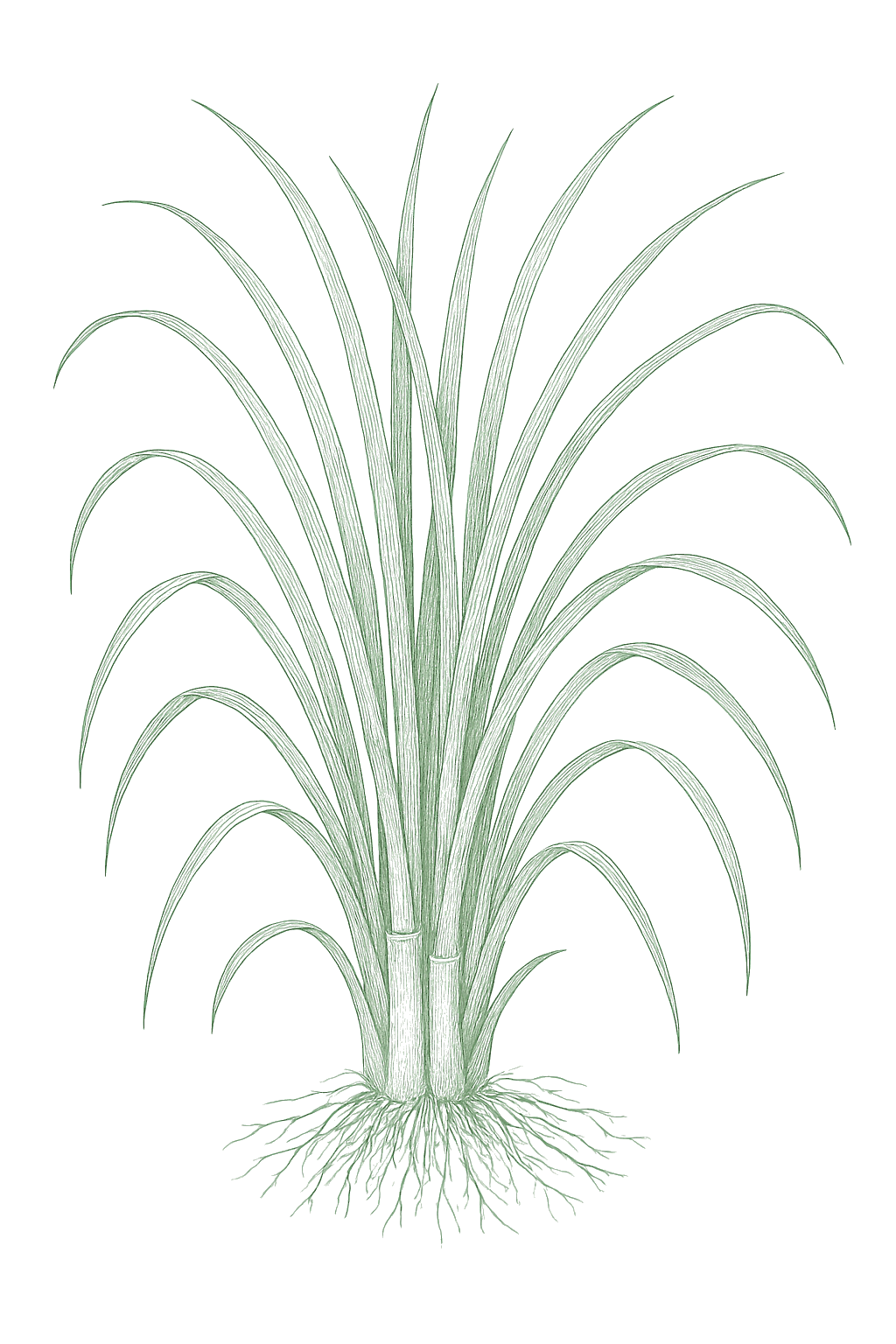
Lemongrass is a tall, lemon-scented grass that loves heat, sun, rich soil, and plenty of water. It grows as a tidy clump, not a spreader like mint, so it will not take over your bed. It cannot survive frost, so in most of the country you plant it after your last frost and grow it through the warm months, then either dig it up and bring it indoors in a pot for winter or start fresh next spring. In the warmest, frost-free areas it can live outdoors year round. It is one of the easiest herbs to grow and is rarely bothered by insects, since its own lemony oils keep many pests away. To harvest, cut a whole stalk off at the base once it is about as thick as a pencil or thicker; the tender white bottom flavors cooking and the leaves make a lovely tea. Lemongrass (Cymbopogon citratus) is a tender tropical grass, a member of the true grass family (Poaceae), grown for the aromatic swollen white bases of its stalks and its lemon-scented leaves. Everything about its care follows from two facts: it is a warm-season grass that thrives on heat, full sun, rich soil, and abundant water, and it is frost-tender, damaged when temperatures drop toward 40 °F and killed outright by frost. It grows as a dense, non-running clump 3 to 6 feet tall, not a spreading runner like mint, so it stays where you put it and is increased by dividing the clump or by rooting a fresh stalk in water. In the tropics and frost-free zones it is a true perennial that can be harvested year round; across most of the country it is grown as a warm-season annual set out after the last frost, then either lifted and potted indoors before fall frost or replaced each spring. Because its own essential oils repel many insects, it is notably free of pest problems; rust and leaf blight are the diseases to watch in warm, humid, crowded plantings. Harvest by cutting whole stalks at ground level once they thicken to about half an inch; the tender inner stalk base flavors soups and curries, and the leaves make a fragrant tea.
Off-season for lemongrass in zone 13.
In Zone 13, lemongrass grows year round here: plant in any month and harvest all year.
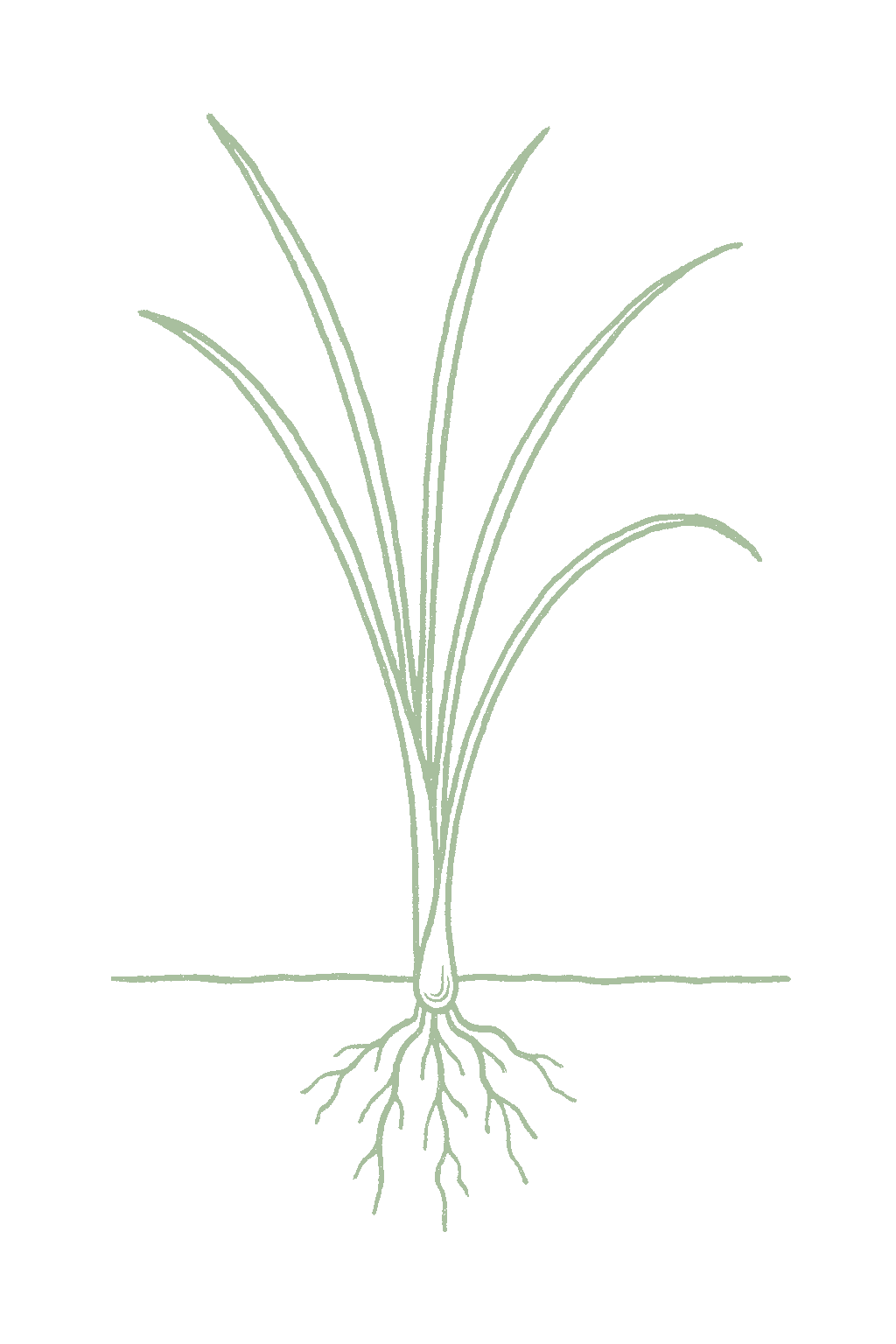
The easiest way to start lemongrass is from a division or a nursery plant, or by standing a fresh grocery-store stalk in a glass of water until it grows roots (about two to three weeks), then potting it up. Get it going indoors about 8 weeks before your last frost, then set it outside once frost is past and the soil is warm. Ease it into the outdoors over a few days first. It stays small until summer heat kicks in, then takes off.Lemongrass is almost always started from a division of an existing clump, from a nursery transplant, or by rooting a fresh grocery-store stalk (leaves and roots removed) in a glass of water, where roots form in about two to three weeks. Seed is possible but slow and rarely used. Start or pot up divisions indoors roughly 8 weeks before the last frost to have a well-rooted plant ready to set out. Transplant outdoors only after all frost danger has passed and the soil has warmed, and harden plants off over several days first. It grows slowly until summer heat arrives, then bulks up dramatically.



Not sure what soil you have? Grab a small handful of damp soil from your garden bed and squeeze it. If it crumbles apart easily, it's sandy. If it holds together but breaks when you poke it, it's loam (what most vegetables want). If it stays in a hard, slippery ball, it's clay.
Give lemongrass rich, moist soil that has been improved with plenty of compost. It is a hungry, thirsty grass, so the better the soil, the bigger the clump. Make sure the spot still drains, because soil that stays soggy can rot the roots.
Mix 2-3 inches of compost into the top 6 inches of your bed before planting. Compost holds moisture (which sandy soil drains too fast) and adds the nutrients sandy soil tends to lack. Repeat each season. Compost breaks down over time.
Mix 2-3 inches of compost AND a few inches of coarse sand or perlite into the top 6 inches of your bed. The compost feeds the plants; the sand breaks up the clay so air and water can move through. Don't add sand without compost. It can compact like concrete.
If amending your soil sounds like too much work, or if your soil is heavy clay, full of rocks, or contaminated, build over it. A raised bed at least 12 inches deep filled with a 50/50 mix of compost and sandy loam gives you ideal growing soil with no battles. A 5-gallon container with quality potting mix does the same for one plant at a time. Both bypass your native soil entirely.
The numbers that matter, at a glance.
Lemongrass is easygoing about soil pH. Aim for roughly 6.0 to 7.5, which is ordinary garden soil, and you will not need to make any special adjustment.Lemongrass is not fussy about pH and tolerates a wide range of soils. A preferred range of 6.0 to 7.5 keeps the full spectrum of nutrients available to this fast-growing, nutrient-hungry grass, and it will grow acceptably in mildly acidic through mildly alkaline ground. No specific pH figure is published in the Tier-1 extension guides consulted, so this range is modeled from the plant's documented tolerance of varied soils and from general practice for culinary grasses.
Lemongrass is a hungry grass and grows fastest when fed often. Use a liquid fertilizer at about half strength every week or two through the summer. If it is in a pot, feed a bit more often, since watering washes nutrients out. Stop feeding as fall nears.Like other grasses, lemongrass is a heavy nitrogen feeder, and steady feeding drives the vigorous leaf and stalk growth that makes a productive clump. Utah State Extension recommends feeding weekly with a half-strength solution of a balanced soluble fertilizer from June through September; a nitrogen-forward all-purpose liquid every one to two weeks works similarly. Container plants need more frequent feeding than in-ground clumps because nutrients leach with each watering. Taper feeding as fall approaches so growth is not pushed into cold weather.
Use a general-purpose feed higher in the first number (nitrogen)Nitrogen-forward; a balanced soluble at half strength or a higher-first-number all-purpose liquid keeps this fast-growing grass in vigorous leaf
Lemongrass grows happily next to other sun-and-water lovers like tomatoes and peppers, and its lemony scent is a traditional way to discourage some insects. Keep it away from dry-soil herbs like rosemary and sage, which want the opposite conditions. Remember that lemongrass becomes a big clump, so give it plenty of space. Lemongrass has little formal companion-planting research behind it, but two practical points hold up. First, its essential oils (rich in citral) are documented insect repellents, which is the basis for the tradition of planting it near warm-season vegetables such as tomatoes and peppers; treat the pest-deterrent benefit as traditional rather than proven at garden scale. Second, its cultural needs are the deciding factor in placement: it demands rich soil, heavy feeding, full sun, and abundant water, so it pairs naturally with other heat-loving, well-watered crops and conflicts with lean, dry-soil Mediterranean herbs. Give a mature clump ample room, since it reaches 3 to 6 feet.
You can start harvesting once a stalk is about half an inch thick at the bottom, roughly a few months after planting. Pick a stalk from the outside of the clump: bend it to the side and twist and pull it off at the base, or cut it right at ground level. Cut off the grassy top and peel away the tough outer layers to get to the tender white part for cooking. You can snip leaves anytime to dry for tea.Begin harvesting once individual stalks have swelled to about half an inch thick at the base, which in a warm season is usually 75 to 120 days after planting a division or rooted start. Harvest a whole stalk rather than picking leaves: grasp an outer stalk, push it to the side, and twist and pull it free at the base, or cut it at ground level with a knife. Take the outermost stalks first and leave the clump intact to keep producing. Trim off the leafy top and peel away the tough outer layers to reach the tender inner base used in cooking; the fragrant leaves can be cut anytime for tea.
One healthy clump can give you dozens of stalks by late summer, plus lots of leaves for tea. In warm, frost-free areas an established plant produces even more, year after year. In a short, cool season, expect a more modest first-year harvest.A single well-grown clump in full sun with rich soil and steady water can, by late summer, yield dozens of harvestable stalks and a steady supply through the season, plus abundant leaves for tea. In a frost-free climate an established perennial clump becomes a large, ongoing source. In one cool-region season a first-year plant yields more modestly, a handful to a couple dozen stalks depending on how early it was set out and how hot the summer ran.
Lemongrass is slow at first and only takes off when it gets hot, so a first-year plant does best if you start it early indoors and then feed and water it well all summer. The earlier and warmer the start, the bigger the first-year clump.Lemongrass starts slowly and only bulks up once real summer heat arrives, so the first-season harvest depends heavily on getting an early, well-rooted start into warm soil and feeding and watering it hard. In cold zones the biggest first-year lever is a head start indoors; a plant set out small into a short season stays small.
For cooking, choose West Indian lemongrass (Cymbopogon citratus), the kind sold in grocery stores with the thick, tender stalks. There is also East Indian lemongrass (C. flexuosus), which is edible too and used for oil. Watch out for citronella grass, a lookalike relative grown to make citronella oil and to repel bugs, not for eating. If you want to cook with it, make sure you are getting C. citratus.For cooking, grow West Indian lemongrass (Cymbopogon citratus), the species with the plump, tender stalk bases used in kitchens and the one usually sold fresh in stores. East Indian lemongrass (C. flexuosus) is also edible and is the main oil-crop species, with more slender stalks. The genus Cymbopogon holds dozens of species, and it is worth knowing that citronella grass (C. nardus and C. winterianus), the source of citronella oil, is a close relative that looks similar but is grown for repellent oil and ornament, not for eating. When buying a plant or a rooting stalk for the kitchen, confirm it is C. citratus.
Lemongrass is a grass that lives for years in one spot, so you do not move it around each season like a vegetable. Plant it in a sunny, rich, well-drained place and divide the clump every few years to keep it strong.Lemongrass belongs to the true grass family, Poaceae, unrelated to the mints, carrots, or nightshades of a typical vegetable rotation. Because it is a perennial clump held for several years and divided to renew, it sits outside the annual crop-rotation cycle. The practical placement rule is simply full sun, rich soil, and good drainage; every few years, lift and divide the clump to keep the center vigorous.
The plant app sends a timely reminder at every critical moment of your lemongrass season. The wording adjusts to whichever you pick: beginner or seasoned. Here are three you'll see in Zone 13.
plant sends the right notification at exactly the right moment, for your zone, your weather, your crops. Founding members lock the rate forever.
We're building this guide with real growers. Got a question we missed? Ask here. We read every one and add the best answers right to this page.
Learned something the hard way? Pass it on. Real growers' tips make this guide better for the next person, and we credit you by name when yours goes live.
If you've grown this crop and you see a date, a temperature, a companion claim, or a recommendation that doesn't match your experience, tell us. Real growers' corrections make this guide better for the next person.
Every date, temperature, spacing, and recommendation on this page is sourced from university cooperative extension publications, peer-reviewed agricultural research, NOAA climate data, and direct extension calendars. Where claims are softer (traditional gardening wisdom not formally documented), we say so.
Spot a data point that doesn't match your experience? Submit a correction; accepted corrections earn full author credit on the page.
Zone-aware seasonal nudges, what's worth planting now, and the occasional recipe from the harvest. No spam, ever.