Pick your zone and the dates re-calibrate.
The Guide Herbs Vol. 003

Lemongrass

in Zone 8, this week

Lemongrass is a tall, lemon-scented grass that loves heat, sun, rich soil, and plenty of water. It grows as a tidy clump, not a spreader like mint, so it will not take over your bed. It cannot survive frost, so in most of the country you plant it after your last frost and grow it through the warm months, then either dig it up and bring it indoors in a pot for winter or start fresh next spring. In the warmest, frost-free areas it can live outdoors year round. It is one of the easiest herbs to grow and is rarely bothered by insects, since its own lemony oils keep many pests away. To harvest, cut a whole stalk off at the base once it is about as thick as a pencil or thicker; the tender white bottom flavors cooking and the leaves make a lovely tea. Lemongrass (Cymbopogon citratus) is a tender tropical grass, a member of the true grass family (Poaceae), grown for the aromatic swollen white bases of its stalks and its lemon-scented leaves. Everything about its care follows from two facts: it is a warm-season grass that thrives on heat, full sun, rich soil, and abundant water, and it is frost-tender, damaged when temperatures drop toward 40 °F and killed outright by frost. It grows as a dense, non-running clump 3 to 6 feet tall, not a spreading runner like mint, so it stays where you put it and is increased by dividing the clump or by rooting a fresh stalk in water. In the tropics and frost-free zones it is a true perennial that can be harvested year round; across most of the country it is grown as a warm-season annual set out after the last frost, then either lifted and potted indoors before fall frost or replaced each spring. Because its own essential oils repel many insects, it is notably free of pest problems; rust and leaf blight are the diseases to watch in warm, humid, crowded plantings. Harvest by cutting whole stalks at ground level once they thicken to about half an inch; the tender inner stalk base flavors soups and curries, and the leaves make a fragrant tea.
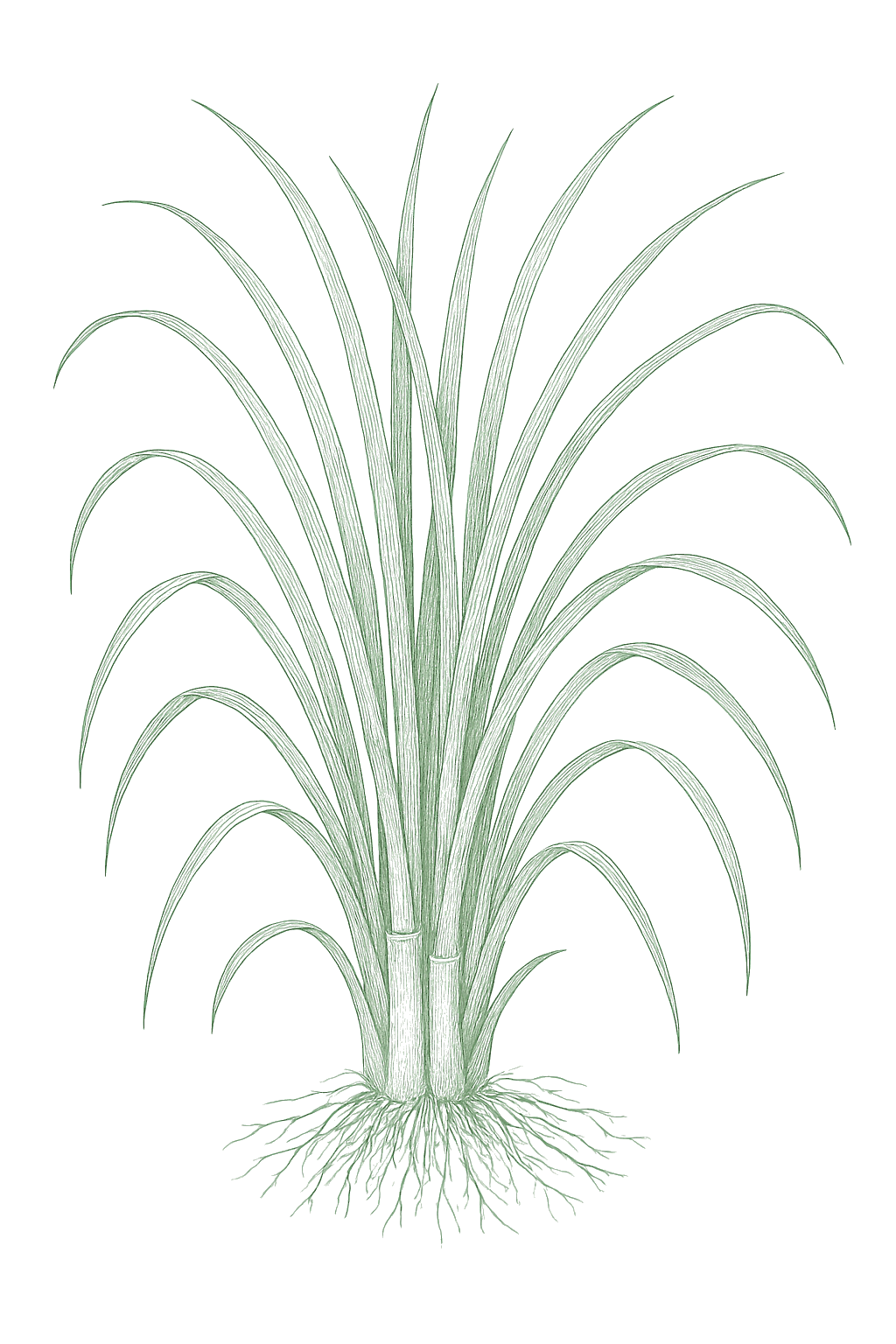
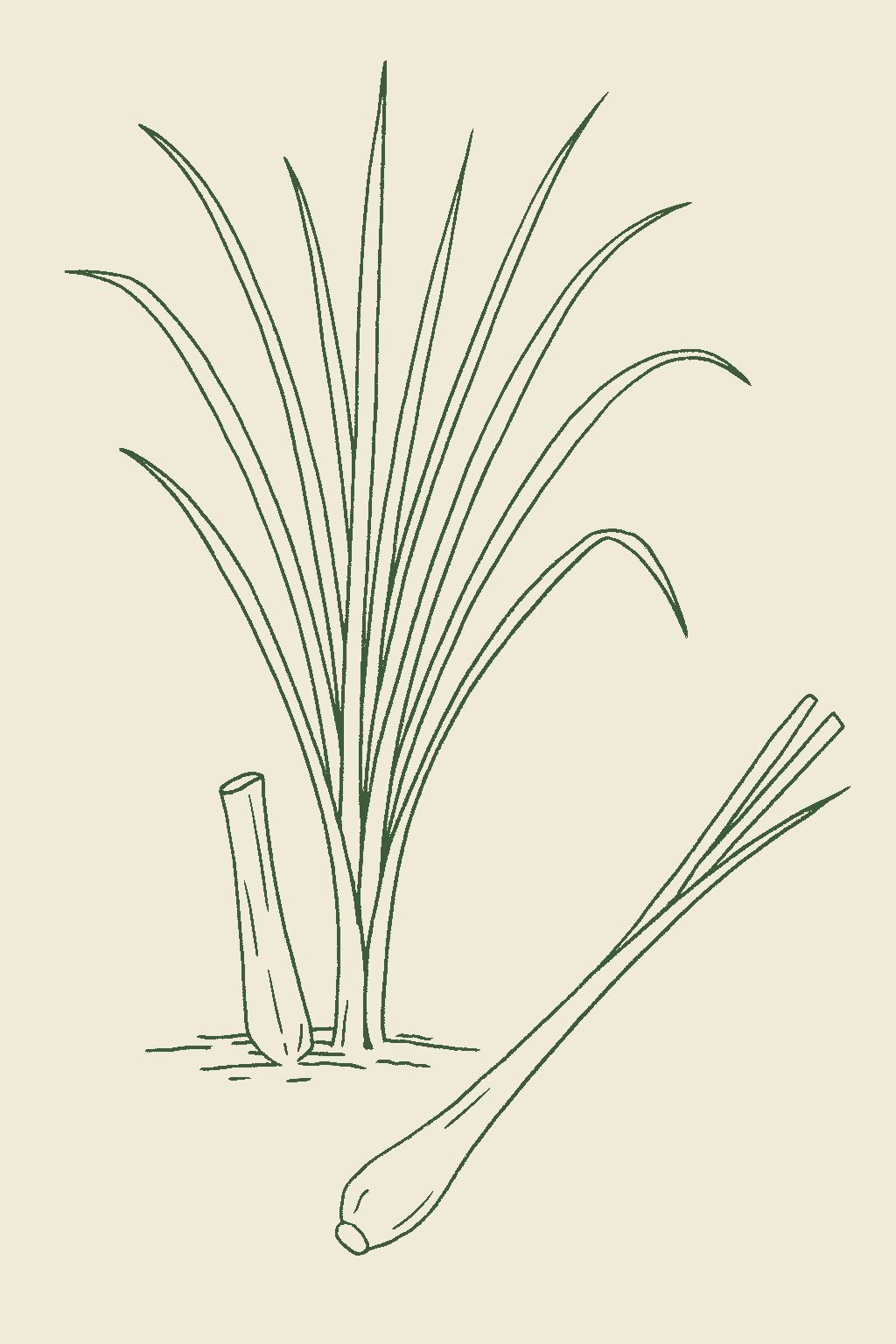
Lemongrass mature plant
Fig. 01 · Lemongrass, mature Zone 8
Mature in
75-120d
from transplant
Sunlight
Full sun
6-8 hrs daily
Water
High
Spacing
24-36"
between plants
Soil pH
6-7.5
slightly acidic
Today · in your zone

What's happening right now

July 24 · Zone 8 · Stage 01 · Establishment

Off-season for lemongrass in zone 8.

Your climate region in Zone 8
The season at a glance

Planting calendar

In Zone 8, lemongrass can be planted April. Start indoors Feb 15 - Mar 10. Harvest runs June through November.

Jan
Feb
Mar
Apr
May
Jun
Jul
Aug
Sep
Oct
Nov
Dec
plant
too cold
indoors
indoors
plant
too late
too late
too late
too late
too late
too early
too early
too cold
harvest
harvest
harvest
harvest
harvest
harvest
harvest
indoors
plant out
harvest
Above-ground cropBest planted on a above ground moon
The season, mapped

Seed to garden

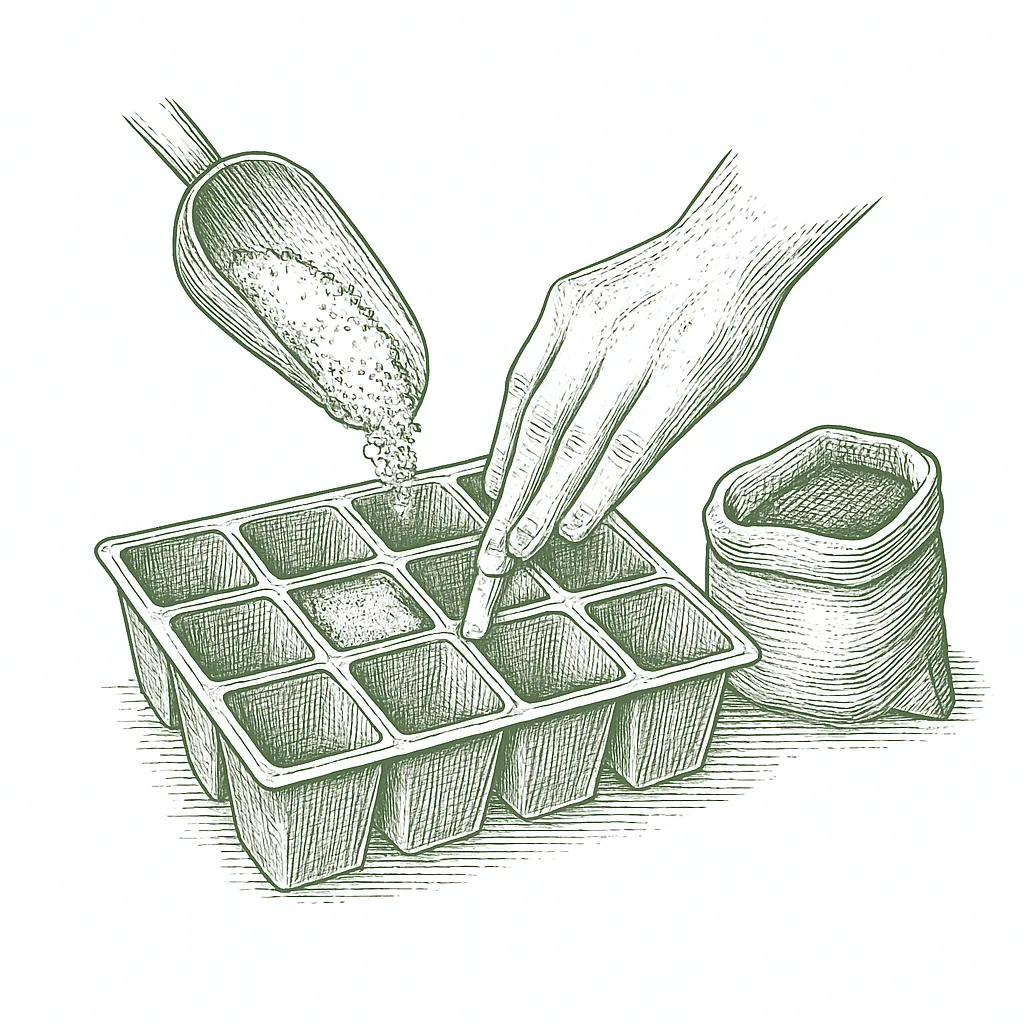
The easiest way to start lemongrass is from a division or a nursery plant, or by standing a fresh grocery-store stalk in a glass of water until it grows roots (about two to three weeks), then potting it up. Get it going indoors about 8 weeks before your last frost, then set it outside once frost is past and the soil is warm. Ease it into the outdoors over a few days first. It stays small until summer heat kicks in, then takes off.Lemongrass is almost always started from a division of an existing clump, from a nursery transplant, or by rooting a fresh grocery-store stalk (leaves and roots removed) in a glass of water, where roots form in about two to three weeks. Seed is possible but slow and rarely used. Start or pot up divisions indoors roughly 8 weeks before the last frost to have a well-rooted plant ready to set out. Transplant outdoors only after all frost danger has passed and the soil has warmed, and harden plants off over several days first. It grows slowly until summer heat arrives, then bulks up dramatically.
  1. 01
    Sow indoors →
    Feb 15 - Mar 10
    Start about 8 weeks before your last frost
  2. 02
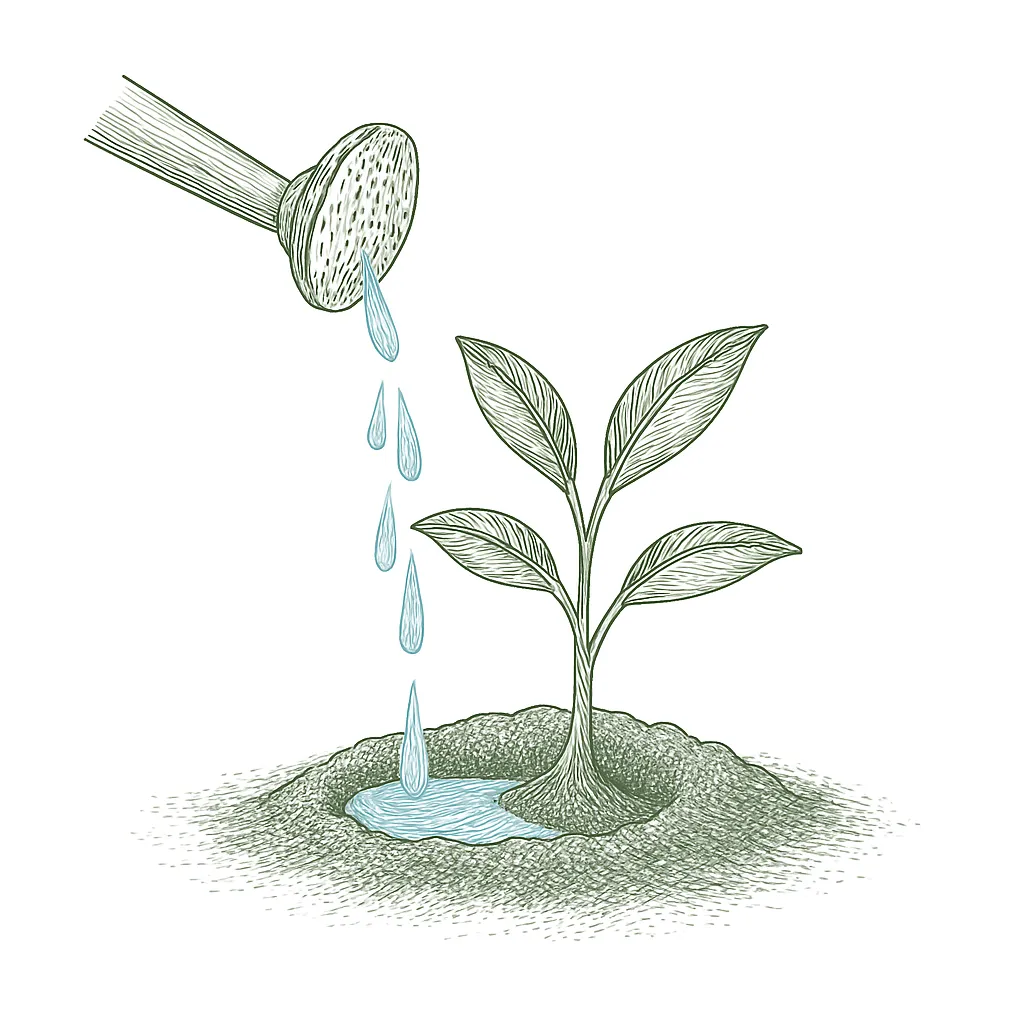
    Transplant out →
    Apr 1 - Apr 25
    After hardening off
  3. 03
    First harvest
    From Jun
    75-120 days from transplant
Start method
Transplant
Soil temp
70-85°F
Hardening off
7-10 days
From seed to fruit

The growing journey

Stage 01 · Establishment
01
Establishment
Days 0-42 · current stage
Your new plant getting established. It may look a little limp at first, then start sending up fresh green blades from the middle once its roots catch on.A newly set-out division or rooted start settling in: leaves may look tired for a week or two, then new green blades begin pushing from the center as roots take hold. Growth is slow in cool weather and accelerates as the soil warms.
Keep it watered and in full sun while it settles in. Hold off on heavy feeding for now, and make sure cold nights are behind you.Keep the soil consistently moist while roots establish, and site the plant in full sun. Do not feed heavily yet. Protect from any late chill; do not set out until frost is safely past and soil is warm.
FROM PLANT · You can grow lemongrass from a stalk bought at the store. Stand it in a glass of water on a bright windowsill, change the water every few days, and in two to three weeks it grows roots. Then plant it in a pot. A nursery plant works too.The simplest way to start lemongrass is to root a fresh grocery-store stalk: remove any leaves, stand the bare stalk in a glass of water in a bright spot, refresh the water every couple of days, and roots form in about two to three weeks. Pot it up once roots are an inch or two long. A nursery plant or a division from a friend's clump works just as well.
FROM PLANT · Do not put lemongrass outside too early. It hates cold, so wait until frost is completely past and the soil is warm. Ease it into the outdoors over a few days first. Planting it out into cold ground just makes it stall.Do not rush lemongrass outdoors. It is fully frost-tender and slows or stalls as temperatures approach 40 °F, so wait until all frost danger has passed and the soil has warmed before setting it out, and harden it off over several days first. Plants set out too early into cold soil simply sit and sulk.
02
Vegetative growth
Days 30-120
Fast growth once it gets hot. The clump fills out with lots of new shoots and gets bigger every week.Rapid clump expansion once summer heat arrives: many new tillers (shoots) fan out from the base, and the clump widens and thickens noticeably week to week. This is the heavy feeding and watering phase.
Water a lot and feed often through the summer to grow a big clump. Make sure it gets full sun, or it will make only a few thin stalks.Water deeply and often and feed regularly with a nitrogen-forward soluble fertilizer to drive clump growth. Ensure full sun; shaded plants make few, thin stalks.
FROM PLANT · Lemongrass is a grass, so it is hungry and thirsty like a lawn. Feed it a half-strength liquid fertilizer every week or two and water it a lot through summer. Heat plus food plus water grows a big clump fast.Lemongrass is a grass, and like a lawn it is a heavy nitrogen feeder that rewards generous water. Feed a nitrogen-forward soluble fertilizer at half strength every week or two through summer and water deeply and often. The combination of heat, food, and water is what turns a small start into a 3-to-6-foot clump in a single season.
FROM PLANT · Give lemongrass full sun. In shade it makes just a few skinny stalks and may fade away. Put it in the hottest, sunniest spot you have.Site lemongrass in full sun. It is emphatically not shade-tolerant: in shade it makes only a few thin stalks and can decline outright. Give it the hottest, brightest spot you have, and it will reward you with a dense, vigorous clump.
03
Mature clump
Days 75-180
Stalks getting about half an inch thick at the bottom, which means they are ready to cut. The plant is now a tall, full clump.Individual stalks swelling to about half an inch thick at the base, the signal that they are ready to harvest. The clump stands 3 to 6 feet tall in good conditions, with dense, aromatic foliage.
Start cutting the thickest outer stalks. Keep watering and feeding so more keep coming. If you get frost, plan to dig it up or harvest it all before then.Begin harvesting the thickest outer stalks while keeping moisture and feeding steady so the clump keeps producing. In cold zones, plan the pre-frost lift or final harvest.
FROM PLANT · You can start cutting once stalks are about half an inch thick at the bottom, anytime in the season. Take the fat outer stalks and leave the rest; the clump keeps making more.Harvest as soon as stalks reach about half an inch thick at the base; you do not need to wait for the end of the season. Take the thickest outer stalks and leave the clump intact, and it will keep sending up new ones. Harvesting the outside actually keeps the clump vigorous.
04
Harvest
Days 90-240
A clump you can keep cutting from all season. Take the outer stalks and the middle keeps making new ones.A productive clump yielding harvestable stalks continuously through the warm season. Outer stalks are firm and thick; the clump refills from the center as you take from the edges.
Cut outer stalks whenever you need them, leaving the clump to regrow. Keep it watered and fed. Before frost, harvest a lot and bring the plant indoors in a pot if you want to keep it.Harvest outer stalks as needed by twisting and pulling or cutting at ground level; leave the clump intact to keep producing. Maintain water and feeding. Before fall frost, harvest heavily and lift or pot the plant to overwinter.
FROM PLANT · Pick a stalk from the outside of the clump: push it sideways and twist and pull it off at the base, or cut it at ground level. Cut off the leafy top, peel off the tough outer layers, and use the tender white part in cooking. Dry the leaves for tea.To harvest, grasp an outer stalk low down, push it to the side, and twist and pull it free at the base, or cut it at ground level with a knife. Trim off the grassy top, peel away the tough outer layers, and use the tender inner base for cooking. Save the fragrant leaves to dry for tea.
FROM PLANT · Lemongrass keeps well. Stalks last a couple of weeks in the fridge and freeze for months. Before frost, harvest a big batch and freeze what you cannot use, then bring the plant indoors in a pot for winter.Lemongrass stores easily. Whole stalks keep 2 to 3 weeks in the refrigerator, and the tender bases freeze for months with little flavor loss, sliced or whole. Before the first frost in cold zones, do a big final harvest and freeze the surplus, then lift and pot the clump to overwinter indoors.
Beginner
Know your soil

Your soil

Identify yours

Not sure what soil you have? Grab a small handful of damp soil from your garden bed and squeeze it. If it crumbles apart easily, it's sandy. If it holds together but breaks when you poke it, it's loam (what most vegetables want). If it stays in a hard, slippery ball, it's clay.

What this crop wants

Give lemongrass rich, moist soil that has been improved with plenty of compost. It is a hungry, thirsty grass, so the better the soil, the bigger the clump. Make sure the spot still drains, because soil that stays soggy can rot the roots.

If your soil doesn't match

You have sandy soil

Mix 2-3 inches of compost into the top 6 inches of your bed before planting. Compost holds moisture (which sandy soil drains too fast) and adds the nutrients sandy soil tends to lack. Repeat each season. Compost breaks down over time.

You have clay soil

Mix 2-3 inches of compost AND a few inches of coarse sand or perlite into the top 6 inches of your bed. The compost feeds the plants; the sand breaks up the clay so air and water can move through. Don't add sand without compost. It can compact like concrete.

Containers and raised beds

If amending your soil sounds like too much work, or if your soil is heavy clay, full of rocks, or contaminated, build over it. A raised bed at least 12 inches deep filled with a 50/50 mix of compost and sandy loam gives you ideal growing soil with no battles. A 5-gallon container with quality potting mix does the same for one plant at a time. Both bypass your native soil entirely.

Learn more about your soil
The specs

Care guide

The numbers that matter, at a glance.

Sunlight
Full sun · 6-8 hrs/day
Water
High
Spacing
24-36 inches
Soil
loam, sandy loam
Days to maturity
75-120 days from transplant
Soil pH
6 to 7.5
Container OK?
Yes · 3+ gal pot
Germination temp
70-85°F
Soil chemistry

Soil pH for lemongrass

Preferred
6 to 7.5
Tolerated
5.5 to 8

Lemongrass is easygoing about soil pH. Aim for roughly 6.0 to 7.5, which is ordinary garden soil, and you will not need to make any special adjustment.Lemongrass is not fussy about pH and tolerates a wide range of soils. A preferred range of 6.0 to 7.5 keeps the full spectrum of nutrients available to this fast-growing, nutrient-hungry grass, and it will grow acceptably in mildly acidic through mildly alkaline ground. No specific pH figure is published in the Tier-1 extension guides consulted, so this range is modeled from the plant's documented tolerance of varied soils and from general practice for culinary grasses.

Verified · 1 source View
Steady hand on the hose

Watering

When & how much
Frequency
Water often. In the ground, water deeply a few times a week in hot weather; in a pot, check daily and do not let it dry out.Frequently through the warm season; in-ground clumps deeply 2-3 times per week in heat, containers often daily
Amount
Keep the soil consistently moist, never bone dry. Lemongrass drinks a lot.Keep the root zone consistently moist; this is a high-water-demand grass, so err toward generous, deep watering while ensuring drainage
Method
Water at the base of the plant, not over the leaves, to help prevent leaf diseases. In a pot, water until it runs out the bottom, then empty the saucer.Water at the base by hand or flood irrigation rather than overhead sprinklers; keeping the foliage dry limits rust and leaf blight, and base watering suits this thirsty grass. In containers, water until it drains from the bottom and empty the saucer.
Signs of trouble
Too much water
Yellow, wilting leaves and a soft, dark base even though the soil is wet mean the roots are sitting in water. Improve the drainage.Yellowing and wilting despite wet soil, soft dark stalk bases, and a soured, waterlogged root zone signal root rot from poor drainage rather than too little water.
Too little water
Browning, curling leaf tips and slow growth mean it is thirsty. Lemongrass wilts and browns quickly when it runs short of water.Leaf tips and margins browning and curling, slowed clump expansion, and thin, slow-forming stalks indicate the plant is not getting enough water, especially during hot, dry spells.
Feeding rhythm

Feeding

Frequency
every 1-2 weeks
Type
nitrogen-forward soluble
When to start
Weekly to every other week through the active summer growing season; ease off as fall approaches

Lemongrass is a hungry grass and grows fastest when fed often. Use a liquid fertilizer at about half strength every week or two through the summer. If it is in a pot, feed a bit more often, since watering washes nutrients out. Stop feeding as fall nears.Like other grasses, lemongrass is a heavy nitrogen feeder, and steady feeding drives the vigorous leaf and stalk growth that makes a productive clump. Utah State Extension recommends feeding weekly with a half-strength solution of a balanced soluble fertilizer from June through September; a nitrogen-forward all-purpose liquid every one to two weeks works similarly. Container plants need more frequent feeding than in-ground clumps because nutrients leach with each watering. Taper feeding as fall approaches so growth is not pushed into cold weather.

High nitrogen

Use a general-purpose feed higher in the first number (nitrogen)Nitrogen-forward; a balanced soluble at half strength or a higher-first-number all-purpose liquid keeps this fast-growing grass in vigorous leaf

Try balanced soluble fertilizer at half strength (as recommended for lemongrass), or a nitrogen-forward all-purpose liquid
Who grows well together

Companion planting

Lemongrass grows happily next to other sun-and-water lovers like tomatoes and peppers, and its lemony scent is a traditional way to discourage some insects. Keep it away from dry-soil herbs like rosemary and sage, which want the opposite conditions. Remember that lemongrass becomes a big clump, so give it plenty of space. Lemongrass has little formal companion-planting research behind it, but two practical points hold up. First, its essential oils (rich in citral) are documented insect repellents, which is the basis for the tradition of planting it near warm-season vegetables such as tomatoes and peppers; treat the pest-deterrent benefit as traditional rather than proven at garden scale. Second, its cultural needs are the deciding factor in placement: it demands rich soil, heavy feeding, full sun, and abundant water, so it pairs naturally with other heat-loving, well-watered crops and conflicts with lean, dry-soil Mediterranean herbs. Give a mature clump ample room, since it reaches 3 to 6 feet.

Other
Tomatoes
Lemongrass and tomatoes both want heat, sun, and regular water, so they make easy neighbors. Lemongrass's strong lemony scent is a traditional way to help keep some insects away. Just give the grass its own space, because it grows into a big clump.Lemongrass shares tomatoes' love of heat, full sun, and steady water, and its strong citrus oils are a traditional insect deterrent, so gardeners often tuck a clump at the corner of a warm-season bed. Give it room, since a mature clump is large. Traditional
Peppers
Peppers love the same heat and sun as lemongrass, so they grow well side by side. The grass's lemony scent may help keep some bugs off. Give the clump room to spread out.Peppers want the same heat, sun, and moisture as lemongrass and mature on a similar warm-season schedule, so they share a bed comfortably. The grass's aromatic oils are a traditional pest deterrent for the planting. Traditional
Keep apart from
Shade-loving, moisture-shy herbs (rosemary, sage, thyme) Herbs like rosemary, sage, and thyme want dry, lean soil, which is the opposite of what thirsty lemongrass needs. If you plant them together, one will always be unhappy. Give the dry-loving herbs their own spot and let lemongrass have the rich, well-watered ground it likes.Mediterranean herbs want lean, dry, sharply drained soil, while lemongrass wants rich ground and constant moisture, so the two pull a shared bed in opposite directions. Keep the drought-tolerant herbs in their own drier spot. Well-grounded
Provenance tagged inline · see methodology for the labeling system Key
Harvest signals

When to pick

You can start harvesting once a stalk is about half an inch thick at the bottom, roughly a few months after planting. Pick a stalk from the outside of the clump: bend it to the side and twist and pull it off at the base, or cut it right at ground level. Cut off the grassy top and peel away the tough outer layers to get to the tender white part for cooking. You can snip leaves anytime to dry for tea.Begin harvesting once individual stalks have swelled to about half an inch thick at the base, which in a warm season is usually 75 to 120 days after planting a division or rooted start. Harvest a whole stalk rather than picking leaves: grasp an outer stalk, push it to the side, and twist and pull it free at the base, or cut it at ground level with a knife. Take the outermost stalks first and leave the clump intact to keep producing. Trim off the leafy top and peel away the tough outer layers to reach the tender inner base used in cooking; the fragrant leaves can be cut anytime for tea.

Yield

What to expect

One healthy clump can give you dozens of stalks by late summer, plus lots of leaves for tea. In warm, frost-free areas an established plant produces even more, year after year. In a short, cool season, expect a more modest first-year harvest.A single well-grown clump in full sun with rich soil and steady water can, by late summer, yield dozens of harvestable stalks and a steady supply through the season, plus abundant leaves for tea. In a frost-free climate an established perennial clump becomes a large, ongoing source. In one cool-region season a first-year plant yields more modestly, a handful to a couple dozen stalks depending on how early it was set out and how hot the summer ran.

Lemongrass is slow at first and only takes off when it gets hot, so a first-year plant does best if you start it early indoors and then feed and water it well all summer. The earlier and warmer the start, the bigger the first-year clump.Lemongrass starts slowly and only bulks up once real summer heat arrives, so the first-season harvest depends heavily on getting an early, well-rooted start into warm soil and feeding and watering it hard. In cold zones the biggest first-year lever is a head start indoors; a plant set out small into a short season stays small.

What changes yield
Heat and sun: a warm, full-sun site is the single biggest driver of clump size; cool or shaded plants make few, thin stalksWater: this high-demand grass needs deep, frequent watering to bulk up; drought thins the stalksNitrogen feeding: regular nitrogen-forward feeding drives the vegetative growth that produces harvestable stalksSeason length: frost-free zones grow a large perennial clump harvested year round, while short-season zones get one modest annual harvestHead start: in cold zones, an early well-rooted start set into warm soil greatly increases first-year yield
Verified · 2 sources View
Pick your variety

Recommended varieties

For cooking, choose West Indian lemongrass (Cymbopogon citratus), the kind sold in grocery stores with the thick, tender stalks. There is also East Indian lemongrass (C. flexuosus), which is edible too and used for oil. Watch out for citronella grass, a lookalike relative grown to make citronella oil and to repel bugs, not for eating. If you want to cook with it, make sure you are getting C. citratus.For cooking, grow West Indian lemongrass (Cymbopogon citratus), the species with the plump, tender stalk bases used in kitchens and the one usually sold fresh in stores. East Indian lemongrass (C. flexuosus) is also edible and is the main oil-crop species, with more slender stalks. The genus Cymbopogon holds dozens of species, and it is worth knowing that citronella grass (C. nardus and C. winterianus), the source of citronella oil, is a close relative that looks similar but is grown for repellent oil and ornament, not for eating. When buying a plant or a rooting stalk for the kitchen, confirm it is C. citratus.

West Indian lemongrass (Cymbopogon citratus): the common culinary lemongrass, of Malaysian origin, grown for its thick, tender edible stalks; this is the type sold as grocery-store lemongrass and the one to grow for cooking
East Indian lemongrass (Cymbopogon flexuosus, also called Cochin or Malabar grass): native to India, Sri Lanka, Burma, and Thailand; also culinary and a major source of lemongrass essential oil, with somewhat more slender stalks
Citronella grass (Cymbopogon nardus / C. winterianus): a related but non-culinary species grown for citronella oil and as an ornamental insect-repellent plant; do not confuse it with edible lemongrass for cooking
Off the vine

Storing your harvest

Room temp
Fresh stalks last a few days to a week on the counter. For longer storage, use the fridge or freezer.Whole fresh stalks keep for several days to about a week at cool room temperature. For anything longer, refrigerate or freeze. The tough stalks are far more durable than tender leafy herbs.
Fridge
Lemongrass keeps well in the fridge, about 2 to 3 weeks, wrapped or in a bag. Cold does not hurt it the way it does basil.Wrapped loosely or sealed in a bag, fresh stalks keep 2 to 3 weeks in the refrigerator. Unlike basil, lemongrass has no chilling-injury problem and refrigerates well.
Freezer
Lemongrass freezes very well. Freeze whole stalks or chop the tender part and freeze it in bags. It keeps its flavor for months. Dry the leaves for tea.Lemongrass freezes excellently and is the best way to keep a large harvest. Freeze whole trimmed stalks, or slice or mince the tender bases and freeze in bags or portioned in ice cube trays; frozen stalks keep their flavor for many months. Leaves can be dried for tea.
Verified · 1 source View
When something goes wrong

Common problems

Plant browned or killed by coldCold or frost damage
01 of 04
What happened Lemongrass cannot take cold. It gets damaged as temperatures head toward 40 °F, and frost kills the leaves. A hard freeze can kill the whole plant if it is left outside. The usual mistakes are planting it out too early in spring or forgetting it outdoors when fall frost comes.Lemongrass is fully frost-tender. Foliage is damaged as temperatures fall toward 40 °F, and frost kills the top growth outright; a hard freeze can kill an unprotected in-ground clump entirely. The common mistake is planting out too early in spring or leaving the plant outdoors into fall frost. There is no recovery of frosted top growth, though a lifted or well-mulched crown may resprout in borderline zones. Next season Wait until frost is fully past and the soil is warm to plant it out. In fall, harvest before frost and bring a potted piece indoors for winter. In cold areas, plan to grow it in a pot you can move inside.Plant out only after all frost danger has passed and the soil has warmed. In fall, harvest before first frost and lift and pot the clump (or a division) to overwinter indoors in bright light. In zones colder than about 8b, treat it as an annual or a keep-it-in-a-pot plant.
Plant is spindly with only a few stalksFew, thin stalks (too little sun or heat)
02 of 04
What happened Lemongrass in too much shade, a cool summer, or without enough water and feeding makes just a few thin stalks and barely grows. It needs full sun, heat, lots of water, and regular feeding to bulk up.Lemongrass grown in shade, in a cool-summer climate, or without enough water and food produces only a few slender stalks and expands slowly; in deep shade it can decline and die. As a heat-loving grass it needs full sun, warmth, generous water, and regular nitrogen to build the dense clump that yields thick stalks. Next season Give it the sunniest, hottest spot you have, water it a lot, and feed it through summer. In a cool-summer area, grow it in a pot in a hot spot and start it early indoors.Move it to the hottest, sunniest spot available, water deeply and often, and feed a nitrogen-forward fertilizer through summer. In cool-summer regions, grow it in a pot in a hot microclimate (against a south wall, on paving) and give it a head start indoors.
Plant yellows and rots in soggy soilYellowing and rot from waterlogged soil
03 of 04
What happened Lemongrass loves water but not soggy roots. If the soil or pot stays waterlogged, the plant yellows, wilts, and rots at the base even though it is wet. The problem is drainage.Despite its high water demand, lemongrass rots when its roots sit in waterlogged soil or a poorly draining pot. Symptoms are yellowing, wilting, and soft dark stalk bases even though the soil is wet. Drainage, not watering volume, is the failure here. Next season Grow it in soil or a pot that drains well. Water a lot, but make sure the extra water runs out and the pot never sits in a full saucer.Plant in well-drained, organically rich soil; in containers use a free-draining mix with ample holes and empty the saucer after watering. Water generously but let the excess drain freely rather than pooling.
Orange-brown spots drying the leavesRust (Puccinia nakanishikii)
04 of 04
What happened Rust is a fungus that puts yellow flecks and orange-brown spots on the leaves and dries them out. It shows up in warm, humid weather, especially on crowded plants.Lemongrass rust, caused by Puccinia nakanishikii, produces yellow flecks that redden into streaks and orange-brown pustules on the leaf undersides, drying the foliage in severe cases. It is the most notable disease of lemongrass in warm, humid regions and is worsened by crowding and prolonged leaf wetness. Next season Give plants room, divide crowded clumps, water at the base, and cut off spotted leaves. A copper spray can help if rust keeps coming back. Full sun and healthy, uncrowded plants resist it best.Improve airflow by spacing and dividing clumps, water at the base to keep foliage dry, and remove infected leaves promptly. Copper-based fungicides can be used preventively under heavy pressure. Full sun and vigorous, uncrowded plants resist rust best.
Verified · 7 sources View
The usual suspects

Pests & diseases

Pests
Generally pest-resistant (aromatic-oil deterrence)
P · 01
Symptoms Lemongrass is one of the least pest-troubled herbs you can grow. Its own lemony oils keep most bugs away, so outdoor plants usually look clean.Healthy in-ground lemongrass rarely shows insect damage. Extension guides describe it as essentially free of pest problems when grown well, an effect attributed to the citral-rich essential oils in its foliage that repel many insects. Scattered chewing or a few sap-feeders may appear on stressed or crowded plants but seldom rise to a real infestation outdoors. Cause Lemongrass makes lemony oils that many insects dislike, so it is naturally left alone. Keeping it healthy and unstressed keeps it that way.The plant's aromatic oils (notably citral) are used in insect-repellent products. Robust, well-watered clumps in full sun are the least attractive to pests; stress and crowding are what invite occasional trouble. Organic treatment You will seldom need to treat lemongrass. If you do see a few bugs, blast them off with water or use an insecticidal soap. Trim off any damaged leaves.Rarely needed outdoors. For the occasional sap-feeder, a strong jet of water or an insecticidal soap spray is sufficient. Remove and destroy badly damaged outer leaves. Improving airflow and vigor usually resolves minor issues without any product. Prevention Keep lemongrass healthy with sun, rich soil, and plenty of water, and divide it when it gets crowded. A strong plant rarely has pest trouble.Grow in full sun with rich soil and steady water to keep clumps vigorous, and divide crowded clumps so air moves through them. Vigorous plants are the best defense.
Spider mites (indoor and hot, dry conditions)
P · 02
Symptoms Tiny specks and a faded, dusty look on the leaves, sometimes with fine webbing. This shows up mostly on plants kept indoors over winter.Fine stippling or a dusty, faded look on the leaf blades, sometimes with delicate webbing where the leaf meets the stem, most often on plants overwintered indoors or grown in hot, dry, stagnant air. Heavy feeding bronzes and dries the foliage. Cause Spider mites are tiny pests that love warm, dry indoor air. They tend to appear on lemongrass that is overwintering inside.Spider mites (Tetranychidae) thrive in the warm, dry, low-airflow conditions of a heated indoor room, which is exactly where potted lemongrass spends the winter. They are far less of a problem on well-watered outdoor clumps. Organic treatment Spray the leaves with water to knock mites off and raise the humidity around indoor plants. For stubborn cases, use insecticidal soap. Cutting the plant back before bringing it inside helps a lot.Rinse the foliage with a strong spray of water, raise humidity around indoor plants, and treat persistent infestations with insecticidal soap or horticultural oil, covering the leaf undersides. Cutting the plant back hard before bringing it indoors reduces the mite population it carries in. Prevention Before bringing lemongrass indoors, trim it back and check it over. Keep the indoor air from getting too hot and dry by misting now and then.Before overwintering, cut the plant back and inspect it, and keep indoor humidity up with misting or a nearby water tray. Avoid hot, dry, stagnant spots for indoor pots.
Diseases
Lemongrass rust
D · 01
Symptoms Yellow flecks that turn into reddish streaks, plus orange-brown powdery spots on the undersides of the leaves. Bad cases dry the leaves out. It shows up most in warm, humid, crowded conditions.Small chlorotic (yellow) flecks appear on both leaf surfaces and enlarge into reddish to crimson streaks; on the leaf underside these rupture into powdery orange-brown pustules. Severe infection produces large patches of tan to purplish dead tissue and dries the leaves, cutting yield and quality. It is favored by warm, humid weather and crowded, poorly ventilated plantings. Cause A fungus called rust, spread by wind and splashing water. It is most common where it is warm, humid, and the plants are packed close together.Rust caused by the fungus Puccinia nakanishikii, the most notable disease of lemongrass in humid tropical and subtropical areas; the University of Hawaii CTAHR documents it, and it has been reported on Florida lemongrass. Spores spread on wind and splashing water, and dense, wet, still canopies favor infection. Organic treatment Cut off and throw away badly spotted leaves, and thin or divide crowded clumps so air moves through. Water at the base, not over the leaves. A copper fungicide can help if rust is a recurring problem.Remove and destroy heavily infected leaves to reduce spore load, and open the clump up by dividing and thinning to improve airflow. Water at the base rather than overhead so leaves dry quickly. Copper-based fungicides can be used preventively where rust pressure is high; culture is the primary control. Prevention Give plants room, divide crowded clumps, and water at the base so the leaves stay dry. Good airflow and full sun are the best prevention.Space and divide clumps for good air movement, water at the soil line to keep foliage dry, and avoid overhead irrigation in humid weather. Vigorous, uncrowded plants in full sun resist rust best.
Leaf blight
D · 02
Symptoms Brown streaks and dead patches on the leaves during warm, wet spells. In crowded plants it can spread fast.Brown, elongated lesions develop along the leaf blades in warm, wet weather and can spread quickly through dense plantings, browning and drying the foliage from the tips and margins inward. Cause A leaf fungus that thrives when leaves stay wet and plants are packed together in warm, humid weather.A foliar leaf-blight fungus that is favored by prolonged leaf wetness, high humidity, and crowding. As with rust, still, wet canopies drive it, and it is the second disease of note for lemongrass grown in humid regions. Organic treatment Trim off the blighted leaves, thin crowded clumps, and water at the base instead of over the top. A copper spray can help in bad cases.Remove affected leaves, thin or divide crowded clumps, and switch to base watering to shorten leaf-wetness periods. Copper-based products can be used preventively under heavy pressure. Prevention Keep plants spaced and divided so air moves through, and water at the base so leaves dry fast. Try not to handle the plants while they are wet.Prioritize airflow (wide spacing, regular division) and dry foliage (base watering, morning irrigation). Avoid working in or harvesting from wet plants, which spreads spores.
Root rot (overwatering in poor drainage)
D · 03
Symptoms The plant yellows, wilts, and rots at the base even though the soil is wet. The roots turn soft and dark. This comes from soil that stays soggy.Yellowing, wilting, and collapse of stalks despite wet soil, with soft, dark, decayed roots and stalk bases. It appears when a thirsty plant is grown in soil that stays waterlogged, especially in containers with poor drainage. Cause Lemongrass loves water but hates sitting in it. If the soil or pot does not drain, the roots rot.Although lemongrass demands abundant water, its roots rot in soil that is chronically waterlogged. Soil-borne rot organisms take hold when drainage is poor or a pot sits in standing water, so drainage is as important as watering volume. Organic treatment You cannot save a badly rotted plant, so remove it. Fix the drainage, repot into fresh mix if it is in a container, and never let the pot sit in standing water.There is no cure once roots are extensively rotted; remove affected plants. Improve drainage, repot into a free-draining mix, empty saucers after watering, and water generously but allow excess to drain freely. Prevention Grow lemongrass in soil or a pot that drains well. Water it a lot, but make sure the extra water can run out and the pot never sits in a full saucer.Plant in well-drained, organically rich soil; in containers use a free-draining mix and pots with ample holes, and empty the saucer after each watering. Water deeply and often, but let the excess escape.
Verified · 6 sources View
Seasoned
Where to plant next year

Crop rotation

Lemongrass is a grass that lives for years in one spot, so you do not move it around each season like a vegetable. Plant it in a sunny, rich, well-drained place and divide the clump every few years to keep it strong.Lemongrass belongs to the true grass family, Poaceae, unrelated to the mints, carrots, or nightshades of a typical vegetable rotation. Because it is a perennial clump held for several years and divided to renew, it sits outside the annual crop-rotation cycle. The practical placement rule is simply full sun, rich soil, and good drainage; every few years, lift and divide the clump to keep the center vigorous.

Family
Grass family (Poaceae)
0
Avoid following
Lemongrass is a perennial that stays in one place for years, so you do not rotate it like an annual vegetable. Just give a new clump a sunny, rich, well-drained spot.As a long-lived perennial clump, lemongrass is not part of an annual rotation; it holds its spot for years and is renewed by division rather than replanted each season. If starting a new clump, simply choose a sunny, rich, well-drained site.
Plant after
Any well-drained, fertile, sunny site (perennial; not rotated annually)
Verified · 2 sources View
In the app · pre-launch

When plant taps you on the shoulder

The plant app sends a timely reminder at every critical moment of your lemongrass season. The wording adjusts to whichever you pick: beginner or seasoned. Here are three you'll see in Zone 8.

p
plant
8 weeks before last frost
Time to get lemongrass started
Start your lemongrass indoors now, about 8 weeks before your last frost. You can root a fresh grocery stalk in a glass of water, then pot it up. Keep it warm and bright. Do not put it outside until frost is over and the soil is warm.
p
plant
7 days after last frost
Frost is over: time to plant lemongrass outside
Now that frost is done, ease the plant into the outdoors over a few days, then plant it in a sunny, rich spot with room to grow (2 to 3 feet). Water it well and keep the soil moist while it settles in.
p
plant
NaN days after last frost
Start feeding your lemongrass
Now that it is growing fast, feed it every week or two with a liquid fertilizer at half strength, and water deeply and often. The more you feed and water, the bigger the clump.
Get personalized alerts.

plant sends the right notification at exactly the right moment, for your zone, your weather, your crops. Founding members lock the rate forever.

Back the Kickstarter →
Ask the gardener

Common questions

Got a question we missed?

We're building this guide with real growers. Got a question we missed? Ask here. We read every one and add the best answers right to this page.

Grown this before?

Share a tip

Learned something the hard way? Pass it on. Real growers' tips make this guide better for the next person, and we credit you by name when yours goes live.

Seasoned
Spot something wrong?

Report a problem

If you've grown this crop and you see a date, a temperature, a companion claim, or a recommendation that doesn't match your experience, tell us. Real growers' corrections make this guide better for the next person.

How we built this guide

Methodology & sources

Every date, temperature, spacing, and recommendation on this page is sourced from university cooperative extension publications, peer-reviewed agricultural research, NOAA climate data, and direct extension calendars. Where claims are softer (traditional gardening wisdom not formally documented), we say so.

Research-backed Documented in cooperative extension publications or peer-reviewed research
Well-grounded A known agronomic principle, but not formally tested for this specific pair
Traditional Time-tested gardening wisdom, limited formal research support
Last reviewed
July 2, 2026
Data version
crops_data_final · v1.0 · schema 2.9
Sources cited on this page
16 publications
Verified entries
Companion-planting claims tagged inline · zone dates verified against 5+ extensions
See all sources cited on this page
  • University of Minnesota Extension umn_ext
  • University of Maryland Extension umd_ext
  • Cornell Cooperative Extension cornell_ext
  • Iowa State University Extension iastate_ext
  • Michigan State University Extension msu_ext
  • NC State Extension ncsu_ext
  • Penn State Extension psu_ext
  • U. of Illinois Urbana-Champaign Extension uiuc_ext
  • UC Davis Postharvest Center ucd_postharvest
  • Texas A&M AgriLife Extension tamu_agrilife
  • Virginia Cooperative Extension 426-331 vce_426_331
  • Piedmont Master Gardeners piedmont_mg
  • UGA Vegetable Garden Calendar uga_calendar
  • Clemson Home & Garden Information Center clemson_hgic
  • UC IPM Statewide IPM Program uc_ipm
  • NOAA 1991-2020 Climate Normals noaa_normals

Growing notes, weekly.

Zone-aware seasonal nudges, what's worth planting now, and the occasional recipe from the harvest. No spam, ever.

Vol. 003 · Lemongrass · plant.lifestyle