Pick your zone and the dates re-calibrate.
The Guide Crops Vol. 003

Lettuce (Leaf)

in Zone 5, this week

One of the fastest and most forgiving crops you can grow, and a great pick for a first garden. Sow the seed right where the plants will grow, then harvest the outer leaves a few at a time, taking the oldest first while the center keeps making new ones. Lettuce is a cool-season crop, which means it grows best in the mild parts of the year: once steady heat arrives it turns bitter and sends up a flower stalk (this is called bolting). To keep tender leaves coming, sow a small batch every couple of weeks in spring, then again in fall, instead of planting one big bed all at once. One of the fastest, most forgiving crops in the garden, and a strong first-season choice. Sow it directly where it will grow and harvest the outer leaves as cut-and-come-again, taking the oldest first while the center keeps producing. Lettuce is a cool-season crop: it bolts and turns bitter once sustained heat arrives, so the productive window is the cool shoulders of the year. Succession sow small batches every couple of weeks through spring, then again in fall, to keep tender leaves coming rather than harvesting one bed all at once.
Harvesting Now · Through Oct 10
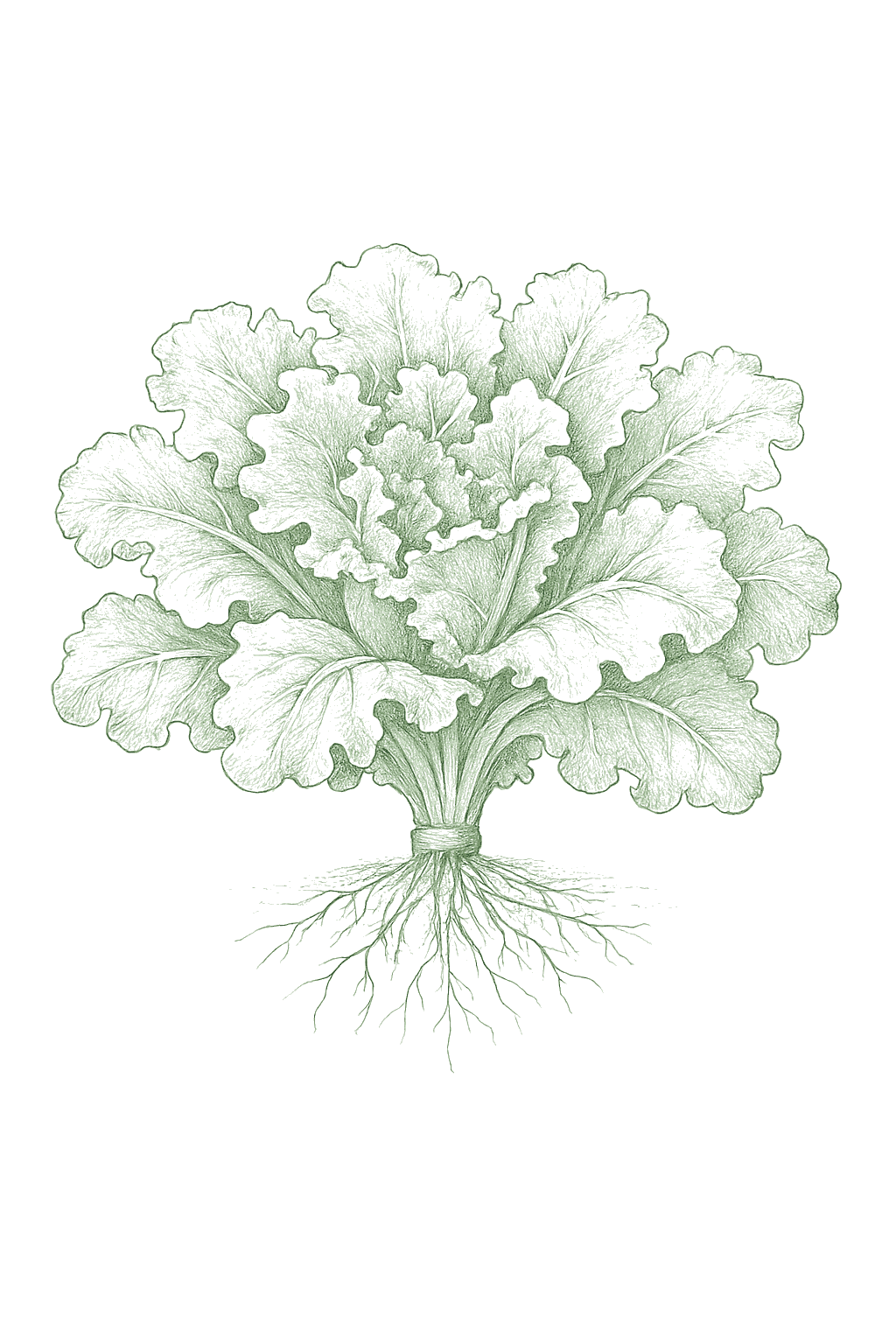
Lettuce (Leaf) mature plant
Fig. 01 · Lettuce (Leaf), mature Zone 5
Mature in
30-45d
from transplant
Sunlight
Full sun to partial shade
3-8 hrs daily
Water
Regular
1 inch / week
Spacing
6-8"
between plants
Soil pH
6-6.8
slightly acidic
Today · in your zone

What's happening right now

July 24 · Zone 5 · Stage 01 · Germination

Your lettuce (leaf) harvest window is open through Oct 10.

The season at a glance

Planting calendar

In Zone 5, lettuce (leaf) can be planted March through June, then again August through September, skipping the summer heat. Harvest runs April through October.

Jan
Feb
Mar
Apr
May
Jun
Jul
Aug
Sep
Oct
Nov
Dec
plant
too cold
too cold
plant
plant
plant
plant
too hot
plant
plant
too late
too cold
too cold
harvest
harvest
harvest
harvest
indoors
plant out
harvest
Above-ground cropBest planted on a above ground moon
Seasoned
Stagger your sowings

Succession planting

Sow a short row every couple of weeks instead of one big planting, so you always have fresh lettuce coming in. In cold-winter areas, start in spring once the soil warms and keep going into early summer, then sow again in late summer for a fall crop. In hot-summer areas, do the reverse: grow through fall, winter, and spring, and skip the heat of summer. Either way, lettuce turns bitter and goes to seed (bolts) once it is too hot, so pause your sowings whenever the hottest stretch arrives.Succession sow at roughly 2-week intervals through the cool-season window for your climate. Where summers are cold-limited, that means spring through early summer plus a late-summer fall sowing; where summers are hot, it means fall through spring with a summer heat pause. Lettuce bolts and turns bitter above about 75°F, so anchor your sowings to the cool side of the season and stop before sustained heat. Sow just enough for 1-2 weeks of salads per batch rather than a full bed at once.

Every 2 weeks · sow a short new rowUp to 12 sowings a seasonToo hot to sow midsummer
Jan
Feb
Mar
Apr
May
Jun
Jul
Aug
Sep
Oct
Nov
Dec
sow
harvest
keep sowing
too hot
continuous harvest
The season, mapped

Seed to garden

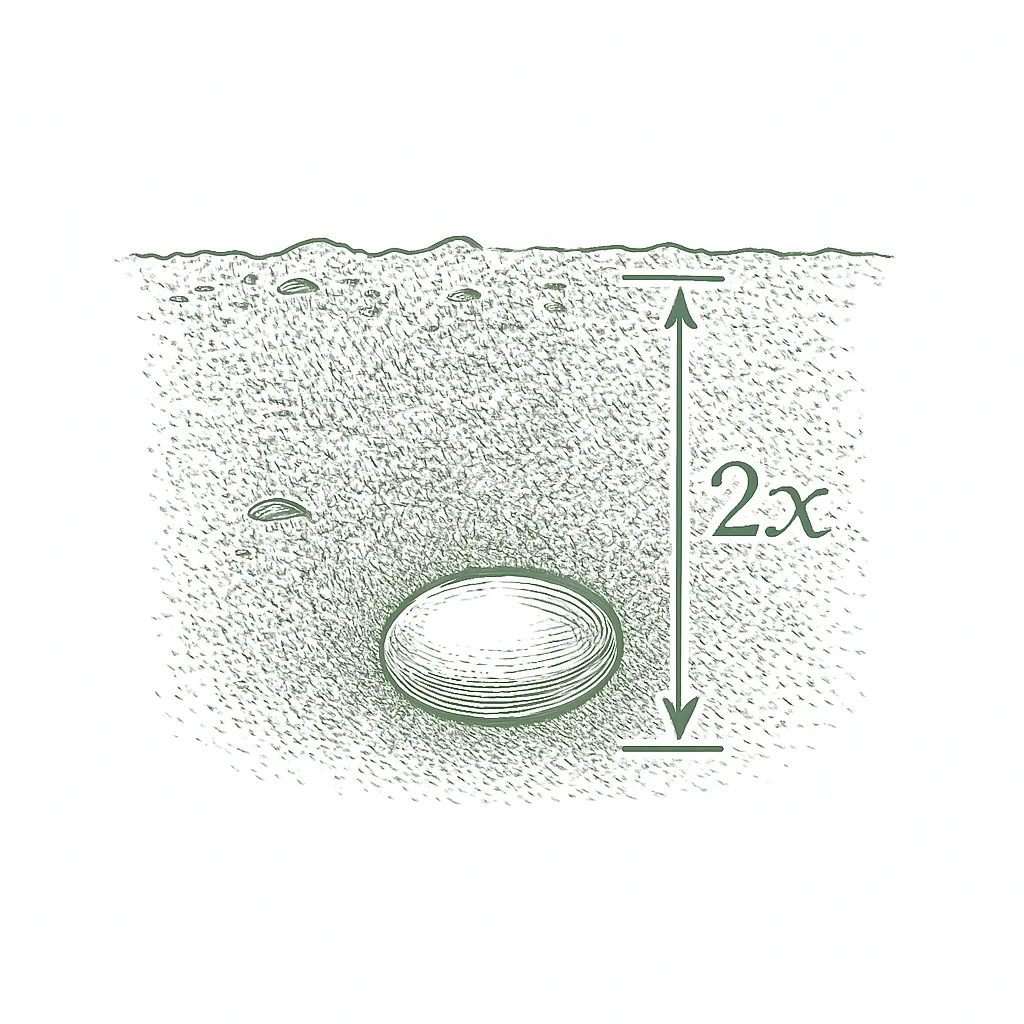
Sow seed straight into the garden about 3 to 4 weeks before your last spring frost, as soon as you can work the soil, since lettuce handles light frost and sprouts in cool ground. For an earlier harvest, start seeds indoors about 4 weeks ahead and set out the young plants when they are 3 to 4 weeks old, which also lets you skip thinning. Lettuce moves outdoors easily because its shallow roots settle in fast, just harden the plants off first (let them get used to outdoor conditions over several days before planting them out).Direct sow outdoors about 3 to 4 weeks before your last spring frost, as soon as the soil is workable, since lettuce tolerates light frost and germinates in cool soil. To get an earlier harvest, start seeds indoors roughly 4 weeks ahead and set out 3 to 4 week old transplants, which also skips the thinning step. Lettuce transplants easily because its shallow roots re-establish quickly, just harden plants off before moving them outside.
  1. 01
    Sow outside
    Mar 18 - Apr 8, Aug 25 - Sep 8
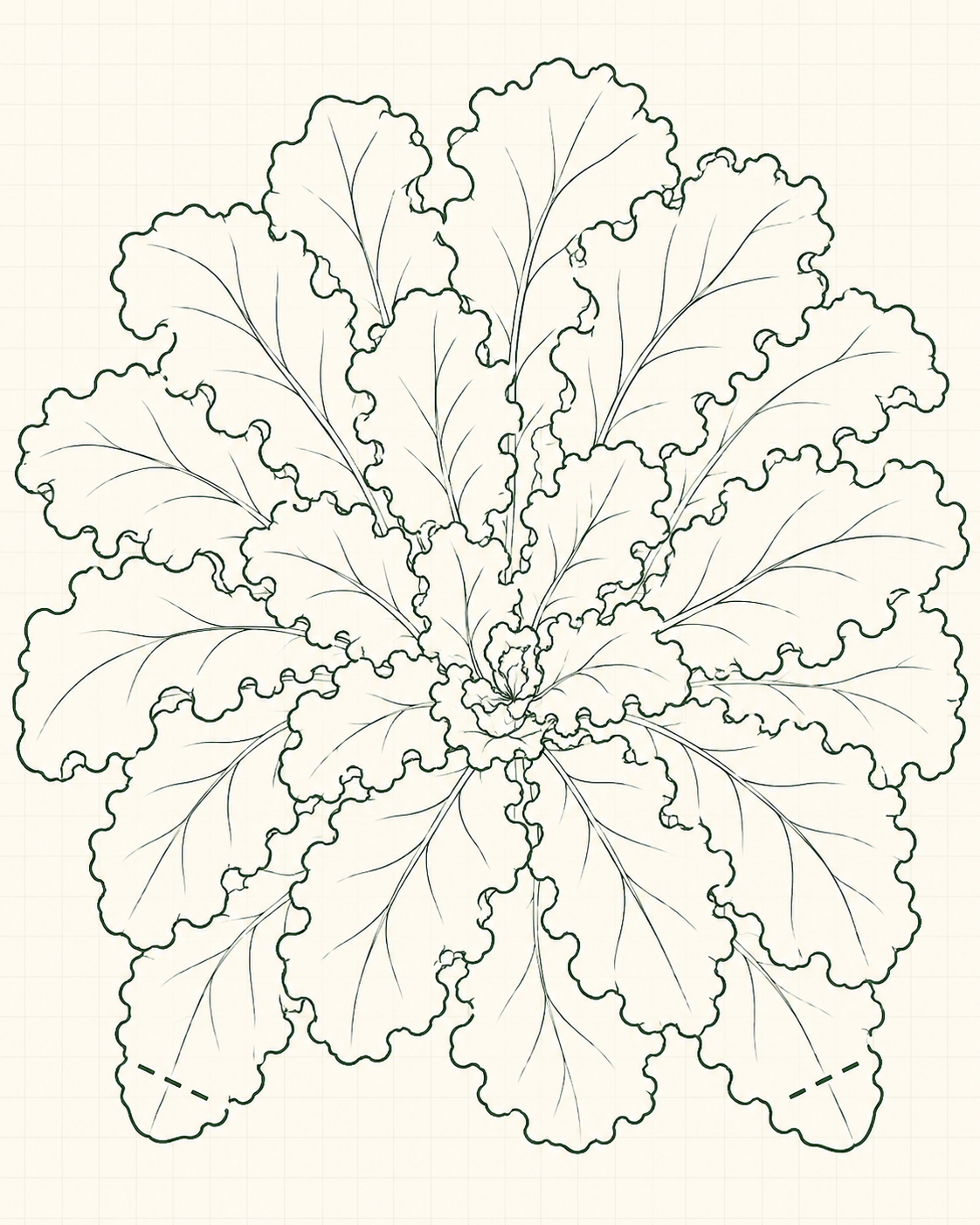
  2. 02
    First harvest
    From Apr 24
    30-45 days from sowing
Start method
Direct
Soil temp
35-75°F
From seed to fruit

The growing journey

Stage 01 · Germination
01
Germination
Days 3-10 · current stage
The first pair of rounded seed leaves pushing up through the soil. Leafy greens come up readily in cool, moist ground, often in well under a week, and they usually come up evenly as long as you have not let the surface dry out.The first pair of rounded seed leaves pushing up through the soil. Leafy greens come up readily in cool, moist ground, often in well under a week, and germination is usually even if the surface has not been allowed to dry out.
Keep the soil surface evenly moist but never soggy until the seedlings are up. Most leafy greens sprout best between about 50 and 65°F and actually prefer cooler soil than warm-season crops like tomatoes. In real heat, fewer seeds sprout and some go dormant, so early sowings tend to come up better than late-spring ones.Keep the soil surface consistently moist but never waterlogged until seedlings are up. Most leafy greens germinate best between about 50 and 65°F and actually prefer cooler soil than warm-season crops like tomatoes; in real heat, germination drops off and seed can go dormant, so early sowings tend to come up better than late-spring ones.
FROM PLANT · Lettuce and other leafy greens sprout easily in cool, moist soil. The catch is heat: once the soil gets above about 80°F, the seeds mostly stop sprouting, which is why seed sown in the heat of summer often just fails. Sow a little more thickly than the spacing on the packet, then thin the seedlings out to that spacing once they are up.Leafy greens are some of the easiest crops to germinate in cool, moist soil, but germination drops off sharply once soil climbs above roughly 80°F, which is why midsummer sowings so often fail. Sow a little more thickly than your final spacing and thin to the recommended distance.
FROM PLANT · The little seedlings you pull out when thinning are completely edible. Rinse them and toss them into a salad as microgreens. With leafy greens, thinning and harvesting are the same job.The thinnings from leafy greens are completely edible; use them as microgreens in salads. Thinning is harvesting.
02
Seedling
Days 5-21
The first true leaves, which look like miniature versions of the grown-up plant rather than the plain oval seed leaves. At this point you can tell your seedlings apart from any weeds coming up next to them.The first true leaves, which look like miniature versions of the crop rather than the plain oval seed leaves. At this point you can tell the seedlings apart from any weeds coming up alongside them.
Thin the seedlings to the recommended spacing now, even though pulling healthy ones feels wasteful. Crowded leafy greens get less airflow, compete for water, and bolt sooner while staying smaller. The thinnings are completely edible, so use them as baby leaves or microgreens in a salad.Thin to the recommended spacing now, even though pulling healthy seedlings feels wasteful. Crowded leafy greens get less airflow, compete for water, and bolt sooner while producing smaller plants. The thinnings are completely edible, so use them as baby leaves or microgreens in a salad.
FROM PLANT · Thinning your seedlings out to the spacing on the packet feels wasteful, but do it anyway. Plants packed too close together get poor air movement and grow small, lower-quality leaves.Thin to the recommended spacing even though it feels wasteful. Crowded leafy greens get less airflow and produce smaller, lower-quality leaves.
FROM PLANT · A thin layer of mulch (straw, shredded leaves, or compost) around your seedlings keeps the soil moist and holds weeds down. Both matter a lot for leafy greens, which need steady moisture to grow well.A light mulch around seedlings keeps moisture in and suppresses weeds, both important for leafy greens which need consistent moisture.
03
Established
Days 14-35
Leaves reaching a useful size and the plant looking full and healthy, well before any stalk starts to rise from the center. This is the long, productive stretch for a leafy crop.Leaves reaching a useful size and the plant looking full and healthy, well before any central stem starts to rise. This is the long productive window for a leafy crop.
Start picking the outer leaves now rather than waiting for the plant to look finished. Taking the outer leaves tells the plant to keep pushing new growth from the center, so regular light picking gives you more over a longer time than one big cut. Leave the center and the inner leaves alone.Start picking the outer leaves now rather than waiting for the plant to look finished. Taking the outer leaves signals the plant to keep pushing new growth from the center, so regular light harvesting gives you more over a longer period than a single cut. Leave the growing point and inner leaves intact.
FROM PLANT · Start picking the outer leaves as soon as they are big enough to use. This is how leafy greens are meant to be harvested: take the outer leaves and the center keeps pushing out new growth, so one plant feeds you for weeks.Start harvesting outer leaves as soon as they reach a useful size; this is how leafy greens work. The center keeps producing new growth as you remove the outer leaves.
FROM PLANT · Try to water on a steady schedule rather than letting the soil dry out and then soaking it. When the weather turns hot, that on-and-off watering makes lettuce and spinach bolt sooner. Bolting is when the plant shoots up a flower stalk and the leaves turn bitter. Steady moisture buys you more harvest time as it heats up.Water consistently. Under heat stress, irregular watering pushes lettuce and spinach to bolt sooner, so steady moisture buys time as temperatures climb.
04
Harvest
Days 21-60
Leaves at full, good size and still tender, with no yellowing and no sign of a flower stalk forming in the center. Once a stalk appears, the eating window is starting to close.Leaves at full, good size and still tender, with no yellowing and no sign of a flowering stem forming in the center. Once a stalk appears the eating window is closing.
Harvest cut-and-come-again style: take the outer leaves and let the center keep growing for repeat pickings over several weeks. Take no more than about half the plant at once so it can recover. For butterhead and other heading types, cut the whole head once it has formed rather than picking it leaf by leaf.Harvest cut-and-come-again: take the outer leaves and let the center keep growing for repeat pickings over weeks. Take no more than about half the plant at once so it can recover. For butterhead and other heading types, cut the whole head once it has formed rather than picking leaf by leaf.
FROM PLANT · Pick your greens in the morning, when the leaves are full of water and at their crispest. Get them into the fridge right away in a slightly damp bag so they stay fresh.Always harvest in the morning when leaves are full of water and at their crispest. Refrigerate immediately in a damp bag.
FROM PLANT · When you harvest a cut-and-come-again crop (one you cut from again and again rather than pulling up), leave at least half the plant standing. Taking too much at once sets it back and slows the next flush of leaves.Leave at least half the plant intact when harvesting cut-and-come-again crops. Taking too much at once sets the plant back.
05
Bolting
Days 40-80
A stalk shooting up from the middle of the plant, with the newer leaves turning smaller, narrower, and noticeably more bitter. This is bolting, the plant switching from growing leaves to making flowers and seed.A central stalk shooting up from the middle of the plant, with the newer leaves turning smaller, narrower, and noticeably more bitter. This is bolting, the plant shifting from leaf growth to flowering and seed.
Once bolting starts the flavor turns and there is no undoing it, so harvest everything worth eating right away. Bolted leaves are still safe to eat but get more and more bitter, so use them quickly. Then pull the plant and either sow again for a later crop or give the space to a warm-season vegetable. You might leave one plant to flower for the pollinators or to save seed.Once bolting starts the flavor turns and there is no reversing it, so harvest everything worth eating right away. Bolted leaves are still safe to eat but get increasingly bitter, so use them quickly. Then pull the plant and either resow for a later crop or give the space to a warm-season vegetable, and consider leaving one plant to flower for the pollinators or to save seed.
FROM PLANT · When you spot a flower stalk shooting up from the center, the plant is bolting, which means it is going to seed. Harvest the whole thing right away. The leaves are still safe to eat, but they get more bitter every day from here.Once you see a flower stalk, harvest everything immediately. The leaves are still edible but will become more bitter every day.
FROM PLANT · A bolted plant (one that has shot up a flower stalk and gone to seed) is not a failure on your part, it is just the plant finishing its natural life cycle. A fall planting often does better than a spring one, because the weather is cooling down instead of heating up.Bolted leafy greens are not a failure: it is the plant completing its lifecycle. A fall sowing often outperforms spring because the weather is cooling rather than warming.
Beginner
Know your soil

Your soil

Identify yours

Not sure what soil you have? Grab a small handful of damp soil from your garden bed and squeeze it. If it crumbles apart easily, it's sandy. If it holds together but breaks when you poke it, it's loam (what most vegetables want). If it stays in a hard, slippery ball, it's clay.

What this crop wants

Lettuce likes loose, rich soil that drains well but never dries out completely. Because its roots are shallow and delicate, soggy or packed-down soil hurts lettuce more than it would a tomato, and letting the bed dry out even briefly makes the leaves turn bitter and the plant go to seed early. The simplest fix for almost any soil is to mix 2 to 3 inches of compost into the top few inches before you plant, which helps sandy soil hold water and helps heavy soil drain. Try to avoid thick clay, it forms a hard crust that small seedlings struggle to push through and stays wet around the roots.

If your soil doesn't match

You have sandy soil

Mix 2-3 inches of compost into the top 6 inches of your bed before planting. Compost holds moisture (which sandy soil drains too fast) and adds the nutrients sandy soil tends to lack. Repeat each season. Compost breaks down over time.

You have clay soil

Mix 2-3 inches of compost AND a few inches of coarse sand or perlite into the top 6 inches of your bed. The compost feeds the plants; the sand breaks up the clay so air and water can move through. Don't add sand without compost. It can compact like concrete.

Containers and raised beds

If amending your soil sounds like too much work, or if your soil is heavy clay, full of rocks, or contaminated, build over it. A raised bed at least 12 inches deep filled with a 50/50 mix of compost and sandy loam gives you ideal growing soil with no battles. A 5-gallon container with quality potting mix does the same for one plant at a time. Both bypass your native soil entirely.

Learn more about your soil
The specs

Care guide

The numbers that matter, at a glance.

Sunlight
Full sun to partial shade · 3-8 hrs/day
Water
Regular
Spacing
6-8 inches
Soil
loam, sandy loam
Days to maturity
30-45 days from transplant
Soil pH
6 to 6.8
Container OK?
Yes · 1+ gal pot
Germination temp
35-75°F
Soil chemistry

Soil pH for lettuce (leaf)

Preferred
6 to 6.8
Tolerated
6 to 7

Soil pH measures acidity on a scale from 0 to 14, where 7 is neutral and lower numbers are more acidic. Lettuce does best between 6.0 and 6.8, slightly acidic, because that is where the nutrients it needs are easiest for the roots to take up. If your soil is more acidic than 6.0 or more alkaline than 7.0, lettuce can show yellowing leaves or browning edges even when fertilizer is present. The only way to know your number is to test, so get an inexpensive soil test from your local extension office before adding lime to raise pH or sulfur to lower it.Soil pH governs nutrient availability, and lettuce is most productive in the slightly acidic 6.0 to 6.8 band where phosphorus, calcium, and magnesium stay soluble. Below about 6.0, calcium uptake falls off and aluminum and manganese grow more available, which can scorch leaf margins and stunt the fine root system. Above 7.0, iron and manganese begin to lock up and drive interveinal yellowing on new growth. Across the alkaline interior West and in alkaline-irrigation districts, growers often acidify before planting, while the naturally acidic soils of the forested East more often need lime to reach the target band.

Verified · 4 sources View
Steady hand on the hose

Watering

When & how much
Frequency
Every 2 to 3 days in mild weather, and more often in heat or in containers. The shallow roots dry out faster than those of deeper-rooted crops, so the topsoil they rely on loses moisture quickly. Uneven watering is the real risk: letting the soil go dry and then soaking it stresses the plant, which both causes tipburn (brown inner-leaf edges) and pushes the plant to bolt.Every 2 to 3 days in mild weather, more often in heat or in containers. The shallow root mass dries out faster than deeper-rooted crops, so the topsoil it depends on loses moisture quickly. Irregular watering is the real risk: a dry-then-flooded cycle stresses the plant, and water stress both reduces calcium transport to the leaf tips, which drives tipburn, and pushes the plant toward bolting.
Amount
About 1 inch of water per week, but for lettuce being consistent matters more than the exact amount. Because the roots are shallow and sit in just the top few inches of soil, lettuce dries out easily, and even short dry spells stress it quickly. Steady, even moisture also helps the plant move calcium to the fast-growing inner leaves, which prevents tipburn (the brown, dried leaf edges).1 inch of water per week, but consistency matters more than volume for lettuce. Because the root system is shallow and concentrated in the top few inches of soil, lettuce has little buffer against drying out, and brief dry spells translate quickly into stress. Even, frequent moisture also supports the steady calcium uptake that prevents tipburn in fast-growing inner leaves.
Method
Water at the soil rather than over the top of the plants where you can. Lettuce sits low with its leaves close to the ground, so overhead watering leaves moisture trapped in the center and on the leaves, where it invites diseases like downy mildew and rot. If you do water from above, do it in the morning so the leaves dry off before the cool, damp evening, when leaf diseases are most likely to take hold.Water at soil level rather than overhead where practical. Lettuce sits low with leaves close to the soil, so overhead watering leaves moisture trapped in the crown and on leaf surfaces, where it invites downy mildew, bottom rot, and gray mold. If you do water overhead, do it in the morning so the foliage dries before the cool, damp evening hours when fungal infection is most likely.
Signs of trouble
Too much water
Slimy or rotting leaf bases, yellowing outer leaves, and soil that stays wet. The slime at the base is rot taking hold in a crown that is too wet, and the yellowing lower leaves mean the roots are sitting in soggy, airless soil. Because lettuce roots are shallow, soil that drains poorly keeps them waterlogged longer than it would a deeper-rooted plant.Slimy or rotting leaf bases, yellowing outer leaves, and persistently wet soil. The slime at the base is bottom rot or gray mold taking hold in a crown that stays too wet, and yellowing lower leaves signal roots sitting in oxygen-starved, waterlogged soil. Because lettuce roots are shallow, soil that drains poorly keeps them waterlogged longer than it would a deeper-rooted plant.
Too little water
Wilting in the afternoon heat, brown crisping along the edges of the inner leaves (this is called tipburn), and a bitter taste. Tipburn is the clearest sign: when the plant grows fast but cannot move enough calcium to the quickly expanding inner leaves, often because dry conditions have slowed the plant down, the leaf edges die back. Dry stress also makes the plant bolt sooner, and once it bolts the leaves turn bitter.Wilting in the afternoon heat, brown crisping along the edges of the inner leaves (tipburn), and bitterness. Tipburn is the diagnostic one: when the plant grows fast but cannot move enough calcium to the rapidly expanding inner leaves, often because water stress has slowed the transpiration that carries calcium upward, the leaf margins die back. Drought stress also accelerates bolting, after which leaves turn bitter as the plant floods them with defensive compounds.
Feeding rhythm

Feeding

Frequency
every 3 weeks
Type
Nitrogen-rich fertilizer
When to start
throughout growing season

Leafy crops run on nitrogen, the nutrient that drives the leaf growth you are harvesting, so feed a balanced or nitrogen-forward liquid fertilizer every 2 to 3 weeks. Keep it steady rather than heavy: a sudden big dose of nitrogen pushes fast, soft growth that can make tipburn worse (brown, dried edges on the inner leaves). And no amount of feeding stops bolting once heat and long days arrive, because that is driven by the plant's hormones, not by nutrients.Leafy crops run on nitrogen, which directly drives the tender leaf growth you're harvesting, so feed a balanced or nitrogen-forward liquid fertilizer every 2 to 3 weeks. Keep it steady rather than heavy: a sudden surge of nitrogen pushes fast, lush growth that can worsen tipburn by outrunning calcium delivery to the inner leaves. No amount of feeding prevents bolting once heat and long days arrive, since that is hormonal, not nutritional.

N · P · K = 10-5-5

Use a fertilizer with more nitrogen (the first number), such as 10-5-5, or a balanced 10-10-10. Those three numbers on the label are the amounts of nitrogen, phosphorus, and potassium.higher N, e.g. 10-5-5 or a balanced 10-10-10

Try Fish emulsion or liquid seaweed
Who grows well together

Companion planting

For lettuce, companion planting is mostly about sharing space well, not about one plant protecting another. Its best neighbors are crops that do not compete with it for the same room: fast radishes and deep-rooted carrots, plus chives, whose oniony smell helps hide lettuce from aphids. A lot of the popular "never plant these together" pairings for lettuce are old garden lore with mixed or no real evidence, so we keep those out of the way in the seasoned view. Get sun, water, and spacing right first. Companions are a small bonus on top. Lettuce companions are mostly about sharing space, not chemistry. Its best partners are fast or deep-rooted crops it does not compete with (radishes, carrots) and scent plants that help mask it from aphids (chives). Many popular 'avoid' pairings for lettuce are traditional lore with conflicting evidence rather than documented harm, so we keep those in the seasoned view with honest framing. Get sun, water, and spacing right first, companions are a small bonus on top.

Pest deterrent
Chives
The oniony smell of chives can help hide lettuce from aphids, which find plants by scent. It helps a little rather than solving the problem on its own, so plant chives as a border around the bed.Allium scent compounds help mask lettuce from aphids that locate hosts by smell. A supporting deterrent, not a standalone fix, plant chives as a border row. Research-backed
concurrent
Nasturtiums
Often grown as an aphid trap crop, but the evidence is weaker than it sounds: trap cropping works best for moderately mobile pests, and aphids disperse passively on wind, so treat this as a supplementary tactic rather than reliable aphid protection. Research-backed
concurrent
Structural
Radishes
Radishes grow fast and come out of the bed before the lettuce needs the room, so the two share space well. Their roots also loosen the soil a little for the lettuce. This is about saving space, not keeping pests away.Fast-maturing relay crop: radishes are harvested before lettuce fills the bed, and their taproots loosen surface compaction for lettuce's shallow roots. A space-saving pairing, not a pest control one. Research-backed
concurrent
Carrots
Lettuce roots stay near the surface and carrots root deep, so the two do not fight for the same space underground and can grow side by side.Different root zones: lettuce is a shallow-rooted light feeder and carrots send a taproot deep, so the two share a bed without competing underground. Research-backed
concurrent
Keep apart from
Celery Traditional companion lore advises against pairing celery with lettuce, often citing shared pests (aphids, whiteflies) or competition in close quarters. This is widely repeated guidance, not extension-documented, and some sources consider the pairing fine. Traditional
Parsley You may see parsley listed as a lettuce antagonist, sometimes blamed for crowding and sometimes for triggering bolting. The evidence conflicts: the bolting claim is unsupported even by the sources that repeat it, and other guides list parsley as a fine or beneficial lettuce neighbor.
Brassicas Cabbage-family crops (cabbage, broccoli, kale, etc.) are often called poor lettuce neighbors, but for lettuce specifically the evidence is genuinely mixed, and some field trials show lettuce intercropped with broccoli yielding more, not less.
Provenance tagged inline · see methodology for the labeling system Key
Harvest signals

When to pick

Pick the outer leaves whenever they are big enough to use, taking the oldest ones from several plants and leaving the center to keep growing. Or cut the whole plant back to about an inch above the base for one larger harvest that will grow back. Harvest in the cool of the morning, when the leaves are crisp and full of water. Heat is the limiting factor: once a stalk starts to rise from the center (this is bolting, the plant shifting to making flowers), the leaves turn bitter and tough, so take your biggest harvests before steady warm weather arrives.Pick the outer leaves whenever they reach usable size, taking the oldest from several plants and leaving the crown to keep growing, or cut the whole plant back to about an inch above the crown for a single larger harvest that regrows. Harvest in the cool of the morning, when leaves are crisp and full of water. The limiting factor is heat: once the central stem begins to elongate (bolting), the plant shifts to flowering, and the leaves turn bitter and tough, so take your fullest harvests before sustained warm weather sets in.

Verified · 5 sources View
Yield

What to expect

A single leaf-lettuce plant keeps producing as long as it is still growing leaves, which in practice means until heat pushes it to send up a flower stalk (bolt). Picked a few outer leaves at a time, one plant gives you repeated harvests over several weeks rather than all at once. But the limit is temperature, not the calendar: once you get steady days above about 75°F, the plant starts to bolt, the leaves turn bitter, and it is finished. In cool spring and fall weather that window lasts longer, and in summer heat it closes fast.A single leaf-lettuce plant keeps producing as long as it stays in active vegetative growth, which in practice means until rising heat pushes it toward bolting. Picked as cut-and-come-again, one plant yields repeated cuttings over several weeks rather than a single harvest, but the productive window is bounded by temperature, not a fixed calendar: once sustained days above about 75°F trigger the seedstalk, the leaves turn bitter and the plant is finished. In cool spring and fall stretches that window runs longer; through summer heat it closes fast.

There are two ways to harvest, and they work on different timelines. You can pick individual outer leaves off a standing plant every few days as new ones size up, always taking the oldest first. Or you can cut the whole plant back to about an inch above the base, which gives a bigger single harvest but then needs about 2 to 4 weeks to grow back before the next cut. A plant will usually give two such cuttings, sometimes a third. For a steady supply, sowing a new small batch every couple of weeks matters more than pushing any one plant.There are two harvest rhythms, and they run on different clocks. Picking individual outer leaves off a standing plant can be done every few days as new leaves size up, taking the oldest first. Cutting the whole plant back to about an inch above the crown, the full cut-and-come-again method, gives a larger single harvest but then needs roughly 2 to 4 weeks of regrowth before the next cutting, and a plant will usually give two such cuttings, sometimes a third. For a steady supply, succession sowing matters more than pushing any one plant. Leaf lettuce is one of the quickest and most forgiving crops for a first season. You can be cutting baby leaves in roughly a month from sowing, while a full-sized plant takes longer, about 40 to 80 days depending on the type, with loose-leaf kinds the fastest and heading types the slowest. Because you do not have to wait for a head to form, that early baby-leaf harvest is what makes lettuce feel so fast.Leaf lettuce is one of the fastest and most forgiving crops for a first season. You can be cutting baby leaves in roughly a month from sowing, while a full-sized plant takes longer, about 40 to 80 days depending on the type, with loose-leaf varieties the quickest and heading types the slowest. Because you do not have to wait for a head to form, the early baby-leaf harvest is what makes it feel so quick.

What changes yield
temperaturepicking frequencyshade in warm weather
Verified · 4 sources View
Pick your variety

Recommended varieties

Buttercrunch is one of the easiest varieties for beginners. It is a butterhead type, which handles heat better and is slower to go to seed (bolt) than the crisphead lettuces you see as supermarket iceberg, so it keeps producing longer when the weather warms up.Buttercrunch is among the most forgiving varieties for beginners, a butterhead type that is more heat tolerant and slower to bolt than crisphead lettuces, with a longer productive window in warm weather.

Black Seeded Simpson
classic loose-leaf
Buttercrunch
butterhead
Romaine/Cos
Salad Bowl
heat tolerant
Off the vine

Storing your harvest

Room temp
Only a few hours. Lettuce loses water very quickly at room temperature, so it wilts within hours if left out. Unlike fruit, it does not improve by sitting on the counter, so get it into the fridge as soon as you can after picking or buying it to keep it crisp.A few hours at most. Lettuce has a high respiration rate and loses water rapidly at room temperature, so it wilts within hours of being left out. Unlike fruit, it gains nothing from sitting on the counter, so get it into the cold as soon as possible after harvest or purchase to preserve crispness.
Fridge
About 7 to 10 days, wrapped loosely in a dry paper towel inside a partly open bag. Lettuce wilts quickly because its thin leaves lose water fast, so the towel soaks up extra surface moisture while the bag slows the drying. Keep it in the crisper drawer, which is the coldest and most humid part of the fridge, and away from the back wall, since lettuce is easily damaged if it freezes.7 to 10 days, wrapped loosely in a dry paper towel inside a partly open bag. Lettuce loses water and wilts quickly because its thin, high-surface-area leaves transpire fast, so the towel absorbs excess surface moisture while the bag slows drying. Keep it in the crisper, the coldest and most humid part of the fridge, and away from the freezer wall, since lettuce is easily damaged by freezing.
Freezer
Lettuce does not freeze well. Freezing forms tiny ice crystals inside the leaves that break the cells apart, so once thawed the lettuce turns dark, soggy, and quickly slimy. There is no cooked use that brings it back the way frozen tomatoes still work for sauce, because lettuce is too watery and delicate. It is a fresh-only crop.Not suitable. Freezing forms ice crystals inside the leaf cells that rupture the cell walls, so thawed lettuce collapses into darkened, water-soaked tissue that quickly turns slimy. There is no cooked use that recovers it the way frozen tomatoes work for sauce; the high water content and delicate structure leave nothing usable. Lettuce is a fresh-only crop.
Verified · 5 sources View
When something goes wrong

Common problems

Frost or cold damage
01 of 05
What happened Most leafy greens handle light frost well once they are established, and a bit of cold can even sweeten them, so cold is rarely the cause for a settled plant. Young seedlings are the exception. If the damage hit while the plants were still seedlings, a late frost probably caught them before they were tough enough to shrug it off.Most leafy greens handle light frost well once established, and a touch of cold can even sweeten them, so cold is rarely the culprit for a settled plant. Young seedlings are the exception. If the damage hit at the seedling stage, a late frost likely caught them before they were tough enough to shrug it off. Next season Cover seedlings with fleece if frost threatens during their first few weeks, when they are most tender. Once established, leafy greens generally come through light frost on their own and need no protection.
Pests or disease
02 of 05
What happened Slugs go after leafy seedlings, especially in wet weather, rasping holes or shearing them off at the soil. Downy mildew takes hold where plants are crowded and the air stays humid. Flea beetles pepper leaves with tiny round holes, most noticeably on arugula and kale.Slugs go for leafy seedlings, especially in wet weather, rasping holes or shearing them off at the soil. Downy mildew takes hold where plants are crowded and the air stays humid. Flea beetles pepper leaves with tiny round holes, most noticeably on arugula and kale. Next season Thin your seedlings properly so air moves through the planting, which discourages mildew. Protect young plants from slugs through the first vulnerable weeks. A floating row cover keeps flea beetles off the plants they bother until those plants are bigger.Thin seedlings properly so air moves through the planting, which discourages mildew. Protect young plants from slugs through the first vulnerable weeks. A floating row cover keeps flea beetles off the susceptible greens until the plants are larger.
Too much water or bolting
03 of 05
What happened In waterlogged soil leafy greens rot at the roots quickly. Far more often, though, the trouble is bolting: warmth and lengthening days trigger the plant to throw up a flower stalk and the leaves turn bitter. That is the plant finishing its natural life cycle, not a failure of your care.In waterlogged soil leafy greens rot at the roots quickly. Far more often, though, the trouble is bolting: warmth and lengthening days trigger the plant to throw up a flower stalk and the leaves turn bitter. That is the plant completing its natural lifecycle, not a failure of your care. Next season Bolting is mostly a matter of timing. Sow earlier in spring so the crop matures before the heat, or switch to a fall sowing, where the cooling weather keeps the plant making leaves instead of rushing to flower.Bolting is mostly a matter of timing. Sow earlier in spring so the crop matures before the heat, or switch to a fall sowing, where cooling temperatures keep the plant producing leaves instead of rushing to flower.
Too little water
04 of 05
What happened Uneven watering is one of the biggest causes of bolting in lettuce and spinach. A dry spell followed by heat stresses the plant and pushes it to flower and set seed in a hurry, cutting your leafy harvest short.Irregular watering is one of the biggest bolting triggers in lettuce and spinach. A dry spell followed by heat stresses the plant and pushes it to flower and set seed in a hurry, cutting the leafy harvest short. Next season Keep moisture steady. A light mulch around leafy greens holds soil moisture and smooths out the swings that trigger bolting. Water in the morning so the leaves dry through the day, which also helps keep mildew down.Keep moisture steady. A light mulch around leafy greens holds soil moisture and evens out the swings that trigger bolting. Water in the morning so the leaves dry through the day, which also helps keep mildew down.
Bolted too quickly
05 of 05
What happened Heat and long days drive most leafy greens to bolt, and it is the single most common reason they disappoint. The plant is not dying; it is doing exactly what it is built to do once the season turns. Once it bolts, the leaves go bitter and inedible fast. Next season For leafy greens, a fall sowing almost always beats spring: the cooling weather gives you longer-lasting, slower-bolting plants. Shade cloth and steady watering can stretch the spring crop by a couple of weeks, but timing the sowing to the cool shoulders of the season is what really works.For leafy greens, the fall sowing almost always beats spring: cooling temperatures give you longer-lasting, slower-bolting plants. Shade cloth and steady watering can stretch the spring crop by a couple of weeks, but timing the sowing to the cool shoulders of the season is what really works.
Verified · 3 sources View
The usual suspects

Pests & diseases

Pests
Aphids
P · 01
Symptoms Clusters of tiny soft insects on new growth and the undersides of leaves. The leaves may curl, yellow, or turn sticky with a substance called honeydew. A black, sooty mold sometimes grows on that stickiness.Clusters of tiny soft insects on new growth and leaf undersides. Leaves curl, yellow, or become sticky with honeydew. Sooty black mold may follow. Cause Several kinds of aphid feed on leafy greens, most often the green peach aphid. During the growing season they reproduce without mating, so a few can become a dense colony within days once it warms up and the growth is soft and lush.Several aphid species feed on leafy greens, most commonly the green peach aphid. Through the growing season they reproduce asexually, so a few founders become dense colonies within days once temperatures warm and growth is soft and lush. Organic treatment First knock the colonies off with a strong jet of water, which dislodges most of them, and they rarely find their way back. For any that remain, spray insecticidal soap or neem oil directly onto the aphids, covering the leaf undersides, since both only work when they hit the insect, not by being eaten. Encourage helpful insects like ladybugs, lacewings, and tiny parasitic wasps, which keep small infestations in check on their own.Knock colonies off with a strong jet of water first, which dislodges most of them and they rarely find their way back. For what remains, spray insecticidal soap or neem oil directly onto the aphids, covering leaf undersides, since both work only on contact and kill by disrupting the insect's outer membrane rather than by being eaten. Encourage ladybugs, lacewings, and parasitic wasps, which keep light infestations in check on their own. Prevention Go easy on nitrogen fertilizer. The fast, soft growth that lots of nitrogen produces is exactly what aphids feed on, so an over-fed plant attracts far more of them. Plant flowers like marigolds and nasturtiums nearby, and grow some dill or cilantro too, whose flowers feed the helpful wasps and predators that do most of the real control.Go easy on nitrogen fertilizer. The fast, soft growth that high nitrogen pushes is exactly what aphids feed on, so a lush over-fed plant attracts far more of them. Interplant flowers such as marigolds and nasturtiums, and grow some umbellifers like dill or cilantro nearby, whose flowers feed the parasitic wasps and predators that do most of the real control.
Slugs & snails
P · 02
Symptoms Ragged holes appearing in leaves overnight, with shiny slime trails visible in the morning. Seedlings may be cut off right at the soil line.Irregular holes in leaves overnight. Slime trails visible in morning. Seedlings may be severed at soil level. Cause Slugs and snails feed mostly at night and in cool, damp weather, rasping ragged holes in tender leaves and shearing off young seedlings completely. The damage is worst in wet spells and in beds with damp mulch or debris that give them somewhere to hide during the day.Slugs and snails feed mostly at night and in the cool, damp hours, rasping irregular holes through tender leaves and shearing off young seedlings entirely. Damage is heaviest in wet spells and in beds with damp mulch or debris that give them daytime shelter. Organic treatment Set beer traps with the rim level with the soil so the slugs fall in and cannot climb out, and refresh them every couple of days. Sprinkle diatomaceous earth in a ring around vulnerable plants, but remember it stops working once it gets wet and needs reapplying after rain or watering. Hand-pick them after dark with a flashlight, when they are out feeding. An iron-phosphate bait (sold as Sluggo and similar) is approved for organic gardens and safe around pets and wildlife; it stops the slugs feeding so they die within a few days. Scatter it in the evening after watering, when slugs are most active, for the best results.Set beer traps with the rim at soil level so they fall in and cannot climb back out, and refresh them every couple of days. Ring vulnerable plants with diatomaceous earth, remembering it stops working once wet and needs reapplying after rain or irrigation. Hand-pick after dark with a flashlight, when they are out feeding. Iron phosphate bait (sold as Sluggo and similar) is approved for organic use and safe around pets and wildlife; it disrupts their gut so they stop feeding and die within a few days. Scatter it in the evening after watering, when slugs are most active, for the best effect. Prevention Pull mulch back from around seedlings and clear away the boards, pots, and leaf litter near the bed that give slugs a daytime hiding spot. A bare, raked strip around the planting slows them down on their way in. Encourage ground beetles, and hedgehogs if you have them, since both hunt slugs through the night.Pull mulch back from around seedlings and clear the boards, pots, and leaf litter that give slugs a daytime hiding place close to the bed. A bare, cultivated strip around the planting slows their approach. Encourage ground beetles and, if you have them, hedgehogs, which prey on slugs through the night.
Lettuce root aphid
P · 03
Symptoms Plants wilt in the heat of the day and just fail to thrive even though you are watering steadily, then slowly decline with no obvious cause above ground. Lift a struggling plant and you find clusters of aphids on the roots under a mass of white, woolly wax. It is easy to mistake for drought or a root disease until you look below the soil.Plants wilt during the heat of the day and fail to thrive despite steady watering, then decline with no obvious cause above ground. Lift a suspect plant and you find clusters of the aphids on the roots under masses of white, woolly wax. The damage is easy to mistake for drought or root disease until you look below the soil. Cause The lettuce root aphid feeds on lettuce roots out of sight. It spends winter as eggs on Lombardy poplar trees, then winged ones fly to lettuce in early summer, which is why the problem is worst where lettuce grows near those trees.The lettuce root aphid, Pemphigus bursarius, feeds on lettuce roots out of sight. It spends winter as eggs on Lombardy poplar, then winged forms migrate to lettuce in early summer, which is why infestations are worst where lettuce grows near those trees. Organic treatment Once the aphids are on the roots, no spray will rescue the crop, so the fix is about how you manage the planting rather than treating it. Pull up and remove badly affected plants. Where it has happened, dig the soil over deeply and let it dry out thoroughly before planting lettuce there again, and keep your plants unstressed and well watered so a fast-growing crop can often still finish acceptably.There is no spray that rescues an infested crop once the aphids are on the roots, so control is cultural. Pull and remove badly affected plants. Where the problem has occurred, work the soil deeply and let it dry thoroughly before replanting lettuce there, and keep plants unstressed and well watered so a fast-growing crop can often still finish acceptably. Prevention Move lettuce around so it does not come back to the same ground each season, and avoid planting it close to Lombardy poplar trees, which are where the aphid spends the winter. Some lettuce varieties are bred to resist root aphid and are worth looking for if this pest keeps showing up in your garden.Rotate lettuce so it does not return to the same ground each season, and avoid planting it close to Lombardy poplars, the aphid's overwintering host. Some lettuce varieties carry resistance to root aphid and are worth seeking out if the pest is a recurring problem in your garden.
Diseases
Downy mildew
D · 01
Symptoms Pale yellow patches show up on the upper side of the older leaves first, with a downy gray-purple mold underneath them. In cool, wet weather it spreads fast, and the affected areas turn brown and die as it moves up the plant.Pale yellow patches appear on the upper surface of older leaves first, matched underneath by a downy gray-purple mold. In cool, wet weather it spreads fast, and affected areas brown and die as the infection moves up the plant. Cause Downy mildew is caused by an organism called Bremia lactucae, a water mold rather than a true fungus. It needs cool, damp conditions and water sitting on the leaves to take hold, and its spores blow on the wind and spread quickly during wet spells. It does not survive in the soil, and because it is not a true fungus, ordinary fungus sprays may not work against it.Downy mildew is caused by Bremia lactucae, an oomycete (a water mold, not a true fungus). It needs cool, damp conditions and water sitting on the leaves to take hold, and its wind-borne spores spread quickly during moist spells. It does not survive in the soil, and because it is not a true fungus, ordinary fungicides aimed at fungi may not touch it. Organic treatment Remove and throw away affected leaves right away, and open the planting up so air moves through and the leaves dry faster. A copper-based spray can help if you use it before the disease takes hold, as a preventive, rather than trying to cure it once it has spread.Remove and dispose of affected leaves promptly, and open the planting up to improve airflow so leaves dry faster. A copper-based fungicide can help when used preventively, before the disease takes hold, rather than as a cure once it has spread. Prevention Water at the soil and early in the day so the leaves are not wet overnight, since wet leaves are what this disease needs. Space plants well apart for airflow, and choose resistant varieties, which extension programs rate as the single most effective control. Avoid growing lettuce under cover through fall and winter without good airflow, where the cool, still, humid air is just what the disease likes.Water at soil level and early in the day so leaves are not wet overnight, since leaf wetness is what the pathogen needs. Space plants generously for airflow, and choose resistant varieties, which extension programs rate as the single most effective control. Avoid growing under cover through autumn and winter without good ventilation, where the cool, still, humid air is ideal for it.
Tipburn
D · 02
Symptoms Brown, papery scorch appears along the edges of the inner leaves, down in the heart of the plant rather than on the outer leaves. It does not spread from plant to plant, and it shows up most in romaine types and in hot weather.Brown, papery scorch appears along the edges of the inner leaves, down in the heart of the plant rather than the outer leaves. It does not spread from plant to plant, and it shows up most in cos and romaine types and in hot weather. Cause Tipburn is a growing problem rather than a disease, and it is rarely about a lack of calcium in the soil. Calcium moves through the plant in the stream of water it pulls up and releases through its leaves, so it ends up in the outer leaves that release the most water. The young inner leaves are tucked inside the head where the air is still and humid, so they release very little water and, during fast growth, cannot pull in enough calcium, and their edges collapse. Heat and lush, fast growth make it worse.Tipburn is a physiological disorder, not a disease, and it is rarely about low calcium in the soil. Calcium travels through the plant in the stream of water it pulls up and transpires, so it collects in the fast-transpiring outer leaves. The young inner leaves are enclosed in the head where the air is still and humid and they transpire very little, so during rapid growth they cannot draw enough calcium and their edges collapse. Heat and lush, fast growth make it worse. Organic treatment There is no fix for leaves that are already scorched. Keep your watering consistent to steady the plant's calcium uptake, and improve airflow around the planting so the inner leaves can release a little more water.There is no fix for leaves already scorched. Keep watering consistent to steady the plant's calcium uptake, and improve air movement around the planting so the inner leaves can transpire a little more. Prevention Avoid forcing soft, fast growth with heavy nitrogen, which outruns the plant's ability to move calcium into the new leaves. Keep moisture even, harvest before heads are fully tight and mature in hot weather, and choose heat-tolerant varieties if summer tipburn keeps being a problem for you.Avoid pushing soft, rapid growth with heavy nitrogen, which outruns the plant's ability to move calcium into the new leaves. Keep moisture even, harvest before heads are fully tight and mature in hot weather, and choose heat-tolerant varieties where summer tipburn is a recurring problem.
Verified · 9 sources View
Seasoned
Where to plant next year

Crop rotation

Try not to grow lettuce in the same spot more than about once every 3 years, and avoid planting it where its close relatives in the daisy family grew last (endive, radicchio, chicory, artichoke). The main reason is soil disease: the organisms behind common lettuce problems like lettuce drop, bottom rot, and downy mildew build up in the soil when the same kind of plant keeps coming back to that spot. A root-feeding insect called lettuce root aphid, which can survive in the soil, is a second reason to keep moving the crop around.Rotate lettuce out of the same bed for about 3 years, and avoid following other daisy-family crops (endive, radicchio, chicory, artichoke) in the same spot. The main reason is soilborne disease: the fungi behind lettuce drop (Sclerotinia), bottom rot, and downy mildew build up in soil and on debris when hosts return year after year. Lettuce root aphid, which can carry over in soil as well as cycling through nearby poplars, is a secondary reason to move the crop.

Family
Composite family (Asteraceae)
Years between
2 years
in the same bed
Avoid following
Avoid planting lettuce where its daisy-family relatives grew last: endive, radicchio, chicory, and artichoke. They get the same soil diseases as lettuce (the organisms behind lettuce drop, bottom rot, and downy mildew build up in the soil when these plants keep returning to the same spot), and they share the same root-feeding aphid, so following one with another just keeps the same pests and diseases going in that bed.Other daisy-family crops, endive, radicchio, chicory, and artichoke. They host the same soilborne diseases as lettuce (the fungi behind lettuce drop, bottom rot, and downy mildew build up where these hosts return year after year), and they also share lettuce root aphid, so following one with another keeps the same pests and pathogens in the bed.
Plant after
Legumes, brassicas, root vegetables
Verified · 2 sources View
In the app · pre-launch

When plant taps you on the shoulder

The plant app sends a timely reminder at every critical moment of your lettuce (leaf) season. The wording adjusts to whichever you pick: beginner or seasoned. Here are three you'll see in Zone 5.

p
plant
6 weeks before last frost
Time to sow your leafy greens
Leafy greens love cool weather and can go out 4 to 6 weeks before your last frost, earlier than most crops. Sow them straight into prepared soil, or start them indoors to plant out later. Sow a short row every couple of weeks instead of all at once, so you get a steady supply of young, tender leaves rather than everything coming ready together.
p
plant
4 weeks after planting date
Your greens should be ready to start picking
Start picking the outer leaves now, even if the plant still looks small. Regular harvesting is what drives more growth from the center, so frequent light picking gives you far more over the season than waiting for a finished plant. Leafy greens are a pick-as-you-go crop, not a one-time cut.
p
plant
NaN days after last frost
Heat incoming, watch your greens for bolting
Hot weather pushes leafy greens to bolt, sending up a flower stalk and turning the leaves bitter. Harvest everything you can now, before the heat sets in. Steady watering and a bit of afternoon shade buy a little time, and a fresh sowing in late summer will give you a tender fall crop once it cools down.
Get personalized alerts.

plant sends the right notification at exactly the right moment, for your zone, your weather, your crops. Founding members lock the rate forever.

Back the Kickstarter →
Ask the gardener

Common questions

Got a question we missed?

We're building this guide with real growers. Got a question we missed? Ask here. We read every one and add the best answers right to this page.

Grown this before?

Share a tip

Learned something the hard way? Pass it on. Real growers' tips make this guide better for the next person, and we credit you by name when yours goes live.

Seasoned
Spot something wrong?

Report a problem

If you've grown this crop and you see a date, a temperature, a companion claim, or a recommendation that doesn't match your experience, tell us. Real growers' corrections make this guide better for the next person.

How we built this guide

Methodology & sources

Every date, temperature, spacing, and recommendation on this page is sourced from university cooperative extension publications, peer-reviewed agricultural research, NOAA climate data, and direct extension calendars. Where claims are softer (traditional gardening wisdom not formally documented), we say so.

Research-backed Documented in cooperative extension publications or peer-reviewed research
Well-grounded A known agronomic principle, but not formally tested for this specific pair
Traditional Time-tested gardening wisdom, limited formal research support
Last reviewed
May 26, 2026
Data version
crops_data_final · v1.0 · schema 2.9
Sources cited on this page
16 publications
Verified entries
Companion-planting claims tagged inline · zone dates verified against 5+ extensions
See all sources cited on this page
  • University of Minnesota Extension umn_ext
  • University of Maryland Extension umd_ext
  • Cornell Cooperative Extension cornell_ext
  • Iowa State University Extension iastate_ext
  • Michigan State University Extension msu_ext
  • NC State Extension ncsu_ext
  • Penn State Extension psu_ext
  • U. of Illinois Urbana-Champaign Extension uiuc_ext
  • UC Davis Postharvest Center ucd_postharvest
  • Texas A&M AgriLife Extension tamu_agrilife
  • Virginia Cooperative Extension 426-331 vce_426_331
  • Piedmont Master Gardeners piedmont_mg
  • UGA Vegetable Garden Calendar uga_calendar
  • Clemson Home & Garden Information Center clemson_hgic
  • UC IPM Statewide IPM Program uc_ipm
  • NOAA 1991-2020 Climate Normals noaa_normals

Growing notes, weekly.

Zone-aware seasonal nudges, what's worth planting now, and the occasional recipe from the harvest. No spam, ever.

Vol. 003 · Lettuce (Leaf) · plant.lifestyle