Today · in your zone
What's happening right now
Off-season for marigold in zone 6.
Tap to switch. plant calibrates to where you are in the journey.
Marigolds are easy, cheerful flowers and the classic companion plant, grown for blooms rather than food. They love heat and full sun, handle poor soil and dry spells, and bloom from summer until the first fall frost. There are three main kinds: small bushy French marigolds, tall big-flowered African (or American) marigolds, and tiny lacy Signet marigolds with edible petals. Plant the seeds outside after your last frost once the soil is warm, and you get flowers in about two months. Keep snipping off faded blooms to get more. Their most proven garden trick is fighting soil nematodes: grow a thick patch of French marigolds and dig them in before planting vegetables that nematodes attack. Marigold (Tagetes species) is a warm-season, frost-tender annual in the Asteraceae family, native to Mexico and Central America. It is grown for showy blooms and as the classic companion plant, in three main types: compact French marigolds (Tagetes patula), tall large-pompon African or American marigolds (Tagetes erecta), and petite, lacy, edible-flowered Signet marigolds (Tagetes tenuifolia). Sown into warm soil after frost, it reaches first bloom in roughly 7 to 9 weeks and flowers continuously from summer until the first fall frost. It thrives in heat, full sun, and even poor soil, and is notably drought-tolerant once established. Its best-supported pest function is nematode suppression: French marigolds grown as a dense cover stand and incorporated lower root-knot nematode populations for the following crop.
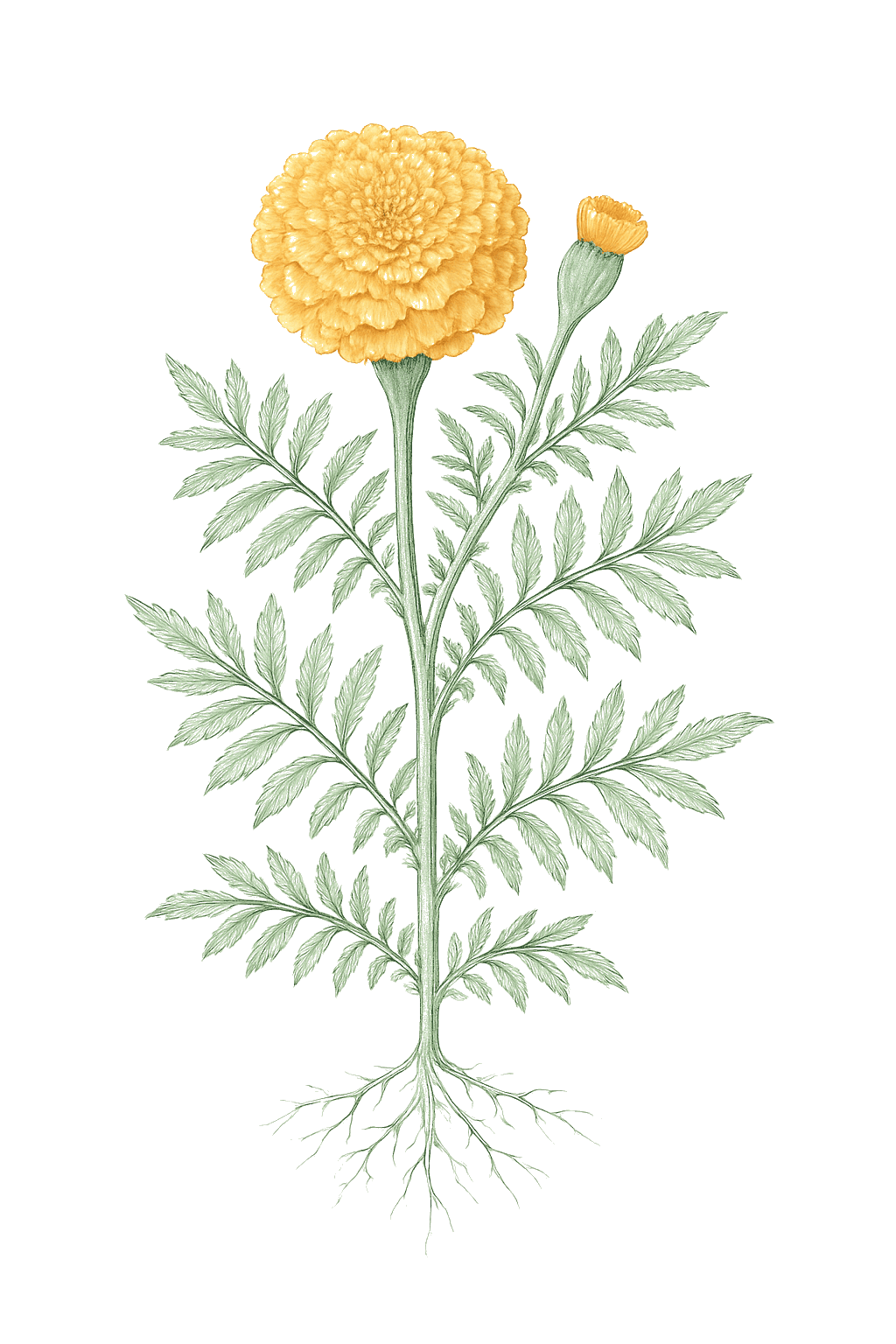
Off-season for marigold in zone 6.
In Zone 6, marigold can be planted April through August. Start indoors Mar 16 - Mar 30. In bloom July through October.
For flowers all season, plant a new small batch of seeds every 2 to 3 weeks from after the last frost into midsummer. Fresh young plants give the best flowers late in the season. Unlike cool-season crops, marigolds love the heat, so you do not stop for summer.Sow successively every 2 to 3 weeks from after last frost through midsummer to keep fresh, vigorous plants coming; older plantings tire as the season wears on. There is no heat pause: marigolds thrive through peak summer.
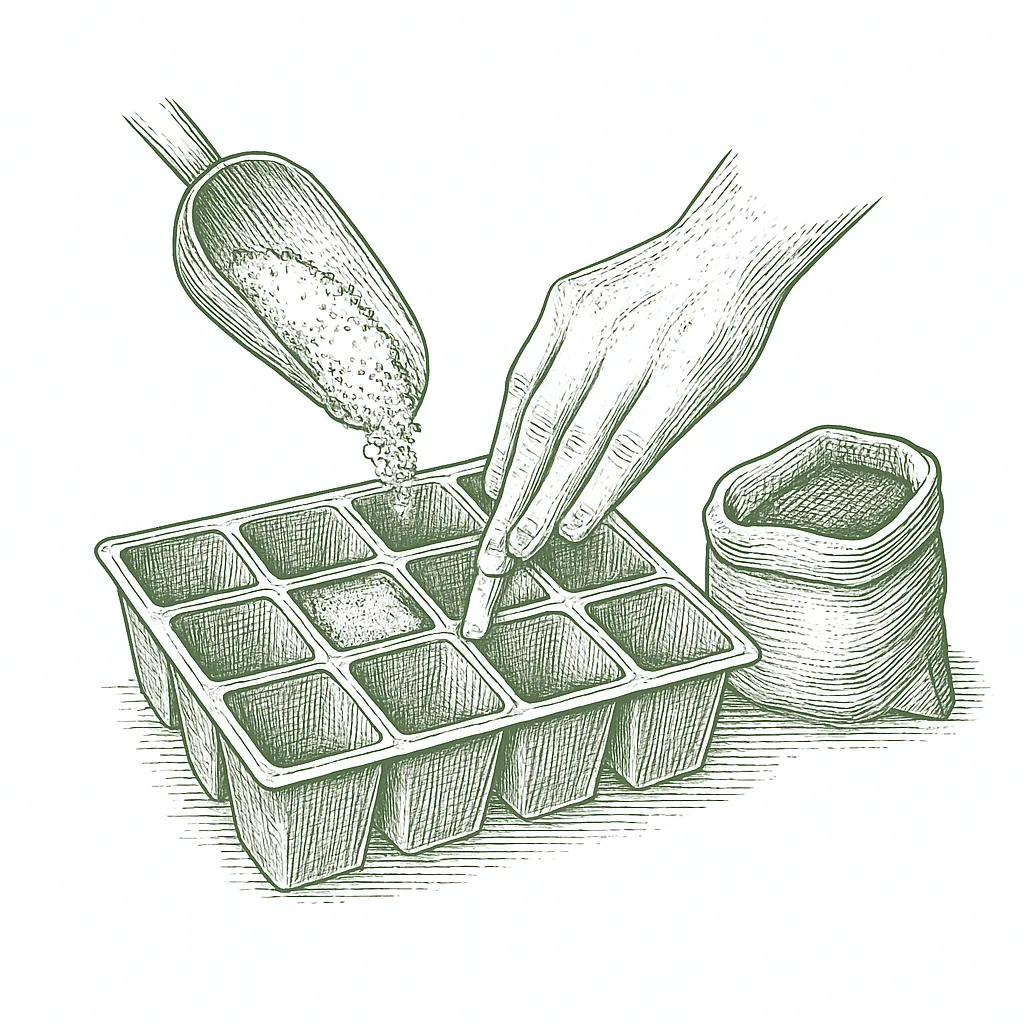
The easiest way is to sow marigold seeds straight into warm garden soil (about 65 to 70 °F) after your last frost, a quarter inch deep; they sprout in under a week. For a head start, or for the tall African types, start them indoors 4 to 6 weeks before the last frost (about 8 weeks for African) and move them outside afterward. You can pinch the tops of tall types once to make them bushier.Marigolds direct-sow readily into warm soil (about 65 to 70 °F) at 1/4 in depth and germinate in 5 to 8 days, the simplest method in long-season areas. To gain weeks or for the slow-developing tall African types, start indoors 4 to 6 weeks before last frost (up to 8 weeks for African) and transplant after frost. Pinch tall African types once to encourage branching; French and Signet types need no pinching.










Not sure what soil you have? Grab a small handful of damp soil from your garden bed and squeeze it. If it crumbles apart easily, it's sandy. If it holds together but breaks when you poke it, it's loam (what most vegetables want). If it stays in a hard, slippery ball, it's clay.
Marigolds are not fussy and grow in most ordinary garden soil as long as water drains away and does not pool. Soil that is moderately fertile and well drained is ideal; very rich soil grows lots of leaves and fewer flowers. Avoid soggy ground, which rots the roots. If your soil is very acidic, the leaves can speckle bronze, so a normal garden range works best.
Mix 2-3 inches of compost into the top 6 inches of your bed before planting. Compost holds moisture (which sandy soil drains too fast) and adds the nutrients sandy soil tends to lack. Repeat each season. Compost breaks down over time.
Mix 2-3 inches of compost AND a few inches of coarse sand or perlite into the top 6 inches of your bed. The compost feeds the plants; the sand breaks up the clay so air and water can move through. Don't add sand without compost. It can compact like concrete.
If amending your soil sounds like too much work, or if your soil is heavy clay, full of rocks, or contaminated, build over it. A raised bed at least 12 inches deep filled with a 50/50 mix of compost and sandy loam gives you ideal growing soil with no battles. A 5-gallon container with quality potting mix does the same for one plant at a time. Both bypass your native soil entirely.
The numbers that matter, at a glance.
Marigolds are not picky about soil pH (how acidic or alkaline the soil is). A normal garden range around 6.0 to 7.0 is ideal, and you usually do not need to change anything. Only very acidic soil, below about 5.5, can cause speckled, bronze-looking leaves.Marigolds perform best across roughly 6.0 to 7.0 and tolerate a little outside that. No pH adjustment is typically warranted, but strongly acidic soil (below about 5.5) can trigger manganese or iron toxicity that bronze-speckles the foliage, so favor a near-neutral bed.
Marigolds do not need much feeding. Mix a little balanced fertilizer or compost into the soil before planting and that is usually plenty. Too much fertilizer, especially the high-nitrogen kind, gives you leaves instead of flowers, so go light.Marigolds are light feeders; a modest balanced dose worked into the soil at planting is usually all they need. Excess nitrogen pushes soft, leafy growth and suppresses bloom, so favor a balanced or slightly lower-nitrogen feed over a high-nitrogen one, and skip routine feeding once established.
The three numbers on fertilizer (N-P-K) are nitrogen, phosphorus, and potassium. For marigolds, pick a balanced one like 10-10-10 rather than a high first-number (nitrogen) lawn feed, which gives leaves instead of flowers.A balanced ratio such as 10-10-10 worked in at planting suits marigolds better than a high-nitrogen lawn-type feed, which favors foliage over flowers.
Deadheading means snipping off flowers once they fade. Do it regularly: cut the old bloom back to the next set of leaves, and the plant makes more flowers instead of going to seed. Cutting fresh flowers for a vase does the same job. The small French and Signet marigolds keep blooming even if you skip it, but the big African types flower a lot more if you deadhead. Pinch the tops of tall types once when young to make them bushier.Deadhead spent blooms back to the next leaf node through the season to redirect energy from seed set into new flowers and sustain bloom to first frost; cutting for the vase serves the same function. French and Signet types rebloom well even with little deadheading, while the tall African doubles benefit most from it. Pinch tall African types once when young to force branching and more, sturdier stems.
Marigolds are the classic companion plant, grown to help the rest of the garden more than for themselves. The one pest benefit that research actually supports is against root-knot nematodes (tiny soil worms that damage roots): if you grow a thick, solid patch of French marigolds in a problem bed for about two months and then dig them in, before planting a crop that nematodes attack, they can lower the nematode numbers. Just dotting a few marigolds among your vegetables has not been shown to do this. The old idea that their strong smell drives away insects, rabbits, and deer is traditional belief, sometimes helpful but not reliable. What marigolds clearly do is bring in bees and helpful insects, so they are a cheerful, useful edge or border plant almost anywhere. There is no plant you must keep them away from; just give them room and sun. Marigold inverts the usual companion framing: it is the plant you place to benefit others. Its one research-supported pest function is nematode suppression, and only in a specific form: French marigolds (Tagetes patula) grown as a dense, weed-free solid stand for about two months in the target bed and then incorporated, ahead of a susceptible crop, can reduce root-knot and lesion nematode populations via root-released alpha-terthienyl. UF/IFAS is explicit that simply interplanting a few marigolds among vegetables has not been shown to reduce nematodes, and the African types are less effective than French for this. The broader reputation, that marigold scent repels insects, rabbits, and deer, is traditional companion lore: sometimes borne out, not reliably documented. What is solid is that marigold is a strong pollinator and beneficial-insect draw, so it earns its place as an insectary edge or border. There is no biologically antagonistic companion to avoid; site for sun and airflow.
Marigolds are mostly for garden color and helping the garden, but you can cut them for a vase when the flowers are fully open and the stem feels firm. Cut in the morning and put them straight into clean water, pulling off the smelly lower leaves first. Snip off faded flowers through the season to keep more coming.Marigold is grown for garden display, companion value, and cutting; cut blooms for the vase when flowers are fully open and the stem is firm just below the head, in the cool of the morning into clean water. Strip the strongly scented lower leaves below the waterline. Deadhead spent blooms throughout the season to sustain flowering to frost.
One marigold gives you lots of flowers over the summer. The small French and Signet types make many small blooms at once, while the tall African types make fewer but big, showy flowers good for cutting. Keep picking faded flowers and they keep coming until frost.A single marigold blooms profusely over a season; French and Signet types carry dozens of small to medium flowers continuously, while the tall African types produce fewer but much larger pompon blooms well suited to cutting. Deadheading or cutting sustains production to frost.
Marigolds flower the same year you plant them, usually about two months after sowing. There is no waiting year. Plant in spring and you will have flowers from summer until the first frost.Marigolds bloom the first season from seed, roughly 7 to 9 weeks after sowing (French sooner, African later), so there is no establishment year; a spring sowing flowers from early summer to first frost.
Pick the type for your spot. French marigolds are small, bushy, and bloom for a long time, perfect for beds, pots, and edging, and they are the type that suppresses soil nematodes when planted thickly. African marigolds are the tall ones with big round pompon flowers, good at the back of a bed and for cutting. Signet marigolds are tiny, lacy plants covered in small flowers, very tough in heat and drought, with petals you can eat. Open, single flowers are best for bees and butterflies.Choose by type and purpose. French marigolds (Tagetes patula) are the compact, bushy, long-blooming bedding and edging workhorses and the type to use for root-knot nematode cover plantings (cultivars such as 'Single Gold' and 'Tangerine' are the trialed performers). African or American marigolds (Tagetes erecta) are the tall, large-pompon types for the back of the border and for cutting; they benefit most from deadheading and staking. Signet marigolds (Tagetes tenuifolia) are the petite, lacy, heat- and drought-tough edgers, smothered in small single flowers whose petals are edible. Single, open-faced flowers serve pollinators better than the densest doubles.
Marigolds are flowers for the garden and the vase, not food to store, so there is nothing to refrigerate or freeze. To make cut flowers last, trim the stems, pull off the smelly lower leaves that would sit underwater, and use a clean vase with fresh water. They usually stay nice for several days to a week. The small Signet marigolds have edible petals with a spicy, tarragon-like flavor, used fresh.Marigold is grown for bloom and companion value, not as a stored edible, so the refrigerate and freeze fields do not apply. For cut flowers, recut stems and strip the strongly scented lower leaves below the waterline (they foul vase water fast), use clean water with floral preservative, and keep blooms out of direct sun. Vase life is several days to about a week. The Signet types have edible, spicy-tarragon petals used fresh as a garnish.
Rotating marigolds is not as important as it is for vegetables, but it still helps. Plant them in a different spot each year if you can, and clean up old, diseased leaves at the end of the season. Used on purpose, a thick patch of French marigolds grown for a couple of months and then dug in is a real way to cut down soil nematodes before you plant vegetables there.Rotation matters less for a fast-growing ornamental annual than for heavy-feeding vegetables, but moving marigolds to a fresh bed each year and clearing infected debris at season end limits carryover of gray-mold and leaf-spot inoculum. Used deliberately, a two-month French marigold cover stand turned under is a documented preceding-crop treatment for root-knot nematodes.
The plant app sends a timely reminder at every critical moment of your marigold season. The wording adjusts to whichever you pick: beginner or seasoned. Here are three you'll see in Zone 6.
plant sends the right notification at exactly the right moment, for your zone, your weather, your crops. Founding members lock the rate forever.
We're building this guide with real growers. Got a question we missed? Ask here. We read every one and add the best answers right to this page.
Learned something the hard way? Pass it on. Real growers' tips make this guide better for the next person, and we credit you by name when yours goes live.
If you've grown this crop and you see a date, a temperature, a companion claim, or a recommendation that doesn't match your experience, tell us. Real growers' corrections make this guide better for the next person.
Every date, temperature, spacing, and recommendation on this page is sourced from university cooperative extension publications, peer-reviewed agricultural research, NOAA climate data, and direct extension calendars. Where claims are softer (traditional gardening wisdom not formally documented), we say so.
Spot a data point that doesn't match your experience? Submit a correction; accepted corrections earn full author credit on the page.
Zone-aware seasonal nudges, what's worth planting now, and the occasional recipe from the harvest. No spam, ever.