Today · in your zone
What's happening right now
Off-season for marigold in zone 9.
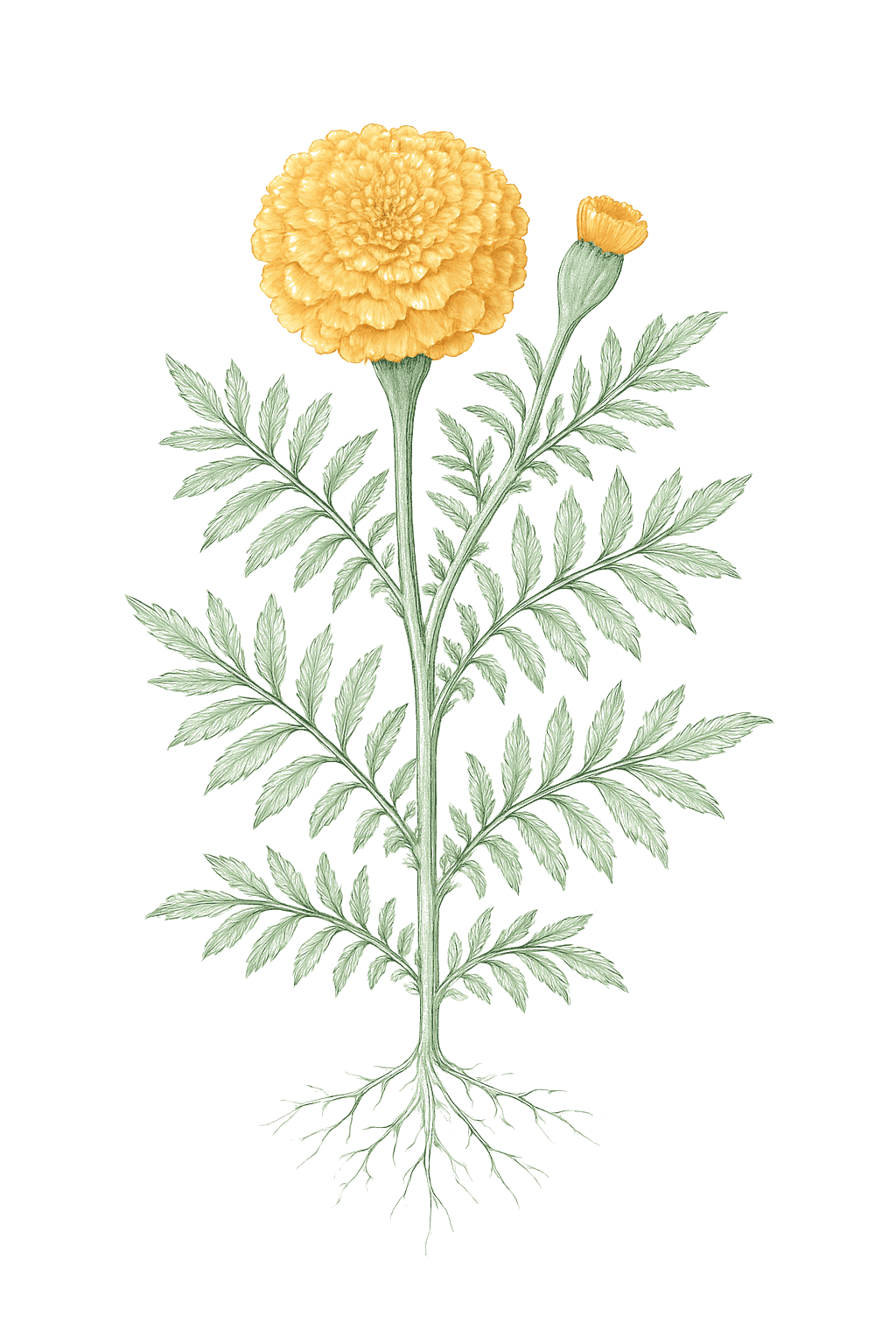
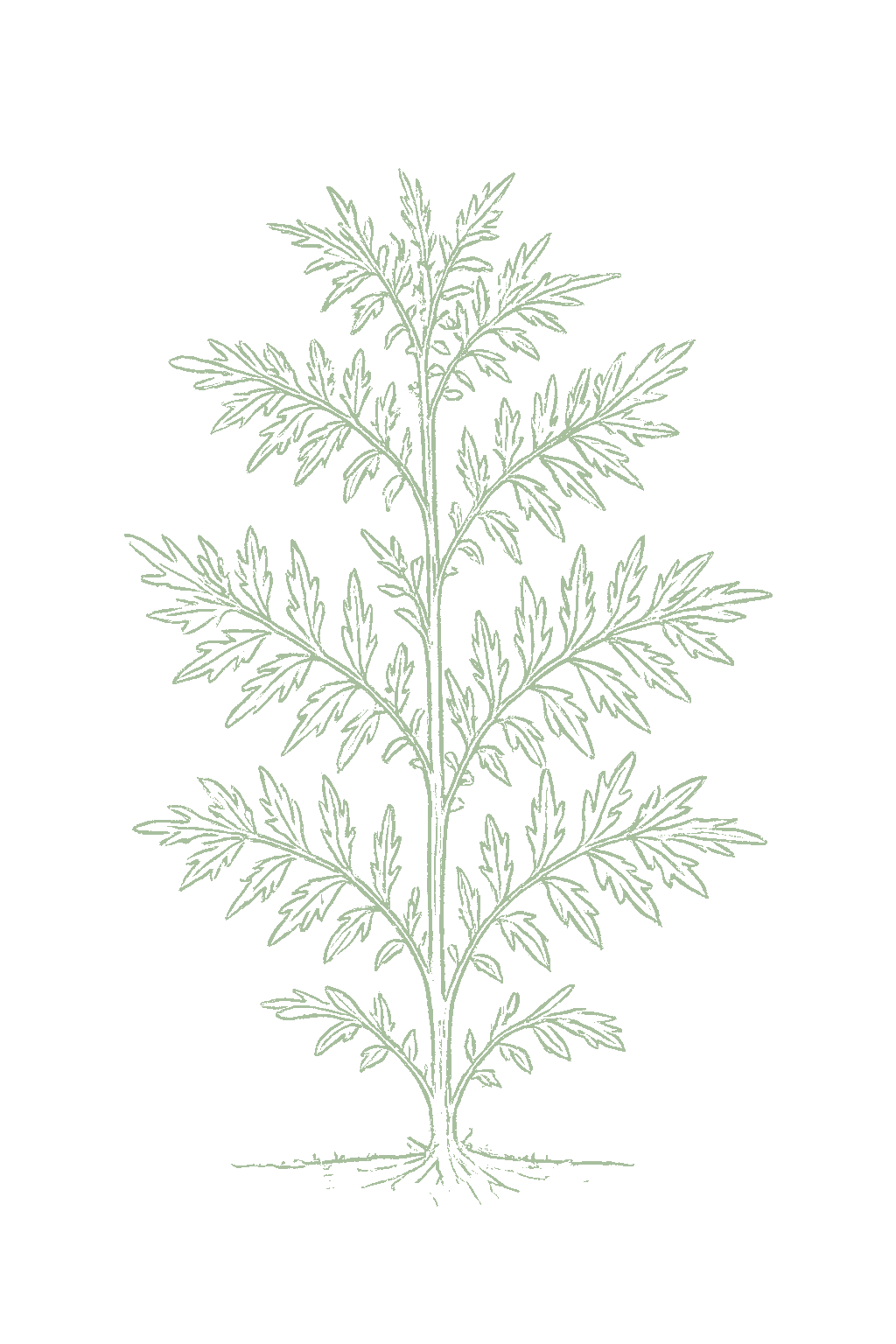
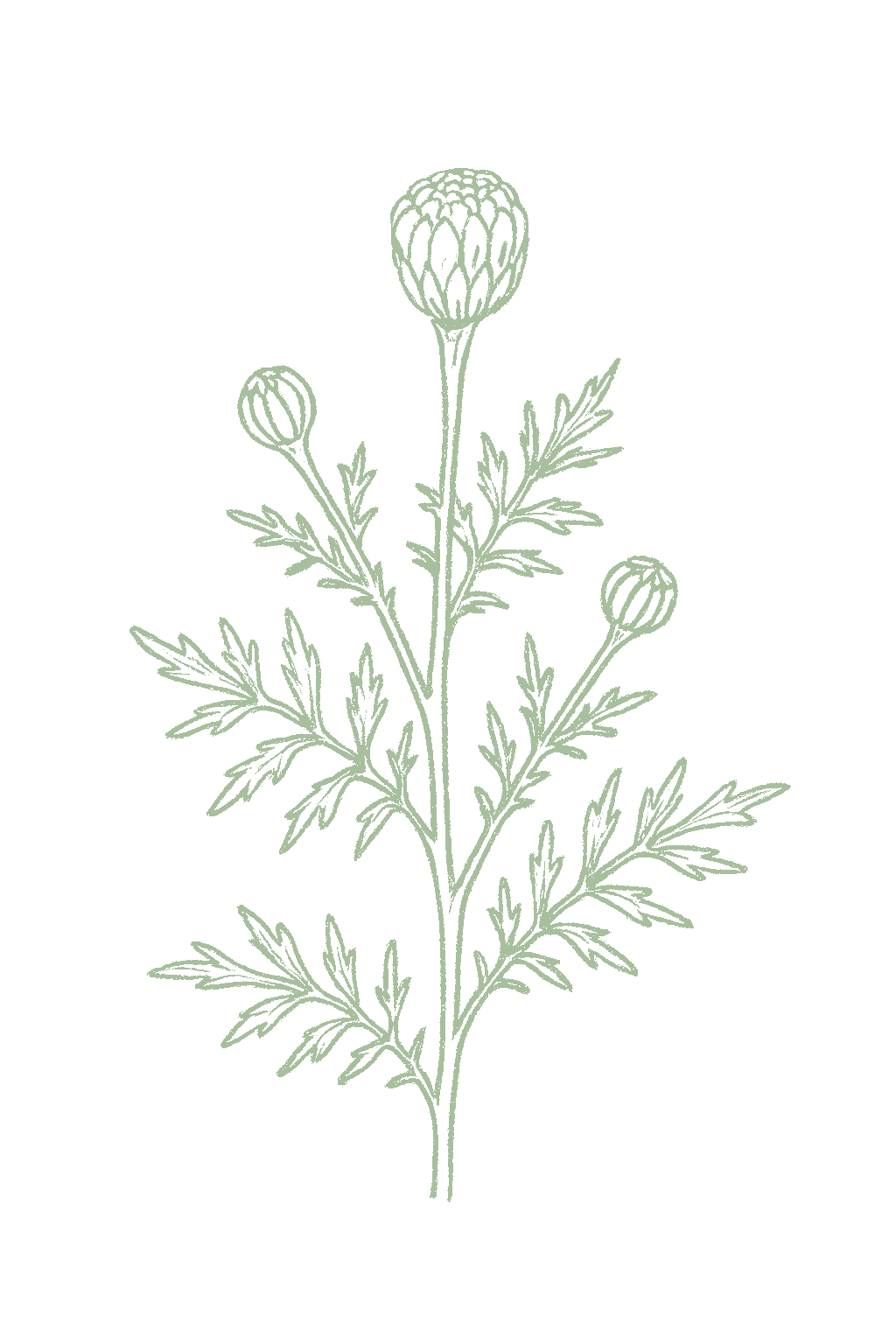
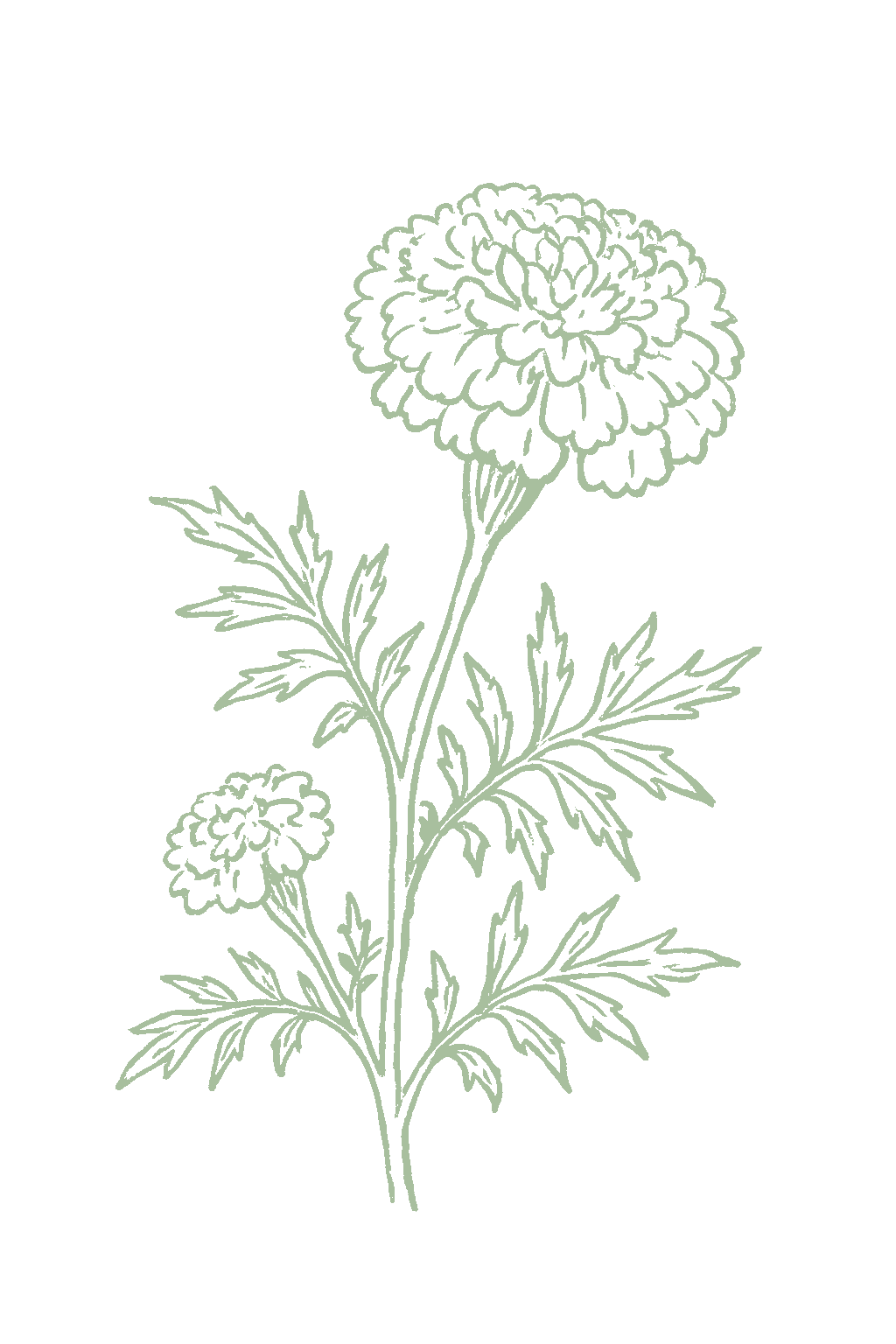
Marigolds are easy, cheerful flowers and the classic companion plant, grown for blooms rather than food. They love heat and full sun, handle poor soil and dry spells, and bloom from summer until the first fall frost. There are three main kinds: small bushy French marigolds, tall big-flowered African (or American) marigolds, and tiny lacy Signet marigolds with edible petals. Plant the seeds outside after your last frost once the soil is warm, and you get flowers in about two months. Keep snipping off faded blooms to get more. Their most proven garden trick is fighting soil nematodes: grow a thick patch of French marigolds and dig them in before planting vegetables that nematodes attack. Marigold (Tagetes species) is a warm-season, frost-tender annual in the Asteraceae family, native to Mexico and Central America. It is grown for showy blooms and as the classic companion plant, in three main types: compact French marigolds (Tagetes patula), tall large-pompon African or American marigolds (Tagetes erecta), and petite, lacy, edible-flowered Signet marigolds (Tagetes tenuifolia). Sown into warm soil after frost, it reaches first bloom in roughly 7 to 9 weeks and flowers continuously from summer until the first fall frost. It thrives in heat, full sun, and even poor soil, and is notably drought-tolerant once established. Its best-supported pest function is nematode suppression: French marigolds grown as a dense cover stand and incorporated lower root-knot nematode populations for the following crop.
Off-season for marigold in zone 9.
Zone 9 averages a last frost around March 1. Within Zone 9, the colder half (9a, winters down to 20°F) runs about a week later. The warmer half (9b, winters down to 25°F) runs about a week earlier. The plant app picks your subzone from your ZIP.
| Subzone | Last spring | First fall | Growing days | Winter min | Fruits reliably |
|---|---|---|---|---|---|
| 9a | Mar 8 | Nov 24 | ~261 | 20-25°F | Yes · two seasons |
| 9b | Feb 28 | Nov 30 | ~275 | 25-30°F | Yes · two seasons |
Averages from 8 weather stations per subzone, drawn from NOAA 1991-2020 Climate Normals. Your actual frost date can vary by up to two weeks based on elevation, proximity to water, and local topography.
In Zone 9, marigold can be planted March through September. Start indoors Jan 31 - Feb 14. In bloom May through November.
For flowers all season, plant a new small batch of seeds every 2 to 3 weeks from after the last frost into midsummer. Fresh young plants give the best flowers late in the season. Unlike cool-season crops, marigolds love the heat, so you do not stop for summer.Sow successively every 2 to 3 weeks from after last frost through midsummer to keep fresh, vigorous plants coming; older plantings tire as the season wears on. There is no heat pause: marigolds thrive through peak summer.
In Zone 9, marigold can be planted February through September. Start indoors Jan 11 - Jan 25. In bloom April through December.
For flowers all season, plant a new small batch of seeds every 2 to 3 weeks from after the last frost into midsummer. Fresh young plants give the best flowers late in the season. Unlike cool-season crops, marigolds love the heat, so you do not stop for summer.Sow successively every 2 to 3 weeks from after last frost through midsummer to keep fresh, vigorous plants coming; older plantings tire as the season wears on. There is no heat pause: marigolds thrive through peak summer.
In Zone 9, marigold can be planted February through September. Start indoors Jan 25 - Feb 8. In bloom April through December.
For flowers all season, plant a new small batch of seeds every 2 to 3 weeks from after the last frost into midsummer. Fresh young plants give the best flowers late in the season. Unlike cool-season crops, marigolds love the heat, so you do not stop for summer.Sow successively every 2 to 3 weeks from after last frost through midsummer to keep fresh, vigorous plants coming; older plantings tire as the season wears on. There is no heat pause: marigolds thrive through peak summer.
In Zone 9, marigold can be planted May through September. Start indoors Apr 1 - Apr 15. In bloom July through November.
For flowers all season, plant a new small batch of seeds every 2 to 3 weeks from after the last frost into midsummer. Fresh young plants give the best flowers late in the season. Unlike cool-season crops, marigolds love the heat, so you do not stop for summer.Sow successively every 2 to 3 weeks from after last frost through midsummer to keep fresh, vigorous plants coming; older plantings tire as the season wears on. There is no heat pause: marigolds thrive through peak summer.
In Zone 9, marigold can be planted April through September. Start indoors Mar 4 - Mar 18. In bloom June through December.
For flowers all season, plant a new small batch of seeds every 2 to 3 weeks from after the last frost into midsummer. Fresh young plants give the best flowers late in the season. Unlike cool-season crops, marigolds love the heat, so you do not stop for summer.Sow successively every 2 to 3 weeks from after last frost through midsummer to keep fresh, vigorous plants coming; older plantings tire as the season wears on. There is no heat pause: marigolds thrive through peak summer.
In Zone 9, marigold can be planted April. In bloom May through November.
For flowers all season, plant a new small batch of seeds every 2 to 3 weeks from after the last frost into midsummer. Fresh young plants give the best flowers late in the season. Unlike cool-season crops, marigolds love the heat, so you do not stop for summer.Sow successively every 2 to 3 weeks from after last frost through midsummer to keep fresh, vigorous plants coming; older plantings tire as the season wears on. There is no heat pause: marigolds thrive through peak summer.
In Zone 9, marigold can be planted March. In bloom May through November.
For flowers all season, plant a new small batch of seeds every 2 to 3 weeks from after the last frost into midsummer. Fresh young plants give the best flowers late in the season. Unlike cool-season crops, marigolds love the heat, so you do not stop for summer.Sow successively every 2 to 3 weeks from after last frost through midsummer to keep fresh, vigorous plants coming; older plantings tire as the season wears on. There is no heat pause: marigolds thrive through peak summer.
In Zone 9, marigold can be planted March through October. Start indoors Feb 15 - Mar 1. In bloom April through December.
For flowers all season, plant a new small batch of seeds every 2 to 3 weeks from after the last frost into midsummer. Fresh young plants give the best flowers late in the season. Unlike cool-season crops, marigolds love the heat, so you do not stop for summer.Sow successively every 2 to 3 weeks from after last frost through midsummer to keep fresh, vigorous plants coming; older plantings tire as the season wears on. There is no heat pause: marigolds thrive through peak summer.
In Zone 9, marigold can be planted March through September. Start indoors Jan 31 - Feb 14. In bloom May through November.
For flowers all season, plant a new small batch of seeds every 2 to 3 weeks from after the last frost into midsummer. Fresh young plants give the best flowers late in the season. Unlike cool-season crops, marigolds love the heat, so you do not stop for summer.Sow successively every 2 to 3 weeks from after last frost through midsummer to keep fresh, vigorous plants coming; older plantings tire as the season wears on. There is no heat pause: marigolds thrive through peak summer.
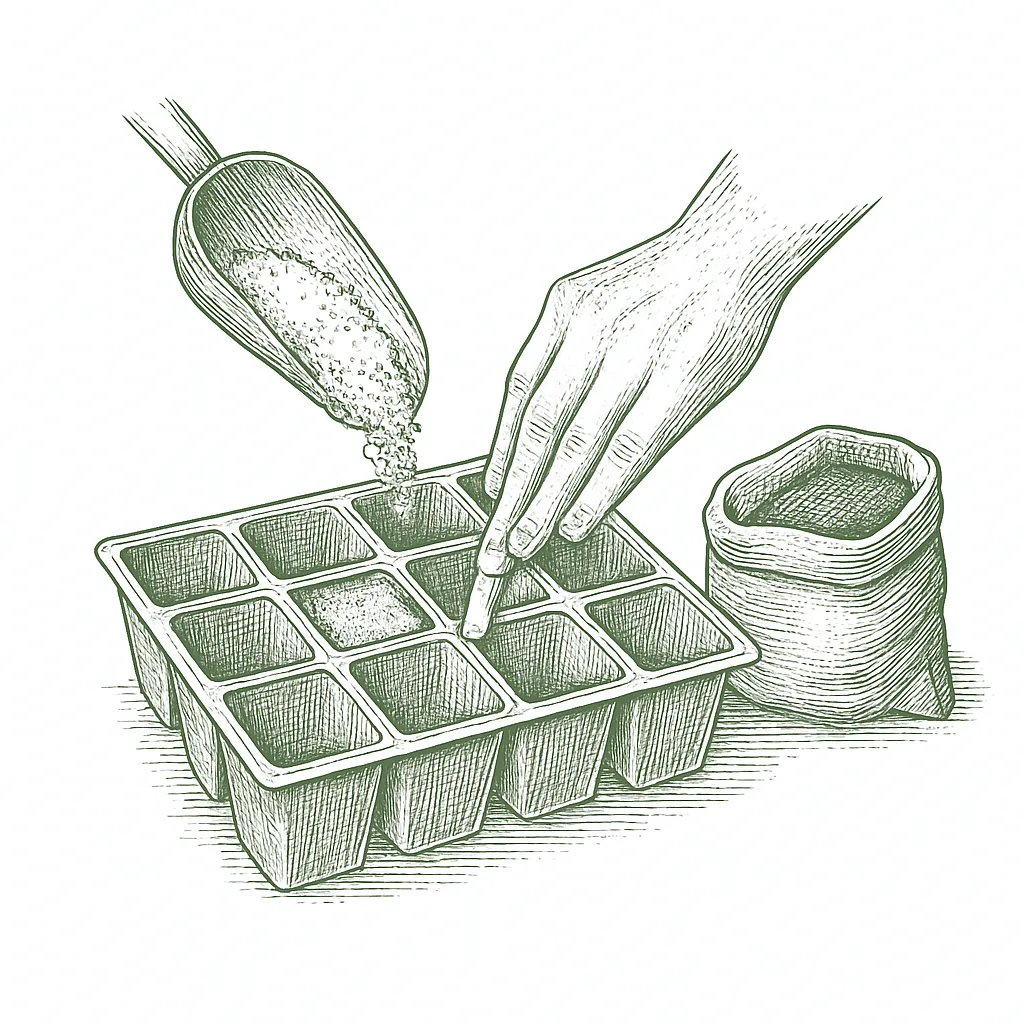
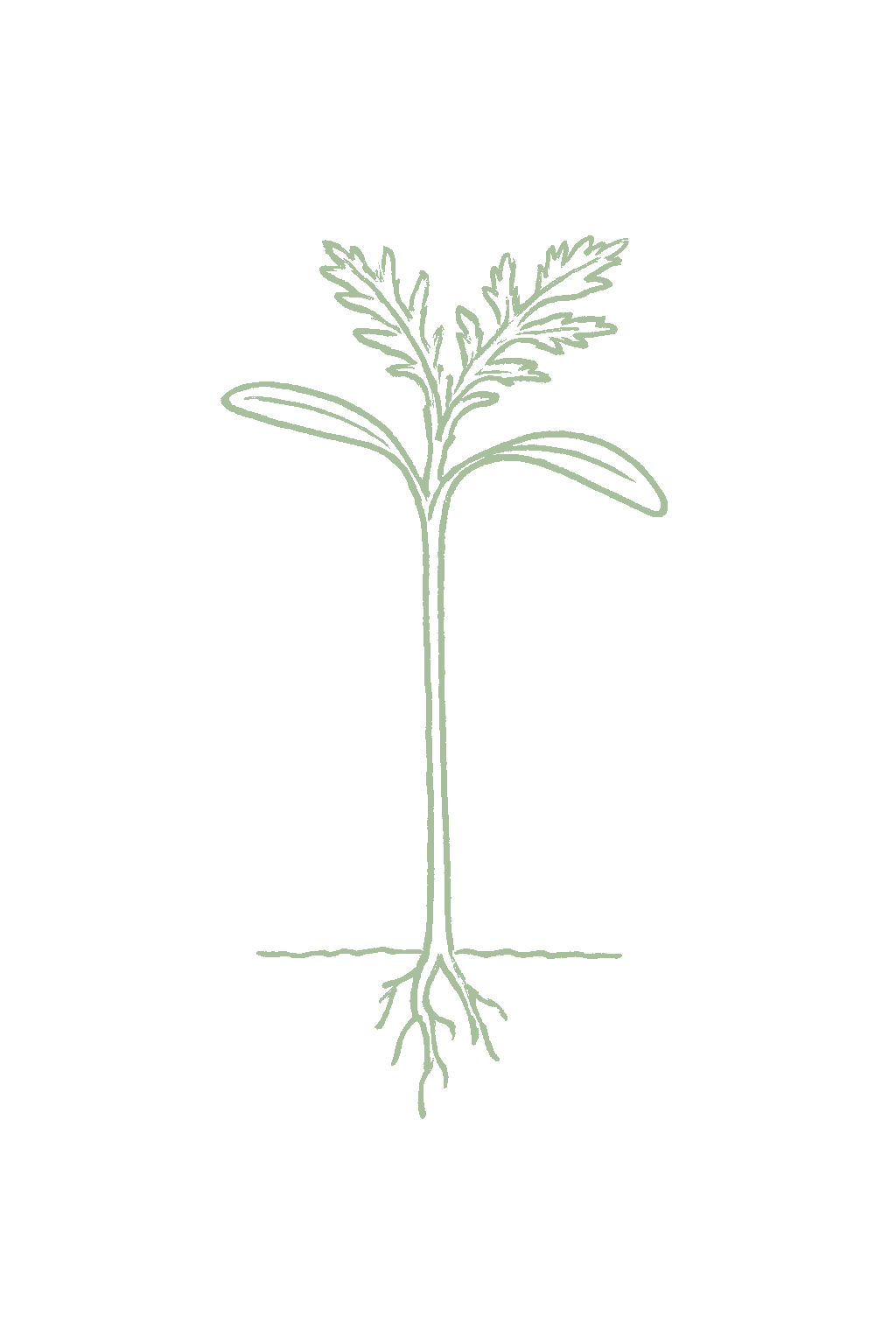
The easiest way is to sow marigold seeds straight into warm garden soil (about 65 to 70 °F) after your last frost, a quarter inch deep; they sprout in under a week. For a head start, or for the tall African types, start them indoors 4 to 6 weeks before the last frost (about 8 weeks for African) and move them outside afterward. You can pinch the tops of tall types once to make them bushier.Marigolds direct-sow readily into warm soil (about 65 to 70 °F) at 1/4 in depth and germinate in 5 to 8 days, the simplest method in long-season areas. To gain weeks or for the slow-developing tall African types, start indoors 4 to 6 weeks before last frost (up to 8 weeks for African) and transplant after frost. Pinch tall African types once to encourage branching; French and Signet types need no pinching.






Not sure what soil you have? Grab a small handful of damp soil from your garden bed and squeeze it. If it crumbles apart easily, it's sandy. If it holds together but breaks when you poke it, it's loam (what most vegetables want). If it stays in a hard, slippery ball, it's clay.
Marigolds are not fussy and grow in most ordinary garden soil as long as water drains away and does not pool. Soil that is moderately fertile and well drained is ideal; very rich soil grows lots of leaves and fewer flowers. Avoid soggy ground, which rots the roots. If your soil is very acidic, the leaves can speckle bronze, so a normal garden range works best.
Mix 2-3 inches of compost into the top 6 inches of your bed before planting. Compost holds moisture (which sandy soil drains too fast) and adds the nutrients sandy soil tends to lack. Repeat each season. Compost breaks down over time.
Mix 2-3 inches of compost AND a few inches of coarse sand or perlite into the top 6 inches of your bed. The compost feeds the plants; the sand breaks up the clay so air and water can move through. Don't add sand without compost. It can compact like concrete.
If amending your soil sounds like too much work, or if your soil is heavy clay, full of rocks, or contaminated, build over it. A raised bed at least 12 inches deep filled with a 50/50 mix of compost and sandy loam gives you ideal growing soil with no battles. A 5-gallon container with quality potting mix does the same for one plant at a time. Both bypass your native soil entirely.
The numbers that matter, at a glance.
Compact French and Signet marigolds are excellent in pots, window boxes, and on balconies. Use a pot with drainage holes, a well-draining potting mix, and full sun. Tall African types need a larger, deeper pot. Do not let pots stay soggy, since marigolds rot in wet soil.Dwarf and compact French and Signet series are the container performers, thriving in window boxes, edging pots, and balcony containers; full sun and a free-draining mix are essential, since marigolds rot in saturated pots. Tall African types are workable in large, deep containers but want room and may need staking.
Ask what your balcony or roof can carry
A balcony or roof can only hold so much weight. Before you set heavy pots there, ask a building architect what it can safely carry.Illinois Extension's guidance is to consult a building architect about weight limits before placing heavy pots on a balcony or rooftop garden. It gives no weight figure.
Never grow food in a container with anything toxic in it
Many kinds of containers can be used. Whatever you choose, keep anything toxic out of it, especially if you are growing food.Colorado State accepts nearly any container material but warns against using a container that holds toxic materials, especially for edible plants. Illinois adds that a vegetable container should be free of chemicals toxic to plants or people, and urges caution with treated lumber when growing food. If you cannot account for what a repurposed container once held, that alone is a reason to keep food out of it.
Secure hanging containers well
Fasten hanging baskets and window or rail boxes securely. Think about what is below them too, since they can drip on people or things underneath.Illinois Extension asks growers to secure hanging containers well and to think through the safety issues of hanging them. Placement matters too, since a hanging container can drip onto people or belongings below.
Marigolds are not picky about soil pH (how acidic or alkaline the soil is). A normal garden range around 6.0 to 7.0 is ideal, and you usually do not need to change anything. Only very acidic soil, below about 5.5, can cause speckled, bronze-looking leaves.Marigolds perform best across roughly 6.0 to 7.0 and tolerate a little outside that. No pH adjustment is typically warranted, but strongly acidic soil (below about 5.5) can trigger manganese or iron toxicity that bronze-speckles the foliage, so favor a near-neutral bed.
Marigolds do not need much feeding. Mix a little balanced fertilizer or compost into the soil before planting and that is usually plenty. Too much fertilizer, especially the high-nitrogen kind, gives you leaves instead of flowers, so go light.Marigolds are light feeders; a modest balanced dose worked into the soil at planting is usually all they need. Excess nitrogen pushes soft, leafy growth and suppresses bloom, so favor a balanced or slightly lower-nitrogen feed over a high-nitrogen one, and skip routine feeding once established.
The three numbers on fertilizer (N-P-K) are nitrogen, phosphorus, and potassium. For marigolds, pick a balanced one like 10-10-10 rather than a high first-number (nitrogen) lawn feed, which gives leaves instead of flowers.A balanced ratio such as 10-10-10 worked in at planting suits marigolds better than a high-nitrogen lawn-type feed, which favors foliage over flowers.
Deadheading means snipping off flowers once they fade. Do it regularly: cut the old bloom back to the next set of leaves, and the plant makes more flowers instead of going to seed. Cutting fresh flowers for a vase does the same job. The small French and Signet marigolds keep blooming even if you skip it, but the big African types flower a lot more if you deadhead. Pinch the tops of tall types once when young to make them bushier.Deadhead spent blooms back to the next leaf node through the season to redirect energy from seed set into new flowers and sustain bloom to first frost; cutting for the vase serves the same function. French and Signet types rebloom well even with little deadheading, while the tall African doubles benefit most from it. Pinch tall African types once when young to force branching and more, sturdier stems.
Marigolds are the classic companion plant, grown to help the rest of the garden more than for themselves. The one pest benefit that research actually supports is against root-knot nematodes (tiny soil worms that damage roots): if you grow a thick, solid patch of French marigolds in a problem bed for about two months and then dig them in, before planting a crop that nematodes attack, they can lower the nematode numbers. Just dotting a few marigolds among your vegetables has not been shown to do this. The old idea that their strong smell drives away insects, rabbits, and deer is traditional belief, sometimes helpful but not reliable. What marigolds clearly do is bring in bees and helpful insects, so they are a cheerful, useful edge or border plant almost anywhere. There is no plant you must keep them away from; just give them room and sun. Marigold inverts the usual companion framing: it is the plant you place to benefit others. Its one research-supported pest function is nematode suppression, and only in a specific form: French marigolds (Tagetes patula) grown as a dense, weed-free solid stand for about two months in the target bed and then incorporated, ahead of a susceptible crop, can reduce root-knot and lesion nematode populations via root-released alpha-terthienyl. UF/IFAS is explicit that simply interplanting a few marigolds among vegetables has not been shown to reduce nematodes, and the African types are less effective than French for this. The broader reputation, that marigold scent repels insects, rabbits, and deer, is traditional companion lore: sometimes borne out, not reliably documented. What is solid is that marigold is a strong pollinator and beneficial-insect draw, so it earns its place as an insectary edge or border. There is no biologically antagonistic companion to avoid; site for sun and airflow.
Marigolds are mostly for garden color and helping the garden, but you can cut them for a vase when the flowers are fully open and the stem feels firm. Cut in the morning and put them straight into clean water, pulling off the smelly lower leaves first. Snip off faded flowers through the season to keep more coming.Marigold is grown for garden display, companion value, and cutting; cut blooms for the vase when flowers are fully open and the stem is firm just below the head, in the cool of the morning into clean water. Strip the strongly scented lower leaves below the waterline. Deadhead spent blooms throughout the season to sustain flowering to frost.
One marigold gives you lots of flowers over the summer. The small French and Signet types make many small blooms at once, while the tall African types make fewer but big, showy flowers good for cutting. Keep picking faded flowers and they keep coming until frost.A single marigold blooms profusely over a season; French and Signet types carry dozens of small to medium flowers continuously, while the tall African types produce fewer but much larger pompon blooms well suited to cutting. Deadheading or cutting sustains production to frost.
Marigolds flower the same year you plant them, usually about two months after sowing. There is no waiting year. Plant in spring and you will have flowers from summer until the first frost.Marigolds bloom the first season from seed, roughly 7 to 9 weeks after sowing (French sooner, African later), so there is no establishment year; a spring sowing flowers from early summer to first frost.
Pick the type for your spot. French marigolds are small, bushy, and bloom for a long time, perfect for beds, pots, and edging, and they are the type that suppresses soil nematodes when planted thickly. African marigolds are the tall ones with big round pompon flowers, good at the back of a bed and for cutting. Signet marigolds are tiny, lacy plants covered in small flowers, very tough in heat and drought, with petals you can eat. Open, single flowers are best for bees and butterflies.Choose by type and purpose. French marigolds (Tagetes patula) are the compact, bushy, long-blooming bedding and edging workhorses and the type to use for root-knot nematode cover plantings (cultivars such as 'Single Gold' and 'Tangerine' are the trialed performers). African or American marigolds (Tagetes erecta) are the tall, large-pompon types for the back of the border and for cutting; they benefit most from deadheading and staking. Signet marigolds (Tagetes tenuifolia) are the petite, lacy, heat- and drought-tough edgers, smothered in small single flowers whose petals are edible. Single, open-faced flowers serve pollinators better than the densest doubles.
Marigolds are flowers for the garden and the vase, not food to store, so there is nothing to refrigerate or freeze. To make cut flowers last, trim the stems, pull off the smelly lower leaves that would sit underwater, and use a clean vase with fresh water. They usually stay nice for several days to a week. The small Signet marigolds have edible petals with a spicy, tarragon-like flavor, used fresh.Marigold is grown for bloom and companion value, not as a stored edible, so the refrigerate and freeze fields do not apply. For cut flowers, recut stems and strip the strongly scented lower leaves below the waterline (they foul vase water fast), use clean water with floral preservative, and keep blooms out of direct sun. Vase life is several days to about a week. The Signet types have edible, spicy-tarragon petals used fresh as a garnish.
The ladder troubleshoots from the gentlest solution to the strongest. Start with the gentlest option and only move on when and if it doesn't work.
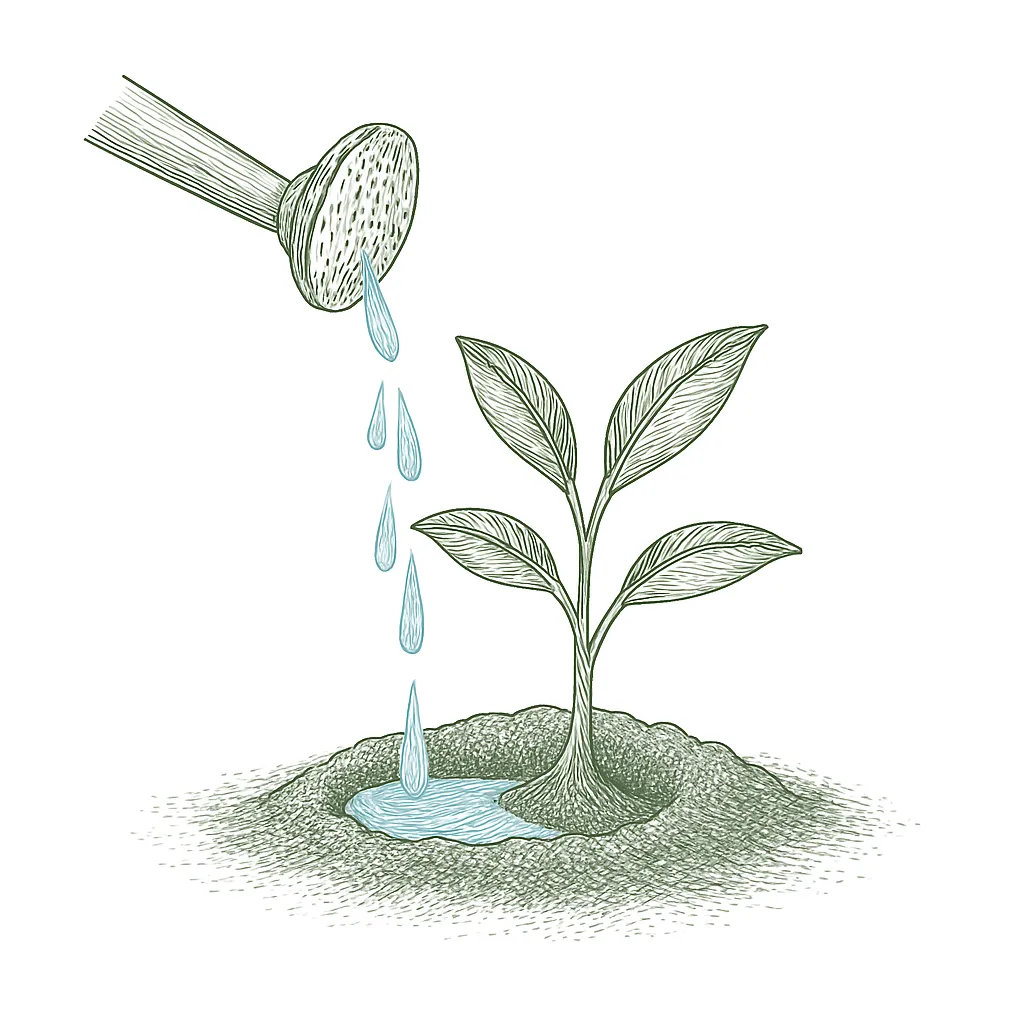
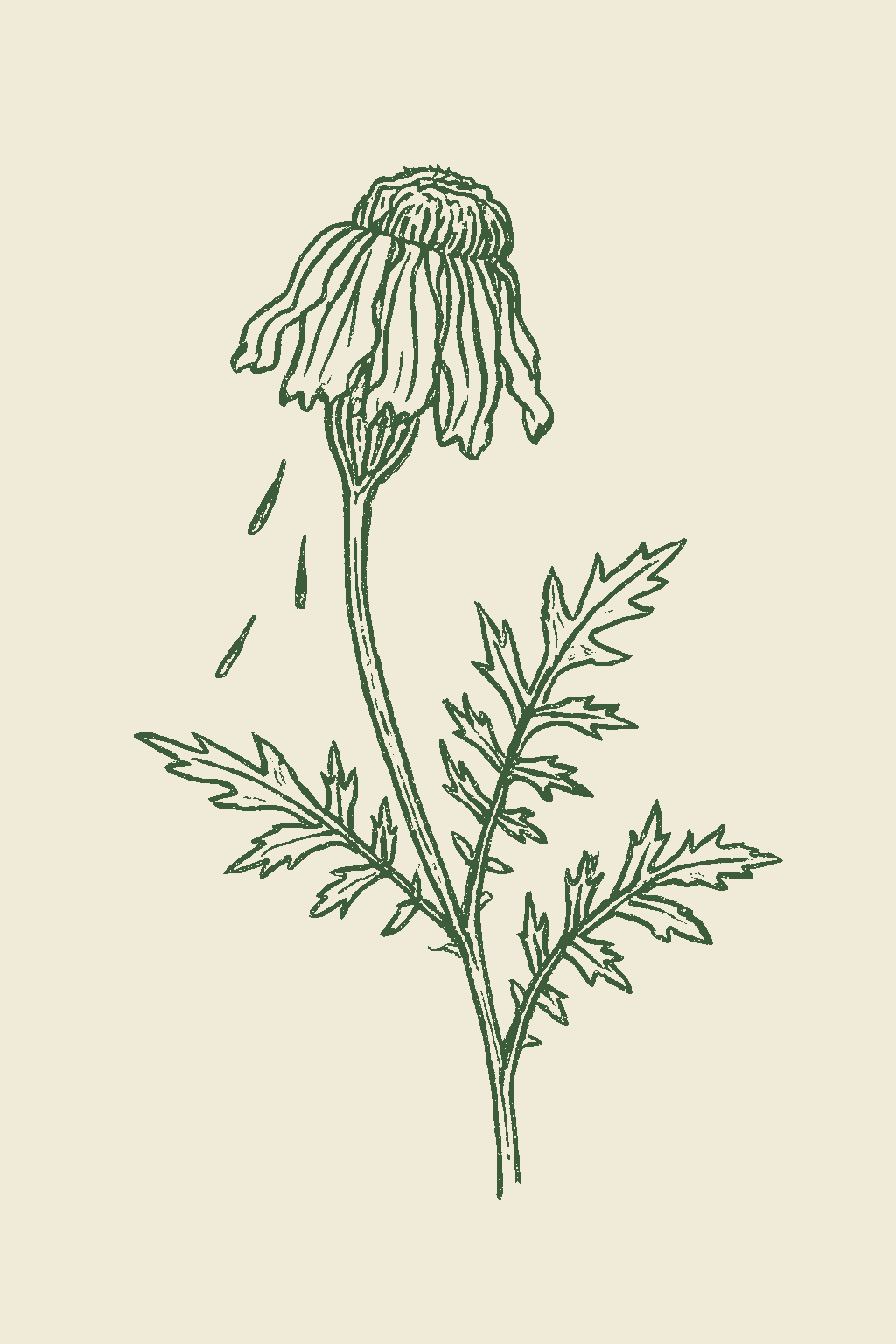
Keep marigolds steadily watered through hot, dry spells. Mites (very tiny sap-feeding pests, smaller than insects) build up fastest on plants that have been left thirsty and stressed, and marigolds in midsummer are exactly the plants they go for.Consistent soil moisture is the base of the program: this pest is worst on stressed and container plants in hot, dry, dusty stretches, so plants that are not drought-stressed give it much less to work with.
Spray the plants with a jet of water, hitting the undersides of the leaves where the fine speckling and webbing show up. This knocks the mites off and helps counter the hot, dusty conditions they thrive in.Regular forceful water sprays dislodge mites and break up the dry, dusty leaf environment that favors them; direct the spray at the stippled undersides. Often enough on its own for light midsummer pressure.
If the speckling and webbing keep spreading despite watering and spraying, treat with insecticidal soap, a mild soap-based spray that works on contact. Coat the leaf undersides thoroughly, since it only kills what it touches.For a heavy infestation the water rungs have not held, insecticidal soap with thorough underside coverage is the escalation this crop's guidance points to. Avoid spraying drought-stressed plants and repeat as needed for coverage.
The bottom rungs are products with label rules: timing, pollinators, and days to wait before harvest. Before you spray →
The ladder troubleshoots from the gentlest solution to the strongest. Start with the gentlest option and only move on when and if it doesn't work.
A strong spray of water knocks the clusters off new growth and buds, and that is usually all these soft little insects need. Repeat if they regroup.Hose colonies off tender growth and buds as a first knock-back; on marigold this is typically sufficient, since populations rarely build far here.
Mostly, just let the good bugs work. Marigold flowers draw ladybugs and hoverflies, which are beneficials (helpful insects that eat pests), and they tend to clean up aphid clusters on their own if you hold off on sprays.The flowers recruit their own natural enemies: ladybugs and hoverflies drawn to the blooms usually hold aphids in check without intervention. Avoid broad sprays that would take out the predators doing this work.
If clusters keep building anyway, insecticidal soap, a mild soap-based contact spray, usually handles them. Spray only the shoots where aphids actually are, so you spare the ladybugs and hoverflies.Reserve insecticidal soap for populations that build despite the resident predators; treat infested shoots directly rather than blanketing the planting, since the beneficials this crop attracts are the main long-term control.
The bottom rungs are products with label rules: timing, pollinators, and days to wait before harvest. Before you spray →
The ladder troubleshoots from the gentlest solution to the strongest. Start with the gentlest option and only move on when and if it doesn't work.
Clear away the damp hiding places, such as loose mulch, boards, and plant debris near the bed, where slugs and snails wait out the day. Fewer shelters means fewer of them reaching your seedlings at night.Reduce harborage around the planting: thin out mulch and clear debris that shelters them by day. Marigold seedlings are a frequent target in damp conditions, so tighten this up before wet spells.
Go out at night with a flashlight and pick off the slugs and snails you find. They feed after dark, which is why the ragged holes appear on plants that looked fine in the afternoon.Regular night handpicking during damp weather keeps numbers down on young plants and lower foliage, where the ragged feeding concentrates. Most worthwhile while seedlings are small and vulnerable.
If picking and cleanup are not keeping up, scatter iron phosphate slug bait, a lower-risk pellet bait, on the soil around the plants rather than on the plants themselves, and follow the label.Iron phosphate bait backs up sanitation and handpicking when pressure stays high in damp conditions; apply to the soil surface around vulnerable seedlings per the label.
The bottom rungs are products with label rules: timing, pollinators, and days to wait before harvest. Before you spray →
The ladder troubleshoots from the gentlest solution to the strongest. Start with the gentlest option and only move on when and if it doesn't work.
In the morning, while the beetles are still sluggish, knock or pick these shiny copper-and-green beetles off the flowers and leaves into a container of soapy water. Early-to-midsummer is when they show up, so make it part of your morning walk then.Dawn handpicking into soapy water is the whole program here: beetles are torpid early and drop readily. Skip pheromone traps, which draw in and concentrate more beetles than they catch. Feeding runs early-to-midsummer, on blooms and as skeletonized foliage.
No spray for this one. Prevention is the control.
The ladder troubleshoots from the gentlest solution to the strongest. Start with the gentlest option and only move on when and if it doesn't work.
Give plants generous room in full sun so air moves through and the blooms dry out. This mold takes hold in cool, damp, crowded plantings, and the big double African marigolds are the most at risk because their dense flowers trap moisture.Site and spacing are the primary controls: full sun and wide spacing keep the canopy and blooms drying fast, denying Botrytis the sustained wetness it needs. The dense double African types, which tend to rot from the center of the bloom, benefit most from the extra room.
Water at the soil, not over the flowers. Wetting those dense blooms from above gives the gray fuzz exactly the damp conditions it needs to rot buds and petals.Base watering keeps overhead wetness off the flower heads, which is where this disease does its damage in humid, crowded conditions. Pair it with the spacing rung; the two together remove most of the moisture the mold depends on.
Pick off spent and rotting flowers promptly, since a moldy bloom left on the plant spreads the problem. Throw infected material in the trash rather than the compost.Prompt removal of spent and rotted heads takes the sporulating tissue out of the planting before it seeds new infections. Do not compost infected debris; destroy or discard it.
No spray for this one. Prevention is the control.
The ladder troubleshoots from the gentlest solution to the strongest. Start with the gentlest option and only move on when and if it doesn't work.
Space plants out so air can move between them. Both the dark leaf spots and the white powdery film show up most in damp, humid weather on crowded plantings, so room to dry is the first defense.Crowding and humidity drive both the foliar spotting and the occasional powdery mildew here; generous spacing for airflow shortens leaf wetness and lowers the canopy humidity both depend on.
Keep the leaves dry by watering at the soil instead of overhead. If you have no choice but to sprinkle from above, do it in the morning so foliage dries during the day.The spots spread by overhead wetness and splash, so base watering removes the main dispersal route. Where overhead irrigation is unavoidable, run it in the morning so leaves dry quickly.
Pick off badly spotted leaves as you see them, and clean up infected fallen leaves so the problem does not keep reseeding itself.Remove heavily affected leaves during the season and clear infected debris; sanitation plus the two watering and spacing rungs is the whole program this crop's guidance lays out.
No spray for this one. Prevention is the control.
The ladder troubleshoots from the gentlest solution to the strongest. Start with the gentlest option and only move on when and if it doesn't work.
Plant marigolds in soil that drains well. Wet, poorly drained ground rots the roots and stem bases, and no amount of care later makes up for a waterlogged spot.Well-drained soil is the foundation: these soilborne rots are driven by poor drainage and standing wetness at the roots and crowns. On heavy or low ground, fix the drainage before planting rather than fighting rot afterward.
Wait for the soil to warm before sowing, and water with a light hand. Damping-off (young seedlings suddenly collapsing at the soil line) hits seed sown into cold, wet ground, and overwatering rots older plants too, especially the small French types.Warm-soil sowing plus restrained watering is the prevention program; this crop's guidance frames these rots as something you prevent rather than treat. Cold, wet seedbeds drive damping-off, and dwarf French types are prone to rotting whenever they are kept too wet.
No spray for this one. Prevention is the control.
The ladder troubleshoots from the gentlest solution to the strongest. Start with the gentlest option and only move on when and if it doesn't work.
There is no cure for this one. When a plant shows yellowed, distorted growth or flowers turning green and deformed, pull it up and throw it away, not in the compost, so the disease is not passed along by the leafhoppers that spread it.Rogue out symptomatic plants promptly and discard them; a phytoplasma infection is incurable, so removal is the control. Prompt pulling limits the reservoir leafhoppers can acquire it from as they move through the aster family.
No spray for this one. Prevention is the control.
Rotating marigolds is not as important as it is for vegetables, but it still helps. Plant them in a different spot each year if you can, and clean up old, diseased leaves at the end of the season. Used on purpose, a thick patch of French marigolds grown for a couple of months and then dug in is a real way to cut down soil nematodes before you plant vegetables there.Rotation matters less for a fast-growing ornamental annual than for heavy-feeding vegetables, but moving marigolds to a fresh bed each year and clearing infected debris at season end limits carryover of gray-mold and leaf-spot inoculum. Used deliberately, a two-month French marigold cover stand turned under is a documented preceding-crop treatment for root-knot nematodes.
The plant app sends a timely reminder at every critical moment of your marigold season. The wording adjusts to whichever you pick: beginner or seasoned. Here are three you'll see in Zone 9.
plant sends the right notification at exactly the right moment, for your zone, your weather, your crops. Founding members lock the rate forever.
We're building this guide with real growers. Got a question we missed? Ask here. We read every one and add the best answers right to this page.
Learned something the hard way? Pass it on. Real growers' tips make this guide better for the next person, and we credit you by name when yours goes live.
If you've grown this crop and you see a date, a temperature, a companion claim, or a recommendation that doesn't match your experience, tell us. Real growers' corrections make this guide better for the next person.
Every date, temperature, spacing, and recommendation on this page is sourced from university cooperative extension publications, peer-reviewed agricultural research, NOAA climate data, and direct extension calendars. Where claims are softer (traditional gardening wisdom not formally documented), we say so.
Spot a data point that doesn't match your experience? Submit a correction; accepted corrections earn full author credit on the page.
Zone-aware seasonal nudges, what's worth planting now, and the occasional recipe from the harvest. No spam, ever.