Pick your zone and the dates re-calibrate.
The Guide Fruit trees Vol. 004

Mulberry

in Zone 7, this week

A mulberry is a fast, very easy fruit tree that gives you sweet, blackberry-like berries over several weeks in early summer. You pick them dead ripe off the tree, which is why you almost never see them in a store. Almost all named mulberries fruit on their own (many even set fruit without any pollination), so one tree is all you need. It is tough and adaptable, handling poor soil, drought, heat, and most pests, and birds are really its only serious competition. The catch is that a standard tree gets big and drops a lot of staining fruit, so the main decision is where to put it (well away from paths, patios, and driveways) or to choose a small dwarf or weeping type. Give it sun, soil that drains, and room, and it asks for little more than a light winter pruning and keeps bearing for decades. Mulberry (Morus) is a fast-growing, exceptionally easy deciduous fruit tree that ripens sweet, blackberry-like berries over a long early-summer window, picked dead ripe off the tree, which is why they are almost never sold in stores. Nearly all named cultivars are self-fruitful, and many set fruit parthenocarpically (without pollination), so a single tree bears heavily on its own. It is vigorous and broadly adaptable, tolerating poor soil, drought, heat, and a wide pH range, with few serious pests (birds are the main competitor). The trade-offs are size and mess: a standard tree grows large and drops abundant staining fruit, so siting well away from paths, patios, and drives, or choosing a dwarf or weeping cultivar, is the key decision. Given a sunny, well-drained spot with room, a mulberry needs little more than light winter pruning and rewards you for decades.

Mulberry mature plant
Fig. 01 · Mulberry, mature Zone 7
First fruit
2-3 yrs
to first harvest
Sunlight
Full sun
6-12 hrs daily
Water
Low
Spacing
25-30 ft
between trees
Soil pH
6-7
slightly acidic
Hardiness & fruiting range

Will it actually fruit here?

Hardiness tells you the tree will survive your winters. It does not tell you whether you will get fruit. Each zone carries its own verdict. Yours is marked.

3
survives,
rarely fruits
4
survives,
rarely fruits
5
reliable
6
reliable
Your zone
7
reliable
8
reliable
9
reliable
10
reliable
11
survives,
low chill
Fruits reliably
Fruits reliably Survives only Too warm
← colder winterswarmer, less chill →
Zone 7: Prime mulberry country, with almost any variety a good option. Long season, plenty of cold, little frost risk.Prime mulberry country across the variety range, from hardy hybrids to warmer, lower-chill types. Long season, ample chill, minimal frost risk.
The growing year

Your mulberry year, month by month

Northern Tier, Zone 7. Winters bank about 700 to 1200 chill hours; these varieties need about 100 to 500 chill hours. Prime mulberry country, with almost any variety a good option. Long season, plenty of cold, little frost risk.Prime mulberry country across the variety range, from hardy hybrids to warmer, lower-chill types. Long season, ample chill, minimal frost risk.

A fruit tree runs on the same rhythm every year: rest, prune, bloom, grow, harvest, then settle in again.

Jan
Feb
Mar
Apr
May
Jun
Jul
Aug
Sep
Oct
Nov
Dec
▲ We are here
Tree’s year
rest
prune
bloom
growing
harvest
care
rest
Dormant rest Prune Bloom Growing fruit Harvest Post-harvest care
Plant bare-root
Late winter to early spring
Bloom
Apr 5 - Apr 25
Harvest
Jun 1 - Jul 25
Chill hours

Will your winter be cold enough?

Mulberry needs only a modest amount of winter cold, much less than a peach, which is why it fruits in so many places, including mild and even subtropical areas. Different varieties need different amounts, from very little (dwarf and Pakistan types) up to a few hundred hours for the hardy northern kinds. For most gardeners, winter chill is never a problem; only in the very warmest, nearly frost-free areas does it matter, and there you just pick a low-chill variety. (Exact chill-hour numbers for mulberry are hard to find in extension sources, so these are best estimates.)Mulberry has a modest winter-chill requirement, low compared with stone fruit, which is why it fruits across so wide a range including mild-winter and subtropical areas. Requirements are cultivar-driven and roughly span about 100 chill hours (low-chill dwarf and Pakistan types) to around 400 to 500 (the hardy northern hybrids). In most of the country chill is never the limiting factor; only in the warmest, nearly chill-free zones does it matter, and there a low-chill cultivar solves it. Note: extension literature rarely publishes numeric mulberry chill figures, so the values here are a horticultural-consensus estimate rather than a single sourced number (see the notes).

Your winter ~700 – 1200 hrs
0 250 500 750 1000
Dependable here
Illinois Everbearing400Dwarf Everbearing100Silk Hope400Pakistan200Black Beauty300Oscar300
!Borderline in a warm winter
None. Every variety in this roster gets enough chill here.
Bloom timing & cross-pollination

One tree is usually enough

Most mulberries are self-fruitful: a single tree sets a full crop with its own pollen, so you don’t need a second variety to get fruit. Bees still move the pollen from blossom to blossom, so strong pollinator activity through bloom is what drives a heavy set.

Oscar blooms mid season and is self-fruitful, setting a full crop on its own.Blooms alongside: Illinois Everbearing, Silk Hope.

Bar length shows how long each variety blooms, roughly 8 to 14 days. Bars that overlap bloom at the same time.

▲ Tap a variety to see its bloom timing

Very early Early Mid Late Very late
Illinois Everbearing✓ same time
Dwarf Everbearing✓ same time
Silk Hope✓ same time
Pakistan✓ same time
Black Beauty✓ same time
Oscar✓ same time
The pollination rule

The wind does the pollinating for mulberries, so you do not need bees or, usually, a second tree. The one thing to know: mulberry trees vary, and some kinds have separate male and female trees. A wild, unnamed seedling might turn out to be a male that never fruits, so buy a named fruiting variety instead, which usually makes a full crop on its own. This is the reverse of many apples, which need a second variety nearby to make fruit.Mulberries are wind-pollinated, not insect-pollinated, so pollinators are not needed for fruit set. At the species level they are variable: an individual tree is either monoecious, with male and female flowers together, or dioecious, with the sexes on separate trees, and wild red mulberry is usually dioecious, so an unnamed seedling can turn out to be a non-fruiting male. The practical rule is to buy a named fruiting cultivar, which is typically female and bears a full crop on its own, with many reported to set fruit with little or no pollination. This is the opposite situation from many apples, which require a second, compatible variety to cross-pollinate.

Pick your variety

Recommended varieties

Pick a mulberry first by your climate and how big a tree you want, then by the fruit. For cold winters, choose a hardy hybrid like Illinois Everbearing or Silk Hope; for warm areas, low-chill types like Pakistan, Black Beauty, or Oscar do great. For a small yard or a pot, choose a real dwarf like Dwarf Everbearing. Almost all named fruiting varieties fruit on their own, so one tree is enough. The one rule is to buy a NAMED fruiting variety, not an unnamed seedling, because a few wild seedlings turn out to be male and never fruit.Choose a mulberry first by climate and size, then by fruit. For cold winters, pick a hardy hybrid such as Illinois Everbearing or Silk Hope (zones 4 to 5 and up); for mild and warm regions, low-chill types like Pakistan, Black Beauty, and Oscar shine. For a small space or a container, choose a genuine dwarf such as Dwarf Everbearing. Nearly all named fruiting cultivars are self-fruitful and often parthenocarpic, so a single tree bears; the caveat is to buy a NAMED fruiting cultivar rather than an unnamed seedling, since a few wild seedlings are single-sex.

Illinois Everbearing
fresh eating, baking, freezing
Dwarf Everbearing
fresh eating, containers
Silk Hope
fresh eating, jam
Pakistan
fresh eating
Black Beauty
fresh eating
Oscar
fresh eating, baking
Rootstock & size

How big will it get?

Unlike stone fruit, mulberry has no size-controlling or pest-resistance rootstock system; choose by the CULTIVAR (and its natural size or a dwarf/weeping form), not the rootstock. Mulberries root readily from hardwood cuttings, so many are grown own-root; named cultivars are also grafted or budded onto seedling Morus alba or rubra, mainly for propagation, not to dwarf the tree.

Own-root (from hardwood cutting) standard
Mature height
30–60 ft
Bears
year 2–3
Container
in-ground
Morus seedling (alba or rubra) standard
Mature height
30–60 ft
Bears
year 2–3
Container
in-ground
Genetic dwarf (e.g. Dwarf Everbearing) dwarf
Mature height
6–12 ft
Bears
year 1–2
Container
pot OK, 15+ gal
Ask the nursery

Ask whether the tree is own-rooted (grown from a cutting) or grafted.

From seed to fruit

The growing journey

Stage 01 · Planting (bare-root or container)
01
Planting (bare-root or container)
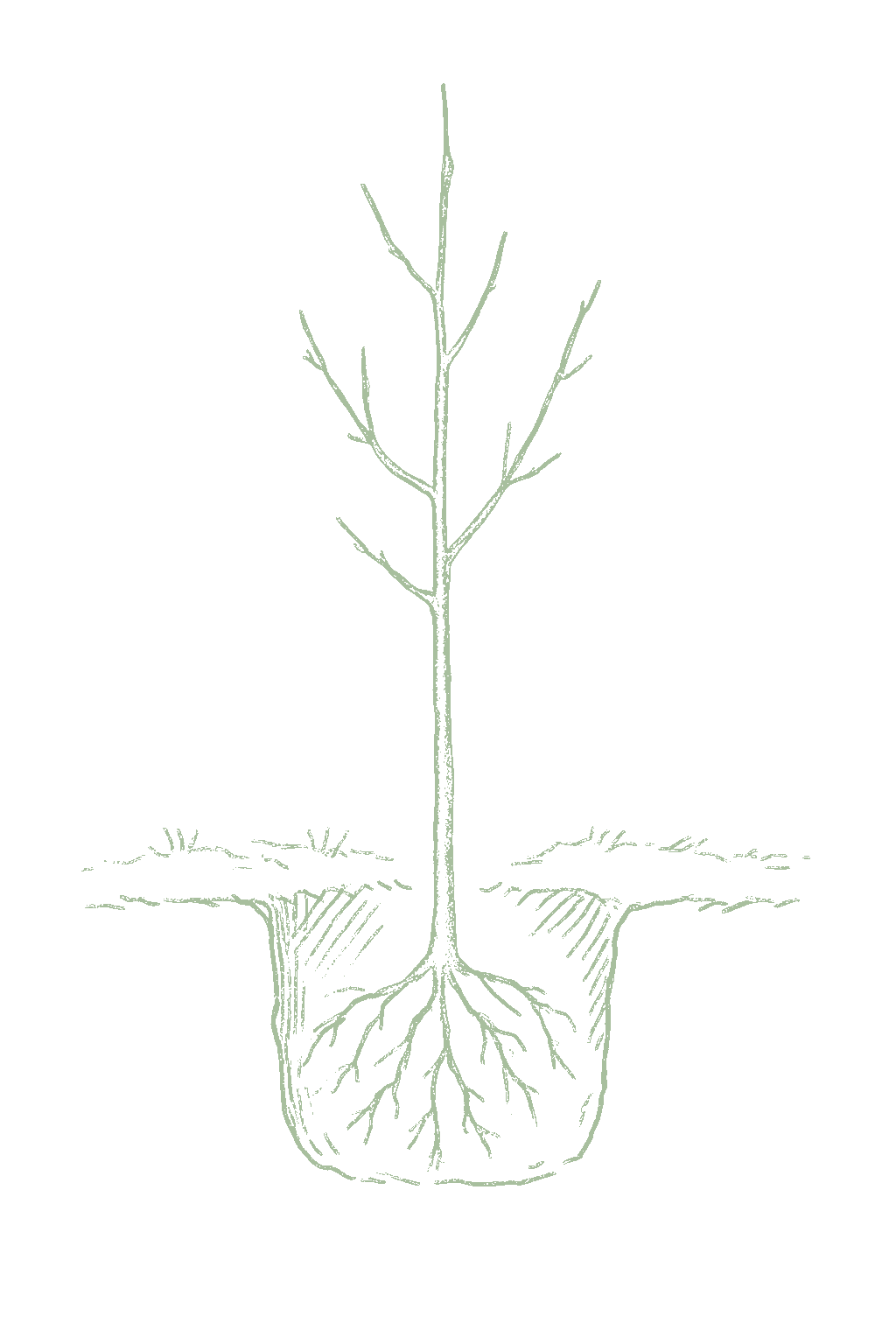
A leafless young tree with firm buds and good roots, or a potted tree. If it is grafted, there is a bump low on the trunk (the graft) to keep above the soil.A dormant bare-root whip with firm buds and healthy roots, or a leafy container tree. If it is grafted, find the graft union low on the trunk and keep it above the soil.
Dig a wide hole no deeper than the roots grew before, set the tree at that depth, fill in with the soil you dug out, water it in well, and mulch a weed-free circle. Leave lots of room, because a standard mulberry gets big.Dig a hole as wide as the roots spread and no deeper than they grew before, set the tree at that depth, backfill with native soil, water in well, and mulch a weed-free circle. Give it plenty of room; a standard mulberry gets large.
FROM PLANT · Plant well away from paths, patios, driveways, and where cars park. The dropped fruit stains everything and gets tracked inside, which is the thing people most wish they had thought about.Site the tree well away from walkways, patios, driveways, and parking. The abundant dropped fruit stains hard surfaces and tracks indoors; this is the most common mulberry regret.
FROM PLANT · Give a standard mulberry plenty of space, because it grows into a big, fast, wide tree. Plant in full sun where the soil drains, or pick a dwarf or weeping type for a small yard.Give a standard mulberry room: it is a large, fast, spreading tree. Plant in full sun on freely draining ground, or choose a dwarf or weeping cultivar for a small space.
02
Year-one establishment
Fast new growth, because mulberry gets going quickly. The roots are settling in, and growing well matters more than fruit this year.Rapid new shoot growth, since mulberry establishes fast. The root system is settling in and any light fruiting should be secondary to growth.
Water regularly this first season so the roots get going, keep a mulched, weed-free circle around the trunk (mulch off the bark), and do a little light shaping if needed. There is not much else to do; mulberry is easy.Water regularly through the first season so the roots establish, keep a weed-free mulched circle around the trunk (mulch off the bark), and begin light shaping if needed. Little else is required; mulberry is undemanding.
FROM PLANT · Water regularly the first season so the roots get going. After that mulberry is very drought-tough and hardly needs watering.Water regularly through the first season so roots establish; after that, mulberry is strongly drought-tolerant and rarely needs irrigation.
03
Framework and light training (years one to three)
A fast-growing young tree taking shape. Mulberry needs much less pruning than a peach; you just want strong main branches and a height you can reach.A fast-growing young tree building its shape. Mulberry needs far less structural pruning than stone fruit; the aim is a strong, open framework and a manageable height.
In winter, cut out branches that cross or are weak or badly placed, and shorten the tree to a height you can pick from if you want it low. Keep pruning light and do it while the tree is dormant, because mulberry bleeds a lot of sap if cut while it is growing.In dormancy, remove crossing, weak, or badly placed shoots and head the tree to a reachable height if you want to keep it low for easier harvest. Keep cuts modest; mulberry bleeds sap heavily if cut when active.
FROM PLANT · If you want to pick easily, shorten the young tree to a reachable height early. Mulberry takes hard shaping while young and needs much less pruning than a peach.Head a young tree to a reachable height early if you want easy picking; mulberry tolerates hard shaping while young and needs far less structural pruning than stone fruit.
04
Winter dormancy
A bare, resting tree. Mulberry needs less winter cold than a peach, so most areas give it enough. There is not much to see.A leafless tree at rest. Mulberry has a modest chill requirement compared with stone fruit, so even mild-winter areas usually satisfy it. There is little to see.
Not much to do. This is the time for any shaping or size-reduction pruning (do it now so the tree does not bleed sap), and for clearing fallen fruit and debris that could carry disease.Little is required. This is the window for any structural or size-reduction pruning (done now to avoid heavy sap bleeding) and for clearing fallen fruit and debris that could carry disease.
FROM PLANT · Do any pruning in the depth of winter. Mulberry oozes a lot of sap if you cut it after it wakes up, so winter is the safe time.Do any pruning in deep dormancy. Mulberry bleeds sap heavily if cut once growth resumes, so winter is the safe window.
05
Dormant pruning
Bare branches, so you can see the shape. This is the safe time to prune, because mulberry oozes a lot of sap if you cut it after it starts growing.Bare branches that show the tree's structure. This is the only safe pruning window, since mulberry bleeds copiously if cut once growth begins.
Prune in deep winter: cut out dead, diseased, crossing, or crowded branches, and lower the height if you want easier picking. Mulberry needs only light pruning each year, much less than a peach. Make clean cuts and avoid big wounds.Prune in deep dormancy: remove dead, diseased, crossing, and crowding wood, and reduce height if desired for easier picking. Mulberry needs only light annual pruning, far less than stone fruit; make clean cuts and avoid large wounds.
FROM PLANT · Prune lightly: take out dead, crossing, or crowded branches and lower the height if you like. Mulberry fruits fine without the hard yearly pruning a peach needs.Keep pruning light: remove dead, crossing, and crowding wood and reduce height if desired. Mulberry fruits without the hard annual renewal stone fruit demands.
06
Bloom
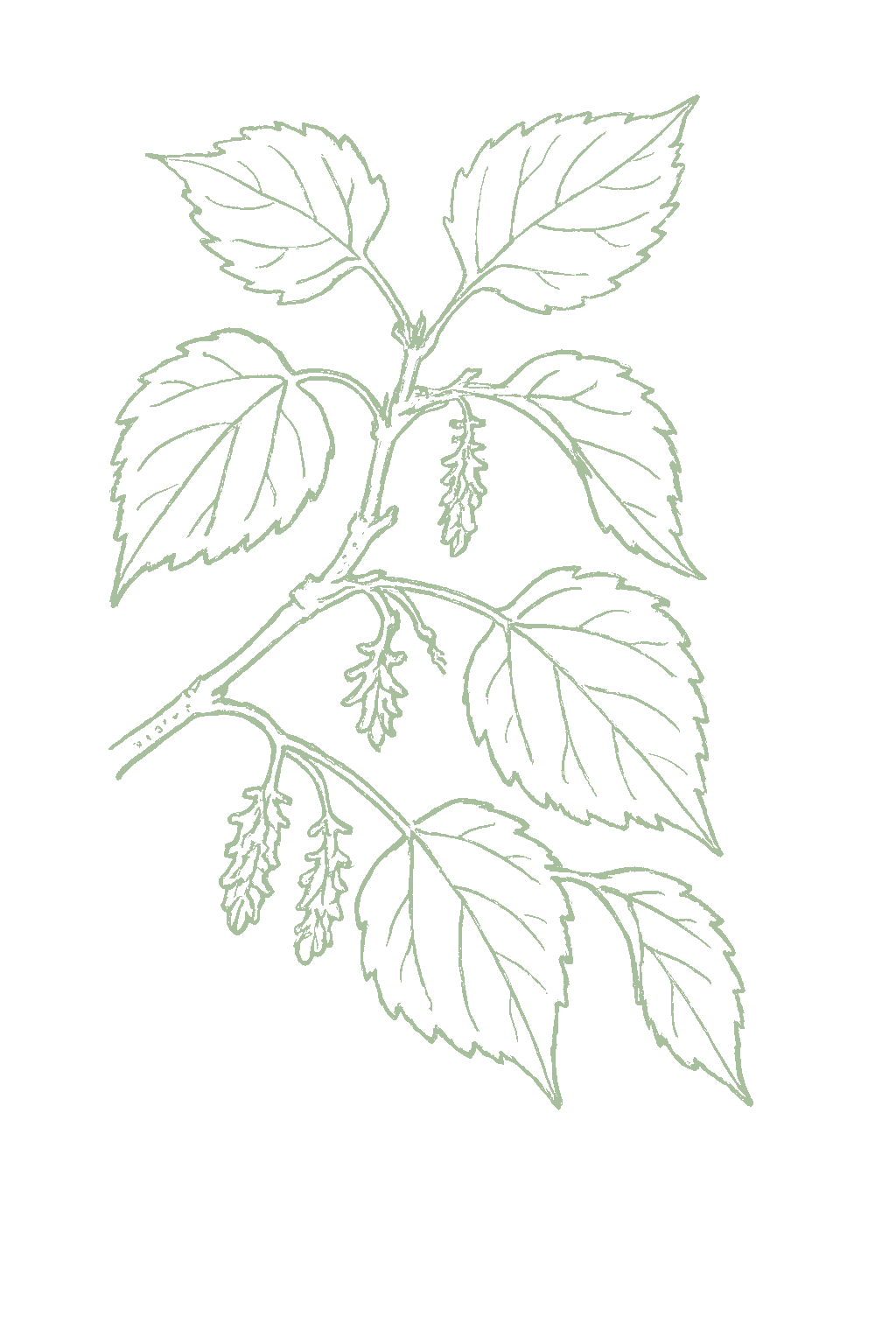
Small greenish flower clusters (catkins), not showy blooms. Mulberry pollinates by wind and fruits on its own, so one named tree sets fruit by itself and there is little to do.Small, greenish catkins rather than showy flowers. Mulberry is wind-pollinated and self-fruitful, so a single named tree sets fruit on its own; there is little to do at bloom.
Just let the tree set its fruit. In the coldest areas, keep an eye out for a hard late frost on the new growth, though mulberry blooms later and is much less frost-sensitive at bloom than a peach.Simply let the tree set its crop. In the coldest zones, watch for a hard late frost on newly emerging growth, though mulberry blooms later and is far less frost-vulnerable at bloom than stone fruit.
FROM PLANT · One named mulberry fruits by itself. It is self-fruitful and pollinated by wind, and many types even set fruit without any pollination, so you do not need a second tree.A single named mulberry fruits on its own. It is self-fruitful and wind-pollinated, and many cultivars set fruit parthenocarpically, so no second tree or pollinator is needed.
07
Fruit development
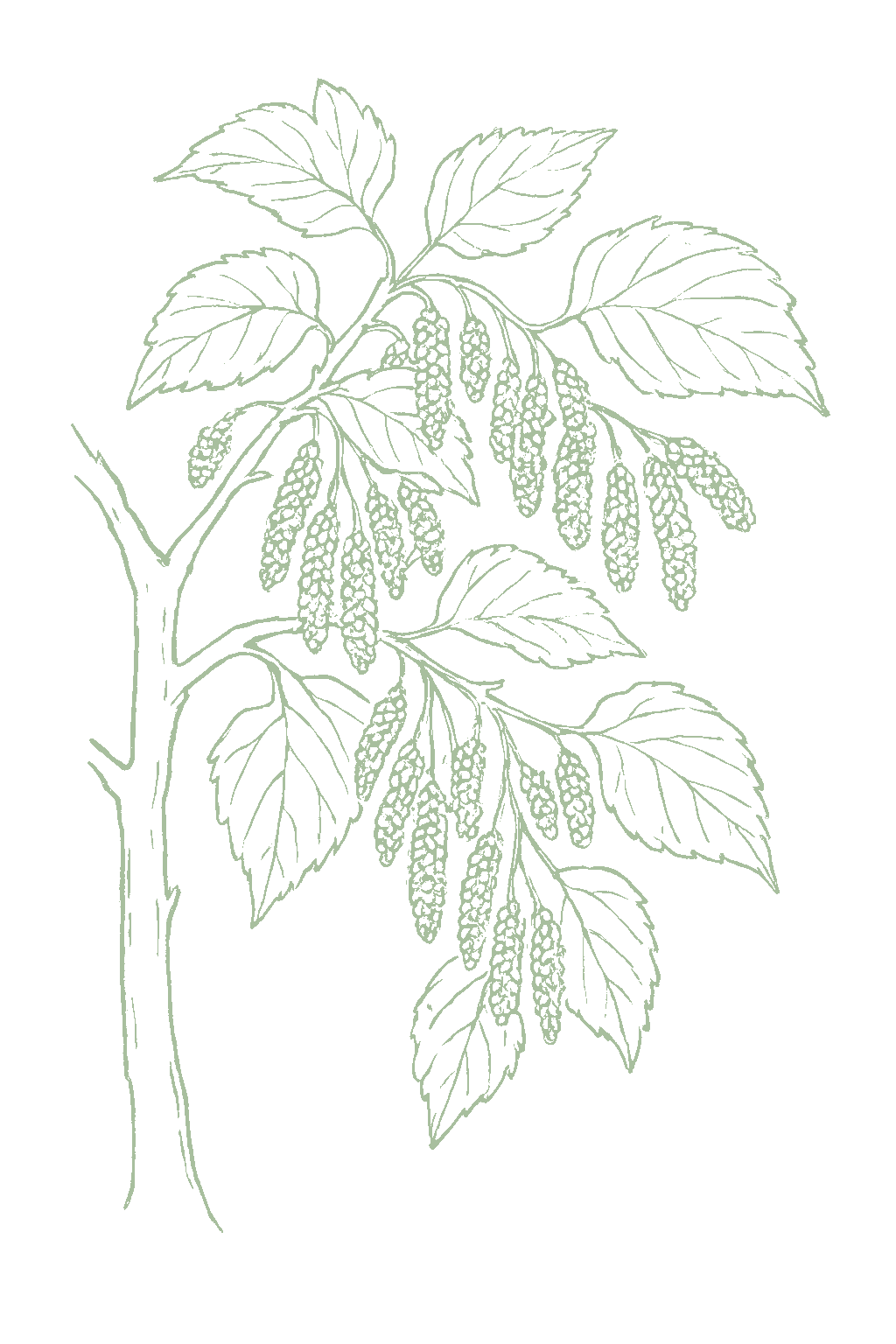
Green berries forming along the branches and slowly turning red then dark purple-black. Mulberry does not need thinning; the tree ripens a big crop over a long stretch.Green berries forming along the shoots and slowly coloring to red then deep purple-black. Mulberry does NOT need thinning; the tree carries and ripens a heavy crop over an extended window.
Give a bearing tree a good soak during dry spells while the berries fill, for bigger, sweeter fruit, and have bird netting ready for a small tree as the berries start to color. There is no thinning to do.Keep a bearing tree watered through fruit fill in dry spells for better size and sweetness, and get bird netting ready for a small tree as the first berries color. No thinning is needed.
FROM PLANT · Do not thin a mulberry; it ripens all its fruit over several weeks. Have bird netting ready for a small tree as the first berries start to color.Do not thin mulberry; the tree ripens its whole crop over weeks. Get bird netting ready for a small tree as the first berries color.
08
Harvest
Berries at full dark color that come off with the lightest touch and are soft and sweet. A mulberry ripens a bit at a time over weeks, so you pick it again and again, and ripe fruit falls easily.Berries at full deep purple-black (or their ripe cultivar color) that detach with the gentlest touch and are soft and sweet. A mulberry ripens a little at a time over weeks, so it is picked repeatedly, and ripe fruit drops readily.
Pick ripe berries every day or two, or lay a sheet under the tree and gently shake the branches to catch the drop. Work over a bowl, because they stain, and chill or freeze them right away. Clean up fallen fruit so it does not stain the ground or draw pests.Pick ripe berries every day or two, or spread a sheet and gently shake the branches to collect the drop. Handle over containers, since they stain, and refrigerate or freeze promptly. Clear fallen fruit so it does not stain or draw pests.
FROM PLANT · Ripe mulberries spoil fast and fall at a touch. Pick every day or two, or shake the branches onto a sheet, and chill or freeze them right away.Ripe mulberries are extremely perishable and detach at a touch. Pick every day or two, or shake the branches onto a sheet, and refrigerate or freeze promptly.
FROM PLANT · Plan on sharing with birds and dealing with the drop. A grown tree makes more than you can eat, so freeze the extra and clean up fallen fruit so it does not stain the ground or draw pests.Expect to share with birds and to manage the drop. A mature tree yields more than a household can use, so freeze the surplus and clear fallen fruit so it does not stain or draw pests.
The specs

Care guide

The numbers that matter, at a glance.

Sunlight
full sun · 6-12 hrs/day
Water
low
Spacing
300-360 inches
Soil
loam
Soil pH
6 to 7
Container OK?
No
Soil chemistry

Soil pH for mulberry

Preferred
6 to 7
Tolerated
5.5 to 8

Mulberry grows well across a wide range of soil pH and is not fussy (pH is just a measure of how acidic or alkaline the soil is). It is happiest around pH 6.0 to 7.0 but tolerates soil from about 5.5 up to 8.0, including the mildly alkaline soils that trouble many fruit trees. For most gardens you do not need to adjust the pH at all; just make sure the soil drains.Mulberry is pH-adaptable, doing best around pH 6.0 to 7.0 but tolerating roughly 5.5 to 8.0. White mulberry in particular handles alkaline ground that stresses many stone fruits, so pH correction is rarely needed. Test before planting if in doubt, but in most soils the practical limits are drainage and sun, not pH.

Verified · 1 source View
Steady hand on the hose

Watering

When & how much
Frequency
Water a new mulberry regularly for its first year or two, about once a week when it does not rain, so the roots get going. After that it is very drought-tolerant and an older tree seldom needs watering, though a good soak while the berries are filling makes them bigger and sweeter. In winter, when the tree is resting, it needs almost none.Water regularly through the first one to two seasons to establish the roots, roughly weekly in the absence of rain. After that, mulberry is notably drought-tolerant and an established tree rarely needs irrigation, though watering through the final weeks of fruit sizing improves size and sweetness. Cut back sharply in winter dormancy.
Amount
Each time you water, give a deep soak that reaches down to the roots, not just a splash on top. A young tree wants about 5 gallons per soak. An older tree needs little, but a deep weekly soak while the fruit is filling, if the weather is dry, pays off in better berries. Deep soaks grow deep, drought-proof roots.Water deeply each time so moisture reaches the full root depth rather than wetting only the surface. For an establishing tree, on the order of 5 gallons per soak; a bearing tree that is watered at all wants the rough equivalent of an inch per week during fruit fill in dry spells. Deep, infrequent soaks build the deep roots that carry mulberry through drought.
Method
Water the ground around the roots with a drip line, soaker hose, or a slow trickle from a hose, spreading it out toward the edge of the branches. The main thing is that the soil drains between waterings; mulberry hates sitting in water much more than it minds being dry.Water at the root zone by drip, soaker, or a slow hose out toward the drip line, keeping the trunk base itself uncrowded. Overhead watering is not the concern it is with stone fruit, but soil that drains freely between waterings matters most, since mulberry dislikes standing water far more than dryness.
Signs of trouble
Too much water
Too much water, or soil that stays soggy, shows up as yellow leaves, wilting that does not go away even when the soil is wet, and a tree that just sits there or goes downhill. Since mulberry handles dry soil so well, staying too wet is the bigger risk. Soil that never dries out is your cue to back off.Overwatering or poor drainage shows as yellowing leaves, wilting that persists in wet soil, and a stalled or declining tree, since waterlogged roots suffocate. Because mulberry is so drought-adapted, chronic wet feet is a far more common cause of trouble than dryness; soil that never dries between waterings is the warning sign.
Too little water
Too little water shows as wilting, dull curling leaves, and some early leaf drop in a long dry spell, and smaller berries if it runs dry while the fruit is filling. An established mulberry shrugs off dry spells and usually bounces back; the tree itself is rarely killed by drought.Underwatering shows as wilting, dull curling leaves, and early leaf drop in a prolonged drought, and on the fruit as poor sizing during the fill period. An established mulberry tolerates real dry stress and usually recovers, but berries sized under drought stay small; the tree itself is rarely lost to dryness.
Feeding rhythm

Feeding

Frequency
0-1x per year
Type
balanced granular (e.g. 10-10-10), sparingly
When to start
early spring as growth begins, only if growth is weak

Mulberry hardly ever needs feeding. It is a fast, vigorous tree that does fine on its own in most soils. If a young tree looks weak or the leaves are pale, scatter a little balanced fertilizer around the root zone in early spring and water it in. Do not overdo it, especially with nitrogen (the first number on the bag), because too much just makes leafy growth instead of fruit. Do not feed late in the year.Mulberry is a vigorous, undemanding tree that rarely needs feeding once established; on decent soil it grows fast on its own. If a young tree is weak or the leaves pale, apply a light broadcast of balanced fertilizer around the root zone in early spring and water it in. Avoid heavy nitrogen, which pushes rank, soft growth at the expense of fruit and can worsen bird-magnet leafiness. Never feed late in the season.

N · P · K = 10-10-10

A balanced fertilizer like 10-10-10 (the numbers are nitrogen, phosphorus, and potassium) covers the rare time a mulberry needs feeding. Most mature trees need none at all. When in doubt, feed less, because too much nitrogen means leaves instead of fruit.A balanced ratio such as 10-10-10 is more than enough for the rare occasion a mulberry needs feeding. Mature trees typically need nothing; err on the side of underfeeding, since excess nitrogen (N) drives vegetative growth over fruit.

Try 10-10-10 balanced fertilizer
Who grows well together

Companion planting

Mulberry is self-fruitful, which means one named tree makes fruit on its own with no second tree needed (a few wild seedlings are single-sex, so buy a named fruiting variety and this never comes up). Because it is a big, fast tree, the things that matter are not vegetable-garden pairings but where you put it: keep grass and weeds pulled back from a young trunk so it establishes faster, and above all keep it away from paths, patios, driveways, and parked cars, because the dropped fruit stains everything it lands on. Under the dense canopy, lawn and most plants struggle from shade and shallow roots, so plan for mulch or shade-tolerant groundcover there. Mulberry is self-fruitful, so a single named tree fruits on its own without a pollinizer (a few wild seedlings are dioecious, but named cultivars sidestep that). The interactions that matter are about siting a large, vigorous tree, not classic vegetable companions: clear turf back from a young trunk to speed establishment, and site the tree well away from walkways, patios, driveways, and parking, since the abundant dropped fruit stains hard surfaces and gets tracked indoors. The dense canopy and shallow feeder roots make the ground beneath it a tough spot for lawn or bedding plants, so mulch it or use a shade-tolerant groundcover.

Other
Pollinator and beneficial-insect plants at the drip line
A skirt of flowering herbs and pollinator plants out toward the drip line supports orchard-floor beneficials and pollinators generally. Mulberry itself is wind-pollinated and self-fruitful, so this does nothing for fruit set, but the flowers recruit hoverflies, lacewings, and parasitic wasps that help keep the occasional whitefly or aphid in check. Keep them out toward the canopy edge rather than crowded against the trunk. Traditional
Keep apart from
Walkways, patios, driveways, and parking under the canopy The single most common mulberry regret is siting. A mature tree drops enormous quantities of soft, deep-purple fruit over a long season, and it stains concrete, pavers, decking, and vehicles, then gets tracked indoors on shoes and paws. Extension guidance is explicit: do not plant a mulberry over a driveway, sidewalk, patio, or parking spot. Give it an out-of-the-way lawn or wild-edge site where the drop and the birds it draws are a feature, not a cleanup problem. Research-backed
Provenance tagged inline · see methodology for the labeling system Key
Harvest signals

When to pick

A mulberry is ripe when the berry turns fully dark purple-black (or the ripe color of your variety, some are white or pink), goes soft, tastes sweet, and comes off at the lightest touch. Ripe fruit almost falls into your hand or drops when you shake the branch. There is no picking firm and ripening later like a peach: you pick mulberries dead ripe, and they spoil fast, so pick into shallow containers and chill or freeze them the same day.A mulberry is ready when the berry reaches full deep purple-black (or the ripe color of its cultivar, some are white or pink), turns soft, tastes sweet, and detaches at the gentlest touch. Ripe fruit will practically fall into your hand or drop when the branch is shaken. Unlike stone fruit, there is no firm-pick-and-ripen stage: a mulberry is picked dead ripe and is extremely perishable, so harvest into shallow containers and refrigerate or freeze the same day.

Verified · 2 sources View
Yield

What to expect

A grown mulberry produces a huge amount of fruit, easily many gallons over several weeks, usually far more than one family can eat. How much you get depends mostly on the size of the tree and how much the birds take, not on feeding or thinning. The hard part is picking and using it all, not growing it.A mature standard mulberry is an extraordinarily heavy bearer, commonly yielding many gallons of fruit, on the order of tens of pounds and often far more than a household can use, ripening over several weeks. Yield is limited mainly by tree size and birds, not by feeding or thinning; the practical constraint is picking and using the crop, not growing it.

A mulberry reaches heavy production within a few years and keeps bearing for decades with only light pruning. Everbearing types spread the fruit over a long stretch; a full-size tree just gives you an overwhelming amount at peak.Trees reach heavy bearing within a few years and stay productive for decades, given only light annual pruning. A named everbearing cultivar spreads its crop over a long window; a standard tree simply overwhelms with fruit at peak. Do not expect much fruit the first year or two while the tree settles in. Some everbearing varieties give a little early, sometimes even the first year, but real crops start around years 2 to 3 and grow from there.Expect little to no fruit in the first year or two while the tree establishes. Some named everbearing cultivars set a light crop early, sometimes even the first year, but real production begins around years 2 to 3 and builds from there.

What changes yield
cultivar and mature sizetree age and establishmentbird pressurewater during fruit fillsite sun and drainageregional season length
Verified · 2 sources View
Off the vine

Storing your harvest

Room temp
Mulberries do not keep on the counter. Ripe fruit gets soft and starts to spoil within a day, so eat them the day you pick them or put them in the fridge right away. They stain everything, so work over a bowl.Mulberries are extremely perishable and do not hold at room temperature; ripe fruit begins to soften and ferment within a day. Eat them the day they are picked, or refrigerate immediately. They also stain hands, cloth, and counters, so handle over a bowl.
Fridge
Keep ripe mulberries in the fridge, unwashed, in a shallow open container, and eat them within 2 to 3 days (wash them only right before eating). They spoil fast and bruise easily, which is why you almost never see them in a grocery store; a mulberry is a fruit you grow or pick yourself.Refrigerate ripe mulberries unwashed in a shallow, breathable container and use within 2 to 3 days; washing before storage hastens breakdown. Their very short shelf life (and how poorly they pack and ship) is exactly why mulberries are a home-grown and farmers-market fruit, rarely a grocery one.
Freezer
Mulberries freeze really well, which is the best way to deal with a big crop. Rinse them gently, drain and pat dry, spread them on a tray to freeze, then pack them into freezer bags. They keep for months and are great for baking, jam, syrup, and smoothies.Mulberries freeze very well. Rinse gently, drain and pat dry, freeze in a single layer on a tray, then transfer to freezer bags. Frozen berries keep for many months and are excellent for baking, jam, syrup, and smoothies. Freezing is the practical way to handle a heavy crop that ripens faster than you can eat it fresh.
Verified · 1 source View
When something goes wrong

Common problems

The tree is healthy but gives no fruitTree grows well but sets no fruit
01 of 04
What happened The tree grows fine but never fruits. Usually it is just young (mulberry starts fruiting around years 2 to 3), or it is a fruitless ornamental mulberry sold as a no-fruit shade tree, or, less often, a wild seedling that happens to be male, since a few mulberries have separate male and female trees. Named fruiting varieties fruit on their own. The fix is the plant, not how you care for it: buy a named FRUITING variety, and give a young tree another year or two.The tree is vigorous but never fruits. The usual causes are a young tree not yet of bearing age (mulberry typically starts around years 2 to 3), a fruitless ornamental mulberry (some are sold specifically as non-fruiting shade trees), or, less commonly, a single-sex seedling, since a few wild mulberries are dioecious with male and female flowers on separate trees. Named fruiting cultivars are self-fruitful and often parthenocarpic, so a lone one fruits on its own. The fix is the plant, not the care: buy a named FRUITING cultivar (not a fruitless ornamental), and give a young tree a couple more seasons. Next season Buy a named self-fruitful FRUITING variety like Illinois Everbearing or Dwarf Everbearing, avoid the fruitless ornamental kinds, and give a young tree time.Buy a named self-fruitful FRUITING cultivar (Illinois Everbearing, Dwarf Everbearing, and similar), avoid fruitless ornamentals, and be patient with a young tree.
Berries turn into hard popcorn-like lumpsBerries swell into hard, greenish popcorn-like lumps
02 of 04
What happened Some berries puff up hard and greenish like popcorn and never ripen. This is popcorn disease, a fungus (Ciboria carunculoides) most common in the South and on white mulberries and hybrids. No spray fixes it; you manage it by cleanup. Pick off and throw away the affected berries and clear the fallen fruit and debris under the tree, because that is where the fungus waits out the winter.Some berries swell abnormally, with segments enlarging and staying hard and greenish so the fruit looks like popcorn, and they never ripen. This is popcorn disease, the fungus Ciboria carunculoides, most common in the South and on white mulberries and their hybrids. There is no home spray; it is managed by sanitation. Remove and destroy affected fruit and clear the fallen fruit and debris beneath the tree, since that is where the fungus overwinters. Next season Clean up all the fallen and affected fruit each year to stop it spreading, and where the disease is common, pick a red mulberry or a tougher hybrid instead of the most susceptible white types.Clear all fallen and affected fruit each season to break the cycle, and where popcorn disease is common, favor a red mulberry or a more resistant hybrid over the most susceptible white types.
Purple stains all over paths and carsPurple stains on pavement, decking, and cars
03 of 04
What happened The ground, pavement, deck, or cars under the tree are stained deep purple, and it gets tracked inside. This is not a disease; it is just the normal heavy fruit drop of a productive mulberry, made worse by birds. It is really a placement problem. You cannot stop a big tree from dropping fruit, so plant future trees, and work around this one, well away from any hard surface, and think about a weeping or dwarf type that is easier to net and pick.The ground, pavement, decking, or vehicles under the tree are stained deep purple, and the stains track indoors. This is not a disease; it is the normal, heavy fruit drop of a productive mulberry, made worse by birds. It is almost always a siting problem. The corrective action is placement: a mature tree cannot be stopped from dropping fruit, so plant future trees, and manage this one, well away from any hard surface, and consider a weeping or dwarf form that is easier to net and harvest. Next season Plant mulberries away from paths, patios, driveways, and parking; for a small yard pick a dwarf or weeping variety you can net and pick clean.Site mulberries away from walkways, patios, drives, and parking; for a small space choose a dwarf or weeping cultivar you can net and pick clean.
Baby mulberries sprouting all overMulberry seedlings coming up everywhere
04 of 04
What happened Little mulberry seedlings keep popping up around the yard and in beds, spread by birds eating the fruit. White mulberry especially self-seeds a lot and is considered weedy or invasive in some areas. The fix is simple: pull the seedlings while they are small, and if invasiveness is a worry where you live, choose a named, less weedy variety.Young mulberry seedlings appear across the yard and in beds, spread by birds eating the fruit. White mulberry in particular self-seeds readily and is considered weedy or invasive in some regions (a noxious weed in a few states). The fix is routine: pull seedlings while small, and where invasiveness is a concern choose a named, less weedy cultivar (and note that some fruitless ornamental selections were, ironically, planted to avoid exactly this). Next season Pull the seedlings while small, keep the fallen fruit cleaned up, and if invasiveness is a concern where you live, plant a named variety rather than a wild seedling.Pull seedlings while small, keep fruit cleaned up, and where invasiveness is a local concern choose a named cultivar rather than a wild seedling.
The usual suspects

Pests & diseases

Pests
Birds
P · 01
Symptoms Birds strip the ripe berries fast. You will see missing fruit, half-eaten berries, and purple bird droppings under and around the tree. Big flocks can show up daily while the fruit ripens.Ripe and near-ripe berries disappear, half-eaten fruit and purple droppings appear on the ground and on nearby surfaces, and flocks work the tree through the ripening weeks. On a large tree the loss is simply shared; on a small or netted tree it can be nearly total if not managed. Cause Lots of birds love sweet, soft mulberries and eat them as they ripen. This is the main reason people lose fruit to the tree, though it is also why a mulberry is such a great tree for attracting birds.Many birds, especially catbirds, mockingbirds, robins, and waxwings, are drawn to sweet, soft mulberries and feed heavily as they ripen. This is the number-one reason home growers lose fruit, and it is a feature as much as a pest, since a mulberry is one of the best wildlife trees you can plant. Organic treatment For a small tree, cover it with bird netting when the first berries start to color, and pick ripe fruit every day so there is less left for the birds. A big tree is too large to net, so the usual approach is to accept that you are sharing, or even to let the mulberry act as a decoy that keeps birds off your other fruit.For a small tree, drape bird netting over it as the first berries color, and harvest ripe fruit promptly each day so less hangs available. For a large tree, netting is impractical; the traditional answer is to plant enough that there is plenty to share, and some growers deliberately keep a mulberry as a decoy to lure birds away from cherries and other prized fruit. Prevention You cannot really keep birds off a big mulberry, so plan on sharing; luckily the tree makes far more fruit than you can eat. Only bother netting small or dwarf trees, and pick ripe fruit quickly.There is no way to keep birds off a large mulberry, so plan the siting and the crop around sharing: a big tree yields far more than a household can use. Net only small or dwarf trees, and pick promptly.
Whiteflies
P · 02
Symptoms Tiny white flies rise up off the undersides of the leaves when you brush the branches, sometimes leaving a sticky film and black sooty mold below. They rarely bother an established tree much.Tiny white flying insects lift off the undersides of leaves when disturbed, sometimes with sticky honeydew and sooty mold on lower foliage in a heavy infestation. Vigor is rarely affected on an established tree. Cause Whiteflies are small sap-sucking insects that gather under the leaves. They show up on mulberry fairly often but rarely do real harm.Whiteflies (including the mulberry whitefly) are sap-feeders that colonize leaf undersides. They are a common but minor mulberry pest and mostly a cosmetic nuisance. Organic treatment A healthy tree does not need treatment. On a small tree with a lot of them, spray the undersides of the leaves with a strong jet of water or insecticidal soap, and welcome the ladybugs and lacewings that eat them.A healthy tree needs no treatment. If numbers are high on a small tree, a strong water spray to the leaf undersides or an insecticidal-soap application knocks them back; encourage the lacewings and ladybugs that prey on them. Prevention Keep the tree healthy and go easy on nitrogen feeding, which draws whiteflies. Natural predators usually keep them under control outside.Keep the tree vigorous and avoid heavy nitrogen feeding, which encourages the soft growth whiteflies favor. Natural predators usually keep them in balance outdoors.
Borers
P · 03
Symptoms Small holes, sawdust-like frass, or oozing on the trunk or big branches, mostly on trees that are already stressed or damaged. A healthy tree is rarely bothered.Small entry holes, frass, or oozing on the trunk and larger limbs, usually on trees already stressed by drought, injury, or decline. Healthy, vigorous mulberries are seldom attacked. Cause A few kinds of borer (beetle and moth larvae) can get into mulberry, but usually only when the tree is already weak from drought, wounds, or old age. They tend to follow trouble rather than start it.Several wood-boring beetle and moth larvae can attack mulberry, but almost always as a secondary problem on trees weakened by drought stress, mechanical wounds, or age. Borers follow decline rather than cause it in a healthy tree. Organic treatment The best fix is a healthy tree: water it in droughts, keep mowers and trimmers off the trunk, and cut out and destroy any dead or infested branches. Once larvae are inside the wood, no spray reaches them.The durable control is tree health: water through droughts, avoid trunk wounds from mowers and trimmers, and prune out and destroy any dead or infested wood. There is no practical rescue spray for larvae already tunneling inside. Prevention Keep the tree healthy and avoid wounding the trunk. A well-placed, watered mulberry rarely has borer trouble.Keep the tree vigorous and unwounded. A well-sited, adequately watered mulberry rarely gives borers an opening.
Diseases
Popcorn disease
D · 01
Symptoms Some berries grow oddly, with the little segments puffing up hard and greenish so the fruit looks like tiny popcorn instead of a soft berry. Those berries never ripen right and hang on the tree.Some berries on the tree swell up abnormally, with individual segments (carpels) enlarging and staying hard and greenish, so the fruit looks like a little cluster of popcorn kernels instead of a normal soft berry. Affected fruit does not ripen properly and clings to the tree. Cause Popcorn disease is a fungus (Ciboria carunculoides) that gets into the developing fruit and makes it swell into hard, popcorn-like lumps. It mostly shows up in the South, and white mulberries and hybrids catch it most. It is usually minor but can cost you fruit on a tree you grow for eating.Popcorn disease is caused by the fungus Ciboria carunculoides, which infects the developing fruit and turns the carpels into hard sclerotia. It is largely a southern problem, and white mulberries and their hybrids are the most susceptible; it is usually of minor importance but can cause real fruit loss on trees grown for eating. Organic treatment No home spray fixes it. The control is cleanup: pick off and throw away the affected berries, and rake up and bury or bin the fallen fruit under the tree, because that is where the fungus waits out the winter to come back next year.There is no home spray that cures it. Control is sanitation: as the disease appears, remove and destroy the affected fruit on the tree and rake up and bury or discard fallen fruit and debris beneath it, since that is where the fungus overwinters to reinfect next year. Prevention Keep the ground under the tree clean of fallen fruit each year so the fungus cannot overwinter. If popcorn disease is common in your area, choose a red mulberry or a tougher hybrid rather than the most susceptible white types.Year-round sanitation is the prevention: clear fallen and mummified fruit each season so the fungus has nowhere to overwinter. Where popcorn disease is a known local problem, favor red mulberry or a more resistant hybrid over the most susceptible white types.
Bacterial blight
D · 02
Symptoms Leaves get angular, water-soaked spots that turn dark, and new shoots can have black streaks; bad cases kill the shoot tips. It usually just looks bad rather than harming an established tree, and it is worst in wet weather.Angular, water-soaked spots appear on the leaves and turn dark, and young shoots can show black streaks or stripes; badly hit shoot tips may die back. Damage is usually cosmetic on an established tree and worst in wet springs. Cause Bacterial blight is a bacterium (Pseudomonas syringae pv. mori) that spreads in cool, wet spring weather and infects new growth. It is a minor disease that shows up in wet years and rarely hurts a healthy tree.Bacterial blight is caused by the bacterium Pseudomonas syringae pv. mori, which spreads in cool, wet spring weather and enters young tissue. It is a minor mulberry disease that flares in wet seasons and rarely threatens a healthy tree. Organic treatment Cut out and throw away the blackened, blighted shoots in dry weather, and avoid watering over the top of the tree so the leaves stay drier. On a backyard tree, that cleanup is all that is needed.Prune out and destroy blackened, blighted shoots during dry weather to remove the bacterial source, and avoid overhead watering that keeps foliage wet. No spray is warranted on a home tree beyond this sanitation. Prevention Keep the tree open so air moves through it, prune only when it is dry, and remove any infected shoots. A healthy, well-spaced tree easily shrugs this off most years.Keep the canopy open and the foliage dry, prune only in dry weather, and remove infected wood promptly. A vigorous, well-spaced tree shrugs off the disease in most years.
Leaf spots and minor foliar diseases
D · 03
Symptoms Spots on the leaves, or whitish patches underneath them in late summer, sometimes with a few leaves dropping in a wet year. It rarely affects how the tree grows or fruits.Scattered fungal leaf spots, or whitish patches (false mildew and powdery mildew) on leaf undersides in mid to late summer, sometimes with modest leaf drop on older trees in a wet season. Vigor and cropping are rarely affected. Cause A few minor leaf fungi (leaf spots and mildews) can mark mulberry leaves, mostly late in the season and in wet weather. On mulberry they are just cosmetic and rarely worth doing anything about.A group of minor leaf fungi (Cercospora and Cercosporella leaf spots, false mildew, and powdery mildews) can spot or coat mulberry foliage, mostly late in the season and mostly in wet weather. On mulberry these are cosmetic and seldom worth treating. Organic treatment A healthy tree needs no treatment. Rake up and remove fallen leaves in fall to cut down on next year's spores, and keep the tree open so air flows through. Sprays are only for special trees with a bad, repeated problem.No treatment is needed on a healthy tree. Rake and remove fallen leaves in autumn to reduce carryover, and keep the canopy open for airflow. Fungicides are reserved for prized specimens with a serious recurring problem. Prevention Keeping the tree open, cleaning up fallen leaves in fall, and letting air move through are all you need. A well-grown mulberry carries these without real harm.Open-canopy pruning, autumn leaf cleanup, and good air movement are the whole prevention program. Well-grown mulberries carry these diseases without meaningful harm.
Verified · 4 sources View
Seasoned
Where to plant next year

Crop rotation

For a mulberry, choosing the spot matters far more than rotation. Give it full sun, soil that drains, lots of room, and keep it away from anything the fruit could stain. There is no rotation schedule to follow.Site selection, not rotation, is the real decision for a mulberry: full sun, free drainage, plenty of room for a large spreading tree, and well clear of hard surfaces the fruit would stain. There is no rotation interval to observe.

Family
Moraceae (Morus)
Avoid following
You do not rotate a mulberry the way you rotate vegetables, because it stays put for decades. Unlike peaches, mulberry has no special replant problem, so it can follow most things. The main thing is to pick the right spot from the start, away from paths and patios, because a big tree is hard to move.Annual crop rotation does not apply to a mulberry: it is a permanent tree that holds its site for decades. Mulberry has no notable replant-disease problem the way stone fruit does, so it can follow most previous plantings, but choose the site carefully for the long term, since a mature tree is hard to move and the fruit drop dictates placement.
Plant after
any well-drained, full-sun site with room for a large tree, away from paths, patios, and drives
Verified · 1 source View
Ask the gardener

Common questions

Got a question we missed?

We're building this guide with real growers. Got a question we missed? Ask here. We read every one and add the best answers right to this page.

Grown this before?

Share a tip

Learned something the hard way? Pass it on. Real growers' tips make this guide better for the next person, and we credit you by name when yours goes live.

Seasoned
Spot something wrong?

Report a problem

If you've grown this crop and you see a date, a temperature, a companion claim, or a recommendation that doesn't match your experience, tell us. Real growers' corrections make this guide better for the next person.

How we built this guide

Methodology & sources

Every date, temperature, spacing, and recommendation on this page is sourced from university cooperative extension publications, peer-reviewed agricultural research, NOAA climate data, and direct extension calendars. Where claims are softer (traditional gardening wisdom not formally documented), we say so.

Research-backed Documented in cooperative extension publications or peer-reviewed research
Well-grounded A known agronomic principle, but not formally tested for this specific pair
Traditional Time-tested gardening wisdom, limited formal research support
Last reviewed
June 30, 2026
Data version
crops_data_final · v1.0 · schema 2.9
Sources cited on this page
16 publications
Verified entries
Companion-planting claims tagged inline · zone dates verified against 5+ extensions
See all sources cited on this page
  • University of Minnesota Extension umn_ext
  • University of Maryland Extension umd_ext
  • Cornell Cooperative Extension cornell_ext
  • Iowa State University Extension iastate_ext
  • Michigan State University Extension msu_ext
  • NC State Extension ncsu_ext
  • Penn State Extension psu_ext
  • U. of Illinois Urbana-Champaign Extension uiuc_ext
  • UC Davis Postharvest Center ucd_postharvest
  • Texas A&M AgriLife Extension tamu_agrilife
  • Virginia Cooperative Extension 426-331 vce_426_331
  • Piedmont Master Gardeners piedmont_mg
  • UGA Vegetable Garden Calendar uga_calendar
  • Clemson Home & Garden Information Center clemson_hgic
  • UC IPM Statewide IPM Program uc_ipm
  • NOAA 1991-2020 Climate Normals noaa_normals

Growing notes, weekly.

Zone-aware seasonal nudges, what's worth planting now, and the occasional recipe from the harvest. No spam, ever.

Vol. 004 · Mulberry · plant.lifestyle