Will it actually fruit here?
Hardiness tells you the tree will survive your winters. It does not tell you whether you will get fruit. Each zone carries its own verdict. Yours is marked.
rarely fruits
rarely fruits
rarely fruits
low chill
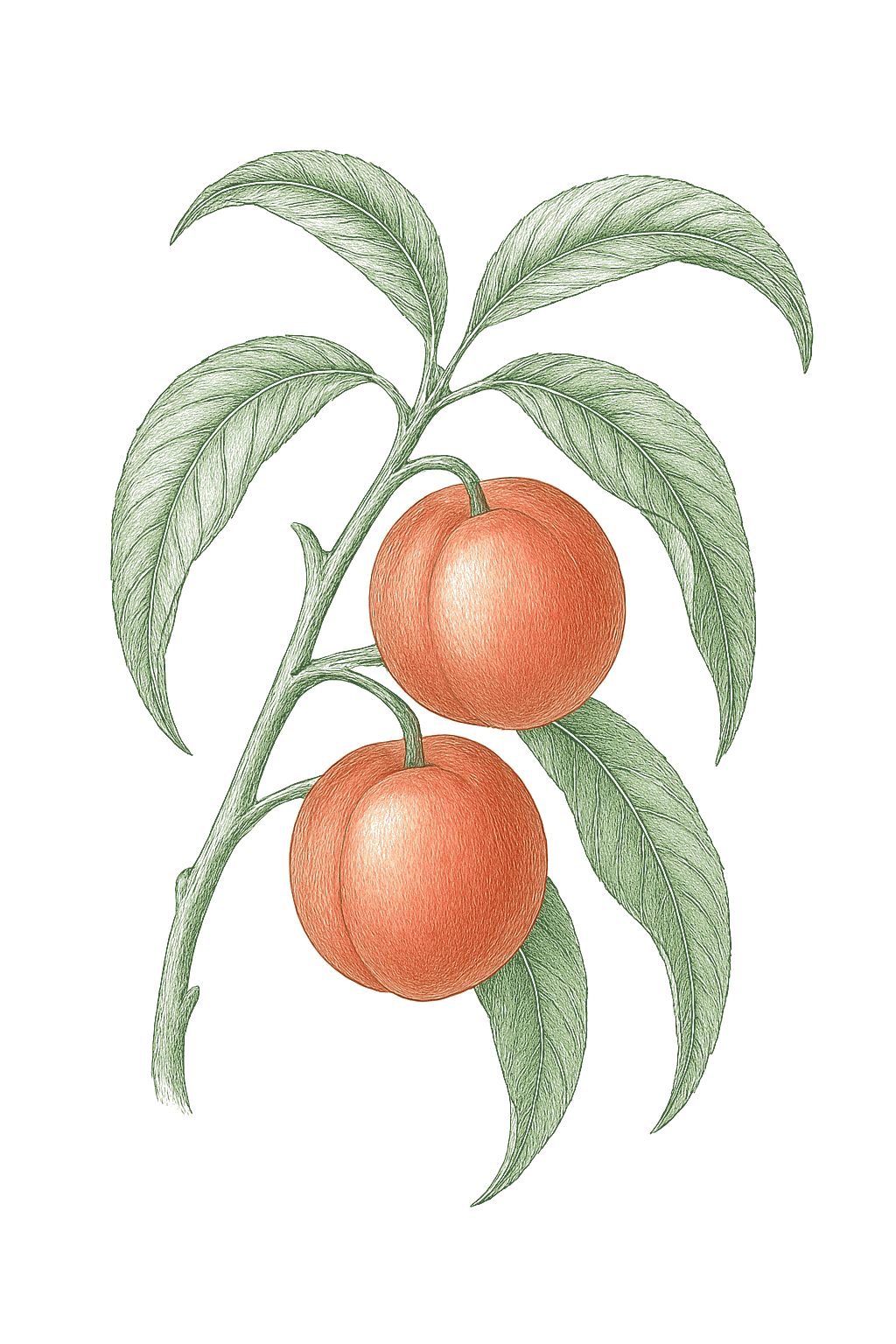
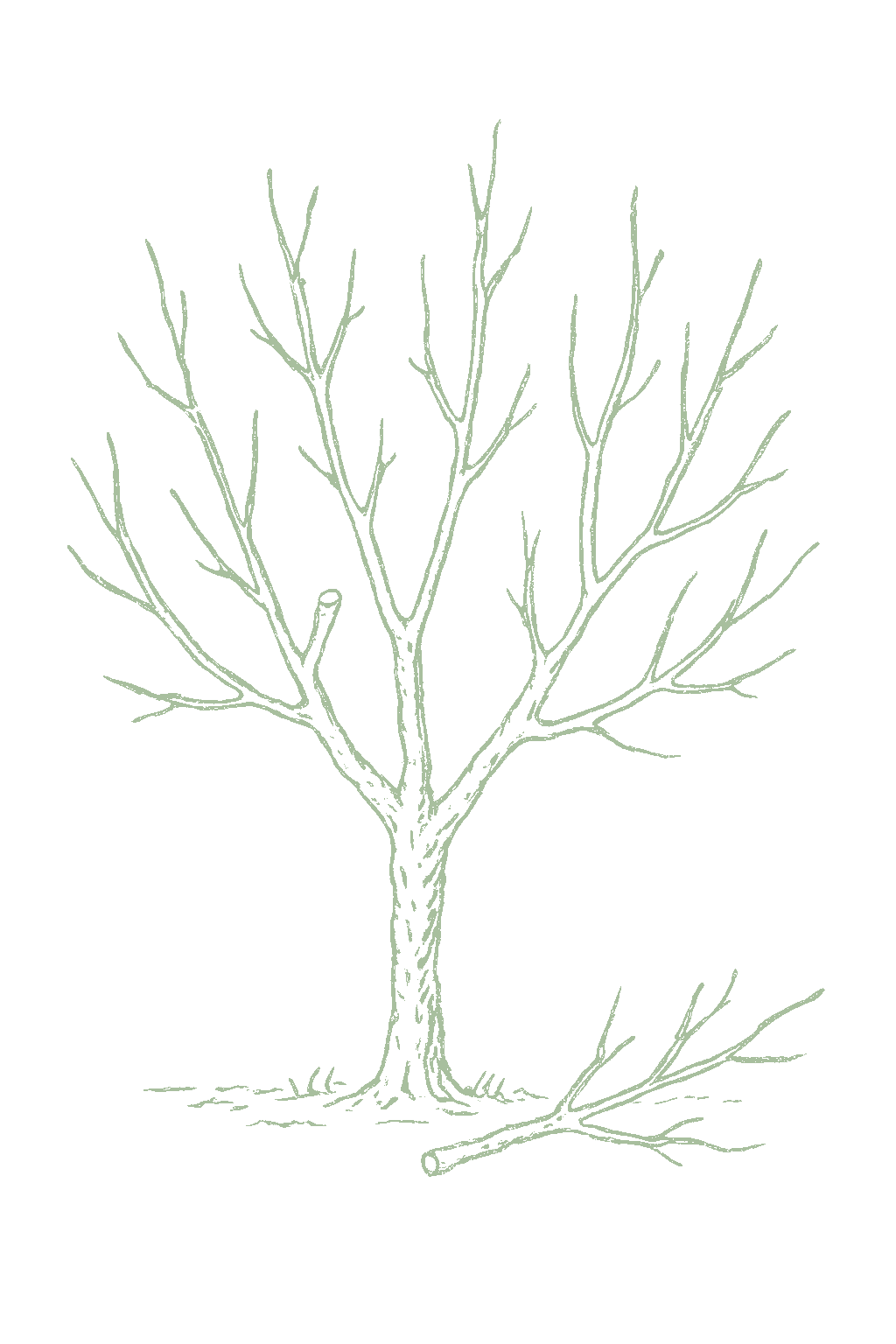
A nectarine is a fruit tree that is really just a peach with smooth, fuzz-free skin, and it drops its leaves each winter and gives you fruit you can ripen right on the branch. One tree fruits on its own, so you do not need a second one. Growing it is the same as growing a peach: prune it every winter into an open vase shape, thin off the extra little fruit so the rest grow big, plant where late spring frosts are less likely, and pick a variety that fits your winters. The one thing to watch more closely is disease. Because nectarines have no fuzz to protect them, they catch brown rot, bacterial spot, and insect scarring more easily than peaches, so staying on top of cleanup and choosing a disease-tolerant variety matters even more. With that care, a backyard nectarine gives you fruit far better than the store. Nectarine is a deciduous stone-fruit tree (Prunus persica var. nucipersica), a smooth-skinned, fuzzless peach that carries the same rich flavor with a firmer, cleaner-eating skin. It is self-fruitful, so a single tree bears on its own with no pollinizer, and its culture is essentially identical to peach: an annual dormant pruning to an open-center vase, early fruit thinning, a planting site chosen to dodge late-frost pockets, and a variety matched to the winter chill your site reliably banks. The one real caveat is disease pressure. Lacking the fuzz that gives a peach a little protection, nectarines run more vulnerable to brown rot, bacterial spot, and thrips or stink-bug scarring, so a disciplined spray and sanitation program and a disease-tolerant variety matter even more here than on a peach. Given that care, a backyard nectarine rewards you with fruit grocery shelves cannot match.
Hardiness tells you the tree will survive your winters. It does not tell you whether you will get fruit. Each zone carries its own verdict. Yours is marked.
California: Interior, Zone 9. Winters bank about 300 to 950 chill hours; these varieties need about 300 to 900 chill hours. This part of the valley grows nectarines well. Choose a mid-range variety to be safe in a mild winter, and enjoy a long summer harvest.Lower Central Valley zone 9 still banks high chill in most winters and crops reliably; favor cultivars around 700 to 900 hours as a hedge against the warmest winters. Bloom is early and the harvest runs long.
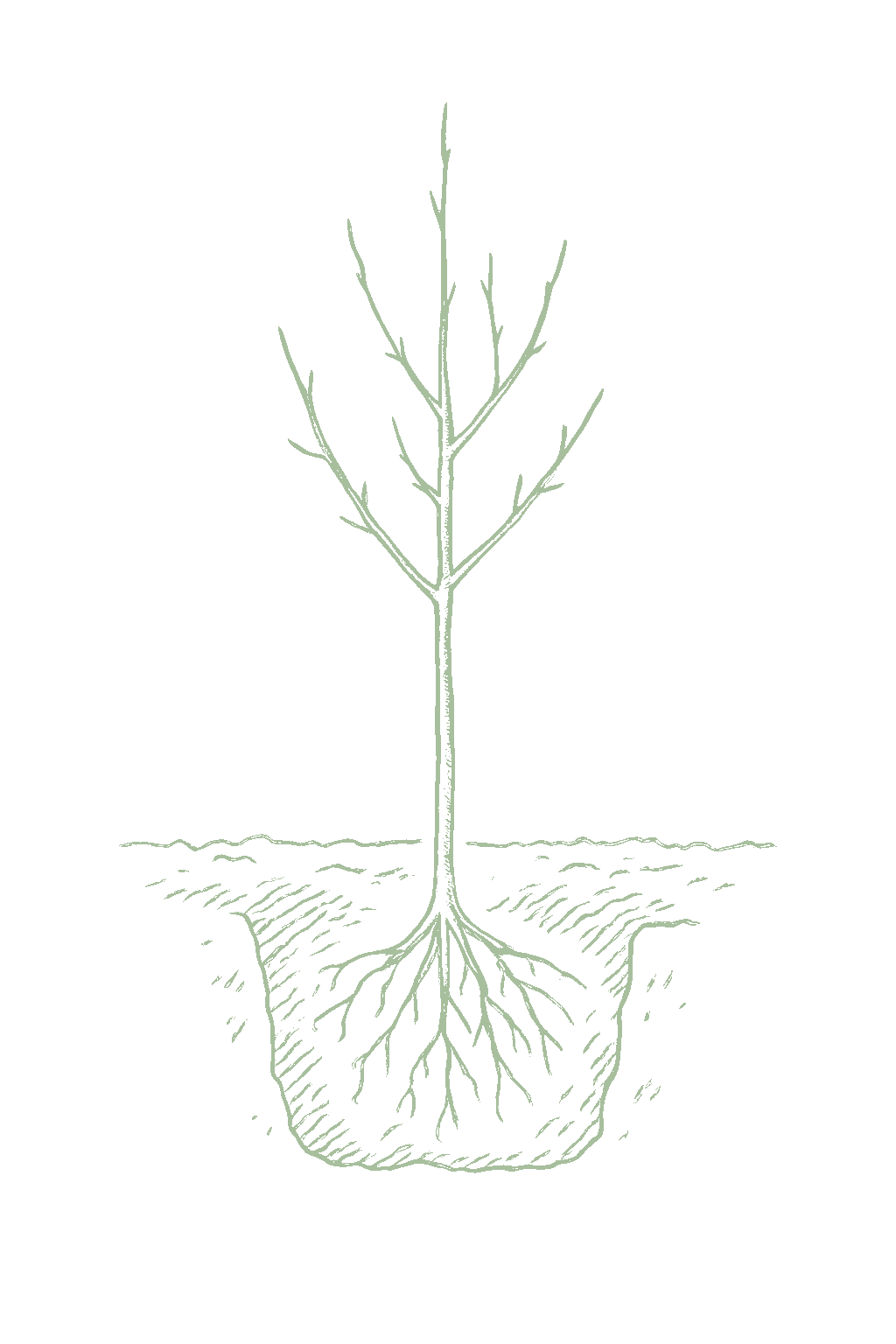
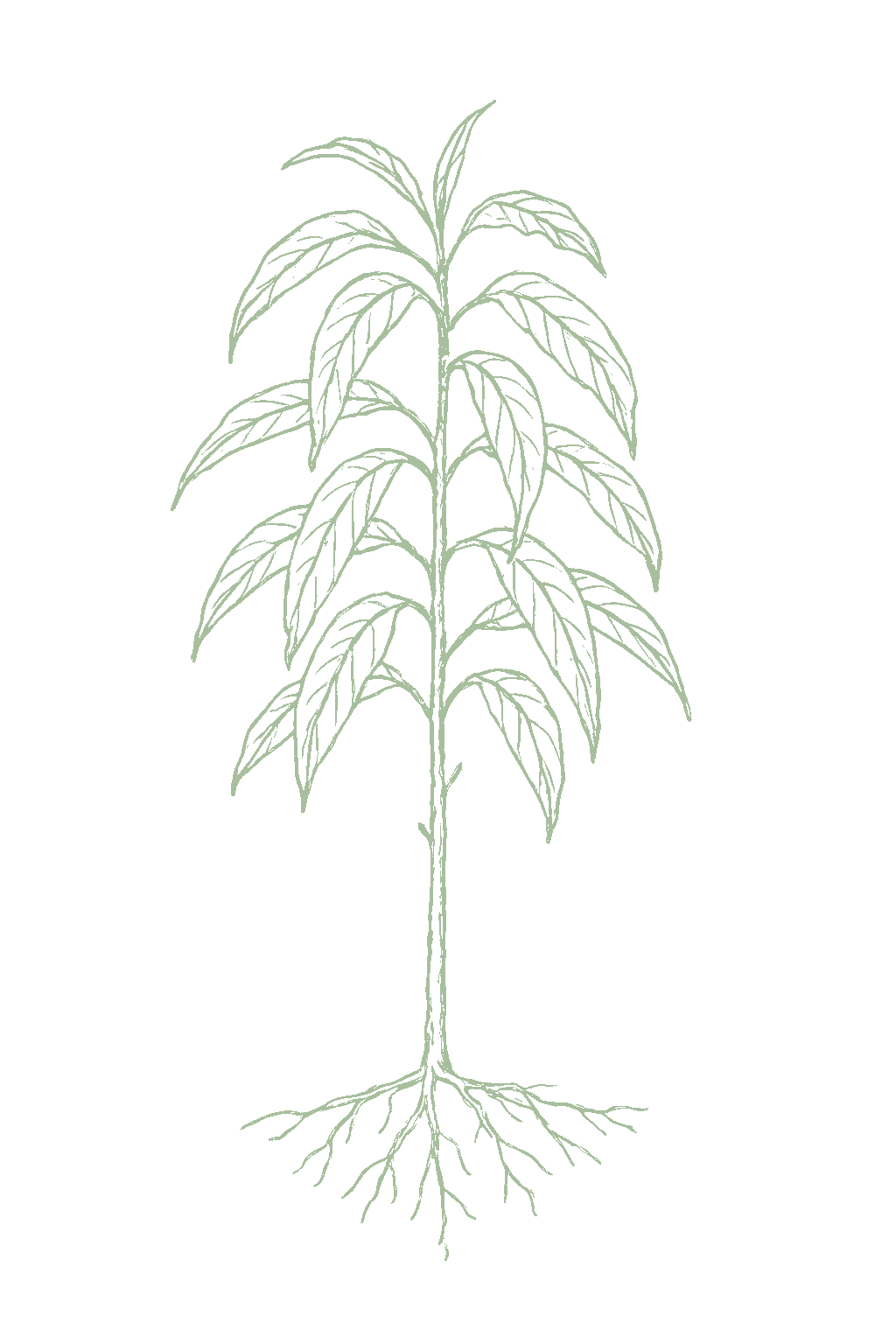
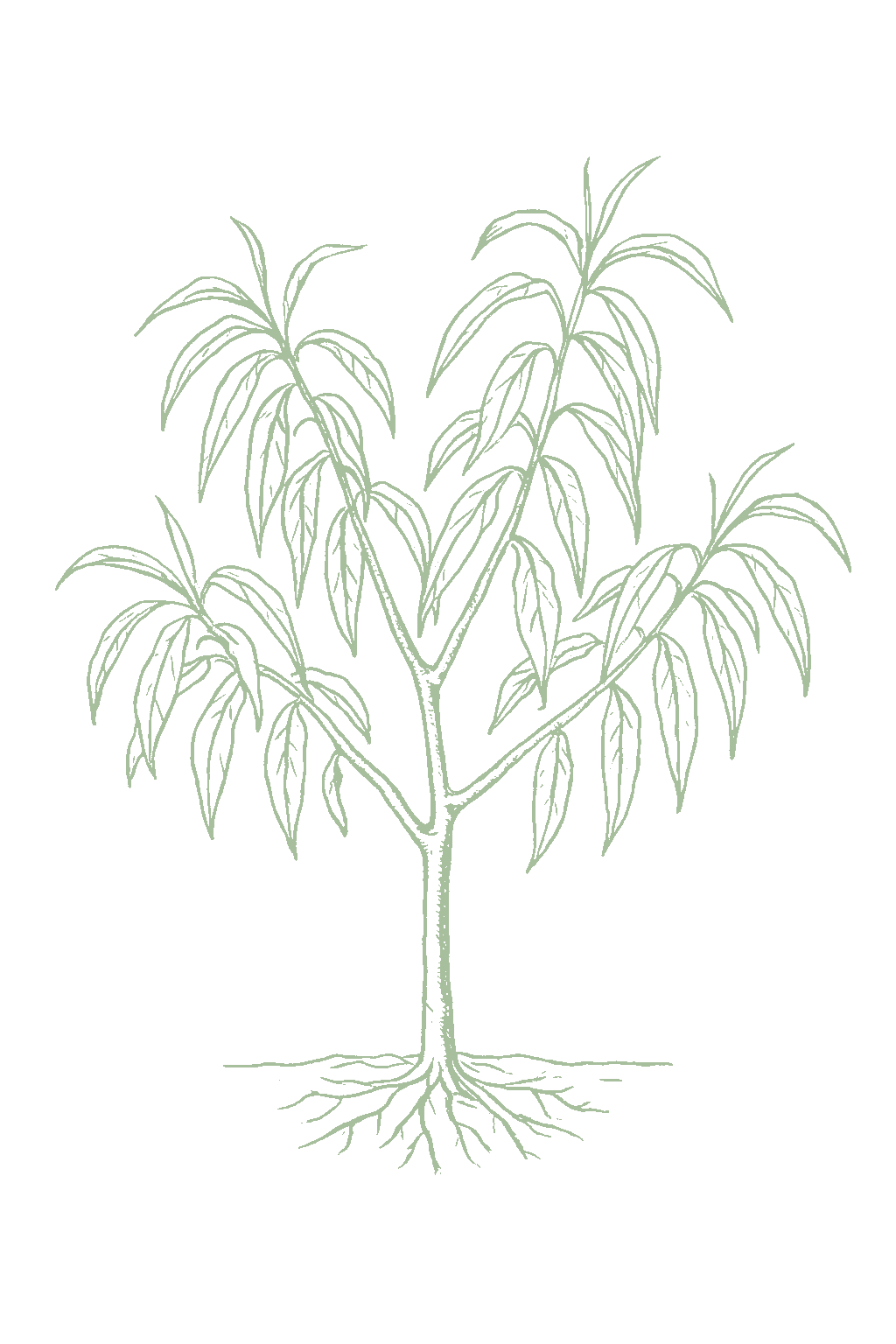
A fruit tree runs on the same rhythm every year: rest, prune, bloom, grow, harvest, then settle in again.
Nectarine trees need enough cold winter hours, called chill hours, before they will bloom properly in spring, just like peaches. Different varieties need different amounts. If your winters are mild, choose a low-chill variety; if your winters are cold, you can grow almost any variety. Planting a high-chill variety where winters are warm usually means lots of leaves and very few nectarines.Nectarines need a stretch of winter cold, counted as chill hours (hours between 32°F and 45°F), to break dormancy and bloom evenly, exactly as peaches do. The requirement is set by the variety, not the species: the cultivars here span about 300 chill hours (Arctic Star, a low-chill white type) to roughly 850 (Mericrest, a cold-hardy high-chill type). Match the variety to the chill your winters actually bank. Too few chill hours and the blossoms drop without setting fruit; warm winter days above about 65°F can subtract from the running total.
Most nectarines are self-fruitful: a single tree sets a full crop with its own pollen, so you don’t need a second variety to get fruit. Bees still move the pollen from blossom to blossom, so strong pollinator activity through bloom is what drives a heavy set.
Bar length shows how long each variety blooms, roughly 8 to 14 days. Bars that overlap bloom at the same time.
▲ Tap a variety to see its bloom timing
Nectarines are self-fruitful, which means one tree makes fruit by itself with no second tree needed. This is different from many apples, which do need a partner tree. The nectarine varieties here all set fruit on their own, so you never need a second one. Bees do the pollinating, so anything that helps bees be active during bloom helps your tree set fruit, even a single tree.Nectarines are self-fruitful, so a single tree sets a full crop on its own without a pollinizer partner; this is the inverse of many apples, which require cross-pollination. Unlike peach, which has the occasional self-sterile cultivar, the recommended nectarines here all fruit on their own, so there is no need to pair the tree with a second nectarine. Nectarines are insect-pollinated, mainly by bees, so supporting pollinator activity at bloom helps fruit set even on a lone self-fruitful tree.
Pick a variety first by chill hours, which is the amount of winter cold a nectarine needs to bloom properly. Match the variety's chill needs to the winters where you live: pick one needing too much chill for a mild-winter spot and it leafs out and blooms unevenly; pick one needing too little for a cold spot and it blooms too early and loses its fruit to frost. Next, look hard at disease tolerance, because nectarines catch disease more easily than peaches: varieties like Fantasia and Hardired hold up better against bacterial spot and brown rot. After that, think about bloom timing (later-blooming kinds dodge spring frost), when it ripens, white or yellow flesh, and whether the pit pulls free (freestone) or clings. Nectarines are self-fruitful, so one well-matched tree is enough.Choose a variety first by chill hours, matching the tree's winter-chill requirement to what your winters reliably deliver: too much chill needed for a mild-winter site leaves the tree leafing and blooming erratically, while too little for a cold site pushes bloom too early and loses the crop to frost. From there, weigh disease tolerance heavily, since nectarines run more disease-prone than peaches: bacterial-spot-tolerant and brown-rot-tolerant cultivars such as Fantasia and Hardired earn their keep in humid regions. Then weigh bloom timing (later-blooming varieties dodge spring frost), ripening season, white versus yellow flesh, and freestone versus clingstone for your intended use. A single well-matched tree is enough, since nectarines are self-fruitful.
Pick a rootstock for your soil and pests, not for tree size; nectarine rootstocks do not make the tree smaller.
Ask for your variety on Lovell for heavier, well-drained soils.
The numbers that matter, at a glance.
A nectarine really wants to grow in the ground, and a pot is the workaround if you do not have the space or the right winters for a ground tree. It can be done, but plan on more hands-on care and smaller, less dependable crops than a tree in the ground. Start with a naturally dwarf variety or one grown on a size-limiting rootstock, use the biggest pot you can that drains really well, and know that watering, feeding, and winter protection all need closer attention than they would in open ground.Nectarine is fundamentally a ground tree, and a container is the compromise for growers who lack the space or the winter for an in-ground tree. It can work, but expect more hands-on management and lighter, less reliable crops than the same tree in the ground. Start with a genetic-dwarf variety or a tree on a size-limiting rootstock, give it the largest practical pot with excellent drainage, and accept that watering, feeding, and winter protection all demand closer attention than they would in open soil.
Nectarine grows best in slightly acidic soil, around pH 6.0 to 6.5, and is fine up to about 7.0 (pH is just a measure of how acidic or alkaline the soil is). Test your soil before planting and adjust slowly if you need to: garden lime raises the pH if the soil is too acidic, and elemental sulfur lowers it if the soil is too alkaline. Mix any of this in before you plant, because pH changes slowly and is much easier to fix before the permanent tree goes in.Nectarine does best in a slightly acidic soil, roughly pH 6.0 to 6.5, and tolerates up to about 7.0. Test the soil before planting and adjust gradually if needed: lime raises a too-acidic pH, while elemental sulfur lowers one that is too alkaline. Work amendments in ahead of planting, since pH shifts slowly and is far easier to correct before the permanent tree is in the ground.
Scatter the fertilizer evenly on the soil around the tree out to where the branches reach, keep it off the trunk, and water it in. On sandy soil it helps to split it, most in spring and a little after harvest. Never feed late in the year, because late feeding keeps the tree growing when it should be going dormant and makes winter damage more likely.Broadcast the fertilizer evenly around the root zone out to the drip line, keeping it off the trunk, and water it in. Split timing (the bulk in spring, a lighter touch after harvest) suits sandy soils; never feed late in the season, since late nitrogen delays dormancy and invites winter injury and short-life problems.
A balanced fertilizer like 10-10-10 (the three numbers are nitrogen, phosphorus, and potassium) works well for backyard nectarines. Do not overdo nitrogen, the first number, because too much pushes leafy growth and more disease instead of fruit.A balanced ratio such as 10-10-10 suits backyard nectarines; mature trees draw most heavily on nitrogen (N) and potassium (K). Avoid high-nitrogen feeding, which pushes soft, disease-prone growth at the expense of fruit.
Nectarine is self-fruitful, which means one tree makes fruit on its own and you do not need a second tree to pollinate it. For a tree, the things that matter are not the usual vegetable-garden pairings but what grows around the roots: keep grass and weeds pulled back from under the branches, because lawn competes hard with a young tree for water and food, and a mulched, weed-free area around the trunk helps the tree settle in faster. The one site rule to follow is replant disease: do not plant a nectarine where another nectarine or stone fruit was recently growing, because something left behind in that soil holds the new tree back. Nectarine is self-fruitful, so a single tree fruits on its own and there is no need to pair it with a pollinizer. The interactions that matter for a tree are about the root zone, not classic vegetable companions: keep grass and weeds cleared back from under the canopy, since turf competes hard with a young tree for water and nitrogen, and a mulched, competition-free root area establishes the tree faster. The one site rule to respect is replant disease: do not plant a nectarine where another nectarine or stone fruit recently grew, because soilborne carryover stunts the replacement.
A nectarine is ripe when the background skin color (the part under the red) turns from green to a warm yellow or cream, the fruit gives a little when you press gently near the stem, it smells sweet, and it comes off the branch with a gentle twist instead of a hard pull. The color shows clearly on the smooth skin, but the red by itself does not mean ripe, since that comes from sun and the variety. Handle them gently, because the bare, fuzz-free skin bruises and shows marks more easily than a peach. If you need to carry or store them, pick when fully colored but still firm and let them soften on the counter. For eating right away, pick when they give to a gentle squeeze.A nectarine is ready when the ground color (the background skin under the red blush) shifts from green to a warm yellow or cream, the flesh gives slightly to gentle pressure near the stem, the aroma turns full and sweet, and the fruit separates from the spur with a light upward twist. On a nectarine the color reads clearly because there is no fuzz to mute it, but red blush alone is not ripeness; it is driven by sun and variety. Handle the fruit gently, since the bare skin bruises and marks more readily than a peach's. Pick when fully colored but still firm if you need to handle or store the fruit, and let it finish on the counter; pick at full give for eating that day.
A grown nectarine tree on a standard rootstock (about year 4 onward) usually gives roughly 50 to 150 pounds of fruit a year, which is a lot of nectarines. The exact amount depends on the variety, how you prune and thin, and the weather. Remember that thinning off the extra little nectarines gives you fewer but much bigger and sweeter ones.A mature standard-rootstock nectarine (roughly years 4 and up) commonly yields about 1 to 3 bushels per tree, on the order of 50 to 150 pounds, depending on variety, pruning, thinning, and season. Crop is far more limited by thinning and frost than by feeding, so a properly thinned tree carries fewer but much larger, sweeter fruit.
A nectarine tree hits its full fruit production around years 4 to 6 and keeps producing for years after that, as long as you prune, thin, and manage diseases each year. Keeping the tree pruned to an open vase shape, so sunlight reaches all the branches, makes a big difference in how much it bears.Trees reach full bearing around years 4 to 6 and stay productive for many years after, given annual pruning, thinning, and disease control. Peak per-tree yield depends heavily on training to an open center so light reaches all the fruiting wood. Do not expect nectarines the first year, or really the second. If a few fruit form early, pick them off so the young tree can build roots and strong branches instead. Your first real harvest usually comes in year 3, with full crops by years 4 to 6.Expect no crop in the planting year and little to none in year 2. Remove any fruit that sets early so the tree puts its energy into roots and a strong scaffold; the first meaningful harvest typically comes in year 3, with full bearing by years 4 to 6.
The ladder troubleshoots from the gentlest solution to the strongest. Start with the gentlest option and only move on when and if it doesn't work.
Once the larvae (the young, grub stage) are tunneling inside the trunk, no spray reaches them, so the fix is to go in after them by hand. In late summer or fall, scrape the soil back from the base, look for the holes marked by gum and frass (the wet, sawdust-like droppings and chewed wood the larvae push out), and run a thin, stiff wire into each hole to kill the grub. Smooth the soil back afterward. Keep mowers and string trimmers off the trunk base too, since those wounds are what draw the egg-laying moths.There is no rescue spray for larvae already in the inner bark, so worming is the practical home control: expose the crown in late summer or fall, locate entries by the gum and frass at and just below the soil line, and kill each larva with a stiff wire. Protecting the lower trunk from mechanical injury removes the wound sites that draw egg-laying females. Pheromone mating disruption is a commercial tool and does not scale down to a single backyard tree.
No spray for this one. Prevention is the control.
The ladder troubleshoots from the gentlest solution to the strongest. Start with the gentlest option and only move on when and if it doesn't work.
A spray will not reach these larvae (the young, grub stage) once they are inside the wood, so where you can get to a hole on the trunk or a main branch, dig the grub out with a stiff wire the way you would for the peachtree borer. Reach is the limit here, since this one works up in the branches rather than down at the soil line. The more lasting fix is to leave it fewer wounds to enter: clean cuts in late winter, dead or cankered bark taken off, and no torn bark or branch stubs left behind.Worming is the only direct option and access governs how much of it you can do, because this species colonizes wounded bark on the upper trunk and scaffolds rather than at the crown. Established larvae in the inner bark sit past the reach of any spray. The durable control is denying it the wounds it colonizes: late dormant pruning with clean cuts, prompt removal of cankered wood, and no stubs or torn bark.
No spray for this one. Prevention is the control.
The ladder troubleshoots from the gentlest solution to the strongest. Start with the gentlest option and only move on when and if it doesn't work.
Start here, because cleanup is what lowers the beetle numbers season over season. Pick up the dropped nectarines through the summer and get rid of them, since the grub inside a fallen fruit finishes growing in the soil under the tree. On a cool early morning, while the beetles are still sluggish, spread a sheet under the branches, tap them so the beetles fall, and destroy what lands.Sanitation is the backbone: clearing drops through the season denies larvae the soil development they need, and pressure falls year over year. Jarring the limbs at first light, while adults are chilled and drop readily, physically removes the beetles present now, which is the one thing cleanup alone does not do.
Kaolin clay, a fine white mineral coating you spray on, deters the beetles from feeding and laying eggs on the young fruit. Start it as the petals drop, when the damage begins, and put it back on as the fruit grows and the film wears thin.Kaolin from petal fall is the organic deterrent this record names; it works as a barrier film, so renewal on expanding fruit is what keeps it working. University trials link heavy use to flare-ups of European red mite and San Jose scale, so hold it to the window that matters.
No spray for this one. Prevention is the control.
The ladder troubleshoots from the gentlest solution to the strongest. Start with the gentlest option and only move on when and if it doesn't work.
On a single backyard tree, this cleanup does most of the organic work. As soon as shoot tips start wilting and dying back, clip them off below the damage and destroy them, since the larva is inside; doing it early takes out the ones that would otherwise move into your nectarines later in the summer. Pull off any fruit with a gummy hole or a tunnel, and clear the drops.Clearing infested shoots and pulling damaged fruit promptly is what a home grower has to work with. Cutting out flagged tips knocks back the early broods before the fruit-feeding generations build, and removing tunneled and dropped fruit strips out the larvae that would carry the population forward. Pheromone mating disruption is the commercial alternative and is not a fit for a single tree.
No spray for this one. Prevention is the control.
The ladder troubleshoots from the gentlest solution to the strongest. Start with the gentlest option and only move on when and if it doesn't work.
Spraying one tree does little here, because these bugs move in from the weedy growth and brush around it. Hold a mowed strip clear of weeds around the tree instead, broadleaf weeds in particular, since that is where they build up before moving onto your fruit.Control here is habitat management rather than a spray program: the broadleaf weeds and brush surrounding the tree are the hosts these bugs breed in, and clearing them lowers how many reach the fruit. The feeding that causes catfacing happens while fruit is small, so the management window sits well ahead of the dimpling you will see at maturity.
No spray for this one. Prevention is the control.
The ladder troubleshoots from the gentlest solution to the strongest. Start with the gentlest option and only move on when and if it doesn't work.
Thrips are hard to stop once they start feeding, so for a backyard tree the plan is to cut their numbers at the source and live with some marking. Mow down or pull the weeds in flower around the tree from just ahead of bloom through it, because the thrips build up on those blossoms and move onto the opening flowers and tiny fruit. Scarred nectarines are still good to eat; peel one if the skin feels rough.Habitat management paired with tolerance is the realistic home approach, since little can be done once feeding has scarred the skin. Clearing flowering weeds ahead of and through bloom cuts the source population that moves onto opening flowers and sizing fruit. The scarring is skin-deep, and the smooth, fuzzless skin that displays it is part of the trade for growing nectarines rather than peaches.
No spray for this one. Prevention is the control.
The ladder troubleshoots from the gentlest solution to the strongest. Start with the gentlest option and only move on when and if it doesn't work.
This is the one measure that works, and the timing decides the result. Spray fixed copper (an organic-approved copper fungicide) one time, thoroughly, on a leafless dormant tree: either in the fall once roughly 90 percent of the leaves are down, or at the end of winter with the buds still tight. Spraying after the leaves are out does not help, and leaves that have already curled cannot be undone that year, so mark the date and repeat it each season where leaf curl turns up. Copper is toxic to fish and builds up in the soil, so follow the label rate and use it sparingly.Fixed copper is the single effective measure and the application window governs the outcome: one thorough dormant application, either in autumn after roughly 90 percent leaf drop or in late winter ahead of bud swell. The fungus infects only as buds swell in cool, wet spring weather, so a post-emergence application buys nothing and curled tissue cannot be recovered that season. Repeat it annually where the disease is established, and hold to it in mild, damp springs when risk runs highest. Copper accumulates at the soil surface and is highly toxic to aquatic life, so limit repeat use and keep runoff out of water.
No spray for this one. Prevention is the control.
The ladder troubleshoots from the gentlest solution to the strongest. Start with the gentlest option and only move on when and if it doesn't work.
Cleanup is the core of this one and it runs all year. Take down and destroy the mummies, the hard shriveled fruit left over from last season, both the ones still hanging in the tree and the ones on the ground, because they hold the spores that start the next round. Through the season, pick and dispose of any nectarine you see rotting, and clear the drops and the fruit you thin off.Sanitation is the primary control because the inoculum is local and visible: mummified fruit in the canopy and on the ground carries the fungus over winter and releases spores at bloom. Stripping mummies before bud break, then removing rotting, dropped and thinned fruit through the season, cuts the spore load that seeds each new infection.
Prune so the canopy is open and air moves through it, since the faster the fruit dries after rain the less chance the fungus gets. Thin the young nectarines generously so that no two touch, because the rot moves straight across where skins are pressed together.An open canopy shortens the wetting periods that drive infection, and it earns more here than on a peach, since the fuzzless skin gives the fungus an easier entry. Thin hard enough that fruit hangs clear of its neighbors; skin-to-skin contact in a ripening cluster is a direct spread route.
Pick the fruit as it comes ready rather than letting it hang, handle it gently so you do not bruise or nick the skin, since a wound is a way in for the rot, and get it chilled soon after picking.Harvest on time and handle to avoid skin injury, because bruises and punctures are infection courts on a fuzzless fruit. Warm, humid conditions are what drive the rapid rot phase, so cooling promptly after picking takes the harvested fruit out of them.
Cut out the small gummy dead patches on the twigs, called cankers, taking the cut back into clean healthy wood below the damage, and destroy what comes off. Those cankers carry spores through the winter alongside the mummies. A dip of your pruners in a 10 percent bleach solution between cuts is a sensible habit.Twig cankers, formed where blossom infections ran back into the shoot, are an overwintering reservoir alongside mummies, so cut them out beyond the visible margin into clean tissue and destroy the wood. Placing the cut far enough below the margin matters more than sterilizing, though a 10% bleach dip between cuts is still worth the moment it takes.
No spray for this one. Prevention is the control.
The ladder troubleshoots from the gentlest solution to the strongest. Start with the gentlest option and only move on when and if it doesn't work.
The variety you plant is the biggest lever here, and it counts for more on a nectarine than on a peach, because nectarines pick this up more readily. Fantasia is among the more bacterial-spot-tolerant nectarines and Hardired was bred for disease tolerance, so this is a decision to make at the nursery, before the tree goes in the ground.Cultivar susceptibility varies sharply and variety choice is the main lever on a disease with no dependable home cure, more so on nectarines than peaches. Fantasia sits toward the tolerant end and Hardired is bred for disease tolerance. The decision is made at planting and is not one you can revisit on an established tree.
Give the tree room and prune so air moves through the canopy, and keep it growing well. That does not stop the disease, but a vigorous, well-aired tree carries the damage better.Airflow and tree vigor reduce severity rather than prevent infection. The bacterium moves in warm, wet weather, and pressure climbs where other susceptible peach and nectarine trees stand close by, so siting and canopy management lower how hard a wet season lands.
Copper is worth knowing about, but it is not a dependable answer for this one. It does more as a preventive than as a cure, and used too often it can injure the tree itself, so it will not rescue a tree that is already spotted. If you do reach for it, follow the label rate and keep it away from ponds and storm drains, since copper is toxic to fish. Treat the variety choice as the real fix.Copper functions preventively at best, carries genuine phytotoxicity risk with repeated use, and does not cure established infection, so it is not a reliable home control here. It also accumulates at the soil surface and is highly toxic to aquatic life, which argues for limiting repeat applications. The durable answer stays with cultivar selection at planting.
No spray for this one. Prevention is the control.
If you have no choice but to replant where a stone fruit was, dig out and replace a big area of soil, pick a tougher rootstock like Guardian if nematodes are a worry, and expect the tree to start slower. The simplest fix is to plant in a new spot instead.If a nectarine must go where a stone fruit was removed, replace a generous volume of soil, choose a tolerant rootstock such as Guardian where ring nematodes are a concern, and expect slower establishment. Best practice is simply to pick a new location.
We're building this guide with real growers. Got a question we missed? Ask here. We read every one and add the best answers right to this page.
Learned something the hard way? Pass it on. Real growers' tips make this guide better for the next person, and we credit you by name when yours goes live.
If you've grown this crop and you see a date, a temperature, a companion claim, or a recommendation that doesn't match your experience, tell us. Real growers' corrections make this guide better for the next person.
Every date, temperature, spacing, and recommendation on this page is sourced from university cooperative extension publications, peer-reviewed agricultural research, NOAA climate data, and direct extension calendars. Where claims are softer (traditional gardening wisdom not formally documented), we say so.
Spot a data point that doesn't match your experience? Submit a correction; accepted corrections earn full author credit on the page.
Zone-aware seasonal nudges, what's worth planting now, and the occasional recipe from the harvest. No spam, ever.