Pick your zone and the dates re-calibrate.
The Guide Crops Vol. 003

Parsnip

in Zone 7, this week

Parsnips are a long-season, cool-weather root vegetable in the carrot family. The part you eat is one long, sweet, cream-colored root. Always plant the seeds right where they will grow, and use fresh seed every single year, because parsnip seed goes bad fast and old seed is the main reason parsnips fail. Be patient: the seeds are very slow, often 2 to 3 weeks or more to come up, and they will not break through a dry crust, so keep the surface damp. Parsnips need deep, loose, rock-free soil for their long root (often 8 to 12 inches) and take a long time, about 100 to 120 days. They are a biennial, which means if you leave them past their first winter they shoot up a flower and the root turns woody, so dig overwintered ones before spring. The best thing about parsnips is that frost makes them sweet: the cold turns starch into sugar, so you harvest them after frost and can leave them in the ground all winter, digging them as you need them, sweeter every week. In hot-summer areas, grow them in fall for a winter harvest. One safety note: the leaves and juice can give some people a skin rash in sunlight, so wear gloves on sunny days. Parsnip (Pastinaca sativa) is a long-season, cool-climate root crop in the carrot family, grown for its sweet, ivory taproot. It is direct-sown only, and the single most important rule is fresh seed: parsnip seed loses viability within a year, so old seed is the leading cause of failure. Germination is notoriously slow and erratic, often 2 to 3 weeks and sometimes far longer, and the fine seedlings cannot push through a crusted surface, so the seedbed must stay evenly moist for weeks. The crop needs deep, loose, stone-free soil for its long root (commonly 8 to 12 inches) and grows for roughly 100 to 120 days, longer for a late crop. Parsnip is a biennial grown as an annual for the root: it stores energy the first year and bolts to flower the second, so overwintered roots are dug before spring regrowth. Its defining trait is cold-sweetening: frost converts root starch to sugar, so parsnips are harvested after hard frost and are famously left in the ground over winter, dug as needed and growing sweeter the longer they wait. Where summers are hot, parsnip is a fall-sown, winter-harvested crop. One handling note: the foliage and sap can cause a skin rash in sunlight, so gloves are worn when working among the plants on bright days.
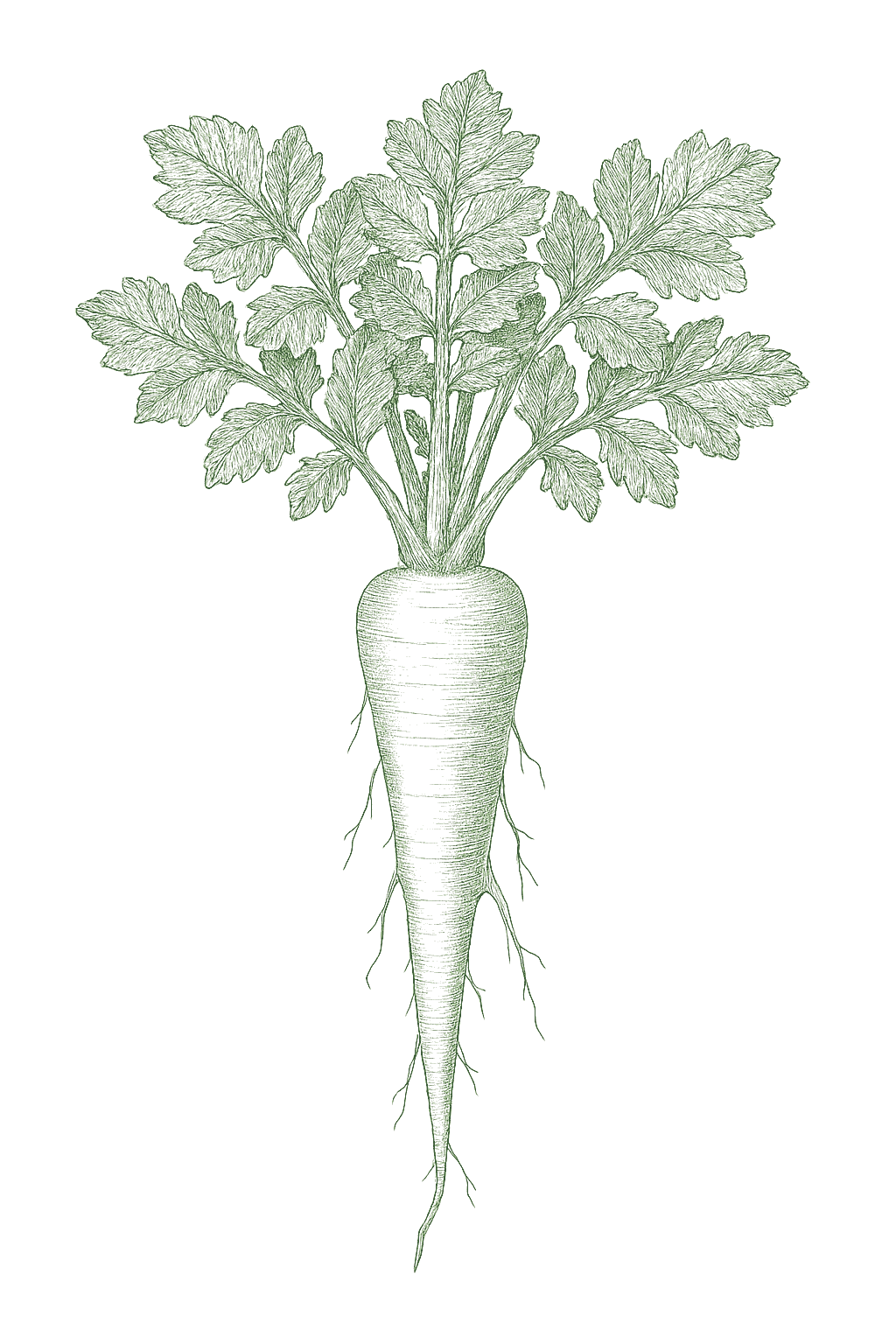
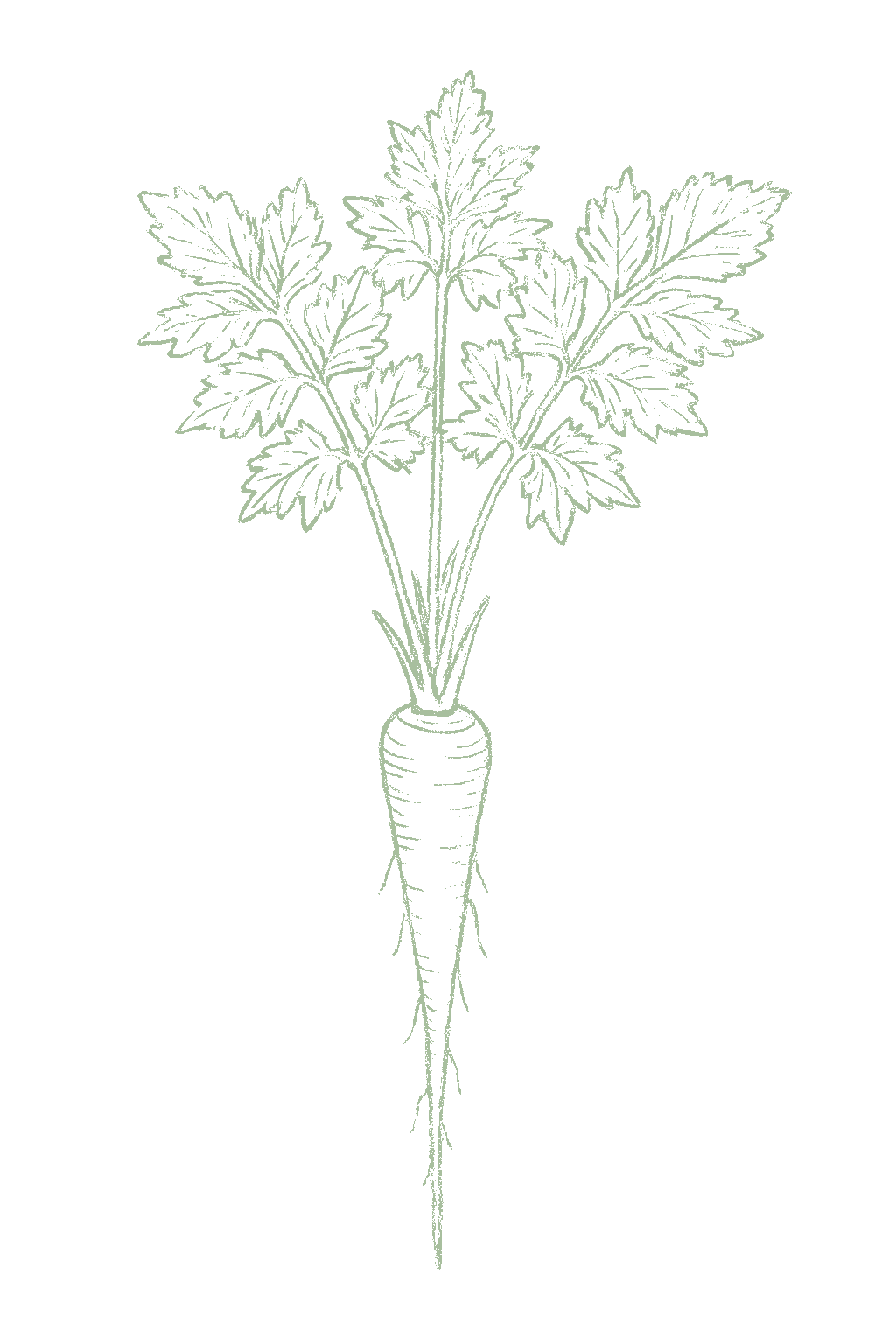
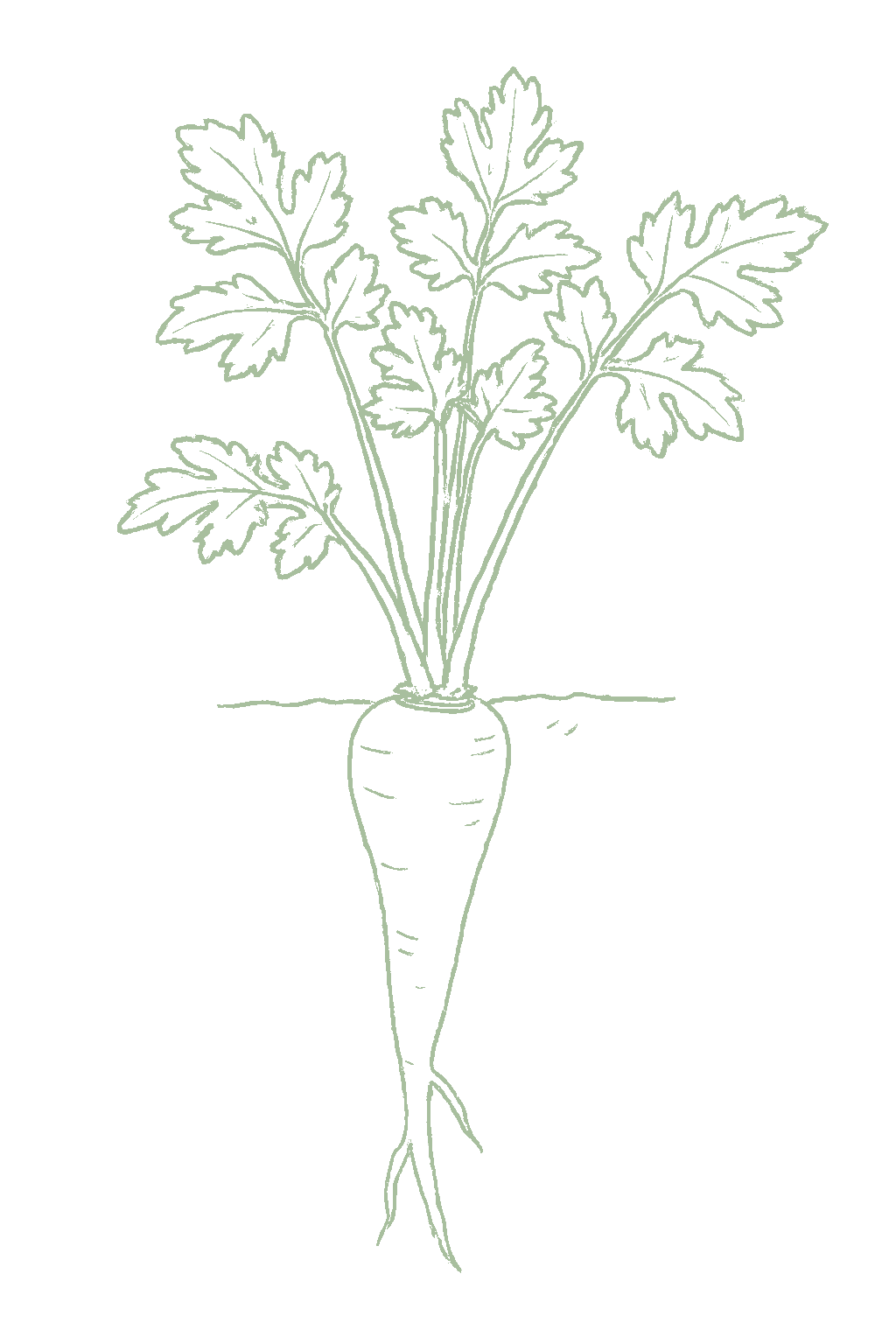
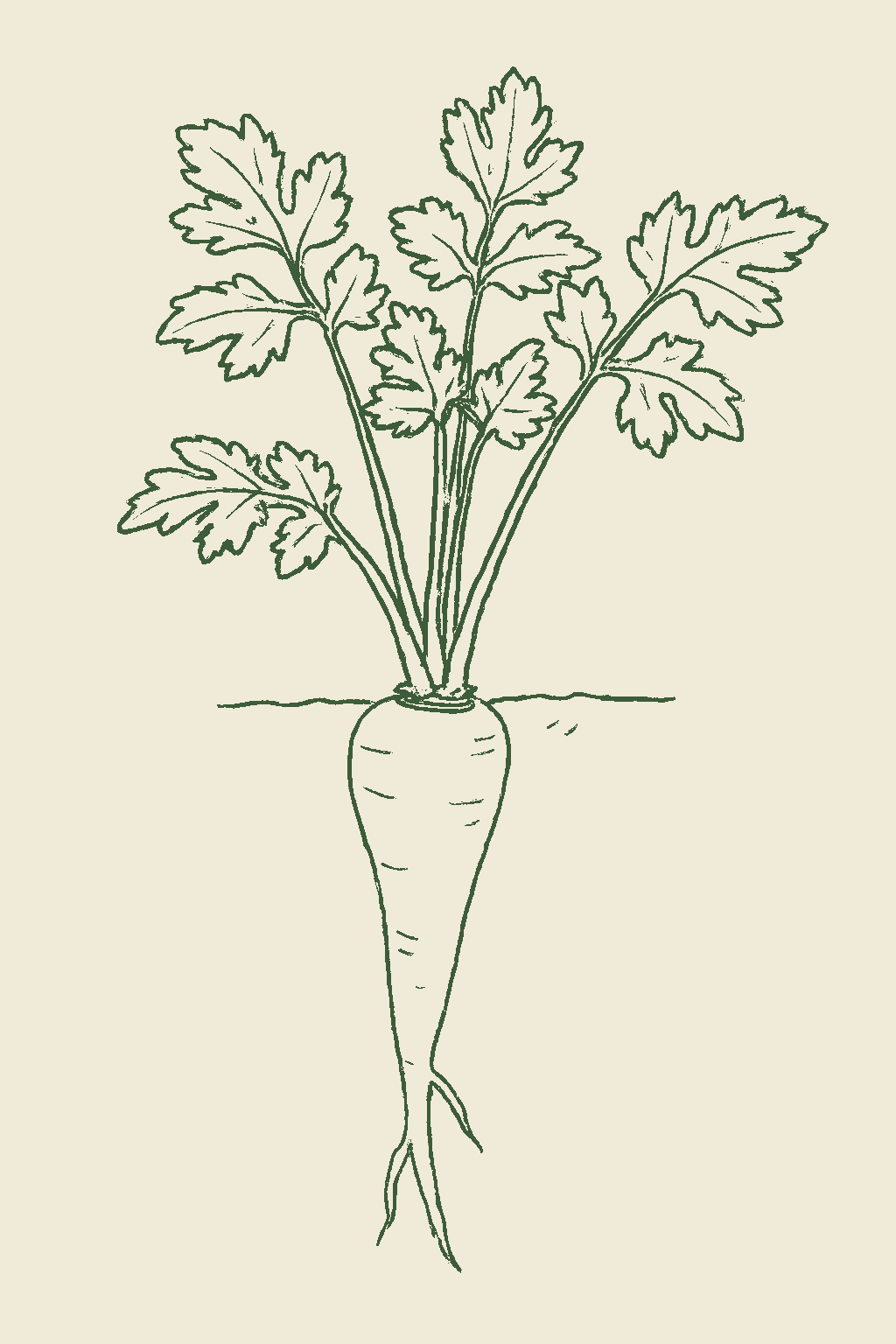
Parsnip mature plant
Fig. 01 · Parsnip, mature Zone 7
Mature in
100-130d
from transplant
Sunlight
Full sun to partial shade
6-8 hrs daily
Water
Regular
1 inch / week
Spacing
3-6"
between plants
Soil pH
6-7
slightly acidic
Today · in your zone

What's happening right now

July 24 · Zone 7 · Stage 01 · Germination

Off-season for parsnip in zone 7.

Your climate region in Zone 7
The season at a glance

Planting calendar

In Zone 7, parsnip can be planted March through April. Harvest runs November through March.

Jan
Feb
Mar
Apr
May
Jun
Jul
Aug
Sep
Oct
Nov
Dec
plant
too early
too early
plant
plant
too late
too late
too late
too late
too late
too early
too early
too early
harvest
harvest
harvest
harvest
harvest
harvest
indoors
plant out
harvest
Above-ground cropBest planted on a waning moon
The season, mapped

Seed to garden

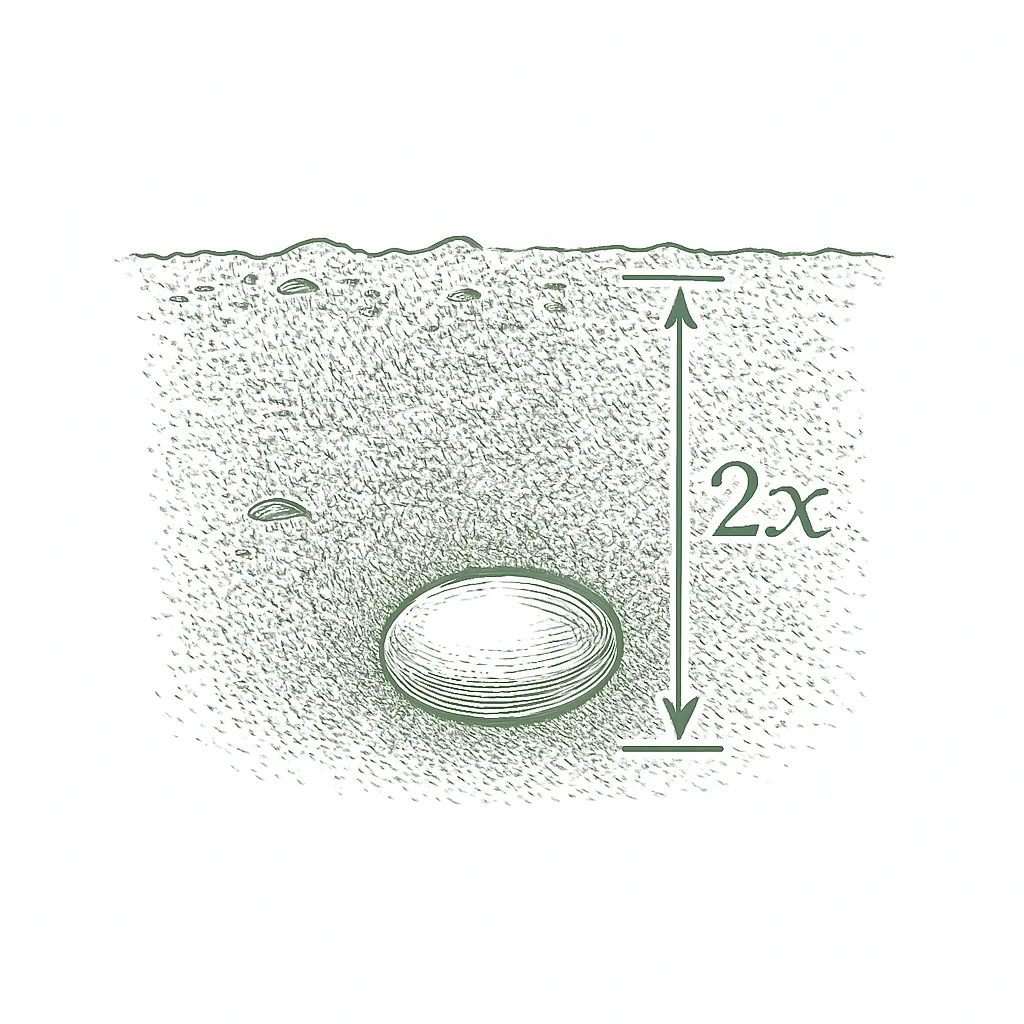
Plant parsnip seeds right in the garden where they will grow, not in pots, because the long root does not move well. The most important thing is to use fresh seed every single year: parsnip seed goes bad fast, and old seed is the number one reason parsnips fail to come up. Sow the seed about 1/2 inch deep once the soil has warmed to about 50°F, and keep the surface damp. Be very patient, because the seeds are slow, often 2 to 3 weeks and sometimes longer. A handy trick is to scatter a few fast radish seeds in the same row to mark where the parsnips are.Always direct-sow parsnips; they have a long taproot and resent transplanting, which forks and stunts the root. The single most important rule is fresh seed: parsnip seed does not store well and loses viability within a year, so buy new seed every season. (Clemson HGIC; RHS) Sow about 1/2 inch deep once the soil is workable and at least 50°F, keeping the surface evenly moist, because germination is slow and erratic, often 2 to 3 weeks and sometimes far longer. (UMN Extension; Clemson HGIC) Many growers mix in a few fast radish seeds to mark the slow row and break any crust. There is no indoor-start or hardening-off step.
  1. 01
    Sow outside
    Mar - Apr
  2. 02
    First harvest
    From Nov 1
    100-130 days from sowing
Start method
Direct
Soil temp
50-70°F
From seed to fruit

The growing journey

Stage 01 · Germination
01
Germination
Days 0-28 · current stage
Bare soil for a long while, then very thin seedlings with two skinny first leaves. Parsnips are extremely slow, often 2 to 3 weeks or more to come up, and they will not come up at all if the surface dries out or crusts over, or if the seed was old. If you scattered radish seeds as markers, those appear first.Bare soil for what feels like a very long time, then thread-thin seedlings with two narrow seed leaves. Parsnip emergence is famously slow and erratic, often 2 to 3 weeks and sometimes longer, and a dry or crusted surface or old seed will stop it entirely. Radishes interseeded as a marker will be up well before the parsnips.
Keep the top of the soil damp until the seedlings appear, watering gently and often so it never dries into a crust. Make sure you used fresh seed. Do not give up too soon, because parsnips really do take weeks to sprout.Keep the surface consistently moist until emergence, watering lightly and often, and never let a crust form. Use only fresh seed. Do not give up too early, since parsnip germination genuinely takes weeks.
FROM PLANT · Buy fresh parsnip seed every year. Parsnip seed goes bad fast, and old seed is the number one reason parsnips do not come up. (Clemson HGIC; RHS)Use fresh seed every year. Parsnip seed loses viability within a year, and old seed is the leading cause of a failed stand. (Clemson HGIC; RHS)
FROM PLANT · Parsnip seeds are very slow, often 2 to 3 weeks or longer, and the tiny sprouts cannot break through a dry crust. Keep the soil surface damp until they come up, and scatter a few fast radish seeds to mark the row. (UMN Extension; Clemson HGIC)Parsnip germination is slow and erratic, often 2 to 3 weeks or more, and the fine seedlings cannot break a dried crust. Keep the surface evenly moist until emergence and interseed fast radishes to mark the slow row. (UMN Extension; Clemson HGIC)
02
Seedling
Days 28-60
Thin little seedlings, often uneven, now growing their first true leaves. Where they came up crowded, they will need thinning so the roots have room.Uneven, fine seedlings putting out true leaves beyond the seed leaves. Because the stand is often patchy and crowded where it did come up, it needs thinning for good root development.
Thin the seedlings to a final 3 to 6 inches apart once they are growing well, snipping the extras at the soil line. Keep weeds out, because slow parsnips do not compete well, and keep the soil evenly damp.Thin to a final 3 to 6 inches once seedlings are well established, snipping at the soil line. Keep the bed weed-free, since slow parsnips compete poorly, and hold even moisture.
FROM PLANT · Thin the seedlings to a final 3 to 6 inches apart once they are growing well, snipping the extras at the soil line instead of pulling. Crowded parsnips grow small and twisted. (Clemson HGIC; Texas A&M AgriLife)Thin to a final 3 to 6 inches once the slow seedlings are established; snip at the soil line rather than pulling. Crowded parsnips grow small and forked. (Clemson HGIC; Texas A&M AgriLife)
03
Established
Days 60-110
Big, leafy tops that look a bit like celery, growing through the summer while the long root bulks up underground. This is the long, slow middle of the season.Broad, celery-like foliage and steady leaf growth through summer as the plant builds the long taproot below. The root deepens for months; this is the patient middle of a long season.
Keep the watering steady, about 1 inch a week, so the roots do not crack, and pull a little soil or mulch over the root tops as they show. They usually need no feeding. Wear gloves and long sleeves when handling the leaves on a sunny day, because parsnip sap can give some people a skin rash.Maintain even moisture, about 1 inch per week, to prevent cracking, and hill a little soil or mulch over the shoulders to suppress canker and greening. Feeding is rarely needed. Wear gloves and long sleeves when working among the foliage in bright sun, since parsnip sap can cause a skin rash.
FROM PLANT · Keep the water steady, about 1 inch a week counting rain, all season. Letting the soil dry out and then soaking it cracks the roots, so being steady matters more than giving a lot at once. (UMN Extension)Hold even moisture, roughly 1 inch per week including rain, through the long season. A dry-then-flooded cycle makes roots take up water fast and crack, so steadiness matters more than volume. (UMN Extension)
FROM PLANT · Wear gloves and long sleeves when you handle parsnip leaves on a sunny day. For some people, the juice from the leaves and stems causes a skin rash in sunlight. (Clemson HGIC)Wear gloves and long sleeves when handling parsnip foliage in bright sun: some people develop a rash from contact with the juice from the leaves and stems in sunlight (phytophotodermatitis). (Clemson HGIC)
04
Harvest
Days 110-180
Big roots, often 1 1/2 to 2 inches across at the top and 8 to 12 inches long, with the leafy tops starting to die down in fall. The real signal is cold weather: parsnips turn sweet after they have been through some frosts.Full-sized roots, often 1 1/2 to 2 inches across at the shoulder and 8 to 12 inches long, with the tops beginning to die back in fall. The cue to start is cold: flavor sweetens markedly after the roots sit through several frosts.
Wait until after a few frosts to harvest, because the cold makes parsnips sweet. Dig them up with a garden fork, loosening the soil first so the long roots do not snap. In cold areas, pile straw over the row and dig them through winter, but get any leftover ones out of the ground before they start growing again in spring.Wait for frost before harvesting in earnest, since cold converts starch to sugar. Loosen alongside the row with a spading fork before lifting, because the long roots snap easily. In cold regions, mulch heavily and dig through winter; lift any overwintered roots before they regrow in spring.
FROM PLANT · Wait until after a few frosts to dig your parsnips: the cold turns the root starch into sugar, and the later you dig them, the sweeter they get. No rush in fall. (UMN Extension; Texas A&M AgriLife)Wait for frost before harvesting in earnest: cold converts root starch to sugar, and the later parsnips are dug, the sweeter they are. There is no rush in fall. (UMN Extension; Texas A&M AgriLife)
FROM PLANT · Loosen the soil next to the row with a garden fork before pulling, because the long roots break easily. In cold areas, pile on straw and dig them through winter, but get any leftover roots out before they start growing again in spring. (UMN Extension)Loosen alongside the row with a spading fork before lifting, since the long roots snap easily. In cold regions, mulch heavily and dig through winter, and lift any overwintered roots before they regrow and bolt in spring. (UMN Extension)
Beginner
Know your soil

Your soil

Identify yours

Not sure what soil you have? Grab a small handful of damp soil from your garden bed and squeeze it. If it crumbles apart easily, it's sandy. If it holds together but breaks when you poke it, it's loam (what most vegetables want). If it stays in a hard, slippery ball, it's clay.

What this crop wants

Parsnips need deep, loose, stone-free soil more than almost any other vegetable, because the root grows very long (often 10 to 12 inches) and straight down. Dig and loosen the bed at least 12 inches deep and pull out every rock, clod, and root, since anything the parsnip hits makes it fork or grow stubby. Light, sandy soil grows the best roots; heavy clay grows short, twisted ones, so mix in compost or use a deep raised bed. Do not add fresh manure or heavy fertilizer, which causes forking and hairy roots. Aim for a soil pH around 6.0 to 7.0, and rake the surface fine so the slow seeds make good contact.

If your soil doesn't match

You have sandy soil

Mix 2-3 inches of compost into the top 6 inches of your bed before planting. Compost holds moisture (which sandy soil drains too fast) and adds the nutrients sandy soil tends to lack. Repeat each season. Compost breaks down over time.

You have clay soil

Mix 2-3 inches of compost AND a few inches of coarse sand or perlite into the top 6 inches of your bed. The compost feeds the plants; the sand breaks up the clay so air and water can move through. Don't add sand without compost. It can compact like concrete.

Containers and raised beds

If amending your soil sounds like too much work, or if your soil is heavy clay, full of rocks, or contaminated, build over it. A raised bed at least 12 inches deep filled with a 50/50 mix of compost and sandy loam gives you ideal growing soil with no battles. A 5-gallon container with quality potting mix does the same for one plant at a time. Both bypass your native soil entirely.

Learn more about your soil
The specs

Care guide

The numbers that matter, at a glance.

Sunlight
Full sun to partial shade · 6-8 hrs/day
Water
Regular
Spacing
3-6 inches
Soil
sandy loam, loam
Days to maturity
100-130 days from transplant
Soil pH
6 to 7
Container OK?
Yes · 5+ gal pot
Germination temp
50-70°F
Soil chemistry

Soil pH for parsnip

Preferred
6 to 7
Tolerated
5.5 to 7.5

Soil pH measures how acidic or alkaline your soil is, on a scale from 1 to 14 where 7 is neutral. Parsnips do best from about 6.0 to 7.0, slightly acidic to neutral. Very acidic soil, below about 5.5, holds them back and worsens problems like canker, so a soil test from your local extension office tells you your number and whether to add lime. Clemson suggests liming to about 6.0 to 6.5 for this group of root crops.Parsnips grow best at a slightly acidic to neutral pH of about 6.0 to 7.0. Clemson advises liming the bed to a pH of 6.0 to 6.5 for the carrot-beet-radish-parsnip group. (Clemson HGIC) Strongly acidic soil, below about 5.5, depresses growth and is associated with more root canker, while very alkaline soil reduces micronutrient availability. A standard soil test from your local extension office removes the guesswork before sowing; lime is worked in ahead of planting since it acts slowly.

Verified · 1 source View
Steady hand on the hose

Watering

When & how much
Frequency
Keep the soil evenly damp, and pay closest attention while the slow seeds are sprouting and later while the roots are bulking up. From planting until the sprouts appear (often 2 to 3 weeks), keep the surface moist so it does not dry into a hard crust. After that, give about 1 inch of water a week, counting rain.Even, consistent moisture is the rule, and it matters most during the long, slow germination window and again as the roots size up. From sowing until the seedlings are up, often 2 to 3 weeks, the surface must stay moist and uncrusted. Once established, parsnips want steady moisture rather than a wet-dry swing: aim for about 1 inch of water per week including rain.
Amount
About 1 inch of water a week, including rain, once the plants are growing. While the seeds are sprouting, just keep the top of the soil damp, not soggy.Roughly 1 inch per week including rainfall once established, adjusted up in heat or sandy soil. During germination the seedbed needs only enough to stay evenly moist near the surface, not soaked. (UMN Extension)
Method
Water gently at soil level, using a soft spray, soaker hose, or drip line. A hard blast from the hose can wash out the shallow seeds or pack the soil into a crust the slow sprouts cannot push through.Water at the base with a gentle setting, soaker hose, or drip line to keep the surface evenly moist without crusting the bed or washing out the shallow-sown seed.
Signs of trouble
Too much water
If the soil stays soaking wet, parsnips can rot and seedlings can damp off. Watch for yellow leaves, soft roots, and a constantly wet, sour-smelling bed. If you see these, water less and make sure the soil drains well.Constantly saturated soil invites damping-off and root rots and can worsen canker; yellowing tops, soft roots, and a sour, waterlogged bed are signs to back off. Poor drainage is the usual cause, which is why deep, loose, well-draining soil matters.
Too little water
Dry, cracked soil on top, droopy or dull leaves, and slow growth mean the parsnips need more water. Letting them go bone dry and then soaking them cracks the roots, so keep the watering steady.Dry, cracked surface soil, dull or wilting tops, and slow growth signal too little water. A dry spell followed by heavy watering makes the roots take up water fast and split, the most common parsnip watering fault.
Feeding rhythm

Feeding

Frequency
low
Type
Balanced
When to start
Work a low-nitrogen balanced fertilizer such as 5-10-10 into the bed before sowing; an optional light side-dressing once plants are about 4 inches tall.

Parsnips do not need much feeding, and too much nitrogen actually hurts them, growing big leafy tops and forked, hairy roots instead of one clean root. Mix a low-nitrogen balanced fertilizer like 5-10-10 into the bed before planting, and give at most one light feeding when the plants are about 4 inches tall. Skip fresh manure, and use finished compost instead of strong fertilizer.Parsnips are light feeders and especially sensitive to excess nitrogen, which drives leafy tops and forked, hairy roots at the expense of a clean taproot. Clemson recommends a 5-10-10 fertilizer worked in before planting at about 30 pounds per 1,000 square feet, with an optional side-dressing of a nitrogen source such as calcium nitrate when plants are about 4 inches tall. (Clemson HGIC) Avoid fresh manure entirely, and lean on well-finished compost rather than concentrated nitrogen.

N · P · K = 5-10-10

The three numbers on a fertilizer bag are nitrogen, phosphorus, and potassium (N-P-K). Parsnips do best with a low-nitrogen blend where the first number is smaller, like 5-10-10, mixed into the soil before planting. Do not use high-nitrogen fertilizer, which gives leafy tops and forked, hairy roots instead of good ones.Parsnips want steady phosphorus and potassium for root development and only modest nitrogen, so a low-first-number blend such as 5-10-10 worked into the bed before sowing suits them well. Clemson gives a rate near 30 pounds per 1,000 square feet. Excess nitrogen is the classic parsnip mistake, producing lush tops and forked, hairy roots.

Try 5-10-10
Who grows well together

Companion planting

Parsnips are slow and easygoing neighbors. A common trick is to sow fast radishes in the same row: they come up quickly, mark where the slow parsnips are, and are pulled long before the parsnips need the space. Onions and other alliums make tidy neighbors and their smell is widely said to help mask carrot-family root pests. The main thing to keep apart from parsnips is other carrot-family crops like carrots, celery, and dill, which share the same pests and diseases. As always, do not trust every companion chart online, since many of their claims have never been tested. Parsnip companions are largely traditional rather than trial-proven. The most practical pairing is interplanting fast radishes as a row marker for the slow-germinating parsnip, a long-standing technique. Alliums (onions, leeks) are commonly listed as good neighbors for root crops on space and scent-masking grounds. The clearest caution is grouping parsnip with other Apiaceae (carrot, celery, parsley, dill): they share carrot rust fly and soilborne problems, so they are kept apart and rotated. As University of Minnesota's review stresses, most companion claims are tradition rather than tested science, so treat them as sensible defaults and watch your own results.

Other
Radishes (as a row marker)
Parsnip seeds are very slow, so gardeners sow quick radishes in the same row. The radishes pop up in days and show you where the row is, and you pull and eat them long before the parsnips get big. A classic trick for a slow crop.Sowing a few fast radishes along the parsnip row is the classic marker interplant: radishes emerge in days, flag the slow row so it is not hoed by mistake, help keep the surface from crusting, and are pulled well before the parsnips size up. A space-and-timing benefit, not a pest one. Traditional
Onions and other alliums
Onions, leeks, and garlic grow tall and narrow with shallow roots, so they tuck in beside parsnips without crowding them, and their strong smell is widely used to help confuse carrot-family root pests. A popular, space-saving pairing.Alliums are a classic interplant for carrot-family roots: shallow-rooted and upright, they share the bed without competing for the parsnip's space, and their sulfur volatiles are widely credited with masking the crop from carrot rust fly. The space benefit is solid; the pest-deterrence is plausible but not proven for parsnip specifically. Well-grounded
Keep apart from
Carrots, celery, and other carrot-family crops Parsnips, carrots, celery, parsley, and dill are all in the same plant family and share the same pests and diseases, especially carrot rust fly and root canker. Growing them right next to each other just helps those problems spread, so keep them apart and rotate them around the garden.The clearest avoid for parsnip is its own family: carrot, celery, parsley, and dill share carrot rust fly (whose larvae predispose roots to Itersonilia canker) and soilborne problems, which build up when the Apiaceae are grown together or in succession. Keep them apart in space and on a three-year rotation. Research-backed
Provenance tagged inline · see methodology for the labeling system Key
Harvest signals

When to pick

Parsnips are ready when the roots are full sized, often 1 1/2 to 2 inches across at the top and 8 to 12 inches long, with the leafy tops dying down in fall, usually about 100 to 120 days after planting. But the real signal is cold weather, not a date: parsnips get much sweeter after a few frosts, as the cold turns starch into sugar, so there is no rush. They keep right in the ground, and in cold areas you can pile straw over the row and dig them through winter and into early spring, and they taste sweeter the longer they wait. Loosen the soil next to the row with a garden fork before pulling, because the long roots break easily. Dig any you left in over winter before they start growing again in spring, or the root turns woody. Wear gloves and long sleeves when handling the leaves on a sunny day, since the sap can give some people a rash.Parsnips are ready when the roots have sized up, often 1 1/2 to 2 inches across at the shoulder and 8 to 12 inches long, with the tops beginning to die back in fall, usually around 100 to 120 days from sowing. But the real cue is cold, not the calendar: flavor sweetens markedly after the roots sit through several frosts as starch converts to sugar, so there is no rush to lift them. In mild soil they hold for weeks, and in cold regions a heavy straw mulch lets them overwinter for pull-as-needed harvest through winter and into early spring, growing sweeter the longer they wait. Loosen the soil beside the row with a spading fork before pulling, because the long roots snap easily. Lift any overwintered roots before they regrow in spring, since once the plant bolts the root turns woody. Wear gloves and long sleeves when handling the foliage in bright sun, as the sap can cause a skin rash.

Verified · 3 sources View
Yield

What to expect

Each parsnip plant gives you one parsnip, the single long root it grows. So it helps to think about how much row you plant rather than per plant. Spaced 3 to 6 inches apart, a foot of row gives you roughly 2 to 4 big roots.One root per plant. Parsnips are not a cut-and-come-again crop, so yield is best thought of by row length: at a 3 to 6 inch final spacing, expect roughly 2 to 4 large roots per foot of row, each often 8 to 12 inches long.

Parsnips do not keep producing after you pick them, since each plant makes one root. A planting is ready about 100 to 120 days after sowing, and then you can leave the roots in the ground and dig them across fall and winter. You plant just once, not in batches.There is no repeat harvest. A sowing matures over a long season, roughly 100 to 120 days, and is then held in the ground and lifted across fall and winter as needed. There is no succession sowing; the single spring or fall crop is the whole year's supply. Parsnips are grown fresh from seed each year, so your first planting can do just as well as any later one. What decides your results is deep, rock-free soil, fresh seed, and keeping the bed evenly damp while the slow seeds sprout.Parsnips are grown fresh from seed each season for the root, harvested before the plant's second-year flowering, so there is no first-year-versus-later distinction as with perennials. The first sowing performs as well as any, provided the soil is deep and stone-free, the seed is fresh, and moisture stays even through the long germination.

What changes yield
Fresh seed: parsnip seed loses viability within a year, so old seed is the leading cause of a failed stand.Soil depth and looseness: stones, clods, and compaction fork and stunt the long taproot.Even moisture through a long germination and season: drying-then-soaking splits roots and a dried crust fails the stand.Cold at the finish: roots that go through several frosts convert starch to sugar and taste far sweeter.Nitrogen balance: excess nitrogen grows tops and forked, hairy roots at the expense of a clean root.
Verified · 2 sources View
Pick your variety

Recommended varieties

Pick a parsnip variety to match your soil and your disease pressure. Long old kinds like Hollow Crown need deep, loose soil to grow well; shorter kinds (like Lancer or Avonresister) handle shallower or heavier soil and pots better. If root canker (a brown rot on the shoulders) is a problem where you garden, choose a canker-resistant variety such as Avonresister, Cobham Improved Marrow, Gladiator, or Javelin. Harris Model and All American are good dependable choices. Whatever you grow, buy fresh seed every year, because parsnip seed does not keep.Parsnip variety choice turns on root length versus your soil depth and on canker resistance. Long heirlooms like Hollow Crown need deep, stone-free soil to size up, while shorter modern types (Lancer, Avonresister) suit shallower or heavier ground and containers. Where Itersonilia canker recurs, choose a resistant or tolerant cultivar (Avonresister, Cobham Improved Marrow, Gladiator, Javelin). (RHS) Harris Model and All American are reliable all-rounders. Most parsnips mature in about 100 to 120 days and all need fresh seed each year.

Harris Model: a long-standing white, smooth-skinned standard with good length and flavor
Hollow Crown: an old open-pollinated heirloom with long, broad-shouldered roots for deep soil
All American: a dependable, uniform main-crop type
Gladiator (F1): a vigorous hybrid with good canker tolerance and smooth roots
Javelin (F1): a uniform hybrid with some canker resistance
Cobham Improved Marrow: a sweet variety with useful canker resistance
Lancer / Avonresister: shorter, smooth types, with Avonresister bred for canker resistance
Off the vine

Storing your harvest

Room temp
Not good for more than a few days. Left out, parsnips go soft and dry. Cut off the tops, keep out only what you will eat soon, and store the rest cold.Poor for more than a few days. At room temperature parsnip roots lose moisture and soften and the cut tops wilt; trim the tops and refrigerate or store cold. Counter storage is only for what you will use within a couple of days.
Fridge
This is the best way for everyday storage. Cut off the leafy tops, leave the roots unwashed, and put them in a loosely closed or vented plastic bag in the crisper drawer. They stay good for several weeks, often a month or more.The best everyday option. Trim the tops, leave the roots unwashed, and store them in a perforated or loosely closed plastic bag in the crisper drawer, where high humidity and cold keep them firm for several weeks to a month or more.
Freezer
You can freeze parsnips for the long term, but blanch them first (a quick dip in boiling water, then ice water). If you freeze them raw they turn mushy. Peel and cut them, boil about 3 minutes, cool fast in ice water, drain, and freeze. They keep about 10 to 12 months.Good for long-term use after blanching. Frozen raw, parsnips turn mushy and lose flavor; peel, dice or slice, blanch in boiling water about 3 minutes, cool quickly in ice water, drain, and freeze. Quality holds for roughly 10 to 12 months. Many cooks freeze them cooked or as part of soups.
Verified · 2 sources View
From the garden to the kitchen

Recipes to try

When something goes wrong

Common problems

Seeds did not come up
01 of 05
What happened Few or no seedlings came up. The number one reason is old seed, because parsnip seed goes bad fast. On top of that, the seed is slow (often 2 to 3 weeks or more) and the tiny sprouts cannot push through a dried, crusted surface, so a bed that dried out, seeds planted too deep, or soil that was too cold are the usual culprits.Few or no seedlings emerged. The overwhelmingly common cause is old seed: parsnip seed loses viability within a year. Beyond that, the seed is naturally slow (often 2 to 3 weeks or more) and the fine seedlings cannot break a dried or crusted surface, so a bed that dried out during germination, was sown too deep, or stayed too cold accounts for most failures. Next season Use fresh seed every year and sow a bit thickly. Keep the soil surface damp from planting until the seedlings appear, sow shallow (about 1/2 inch), wait until the soil is around 50°F, and scatter a few fast radish seeds to mark the row.Buy fresh seed every year and sow generously. Keep the surface evenly moist from sowing to emergence, sow shallowly (about 1/2 inch), wait for soil near 50°F, and interseed fast radishes to mark the row and keep the surface open.
Forked or twisted parsnipsForked or twisted roots
02 of 05
What happened The root split into several prongs or grew crooked because it hit something hard as it grew down: a rock, a clod, packed soil, or a lump of fresh manure or fertilizer. Moving a started parsnip does the same thing.The long taproot split into prongs or grew crooked because it met an obstruction as it drove down: a stone, clod, hardpan, or pocket of fresh manure or concentrated fertilizer. Transplanting parsnips causes the same damage. Next season Before planting, dig the bed deep, break up clods, and pull out rocks (at least 12 inches down). Skip fresh manure and heavy fertilizer, use finished compost, and always plant the seeds where they will grow. In rocky or heavy soil, grow short parsnip types or a deep raised bed.Work the bed deep and fine, removing stones and clods to at least 12 inches; avoid fresh manure and heavy nitrogen, use well-finished compost, and always direct-sow. On heavy or rocky ground, grow shorter cultivars or use a deep, loose raised bed.
Split or cracked parsnipsSplit or cracked roots
03 of 05
What happened The parsnips cracked open, usually because the soil went dry and then got soaked: the root drinks fast and splits. Roots left in the ground a very long time also crack more easily.Roots cracked lengthwise, usually because a dry spell was followed by heavy watering or rain: the root takes up water rapidly and the tissue splits. Over-mature roots left long in the ground are also prone to cracking. Next season Water steadily, about 1 inch a week, instead of letting the soil go dry and then soaking it, and mulch to keep the moisture even.Keep moisture even, roughly 1 inch per week, rather than letting the bed swing from dry to flooded, and mulch to buffer the soil.
Brown rotten patches on the tops of the rootsBrown or black rot on the shoulders (canker)
04 of 05
What happened The tops and shoulders of the roots developed brown to black rotten patches, which can spread into the whole root. This is parsnip canker, a fungal disease that is worse in cool, wet weather and on roots left late, and it gets in more easily where carrot rust fly maggots have damaged the root. (UMass)Reddish-brown to black cankers formed on the crown and shoulders of the roots, sometimes letting other organisms rot the whole root. This is Itersonilia canker, a fungal disease worse in cool, wet weather and on late-harvested crops, and carrot rust fly damage predisposes roots to it. (UMass) Next season Grow a canker-resistant variety, do not plant parsnips or their relatives in the same bed for three years, mound a little soil over the root shoulders during the season, keep carrot rust fly down, and avoid soggy soil. Sprays do not fix root canker. (UMass)Choose resistant varieties (Avonresister, Cobham Improved Marrow), rotate out of the carrot family for three years, hill soil over the shoulders through the season, control carrot rust fly, avoid overly wet beds, and bury old parsnip residue. Fungicides do not control root cankers. (UMass)
Parsnip shoots up a flower stalk and the root goes woodyPlant flowers and root turns woody (bolting)
05 of 05
What happened Parsnip is a biennial, which means it lives two years: the first year it makes the root you eat, and the second year it sends up a tall flower stalk and the root turns tough and woody. If you leave overwintered parsnips in the ground into spring, they bolt and the roots are ruined.Parsnip is a biennial: in its first year it stores energy in the root, and in its second year it sends up a tall flower stalk and the root turns fibrous and woody. Overwintered roots left in the ground past spring will bolt, ruining the root. An unusually cold spell on a first-year crop can occasionally trigger early bolting. Next season Dig parsnips in their first fall and winter, and get any you left in over winter out of the ground before they start growing again in spring. Plant at the right time so the seedlings do not get a hard cold shock early.Harvest the root in its first fall through winter, and dig any overwintered roots before growth resumes in spring. Use fresh seed and sow at the recommended time to avoid a hard cold check on tiny seedlings.
Verified · 3 sources View
The usual suspects

Pests & diseases

Pests
Carrot rust fly
P · 01
Symptoms The lower part of the root gets rusty, reddish-brown tunnels and scars, sometimes with small maggots inside. Bad damage stunts the plant and lets root rot get in. Because parsnips sit in the ground for months, the damage can build up.Rusty, reddish-brown tunnels and surface scarring honeycomb the lower root, often with the maggots present; heavy feeding stunts plants and the wounds open the door to parsnip canker. Because parsnip is in the ground a long time, late-season damage can be significant. Cause The maggots of the carrot rust fly (also called carrot fly), a small fly whose young tunnel into carrot-family roots. There are usually two or more rounds a year, and the longer the roots are in the ground, the worse it gets. (USU Extension; RHS)The larvae of the carrot rust fly (carrot fly), a small fly whose maggots mine the roots of carrot-family crops. There are typically two or more generations a season, and damage worsens the longer roots stay in the ground. (USU Extension; RHS) Organic treatment You cannot fix roots that are already tunneled, so this is about prevention. Pull and remove damaged roots, do not leave leftovers in the bed, and harvest before the late-season flies build up.There is no rescue for tunneled roots; management is preventive. Lift damaged roots and do not leave culls in the bed, and harvest before late-season generations build. Naturally occurring controls and good rotation reduce pressure. Prevention Cover the bed with a fine insect mesh or row cover right after sowing to keep the flies from laying eggs. This is the best home defense. (RHS) Move parsnips away from where carrots or their relatives grew, and do not leave roots in the ground longer than you need to where this pest is bad.A floating row cover or fine insect mesh laid over the bed at sowing keeps the egg-laying flies off and is the most effective home defense. (RHS) Rotate parsnips away from where carrot-family crops grew, avoid leaving roots in the ground longer than needed where pressure is high, and time sowings to dodge peak fly flights.
Leafminers
P · 02
Symptoms You will see pale, squiggly trails or blotchy patches inside the leaves, where the little larvae feed between the top and bottom of the leaf. Since you eat the parsnip root, not the leaves, this is mostly a looks problem.Pale, winding tunnels or blotches appear inside the leaves where the larvae feed between the leaf surfaces. On parsnip, grown for the root, this is mostly cosmetic and rarely affects the harvest unless young plants are heavily mined. Cause The young of small leafmining flies that tunnel inside the leaves. They can have several rounds in a season. (USU Extension)The larvae of leafmining flies that tunnel within the foliage of carrot-family and other crops. Several generations can occur in a season. (USU Extension) Organic treatment Pick off and throw away (do not compost) leaves with trails in them, which gets rid of the larvae. Sprays usually do not work because the pest is tucked inside the leaf, and healthy plants grow past light damage.Pick off and destroy mined leaves as they appear, which removes the larvae; sprays are largely ineffective because the larvae are protected inside the leaf. Vigorous plants outgrow light damage. Prevention A row cover keeps the flies off, and clearing old leaves and weeds nearby cuts down the pest. Pulling off the first trailed leaves you see helps too.A floating row cover excludes the egg-laying flies, and clearing crop debris and weed hosts reduces carryover. Removing the first mined leaves promptly breaks the cycle.
Aster leafhopper (aster yellows vector)
P · 03
Symptoms The little hopping insect does not do much direct damage itself. The problem is that it carries the aster yellows disease from plant to plant, which makes the tops yellow, twisted, and bunched and the roots thin, hairy, and bitter (see the aster yellows entry).The leafhopper itself does little direct feeding damage; the concern is that it transmits aster yellows. Plants infected by way of the leafhopper show yellowed, twisted, bunchy tops and slender, hairy, bitter roots (see the aster yellows disease entry). Cause The aster leafhopper, a small insect that spreads the aster yellows disease as it feeds from plant to plant. (Wisconsin Horticulture Extension; USU Extension)The aster leafhopper, a small wedge-shaped insect that moves the aster yellows phytoplasma between plants as it feeds. (Wisconsin Horticulture Extension; USU Extension) Organic treatment Trying to spray the leafhoppers to stop aster yellows usually does not work and is not recommended. Instead, pull out infected plants and weedy hosts right away. (Wisconsin Horticulture Extension)Controlling the leafhopper to prevent aster yellows is generally not effective and not recommended; the practical response is to remove infected plants and weed reservoirs promptly. (Wisconsin Horticulture Extension) Prevention Pull out infected plants and weeds like dandelions that hold the disease, and a row cover can help keep the hoppers off a small bed. (Wisconsin Horticulture Extension)Remove infected plants and nearby broadleaf weeds such as dandelion that harbor the phytoplasma, and a floating row cover can reduce leafhopper access to a small planting. (Wisconsin Horticulture Extension)
Diseases
Itersonilia canker (parsnip canker)
D · 01
Symptoms Brown, black, or purple-black rotten patches form mostly on the crown and shoulders (the top) of the root, and the rot can spread until the whole root is ruined. Leaves can get small orange-brown spots with a pale halo. It is worst on roots left late in the season. (UMass)Reddish-brown, black, or purple-black cankers form mainly on the crown and shoulders of the root, and other microbes may follow until the whole root collapses in rot. Leaves can show small orange to brown lesions with a pale green halo. Disease is worst on late-harvested crops. (UMass) Cause A fungus (Itersonilia perplexans, also called black canker) that thrives in cool, wet weather. Carrot rust fly maggots make it worse by wounding the roots, and root tops sticking out of the soil let it in. (UMass)The fungus Itersonilia perplexans, also called black canker, favored by cool, wet weather. Carrot rust fly larvae predispose roots to infection by wounding them, and exposed shoulders are an entry point. (UMass) Organic treatment There is no cure once a root has it, and sprays do not work on root canker. Dig and use the good roots and throw out the rotten ones. The fix is in how you grow the next crop. (UMass)There is no cure for infected roots, and fungicide sprays do not control root cankers. Lift and use sound roots, and discard rotted ones; management is preventive and cultural. (UMass) Prevention Grow a canker-resistant variety, do not plant parsnips or their relatives in the same bed for two to three years, mound a little soil over the root shoulders during the season, keep carrot rust fly down, avoid soggy soil, and clear and bury old parsnip plants after harvest. (UMass)Choose resistant varieties (Avonresister, Cobham Improved Marrow), rotate out of the carrot family for two to three years, hill soil over the shoulders through the season, control carrot rust fly, avoid waterlogged beds, harvest before very late in cold wet spells, and bury old parsnip residue by deep cultivation to lower inoculum. (UMass)
Aster yellows
D · 02
Symptoms Infected plants get yellow or reddish, twisted, bunched-up tops, and the root stays thin and grows a beard of fine hairy roots, often tasting bitter. There is no cure. (Wisconsin Horticulture Extension)Infected plants show yellowed, reddened, twisted, and bunchy tops, and the taproot stays slender and grows a mass of fine hairy rootlets; affected roots often taste bitter. There is no cure. (Wisconsin Horticulture Extension) Cause A bacteria-like organism (a phytoplasma) carried from plant to plant by the aster leafhopper. It also lives in many weeds and flowers, which act as a source. (Wisconsin Horticulture Extension)The aster yellows phytoplasma, a bacterium-like organism that lives in the plant's phloem and is spread plant to plant by the aster leafhopper. It also infects many weeds and ornamentals that serve as reservoirs. (Wisconsin Horticulture Extension) Organic treatment There is no cure. Pull out any plant you think is infected, plus weeds like dandelions, to slow the spread. Spraying the insect that carries it usually does not help. (Wisconsin Horticulture Extension)There is no cure. Remove plants suspected of infection promptly, including weed hosts such as dandelion, to limit spread; trying to control the leafhopper vector is generally ineffective. (Wisconsin Horticulture Extension) Prevention Keep weeds down, pull infected plants right away, and use a row cover on a small bed to keep the leafhoppers off. (Wisconsin Horticulture Extension)Keep down broadleaf weeds that host the phytoplasma, remove infected plants as soon as they are spotted, and use a floating row cover on small plantings to reduce leafhopper access. (Wisconsin Horticulture Extension)
Damping-off
D · 03
Symptoms Seeds that never come up, or tiny seedlings that flop over and die with a dark, pinched, wet-looking spot at the base of the stem. You see it as bare gaps in the row. Because parsnips are so slow to sprout, they are exposed to this for a long time.Seeds fail to emerge, or the slow young seedlings topple and collapse with a dark, water-soaked, pinched spot at the stem base. Losses show as bare gaps in the row. Parsnip's long germination prolongs the vulnerable window the pathogens exploit. Cause Soil organisms (mostly Pythium and Rhizoctonia) that attack sprouting seeds and baby seedlings, worst in cool, soggy, poorly drained soil and when you overwater. Old seed and a hard, wet seedbed make it worse.Soilborne pathogens, chiefly Pythium and Rhizoctonia species, favored by cool, wet, poorly drained soil and overwatering. Old or weak seed and a crusted, slow-draining seedbed increase losses. Organic treatment Seedlings that have flopped will not recover. If it shows up, stop watering for a bit to let the surface dry, and clear away the fallen seedlings. There is no good home cure, so this one is about prevention.Affected seedlings cannot be saved. If it appears, stop watering and let the surface dry somewhat, and clear collapsed seedlings; there is no home cure once it takes hold, so prevention is the lever. Prevention Use fresh seed, wait until the soil is warm enough (about 50°F) and not cold and soggy, keep the seedbed damp but not soaking, do not plant too deep, and improve drainage or use a raised bed on heavy soil.Sow fresh seed into warm-enough (about 50°F), well-drained soil rather than cold, wet ground, keep the seedbed evenly moist without saturating it, do not sow too deep, and improve drainage or use raised beds on heavy soil.
Verified · 6 sources View
Seasoned
Where to plant next year

Crop rotation

Move your parsnips to a different spot each year, and do not put them (or relatives like carrots, celery, and dill) back in the same bed for about three years. This keeps shared pests and the root canker disease from piling up. Parsnips do well following beans or peas, which add nitrogen, or following leafy greens.Rotate parsnips on a three-year cycle, keeping them and all other carrot-family crops out of a bed for two to three seasons after they are grown there. This breaks the buildup of carrot rust fly and the soilborne fungus behind Itersonilia canker, which is worse where parsnip residue and the family persist. (UMass) Following a legume or a light feeder suits parsnips; following a heavily manured crop does not, because residual nitrogen causes forking.

Family
Apiaceae
Years between
3 years
in the same bed
Avoid following
Do not grow parsnips where you grew parsnips, carrots, celery, parsley, or dill last year. These are all in the same plant family and share the same pests (carrot rust fly) and root diseases (canker), which build up in the soil over time. Also avoid beds that got a lot of manure for the last crop, since leftover nitrogen makes parsnips fork and grow hairy. Wait about three years before parsnips or their relatives go back into the same bed.Do not plant parsnips where another carrot-family crop (Apiaceae) grew the previous season, including parsnip, carrot, celery, parsley, dill, or fennel, since they share carrot rust fly and soilborne diseases such as Itersonilia canker that build up where the family is grown repeatedly. Avoid beds heavily manured for the previous crop, because residual nitrogen drives forking and hairy roots. The standard guideline is a three-year gap before parsnips or their relatives return to a bed; deep cultivation that buries old parsnip residue also lowers canker inoculum.
Plant after
Legumes such as beans and peas that have added nitrogenAlliums such as onions and garlicLeafy greens such as lettuce
Verified · 2 sources View
In the app · pre-launch

When plant taps you on the shoulder

The plant app sends a timely reminder at every critical moment of your parsnip season. The wording adjusts to whichever you pick: beginner or seasoned. Here are three you'll see in Zone 7.

p
plant
Last frost arrives
Time to plant parsnips
Plant fresh parsnip seed right in the garden once the soil has warmed to about 50°F. Sow about 1/2 inch deep and keep the surface damp. They are slow to come up.
p
plant
2 weeks after planting date
Parsnips take a long time to come up
Parsnip seeds often take 2 to 3 weeks or longer to come up. Keep the soil surface damp until they appear, and do not give up too soon. If nothing comes up, the seed was probably old.
p
plant
6 weeks after planting date
Time to thin your parsnips
Once the seedlings are growing well, thin them to 3 to 6 inches apart, snipping the extras at the soil line. Crowded parsnips stay small and twisted.
Get personalized alerts.

plant sends the right notification at exactly the right moment, for your zone, your weather, your crops. Founding members lock the rate forever.

Back the Kickstarter →
Ask the gardener

Common questions

Got a question we missed?

We're building this guide with real growers. Got a question we missed? Ask here. We read every one and add the best answers right to this page.

Grown this before?

Share a tip

Learned something the hard way? Pass it on. Real growers' tips make this guide better for the next person, and we credit you by name when yours goes live.

Seasoned
Spot something wrong?

Report a problem

If you've grown this crop and you see a date, a temperature, a companion claim, or a recommendation that doesn't match your experience, tell us. Real growers' corrections make this guide better for the next person.

How we built this guide

Methodology & sources

Every date, temperature, spacing, and recommendation on this page is sourced from university cooperative extension publications, peer-reviewed agricultural research, NOAA climate data, and direct extension calendars. Where claims are softer (traditional gardening wisdom not formally documented), we say so.

Research-backed Documented in cooperative extension publications or peer-reviewed research
Well-grounded A known agronomic principle, but not formally tested for this specific pair
Traditional Time-tested gardening wisdom, limited formal research support
Last reviewed
June 29, 2026
Data version
crops_data_final · v1.0 · schema 2.9
Sources cited on this page
16 publications
Verified entries
Companion-planting claims tagged inline · zone dates verified against 5+ extensions
See all sources cited on this page
  • University of Minnesota Extension umn_ext
  • University of Maryland Extension umd_ext
  • Cornell Cooperative Extension cornell_ext
  • Iowa State University Extension iastate_ext
  • Michigan State University Extension msu_ext
  • NC State Extension ncsu_ext
  • Penn State Extension psu_ext
  • U. of Illinois Urbana-Champaign Extension uiuc_ext
  • UC Davis Postharvest Center ucd_postharvest
  • Texas A&M AgriLife Extension tamu_agrilife
  • Virginia Cooperative Extension 426-331 vce_426_331
  • Piedmont Master Gardeners piedmont_mg
  • UGA Vegetable Garden Calendar uga_calendar
  • Clemson Home & Garden Information Center clemson_hgic
  • UC IPM Statewide IPM Program uc_ipm
  • NOAA 1991-2020 Climate Normals noaa_normals

Growing notes, weekly.

Zone-aware seasonal nudges, what's worth planting now, and the occasional recipe from the harvest. No spam, ever.

Vol. 003 · Parsnip · plant.lifestyle