Today · in your zone
What's happening right now
Off-season for parsnip in zone 9.
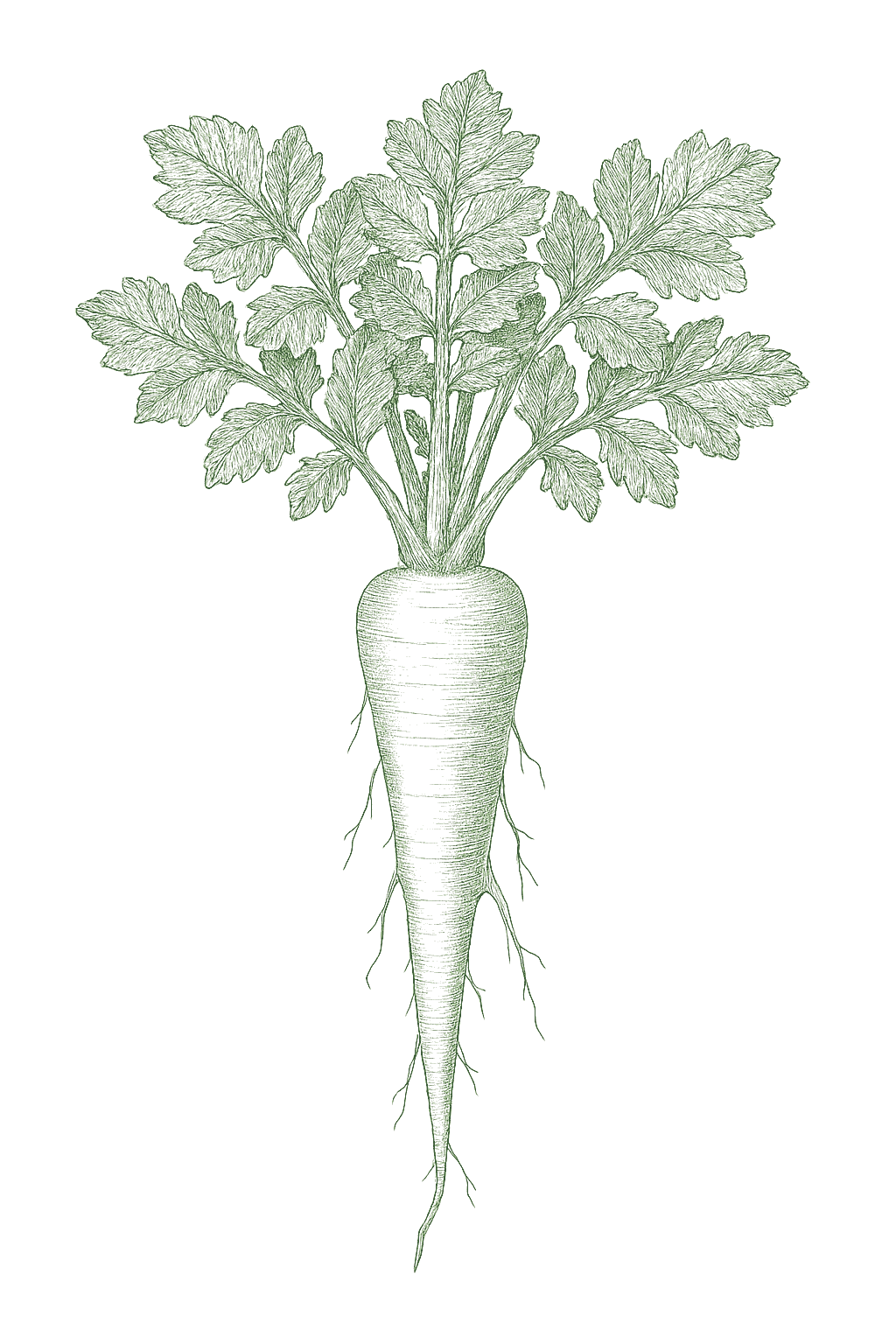
Parsnips are a long-season, cool-weather root vegetable in the carrot family. The part you eat is one long, sweet, cream-colored root. Always plant the seeds right where they will grow, and use fresh seed every single year, because parsnip seed goes bad fast and old seed is the main reason parsnips fail. Be patient: the seeds are very slow, often 2 to 3 weeks or more to come up, and they will not break through a dry crust, so keep the surface damp. Parsnips need deep, loose, rock-free soil for their long root (often 8 to 12 inches) and take a long time, about 100 to 120 days. They are a biennial, which means if you leave them past their first winter they shoot up a flower and the root turns woody, so dig overwintered ones before spring. The best thing about parsnips is that frost makes them sweet: the cold turns starch into sugar, so you harvest them after frost and can leave them in the ground all winter, digging them as you need them, sweeter every week. In hot-summer areas, grow them in fall for a winter harvest. One safety note: the leaves and juice can give some people a skin rash in sunlight, so wear gloves on sunny days. Parsnip (Pastinaca sativa) is a long-season, cool-climate root crop in the carrot family, grown for its sweet, ivory taproot. It is direct-sown only, and the single most important rule is fresh seed: parsnip seed loses viability within a year, so old seed is the leading cause of failure. Germination is notoriously slow and erratic, often 2 to 3 weeks and sometimes far longer, and the fine seedlings cannot push through a crusted surface, so the seedbed must stay evenly moist for weeks. The crop needs deep, loose, stone-free soil for its long root (commonly 8 to 12 inches) and grows for roughly 100 to 120 days, longer for a late crop. Parsnip is a biennial grown as an annual for the root: it stores energy the first year and bolts to flower the second, so overwintered roots are dug before spring regrowth. Its defining trait is cold-sweetening: frost converts root starch to sugar, so parsnips are harvested after hard frost and are famously left in the ground over winter, dug as needed and growing sweeter the longer they wait. Where summers are hot, parsnip is a fall-sown, winter-harvested crop. One handling note: the foliage and sap can cause a skin rash in sunlight, so gloves are worn when working among the plants on bright days.
Off-season for parsnip in zone 9.
Zone 9 averages a last frost around March 1. Within Zone 9, the colder half (9a, winters down to 20°F) runs about a week later. The warmer half (9b, winters down to 25°F) runs about a week earlier. The plant app picks your subzone from your ZIP.
| Subzone | Last spring | First fall | Growing days | Winter min | Fruits reliably |
|---|---|---|---|---|---|
| 9a | Mar 8 | Nov 24 | ~261 | 20-25°F | Yes · two seasons |
| 9b | Feb 28 | Nov 30 | ~275 | 25-30°F | Yes · two seasons |
Averages from 8 weather stations per subzone, drawn from NOAA 1991-2020 Climate Normals. Your actual frost date can vary by up to two weeks based on elevation, proximity to water, and local topography.
In Zone 9, parsnip can be planted September through October, skipping the summer heat. Harvest runs January through March.
In Zone 9, parsnip can be planted October through November, skipping the summer heat. Harvest runs January through March.
In Zone 9, parsnip can be planted September through October, skipping the summer heat. Harvest runs January through March.
In Zone 9, parsnip can be planted May through June. Harvest runs October through January.
In Zone 9, parsnip can be planted March through July. Harvest runs September through January.
In Zone 9, parsnip can be planted May through June. Harvest runs October through March.
In Zone 9, parsnip can be planted February through March, skipping the summer heat. Harvest runs November through December.
In Zone 9, parsnip can be planted September through December. Harvest runs December through April.
In Zone 9, parsnip can be planted September through October, skipping the summer heat. Harvest runs December through February.
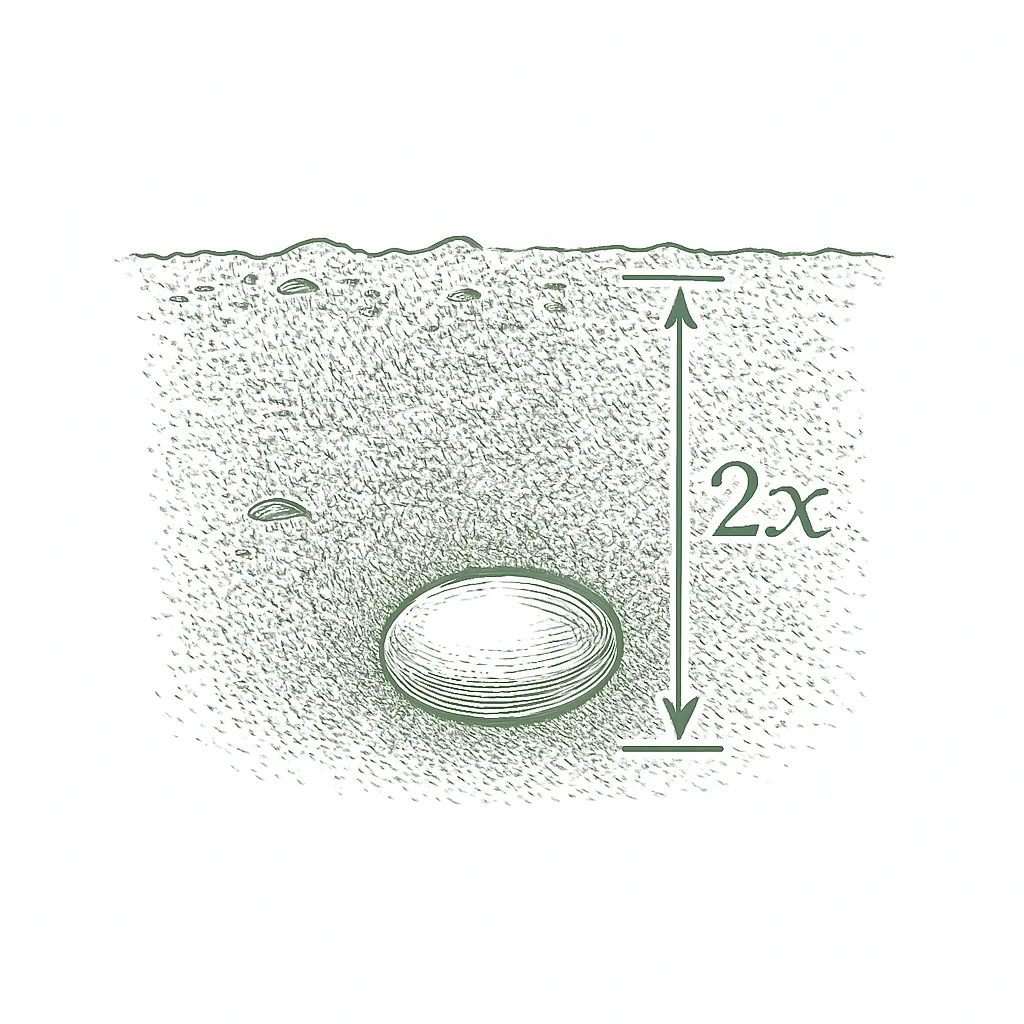
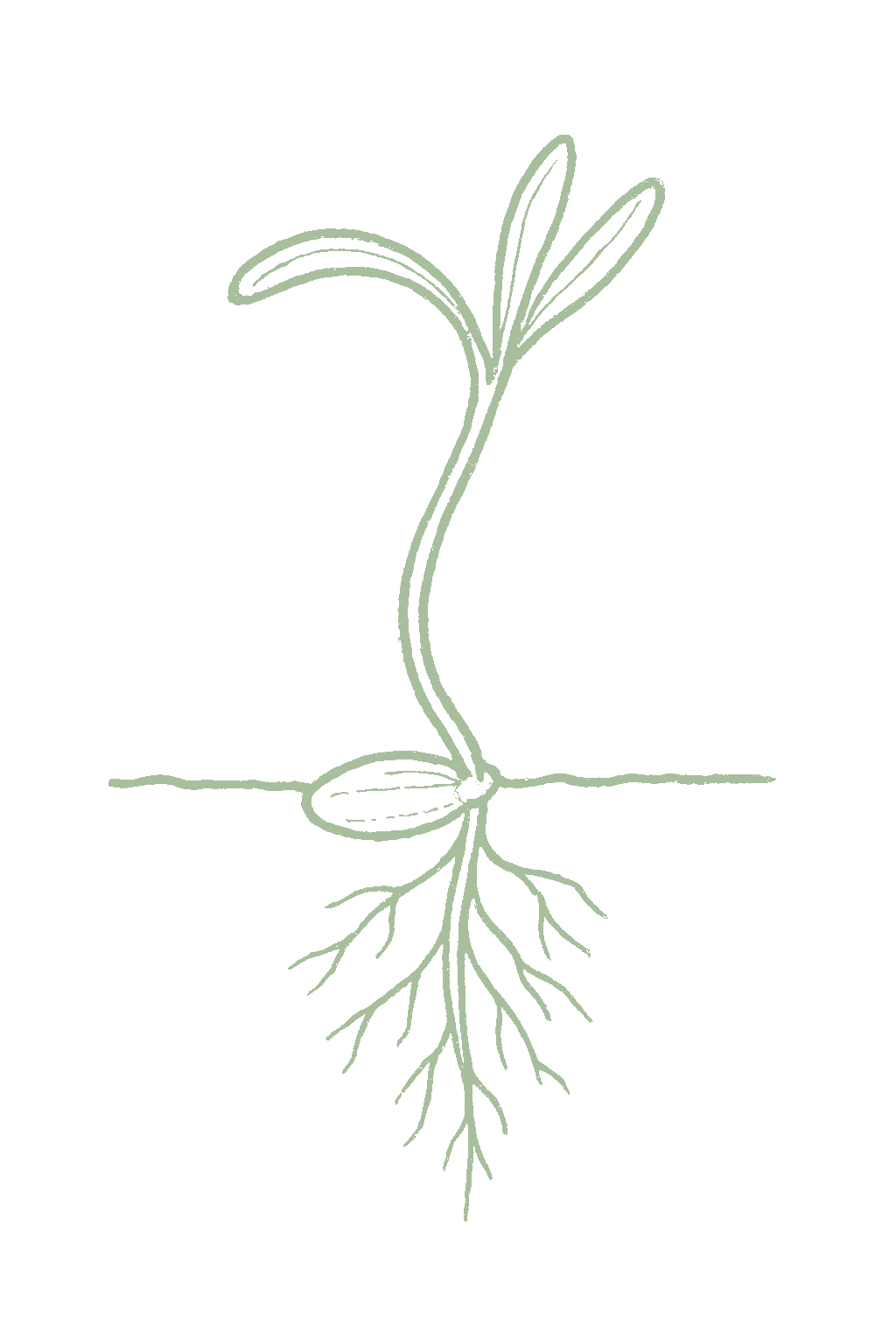
Plant parsnip seeds right in the garden where they will grow, not in pots, because the long root does not move well. The most important thing is to use fresh seed every single year: parsnip seed goes bad fast, and old seed is the number one reason parsnips fail to come up. Sow the seed about 1/2 inch deep once the soil has warmed to about 50°F, and keep the surface damp. Be very patient, because the seeds are slow, often 2 to 3 weeks and sometimes longer. A handy trick is to scatter a few fast radish seeds in the same row to mark where the parsnips are.Always direct-sow parsnips; they have a long taproot and resent transplanting, which forks and stunts the root. The single most important rule is fresh seed: parsnip seed does not store well and loses viability within a year, so buy new seed every season. (Clemson HGIC; RHS) Sow about 1/2 inch deep once the soil is workable and at least 50°F, keeping the surface evenly moist, because germination is slow and erratic, often 2 to 3 weeks and sometimes far longer. (UMN Extension; Clemson HGIC) Many growers mix in a few fast radish seeds to mark the slow row and break any crust. There is no indoor-start or hardening-off step.

Not sure what soil you have? Grab a small handful of damp soil from your garden bed and squeeze it. If it crumbles apart easily, it's sandy. If it holds together but breaks when you poke it, it's loam (what most vegetables want). If it stays in a hard, slippery ball, it's clay.
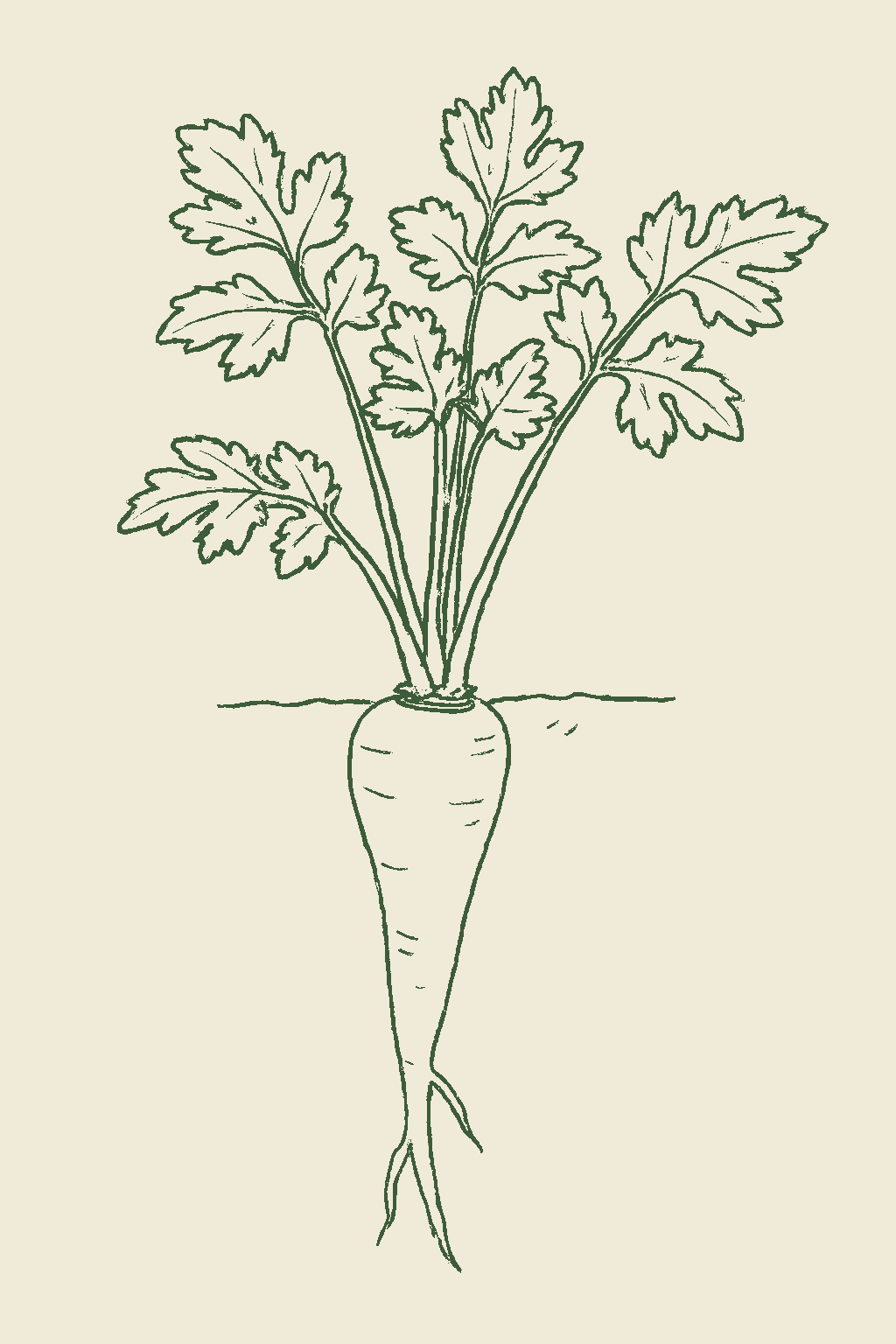
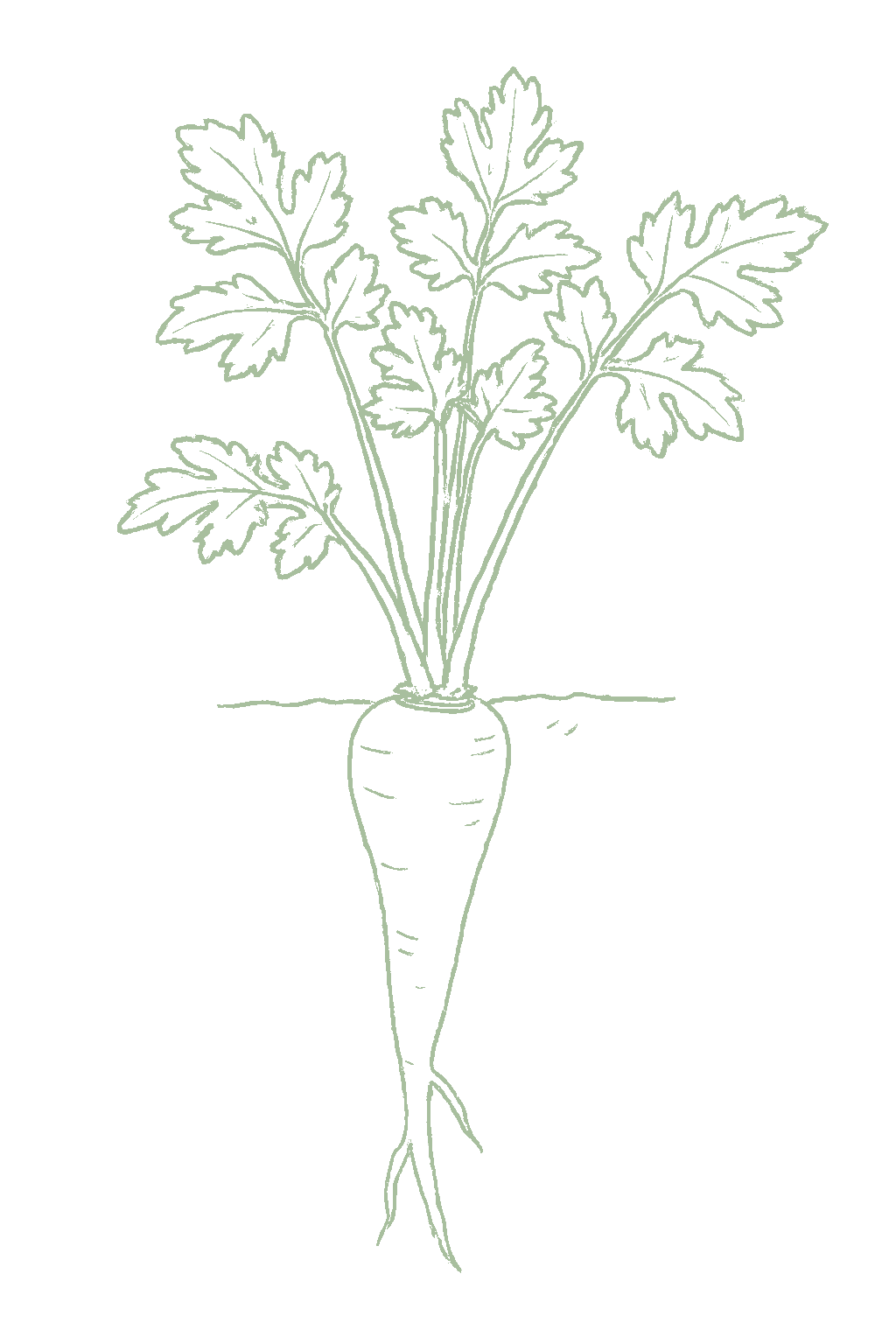
Parsnips need deep, loose, stone-free soil more than almost any other vegetable, because the root grows very long (often 10 to 12 inches) and straight down. Dig and loosen the bed at least 12 inches deep and pull out every rock, clod, and root, since anything the parsnip hits makes it fork or grow stubby. Light, sandy soil grows the best roots; heavy clay grows short, twisted ones, so mix in compost or use a deep raised bed. Do not add fresh manure or heavy fertilizer, which causes forking and hairy roots. Aim for a soil pH around 6.0 to 7.0, and rake the surface fine so the slow seeds make good contact.
Mix 2-3 inches of compost into the top 6 inches of your bed before planting. Compost holds moisture (which sandy soil drains too fast) and adds the nutrients sandy soil tends to lack. Repeat each season. Compost breaks down over time.
Mix 2-3 inches of compost AND a few inches of coarse sand or perlite into the top 6 inches of your bed. The compost feeds the plants; the sand breaks up the clay so air and water can move through. Don't add sand without compost. It can compact like concrete.
If amending your soil sounds like too much work, or if your soil is heavy clay, full of rocks, or contaminated, build over it. A raised bed at least 12 inches deep filled with a 50/50 mix of compost and sandy loam gives you ideal growing soil with no battles. A 5-gallon container with quality potting mix does the same for one plant at a time. Both bypass your native soil entirely.
The numbers that matter, at a glance.
Parsnips can grow in containers, but you need a deep one, deeper than the root will grow long (so at least 15 inches), and a short, stubby variety. Use loose potting mix, make sure the pot drains, keep the soil evenly moist, and be patient, since parsnips are slow and stay in the pot for months. In cold areas you can leave the pot out and dig sweet roots through winter.Parsnips are growable but not ideal in containers because of their root length. Use a deep pot or bag (15 inches or more), a short stump-rooted cultivar, loose potting mix, and drainage holes, and keep moisture even through the long season. The payoff in cold climates is overwintering: the frost-hardy roots can be dug from the pot through winter, gaining sweetness with cold, if the pot is insulated against freezing solid.
Parsnips are very cold-hardy, so in cold areas you can leave the pot outside and dig the roots through late fall and winter, when they are sweetest. Move the pot against a wall or wrap it so the soil does not freeze into a solid block, or tip the roots into damp sand in a cool garage. They keep for months.Parsnips overwinter well in containers in cold climates: the roots are very frost-hardy and sweeten with cold, so the pot can be left in place and dug through late fall and winter. Insulate the pot (against a wall, wrapped, or plunged) so the limited soil volume does not freeze solid, which makes digging impossible, or lift the roots into damp sand in a cool, frost-free spot near 32 to 40°F for storage.
Ask what your balcony or roof can carry
A balcony or roof can only hold so much weight. Before you set heavy pots there, ask a building architect what it can safely carry.Illinois Extension's guidance is to consult a building architect about weight limits before placing heavy pots on a balcony or rooftop garden. It gives no weight figure.
Never grow food in a container with anything toxic in it
Many kinds of containers can be used. Whatever you choose, keep anything toxic out of it, especially if you are growing food.Colorado State accepts nearly any container material but warns against using a container that holds toxic materials, especially for edible plants. Illinois adds that a vegetable container should be free of chemicals toxic to plants or people, and urges caution with treated lumber when growing food. If you cannot account for what a repurposed container once held, that alone is a reason to keep food out of it.
Secure hanging containers well
Fasten hanging baskets and window or rail boxes securely. Think about what is below them too, since they can drip on people or things underneath.Illinois Extension asks growers to secure hanging containers well and to think through the safety issues of hanging them. Placement matters too, since a hanging container can drip onto people or belongings below.
Soil pH measures how acidic or alkaline your soil is, on a scale from 1 to 14 where 7 is neutral. Parsnips do best from about 6.0 to 7.0, slightly acidic to neutral. Very acidic soil, below about 5.5, holds them back and worsens problems like canker, so a soil test from your local extension office tells you your number and whether to add lime. Clemson suggests liming to about 6.0 to 6.5 for this group of root crops.Parsnips grow best at a slightly acidic to neutral pH of about 6.0 to 7.0. Clemson advises liming the bed to a pH of 6.0 to 6.5 for the carrot-beet-radish-parsnip group. (Clemson HGIC) Strongly acidic soil, below about 5.5, depresses growth and is associated with more root canker, while very alkaline soil reduces micronutrient availability. A standard soil test from your local extension office removes the guesswork before sowing; lime is worked in ahead of planting since it acts slowly.
Parsnips do not need much feeding, and too much nitrogen actually hurts them, growing big leafy tops and forked, hairy roots instead of one clean root. Mix a low-nitrogen balanced fertilizer like 5-10-10 into the bed before planting, and give at most one light feeding when the plants are about 4 inches tall. Skip fresh manure, and use finished compost instead of strong fertilizer.Parsnips are light feeders and especially sensitive to excess nitrogen, which drives leafy tops and forked, hairy roots at the expense of a clean taproot. Clemson recommends a 5-10-10 fertilizer worked in before planting at about 30 pounds per 1,000 square feet, with an optional side-dressing of a nitrogen source such as calcium nitrate when plants are about 4 inches tall. (Clemson HGIC) Avoid fresh manure entirely, and lean on well-finished compost rather than concentrated nitrogen.
The three numbers on a fertilizer bag are nitrogen, phosphorus, and potassium (N-P-K). Parsnips do best with a low-nitrogen blend where the first number is smaller, like 5-10-10, mixed into the soil before planting. Do not use high-nitrogen fertilizer, which gives leafy tops and forked, hairy roots instead of good ones.Parsnips want steady phosphorus and potassium for root development and only modest nitrogen, so a low-first-number blend such as 5-10-10 worked into the bed before sowing suits them well. Clemson gives a rate near 30 pounds per 1,000 square feet. Excess nitrogen is the classic parsnip mistake, producing lush tops and forked, hairy roots.
Parsnips are slow and easygoing neighbors. A common trick is to sow fast radishes in the same row: they come up quickly, mark where the slow parsnips are, and are pulled long before the parsnips need the space. Onions and other alliums make tidy neighbors and their smell is widely said to help mask carrot-family root pests. The main thing to keep apart from parsnips is other carrot-family crops like carrots, celery, and dill, which share the same pests and diseases. As always, do not trust every companion chart online, since many of their claims have never been tested. Parsnip companions are largely traditional rather than trial-proven. The most practical pairing is interplanting fast radishes as a row marker for the slow-germinating parsnip, a long-standing technique. Alliums (onions, leeks) are commonly listed as good neighbors for root crops on space and scent-masking grounds. The clearest caution is grouping parsnip with other Apiaceae (carrot, celery, parsley, dill): they share carrot rust fly and soilborne problems, so they are kept apart and rotated. As University of Minnesota's review stresses, most companion claims are tradition rather than tested science, so treat them as sensible defaults and watch your own results.
Parsnips are ready when the roots are full sized, often 1 1/2 to 2 inches across at the top and 8 to 12 inches long, with the leafy tops dying down in fall, usually about 100 to 120 days after planting. But the real signal is cold weather, not a date: parsnips get much sweeter after a few frosts, as the cold turns starch into sugar, so there is no rush. They keep right in the ground, and in cold areas you can pile straw over the row and dig them through winter and into early spring, and they taste sweeter the longer they wait. Loosen the soil next to the row with a garden fork before pulling, because the long roots break easily. Dig any you left in over winter before they start growing again in spring, or the root turns woody. Wear gloves and long sleeves when handling the leaves on a sunny day, since the sap can give some people a rash.Parsnips are ready when the roots have sized up, often 1 1/2 to 2 inches across at the shoulder and 8 to 12 inches long, with the tops beginning to die back in fall, usually around 100 to 120 days from sowing. But the real cue is cold, not the calendar: flavor sweetens markedly after the roots sit through several frosts as starch converts to sugar, so there is no rush to lift them. In mild soil they hold for weeks, and in cold regions a heavy straw mulch lets them overwinter for pull-as-needed harvest through winter and into early spring, growing sweeter the longer they wait. Loosen the soil beside the row with a spading fork before pulling, because the long roots snap easily. Lift any overwintered roots before they regrow in spring, since once the plant bolts the root turns woody. Wear gloves and long sleeves when handling the foliage in bright sun, as the sap can cause a skin rash.
Each parsnip plant gives you one parsnip, the single long root it grows. So it helps to think about how much row you plant rather than per plant. Spaced 3 inches apart, a foot of row gives you roughly 4 big roots.One root per plant. Parsnips are not a cut-and-come-again crop, so yield is best thought of by row length: at a 3 inch final spacing, expect roughly 4 large roots per foot of row, each often 8 to 12 inches long.
Parsnips do not keep producing after you pick them, since each plant makes one root. A planting is ready about 100 to 120 days after sowing, and then you can leave the roots in the ground and dig them across fall and winter. You plant just once, not in batches.There is no repeat harvest. A sowing matures over a long season, roughly 100 to 120 days, and is then held in the ground and lifted across fall and winter as needed. There is no succession sowing; the single spring or fall crop is the whole year's supply. Parsnips are grown fresh from seed each year, so your first planting can do just as well as any later one. What decides your results is deep, rock-free soil, fresh seed, and keeping the bed evenly damp while the slow seeds sprout.Parsnips are grown fresh from seed each season for the root, harvested before the plant's second-year flowering, so there is no first-year-versus-later distinction as with perennials. The first sowing performs as well as any, provided the soil is deep and stone-free, the seed is fresh, and moisture stays even through the long germination.
Pick a parsnip variety to match your soil and your disease pressure. Long old kinds like Hollow Crown need deep, loose soil to grow well; shorter kinds (like Lancer or Avonresister) handle shallower or heavier soil and pots better. If root canker (a brown rot on the shoulders) is a problem where you garden, choose a canker-resistant variety such as Avonresister, Cobham Improved Marrow, Gladiator, or Javelin. Harris Model and All American are good dependable choices. Whatever you grow, buy fresh seed every year, because parsnip seed does not keep.Parsnip variety choice turns on root length versus your soil depth and on canker resistance. Long heirlooms like Hollow Crown need deep, stone-free soil to size up, while shorter modern types (Lancer, Avonresister) suit shallower or heavier ground and containers. Where Itersonilia canker recurs, choose a resistant or tolerant cultivar (Avonresister, Cobham Improved Marrow, Gladiator, Javelin). (RHS) Harris Model and All American are reliable all-rounders. Most parsnips mature in about 100 to 120 days and all need fresh seed each year.
Mains · 60m · Serves 4
The ladder troubleshoots from the gentlest solution to the strongest. Start with the gentlest option and only move on when and if it doesn't work.
Sow parsnips somewhere other than the bed that grew carrots, parsley, or another carrot-family crop, and keep the family moving around the garden from year to year. Good rotation, along with the natural controls already at work in your garden, brings the background pressure down before you get to the timing and the cover.Rotate the crop off any ground that carried carrot-family plants. With two or more fly generations in a season and roots that stay in the bed for months, rotation and the naturally occurring controls set the baseline pressure that the timing and exclusion steps then work against.
Where the calendar gives you a choice, shift your sowing date to dodge the peak flights, the stretches when adult flies are out laying eggs. Those dates move with the region and the season, so work from a local window rather than one carried in from somewhere else.Set sowing against local flight periods rather than a fixed calendar date. There are typically two or more generations a season, and the late ones do the damage that shows up at lifting, so what this step decides is which flights the crop is standing through. Published windows shift by region and belong as starting points to confirm.
Pull the roots once they are ready instead of leaving them in the ground longer than you need to, and where this fly runs bad locally, get the crop out before the late-season flies build up. Damage adds up the whole time a root sits there, and the tunnel wounds also give parsnip canker a way in.Lift on schedule rather than holding mature roots in the bed, and where pressure is high, harvest ahead of the late-season generations. Injury accumulates with time in the ground, and the wounds are an entry point for Itersonilia canker, so the harvest date caps two problems rather than one.
A root that is already tunneled cannot be repaired, so this step is cleanup rather than rescue. Lift the damaged roots and carry them off the bed instead of leaving culls, the rejects you were not going to eat, sitting in the row.Mined roots are past saving, so the work here is removal: lift the damaged ones and clear culls off the bed instead of leaving them in the row. Doing it at lifting, while you are already sorting the crop, is the practical moment for it.
Lay fine insect mesh or a floating row cover over the bed as soon as you sow, and tuck the edges down all around. It stops the adult flies from reaching the row to lay eggs, and it is the most effective defense a home garden has here. Put it over rotated ground rather than last year's carrot bed, since a cover on the wrong bed can hold flies underneath with your plants.Fine mesh or row cover laid at sowing and sealed at the edges is the strongest home defense on this pest, because it denies the egg-laying females access to the row. It has to be on from sowing, given that parsnip stands through several flights, and it belongs on rotated ground rather than over a bed that carried the family last season.
No spray for this one. Prevention is the control.
The ladder troubleshoots from the gentlest solution to the strongest. Start with the gentlest option and only move on when and if it doesn't work.
Pick off leaves with pale trails or blotches as soon as you see them, and throw them away instead of composting them; the larva, the young insect feeding inside, goes out with the leaf. A spray has little chance against something feeding between the two surfaces of a leaf, and a plant growing well shrugs off light mining anyway.Taking mined leaves off as they appear removes the larvae with the tissue, which is why it works where a contact spray is largely ineffective against a feeder sitting between the leaf surfaces. Getting the first mined leaves off promptly is what interrupts the sequence, and vigorous plants absorb light mining without it reaching the root you are growing.
Clear the weeds around the bed that these flies also live on, and rake up old crop leaves nearby. Both give the pest somewhere to carry over between plantings, which is how a clean bed picks the problem back up.Keeping the bed edges free of weed hosts, alongside clearing crop debris, cuts the carryover that several generations a season otherwise ride on. The relationship is host-specific rather than general tidiness, so it is worth knowing which weeds near you hold leafminers before clearing ground that was doing no harm.
A row cover, a light fabric laid over the bed, keeps the adult flies from landing to lay eggs in the first place. On parsnip it earns its keep mainly over young plants, since heavy mining while they are small is the case that can reach the harvest.Row cover excludes the egg-laying adults. Given that mining on an established parsnip is mostly cosmetic on a crop grown for its root, the case for covering is strongest early, when heavy mining on small plants is what actually costs harvest.
No spray for this one. Prevention is the control.
The ladder troubleshoots from the gentlest solution to the strongest. Start with the gentlest option and only move on when and if it doesn't work.
Spraying the hoppers to head off aster yellows generally does not work and is not the recommended route, so put the effort into removal instead. Pull plants showing the disease as soon as you notice them, which leaves fewer infected plants for the hoppers to pick it up from and carry down the row.Vector control aimed at preventing aster yellows is generally ineffective and not recommended, which leaves roguing as the practical response: take out symptomatic plants promptly. The insect does little direct feeding damage, so what is being managed is acquisition, and a symptomatic plant left standing is where that happens.
Pull the broadleaf weeds near your bed, dandelion above all. They can harbor the disease this insect moves around, so a weedy edge keeps a supply of it right beside the crop.Clear dandelion and other broadleaf weeds from the planting's edges. They harbor the phytoplasma, so they hold a reservoir that roguing the crop alone does not reach, and on this problem the reservoir is the half of the system a home garden can act on.
On a small planting, a row cover, a light fabric over the bed, can cut how many leafhoppers get to your plants. Treat it as reducing their access rather than shutting them out, and as a better use of effort than spraying, which generally does not pay off here.Row cover reduces leafhopper access on a small planting, which is the exclusion available for a vector that spraying does not reliably suppress. It is scale-limited by nature: practical over a bed, harder to justify down a long row.
No spray for this one. Prevention is the control.
The ladder troubleshoots from the gentlest solution to the strongest. Start with the gentlest option and only move on when and if it doesn't work.
If canker has turned up in your beds before, pick a resistant variety when you order seed. Avonresister and Cobham Improved Marrow are the two named for it, and variety is a choice you can only make before sowing.Where canker recurs, start from a resistant cultivar; Avonresister and Cobham Improved Marrow are the named ones. Resistance lowers what the cultural steps have to carry through the cool, wet weather that favors the fungus, which is also the weather a late-harvested crop stands in.
Keep parsnips and their carrot-family relatives out of the same bed for two to three years. Old parsnip remains are part of what carries the fungus to the next crop, so the bed needs the break as much as the plants do.Two to three years out of the carrot family. The reservoir here is the bed itself, since residue from the previous crop carries inoculum forward, and a same-family replant sets a susceptible crop down on top of it.
Do not put parsnips in a bed that stays waterlogged; improve the drainage or grow them in a raised bed if your ground holds water. The fungus does best in cool, wet conditions, so soggy soil is working in its favor all season.Site the crop off waterlogged ground, open up the drainage, or raise the bed on heavy soil. Itersonilia perplexans is favored by cool, wet conditions, so a bed that holds water keeps the crown and shoulders, where the cankers form, sitting in what the pathogen wants.
Lift the roots before the season runs very late, especially through a cold, wet spell. Canker is worst on parsnips left in the ground late, so harvesting on time keeps the crop out of the weather that drives it.Harvest before the season runs very late, particularly in cold, wet spells; the disease is worst on late-harvested crops, so lifting on time shortens exposure rather than doing anything for an infection already underway. It pairs with keeping carrot rust fly down, since larval tunnels are what predispose the roots to infection.
There is no cure for a root that already has canker, and sprays do not control it, so sort as you dig: set the sound ones aside for the kitchen and get the rotted ones out of the garden. Clear the old parsnip tops and leftover roots out of the bed after harvest as well, rather than leaving them to carry the fungus into next year.Infected roots cannot be salvaged and fungicides do not control the root cankers, so sanitation carries the end of the program rather than sitting below a spray. Grade at lifting, use the sound roots, discard the rotted ones, and clear the crop's residue after harvest so less of it stays with the ground the next crop will meet.
No spray for this one. Prevention is the control.
The ladder troubleshoots from the gentlest solution to the strongest. Start with the gentlest option and only move on when and if it doesn't work.
There is no cure once a plant is infected, so pull any parsnip with the yellowed, twisted, bunched-up top as soon as you spot it and take it out of the garden. Pull the suspect weeds nearby too, dandelion above all, since they can carry the same organism.An infected plant does not recover, so the response is removal on sight: pull parsnips carrying the bunchy, discolored tops and the slender, hairy roots that go with them, and take out suspect weed hosts such as dandelion at the same time. What is being removed is acquisition material, since the leafhopper picks the phytoplasma up from an infected plant and moves it on.
Because nothing treats the disease inside the plant, the preventive lever is the carrier: on a small bed, a row cover cuts how many aster leafhoppers, the insects that move it around, reach the crop. It goes on early and stays on, since the protection lasts only while the cover is in place.Row cover on a small planting intercepts the vector rather than the pathogen, which is the shape prevention takes for an infection with no treatment and a vector that sprays do not reliably suppress. Its limits are scale and duration: it protects the bed it covers, for as long as it is on.
No spray for this one. Prevention is the control.
The ladder troubleshoots from the gentlest solution to the strongest. Start with the gentlest option and only move on when and if it doesn't work.
Sow fresh seed, not too deep, once the soil has warmed to about 50°F and drains, rather than into cold, wet ground. Keep the seedbed damp but not soaked, and since parsnip takes a long while to come up, resist watering more just because nothing has appeared yet.Seed quality, depth, soil warmth and watering restraint are all set on sowing day: fresh seed at a modest depth into well-drained ground at about 50°F. Parsnip's slow emergence is what makes the restraint matter, because the bed has to be held damp through a long germination, and the longer that window runs the more of it the soil pathogens have to work in.
On heavy ground that crusts over and stays wet, work on the drainage or sow into a raised bed. These soil organisms do their damage in cool, soggy conditions, so a bed that drains gives a slow-starting crop better odds.Heavy, slow-draining ground is worth correcting before sowing, or working around with raised beds. Cool, wet, poorly drained soil is the condition Pythium and Rhizoctonia are favored by, and a crusted seedbed adds to the losses on top of that.
A seedling that has gone over at the soil line is finished, so take the collapsed ones out of the row. Easing off the water so the top of the bed dries down somewhat takes some of the drive out of what is left. Once it is underway there is nothing you can apply at home to stop it, so the rest of the work belongs to the next sowing.Collapsed seedlings are unrecoverable, so clear them and pause irrigation to dry the surface down, which takes some momentum out of a stand already going. With no home treatment available past that point, the gaps in the row are a signal to fix sowing conditions rather than to look for a rescue.
No spray for this one. Prevention is the control.
Move your parsnips to a different spot each year, and do not put them (or relatives like carrots, celery, and dill) back in the same bed for about three years. This keeps shared pests and the root canker disease from piling up. Parsnips do well following beans or peas, which add nitrogen, or following leafy greens.Rotate parsnips on a three-year cycle, keeping them and all other carrot-family crops out of a bed for two to three seasons after they are grown there. This breaks the buildup of carrot rust fly and the soilborne fungus behind Itersonilia canker, which is worse where parsnip residue and the family persist. (UMass) Following a legume or a light feeder suits parsnips; following a heavily manured crop does not, because residual nitrogen causes forking.
The plant app sends a timely reminder at every critical moment of your parsnip season. The wording adjusts to whichever you pick: beginner or seasoned. Here are three you'll see in Zone 9.
plant sends the right notification at exactly the right moment, for your zone, your weather, your crops. Founding members lock the rate forever.
We're building this guide with real growers. Got a question we missed? Ask here. We read every one and add the best answers right to this page.
Learned something the hard way? Pass it on. Real growers' tips make this guide better for the next person, and we credit you by name when yours goes live.
If you've grown this crop and you see a date, a temperature, a companion claim, or a recommendation that doesn't match your experience, tell us. Real growers' corrections make this guide better for the next person.
Every date, temperature, spacing, and recommendation on this page is sourced from university cooperative extension publications, peer-reviewed agricultural research, NOAA climate data, and direct extension calendars. Where claims are softer (traditional gardening wisdom not formally documented), we say so.
Spot a data point that doesn't match your experience? Submit a correction; accepted corrections earn full author credit on the page.
Zone-aware seasonal nudges, what's worth planting now, and the occasional recipe from the harvest. No spam, ever.