Will it actually fruit here?
Hardiness tells you the tree will survive your winters. It does not tell you whether you will get fruit. Each zone carries its own verdict. Yours is marked.
rarely fruits
rarely fruits
low chill
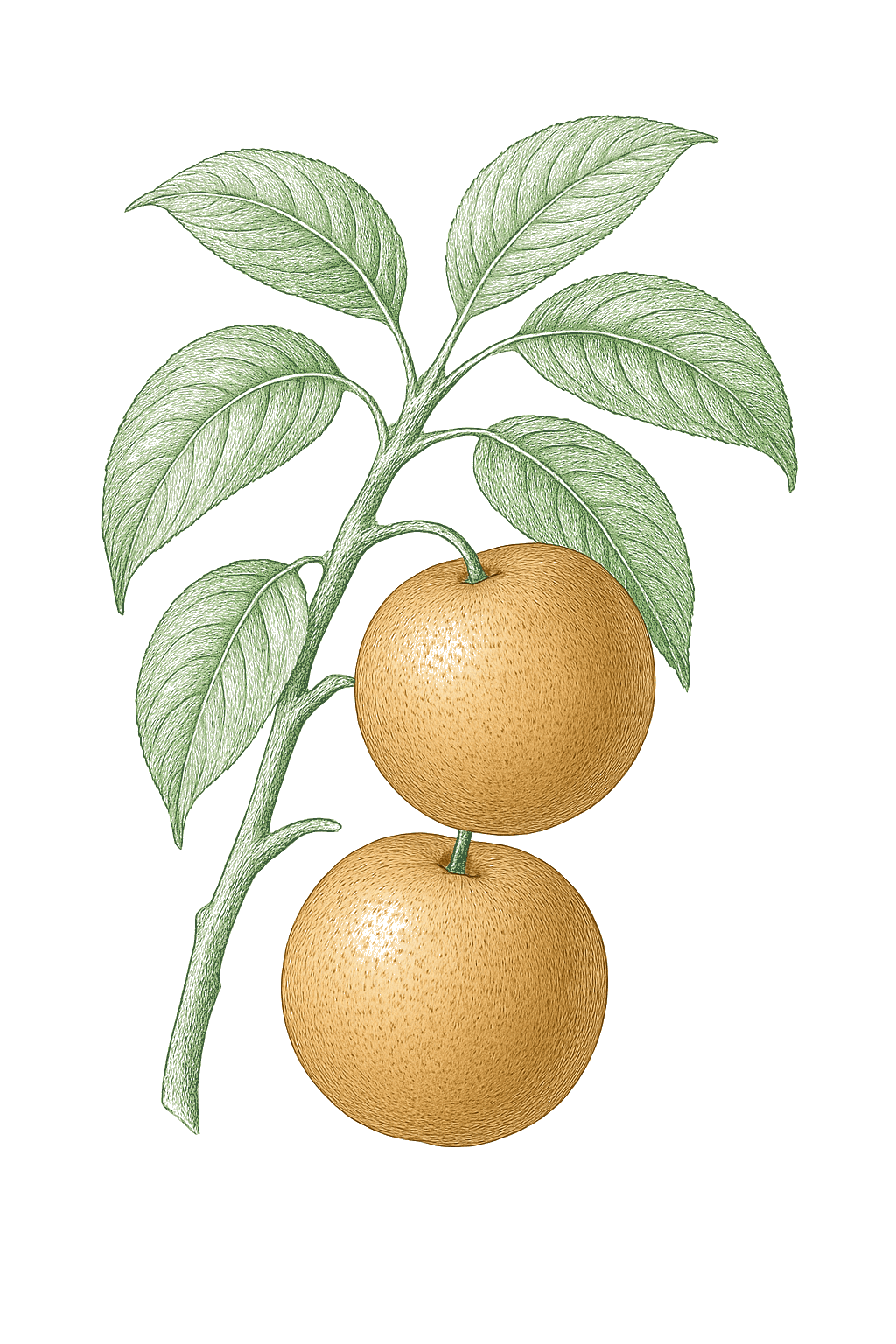
Asian pear is a fruit tree that lives for decades, grown for round, crisp fruit that looks and eats like a juicy apple (people call it the apple pear or nashi). Two things make it special. First, almost every Asian pear needs a second, different Asian pear variety nearby that blooms at the same time, with bees to carry the pollen, or it makes little fruit. Second, and this is the opposite of a European pear: you let Asian pears ripen ON the tree and pick them ready to eat, crisp and sweet. A pear picked too early stays hard and flavorless, because it will not sweeten on the counter. The trees make a huge number of little fruit, so you have to thin a lot of them off to get good-sized pears. The main disease to know is fire blight, worst in warm, damp places, so choosing a resistant variety helps a lot. A long-lived deciduous fruit tree (Pyrus pyrifolia) grown for round, crisp, apple-shaped fruit, also called the apple pear, sand pear, or nashi. Asian pear is a cross-pollination crop: nearly all cultivars are self-unfruitful, so you plant two different, bloom-overlapping varieties and rely on bees to move pollen between them (a couple, like Shinseiki and 20th Century, are partially self-fruitful but still crop far better with a pollinizer). The signature difference from the European pear is at harvest: Asian pears RIPEN ON THE TREE and are eaten crisp and juicy like an apple. You pick them tree-ripe and sweet, not firm-and-green to finish indoors, and a fruit picked too early stays hard and bland. The trees set very heavily and must be thinned hard for decent fruit size. Fire blight is the major disease, worst in warm, humid regions, so cultivar and rootstock choice matter. Chill requirement is moderate and variety-set (roughly 250 to 600 hours), and rootstock choice sets mature size and how soon the tree bears.
Hardiness tells you the tree will survive your winters. It does not tell you whether you will get fruit. Each zone carries its own verdict. Yours is marked.
California: Interior, Zone 9. Winters bank about 300 to 950 chill hours; these varieties need about 250 to 600 chill hours. Pears fruit well here. In the warmer south valley, pick mid- and lower-chill varieties for the most reliable crops.The warmer valleys still bank enough chill for most Asian pears, with the low-chill cultivars (Shinseiki, Ya Li) the safest picks in the mildest winters.
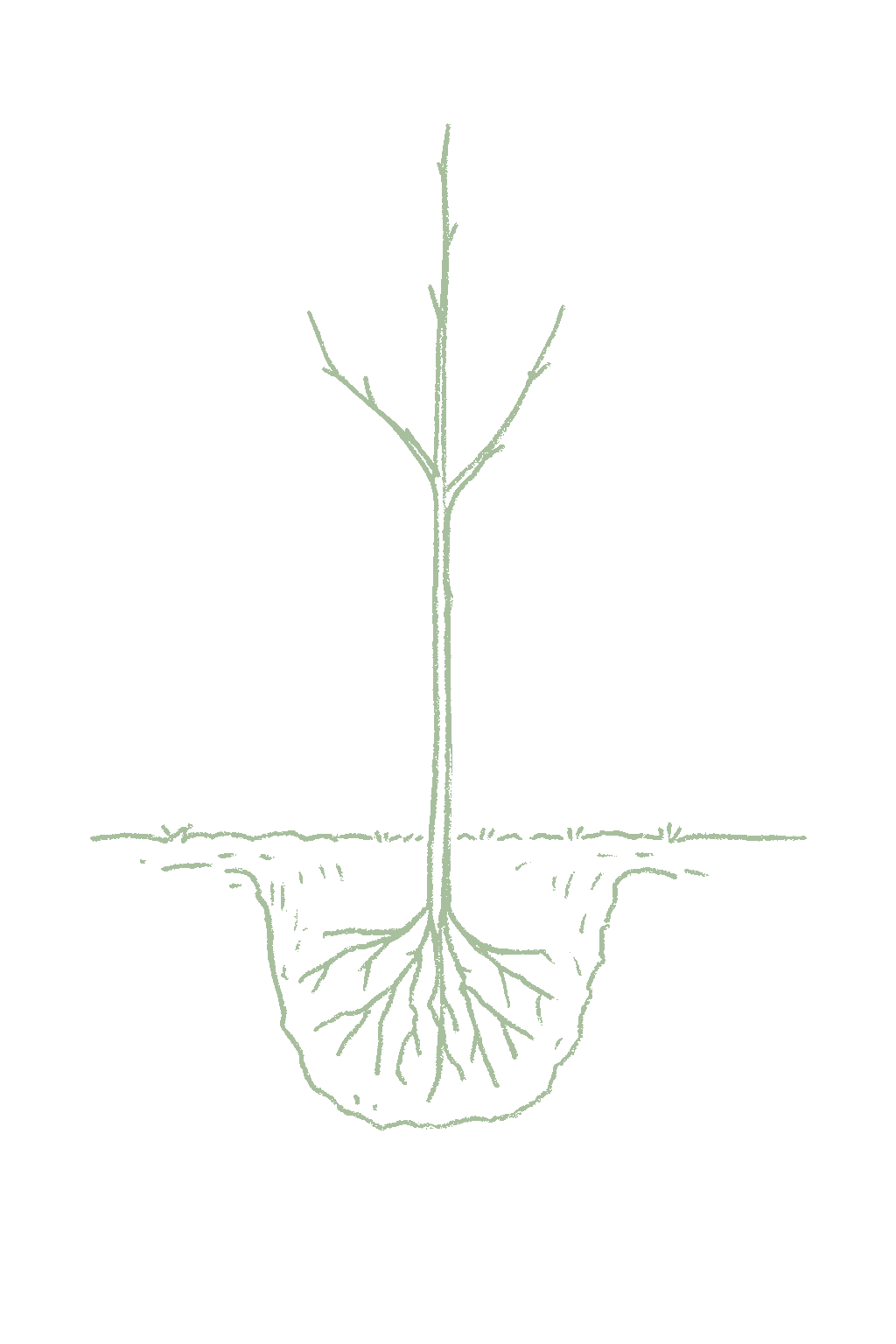
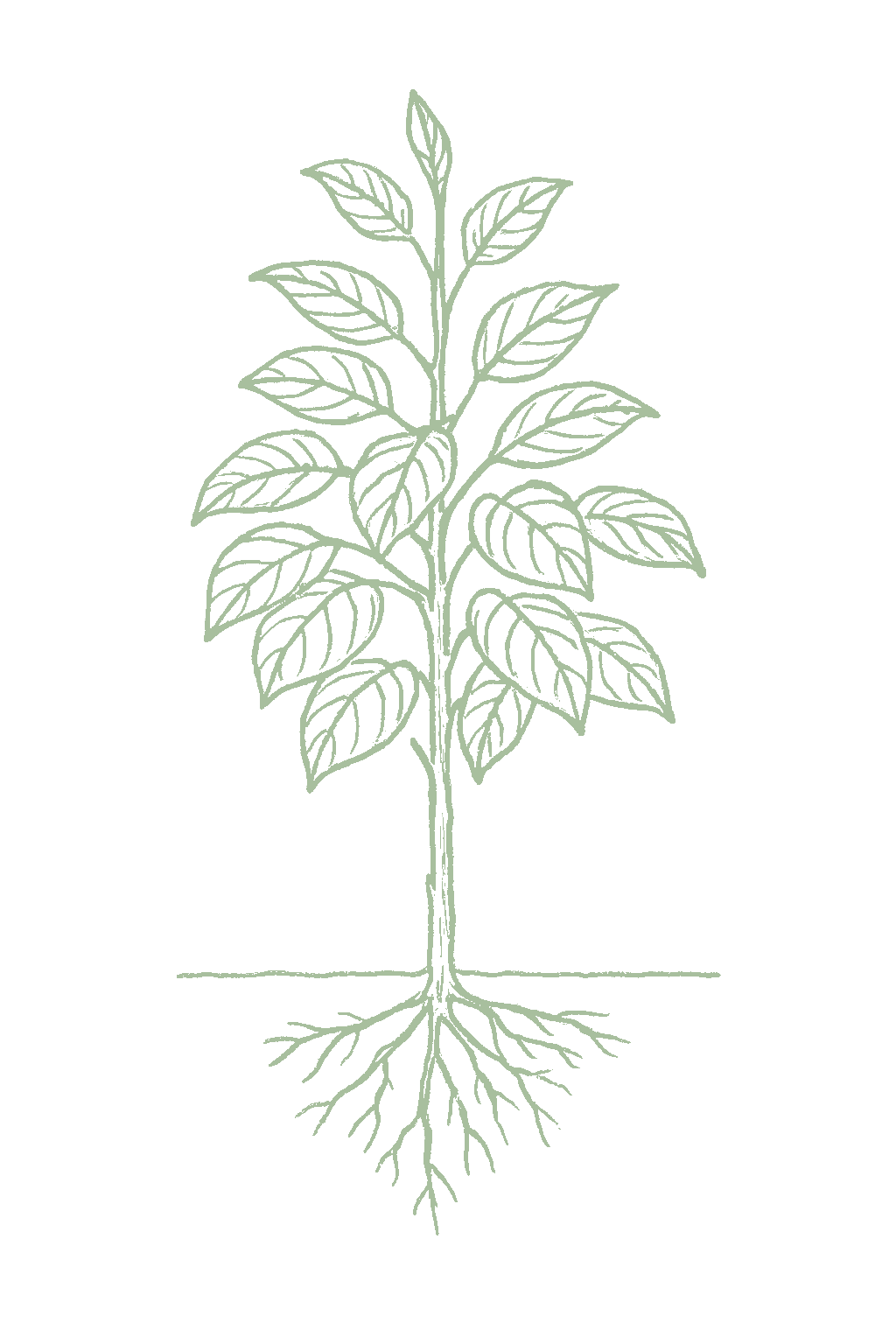
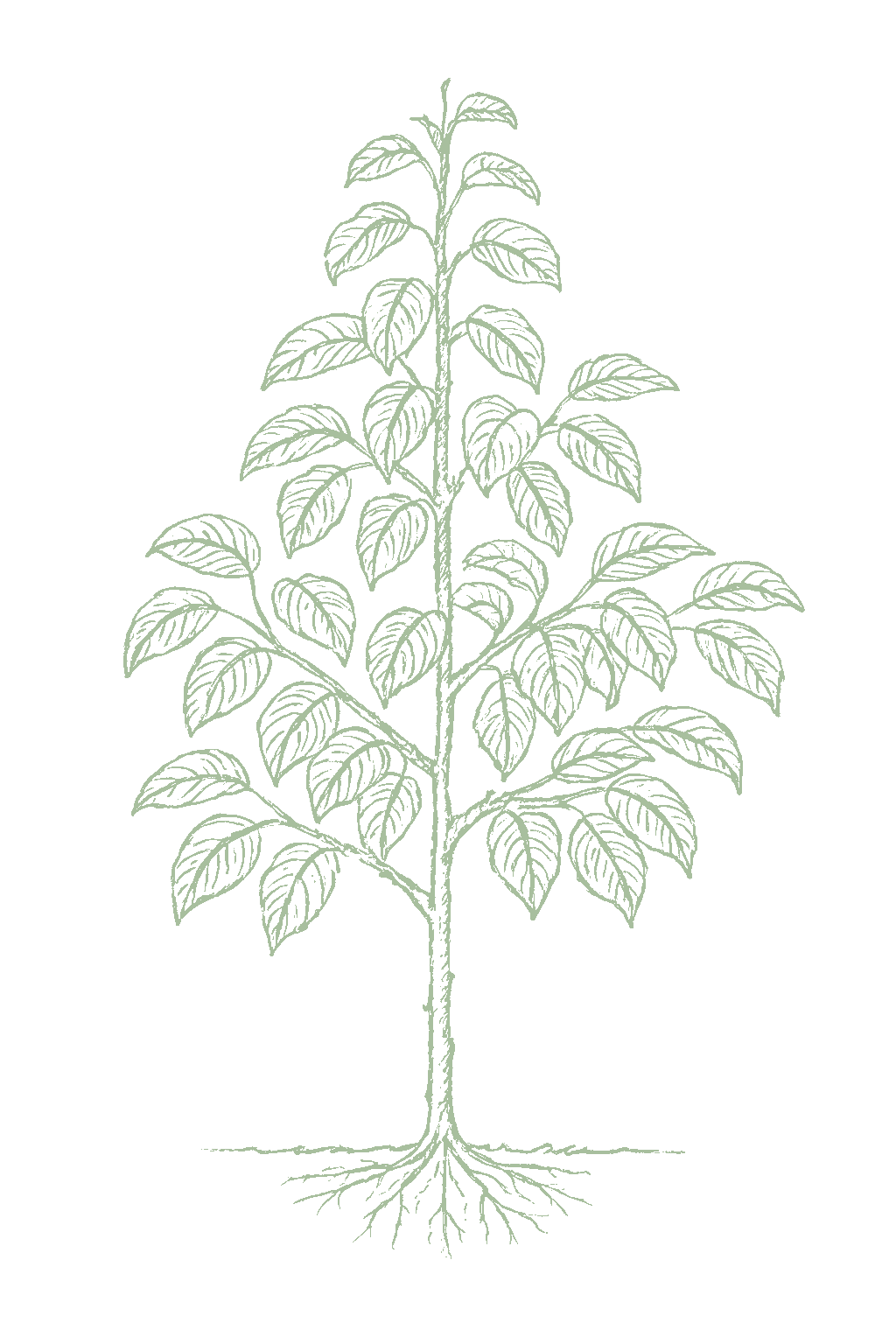
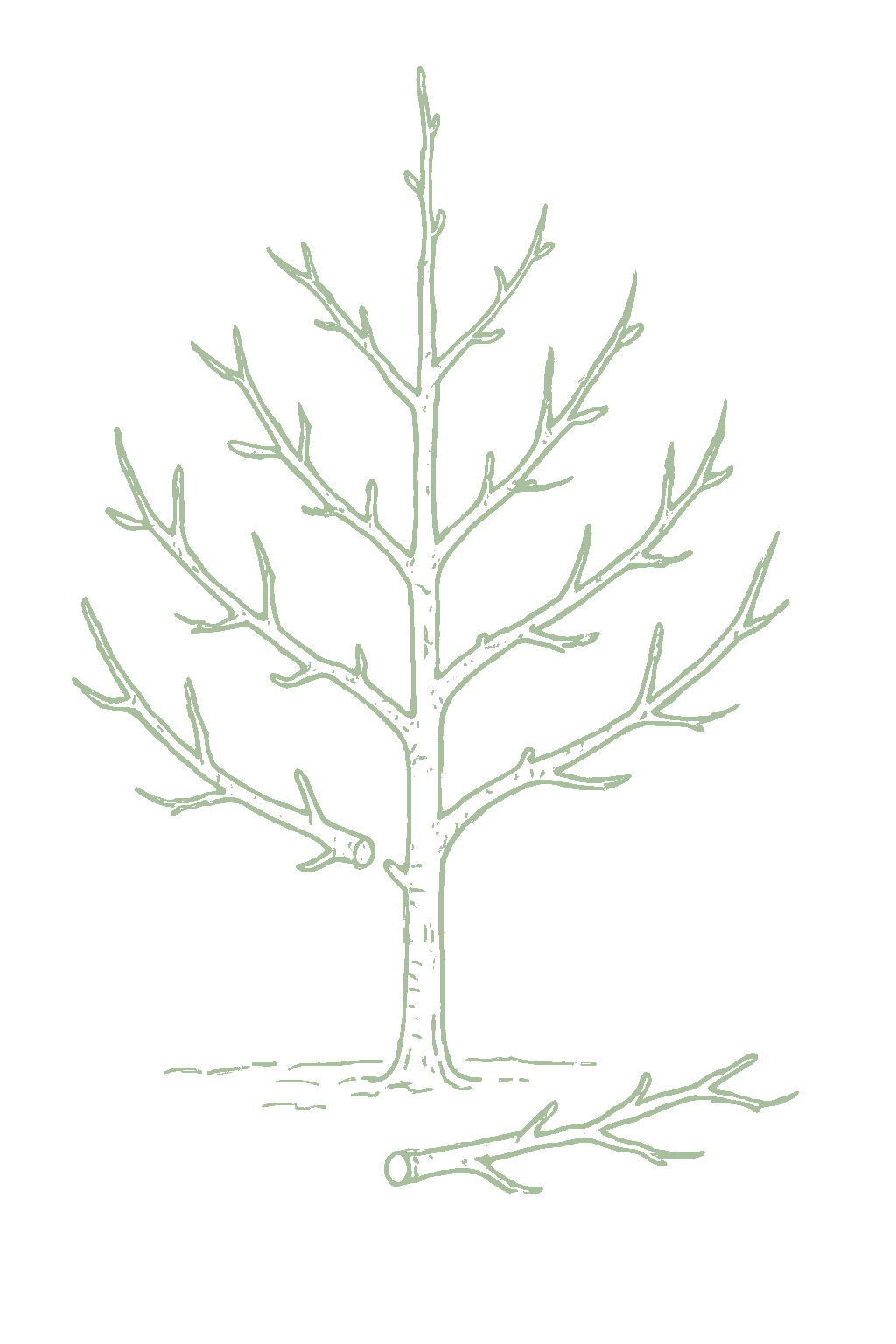
A fruit tree runs on the same rhythm every year: rest, prune, bloom, grow, harvest, then settle in again.
Pear trees need a stretch of winter cold before they flower well, measured in chill hours (hours between about 32 and 45°F). Asian pears need a moderate amount, from about 250 hours for a low-chill kind like Shinseiki up to 500 to 600 for the late-ripening types. They need a bit less winter cold than European pears and take heat better, so they do well in warm-winter areas. Pick a variety whose chill need matches your winters; in a mild-winter area, choose a low-chill variety or the tree will bloom poorly and set little fruit.Chill hours are the accumulated hours between about 32 and 45°F during winter dormancy that a tree must bank before it flowers normally in spring. Asian pear's requirement is moderate and set by the cultivar: this guide's roster runs from about 250 hours (low-chill Shinseiki) to roughly 500 to 600 hours for the late russet types. As a group Asian pears need somewhat LESS chill than European pears and tolerate heat better, which is why they succeed across the warm-winter South and much of California. Match the variety's chill need to what your winters reliably deliver: too little chill gives delayed, straggly bloom and poor fruit set.
A lone pear (asian) tree sets little or no fruit. Pear (Asian) flowers need pollen from a different variety, carried by bees, and the two trees have to bloom at the same time to trade it. Plant a second variety whose bloom window overlaps, within about 50 feet.
Bar length shows how long each variety blooms, roughly 8 to 14 days. Bars that overlap can cross-pollinate.
▲ Tap a variety to see its pollination partners
This is the most important thing about growing Asian pears: one tree alone makes only a small, unreliable crop. The flowers need pollen from a DIFFERENT Asian pear variety, carried by bees, so plant two different kinds within about 50 feet that bloom at the same time. A couple of varieties (Shinseiki, 20th Century) can set a small crop on their own, but they do much better with a partner. Two tips: the Chinese kinds (Ya Li, Tsu Li) bloom too early to pollinate the Japanese kinds, so pair them together; and a Bartlett (European) pear can pollinate Asian pears if it blooms at the same time. Once they do set fruit, expect a lot of it, so be ready to thin heavily.Asian pear is only partially self-fruitful: a lone tree, or a single-variety block, sets a light, unreliable crop. Plant two different, compatible Asian pear varieties whose bloom overlaps, within about 50 feet, with bees to move pollen between them. A few cultivars (Shinseiki, 20th Century) are PARTIALLY self-fruitful and set a light crop alone, but even they yield far more with a pollinizer. Two pairing rules: the very-early Chinese pears (Ya Li, Tsu Li) bloom too early to cross the Japanese types, so pair them with each other; and a European pear (Bartlett) can pollinate Japanese Asian pears where their bloom genuinely overlaps. Because the trees also set very heavily once pollinated, plan to thin hard.
Pick at least two different varieties that bloom around the same time so they can pollinate each other. Where winters are mild, choose a low-chill kind like Shinseiki or Ya Li. Where summers are warm and humid, choose a more fire-blight-resistant kind like Shinko or Chojuro. The smooth yellow ones (Shinseiki, 20th Century) are crisp and tart-sweet; the brown russet ones (Hosui, Chojuro, Olympic) are sweeter and richer. Two gotchas: the Chinese kinds (Ya Li, Tsu Li) bloom too early to match the Japanese kinds, and Niitaka cannot pollinate well, so do not rely on it as a partner.Eleven cultivars sequenced very early to very late by bloom so you can pair overlapping bloom groups for cross-pollination. Chill spans about 250 hours (low-chill Shinseiki) to roughly 500 (the late russets); match it to your winters. The round yellow types (Shinseiki, 20th Century) are smooth-skinned and tart-sweet; the russet types (Kosui, Hosui, Chojuro, Shinko, Olympic) are brown-skinned and richer. For the humid Southeast lean on the more fire-blight-tolerant Shinko and Chojuro. Two pairing rules: the Chinese pears (Ya Li, Tsu Li) bloom too early to cross the Japanese types, so pair them together, and Niitaka is a weak pollen source, so do not use it as a pollinizer.
OHxF 87 (semi-dwarf) is a strong backyard pick for Asian pear: it makes a manageable tree, bears reasonably young, and is one of the most productive of the fire-blight-tolerant Old Home x Farmingdale series, which also resists pear decline. Many Asian pears are sold on the vigorous Pyrus betulifolia (betulaefolia) or Pyrus calleryana seedling stocks, which make large, adaptable, disease-tolerant trees that tolerate heavy or wet soil but take longer to bear and need more room; for a smaller yard or a container choose OHxF 333. Note that quince, the dwarfing stock used for some European pears, is graft-incompatible with most Asian pears, so it is not an option here.
Ask which rootstock the tree is on; betulifolia makes a large, vigorous standard tree (usually not staked).
The numbers that matter, at a glance.
Only the smallest Asian pear trees do well in pots, the ones grown on a size-controlling rootstock such as OHxF 333 (ask the nursery). A tree on a vigorous betulifolia or calleryana stock quickly gets too big for any pot. Every 2 to 3 years, trim some roots and replace the top few inches of mix. And remember the pollination rule still applies: even a potted Asian pear needs a second, different Asian pear variety blooming nearby to make fruit.Containers suit Asian pear only on a genuinely size-controlling rootstock such as OHxF 333; a betulifolia or calleryana standard tree will outgrow any practical pot. Expect to root-prune and refresh the top few inches of mix every 2 to 3 years to keep the tree productive, and remember a potted Asian pear still needs a bloom-overlapping pollinizer nearby. Containers are the realistic route to pears on a patio without space for two full trees, paired with a second potted variety.
OHxF 33320 gal pot. OHxF 333 makes the smallest of these trees, about 10 to 14 ft, and resists fire blight and pear decline. It fruits a bit lighter than OHxF 87 but is a great disease-tolerant pick for a smaller yard or a big pot.20 gal pot. OHxF 333 is a semi-dwarfing Old Home x Farmingdale stock, about half to two-thirds standard size, with strong resistance to fire blight, collar rot, and pear decline. Productivity runs a touch lower than OHxF 87, but it is the best size-controlled, disease-tolerant choice for a small yard and works in a large container.
Winter is the hard part for a potted pear. In a pot, the roots sit above ground and get cold from every side, so they freeze much more easily than roots in the ground. After the leaves drop and the tree is dormant (resting for winter), move the pot somewhere cold but protected, like an unheated garage or shed, or up against the north side of the house. It still needs the cold to rest, but the shelter keeps the roots from freezing solid. Give it a little water now and then so the soil never dries out completely.A potted pear is the winter-vulnerable case: roots in an above-ground pot are exposed to cold from all sides and run several zones less hardy than the same tree in the ground. Once dormant, move the pot to an unheated but sheltered spot (an unheated garage, shed, or against a north wall) where it stays cold enough to hold dormancy but is buffered from the deep-freeze and freeze-thaw swings that kill container roots. Water occasionally so the rootball never fully dries.
Plan winter protection in from the start in cold zones: a pear hardy to zone 4 in the ground may only survive zone 6 or 7 winters in an exposed pot, because the root zone has no insulating soil mass. In order of protection, sink the pot to its rim in the ground for winter, cluster and wrap pots, or move to an unheated sheltered structure. Do not bring a dormant pear into a heated room, warmth breaks dormancy and the tree misses its winter chill.
Hardy to zone 5 in the ground; roots in a pot sit colder than that.
Ask what your balcony or roof can carry
A balcony or roof can only hold so much weight. Before you set heavy pots there, ask a building architect what it can safely carry.Illinois Extension's guidance is to consult a building architect about weight limits before placing heavy pots on a balcony or rooftop garden. It gives no weight figure.
Never grow food in a container with anything toxic in it
Many kinds of containers can be used. Whatever you choose, keep anything toxic out of it, especially if you are growing food.Colorado State accepts nearly any container material but warns against using a container that holds toxic materials, especially for edible plants. Illinois adds that a vegetable container should be free of chemicals toxic to plants or people, and urges caution with treated lumber when growing food. If you cannot account for what a repurposed container once held, that alone is a reason to keep food out of it.
Secure hanging containers well
Fasten hanging baskets and window or rail boxes securely. Think about what is below them too, since they can drip on people or things underneath.Illinois Extension asks growers to secure hanging containers well and to think through the safety issues of hanging them. Placement matters too, since a hanging container can drip onto people or belongings below.
Asian pear trees like soil that runs from slightly acidic to neutral, a pH around 6.0 to 7.0 (pH just measures how acidic or alkaline soil is, where 7.0 is neutral). Test your soil before planting, since it is much easier to adjust the pH now than after the tree is in the ground. Garden lime raises a low pH; garden sulfur lowers a high one. Your local extension office can test a sample for you.Asian pear does best at a pH of about 6.0 to 7.0 and tolerates roughly 5.5 to 7.5. Test the soil before planting and adjust the whole root zone, not just the hole, because correcting pH around an established tree is slow. Lime raises a low pH; elemental sulfur lowers a high one. Well outside this band, iron and manganese availability falls and new growth yellows between the veins.
Feed pear trees once a year, in early spring before the buds open, with a balanced fertilizer, and go light. Too much feeding is the number-one pear mistake: it makes lots of soft new growth that the disease fire blight loves, and it pushes the tree to grow leaves instead of fruit. If the tree is growing well and putting out healthy new branches each year, it may need no feeding at all. When in doubt, use less.Feed lightly in early spring before bud break, guided by shoot growth: a healthy young pear makes about 12 to 18 inches of new shoot growth a year, so feed to reach that and no more. Excess nitrogen is the classic pear mistake, it drives soft, succulent growth that fire blight runs straight through, and it delays fruiting. Mature trees on fertile soil often need no nitrogen at all. If anything, err on the side of underfeeding a pear.
The three numbers on a fertilizer bag are nitrogen, phosphorus, and potassium. A balanced one like 10-10-10 is fine for pears, used sparingly. The first number (nitrogen) is the one to keep low, because too much makes soft growth that catches fire blight.A balanced N-P-K ratio (the three numbers on the bag, nitrogen, phosphorus, potassium) such as 10-10-10 at a modest rate, leaning toward the low end on any vigorous tree to limit fire-blight-prone growth. On fertile ground a pear often wants none.
Pears do not pair with other plants the way vegetables do. For an Asian pear, the neighbor that counts is a second, different Asian pear variety that blooms at the same time, within about 50 to 100 ft, because most Asian pears need another Asian pear nearby to make fruit. Right around the trunk, do the opposite of planting companions: keep grass and other plants away from the base out to the edge of the branches, because they steal water and food from the young tree. Use mulch there instead, and never plant an Asian pear near a black walnut tree, which poisons the soil for it. Pear does not companion-plant in the vegetable sense; the interactions that matter are pollination and root competition. The single most important neighbor is a second, bloom-overlapping Asian pear variety (the pollinizer) within about 50 to 100 ft, since most Asian pears are self-unfruitful. At the trunk, the rule reverses: keep turf and aggressive perennials out of the root zone, where grass competes hard with a young tree for water and nitrogen. Maintain a mulched, vegetation-free circle to the dripline, and avoid siting near black walnut, whose juglone is toxic to Asian pear.
An Asian pear is ready to pick when it is ready to EAT, because it ripens on the tree, not off it (the reverse of a European pear). Look for the skin to reach full color: green turning yellow on the smooth kinds, or green turning golden-brown on the russet kinds. Then taste one, it should be sweet, crisp, and juicy, like a very juicy apple. If it is hard and bland, leave the rest on the tree to finish, because they will not sweeten indoors. Handle them gently so they do not bruise. Do not expect a real crop until about the third to fifth year after planting.Asian pears ripen ON the tree and are picked tree-ripe, the opposite of European pears: the fruit sweetens only on the branch and does not finish ripening off it. Pick when the skin has turned full varietal color (green to yellow on smooth types like 20th Century and Shinseiki, green to golden-brown or bronze on russet types like Hosui, Chojuro, and Shinko), the fruit parts easily from the spur on a gentle upward twist, and a taste test is sweet, crisp, and juicy. Taste is the surest guide, so sample a couple of test fruit before stripping the tree. Asian pears hold on the tree for a few weeks and are eaten firm and crisp like an apple. First meaningful crop typically comes around year 3 to 5, rootstock-dependent.
Asian pears set a lot of fruit. A smaller tree gives roughly 1 to 3 bushels a year (a bushel is about 40 lb), and a full-size tree gives much more. Because they set so heavily, you must thin off a lot of the young fruit, or you get many tiny, gritty pears and broken branches.Mature yield is rootstock-driven and Asian pears crop heavily: a size-controlled tree (OHxF 333 or 87) carries roughly 1 to 3 bushels (about 40 to 120 lb) per year, and a vigorous betulifolia or calleryana standard can far exceed that at full maturity. The heavy natural set is the reason aggressive thinning is essential, unthinned trees make many small, gritty fruit and break limbs.
An Asian pear builds up to full production over several years after its first crop, a bit faster than a European pear. Some varieties swing between a big year and a small year; thinning the young fruit hard every year helps keep crops steadier.Trees reach full bearing several years after first crop, roughly years 5 to 8, sooner than a European pear and sooner still on a size-controlling rootstock. Many cultivars tend toward biennial bearing (a heavy year then a light one); consistent hard thinning evens it out. Expect zero pears the first year, that is normal and intended. Your first real handful of fruit usually comes around year 3 to 5, a little sooner than a European pear.No crop in the planting year (blossoms are removed). First meaningful fruit around year 3 to 5, rootstock-dependent and a bit earlier than a European pear.
The ladder troubleshoots from the gentlest solution to the strongest. Start with the gentlest option and only move on when and if it doesn't work.
Check the young pears every week or so and pull off any with a small hole ringed by brown crumbs, then pick up every pear that drops as soon as you see it, because the caterpillar is usually still inside and will crawl out to start the next batch. Thin to one pear per cluster and look closely where two fruits touch, a favorite spot for the hole. Destroy what you collect rather than leaving it under the tree.Cydia pomonella overwinters as a mature larva in a silken cocoon under loose bark scales and in soil or litter at the base of the tree, and every larva that leaves a pear to spin one is a moth next flight, so an infested fruit taken off the tree or a drop picked up promptly is a moth that never flies. UC IPM is blunt that it is far easier to hold numbers low from the first flight than to pull down a population that has built for a season or two. Thin to one fruit per cluster, inspect the contact point of touching fruit, and take out any abandoned apple, pear or walnut nearby, which UC IPM's pear guideline treats as a reservoir to remove.
Hang a scent trap in the tree in spring. It catches male moths, and its real job is to tell you the moths have started flying, which sets the clock for bagging the fruit and for any spray. On its own it will not keep the pears clean.A pheromone-baited trap marks first sustained male flight, and UC IPM's home guidance keys the first spray to egg hatch, which follows the first regular catches by a run of warm days that its guide gives as a heat-unit count rather than a calendar date; counts through summer flag the second and any third generation. Hanging traps in every tree may thin an isolated tree's moths slightly, but UC IPM does not rate that as a reliable way to reduce damage, so read the trap as a calendar rather than a control.
Once the flowers have dropped and the young pears are half an inch to an inch across, roughly four to six weeks after bloom, enclose each one in a paper bag fastened around the stem. A bagged pear is out of the moth's reach, so no egg is laid on it and no caterpillar gets in. It takes time per fruit, so it fits a tree with a crop you can count.This is the one nonchemical measure UC IPM rates effective enough to stand alone even under heavy pressure, and it earns that by taking the fruit out of the egg-laying site altogether rather than trimming the population. The window is four to six weeks after bloom at 1/2 to 1 inch fruit, and NC State's handbook gives the same span; thin to a single fruit per cluster first, and bag early on late-developing varieties, which UC IPM warns can be attacked before the fruit reaches 1/2 inch.
If the tree carries more fruit than you can bag, spinosad is the organic spray UC IPM lists for home trees, and timing is everything: the first spray goes on as the first caterpillars hatch, before they bore in, with two more at ten-day spacing, and never more than six in a season. It is hard on bees while wet, so spray at dusk and keep it off anything in flower, and stop at least a week before you pick.Spinosad, a fermentation product of Saccharopolyspora spinosa, kills young larvae by ingestion and contact, so it has to be on the fruit surface as eggs hatch; UC IPM's home schedule is three sprays at 10-day intervals from first-generation hatch, a season cap of six, and a 7-day preharvest interval. Place the first spray with the trap and degree-day count, since a spray before hatch is wasted and one after the larva has entered the pear is useless. UC IPM also names a granulosis virus (CYD-X) sold to California home gardeners that affects only codling moth larvae and, applied weekly through hatch, matched carbaryl in its trials.
Carbaryl is the old-style chemical UC IPM measures the softer options against, and it works, but at a real cost: it kills bees and the helpful insects along with the moths, so it must never go on a tree in bloom or when bees are working it, and on a pear it can set off an outbreak of pear psylla by wiping out the insects that keep psylla down. Keep it for a tree where bagging and spinosad have not held the damage, and read the label's waiting time before harvest.UC IPM's home note gives carbaryl a 14-to-21-day residual against codling moth and calls it very disruptive to natural enemies and honey bees, with an absolute bar on spraying during bloom or when bees are present. On pear the secondary cost is specific: UC IPM's pear guideline attributes psylla outbreaks to nonselective codling moth insecticides destroying the predators and parasites that hold psylla in check, so a carbaryl program for the moth can buy a sticky, sooty tree by late summer. It also carries a carcinogen listing, which on a food crop is the reason to exhaust the other measures first.
No spray for this one. Prevention is the control.
The ladder troubleshoots from the gentlest solution to the strongest. Start with the gentlest option and only move on when and if it doesn't work.
Feed the tree modestly and do not chase big flushes of soft new growth, because that sappy growth is what pear psylla settle on and breed in. WSU's home fact sheet puts it simply: prune lightly, give moderate nitrogen, and cut out the water sprouts and suckers that psylla favor.Psylla nymphs feed on succulent shoot tissue, so vigor management is a population lever: WSU's Hortsense guidance is to prune lightly, supply moderate amounts of nitrogen, and remove water sprouts and suckers, which strips out the flush growth that carries the heaviest nymph loads and honeydew. The light-pruning instruction is the other half of the same idea, since hard cuts provoke exactly the regrowth psylla wants.
A coat of kaolin clay, the white mineral spray, makes the tree an unattractive place for psylla to land and lay eggs. WSU's home fact sheet lists it among the growing-season options, and it does most good put on before bloom, when the overwintered adults are starting to lay. Rain washes it off, so it needs renewing, and the white film has to be rinsed off the fruit at harvest.Kaolin is a particle film that reduces adult colonization and egg laying rather than killing nymphs already feeding, which is why UC IPM's pear guideline places it prebloom and WSU's orchard program reports 80 to 100 percent less colonization and egg lay, cutting first-generation pressure. UC IPM warns that later-season use may cause mite outbreaks, and heavy use can set back beneficials, so on a home tree it is a spring measure rather than a summer one.
Lacewings, lady beetles and small predatory bugs eat pear psylla for free, and they are a large part of why a lightly managed tree rarely has a serious problem. The way to keep them is to not spray anything broad-spectrum on the tree, including the sprays aimed at codling moth, because UC IPM traces psylla outbreaks straight to those sprays killing off the helpers.Cacopsylla pyricola is held in check by a resident complex WSU names as the parasitic wasp Trechnites insidiosus, the predatory bugs Deraeocoris brevis, Campylomma verbasci and Anthocoris spp., green and brown lacewings, and the European earwig; UC IPM's pear guideline states that nonselective codling moth insecticides destroy many of these beneficials and produce outbreaks. On a home tree the decision is therefore made on the codling moth side: bag the fruit or use a selective material there, and the psylla largely looks after itself, which matters doubly on an Asian pear, where UC IPM rates psylla a lesser problem than on European varieties.
The backbone spray is horticultural oil while the tree is bare, put on before the buds swell, because the adults that lived through winter in bark cracks and litter around the tree are on the wood then and the oil smothers them. UC IPM says to apply it at least once in the dormant season, and to repeat just before bloom if psylla were bad the year before. Oil kills the adults; it does not kill eggs already laid, which is why the timing is early.Adults overwinter in bark crevices, under bark scales and in litter at the base of the tree and begin ovipositing at bud swell, so a dormant oil hits the population at its narrowest point; UC IPM's pear guideline is explicit that oil kills adult psylla but does not control eggs, though it discourages egg laying for about a month, which is why the home timing is at least one application in the dormant season with a second just before bloom in a bad year. Coverage of the wood is the whole job, and oil is not applied in heat or to a water-stressed tree.
During the growing season, insecticidal soap sprayed onto the shoots where the small nymphs and their sticky honeydew are will kill what it wets and nothing else. It has no lasting effect, so repeat as new nymphs appear, spray early morning or late evening, and WSU says a homeowner should not be spraying a tree taller than 10 feet at all.Potassium salts of fatty acids work only on contact with soft-bodied nymphs, and psylla nymphs sit in honeydew on leaf undersides and in shoot tips, so coverage of the new growth decides the result; WSU's home fact sheet and Oregon State's home orchard calendar both list soap from prepink through summer. It spares the predator complex once dry, which is what makes it the in-season material over anything broad-spectrum, and WSU's rules apply: morning or evening timing, and no foliar sprays on trees over 10 feet.
No spray for this one. Prevention is the control.
The ladder troubleshoots from the gentlest solution to the strongest. Start with the gentlest option and only move on when and if it doesn't work.
Stink bugs build up on weeds and rough grass around the tree and then move onto the pears, so clear that growth in early spring, before they get numerous in it, and keep the ground under and around the tree clean through summer. Timing is the point: UC IPM says to take the weeds out before the bugs are abundant in them, not after.NC State's handbook calls weeds the primary food source for the catfacing bugs, and UC IPM's instruction is to eliminate groundcovers and herbaceous weeds in early spring before stink bugs become abundant in them and move to alternative hosts. The brown marmorated stink bug is an edge invader that WSU and Rutgers both record moving in from wooded borders and neighboring crops, so on a home tree the reach of this measure is the ground you control; it lowers what arrives rather than what is already on the fruit.
On branches you can reach, look under the leaves for the clusters of 20 to 30 pale barrel-shaped eggs and the groups of small nymphs that hatch from them, and crush them or drop them into soapy water. WSU's pear fact sheet recommends exactly this, and it works because the young bugs stay bunched together after hatching.Halyomorpha halys lays eggs in groups of about 20 to 30 on leaf undersides and the early nymphs feed in a cluster, which is the stage that hand removal, net-sweeping or shaking a branch over a tray actually reaches; WSU lists all three. Adults are strong fliers that arrive from outside and leave again, and UC IPM notes the feeding damage often shows only after the bugs have gone, so hand removal is aimed at the egg masses and nymph groups, not at chasing adults.
On a small or dwarf tree, WSU says a floating row cover or similar fine barrier over the canopy can keep stink bugs off the fruit where that is practical. Put it on after the flowers are finished and the fruit has set, because a cover shuts out the bees the tree needs, and take it off to pick.WSU's pear guidance allows screening plants with a floating row cover or similar barrier when practical, and on a tree that means a dwarf on a small frame rather than a standard; the barrier has to be sealed at the ground and go on after pollination, since pears need cross-pollination and the same mesh excludes the bees. It is the exclusion measure WSU names for this pest on pear; bagging individual fruit is not on any page read for stink bug.
A kaolin clay coating on the fruit and leaves makes the pears an unpleasant surface for stink bugs to feed on and less attractive to land on. Oregon State's home orchard guide lists it for brown marmorated stink bug, but only as suppression, so expect fewer dimpled pears rather than none, and renew it after rain.Kaolin is a repellent film rather than a toxicant, and Oregon State's EC 631 lists it against brown marmorated stink bug on pear with the explicit qualifier suppression, which is the right expectation for a bug that flies in from the edge as an adult and probes rather than chews. Coverage of the fruit surface is what counts, so reapply as the fruit sizes and after rain, and wash the residue off at harvest.
Big-eyed bugs, assassin bugs, damsel bugs, crab spiders and several tiny wasps that attack stink bug eggs are already in most gardens, and NC State says the way to keep them working is to cut back on broad-spectrum sprays. They will not give complete control on their own, WSU is clear about that, but they are part of why a lightly sprayed tree has fewer.NC State names parasitic wasps, big-eyed bugs, assassin bugs, damsel bugs and crab spiders as the resident enemies of the catfacing bugs, and its instruction is to reduce broad-spectrum insecticide use so they keep pest populations in check; WSU adds that natural enemies may not be sufficient for complete control of the brown marmorated stink bug but that broad-spectrum sprays should still be avoided for their sake. It is also why a spray is a poor answer here: UC IPM says insecticides are generally not recommended for stink bugs in gardens because the damage appears after the bugs have left, and WSU rates its listed home products as toxic to bees and not recommended against adults.
No spray for this one. Prevention is the control.
The ladder troubleshoots from the gentlest solution to the strongest. Start with the gentlest option and only move on when and if it doesn't work.
Clemson calls fire blight the most significant problem limiting Asian pears, and the biggest decision is made when you buy the tree. Shinko is the most resistant by every guide, with Chojuro, Seuri, Olympic (also sold as Korean Giant) and Shin Li showing some resistance; Twentieth Century (Nijisseiki) is highly susceptible. Buy it on a fire-blight-resistant root too: Clemson recommends the birchleaf pear (Pyrus betulifolia) for Asian pears, and the Old Home x Farmingdale rootstocks resist it as well.Resistance is partial, not immunity, and the ratings disagree at the margins: Shinko heads every list (Clemson's best, Purdue resistant, UC IPM's lone Asian exception); Purdue also rates Chojuro, Kosui, Olympic, Seuri, Shinsui, Singo and Tse Li resistant and Hosui, Kikusui, Okusankichi, Seigyoku, Twentieth Century and Shinseiki susceptible, while Clemson's two fact sheets split on Hosui, which gets planted anyway as Shinko's pollinizer. Rootstock is a separate layer: Purdue lists Old Home x Farmingdale (except OHxF 51) and Pyrus betulifolia seedlings as resistant and Bartlett seedling as susceptible, and Clemson notes betulifolia is vigorous and throws thorny root sprouts. Clemson puts cultivar choice in the same sentence as sanitation and avoiding excess nitrogen, because succulent growth is what gets infected.
No spray cures fire blight, so cutting it out is the treatment. Take each blackened shoot or branch back at least 12 inches below the last sign of damage into clean wood, and Clemson's Asian pear guide goes to 18 inches. Do the main cleanup in winter while the tree is dormant and the bacteria are inactive, but a strike racing down a branch in spring should come off as soon as you see it, and only cut in dry weather. Wipe the blades with a 1-to-9 bleach mix or rubbing alcohol between cuts, burn or bury what you remove, and if more than half the tree is blighted, Purdue says to take the tree out.Where you cut matters more than anything else: UC IPM's method is to find the lower edge of visible infection, trace the branch to its point of attachment and cut at the next branch juncture below, and both UC IPM and WSU report that cut placement matters more than tool sterilization, though dipping shears in 10 percent bleach between cuts is reasonable. The published distances run from Clemson's minimum of 8 to 12 inches through Purdue's at least 12 to WSU's 12 to 18 in wood two years old or older and Clemson's 18 inches for Asian pear, so 12 is a floor. Timing is dormant for the main removal, because growing-season pruning can spread the disease, with UC IPM's exception for rapidly advancing spring strikes on Asian pear, which come out at once; a trunk or scaffold canker can sometimes be saved by scraping bark to the cambium and taking 6 to 8 inches beyond any discolored streak, in winter. Do not shape the tree in the same pass, hold summer pruning until terminal buds have set, and keep nitrogen modest: UC IPM ties excess nitrogen and heavy pruning together as the two drivers of the succulent growth this bacterium needs.
Copper is a partial shield for the flowers, not a cure, and in UC IPM's California guidance it is the only fire blight material sold to home growers; Purdue and Clemson also describe streptomycin, an antibiotic sprayed during bloom, for home use where it can be found, and Purdue allows no more than three or four of those sprays a season. UC IPM's copper advice is a weak copper spray repeated every four to five days while the blossoms are open and the weather is warm and humid, starting once the day's average temperature tops 60°F; Clemson's simpler version is one copper spray right before bloom. It will not clear an infection already in the wood, and repeated copper can russet the fruit.Erwinia amylovora enters through open blossoms, so copper's job is to sit on the flower surface through the infection window UC IPM defines as rainy or humid weather with days of 75 to 85°F and nights above 55°F. UC IPM's program is a very weak (about 0.5 percent) Bordeaux or other copper as blossoms open once the 24-hour average temperature exceeds 60°F, at four-to-five-day intervals through late bloom, which on pear can mean five to twelve applications, and it says plainly this might reduce new infections but will not eliminate them or touch those already in wood. Copper accumulates in soil and can russet fruit, which is the case for Clemson's single pre-bloom spray on a tree not under heavy pressure. Streptomycin, the bloom antibiotic in the extension literature, is written for apple and capped by Purdue at three to four bloom sprays where it can be obtained at all. Do not irrigate during bloom.
No spray for this one. Prevention is the control.
The ladder troubleshoots from the gentlest solution to the strongest. Start with the gentlest option and only move on when and if it doesn't work.
Asian pears get scab less than European pears, UC IPM says so directly, and for a single backyard tree the whole program can be raking. The fungus spends the winter in last year's fallen leaves, so gather them up in autumn or winter and compost them thoroughly or get rid of them; UC IPM says that alone can hold scab to a level you can live with.Venturia pirina overwinters primarily in infected leaves on the ground, and UC IPM PN 7413 states that for a single backyard tree removing and composting or destroying the dropped leaves in autumn or winter can limit the disease to tolerable levels. In high-rainfall areas the fungus also carries over in lesions on pear twigs, which raking does not reach, and for several trees in a cool coastal climate PN 7413 adds urea on the foliage in autumn to hasten leaf fall (urea alone on pear, since zinc is phytotoxic to it), lime on the leaf piles, and running any sprinkler that wets foliage only between sunrise and noon so the leaves dry.
A spray is only worth it in a wet spring: UC IPM says fungicide is needed only when rain keeps the leaves wet for 9 hours or more. If that is your weather, sulfur goes on as the buds break, again 10 to 14 days later if it is still raining, and not past a month after petal fall. Never put sulfur on when it is near 90°F or hotter. And never mix it with oil or spray it close to an oil spray, because the pair burns leaves.Infection needs a minimum of 9 hours of continuous leaf wetness and runs fastest between 55 and 75°F, which is why PN 7413 makes fungicide conditional on rainy weather and puts the whole protective window between bud break and a month after petal fall, with a second application 10 to 14 days after the first if rain continues, once blossom clusters show but before they open. A protectant has no curative reach, so a spray after lesions appear is a season already lost; PN 7413 lists it for home use alongside fixed copper, Bordeaux, copper soap and neem or mineral oils. Sulfur and oil are never combined or applied close together. Sulfur is not applied near or above 90°F. On Asian pear, which PN 7413 rates less susceptible than European pear, most years will not meet the wet-weather trigger at all.
No spray for this one. Prevention is the control.
The ladder troubleshoots from the gentlest solution to the strongest. Start with the gentlest option and only move on when and if it doesn't work.
Pear decline is a disease of the graft union, so the roots your tree was grafted onto decide almost everything, and you choose them once, at the nursery. Ask for a tree on an Old Home x Farmingdale rootstock (OHxF 87, 97, 333 or 40), which WSU lists as resistant or tolerant to decline and to fire blight as well, or on birchleaf pear (Pyrus betulifolia), which UC IPM lists as decline-tolerant and which this crop's fire blight entry also recommends. Bartlett seedling is on UC IPM's tolerant list for decline, but it is rated fire-blight susceptible (see fire blight), and fire blight is the most serious disease of Asian pears, so it is not the root to ask for here. Avoid a tree on Asian pear seedling roots, because UC IPM says decline can rapidly kill a pear on Pyrus pyrifolia or Pyrus ussuriensis roots, and an Asian pear grown on its own kind of seedling is exactly that case. The other half of protection is keeping pear psylla down, since feeding psylla are the main way the disease moves from tree to tree; graft wood or buds taken from an infected pear can carry it too.Candidatus Phytoplasma pyri is injected by feeding pear psylla and kills phloem at the graft union of sensitive root-scion combinations, so sugar piles up above the union as starch while the roots starve; the brown line of dead phloem at the union is the field diagnostic, and quick decline is the tree collapsing within days once the union fails. Tolerance sits in the root: UC IPM lists Bartlett seedling, Old Home x Farmingdale, Pyrus betulaefolia and Winter Nelis seedling as tolerant and P. pyrifolia (P. serotina) and P. ussuriensis as the roots on which decline rapidly kills, and WSU's rootstock notes name OHxF 87 as tolerant to blight and decline and OHxF 97, 333 and 40 as resistant to it. One Asian-specific rule from Utah State: if you ever graft an Asian pear over to a European cultivar, graft below the union of the Asian pear and its rootstock, or you build a highly decline-susceptible tree. Reducing psylla abundance reduces transmission, which is why the psylla program on this crop is also the decline program.
Pear psylla are not the only way this disease gets into a tree: a bud or a piece of graft wood cut from an infected pear carries the disease with it, so a branch of another variety grafted onto your tree, or a new tree started from an old one, can bring decline in even where psylla are scarce. Take graft wood only from a pear that has never shown signs of decline, and where you have the choice, start with a nursery tree instead of wood from a pear whose history you do not know.Utah State's note on this disease adds grafting and budding to psylla as routes of transmission, which puts the source of scionwood and budwood on the same footing as the rootstock. Its field check is done with a knife on the donor tree: expose the cambium just under the bark at the graft union and look for a brown line, the dead phloem that UC IPM also describes at the union of an infected tree; wood from a tree that shows it is not used for propagation or top-working. Since no material listed by UC IPM or Utah State acts on the phytoplasma once it is in the tree, the choice is made once, when the wood is cut or the tree is bought.
A tree that collapses suddenly, wilting and dying within days, is not coming back and should be removed, both because UC IPM and Utah State list nothing that treats the disease inside it and because pear psylla can carry the infection from it to your other pears. A tree in slow decline is a different case: UC IPM says it may respond to more nitrogen and frequent light watering, so it can often be kept going for years.Utah State's management for decline is rootstock, psylla control and removal of diseased trees, and UC IPM's is the same plus vigor, with no material that acts on the phytoplasma and, in UC IPM's words, no known biological control of it. Removal is warranted for quick decline, where UC IPM describes hypersensitive tissue death at the graft union and collapse within days, and because the phytoplasma persists only in a pear tree or in the psylla, a dying tree is the local reservoir. Slow decline on a tolerant root is managed rather than removed: UC IPM notes such trees may benefit from increased nitrogen and frequent, light irrigation, and its commercial guideline attributes very slow decline to trees short of water and nutrition.
No spray for this one. Prevention is the control.
Instead of rotating, just choose a good permanent spot: full sun, soil that drains (pears handle heavier soil than most fruit trees), and open air around the tree to keep disease down.Site selection, not rotation, is the lever: full sun, well-drained soil (pear tolerates heavier ground than most fruit), good air movement to limit fire blight and Fabraea, and fresh ground free of replant issues.
We're building this guide with real growers. Got a question we missed? Ask here. We read every one and add the best answers right to this page.
Learned something the hard way? Pass it on. Real growers' tips make this guide better for the next person, and we credit you by name when yours goes live.
If you've grown this crop and you see a date, a temperature, a companion claim, or a recommendation that doesn't match your experience, tell us. Real growers' corrections make this guide better for the next person.
Every date, temperature, spacing, and recommendation on this page is sourced from university cooperative extension publications, peer-reviewed agricultural research, NOAA climate data, and direct extension calendars. Where claims are softer (traditional gardening wisdom not formally documented), we say so.
Spot a data point that doesn't match your experience? Submit a correction; accepted corrections earn full author credit on the page.
Zone-aware seasonal nudges, what's worth planting now, and the occasional recipe from the harvest. No spam, ever.