Today · in your zone
What's happening right now
Off-season for potato in zone 3.
Tap to switch. plant calibrates to where you are in the journey.
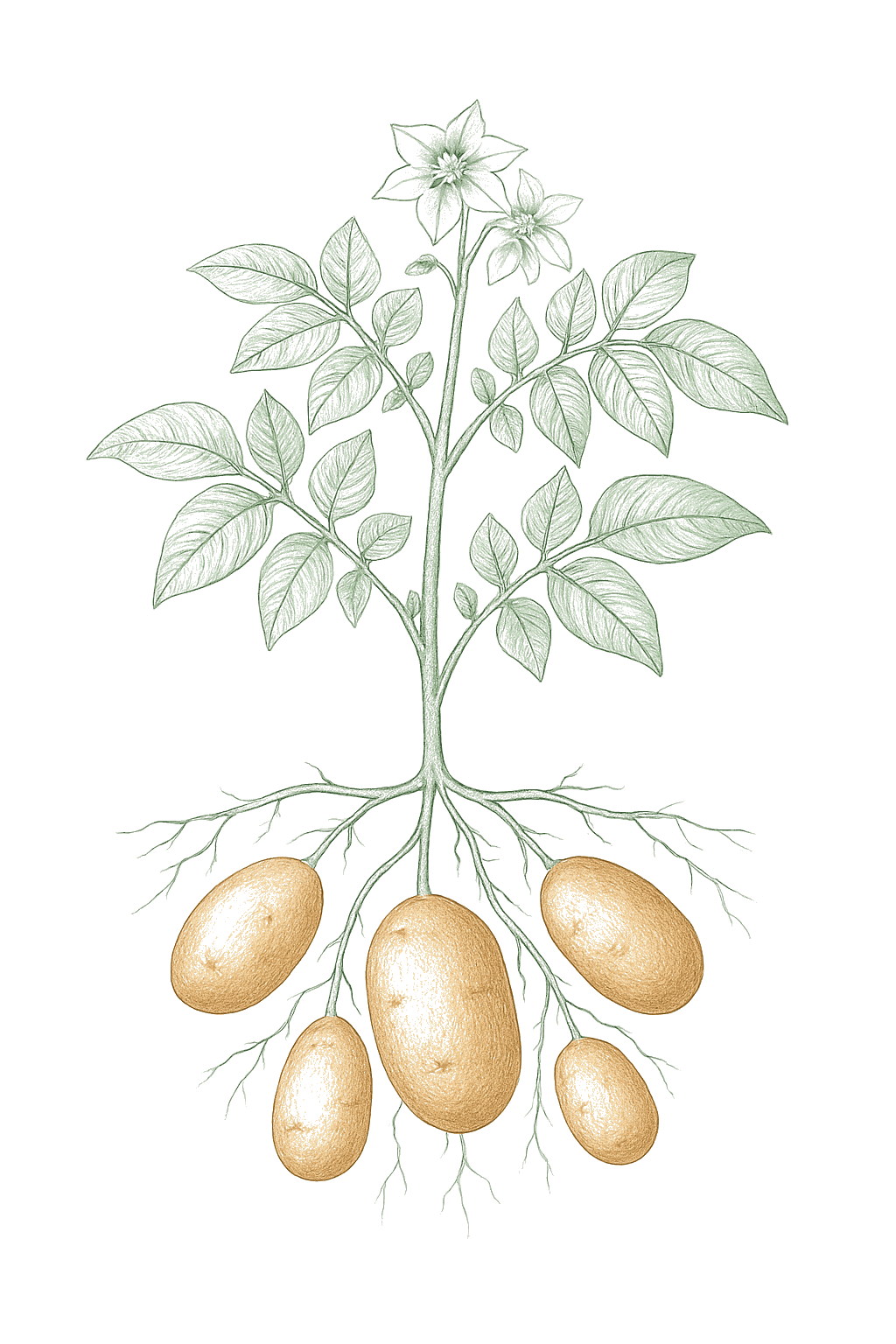
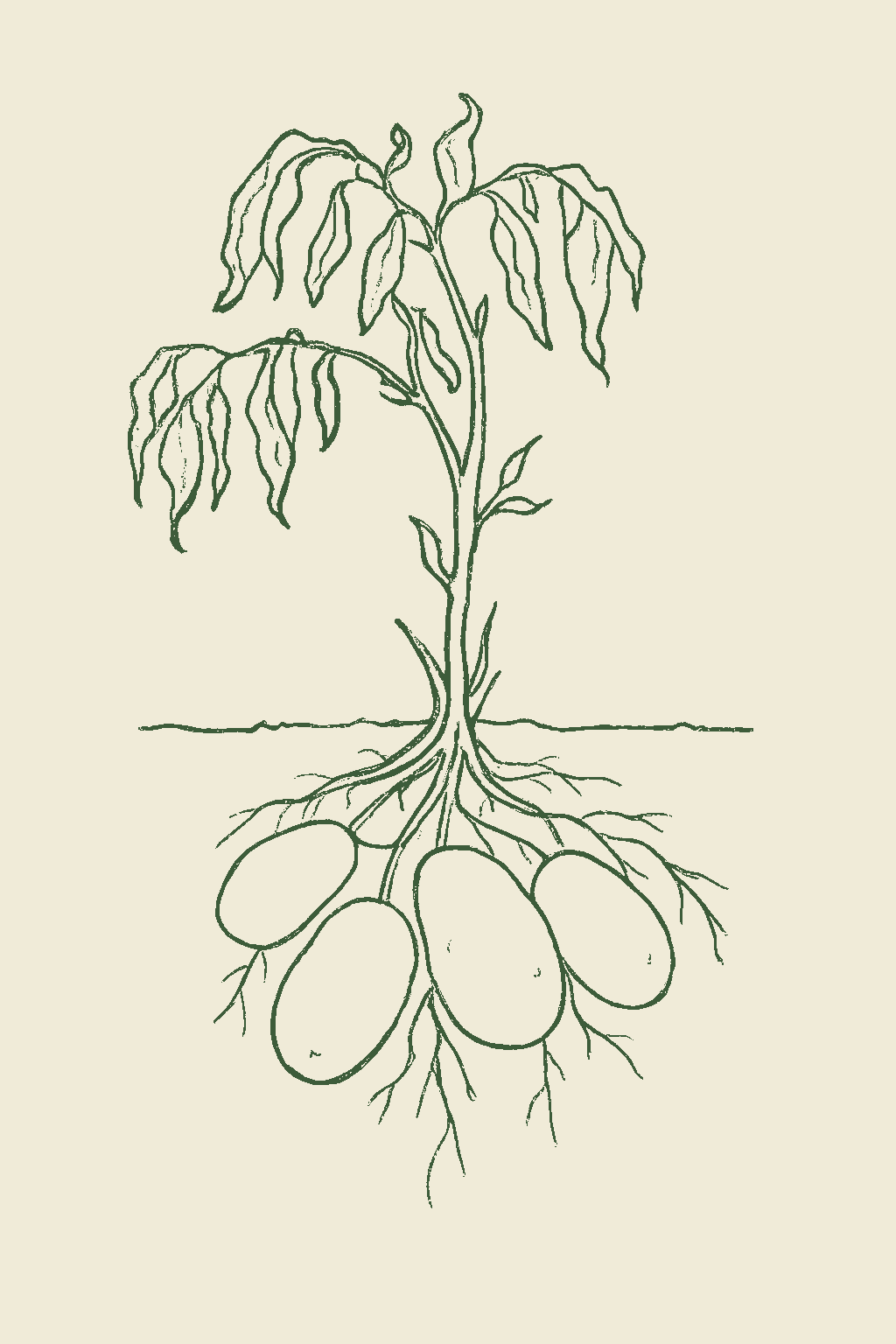
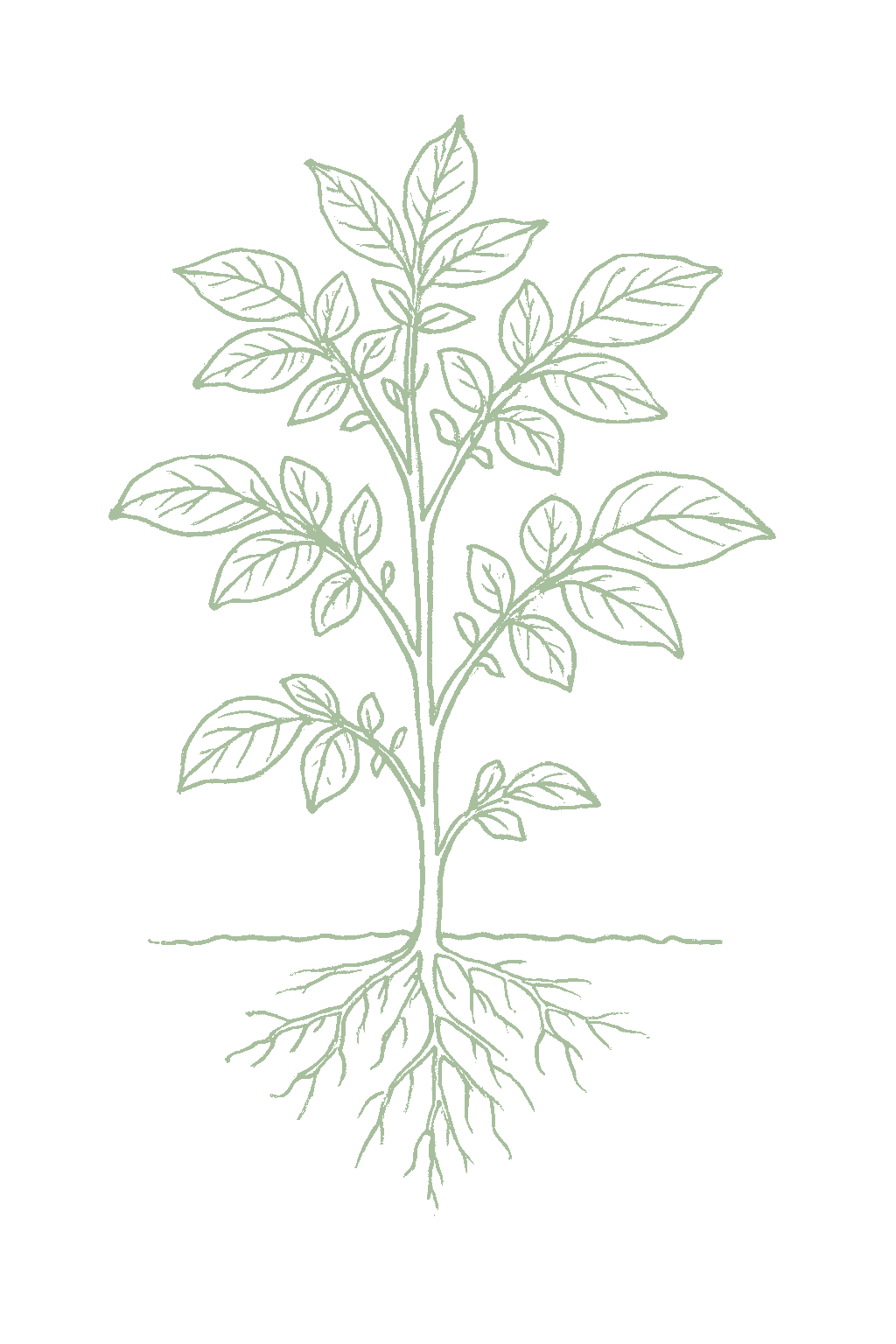
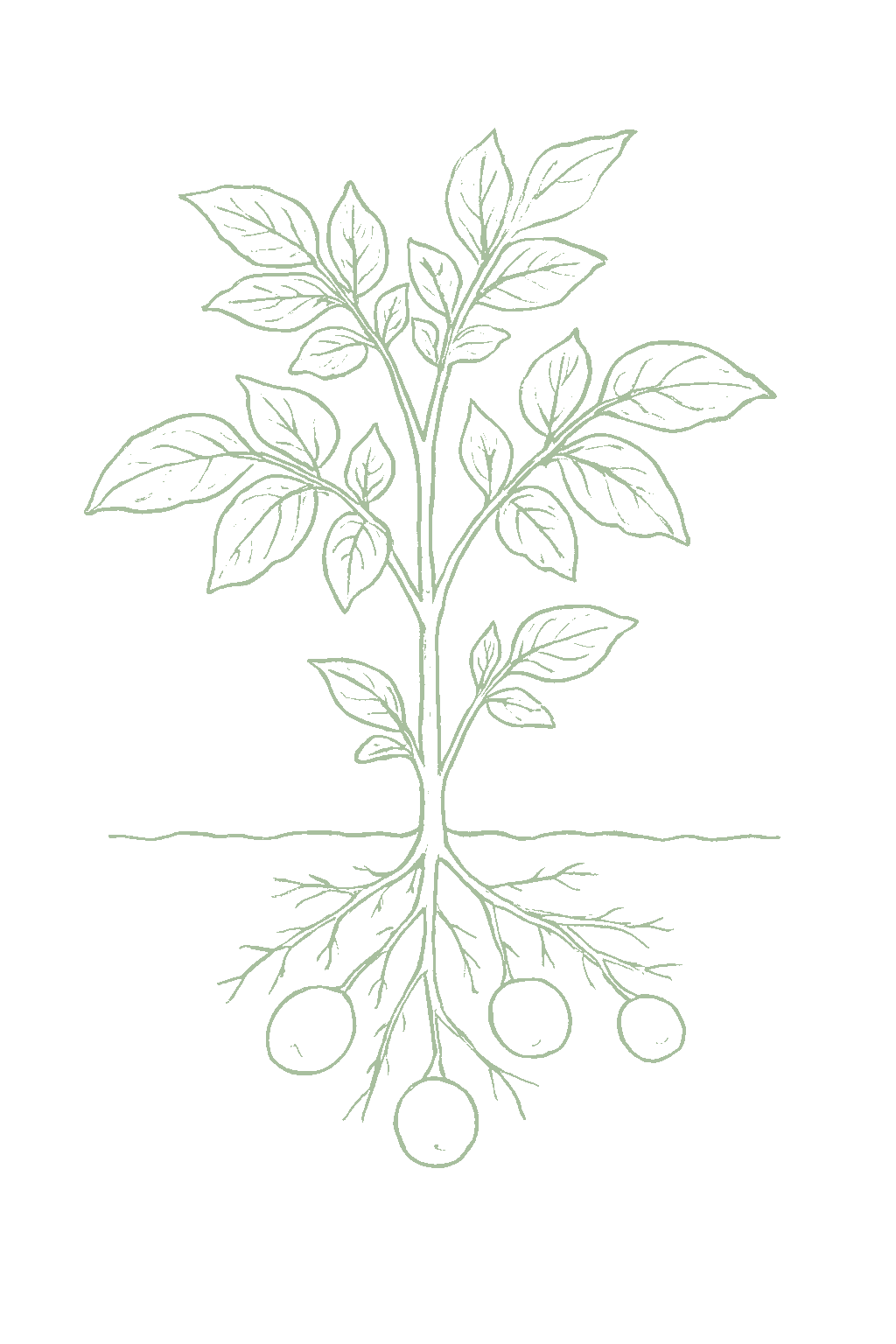
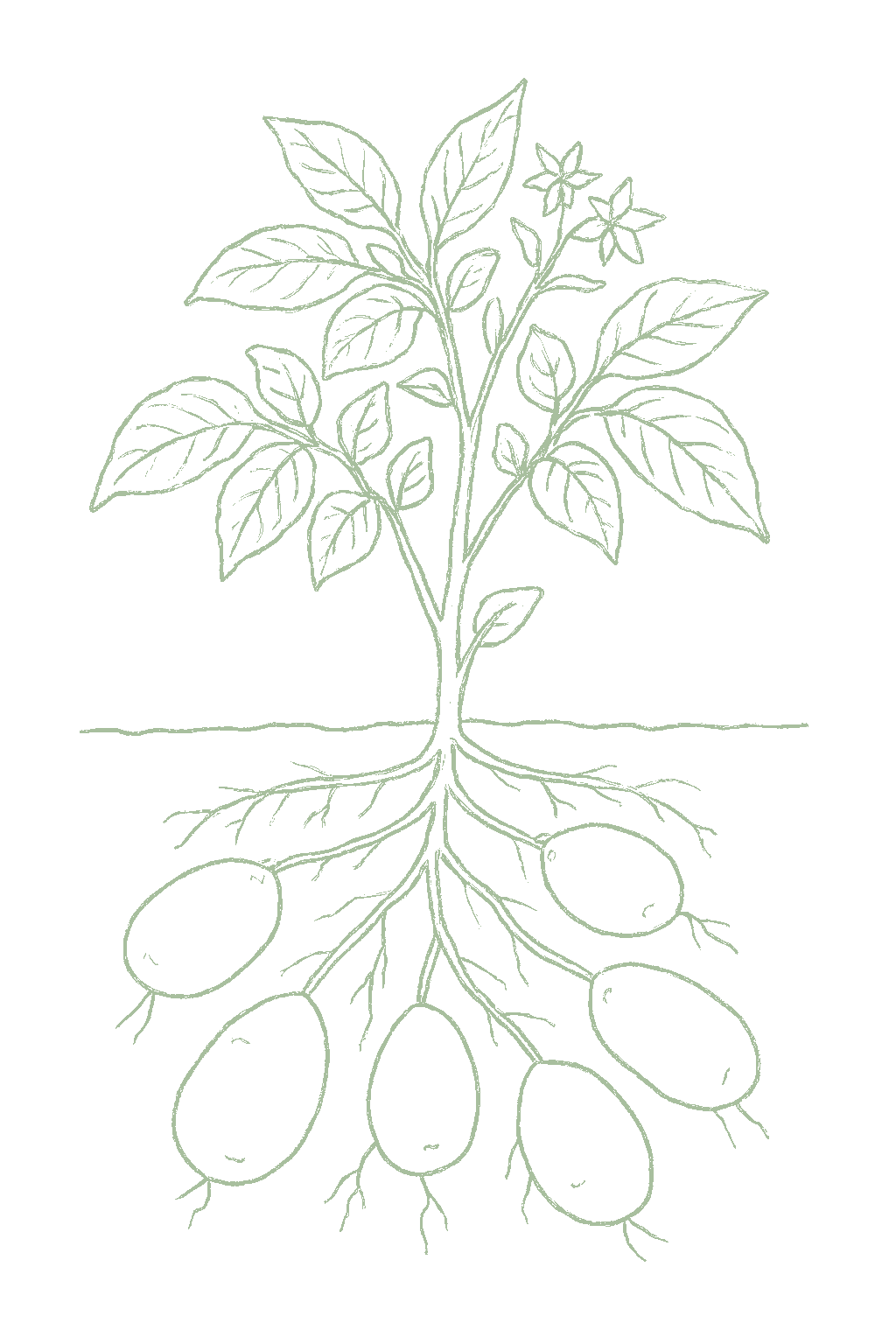
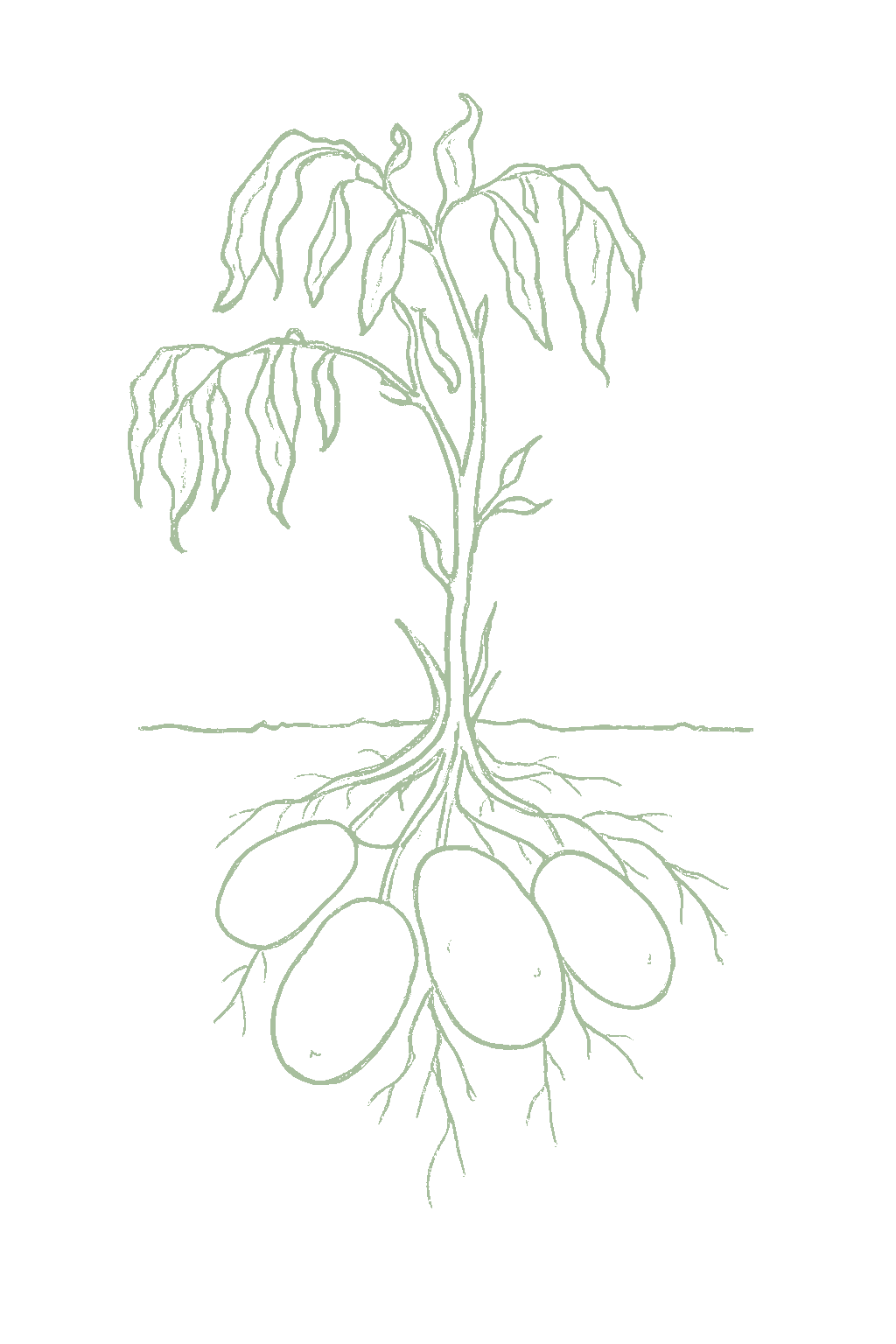
Potatoes are a cool-weather crop grown for the starchy tubers that form underground. You do not grow them from seed: you plant seed potatoes, which are small whole potatoes or cut chunks, each with an eye or two, set right in the soil. The leafy tops are tender and killed by hard frost, so in cold places potatoes are a spring crop, and in warm places they are grown through fall and winter. The key trick is hilling: as the plants grow, you mound soil up over the row. This gives the potatoes room to form and, most importantly, keeps them covered so they do not turn green, because green potatoes are bitter and mildly poisonous. Potatoes grow best in loose, well-drained, slightly acidic soil, and they like cool soil to make tubers, so heat slows them down. They are ready when the tops turn yellow and die back, about 3 to 4 months after planting, and you can dig a few small new potatoes a bit earlier. Keep potatoes away from their cousins (tomatoes, peppers, eggplant), which share the same diseases, especially late blight, the famous one behind the Irish potato famine. Potato (Solanum tuberosum) is a cool-season member of the nightshade family (Solanaceae) grown for its starchy underground tubers. It is planted not from seed but from seed potatoes: small whole tubers or cut pieces, each carrying one or more eyes, set directly in the ground. The foliage is frost tender, so the tops are killed by hard frost even though the crop is grown in the cool season; in cold climates it is a single spring crop, and in mild and hot climates a fall-through-winter crop. The signature practice is hilling: soil is mounded over the row as the plants grow, which expands the zone where tubers form and, critically, keeps them covered and out of the light, since exposed tubers turn green and develop bitter, mildly toxic solanine. Tubers set and bulk best in cool soil, roughly 60 to 70°F, and tuber formation falls off in sustained heat. The crop is ready when the tops yellow and die back, about 90 to 120 days from planting, with thin-skinned new potatoes dug a few weeks earlier. Potatoes prefer loose, well-drained, acidic soil (pH about 5.0 to 6.0, lower than most vegetables) which suppresses common scab, and they are rotated away from their nightshade relatives (tomato, pepper, eggplant) to limit shared disease, above all late blight, the water mold behind the historic Irish potato famine.
Off-season for potato in zone 3.
In Zone 3, potato can be planted May. Harvest runs August through September.
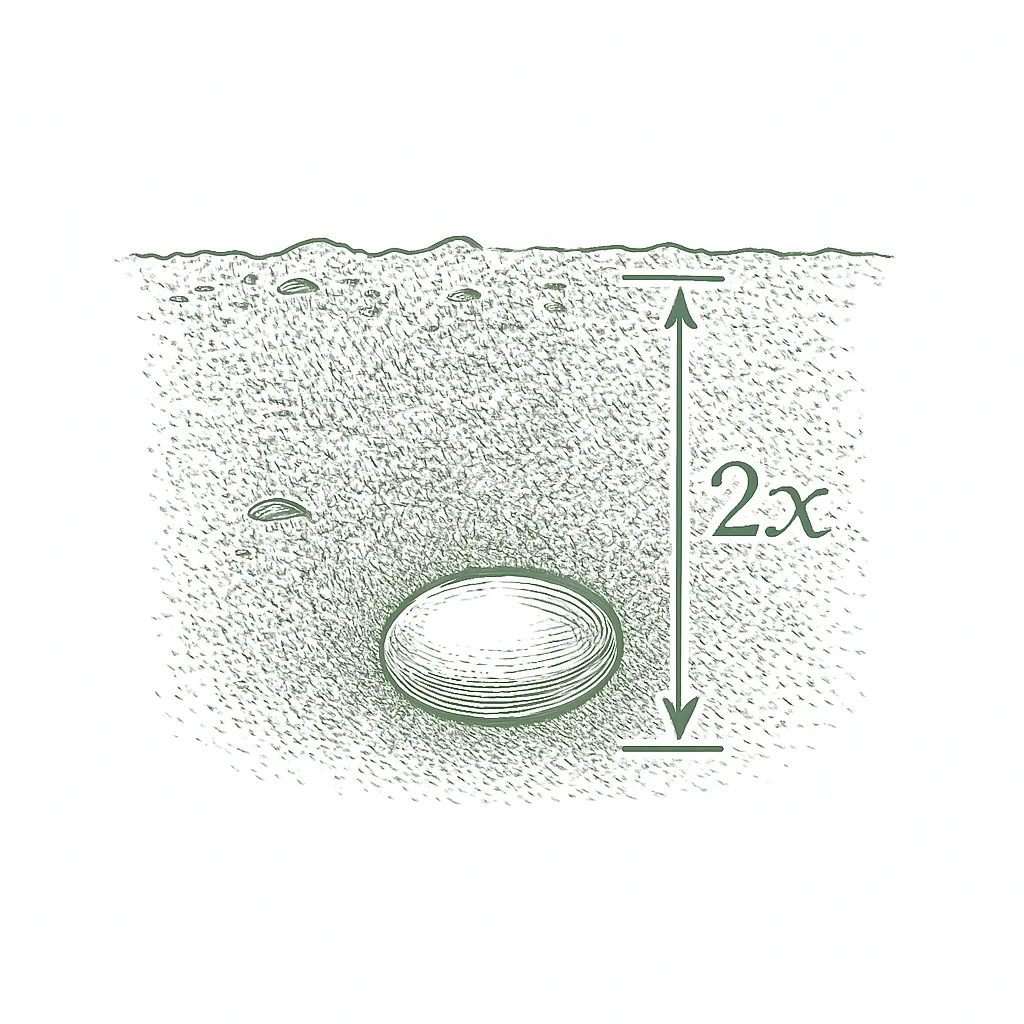
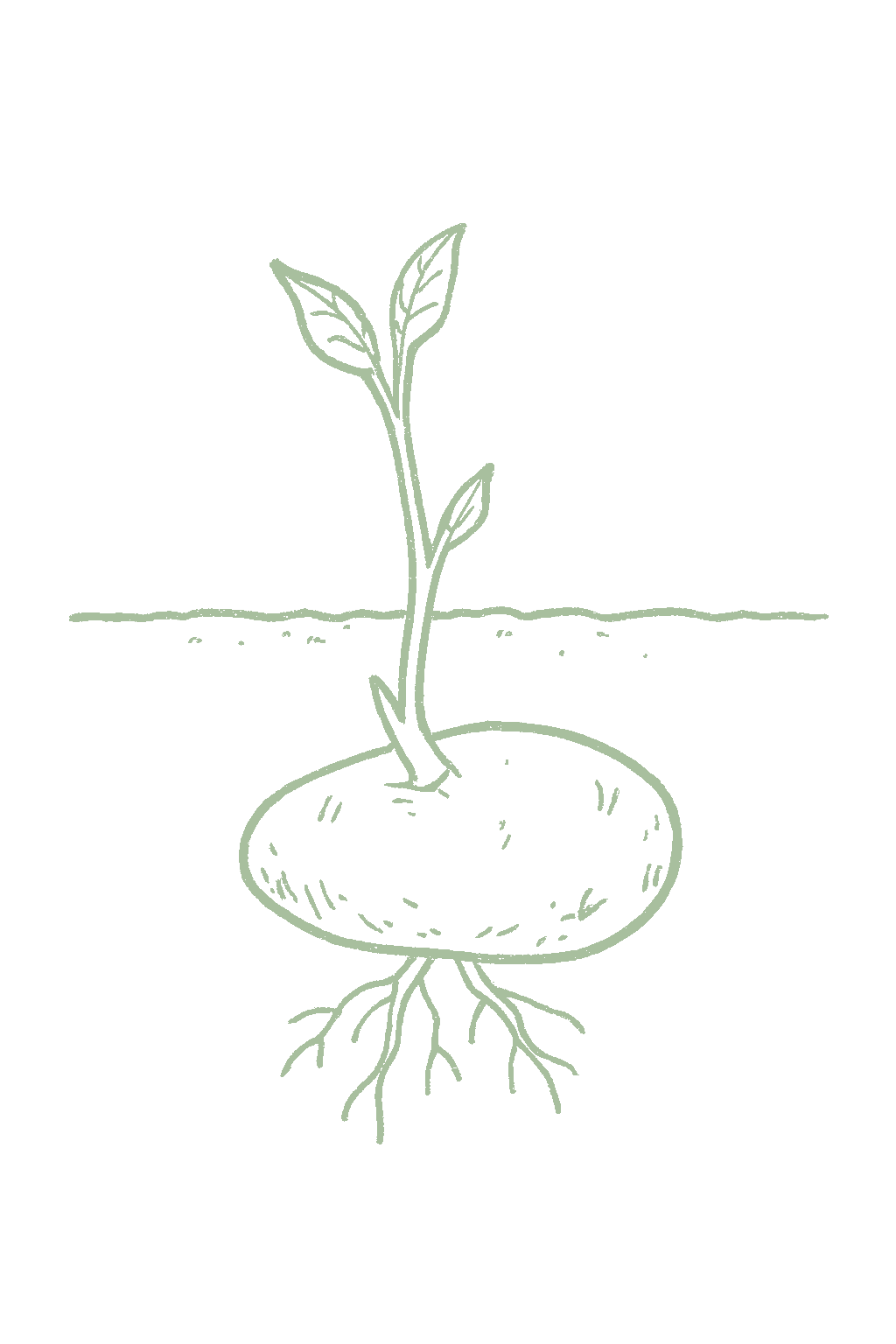
Grow potatoes from seed potatoes, which are small whole potatoes or cut pieces, bought as certified disease-free stock (not from the grocery store, and not from packets of seed). Cut bigger ones into chunky pieces about the size of an egg, each with one or two eyes (the little dimples that sprout), and let the cut sides dry and heal for a few days before planting. Plant the pieces cut-side down about 3 to 5 inches deep, 10 to 12 inches apart, in rows about 3 feet apart, once the soil has warmed to about 50°F. There is nothing to start indoors and nothing to harden off.Plant potatoes from certified seed potatoes, not grocery-store tubers (which may carry disease or be sprout-inhibited) and not true seed. Cut larger seed potatoes into blocky pieces of about 1.5 to 2 ounces, each with at least one or two eyes, and let the cut surfaces heal (suberize) for a few days in a warm, humid spot before planting; small egg-sized tubers can be planted whole. Plant pieces cut-side down about 3 to 5 inches deep in rows 30 to 36 inches apart, spacing the pieces 10 to 12 inches apart, once the soil reaches about 50°F. There is no indoor-start or hardening-off step.
Not sure what soil you have? Grab a small handful of damp soil from your garden bed and squeeze it. If it crumbles apart easily, it's sandy. If it holds together but breaks when you poke it, it's loam (what most vegetables want). If it stays in a hard, slippery ball, it's clay.
Potatoes want loose, well-drained soil that the growing tubers can swell into easily. Light, sandy or loamy soil with plenty of compost works best. Heavy, soggy clay is the main thing to avoid: it holds water and rots the seed pieces and tubers, and it makes the potatoes come out knobby. If your soil is heavy clay, a raised bed or a deep container of loose mix is the easy fix. Keep the soil on the acidic side (pH about 5.0 to 6.0), which also helps prevent scab, the rough corky patches on the skin. Do not add fresh manure, because it makes scab worse.
Mix 2-3 inches of compost into the top 6 inches of your bed before planting. Compost holds moisture (which sandy soil drains too fast) and adds the nutrients sandy soil tends to lack. Repeat each season. Compost breaks down over time.
Mix 2-3 inches of compost AND a few inches of coarse sand or perlite into the top 6 inches of your bed. The compost feeds the plants; the sand breaks up the clay so air and water can move through. Don't add sand without compost. It can compact like concrete.
If amending your soil sounds like too much work, or if your soil is heavy clay, full of rocks, or contaminated, build over it. A raised bed at least 12 inches deep filled with a 50/50 mix of compost and sandy loam gives you ideal growing soil with no battles. A 5-gallon container with quality potting mix does the same for one plant at a time. Both bypass your native soil entirely.
The numbers that matter, at a glance.
Soil pH measures how acidic or alkaline your soil is, on a scale from 1 to 14 where 7 is neutral. Potatoes like it on the acidic side, about 5.0 to 6.0, which is lower (more acidic) than most vegetables. There is a good reason: keeping the soil acidic helps prevent scab, the rough corky patches that form on the potato skin. Scab gets worse when the soil is less acidic and dry, so if scab is a problem, aim toward the low end (around 5.0 to 5.3) and keep the soil evenly moist while the tubers are forming. A cheap soil test from your local extension office tells you your number.Potatoes grow best in acidic soil, roughly pH 5.0 to 6.0, lower than most garden vegetables. The acidity is deliberate disease management: common scab (Streptomyces scabies) is suppressed in acidic soil and worsens as pH rises above about 5.5, especially in dry soil. Where scab is a recurring problem, hold the pH between about 5.0 and 5.3 and keep the soil evenly moist for the 4 to 9 weeks after planting when tubers are forming. Potatoes tolerate a wider band (down to about 4.8 and up to 6.5), and they will grow at neutral pH, but scab pressure climbs with pH, so do not lime a potato bed. A soil test removes the guesswork before planting.
Potatoes need a moderate amount of food. Mix a balanced fertilizer like 10-10-10 into the row when you plant, then feed lightly again about a month later as the plants grow. Do not pile on high-nitrogen fertilizer or fresh manure: too much nitrogen grows big leafy tops but fewer potatoes, and manure makes scab worse. Compost mixed into the bed is the safe way to enrich the soil.Potatoes are moderate feeders. Work a balanced fertilizer such as 10-10-10 into the row at planting (UGA suggests about 1.5 pounds per 100 square feet), then side-dress lightly about 4 weeks later as the tops fill in and again as the vines spread. Favor balanced feeding over heavy nitrogen: excess nitrogen grows lush vines and delays tuber formation, and fresh manure encourages scab, so use only well-finished compost. Adequate potassium supports tuber quality.
The three numbers on a fertilizer bag are nitrogen, phosphorus, and potassium (N-P-K). Potatoes do best with a balanced fertilizer like 10-10-10, not a high-nitrogen one. Too much of the first number grows leaves instead of potatoes, and fresh manure brings on scab, so use compost and a balanced feed.Potatoes are moderate feeders that want balanced nutrition with good potassium and only modest nitrogen. A balanced blend such as 10-10-10 worked into the row at planting covers most home soils. Too much nitrogen drives vines instead of tubers, and fresh manure encourages scab, so lean on compost and a balanced fertilizer rather than a high-nitrogen feed.
Potatoes are easygoing with most neighbors. Beans and peas are a classic match because they add nitrogen to the soil, and bush beans are said to help keep the Colorado potato beetle down. The plants to keep well away are potato's nightshade relatives, tomato, pepper, and eggplant, because they share the same diseases, especially late blight, and the same soil pests. Do not trust every companion chart online; many of their claims have never been tested. Potatoes mix easily into the garden. The best-grounded pairings are with legumes (beans, peas), which fix nitrogen and are traditionally credited with deterring the Colorado potato beetle. The clearest avoids are potato's own family, the nightshades: tomato, pepper, and eggplant share late blight and other soilborne diseases and pests, so keep them apart and rotate among them on a multi-year cycle. Most other companion-chart claims for potato are folklore; treat them with healthy skepticism, since university reviews find little evidence behind most of them.
You can tell potatoes are ready by the plants, not a set date. Small new potatoes can be dug gently at the side of a plant from about 7 to 8 weeks after planting, and are best eaten fresh. The main crop is ready when the tops turn yellow and die down, about 3 to 4 months after planting. If you want to store them, leave them in the ground about two weeks after the tops die so the skins toughen, then dig on a dry day with a fork, pushing it in well away from the plant so you do not stab the potatoes. Let them dry off out of the sun, brush off the dirt (do not wash them), and keep them in the dark. Always keep potatoes covered and out of the light, because light turns them green and bitter, and green potatoes are mildly poisonous.Potatoes are ready to harvest based on the foliage, not a fixed date. New potatoes, thin-skinned and best used fresh, can be dug carefully at the edge of a hill from about 7 to 8 weeks after planting. The main crop is mature when the tops yellow and die back, roughly 90 to 120 days from planting. For storage potatoes, leave them in the ground about two weeks after the vines die so the skins set and toughen, then dig on a dry day, pushing a fork in well outside the hill so you do not spear tubers. Lift, let them dry briefly out of direct sun, brush off soil (do not wash), and cure in the dark at about 50 to 60°F for two weeks before storing. Keep tubers covered and shaded at every stage, since light greens them and produces bitter, mildly toxic solanine.
About 5 to 10 potatoes, roughly 1 to 2 pounds, from each plant when things go well, though it varies a lot. By the row, expect something like 20 to 30 pounds from a 10-foot row.Roughly 5 to 10 tubers, about 1 to 2 pounds, per plant in good conditions, varying widely with variety, season length, and care. Yield is best thought of by row: Iowa State puts a home crop at about 20 to 30 pounds per 10 feet of row.
A potato planting is ready all at once, about 3 to 4 months after planting, and you dig it when the tops die back (with a few early new potatoes from about 7 to 8 weeks). It does not keep producing after that, so store the cured crop for a longer supply.A potato planting matures over a single window, about 90 to 120 days, and is dug once when the vines die back, with optional earlier new-potato digs from about 7 to 8 weeks. It is not a repeat-harvest crop; for a longer supply, stagger plantings where the season allows, or store the cured main crop. Potatoes are grown fresh each year from seed pieces, so your first crop can do as well as any later one. What matters is good seed, loose well-drained soil, steady water, and finishing in cool weather.Potatoes are grown fresh from seed pieces each season, so there is no first-year-versus-later difference as with perennials; results depend on certified seed, loose well-drained soil, even moisture, and finishing in cool weather.
Pick a variety for your area and how soon you want potatoes. Early kinds like Yukon Gold and Irish Cobbler are ready fastest and are good where summers turn hot. Later kinds like Kennebec and Russet Burbank give bigger harvests and store longer. In the South, grow thin-skinned reds and golds (Red Pontiac, Yukon Gold) rather than thick brown russets. If scab or blight is a problem in your garden, choose a resistant variety. Always buy certified disease-free seed potatoes, not grocery-store ones.Choose by maturity and your climate. Early varieties (Irish Cobbler, Yukon Gold) finish fastest and suit short seasons and hot-summer regions where the crop must beat the heat; mid and late varieties (Kennebec, Russet Burbank) yield more and store better where the season is long. In the South, thin-skinned reds and whites (Red Pontiac, Yukon Gold) outperform thick russets, which size up poorly there. Where scab or late blight recurs, lean on resistant or tolerant varieties (Russet Burbank or Superior for scab; Kennebec or Sebago for late blight). Always start from certified disease-free seed potatoes.
Move your potatoes to a different spot each year and do not put them (or tomatoes, peppers, and eggplant) back in the same bed for about 3 to 4 years. This keeps diseases and pests from building up. Planting potatoes after beans or peas is great, since those add nitrogen.Rotate potatoes on a 3 to 4 year cycle, keeping them and all other nightshades out of a bed for several seasons. This breaks the buildup of late blight, early blight, scab, Verticillium, and nightshade pests. Following a legume (which adds nitrogen) or a non-host crop is ideal; following a heavily manured crop is not, because residual conditions favor scab.
The plant app sends a timely reminder at every critical moment of your potato season. The wording adjusts to whichever you pick: beginner or seasoned. Here are three you'll see in Zone 3.
plant sends the right notification at exactly the right moment, for your zone, your weather, your crops. Founding members lock the rate forever.
We're building this guide with real growers. Got a question we missed? Ask here. We read every one and add the best answers right to this page.
Learned something the hard way? Pass it on. Real growers' tips make this guide better for the next person, and we credit you by name when yours goes live.
If you've grown this crop and you see a date, a temperature, a companion claim, or a recommendation that doesn't match your experience, tell us. Real growers' corrections make this guide better for the next person.
Every date, temperature, spacing, and recommendation on this page is sourced from university cooperative extension publications, peer-reviewed agricultural research, NOAA climate data, and direct extension calendars. Where claims are softer (traditional gardening wisdom not formally documented), we say so.
Spot a data point that doesn't match your experience? Submit a correction; accepted corrections earn full author credit on the page.
Zone-aware seasonal nudges, what's worth planting now, and the occasional recipe from the harvest. No spam, ever.