Today · in your zone
What's happening right now
Off-season for spinach in zone 5.
Tap to switch. plant calibrates to where you are in the journey.
Spinach is a fast-growing, very cold-hardy leafy green grown in the cool parts of the year. It handles frost better than almost any other vegetable and can even live through winter under a cover to give you the first greens of spring. But it does not like heat and long summer days, which make it bolt (send up a flower stalk) and turn bitter quickly. That is why spinach grows best in fall and early spring, and why in hot places it is a winter crop. It comes in smooth-leaf types that are easy to wash and crinkly savoy types that are extra hardy, and it likes rich, moist soil that is not too acidic. Spinach (Spinacia oleracea) is a fast, very cold-hardy leafy annual in the goosefoot family, grown for its tender, nutrient-dense leaves in the cool halves of the year. It is one of the hardiest garden vegetables, surviving hard frost into the low 20s°F and overwintering under snow or a row cover for the earliest spring harvest, yet it is also one of the quickest to bolt: lengthening days past about 13 to 14 hours, sped by heat and drought, send it to seed and turn the leaves bitter. That combination makes fall the main season nearly everywhere, with a short early-spring window and, in hot regions, a fall-through-spring winter crop. Spinach comes in three leaf types, smooth (flat), semi-savoy, and savoy (heavily crinkled), and is sensitive to acidic soil, preferring a near-neutral, fertile, evenly moist bed.
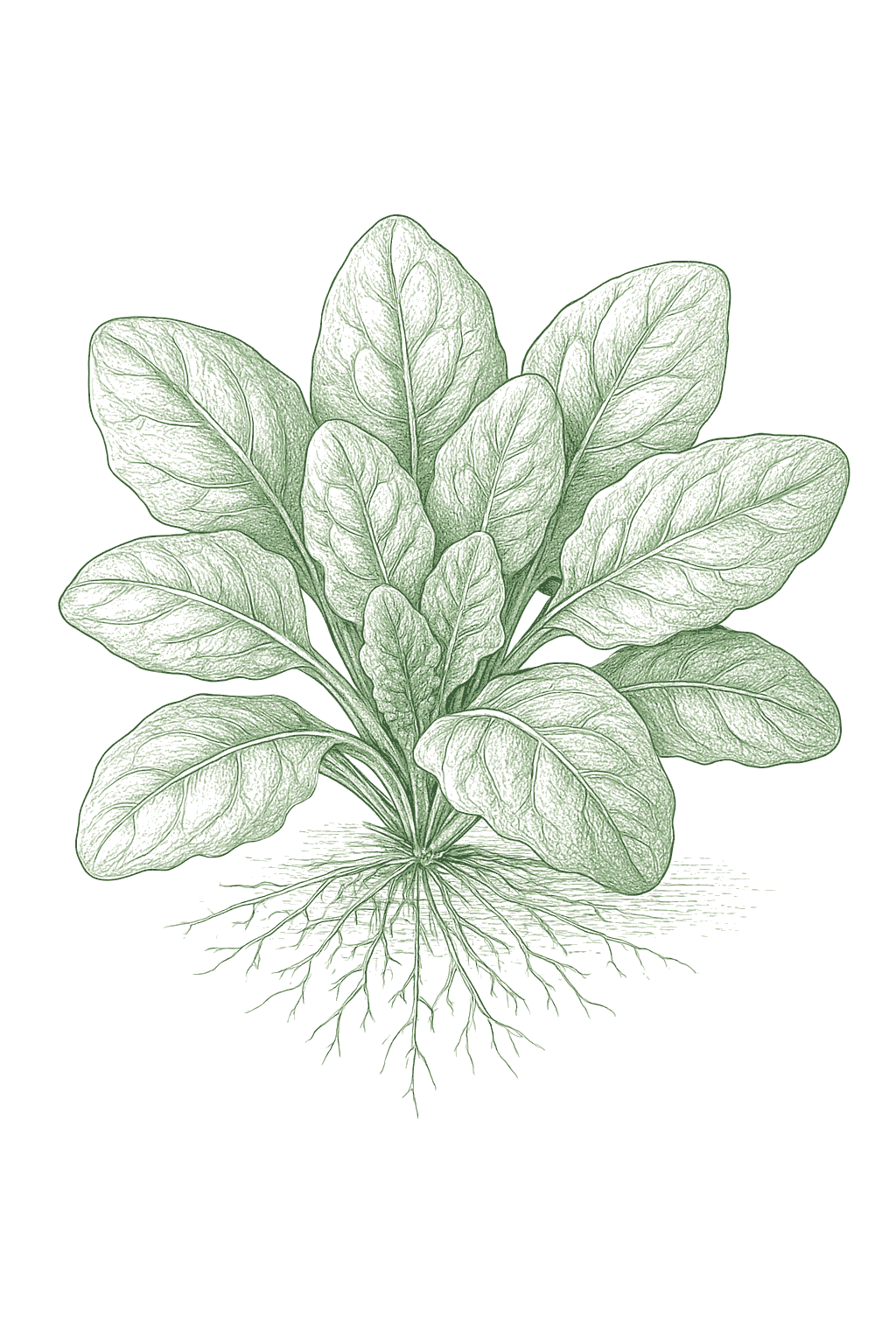
Off-season for spinach in zone 5.
In Zone 5, spinach can be planted March through June, then again August through September, skipping the summer heat. Harvest runs May through October.
Plant a little spinach every week or two instead of all at once, so you get a steady supply before it bolts. Do this in early spring and again in late summer for fall. In hot areas, skip summer and keep sowing through the cool months.Spinach matures fast and bolts hard, so sow small batches every 1 to 2 weeks through the cool windows rather than all at once: across spring until days lengthen and warm, and again from late summer through fall, which is the longer, more reliable run. In hot regions skip summer entirely and succession-sow through the cool fall, winter, and spring.
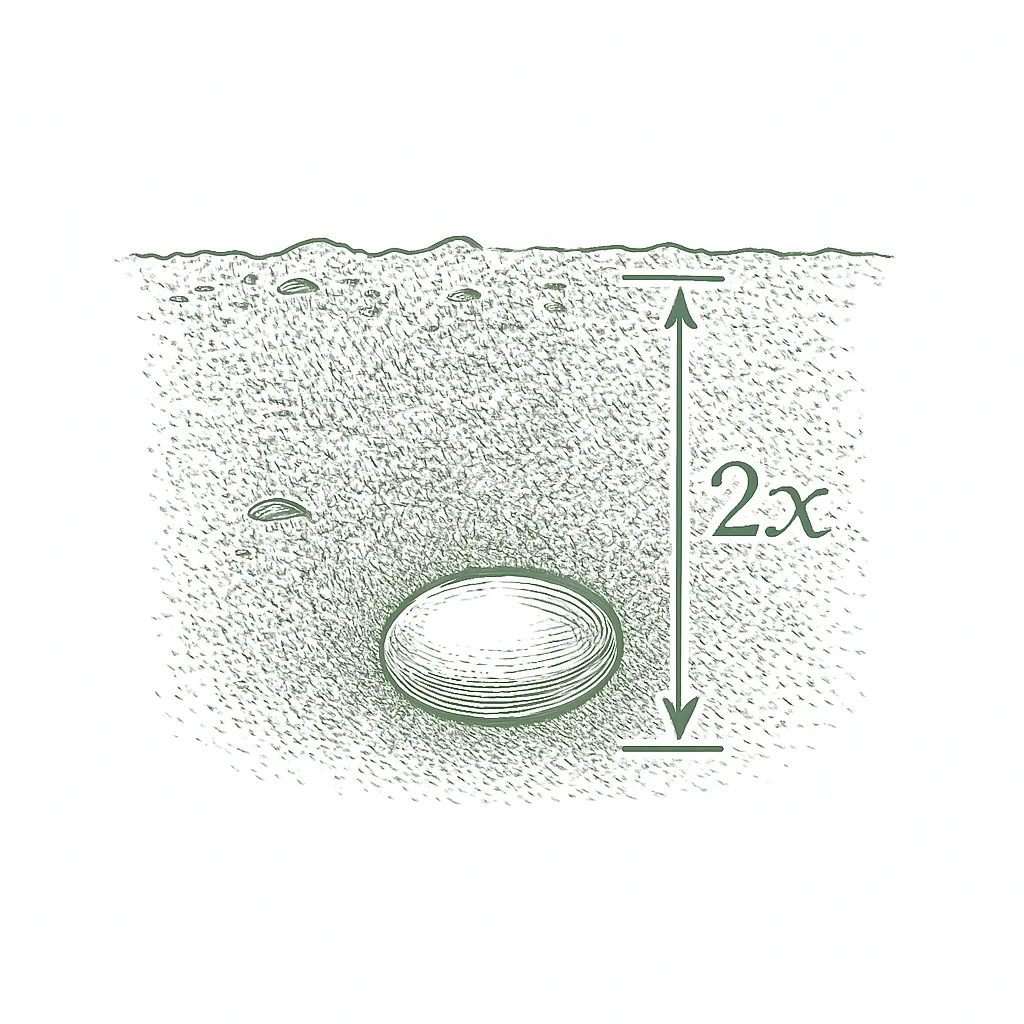
Spinach is best planted straight in the garden from seed, because it grows quickly and does not like having its roots disturbed. Sow the seeds about half an inch deep as soon as the soil can be worked in spring, and again in late summer for a fall crop. The seeds sprout even in cold soil, but they will not come up well in hot soil, so do not sow in the heat of summer.Spinach is almost always direct-sown, since it grows fast and resents root disturbance. Sow seed about 0.5 inch deep as soon as the soil can be worked in spring (it germinates in soil as cool as 40°F), and again in late summer for the main fall crop. Transplanting is possible from cells or soil blocks for an early start or to place an overwintering crop, but handle the roots gently. Germination is poor in soil above about 75 to 85°F, so summer sowings in warm regions wait for cooling soil.




Not sure what soil you have? Grab a small handful of damp soil from your garden bed and squeeze it. If it crumbles apart easily, it's sandy. If it holds together but breaks when you poke it, it's loam (what most vegetables want). If it stays in a hard, slippery ball, it's clay.
Spinach likes rich, loose soil that holds moisture but drains well, with lots of compost mixed in. The one thing it really cares about is not-too-acidic soil, so if your ground is very acidic, add a little lime to bring it closer to neutral. A quick soil test tells you where you stand.
Mix 2-3 inches of compost into the top 6 inches of your bed before planting. Compost holds moisture (which sandy soil drains too fast) and adds the nutrients sandy soil tends to lack. Repeat each season. Compost breaks down over time.
Mix 2-3 inches of compost AND a few inches of coarse sand or perlite into the top 6 inches of your bed. The compost feeds the plants; the sand breaks up the clay so air and water can move through. Don't add sand without compost. It can compact like concrete.
If amending your soil sounds like too much work, or if your soil is heavy clay, full of rocks, or contaminated, build over it. A raised bed at least 12 inches deep filled with a 50/50 mix of compost and sandy loam gives you ideal growing soil with no battles. A 5-gallon container with quality potting mix does the same for one plant at a time. Both bypass your native soil entirely.
The numbers that matter, at a glance.
Spinach grows best in soil that is close to neutral, about 6.5 to 7.5. It does not like acidic soil, so if a soil test reads below 6.0, mix in some lime before planting.Aim for a soil pH of about 6.5 to 7.5; spinach is one of the more acid-sensitive vegetables and yields drop on soils below roughly 6.0, where manganese can become available enough to injure the plant. Clemson advises a 6.0 to 7.0 minimum and the University of Minnesota up to about 8, so lean to the neutral-to-slightly-alkaline side and lime an acid plot the season before.
Spinach grows fast and likes nitrogen for big green leaves. Mix some compost or fertilizer into the soil before planting, then give it one feeding of a nitrogen fertilizer about 3 to 4 weeks after the seeds come up. Because the crop is quick, you usually do not need to feed it more than that.Spinach is a fast leafy crop that runs on nitrogen, but the season is short, so one or two feedings are usually enough. Work compost or a balanced fertilizer in before sowing, then side-dress with nitrogen about 3 to 4 weeks after planting (or at thinning) to push tender, dark-green leaves. Utah State suggests about a quarter cup of 21-0-0 per 10 feet of row; Clemson uses calcium nitrate. Avoid heavy late feeding, since spinach readily takes up nitrate and lush growth draws aphids and leafminers.
Use a nitrogen-rich feed such as blood meal or a 21-0-0 fertilizer once the plants are a few weeks old.High N for leafy growth; e.g. a quarter cup of 21-0-0 per 10 ft of row, or calcium nitrate (15.5-0-0), side-dressed 3 to 4 weeks after sowing. No phosphorus or potassium needed beyond a soil-test baseline.
Spinach is small, fast, and shade-tolerant, so it tucks in well between slower, taller crops. It grows happily next to peas and beans, strawberries, and members of the cabbage family, and it does not get along badly with much. Just keep it away from its close relatives beets and chard, which share its leafminer pest. Most spinach companion pairings rest on space, timing, and tradition rather than measured effects. The practical ones are structural: spinach is shallow-rooted, quick, and tolerates light shade, so it interplants under or beside taller, slower crops (peas, beans, brassicas) and is harvested before they crowd it. The one well-grounded caution is to separate spinach from beets and Swiss chard, its close relatives in the goosefoot family, which share the spinach leafminer and several diseases, a rotation and pest principle more than a tested adjacency effect.
Spinach is ready to pick when the leaves are about 3 to 6 inches long and tender, around 37 to 50 days after planting. Take the outer leaves a few at a time, or cut the whole plant an inch above the soil so it grows back. Pick in the cool morning, and harvest it all before it starts to flower (bolt), because the leaves get bitter then.Spinach is ready when the leaves are 3 to 6 inches long, dark green, and tender, usually 37 to 50 days from sowing (baby leaf sooner). Harvest the outer leaves cut-and-come-again, or cut the whole rosette about an inch above the crown and let it regrow; pick in the cool morning and crop faster as days lengthen, since the leaves turn bitter once the plant bolts.
Each spinach plant gives a small bunch of leaves, so it is grown in rows or patches rather than one big plant. A short row of plants gives several pickings before they bolt.A single spinach plant yields a modest rosette of leaves, roughly 0.25 pound, over a few weeks; the crop is grown in quantity rather than per plant. Utah State cites about 4 to 6 pounds per 10-foot row.
Spinach produces the most in the cool weather of fall and early spring. A spring crop gives a few good weeks and then bolts, but a fall crop lasts longer and can carry into winter under a cover.Production peaks in the cool weeks of fall and early spring; a spring crop produces hard for a few weeks and then ends abruptly at bolt, while the fall crop holds longer under shortening days and, with cover, into winter. The trick with spinach is timing. Plant early in spring or in late summer for fall, and pick often once the leaves are big enough. Most beginners plant too late in spring and the plants flower before giving much, so try fall, which is easier.The key to total yield is timing and frequent picking: get the crop in early enough to mature before the bolt-triggering long days, harvest often once leaves size up, and lean on the fall and overwintering crops for the longest harvest. New growers usually sow too late in spring and lose the crop to bolt.
For spring, pick slow-bolting kinds like Bloomsdale Long Standing or Tyee so the plants last longer before flowering. Melody and Space are easy, disease-resistant choices. For a fall or winter crop, grow a hardy type like Giant Winter. Smooth-leaf varieties are easiest to wash; the crinkly savoy types are the most cold-hardy but hold more grit.Match the variety to the slot. For the short spring window and any warm stretch, lean on slow-bolting (long-standing) types like Bloomsdale Long Standing, Tyee, and Olympia. Where downy mildew is a concern, choose resistant cultivars (Tyee, Melody, Space, and newer race-resistant hybrids). For fall and overwintering, the hardiest savoys (Giant Winter, Bloomsdale) take the most cold. Smooth-leaf types (Space, Olympia) wash easily and suit baby-leaf and containers; savoys are hardiest but trap grit; semi-savoys split the difference.
Do not plant spinach, beets, or chard in the same spot year after year. Waiting at least 3 years between these related crops helps avoid the leafminer and soil diseases that build up in the ground.Rotate so spinach and its goosefoot relatives (beets, chard) do not return to the same ground for at least 3 years. The spinach leafminer overwinters as pupae in the soil and Fusarium wilt persists for years, so a long rotation away from the whole family is the core defense; deep spring cultivation also helps bury leafminer pupae.
The plant app sends a timely reminder at every critical moment of your spinach season. The wording adjusts to whichever you pick: beginner or seasoned. Here are three you'll see in Zone 5.
plant sends the right notification at exactly the right moment, for your zone, your weather, your crops. Founding members lock the rate forever.
We're building this guide with real growers. Got a question we missed? Ask here. We read every one and add the best answers right to this page.
Learned something the hard way? Pass it on. Real growers' tips make this guide better for the next person, and we credit you by name when yours goes live.
If you've grown this crop and you see a date, a temperature, a companion claim, or a recommendation that doesn't match your experience, tell us. Real growers' corrections make this guide better for the next person.
Every date, temperature, spacing, and recommendation on this page is sourced from university cooperative extension publications, peer-reviewed agricultural research, NOAA climate data, and direct extension calendars. Where claims are softer (traditional gardening wisdom not formally documented), we say so.
Spot a data point that doesn't match your experience? Submit a correction; accepted corrections earn full author credit on the page.
Zone-aware seasonal nudges, what's worth planting now, and the occasional recipe from the harvest. No spam, ever.