Pick your zone and the dates re-calibrate.
The Guide Flowers Vol. 003

Sunflower

in Zone 12, this week

Sunflowers are easy, fast, cheerful flowers grown both for their blooms and for edible seeds that people and birds love. They come in a huge range: towering giants over 10 feet tall with one big head, bushy branching types with lots of smaller flowers, and little dwarf kinds under 2 feet for pots. Plant the large seeds straight into warm soil after your last frost, because sunflowers have a deep taproot and do not like being moved. They love heat and full sun and handle dry spells well. Young plants turn to follow the sun across the sky, and the open flowers bring in bees and butterflies. Watch out: birds and squirrels will raid the ripening seed heads, so cover them if you want to save the seeds. One thing to know is that sunflowers can hold back a few nearby plants with natural chemicals from their roots and old stalks, so it is smart to plant them along an edge. Sunflower (Helianthus annuus) is a fast, warm-season, frost-tender annual in the Asteraceae family, native to North America and grown both as an ornamental and for its edible, wildlife-valuable seed. Cultivars range enormously: from single-stem giants that top 10 feet with one massive head, to multi-branching types that carry many smaller blooms, to dwarf forms under 2 feet for pots and edging, in oilseed, confection, and pollen-free cut-flower classes. It is direct-sown into warm soil after frost (the big taproot resents transplanting), thrives in heat, full sun, and even lean soil, and is notably drought-tolerant once established. Young plants are heliotropic, tracking the sun east to west by day, while mature heads settle facing east. The flowers are a major pollinator and beneficial-insect draw, and the ripening seed heads are a magnet for birds and squirrels. Note its mild allelopathy: roots and decomposing residue release compounds that can suppress some neighboring plants, so it is best sited at a bed edge.
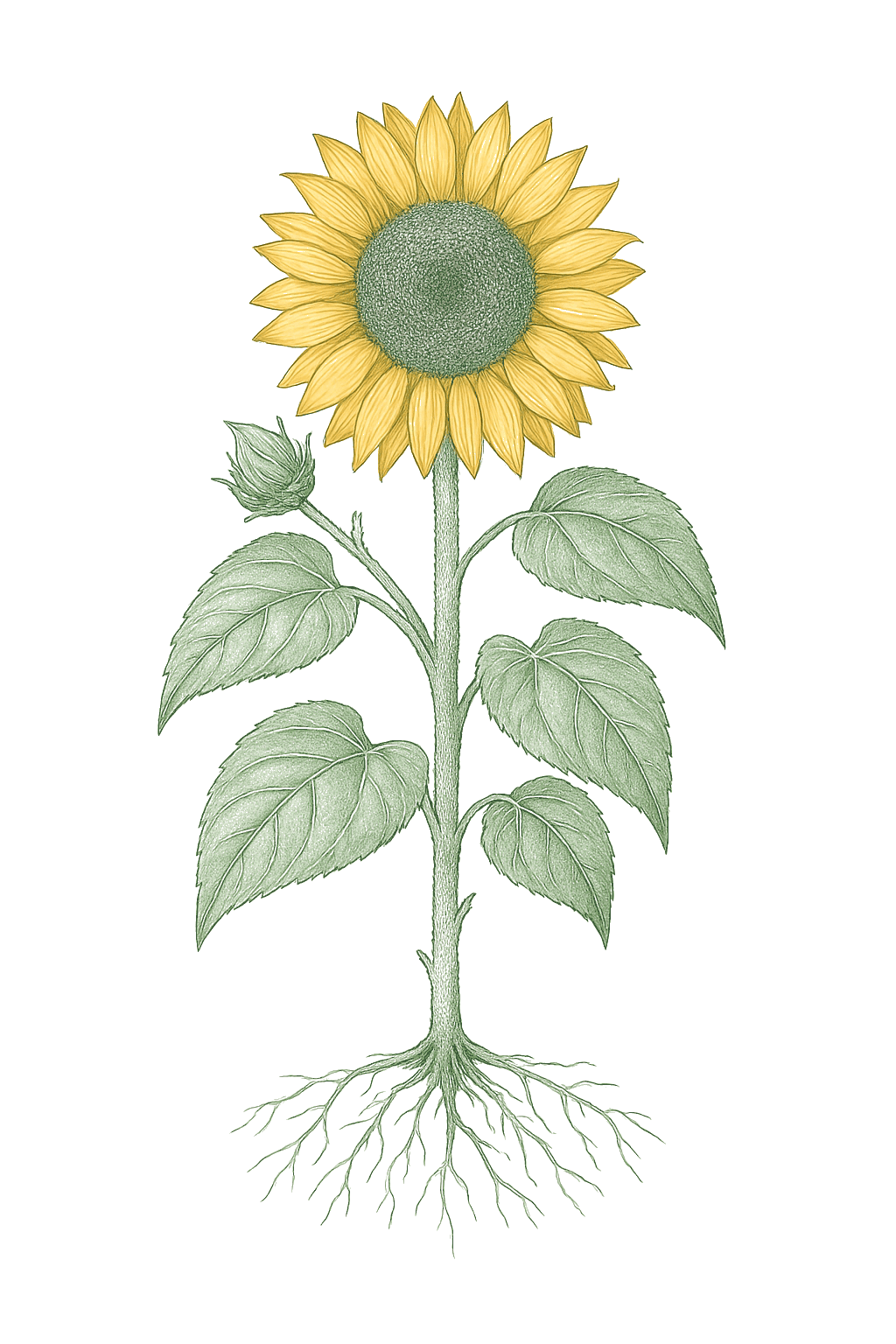
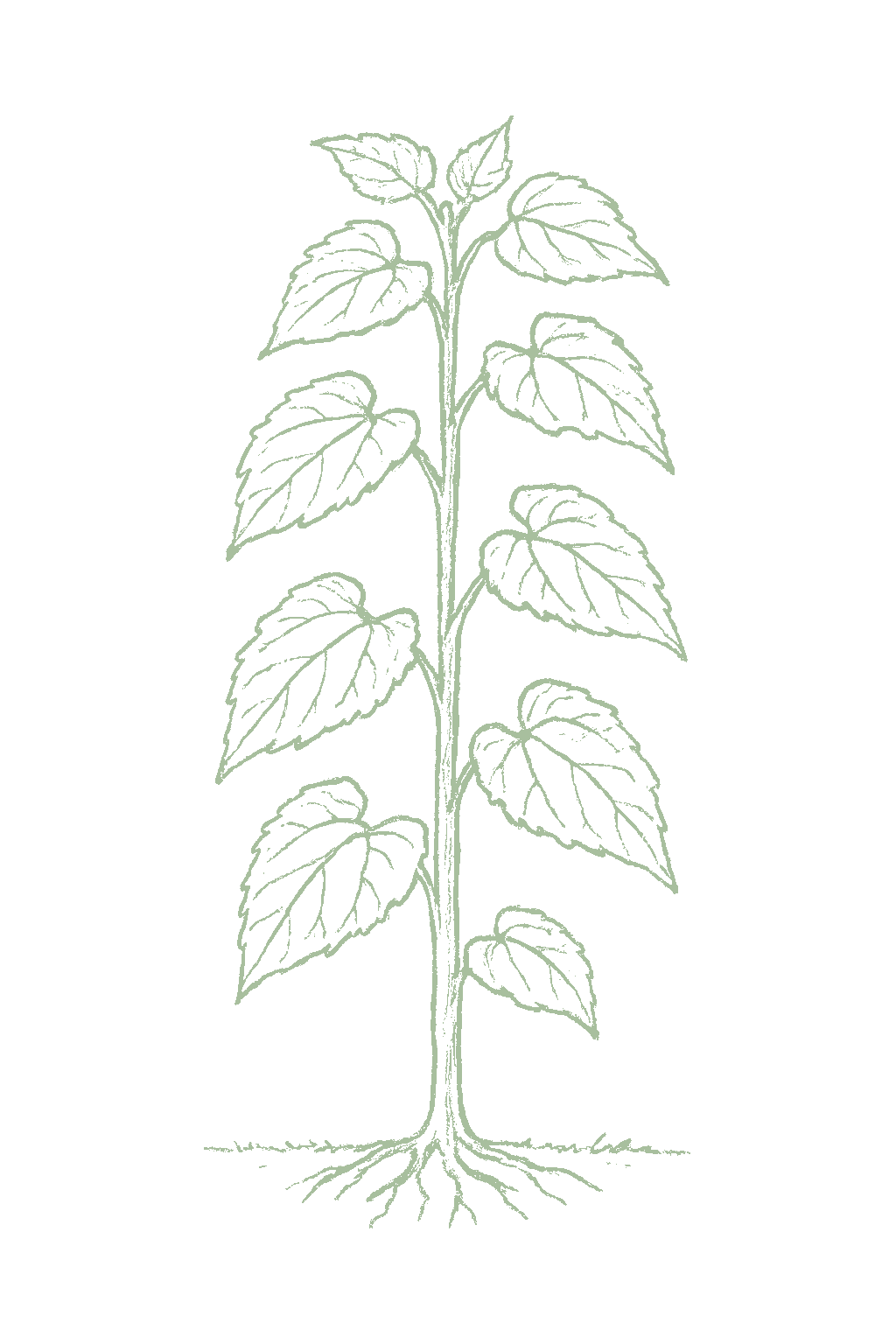
Sunflower mature plant
Fig. 01 · Sunflower, mature Zone 12
Mature in
60-100d
from transplant
Sunlight
Full sun
6-8 hrs daily
Water
Moderate
1 inch / week
Spacing
6-24"
between plants
Soil pH
6-7.5
slightly acidic
Today · in your zone

What's happening right now

July 24 · Zone 12 · Stage 01 · Germination

Off-season for sunflower in zone 12.

The season at a glance

Planting calendar

In Zone 12, sunflower grows year round here: plant in any month and cut blooms all year.

Jan
Feb
Mar
Apr
May
Jun
Jul
Aug
Sep
Oct
Nov
Dec
plant
plant
plant
plant
plant
plant
plant
plant
plant
plant
plant
plant
plant
bloom
bloom
bloom
bloom
bloom
bloom
bloom
bloom
bloom
bloom
bloom
bloom
bloom
indoors
plant out
bloom
Keep them blooming Deadhead spent blooms through the bloom window to keep new flowers coming.
Seasoned
Stagger your sowings

Succession planting

For sunflowers all summer, plant a new small batch of seeds every 1 to 3 weeks from after the last frost into midsummer, especially the single-stem cutting types, since each one flowers just once. Branching types bloom for a long time from one planting, and giant types are a one-and-done show. Sunflowers love the heat, so you do not stop for summer.Single-stem cut-flower types in particular reward succession sowing: sow every 1 to 3 weeks from after last frost through midsummer for a continuous run of fresh blooms, since each single-stem plant flowers once. Branching types bloom over a longer window from one sowing, and giants are a single grand plant. There is no heat pause: sunflowers thrive through peak summer.

Every 2 weeks · sow a short new rowUp to 12 sowings a season
Jan
Feb
Mar
Apr
May
Jun
Jul
Aug
Sep
Oct
Nov
Dec
sow
bloom
keep sowing
continuous bloom
The season, mapped

Seed to garden

The best way is to sow sunflower seeds straight into warm garden soil (about 1 inch deep) after your last frost; they sprout in 7 to 10 days. Sunflowers have a deep root and do not like being moved, so plant them where they will grow. If your season is short, you can start a few indoors 2 to 3 weeks before the last frost in biodegradable pots and move them out gently, pot and all. Put a stake in for tall types early, before the big flower makes them top-heavy.Direct sowing is the strongly preferred method: sunflowers form a deep taproot early and resent transplanting, so sow seed about 1 inch deep into warmed soil (past 50 °F, ideally 70 to 85 °F) after frost, and they germinate in 7 to 10 days. To gain a couple of weeks in short seasons, start indoors only 2 to 3 weeks before last frost in biodegradable pots and transplant before the taproot circles, disturbing roots minimally. Thin to type-appropriate spacing once seedlings are up. Stake tall single-stem giants early so the support is in place before the head gets top-heavy.
Start method
Both
Soil temp
70-85°F
From seed to fruit

The growing journey

Stage 01 · Germination
01
Germination
Days 7-14 · current stage
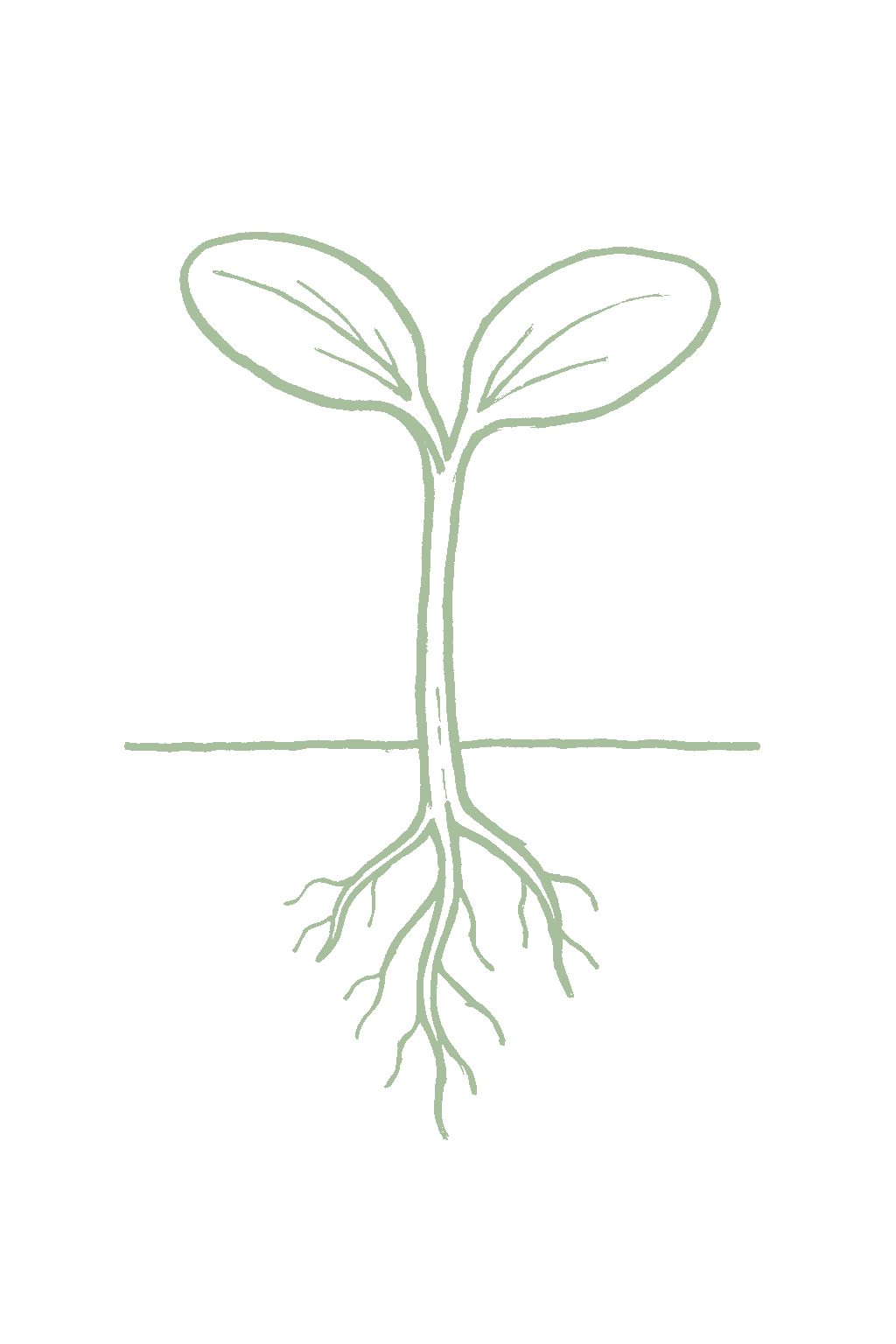
The first two seed leaves push up through the soil in about 7 to 10 days.Seed leaves (cotyledons) push up from warm soil within roughly 7 to 10 days; the large seed gives a strong, fast emergence.
Keep the soil warm and damp until the seedlings come up, and watch for birds and cutworms that go after the new sprouts.Keep soil warm (ideally 70 to 85 °F) and evenly moist; protect emerging seedlings from birds, slugs, and cutworms, which target the big sprouting seed.
FROM PLANT · Plant seeds outside once the soil is warm, after your last frost. The large seeds come up well in 7 to 10 days. Plant them where they will grow, because sunflowers do not like being moved.Direct-sow once soil is past 50 °F and warming (ideally 70 to 85 °F) after frost; warmth, not the date, is the trigger, and the big seed emerges strongly in 7 to 10 days. Sow where plants will grow, since the taproot resents transplanting.
FROM PLANT · Plant the seeds about an inch deep. Keep an eye out for birds and cutworms, which like to eat the big sprouting seeds.Sow about 1 inch deep, deeper than most flowers, to anchor the taproot; protect the sprouting seed and seedlings from birds and cutworms, which target the large, oil-rich sprouts.
02
Seedling
Days 14-30
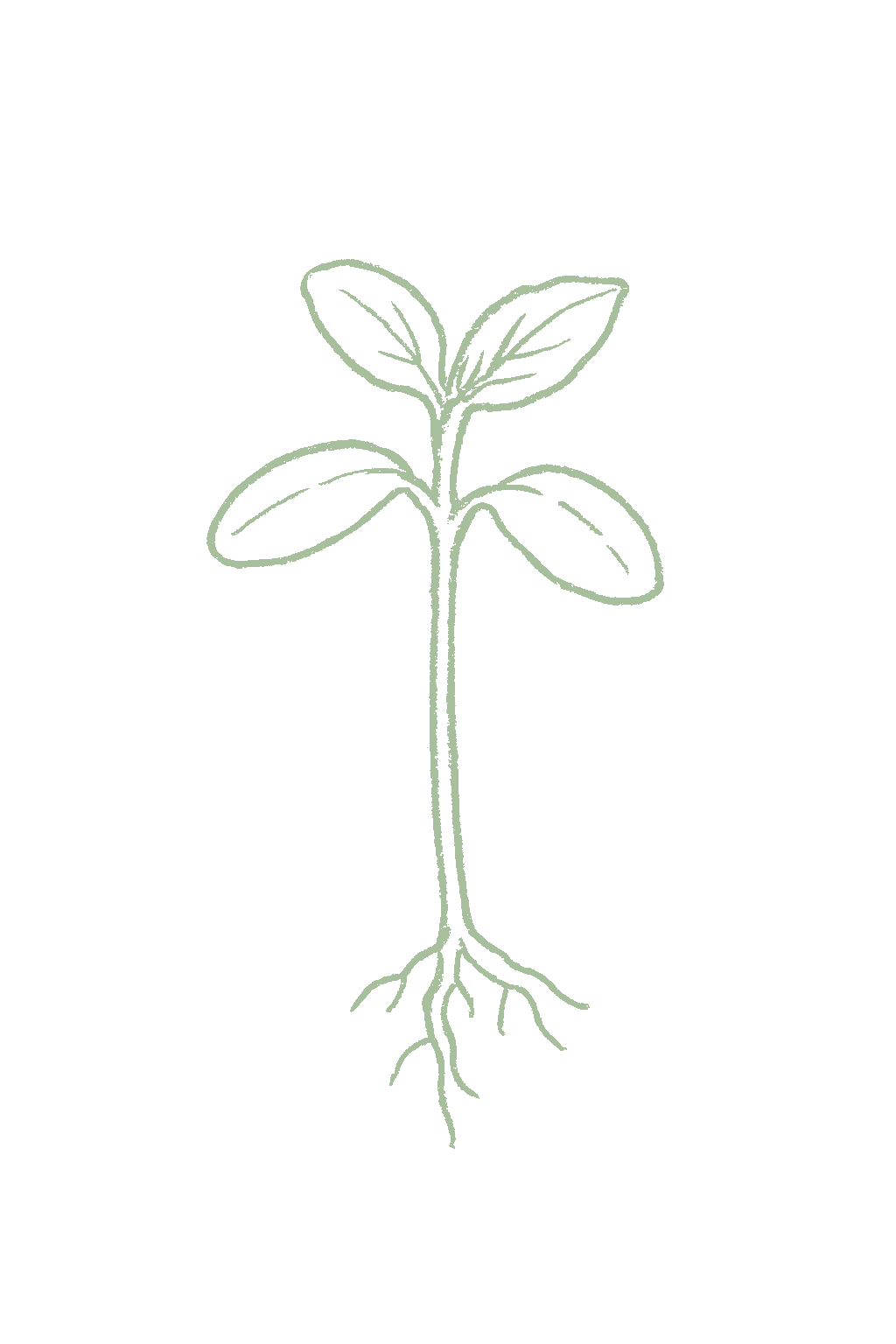
Real leaves appear and the little plant starts growing fast.First true leaves develop and the taproot drives down; the seedling establishes quickly and starts to gain height.
Thin the seedlings to the right spacing for your type (small ones about 6 inches apart, big ones 18 to 24 inches), and protect them from cutworms.Thin to type-appropriate spacing (about 6 in for small cut-flower singles, 12 in for mid-size, 18 to 24 in for branching and giant types); guard against cutworms and water at the base.
FROM PLANT · Once seedlings have real leaves, thin them to the right spacing: small types about 6 inches apart, medium ones about a foot, and the big branching or giant ones 18 to 24 inches. Room for air helps prevent leaf diseases.Thin to type once seedlings have true leaves: about 6 in for small cut-flower singles, 12 in for mid-size, and 18 to 24 in for branching and giant types. Spacing for airflow limits rust, Septoria, and powdery mildew later.
FROM PLANT · Cutworms can cut down young sunflowers at night. Put a little collar of cardboard or foil around the stem of a new seedling, and clear weeds before planting. Bigger plants are not bothered.Cutworms sever young sunflowers at the soil line overnight; use stem collars on thinned seedlings or transplants and clear weedy harborage before sowing. Damage is a seedling-stage concern that vigorous plants outgrow.
03
Established / vegetative
Days 28-55
The plant grows tall fast. Young sunflowers turn to follow the sun across the sky during the day.Rapid stem elongation; single-stem types shoot up toward full height, branching types put out side stems. Young plants visibly track the sun east to west during the day.
Put a stake in for tall types now, before the heavy flower forms. Keep the soil watered and feed lightly if the leaves look pale.Stake tall single-stem giants now, before the head adds weight; keep moisture steady and feed lightly if soil is lean. Branching types need no pinching.
FROM PLANT · Put a stake in for tall sunflowers early, before the heavy flower forms, so wind does not topple them. Branching types hold themselves up. Go easy on high-nitrogen fertilizer so the stems stay strong.Stake tall single-stem and giant types early, before the head adds weight, so wind does not lodge or snap the stalk; branching types are self-supporting and need no pinching. Keep nitrogen modest so stalks stay sturdy.
FROM PLANT · Young sunflowers turn to follow the sun across the sky during the day, then face east again by morning. As they get older, the flowers settle facing east for good. This is normal and even helps bring in bees.Young plants and buds are heliotropic, tracking the sun east to west by day and resetting east overnight; as heads mature and stems stiffen they settle facing east, which warms them at sunrise and draws more morning pollinators. This is normal, not a problem.
04
Budding
Days 45-85
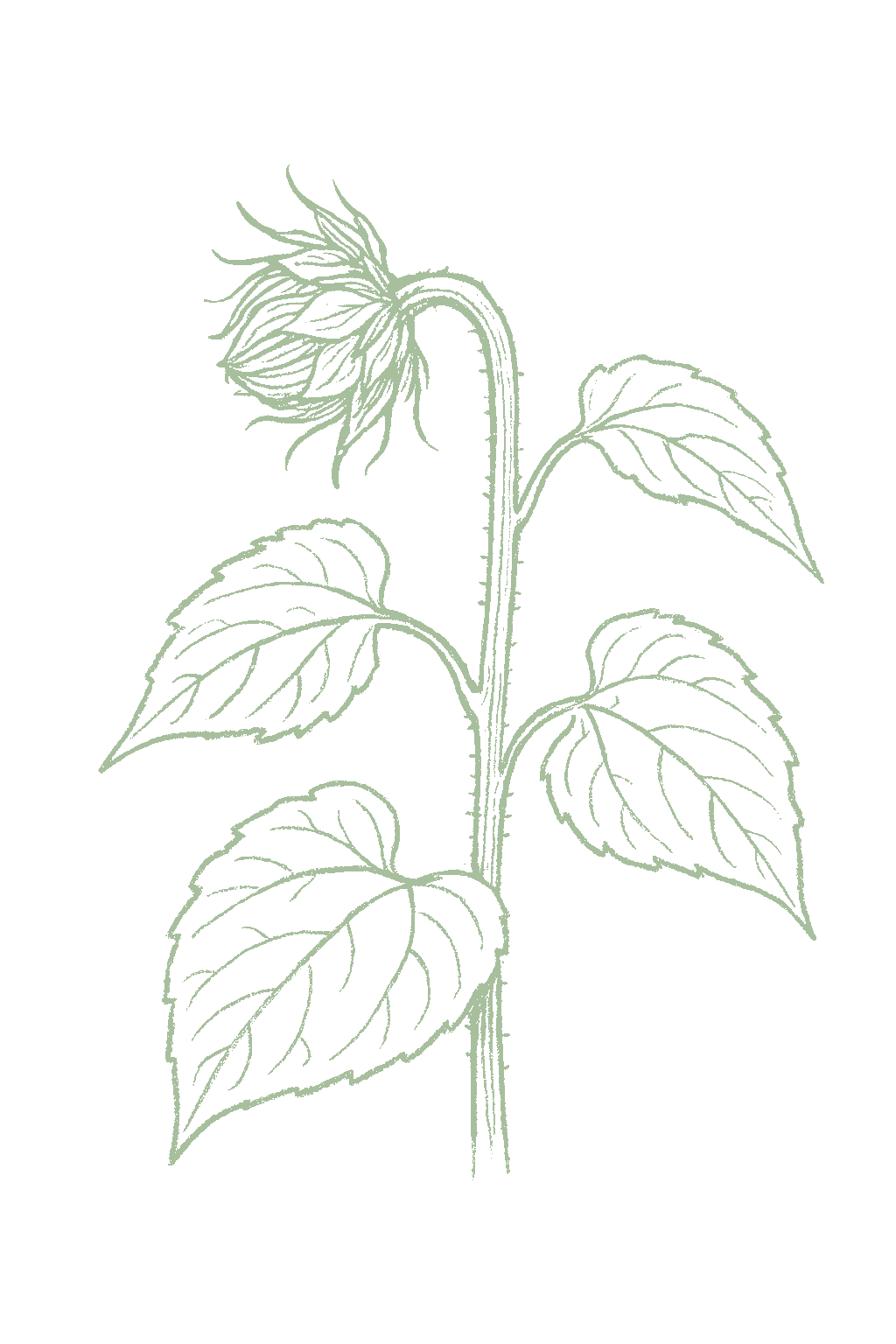
A flower bud forms at the top of the stem and faces the sun as it moves.A flower bud forms at the stem tip (or several on branching types); the bud tracks the sun by day before bloom.
Keep the soil evenly moist as the bud forms, and start checking for aphids and head pests.Keep moisture even as the head forms; begin the critical-water window. Scout for aphids and for sunflower moth as buds open.
FROM PLANT · Keep the soil evenly moist as the bud forms. The weeks just before and after flowering are the most important time to water, or you get a smaller flower and fewer seeds. Water deeply, but do not make the soil soggy.Keep moisture even as the head forms; the roughly 20 days before and after flowering are the critical water window, when shortage cuts head size and seed fill. Water deeply to the taproot, never to saturation.
FROM PLANT · As the flower opens, check for head pests: sunflower moth caterpillars web and tunnel the head, and the head-clipping weevil chops the stalk just below the flower. The best fixes are cleaning up old stalks and not planting sunflowers in the same spot each year.Scout opening heads for sunflower moth (webbing and tunneled seeds) and the head-clipping weevil (a girdle 1 to 2 inches below the head that drops it). Garden management is sanitation and rotation, not routine spraying.
05
Flowering
Days 60-100
The flower opens, about 2 to 3 months after planting. The grown flower settles facing east, and bees work the center.The head opens; first bloom is roughly 60 to 100 days from sowing depending on type. The mature head stiffens and settles facing east, and pollinators work the disk flowers.
Keep watering through flowering. Cut flowers for a vase just as they open, and snip faded blooms off branching types for more. Leave heads on the plant if you want seeds.Keep water steady through bloom (the critical window); cut single-stem and branching cut-flower types just as the head opens, and deadhead branching types to prolong display. Leave heads on if you want seed.
FROM PLANT · For a vase, cut sunflowers just as they open, trim the stem, and pull off the lower leaves; pollen-free kinds stay neatest. Snip faded flowers off branching types for more blooms. Leave the flowers on the plant if you want seeds instead.For the vase, cut just as the head opens and the back is still greenish, recut the stem, and strip lower leaves; pollen-free types stay tidy longest. Deadhead branching types to prolong bloom. Leave heads on the plant if seed is the goal.
FROM PLANT · Open sunflowers with pollen are great for bees and butterflies, and the visiting bees also help the plant make more seeds. The pollen-free types meant for vases do not feed bees, so grow some regular ones too if you want to help pollinators.Open, pollen-bearing flowers are a major nectar and pollen source for honey bees, native and specialist sunflower bees, and butterflies; pollinator visitation also improves the plant's own seed set. Pollen-free cut-flower types trade this away for vase tidiness.
06
Seed ripening and harvest (optional)
Days 85-140
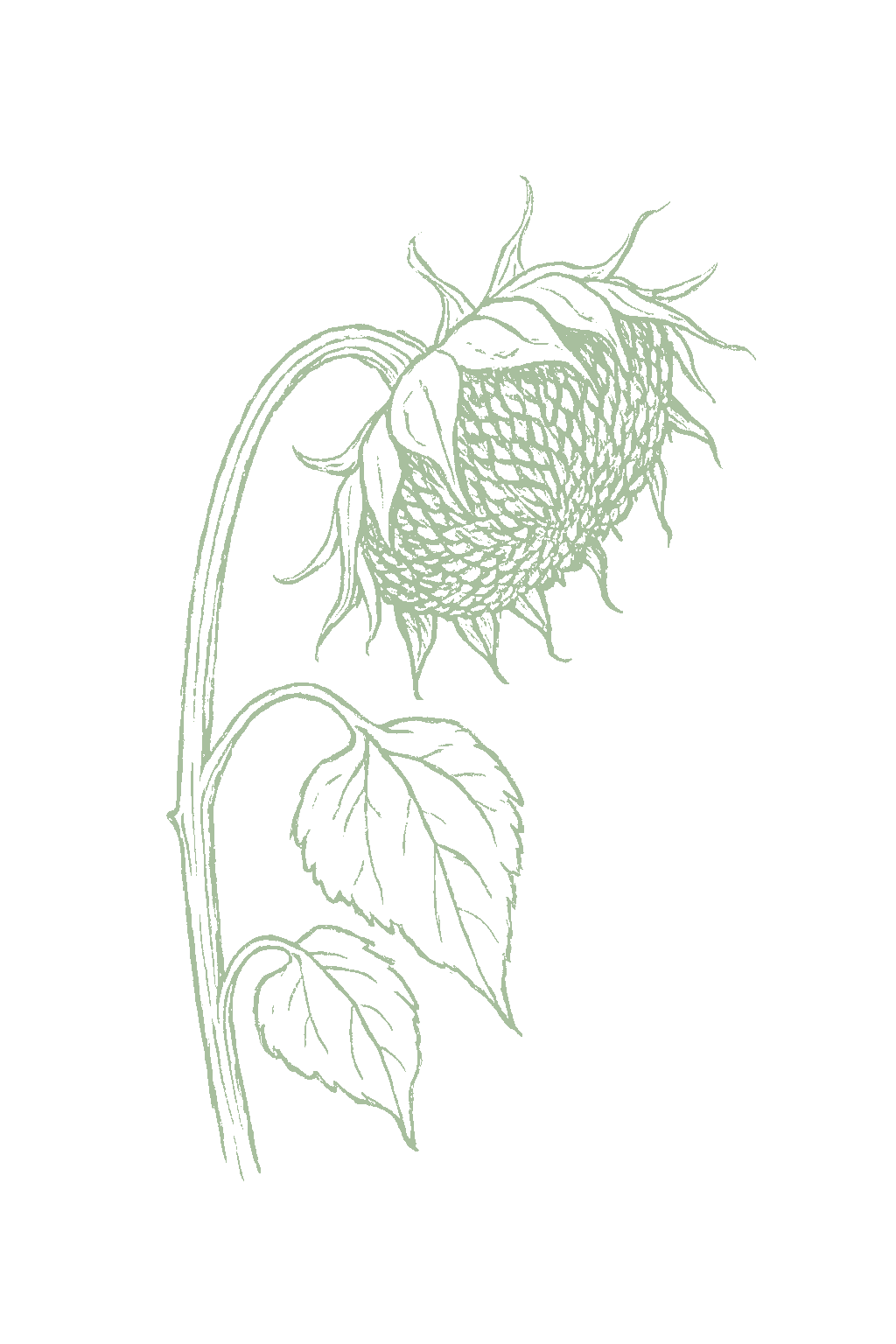
After the petals fall, the head slowly dries: the back turns yellow then brown and the seeds get plump and firm. This takes about a month.After bloom, petals drop and the head matures over about 30 to 45 days: the back of the head turns from green to yellow then brown, the central florets dry, and the seeds plump and firm.
If you want the seeds, cover the heads with a paper bag or cheesecloth once the petals turn brown so birds do not get them. Cut the heads when the backs are brown, hang them somewhere warm and dry to finish, then rub the seeds off and store them dry.To save seed, cover ripening heads with paper sacks or cheesecloth once petals brown to beat birds and squirrels; cut heads when backs are brown and cure in a warm, dry, airy, rodent-free spot until seeds release, then store dry.
FROM PLANT · If you want the seeds, cover the heads with a paper bag or cheesecloth once the petals turn brown, or birds and squirrels will get them first. If you would rather feed the birds, just leave the heads standing as a natural bird feeder.To save seed, bag ripening heads in paper sacks or cheesecloth once petals brown; birds and squirrels otherwise strip a head fast. The same standing heads make excellent natural bird feeders if you would rather feed wildlife.
FROM PLANT · Harvest seeds when the back of the head is brown and the seeds come off easily. Cut the head with some stem, hang it somewhere warm and dry and safe from mice until the seeds loosen, then rub them off and store them dry. Seeds from regular (open-pollinated) sunflowers will grow true; seeds from hybrids will not.Harvest when the back of the head is brown and the seeds part easily: cut the head with a length of stalk and cure it in a warm, dry, airy, rodent-free place until the seeds release, then rub them off and store fully dried. Saved open-pollinated seed comes true; hybrid seed will not.
Beginner
Know your soil

Your soil

Identify yours

Not sure what soil you have? Grab a small handful of damp soil from your garden bed and squeeze it. If it crumbles apart easily, it's sandy. If it holds together but breaks when you poke it, it's loam (what most vegetables want). If it stays in a hard, slippery ball, it's clay.

What this crop wants

Sunflowers are not fussy and grow in most ordinary garden soil as long as water drains away and does not pool. A deep, loose, well-drained soil suits their long taproot best. They tolerate sandy, clay loam, and silty soils, but soggy, heavy clay that stays wet can rot the roots. Mixing in some compost helps, especially for the big branching and large-flowered types, which are hungrier feeders.

If your soil doesn't match

You have sandy soil

Mix 2-3 inches of compost into the top 6 inches of your bed before planting. Compost holds moisture (which sandy soil drains too fast) and adds the nutrients sandy soil tends to lack. Repeat each season. Compost breaks down over time.

You have clay soil

Mix 2-3 inches of compost AND a few inches of coarse sand or perlite into the top 6 inches of your bed. The compost feeds the plants; the sand breaks up the clay so air and water can move through. Don't add sand without compost. It can compact like concrete.

Containers and raised beds

If amending your soil sounds like too much work, or if your soil is heavy clay, full of rocks, or contaminated, build over it. A raised bed at least 12 inches deep filled with a 50/50 mix of compost and sandy loam gives you ideal growing soil with no battles. A 5-gallon container with quality potting mix does the same for one plant at a time. Both bypass your native soil entirely.

Learn more about your soil
The specs

Care guide

The numbers that matter, at a glance.

Sunlight
full sun · 6-8 hrs/day
Water
moderate
Spacing
6-24 inches
Soil
loam, sandy loam
Days to maturity
60-100 days from transplant
Soil pH
6 to 7.5
Container OK?
Yes · 3+ gal pot
Germination temp
70-85°F
Soil chemistry

Soil pH for sunflower

Preferred
6 to 7.5
Tolerated
5.5 to 8

Sunflowers are easygoing about soil pH (how acidic or alkaline the soil is). A range around 6.0 to 7.5 is ideal, and most garden soil is already fine, so you usually do not need to change anything. They even tolerate slightly alkaline soil.Sunflowers perform best across roughly 6.0 to 7.5 and are tolerant of soils a little outside that, including mildly alkaline ground up to about 8.0. pH adjustment is rarely warranted; focus instead on drainage and depth for the taproot rather than on fine-tuning acidity.

Verified · 2 sources View
Steady hand on the hose

Watering

When & how much
Frequency
Keep the soil damp while seeds sprout and young plants get going. After that, water deeply but less often, since grown sunflowers handle dry spells well. The most important time to water is the few weeks right before and after the flower opens, when the plant is building its head and seeds.Keep soil evenly moist through germination and establishment, then water deeply but less often; established sunflowers are notably drought-tolerant thanks to a deep taproot, but the roughly 20 days before and after flowering are the critical window when steady moisture builds the head and fills the seed.
Amount
Sunflowers like about 1 inch of water a week, counting rain. Water deeply once or twice a week instead of a little every day, so the water reaches the deep root, and let the soil dry a bit in between. Water a little more when they are flowering and making seeds.Aim for roughly 1 inch of water per week from rain plus irrigation during active growth, applied deeply to reach the taproot rather than in frequent shallow doses; increase around flowering and seed fill, and let the soil dry somewhat between waterings otherwise.
Method
Water the ground around the plant, not the leaves, using a soaker hose or watering can at the base. Dry leaves get less disease. Water deeply so it soaks down to the deep root. If leaves do get wet, water in the morning so they dry by midday.Water at the base with drip or a soaker hose to keep foliage dry, which limits rust, Septoria, and powdery mildew; deep, infrequent watering also encourages the taproot down. If you must use a sprinkler, water in the morning so leaves dry quickly.
Signs of trouble
Too much water
If lower leaves turn yellow, the plant wilts even though the soil is wet, or the base of the stalk looks soft and dark, you are likely overwatering or the soil drains poorly. Cold, soggy soil also rots seedlings.Yellowing lower leaves, wilting despite wet soil, and soft, discolored stalk bases signal overwatering or poor drainage, which also invites Sclerotinia and downy mildew; seedlings in cold, wet soil damp off.
Too little water
Sunflowers that are too dry wilt in the afternoon heat, look dull, and make a smaller flower or fewer good seeds, especially if they go dry around bloom time. Once established, they bounce back from short dry spells.Wilting in the heat of the day that recovers by evening, dulling foliage, and a smaller head or poorly filled seeds indicate underwatering, most critically in the weeks around flowering; established plants are otherwise forgiving of short dry spells.
Feeding rhythm

Feeding

Frequency
moderate
Type
Balanced
When to start
At planting, with optional light feeding during growth

Sunflowers, especially the big branching and large-flowered kinds, are fairly hungry plants. Mix compost and a balanced fertilizer into the soil before planting, and you can feed lightly again during the season if the leaves look pale. Do not overdo the high-nitrogen kind, though: too much makes tall, floppy, leafy plants with weaker stems and fewer flowers.Sunflowers, especially the multi-branching and large single-flowered types, are moderate to heavy feeders. Work compost and a balanced, slow-release fertilizer into the bed at planting, and supplement lightly through the season if growth is pale or the soil is lean. Avoid heavy nitrogen, which drives soft, leafy, weak-stalked growth that lodges in wind and delays bloom; a balanced ratio favoring steady stalk and head development is the goal.

N · P · K = 10-10-10

The three numbers on fertilizer (N-P-K) are nitrogen, phosphorus, and potassium. For sunflowers, a balanced one like 10-10-10 works well. Avoid a high first-number (nitrogen) lawn feed, which gives leaves and floppy stems instead of strong flowers.A balanced ratio such as 10-10-10 worked in at planting, with phosphorus and potassium to back flower and seed development, suits sunflowers better than a high-nitrogen lawn-type feed, which favors weak, leafy growth.

Flower care

Deadheading sunflower

Flower form
single-stem to branching, daisy-form single, semi-double, and double, dwarf to giant

Deadheading (snipping off faded flowers) mostly matters for the branching types with many flowers: cut the old blooms back to the next bud and the plant makes more, right up to frost. Cutting fresh ones for a vase does the same thing. The single-stem types, including the giants, make just one flower and do not rebloom, so there is nothing to deadhead; leave that head to make seeds, or cut it once for a vase. You do not need to pinch sunflowers.Deadheading applies mainly to branching, multi-head types: cut or snip spent blooms back to the next bud or leaf node to redirect energy into new flowers and prolong the display to frost, and cutting for the vase does the same job. Single-stem types (giants and most cut-flower singles) make one terminal head and do not rebloom, so there is nothing to deadhead; leave that head to ripen if you want seed, or cut it once for the vase. There is no pinching: branching types branch on their own.

Who grows well together

Companion planting

Sunflowers are mainly grown for their own flowers and seeds, but they are a strong pollinator and beneficial-insect plant, so they help the wider garden too. Their open heads, made of hundreds of tiny flowers, bring in bees, butterflies, and helpful predator insects, and the ripening seeds feed birds. Tall, sturdy types can act as a natural trellis or windbreak for vining crops like cucumbers, squash, and melons, which also benefit from the extra pollinators. The honest catch is allelopathy: sunflower roots and old stalks release natural chemicals that can hold back some plants, especially potatoes and pole beans, and the hulls can stop seeds from sprouting. So plant sunflowers along an edge rather than in the middle of sensitive crops, and clean up the stalks and dropped hulls at season end. Sunflower is grown chiefly for itself, but it earns a place in the wider garden as a pollinator and beneficial-insect powerhouse: the composite heads supply abundant nectar and pollen to bees (including specialist sunflower bees), butterflies, and predatory and parasitic insects, and the seed heads are a documented wildlife and bird food. Sturdy tall types double as a living trellis or windbreak for cucurbits, which tolerate sunflower's allelopathy and gain from the pollinator traffic. The load-bearing honest caveat is that allelopathy: Helianthus annuus is a recognized allelopathic species (roots, residue, and seed hulls release growth-inhibiting compounds), best documented as a weed-suppressing cover-crop trait but also capable of stunting sensitive neighbors. Site sunflowers at a bed edge, not amid sensitive crops, keep potatoes and pole beans clear, and remove residue and spilled hulls at season end. There is no concurrent pairing that is broadly antagonistic to the sunflower itself; the antagonism runs the other way, from sunflower to certain neighbors.

Other
Bees, butterflies, and beneficial insects (pollinator planting)
A sunflower head is hundreds of tiny flowers, so it brings in lots of bees and butterflies, plus helpful bugs that eat pests. Planting sunflowers along the edge of a vegetable garden is a great way to support pollinators.Sunflower's best-supported companion function. The composite head offers abundant, accessible nectar and pollen across a long bloom, drawing honey bees, native and specialist sunflower bees, butterflies (a noted late-season nectar source for monarchs), and predatory and parasitic insects that help manage aphids and caterpillars elsewhere in the garden. Single, pollen-bearing types serve pollinators far better than pollen-free cut-flower selections. Plant as an insectary edge or border near the vegetable garden. Research-backed
Cucumbers, squash, and melons (living trellis and pollinator support)
Tall, strong sunflowers can act like a living pole for vining cucumbers, squash, and melons to climb, and they pull in the bees these crops need to set fruit. These vine crops handle sunflowers nearby better than most.A well-grounded structural and pollinator pairing. Cucurbits need many bee visits per flower for proper set, and sunflower is a reliable, long-blooming pollinator magnet; the sturdy stalks of tall single-stem types also serve as a living trellis or windbreak. Cucurbits, corn, and squash are noted to tolerate sunflower allelopathy comparatively well, unlike potatoes and pole beans. Site sunflowers on the windward or northern edge so they support rather than shade the crop, a visitation-and-structure benefit, not a pest-control one. Well-grounded
Birds and wildlife (seed-head food source)
Left to ripen and dry on the plant, sunflower heads become a natural bird feeder that finches and other birds love through fall and winter. This is wonderful for wildlife, but it is the opposite of what you want if you are trying to save the seeds for yourself.A deliberate wildlife-gardening use rather than a crop interaction. Standing heads left to ripen are a documented food source for finches, jays, and other seed-eating birds (and small mammals) into fall and winter, so dead heads left on the plant function as natural bird feeders. The tension is direct: this is mutually exclusive with saving seed for yourself, which requires bagging the heads. Choose the use per planting. Traditional
Keep apart from
Potatoes Sunflowers can hold back potatoes growing right next to them, because of natural chemicals from the sunflower's roots and old stalks. Keep potatoes out of the sunflower bed, and plant sunflowers along an edge instead.Sunflower allelopathy in action. Helianthus annuus releases growth-inhibiting compounds from roots and decomposing residue, and potatoes are among the crops commonly reported as sensitive, showing stunting near sunflowers or in soil where they grew. The species-level allelopathy is documented by extension sources; the potato-specific call is well-reported tradition rather than a single trial, so keep potatoes out of the sunflower bed, avoid following sunflower with potatoes in the same soil, and clear residue and hulls. Well-grounded
Pole and runner beans Pole beans are another crop that sunflowers can slow down when planted close, so do not use a sunflower as a bean pole. Grow beans elsewhere and use cucumbers or squash near sunflowers instead.A hedged allelopathy caution. Pole and runner beans are traditionally listed among crops sensitive to sunflower's allelochemicals, so despite the tempting idea of using a sunflower stalk as a bean trellis, the pairing is commonly discouraged. Note the honest uncertainty: reports conflict, and some sources hold that beans tolerate sunflower better than potatoes do. Treat it as a cautious, traditional avoidance, favor cucurbits for the living-trellis role, and keep beans in a separate bed. Traditional
Tender seedlings under bird-feeder hull drop The hulls that drop from sunflower seeds (including under bird feeders) carry chemicals that can stop other seeds from sprouting and stunt small plants. Do not start a seedbed right under sunflowers or a feeder, and rake up fallen hulls.The residue side of sunflower allelopathy. Seed hulls are the most-cited source of the inhibitory compounds, the reason a bare, weed-free patch often forms under a sunflower-seed bird feeder. Avoid sowing a fresh seedbed directly beneath sunflowers or a feeder, rake up accumulated hulls, and do not mulch sensitive beds with sunflower residue. This is a residue-management caution rather than a living-plant antagonism, and it is part of why sunflower works as a weed-suppressing cover crop. Well-grounded
Provenance tagged inline · see methodology for the labeling system Key
Cutting for the vase

When to cut

Sunflowers give you two harvests. For a vase, cut the flowers just as they open, in the morning, into clean water, and pull off the lower leaves; pollen-free types stay neatest. For seeds, leave the heads on the plant until the back turns brown and the seeds are plump and firm, about a month after the flower opens. Cover the ripening heads with a paper bag or cheesecloth so birds and squirrels do not get them, then cut the head and dry it somewhere warm and airy until the seeds come loose.Sunflower has two harvests. For cut flowers, cut when the bloom is just opening and the back of the head is still greenish, in the cool of the morning into clean water, stripping lower leaves; pollen-free types stay tidiest and vase life runs about a week. For seed, let heads ripen on the plant until the back turns from yellow to brown, the florets dry, and the seeds plump and firm (about 30 to 45 days after bloom); bag ripening heads in paper or cheesecloth to beat birds and squirrels, then cut and cure the head in a warm, dry, airy, rodent-free spot until the seeds release.

Bloom yield

What to expect

How much you get depends on the type. A giant sunflower makes one big head full of seeds, sometimes over a foot wide. Branching types make lots of smaller flowers over a longer time, great for cutting and for bees but with smaller seed heads. Dwarf types are mostly just for pretty flowers. One big head can hold many hundreds of seeds.Yield depends entirely on type. A single-stem giant produces one large head (often 8 to 14 inches or more across) yielding a substantial crop of seed; branching types produce many smaller heads over a longer window, ideal for cut flowers and pollinators but smaller individual seed heads; dwarf types give modest blooms for color. A well-grown large head can hold many hundreds to over a thousand seeds.

Sunflowers flower the same year you plant them, usually 2 to 3 months after sowing. There is no waiting year. Plant in spring and you get flowers in summer, with seeds ripening about a month after that.Sunflowers bloom the first season from seed, roughly 60 to 100 days after sowing depending on type (fast cut-flower singles sooner, giants later), so there is no establishment year; a spring sowing flowers in summer, with seed ripening over the following month.

What changes yield
Type: single-stem giants give one large seed head; branching types give many smaller heads and more cut flowers; dwarf types give modest blooms.Spacing and airflow: adequate spacing builds sturdier plants and limits rust, Septoria, and powdery mildew.Water around bloom: steady moisture in the roughly 20 days before and after flowering drives head size and seed fill.Staking: staking tall types prevents wind lodging that can cost the whole head.Bird and squirrel protection: bagging ripening heads is the difference between a full seed harvest and a stripped one.Pollination: pollinator visitation improves seed set, so pollen-bearing types and nearby pollinator habitat raise seed yield.
Verified · 2 sources View
Pick your variety

Recommended varieties

Pick the type for your goal. For big edible or bird seeds, grow the giant kinds like 'Mammoth', which make one huge head but need a stake and lots of room. For cutting flowers for a vase, pollen-free single-stem types like the ProCut series are clean and tidy, while branching types like 'Autumn Beauty' and 'Lemon Queen' make lots of smaller flowers over a long time and are best for bees. For pots and small spaces, dwarf types like 'Teddy Bear' stay short. Open, single flowers with pollen are the best ones for bees and butterflies.Choose by purpose and size. For edible or bird seed, the giant single-stem types ('Mammoth', 'Sunzilla', 'American Giant') deliver one large head of plump seed but need staking and 18 to 24 inches of space. For cutting, single-stem pollen-free types (ProCut series, 'Italian White') give clean, uniform, mess-free stems and succession-sow well, while branching types ('Autumn Beauty', 'Lemon Queen') carry many smaller blooms over a long window and are the best pollinator and color choice. For pots, edging, and small spaces, dwarf types ('Teddy Bear', 'Sunspot', 'Music Box') stay under 2 to 3 feet. Open, single, pollen-bearing flowers feed pollinators best; pollen-free cut-flower types trade that for vase tidiness.

'Mammoth' / 'Mammoth Russian'
giant single-stem, 9 to 12 ft, one huge head, classic edible seed type
'Sunzilla' / 'American Giant'
giant single-stem, 12+ ft, large heads for seed and show
'Autumn Beauty'
branching, multi-head, warm bicolor mix, long cutting display
'Lemon Queen'
branching, soft-yellow, strong pollinator favorite
ProCut series
single-stem, pollen-free, fast cut-flower standard, uniform
'Teddy Bear'
dwarf, fully double fluffy blooms, about 2 to 3 ft, containers
'Sunspot' / 'Music Box'
dwarf to compact, big flowers on short plants for pots and edging
'Italian White'
branching, creamy pale petals, smaller pollen-free blooms for cutting
In the vase

Vase life

Sunflowers give you both flowers and edible seeds, so unlike most cut flowers there is a harvest to store. The main thing is to dry the seeds completely: hang cut heads in a warm, dry, airy place safe from mice until the seeds come off easily, then store them dry. For flowers in a vase, cut when the bloom is just opening, trim the stem, pull off the lower leaves, and use clean water; they last about a week. If you want the seeds, cover the ripening heads so birds and squirrels do not eat them first.Sunflower is grown both for ornament and for an edible, wildlife-valuable seed crop, so it does have a harvest to store. The key to good storage is full drying: cure cut heads in a warm, dry, airy, rodent-free spot until the seeds rattle loose, then store dry as above. For cut flowers, cut when the bloom is just opening, recut the stem, strip lower leaves below the waterline, and use clean water; vase life is roughly a week, longer for pollen-free types. If you are growing for seed, protect ripening heads from birds and squirrels, which strip them fast.

Verified · 2 sources View
When something goes wrong

Common problems

Birds or squirrels ate all the seedsSeed head stripped or empty before harvest
01 of 06
What happened Birds or squirrels got to the seed head before you did. They love sunflower seeds and can clear a head fast.Birds and squirrels reached the ripening head first; sunflower seed is a prime target and an unprotected head can be cleared in a day or two. Next season Next time, cover the heads with a paper bag or cheesecloth once the petals brown, and harvest as soon as the backs turn brown instead of waiting.Bag ripening heads in paper sacks or cheesecloth once petals brown, and harvest promptly when backs turn brown rather than leaving heads standing, unless feeding wildlife is the goal.
The sunflower fell over or snappedPlant leaned, snapped, or blew over
02 of 06
What happened A tall sunflower got top-heavy and blew over in the wind, usually because it was not staked, or it grew too soft from too much fertilizer.A tall, top-heavy single-stem type lodged in wind, often worsened by an unstaked stalk, a shallow root from transplanting, or soft growth from excess nitrogen. Next season Next time, stake tall types early, plant the seeds in place so the root grows deep, and go easy on high-nitrogen fertilizer.Stake tall and giant types early, direct-sow for a deep anchoring taproot, and keep nitrogen modest so stalks stay sturdy.
Tall and leafy with a weak stem and small flowerTall, leafy plant, weak stalk, late or small bloom
03 of 06
What happened The plant got too much high-nitrogen feed or too much shade, so it grew leafy and floppy with a small flower.Excess nitrogen or too much shade drove soft, leafy growth at the expense of a strong stalk and head; sunflowers need full sun and balanced, not high-nitrogen, feeding. Next season Next time, plant in full sun and go easy on fertilizer, especially the high-nitrogen kind.Grow in full sun, keep nitrogen modest and balanced, and favor phosphorus and potassium for head and seed development.
The stem base or flower rotted with white moldSoft rot of the stalk base or head with white mold
04 of 06
What happened A soil fungus called white mold (Sclerotinia) rotted the stem base or flower, usually in cool, wet, poorly drained conditions. It is hard to fix once it starts.Sclerotinia (white mold) caused basal stalk rot or head rot, favored by cool, wet conditions and poorly drained soil; the soilborne fungus persists for years and is hard to cure. Next season Next time, plant in well-drained soil with more space, move sunflowers to a new spot, and pull and throw away (do not compost) any rotted plants.Improve drainage, space and rotate (avoid beds with a white-mold or recent broadleaf-crop history), remove and destroy infected plants, and do not compost them.
Leaves got rusty, spotted, or powderyRusty, spotted, or mildewed leaves
05 of 06
What happened Leaf diseases like rust, leaf spot, or powdery mildew showed up, usually because plants were crowded, humid, or watered overhead. They hurt the leaves but rarely kill the plant.Rust (cinnamon pustules), Septoria leaf spot (angular brown spots), or powdery mildew (white film) built up in humid, crowded, overhead-wet conditions; foliar and rarely fatal but weakening late season. Next season Next time, give plants more room, water the soil instead of the leaves, clean up sick leaves, and grow sunflowers in a different spot.Space for airflow, water at the base, irrigate in the morning if overhead is unavoidable, remove infected debris, and rotate away from continuous sunflower.
Few or no seeds sproutedSeeds failed to come up
06 of 06
What happened Usually cold, wet soil, or birds and soil pests eating the seed. Planted too early in cold soil, sunflower seeds come up poorly or rot.Usually cold, wet soil or seed eaten by birds, cutworms, or wireworms; seed sown before soil reaches about 50 to 70 °F germinates slowly, erratically, or rots. Next season Wait for warm soil, plant about an inch deep, keep it damp until they sprout, and protect the seeds from birds and cutworms.Wait for warm soil (ideally 70 to 85 °F), sow about 1 inch deep, keep evenly moist during emergence, and protect the seed from birds and cutworms.
Verified · 6 sources View
The usual suspects

Pests & diseases

Pests
Birds and squirrels
P · 01
Aphids
P · 02
Sunflower moth and head-clipping weevil
P · 03
Cutworms
P · 04
Leaf-feeding caterpillars and beetles
P · 05
Diseases
Sclerotinia (white mold) head and stalk rot
D · 01
Downy mildew
D · 02
Rust
D · 03
Septoria leaf spot and powdery mildew
D · 04
Seasoned
Where to plant next year

Crop rotation

Rotating sunflowers helps more than it does for many flowers, because their main diseases live in the soil. Try not to grow sunflowers in the same spot two years running, especially if you saw any rot, mildew, or rust, and clean up old stalks and leaves at the end of the season. On the useful side, sunflowers are sometimes grown on purpose as a cover crop to hold down weeds, using the same natural chemicals that mean you should not follow them with touchy crops like potatoes.Rotation matters more for sunflower than for many ornamentals because its key diseases are soilborne and persistent. Avoid planting sunflower on the same ground in back-to-back years, particularly where Sclerotinia, downy mildew, or rust appeared, and clear infected debris at season end. Used deliberately, sunflower is also a recognized weed-suppressing cover crop thanks to the same allelopathy that cautions against following it with sensitive vegetables.

Family
Asteraceae
Years between
1 years
in the same bed
Avoid following
Sunflowers are in the daisy family (Asteraceae). Do not plant sunflowers, or other daisy-family plants, in the same spot the next year, especially if there was any stalk or head rot, since that fungus stays in the soil. Because sunflowers leave behind chemicals that can slow some plants, also avoid planting potatoes right where sunflowers grew, and rake up old stalks and hulls first.As an aster-family (Asteraceae) annual, avoid following sunflower immediately with itself or other susceptible asters where soilborne disease has built up, especially Sclerotinia (white mold), which persists in soil for years; rotate to an unrelated family for a season or more. Because of allelopathy, also avoid following sunflower with sensitive crops such as potatoes in the same soil, and clear residue and hulls before replanting.
Plant after
legumesleafy greens
Verified · 2 sources View
In the app · pre-launch

When plant taps you on the shoulder

The plant app sends a timely reminder at every critical moment of your sunflower season. The wording adjusts to whichever you pick: beginner or seasoned. Here are three you'll see in Zone 12.

p
plant
Last frost arrives
Time to plant sunflowers
Your last frost has passed, so you can plant sunflower seeds outside about an inch deep once the soil feels warm. Plant them right where they will grow, because they do not like being moved.
p
plant
Established arrives
Stake tall sunflowers
If you are growing a tall sunflower, put a strong stake in now, before the big flower forms and makes it top-heavy in the wind.
p
plant
Flowering arrives
Cut flowers for a vase
Your sunflowers are opening. Cut some for a vase just as they open, and snip faded flowers off the branching types to get more blooms.
Get personalized alerts.

plant sends the right notification at exactly the right moment, for your zone, your weather, your crops. Founding members lock the rate forever.

Back the Kickstarter →
Ask the gardener

Common questions

Got a question we missed?

We're building this guide with real growers. Got a question we missed? Ask here. We read every one and add the best answers right to this page.

Grown this before?

Share a tip

Learned something the hard way? Pass it on. Real growers' tips make this guide better for the next person, and we credit you by name when yours goes live.

Seasoned
Spot something wrong?

Report a problem

If you've grown this crop and you see a date, a temperature, a companion claim, or a recommendation that doesn't match your experience, tell us. Real growers' corrections make this guide better for the next person.

How we built this guide

Methodology & sources

Every date, temperature, spacing, and recommendation on this page is sourced from university cooperative extension publications, peer-reviewed agricultural research, NOAA climate data, and direct extension calendars. Where claims are softer (traditional gardening wisdom not formally documented), we say so.

Research-backed Documented in cooperative extension publications or peer-reviewed research
Well-grounded A known agronomic principle, but not formally tested for this specific pair
Traditional Time-tested gardening wisdom, limited formal research support
Last reviewed
June 29, 2026
Data version
crops_data_final · v1.0 · schema 2.9
Sources cited on this page
16 publications
Verified entries
Companion-planting claims tagged inline · zone dates verified against 5+ extensions
See all sources cited on this page
  • University of Minnesota Extension umn_ext
  • University of Maryland Extension umd_ext
  • Cornell Cooperative Extension cornell_ext
  • Iowa State University Extension iastate_ext
  • Michigan State University Extension msu_ext
  • NC State Extension ncsu_ext
  • Penn State Extension psu_ext
  • U. of Illinois Urbana-Champaign Extension uiuc_ext
  • UC Davis Postharvest Center ucd_postharvest
  • Texas A&M AgriLife Extension tamu_agrilife
  • Virginia Cooperative Extension 426-331 vce_426_331
  • Piedmont Master Gardeners piedmont_mg
  • UGA Vegetable Garden Calendar uga_calendar
  • Clemson Home & Garden Information Center clemson_hgic
  • UC IPM Statewide IPM Program uc_ipm
  • NOAA 1991-2020 Climate Normals noaa_normals

Growing notes, weekly.

Zone-aware seasonal nudges, what's worth planting now, and the occasional recipe from the harvest. No spam, ever.

Vol. 003 · Sunflower · plant.lifestyle