Today · in your zone
What's happening right now
Off-season for sunflower in zone 9.
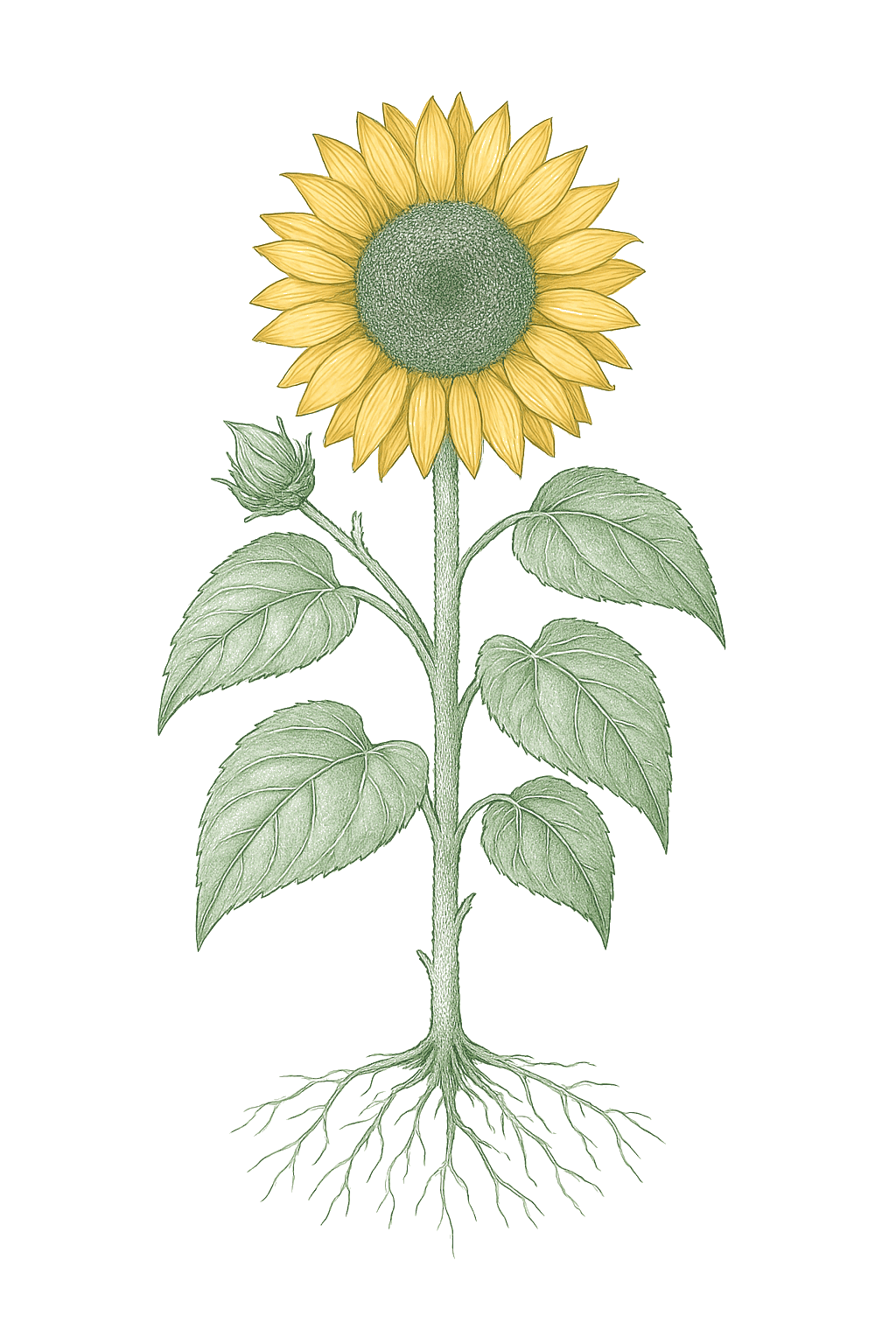
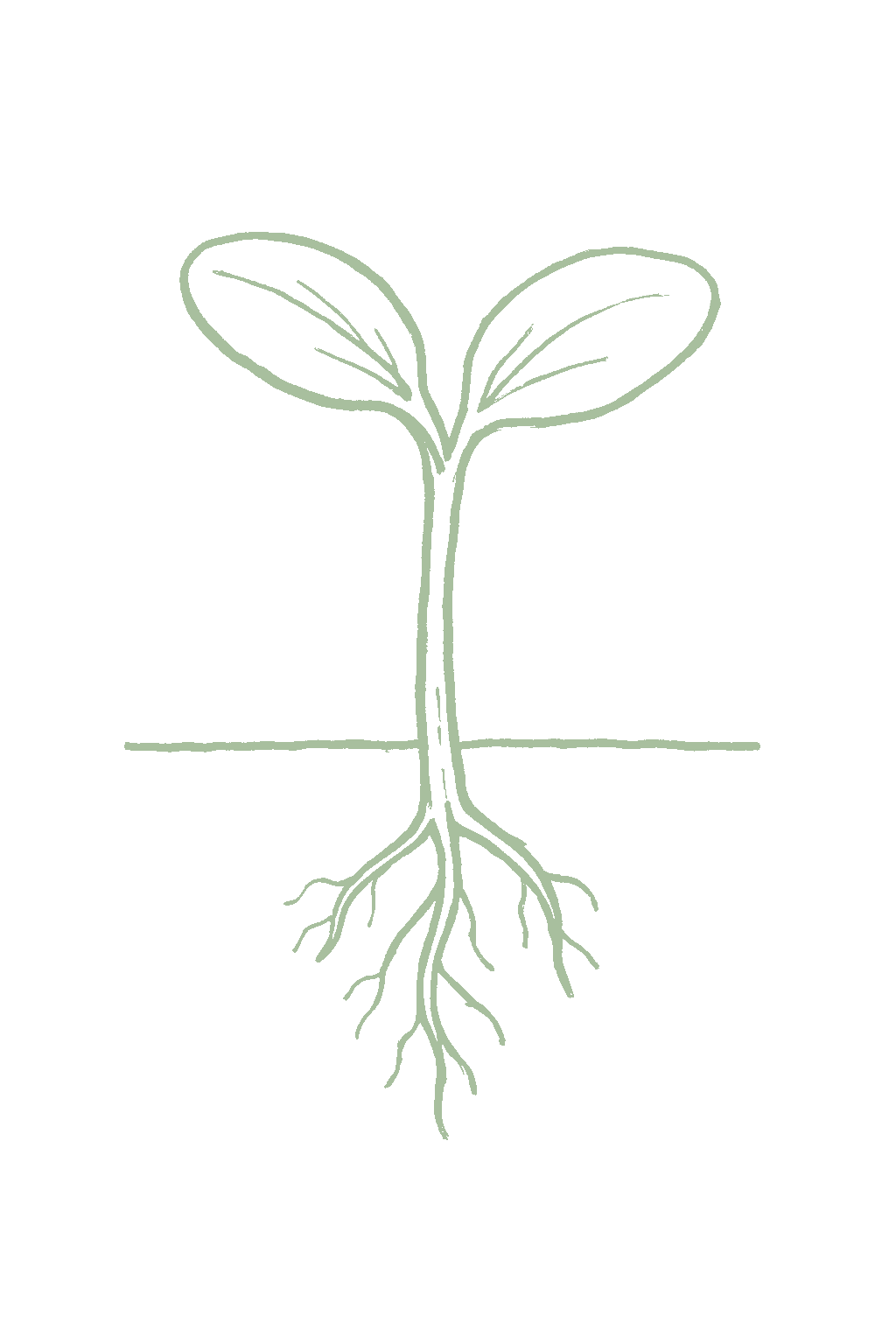
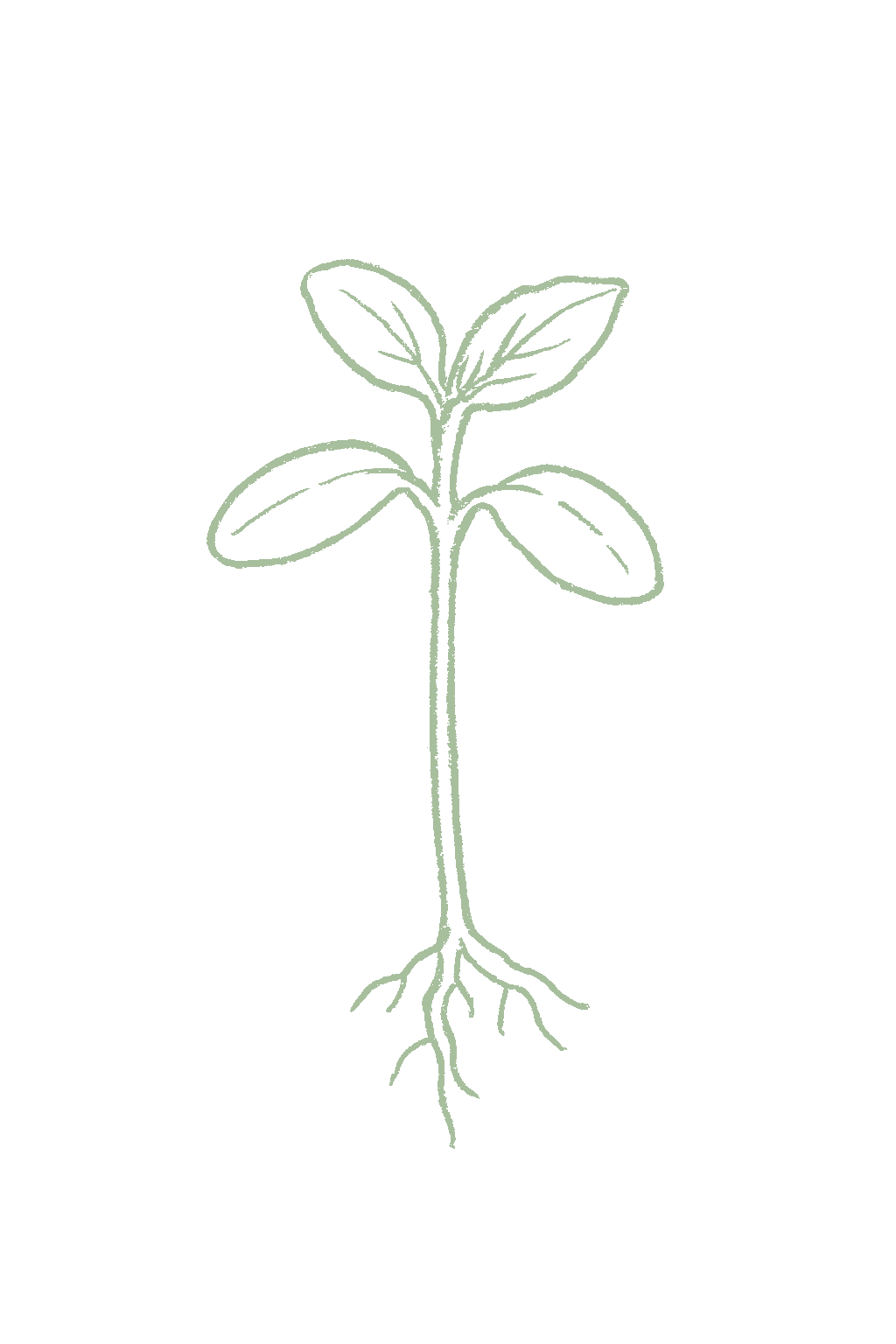
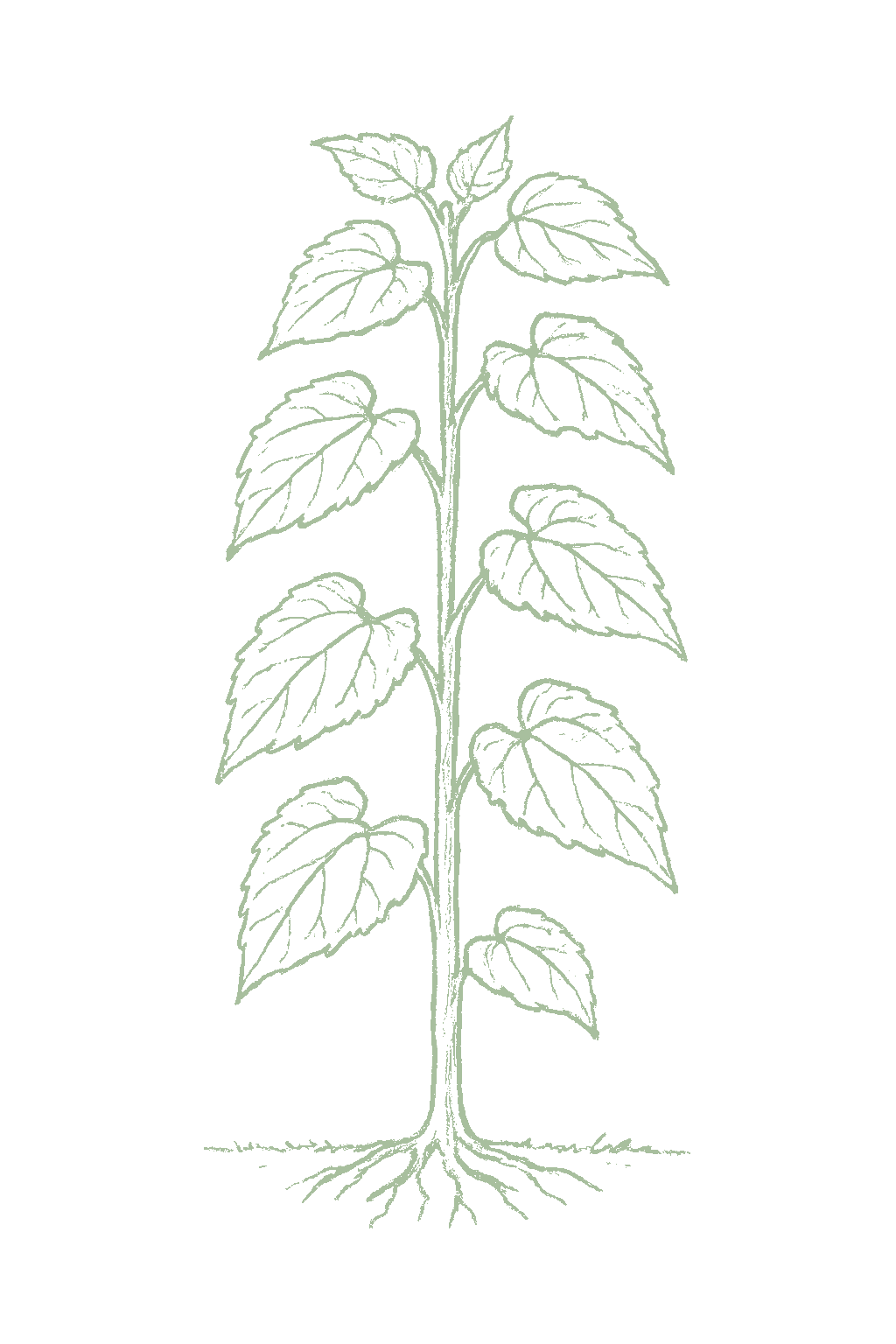
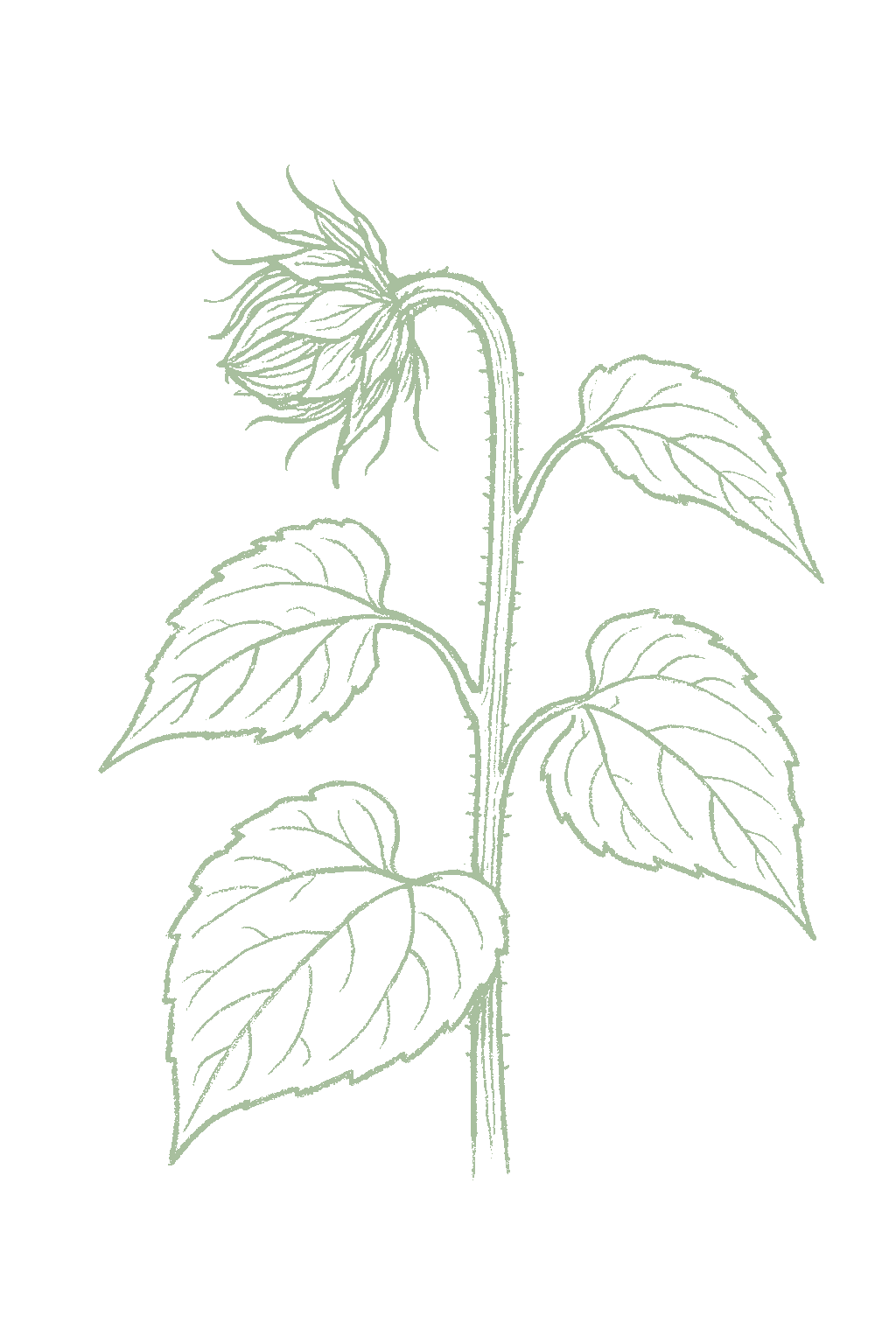
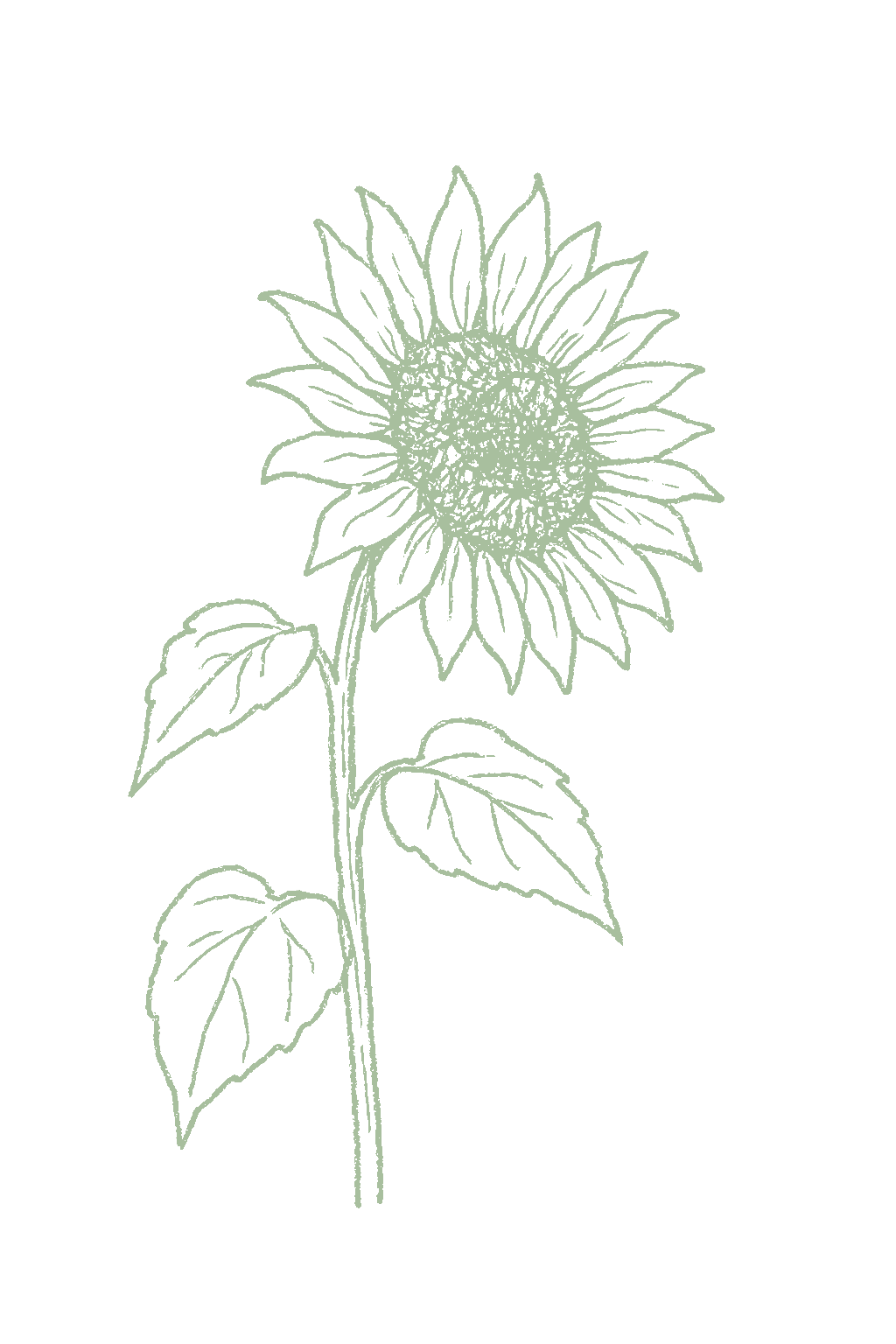
Sunflowers are easy, fast, cheerful flowers grown both for their blooms and for edible seeds that people and birds love. They come in a huge range: towering giants up to 10 feet tall with one big head, bushy branching types with lots of smaller flowers, and little dwarf kinds under 2 feet for pots. Plant the large seeds straight into warm soil after your last frost, because sunflowers have a deep taproot and do not like being moved. They love heat and full sun and handle dry spells well. Young plants turn to follow the sun across the sky, and the open flowers bring in bees and butterflies. Watch out: birds and squirrels will raid the ripening seed heads, so cover them if you want to save the seeds. One thing to know is that sunflowers can hold back a few nearby plants with natural chemicals from their roots and old stalks, so it is smart to plant them along an edge. Sunflower (Helianthus annuus) is a fast, warm-season, frost-tender annual in the Asteraceae family, native to North America and grown both as an ornamental and for its edible, wildlife-valuable seed. Cultivars range enormously: from single-stem giants that reach 10 feet with one massive head, to multi-branching types that carry many smaller blooms, to dwarf forms under 2 feet for pots and edging, in oilseed, confection, and pollen-free cut-flower classes. It is direct-sown into warm soil after frost (the big taproot resents transplanting), thrives in heat, full sun, and even lean soil, and is notably drought-tolerant once established. Young plants are heliotropic, tracking the sun east to west by day, while mature heads settle facing east. The flowers are a major pollinator and beneficial-insect draw, and the ripening seed heads are a magnet for birds and squirrels. Note its mild allelopathy: roots and decomposing residue release compounds that can suppress some neighboring plants, so it is best sited at a bed edge.
Off-season for sunflower in zone 9.
Zone 9 averages a last frost around March 1. Within Zone 9, the colder half (9a, winters down to 20°F) runs about a week later. The warmer half (9b, winters down to 25°F) runs about a week earlier. The plant app picks your subzone from your ZIP.
| Subzone | Last spring | First fall | Growing days | Winter min | Fruits reliably |
|---|---|---|---|---|---|
| 9a | Mar 8 | Nov 24 | ~261 | 20-25°F | Yes · two seasons |
| 9b | Feb 28 | Nov 30 | ~275 | 25-30°F | Yes · two seasons |
Averages from 8 weather stations per subzone, drawn from NOAA 1991-2020 Climate Normals. Your actual frost date can vary by up to two weeks based on elevation, proximity to water, and local topography.
In Zone 9, sunflower can be planted March through September. Start indoors Jan 31 - Feb 14. In bloom May through November.
For sunflowers all summer, plant a new small batch of seeds every 1 to 3 weeks from after the last frost into midsummer, especially the single-stem cutting types, since each one flowers just once. Branching types bloom for a long time from one planting, and giant types are a one-and-done show. Sunflowers love the heat, so you do not stop for summer.Single-stem cut-flower types in particular reward succession sowing: sow every 1 to 3 weeks from after last frost through midsummer for a continuous run of fresh blooms, since each single-stem plant flowers once. Branching types bloom over a longer window from one sowing, and giants are a single grand plant. There is no heat pause: sunflowers thrive through peak summer.
In Zone 9, sunflower can be planted February through September. Start indoors Jan 11 - Jan 25. In bloom April through December.
For sunflowers all summer, plant a new small batch of seeds every 1 to 3 weeks from after the last frost into midsummer, especially the single-stem cutting types, since each one flowers just once. Branching types bloom for a long time from one planting, and giant types are a one-and-done show. Sunflowers love the heat, so you do not stop for summer.Single-stem cut-flower types in particular reward succession sowing: sow every 1 to 3 weeks from after last frost through midsummer for a continuous run of fresh blooms, since each single-stem plant flowers once. Branching types bloom over a longer window from one sowing, and giants are a single grand plant. There is no heat pause: sunflowers thrive through peak summer.
In Zone 9, sunflower can be planted February through September. Start indoors Jan 25 - Feb 8. In bloom April through December.
For sunflowers all summer, plant a new small batch of seeds every 1 to 3 weeks from after the last frost into midsummer, especially the single-stem cutting types, since each one flowers just once. Branching types bloom for a long time from one planting, and giant types are a one-and-done show. Sunflowers love the heat, so you do not stop for summer.Single-stem cut-flower types in particular reward succession sowing: sow every 1 to 3 weeks from after last frost through midsummer for a continuous run of fresh blooms, since each single-stem plant flowers once. Branching types bloom over a longer window from one sowing, and giants are a single grand plant. There is no heat pause: sunflowers thrive through peak summer.
In Zone 9, sunflower can be planted May through September. Start indoors Apr 1 - Apr 15. In bloom July through November.
For sunflowers all summer, plant a new small batch of seeds every 1 to 3 weeks from after the last frost into midsummer, especially the single-stem cutting types, since each one flowers just once. Branching types bloom for a long time from one planting, and giant types are a one-and-done show. Sunflowers love the heat, so you do not stop for summer.Single-stem cut-flower types in particular reward succession sowing: sow every 1 to 3 weeks from after last frost through midsummer for a continuous run of fresh blooms, since each single-stem plant flowers once. Branching types bloom over a longer window from one sowing, and giants are a single grand plant. There is no heat pause: sunflowers thrive through peak summer.
In Zone 9, sunflower can be planted April through September. Start indoors Mar 4 - Mar 18. In bloom June through December.
For sunflowers all summer, plant a new small batch of seeds every 1 to 3 weeks from after the last frost into midsummer, especially the single-stem cutting types, since each one flowers just once. Branching types bloom for a long time from one planting, and giant types are a one-and-done show. Sunflowers love the heat, so you do not stop for summer.Single-stem cut-flower types in particular reward succession sowing: sow every 1 to 3 weeks from after last frost through midsummer for a continuous run of fresh blooms, since each single-stem plant flowers once. Branching types bloom over a longer window from one sowing, and giants are a single grand plant. There is no heat pause: sunflowers thrive through peak summer.
In Zone 9, sunflower can be planted April through May. Start indoors Mar 1 - Mar 15. In bloom July through November.
For sunflowers all summer, plant a new small batch of seeds every 1 to 3 weeks from after the last frost into midsummer, especially the single-stem cutting types, since each one flowers just once. Branching types bloom for a long time from one planting, and giant types are a one-and-done show. Sunflowers love the heat, so you do not stop for summer.Single-stem cut-flower types in particular reward succession sowing: sow every 1 to 3 weeks from after last frost through midsummer for a continuous run of fresh blooms, since each single-stem plant flowers once. Branching types bloom over a longer window from one sowing, and giants are a single grand plant. There is no heat pause: sunflowers thrive through peak summer.
In Zone 9, sunflower can be planted March. In bloom May through November.
For sunflowers all summer, plant a new small batch of seeds every 1 to 3 weeks from after the last frost into midsummer, especially the single-stem cutting types, since each one flowers just once. Branching types bloom for a long time from one planting, and giant types are a one-and-done show. Sunflowers love the heat, so you do not stop for summer.Single-stem cut-flower types in particular reward succession sowing: sow every 1 to 3 weeks from after last frost through midsummer for a continuous run of fresh blooms, since each single-stem plant flowers once. Branching types bloom over a longer window from one sowing, and giants are a single grand plant. There is no heat pause: sunflowers thrive through peak summer.
In Zone 9, sunflower can be planted March through October. Start indoors Feb 15 - Mar 1. In bloom April through December.
For sunflowers all summer, plant a new small batch of seeds every 1 to 3 weeks from after the last frost into midsummer, especially the single-stem cutting types, since each one flowers just once. Branching types bloom for a long time from one planting, and giant types are a one-and-done show. Sunflowers love the heat, so you do not stop for summer.Single-stem cut-flower types in particular reward succession sowing: sow every 1 to 3 weeks from after last frost through midsummer for a continuous run of fresh blooms, since each single-stem plant flowers once. Branching types bloom over a longer window from one sowing, and giants are a single grand plant. There is no heat pause: sunflowers thrive through peak summer.
In Zone 9, sunflower can be planted March through September. Start indoors Jan 31 - Feb 14. In bloom May through November.
For sunflowers all summer, plant a new small batch of seeds every 1 to 3 weeks from after the last frost into midsummer, especially the single-stem cutting types, since each one flowers just once. Branching types bloom for a long time from one planting, and giant types are a one-and-done show. Sunflowers love the heat, so you do not stop for summer.Single-stem cut-flower types in particular reward succession sowing: sow every 1 to 3 weeks from after last frost through midsummer for a continuous run of fresh blooms, since each single-stem plant flowers once. Branching types bloom over a longer window from one sowing, and giants are a single grand plant. There is no heat pause: sunflowers thrive through peak summer.
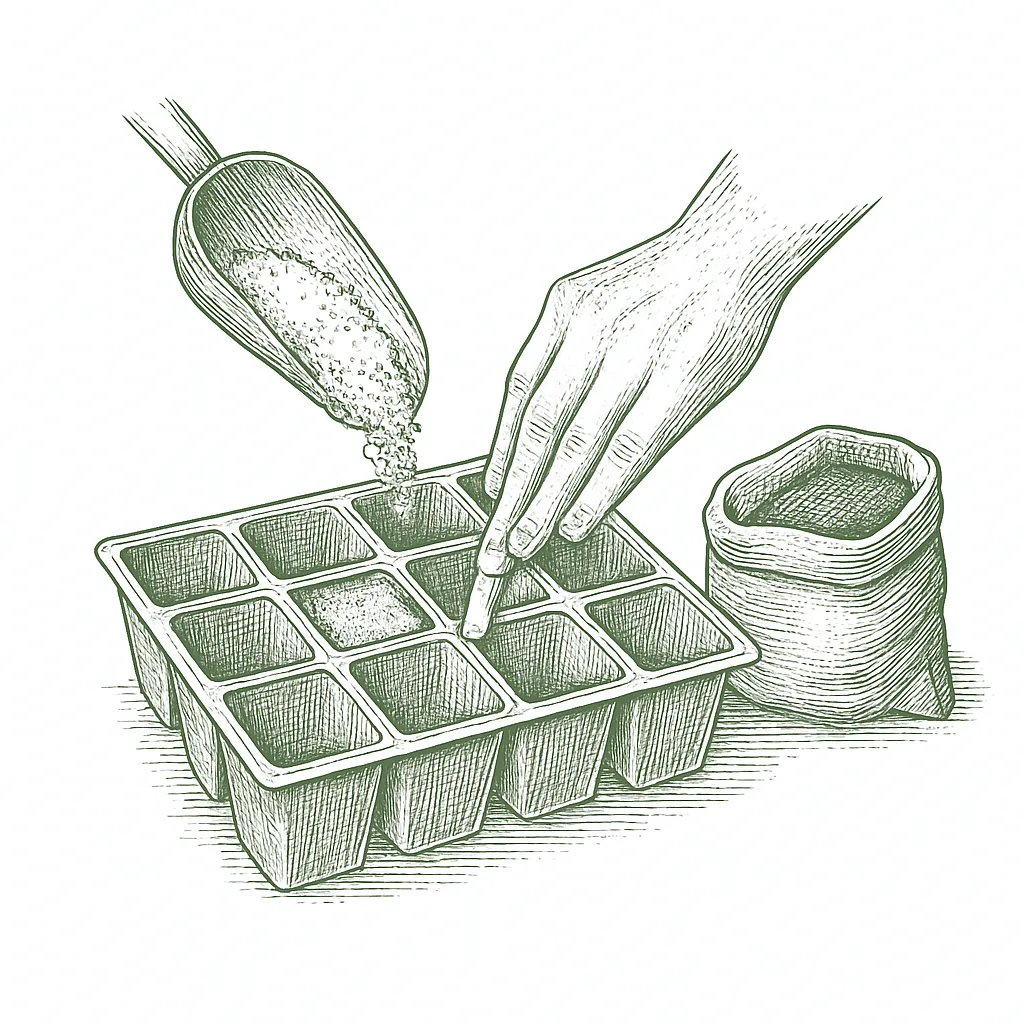
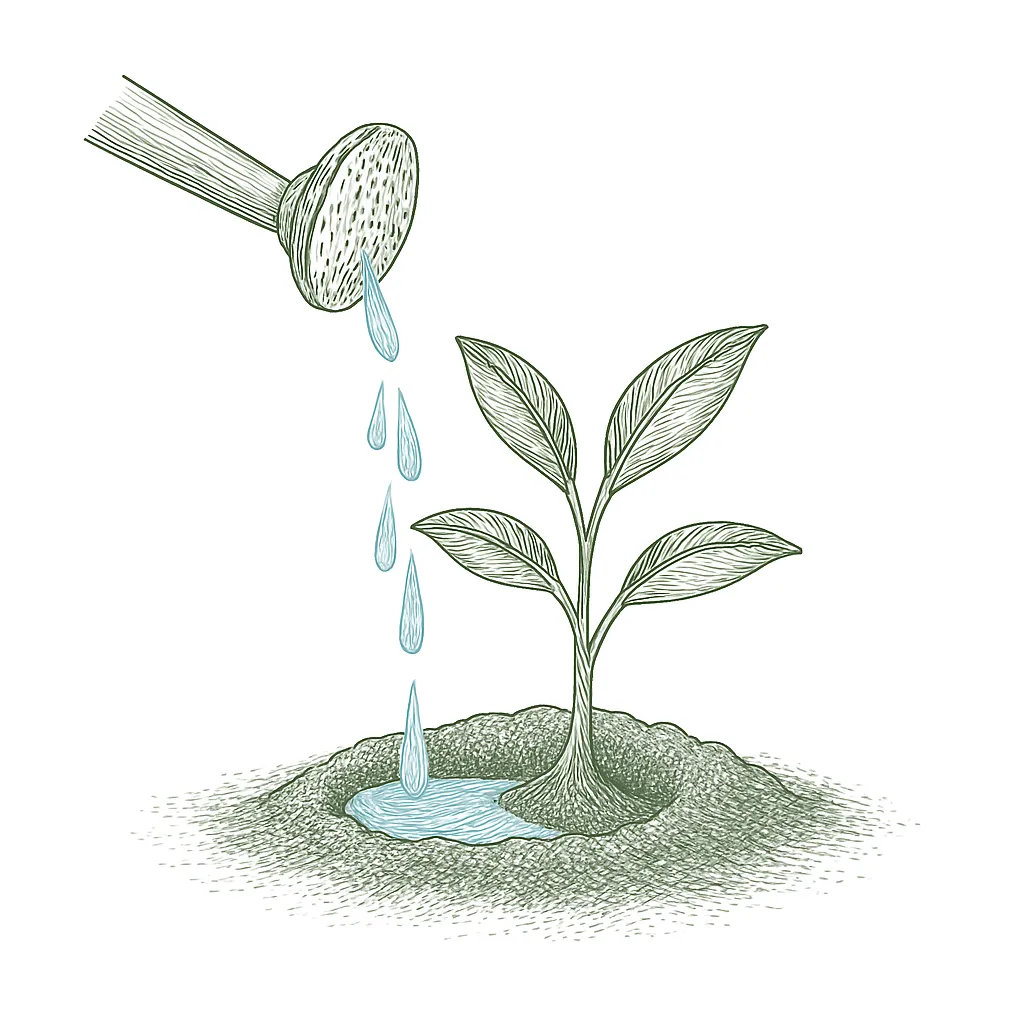
The best way is to sow sunflower seeds straight into warm garden soil (about 1 inch deep) after your last frost; they sprout in 7 to 10 days. Sunflowers have a deep root and do not like being moved, so plant them where they will grow. If your season is short, you can start a few indoors 2 to 3 weeks before the last frost in biodegradable pots and move them out gently, pot and all. Put a stake in for tall types early, before the big flower makes them top-heavy.Direct sowing is the strongly preferred method: sunflowers form a deep taproot early and resent transplanting, so sow seed about 1 inch deep into warmed soil (past 50 °F, ideally 70 to 85 °F) after frost, and they germinate in 7 to 10 days. To gain a couple of weeks in short seasons, start indoors only 2 to 3 weeks before last frost in biodegradable pots and transplant before the taproot circles, disturbing roots minimally. Thin to type-appropriate spacing once seedlings are up. Stake tall single-stem giants early so the support is in place before the head gets top-heavy.






Not sure what soil you have? Grab a small handful of damp soil from your garden bed and squeeze it. If it crumbles apart easily, it's sandy. If it holds together but breaks when you poke it, it's loam (what most vegetables want). If it stays in a hard, slippery ball, it's clay.
Sunflowers are not fussy and grow in most ordinary garden soil as long as water drains away and does not pool. A deep, loose, well-drained soil suits their long taproot best. They tolerate sandy, clay loam, and silty soils, but soggy, heavy clay that stays wet can rot the roots. Mixing in some compost helps, especially for the big branching and large-flowered types, which are hungrier feeders.
Mix 2-3 inches of compost into the top 6 inches of your bed before planting. Compost holds moisture (which sandy soil drains too fast) and adds the nutrients sandy soil tends to lack. Repeat each season. Compost breaks down over time.
Mix 2-3 inches of compost AND a few inches of coarse sand or perlite into the top 6 inches of your bed. The compost feeds the plants; the sand breaks up the clay so air and water can move through. Don't add sand without compost. It can compact like concrete.
If amending your soil sounds like too much work, or if your soil is heavy clay, full of rocks, or contaminated, build over it. A raised bed at least 12 inches deep filled with a 50/50 mix of compost and sandy loam gives you ideal growing soil with no battles. A 5-gallon container with quality potting mix does the same for one plant at a time. Both bypass your native soil entirely.
The numbers that matter, at a glance.
Dwarf sunflowers like 'Teddy Bear' and 'Sunspot' grow well in pots, window boxes, and on balconies. Use a deep pot with drainage holes (depth matters for the root), a well-draining mix with some compost, and full sun. The giant types are not suited to containers because they get far too big and top-heavy.Containers suit dwarf and compact cultivars only; giants are unworkable in pots given their size and top-heaviness. Provide depth for the taproot (a deep pot matters more than a wide one), free drainage, compost-enriched mix for the heavier feeding, and full sun. Water and feed more often than in the ground, since pots dry and leach faster.
Ask what your balcony or roof can carry
A balcony or roof can only hold so much weight. Before you set heavy pots there, ask a building architect what it can safely carry.Illinois Extension's guidance is to consult a building architect about weight limits before placing heavy pots on a balcony or rooftop garden. It gives no weight figure.
Never grow food in a container with anything toxic in it
Many kinds of containers can be used. Whatever you choose, keep anything toxic out of it, especially if you are growing food.Colorado State accepts nearly any container material but warns against using a container that holds toxic materials, especially for edible plants. Illinois adds that a vegetable container should be free of chemicals toxic to plants or people, and urges caution with treated lumber when growing food. If you cannot account for what a repurposed container once held, that alone is a reason to keep food out of it.
Secure hanging containers well
Fasten hanging baskets and window or rail boxes securely. Think about what is below them too, since they can drip on people or things underneath.Illinois Extension asks growers to secure hanging containers well and to think through the safety issues of hanging them. Placement matters too, since a hanging container can drip onto people or belongings below.
Sunflowers are easygoing about soil pH (how acidic or alkaline the soil is). A range around 6.0 to 7.5 is ideal, and most garden soil is already fine, so you usually do not need to change anything. They even tolerate slightly alkaline soil.Sunflowers perform best across roughly 6.0 to 7.5 and are tolerant of soils a little outside that, including mildly alkaline ground up to about 8.0. pH adjustment is rarely warranted; focus instead on drainage and depth for the taproot rather than on fine-tuning acidity.
Sunflowers, especially the big branching and large-flowered kinds, are fairly hungry plants. Mix compost and a balanced fertilizer into the soil before planting, and you can feed lightly again during the season if the leaves look pale. Do not overdo the high-nitrogen kind, though: too much makes tall, floppy, leafy plants with weaker stems and fewer flowers.Sunflowers, especially the multi-branching and large single-flowered types, are moderate to heavy feeders. Work compost and a balanced, slow-release fertilizer into the bed at planting, and supplement lightly through the season if growth is pale or the soil is lean. Avoid heavy nitrogen, which drives soft, leafy, weak-stalked growth that lodges in wind and delays bloom; a balanced ratio favoring steady stalk and head development is the goal.
The three numbers on fertilizer (N-P-K) are nitrogen, phosphorus, and potassium. For sunflowers, a balanced one like 10-10-10 works well. Avoid a high first-number (nitrogen) lawn feed, which gives leaves and floppy stems instead of strong flowers.A balanced ratio such as 10-10-10 worked in at planting, with phosphorus and potassium to back flower and seed development, suits sunflowers better than a high-nitrogen lawn-type feed, which favors weak, leafy growth.
Deadheading (snipping off faded flowers) mostly matters for the branching types with many flowers: cut the old blooms back to the next bud and the plant makes more, right up to frost. Cutting fresh ones for a vase does the same thing. The single-stem types, including the giants, make just one flower and do not rebloom, so there is nothing to deadhead; leave that head to make seeds, or cut it once for a vase. You do not need to pinch sunflowers.Deadheading applies mainly to branching, multi-head types: cut or snip spent blooms back to the next bud or leaf node to redirect energy into new flowers and prolong the display to frost, and cutting for the vase does the same job. Single-stem types (giants and most cut-flower singles) make one terminal head and do not rebloom, so there is nothing to deadhead; leave that head to ripen if you want seed, or cut it once for the vase. There is no pinching: branching types branch on their own.
Sunflowers are mainly grown for their own flowers and seeds, but they are a strong pollinator and beneficial-insect plant, so they help the wider garden too. Their open heads, made of hundreds of tiny flowers, bring in bees, butterflies, and helpful predator insects, and the ripening seeds feed birds. Tall, sturdy types can act as a natural trellis or windbreak for vining crops like cucumbers, squash, and melons, which also benefit from the extra pollinators. The honest catch is allelopathy: sunflower roots and old stalks release natural chemicals that can hold back some plants, especially potatoes and pole beans, and the hulls can stop seeds from sprouting. So plant sunflowers along an edge rather than in the middle of sensitive crops, and clean up the stalks and dropped hulls at season end. Sunflower is grown chiefly for itself, but it earns a place in the wider garden as a pollinator and beneficial-insect powerhouse: the composite heads supply abundant nectar and pollen to bees (including specialist sunflower bees), butterflies, and predatory and parasitic insects, and the seed heads are a documented wildlife and bird food. Sturdy tall types double as a living trellis or windbreak for cucurbits, which tolerate sunflower's allelopathy and gain from the pollinator traffic. The load-bearing honest caveat is that allelopathy: Helianthus annuus is a recognized allelopathic species (roots, residue, and seed hulls release growth-inhibiting compounds), best documented as a weed-suppressing cover-crop trait but also capable of stunting sensitive neighbors. Site sunflowers at a bed edge, not amid sensitive crops, keep potatoes and pole beans clear, and remove residue and spilled hulls at season end. There is no concurrent pairing that is broadly antagonistic to the sunflower itself; the antagonism runs the other way, from sunflower to certain neighbors.
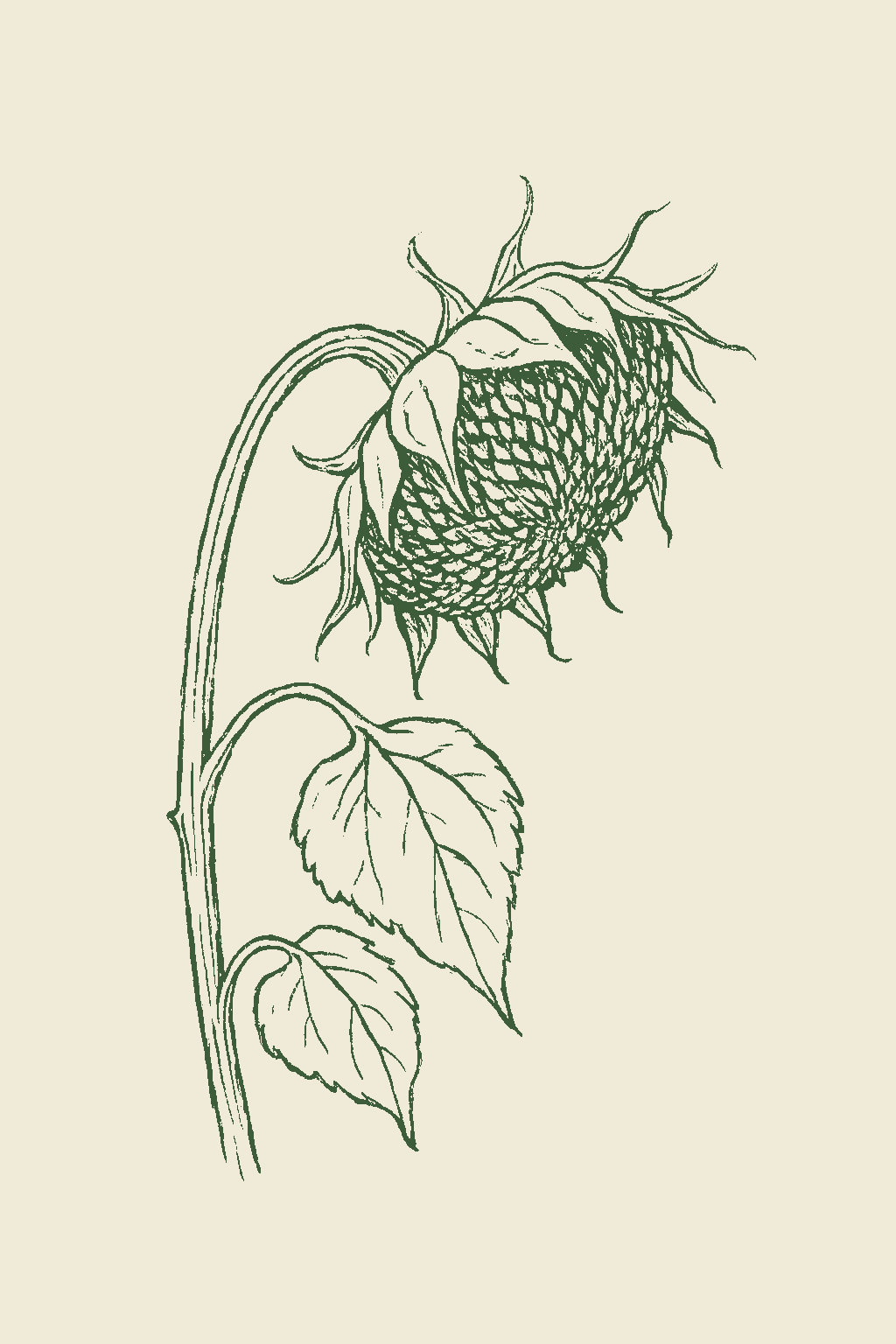
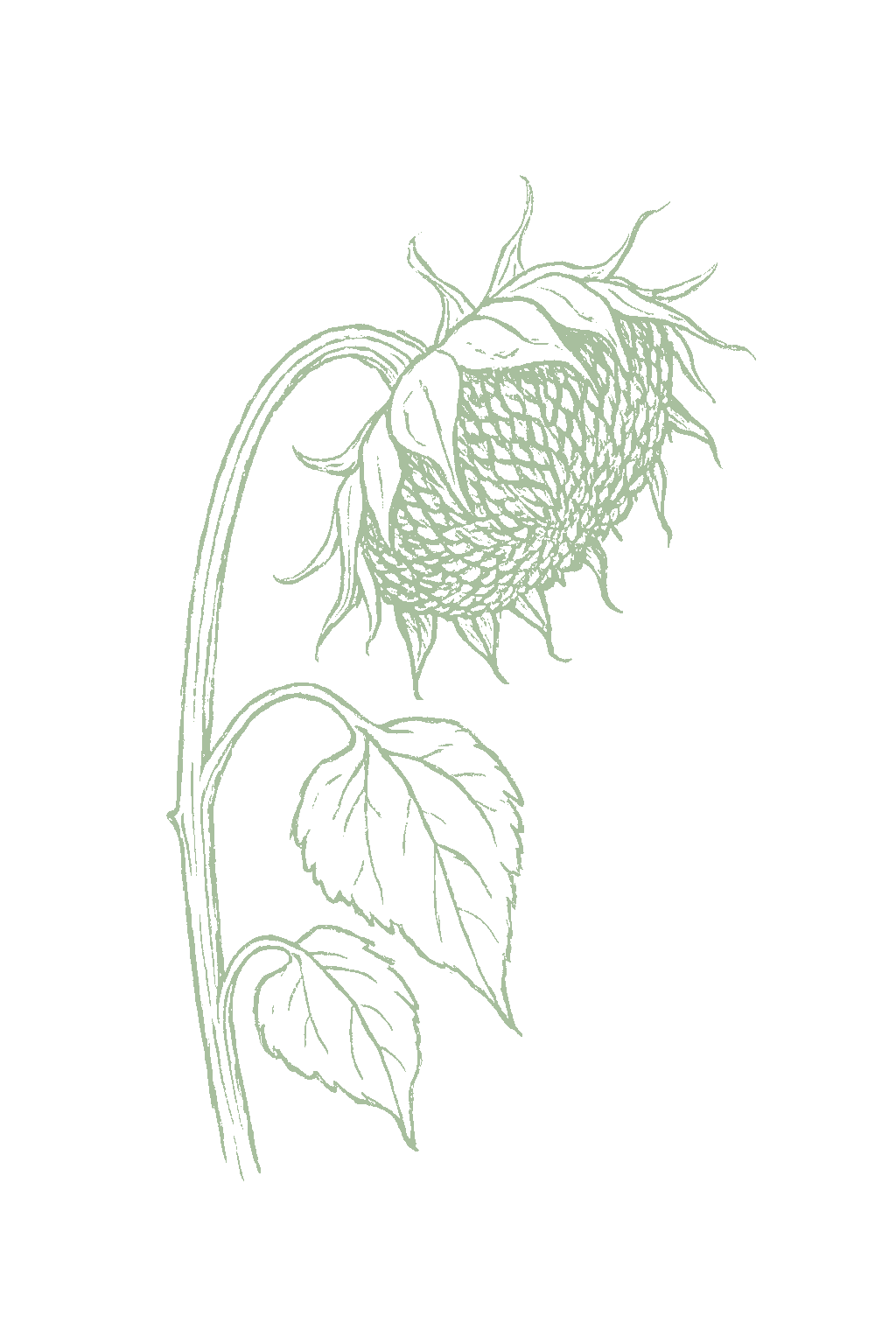
Sunflowers give you two harvests. For a vase, cut the flowers just as they open, in the morning, into clean water, and pull off the lower leaves; pollen-free types stay neatest. For seeds, leave the heads on the plant until the back turns brown and the seeds are plump and firm, about a month after the flower opens. Cover the ripening heads with a paper bag or cheesecloth so birds and squirrels do not get them, then cut the head and dry it somewhere warm and airy until the seeds come loose.Sunflower has two harvests. For cut flowers, cut when the bloom is just opening and the back of the head is still greenish, in the cool of the morning into clean water, stripping lower leaves; pollen-free types stay tidiest and vase life runs about a week. For seed, let heads ripen on the plant until the back turns from yellow to brown, the florets dry, and the seeds plump and firm (about 30 to 45 days after bloom); bag ripening heads in paper or cheesecloth to beat birds and squirrels, then cut and cure the head in a warm, dry, airy, rodent-free spot until the seeds release.
How much you get depends on the type. A giant sunflower makes one big head full of seeds, sometimes over a foot wide. Branching types make lots of smaller flowers over a longer time, great for cutting and for bees but with smaller seed heads. Dwarf types are mostly just for pretty flowers. One big head can hold many hundreds of seeds.Yield depends entirely on type. A single-stem giant produces one large head (often 8 to 14 inches or more across) yielding a substantial crop of seed; branching types produce many smaller heads over a longer window, ideal for cut flowers and pollinators but smaller individual seed heads; dwarf types give modest blooms for color. A well-grown large head can hold many hundreds to over a thousand seeds.
Sunflowers flower the same year you plant them, usually 2 to 3 months after sowing. There is no waiting year. Plant in spring and you get flowers in summer, with seeds ripening about a month after that.Sunflowers bloom the first season from seed, roughly 60 to 100 days after sowing depending on type (fast cut-flower singles sooner, giants later), so there is no establishment year; a spring sowing flowers in summer, with seed ripening over the following month.
Pick the type for your goal. For big edible or bird seeds, grow the giant kinds like 'Mammoth', which make one huge head but need a stake and lots of room. For cutting flowers for a vase, pollen-free single-stem types like the ProCut series are clean and tidy, while branching types like 'Autumn Beauty' and 'Lemon Queen' make lots of smaller flowers over a long time and are best for bees. For pots and small spaces, dwarf types like 'Teddy Bear' stay short. Open, single flowers with pollen are the best ones for bees and butterflies.Choose by purpose and size. For edible or bird seed, the giant single-stem types ('Mammoth', 'Sunzilla', 'American Giant') deliver one large head of plump seed but need staking and 18 to 24 inches of space. For cutting, single-stem pollen-free types (ProCut series, 'Italian White') give clean, uniform, mess-free stems and succession-sow well, while branching types ('Autumn Beauty', 'Lemon Queen') carry many smaller blooms over a long window and are the best pollinator and color choice. For pots, edging, and small spaces, dwarf types ('Teddy Bear', 'Sunspot', 'Music Box') stay under 2 to 3 feet. Open, single, pollen-bearing flowers feed pollinators best; pollen-free cut-flower types trade that for vase tidiness.
Sunflowers give you both flowers and edible seeds, so unlike most cut flowers there is a harvest to store. The main thing is to dry the seeds completely: hang cut heads in a warm, dry, airy place safe from mice until the seeds come off easily, then store them dry. For flowers in a vase, cut when the bloom is just opening, trim the stem, pull off the lower leaves, and use clean water; they last about a week. If you want the seeds, cover the ripening heads so birds and squirrels do not eat them first.Sunflower is grown both for ornament and for an edible, wildlife-valuable seed crop, so it does have a harvest to store. The key to good storage is full drying: cure cut heads in a warm, dry, airy, rodent-free spot until the seeds rattle loose, then store dry as above. For cut flowers, cut when the bloom is just opening, recut the stem, strip lower leaves below the waterline, and use clean water; vase life is roughly a week, longer for pollen-free types. If you are growing for seed, protect ripening heads from birds and squirrels, which strip them fast.
The ladder troubleshoots from the gentlest solution to the strongest. Start with the gentlest option and only move on when and if it doesn't work.
Once the bright petals start to brown, slip a cover over each head whose seeds you want to keep: a paper sack, a square of cheesecloth, or fine netting, held on with a rubber band or a twist of twine. Birds and squirrels can clear a ripening head in a day or two, so put the cover on before the seeds are worth taking rather than after you find them gone. If you are growing the flowers for looks or for the wildlife, leaving the heads open is a fine choice.Cover the heads you intend to harvest as the ray petals begin to brown, using a paper sack, cheesecloth, or nylon mesh cinched at the neck of the head. This is exclusion applied head by head rather than a net thrown over a bed, so it scales with how much seed you actually want. Timing carries most of the weight, since finches, jays, blackbirds, and squirrels work a head quickly once it fills. Heads left uncovered are not a lapse in the program: standing seed feeds birds into fall, so the decision is per head, by intent, rather than a loss to be prevented across the whole planting.
No spray for this one. Prevention is the control.
The ladder troubleshoots from the gentlest solution to the strongest. Start with the gentlest option and only move on when and if it doesn't work.
These soft little insects gather on the newest growth, on flower buds, and on the backs of leaves. A firm jet from the hose knocks them loose, and on a plant that is growing well that is often the end of it. Aim underneath the leaves, and spray early enough in the day that the foliage dries.Open with a directed water knock-back on colonized shoot tips, buds, and leaf undersides. On a vigorous plant this usually holds, since populations here seldom reach a damaging level. Repeat on a scouting rhythm rather than expecting a single pass to settle it, and work early in the day so leaves dry quickly.
Sunflowers pull in ladybugs and other beneficials, the helpful insects that eat aphids for you. Giving them a few days usually costs nothing, because aphids rarely set a strong sunflower back. Broad insect sprays take out those helpers along with the aphids, which is the main reason to hold off.Conservation is already doing much of the work: the beneficials this crop draws in typically keep colonies in check on their own, which is why the pressure here reads as low severity. Protect that service by keeping broad-spectrum material out of the planting and by leaving light populations to be dealt with.
If clusters keep building on a young plant, coat them with insecticidal soap, a mild spray that only affects what it wets. Spray the shoots and leaf undersides where the aphids actually sit, so the ladybugs elsewhere on the plant are left alone.Hold soap for populations still climbing on young plants, the one case this crop's guidance singles out; a big established sunflower rarely warrants it. Wet the colonies directly, since anything the spray misses is unaffected, and keep it off growth where predators are working, because it also takes out soft-bodied beneficials it lands on.
The bottom rungs are products with label rules: timing, pollinators, and days to wait before harvest. Before you spray →
The ladder troubleshoots from the gentlest solution to the strongest. Start with the gentlest option and only move on when and if it doesn't work.
At the end of the season, cut down and destroy the spent stalks and pick up any heads that dropped, instead of leaving them in the bed over winter. Clearing what is left standing is the routine way to keep a problem from carrying into next year, and here it is one of the two steps the guidance leans on.Sanitation is the front half of the program: destroy spent stalks and gather dropped heads rather than composting them or letting the row stand through winter. It is worth doing in a light year too, since home-scale damage from this pair is usually limited and the cleanup is cheap insurance on keeping it that way.
Move the sunflower patch to different ground rather than sowing in the same spot season after season. Growing them continuously in one place is what the guidance warns against, and shifting the bed is an easy habit to build.Rotate away from continuous sunflower. Neither the moth nor the weevil calls for a spray at garden scale, so rotation and sanitation together are the working program, with a measure of tolerance behind them: a head clipped off its stalk, or one flower face webbed over and short of seed, is generally a loss you can absorb rather than a reason to escalate.
No spray for this one. Prevention is the control.
The ladder troubleshoots from the gentlest solution to the strongest. Start with the gentlest option and only move on when and if it doesn't work.
Clear the weeds out of the bed and around its edges before you sow. Weedy ground gives these caterpillars cover, and a patch that is bare at sowing time tends to leave you fewer toppled seedlings to find.Cut the weedy harborage before sowing rather than after the stand is up, and keep the edges clean through establishment. This is a seedling-stage concern that plants outgrow once they are past the vulnerable window, so the effort is front-loaded into the days around sowing rather than spread across the season.
Put a collar around the stem of each new seedling, a strip of cardboard or foil wrapped into a ring and set into the soil around it. These caterpillars cut the stem right at the soil line, so a barrier at that spot is what keeps a seedling standing.Collars on transplants, or on the seedlings you keep after thinning, are the practical barrier while stems are still soft. Scout new plantings and look for fresh gaps in the stand in the morning, since the cutting happens overnight; the collar only has to hold until the plants thicken past the stage that is at risk.
No spray for this one. Prevention is the control.
The ladder troubleshoots from the gentlest solution to the strongest. Start with the gentlest option and only move on when and if it doesn't work.
Pick the caterpillars and beetles off by hand when you find a lot of them, and dispose of them away from the bed. Much of the time you can leave them alone: chewed and skeletonized leaves look rough, but a healthy sunflower carries a fair amount of leaf damage without it showing up in the flower.Hand removal on a scouting walk is as far as this one usually needs to go, and it earns its time only at high densities. Feeding from this guild reads as cosmetic on a vigorous plant, which tolerates substantial leaf loss before bloom is affected, so the judgment call is whether the numbers justify the walk rather than which material to reach for.
No spray for this one. Prevention is the control.
The ladder troubleshoots from the gentlest solution to the strongest. Start with the gentlest option and only move on when and if it doesn't work.
Do not put sunflowers back into a bed where this rot has appeared. The hard black resting bodies it leaves behind stay in that soil for years, so the site keeps the problem long after the plants are pulled. Pick fresh ground, and take into account what grew there recently, since other broadleaf plants can host it as well.Site selection is the first decision and the most consequential one: skip beds with a white mold history, and skip beds that recently carried a susceptible broadleaf crop. The sclerotia persist in that soil for years, and with fungicides largely ineffective against this disease, where you plant is the lever that moves the most.
Plant where water drains away instead of sitting. This rot works in cool, wet conditions, and ground that stays soggy hands it what it needs at the base of the stalk.Ground that sheds water takes standing wetness out of the picture at the stalk base, where the basal rot and wilt phase begins. Sort drainage out before planting on heavy or low-lying ground, since it is not something you can correct once a plant is collapsing.
Give each plant real room. Sunflowers get big, and a crowded row holds the damp, still air this rot favors down inside the canopy.Space generously so the stand dries and air moves through it. On a tall, broad-leaved crop the spacing set at sowing decides how long the mid-stem and the head stay wet after rain, and that is the part of the program carried by layout alone.
Pull out any plant with a soft, watery rot at the stalk or a moldy head, and get it out of the garden. Put it in the trash rather than the compost pile, and do not leave the debris lying in the bed.Rogue infected plants and heads and destroy them rather than composting. There is no rescue for a plant already collapsing, and the chemical route does little against this one, which puts the weight of management on cultural steps like this.
No spray for this one. Prevention is the control.
The ladder troubleshoots from the gentlest solution to the strongest. Start with the gentlest option and only move on when and if it doesn't work.
When you buy seed, look for a line described as mildew resistant. Some sunflower seed is sold that way, and choosing it at purchase is easier than dealing with the disease later, since there is nothing to spray that rescues an infected plant.Where a resistant hybrid is offered, take it. Availability varies by seed source, so this is a decision made at ordering rather than in the bed, and it counts for more here than on a disease you could treat: an infection that takes hold has no effective rescue.
Plant in soil that drains. Waterlogged ground is where this one gets its opening, and young plants in a soggy bed are the ones that stunt or die.Well-drained soil is the base of the prevention, since saturated ground sits alongside cool conditions and high humidity as a favoring factor. On heavy ground, amend or raise the bed before sowing rather than trying to water your way around it.
Go easy with the watering can while the plants are small. Seedlings are the stage this disease kills, so keeping the seedbed from staying sodden is the piece you control day to day.Restrained watering through the seedling stage is the in-season half of prevention: the pathogen sits in the soil and takes its chance while plants are young, so aim for a seedbed that stays moist rather than saturated. It is a sowing and establishment habit, not something to begin once stunting shows.
Pull out badly affected plants, the stunted ones with yellow blotching on top and white mold underneath the leaves, and throw them away rather than composting them.Rogue symptomatic plants promptly and discard them. With no effective rescue once infection is established, removal is the only in-season action left, and it keeps obviously infected material out of the stand for the rest of the season.
No spray for this one. Prevention is the control.
The ladder troubleshoots from the gentlest solution to the strongest. Start with the gentlest option and only move on when and if it doesn't work.
If rust turns up in your garden most years, look for a variety described as rust resistant when you buy seed. It is a choice made before you plant rather than a fix applied afterward.Resistant cultivars are named in the guidance and cost nothing extra at the point of purchase, which makes them the cheapest step available. Worth prioritizing on a site where the cinnamon-brown pustules show up through every warm, humid summer.
Space plants out so air moves between them and wet leaves dry faster. This fungus travels on the wind in warm, humid weather, and foliage that stays damp gives it more of an opening.Spacing is the first cultural lever, shortening how long foliage stays wet, which is what the guidance is after. In a bad year the disease defoliates heavily, so an open stand is worth setting up at sowing rather than regretting later in the season.
Water at the soil instead of over the top of the plants. Wetting the leaves, and especially the undersides where the brown bumps sit, keeps them damp longer than they need to be.Base irrigation gets foliage drying faster, the mechanism the guidance pairs with spacing. The pustules sit chiefly on lower leaf surfaces, so overhead water lands exactly where you would rather it did not.
Take off the worst rusted leaves as you notice them, and clear infected leaf litter from around the plants. A healthy garden sunflower is rarely killed by this, so the aim is to hold it down rather than to clear it out.Strip badly pustuled foliage during the season and clear infected debris at cleanup. Fungicides exist for severe pressure, but the guidance places them outside what a home garden typically needs, so sanitation alongside spacing and base watering is where this program stops for most gardeners.
No spray for this one. Prevention is the control.
The ladder troubleshoots from the gentlest solution to the strongest. Start with the gentlest option and only move on when and if it doesn't work.
Give plants room. Both of these, the brown angular spots and the white powdery film, run worse in crowded plantings and humid weather, so the spacing you set at sowing does much of the preventive work.Generous spacing is the shared control, since crowding and humidity drive both halves of this pair. On a crop this tall and broad-leaved, thinning the stand at sowing buys more drying than anything available later in the season.
Put the water on the ground at the base of each plant, not over the top of the foliage. If sprinkling from above is your only option, run it in the morning so the leaves dry during the day instead of sitting wet overnight.Direct water to the soil, and where overhead irrigation is the only option, run it early so leaves dry through the day. This is a placement and timing habit rather than a treatment, which suits a pair of diseases that stay foliar and are rarely fatal.
Rake up and discard fallen leaves, and pull off the worst-spotted ones during the season. Neither problem usually kills a sunflower, but both drag on the plant late in the year, and clearing debris helps keep that in check.Remove infected debris during the season and again at cleanup. Both diseases cut vigor late in the season rather than killing the plant, so the payoff is holding the stand presentable and productive through the tail end of the year.
Do not grow sunflowers in the same ground year after year. Moving the patch limits how much the leaf spot half of this problem carries over from one crop to the next, though it does not do the same job against the powdery mildew.Rotate away from continuous sunflower. The guidance ties this specifically to Septoria carryover, so treat it as a step aimed at the leaf spot rather than at both halves of the pair; the mildew stays with the spacing and watering steps.
No spray for this one. Prevention is the control.
Rotating sunflowers helps more than it does for many flowers, because their main diseases live in the soil. Try not to grow sunflowers in the same spot two years running, especially if you saw any rot, mildew, or rust, and clean up old stalks and leaves at the end of the season. On the useful side, sunflowers are sometimes grown on purpose as a cover crop to hold down weeds, using the same natural chemicals that mean you should not follow them with touchy crops like potatoes.Rotation matters more for sunflower than for many ornamentals because its key diseases are soilborne and persistent. Avoid planting sunflower on the same ground in back-to-back years, particularly where Sclerotinia, downy mildew, or rust appeared, and clear infected debris at season end. Used deliberately, sunflower is also a recognized weed-suppressing cover crop thanks to the same allelopathy that cautions against following it with sensitive vegetables.
The plant app sends a timely reminder at every critical moment of your sunflower season. The wording adjusts to whichever you pick: beginner or seasoned. Here are three you'll see in Zone 9.
plant sends the right notification at exactly the right moment, for your zone, your weather, your crops. Founding members lock the rate forever.
We're building this guide with real growers. Got a question we missed? Ask here. We read every one and add the best answers right to this page.
Learned something the hard way? Pass it on. Real growers' tips make this guide better for the next person, and we credit you by name when yours goes live.
If you've grown this crop and you see a date, a temperature, a companion claim, or a recommendation that doesn't match your experience, tell us. Real growers' corrections make this guide better for the next person.
Every date, temperature, spacing, and recommendation on this page is sourced from university cooperative extension publications, peer-reviewed agricultural research, NOAA climate data, and direct extension calendars. Where claims are softer (traditional gardening wisdom not formally documented), we say so.
Spot a data point that doesn't match your experience? Submit a correction; accepted corrections earn full author credit on the page.
Zone-aware seasonal nudges, what's worth planting now, and the occasional recipe from the harvest. No spam, ever.