Today · in your zone
What's happening right now
Off-season for swiss chard in zone 11.
Tap to switch. plant calibrates to where you are in the journey.
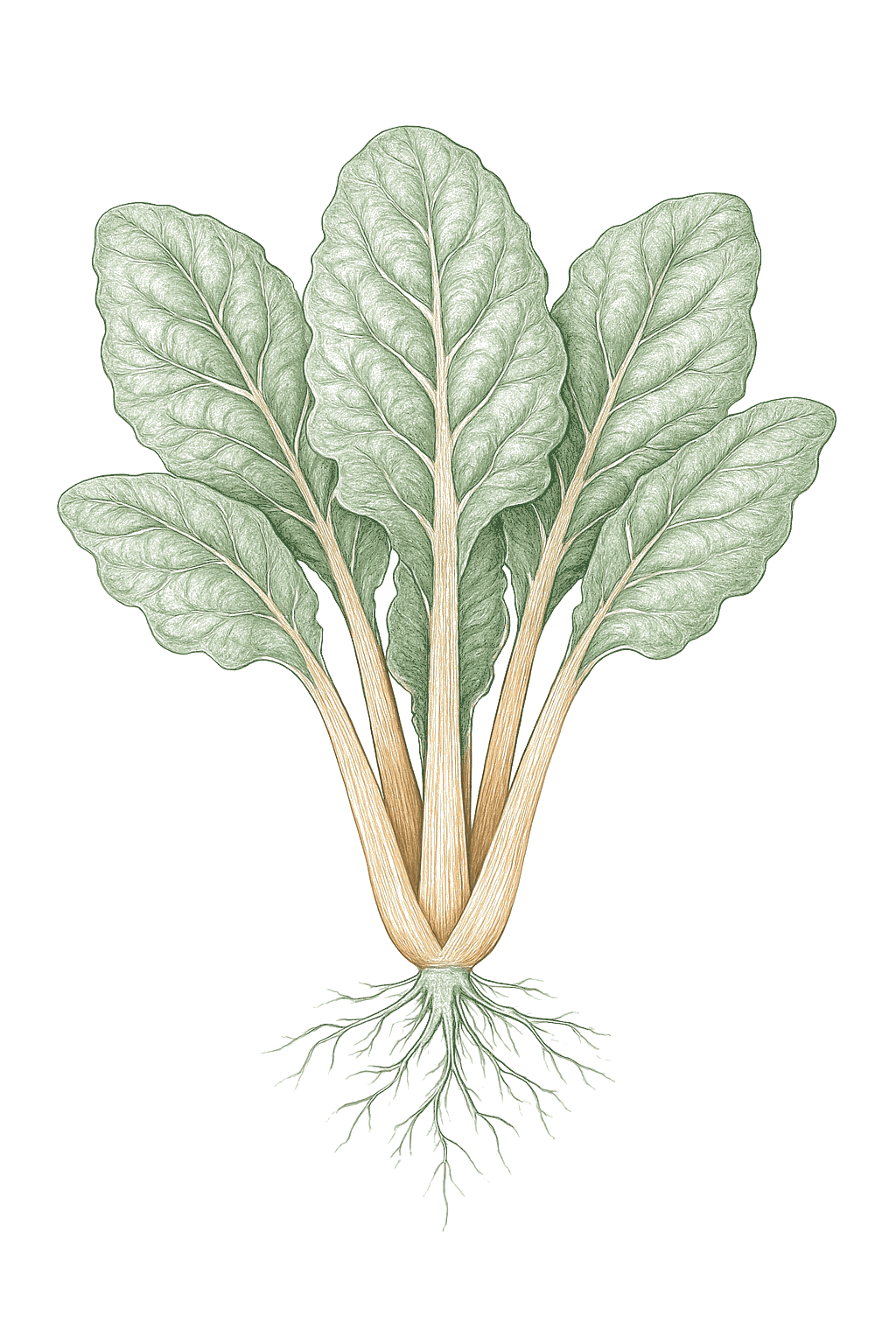
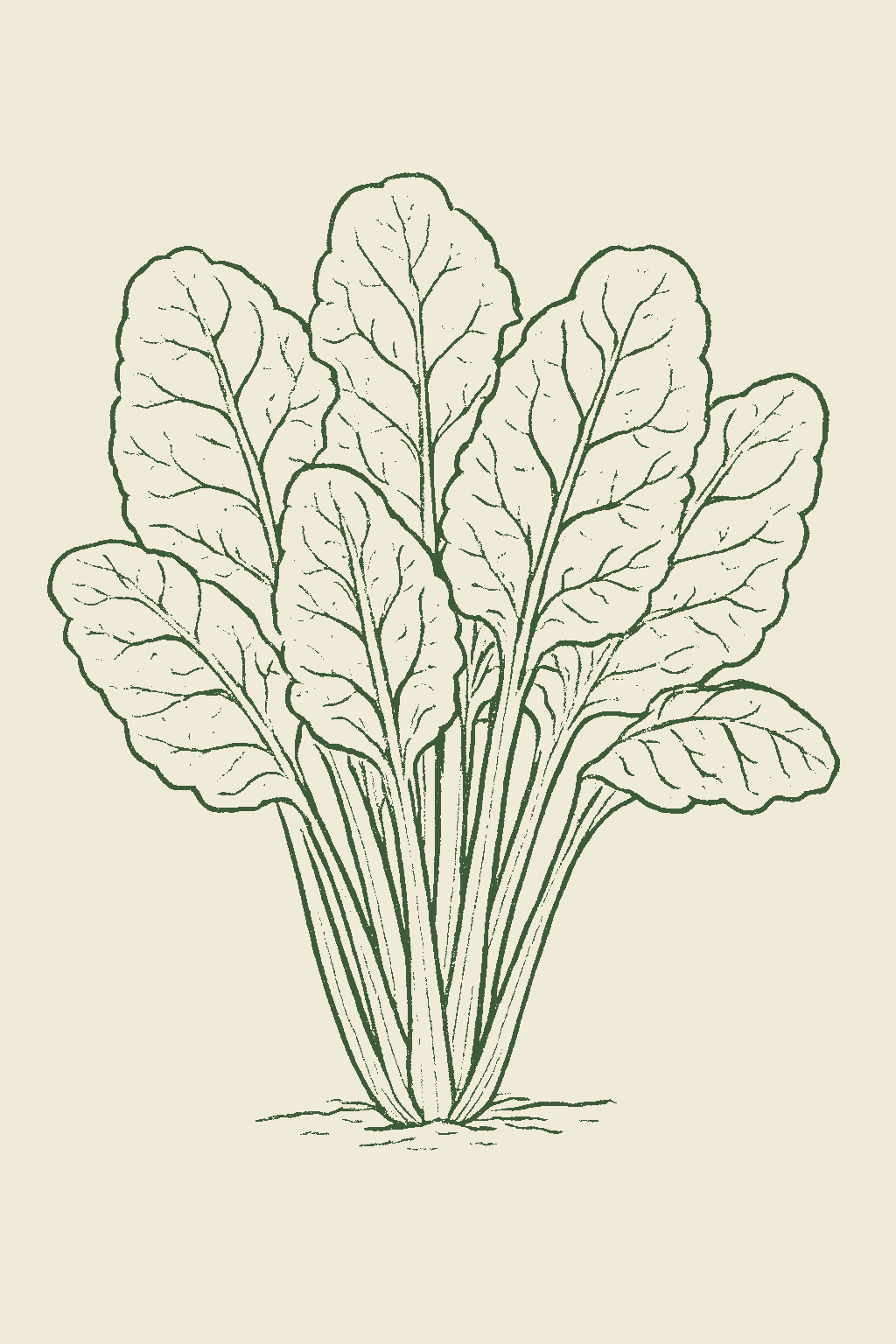
Swiss chard is a leafy green grown for both its big, tender leaves and its colorful, edible stalks, which come in white, gold, pink, orange, and red. It is actually the same plant species as the beet, just grown for the leaves and stems instead of a root. What makes chard special is that it handles both heat and cold better than most greens: it does not flower and turn bitter in summer the way lettuce and spinach do, so one spring planting keeps producing right through summer and fall, and in mild-winter areas it lives nearly all year. You harvest it cut-and-come-again, picking the outer leaves while the center keeps growing, so a few plants feed you for months. The rainbow-stemmed kinds are pretty enough for a flower bed, and you can cook the bright stalks like a vegetable on their own. Swiss chard (Beta vulgaris) is a leafy member of the goosefoot family grown for its large, tender leaves and its broad, often vividly colored edible stalks. It is the same species as the beet, selected for leaf and stem rather than root, and it shares the beet's pests, diseases, and multigerm seedball. Its defining trait is an unusual tolerance of both heat and cold: unlike lettuce and spinach, chard does not bolt in summer heat or long days (as a biennial it flowers only after a winter), so a single spring planting crops straight through the summer and well into fall, and in mild zones it overwinters for a harvest that spans much of the year. Harvested cut-and-come-again, the outer leaves picked while the crown keeps producing, one chard plant yields for months. The colorful-stemmed types such as Bright Lights are as ornamental as they are useful, and the stalks cook as a vegetable in their own right.
Off-season for swiss chard in zone 11.
In Zone 11, swiss chard can be planted October through January, skipping the summer heat. Harvest runs November through May.
In Zone 11, swiss chard can be planted September through November, skipping the summer heat. Harvest runs October through May.
In Zone 11, swiss chard can be planted February through March, then again September through October. Harvest runs April through August.
In Zone 11, swiss chard can be planted October through January, skipping the summer heat. Harvest runs November through May.
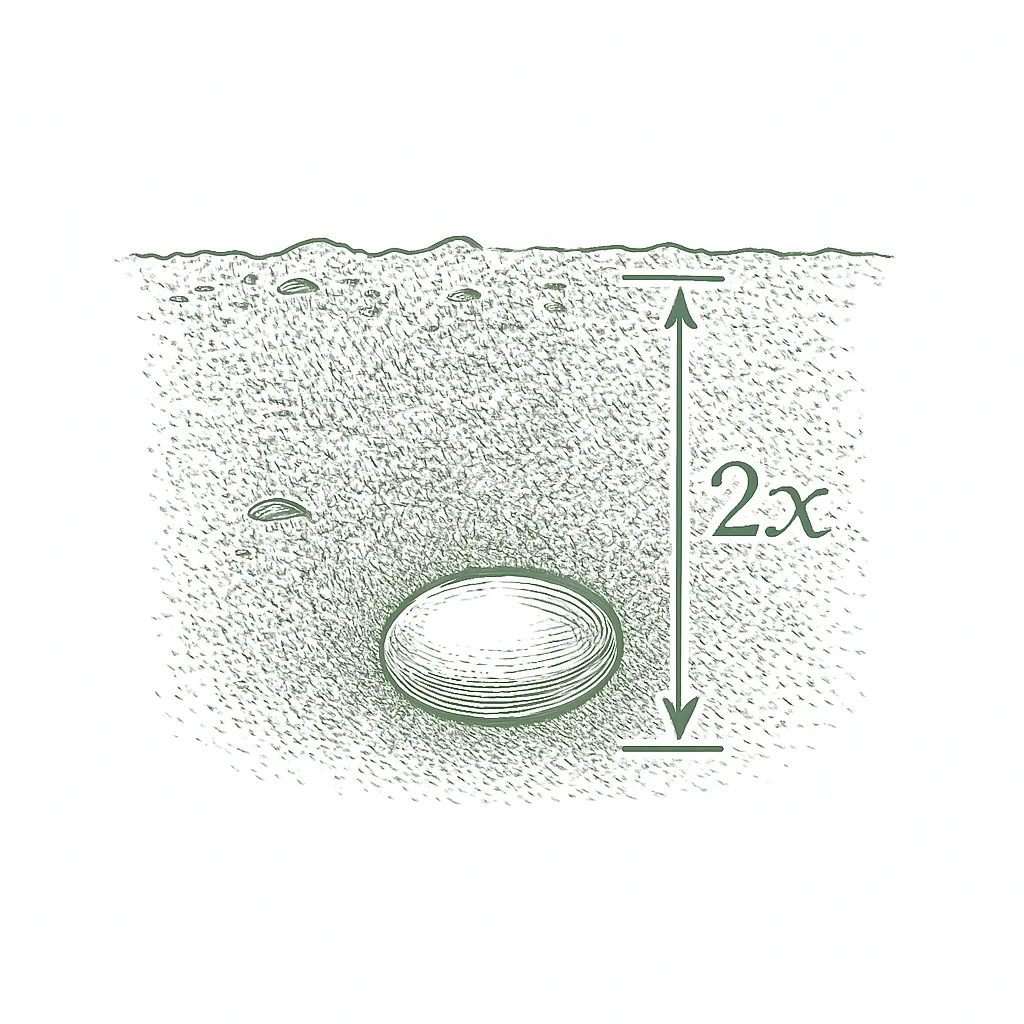
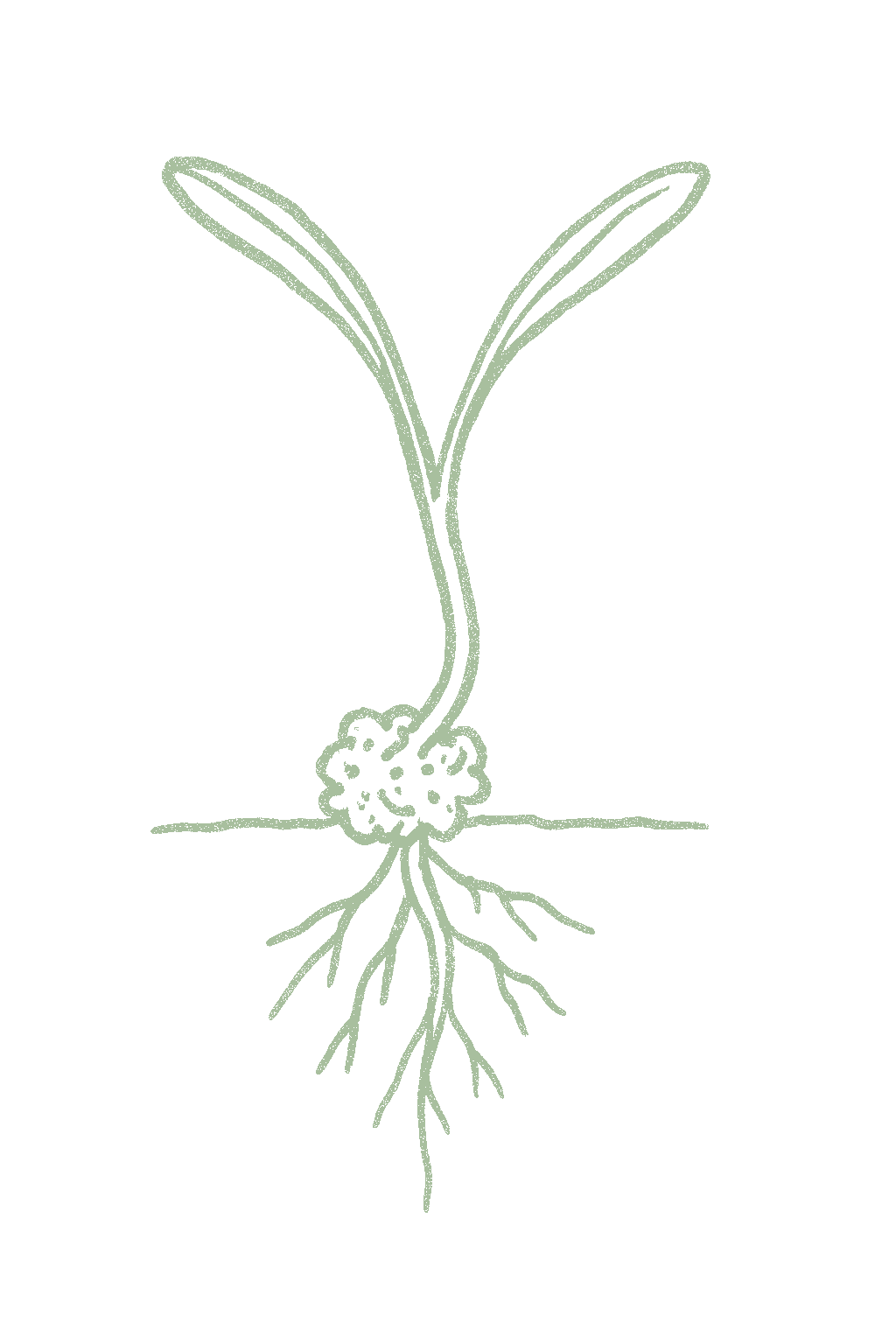
Plant chard seeds right in the garden where they will grow. Sow them about half an inch deep once the soil is no longer frozen or soggy, about 2 to 3 weeks before your last spring frost. Here is the chard surprise: each seed is really a little dried fruit holding several seeds, so one seed grows a small clump of seedlings, which is why you have to thin them later. You can also start a few indoors and transplant them. Do not plant too early into cold soil, which can make young plants flower (bolt) prematurely. Keep the soil surface damp until the sprouts appear, often 1 to 2 weeks.Chard is usually direct-sown, since it grows quickly and, like its relative the beet, transplants best when young; it can be started indoors for an early plant or set out as transplants spaced 4 to 6 inches apart (UMN), but most gardeners sow in place. Sow about half an inch deep once the soil is workable and at least 50°F, from about 2 to 3 weeks before the last spring frost. The key chard-specific point is that each chard seed is a multigerm seedball, a dried fruit containing several embryos, so a single seed sprouts a small cluster of seedlings and the stand must be thinned. Avoid sowing into cold soil, which can vernalize young plants and trigger premature bolting. Keep the surface moist and uncrusted until emergence, often 1 to 2 weeks.
Not sure what soil you have? Grab a small handful of damp soil from your garden bed and squeeze it. If it crumbles apart easily, it's sandy. If it holds together but breaks when you poke it, it's loam (what most vegetables want). If it stays in a hard, slippery ball, it's clay.
Swiss chard likes loose, fertile, well-drained soil with plenty of compost worked in. Unlike its cousin the beet, chard is grown for its leaves and stalks rather than a round root, so it is not as fussy about deep, stone-free soil, but a loose bed that does not crust still gives the best start. The seed is slow to come up, so keep the top of the soil moist and crumbly so the seedlings can push through. Mix in compost, aim for a soil pH of about 6.0 to 7.0, and chard is happy in most garden soils that drain well.
Mix 2-3 inches of compost into the top 6 inches of your bed before planting. Compost holds moisture (which sandy soil drains too fast) and adds the nutrients sandy soil tends to lack. Repeat each season. Compost breaks down over time.
Mix 2-3 inches of compost AND a few inches of coarse sand or perlite into the top 6 inches of your bed. The compost feeds the plants; the sand breaks up the clay so air and water can move through. Don't add sand without compost. It can compact like concrete.
If amending your soil sounds like too much work, or if your soil is heavy clay, full of rocks, or contaminated, build over it. A raised bed at least 12 inches deep filled with a 50/50 mix of compost and sandy loam gives you ideal growing soil with no battles. A 5-gallon container with quality potting mix does the same for one plant at a time. Both bypass your native soil entirely.
The numbers that matter, at a glance.
Soil pH measures how acidic or alkaline your soil is, on a scale from 1 to 14 where 7 is neutral. Swiss chard does best from about 6.0 to 7.0, slightly acidic to neutral, and it is more forgiving of soil type than many greens. It handles a touch of alkalinity better than spinach and is happy in most garden soils. A cheap soil test from your local extension office tells you your number and whether you need to add lime.Aim for a soil pH of about 6.0 to 7.0, slightly acidic to neutral. The University of Minnesota notes chard tolerates soil somewhat more acidic than spinach, as low as about pH 6.0, and Clemson cites a 6.0 to 6.5 range; like the beet it is the same species as, chard also handles mildly alkaline soil (to about 7.5) better than most leafy greens. Acidity well below 6.0 is the main risk, where germination and micronutrient uptake suffer. A standard soil test removes the guesswork before sowing.
Swiss chard grows lots of leaves and likes nitrogen to keep making them. Mix some compost and a balanced fertilizer into the soil before planting, then feed it with a nitrogen fertilizer about a month after the seedlings come up, and again every 4 to 6 weeks while you are picking. Because you cut from the same plant for months, a steady supply of food keeps the leaves big and tender.Chard is a leafy crop that runs on nitrogen, and because it is cut over a long season it benefits from periodic feeding rather than a single dose. Work compost and a balanced fertilizer into the bed before sowing, then side-dress with nitrogen about 4 weeks after emergence and again every 4 to 6 weeks while you keep cutting. Utah State suggests about a quarter cup of 21-0-0 per 10 feet of row. Steady nitrogen and even moisture keep the leaves large, tender, and dark; repeated harvesting pulls a lot out of the plant, so do not let it run hungry.
Use a nitrogen-rich feed such as blood meal or a 21-0-0 fertilizer, repeated every 4 to 6 weeks while you harvest, over a balanced fertilizer mixed in at planting.High nitrogen for sustained leafy growth, e.g. a quarter cup of 21-0-0 per 10 ft of row or calcium nitrate, side-dressed every 4 to 6 weeks over a balanced base worked in at sowing. Phosphorus and potassium per a soil-test baseline.
Swiss chard is an easygoing neighbor that shares a bed nicely with many crops. It grows well next to beans, the cabbage family (broccoli, cabbage, kale), onions and other alliums, and low herbs. The main plants to keep apart from chard are its close relatives beets and spinach, which share the same leafminer pest, so do not crowd them together. As always, do not trust every companion chart online, since many of their claims have never been tested. Chard fits easily into mixed beds and its companion list mirrors the beet's, since they are the same species. West Virginia University's companion guide lists beans, the cabbage family, and onions among the good neighbors for the chard and beet group, all reasonable on space-and-timing grounds. The one well-grounded caution is to separate chard from its goosefoot-family relatives beets and spinach, which share the leafminer and several leaf diseases, a rotation and pest principle more than a tested adjacency effect. Treat the rest as sensible defaults: as the University of Minnesota stresses, most companion claims are tradition rather than tested science, so use them as a starting point and watch your own results.
Swiss chard is ready to pick when the outer leaves are about 8 to 12 inches long (or smaller for baby leaves), around 50 to 60 days after planting. Cut or snap off the outer leaves and leave the middle of the plant to keep growing, and it will produce for months from the same plant. Pick a few leaves from each plant regularly, and save the bright stalks to cook on their own, since they take a little longer than the leaves.Swiss chard is ready to start cutting when the outer leaves reach a usable size, roughly 8 to 12 inches long (or smaller for tender baby leaves), usually about 50 to 60 days from sowing. Harvest cut-and-come-again: snap or cut the outer leaves an inch or two above the crown and leave the central growing point, and the plant keeps generating new leaves for months. Crop regularly to keep new growth tender, and cook the colorful stalks as a separate vegetable, giving them a head start over the quicker leaves.
One chard plant gives you leaves again and again over months, not just a single harvest. A short row of a few plants keeps a household in greens for much of the year.A single chard plant is highly productive over a long season, yielding repeated cuttings of leaves and stalks for months from one sowing. Utah State cites about 8 to 12 pounds from a 10-foot row over the season.
Chard produces steadily from early summer right through fall, and in mild-winter areas it keeps going into winter. Unlike lettuce and spinach, it does not flower and quit in the heat, so the harvest just keeps coming.Production builds through the warm months and holds longest where winters are mild; a spring planting peaks across summer and fall, and in mild zones the same plants carry into and through winter. Because the plant does not bolt in its first year, there is no abrupt early end as there is with spinach or lettuce. The trick with chard is to keep picking. Cut the outer leaves often, keep it watered and fed, and one planting will feed you for months. Most beginners are surprised how long a few chard plants keep going.The key to total yield is steady care and frequent cutting: keep moisture and nitrogen even, crop the outer leaves regularly so the crown keeps generating new ones, and let a single healthy planting run for months rather than replanting. New growers often underestimate how long one chard sowing produces.
Chard varieties are mostly about color. Fordhook Giant is the reliable white-stemmed classic and takes heat well. For a rainbow of stems, grow Bright Lights; for deep red, Ruby Red; for yellow, Bright Yellow or El Dorado. If you garden somewhere hot, Lucullus and Perpetual Spinach hold up especially well. They all grow the same way and are ready in about 50 to 60 days, with small leaves sooner.Chard varieties differ mainly in stalk color and leaf texture rather than growing needs. Fordhook Giant is the dependable white-stemmed standard and one of the most heat-tolerant; Lucullus and the leaf-beet type Perpetual Spinach are the choices for the hottest regions and the longest harvest. For color, Bright Lights gives the full rainbow, Ruby Red the deep crimson, and El Dorado or Bright Yellow the gold tones; the colorful types are as ornamental as they are edible, though some red strains bolt slightly sooner. Most cultivars mature in about 50 to 60 days, with baby leaves much sooner.
Move your chard to a different spot each year, and do not put it (or its relatives beets and spinach) back in the same bed for about three years. This keeps shared pests and diseases from piling up. Chard does well following beans or peas, which add nitrogen, or onions and garlic.Rotate chard on a roughly three-year cycle, keeping it and its close relatives beet and spinach out of a bed for two to three seasons. This breaks the buildup of the leafminers, flea beetles, and leaf diseases the goosefoot family shares, and in warm sandy soils it also helps with root-knot nematode. Following a legume that has added nitrogen, or an allium, suits the leafy crop well.
The plant app sends a timely reminder at every critical moment of your swiss chard season. The wording adjusts to whichever you pick: beginner or seasoned. Here are three you'll see in Zone 11.
plant sends the right notification at exactly the right moment, for your zone, your weather, your crops. Founding members lock the rate forever.
We're building this guide with real growers. Got a question we missed? Ask here. We read every one and add the best answers right to this page.
Learned something the hard way? Pass it on. Real growers' tips make this guide better for the next person, and we credit you by name when yours goes live.
If you've grown this crop and you see a date, a temperature, a companion claim, or a recommendation that doesn't match your experience, tell us. Real growers' corrections make this guide better for the next person.
Every date, temperature, spacing, and recommendation on this page is sourced from university cooperative extension publications, peer-reviewed agricultural research, NOAA climate data, and direct extension calendars. Where claims are softer (traditional gardening wisdom not formally documented), we say so.
Spot a data point that doesn't match your experience? Submit a correction; accepted corrections earn full author credit on the page.
Zone-aware seasonal nudges, what's worth planting now, and the occasional recipe from the harvest. No spam, ever.