Today · in your zone
What's happening right now
Off-season for swiss chard in zone 9.
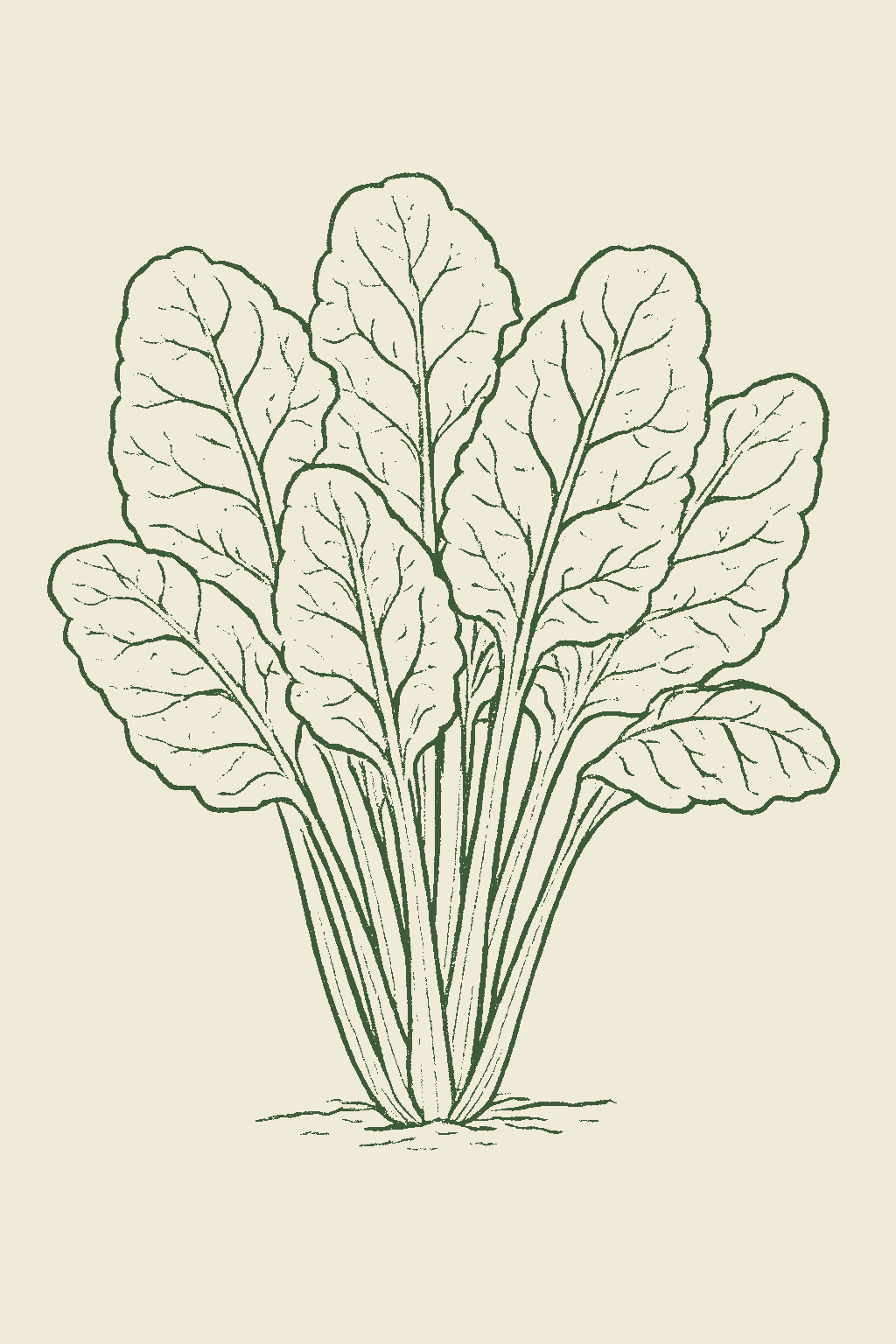
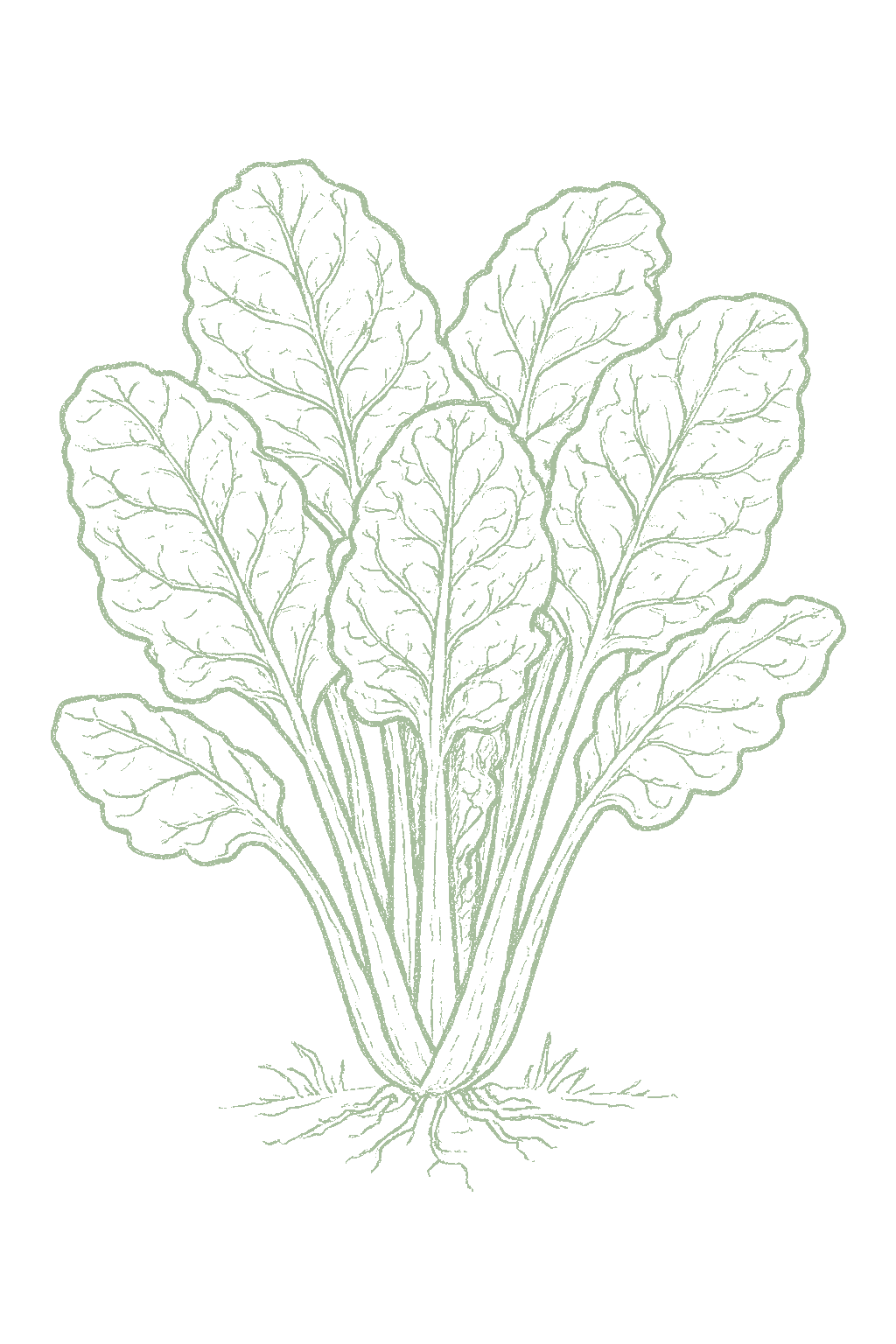
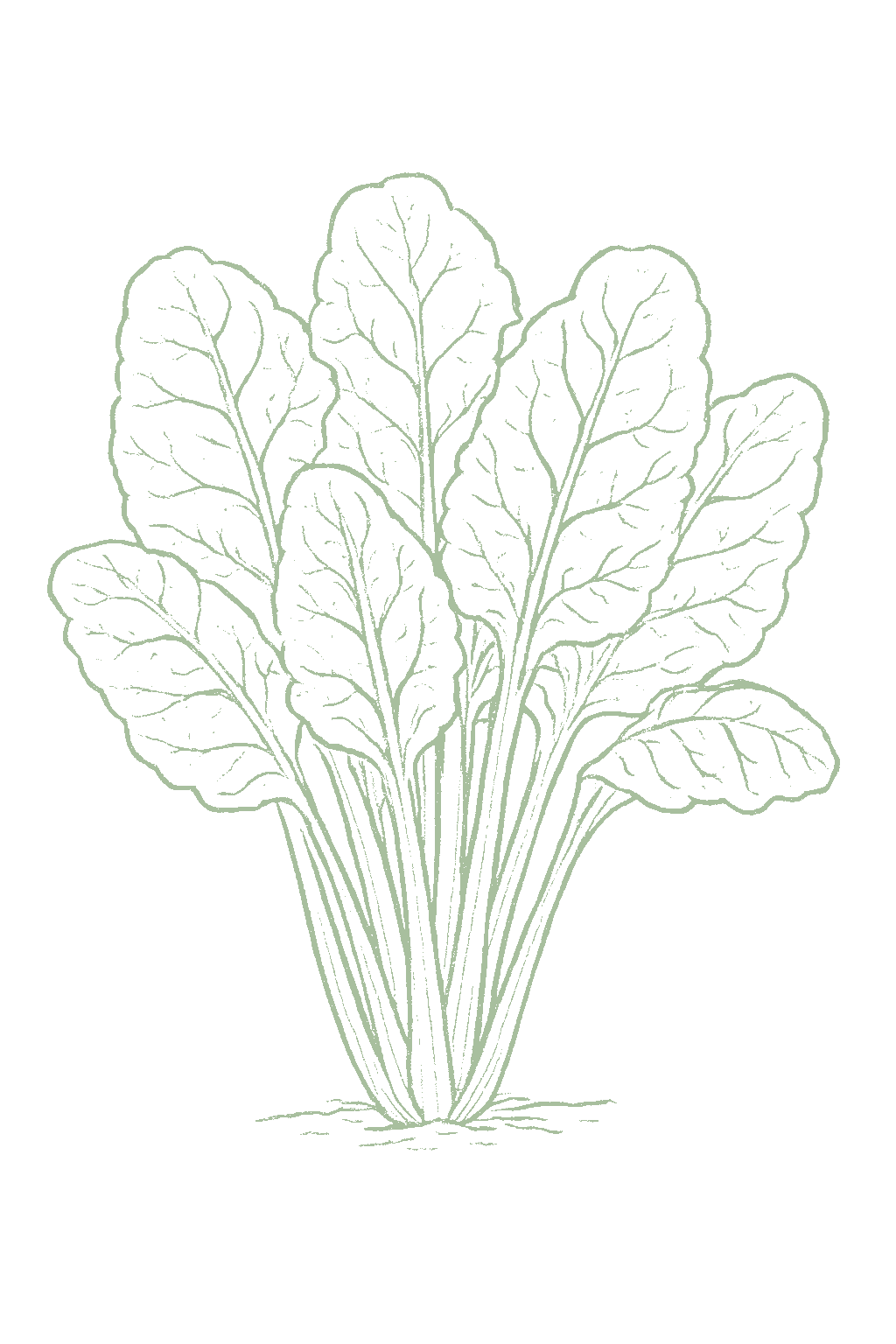
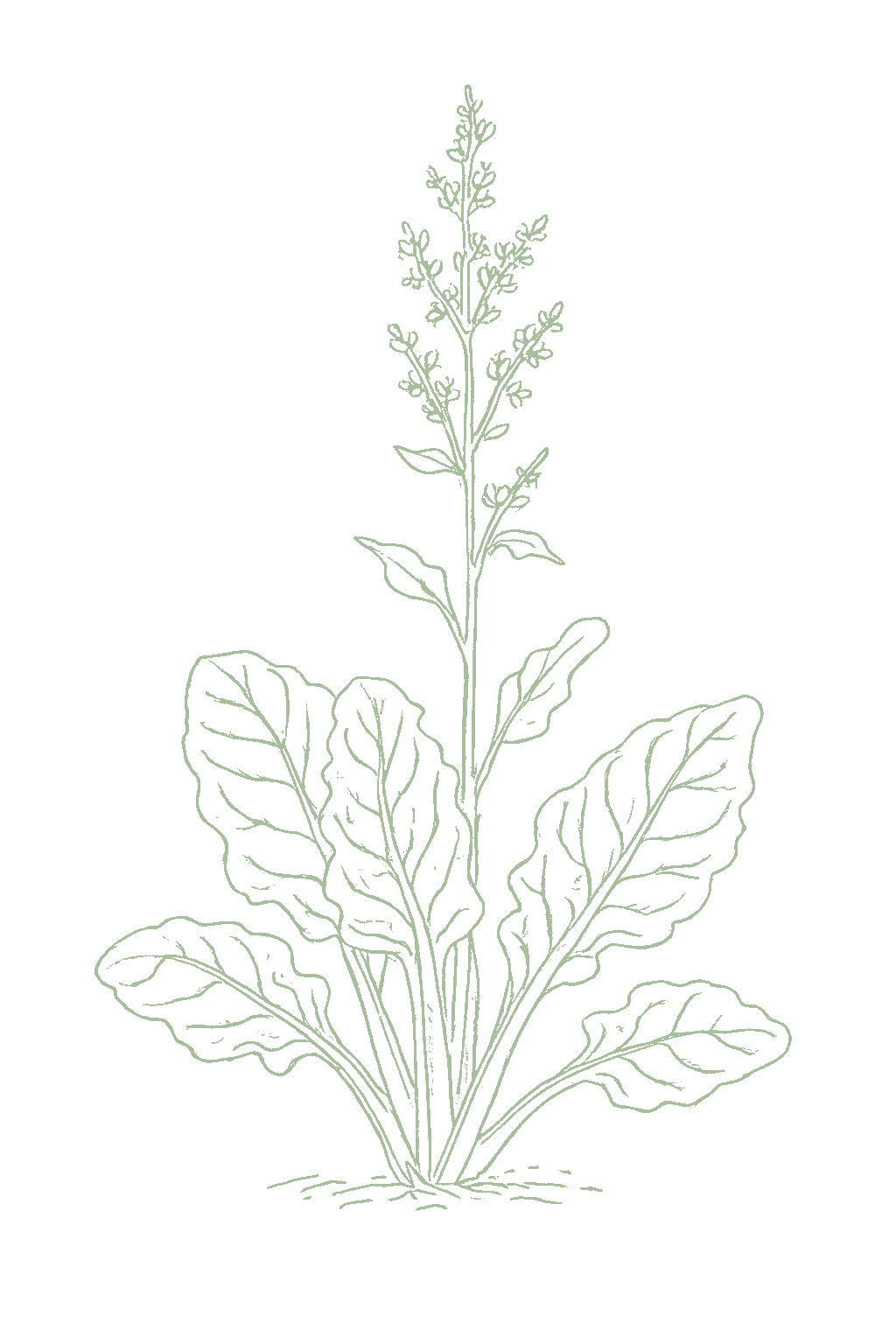
Swiss chard is a leafy green grown for both its big, tender leaves and its colorful, edible stalks, which come in white, gold, pink, orange, and red. It is actually the same plant species as the beet, just grown for the leaves and stems instead of a root. What makes chard special is that it handles both heat and cold better than most greens: it does not flower and turn bitter in summer the way lettuce and spinach do, so one spring planting keeps producing right through summer and fall, and in mild-winter areas it lives nearly all year. You harvest it cut-and-come-again, picking the outer leaves while the center keeps growing, so a few plants feed you for months. The rainbow-stemmed kinds are pretty enough for a flower bed, and you can cook the bright stalks like a vegetable on their own. Swiss chard (Beta vulgaris) is a leafy member of the goosefoot family grown for its large, tender leaves and its broad, often vividly colored edible stalks. It is the same species as the beet, selected for leaf and stem rather than root, and it shares the beet's pests, diseases, and multigerm seedball. Its defining trait is an unusual tolerance of both heat and cold: unlike lettuce and spinach, chard does not bolt in summer heat or long days (as a biennial it flowers only after a winter), so a single spring planting crops straight through the summer and well into fall, and in mild zones it overwinters for a harvest that spans much of the year. Harvested cut-and-come-again, the outer leaves picked while the crown keeps producing, one chard plant yields for months. The colorful-stemmed types such as Bright Lights are as ornamental as they are useful, and the stalks cook as a vegetable in their own right.
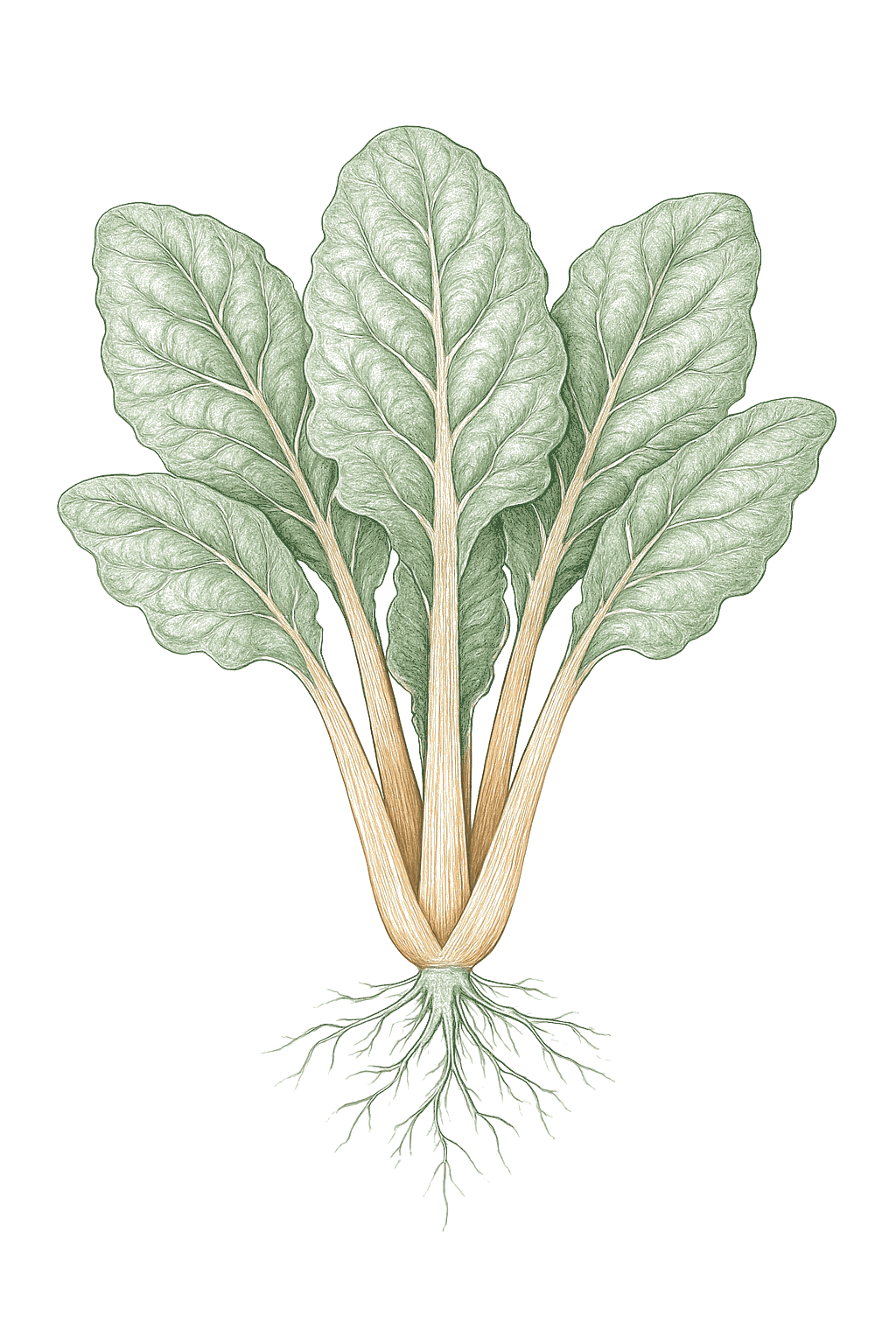
Off-season for swiss chard in zone 9.
Zone 9 averages a last frost around March 1. Within Zone 9, the colder half (9a, winters down to 20°F) runs about a week later. The warmer half (9b, winters down to 25°F) runs about a week earlier. The plant app picks your subzone from your ZIP.
| Subzone | Last spring | First fall | Growing days | Winter min | Fruits reliably |
|---|---|---|---|---|---|
| 9a | Mar 8 | Nov 24 | ~261 | 20-25°F | Yes · two seasons |
| 9b | Feb 28 | Nov 30 | ~275 | 25-30°F | Yes · two seasons |
Averages from 8 weather stations per subzone, drawn from NOAA 1991-2020 Climate Normals. Your actual frost date can vary by up to two weeks based on elevation, proximity to water, and local topography.
In Zone 9, swiss chard can be planted February through March, then again September through October. Harvest runs April through August.
In Zone 9, swiss chard can be planted September through November, skipping the summer heat. Harvest runs October through May.
In Zone 9, swiss chard can be planted September through November, skipping the summer heat. Harvest runs October through May.
In Zone 9, swiss chard can be planted February through March, then again September through October. Harvest runs April through August.
In Zone 9, swiss chard can be planted February through March, then again September through October. Harvest runs April through August.
In Zone 9, swiss chard can be planted February through May. Harvest runs June through January.
In Zone 9, swiss chard can be planted February through March, then again August through September, skipping the summer heat. Harvest runs April through May.
In Zone 9, swiss chard can be planted September through February. Harvest runs October through April.
In Zone 9, swiss chard can be planted February through March, then again September through October. Harvest runs April through August.
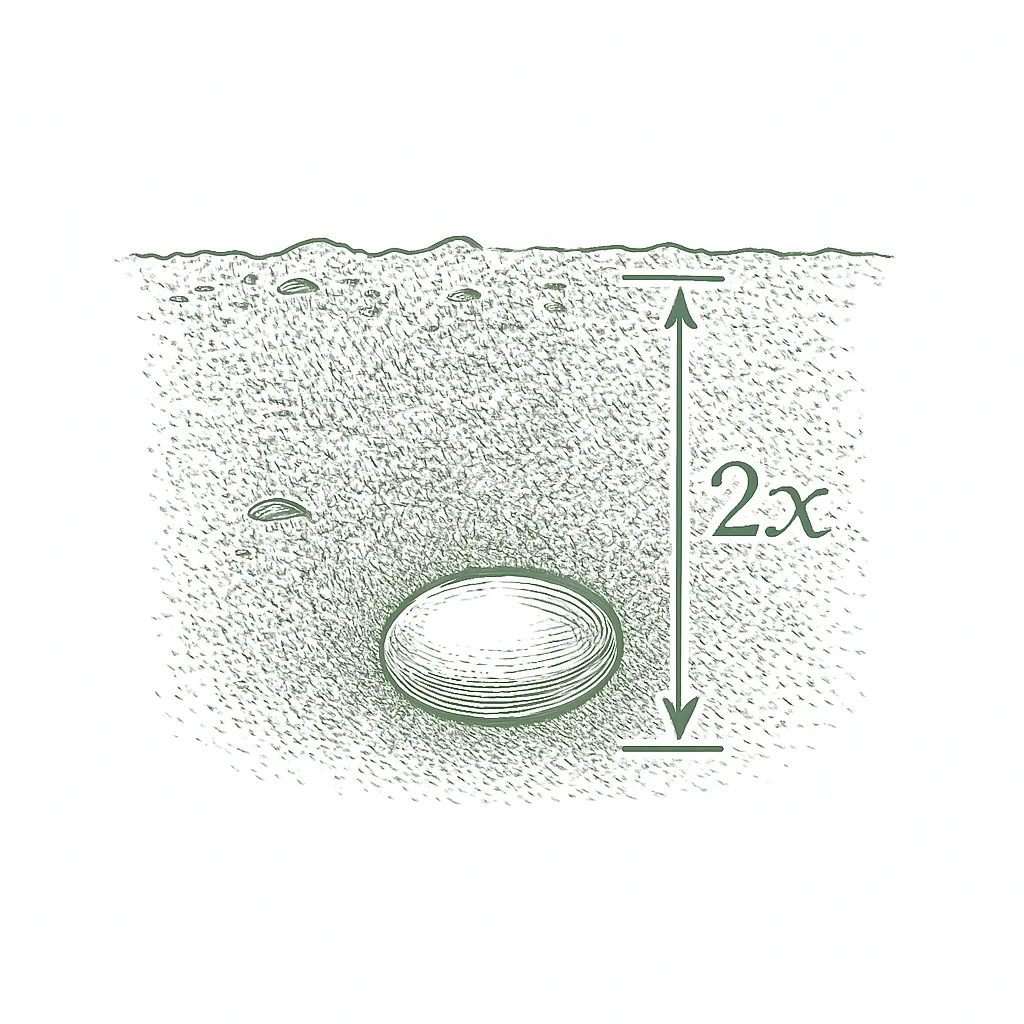
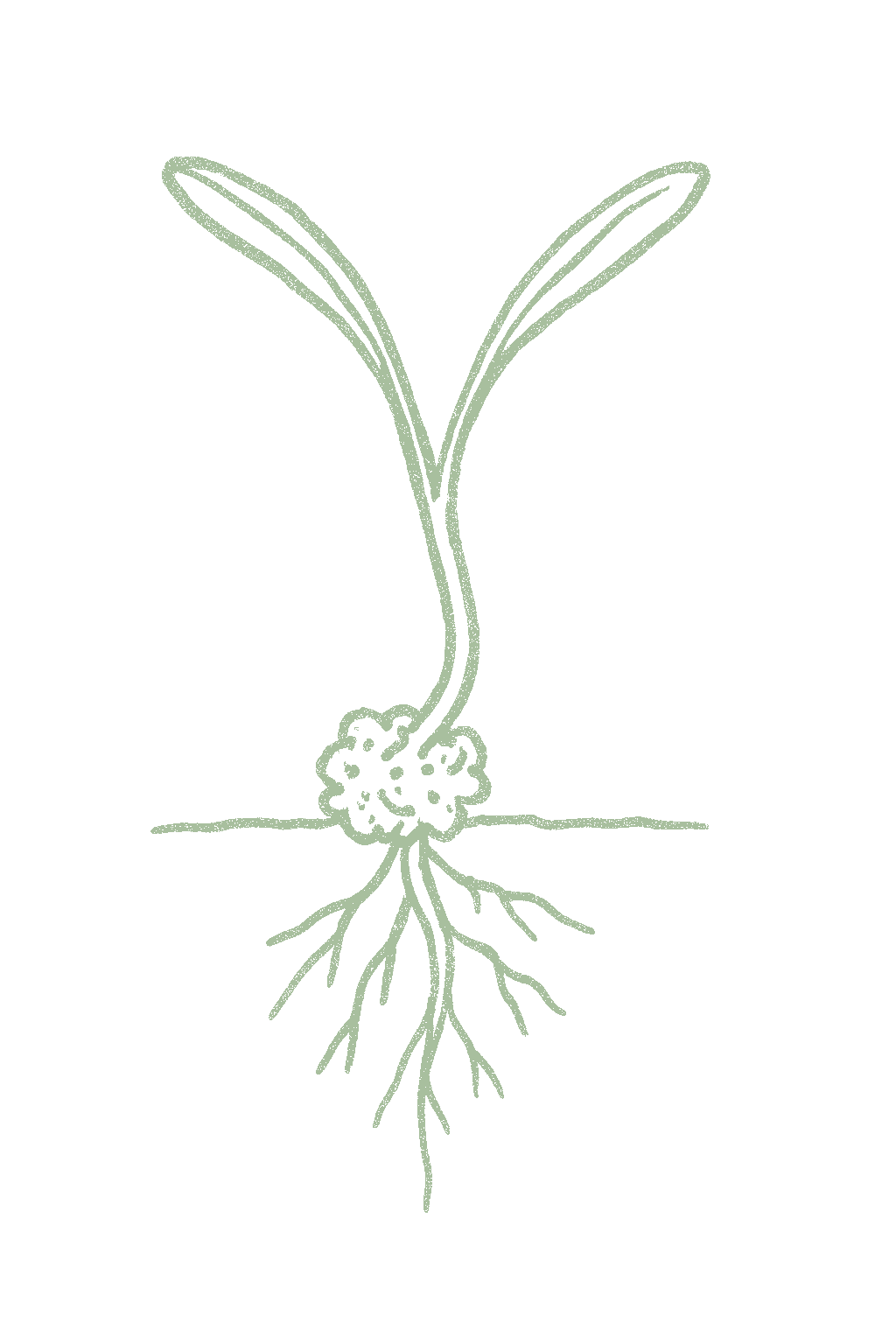
Plant chard seeds right in the garden where they will grow. Sow them about half an inch deep once the soil is no longer frozen or soggy, about 2 to 3 weeks before your last spring frost. Here is the chard surprise: each seed is really a little dried fruit holding several seeds, so one seed grows a small clump of seedlings, which is why you have to thin them later. You can also start a few indoors and transplant them. Do not plant too early into cold soil, which can make young plants flower (bolt) prematurely. Keep the soil surface damp until the sprouts appear, often 1 to 2 weeks.Chard is usually direct-sown, since it grows quickly and, like its relative the beet, transplants best when young; it can be started indoors for an early plant or set out as transplants spaced 4 to 6 inches apart (UMN), but most gardeners sow in place. Sow about half an inch deep once the soil is workable and at least 50°F, from about 2 to 3 weeks before the last spring frost. The key chard-specific point is that each chard seed is a multigerm seedball, a dried fruit containing several embryos, so a single seed sprouts a small cluster of seedlings and the stand must be thinned. Avoid sowing into cold soil, which can vernalize young plants and trigger premature bolting. Keep the surface moist and uncrusted until emergence, often 1 to 2 weeks.




Not sure what soil you have? Grab a small handful of damp soil from your garden bed and squeeze it. If it crumbles apart easily, it's sandy. If it holds together but breaks when you poke it, it's loam (what most vegetables want). If it stays in a hard, slippery ball, it's clay.
Swiss chard likes loose, fertile, well-drained soil with plenty of compost worked in. Unlike its cousin the beet, chard is grown for its leaves and stalks rather than a round root, so it is not as fussy about deep, stone-free soil, but a loose bed that does not crust still gives the best start. The seed is slow to come up, so keep the top of the soil moist and crumbly so the seedlings can push through. Mix in compost, aim for a soil pH of about 6.0 to 7.0, and chard is happy in most garden soils that drain well.
Mix 2-3 inches of compost into the top 6 inches of your bed before planting. Compost holds moisture (which sandy soil drains too fast) and adds the nutrients sandy soil tends to lack. Repeat each season. Compost breaks down over time.
Mix 2-3 inches of compost AND a few inches of coarse sand or perlite into the top 6 inches of your bed. The compost feeds the plants; the sand breaks up the clay so air and water can move through. Don't add sand without compost. It can compact like concrete.
If amending your soil sounds like too much work, or if your soil is heavy clay, full of rocks, or contaminated, build over it. A raised bed at least 12 inches deep filled with a 50/50 mix of compost and sandy loam gives you ideal growing soil with no battles. A 5-gallon container with quality potting mix does the same for one plant at a time. Both bypass your native soil entirely.
The numbers that matter, at a glance.
Chard is a great container crop and a pretty one, especially the rainbow-stemmed types. Use a pot at least 10 inches deep with drainage holes and loose potting mix, give one plant a 5-gallon pot or space several in a larger one, keep the soil evenly moist, and pick the outer leaves so it keeps regrowing all season.Chard suits containers well and the colorful-stemmed cultivars double as ornamentals. Use a container at least 10 inches deep with drainage holes and a loose, organic potting mix; a single plant fills a 5-gallon pot, or space several in a larger trough. Keep moisture even to keep leaves and stalks tender, feed regularly for the long harvest, and crop the outer leaves cut-and-come-again. It carries well from a sunny patio through much of the year.
Fordhook GiantThe classic heirloom: large, dark-green, heavily crinkled (savoyed) leaves on broad white stalks. Heavy-yielding, dependable, and notably heat-tolerant, a good first chard.
Bright LightsAn All-America Selections rainbow mix with stems in gold, pink, orange, red, and white; ornamental as well as edible, with milder flavor. The most popular colorful type.
LucullusA pale-green, lightly crumpled heirloom with white stalks, prized for heat tolerance and a long, productive harvest in warm regions.
Ruby Red
In mild areas, a pot of chard can keep producing through winter in a sheltered, sunny spot. In cold areas, move the pot against the house or into a cold frame, or cover it during hard freezes, and it will often resume in spring.Chard is frost-tolerant, so a container can overwinter in mild zones, holding through winter in a sheltered spot and resuming growth in spring. In cold zones the limited root volume of a pot freezes harder than open ground, so sink it, move it to a cold frame or unheated structure, or cover it during hard freezes. Note that an overwintered plant has been vernalized and will bolt as spring warms, so plan to crop it before the stalk forms.
Ask what your balcony or roof can carry
A balcony or roof can only hold so much weight. Before you set heavy pots there, ask a building architect what it can safely carry.Illinois Extension's guidance is to consult a building architect about weight limits before placing heavy pots on a balcony or rooftop garden. It gives no weight figure.
Never grow food in a container with anything toxic in it
Many kinds of containers can be used. Whatever you choose, keep anything toxic out of it, especially if you are growing food.Colorado State accepts nearly any container material but warns against using a container that holds toxic materials, especially for edible plants. Illinois adds that a vegetable container should be free of chemicals toxic to plants or people, and urges caution with treated lumber when growing food. If you cannot account for what a repurposed container once held, that alone is a reason to keep food out of it.
Secure hanging containers well
Fasten hanging baskets and window or rail boxes securely. Think about what is below them too, since they can drip on people or things underneath.Illinois Extension asks growers to secure hanging containers well and to think through the safety issues of hanging them. Placement matters too, since a hanging container can drip onto people or belongings below.
Soil pH measures how acidic or alkaline your soil is, on a scale from 1 to 14 where 7 is neutral. Swiss chard does best from about 6.0 to 7.0, slightly acidic to neutral, and it is more forgiving of soil type than many greens. It handles a touch of alkalinity better than spinach and is happy in most garden soils. A cheap soil test from your local extension office tells you your number and whether you need to add lime.Aim for a soil pH of about 6.0 to 7.0, slightly acidic to neutral. The University of Minnesota notes chard tolerates soil somewhat more acidic than spinach, as low as about pH 6.0, and Clemson cites a 6.0 to 6.5 range; like the beet it is the same species as, chard also handles mildly alkaline soil (to about 7.5) better than most leafy greens. Acidity well below 6.0 is the main risk, where germination and micronutrient uptake suffer. A standard soil test removes the guesswork before sowing.
Swiss chard grows lots of leaves and likes nitrogen to keep making them. Mix some compost and a balanced fertilizer into the soil before planting, then feed it with a nitrogen fertilizer about a month after the seedlings come up, and again every 4 to 6 weeks while you are picking. Because you cut from the same plant for months, a steady supply of food keeps the leaves big and tender.Chard is a leafy crop that runs on nitrogen, and because it is cut over a long season it benefits from periodic feeding rather than a single dose. Work compost and a balanced fertilizer into the bed before sowing, then side-dress with nitrogen about 4 weeks after emergence and again every 4 to 6 weeks while you keep cutting. Utah State suggests about a quarter cup of 21-0-0 per 10 feet of row. Steady nitrogen and even moisture keep the leaves large, tender, and dark; repeated harvesting pulls a lot out of the plant, so do not let it run hungry.
Use a nitrogen-rich feed such as blood meal or a 21-0-0 fertilizer, repeated every 4 to 6 weeks while you harvest, over a balanced fertilizer mixed in at planting.High nitrogen for sustained leafy growth, e.g. a quarter cup of 21-0-0 per 10 ft of row or calcium nitrate, side-dressed every 4 to 6 weeks over a balanced base worked in at sowing. Phosphorus and potassium per a soil-test baseline.
Swiss chard is an easygoing neighbor that shares a bed nicely with many crops. It grows well next to beans, the cabbage family (broccoli, cabbage, kale), onions and other alliums, and low herbs. The main plants to keep apart from chard are its close relatives beets and spinach, which share the same leafminer pest, so do not crowd them together. As always, do not trust every companion chart online, since many of their claims have never been tested. Chard fits easily into mixed beds and its companion list mirrors the beet's, since they are the same species. West Virginia University's companion guide lists beans, the cabbage family, and onions among the good neighbors for the chard and beet group, all reasonable on space-and-timing grounds. The one well-grounded caution is to separate chard from its goosefoot-family relatives beets and spinach, which share the leafminer and several leaf diseases, a rotation and pest principle more than a tested adjacency effect. Treat the rest as sensible defaults: as the University of Minnesota stresses, most companion claims are tradition rather than tested science, so use them as a starting point and watch your own results.
Swiss chard is ready to pick when the outer leaves are about 8 to 12 inches long (or smaller for baby leaves), around 50 to 60 days after planting. Cut or snap off the outer leaves and leave the middle of the plant to keep growing, and it will produce for months from the same plant. Pick a few leaves from each plant regularly, and save the bright stalks to cook on their own, since they take a little longer than the leaves.Swiss chard is ready to start cutting when the outer leaves reach a usable size, roughly 8 to 12 inches long (or smaller for tender baby leaves), usually about 50 to 60 days from sowing. Harvest cut-and-come-again: snap or cut the outer leaves an inch or two above the crown and leave the central growing point, and the plant keeps generating new leaves for months. Crop regularly to keep new growth tender, and cook the colorful stalks as a separate vegetable, giving them a head start over the quicker leaves.
One chard plant gives you leaves again and again over months, not just a single harvest. A short row of a few plants keeps a household in greens for much of the year.A single chard plant is highly productive over a long season, yielding repeated cuttings of leaves and stalks for months from one sowing. Utah State cites about 8 to 12 pounds from a 10-foot row over the season.
Chard produces steadily from early summer right through fall, and in mild-winter areas it keeps going into winter. Unlike lettuce and spinach, it does not flower and quit in the heat, so the harvest just keeps coming.Production builds through the warm months and holds longest where winters are mild; a spring planting peaks across summer and fall, and in mild zones the same plants carry into and through winter. Because the plant does not bolt in its first year, there is no abrupt early end as there is with spinach or lettuce. The trick with chard is to keep picking. Cut the outer leaves often, keep it watered and fed, and one planting will feed you for months. Most beginners are surprised how long a few chard plants keep going.The key to total yield is steady care and frequent cutting: keep moisture and nitrogen even, crop the outer leaves regularly so the crown keeps generating new ones, and let a single healthy planting run for months rather than replanting. New growers often underestimate how long one chard sowing produces.
Chard varieties are mostly about color. Fordhook Giant is the reliable white-stemmed classic and takes heat well. For a rainbow of stems, grow Bright Lights; for deep red, Ruby Red; for yellow, Bright Yellow or El Dorado. If you garden somewhere hot, Lucullus and Perpetual Spinach hold up especially well. They all grow the same way and are ready in about 50 to 60 days, with small leaves sooner.Chard varieties differ mainly in stalk color and leaf texture rather than growing needs. Fordhook Giant is the dependable white-stemmed standard and one of the most heat-tolerant; Lucullus and the leaf-beet type Perpetual Spinach are the choices for the hottest regions and the longest harvest. For color, Bright Lights gives the full rainbow, Ruby Red the deep crimson, and El Dorado or Bright Yellow the gold tones; the colorful types are as ornamental as they are edible, though some red strains bolt slightly sooner. Most cultivars mature in about 50 to 60 days, with baby leaves much sooner.
The ladder troubleshoots from the gentlest solution to the strongest. Start with the gentlest option and only move on when and if it doesn't work.
Give chard a different bed than the one that held chard, beets, or spinach last season. The flies spend the winter in the soil under those crops, so a fresh spot starts you off with fewer of them nearby.Pupae overwinter in the soil beneath the previous host crop, so siting chard away from last year's chard, beet, or spinach separates the emerging adults from the planting. Keeping these relatives apart in the garden rather than side by side works on the same logic.
Pull the weeds around the bed, particularly lambsquarters and chickweed, which feed the same pest. Clearing spent chard, beet, and spinach leaves helps too, since they give the flies somewhere to keep going.Goosefoot weeds such as lambsquarters and chickweed carry the leafminer between plantings, so weeding the bed and its margins narrows the host bridge that the several overlapping generations depend on across a season.
Put a light row cover over the bed as soon as the seed is in the ground, and leave it on while the plants are young. If the flies cannot reach the leaves, they cannot start the tunnels.Exclusion has to be in place from sowing, ahead of the first egg-laying flight. Females deposit rows of white eggs on leaf undersides, so any open edge or gap in the cover gives them the access they need.
The moment you spot a tunneled leaf, take it off the plant and get rid of it, or pinch the leaf and squash the maggot inside. Do it before the maggots drop out to the soil, where they turn into the next round of flies.Removing mined leaves ahead of larval drop is the main lever, because the larva sits protected between the leaf surfaces where insecticides reach it poorly. Crushing in place is the alternative when you would rather not strip leaf area off a young plant.
Tiny wild wasps that attack the maggots are usually already working in the garden, and they often hold the numbers down on their own. Go easy on sprays that kill a wide range of insects so those helpers stay in the bed.Naturally occurring parasitic wasps generally keep leafminer numbers in check, which is a large part of why this pest is handled culturally. An insecticide application tends to cost more in parasitoids than it takes out of larvae shielded inside the leaf.
No spray for this one. Prevention is the control.
The ladder troubleshoots from the gentlest solution to the strongest. Start with the gentlest option and only move on when and if it doesn't work.
Ease off high-nitrogen feeding. A lot of nitrogen pushes out soft, sappy new leaves, and that is the growth aphids multiply on fastest.Excess nitrogen produces the lush, soft tissue on which colonies build most quickly, so feeding for steady growth rather than a flush leaves the crop less favorable to them.
Keep the weeds down around the planting. Winged aphids fly in from weeds and other plants nearby, so fewer of those close by means fewer arrivals landing on your chard.Weedy margins act as a reservoir for the winged forms that colonize the crop, so clearing them lowers the immigration pressure that scouting otherwise has to catch on the new growth.
The same light row cover you would put up against leafminers keeps aphids off as well, so if it is already over the young plants you are covered for both.Row cover deployed for the leafminer also excludes colonizing aphid flights, so one exclusion decision on this crop returns against two pests.
A hard jet from the hose knocks the clusters off, and that is often enough on its own. Aim up underneath the leaves and down into the crinkles and along the stalks, where they hide.A strong water jet dislodges colonies from leaf undersides and petioles and is frequently sufficient by itself. Savoyed types need the jet worked into the crinkling, which shelters colonies from a straight-on spray.
Ladybugs, lacewings, and small wasps eat aphids and usually clean up what is left after a water blast. They stay around if you skip broad sprays, so give them a few days to work before doing anything else.Conserving ladybugs, lacewings, and parasitoid wasps generally handles the residual population. Broad-spectrum applications cost more in natural enemies than they return against a pest that rebuilds quickly from winged immigrants.
If colonies keep rebuilding, spray insecticidal soap and wet the undersides of the leaves, since that is where the aphids sit. It only affects what it actually lands on, so coverage is the whole job.Soap is a contact material, so results track coverage of undersides and petioles rather than dose, and it needs repeating as new colonies appear on fresh growth.
Horticultural oil is the other option and works the same way, by coating the aphids where the spray lands, so again get it well up under the leaves.Horticultural oil fills the same contact niche as soap on leaf undersides; the limiting factor is placement into sheltered colonies, not choice of the two materials.
The bottom rungs are products with label rules: timing, pollinators, and days to wait before harvest. Before you spray →
The ladder troubleshoots from the gentlest solution to the strongest. Start with the gentlest option and only move on when and if it doesn't work.
Rake out old plant debris when the season ends, since that is where the beetles pass the winter, and pull the weeds around the bed that they also feed on. Fewer wintering spots means fewer beetles waiting when your seedlings come up.Adults pass the winter under garden residue and emerge in spring onto whatever tender growth is up first, so clearing residue and weedy hosts lowers the local carryover that lands hardest on the seedbed.
Stretch a row cover over the seedbed and leave it there through the first few weeks. While the plants are tiny, that is the protection you can count on most; once they are up and growing well, the little holes are mostly a looks problem.Cover through the seedling stage, when heavy feeding can stunt or kill outright. On established plants the shot-holing is largely cosmetic, though it still disfigures foliage that is being grown as the crop.
When beetles are thick on young plants, coat the foliage with kaolin clay, a fine white mineral clay applied as a dust. Seedlings that are watered well and growing fast usually outgrow the pitting on their own, so save this for heavy pressure.Kaolin is the option under high seedling pressure. Keeping plants unstressed and evenly watered so they grow through the feeding does most of the work, and mature chard seldom warrants any treatment.
No spray for this one. Prevention is the control.
The ladder troubleshoots from the gentlest solution to the strongest. Start with the gentlest option and only move on when and if it doesn't work.
Take away the boards, piles of leaves, and weedy cover close to the plants, since that is where they sit out the daylight hours. Leave room between plants so air moves through, and strip off the lowest leaves lying flat on the soil.Cutting daytime harborage and the humid microclimate under a full stand is the base layer: spacing for air movement, plus removal of the ground-contact lower leaves that hold moisture at the crown.
Aim the hose at the soil and water early in the day instead of in the evening. Slugs come out at night and travel over damp ground, so a surface that has had hours to dry is less inviting by the time they start moving.Delivering irrigation at ground level early in the day sets the surface up to dry before dusk, when nocturnal feeding begins. Evening watering leaves the bed damp straight through their active hours, and under a full chard canopy that moisture lingers longer than it does in the open.
Take a flashlight out to the bed after dark and collect them by hand. They feed at night, so that is when you will actually find them up on the leaves instead of hidden away.Nocturnal hand-collection is the most direct removal and is best timed to damp evenings, after irrigation or rain, when feeding is heaviest under the canopy.
Sink shallow dishes of beer at soil level to trap them, or lay a board on the ground as a daytime hiding place and lift it each morning to collect whatever gathered underneath. A ring of coarse, scratchy material around the plants can slow them down as well.Beer dishes trap directly, while boards set out as artificial daytime refuges concentrate them for collection. A coarse abrasive ring is a supporting barrier rather than a control on its own.
Where they keep chewing through the leaves, scatter an iron-phosphate slug bait, the type usually recommended for gardens with pets and wildlife around. Spread it thinly at the rate on the label rather than in piles.Iron-phosphate bait is the material for sustained pressure and the usual choice where pets and wildlife move through the beds. It supplements the harborage reduction above rather than substituting for it, since fresh slugs move in from any damp cover left nearby.
The bottom rungs are products with label rules: timing, pollinators, and days to wait before harvest. Before you spray →
The ladder troubleshoots from the gentlest solution to the strongest. Start with the gentlest option and only move on when and if it doesn't work.
If the spots show up in your garden year after year, look for a chard variety described as tolerant to leaf spot. It will not shut the disease out, but it holds up better through a warm, wet spell.Tolerant cultivars are worth seeking where the disease recurs. Tolerance moderates the loss rather than excluding infection, so it stacks with the cultural measures instead of replacing them.
Give the bed a break of two or three years from chard and its relatives, beets and spinach, before you plant any of them there again. The fungus carries over on the leftovers of those crops.A two to three year break from chard, beet, and spinach in a given bed starves the residue-borne inoculum. Because the relatives share the pathogen, moving chard alone within a group of them accomplishes little.
Pick off the worst-spotted leaves and throw them out, starting with the older outer ones where the spots turn up first. Spotted leaves will not heal, so taking them off slows the march inward toward the leaves you want to eat. At the end of the season rake up and dispose of the old chard and beet leaves and debris, and pull related weeds nearby, since that is where the fungus lives between crops.Spotted tissue does not recover, so removing the heavily infected older outer leaves cuts the inoculum that moves inward; it slows progression rather than arresting it, and opens the canopy slightly at the same time. Cercospora beticola then survives the off-season on infected chard and beet residue and on related weed hosts, so destroying that debris removes the reservoir that supplies the following season's splash-borne spores.
Give the plants room, and thin them if they are crowded, so air moves through and the leaves dry off quickly after rain. This fungus needs the leaves to stay wet to get started.Spacing and thinning shorten leaf wetness duration, the variable this pathogen responds to most under warm, humid conditions and through a long harvest window.
Water at the soil rather than over the top of the plants, and do it in the morning. Overhead water splashes spores up onto the leaves and then keeps them wet, which is what the fungus is waiting for.Rain and overhead irrigation are the splash-dispersal route from residue to leaf, so base watering removes both the dispersal event and an added wetness period; morning timing shortens whatever wetness does occur.
Through a genuinely wet season, a copper product carrying a vegetable label can slow it, though only when you begin before the spotting is widespread. It protects leaves that are still clean rather than curing the ones already marked.Copper acts as a protectant, so it suppresses spread only when applications begin ahead of heavy spotting. Confirm the product carries a vegetable label, and expect the cultural measures to carry most of the load regardless.
The bottom rungs are products with label rules: timing, pollinators, and days to wait before harvest. Before you spray →
The ladder troubleshoots from the gentlest solution to the strongest. Start with the gentlest option and only move on when and if it doesn't work.
Shift chard away from ground that just grew chard, beets, or spinach. All three catch this one, and it carries over on what gets left behind in the bed.Chard shares this water mold with beet and spinach, so rotation has to move away from the whole group. The pathogen persists on crop debris and on related goosefoot hosts between plantings.
Strip out the leaves that are furthest gone, the twisted, thickened ones in the middle of the plant included, and bin them. They will not come back from it, and taking them off leaves less there to spread. Clear old leaves and crop leftovers from the bed as well, and stay out of the planting while the leaves are still wet, since brushing past wet plants carries it from leaf to leaf.Infected tissue cannot be cured, so removing the yellow-blotched and distorted leaves reduces the sporulating surface on the undersides while opening the canopy for drying. Destroy the crop residue that carries the pathogen over, and keep out of the stand while foliage is wet, when spores move most readily on contact and splash.
If downy mildew keeps turning up in your garden, pick a chard variety listed as tolerant for the next sowing.Where it recurs, tolerant cultivars are the durable lever on a disease whose remaining controls all reduce to keeping foliage dry.
Space the plants so air moves through the stand and the leaves can dry. Drying the foliage out is the bulk of the control here, more than anything you spray.Spacing and thinning shorten the moisture periods this pathogen infects during. Because it is favored by cool, wet conditions, drying the canopy is the primary control rather than a supporting one.
Water at the base of the plants instead of wetting the leaves. Splashing water moves it around, and leaves that stay damp let it in.Base irrigation removes both the splash dispersal and the added leaf wetness that infection depends on, which matters most through the cool, damp stretches when pressure peaks.
A copper fungicide is the last thing to reach for, and only in a stretch of weather so wet that nothing dries out. Keeping the leaves dry is still doing most of the work.Copper is a last resort for a persistently wet season. It supplements cultural control on this disease rather than substituting for it, since infection tracks leaf wetness more than inoculum load.
The bottom rungs are products with label rules: timing, pollinators, and days to wait before harvest. Before you spray →
The ladder troubleshoots from the gentlest solution to the strongest. Start with the gentlest option and only move on when and if it doesn't work.
Sow into soil that drains well and has warmed up, not into cold, soggy ground. Cold wet soil is what lets these soil organisms get at the seed while it is still slow to sprout.Pythium and Rhizoctonia are favored by cold, wet, poorly drained soil, so improving drainage and holding off until the bed warms compresses the window in which germinating seed and stem base are exposed.
Sow fresh seed at the depth it calls for and resist burying it deeper, and wait for the bed to warm before sowing. Soaking chard's corky seedballs in water for a day first gets them up faster, which cuts the time they spend at risk. Keep the seedbed just moist rather than wet, and if seedlings start flopping over, hold off watering and let the surface dry down a little.Old or weak seed and excessive sowing depth prolong emergence and therefore exposure, so seed quality, depth and soil warmth work together by compressing the susceptible window. A day's presoak of the seedball brings emergence forward in a crop whose seedball is slow to begin with. Overwatering is the other controllable driver: keep the bed evenly moist without saturating it, and once collapse begins, withholding water to dry the surface is the main lever left.
Clear out the seedlings that have already flopped, because they will not pick back up. There is no good home cure once this gets going, so everything above is where the real protection lives.Collapsed seedlings cannot be recovered, so pull them out. With no effective home treatment once the pathogens are active, this ladder is deliberately front-loaded into the sowing and moisture decisions above.
No spray for this one. Prevention is the control.
The ladder troubleshoots from the gentlest solution to the strongest. Start with the gentlest option and only move on when and if it doesn't work.
Root-knot nematodes are microscopic worms in the soil, and they build up where the same host crops are grown in warm ground season after season. Move chard to a fresh bed, and pick one that did not just carry another crop they feed on. Work plenty of compost and other organic matter in, and keep the plants watered so they cope better with the strain. Where a bed is badly infested, growing chard in containers of fresh mix, or growing it through the cooler months when the nematodes are less active, gets you around the problem.Rotate into non-host or resistant crops, and keep chard from following a susceptible host in a warm sandy bed, since populations build under continuous host cropping. Ample organic matter and steady moisture help the crop tolerate galling rather than reducing the population itself. Container culture in fresh mix and cool-season scheduling are the fallbacks where the nematodes are established, which matters because chard is reported as very susceptible.
At the end of the season, pull the badly affected plants with their roots and get rid of them instead of turning them back into the bed. No spray cures a plant once the roots are knotted, so clearing them out is the part you control.There is no rescue treatment for an infected plant, so lift and destroy heavily galled root systems at season end rather than incorporating them, which keeps galled tissue out of the bed you intend to plant next.
No spray for this one. Prevention is the control.
Move your chard to a different spot each year, and do not put it (or its relatives beets and spinach) back in the same bed for about three years. This keeps shared pests and diseases from piling up. Chard does well following beans or peas, which add nitrogen, or onions and garlic.Rotate chard on a roughly three-year cycle, keeping it and its close relatives beet and spinach out of a bed for two to three seasons. This breaks the buildup of the leafminers, flea beetles, and leaf diseases the goosefoot family shares, and in warm sandy soils it also helps with root-knot nematode. Following a legume that has added nitrogen, or an allium, suits the leafy crop well.
The plant app sends a timely reminder at every critical moment of your swiss chard season. The wording adjusts to whichever you pick: beginner or seasoned. Here are three you'll see in Zone 9.
plant sends the right notification at exactly the right moment, for your zone, your weather, your crops. Founding members lock the rate forever.
We're building this guide with real growers. Got a question we missed? Ask here. We read every one and add the best answers right to this page.
Learned something the hard way? Pass it on. Real growers' tips make this guide better for the next person, and we credit you by name when yours goes live.
If you've grown this crop and you see a date, a temperature, a companion claim, or a recommendation that doesn't match your experience, tell us. Real growers' corrections make this guide better for the next person.
Every date, temperature, spacing, and recommendation on this page is sourced from university cooperative extension publications, peer-reviewed agricultural research, NOAA climate data, and direct extension calendars. Where claims are softer (traditional gardening wisdom not formally documented), we say so.
Spot a data point that doesn't match your experience? Submit a correction; accepted corrections earn full author credit on the page.
Zone-aware seasonal nudges, what's worth planting now, and the occasional recipe from the harvest. No spam, ever.