Today · in your zone
What's happening right now
Off-season for turnip in zone 10.
Tap to switch. plant calibrates to where you are in the journey.
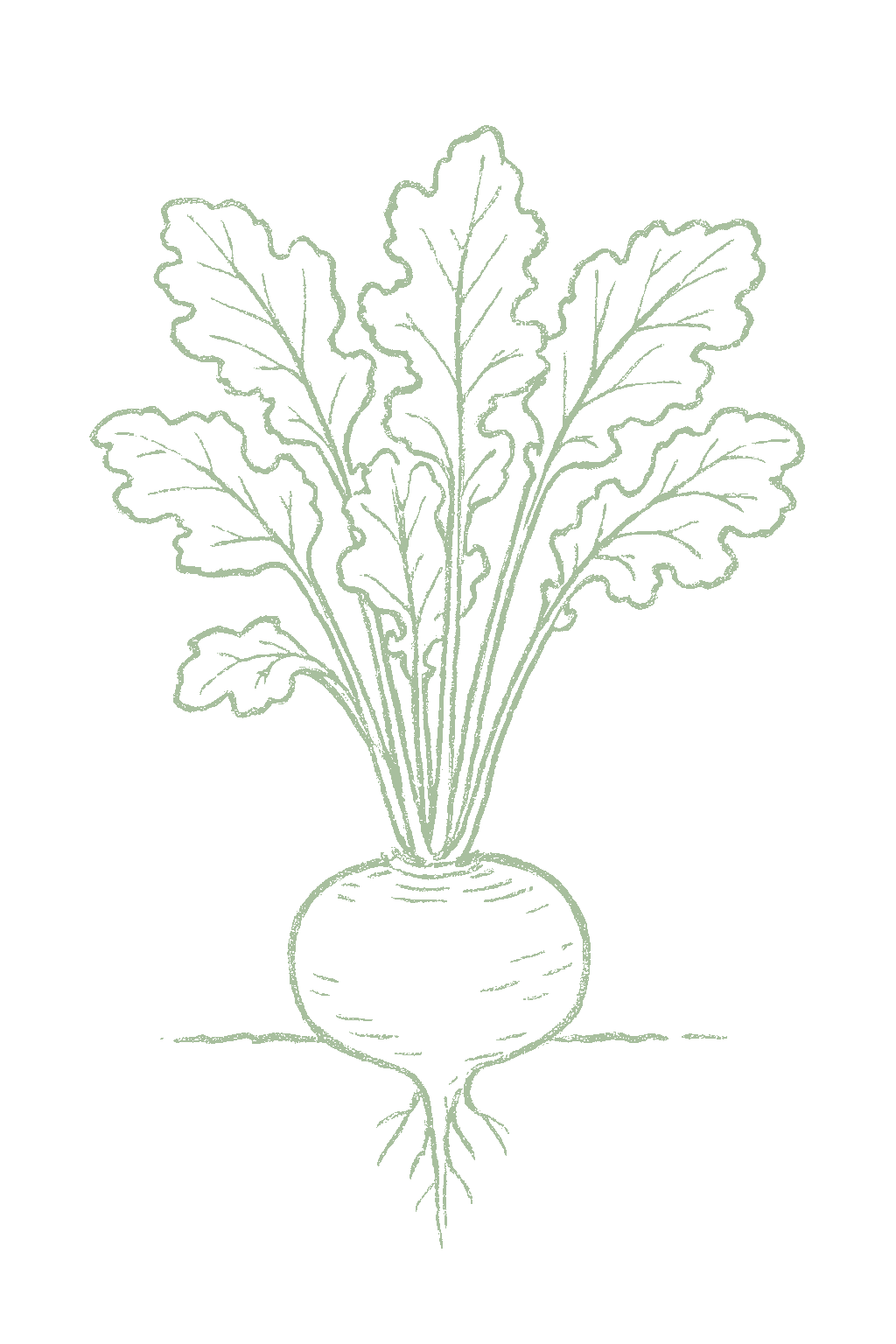
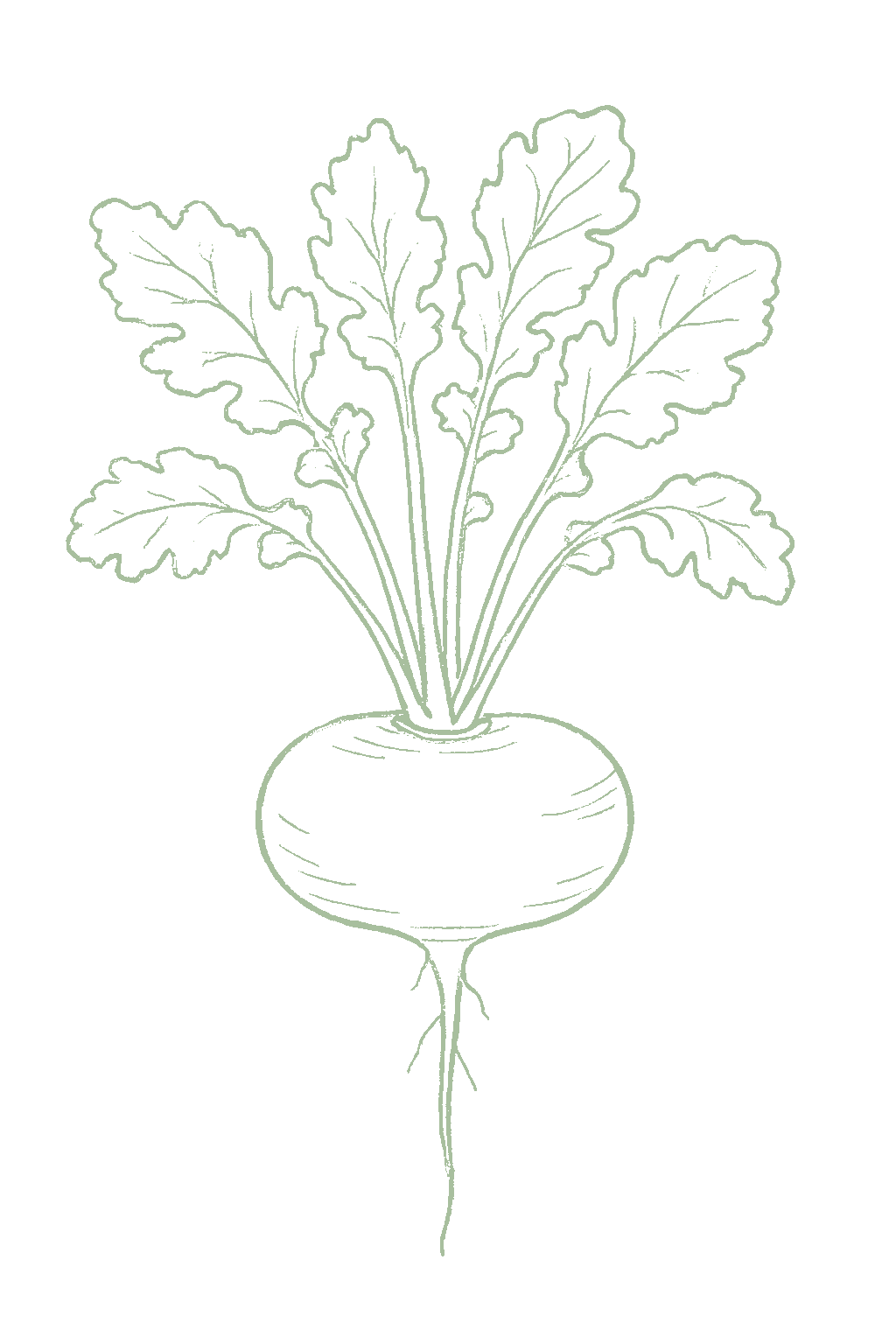
Turnips are a fast cool-weather crop in the cabbage family that you grow for two foods at once: the round root and the leafy greens, which you cook like collards or spinach. You plant the seeds right in the garden, and they are quick: they sprout in about a week to ten days, and most are ready in roughly 40 to 60 days, with fast salad kinds ready in about 35 days and greens sooner. Roots taste best pulled small, about 2 to 3 inches across; in heat above about 75°F they turn woody and strong-tasting, and hot, long days make the plant flower (bolt), so the fall crop is usually the best one. Turnips handle frost and get sweeter in cool weather. Because turnips are a cabbage-family plant, their bugs and diseases are the cabbage-family ones (flea beetle, cabbage maggot, aphids, harlequin bug, plus clubroot and some leaf diseases), so you rotate and group them with cabbage and kale, not with carrots. When you plant depends on your climate: spring and fall where summers are cool, and fall through early spring where summers are hot. Turnip (Brassica rapa) is a fast, cool-season, dual-purpose crop in the cabbage family (Brassicaceae), grown for both its swollen root and its edible leaves, the turnip greens cooked like collards or spinach. It is direct-sown and quick: seed germinates in about 7 to 10 days, and most varieties size a usable root in roughly 40 to 60 days, with fast salad types ready in about 35 days and greens harvestable sooner. Roots are sweetest, mildest, and most tender pulled at about 2 to 3 inches across; sustained heat above about 75°F turns them woody, pithy, and sharp, and long days plus heat push the plant to bolt, so the fall crop is the prime one in most climates. Turnips tolerate frost and sweeten in cool weather. As a brassica, turnip's pests and diseases are the cabbage-family set, flea beetle, cabbage maggot, aphids, and harlequin bug, with clubroot, white rust, downy mildew, Alternaria leaf spot, and black rot, so it is rotated and grouped with the cole crops, not with carrots. The planting season inverts by climate: spring and fall where summers are cool, and fall through early spring where summers are hot.
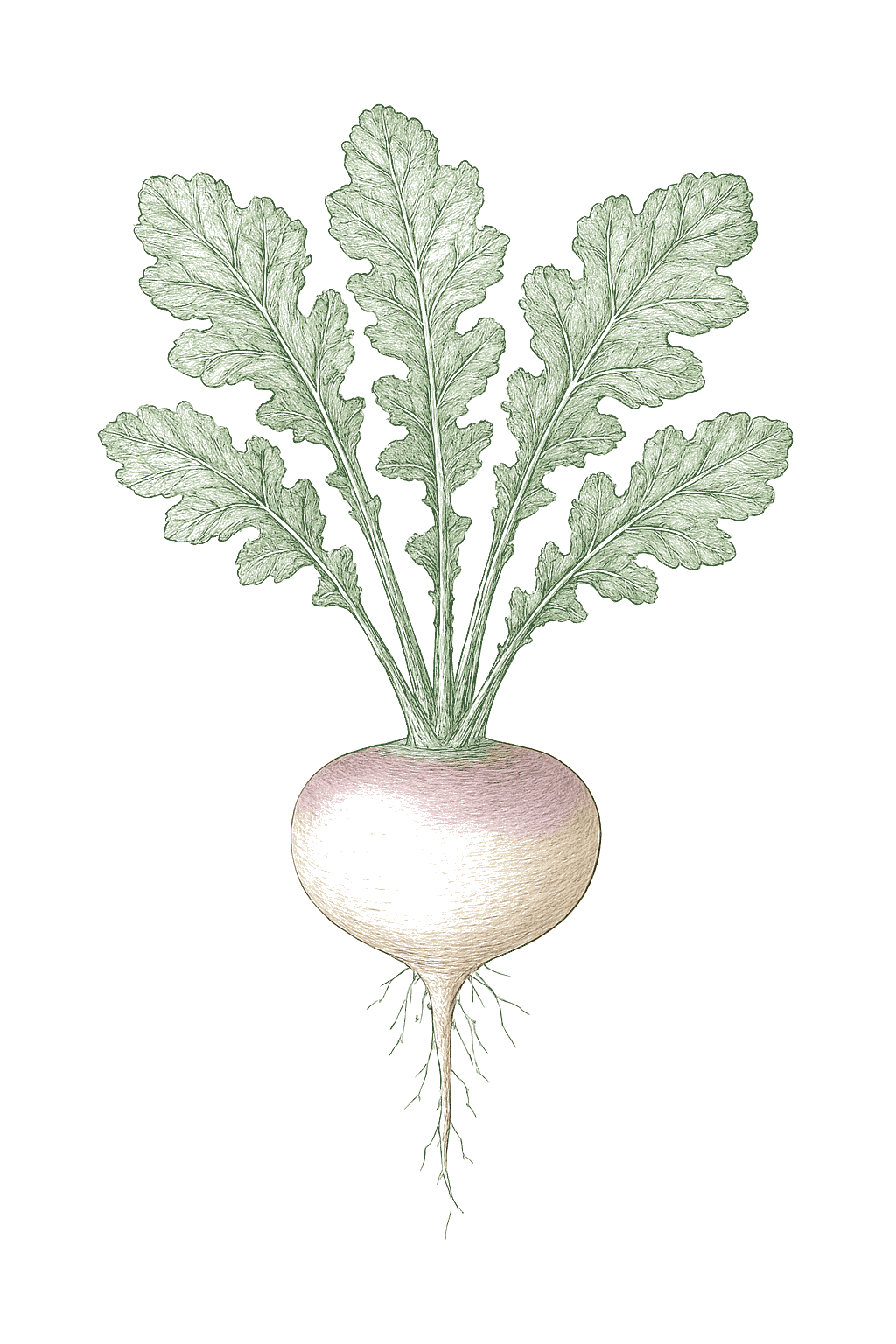
Off-season for turnip in zone 10.
In Zone 10, turnip can be planted September through February, skipping the summer heat. Harvest runs November through April.
Instead of planting all your turnips at once, sow a short row every 3 to 4 weeks. That way they are ready a few at a time over several weeks. In places with cool summers, start in spring and keep going into early summer, then sow again in late summer for the main fall crop. In hot-summer places, grow them in fall, winter, and early spring and skip the summer heat. The fall crop is usually the best one.Turnips succession well: sow a short row every 3 to 4 weeks through the cool-season window rather than one large planting, so roots mature in sequence. In cold-summer climates that means spring through early summer, then a late-summer sowing for the main fall crop; in hot-summer climates it means fall through early spring, skipping the heat. Stop spring sowings before sustained heat, since turnips maturing in hot soil turn woody, pithy, and strong and tend to bolt. The fall crop is the prime one in most regions.
In Zone 10, turnip can be planted August through March, skipping the summer heat. Harvest runs October through April.
Instead of planting all your turnips at once, sow a short row every 3 to 4 weeks. That way they are ready a few at a time over several weeks. In places with cool summers, start in spring and keep going into early summer, then sow again in late summer for the main fall crop. In hot-summer places, grow them in fall, winter, and early spring and skip the summer heat. The fall crop is usually the best one.Turnips succession well: sow a short row every 3 to 4 weeks through the cool-season window rather than one large planting, so roots mature in sequence. In cold-summer climates that means spring through early summer, then a late-summer sowing for the main fall crop; in hot-summer climates it means fall through early spring, skipping the heat. Stop spring sowings before sustained heat, since turnips maturing in hot soil turn woody, pithy, and strong and tend to bolt. The fall crop is the prime one in most regions.
In Zone 10, turnip can be planted September through January, skipping the summer heat. Harvest runs November through April.
Instead of planting all your turnips at once, sow a short row every 3 to 4 weeks. That way they are ready a few at a time over several weeks. In places with cool summers, start in spring and keep going into early summer, then sow again in late summer for the main fall crop. In hot-summer places, grow them in fall, winter, and early spring and skip the summer heat. The fall crop is usually the best one.Turnips succession well: sow a short row every 3 to 4 weeks through the cool-season window rather than one large planting, so roots mature in sequence. In cold-summer climates that means spring through early summer, then a late-summer sowing for the main fall crop; in hot-summer climates it means fall through early spring, skipping the heat. Stop spring sowings before sustained heat, since turnips maturing in hot soil turn woody, pithy, and strong and tend to bolt. The fall crop is the prime one in most regions.
In Zone 10, turnip can be planted January through October. Harvest runs March through December.
Instead of planting all your turnips at once, sow a short row every 3 to 4 weeks. That way they are ready a few at a time over several weeks. In places with cool summers, start in spring and keep going into early summer, then sow again in late summer for the main fall crop. In hot-summer places, grow them in fall, winter, and early spring and skip the summer heat. The fall crop is usually the best one.Turnips succession well: sow a short row every 3 to 4 weeks through the cool-season window rather than one large planting, so roots mature in sequence. In cold-summer climates that means spring through early summer, then a late-summer sowing for the main fall crop; in hot-summer climates it means fall through early spring, skipping the heat. Stop spring sowings before sustained heat, since turnips maturing in hot soil turn woody, pithy, and strong and tend to bolt. The fall crop is the prime one in most regions.
In Zone 10, turnip can be planted September through May, skipping the summer heat. Harvest runs November through May.
Instead of planting all your turnips at once, sow a short row every 3 to 4 weeks. That way they are ready a few at a time over several weeks. In places with cool summers, start in spring and keep going into early summer, then sow again in late summer for the main fall crop. In hot-summer places, grow them in fall, winter, and early spring and skip the summer heat. The fall crop is usually the best one.Turnips succession well: sow a short row every 3 to 4 weeks through the cool-season window rather than one large planting, so roots mature in sequence. In cold-summer climates that means spring through early summer, then a late-summer sowing for the main fall crop; in hot-summer climates it means fall through early spring, skipping the heat. Stop spring sowings before sustained heat, since turnips maturing in hot soil turn woody, pithy, and strong and tend to bolt. The fall crop is the prime one in most regions.
In Zone 10, turnip can be planted October through February, skipping the summer heat. Harvest runs December through May.
Instead of planting all your turnips at once, sow a short row every 3 to 4 weeks. That way they are ready a few at a time over several weeks. In places with cool summers, start in spring and keep going into early summer, then sow again in late summer for the main fall crop. In hot-summer places, grow them in fall, winter, and early spring and skip the summer heat. The fall crop is usually the best one.Turnips succession well: sow a short row every 3 to 4 weeks through the cool-season window rather than one large planting, so roots mature in sequence. In cold-summer climates that means spring through early summer, then a late-summer sowing for the main fall crop; in hot-summer climates it means fall through early spring, skipping the heat. Stop spring sowings before sustained heat, since turnips maturing in hot soil turn woody, pithy, and strong and tend to bolt. The fall crop is the prime one in most regions.
In Zone 10, turnip can be planted February through March, then again August through September, skipping the summer heat. Harvest runs March through May.
Instead of planting all your turnips at once, sow a short row every 3 to 4 weeks. That way they are ready a few at a time over several weeks. In places with cool summers, start in spring and keep going into early summer, then sow again in late summer for the main fall crop. In hot-summer places, grow them in fall, winter, and early spring and skip the summer heat. The fall crop is usually the best one.Turnips succession well: sow a short row every 3 to 4 weeks through the cool-season window rather than one large planting, so roots mature in sequence. In cold-summer climates that means spring through early summer, then a late-summer sowing for the main fall crop; in hot-summer climates it means fall through early spring, skipping the heat. Stop spring sowings before sustained heat, since turnips maturing in hot soil turn woody, pithy, and strong and tend to bolt. The fall crop is the prime one in most regions.
In Zone 10, turnip can be planted October through December. Harvest runs December through February.
Instead of planting all your turnips at once, sow a short row every 3 to 4 weeks. That way they are ready a few at a time over several weeks. In places with cool summers, start in spring and keep going into early summer, then sow again in late summer for the main fall crop. In hot-summer places, grow them in fall, winter, and early spring and skip the summer heat. The fall crop is usually the best one.Turnips succession well: sow a short row every 3 to 4 weeks through the cool-season window rather than one large planting, so roots mature in sequence. In cold-summer climates that means spring through early summer, then a late-summer sowing for the main fall crop; in hot-summer climates it means fall through early spring, skipping the heat. Stop spring sowings before sustained heat, since turnips maturing in hot soil turn woody, pithy, and strong and tend to bolt. The fall crop is the prime one in most regions.
In Zone 10, turnip can be planted September through March, skipping the summer heat. Harvest runs November through April.
Instead of planting all your turnips at once, sow a short row every 3 to 4 weeks. That way they are ready a few at a time over several weeks. In places with cool summers, start in spring and keep going into early summer, then sow again in late summer for the main fall crop. In hot-summer places, grow them in fall, winter, and early spring and skip the summer heat. The fall crop is usually the best one.Turnips succession well: sow a short row every 3 to 4 weeks through the cool-season window rather than one large planting, so roots mature in sequence. In cold-summer climates that means spring through early summer, then a late-summer sowing for the main fall crop; in hot-summer climates it means fall through early spring, skipping the heat. Stop spring sowings before sustained heat, since turnips maturing in hot soil turn woody, pithy, and strong and tend to bolt. The fall crop is the prime one in most regions.
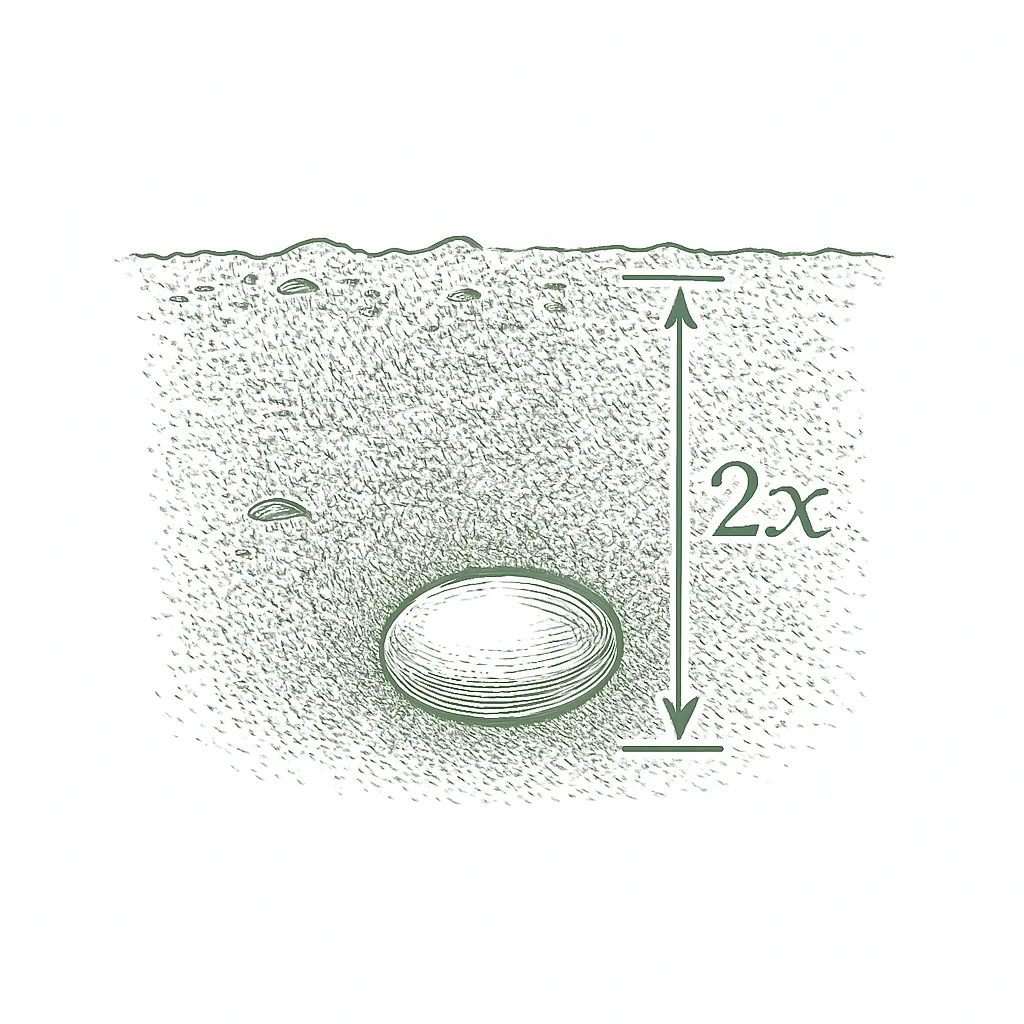
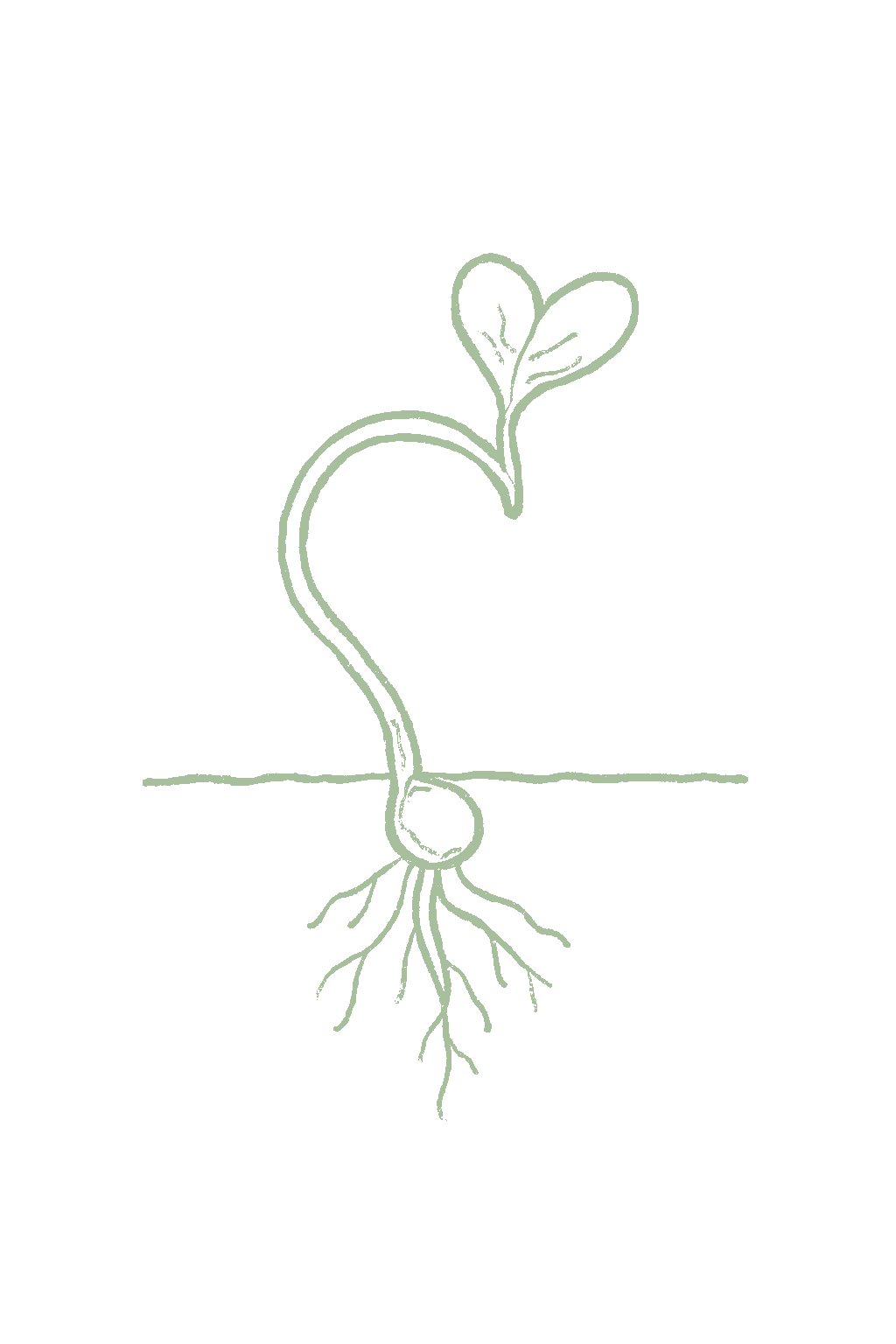
Plant turnip seeds right in the garden where they will grow, since turnips do not like being moved. Sow them about 1/4 to 1/2 inch deep once the soil is no longer frozen or soggy (about 40 to 45°F), roughly 2 to 3 weeks before your last spring frost, and again in late summer for a fall crop, which is usually the best crop. They sprout in about 7 to 10 days. Plant a little thick and plan to thin them later; the little plants you pull out are tasty baby greens. Keep the soil surface damp until the sprouts appear.Direct-sow turnips into the garden; they grow fast from seed in place and, like most root crops, do not transplant well. Sow about 1/4 to 1/2 inch deep once the soil is workable and at least 40 to 45°F, roughly 2 to 3 weeks before the last spring frost, and again in late summer for the fall crop, which is the better crop in most climates. Seeds germinate best at about 60 to 85°F and emerge in roughly 7 to 10 days. Sow a little thick and plan to thin: the thinnings are edible baby greens. Keep the surface moist and uncrusted until the seedlings emerge.

Not sure what soil you have? Grab a small handful of damp soil from your garden bed and squeeze it. If it crumbles apart easily, it's sandy. If it holds together but breaks when you poke it, it's loam (what most vegetables want). If it stays in a hard, slippery ball, it's clay.
Turnips like loose, fertile, well-drained soil with no hard layer underneath. Loosen the bed about 8 to 10 inches down and rake out rocks and clods, because the root grows rounder and smoother in loose soil and comes out forked or lumpy in packed, stony ground. Mix in some compost or well-rotted (never fresh) manure, since fresh manure can make the roots branch and grow hairy. Aim for a soil pH around 6.0 to 6.8. If clubroot, a disease that swells and deforms the roots, has been a problem in your garden, adding lime to raise the pH closer to 7.0 to 7.2 helps hold it back.
Mix 2-3 inches of compost into the top 6 inches of your bed before planting. Compost holds moisture (which sandy soil drains too fast) and adds the nutrients sandy soil tends to lack. Repeat each season. Compost breaks down over time.
Mix 2-3 inches of compost AND a few inches of coarse sand or perlite into the top 6 inches of your bed. The compost feeds the plants; the sand breaks up the clay so air and water can move through. Don't add sand without compost. It can compact like concrete.
If amending your soil sounds like too much work, or if your soil is heavy clay, full of rocks, or contaminated, build over it. A raised bed at least 12 inches deep filled with a 50/50 mix of compost and sandy loam gives you ideal growing soil with no battles. A 5-gallon container with quality potting mix does the same for one plant at a time. Both bypass your native soil entirely.
The numbers that matter, at a glance.
Soil pH measures how acidic or alkaline your soil is, on a scale from 1 to 14 where 7 is neutral. Turnips like it slightly acidic to neutral, about 6.0 to 6.8, though they grow across a fairly wide range. A cheap soil test from your local extension office tells you your number and whether to add lime. One turnip-specific point: a root disease called clubroot is worse in acidic soil, so if your turnips have come out swollen and deformed, raising the pH toward 7.0 to 7.2 with lime helps hold the disease back.Turnips grow best at a slightly acidic to neutral pH of about 6.0 to 6.8; Clemson recommends maintaining roughly 6.0 to 6.5, and Minnesota gives a workable range of about 6.0 to 7.5. The brassica-specific reason to watch pH is clubroot: the pathogen is favored by acidic soil, and the standard cultural control is to lime the bed toward a neutral to slightly alkaline pH of about 7.2 to 7.5 where the disease is established. There is thus a mild tension between the ideal growing pH and the clubroot-suppressing pH, resolved by liming only on a clubroot-prone bed. A standard soil test from your local extension office removes the guesswork before sowing.
Turnips do not need heavy feeding. Mix a balanced fertilizer and some compost into the bed before planting, and give one light feeding later only if the plants look weak and pale. Go easy on nitrogen if you want good roots, because too much grows big leafy tops and small roots. If you are growing turnips mainly for the greens, a little extra nitrogen is fine, since the leaves are what you are after. Do not use fresh manure, which makes the roots hairy and forked.Turnips are light to moderate feeders. Work well-finished compost and a balanced fertilizer into the bed before sowing, then side-dress lightly once the tops are established if growth is weak. The key brassica-root caution is nitrogen: excess nitrogen grows lush tops at the expense of the root and can leave roots small and poorly formed, so go easy where you want good roots. A crop grown mainly for greens tolerates and even rewards more nitrogen, since the leaves are the harvest. Avoid fresh manure, which both over-supplies nitrogen and causes hairy, branched roots.
The three numbers on a fertilizer bag are nitrogen, phosphorus, and potassium (N-P-K). Turnips do well with a balanced blend where the numbers are about even, like a 10-10-10, mixed into the soil before planting along with compost. Do not pile on high-nitrogen fertilizer if you want roots, since it grows leaves instead. If you are after the greens, a bit more nitrogen is okay.Turnips want steady phosphorus and potassium for root development plus modest nitrogen, so a balanced blend such as a 10-10-10 worked into the bed before sowing suits a root crop, with most of the feeding coming from incorporated compost. Hold back on nitrogen for roots, since it pushes leafy tops over the root; a greens crop can take more. Skip fresh manure, which over-supplies nitrogen and branches the roots.
Turnips are easygoing neighbors. They share a bed nicely with leafy greens like lettuce, with onions and other alliums, which grow upright and shallow and do not crowd the roots, and they do well following beans or peas that added nitrogen to the soil. The main plants to keep away from turnips are their own cabbage-family relatives: cabbage, broccoli, kale, radish, and mustard. These cousins share the turnip's pests, the flea beetle and the cabbage maggot, plus the soil disease clubroot, so growing them together lets those problems build up. As always, do not trust every companion chart online, since many of their claims have never been tested. Turnips fit easily into mixed beds, and their clearest companion rule is the brassica avoid: keep them away from the other cabbage-family crops (cabbage, broccoli, kale, radish, mustard), which share the turnip's flea beetles, cabbage maggot, and the soilborne clubroot pathogen, so clustering the family concentrates that pressure. On the positive side, leafy greens like lettuce and shallow-rooted alliums share the surface layer while the turnip swells just below, and a legume grown the season before leaves nitrogen behind. Treat the good pairings as sensible defaults rather than proven effects: as University of Minnesota's research review stresses, most companion-planting claims are tradition rather than tested science, so use them as a starting point and watch your own results.
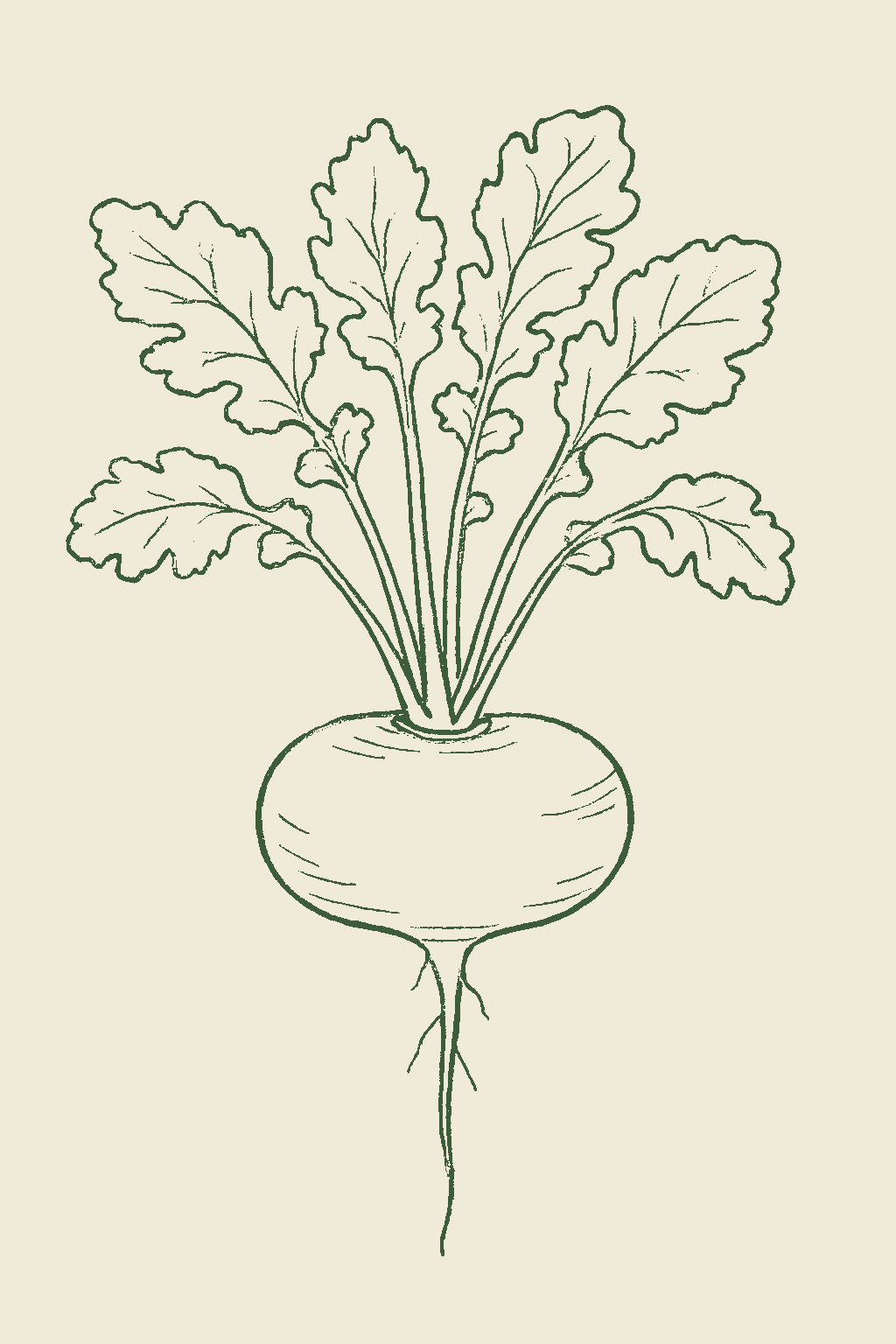
Turnips give you two harvests. You can pick the leaves young all along, taking a few outer ones per plant so the root keeps growing, and the seedlings you thin out are your first baby greens. The roots are ready by size, not a set date: brush the soil off a shoulder and pull when the turnip is about 2 to 3 inches across, the sweet, tender stage, usually around 50 to 60 days, sooner for salad kinds. Do not let them get too big or sit through hot weather, which makes them woody and strong. There is no rush in cool weather: they get sweeter after a light frost and hold in the ground. In cold areas, pile straw over the row and dig them into early winter until the ground freezes. Pull by hand, or loosen with a fork in heavy soil, and cut off the tops, keeping the greens to cook and storing the roots separately.Turnips are a dual harvest. The leaves can be picked young throughout, taking a few outer leaves per plant so the root keeps sizing; the thinnings at the seedling stage are the first baby greens, and greens-type varieties are cut and allowed to regrow. The roots are ready by size rather than the calendar: brush soil from a shoulder and pull when it is about 2 to 3 inches across, the sweet, tender, mild stage, which for most main-crop varieties lands near 50 to 60 days and for salad types sooner. Do not let roots oversize or sit in heat, which turns them woody, pithy, and strong. There is no rush in cool weather: flavor sweetens after light frost, and roots hold in the ground. In cold regions a heavy straw mulch lets you dig through early winter until the ground freezes hard. Lift by hand, or loosen with a fork in heavier soil, and cut off the tops, keeping the greens for the kitchen and storing the roots separately.
Each plant gives you one turnip root, plus leaves you can eat as it grows. It helps to think by row length: a 10-foot row gives roughly 5 to 10 pounds of turnips depending on size, plus greens picked as outer leaves and thinnings.One root per plant, plus a flush of edible leaves along the way. Yield is best thought of by row length: at a 2 to 4 inch final spacing, a 10-foot row yields roughly 5 to 10 pounds of roots depending on size at harvest, alongside greens taken as outer leaves and thinnings. A greens-only crop yields more leaf per foot of row.
Turnips do not regrow a new root after you pull them, since each plant makes one root. A planting is ready about 50 to 60 days after sowing and you harvest it over a couple of weeks, while the leaves give a longer, light harvest. For a steady supply, plant a new short row every 3 to 4 weeks.There is no repeat root harvest; a sowing matures over a short window roughly 50 to 60 days after planting and is pulled over a couple of weeks. The greens give a longer, light pick-as-you-go harvest. Continuous supply comes from succession sowing every 3 to 4 weeks through the cool-season window. Turnips are grown fresh from seed each year, so your very first planting can do just as well as any later one. The main things that decide your results are loose soil, thinning the seedlings, and keeping the bed evenly damp.Turnips are an annual grown fresh from seed every season, so there is no first-year-versus-later distinction as with perennials; the first sowing performs as well as any, provided the soil is loose, the stand is thinned, and moisture stays even.
There are turnips for different uses. Purple Top White Globe is the dependable classic for both roots and greens, ready in about 50 to 55 days. For sweet, mild turnips you can eat raw, look for fast salad types like Hakurei or Tokyo, ready in about 35 to 40 days. If you mainly want the leafy greens, grow Shogoin or Seven Top (which makes greens but no real root). Golden Ball has sweet yellow flesh and Scarlet Queen has red skin. Plant salad and greens kinds a bit thicker and pick them young; let regular turnips grow to about 2 to 3 inches across.Turnip variety choice splits by purpose and speed. Purple Top White Globe is the dependable all-rounder for roots and greens, maturing in about 50 to 55 days; for a sweet, mild root eaten raw, the fast white salad types (Hakurei, Tokyo Cross) are ready in roughly 35 to 40 days. Greens growers choose leafy types such as Shogoin or the rootless Seven Top, which put their energy into abundant tops. For color and flavor, Golden Ball offers sweet yellow flesh and Scarlet Queen a red skin. Sow salad and greens types thicker and harvest young; let main-crop and storage types size to about 2 to 3 inches. Full-size storage roots can take 60 to 80 days.
Move your turnips to a different spot each year, and do not put them, or their relatives like cabbage, broccoli, radish, and kale, back in the same bed for several years (Minnesota says about four). This keeps the cabbage maggot, flea beetle, and clubroot disease from piling up. Turnips do well following beans or peas, which add nitrogen, but not right after a bed that got heavy manure, since leftover nitrogen grows leaves instead of roots.Rotate turnips on a multi-year cycle, keeping them and all other cabbage-family crops out of a bed for several seasons after they are grown there; Minnesota recommends a four-year gap, and a longer one where clubroot is present. This breaks the buildup of the soilborne clubroot pathogen and the root pests the family shares. Following a legume that has added nitrogen, or another nitrogen-depleting crop, suits turnips well; avoid following a heavily manured crop, whose residual nitrogen pushes tops over roots and branches them.
The plant app sends a timely reminder at every critical moment of your turnip season. The wording adjusts to whichever you pick: beginner or seasoned. Here are three you'll see in Zone 10.
plant sends the right notification at exactly the right moment, for your zone, your weather, your crops. Founding members lock the rate forever.
We're building this guide with real growers. Got a question we missed? Ask here. We read every one and add the best answers right to this page.
Learned something the hard way? Pass it on. Real growers' tips make this guide better for the next person, and we credit you by name when yours goes live.
If you've grown this crop and you see a date, a temperature, a companion claim, or a recommendation that doesn't match your experience, tell us. Real growers' corrections make this guide better for the next person.
Every date, temperature, spacing, and recommendation on this page is sourced from university cooperative extension publications, peer-reviewed agricultural research, NOAA climate data, and direct extension calendars. Where claims are softer (traditional gardening wisdom not formally documented), we say so.
Spot a data point that doesn't match your experience? Submit a correction; accepted corrections earn full author credit on the page.
Zone-aware seasonal nudges, what's worth planting now, and the occasional recipe from the harvest. No spam, ever.