Pick your zone and the dates re-calibrate.
The Guide Flowers Vol. 003

Viola

in Zone 5, this week

Violas, pansies, and Johnny-jump-ups are cheerful flowers for cool weather. Unlike most flowers, they love the cold: they keep blooming through fall, winter, and early spring in mild areas and bounce back from frost and light snow. What they cannot take is heat. Once summer warmth arrives, they get leggy, pale, and stop flowering well, so in hot areas they are grown as a fall-to-spring flower and replaced when it heats up. The flowers are edible and pretty on a salad or cake, and the little Johnny-jump-up type reseeds itself and pops up on its own year after year. Viola is the classic cool-season bedding flower: garden pansies (Viola x wittrockiana), violas or horned violets (Viola cornuta), and Johnny-jump-ups (Viola tricolor) are short-lived perennials almost always grown as cool-season annuals. They are very frost-hardy, blooming any time the temperature is above freezing and shrugging off light snow, which makes them the workhorse of fall, winter, and early-spring color in mild zones and the first and last color of the season in cold ones. Their one hard limit is heat: blooms fade, stems stretch, and plants turn ragged once sustained warmth above roughly 75 °F arrives, so in most regions they pause or are pulled through summer and return in fall. The flowers are edible, and Johnny-jump-ups self-seed and naturalize.
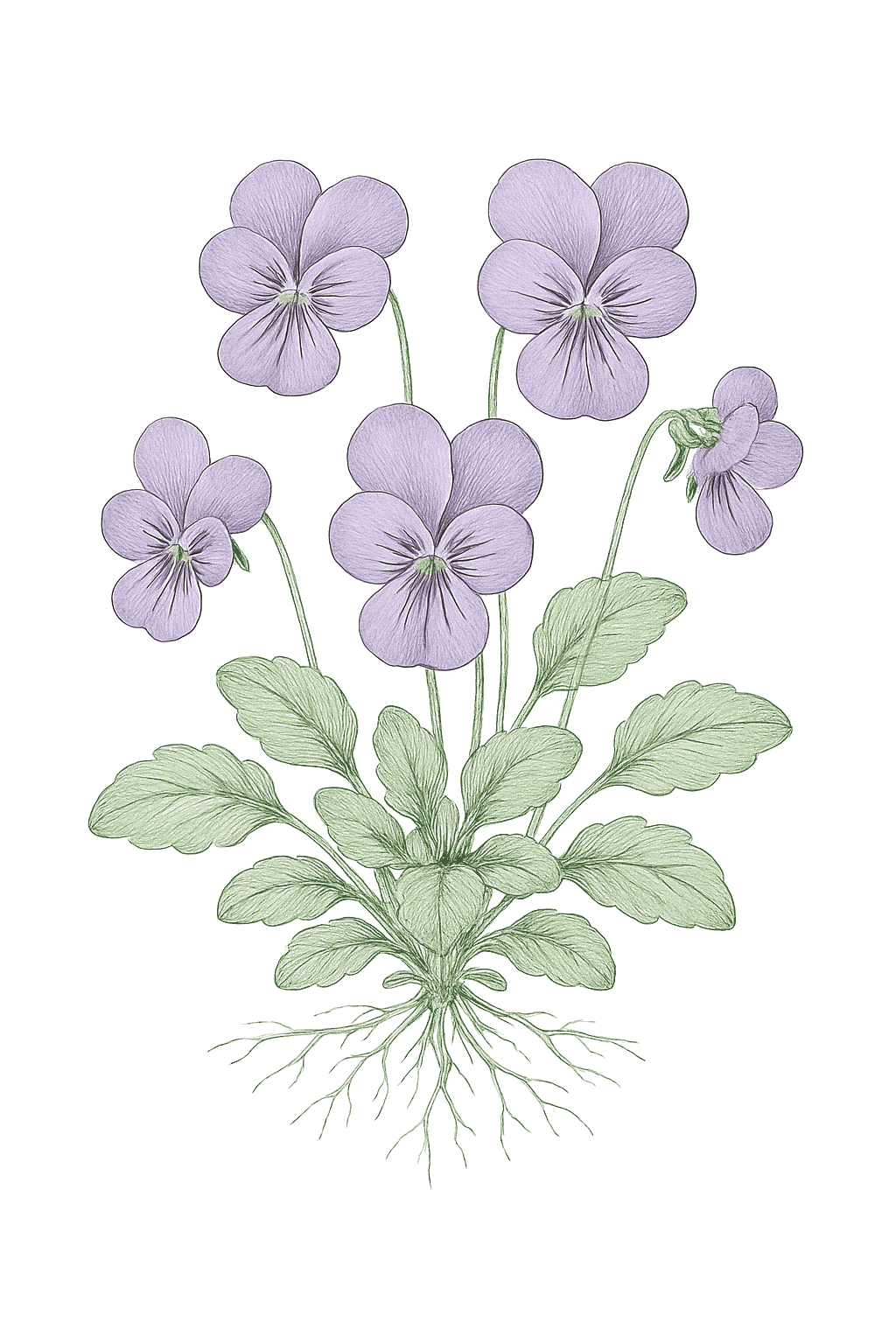
Viola mature plant
Fig. 01 · Viola, mature Zone 5
Mature in
70-90d
from transplant
Sunlight
Full sun to part shade
4-6 hrs daily
Water
Moderate
Spacing
6-10"
between plants
Soil pH
5.4-5.8
slightly acidic
Today · in your zone

What's happening right now

July 24 · Zone 5 · Stage 01 · Germination

Off-season for viola in zone 5.

The season at a glance

Planting calendar

In Zone 5, viola can be planted April through June, then again August through September, skipping the summer heat. Start indoors Feb 15 - Mar 15. In bloom May through October.

Jan
Feb
Mar
Apr
May
Jun
Jul
Aug
Sep
Oct
Nov
Dec
plant
too cold
indoors
indoors
plant
plant
plant
too hot
plant
plant
too late
too cold
too cold
bloom
bloom
bloom
bloom
bloom
indoors
plant out
bloom
Keep them blooming Deadhead spent blooms through the bloom window to keep new flowers coming.
Seasoned
Stagger your sowings

Succession planting

For nonstop flowers, plant a fresh batch every couple of weeks during the cool season rather than all at once. In mild areas that means fall through spring, pausing for summer heat; in cold areas, early spring and again in late summer, skipping the hottest part. Violas fade once it gets hot, so keep your plantings on the cool side of the year.Stagger transplant sets every 2 to 3 weeks through your cool-season window for continuous, fresh bloom and to replace plants lost to slugs or rot. In mild zones that window is fall through spring with a summer heat pause; in cold zones it is early spring and again in late summer, around a midsummer pause. Violas fade above roughly 75 °F, so anchor plantings to the cool side of the season.

Every 3 weeks · sow a short new rowUp to 11 sowings a seasonToo hot to sow midsummer
Jan
Feb
Mar
Apr
May
Jun
Jul
Aug
Sep
Oct
Nov
Dec
sow
bloom
keep sowing
too hot
continuous bloom
The season, mapped

Seed to garden

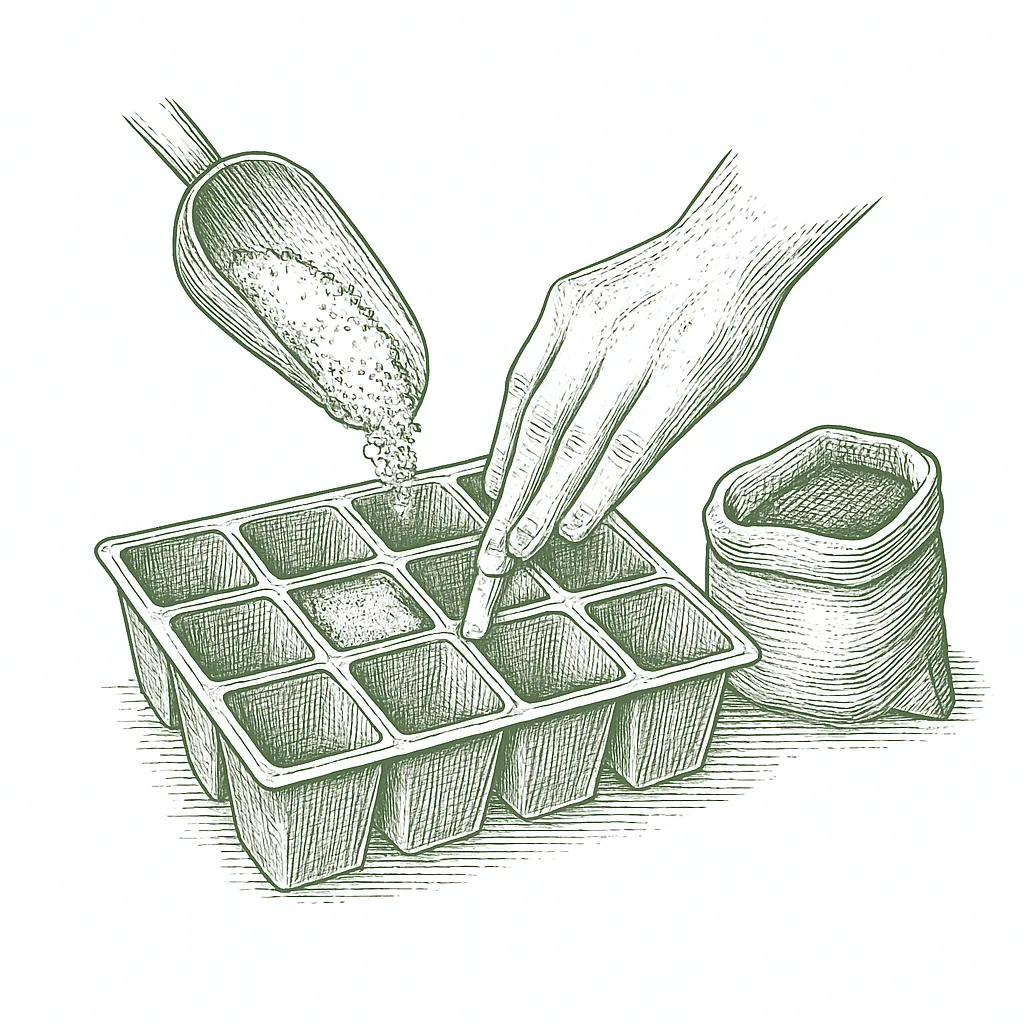
The easiest path is to buy or start transplants, because viola seed takes 10 to 14 weeks to bloom and needs cool, dark soil to sprout, which summer cannot provide. Start seed indoors 6 to 8 weeks ahead, kept cool and covered so it is dark, then plant out when the weather is cool: late summer in mild areas for fall and winter flowers, or early spring in cold areas. You can sow straight in the ground where the soil is cool. Do not pinch the tops; just remove old flowers to keep them blooming.Viola is most often set out as transplants, since seed-to-bloom runs roughly 10 to 14 weeks and the seed needs cool, dark conditions (about 65 to 75 °F) that summer soil cannot give. Start indoors 6 to 8 weeks ahead in cells, kept cool and covered to exclude light, then transplant once the weather is cool: late summer for fall and winter bloom in mild zones, early spring for spring bloom in cold ones. Direct sowing works in mild climates when soil is cool. Do not pinch; deadhead instead to drive bloom.
  1. 01
    Sow indoors →
    Feb 15 - Mar 15
    Start about 8 weeks before your last frost
  2. 02
    Transplant out →
    Apr 5 - May 5, Aug 15 - Sep 5
    After hardening off
  3. 03
    First harvest
    From May 25
    70-90 days from transplant
Start method
Both
Soil temp
65-75°F
Hardening off
7-10 days
If you started or bought plants grown under cover, harden them off first: set them outside for a little longer each day over about a week. Violas handle cold easily, so this is mostly to get them used to wind and full sun.
From seed to fruit

The growing journey

Stage 01 · Germination
01
Germination
Days 10-21 · current stage
The first little leaves push up in about a week and a half, as long as the soil is cool and the seed is covered to keep it dark.Seed leaves (cotyledons) emerge in roughly 10 to 14 days in cool soil (about 65 to 75 °F); seed must be covered to exclude light.
Keep the soil cool, damp, and covered until the seedlings come up. Warm soil keeps the seeds from sprouting.Keep the medium cool, evenly moist, and dark until emergence; warm soil inhibits germination.
FROM PLANT · Plant viola seed in cool soil, around 65 to 75 °F, and cover it so it stays dark. Warm soil and light both keep the seeds from sprouting, so they are usually started indoors in late summer.Sow into cool soil (about 65 to 75 °F) and cover the seed to exclude light; warm soil and light both inhibit viola germination, which is why seed is started in late summer under cover rather than direct-sown into warm beds.
02
Seedling
Days 21-42
Real leaves appear and the little plant starts to settle in.First true leaves develop; the plant is small and establishing a shallow root system.
Keep them cool, space plants about 6 to 10 inches apart, and water the soil, not the leaves.Grow on cool; thin or space to 6 to 10 in and water at the base to keep foliage and crown dry.
FROM PLANT · Keep young plants cool and give them 6 to 10 inches of space so air moves between them. Cool, airy conditions and dry leaves help prevent the rots and leaf diseases violas can get.Grow seedlings on cool and space them 6 to 10 in for airflow; cool, airy conditions and dry foliage are the main defense against the leaf diseases and crown rots violas are prone to.
03
Established / vegetative
Days 40-62
The plant gets bushier and starts forming flower buds.Plant fills out into a low mound and begins setting buds as cool weather settles in.
Keep the soil evenly moist with room for air to move. You do not need to pinch violas. Start removing faded flowers as they bloom.Maintain even moisture and airflow; do not pinch (violas branch on their own). Begin deadheading as bloom starts.
FROM PLANT · You do not need to pinch violas; they fill out by themselves. Put your effort into good drainage and watering in the morning at the soil, because wet soil is what rots them.Do not pinch violas; they branch and mound on their own. Focus instead on drainage and morning base watering, since warm, wet soil is what triggers the crown and root rot that kills them.
04
Budding
Days 58-82
Flower buds appear and the first flowers are about to open.Flower buds form on short stems; bloom is imminent in cool weather.
Keep the soil evenly moist and check for slugs, aphids, and any soft, rotting stems.Keep moisture even; scout for slugs and aphids and for crown rot in wet, warm spells.
FROM PLANT · When buds form, check for slugs and snails in the damp leaves and for any soft, rotting stems at the base, especially in warm wet weather. Catching them early saves the plants.As buds form, scout for slugs and snails in the cool, damp canopy and for soft, collapsing crowns in any warm, wet spell; catching both early prevents the two most common viola losses.
05
Flowering
Days 70-90
Flowers open and keep coming all through the cool weather, stopping only when it gets hot.Blooms open continuously through the cool season, slowing only in hard cold and ending when sustained heat above roughly 75 °F arrives.
Keep removing faded flowers to get more. Cut back floppy plants by a third as it warms. Pick flowers to eat the same day you use them.Deadhead regularly to extend bloom; shear leggy plants by a third in warming weather; pick edible flowers the day of use.
FROM PLANT · Keep snipping off faded flowers before they make seeds. This tells the plant to make more flowers and is the best way to get a long bloom, all through fall, winter, and spring in mild areas.Deadhead continuously: removing spent flowers before they set seed redirects energy into new bloom and is the single biggest lever on a long cool-season show, from fall through winter and spring in mild zones.
FROM PLANT · To eat the flowers, pick them the day you use them from plants grown without bug sprays, rinse gently, and pinch off the little white base. They have a mild flavor and look great on salads, cakes, and in ice cubes.For edible blooms, pick the day of use from pesticide-free plants, wash gently, and remove the bitter white heel at the petal base; the mild grassy flavor suits salads, desserts, candying, and ice cubes.
06
Seed saving (optional)
Days 95-125
Seed pods dry out and pop open. Johnny-jump-ups drop their own seed and come back on their own.Capsules left on the plant dry and split, ejecting seed; Johnny-jump-ups self-sow freely from these.
Leave a few seed pods to dry and gather the seed before they burst. Fancy hybrids will not look the same next year, but Johnny-jump-ups reseed true enough.Leave a few capsules to dry and collect before they shatter; expect hybrids not to come true, while Johnny-jump-ups reseed reliably.
FROM PLANT · Leave a few seed pods on Johnny-jump-ups and they will drop seed and come back on their own. Gather seed before the pods pop if you want to plant it yourself. Fancy hybrid pansies will not grow back the same.Let a few capsules dry on Johnny-jump-ups (Viola tricolor) and they will reseed and naturalize freely; collect seed before the capsules shatter if you want to sow it deliberately, and expect hybrid pansies not to come true.
Beginner
Know your soil

Your soil

Identify yours

Not sure what soil you have? Grab a small handful of damp soil from your garden bed and squeeze it. If it crumbles apart easily, it's sandy. If it holds together but breaks when you poke it, it's loam (what most vegetables want). If it stays in a hard, slippery ball, it's clay.

What this crop wants

Violas like rich, moist soil that still drains well, with plenty of compost mixed in. The thing to avoid is heavy, soggy ground that stays wet, because wet feet lead to root rot, the most common way these plants are lost.

If your soil doesn't match

You have sandy soil

Mix 2-3 inches of compost into the top 6 inches of your bed before planting. Compost holds moisture (which sandy soil drains too fast) and adds the nutrients sandy soil tends to lack. Repeat each season. Compost breaks down over time.

You have clay soil

Mix 2-3 inches of compost AND a few inches of coarse sand or perlite into the top 6 inches of your bed. The compost feeds the plants; the sand breaks up the clay so air and water can move through. Don't add sand without compost. It can compact like concrete.

Containers and raised beds

If amending your soil sounds like too much work, or if your soil is heavy clay, full of rocks, or contaminated, build over it. A raised bed at least 12 inches deep filled with a 50/50 mix of compost and sandy loam gives you ideal growing soil with no battles. A 5-gallon container with quality potting mix does the same for one plant at a time. Both bypass your native soil entirely.

Learn more about your soil
The specs

Care guide

The numbers that matter, at a glance.

Sunlight
full sun to part shade · 4-6 hrs/day
Water
moderate
Spacing
6-10 inches
Soil
loam, sandy loam
Days to maturity
70-90 days from transplant
Soil pH
5.4 to 5.8
Container OK?
Yes · 1+ gal pot
Germination temp
65-75°F
Soil chemistry

Soil pH for viola

Preferred
5.4 to 5.8
Tolerated
5.2 to 6.5

Violas do best in slightly acidic soil, around 5.4 to 5.8 on the pH scale (a measure of how acidic or alkaline soil is). They dislike high-alkaline soil, where leaves yellow and root rot becomes more likely, so avoid liming the bed for them.Viola is happiest in a slightly acidic soil of about 5.4 to 5.8 and tolerates a bit either side of that. High pH is the real risk: alkaline soil triggers iron deficiency and favors black root rot, so do not lime a viola bed and correct genuinely alkaline ground before planting.

Verified · 2 sources View
Steady hand on the hose

Watering

When & how much
Frequency
Keep the soil evenly damp but never soggy. Violas have shallow roots, so they dry out faster than you might expect, yet they rot if kept wet. Water when the top of the soil starts to dry, and through fall and winter water any week it does not rain much.Keep soil evenly moist; violas have shallow roots and dislike both drought and waterlogging. Water through fall and winter whenever less than about an inch of rain falls in a week, but let the surface dry slightly between waterings to keep the crown rots at bay.
Amount
Violas like about one inch of water a week, counting rain. Because their roots are shallow, do not let them bake dry, but do not keep them swimming either. Moist, not soggy, is the goal.Aim for roughly one inch of water per week from rain plus irrigation during active growth, applied so the root zone is moist but never saturated. The shallow root system needs steadier moisture than a deep-rooted annual, but standing wet is the rot risk.
Method
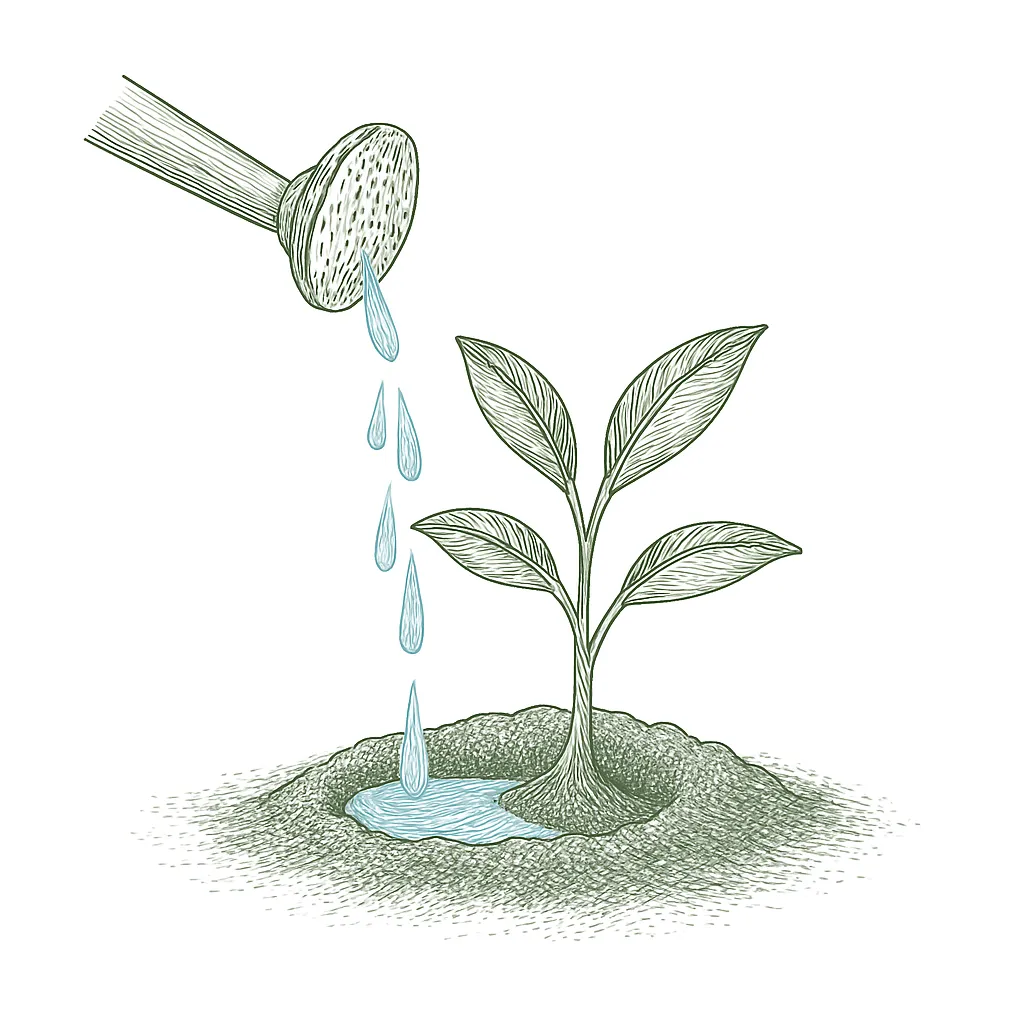
Water the soil around the plant in the morning, not the leaves, and never in the evening. Wet leaves and crowns overnight lead to disease. A soaker hose or watering can at the base works best.Water at the base in the morning so foliage dries by midday; never water in the late afternoon or evening, which leaves foliage and crowns wet overnight and invites disease. Drip or a soaker hose is ideal.
Signs of trouble
Too much water
If lower leaves yellow, the plant wilts even though the soil is wet, or the base turns soft and mushy, you are overwatering or the soil drains poorly. That is the start of root rot.Yellowing lower leaves, wilting despite wet soil, and a soft, collapsing crown signal overwatering or poor drainage and the onset of root and crown rot, viola's chief weakness.
Too little water
Violas that are too dry wilt between waterings, look dull, and make small flowers. Their shallow roots dry out fast, so check them often in wind or as it warms up.Wilting between waterings, dull foliage, and small, short-stemmed blooms point to underwatering; the shallow root system shows drought stress quickly, especially in wind and warming weather.
Feeding rhythm

Feeding

Frequency
light
Type
Balanced or low-nitrogen
When to start
At planting, then in early spring

Violas do not need much food. Mix a slow-release granular fertilizer into the soil when you plant, and feed once more in early spring. Pick a low-nitrogen type like 5-10-10. Too much nitrogen (a high first number) gives you tall, floppy plants with fewer flowers.Violas are light feeders. Mix a slow-release granular fertilizer into the bed at planting and feed again in early spring; a low-nitrogen, phosphorus-leaning blend such as 5-10-10 suits them. Avoid high-nitrogen fertilizer, which forces soft, leggy growth at the expense of bloom and, in cold weather, stretches the plants.

N · P · K = 5-10-10

The three numbers on fertilizer (N-P-K) are nitrogen, phosphorus, and potassium. For violas, choose a low first-number blend like 5-10-10 rather than a high-nitrogen lawn feed.A low-nitrogen, bloom-leaning ratio such as 5-10-10 suits violas better than a high-nitrogen feed, which stretches them in the cool weather they grow in.

Flower care

Deadheading viola

Flower form
single five-petaled, flat-faced (pansy and viola form)

Snip off old, faded flowers before they form seeds. This simple step keeps violas blooming much longer. If the plants get tall and floppy as the weather warms, cut them back by about a third and they will green up and flower again before summer heat finishes them off.Remove faded flowers before they set seed to extend the bloom period; this is the single most effective way to keep violas flowering through a long cool season. If plants stretch and grow leggy in late-spring warmth, shear them back by about a third to force fresh, compact growth and a late flush before heat ends the season.

Who grows well together

Companion planting

Violas are mostly grown for cool-season color and edible flowers, and they mix happily with almost anything that likes the same cool weather. Gardeners tuck them under spring bulbs like tulips and daffodils, among cool-season greens such as lettuce and kale, and beside other cool-weather annuals. They also feed early bees when little else is blooming. There is no plant you must keep violas away from. The only real caution is wet soil: do not crowd them into soggy, poorly drained beds, where the crown and root rot that troubles violas spreads. Viola's companion role is the cool-season color-and-edible layer rather than a pest-management partner. It underplants spring bulbs for layered early color, interplants among cool-season greens and other cool-weather annuals that share its culture, and offers early-season nectar and pollen plus larval forage for fritillary butterflies. There is no biologically antagonistic companion to avoid; the meaningful caution is siting. Crowding violas into wet, poorly drained, or rot-prone beds raises shared crown and root-rot pressure, so favor drainage and airflow and rotate away from beds where rot has built up.

Other
Spring-flowering bulbs (tulips, daffodils, crocus)
Violas planted over spring bulbs fill the bare ground with color while the bulbs are coming up, then bloom alongside them.Underplanting spring bulbs with violas is a classic layered-color pairing: the violas carpet the bed through fall and winter and bloom with the bulbs in spring. The benefit is ornamental and phenological, not biological, and the two share the same cool-season, well-drained culture. Traditional
Cool-season greens (lettuce, kale, spinach)
Violas add edible flowers and color to a bed of cool-season greens, and both grow in the same cool weather and come out when it heats up.Interplanting violas among cool-season greens pairs two crops on the same cool-season clock: both are set out as the heat breaks and both finish at summer's onset, and the viola flowers are edible alongside the greens. Expect shared culture and a little early-pollinator traffic rather than a documented pest or yield effect. Well-grounded
Cool-weather annuals (snapdragon, dianthus, sweet alyssum, ornamental kale)
These all like the same cool weather as violas, so they make an easy, good-looking fall-to-spring bed together.Snapdragons, dianthus, sweet alyssum, and ornamental kale share viola's cool-season culture and frost tolerance, making them natural cool-weather bedding partners. The pairing is cultural and aesthetic; site all of them for drainage and airflow. Traditional
Early pollinators and butterflies
Violas bloom early when few other flowers are open, giving bees an early meal, and some butterflies lay eggs on violets.As one of the earliest and latest things in bloom, viola supplies nectar and pollen to early-emerging bees, and Viola species are the obligate larval host for fritillary butterflies. Treat this as habitat and ecosystem support: leave some self-sown Johnny-jump-ups where fritillaries are wanted. Well-grounded
Provenance tagged inline · see methodology for the labeling system Key
Cutting for the vase

When to cut

Pick viola flowers when they are open and bright, ideally in the morning. If you are going to eat them, pick them the same day and only use flowers you grew yourself without bug sprays. For garden color there is nothing to harvest all at once: the plant keeps making flowers all through the cool season, and picking or snipping off old blooms makes it flower even more.Pick blooms when they are fully open and freshly colored, cutting in the cool of the morning. For edible use, harvest the same day you plan to use them and use only flowers grown without pesticides. For bedding color there is no single harvest: the plant blooms continuously through the cool season, and regular picking and deadheading drive more flowers.

Bloom yield

What to expect

One viola or pansy plant gives you flowers steadily for months if you keep removing the faded ones. The small-flowered violas and Johnny-jump-ups make the most flowers; the big pansies make fewer, larger ones.A single viola or pansy, deadheaded through the cool season, yields a steady succession of blooms over months; smaller-flowered violas and Johnny-jump-ups produce the most flowers, while large-flowered pansies give fewer, bigger blooms.

Violas flower the same season you plant them, about 10 to 14 weeks from seed, with no waiting year. A fall planting in a mild area blooms from fall right through spring.Violas bloom the first season from seed or transplant, roughly 10 to 14 weeks from sowing, so there is no establishment year; a fall planting flowers from fall through spring in mild zones.

What changes yield
Type: small-flowered violas and Johnny-jump-ups yield the most blooms; large pansies yield fewer, bigger flowers.Deadheading cadence: frequent removal of spent flowers drives continuous bloom; neglected plants set seed and slow.Season length and climate: mild zones bloom fall through spring, cold zones flower spring and fall around a summer pause.Heat: sustained warmth above roughly 75 °F fades blooms and ends the productive season.Drainage and watering: well-drained soil and morning base watering keep plants healthy and productive by avoiding crown and root rot.
Verified · 2 sources View
Pick your variety

Recommended varieties

Bigger flowers usually mean less toughness. Large garden pansies (Majestic Giant, Matrix, Delta) have the showiest blooms but fade fastest in heat. Violas (Sorbet, Penny) have smaller, more numerous flowers and handle both cold and early warmth better. Johnny-jump-ups are the hardiest and most heat-tolerant and reseed themselves. If you want flowers to survive winter, look for cold-bred types like Icicle or the trailing Cool Wave.Variety choice trades flower size against weather toughness. Large-flowered garden pansies (Majestic Giant, Matrix, Delta) give the biggest blooms but are the least heat-tolerant; violas (Viola cornuta: Sorbet, Penny) carry smaller, more numerous flowers and push later into warmth and harder into cold; Johnny-jump-ups (Viola tricolor) are the toughest and most heat-tolerant and self-seed freely. For overwintering in cold zones, choose cold-bred series such as Icicle or the trailing Cool Wave. Panolas split the difference between pansy size and viola resilience.

Majestic Giant
large 3 to 4 in pansy blooms, improved heat and cold tolerance
Matrix / Delta series
large-flowered pansies, uniform, weather-tough bedding
Sorbet series
Viola cornuta, small abundant blooms, very cold-hardy and longer into warmth
Cool Wave
trailing/spreading pansy for baskets and overwintering beds
Icicle pansies
bred for cold, fall-planted to overwinter and rebloom in spring
Helen Mount / Johnny-jump-up
Viola tricolor, tricolor blooms, freely self-seeds, most heat-tolerant
Penny series
Viola cornuta, compact, early and weather-resilient
Panola
pansy x viola, mid-size blooms blending pansy color with viola toughness
In the vase

Vase life

Viola and pansy flowers are edible and have a mild, slightly green flavor. They look lovely on salads, cakes, and desserts. Only eat flowers you grew without bug sprays, pick them the day you use them, rinse gently, and pinch off the little white base of the petals, which can taste bitter. Dark flowers may color your tongue for a bit, which is harmless.Viola, pansy, and Johnny-jump-up flowers are edible, with a mild grassy, faintly wintergreen flavor, and serve as garnish on salads, desserts, and cakes. Eat only flowers grown without pesticides (nursery plants are often treated), harvest the day of use, wash gently, and remove the bitter white heel at the petal base. Dark blooms can briefly tint the tongue.

Verified · 1 source View
When something goes wrong

Common problems

Plants wilted and rotted at the basePlants wilted and collapsed from the base (crown/root rot)
01 of 06
What happened The plant rotted at the base, usually because the soil was warm and stayed too wet or did not drain well.Crown and root rot, viola's most common cause of loss, took hold in warm, wet, poorly drained soil (often with high pH), collapsing the plant at the base. Next season Next time use well-drained soil, water in the morning at the soil, do not overwater, and do not replant violas where they rotted before.Plant in well-drained, slightly acidic soil, water in the morning at the base, avoid overwatering, start with healthy plants, and rotate beds where rot built up.
Plants got tall, pale, and stopped floweringPlants stretched leggy and pale with few blooms
02 of 06
What happened It got too warm. Violas stretch out, lose color, and stop flowering in heat, or when planted too early while it is still hot.Heat is viola's limit: temperatures above roughly 75 °F, or planting too early into lingering warmth, make plants leggy and pale with few flowers and invite disease. Next season Plant once it has cooled off, not while it is still hot, give them some afternoon shade in warm areas, and go easy on fertilizer.Plant as the heat breaks rather than early, give afternoon shade in warm regions, keep nitrogen modest, and treat them as a cool-season flower.
Few or no seeds sproutedSeeds failed to come up
03 of 06
What happened The soil was too warm or the seed was not covered. Viola seed needs cool, dark soil to sprout.Warm soil and light are the usual causes: viola seed needs cool (about 65 to 75 °F), dark conditions, and germinates poorly in warm summer soil or when left uncovered. Next season Sow in cool soil, cover the seed so it is dark, and keep it damp. Starting indoors in late summer works better than planting outside in warm soil.Start seed in cool conditions, cover it to exclude light, and keep evenly moist; start indoors in late summer rather than direct-sowing into warm beds.
Something chewed ragged holes in the leaves and flowersLeaves and flowers chewed full of holes (slugs/snails)
04 of 06
What happened Slugs and snails ate the leaves and flowers at night. They thrive in the cool, damp weather violas like.Slugs and snails, the characteristic cool-season viola pest, rasped holes in foliage and bloom at night under the damp, mild conditions violas favor. Next season Clear damp hiding spots, pick them off after dark, and use traps or iron-phosphate bait, especially in shady, mulched, watered beds.Reduce damp harborage, hand-pick at night, and use traps or iron-phosphate baits; press hardest in shaded, mulched, irrigated beds.
Flowering slowed downBloom slowed and plants set seed
05 of 06
What happened The old flowers were left on, so the plant made seeds instead of more flowers and slowed down.Without regular deadheading, plants put energy into seed rather than new flowers, so bloom volume fell off through the season. Next season Keep snipping off faded flowers before they form seeds, and cut floppy plants back by a third to get fresh growth.Deadhead spent flowers regularly before they set seed, and shear leggy plants by a third to force a fresh flush.
Yellow patches with gray fuzz under the leavesYellow blotches with gray fuzz beneath the leaves (downy mildew)
06 of 06
What happened A disease called downy mildew spread in cool, wet, crowded conditions, making yellow patches with gray fuzz underneath.Downy mildew took hold in cool, wet, crowded conditions, yellowing leaf tops with sporulation beneath. Next season Give plants more room, water the soil in the morning, and remove leaves that are infected.Space for airflow, water at the base in the morning, and remove and discard infected foliage.
Verified · 3 sources View
The usual suspects

Pests & diseases

Pests
Slugs and snails
P · 01
Aphids
P · 02
Spider mites
P · 03
Foliage-feeding caterpillars
P · 04
Diseases
Crown and root rot
D · 01
Downy mildew
D · 02
Powdery mildew
D · 03
Leaf spots and anthracnose
D · 04
Gray mold (Botrytis blight)
D · 05
Seasoned
Where to plant next year

Crop rotation

Rotating violas is not as important as for vegetables, but it still helps. Plant them in a different, well-drained spot if rot was a problem, and clean up old, diseased leaves at the end of the season so it does not carry over.Rotation matters less for a short-season cool-weather flower than for heavy feeders, but moving violas to a fresh, well-drained bed and clearing infected debris limits carryover of the crown and root rots that are their main disease risk.

Family
Violaceae
Years between
1 years
in the same bed
Avoid following
Do not put violas back in the same spot if they rotted there last season. The fungi that cause root rot stay in the soil, so plant something different there, fix the drainage, and come back to violas later.Avoid replanting violas into a bed where crown or root rot (black root rot, Pythium, Phytophthora) built up the previous season, since these soilborne rots persist. Rotate seasonal-color beds to an unrelated planting and improve drainage before returning violas.
Plant after
legumesleafy greens
Verified · 2 sources View
In the app · pre-launch

When plant taps you on the shoulder

The plant app sends a timely reminder at every critical moment of your viola season. The wording adjusts to whichever you pick: beginner or seasoned. Here are three you'll see in Zone 5.

p
plant
3 weeks before last frost
Time to plant violas
Violas handle frost, so you can plant them in cool weather: a few weeks before your last spring frost in cold areas, or in fall once the summer heat eases in mild areas.
p
plant
Flowering arrives
Snip off faded flowers
Your violas are flowering. Pinch off the old, faded flowers before they make seeds, and the plants will keep blooming much longer.
p
plant
Flowering arrives
Your violas are blooming
Pick flowers in the morning. If you want to eat them, pick them the same day and only use violas grown without bug sprays.
Get personalized alerts.

plant sends the right notification at exactly the right moment, for your zone, your weather, your crops. Founding members lock the rate forever.

Back the Kickstarter →
Ask the gardener

Common questions

Got a question we missed?

We're building this guide with real growers. Got a question we missed? Ask here. We read every one and add the best answers right to this page.

Grown this before?

Share a tip

Learned something the hard way? Pass it on. Real growers' tips make this guide better for the next person, and we credit you by name when yours goes live.

Seasoned
Spot something wrong?

Report a problem

If you've grown this crop and you see a date, a temperature, a companion claim, or a recommendation that doesn't match your experience, tell us. Real growers' corrections make this guide better for the next person.

How we built this guide

Methodology & sources

Every date, temperature, spacing, and recommendation on this page is sourced from university cooperative extension publications, peer-reviewed agricultural research, NOAA climate data, and direct extension calendars. Where claims are softer (traditional gardening wisdom not formally documented), we say so.

Research-backed Documented in cooperative extension publications or peer-reviewed research
Well-grounded A known agronomic principle, but not formally tested for this specific pair
Traditional Time-tested gardening wisdom, limited formal research support
Last reviewed
June 30, 2026
Data version
crops_data_final · v1.0 · schema 2.9
Sources cited on this page
16 publications
Verified entries
Companion-planting claims tagged inline · zone dates verified against 5+ extensions
See all sources cited on this page
  • University of Minnesota Extension umn_ext
  • University of Maryland Extension umd_ext
  • Cornell Cooperative Extension cornell_ext
  • Iowa State University Extension iastate_ext
  • Michigan State University Extension msu_ext
  • NC State Extension ncsu_ext
  • Penn State Extension psu_ext
  • U. of Illinois Urbana-Champaign Extension uiuc_ext
  • UC Davis Postharvest Center ucd_postharvest
  • Texas A&M AgriLife Extension tamu_agrilife
  • Virginia Cooperative Extension 426-331 vce_426_331
  • Piedmont Master Gardeners piedmont_mg
  • UGA Vegetable Garden Calendar uga_calendar
  • Clemson Home & Garden Information Center clemson_hgic
  • UC IPM Statewide IPM Program uc_ipm
  • NOAA 1991-2020 Climate Normals noaa_normals

Growing notes, weekly.

Zone-aware seasonal nudges, what's worth planting now, and the occasional recipe from the harvest. No spam, ever.

Vol. 003 · Viola · plant.lifestyle