Summer Isn't Over: How to Keep Your Garden Going Through the Heat
By August, a vegetable garden can look tired. Leaves are sunburned, tomato production may slow, soil dries faster, and the gardener is often as worn out as the garden. But a rough-looking garden is not necessarily a finished garden. With a few adjustments, many warm-season crops can keep producing while you begin preparing for fall.
Water for the roots, not the clock
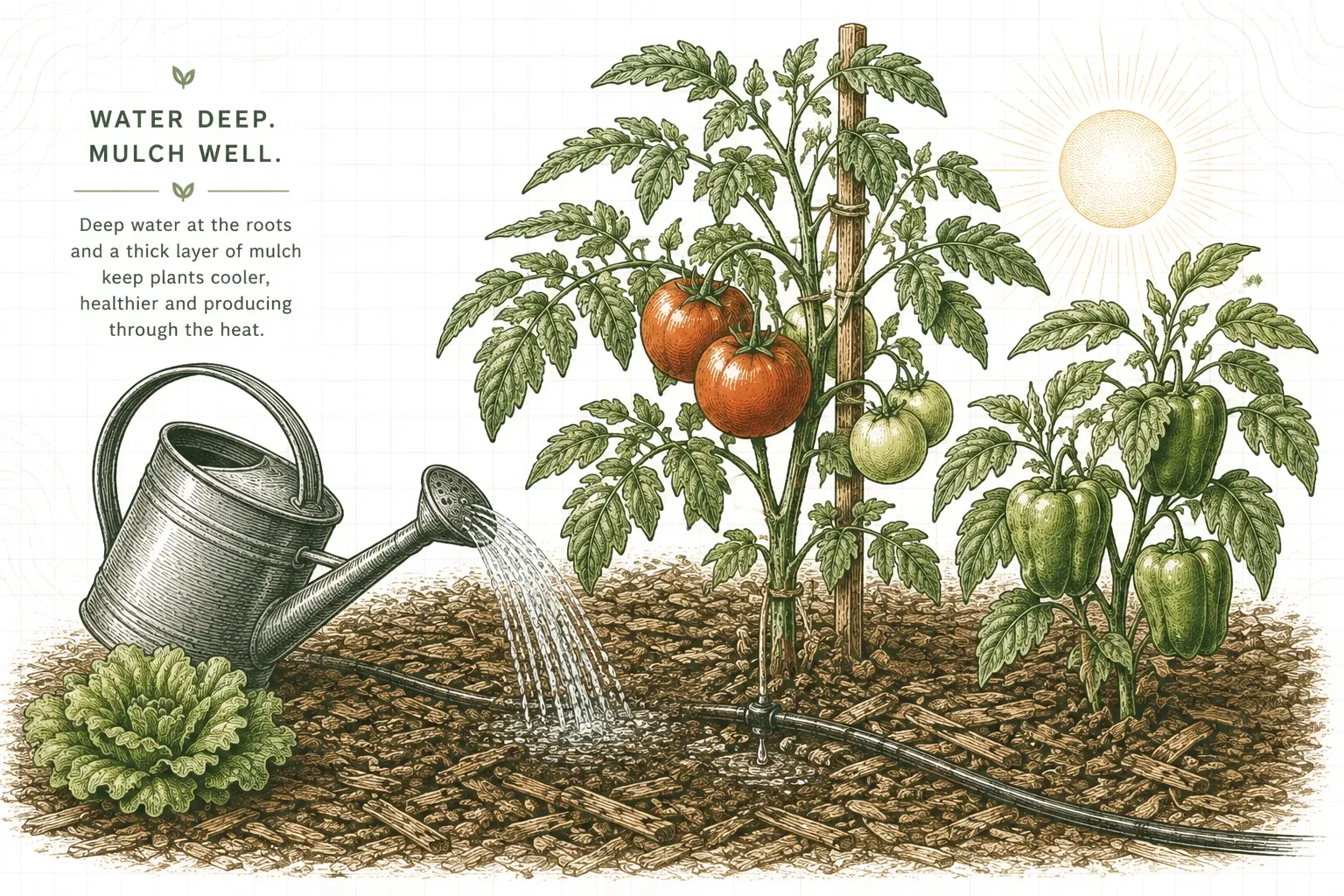
Hot weather changes how quickly soil loses moisture, so irrigation schedules need to change with conditions. UC Master Gardeners of Butte County advise morning irrigation, deep soaking rather than light sprinkling, and delivering water straight to the root zone through drip systems or soaker hoses. They also note that a stretch of extreme heat can call for more frequent watering than usual, sometimes supplemented by hand.1
The goal is not to keep the surface constantly wet. Check the soil below the mulch or top crust and water deeply enough to reach the active root zone. Containers deserve particular attention: a potted crop may need water twice a day or more during a heat wave.1
Mulch is doing more work than it looks like
If bare soil is visible around tomatoes, peppers, squash or beans, August is a good time to refresh mulch. UC drought guidance calls mulching probably the single most important thing a gardener can do to cut water use in a vegetable garden, and estimates that it reduces evaporation from the soil by up to 35 percent.2
Depth matters. UC recommends organic mulch one to three inches thick in vegetable beds, going thicker when the material is coarse.2 Keep it pulled slightly away from stems.
Do not panic when tomatoes slow down
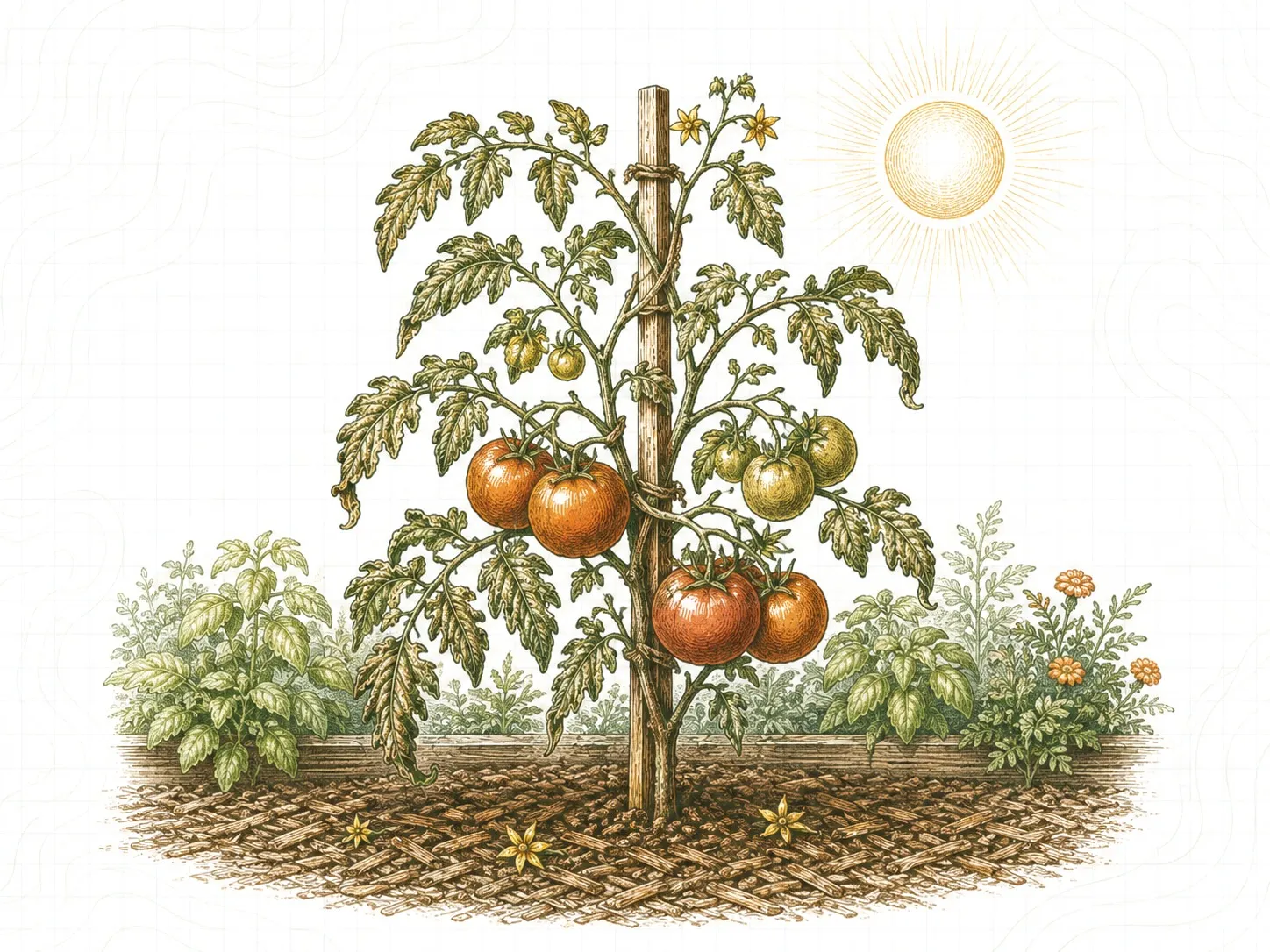
Tomatoes are sensitive to heat at the flowering stage, and a slowdown in a hot spell is often a temperature problem rather than a disease or fertilizer problem. UC IPM puts the ceiling plainly: at 100°F, tomato flowers will not set.3 Problems start well before that. UC Master Gardeners in Alameda County note that when temperatures stay above 90°F for extended periods, blossoms may drop, and ripening fruit can sunburn.4
So a temporary lull during a heat wave is worth waiting out. Keep your tomatoes evenly watered and healthy, and watch what happens as temperatures moderate.
Harvest often
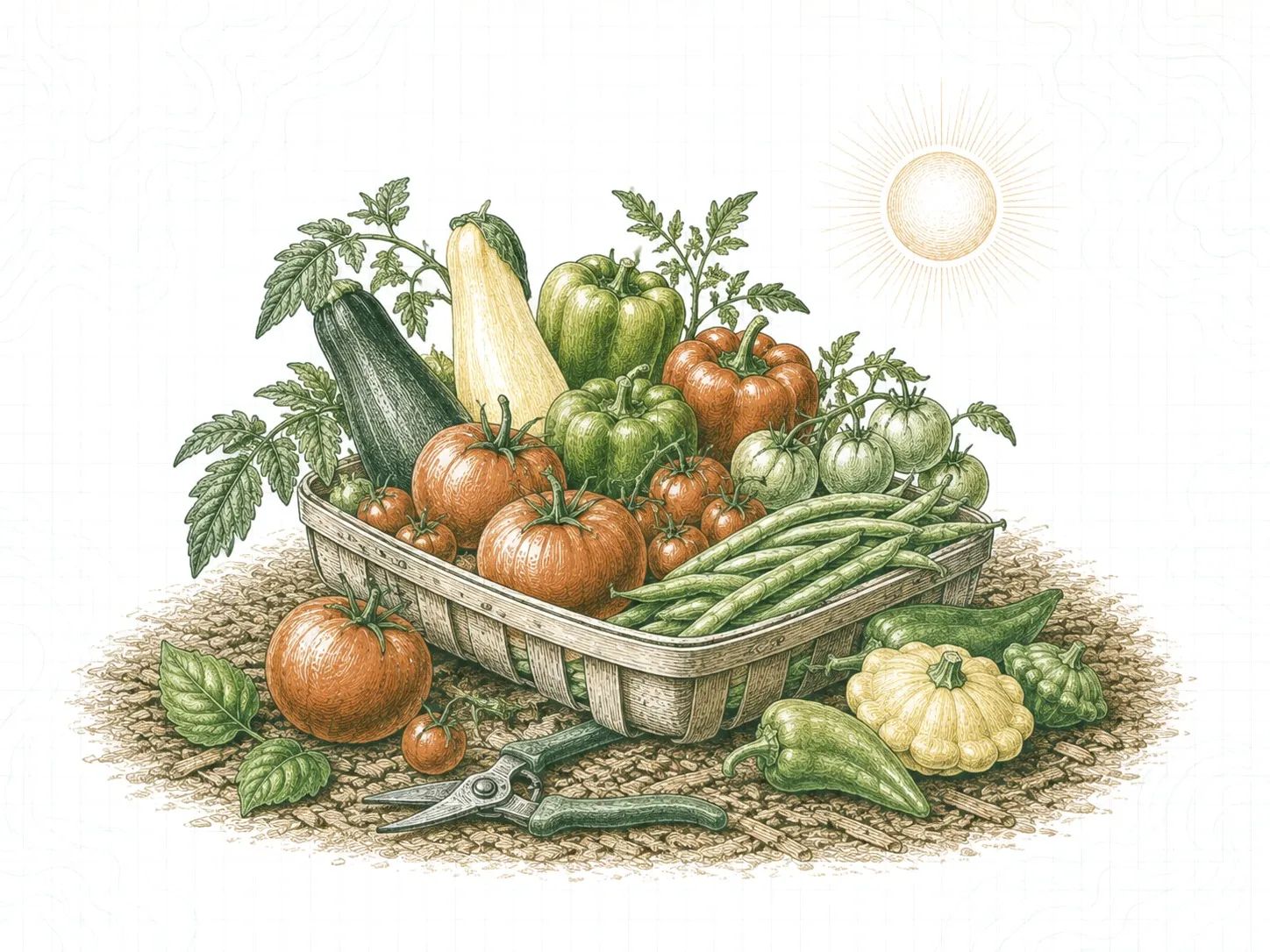
A productive crop is easier to keep productive when mature vegetables are harvested regularly. Pick beans before pods become tough, squash before fruits become oversized, and tomatoes as they reach the stage you prefer. Regular harvesting also makes it easier to spot damaged fruit, pests or branches that need attention.
Give a struggling crop a realistic test
Before pulling something out, ask three questions: Is it still producing? Is most of it healthy enough to support new growth? Is the bed space more valuable for a fall crop? A tomato with a few scorched leaves may recover. A squash vine covered in disease and no longer flowering may be occupying space you can use better.
One quick win while you are deciding: pull the weeds around anything that is struggling. In hot weather they compete directly for the water it needs.1
Start the transition before summer ends
You do not need a dramatic garden reset. Clear one section at a time. Refresh mulch. Repair irrigation. Start a tray of fall seedlings.
Use the crop guides to see when quick cool-season crops make sense where you live.
The best late-summer gardens are doing two things at once: finishing summer and quietly starting fall.
The takeaway
August gardening is less about forcing an exhausted garden through another month and more about managing the transition. Protect what is still productive, reduce heat stress, harvest regularly, and start making room for the next season. Your garden does not have to stop just because summer is getting tired.
See what comes next
Keep the summer crops that are still earning their space, then use the crop guides to see which fall crops are ready to start where you live.
This is the part we are building into plant, an iOS app that carries your garden through the season: frost alerts the morning of, a harvest journal, and a planting calendar tuned to your zone. See what we are building.
Sources
[1] UC Master Gardeners of Butte County, Does Extreme Heat Mean Taking Extreme Measures in Your Garden? The Real Dirt Blog. ucanr.edu
[2] UC Master Gardeners of Butte County, Vegetable Gardening During Drought. The Real Dirt Blog. ucanr.edu
[3] UC Statewide IPM Program, Cultural Tips for Growing Tomato. ipm.ucanr.edu
[4] UC Master Gardener Program of Alameda County, Choosing Tomato Varieties Best for Your Garden. Over the Fence Blog. ucanr.edu
All sources accessed August 18, 2026.