Today · in your zone
What's happening right now
Off-season for arugula in zone 10.
Tap to switch. plant calibrates to where you are in the journey.
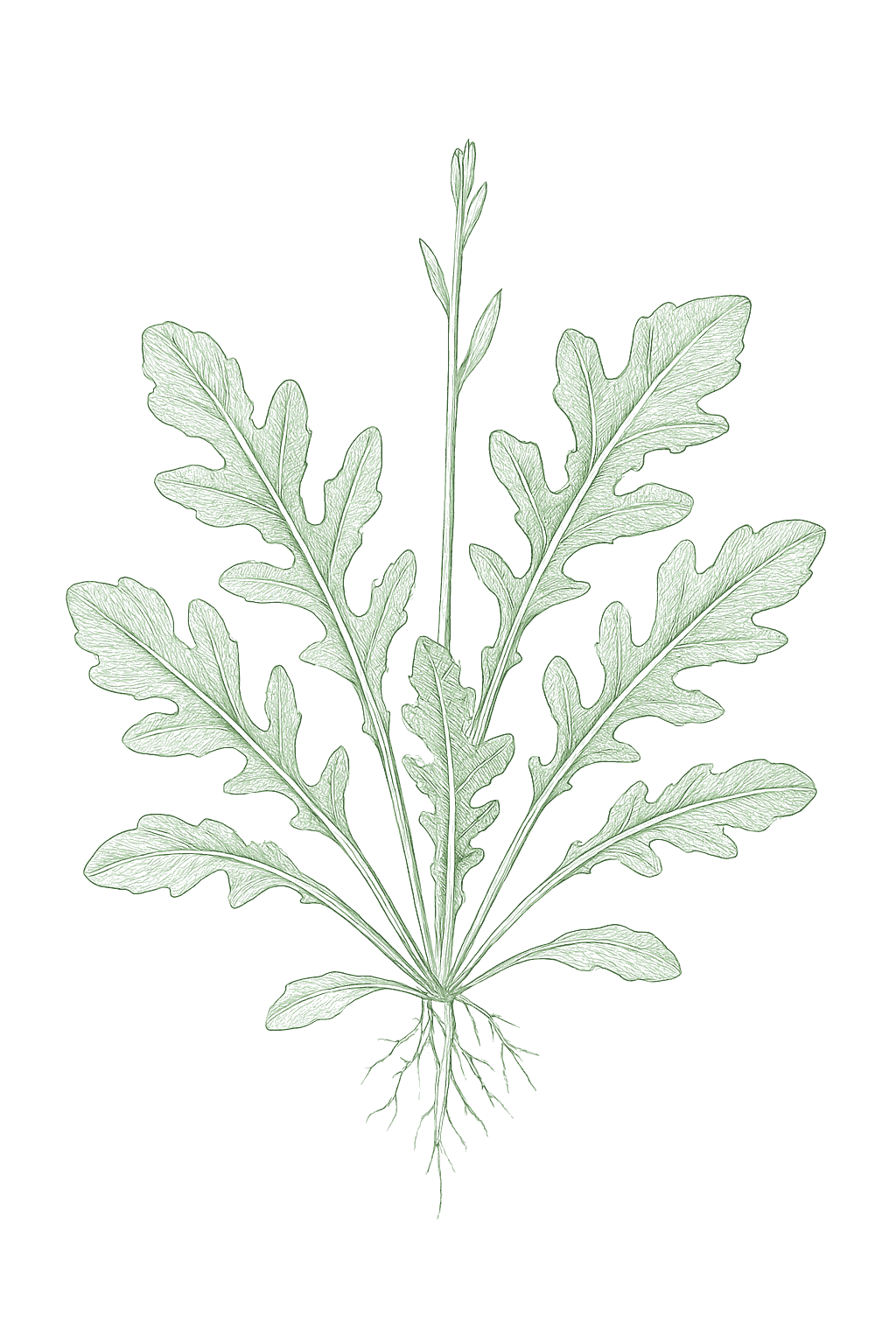
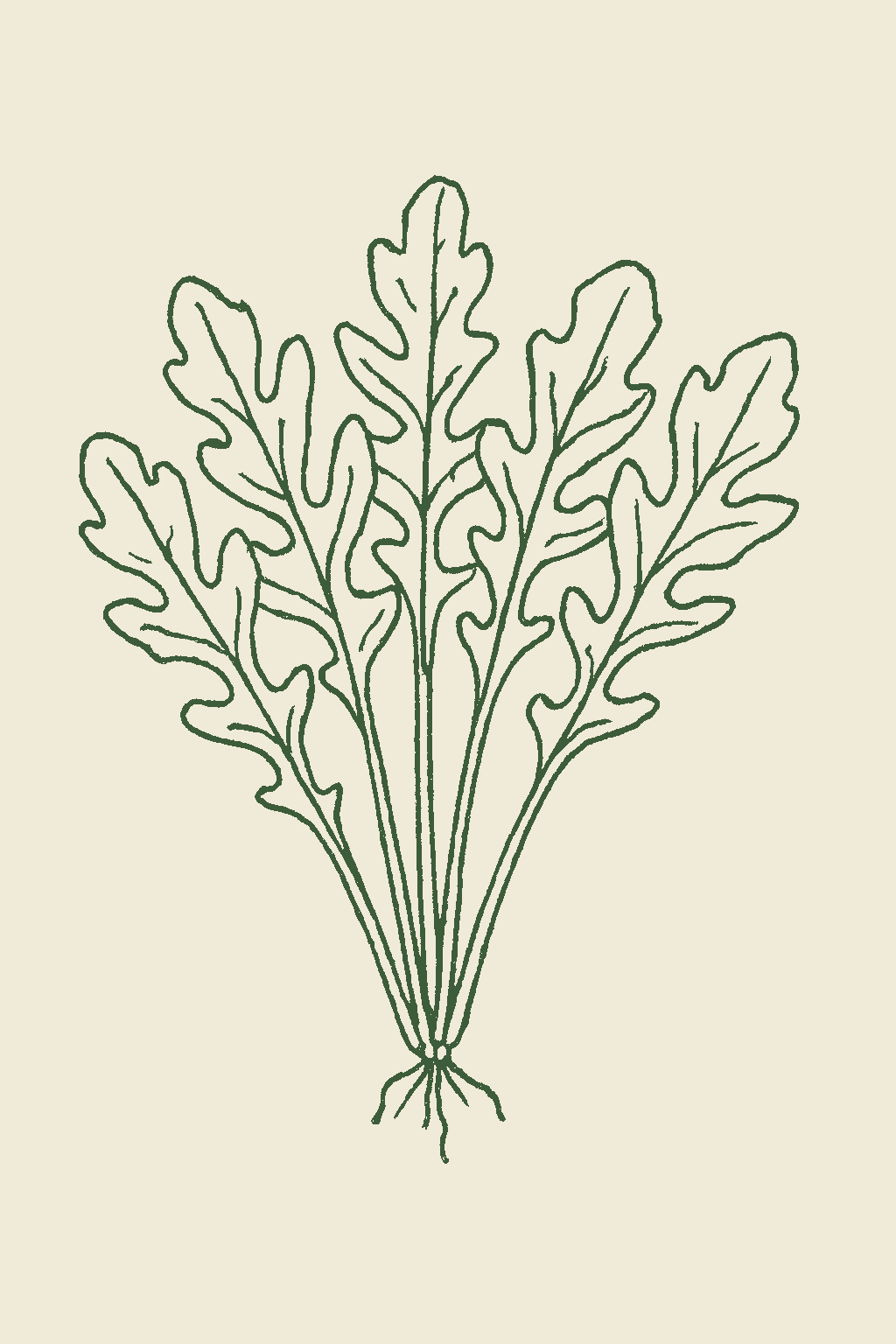
Arugula is a fast-growing, cool-season salad green with a peppery, mustardy flavor. It is one of the quickest things you can grow, giving baby leaves in about 3 weeks, and it handles frost and even grows through winter in mild areas. Its main quirk is that it bolts (sends up a flower stalk) very fast in heat and long days, and the leaves turn sharply hot and bitter when it does. So it grows best in the cool parts of the year, especially fall, and in hot places it is a fall-to-spring crop. Sow a little every couple of weeks for a steady supply. It is easy and beginner-friendly; the main pest to watch is the flea beetle, which chews tiny holes in the leaves. There is also a wild kind of arugula that is slower to bolt and even more peppery. Arugula (Eruca sativa), also called salad rocket or roquette, is a fast, cool-season leafy green in the mustard family (Brassicaceae), grown for its tender, peppery leaves. It is one of the quickest crops in the garden, giving baby leaves in about 3 weeks and full leaves in around a month, and it germinates readily even in cool soil and tolerates frost, so it can be sown very early and overwinters in mild zones. Its defining habit is how fast it bolts: heat above about 75°F and lengthening days send it to seed quickly, and the leaves turn sharply hot and bitter as it does, so the spring window is short, fall is the main crop, and in hot regions it is grown through the cool fall, winter, and spring. A separate wild or perennial rocket (Diplotaxis tenuifolia, sold as Sylvetta) is slower, more pungent, and far slower to bolt. Arugula is easy, succession-sown every 2 to 3 weeks, and a strong first-season choice, though flea beetles are its signature pest.
Off-season for arugula in zone 10.
In Zone 10, arugula can be planted October through December, skipping the summer heat. Harvest runs January through March.
Sow a little arugula every 2 to 3 weeks instead of all at once, so you always have fresh, mild leaves before it bolts. Do this in spring and again in late summer for fall. In hot areas, skip summer and keep sowing through the cool months.Arugula is one of the best succession crops: it matures so fast and bolts so readily that one sowing is gone in a few weeks. Sow a short row every 2 to 3 weeks through the cool windows, spring until heat and long days set in, and again from late summer through fall, which is the longer, more reliable run. In hot regions skip summer and succession-sow through the cool fall, winter, and spring.
In Zone 10, arugula can be planted October through January, skipping the summer heat. Harvest runs February through March.
Sow a little arugula every 2 to 3 weeks instead of all at once, so you always have fresh, mild leaves before it bolts. Do this in spring and again in late summer for fall. In hot areas, skip summer and keep sowing through the cool months.Arugula is one of the best succession crops: it matures so fast and bolts so readily that one sowing is gone in a few weeks. Sow a short row every 2 to 3 weeks through the cool windows, spring until heat and long days set in, and again from late summer through fall, which is the longer, more reliable run. In hot regions skip summer and succession-sow through the cool fall, winter, and spring.
In Zone 10, arugula can be planted October through January, skipping the summer heat. Harvest runs February through April.
Sow a little arugula every 2 to 3 weeks instead of all at once, so you always have fresh, mild leaves before it bolts. Do this in spring and again in late summer for fall. In hot areas, skip summer and keep sowing through the cool months.Arugula is one of the best succession crops: it matures so fast and bolts so readily that one sowing is gone in a few weeks. Sow a short row every 2 to 3 weeks through the cool windows, spring until heat and long days set in, and again from late summer through fall, which is the longer, more reliable run. In hot regions skip summer and succession-sow through the cool fall, winter, and spring.
In Zone 10, arugula can be planted February through September. Harvest runs April through January.
Sow a little arugula every 2 to 3 weeks instead of all at once, so you always have fresh, mild leaves before it bolts. Do this in spring and again in late summer for fall. In hot areas, skip summer and keep sowing through the cool months.Arugula is one of the best succession crops: it matures so fast and bolts so readily that one sowing is gone in a few weeks. Sow a short row every 2 to 3 weeks through the cool windows, spring until heat and long days set in, and again from late summer through fall, which is the longer, more reliable run. In hot regions skip summer and succession-sow through the cool fall, winter, and spring.
In Zone 10, arugula can be planted September through April, skipping the summer heat. Harvest runs May through February.
Sow a little arugula every 2 to 3 weeks instead of all at once, so you always have fresh, mild leaves before it bolts. Do this in spring and again in late summer for fall. In hot areas, skip summer and keep sowing through the cool months.Arugula is one of the best succession crops: it matures so fast and bolts so readily that one sowing is gone in a few weeks. Sow a short row every 2 to 3 weeks through the cool windows, spring until heat and long days set in, and again from late summer through fall, which is the longer, more reliable run. In hot regions skip summer and succession-sow through the cool fall, winter, and spring.
In Zone 10, arugula can be planted October through December, skipping the summer heat. Harvest runs January through March.
Sow a little arugula every 2 to 3 weeks instead of all at once, so you always have fresh, mild leaves before it bolts. Do this in spring and again in late summer for fall. In hot areas, skip summer and keep sowing through the cool months.Arugula is one of the best succession crops: it matures so fast and bolts so readily that one sowing is gone in a few weeks. Sow a short row every 2 to 3 weeks through the cool windows, spring until heat and long days set in, and again from late summer through fall, which is the longer, more reliable run. In hot regions skip summer and succession-sow through the cool fall, winter, and spring.
In Zone 10, arugula can be planted February through March, then again September through October, skipping the summer heat. Harvest runs March through April.
Sow a little arugula every 2 to 3 weeks instead of all at once, so you always have fresh, mild leaves before it bolts. Do this in spring and again in late summer for fall. In hot areas, skip summer and keep sowing through the cool months.Arugula is one of the best succession crops: it matures so fast and bolts so readily that one sowing is gone in a few weeks. Sow a short row every 2 to 3 weeks through the cool windows, spring until heat and long days set in, and again from late summer through fall, which is the longer, more reliable run. In hot regions skip summer and succession-sow through the cool fall, winter, and spring.
In Zone 10, arugula can be planted October through November. Harvest runs October through December.
Sow a little arugula every 2 to 3 weeks instead of all at once, so you always have fresh, mild leaves before it bolts. Do this in spring and again in late summer for fall. In hot areas, skip summer and keep sowing through the cool months.Arugula is one of the best succession crops: it matures so fast and bolts so readily that one sowing is gone in a few weeks. Sow a short row every 2 to 3 weeks through the cool windows, spring until heat and long days set in, and again from late summer through fall, which is the longer, more reliable run. In hot regions skip summer and succession-sow through the cool fall, winter, and spring.
In Zone 10, arugula can be planted September through March, skipping the summer heat. Harvest runs April through February.
Sow a little arugula every 2 to 3 weeks instead of all at once, so you always have fresh, mild leaves before it bolts. Do this in spring and again in late summer for fall. In hot areas, skip summer and keep sowing through the cool months.Arugula is one of the best succession crops: it matures so fast and bolts so readily that one sowing is gone in a few weeks. Sow a short row every 2 to 3 weeks through the cool windows, spring until heat and long days set in, and again from late summer through fall, which is the longer, more reliable run. In hot regions skip summer and succession-sow through the cool fall, winter, and spring.
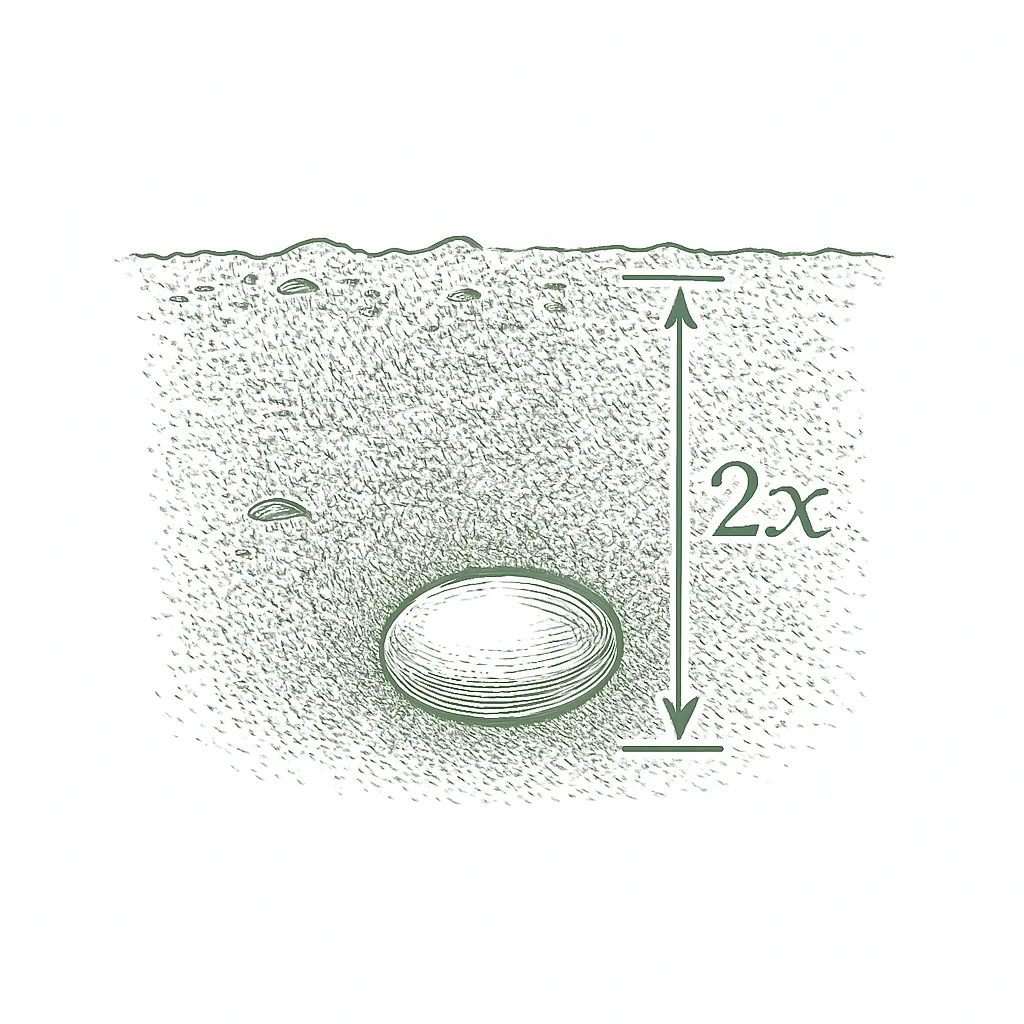
Arugula is best planted straight in the garden from seed, because it grows so fast and does not like having its roots disturbed. Sow the seeds about a quarter to half an inch deep as soon as the soil can be worked in spring, since they sprout even in cold soil and the plants handle frost. Sow again every couple of weeks, and in hot areas plant in fall through spring instead of summer, because heat keeps the seeds from sprouting well and makes the plants bolt.Arugula is almost always direct-sown, since it grows fast and resents root disturbance. Sow seed about 0.25 to 0.5 inch deep as soon as the soil can be worked in spring; it germinates readily even in cool soil, often in 5 to 7 days, and tolerates frost, so it can go in several weeks before the last frost. Sow a little more thickly than the final stand and thin to taste, eating the thinnings. In hot regions, shift sowing to fall through spring, since warm soil above about 80°F cuts germination and lengthening warm days bolt the crop.










Not sure what soil you have? Grab a small handful of damp soil from your garden bed and squeeze it. If it crumbles apart easily, it's sandy. If it holds together but breaks when you poke it, it's loam (what most vegetables want). If it stays in a hard, slippery ball, it's clay.
Arugula likes loose, rich soil with plenty of compost that holds moisture but still drains well. It is not fussy and grows in most garden soils, but steady moisture keeps the leaves mild and tender; dry, hard soil makes them hot and tough and pushes the plant to flower.
Mix 2-3 inches of compost into the top 6 inches of your bed before planting. Compost holds moisture (which sandy soil drains too fast) and adds the nutrients sandy soil tends to lack. Repeat each season. Compost breaks down over time.
Mix 2-3 inches of compost AND a few inches of coarse sand or perlite into the top 6 inches of your bed. The compost feeds the plants; the sand breaks up the clay so air and water can move through. Don't add sand without compost. It can compact like concrete.
If amending your soil sounds like too much work, or if your soil is heavy clay, full of rocks, or contaminated, build over it. A raised bed at least 12 inches deep filled with a 50/50 mix of compost and sandy loam gives you ideal growing soil with no battles. A 5-gallon container with quality potting mix does the same for one plant at a time. Both bypass your native soil entirely.
The numbers that matter, at a glance.
Arugula grows best in slightly acidic to neutral soil, about 6.0 to 7.0. A simple soil test tells you where you stand. Keeping the soil from getting too acidic also helps prevent clubroot, a cabbage-family soil disease.Aim for a soil pH of about 6.0 to 7.0; arugula is forgiving and still does fine across roughly 5.5 to 7.5. Clemson lists 6.0 to 6.5 for the leafy greens in its arugula fact sheet. As with other brassicas, holding the soil toward neutral rather than strongly acidic also helps suppress clubroot, so a grower with clubroot history should lean to the high end.
Arugula grows fast and likes a little nitrogen for tender green leaves. Mix some compost or fertilizer into the soil before planting, then give it one light feeding a couple of weeks after the seeds come up. Because the crop is so quick, you usually do not need to feed it again.Arugula is a fast leafy brassica that runs on nitrogen, but the crop is so quick that one light feeding is usually plenty. Work compost or a balanced fertilizer in before sowing, then side-dress lightly with nitrogen about 2 to 3 weeks after the seedlings emerge to push tender, mild leaves. Avoid heavy nitrogen late, since lush growth draws aphids and flea beetles and does not improve a crop you will cut within a few weeks.
Use a nitrogen-rich feed such as blood meal or a 21-0-0 fertilizer once, when the plants are a couple of weeks old.High N for fast leafy growth; a light side-dress of 21-0-0 or blood meal 2 to 3 weeks after emergence. No phosphorus or potassium needed beyond a soil-test baseline; do not overfeed a 3-to-4-week crop.
Arugula is small, fast, and easygoing, so it tucks in between slower crops. It grows well next to lettuce and other quick greens, bush beans, and aromatic herbs like dill, and alliums such as onions. The main thing is to keep it away from other cabbage-family plants, which share its pests and diseases, and to watch for flea beetles, which love it. Most arugula companion pairings rest on space, timing, and tradition rather than measured effects. The practical ones are structural: arugula is quick and shallow-rooted, so it interplants with lettuce and other fast greens and tucks beside legumes and aromatic herbs. Aromatic herbs and alliums are the traditional scent-based deterrents for the cabbage-family pests arugula shares. The well-grounded caution is to separate arugula from other brassicas, which share clubroot and the whole cole-crop pest complex, a rotation and disease principle more than a tested adjacency effect; arugula is also a flea-beetle magnet, sometimes deliberately used as a trap crop near choicer brassicas.
Arugula is ready to pick as soon as the leaves are big enough, often baby leaves in about 3 weeks and full leaves in around a month. Take the outer leaves a few at a time, or cut the whole patch about an inch above the soil so it grows back. Pick young and in the cool morning, and harvest it all before it flowers (bolts), because the leaves get very sharp and bitter then.Arugula is ready as soon as the leaves are big enough to use, often baby leaf at 2 to 3 weeks and full leaf around 30 to 40 days. Cut the outer leaves cut-and-come-again, or shear the whole patch about an inch above the crown and let it regrow for a second or third cutting. Pick young and in the cool morning, and crop fast as the weather warms, since the leaves turn sharply hot and bitter once the plant bolts.
Each arugula plant gives a small bunch of leaves, so it is grown in patches or rows rather than as one big plant. A patch gives a few cuttings before it bolts, so sow more every couple of weeks.A single arugula plant yields a small rosette of leaves over a few weeks, so the crop is grown in dense patches or rows rather than per plant. Cut as baby leaf or cut-and-come-again, a bed gives two or three cuttings before heat or bolt ends it; the productive window is bounded by temperature, not a fixed calendar.
Arugula produces the most in the cool weather of fall and early spring. A spring patch gives a couple of good weeks and then bolts, but a fall crop lasts longer and can carry into winter under a cover.Production peaks in the cool weeks of fall and early spring. A spring patch produces hard for a couple of weeks and then ends abruptly at bolt, while the fall crop, under cooling weather and shortening days, holds longer and, with cover, into winter. Arugula is one of the easiest, fastest crops for a beginner, with baby leaves in about 3 weeks. The trick is to sow a little every couple of weeks, pick it young, and grow it in cool weather, especially fall, so it does not bolt before you get to eat it.Arugula is one of the fastest, most forgiving crops for a first season: baby leaves in about 3 weeks from sowing and almost nothing to go wrong if you sow into cool weather. The key to total yield is frequent succession sowing and picking young, and leaning on the fall crop, since a spring patch sown too late bolts before it produces much.
For a quick, peppery salad green, grow standard salad arugula like Roquette or the milder Astro, which are fast but flower quickly in heat. For hot weather or a longer-lasting patch, try wild arugula (sold as Sylvetta), which is slower to bolt, more intense in flavor, and can come back year after year in mild areas. Cut-leaf kinds like Surrey are great for snipping baby leaves again and again.Match the type to the slot. Standard salad rocket (Eruca sativa, Roquette and the like) is fastest and most pungent but bolts quickly in heat, so it suits the cool shoulders and baby-leaf cutting. Milder, broad-leaf selections like Astro give a gentler bite and quick baby leaf. For warm weather and a longer stand, wild or perennial rocket (Diplotaxis tenuifolia, sold as Sylvetta or wild arugula) is slower-growing, far slower to bolt, and more intensely flavored, and it can persist as a short-lived perennial in mild climates. Cut-leaf types like Surrey and Esmee are bred for tidy, regrowing baby-leaf patches.
Salads · 10m · Serves 2
Try not to grow arugula or other cabbage-family plants (broccoli, kale, cabbage, mustard, radishes) in the same spot more than about once every 3 years. They share pests like flea beetles and a soil disease called clubroot that build up when these crops keep coming back. Plant arugula after peas, beans, onions, squash, or tomatoes instead.Rotate arugula and its brassica relatives so they do not return to the same ground for about 3 years. The cabbage-family pest complex (flea beetles above all, plus cabbage caterpillars and aphids) and the soilborne clubroot organism build up where brassicas repeat, and arugula's quick succession plantings make it easy to keep flea beetles cycling in one bed. Follow brassicas with legumes, alliums, cucurbits, or nightshades, and keep the soil near neutral to help suppress clubroot.
The plant app sends a timely reminder at every critical moment of your arugula season. The wording adjusts to whichever you pick: beginner or seasoned. Here are three you'll see in Zone 10.
plant sends the right notification at exactly the right moment, for your zone, your weather, your crops. Founding members lock the rate forever.
We're building this guide with real growers. Got a question we missed? Ask here. We read every one and add the best answers right to this page.
Learned something the hard way? Pass it on. Real growers' tips make this guide better for the next person, and we credit you by name when yours goes live.
If you've grown this crop and you see a date, a temperature, a companion claim, or a recommendation that doesn't match your experience, tell us. Real growers' corrections make this guide better for the next person.
Every date, temperature, spacing, and recommendation on this page is sourced from university cooperative extension publications, peer-reviewed agricultural research, NOAA climate data, and direct extension calendars. Where claims are softer (traditional gardening wisdom not formally documented), we say so.
Spot a data point that doesn't match your experience? Submit a correction; accepted corrections earn full author credit on the page.
Zone-aware seasonal nudges, what's worth planting now, and the occasional recipe from the harvest. No spam, ever.