Pick your zone and the dates re-calibrate.
The Guide Crops Vol. 003

Arugula

in Zone 12, this week

Arugula is a fast-growing, cool-season salad green with a peppery, mustardy flavor. It is one of the quickest things you can grow, giving baby leaves in about 3 weeks, and it handles frost and even grows through winter in mild areas. Its main quirk is that it bolts (sends up a flower stalk) very fast in heat and long days, and the leaves turn sharply hot and bitter when it does. So it grows best in the cool parts of the year, especially fall, and in hot places it is a fall-to-spring crop. Sow a little every couple of weeks for a steady supply. It is easy and beginner-friendly; the main pest to watch is the flea beetle, which chews tiny holes in the leaves. There is also a wild kind of arugula that is slower to bolt and even more peppery. Arugula (Eruca sativa), also called salad rocket or roquette, is a fast, cool-season leafy green in the mustard family (Brassicaceae), grown for its tender, peppery leaves. It is one of the quickest crops in the garden, giving baby leaves in about 3 weeks and full leaves in around a month, and it germinates readily even in cool soil and tolerates frost, so it can be sown very early and overwinters in mild zones. Its defining habit is how fast it bolts: heat above about 75°F and lengthening days send it to seed quickly, and the leaves turn sharply hot and bitter as it does, so the spring window is short, fall is the main crop, and in hot regions it is grown through the cool fall, winter, and spring. A separate wild or perennial rocket (Diplotaxis tenuifolia, sold as Sylvetta) is slower, more pungent, and far slower to bolt. Arugula is easy, succession-sown every 2 to 3 weeks, and a strong first-season choice, though flea beetles are its signature pest.
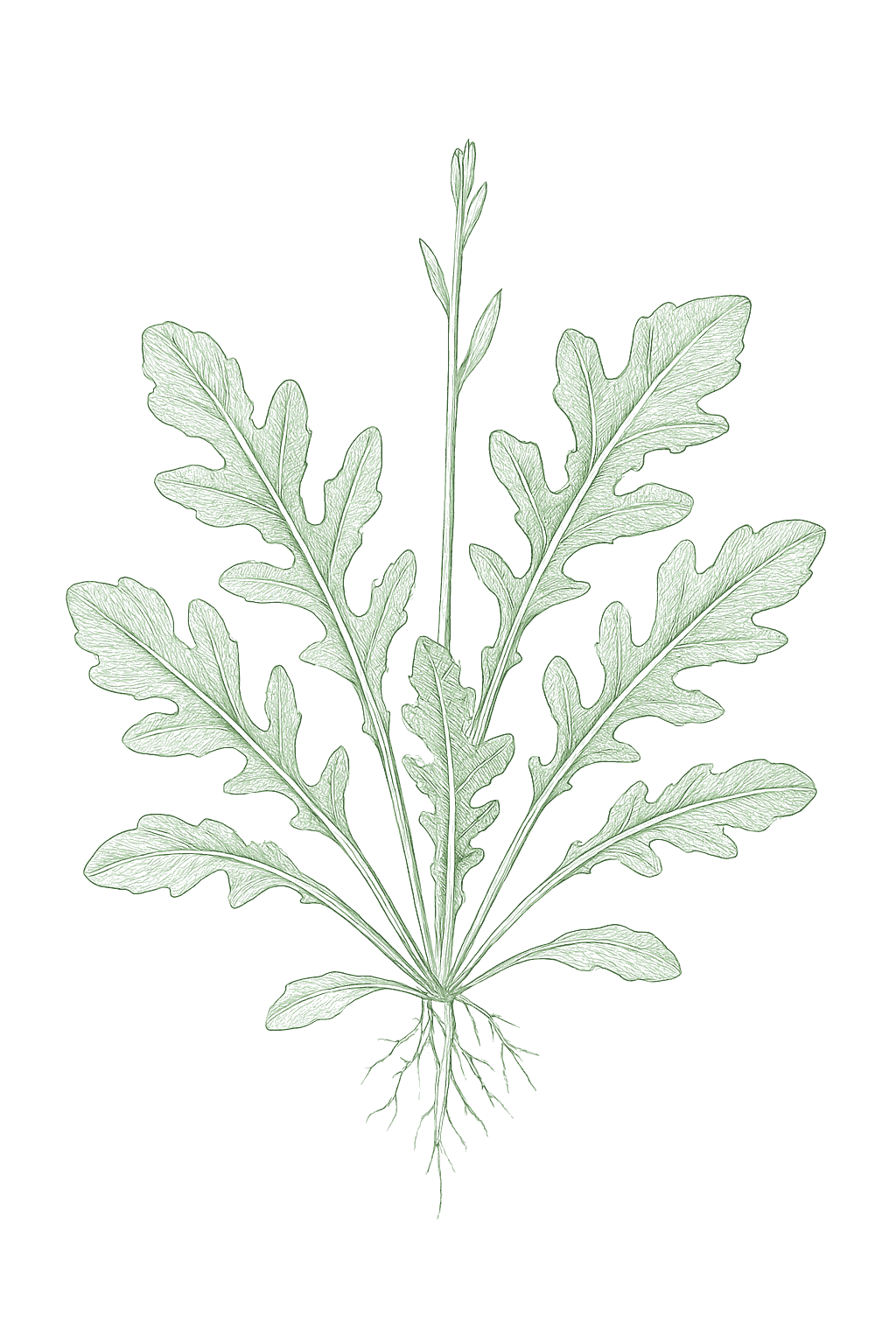
Arugula mature plant
Fig. 01 · Arugula, mature Zone 12
Mature in
20-40d
from transplant
Sunlight
Full sun to partial shade
4-8 hrs daily
Water
Regular
1.5 inches / week
Spacing
1-3"
between plants
Soil pH
6-7
slightly acidic
Today · in your zone

What's happening right now

July 24 · Zone 12 · Stage 01 · Germination

Off-season for arugula in zone 12.

The season at a glance

Planting calendar

In Zone 12, arugula can be planted October through December, skipping the summer heat. Harvest runs January through March.

Jan
Feb
Mar
Apr
May
Jun
Jul
Aug
Sep
Oct
Nov
Dec
plant
too late
too late
too late
too hot
too hot
too hot
too hot
too hot
too hot
plant
plant
plant
harvest
harvest
harvest
harvest
indoors
plant out
harvest
Above-ground cropBest planted on a none moon
Seasoned
Stagger your sowings

Succession planting

Sow a little arugula every 2 to 3 weeks instead of all at once, so you always have fresh, mild leaves before it bolts. Do this in spring and again in late summer for fall. In hot areas, skip summer and keep sowing through the cool months.Arugula is one of the best succession crops: it matures so fast and bolts so readily that one sowing is gone in a few weeks. Sow a short row every 2 to 3 weeks through the cool windows, spring until heat and long days set in, and again from late summer through fall, which is the longer, more reliable run. In hot regions skip summer and succession-sow through the cool fall, winter, and spring.

Every 2 weeks · sow a short new rowUp to 12 sowings a seasonToo hot to sow midsummer
Jan
Feb
Mar
Apr
May
Jun
Jul
Aug
Sep
Oct
Nov
Dec
sow
harvest
keep sowing
too hot
continuous harvest
The season, mapped

Seed to garden

Arugula is best planted straight in the garden from seed, because it grows so fast and does not like having its roots disturbed. Sow the seeds about a quarter to half an inch deep as soon as the soil can be worked in spring, since they sprout even in cold soil and the plants handle frost. Sow again every couple of weeks, and in hot areas plant in fall through spring instead of summer, because heat keeps the seeds from sprouting well and makes the plants bolt.Arugula is almost always direct-sown, since it grows fast and resents root disturbance. Sow seed about 0.25 to 0.5 inch deep as soon as the soil can be worked in spring; it germinates readily even in cool soil, often in 5 to 7 days, and tolerates frost, so it can go in several weeks before the last frost. Sow a little more thickly than the final stand and thin to taste, eating the thinnings. In hot regions, shift sowing to fall through spring, since warm soil above about 80°F cuts germination and lengthening warm days bolt the crop.


Start method
Direct
Soil temp
40-75°F
From seed to fruit

The growing journey

Stage 01 · Germination
01
Germination
Days 3-8 · current stage
The first pair of little rounded leaves poking up. Arugula sprouts fast, often in under a week, even in cool soil.The first pair of rounded seed leaves pushing up through the soil. Arugula comes up fast, often in 3 to 7 days, even in cool soil, and germination is usually even if the surface has not dried out.
Keep the soil surface evenly moist but not soggy until the seedlings are up. Arugula sprouts well in cool soil but badly in hot soil, so sow in spring or fall, not the heat of summer.Keep the soil surface consistently moist but never waterlogged until seedlings are up. Arugula germinates well in cool soil but poorly in warm soil above about 80°F, so early-spring and fall sowings come up best.
FROM PLANT · Arugula sprouts quickly, even in cold soil, but not in hot soil, so do not sow in the heat of summer. Sow it shallow and a bit thick, then thin the seedlings out, eating the ones you pull.Arugula germinates fast and in cool soil, but germination drops off sharply above about 80°F, which is why midsummer sowings fail. Sow shallowly, a little thicker than your final stand, and thin to taste.
02
Seedling
Days 5-18
The first true leaves, which look like tiny versions of the grown arugula leaf. Now you can thin them.The first true leaves, lobed little versions of the grown leaf. Now you can tell seedlings from weeds and start thinning.
Thin the seedlings, leaving them close for baby leaves or farther apart for bigger plants, and eat the ones you pull. Watch for tiny holes from flea beetles, and use a row cover if they are bad.Thin to taste, dense at 1 to 3 inches for baby leaf or 4 to 6 inches for full plants, and eat the thinnings. Watch for flea beetles, which hit small seedlings hardest; row cover from sowing is the best defense.
FROM PLANT · Flea beetles love young arugula and chew tiny holes all over it. Covering the bed with a light row cover from the day you sow is the best way to stop them, and keeping the plants growing fast helps too.Flea beetles target young arugula hard, riddling seedlings with shot-holes. A floating row cover from the day you sow is the single most effective defense; keep seedlings growing fast so they outrun the damage.
03
Established
Days 18-35
Leaves big enough to use and the patch looking full, before any flower stalk appears. This is the productive stretch.Leaves reaching a useful size and the patch looking full, well before any central stalk rises. This is the short, productive window for a fast leaf crop.
Start picking the outer leaves or snipping baby leaves now. Picking often keeps new leaves coming. Keep the water steady so it does not bolt, and pick faster when it warms up.Start cutting outer leaves or shearing baby leaf now rather than waiting; regular light cutting keeps new growth coming. Keep moisture even to hold off bolt, and crop faster as the weather warms.
FROM PLANT · Pick arugula young for the mildest taste. Bigger or heat-stressed leaves get a lot spicier. Keep the water steady so the leaves stay mild and the plants do not bolt as fast.Cut arugula young for the mildest flavor: leaves picked small are nutty and gentle, while older leaves and any heat stress turn them sharply pungent. Steady moisture keeps the bite mild and delays bolt.
04
Harvest
Days 20-45
Full, tender leaves and no flower stalk in the middle yet. Once a stalk appears the good window is closing fast.Full, tender leaves with no central flower stalk forming. Once a stalk appears the eating window is closing fast, since arugula bolts quickly.
Take the outer leaves, or cut the whole patch about an inch above the soil so it regrows. Pick young and in the cool morning, and clear it as soon as you see a flower stalk.Cut-and-come-again: take outer leaves or shear the patch an inch above the crown for a second or third cutting. Pick young and in the cool morning, and clear a patch as soon as it shows a stalk.
FROM PLANT · Cut a baby-leaf patch about an inch above the soil and it grows back for another cutting or two. Pick in the cool morning and get it in the fridge right away, because it wilts quickly.Shear a baby-leaf patch about an inch above the crown and it will regrow for a second and often third cutting; pick in the cool morning and refrigerate at once, since arugula wilts fast.
05
Bolting
Days 30-55
A stalk shooting up from the middle, with the new leaves turning very sharp and bitter. This is bolting, and in arugula it happens fast.A central stalk shooting up, the newer leaves narrowing and turning sharply hot and bitter. This is bolting, the plant shifting to flower and seed; it comes on fast in arugula.
Pick everything good right away, since the leaves get sharper by the day. The flowers are edible and peppery, so you can enjoy them, and arugula often drops seed and comes back on its own.Harvest everything worth eating at once, since the flavor turns quickly. The flowers are edible and peppery; leave one plant to bloom for pollinators or to self-sow, then pull the rest and resow or give the space to a warm-season crop.
FROM PLANT · Arugula bolts fast and the leaves get very sharp, so just pick the patch when you see a flower stalk. The flowers are edible and peppery, and the plant often reseeds itself. A fall crop bolts much less than a spring one.Bolting arrives fast in arugula and the leaves turn harshly hot, so do not fight it: harvest the patch at the first stalk, enjoy the edible peppery flowers, and let one plant self-sow. A fall sowing bolts far less than spring.
Beginner
Know your soil

Your soil

Identify yours

Not sure what soil you have? Grab a small handful of damp soil from your garden bed and squeeze it. If it crumbles apart easily, it's sandy. If it holds together but breaks when you poke it, it's loam (what most vegetables want). If it stays in a hard, slippery ball, it's clay.

What this crop wants

Arugula likes loose, rich soil with plenty of compost that holds moisture but still drains well. It is not fussy and grows in most garden soils, but steady moisture keeps the leaves mild and tender; dry, hard soil makes them hot and tough and pushes the plant to flower.

If your soil doesn't match

You have sandy soil

Mix 2-3 inches of compost into the top 6 inches of your bed before planting. Compost holds moisture (which sandy soil drains too fast) and adds the nutrients sandy soil tends to lack. Repeat each season. Compost breaks down over time.

You have clay soil

Mix 2-3 inches of compost AND a few inches of coarse sand or perlite into the top 6 inches of your bed. The compost feeds the plants; the sand breaks up the clay so air and water can move through. Don't add sand without compost. It can compact like concrete.

Containers and raised beds

If amending your soil sounds like too much work, or if your soil is heavy clay, full of rocks, or contaminated, build over it. A raised bed at least 12 inches deep filled with a 50/50 mix of compost and sandy loam gives you ideal growing soil with no battles. A 5-gallon container with quality potting mix does the same for one plant at a time. Both bypass your native soil entirely.

Learn more about your soil
The specs

Care guide

The numbers that matter, at a glance.

Sunlight
Full sun to partial shade · 4-8 hrs/day
Water
Regular
Spacing
1-3 inches
Soil
loam, sandy loam
Days to maturity
20-40 days from transplant
Soil pH
6 to 7
Container OK?
Yes · 1+ gal pot
Germination temp
40-75°F
Soil chemistry

Soil pH for arugula

Preferred
6 to 7
Tolerated
5.5 to 7.5

Arugula grows best in slightly acidic to neutral soil, about 6.0 to 7.0. A simple soil test tells you where you stand. Keeping the soil from getting too acidic also helps prevent clubroot, a cabbage-family soil disease.Aim for a soil pH of about 6.0 to 7.0; arugula is forgiving and still does fine across roughly 5.5 to 7.5. Clemson lists 6.0 to 6.5 for the leafy greens in its arugula fact sheet. As with other brassicas, holding the soil toward neutral rather than strongly acidic also helps suppress clubroot, so a grower with clubroot history should lean to the high end.

Verified · 2 sources View
Steady hand on the hose

Watering

When & how much
Frequency
Water regularly so the soil stays evenly moist, roughly 1 to 1.5 inches a week.About 1 to 1.5 inches per week, kept even; arugula is shallow-rooted and bolts faster and turns hotter under drought stress.
Amount
Aim for about 1 to 1.5 inches of water a week, a bit more when it is warm.Roughly 1 to 1.5 inches per week, more in warm, dry spells.
Method
Water at the base of the plants rather than over the leaves, which helps prevent leaf diseases.Water at the soil line with drip or a soaker hose; keeping the foliage dry checks downy mildew and white rust on a crop you eat raw.
Signs of trouble
Too much water
Lower leaves yellow, seedlings rot at the base, and leaves get moldy in soggy, crowded beds.Yellowing lower leaves, damping-off in seedlings, and downy mildew in crowded, constantly wet stands.
Too little water
Wilting leaves that turn extra spicy and tough, and a plant that bolts (flowers) sooner than it should.Wilting, slowed growth, hotter and tougher leaves, and faster bolting; drought stress both sharpens the flavor and triggers the seedstalk.
Feeding rhythm

Feeding

Frequency
once or twice per crop
Type
Nitrogen-rich fertilizer
When to start
a little at sowing, then a light side-dress 2 to 3 weeks after the seedlings are up

Arugula grows fast and likes a little nitrogen for tender green leaves. Mix some compost or fertilizer into the soil before planting, then give it one light feeding a couple of weeks after the seeds come up. Because the crop is so quick, you usually do not need to feed it again.Arugula is a fast leafy brassica that runs on nitrogen, but the crop is so quick that one light feeding is usually plenty. Work compost or a balanced fertilizer in before sowing, then side-dress lightly with nitrogen about 2 to 3 weeks after the seedlings emerge to push tender, mild leaves. Avoid heavy nitrogen late, since lush growth draws aphids and flea beetles and does not improve a crop you will cut within a few weeks.

N · P · K = 21-0-0

Use a nitrogen-rich feed such as blood meal or a 21-0-0 fertilizer once, when the plants are a couple of weeks old.High N for fast leafy growth; a light side-dress of 21-0-0 or blood meal 2 to 3 weeks after emergence. No phosphorus or potassium needed beyond a soil-test baseline; do not overfeed a 3-to-4-week crop.

Try Blood meal, 21-0-0, or a balanced vegetable fertilizer
Who grows well together

Companion planting

Arugula is small, fast, and easygoing, so it tucks in between slower crops. It grows well next to lettuce and other quick greens, bush beans, and aromatic herbs like dill, and alliums such as onions. The main thing is to keep it away from other cabbage-family plants, which share its pests and diseases, and to watch for flea beetles, which love it. Most arugula companion pairings rest on space, timing, and tradition rather than measured effects. The practical ones are structural: arugula is quick and shallow-rooted, so it interplants with lettuce and other fast greens and tucks beside legumes and aromatic herbs. Aromatic herbs and alliums are the traditional scent-based deterrents for the cabbage-family pests arugula shares. The well-grounded caution is to separate arugula from other brassicas, which share clubroot and the whole cole-crop pest complex, a rotation and disease principle more than a tested adjacency effect; arugula is also a flea-beetle magnet, sometimes deliberately used as a trap crop near choicer brassicas.

Other
Bush beans
Beans add a little nitrogen to the soil that the leafy arugula can use, and the two share a cool-to-mild season without competing much.A legume interplant on nitrogen and structure: beans fix a little nitrogen the leafy arugula draws on, and the quick arugula uses the ground between young bean plants. Sound space and timing logic rather than a measured arugula effect. Traditional
Lettuce and other quick greens
Lettuce grows fast and low like arugula, so you can sow them together to fill a salad bed, and both like the same cool weather.Arugula and lettuce share a cool season, a shallow root zone, and a salad bed, so they interplant efficiently and are cut young together. A space-and-timing pairing, not a documented growth boost; the two share no major pest. Traditional
Dill and aromatic herbs
Strong-smelling herbs like dill are a classic neighbor for cabbage-family plants; their scent is said to confuse pests, and their flowers bring in helpful insects.Aromatic umbels like dill draw the parasitoid wasps and predators that attack brassica aphids and caterpillars, and extension work pairing umbels with cole crops has shown reduced damage. Let some flower nearby; a partial-mechanism aid, not a measured arugula-specific effect. Research-backed
Onions and other alliums
Onions are a traditional neighbor for cabbage-family plants; their strong smell is thought to help put off the pests that hunt by scent.Alliums are the classic scent-based brassica companion, their pungency thought to mask the crop from cabbage pests that locate hosts partly by smell. Shallow-rooted and undemanding, they tuck around arugula without competing. Traditional with partial mechanistic support, not an arugula-specific measured effect. Traditional
Keep apart from
Other brassicas Keep arugula away from other cabbage-family plants like broccoli, cabbage, kale, mustard, and radishes. They share the same pests and diseases, so planting them together makes flea beetles and clubroot worse.Planting arugula shoulder to shoulder with its brassica relatives, broccoli, cabbage, kale, mustard, radish, concentrates the shared cabbage-family pests, flea beetles above all, plus cabbage caterpillars and aphids, and repeated same-family planting builds soilborne clubroot. Spread brassicas out and rotate where they grow. Because arugula is a strong flea-beetle draw, some growers exploit this and use it as a sacrificial trap crop away from choicer brassicas. Well-grounded
Provenance tagged inline · see methodology for the labeling system Key
Harvest signals

When to pick

Arugula is ready to pick as soon as the leaves are big enough, often baby leaves in about 3 weeks and full leaves in around a month. Take the outer leaves a few at a time, or cut the whole patch about an inch above the soil so it grows back. Pick young and in the cool morning, and harvest it all before it flowers (bolts), because the leaves get very sharp and bitter then.Arugula is ready as soon as the leaves are big enough to use, often baby leaf at 2 to 3 weeks and full leaf around 30 to 40 days. Cut the outer leaves cut-and-come-again, or shear the whole patch about an inch above the crown and let it regrow for a second or third cutting. Pick young and in the cool morning, and crop fast as the weather warms, since the leaves turn sharply hot and bitter once the plant bolts.

Verified · 2 sources View
Yield

What to expect

Each arugula plant gives a small bunch of leaves, so it is grown in patches or rows rather than as one big plant. A patch gives a few cuttings before it bolts, so sow more every couple of weeks.A single arugula plant yields a small rosette of leaves over a few weeks, so the crop is grown in dense patches or rows rather than per plant. Cut as baby leaf or cut-and-come-again, a bed gives two or three cuttings before heat or bolt ends it; the productive window is bounded by temperature, not a fixed calendar.

Arugula produces the most in the cool weather of fall and early spring. A spring patch gives a couple of good weeks and then bolts, but a fall crop lasts longer and can carry into winter under a cover.Production peaks in the cool weeks of fall and early spring. A spring patch produces hard for a couple of weeks and then ends abruptly at bolt, while the fall crop, under cooling weather and shortening days, holds longer and, with cover, into winter. Arugula is one of the easiest, fastest crops for a beginner, with baby leaves in about 3 weeks. The trick is to sow a little every couple of weeks, pick it young, and grow it in cool weather, especially fall, so it does not bolt before you get to eat it.Arugula is one of the fastest, most forgiving crops for a first season: baby leaves in about 3 weeks from sowing and almost nothing to go wrong if you sow into cool weather. The key to total yield is frequent succession sowing and picking young, and leaning on the fall crop, since a spring patch sown too late bolts before it produces much.

What changes yield
Timing: a crop grown in the cool shoulders yields well; one caught by heat and long days bolts before producing. Fall is the most reliable.Variety: slower-bolting selections and wild (Diplotaxis) rocket extend the productive window in warmth.Even moisture: steady water keeps leaves mild, tender, and slow to bolt; drought sharpens the flavor and triggers the seedstalk.Frequent cutting: picking young and often, and succession sowing every 2 to 3 weeks, keeps tender leaves coming.
Verified · 2 sources View
Pick your variety

Recommended varieties

For a quick, peppery salad green, grow standard salad arugula like Roquette or the milder Astro, which are fast but flower quickly in heat. For hot weather or a longer-lasting patch, try wild arugula (sold as Sylvetta), which is slower to bolt, more intense in flavor, and can come back year after year in mild areas. Cut-leaf kinds like Surrey are great for snipping baby leaves again and again.Match the type to the slot. Standard salad rocket (Eruca sativa, Roquette and the like) is fastest and most pungent but bolts quickly in heat, so it suits the cool shoulders and baby-leaf cutting. Milder, broad-leaf selections like Astro give a gentler bite and quick baby leaf. For warm weather and a longer stand, wild or perennial rocket (Diplotaxis tenuifolia, sold as Sylvetta or wild arugula) is slower-growing, far slower to bolt, and more intensely flavored, and it can persist as a short-lived perennial in mild climates. Cut-leaf types like Surrey and Esmee are bred for tidy, regrowing baby-leaf patches.

Astro
A fast, broad-leaved salad rocket with a milder, less aggressive bite and good cold tolerance; quick to baby leaf and a dependable beginner choice.
Roquette (Rocket)
The classic standard Eruca sativa salad rocket: deeply lobed leaves with the full nutty-peppery pungency; fast but bolts readily in heat.
Sylvetta (wild rocket)
Wild or perennial rocket, a different species (Diplotaxis tenuifolia) with small, finely cut leaves, an intense pungent flavor, slower growth, and much slower bolting; short-lived perennial in mild climates and the best pick for heat and longevity.
Surrey
A uniform cut-leaf salad rocket selected for baby-leaf production, with good regrowth for repeated cuttings.
Esmee
A fast oak-leaf-type rocket with deeply lobed, tender leaves and a clean peppery flavor; quick for cut-and-come-again baby leaf.
Off the vine

Storing your harvest

Room temp
Do not leave arugula out on the counter. It wilts fast in the warmth, so get it into the fridge soon after picking.Arugula wilts and yellows within a day at room temperature, so refrigerate it promptly after cutting; if it must sit briefly, keep it cool and out of the sun.
Fridge
Store arugula unwashed in a loose bag in the fridge crisper drawer, where it keeps about a week if kept very cold. Wash it only when you are ready to use it.Refrigerate unwashed in a loose or perforated bag in the crisper; arugula holds about 5 to 10 days near 32°F at high humidity. It is more perishable than sturdy greens like kale, so use it promptly, and wash only at use, since trapped moisture speeds breakdown.
Freezer
Arugula is best fresh and does not freeze well for salads. If you have extra, turn it into pesto and freeze that, or blanch it briefly and freeze it to cook later.Arugula is a salad green and does not freeze well for raw use, losing its texture; if you have a glut, blanch briefly and freeze for cooking, or make pesto and freeze that, where its peppery bite holds up.
Verified · 2 sources View
From the garden to the kitchen

Recipes to try

When something goes wrong

Common problems

01 of 04
What happened Your arugula shot up a central stalk and the leaves turned sharply hot and bitter. Arugula bolts fast in heat and long days, which is its normal cycle, not a mistake. Next time, grow it in cool weather, especially fall, sow a fresh batch every couple of weeks, pick it young, and try wild (Sylvetta) arugula, which bolts much slower.The plant elongated into a seedstalk and leaf quality collapsed, with mustard-oil pungency spiking. Bolting is driven by heat above about 75°F and lengthening days, accelerated by drought and crowding, and is rapid in arugula. Growers most often sow too late into warming weather. Next time sow into the cool shoulders, succession-sow, favor fall, and use slower-bolting or Diplotaxis types. Next season Grow it in cool weather, sow every couple of weeks, pick young, and try slow-bolting wild arugula for warmth.Sow into cool weather, succession-sow every 2 to 3 weeks, lean on fall, and choose slow-bolting or wild (Diplotaxis) rocket.
02 of 04
What happened Your arugula leaves got peppered with tiny round holes, made by little dark beetles that jump when disturbed. Those are flea beetles, and they love arugula, hitting seedlings hardest. Next time, cover the bed with a light row cover from the day you sow, keep the plants growing fast, and clear nearby cabbage-family weeds.Foliage was riddled with shot-holes from crucifer and striped flea beetles (Phyllotreta), which strongly prefer arugula and overwhelm seedlings. Sprays are a stopgap. Next time exclude beetles with floating row cover from sowing, push rapid establishment, clean up crucifer weeds and debris, and consider a sacrificial trap planting. Next season Cover the bed with row cover from sowing, keep plants growing fast, and clear cabbage-family weeds.Use floating row cover from sowing, keep seedlings vigorous, clean up crucifer weeds, and consider a trap crop.
03 of 04
What happened Your arugula got pale yellow patches on top with a fuzzy gray-white mold underneath, and the leaves discolored. That is downy mildew, which thrives in the same cool, wet weather arugula likes, especially when plants are crowded and stay wet. Next time, space the plants for airflow, water at the soil line, choose resistant varieties where you can, and rotate the bed.Angular chlorotic lesions with grayish-white sporulation beneath indicate downy mildew (Hyaloperonospora parasitica), favored by cool temperatures and long leaf wetness. Next time widen spacing, switch to drip, choose resistant cultivars where offered, and lengthen the brassica rotation. Next season Thin for airflow, water at the base, choose resistant varieties, and rotate your arugula and brassicas.Widen spacing for airflow, irrigate by drip, use resistant cultivars where offered, and rotate away from brassicas.
04 of 04
What happened Your arugula came up thin and patchy, or barely at all. Arugula seed sprouts poorly in warm soil above about 80°F and can be blocked by a hard crust. Next time, sow in cool soil (early spring or once late-summer soil cools), keep the surface moist so it does not crust, and use fresh seed.Stand was thin and uneven. Arugula germination is inhibited by warm soil above roughly 80°F, and a surface crust blocks the shallow-sown shoots. Next time sow into cool soil, keep the seedbed moist and uncrusted, and sow shallowly with fresh seed. Next season Sow in cool soil, keep the surface moist so it does not crust, and use fresh seed.Sow into cool soil, keep the bed moist to prevent crusting, and sow shallowly with fresh seed.
The usual suspects

Pests & diseases

Pests
Flea beetles
P · 01
Symptoms Lots of tiny round shot holes peppering the leaves, made by tiny dark beetles that jump like fleas when you come near. Arugula is one of their favorites, and heavy damage can riddle or kill young seedlings.Small round shot-holes pepper the foliage and the tiny dark beetles jump when disturbed. Arugula and other mustards are highly preferred hosts, so pressure is often intense; seedlings can be stunted or killed and the holes mar the harvested leaves of a crop eaten raw. Cause Flea beetles are small jumping beetles that chew little pits and holes in cabbage-family leaves. They are drawn strongly to arugula and mustard and hit small seedlings hardest, since a tiny plant cannot outgrow the damage.Crucifer and striped flea beetles (Phyllotreta species) chew the foliage of brassicas and strongly prefer arugula and mustard; adults overwinter in debris and emerge to attack the earliest, smallest plants. Multiple generations occur through the season. Organic treatment Cover young plants with a light row cover from the day you sow, and if beetles are heavy use a spinosad spray or a kaolin clay coating. The main goal is to get the seedlings up and big fast, before the beetles riddle them.Floating row cover from sowing is the most effective tool; spinosad or kaolin clay help under heavy pressure. The aim is rapid establishment past the vulnerable seedling stage, so push fast growth. Prevention Use row cover from sowing (the single best defense), keep seedlings growing fast with steady water, sow when beetles are less active, and clear nearby cabbage-family weeds. Some growers plant a sacrificial arugula patch as a trap crop.Exclude beetles with row cover from sowing, keep seedlings vigorous with even water and a light feed, clean up crucifer weeds and crop debris, and consider an early trap planting of arugula or mustard to divert beetles from the main crop.
Aphids
P · 02
Symptoms Clusters of tiny soft green or gray insects on the undersides of leaves and on new growth, sometimes with curled, sticky leaves. The waxy gray-green cabbage aphid hides deep in the crinkles and is hard to wash out.Colonies of green peach aphids and the waxy gray-green cabbage aphid (Brevicoryne brassicae) on leaf undersides and tips distort the foliage; honeydew and the aphids lodged in the leaves contaminate a raw-eaten crop, and several aphids vector viruses. Cause Aphids are small insects that suck sap from the plant. They breed quickly, especially on soft growth from too much fertilizer, and they can spread plant viruses; the cabbage aphid in particular loves brassicas like arugula.Several aphid species feed on arugula; they reproduce rapidly, favor the soft growth excess nitrogen produces, and the cabbage aphid is especially hard to dislodge from sheltered leaf folds. Organic treatment Blast them off with a strong spray of water, or use insecticidal soap or neem oil, hitting the undersides of the leaves. Repeat every few days until they are gone, and pick before a colony lodges in the leaves.Dislodge colonies with a strong water jet or spray insecticidal soap or neem, covering leaf undersides; repeat every few days. Conserve ladybugs, lacewings, and parasitoid wasps. Prevention Welcome helpful bugs like ladybugs and lacewings, go easy on nitrogen, check new growth often, and use row cover, which also keeps out flea beetles.Scout growing tips early, avoid overfeeding nitrogen, conserve natural enemies, and exclude with row cover; harvest the quick crop before colonies build.
Cabbage caterpillars
P · 03
Symptoms Ragged chewed holes in the leaves, green caterpillars on the plants, and dark droppings. Because you eat the leaves, even a little chewing is a problem.Ragged feeding holes with green or striped larvae and frass; imported cabbageworm, cabbage looper, and diamondback moth larvae feed on arugula, and on a fast leaf crop even light feeding downgrades the harvest. Cause Several moths and white butterflies lay eggs on cabbage-family leaves, and the caterpillars that hatch (imported cabbageworms, loopers, and small wriggling diamondback larvae) chew the foliage.The larvae of several brassica moths and butterflies feed on the foliage; the adults lay eggs on the leaves, and warm-region plantings see the most pressure. Organic treatment Spray Bt, which is safe and targets only caterpillars, or pick them and their eggs off by hand from the undersides of leaves. Spray again after rain, since it washes off.Apply Bt (Bacillus thuringiensis) or spinosad targeting young larvae and hand-pick where practical; repeat after rain. Prevention Use a row cover to keep the adults from laying eggs, clean up old cabbage-family plants and weeds, and check leaf undersides for eggs and small caterpillars.Exclude egg-laying adults with row cover, clean up brassica debris and weed hosts, and scout leaf undersides for eggs and early instars.
Slugs and snails
P · 04
Symptoms Ragged holes with smooth edges chewed in low leaves, slimy trails on the leaves and soil, and worst damage in cool, damp, shady spots and after rain.Smooth-edged holes in low foliage with silvery slime trails, worst in cool, wet, densely planted or heavily mulched beds; a tender low salad green like arugula is highly susceptible. Cause Slugs and snails are soft, moisture-loving mollusks that feed at night and rasp holes in tender low greens like arugula. They thrive in damp mulch and dense, shaded plantings.Several slug and snail species feed nocturnally, rasping the foliage; they shelter in moist debris and mulch by day and build up in cool, wet conditions. Organic treatment Hand-pick at night or after rain, set out shallow traps, and use an iron-phosphate slug bait, which is pet-safe. Reduce damp hiding places and water in the morning so the surface dries by night.Hand-pick after dark or rain, use shallow traps and iron-phosphate baits (pet-safe), and remove daytime shelter; morning watering lets the surface dry before they feed. Prevention Thin and space plants for airflow, keep mulch light near the plants, clear damp debris, and water early in the day rather than at dusk.Reduce moisture and shelter near the plants: thin for airflow, keep mulch off the crowns, clear debris, and irrigate in the morning rather than the evening.
Diseases
Downy mildew
D · 01
Symptoms Pale yellow or angular patches on the tops of the leaves with a fuzzy grayish-white mold on the undersides, mostly in cool, damp, crowded conditions. Bad cases discolor and collapse the leaves.Angular yellow-to-brown lesions on the upper leaf surface with grayish-white sporulation beneath, spreading in cool, wet, humid weather; lesions brown and the leaves collapse. It is a leading arugula disease. Cause A mold-like disease that loves the same cool, wet weather arugula grows in, spreading through wet leaves and splashing water. Crowded plants and long leaf wetness make it worse.Hyaloperonospora parasitica (the brassica downy mildew oomycete), favored by cool temperatures, long leaf wetness, and high humidity; it spreads by wind- and splash-borne spores and survives on debris. Organic treatment Remove the worst leaves, open up the airflow so leaves dry faster, and water at the soil instead of over the plants. It is hard to stop once it gets going, so prevention matters most.Cultural control dominates: improve airflow, avoid overhead irrigation, and remove infected leaves and debris; there is no rescue once it is established in humid weather. Prevention Space plants for good airflow, water at the base, choose resistant varieties where available, and rotate where you plant arugula and other brassicas.Widen spacing for airflow, use drip rather than overhead water, choose resistant cultivars where offered, and rotate away from brassicas for several years.
White rust
D · 02
Symptoms White, blister-like bumps on the undersides of the leaves, with yellow spots on top. Badly spotted leaves are not good to eat.White, blister-like pustules on leaf undersides with chlorotic spotting above; severe infection distorts and downgrades the foliage. A common brassica-greens disease, worse in the South. Cause A different mold-like disease, not a true rust, that makes white pustules on cabbage-family leaves and spreads in cool, moist weather. It can ruin a leafy crop quickly.The oomycete Albugo candida, favored by cool nights, mild days, and leaf wetness; it spreads by splash- and wind-dispersed spores and survives on debris and as oospores. Organic treatment Remove and destroy infected leaves, improve airflow, and water at the soil line. As with downy mildew, prevention works better than trying to cure it.Remove infected leaves and debris, improve airflow, and avoid overhead irrigation; chemical options are limited for the home garden. Prevention Space plants out, avoid wetting the leaves, choose resistant varieties where it is common, and rotate your planting spot.Grow resistant cultivars where white rust is endemic, space for airflow, use drip irrigation, and rotate away from brassicas.
Damping-off
D · 03
Symptoms Seeds that never come up, or seedlings that flop over at the soil line with a pinched, rotted stem and then die. It strikes in cold, wet soil.Poor stands from seed and pre- or post-emergence collapse of seedlings with water-soaked, pinched stems at the soil line, worst in cold, wet, poorly drained soil where germination is slow. Cause Soil fungi attack the seeds and tiny seedlings, especially when the soil is cold and soggy and the seeds are slow to come up.Soilborne Pythium, Rhizoctonia, and Fusarium species attack germinating seed and seedlings; cold, saturated soil that slows emergence favors them. Organic treatment There is no cure for an affected seedling, so focus on prevention. Pull and discard collapsed seedlings.No cure once seedlings collapse; manage by prevention and remove affected plants. Prevention Do not sow into cold, soggy soil, plant shallowly in well-drained ground, do not overwater, and use fresh seed so it comes up fast.Sow shallowly into well-drained soil when temperatures favor quick emergence, avoid overwatering, and use fresh viable seed.
Alternaria and Cercospora leaf spot
D · 04
Symptoms Small dark spots on the leaves that grow into round patches, sometimes with rings like a tiny target or a pale halo. Spotted leaves are not good to eat.Small dark lesions enlarge into circular spots, Alternaria often with concentric rings (a target look) and Cercospora as gray-brown spots with a halo; on a leaf crop even moderate spotting reduces the harvest. Favored by warm, wet conditions. Cause Fungi that spread in warm, wet weather and infect the leaves, leaving spots. They are worse on stressed plants and in crowded, damp plantings.Alternaria (A. brassicae, A. brassicicola) and Cercospora fungi infect brassica foliage, spreading by spores in wind and splashing water; infected seed, crop debris, and long leaf wetness drive them. Organic treatment Remove and destroy spotted leaves, improve airflow so leaves dry quickly, and avoid wetting the leaves when you water. Start with clean seed.Remove spotted leaves and debris, improve airflow, and avoid overhead watering; a copper-based fungicide can help under heavy pressure. Prevention Use clean seed, rotate away from brassicas, space plants for airflow, water at the soil line, and clear crop debris.Use clean, disease-free seed, rotate away from brassicas, space for airflow, water at the soil line, and clear crop debris that harbors spores.
Verified · 6 sources View
Seasoned
Where to plant next year

Crop rotation

Try not to grow arugula or other cabbage-family plants (broccoli, kale, cabbage, mustard, radishes) in the same spot more than about once every 3 years. They share pests like flea beetles and a soil disease called clubroot that build up when these crops keep coming back. Plant arugula after peas, beans, onions, squash, or tomatoes instead.Rotate arugula and its brassica relatives so they do not return to the same ground for about 3 years. The cabbage-family pest complex (flea beetles above all, plus cabbage caterpillars and aphids) and the soilborne clubroot organism build up where brassicas repeat, and arugula's quick succession plantings make it easy to keep flea beetles cycling in one bed. Follow brassicas with legumes, alliums, cucurbits, or nightshades, and keep the soil near neutral to help suppress clubroot.

Family
Mustard / cabbage family (Brassicaceae)
Years between
3 years
in the same bed
Avoid following
Other cabbage-family plants like broccoli, cabbage, kale, mustard, radishes, and arugula itself, because they share the same pests and diseases.Other brassicas: cabbage, broccoli, cauliflower, kale, collards, mustard, radish, turnip, and arugula itself. They share the cabbage-family pests (flea beetles, cabbage caterpillars, aphids) and the soilborne clubroot, so following one brassica with another concentrates and builds that pressure.
Plant after
Legumes (peas, beans), alliums (onion, garlic), cucurbits, or nightshades such as tomatoes.
Verified · 2 sources View
In the app · pre-launch

When plant taps you on the shoulder

The plant app sends a timely reminder at every critical moment of your arugula season. The wording adjusts to whichever you pick: beginner or seasoned. Here are three you'll see in Zone 12.

p
plant
NaN days after last frost
Time to thin your arugula
Your arugula seedlings should be big enough to thin. Space them out and eat the little ones you pull as baby arugula.
p
plant
NaN days after last frost
Time to start picking arugula
Your arugula should be big enough to pick. Take the outer leaves or cut the patch about an inch above the soil so it regrows. Pick it young while it is mild.
p
plant
NaN days after last frost
Warm weather ahead: pick your arugula
Warm, long days make arugula flower and turn very spicy and bitter fast. Pick your arugula now while it is still good, and plan a fall crop, which lasts longer.
Get personalized alerts.

plant sends the right notification at exactly the right moment, for your zone, your weather, your crops. Founding members lock the rate forever.

Back the Kickstarter →
Ask the gardener

Common questions

Got a question we missed?

We're building this guide with real growers. Got a question we missed? Ask here. We read every one and add the best answers right to this page.

Grown this before?

Share a tip

Learned something the hard way? Pass it on. Real growers' tips make this guide better for the next person, and we credit you by name when yours goes live.

Seasoned
Spot something wrong?

Report a problem

If you've grown this crop and you see a date, a temperature, a companion claim, or a recommendation that doesn't match your experience, tell us. Real growers' corrections make this guide better for the next person.

How we built this guide

Methodology & sources

Every date, temperature, spacing, and recommendation on this page is sourced from university cooperative extension publications, peer-reviewed agricultural research, NOAA climate data, and direct extension calendars. Where claims are softer (traditional gardening wisdom not formally documented), we say so.

Research-backed Documented in cooperative extension publications or peer-reviewed research
Well-grounded A known agronomic principle, but not formally tested for this specific pair
Traditional Time-tested gardening wisdom, limited formal research support
Last reviewed
June 29, 2026
Data version
crops_data_final · v1.0 · schema 2.9
Sources cited on this page
16 publications
Verified entries
Companion-planting claims tagged inline · zone dates verified against 5+ extensions
See all sources cited on this page
  • University of Minnesota Extension umn_ext
  • University of Maryland Extension umd_ext
  • Cornell Cooperative Extension cornell_ext
  • Iowa State University Extension iastate_ext
  • Michigan State University Extension msu_ext
  • NC State Extension ncsu_ext
  • Penn State Extension psu_ext
  • U. of Illinois Urbana-Champaign Extension uiuc_ext
  • UC Davis Postharvest Center ucd_postharvest
  • Texas A&M AgriLife Extension tamu_agrilife
  • Virginia Cooperative Extension 426-331 vce_426_331
  • Piedmont Master Gardeners piedmont_mg
  • UGA Vegetable Garden Calendar uga_calendar
  • Clemson Home & Garden Information Center clemson_hgic
  • UC IPM Statewide IPM Program uc_ipm
  • NOAA 1991-2020 Climate Normals noaa_normals

Growing notes, weekly.

Zone-aware seasonal nudges, what's worth planting now, and the occasional recipe from the harvest. No spam, ever.

Vol. 003 · Arugula · plant.lifestyle