Today · in your zone
What's happening right now
Off-season for basil in zone 9.
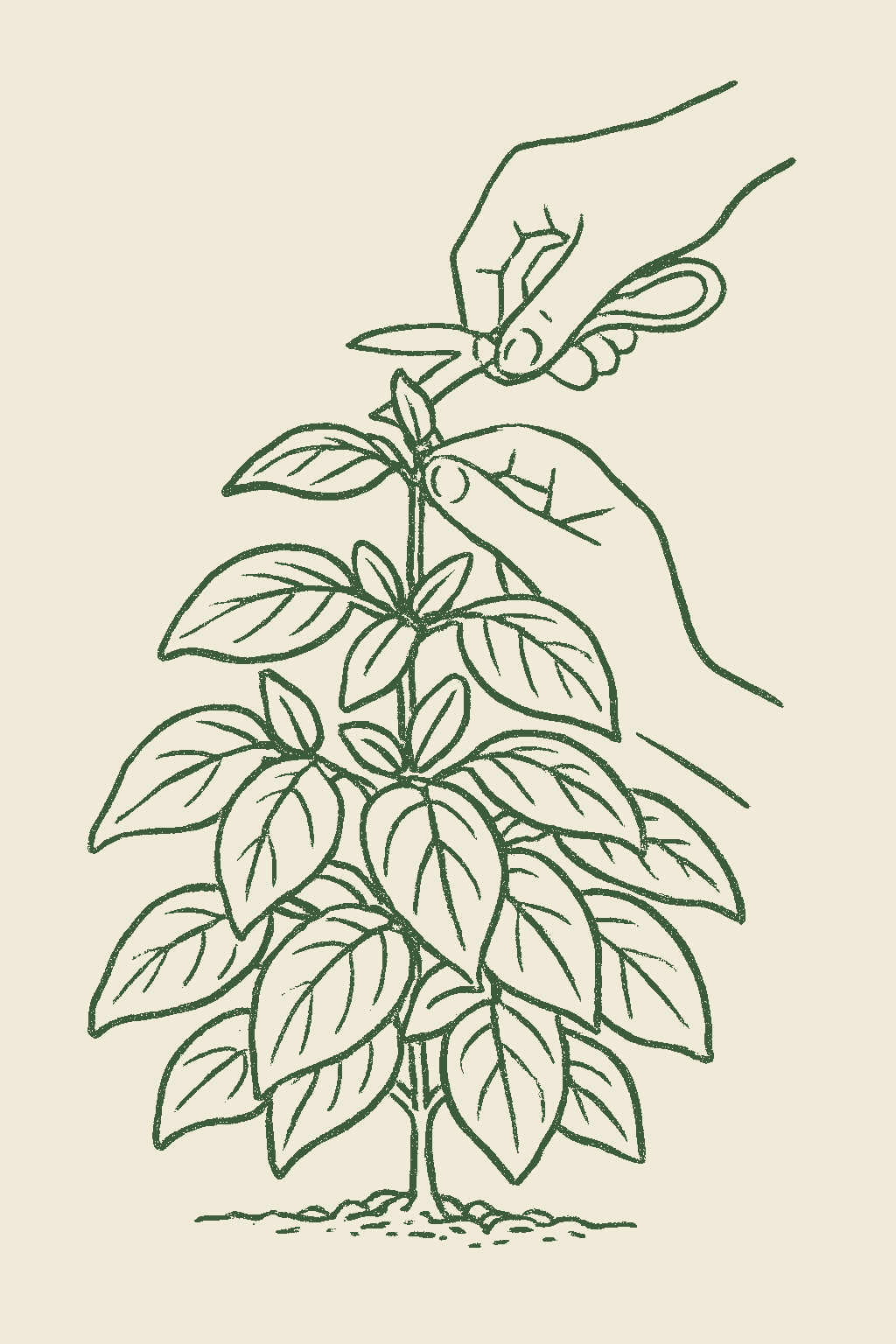
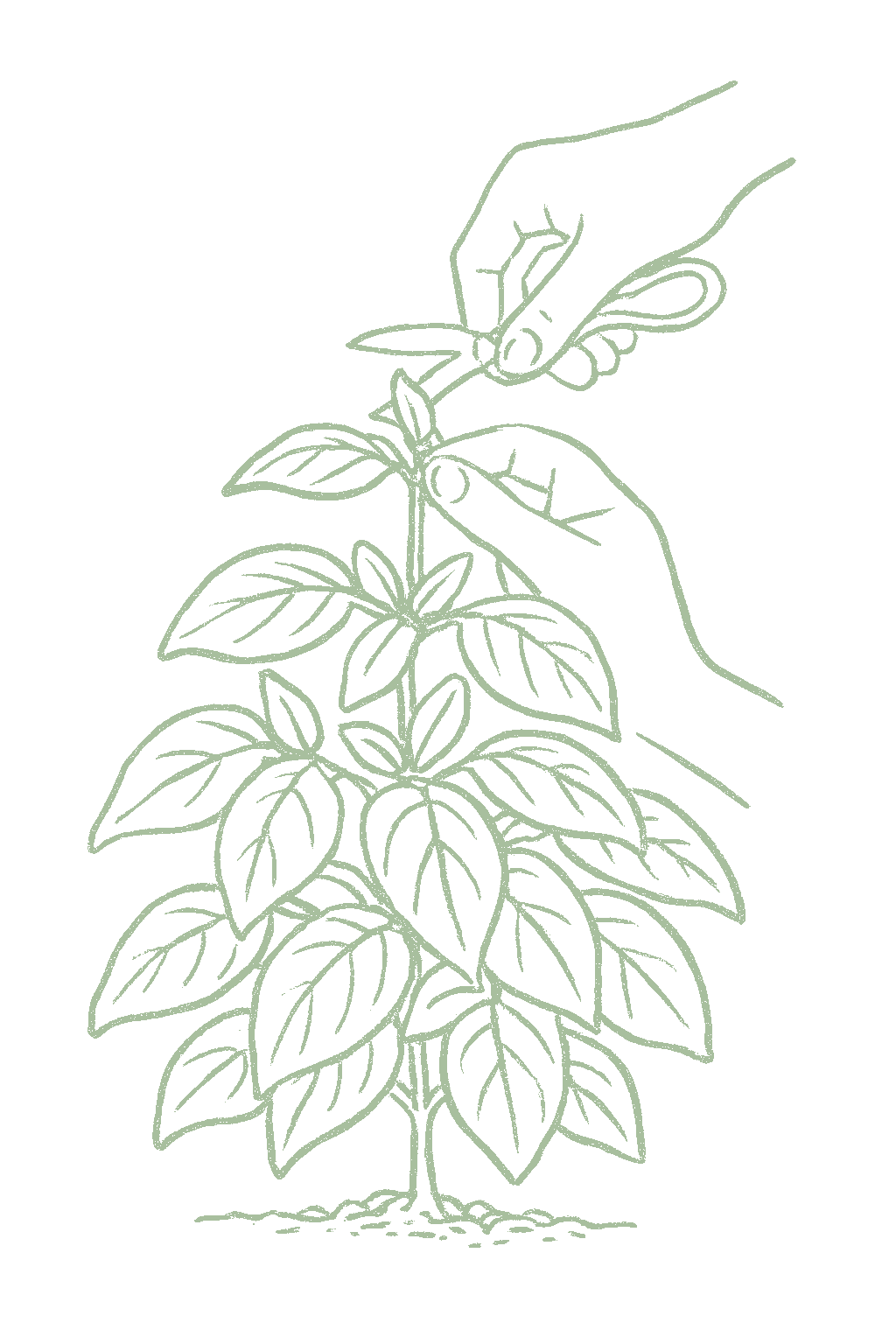
Basil is one of the most beginner-friendly herbs you can grow, but it has one firm rule: it hates cold. Do not plant it outside until after your last frost and nights stay above 50 °F. In return, basil grows fast and rewards regular picking. The trick is to pinch off the growing tips and any flower buds before they open, which keeps the plant bushy and productive. Once basil flowers, it starts to taste different and stops making as many leaves, so keep those blooms pinched. Sweet basil (Ocimum basilicum) is the most economically important annual culinary herb grown in North America, and its defining biology shapes every care decision. It is frost-tender without reservation: chilling injury begins below 50 °F, and a single frost kills the plant entirely. This means the growing window is bounded by last frost on one end and first frost on the other, making basil one of the most zone-sensitive herbs in the kitchen garden. Grown for leaves, not fruit, the central challenge is delaying the reproductive bolt: once basil shifts to flower production, leaf yield drops and essential oil concentration changes, altering flavor. The management lever is regular pinching of shoot tips and emerging flower buds, which redirects energy back into vegetative growth and can extend productive leaf harvest by weeks. Basil is a high-reward succession crop; successive plantings every 3 weeks from last frost through midsummer ensure a constant supply of young, tender growth. The herb is also one of the most container-friendly crops in this dataset, performing well in a single well-draining pot on a sunny windowsill or patio, which opens the season in all zones.
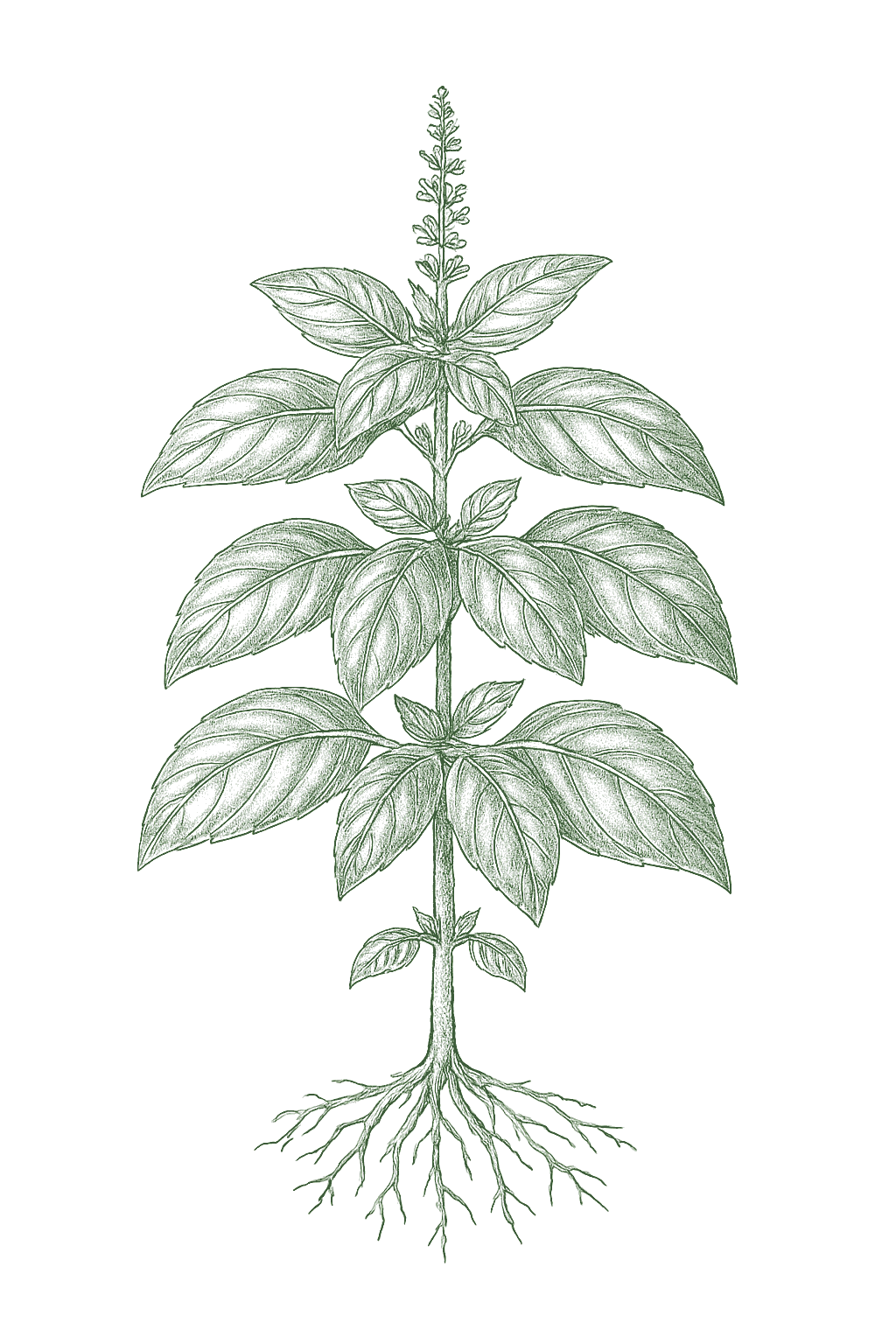
Off-season for basil in zone 9.
Zone 9 averages a last frost around March 1. Within Zone 9, the colder half (9a, winters down to 20°F) runs about a week later. The warmer half (9b, winters down to 25°F) runs about a week earlier. The plant app picks your subzone from your ZIP.
| Subzone | Last spring | First fall | Growing days | Winter min | Fruits reliably |
|---|---|---|---|---|---|
| 9a | Mar 8 | Nov 24 | ~261 | 20-25°F | Yes · two seasons |
| 9b | Feb 28 | Nov 30 | ~275 | 25-30°F | Yes · two seasons |
Averages from 8 weather stations per subzone, drawn from NOAA 1991-2020 Climate Normals. Your actual frost date can vary by up to two weeks based on elevation, proximity to water, and local topography.
In Zone 9, basil can be planted March through April. Start indoors Feb 10 - Mar 1. Harvest runs May through October.
Plant a new set of basil seeds every 3 weeks through summer for a continuous harvest. Basil plants get woody and start flowering after a couple of months, but a fresh start nearby stays productive.Sow a new batch of seeds every 3 weeks from last frost through midsummer for a continuous supply of young, tender leaves. Older plants become woodier and more prone to bolting; fresh successions always outperform aged plants for leaf quality.
In Zone 9, basil can be planted April. Start indoors Feb 20 - Mar 10. Harvest runs May through October.
Plant a new set of basil seeds every 3 weeks through summer for a continuous harvest. Basil plants get woody and start flowering after a couple of months, but a fresh start nearby stays productive.Sow a new batch of seeds every 3 weeks from last frost through midsummer for a continuous supply of young, tender leaves. Older plants become woodier and more prone to bolting; fresh successions always outperform aged plants for leaf quality.
In Zone 9, basil can be planted March through April. Start indoors Feb 1 - Mar 1. Harvest runs April through October.
Plant a new set of basil seeds every 3 weeks through summer for a continuous harvest. Basil plants get woody and start flowering after a couple of months, but a fresh start nearby stays productive.Sow a new batch of seeds every 3 weeks from last frost through midsummer for a continuous supply of young, tender leaves. Older plants become woodier and more prone to bolting; fresh successions always outperform aged plants for leaf quality.
In Zone 9, basil can be planted May through June. Start indoors Apr 1 - May 1. Harvest runs July through October.
Plant a new set of basil seeds every 3 weeks through summer for a continuous harvest. Basil plants get woody and start flowering after a couple of months, but a fresh start nearby stays productive.Sow a new batch of seeds every 3 weeks from last frost through midsummer for a continuous supply of young, tender leaves. Older plants become woodier and more prone to bolting; fresh successions always outperform aged plants for leaf quality.
In Zone 9, basil can be planted April through May. Start indoors Mar 1 - Apr 1. Harvest runs May through October.
Plant a new set of basil seeds every 3 weeks through summer for a continuous harvest. Basil plants get woody and start flowering after a couple of months, but a fresh start nearby stays productive.Sow a new batch of seeds every 3 weeks from last frost through midsummer for a continuous supply of young, tender leaves. Older plants become woodier and more prone to bolting; fresh successions always outperform aged plants for leaf quality.
In Zone 9, basil can be planted June. Start indoors May 1 - May 22. Harvest runs July through November.
Plant a new set of basil seeds every 3 weeks through summer for a continuous harvest. Basil plants get woody and start flowering after a couple of months, but a fresh start nearby stays productive.Sow a new batch of seeds every 3 weeks from last frost through midsummer for a continuous supply of young, tender leaves. Older plants become woodier and more prone to bolting; fresh successions always outperform aged plants for leaf quality.
In Zone 9, basil can be planted March. Start indoors Feb 1 - Feb 15. Harvest runs May through November.
Plant a new set of basil seeds every 3 weeks through summer for a continuous harvest. Basil plants get woody and start flowering after a couple of months, but a fresh start nearby stays productive.Sow a new batch of seeds every 3 weeks from last frost through midsummer for a continuous supply of young, tender leaves. Older plants become woodier and more prone to bolting; fresh successions always outperform aged plants for leaf quality.
In Zone 9, basil can be planted March through October. Start indoors Feb 1 - Feb 15. Harvest runs April through December.
Plant a new set of basil seeds every 3 weeks through summer for a continuous harvest. Basil plants get woody and start flowering after a couple of months, but a fresh start nearby stays productive.Sow a new batch of seeds every 3 weeks from last frost through midsummer for a continuous supply of young, tender leaves. Older plants become woodier and more prone to bolting; fresh successions always outperform aged plants for leaf quality.
In Zone 9, basil can be planted March through September. Start indoors Feb 1 - Mar 20. Harvest runs May through November.
Plant a new set of basil seeds every 3 weeks through summer for a continuous harvest. Basil plants get woody and start flowering after a couple of months, but a fresh start nearby stays productive.Sow a new batch of seeds every 3 weeks from last frost through midsummer for a continuous supply of young, tender leaves. Older plants become woodier and more prone to bolting; fresh successions always outperform aged plants for leaf quality.
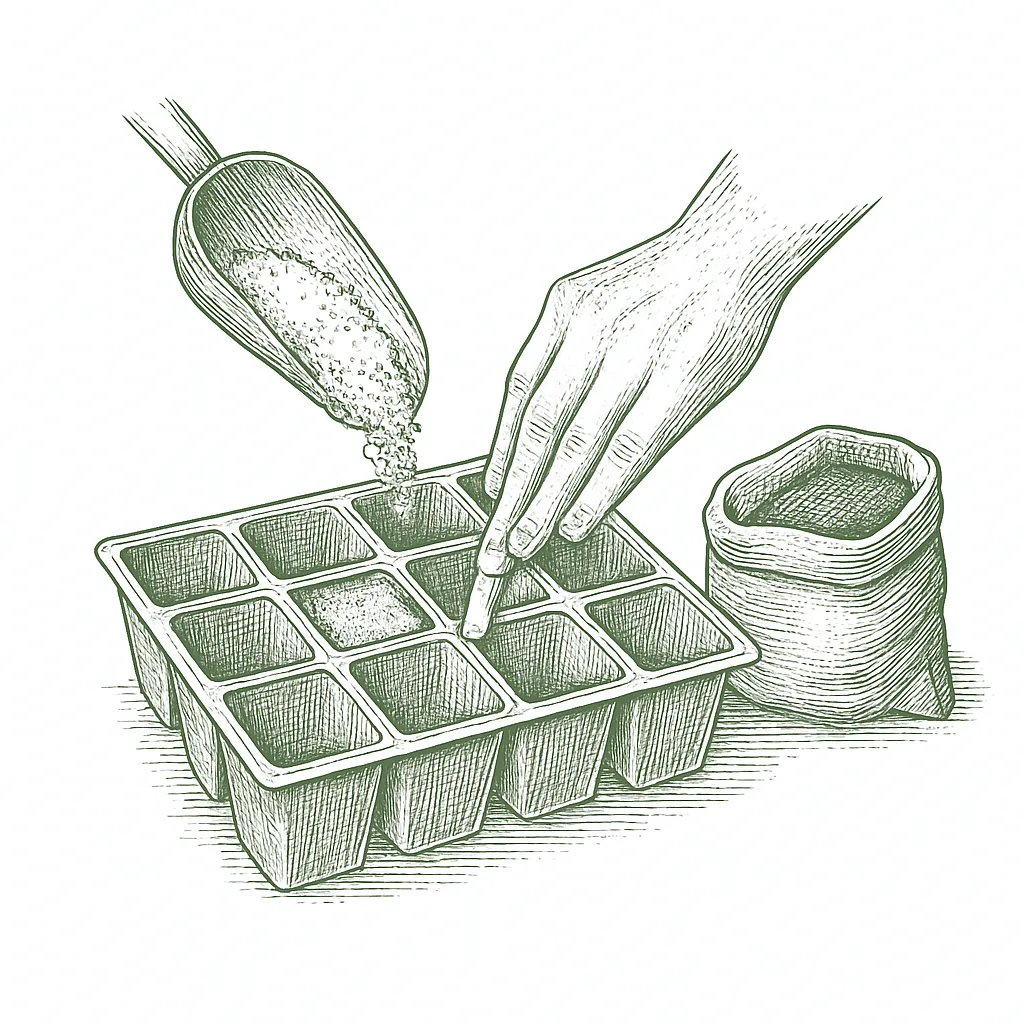
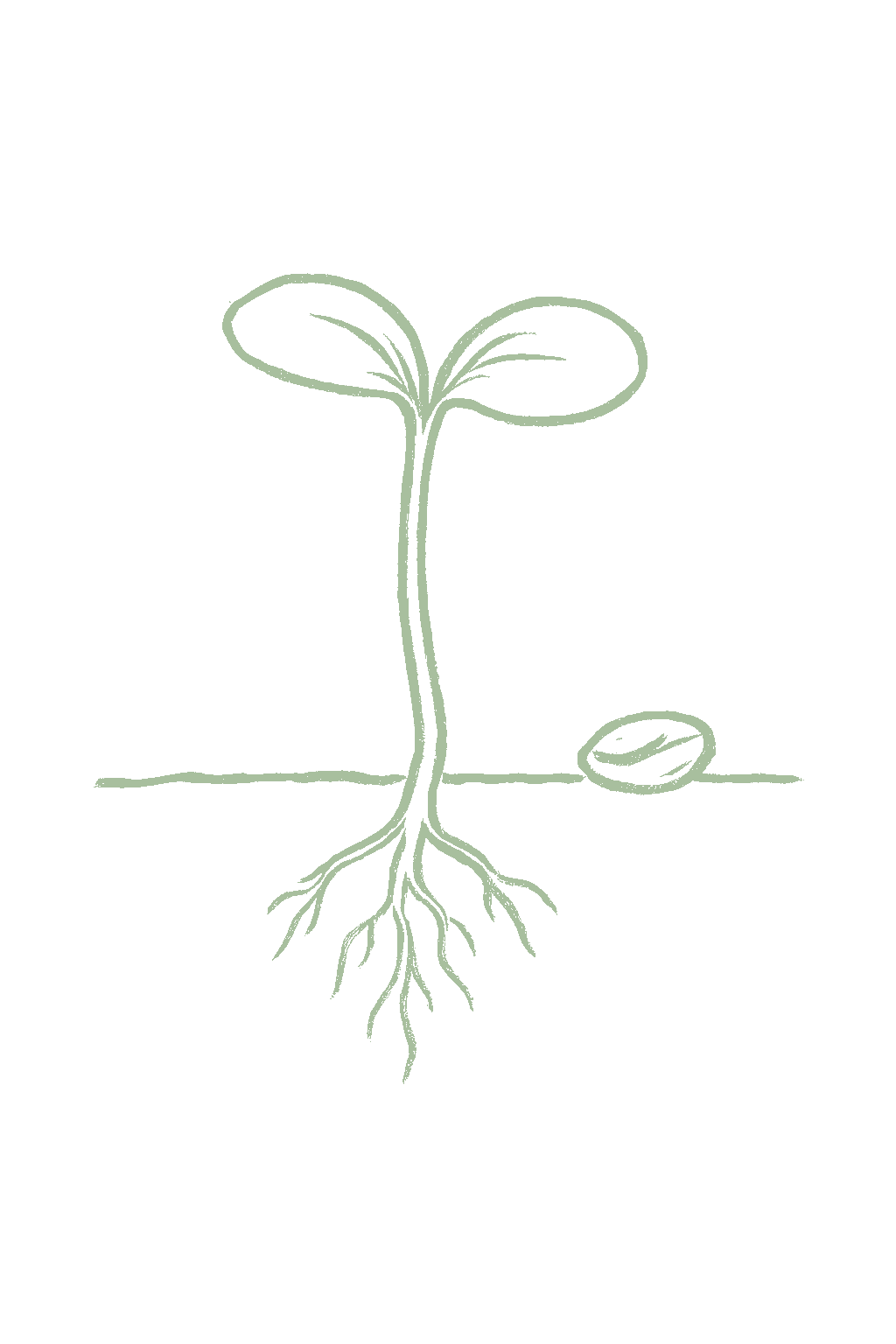
You have two options: start seeds indoors 6 weeks before your last frost, or wait and plant seeds directly in the garden after your last frost when the soil feels warm. Basil is very cold-sensitive, so do not rush it outside. If night temperatures are still dropping below 50 °F, wait.Start seeds indoors 6 weeks before last frost date for an early harvest. Transplant out when night temperatures stay consistently above 50 °F and all frost risk has passed. Direct sowing is equally effective once soil reaches 70 °F, typically 1-2 weeks after last frost. In zones 7 and warmer, direct sowing is the standard approach. Harden transplants off over 7-10 days by gradually increasing outdoor exposure before planting out.
Not sure what soil you have? Grab a small handful of damp soil from your garden bed and squeeze it. If it crumbles apart easily, it's sandy. If it holds together but breaks when you poke it, it's loam (what most vegetables want). If it stays in a hard, slippery ball, it's clay.
Basil prefers loose, well-draining soil that has been improved with compost. Avoid heavy clay that stays wet, which can rot roots and encourage disease.
Mix 2-3 inches of compost into the top 6 inches of your bed before planting. Compost holds moisture (which sandy soil drains too fast) and adds the nutrients sandy soil tends to lack. Repeat each season. Compost breaks down over time.
Mix 2-3 inches of compost AND a few inches of coarse sand or perlite into the top 6 inches of your bed. The compost feeds the plants; the sand breaks up the clay so air and water can move through. Don't add sand without compost. It can compact like concrete.
If amending your soil sounds like too much work, or if your soil is heavy clay, full of rocks, or contaminated, build over it. A raised bed at least 12 inches deep filled with a 50/50 mix of compost and sandy loam gives you ideal growing soil with no battles. A 5-gallon container with quality potting mix does the same for one plant at a time. Both bypass your native soil entirely.
The numbers that matter, at a glance.
Basil is one of the best herbs to grow in a pot. A single pot on a sunny windowsill can supply all the fresh basil a family needs. Just make sure the pot drains well and gets plenty of sun.Basil is one of the best herbs for container growing. A single 2-gallon pot on a sunny patio or south-facing sill can produce more leaves than most households use fresh. The container advantage is heat: pots warm faster than soil, extending the growing season at both ends, and allow placement in a microclimate that avoids frost risk. Self-watering containers perform well for basil, allowing the gardener to manage the reservoir rather than the soil moisture surface directly.
Spicy Globe
Greek dwarf
Genovese
Lemon basil
You can bring pot basil inside before the first frost to extend your harvest. Give it the sunniest window you have. It will slow down but stay alive. Start fresh seeds in late winter for next year.Basil is a true annual and will eventually flower and decline even indoors, but a container plant can be brought inside before first frost and kept productive through winter with adequate light. A south-facing window providing at least 6 hours of direct light, or 12 hours of supplemental grow light, is required. Indoor plants should be watered less frequently and fertilized at half the summer rate. Plan on starting fresh seeds in late winter for the following season.
Ask what your balcony or roof can carry
A balcony or roof can only hold so much weight. Before you set heavy pots there, ask a building architect what it can safely carry.Illinois Extension's guidance is to consult a building architect about weight limits before placing heavy pots on a balcony or rooftop garden. It gives no weight figure.
Never grow food in a container with anything toxic in it
Many kinds of containers can be used. Whatever you choose, keep anything toxic out of it, especially if you are growing food.Colorado State accepts nearly any container material but warns against using a container that holds toxic materials, especially for edible plants. Illinois adds that a vegetable container should be free of chemicals toxic to plants or people, and urges caution with treated lumber when growing food. If you cannot account for what a repurposed container once held, that alone is a reason to keep food out of it.
Secure hanging containers well
Fasten hanging baskets and window or rail boxes securely. Think about what is below them too, since they can drip on people or things underneath.Illinois Extension asks growers to secure hanging containers well and to think through the safety issues of hanging them. Placement matters too, since a hanging container can drip onto people or belongings below.
Aim for a pH of 6.0-7.5. Most garden soil is fine for basil without any adjustment.Basil is tolerant across a wide pH range compared to most vegetables. The 6.0-7.5 optimum reflects nutrient availability across the typical mineral spectrum; very acidic soils (below 5.5) can impair uptake of calcium and magnesium, which may increase susceptibility to physiological disorders and disease.
Feed basil with a balanced liquid fertilizer once a month in the garden, or every 2-3 weeks if it is in a pot. Do not overdo it: too much fertilizer makes the leaves less flavorful.Basil is a moderate feeder that responds well to consistent modest nitrogen supply, which supports the rapid vegetative growth that produces tender, flavorful leaves. Overfertilizing with high nitrogen produces lush growth but can reduce essential oil concentration and flavor intensity, and may attract aphids. A 5-10-5 balanced granular applied once or twice per season is sufficient in average garden soil; containers require more frequent supplementation (every 2-3 weeks at half-strength) because nutrients leach with regular watering. Liquid fertilizer applied at the base, not foliarly, reduces disease pressure.
Any balanced fertilizer works well5-10-5 balanced to modest nitrogen-forward; avoid high-nitrogen formulations during peak harvest
Basil and tomatoes are classic garden companions. Plant basil near your tomatoes for a traditional combination that may also help deter some insects. Keep basil away from fennel, which inhibits many herbs and vegetables. The basil-tomato pairing is the most-studied companion combination in the kitchen garden. University of Minnesota research cites replicated field studies showing basil intercropping reduces thrip populations on tomatoes in both field and greenhouse conditions, and may promote tomato growth. Texas A&M notes basil as a useful disease indicator plant for tomatoes, as basil shows powdery mildew and other diseases earlier than tomatoes, providing an early-warning function. The pairing also serves as a space-efficiency strategy: basil planted early in a tomato bed can be harvested before tomato canopy fill-in, maximizing yield per square foot. Marigolds are not a direct basil companion but share the warm-season frame and contribute to pest management in the broader bed. Fennel is a general allelopath suppressing many vegetable crops; keep basil and other kitchen herbs away from fennel plantings.
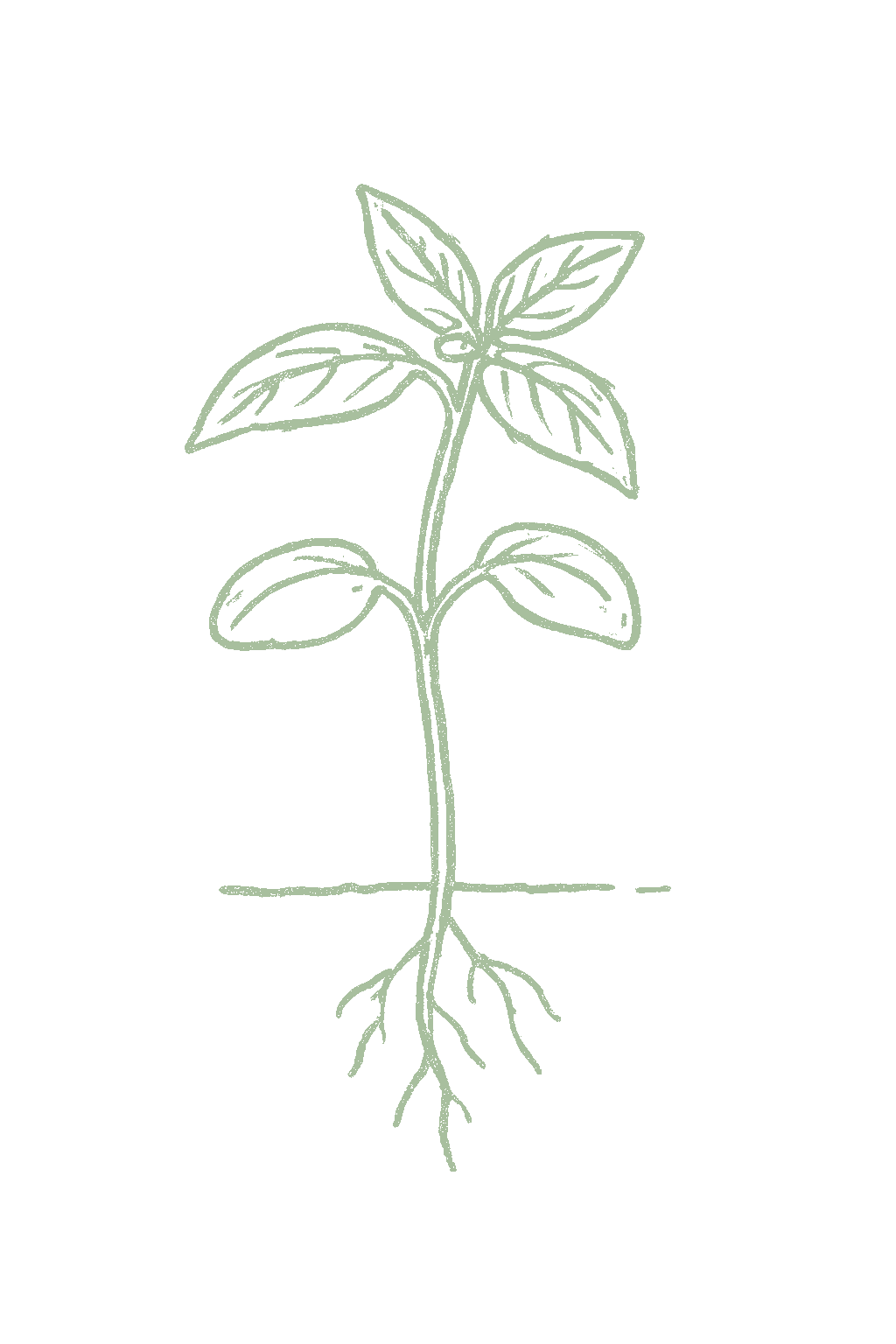
You can start picking basil once the plant has a few sets of leaves. Cut the stem just above a pair of leaves and the plant will branch and regrow. Do not pull off individual leaves from the bottom; cut from the top to keep the plant bushy and productive.Begin harvesting once the plant has developed at least 3 pairs of true leaves, typically 3-4 weeks after transplanting or 6-8 weeks from seed. Always cut above a leaf node or a pair of leaves, not below, so the plant branches from the cut point and produces two new stems. The cut-and-come-again rhythm is the core of basil productivity: harvest the top 1/3 of each stem on a regular schedule (every 7-10 days once established) rather than stripping individual leaves. Harvest in the morning after dew dries but before peak heat, when essential oil concentration is highest.
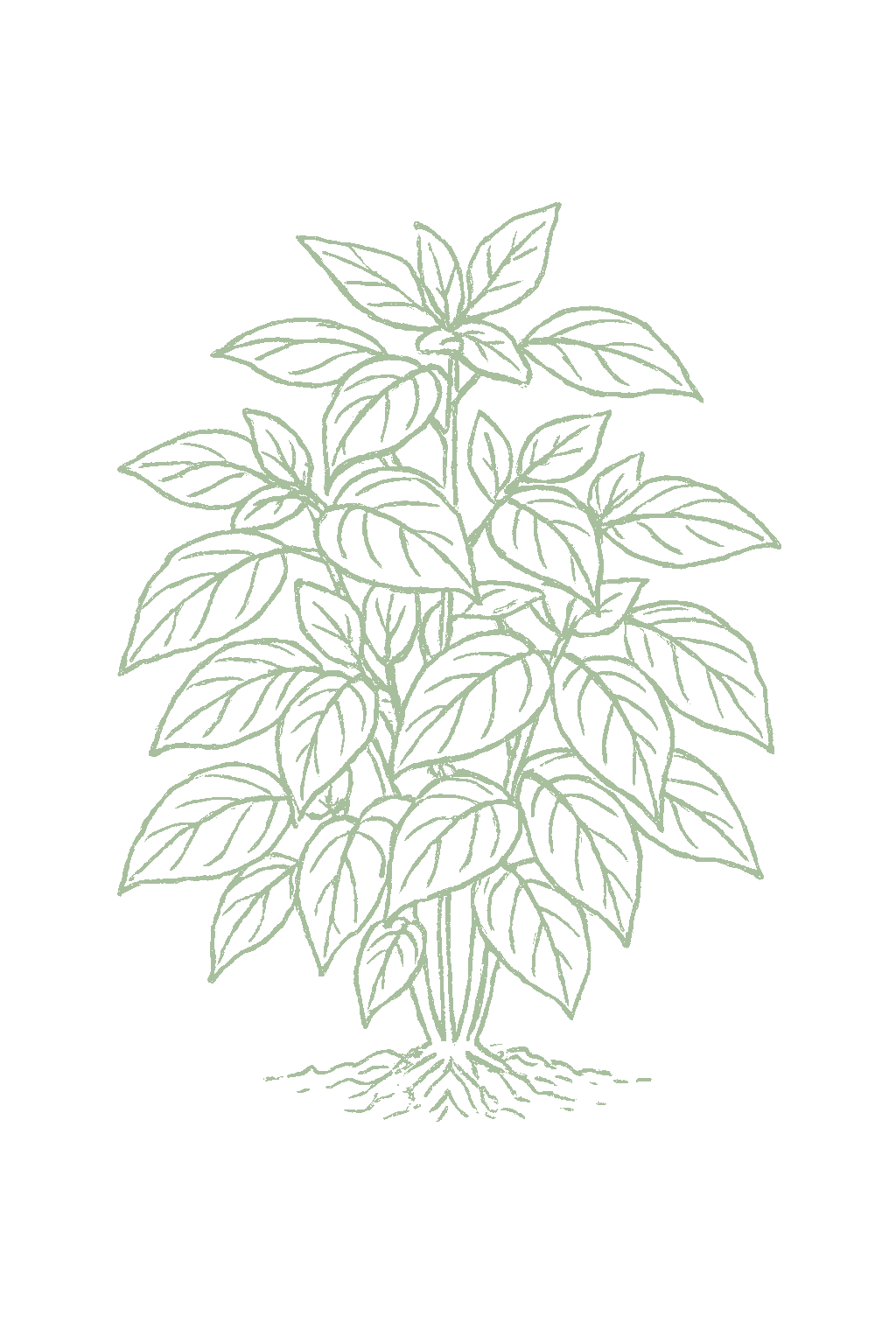
One basil plant can supply a family with fresh leaves all summer if you pick from it regularly. Expect a generous handful of leaves every week or two once the plant is established.A single Genovese basil plant in full sun, regularly pinched and succession-planted, yields 1/4 to 1/2 cup of fresh leaves per week at peak production, or roughly 2-4 oz of fresh leaves per harvest over a 10-14 week productive season. Container yields are proportional to pot size and sun exposure; a 2-gallon pot in full sun performs comparably to an in-ground plant.
Your first year growing basil can be just as productive as any year after, since basil is an annual that grows fresh each season. The key is learning to pinch the tips early: that one habit makes the difference between a lush plant and a tall, woody one.Basil is one of the few herbs where the first-season yield equals or exceeds subsequent years; it is a fast-maturing annual with no establishment lag. The main first-season variable is how quickly the grower develops the pinching habit; growers who pinch consistently from the fourth leaf pair onward produce significantly more usable leaf than those who let the plant grow unchecked.
Start with Genovese basil for classic Italian flavor or, if you're in a humid area, choose a disease-resistant variety like Devotion or Prospera. Thai basil is a completely different herb with an anise flavor, great for Asian cooking.The variety decision for basil has two primary axes: culinary use and disease resistance. Genovese remains the standard for pesto, Italian cooking, and fresh eating, but it is highly susceptible to basil downy mildew (Peronospora belbahrii). In regions with humid summers or a history of downy mildew, the Rutgers DMR program varieties (Devotion, Obsession, Prospera) offer equivalent culinary quality with significantly reduced disease risk. Thai basil and lemon basil are distinct culinary herbs rather than substitutes for Genovese; growing one of each fills different kitchen roles. For container or windowsill production, dwarf/Greek types outperform full-size varieties in limited space.
The ladder troubleshoots from the gentlest solution to the strongest. Start with the gentlest option and only move on when and if it doesn't work.
Go easy on nitrogen fertilizer, the kind that pushes fast leafy growth. Soft, sweet new shoots are what aphids feed on best, so basil that is not force-fed tends to draw fewer of them.Surplus nitrogen produces the succulent flush aphid colonies build on fastest; holding fertility moderate keeps new growth less hospitable and slows the population curve in warm weather.
Knock the clusters off with a hard stream from the hose, aiming up under the leaves where they sit. Go back and do it again over the next few days, because stragglers regroup.A directed jet dislodges colonies mechanically with no pesticide input at all; repeat over several days so survivors and newly emerged individuals do not simply rebuild the colony.
Ladybugs and parasitic wasps, tiny wasps that lay their eggs inside aphids, will hunt aphids for you. Plant flowering herbs and companion flowers close by to give those helpers a reason to stay.Ladybugs and parasitoid wasps can hold light pressure on their own; nearby flowering herbs and companion blooms supply the nectar that keeps predators resident rather than transient.
Insecticidal soap, a soap-based spray sold for garden use, kills aphids it actually touches. Wet the undersides of the leaves where the clusters hide. Do not spray in full sun or when it is above 90°F.Soap is contact-only, so undersides coverage of the colony decides the outcome; hold off in full sun and above 90°F to limit phytotoxicity on tender basil foliage.
Neem oil, a plant oil pressed from neem tree seeds, is the other spray option for aphid colonies. Same rules apply: coat the leaf undersides, and keep it off plants in full sun or above 90°F.Neem is the second contact material where soap has not held a colony; observe the same sun and heat restrictions, and place it on the colony directly rather than broadcasting over the canopy.
The bottom rungs are products with label rules: timing, pollinators, and days to wait before harvest. Before you spray →
The ladder troubleshoots from the gentlest solution to the strongest. Start with the gentlest option and only move on when and if it doesn't work.
Drape a light fabric row cover over the plants through July and August, when the beetles are out. It keeps them from ever landing on the leaves, so it has to go on before they show up.Cover across the peak flight window, roughly July into August, is straight physical exclusion; it has to be sealed at the edges and in place ahead of adult emergence rather than after feeding starts.
Early in the morning the beetles are cool and sluggish, so knock them into a jar of soapy water. Skip the beetle traps sold at garden centers, at least near your garden, since they pull in more beetles than they hold.Morning collection exploits low-temperature sluggishness in the adults; drop them straight into soapy water. Keep pheromone traps well away from the planting, since they recruit more adults than they capture.
Neem oil, a plant oil pressed from neem tree seeds, sprayed onto the leaves has some deterrent effect. Treat it as backup for hand-picking rather than a swap for it.Neem applied to foliage offers partial deterrence rather than control of established adults; it supplements collection and exclusion instead of replacing either.
The bottom rungs are products with label rules: timing, pollinators, and days to wait before harvest. Before you spray →
The ladder troubleshoots from the gentlest solution to the strongest. Start with the gentlest option and only move on when and if it doesn't work.
Send water to the soil at the base of each plant instead of sprinkling the whole plant from above. Slugs and snails need damp ground and they come out to feed after dark, so a surface that has dried off by evening gives them much less to work with.Delivering water at the soil line rather than across the canopy keeps the bed surface from sitting wet, and numbers tend to run highest in the stretch following heavy rain or overhead irrigation; since feeding is nocturnal, ground that has drained by dusk withholds habitat rather than killing anything.
Clear boards, pots, and piles of debris away from the basil. Slugs and snails shelter in those damp hiding places by day and come out to feed after dark.Stripping boards and debris removes the daytime refuge that lets a population build alongside the planting; feeding happens at night, so the harborage is the part you can act on directly.
Take a flashlight out after dark and pick them off by hand. Night is when they are actually on the plants, so a daytime hunt finds almost nothing.Night collection catches them while active on foliage; run consecutive passes during cool, wet stretches in spring and fall, when numbers peak.
Sink beer traps so the rim sits level with the soil surface. You can also ring the base of each plant with diatomaceous earth, a gritty powder made from fossil algae, as a barrier they dislike crossing.Beer traps set flush to the soil line draw and drown them; a diatomaceous earth ring at the stem base is an abrasive barrier placed exactly where seedlings get severed.
Iron phosphate slug pellets are approved for organic gardens and carry low risk around food plants, so they are a reasonable step if traps and hand-picking are not keeping up.These baits carry organic approval and low risk to non-target organisms, which is what earns them a place at the end of the ladder; concentrate them around fresh transplants, the most vulnerable stage.
The bottom rungs are products with label rules: timing, pollinators, and days to wait before harvest. Before you spray →
The ladder troubleshoots from the gentlest solution to the strongest. Start with the gentlest option and only move on when and if it doesn't work.
Start with a variety bred to resist this disease. Look for Devotion, Obsession, Passion, Thunderstruck, or Prospera, or any seed labeled DMR, which stands for downy mildew resistant. This one choice does more than anything else on this list.Variety selection is the highest-leverage control available here. The Rutgers breeding lines Devotion, Obsession, Passion, and Thunderstruck, along with the organic-approved Prospera, rated strongly resistant in replicated field trials. Sweet Ocimum basilicum types carry the most susceptibility, while spice and citrus basils hold up better.
Water at the soil, not over the top of the plants. The spores need wet leaves to get started, so foliage that stays dry is far harder to infect.Sporangia require leaf wetness to germinate, so overhead irrigation hands the pathogen the one condition it cannot work without; delivering water at ground level withholds it.
Give each plant enough elbow room that air moves between them and the leaves dry quickly after rain or morning dew.Wider spacing shortens canopy leaf-wetness duration; on a planting already showing symptoms, opening it up is worth doing at once rather than waiting for the next season.
Pull infected plants as soon as you find the fuzzy gray-purple growth under the leaves, and carry them out of the garden. If only part of a plant is affected, cut those heavily infected stems out instead and take them away rather than dropping them on the ground. Every infected plant left standing is shedding spores onto its neighbors.Prompt removal and destruction of infected plants cuts the local spore load, which matters because warm, humid weather can carry this disease across a planting inside a few days. Where a plant is only partly involved, taking out the heavily infected stems buys time instead; once infection turns systemic no organic curative applies, so treat either move as spore-load reduction rather than a cure.
Copper fungicide can help, but only when you spray ahead of the disease showing up, and even then it works moderately at best. Follow the label rates, and expect it to protect a future planting rather than rescue a covered one.Copper is preventive at label rates with moderate efficacy, and timing relative to infection governs the result. This pathogen is an oomycete, a water mold rather than a true fungus, so fungicide classes aimed at true fungi are often ineffective against it.
The bottom rungs are products with label rules: timing, pollinators, and days to wait before harvest. Before you spray →
The ladder troubleshoots from the gentlest solution to the strongest. Start with the gentlest option and only move on when and if it doesn't work.
Some basil varieties are sold carrying resistance to this wilt. Check the disease-resistance notes in the seed catalog before you order.Fusarium wilt resistance is present in some cultivars but is not general across sweet basil; seed catalog disease-resistance notation is where to confirm a given line carries it.
Move basil to a fresh spot each year. Once this wilt turns up in a bed, keep basil out of that bed for the next two to three years.The fungus persists in soil and infects through the roots, so shifting the planting location breaks that reservoir; work to a 2 to 3 year gap before returning basil to an affected bed.
Sort out soggy ground before you plant. Wet soil, plus warm soil above 70°F, is what pushes this disease along fastest.Wet conditions paired with soil above 70°F accelerate symptom development; drainage work removes the half of that pairing you can actually change in a garden bed.
When a plant wilts and does not perk up after watering, pull it and put it in the trash. Keep it out of the compost pile.No effective organic curative exists once a plant is infected, so removal is the whole response: destroy affected plants rather than composting them, since the pathogen survives in soil and debris.
No spray for this one. Prevention is the control.
Just move your basil to a different spot each year to keep the soil healthy.Basil's rotation driver is primarily Fusarium wilt, which is soil-persistent and also seed-borne. Because basil is typically grown in a small bed or container, rotation is easy to execute even in a small garden. The 2-year gap is sufficient for most gardens without a disease history.
The plant app sends a timely reminder at every critical moment of your basil season. The wording adjusts to whichever you pick: beginner or seasoned. Here are three you'll see in Zone 9.
plant sends the right notification at exactly the right moment, for your zone, your weather, your crops. Founding members lock the rate forever.
We're building this guide with real growers. Got a question we missed? Ask here. We read every one and add the best answers right to this page.
Learned something the hard way? Pass it on. Real growers' tips make this guide better for the next person, and we credit you by name when yours goes live.
If you've grown this crop and you see a date, a temperature, a companion claim, or a recommendation that doesn't match your experience, tell us. Real growers' corrections make this guide better for the next person.
Every date, temperature, spacing, and recommendation on this page is sourced from university cooperative extension publications, peer-reviewed agricultural research, NOAA climate data, and direct extension calendars. Where claims are softer (traditional gardening wisdom not formally documented), we say so.
Spot a data point that doesn't match your experience? Submit a correction; accepted corrections earn full author credit on the page.
Zone-aware seasonal nudges, what's worth planting now, and the occasional recipe from the harvest. No spam, ever.