Today · in your zone
What's happening right now
Off-season for celery in zone 6.
Tap to switch. plant calibrates to where you are in the journey.
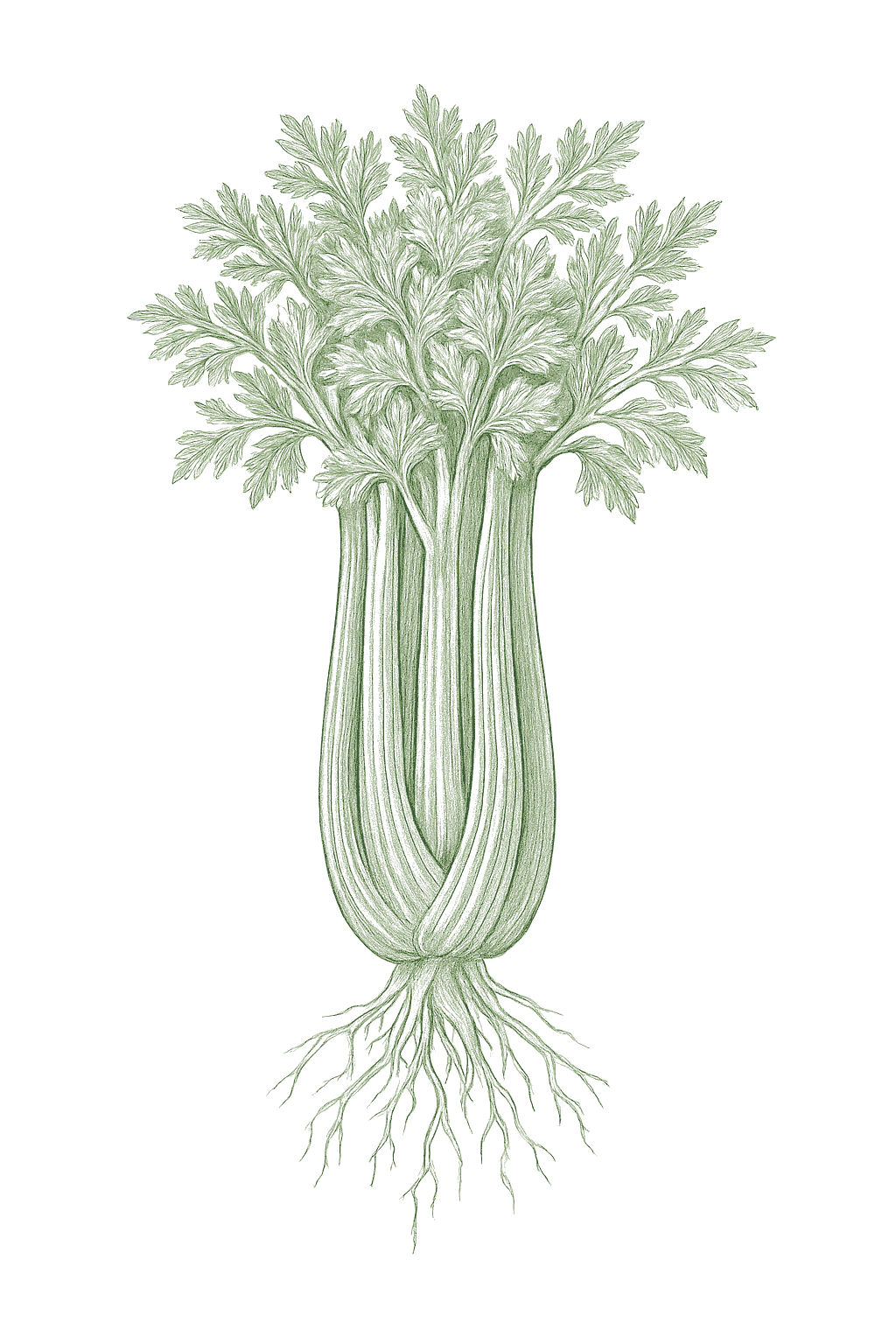
Celery is a cool-weather vegetable in the carrot family, grown for its crisp stalks, and it is honestly one of the trickier crops to grow well. It came from a wild marsh plant, so it wants steady dampness, rich soil, lots of food, and mild weather, all at the same time, over a long season (about 80 to 120 days after you plant it out). You start it indoors 8 to 10 weeks early and plant it outside only after hard frosts are over, because young celery that gets too cold will bolt (run to seed). The big secret is to keep it growing steadily and never let it get dry, hungry, too hot, or too cold. Any of those makes the stalks stringy, bitter, hollow, or cracked. Get the steady care right, grow it in the cooler parts of the year, and homegrown celery is far more tender and flavorful than what you buy. Celery (Apium graveolens) is a cool-season member of the carrot family grown for its crisp leaf stalks, and it has a reputation as one of the more demanding vegetables for good reason. Descended from a wild marsh plant, it wants what few crops want all at once: a long, mild growing season of roughly 80 to 120 days from transplant, constant and even moisture, rich heavily fed soil, and freedom from both hard cold and summer heat. It is started indoors 8 to 10 weeks ahead and transplanted out only after hard-frost danger passes, because young plants chilled for a couple of weeks near 50°F will bolt. The through-line of celery culture is steadiness: any check from drought, hunger, heat, or cold shows up directly as stringy, bitter, hollow, or cracked stalks, and calcium starved by uneven watering blackens the growing heart. Grown with that steadiness, in the cool shoulders of the year, it rewards the effort with tender, flavorful stalks far better than the store offers.
Off-season for celery in zone 6.
In Zone 6, celery can be planted April through May. Start indoors Feb - Mar. Harvest runs July through October.
Celery takes a long time to grow, so you do not replant it every couple of weeks like lettuce. Instead, set out plants a week or two apart within a planting window, and in milder areas grow a spring crop and a fall crop. In cold-summer areas you usually get one main summer crop; in hot areas you grow it in fall, winter, and early spring to dodge the heat. Aim for the crop to finish in cool weather, and never let it dry out.Celery is a long-season crop, so it does not succession-sow rapidly the way salad crops do, but you can stagger transplants a couple of weeks apart within a window and grow both a spring and a fall crop in milder climates. In cold-summer regions that usually means a single main crop transplanted after frost and grown through summer; in warm regions it means a fall and a late-winter or spring crop bracketing the summer heat. Time each window so the long crop matures in cool, not hot, weather and never goes short of water.
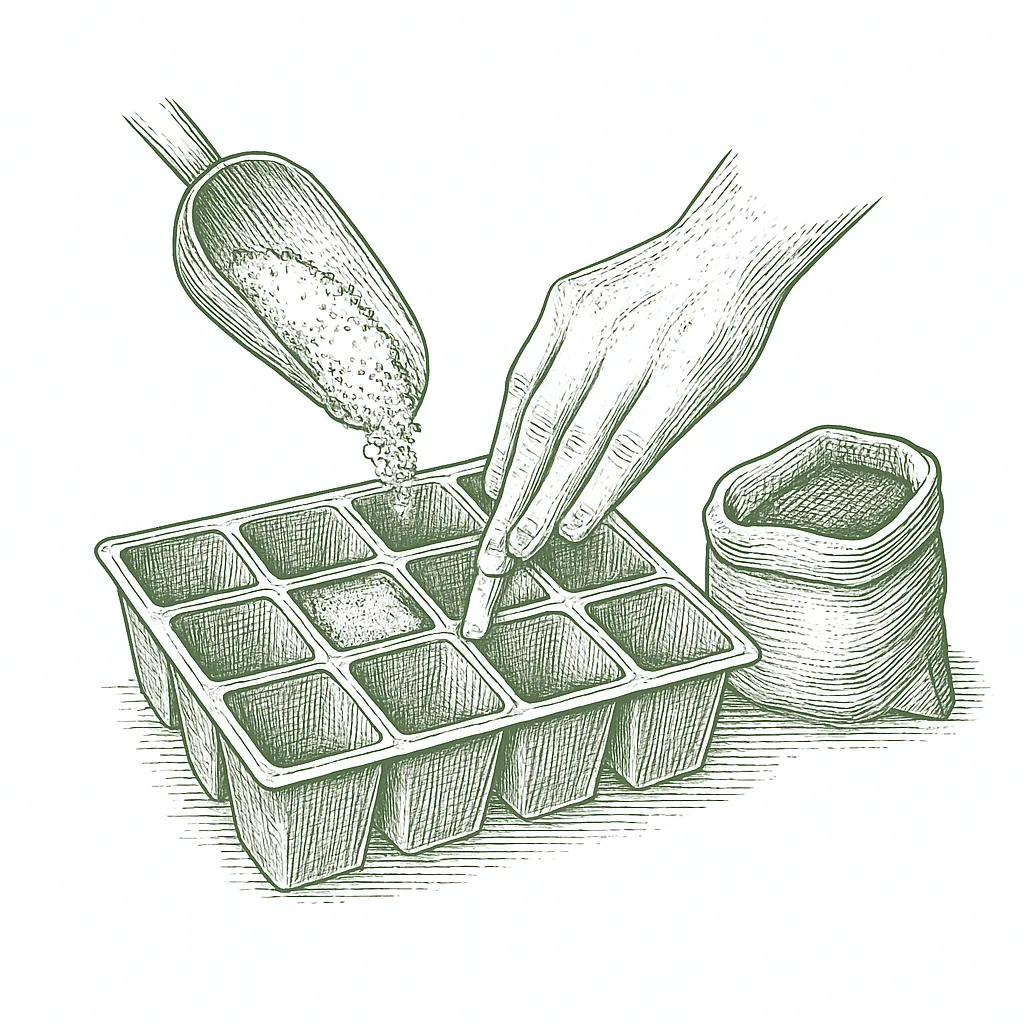
Start celery indoors from seed, or buy young plants, because it is too slow to plant straight in the garden in most areas. Sow the seed about 8 to 10 weeks before you plan to set plants out. Barely cover the tiny seeds, since they need light and warmth (around 70°F) to sprout, and be patient, they can take 2 to 3 weeks. Plant out only after the risk of hard frost and long cold spells is over: cold-shocked young celery often bolts (runs to seed) later instead of making good stalks. Harden the plants off over a week or so by watering a little less, not by putting them out in the cold.Always start celery as a transplant; it is too slow and too long-season to direct sow in most of the country. Sow seed indoors about 8 to 10 weeks before the target transplant date, barely covering the fine seed (it needs light and warmth, ideally about 70°F, to germinate, and is slow, often 2 to 3 weeks). Grow the seedlings on and transplant out when they have several true leaves and, critically, only after the danger of a hard frost or a prolonged cold snap has passed: young celery exposed to roughly two or more weeks of temperatures near or below 50°F can vernalize and bolt later instead of forming usable stalks. Harden off over 7 to 10 days by easing water, not by chilling.





Not sure what soil you have? Grab a small handful of damp soil from your garden bed and squeeze it. If it crumbles apart easily, it's sandy. If it holds together but breaks when you poke it, it's loam (what most vegetables want). If it stays in a hard, slippery ball, it's clay.
Celery is a marsh plant at heart, so it wants soil that stays damp and rich. Give it a loam or silt loam with lots of compost or rotted manure mixed in, the kind of soil that holds water without turning to swamp. Light, sandy soil is the hardest place to grow celery, because it dries out fast and celery hates drying out: that is what gives you stringy, bitter stalks. If your soil is sandy, dig in plenty of compost first, or grow celery in a raised bed or a big container with a moisture-holding mix. Celery is a heavy feeder, so a rich soil to start with makes the whole season easier.
Mix 2-3 inches of compost into the top 6 inches of your bed before planting. Compost holds moisture (which sandy soil drains too fast) and adds the nutrients sandy soil tends to lack. Repeat each season. Compost breaks down over time.
Mix 2-3 inches of compost AND a few inches of coarse sand or perlite into the top 6 inches of your bed. The compost feeds the plants; the sand breaks up the clay so air and water can move through. Don't add sand without compost. It can compact like concrete.
If amending your soil sounds like too much work, or if your soil is heavy clay, full of rocks, or contaminated, build over it. A raised bed at least 12 inches deep filled with a 50/50 mix of compost and sandy loam gives you ideal growing soil with no battles. A 5-gallon container with quality potting mix does the same for one plant at a time. Both bypass your native soil entirely.
The numbers that matter, at a glance.
Soil pH measures how acidic or alkaline your soil is, on a scale from 1 to 14 where 7 is neutral. Celery likes it slightly acidic to near neutral, roughly 6.0 to 6.8. It is not extremely fussy, but very acidic soil can lock up calcium, and celery already struggles with calcium, that is what causes the black, dead centers called blackheart. A cheap soil test from your local extension office tells you your number and whether to add lime before planting.Celery grows best in slightly acidic to near neutral soil, roughly pH 6.0 to 6.8, and tolerates a band of about 5.8 to 7.0. Holding pH toward the upper end of that range matters more for celery than for most vegetables, because adequate calcium availability is central to preventing blackheart (the calcium-related death of the growing tip), and strongly acidic soil reduces calcium uptake. A standard extension soil test removes the guesswork and tells you whether lime is warranted before transplanting.
Celery is a hungry plant, the opposite of carrots. Mix lots of compost and a balanced fertilizer into the soil before you plant, then feed it again with a nitrogen fertilizer about every 3 to 4 weeks all season. The goal is to keep celery growing fast and without a pause. If it runs short of food or water, even for a while, the stalks turn tough, stringy, and bitter instead of crisp.Celery is a heavy feeder with a high nitrogen demand, the opposite of its low-nitrogen relative the carrot. Work plenty of compost or rotted manure plus a balanced fertilizer into the bed before transplanting, then side-dress with nitrogen every 3 to 4 weeks through the season, on the order of a quarter cup of a high-nitrogen source such as 21-0-0 per 10 feet of row each application. Steady feeding and steady water together drive the fast, uninterrupted growth that produces tender stalks; any check from hunger or drought shows up as tough, stringy, bitter petioles.
The three numbers on a fertilizer bag are nitrogen, phosphorus, and potassium (N-P-K). Celery wants plenty of all three to start, like a 10-10-10, plus extra nitrogen (the first number) fed through the season. Mix compost in too. With celery you cannot easily overfeed the way you can with carrots: too little food is the bigger danger, because hungry celery grows tough and bitter.Celery is nitrogen-hungry and benefits from rich, steadily fed soil. Start with a balanced blend such as 10-10-10 worked in with compost at transplanting, then carry the crop with regular nitrogen side-dressings. Unlike root crops, celery will not fork or run to leaf from generous feeding: with celery the risk runs the other way, since underfeeding is a direct cause of stringy, bitter stalks. Keep calcium adequate as well, because calcium shortage, often triggered by uneven watering rather than truly low soil calcium, causes blackheart.
Celery is an easygoing neighbor that fits well among cabbage-family crops, bush beans, and onions or leeks, which many gardeners pair with it by tradition. The clearest plants to keep apart from celery are its own carrot-family relatives, carrot, parsnip, parsley, dill, and fennel, because they share the same pests and diseases. As always, treat most companion-planting charts with some skepticism, since many of their claims have not held up when tested. Celery slots easily into a mixed cool-season bed. The traditional pairings are with brassicas (cabbage, broccoli), bush beans, and alliums (onion, leek), all long-standing companion-planting lore rather than tested relationships, useful but not guaranteed. The best-grounded avoids are celery's own family, the Apiaceae: carrot, parsnip, parsley, dill, and fennel share its pest and disease spectrum (carrot rust fly, leaf blights, aster yellows), so clustering them concentrates that pressure. As with carrot, most companion-chart claims for celery rest on tradition rather than extension trials, so weight them accordingly.
Celery is ready when it has grown to a good size: a base about 3 inches or more across, with firm, crisp stalks at least 6 to 8 inches tall, usually 80 to 120 days after you planted it out. Cut the whole plant off at the base, or just snap off the outer stalks as you need them and let the middle keep growing. Pick before a hard freeze (a light frost is fine and can sweeten it). Stalks that are cracking, hollow, or shooting up a flower stalk are past their best.Celery is ready when the plant has reached usable size, judged by feel rather than a strict date: a base roughly 3 inches or more across, with firm, crisp, upright stalks generally 6 to 8 inches or taller, usually 80 to 120 days after transplanting. Harvest the whole plant by cutting at the soil line, or take outer stalks as needed and let the center keep growing. Harvest before a hard freeze; light frost is tolerated and can sweeten the stalks, but stalks that are cracking, going hollow or pithy, or sending up a seed stalk are past their best.
Each plant gives you one head of celery, which you usually cut whole. You can also snap off the outer stalks a few at a time and let the middle keep growing. A good plant gives a bunch of maybe 10 to 20 usable stalks; stressed plants give less.One head per plant, typically harvested whole, though you can also take outer stalks over time and let the center keep growing. A well-grown plant yields a bunch of perhaps 10 to 20 usable stalks; expect less from stressed or under-watered plants.
A celery planting is ready over a few weeks and then it is done, apart from picking outer stalks. For a steady supply, plant a spring crop and a fall crop, and stagger a couple of batches a week or two apart, instead of one big planting.There is no repeat harvest from a single planting beyond taking outer stalks; a planting matures over a window and is cut over a few weeks. Continuous supply comes from a spring and a fall planting (and successive batches a couple of weeks apart) rather than one long-bearing crop. You grow celery fresh from seed every year, so your first planting can do just as well as any later one. (Celery is naturally a two-year plant that flowers in its second year, which is why a cold spell that feels like winter to a young plant makes it bolt.) The keys to success are steady water and feeding.Celery is grown fresh from seed each season as an annual crop (it is botanically a biennial, flowering in its second year, which is why a cold snap that mimics winter makes it bolt), so there is no first-year-versus-later distinction; the first planting performs as well as any when moisture and feeding stay steady.
Celery comes in two main styles. Green types (like Tall Utah, Tango, and Conquistador) stay green and are what most people grow. Golden or self-blanching types make paler, milder stalks with less fuss. For your first try, pick an easier green variety like Tango or the more heat-tolerant Conquistador rather than the big old Pascal types, which are harder to grow well. (Leaf celery and celeriac are relatives grown differently and not covered here.)Celery varieties split into two broad styles. Green, self-blanching types (the Utah and Pascal lineages, plus Tango and Conquistador) keep their green color and are the standard for most home gardens; the so-called self-blanching trait means they need less manual blanching than old trench types, not none. Golden or yellow self-blanching types naturally produce paler, milder stalks with minimal effort. For a first crop, choose a forgiving green type such as Tango or the heat-tolerant Conquistador over the larger, fussier Pascal types. There is also leaf celery (cutting celery) and celeriac (root celery), which are grown differently and are not covered here.
Smoothies · 10m · Serves 2
The ladder troubleshoots from the gentlest solution to the strongest. Start with the gentlest option and only move on when and if it doesn't work.
Clear crop debris that shelters the pupae, and pull the first mined leaves before the maggots multiply.
Lay a light cover over young celery to keep the egg-laying flies off.
Pick off and destroy heavily tunneled leaves; the maggots are inside them.
Tiny parasitic wasps usually keep leafminers in check. Avoid broad-spectrum sprays, which kill those helpers and often make outbreaks worse.Conserve the parasitic wasps that control leafminers; broad-spectrum insecticides flare this pest, so no chemical rung belongs here.
No spray for this one. Prevention is the control.
The ladder troubleshoots from the gentlest solution to the strongest. Start with the gentlest option and only move on when and if it doesn't work.
Aphids spread celery mosaic virus, so pull any plant with yellow, mottled, twisted leaves right away, and clear old celery and carrot-family weeds that host both.Remove mosaic-symptom plants promptly as virus reservoirs, and eliminate volunteer celery and carrot-family weeds that host aphids and the virus.
A cover keeps colonizing aphids off young plants.
Knock colonies off with a hard jet of water, hitting the newest growth and the stalk crevices.
Ladybugs, lacewings, and parasitic wasps hold aphids down if you do not spray them off.
For heavy infestations, coat the aphids directly.
The bottom rungs are products with label rules: timing, pollinators, and days to wait before harvest. Before you spray →
The ladder troubleshoots from the gentlest solution to the strongest. Start with the gentlest option and only move on when and if it doesn't work.
Keep celery away from where carrots, parsnips, or celery grew last year.
Remove and do not compost infested plants, and clear wild carrot-family weeds that keep the fly going.
Seal the cover at the edges at planting. The fly flies low and cannot reach the crowns to lay eggs, which makes this the most reliable home defense.Edge-sealed row cover at planting is the most reliable home control, since the low-flying females cannot reach the crown.
No spray for this one. Prevention is the control.
The ladder troubleshoots from the gentlest solution to the strongest. Start with the gentlest option and only move on when and if it doesn't work.
Do not grow celery or its carrot-family relatives in the same spot two years running.
Clear old celery debris, which carries the fungus over, and start with clean, tested seed.
Space plants and water at the soil in the morning so the leaves dry fast.
In a wet year a copper fungicide started early can slow spread. It does not cure leaves that are already spotted.A protectant copper, begun at first symptoms in wet weather, suppresses spread but does not cure infected tissue.
The bottom rungs are products with label rules: timing, pollinators, and days to wait before harvest. Before you spray →
The ladder troubleshoots from the gentlest solution to the strongest. Start with the gentlest option and only move on when and if it doesn't work.
Rotate out of celery for at least a year.
Seed is the main source, so start with tested, disease-free seed and clear away infected residue.Septoria-indexed seed is the single most important step; also remove or plow under infected debris.
Avoid overhead watering and keep the foliage as dry as you can.
A copper spray at the first spots can slow it in wet weather, but cannot cure infected tissue.
The bottom rungs are products with label rules: timing, pollinators, and days to wait before harvest. Before you spray →
The ladder troubleshoots from the gentlest solution to the strongest. Start with the gentlest option and only move on when and if it doesn't work.
Rotate away from celery and other susceptible crops to lower the long-lived soil fungus.
Remove and destroy affected plants; do not compost them, since the hard black resting bodies survive for years.
Space plants and rows and water at the soil with drip so the dense plant base can dry. There is no home spray for pink rot.Open the canopy and switch from overhead to drip so the plant base dries; management is cultural, with no effective home fungicide.
No spray for this one. Prevention is the control.
The ladder troubleshoots from the gentlest solution to the strongest. Start with the gentlest option and only move on when and if it doesn't work.
Steady, even moisture is the core fix. Erratic watering is what starves the growing tip of calcium. Keep the soil pH in range so calcium stays available, and do not force soft growth with too much nitrogen.Uninterrupted moisture is the key lever, since erratic watering triggers the disorder; hold pH in the recommended range and avoid excess nitrogen that forces soft, rapid growth.
Some celery varieties tolerate blackheart better; choose one where the disorder keeps recurring. No spray cures it.
No spray for this one. Prevention is the control.
Move celery to a new spot each year and keep it and its relatives (carrot, parsley, dill) out of the same bed for about three years, to stop shared diseases and pests from piling up. Planting celery after beans or peas is ideal, since they leave nitrogen behind for this hungry crop. Avoid beds where white mold has been a problem.Rotate celery on a three-year cycle, keeping it and all other carrot-family crops out of a bed for two seasons after celery grows there, to break the buildup of the shared leaf blights, aster yellows, and root pests. Because the blights are also seedborne, rotation works alongside clean seed rather than replacing it. Following a nitrogen-leaving legume crop suits celery's heavy appetite; avoid following crops that left a Sclerotinia (white mold) problem in the soil.
The plant app sends a timely reminder at every critical moment of your celery season. The wording adjusts to whichever you pick: beginner or seasoned. Here are three you'll see in Zone 6.
plant sends the right notification at exactly the right moment, for your zone, your weather, your crops. Founding members lock the rate forever.
We're building this guide with real growers. Got a question we missed? Ask here. We read every one and add the best answers right to this page.
Learned something the hard way? Pass it on. Real growers' tips make this guide better for the next person, and we credit you by name when yours goes live.
If you've grown this crop and you see a date, a temperature, a companion claim, or a recommendation that doesn't match your experience, tell us. Real growers' corrections make this guide better for the next person.
Every date, temperature, spacing, and recommendation on this page is sourced from university cooperative extension publications, peer-reviewed agricultural research, NOAA climate data, and direct extension calendars. Where claims are softer (traditional gardening wisdom not formally documented), we say so.
Spot a data point that doesn't match your experience? Submit a correction; accepted corrections earn full author credit on the page.
Zone-aware seasonal nudges, what's worth planting now, and the occasional recipe from the harvest. No spam, ever.