Today · in your zone
What's happening right now
Off-season for cilantro / coriander in zone 12.
Tap to switch. plant calibrates to where you are in the journey.
Cilantro and coriander come from the very same plant: the leaves are cilantro and the dried seeds are the spice coriander. Unlike warm-season herbs such as basil, cilantro is a cool-weather plant that handles frost but bolts (flowers) very fast once it gets warm, above about 75°F, and the leaves turn bitter. So the trick is to grow it in the cool parts of the year: a short spring window, a longer and better fall crop, and overwintering in mild areas. Sow a little every 2 to 3 weeks, since each plant bolts after a few weeks, and plant the seeds right in the garden because cilantro does not like being moved. It is fast and easy, with baby leaves in about 3 to 4 weeks. And when summer heat finally makes it bolt, do not be discouraged: let it flower and you get coriander seed. Cilantro and coriander are one plant, Coriandrum sativum, an annual herb in the carrot family (Apiaceae) grown for two products: the leaf is the herb cilantro and the dried seed is the spice coriander. Its defining biology is the mirror image of warm-season herbs like basil: cilantro is a COOL-season, frost-tolerant crop that bolts almost the moment the weather warms, sending up a flower stalk above roughly 75°F and with lengthening days. That single fact shapes everything. The spring leaf window is short, fall is the main and most reliable leaf season, and in mild zones a fall sowing overwinters for the earliest, longest spring run; in hot regions and the heat of summer the leaf crop is brief and growers instead let the plant bolt and harvest coriander seed. Because the bolt is fast and inevitable, cilantro is a succession crop above all, sown in small batches every 2 to 3 weeks so a fresh, pre-bolt cohort is always coming on. It is direct-sown (a slender taproot resents transplanting), fast (baby leaf in about 3 to 4 weeks, bolting by 45 to 60 days), and easy, with few serious pests. The grower's real skill is timing the crop into the cool shoulders of the year and accepting the bolt as the start of the coriander harvest rather than a failure.
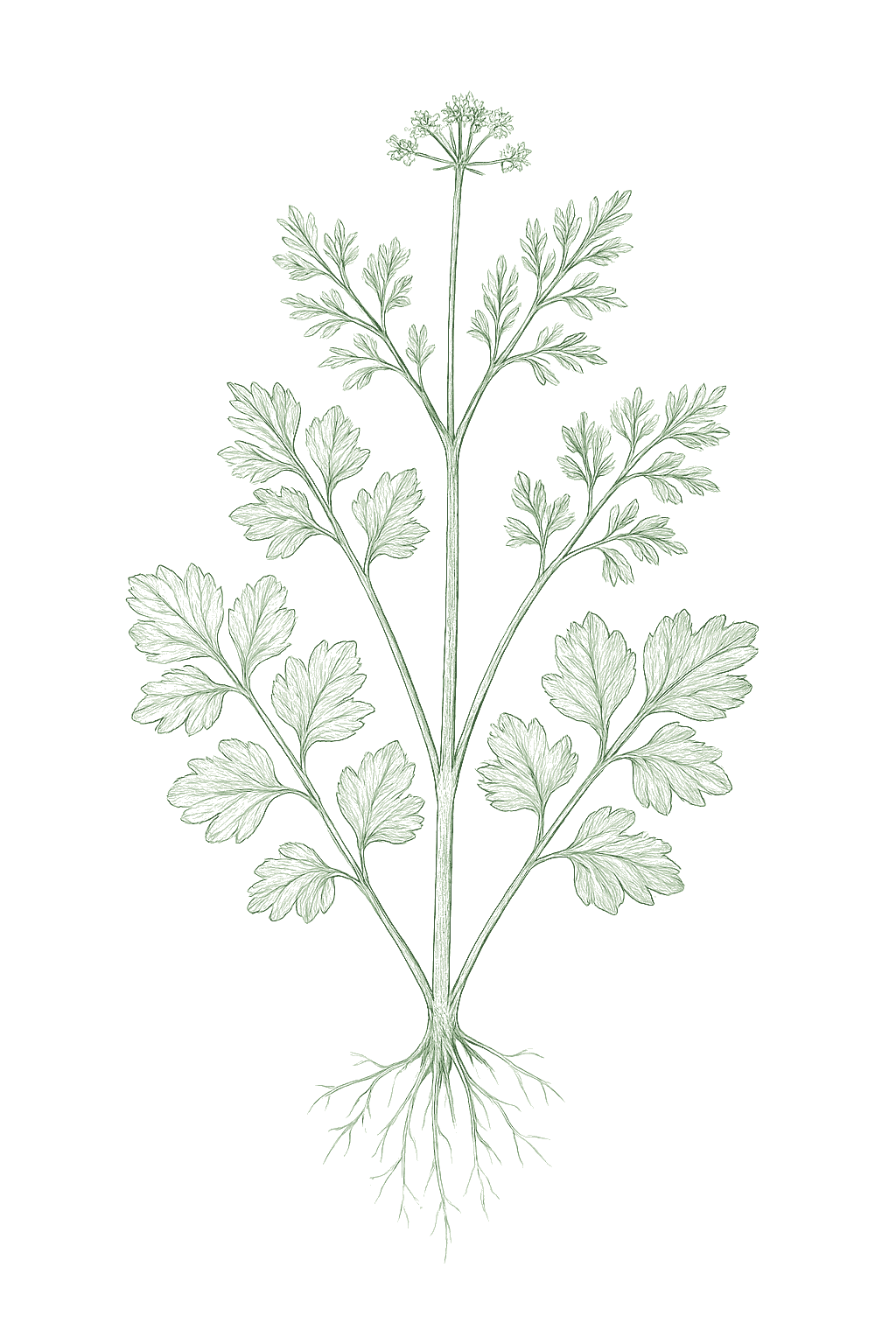
Off-season for cilantro / coriander in zone 12.
In Zone 12, cilantro / coriander can be planted October through December, skipping the summer heat. Harvest runs January through March.
Sow a little cilantro every 2 to 3 weeks instead of all at once, so you always have fresh leaves before it bolts. Do this in spring and again in late summer for fall. In hot areas, skip summer for leaves and keep sowing through the cool months, and let summer plants make coriander seed.Cilantro is a classic succession crop: it matures fast and bolts faster, so one sowing is gone in a few weeks. Sow a short row every 2 to 3 weeks through the cool windows, spring until heat and long days set in, and again from late summer through fall, which is the longer, more reliable leaf run. In hot regions skip summer for leaves and succession-sow through the cool fall, winter, and spring, while letting any summer plants run to coriander seed.
Plant cilantro straight in the garden from seed, because it has a deep little root and does not like being moved. Sow the seeds about a quarter to half an inch deep as soon as the soil can be worked in spring, since the plants handle frost. The seeds are slow, often taking one to three weeks, so keep the soil moist. Sow again every couple of weeks, and in hot areas plant in fall through spring instead of summer, because heat makes it bolt almost right away. A summer crop is really for the coriander seed.Cilantro is almost always direct-sown, since it has a slender taproot and resents transplanting. Sow seed about 0.25 to 0.5 inch deep as soon as the soil can be worked in spring; it tolerates frost, so it can go in several weeks before the last frost, and it germinates slowly, often 7 to 21 days. The round seed is actually two seeds fused, so growers sometimes gently crack it to speed and even out germination. Sow a little thicker than the final stand and thin to taste. In hot regions, shift sowing to fall through spring, since heat both slows germination and bolts the crop almost at once; midsummer sowings are grown for coriander seed rather than leaves.
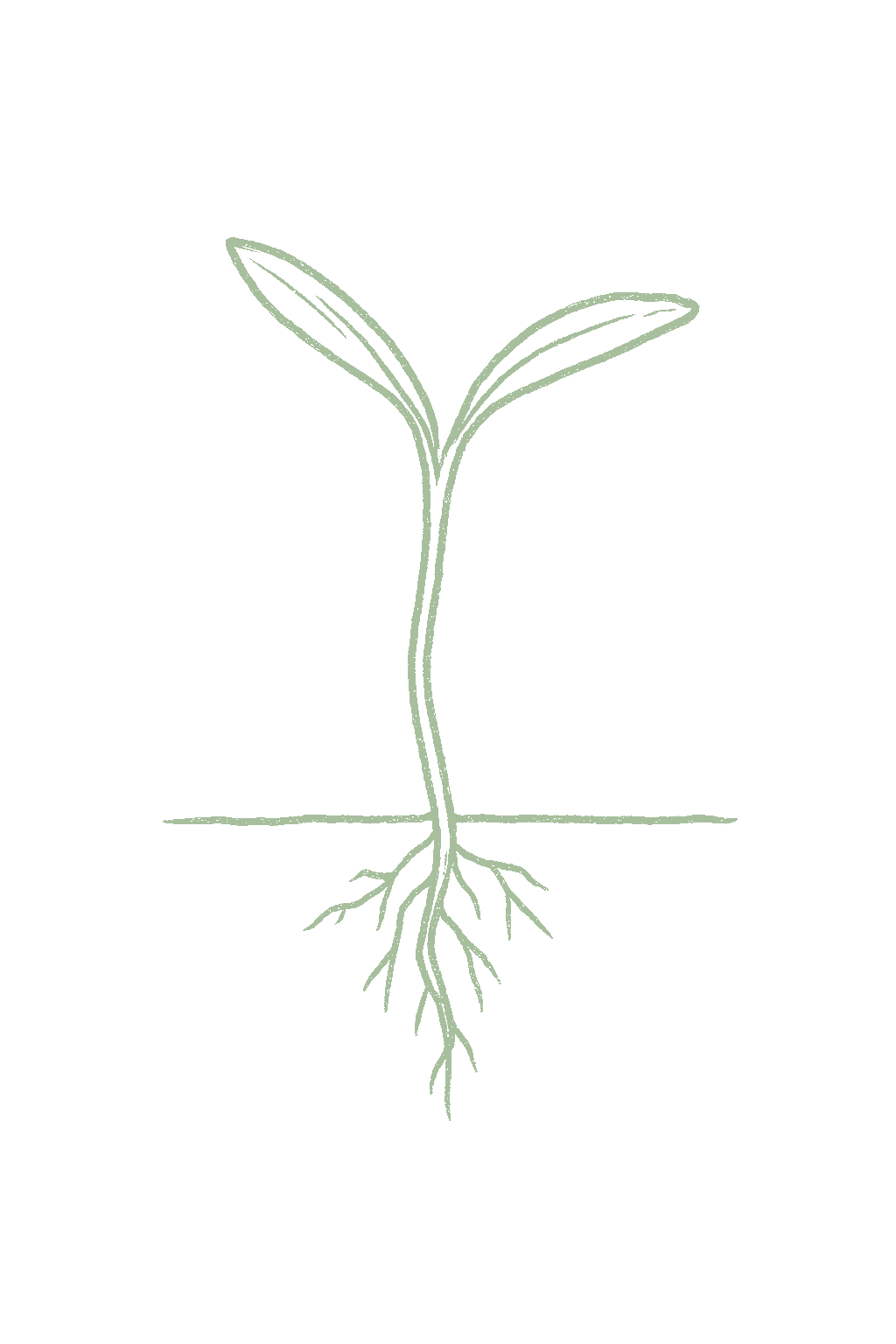

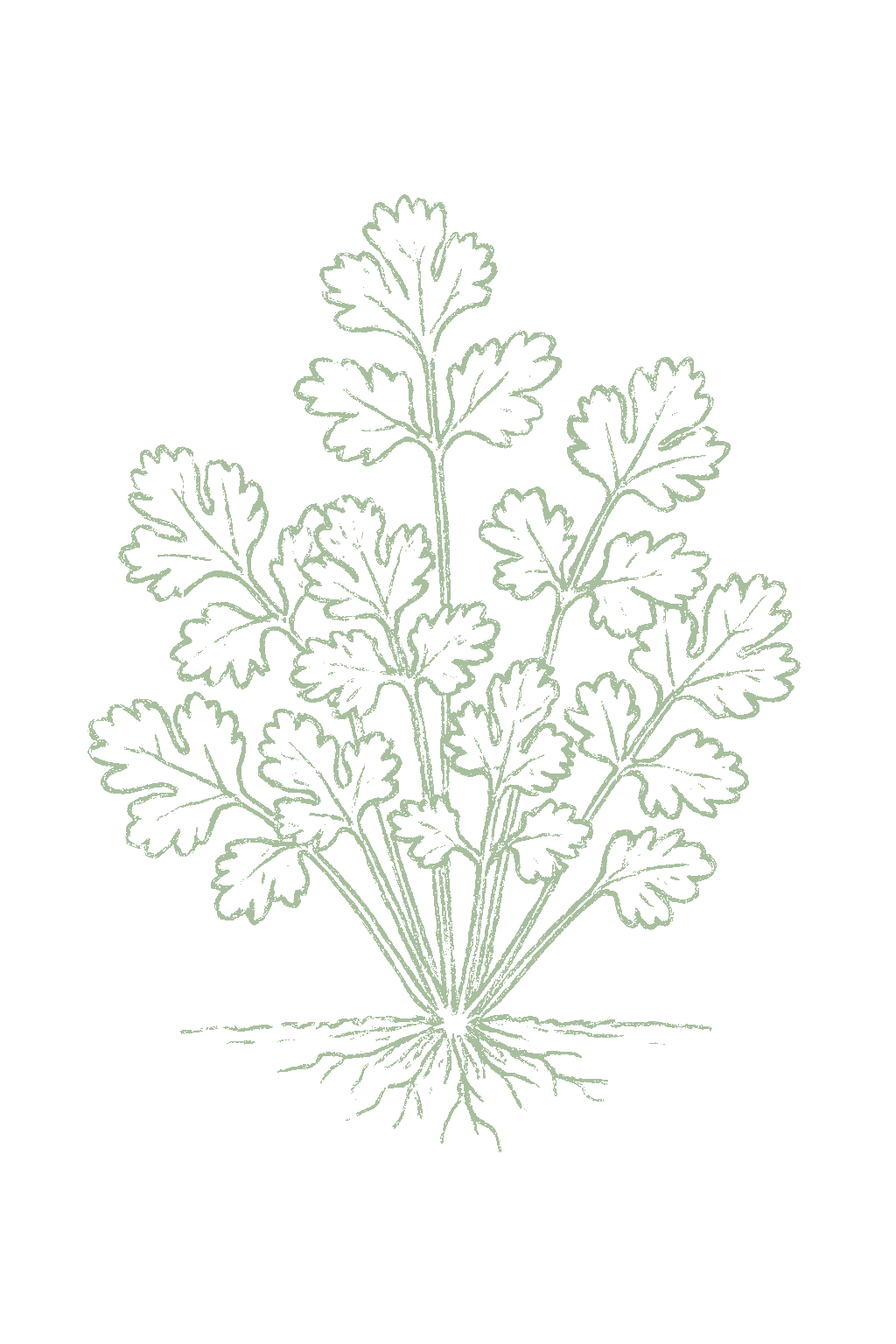


Not sure what soil you have? Grab a small handful of damp soil from your garden bed and squeeze it. If it crumbles apart easily, it's sandy. If it holds together but breaks when you poke it, it's loam (what most vegetables want). If it stays in a hard, slippery ball, it's clay.
Cilantro likes loose, fertile soil with plenty of compost mixed in that holds moisture but still drains well. It is not fussy, but steady moisture and rich soil keep the leaves tender and mild and put off bolting a little; hot, dry, hard soil makes it rush to flower and turn the foliage bitter.
Mix 2-3 inches of compost into the top 6 inches of your bed before planting. Compost holds moisture (which sandy soil drains too fast) and adds the nutrients sandy soil tends to lack. Repeat each season. Compost breaks down over time.
Mix 2-3 inches of compost AND a few inches of coarse sand or perlite into the top 6 inches of your bed. The compost feeds the plants; the sand breaks up the clay so air and water can move through. Don't add sand without compost. It can compact like concrete.
If amending your soil sounds like too much work, or if your soil is heavy clay, full of rocks, or contaminated, build over it. A raised bed at least 12 inches deep filled with a 50/50 mix of compost and sandy loam gives you ideal growing soil with no battles. A 5-gallon container with quality potting mix does the same for one plant at a time. Both bypass your native soil entirely.
The numbers that matter, at a glance.
Cilantro grows best in slightly acidic to neutral soil, about 6.2 to 6.8. Most garden soil is fine, and a simple soil test tells you where you stand.Aim for a soil pH of about 6.2 to 6.8, slightly acidic to neutral; cilantro is forgiving and still does fine across roughly 6.0 to 7.5. Clemson lists a working range of 6 to 7 for the crop. It is not a pH-sensitive plant, so in most gardens no adjustment is needed beyond a soil-test baseline.
Cilantro grows fast and likes a little nitrogen for tender green leaves. Mix some compost or fertilizer into the soil before planting, then give it one light feeding once the seedlings are up and growing. Because the crop is so quick, you usually do not need to feed it again, and a plant left to make coriander seed needs nothing more.Cilantro is a fast leafy herb that runs on nitrogen, but the crop is so quick that a modest charge is plenty. Utah State University suggests about a quarter cup of 21-0-0 per 25 square feet, one to two times during the season. Work compost or a balanced fertilizer in before sowing, then side-dress lightly with nitrogen once the seedlings are established to push tender, mild leaves. Avoid heavy late nitrogen, which draws aphids and does little for a crop you cut within a few weeks; a plant grown on for coriander seed needs no extra feeding once it bolts.
Use a nitrogen-rich feed such as blood meal or a 21-0-0 fertilizer once or twice while the plants are young.High N for fast leafy growth; a light side-dress of 21-0-0 or blood meal once or twice during the crop. No extra phosphorus or potassium needed beyond a soil-test baseline; do not overfeed a 4-to-6-week leaf crop.
Cilantro is small, fast, and easygoing, and its biggest garden gift comes when it flowers: the blooms pull in hoverflies, ladybugs, and tiny parasitic wasps that hunt aphids and caterpillars on nearby crops. It interplants well with tomatoes and peppers, with quick cool-season greens like lettuce and spinach, and with legumes. Keep it away from fennel, a poor neighbor for most herbs that can also cross-pollinate carrot-family plants. Most cilantro companion value is real but indirect: allowed to flower, cilantro (an Apiaceae umbel) is a strong insectary plant, recruiting hoverflies, ladybugs, lacewings, and parasitoid wasps that suppress aphids and caterpillars on neighboring crops, an effect extension IPM guidance leans on. Practically it interplants with tomatoes and peppers (which benefit from those beneficials and lend the cool-season cilantro a little afternoon shade), with quick cool greens that share its season, and with legumes. The well-grounded caution is fennel, a broad allelopath and poor herb neighbor that also crosses with carrot-family plants. Avoid clustering cilantro with its Apiaceae relatives (carrot, dill, parsley) on rotation and shared-pest grounds.
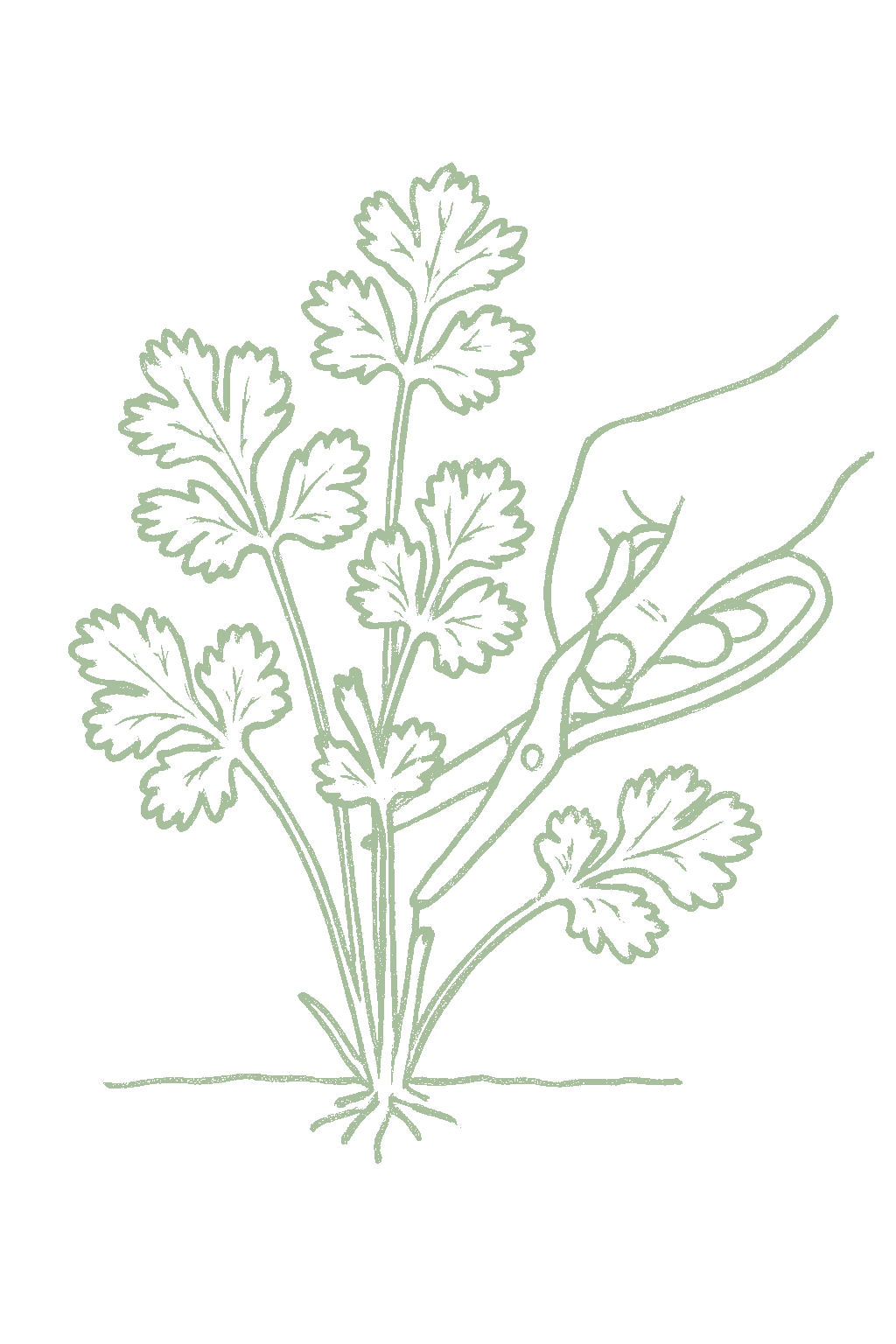
Start picking cilantro when the plants are about 4 to 6 inches tall, a few weeks after sowing and before you see a flower stalk. Take the outer leaves or cut the whole patch a couple of inches above the soil so it regrows, and pick in the cool morning for the best flavor. Pick often, because once it bolts the leaves turn bitter fast. To get coriander, let the plant flower and form seeds, then cut the seed heads when they turn tan, dry them, and shake out the round seeds to store.Begin cutting cilantro leaves once plants are about 4 to 6 inches tall, roughly 3 to 6 weeks from sowing, well before any central stalk rises. Cut the broad lower leaves, or shear the whole patch a couple of inches above the crown for a second cutting, taking no more than a third at a time and picking in the cool morning for the mildest flavor. Pick promptly and often as the weather warms, since the leaf window closes fast at bolt. For coriander, stop cutting and let the plant flower and set seed; harvest the seed heads as they turn from green to tan but before they shatter, dry them in a paper bag, then thresh and store the seed airtight.
Each cilantro plant gives a small bunch of leaves before it flowers, so it is grown in patches rather than as one big plant. A patch gives a couple of cuttings, then bolts, so sow more every couple of weeks. A bolted plant gives you coriander seed.A single cilantro plant yields a small rosette of leaves over a few weeks before bolting, so the crop is grown in dense patches or rows rather than per plant. Cut young or cut-and-come-again, a bed gives one to three cuttings before heat or bolt ends the leaf phase; a plant then left to flower yields a head of coriander seed.
Cilantro makes the most leaves in the cool weather of fall and early spring. A spring patch gives a couple of good weeks and then bolts, but a fall crop lasts much longer. Summer plants are best left to make coriander seed.Leaf production peaks in the cool weeks of fall and early spring. A spring patch produces for a couple of weeks and then ends abruptly at bolt, while the fall crop, under cooling weather and shortening days, holds far longer and, with cover, into winter. The coriander seed crop peaks from summer-bolted plants. Cilantro is one of the easier, faster herbs for a beginner, with leaves in about a month from a cool-weather sowing. The trick is to sow a little every couple of weeks, pick it young, and grow it in cool weather, especially fall, so it does not bolt before you can eat it. And if it does bolt, you get coriander seed.Cilantro is a fast, forgiving first-season crop: leaves in about 4 to 6 weeks from a cool-weather sowing and almost nothing to go wrong if you do not sow into heat. The key to total yield is frequent succession sowing, picking young, and leaning on the fall crop, since a spring patch sown too late bolts before it produces much. The bonus is that even a bolted crop is not wasted, it becomes coriander.
If you want leaves, pick a slow-bolting cilantro like Santo, Calypso, Leisure, or one labeled Slow Bolting or Long Standing, which take a bit longer to flower. None of them stop flowering in heat, so sow a fresh batch every couple of weeks too. If you want coriander seed, just let any cilantro flower and go to seed.Match the type to the goal. For leaves, choose slow-bolting selections, Santo, Calypso, Leisure, Caribe, and the various Slow Bolting and Long Standing strains, which hold in leaf longer before the seedstalk rises; none truly resist heat and long days, but they buy time. Specialty leaf types include Delfino, a feathery cut-leaf cilantro, and Lemon. For coriander seed, any standard cilantro left to bolt sets seed readily, and large-seeded types like Moroccan are grown specifically for the spice. Because the bolt is inevitable, succession sowing matters more than variety for a steady leaf supply.
BBQ & Grill · 40m · Serves 4
Try not to grow cilantro or other carrot-family plants (carrots, parsley, dill, fennel, celery) in the same spot more than about once every 3 years, since they share pests and diseases. Plant cilantro after peas, beans, cabbage, onions, or tomatoes instead. Cilantro often self-sows, so pull up stray seedlings that pop up where you do not want them.Rotate cilantro and its carrot-family relatives so they do not return to the same ground for about 3 years. The Apiaceae share aster yellows (spread by leafhoppers), the carrot motley dwarf complex, and soilborne rots, which build up where the family repeats. Follow cilantro with legumes, brassicas, alliums, or nightshades. Because cilantro readily self-sows from bolted plants, volunteers can blur a rotation, so pull seedlings that come up out of place.
The plant app sends a timely reminder at every critical moment of your cilantro / coriander season. The wording adjusts to whichever you pick: beginner or seasoned. Here are three you'll see in Zone 12.
plant sends the right notification at exactly the right moment, for your zone, your weather, your crops. Founding members lock the rate forever.
We're building this guide with real growers. Got a question we missed? Ask here. We read every one and add the best answers right to this page.
Learned something the hard way? Pass it on. Real growers' tips make this guide better for the next person, and we credit you by name when yours goes live.
If you've grown this crop and you see a date, a temperature, a companion claim, or a recommendation that doesn't match your experience, tell us. Real growers' corrections make this guide better for the next person.
Every date, temperature, spacing, and recommendation on this page is sourced from university cooperative extension publications, peer-reviewed agricultural research, NOAA climate data, and direct extension calendars. Where claims are softer (traditional gardening wisdom not formally documented), we say so.
Spot a data point that doesn't match your experience? Submit a correction; accepted corrections earn full author credit on the page.
Zone-aware seasonal nudges, what's worth planting now, and the occasional recipe from the harvest. No spam, ever.