Today · in your zone
What's happening right now
Off-season for rosemary in zone 9.
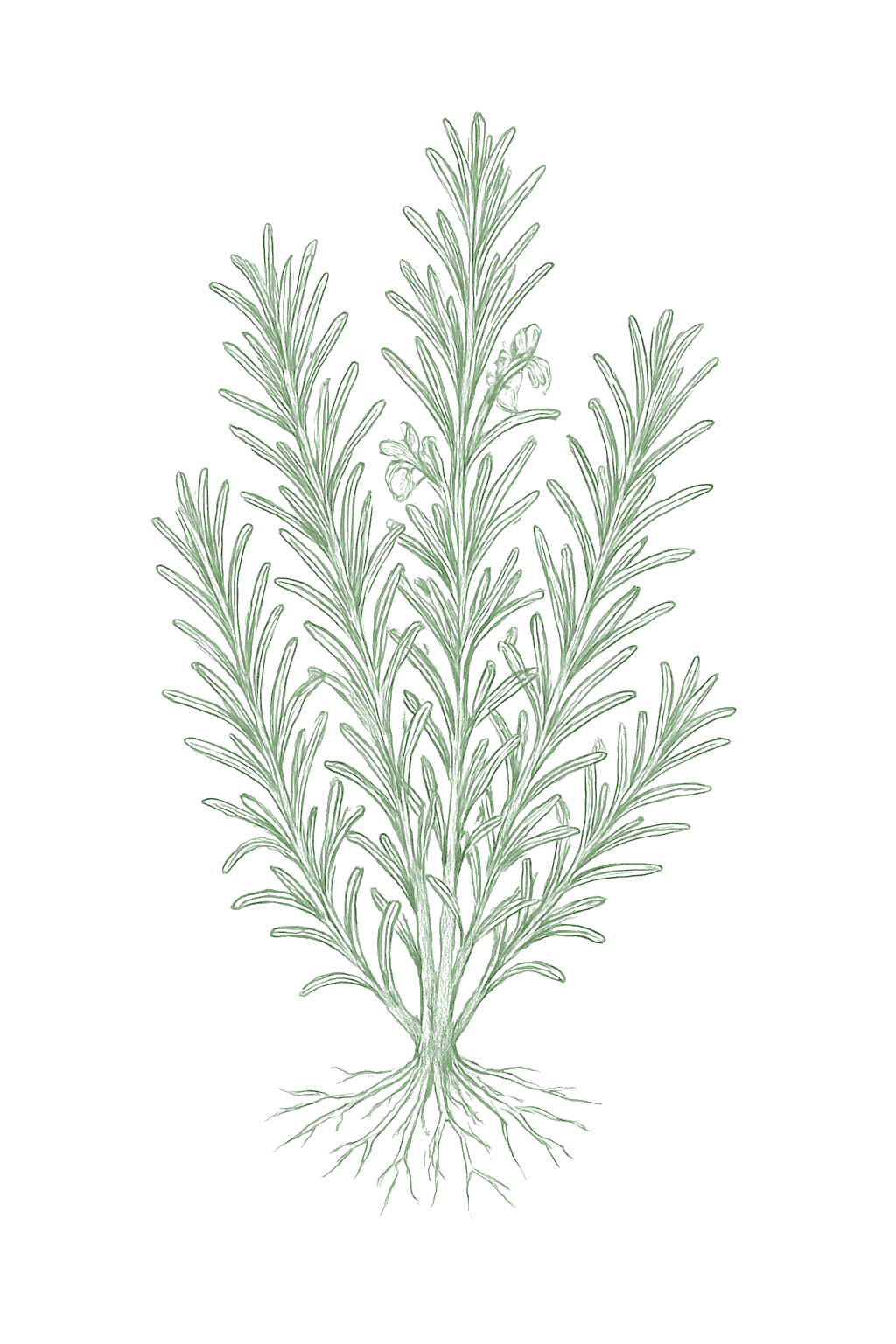
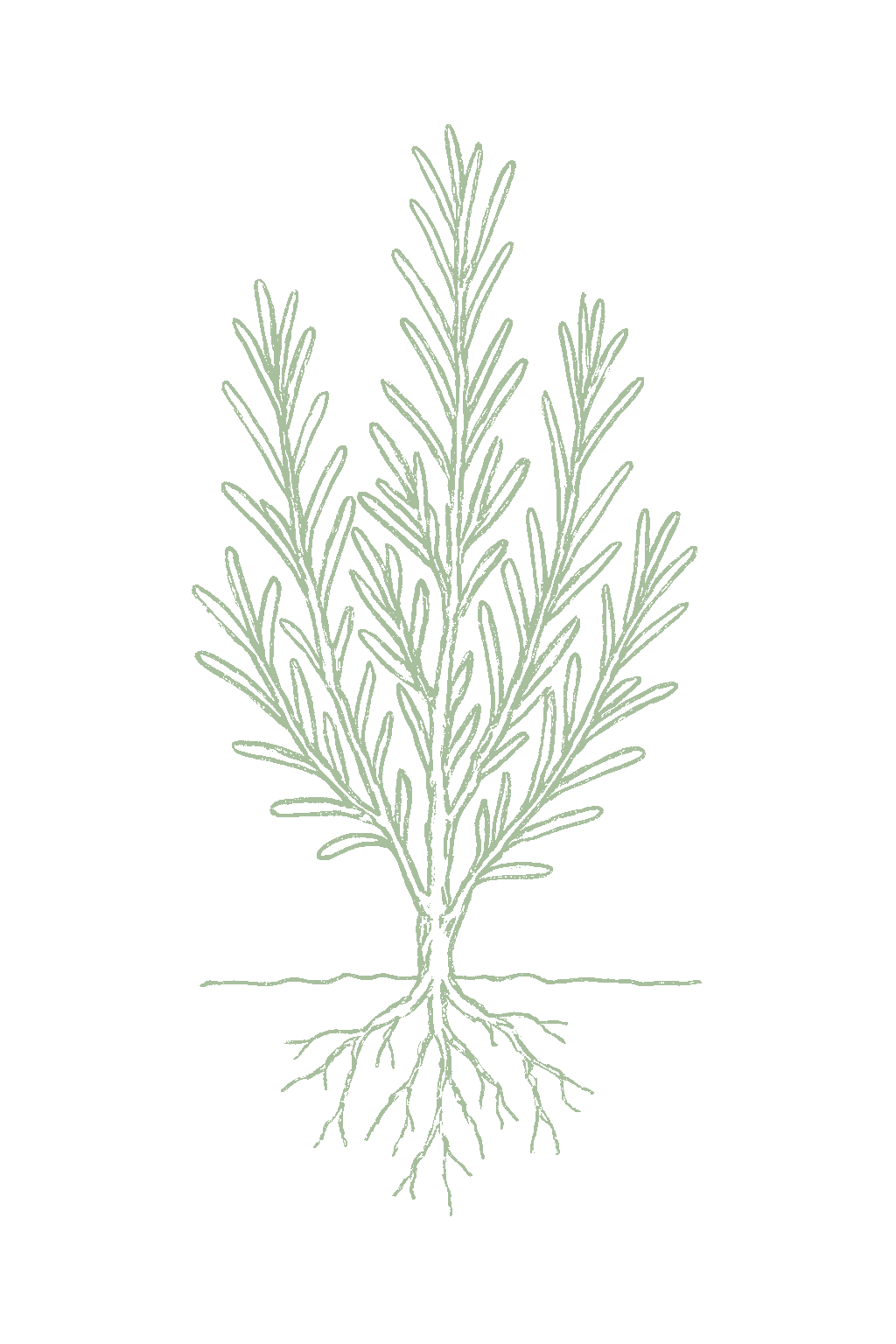
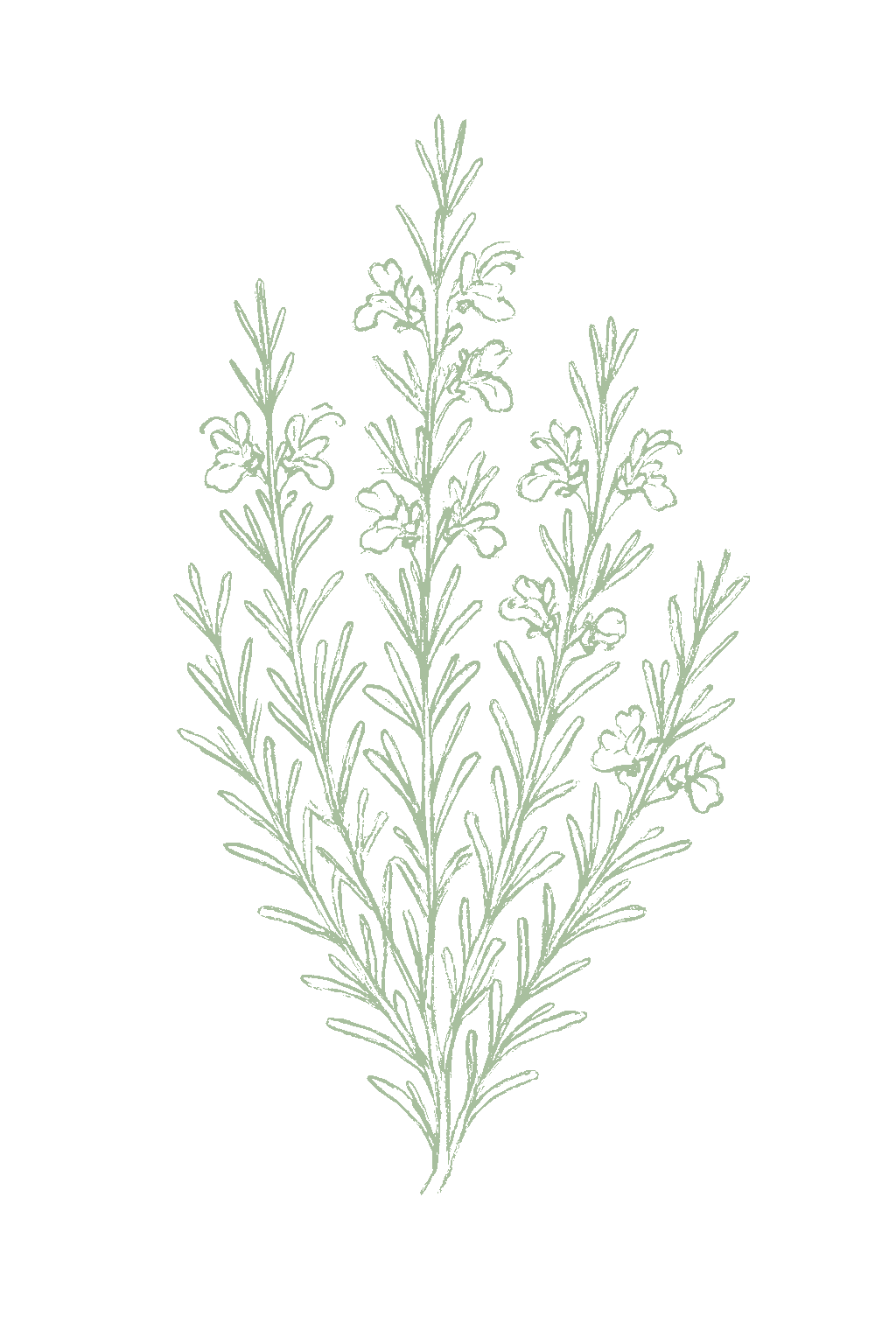
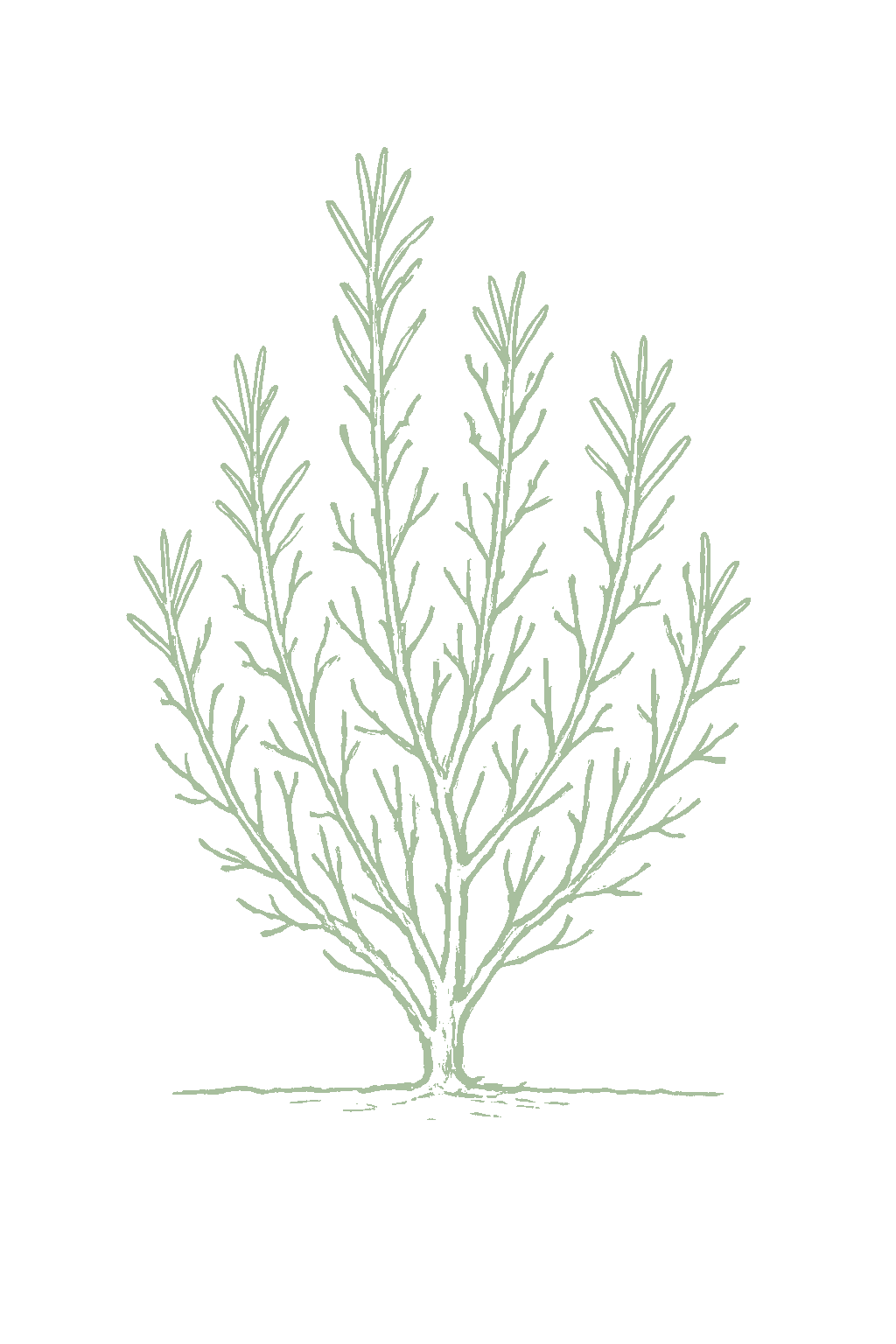
Rosemary is an evergreen shrubby herb with fragrant, needle-like leaves and small blue flowers. It comes from the dry Mediterranean, so it loves sun and hates wet feet. You grow it mostly for the leaves, which you can snip year round in mild climates. It is less cold hardy than sage or thyme: it lives outdoors year after year only in warmer areas (about zone 7 or 8 and up), and in cold-winter places most people grow it in a pot and bring it inside for the winter. Give it full sun, fast-draining soil, and go easy on the water, since too much water is the fastest way to kill it. Rosemary (Salvia rosmarinus, formerly Rosmarinus officinalis) is a woody evergreen Mediterranean subshrub in the mint family, grown mainly for its aromatic, needle-like culinary leaves and secondarily for its small blue flowers. It comes in upright forms that reach several feet and low trailing forms that spill over walls. Unlike hardier culinary perennials such as sage and thyme, rosemary is relatively cold tender: it is reliably perennial only in mild zones (roughly zone 7 or 8 and warmer, with the hardy cultivar Arp pushing into zone 6), and in colder regions it is grown as an annual or overwintered indoors in a pot. It wants full sun, lean sharply drained soil, and little water; overwatering and wet, poorly drained soil, not cold alone, are its most common killers.
Off-season for rosemary in zone 9.
Zone 9 averages a last frost around March 1. Within Zone 9, the colder half (9a, winters down to 20°F) runs about a week later. The warmer half (9b, winters down to 25°F) runs about a week earlier. The plant app picks your subzone from your ZIP.
| Subzone | Last spring | First fall | Growing days | Winter min | Fruits reliably |
|---|---|---|---|---|---|
| 9a | Mar 8 | Nov 24 | ~261 | 20-25°F | Yes · two seasons |
| 9b | Feb 28 | Nov 30 | ~275 | 25-30°F | Yes · two seasons |
Averages from 8 weather stations per subzone, drawn from NOAA 1991-2020 Climate Normals. Your actual frost date can vary by up to two weeks based on elevation, proximity to water, and local topography.
Rosemary lives outdoors year-round in zone 9. Give it full sun and fast-draining soil, water deeply but rarely, and trim to shape after it flowers. The main danger here is too much water, not cold.Perennial. Zone 9 is within rosemary's hardy range, so it grows as an evergreen perennial in the ground. Give it full sun and sharply drained, lean soil, water deeply but infrequently, and shape it lightly after bloom. Overwatering, not cold, is the main risk here.
Once established, lavender settles into the same rhythm year after year: a winter rest, fresh spring growth, an early-summer bloom you cut for fragrant bundles, then a hard cut-back that keeps the plant compact and flowering for years.
Rosemary lives outdoors year-round here without the cold worries of the colder inland zone. Give it full sun and fast-draining soil, and it should be trouble-free. It flowers in spring, a bit later than the warmer inland zone.Perennial, and comfortably so. Zone 9's milder winter minimum (marine moderation keeps its coldest nights from getting as cold as zone 8's, even though its spring runs cooler and later) puts real distance between the regional winter and rosemary's zone-7 hardy floor, so cold protection is not the concern here that it is one zone colder. Give it full sun and sharp drainage; wet winter soil is the main everyday risk.
Once established, lavender settles into the same rhythm year after year: a winter rest, fresh spring growth, an early-summer bloom you cut for fragrant bundles, then a hard cut-back that keeps the plant compact and flowering for years.
Rosemary is a perennial here in the Las Vegas Valley floor and thrives in the dry desert heat; hot Las Vegas summers are not a problem, and once it settles in it is drought-tolerant. Give it full sun, sharply drained alkaline soil, and deep, infrequent water once established. The Las Vegas Valley floor clears rosemary's roughly zone 7 to 8 hardy floor with more margin than zone 8, so cold is a lesser concern here.Perennial, and desert-strong here. Rosemary's own hardy floor is about zone 7 to 8, so winter cold is not the Nevada Mojave's limiting factor in the Las Vegas Valley floor. This crop thrives in the Mojave: summer heat is not a problem, and established plants are genuinely drought-tolerant, and the Mojave's alkaline, sharply drained soil suits rosemary's own Mediterranean coastal habitat. Give it full sun, sharply drained alkaline soil, and deep, infrequent water once established. The Las Vegas Valley floor clears rosemary's roughly zone 7 to 8 hardy floor with more margin than zone 8, so cold is a lesser concern here.
Once established, lavender settles into the same rhythm year after year: a winter rest, fresh spring growth, an early-summer bloom you cut for fragrant bundles, then a hard cut-back that keeps the plant compact and flowering for years.
Rosemary grows outdoors all year in the Rio Grande Valley since it almost never freezes here. Give it full sun and fast-draining soil, ideally a raised bed, and do not overwater it, since soggy soil is what actually hurts this plant here, not cold.Rosemary is a hardy evergreen perennial in the frost-free Rio Grande Valley and grows here year-round with no winter dieback to speak of. Texas A&M AgriLife Extension notes rosemary is a hardy evergreen shrub that only suffers damage well below freezing, so the Valley's mild winters are not a concern; the real risk is the Valley's heat and periodic humidity, which can bring on root and crown rot in poorly drained soil. Plant in full sun on a raised bed or mound of sharply drained soil, and water deeply but infrequently.
Once established, lavender settles into the same rhythm year after year: a winter rest, fresh spring growth, an early-summer bloom you cut for fragrant bundles, then a hard cut-back that keeps the plant compact and flowering for years.
Rosemary grows here year-round, but the humidity makes root rot and mildew a real risk, so plant it on a raised bed with fast-draining soil in full sun and do not overwater. Cover it during rare freezes.Perennial but humidity-marginal. Rosemary is grown here as an evergreen perennial, but the region's heat and humidity raise the risk of root and crown rot and powdery mildew, so it needs excellent drainage, a raised bed or mound, full sun, and restraint with water. In the colder parts of the area, protect it from occasional freezes.
Once established, lavender settles into the same rhythm year after year: a winter rest, fresh spring growth, an early-summer bloom you cut for fragrant bundles, then a hard cut-back that keeps the plant compact and flowering for years.
The easy, reliable way to grow rosemary is to buy a small plant or take a cutting from an existing one. Growing it from seed is slow and unpredictable, and seed-grown plants often do not match the parent, so most gardeners skip it. If you do want to try seed, surface-sow it and do not cover it, since the seed needs light to sprout, keep it warm around 70°F, and start indoors about 10 weeks before your last frost; expect slow, uneven germination.Rosemary is almost always started from a nursery transplant or from stem cuttings, not from seed. Seed germinates slowly and unevenly and can take about three years to reach a mature plant, and named cultivars do not come true from seed, so growers propagate them from cuttings. Take tip cuttings a few inches long, root them with warmth (bottom heat around 70 to 75°F), and they root in a couple of weeks. To grow from seed instead, surface-sow at about 70°F since the seed needs light, starting indoors roughly 10 weeks before the last frost; germination is slow and uneven and the seedlings size up gradually, which is why most growers still choose cuttings.




Not sure what soil you have? Grab a small handful of damp soil from your garden bed and squeeze it. If it crumbles apart easily, it's sandy. If it holds together but breaks when you poke it, it's loam (what most vegetables want). If it stays in a hard, slippery ball, it's clay.
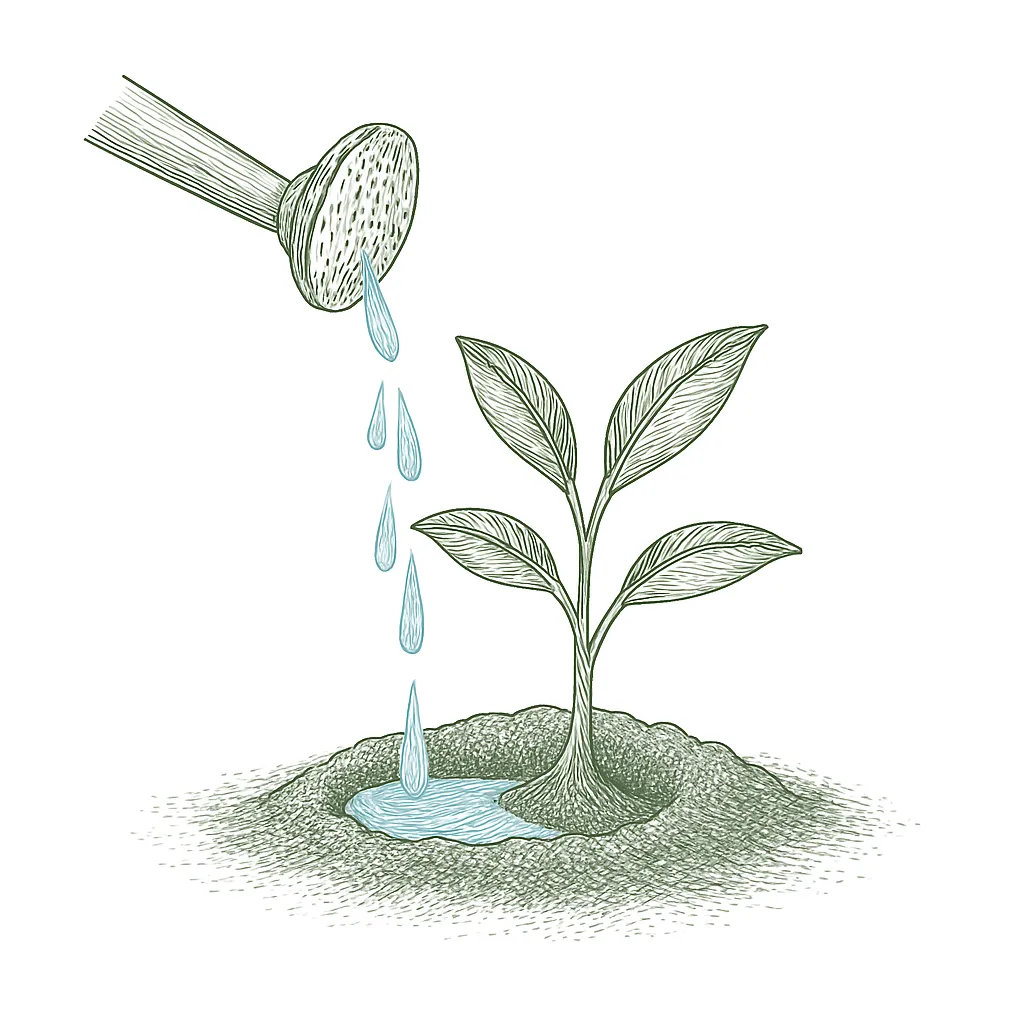
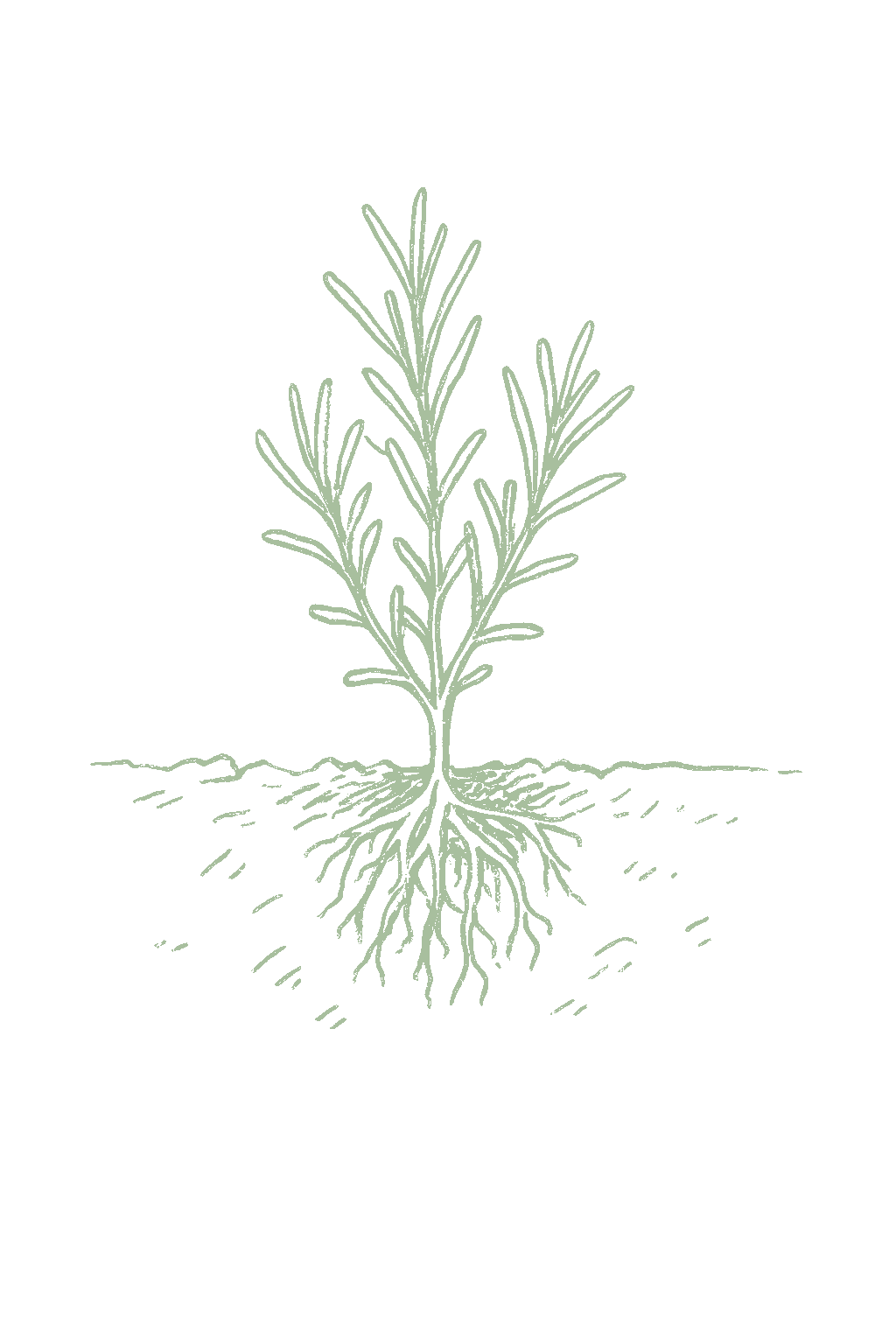
Rosemary likes poor, dry, gritty soil and full sun. Rich, damp soil and heavy clay make it weak and rot-prone, so the goal is fast drainage, not fertility. If your soil is heavy, plant rosemary on a mound or raised bed and mix in coarse sand or grit so water drains straight through.
Mix 2-3 inches of compost into the top 6 inches of your bed before planting. Compost holds moisture (which sandy soil drains too fast) and adds the nutrients sandy soil tends to lack. Repeat each season. Compost breaks down over time.
Mix 2-3 inches of compost AND a few inches of coarse sand or perlite into the top 6 inches of your bed. The compost feeds the plants; the sand breaks up the clay so air and water can move through. Don't add sand without compost. It can compact like concrete.
If amending your soil sounds like too much work, or if your soil is heavy clay, full of rocks, or contaminated, build over it. A raised bed at least 12 inches deep filled with a 50/50 mix of compost and sandy loam gives you ideal growing soil with no battles. A 5-gallon container with quality potting mix does the same for one plant at a time. Both bypass your native soil entirely.
The numbers that matter, at a glance.
Rosemary does fine in a pot, which is handy if your winters are cold, since you can bring it inside. Use a wide pot with holes in the bottom and a gritty mix, let it dry between waterings, and tip out any water in the saucer.Rosemary grows well in containers, which is the standard way to keep it in the coldest zones where it is treated as a bring-in plant, and to control the size of large upright types. Use a wide, free-draining pot and gritty mix, water only as the soil dries, and never let it stand in water. A trailing type like Prostratus is handsome spilling over a pot edge.
ArpThe most cold-hardy cultivar, an upright plant 3 to 4 feet tall with light blue flowers; the pick for colder gardens.
Blue Boy
In cold-winter areas, grow rosemary in a pot you can move indoors for winter. Bring it in before the first hard frost, keep it in the brightest, coolest spot you have, water only when the soil is dry, and do not feed it until it goes back outside in spring.Where rosemary is not hardy, a container lets you overwinter it indoors. Bring it in before first frost to a bright, cool spot (it prefers cool nights, roughly 40 to 50°F, and days around 60 to 65°F); the hardest parts are giving it enough light, not overwatering, and not letting it dry out completely. Withhold fertilizer over winter and acclimate it outdoors gradually in spring.
Hardy to zone 7 in the ground; roots in a pot sit colder than that.
Ask what your balcony or roof can carry
A balcony or roof can only hold so much weight. Before you set heavy pots there, ask a building architect what it can safely carry.Illinois Extension's guidance is to consult a building architect about weight limits before placing heavy pots on a balcony or rooftop garden. It gives no weight figure.
Never grow food in a container with anything toxic in it
Many kinds of containers can be used. Whatever you choose, keep anything toxic out of it, especially if you are growing food.Colorado State accepts nearly any container material but warns against using a container that holds toxic materials, especially for edible plants. Illinois adds that a vegetable container should be free of chemicals toxic to plants or people, and urges caution with treated lumber when growing food. If you cannot account for what a repurposed container once held, that alone is a reason to keep food out of it.
Secure hanging containers well
Fasten hanging baskets and window or rail boxes securely. Think about what is below them too, since they can drip on people or things underneath.Illinois Extension asks growers to secure hanging containers well and to think through the safety issues of hanging them. Placement matters too, since a hanging container can drip onto people or belongings below.
Rosemary likes soil that is slightly acidic to neutral, about pH 6.0 to 7.0, and is not fussy within a fairly wide range. Do not worry too much about the exact number; good drainage matters much more to rosemary than pH does.Rosemary does best in slightly acidic to neutral soil, roughly pH 6.0 to 7.0, and tolerates a wider band from about 5.5 to 8.0. Extension herb guidance clusters around pH 6 to 7.5, and rosemary is adaptable as long as the soil drains sharply; getting drainage right matters far more than fine-tuning pH.
Rosemary barely needs feeding. A little compost at planting is enough. Feeding it heavily gives you a lot of soft leaves with weaker flavor and scent, and a plant that is more likely to get sick or die back in winter.Rosemary has low fertility needs and is easy to over-feed. A little compost worked in at planting, or a single light application of a balanced fertilizer in spring, is plenty. Excess fertilizer pushes soft, lush growth that has weaker flavor and fragrance, flowers less, and is more prone to disease and winter injury.
N/A. There is no fertilizer number to hit here, since the goal is to feed rosemary as little as possible.N/A. Rosemary is not fed to an N-P-K target; the aim is lean soil and minimal-to-no supplemental feed, so no fertilizer analysis applies.
Grow rosemary next to other plants that also like full sun and dry soil, such as sage, thyme, and oregano, so you can water the whole group the same light way. Its flowers bring in bees and helpful bugs. Keep it away from plants that need a lot of water, because that wet soil will rot your rosemary. Rosemary pairs naturally with other sun-loving, drought-tolerant, lean-soil plants that share its need for sharp drainage, especially fellow Mediterranean herbs like sage, thyme, and oregano that can all run on the same dry, waterwise schedule. As a small flowering plant it draws pollinators and beneficial insects such as bees and butterflies. Keep it away from thirsty, rich-soil neighbors that force the wet conditions which rot rosemary.
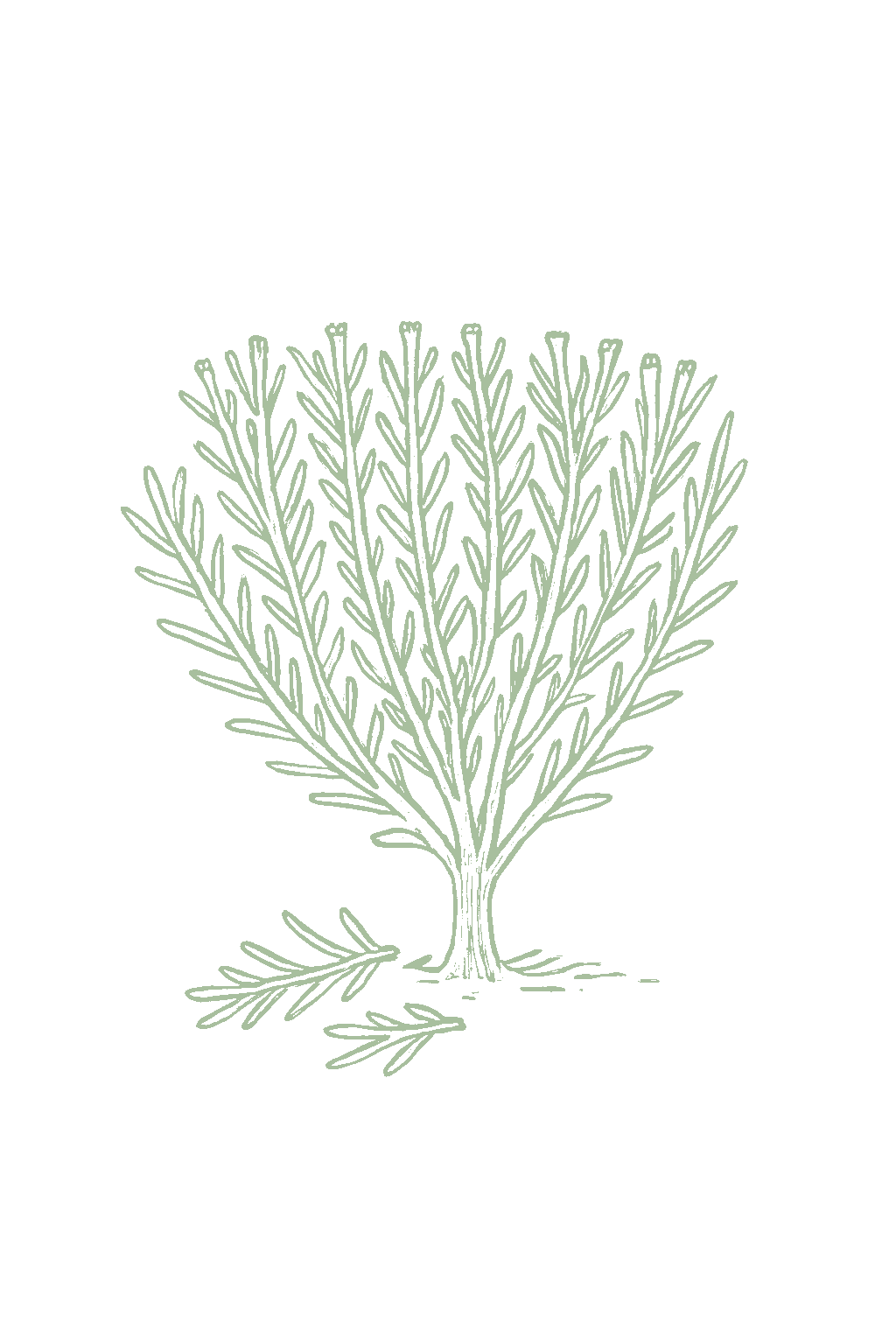
You grow rosemary for the leaves, and in mild areas you can snip sprigs almost any time of year. For the best flavor, cut sprigs from the soft green growth in the morning, especially just before it flowers. Snip stems just above a leafy joint so the plant grows back bushy, and take no more than about a fifth of the plant at once. To dry it, cut sprigs before or during flowering, hang small bunches somewhere warm and airy, and strip the leaves off once they are dry.Rosemary is grown for its leaves, and in mild climates you can snip fresh sprigs almost year round. For the strongest flavor and oil, harvest sprigs from the soft green growth in the morning, just before or as the plant begins to flower. Cut individual stems above a leafy node to encourage bushy regrowth, and do not remove more than about 20 percent of the plant at any one time. For drying, cut sprigs before or at flowering, then hang them in small bundles in a warm, airy place and strip the leaves once dry.
One grown rosemary plant gives you more sprigs than you will likely use, and in mild areas you can cut from it almost year round, as long as you do not take more than about a fifth at once.A mature plant supplies far more than a kitchen needs: sprigs can be cut continuously through the growing season, and nearly year round in mild climates, as long as you never remove more than about 20 percent at a time. Upright types yield the most cuttable growth once they reach full size in about three years.
Only harvest a little the first year. Pinching the tips helps the plant bulk up for bigger harvests later.Expect only light harvests the first year; pinching tips to build a bushy framework pays off in later seasons.
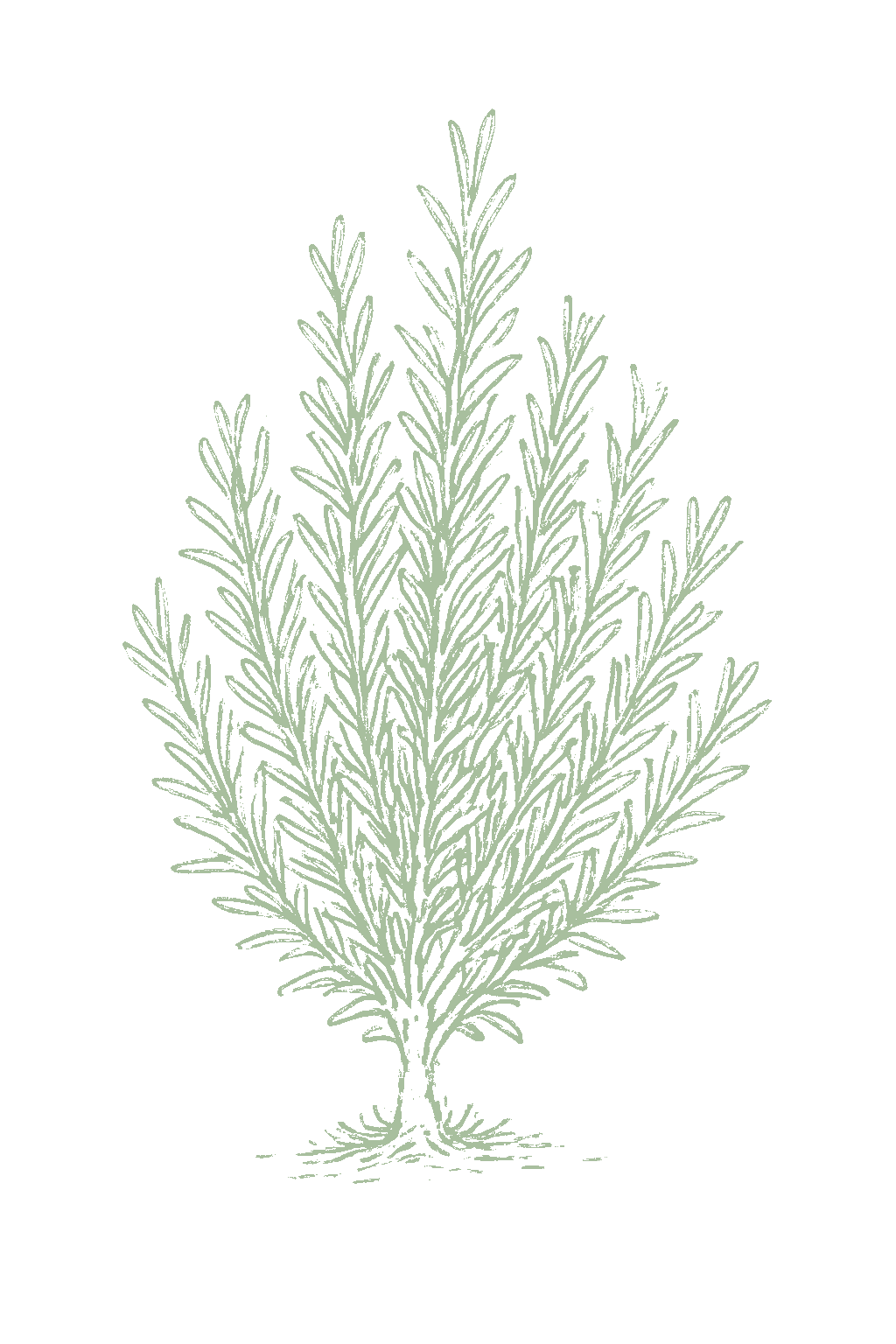
There are two main shapes of rosemary: tall upright types (like Tuscan Blue) that grow into shrubs, and low trailing types (like Prostratus) that hang over the edge of a pot or wall. In cold-winter areas the key is picking a hardy type: Arp is the toughest and can take zone 6, with Hill Hardy and Salem close behind for zone 7. Most other kinds only survive winter outdoors in warmer areas. For cooking, any upright green rosemary is great.Rosemary reaches the grower in two broad forms: upright types (Tuscan Blue, Barbecue, and the culinary standards) that make several-foot shrubs, and low, trailing types (Prostratus and similar) that spill over walls and pots. Because rosemary is cold tender, cultivar choice is really a hardiness choice in colder gardens: Arp is the hardiest, surviving into zone 6, and Hill Hardy and Salem are close behind for zone 7, while most other cultivars and the trailing forms are reliable only in about zones 8 to 10. For cooking, any of the upright green-needled types work well; for a container or a wall, choose a trailing form.
The ladder troubleshoots from the gentlest solution to the strongest. Start with the gentlest option and only move on when and if it doesn't work.
Water rosemary every week or two through hot weather and let the soil dry out in between, instead of forgetting it for a month. Mites build up fastest on a plant that has been left dry and stressed. This is not a plant you keep damp, it is a plant you keep from getting desperate.Outbreaks track water stress, so the target is the middle of this crop's range: soak, let the soil dry thoroughly, soak again on roughly a one to two week cycle in heat. Rosemary hides thirst, because its needles do not flag the way broad leaves do, so the interval matters more here than how the bush looks. Do not read this as constant moisture, which is what feeds the root rot on this plant.
Clip out the weak and worst-hit growth and get it away from the plant, and prune the bush now and then rather than letting it thicken into a mat. Removing infested growth and pruning regularly are among the best defenses on herbs, and a thinner bush is a harder place for mites to hide.Sanitation here is as much pruning as cleanup: taking out weak and infested shoots removes colonies wholesale, and the open canopy it leaves behind is the same lever that keeps an overwintered plant out of trouble, since dense foliage and poor air movement are what drive the indoor outbreaks. Bag what you cut; trimmings left at the foot of the bush are still carrying live mites.
Hose the bush down hard and often, especially through a dry spell. A strong stream carries mites off the needles and settles the dust that lets them build up, and on rosemary it is frequently enough by itself. Rinse in the morning so the plant is dry by evening.Regular forceful rinsing does most of the work on this crop, and it does two jobs, dislodging colonies and settling the dust that touches outbreaks off in the first place. Wet nearby paths and dusty ground on the same pass. Get into the middle of the bush, where the needles are dense and a passing spray does not reach, and finish early enough that the plant is dry by evening.
Plenty of small hunters eat spider mites: predatory mites, tiny lady beetles, lacewing larvae, minute pirate bugs. They are usually already there, and the main thing you can do for them is not to spray anything broad that kills them along with the mites.The resident complex, western predatory mite and its relatives plus sixspotted thrips, the spider mite destroyer lady beetle, bigeyed bugs and lacewing larvae, is what holds mites at a level you never notice. Sticking to selective materials is how you keep it, since a broad-spectrum spray takes out the predators along with the pest and hands the plant back to whatever recovers first.
If numbers keep climbing after rinsing, insecticidal soap is the selective choice. It only kills what it wets, so work it down into the bush rather than misting the outside. Leave it alone in heat over 90°F, and do not treat a plant that is already dry and stressed.Soap, or a light horticultural oil, is the selective choice once rinsing is not holding, picked because it leaves the predators standing. There is no residue, so coverage decides the result and the dense needle canopy is where thorough coverage is hard. Note that the 90°F and water-stress limits collide with exactly the conditions that produce a mite problem, so correct the watering first and spray a day or two later rather than treating a drought-stressed plant in a heat wave.
The bottom rungs are products with label rules: timing, pollinators, and days to wait before harvest. Before you spray →
The ladder troubleshoots from the gentlest solution to the strongest. Start with the gentlest option and only move on when and if it doesn't work.
Feed rosemary sparingly. Sap-sucking insects turn up most where fertilizer has been laid on heavily, and the soft new growth a big nitrogen feed pushes out is what aphid numbers climb on.Nitrogen restraint is the crop-specific opening move: sap feeders on rosemary track over-fertilizing, and excess nitrogen raises aphid reproduction directly rather than only by making a bigger plant. A modest, infrequent feed keeps growth steady instead of producing the tender flushes colonies build on.
If ants are running up the stems, shut them out. They collect the sugary waste the aphids give off and chase away the ladybugs and lacewings that would otherwise clear the colony. A sticky band on the main stem stops them, and if your plant sprawls low, the branches touching the ground are what they will use to get around it.Ant tending is what turns a small colony into a persistent one, because the ants displace the predators and parasitoids that would regulate it. Excluding them restores that control rather than substituting for it: the point of shutting the ants out is to let the predators do the work, so it belongs before leaving the colony to its natural enemies, not instead of it. The band holds only once the branches bridging to soil, wall or paving are cut back.
Wash them off the new shoot tips with the hose, turned up hard enough to move them. Few find their way back. Repeat every few days while fresh growth keeps arriving, and rinse in the morning so the bush dries out.A forceful jet dislodges colonies from the tips, and dislodged aphids largely fail to reestablish. The repeat interval is set by how fast the plant is reflushing rather than by the calendar, so look the tips over twice a week while growth is rapid.
Left alone, the aphid's own hunters handle most colonies: ladybugs, lacewing larvae, and wasps small enough to lay an egg inside an aphid. The sign that the wasps are ahead of you is a scattering of tan, papery aphids sitting among the live ones.Conserved natural enemies are the default control here, and those parasitized mummies are the field sign that the population is already being taken down. Conserving them is nothing more than keeping broad-spectrum products away from the bush and keeping ants out of the canopy.
If the colonies keep rebuilding, spray insecticidal soap straight onto them. It kills only what it actually wets and leaves nothing behind, so aim into the clusters and expect to repeat. Hold off in heat over 90°F, and off a plant that is dry and stressed.Soaps and oils are what the published guidance puts at this step for a garden aphid problem, and on a shrub you pick leaves from through the winter that is as far as it is worth taking it; nothing harsher earns its place. Contact-only action means coverage of the colonies, not of the bush, decides the result, and spraying only where aphids actually are spares the soft-bodied predators you are relying on to finish the job.
The bottom rungs are products with label rules: timing, pollinators, and days to wait before harvest. Before you spray →
The ladder troubleshoots from the gentlest solution to the strongest. Start with the gentlest option and only move on when and if it doesn't work.
Pull off the growth carrying the most of them and carry it right away from the plant, out of the room or off the bed, not into a heap beside the pot. Done early and repeatedly, this is what actually holds the numbers down.Removing infested foliage is half of the vigilance program that keeps an early population from establishing, and it is worth most before any spray decision is made. Carry the trimmings well away, since what you cut still holds live insects.
Hose the plant down. A firm spray knocks a good share of them off, and paired with picking off the worst growth it is the standard early response. Time it for the morning so the bush is dry well before dark.Water spraying is the other half of that early program. It will not clear an established population, but while numbers are still building it removes enough to stop the climb. On an overwintering plant this means a trip outdoors or to a sink rather than a hose, which is one more reason the value sits early.
Outdoors, the natural enemies of whiteflies often keep them in check with no help from you. What ruins that is spraying something broad, which kills the helpers along with the pest.Natural enemies frequently provide adequate control in the open garden, which is part of why the outdoor plant in full sun is the untroubled one. Protecting it means keeping every broad-spectrum product away from the plant, since whiteflies rebound from one faster than their enemies do.
Insecticidal soap, or a neem oil spray, will bring the numbers down but will not clear them. It kills only what it wets, so it takes thorough, repeated coverage, and it is worth knowing before you start that this is a holding measure rather than a fix. Not in heat over 90°F, and not on a plant that is already dry and stressed.Soaps and oils reduce but do not eliminate a whitefly population, and that is the honest expectation to set before spraying. It is also as far as the sequence goes, and not because the options simply run out: stronger insecticides mostly kill the natural enemies, whiteflies build resistance to them quickly, and they perform poorly in garden settings, so there is nothing worth reaching for past this.
The bottom rungs are products with label rules: timing, pollinators, and days to wait before harvest. Before you spray →
The ladder troubleshoots from the gentlest solution to the strongest. Start with the gentlest option and only move on when and if it doesn't work.
Cut the weeds around the plant in spring, before the young spittlebugs living in them grow up and move. They build up on soft weedy plants first and spread onto woody ones like rosemary from there, so clearing that ground is the one step that reduces them.The migration is the mechanism: spittlebugs become abundant on woody plants when they move in from nearby herbaceous hosts, so cutting infested weeds in spring, before the nymphs mature and disperse, is where the leverage is. Timing is the whole of it. Eggs overwinter on or in stems, there are one or two generations a year, and each nymph feeds for one to three months, so a single spring clearance covers the season.
If the froth bothers you, wash it off with a firm stream of water. Nothing about the plant's health requires it: rosemary is woody, and this feeding does far less to it than it does to soft-stemmed plants.Washing the nymphs off is a cosmetic call, not a control decision. Heavy feeding can distort tissue and slow growth, but chiefly on herbaceous species, and a spittle mass on an established shrub is not the start of a recurring problem. Water is also the only thing that gets to them: pesticides do not work on spittlebugs, because the nymph sits inside its own spittle mass and a spray does not reach it. Biological control is not considered important here either, so past a rinse there is nothing left to try, and the froth is part of the ordinary insect life a healthy garden supports rather than something to be cleared.
No spray for this one. Prevention is the control.
The ladder troubleshoots from the gentlest solution to the strongest. Start with the gentlest option and only move on when and if it doesn't work.
This is the one that kills rosemary, and drainage is the control, not a spray. Put it where water drains away instead of sitting: on a mound or a raised bed if your soil is heavy clay, and in a pot that drains freely. Then water deeply every week or two and let the soil dry out thoroughly in between, and do not plant it in a bed you have to water often for thirstier things.Soil that stays saturated is the condition these rots need, so the response is siting and irrigation rather than treatment: raised or mounded ground on clay, no standing water at the base, and a soak-then-dry cycle of roughly one to two weeks once the plant is established. Two details do most of the damage on this crop. Rosemary hides thirst, since its needles do not flag the way broad leaves do, which pushes people onto a watering schedule the plant never wanted; and a first-year plant genuinely does need regular water to keep its root ball moist, so the drought-tolerant regime starts after establishment, not at planting. Keep soil and mulch off the crown itself, and group it with plants that want the same watering.
If a rosemary has gone downhill in one spot, do not put another one, or another plant that rots the same way, back into that soil. These rots sit in the ground for years, so the safer move is a different spot altogether, and for a pot, fresh mix in a clean container rather than the old soil.These rots persist in the soil for years, so replanting something susceptible into ground that has already taken one plant is the reliable way to repeat the outcome. Treat the site as spent rather than waiting out an interval: the published replant intervals are written for annuals, and nothing sets one for a shrub that will stand in the same ground for a decade. In a container the equivalent is fresh media in a clean pot, which is the one case where you genuinely can replace the soil.
Start from certified or obviously healthy nursery stock. A rot like this can come in with the plant rather than turning up later, and once it is in the roots there is nothing to spray.Clean stock is settled at purchase, before any of the rest of this applies, and it carries more weight for a soilborne rot than for most problems, because infected material introduces the pathogen to the site rather than to one plant. Rosemary is normally raised from cuttings, so the same logic reaches your own propagation: take cuttings from a plant that is thriving, not from the one you are trying to save.
No spray for this one. Prevention is the control.
The ladder troubleshoots from the gentlest solution to the strongest. Start with the gentlest option and only move on when and if it doesn't work.
Give the plant room and moving air. On rosemary this is mostly an indoor winter problem, and it shows up where pots get pushed together in still air. Moving them apart usually clears it, and so does putting the plant back outside in spring.Space and air movement are the whole lever, and the mechanism is humidity rather than leaf wetness: this fungus does not need wet foliage to infect, so room and movement work by thinning the humid, stagnant pocket that collects around the foliage, not by drying the leaves faster. Indoors that means separating crowded pots and getting a little air across them. Outdoors it means an open, sunny site and a bush pruned to let air through the middle of it rather than left to thicken. Moving the plant outside in spring is usually the end of it.
Pick off the worst-coated growth and get it away from the plant. That will not rid the bush of the fungus, but the heaviest patches go with it, and with an indoor plant it is worth standing the affected pot away from its neighbors while you sort out the spacing.Removing infected growth takes away a share of what is available to spread, and isolating an affected indoor plant limits what reaches the pots beside it. Neither is curative and neither substitutes for the spacing above: in most home conditions, removing infected parts and adjusting the conditions is what resolves this, so it is worth doing both properly before considering a spray at all.
No spray for this one. Prevention is the control.
N/A. Rosemary is not rotated like a vegetable because it is a permanent plant that stays put for years. If you replace an old one, pick a fresh, well-draining spot.N/A. Rosemary is a long-lived perennial that stays in place for years, so annual crop rotation does not apply. When replanting an old rosemary spot, choose a fresh, well-drained site to avoid carrying over soil-borne root rot.
The plant app sends a timely reminder at every critical moment of your rosemary season. The wording adjusts to whichever you pick: beginner or seasoned. Here are three you'll see in Zone 9.
plant sends the right notification at exactly the right moment, for your zone, your weather, your crops. Founding members lock the rate forever.
We're building this guide with real growers. Got a question we missed? Ask here. We read every one and add the best answers right to this page.
Learned something the hard way? Pass it on. Real growers' tips make this guide better for the next person, and we credit you by name when yours goes live.
If you've grown this crop and you see a date, a temperature, a companion claim, or a recommendation that doesn't match your experience, tell us. Real growers' corrections make this guide better for the next person.
Every date, temperature, spacing, and recommendation on this page is sourced from university cooperative extension publications, peer-reviewed agricultural research, NOAA climate data, and direct extension calendars. Where claims are softer (traditional gardening wisdom not formally documented), we say so.
Spot a data point that doesn't match your experience? Submit a correction; accepted corrections earn full author credit on the page.
Zone-aware seasonal nudges, what's worth planting now, and the occasional recipe from the harvest. No spam, ever.