Today · in your zone
What's happening right now
Off-season for basil in zone 3.
Tap to switch. plant calibrates to where you are in the journey.
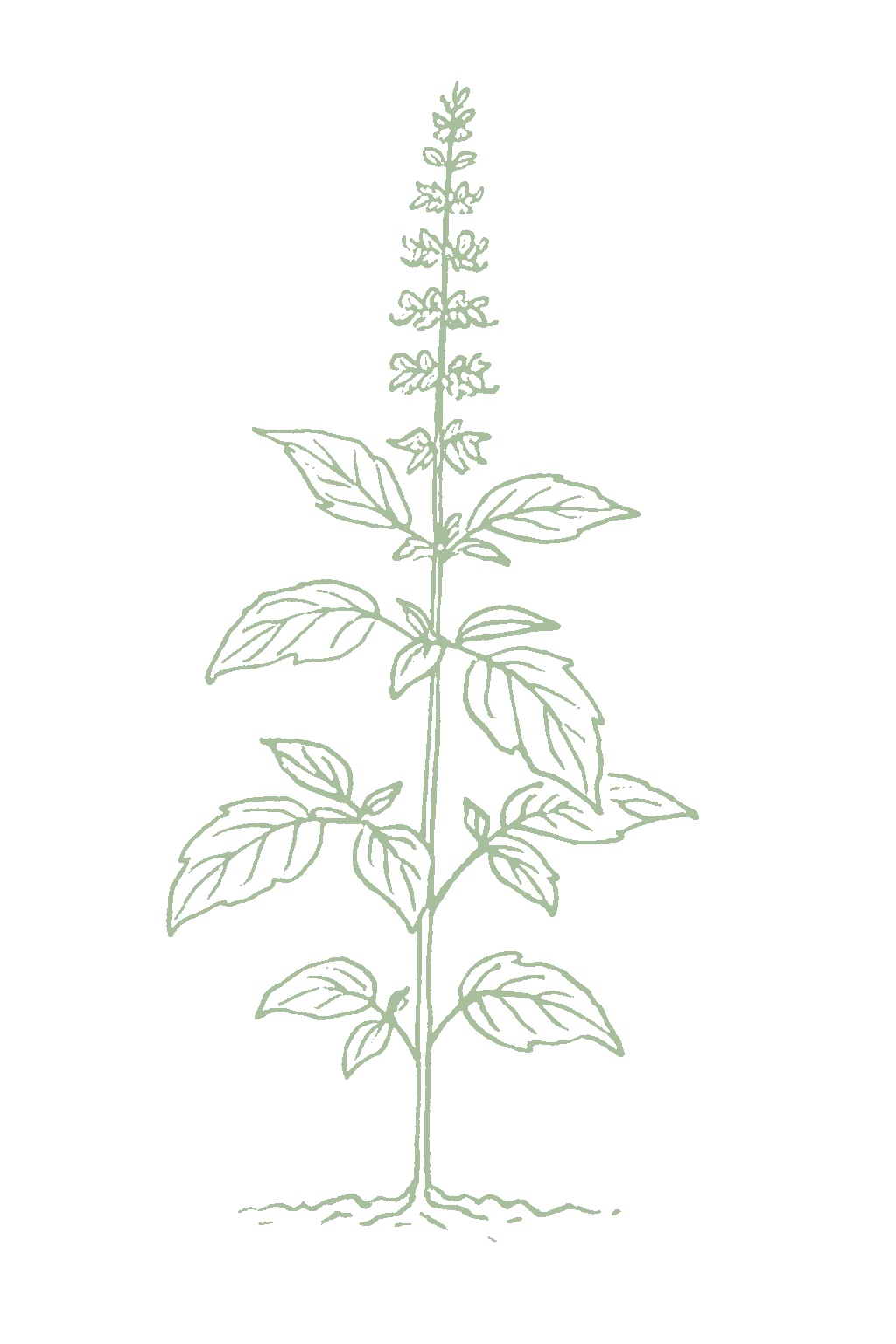
Basil is one of the most beginner-friendly herbs you can grow, but it has one firm rule: it hates cold. Do not plant it outside until after your last frost and nights stay above 50 °F. In return, basil grows fast and rewards regular picking. The trick is to pinch off the growing tips and any flower buds before they open, which keeps the plant bushy and productive. Once basil flowers, it starts to taste different and stops making as many leaves, so keep those blooms pinched. Sweet basil (Ocimum basilicum) is the most economically important annual culinary herb grown in North America, and its defining biology shapes every care decision. It is frost-tender without reservation: chilling injury begins below 50 °F, and a single frost kills the plant entirely. This means the growing window is bounded by last frost on one end and first frost on the other, making basil one of the most zone-sensitive herbs in the kitchen garden. Grown for leaves, not fruit, the central challenge is delaying the reproductive bolt: once basil shifts to flower production, leaf yield drops and essential oil concentration changes, altering flavor. The management lever is regular pinching of shoot tips and emerging flower buds, which redirects energy back into vegetative growth and can extend productive leaf harvest by weeks. Basil is a high-reward succession crop; successive plantings every 3 weeks from last frost through midsummer ensure a constant supply of young, tender growth. The herb is also one of the most container-friendly crops in this dataset, performing well in a single well-draining pot on a sunny windowsill or patio, which opens the season in all zones.
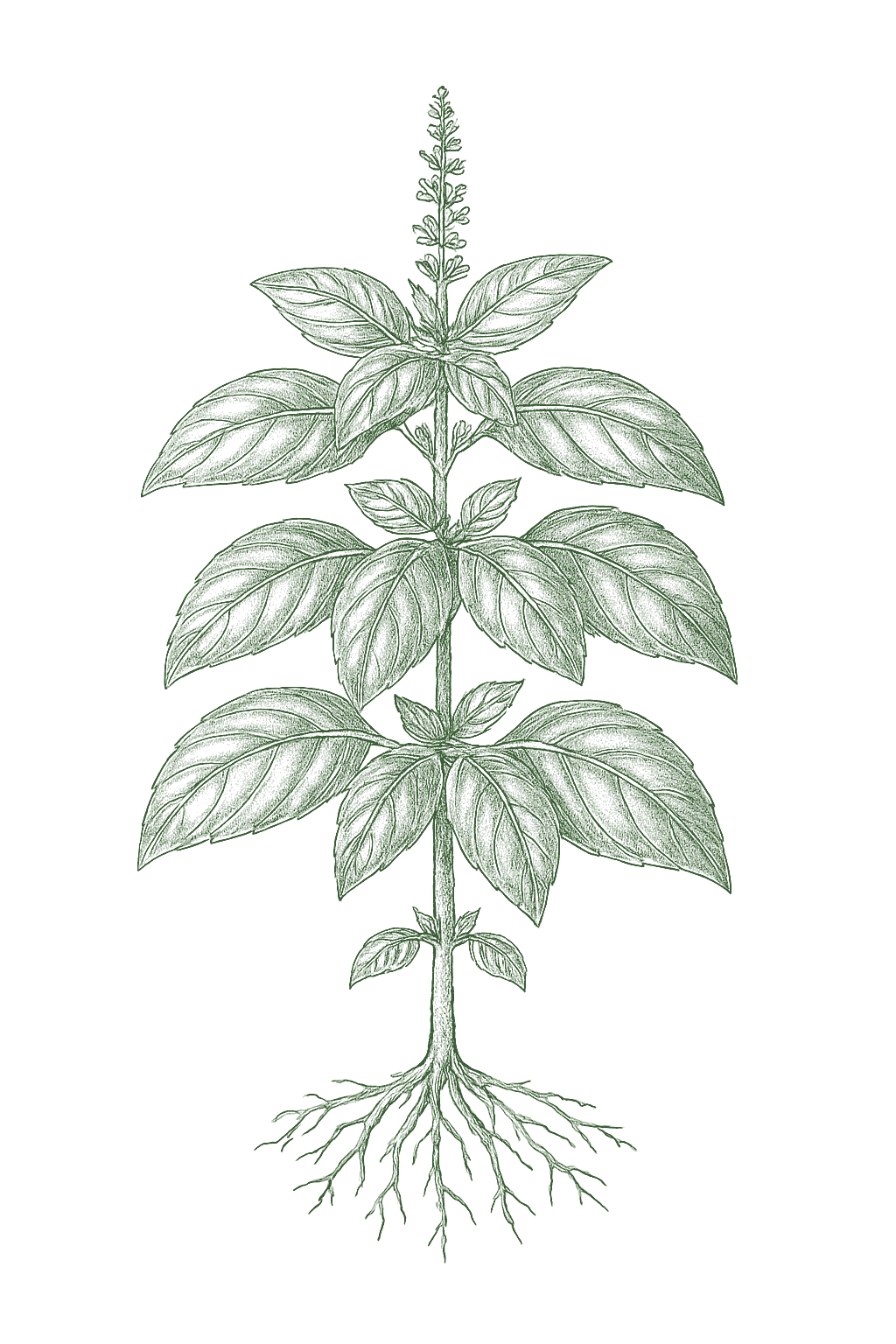
Off-season for basil in zone 3.
In Zone 3, basil can be planted June. Start indoors Apr 27 - May 11. Harvest runs July through August.
Plant a new set of basil seeds every 3 weeks through summer for a continuous harvest. Basil plants get woody and start flowering after a couple of months, but a fresh start nearby stays productive.Sow a new batch of seeds every 3 weeks from last frost through midsummer for a continuous supply of young, tender leaves. Older plants become woodier and more prone to bolting; fresh successions always outperform aged plants for leaf quality.
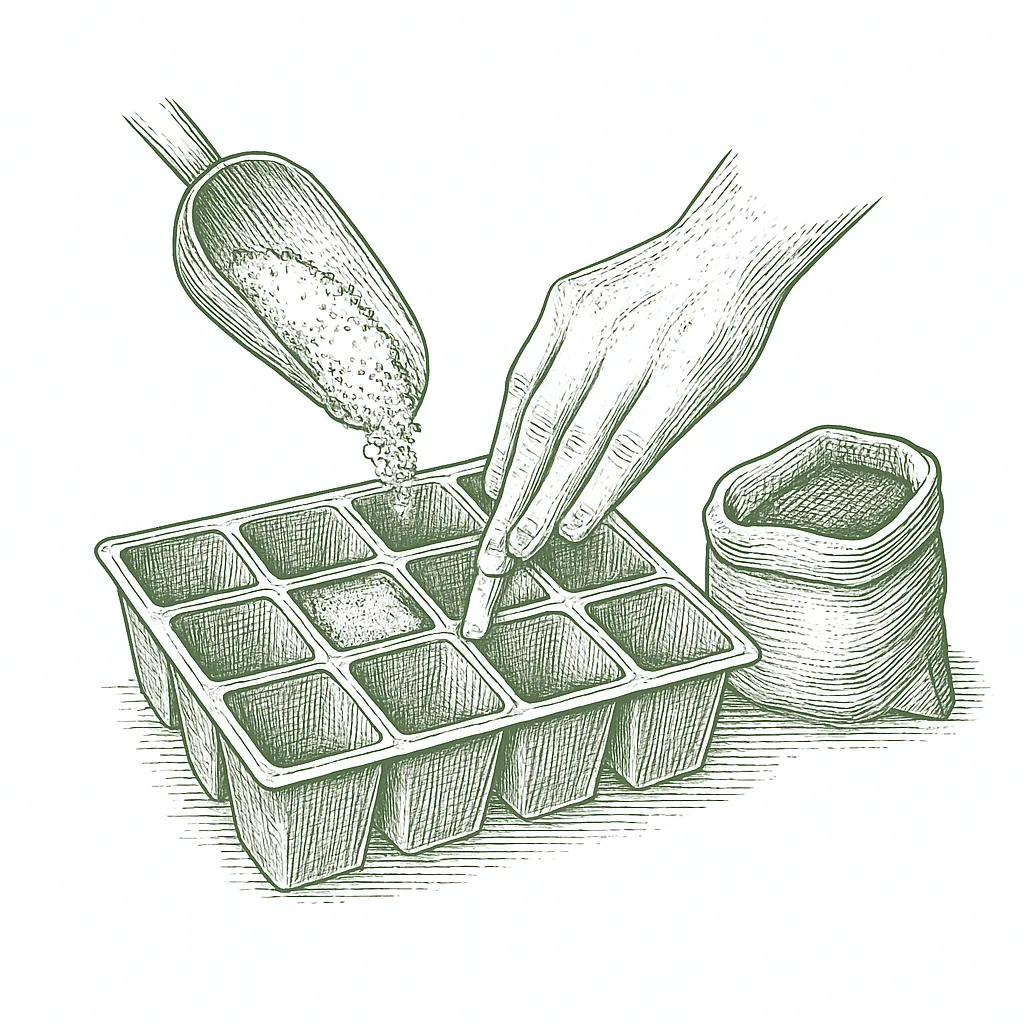
You have two options: start seeds indoors 6 weeks before your last frost, or wait and plant seeds directly in the garden after your last frost when the soil feels warm. Basil is very cold-sensitive, so do not rush it outside. If night temperatures are still dropping below 50 °F, wait.Start seeds indoors 6 weeks before last frost date for an early harvest. Transplant out when night temperatures stay consistently above 50 °F and all frost risk has passed. Direct sowing is equally effective once soil reaches 70 °F, typically 1-2 weeks after last frost. In zones 7 and warmer, direct sowing is the standard approach. Harden transplants off over 7-10 days by gradually increasing outdoor exposure before planting out.
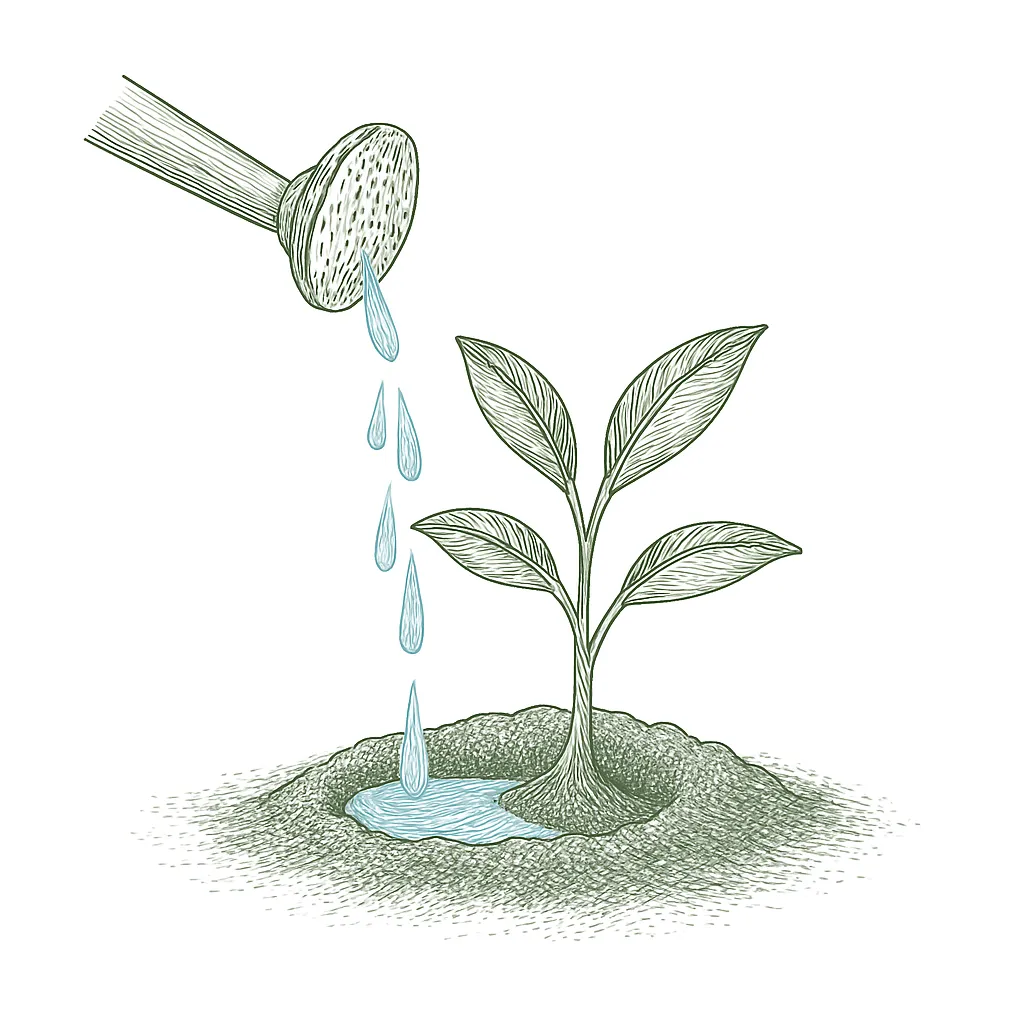
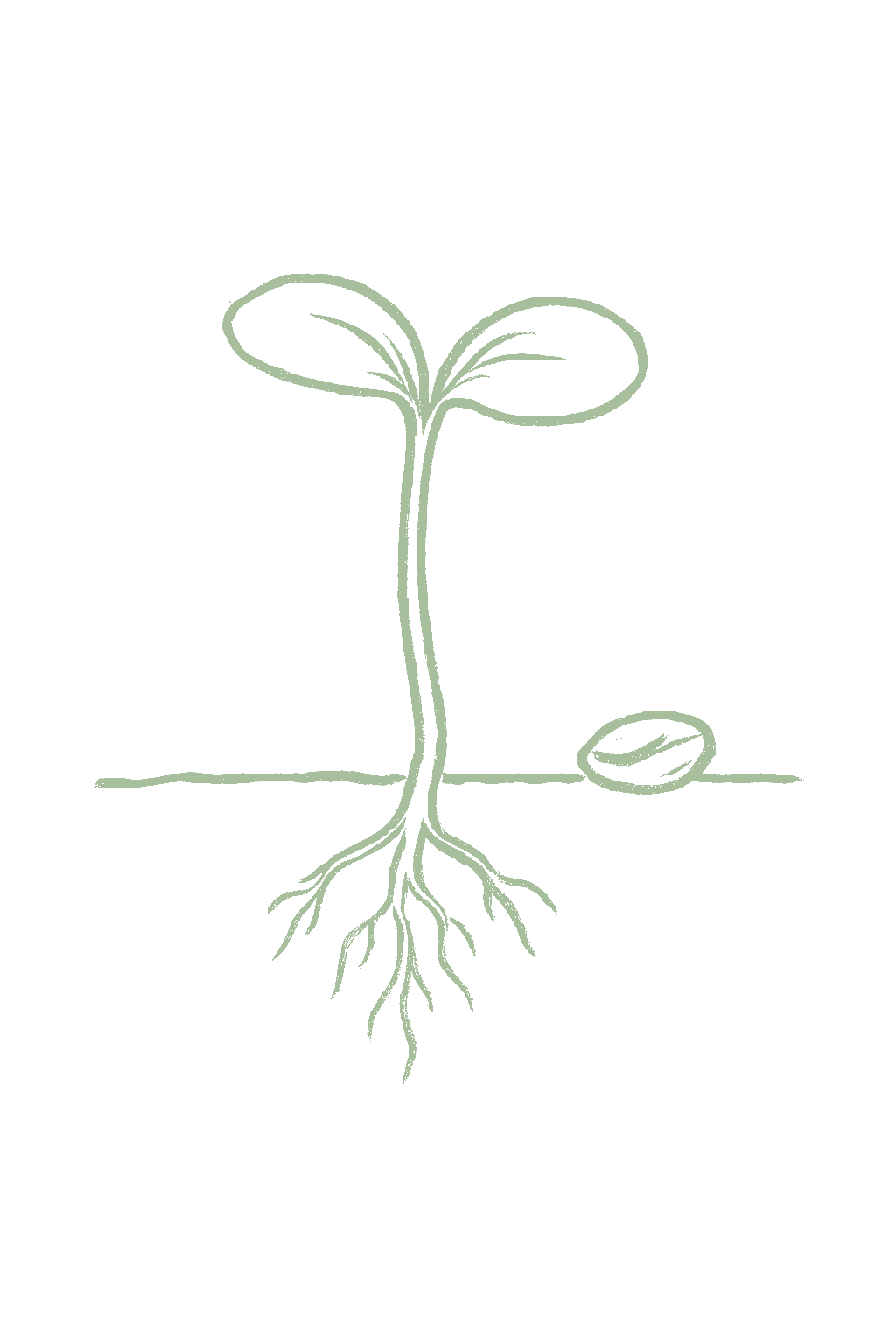
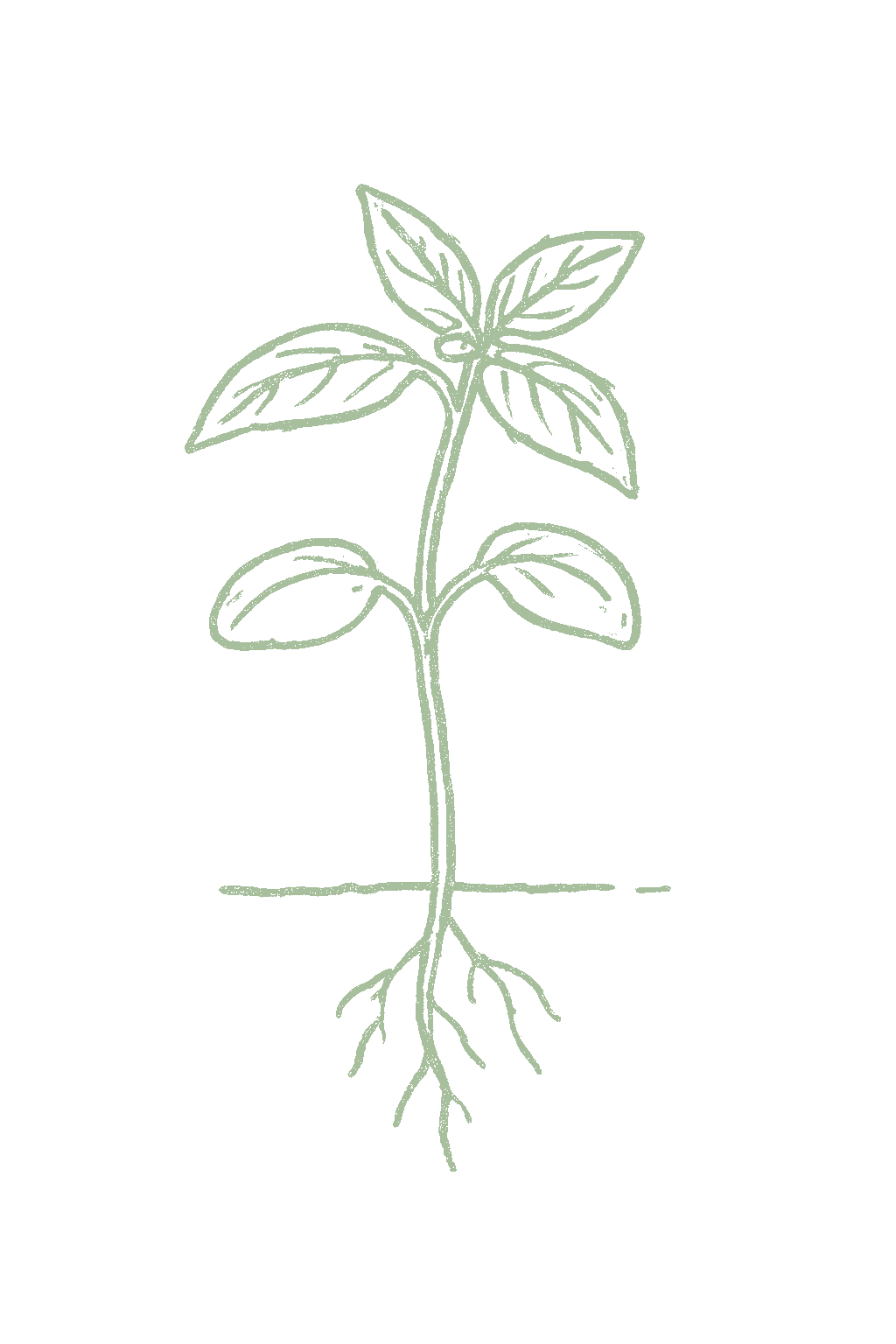
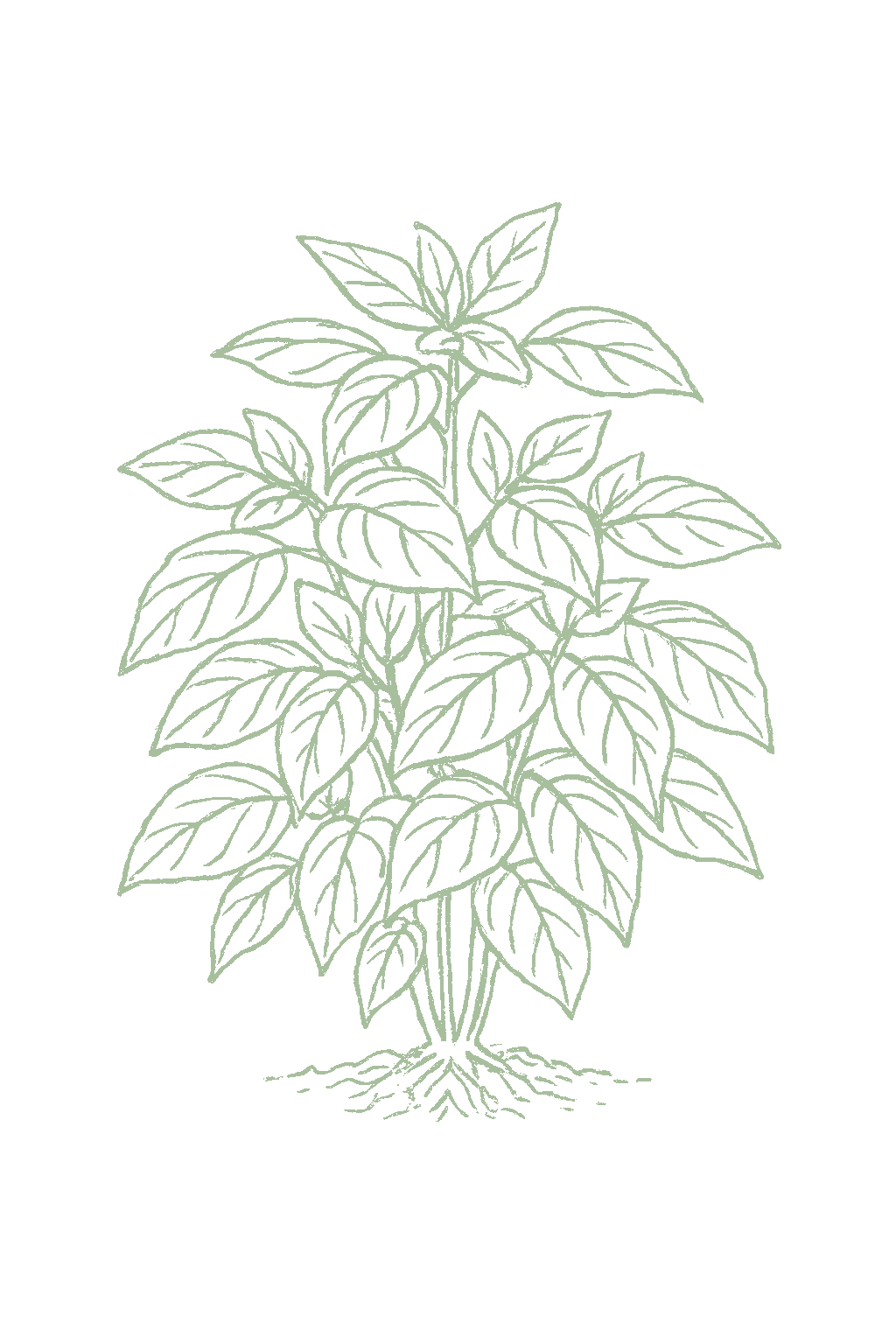
Not sure what soil you have? Grab a small handful of damp soil from your garden bed and squeeze it. If it crumbles apart easily, it's sandy. If it holds together but breaks when you poke it, it's loam (what most vegetables want). If it stays in a hard, slippery ball, it's clay.
Basil prefers loose, well-draining soil that has been improved with compost. Avoid heavy clay that stays wet, which can rot roots and encourage disease.
Mix 2-3 inches of compost into the top 6 inches of your bed before planting. Compost holds moisture (which sandy soil drains too fast) and adds the nutrients sandy soil tends to lack. Repeat each season. Compost breaks down over time.
Mix 2-3 inches of compost AND a few inches of coarse sand or perlite into the top 6 inches of your bed. The compost feeds the plants; the sand breaks up the clay so air and water can move through. Don't add sand without compost. It can compact like concrete.
If amending your soil sounds like too much work, or if your soil is heavy clay, full of rocks, or contaminated, build over it. A raised bed at least 12 inches deep filled with a 50/50 mix of compost and sandy loam gives you ideal growing soil with no battles. A 5-gallon container with quality potting mix does the same for one plant at a time. Both bypass your native soil entirely.
The numbers that matter, at a glance.
Aim for a pH of 6.0-7.5. Most garden soil is fine for basil without any adjustment.Basil is tolerant across a wide pH range compared to most vegetables. The 6.0-7.5 optimum reflects nutrient availability across the typical mineral spectrum; very acidic soils (below 5.5) can impair uptake of calcium and magnesium, which may increase susceptibility to physiological disorders and disease.
Feed basil with a balanced liquid fertilizer once a month in the garden, or every 2-3 weeks if it is in a pot. Do not overdo it: too much fertilizer makes the leaves less flavorful.Basil is a moderate feeder that responds well to consistent modest nitrogen supply, which supports the rapid vegetative growth that produces tender, flavorful leaves. Overfertilizing with high nitrogen produces lush growth but can reduce essential oil concentration and flavor intensity, and may attract aphids. A 5-10-5 balanced granular applied once or twice per season is sufficient in average garden soil; containers require more frequent supplementation (every 2-3 weeks at half-strength) because nutrients leach with regular watering. Liquid fertilizer applied at the base, not foliarly, reduces disease pressure.
Any balanced fertilizer works well5-10-5 balanced to modest nitrogen-forward; avoid high-nitrogen formulations during peak harvest
Basil and tomatoes are classic garden companions. Plant basil near your tomatoes for a traditional combination that may also help deter some insects. Keep basil away from fennel, which inhibits many herbs and vegetables. The basil-tomato pairing is the most-studied companion combination in the kitchen garden. University of Minnesota research cites replicated field studies showing basil intercropping reduces thrip populations on tomatoes in both field and greenhouse conditions, and may promote tomato growth. Texas A&M notes basil as a useful disease indicator plant for tomatoes, as basil shows powdery mildew and other diseases earlier than tomatoes, providing an early-warning function. The pairing also serves as a space-efficiency strategy: basil planted early in a tomato bed can be harvested before tomato canopy fill-in, maximizing yield per square foot. Marigolds are not a direct basil companion but share the warm-season frame and contribute to pest management in the broader bed. Fennel is a general allelopath suppressing many vegetable crops; keep basil and other kitchen herbs away from fennel plantings.
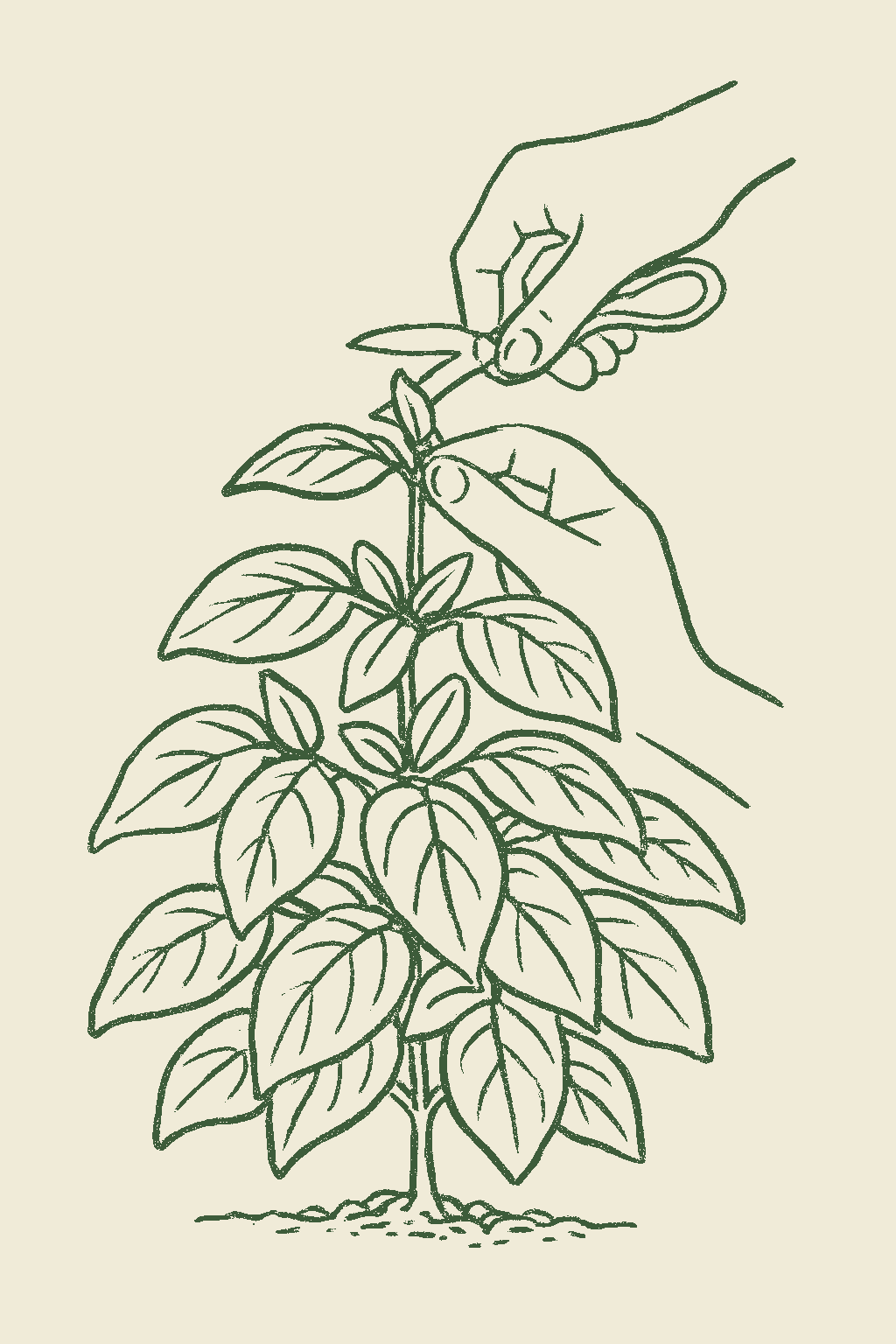
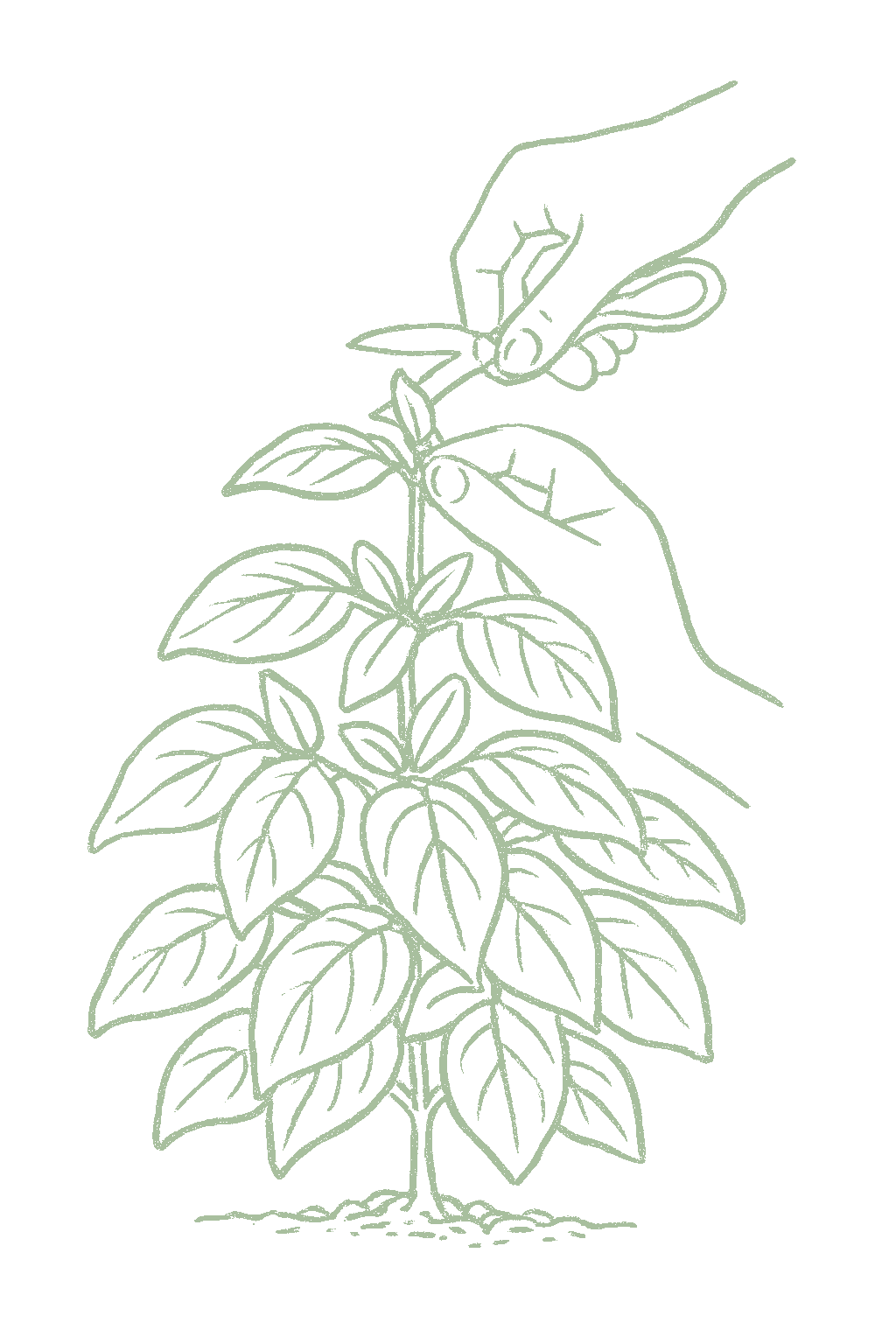
You can start picking basil once the plant has a few sets of leaves. Cut the stem just above a pair of leaves and the plant will branch and regrow. Do not pull off individual leaves from the bottom; cut from the top to keep the plant bushy and productive.Begin harvesting once the plant has developed at least 3 pairs of true leaves, typically 3-4 weeks after transplanting or 6-8 weeks from seed. Always cut above a leaf node or a pair of leaves, not below, so the plant branches from the cut point and produces two new stems. The cut-and-come-again rhythm is the core of basil productivity: harvest the top 1/3 of each stem on a regular schedule (every 7-10 days once established) rather than stripping individual leaves. Harvest in the morning after dew dries but before peak heat, when essential oil concentration is highest.
One basil plant can supply a family with fresh leaves all summer if you pick from it regularly. Expect a generous handful of leaves every week or two once the plant is established.A single Genovese basil plant in full sun, regularly pinched and succession-planted, yields 1/4 to 1/2 cup of fresh leaves per week at peak production, or roughly 2-4 oz of fresh leaves per harvest over a 10-14 week productive season. Container yields are proportional to pot size and sun exposure; a 2-gallon pot in full sun performs comparably to an in-ground plant.
Your first year growing basil can be just as productive as any year after, since basil is an annual that grows fresh each season. The key is learning to pinch the tips early: that one habit makes the difference between a lush plant and a tall, woody one.Basil is one of the few herbs where the first-season yield equals or exceeds subsequent years; it is a fast-maturing annual with no establishment lag. The main first-season variable is how quickly the grower develops the pinching habit; growers who pinch consistently from the fourth leaf pair onward produce significantly more usable leaf than those who let the plant grow unchecked.
Start with Genovese basil for classic Italian flavor or, if you're in a humid area, choose a disease-resistant variety like Devotion or Prospera. Thai basil is a completely different herb with an anise flavor, great for Asian cooking.The variety decision for basil has two primary axes: culinary use and disease resistance. Genovese remains the standard for pesto, Italian cooking, and fresh eating, but it is highly susceptible to basil downy mildew (Peronospora belbahrii). In regions with humid summers or a history of downy mildew, the Rutgers DMR program varieties (Devotion, Obsession, Prospera) offer equivalent culinary quality with significantly reduced disease risk. Thai basil and lemon basil are distinct culinary herbs rather than substitutes for Genovese; growing one of each fills different kitchen roles. For container or windowsill production, dwarf/Greek types outperform full-size varieties in limited space.
Just move your basil to a different spot each year to keep the soil healthy.Basil's rotation driver is primarily Fusarium wilt, which is soil-persistent and also seed-borne. Because basil is typically grown in a small bed or container, rotation is easy to execute even in a small garden. The 2-year gap is sufficient for most gardens without a disease history.
The plant app sends a timely reminder at every critical moment of your basil season. The wording adjusts to whichever you pick: beginner or seasoned. Here are three you'll see in Zone 3.
plant sends the right notification at exactly the right moment, for your zone, your weather, your crops. Founding members lock the rate forever.
We're building this guide with real growers. Got a question we missed? Ask here. We read every one and add the best answers right to this page.
Learned something the hard way? Pass it on. Real growers' tips make this guide better for the next person, and we credit you by name when yours goes live.
If you've grown this crop and you see a date, a temperature, a companion claim, or a recommendation that doesn't match your experience, tell us. Real growers' corrections make this guide better for the next person.
Every date, temperature, spacing, and recommendation on this page is sourced from university cooperative extension publications, peer-reviewed agricultural research, NOAA climate data, and direct extension calendars. Where claims are softer (traditional gardening wisdom not formally documented), we say so.
Spot a data point that doesn't match your experience? Submit a correction; accepted corrections earn full author credit on the page.
Zone-aware seasonal nudges, what's worth planting now, and the occasional recipe from the harvest. No spam, ever.