Pick your zone and the dates re-calibrate.
The Guide Herbs Vol. 003

Basil

in Zone 6, this week

Basil is one of the most beginner-friendly herbs you can grow, but it has one firm rule: it hates cold. Do not plant it outside until after your last frost and nights stay above 50 °F. In return, basil grows fast and rewards regular picking. The trick is to pinch off the growing tips and any flower buds before they open, which keeps the plant bushy and productive. Once basil flowers, it starts to taste different and stops making as many leaves, so keep those blooms pinched. Sweet basil (Ocimum basilicum) is the most economically important annual culinary herb grown in North America, and its defining biology shapes every care decision. It is frost-tender without reservation: chilling injury begins below 50 °F, and a single frost kills the plant entirely. This means the growing window is bounded by last frost on one end and first frost on the other, making basil one of the most zone-sensitive herbs in the kitchen garden. Grown for leaves, not fruit, the central challenge is delaying the reproductive bolt: once basil shifts to flower production, leaf yield drops and essential oil concentration changes, altering flavor. The management lever is regular pinching of shoot tips and emerging flower buds, which redirects energy back into vegetative growth and can extend productive leaf harvest by weeks. Basil is a high-reward succession crop; successive plantings every 3 weeks from last frost through midsummer ensure a constant supply of young, tender growth. The herb is also one of the most container-friendly crops in this dataset, performing well in a single well-draining pot on a sunny windowsill or patio, which opens the season in all zones.
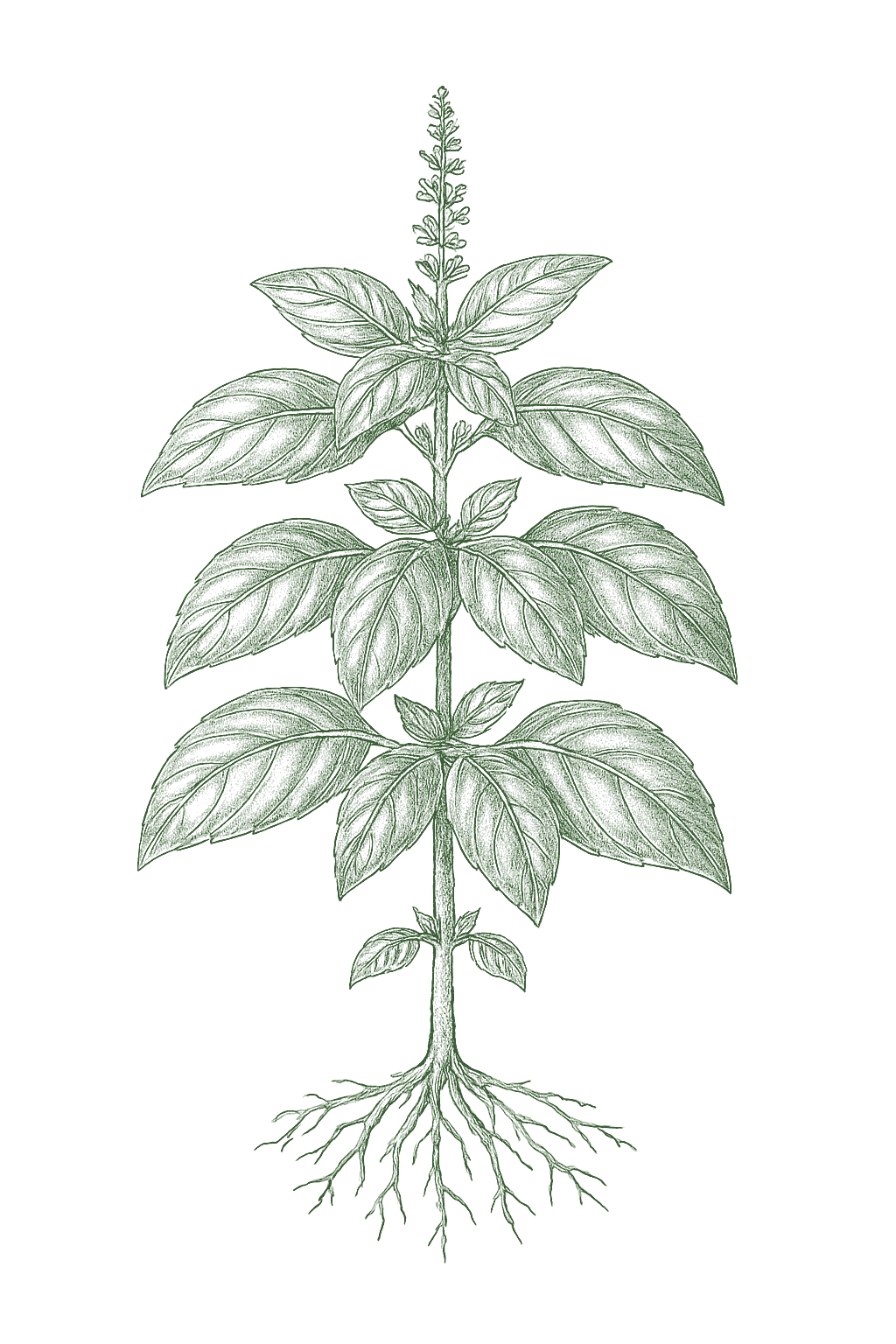
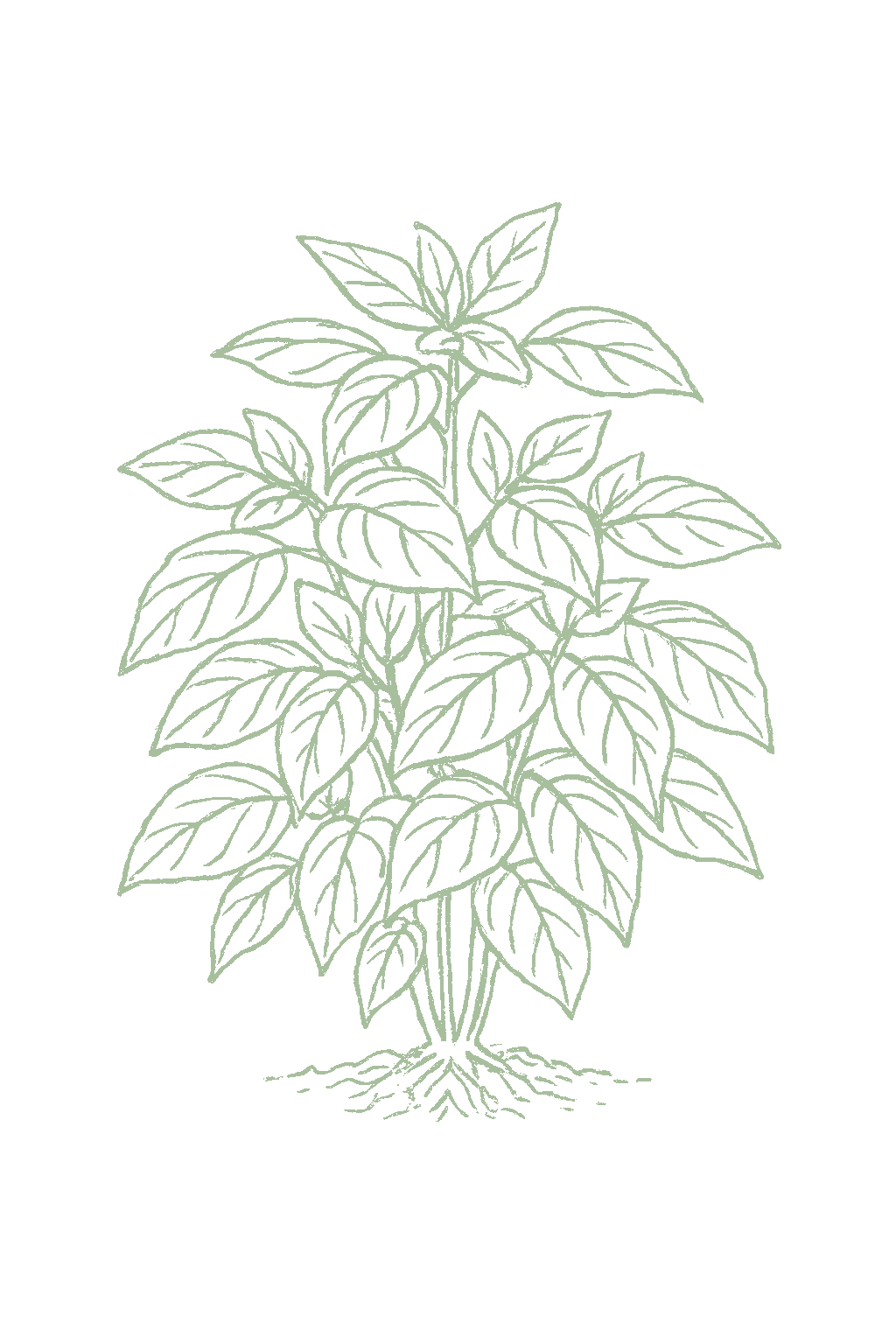
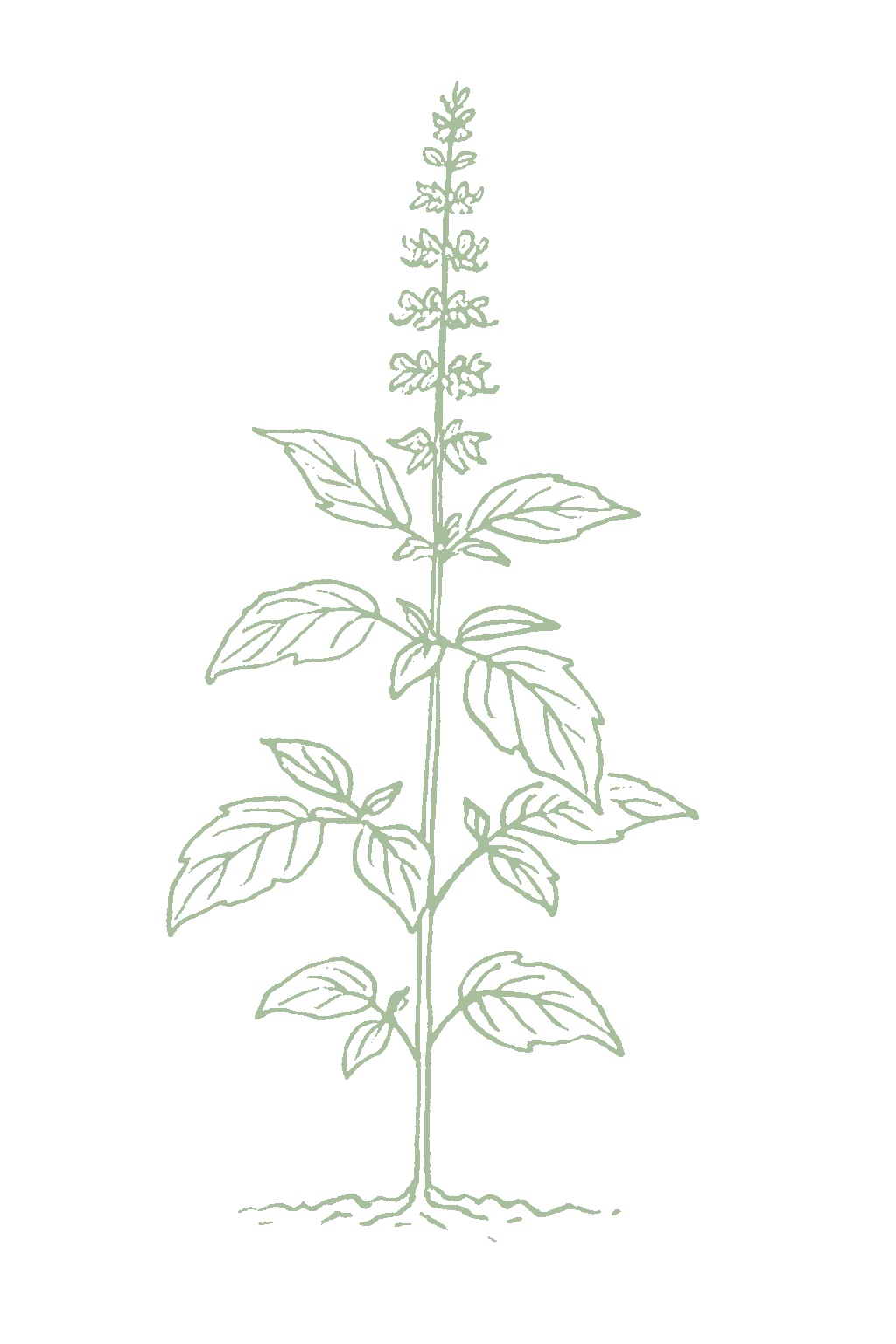
Basil mature plant
Fig. 01 · Basil, mature Zone 6
Mature in
60-90d
from transplant
Sunlight
Full sun
6-8 hrs daily
Water
Regular
1-1.5 inches / week
Spacing
6-12"
between plants
Soil pH
6-7.5
slightly acidic
Today · in your zone

What's happening right now

July 24 · Zone 6 · Stage 01 · Germination

Off-season for basil in zone 6.

The season at a glance

Planting calendar

In Zone 6, basil can be planted April through May. Start indoors Mar 11 - Mar 25. Harvest runs May through October.

Jan
Feb
Mar
Apr
May
Jun
Jul
Aug
Sep
Oct
Nov
Dec
plant
too cold
too cold
indoors
plant
plant
too late
too late
too late
too late
too late
too cold
too cold
harvest
harvest
harvest
harvest
harvest
harvest
harvest
indoors
plant out
harvest
Above-ground cropBest planted on a above ground moon
Seasoned
Stagger your sowings

Succession planting

Plant a new set of basil seeds every 3 weeks through summer for a continuous harvest. Basil plants get woody and start flowering after a couple of months, but a fresh start nearby stays productive.Sow a new batch of seeds every 3 weeks from last frost through midsummer for a continuous supply of young, tender leaves. Older plants become woodier and more prone to bolting; fresh successions always outperform aged plants for leaf quality.

Every 3 weeks · sow a short new rowUp to 12 sowings a season
Jan
Feb
Mar
Apr
May
Jun
Jul
Aug
Sep
Oct
Nov
Dec
sow
harvest
keep sowing
continuous harvest
The season, mapped

Seed to garden

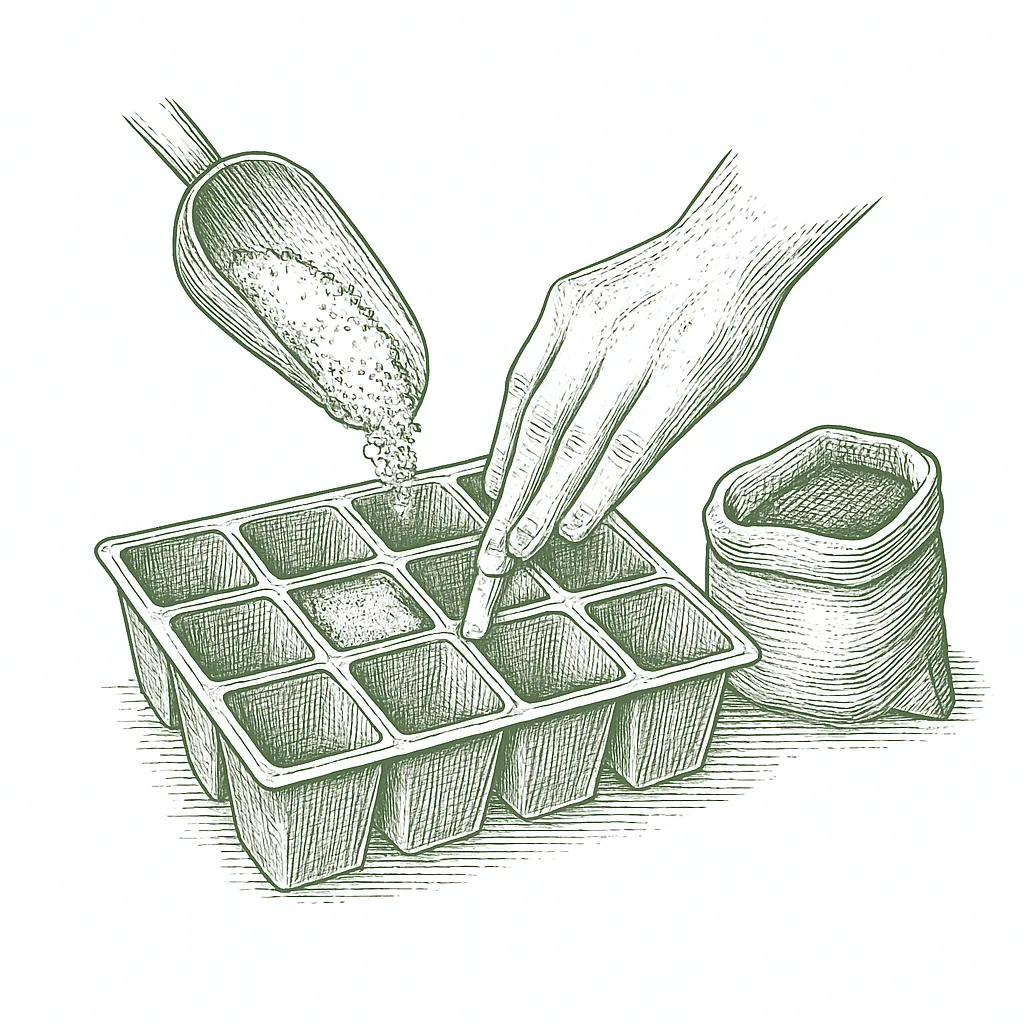
You have two options: start seeds indoors 6 weeks before your last frost, or wait and plant seeds directly in the garden after your last frost when the soil feels warm. Basil is very cold-sensitive, so do not rush it outside. If night temperatures are still dropping below 50 °F, wait.Start seeds indoors 6 weeks before last frost date for an early harvest. Transplant out when night temperatures stay consistently above 50 °F and all frost risk has passed. Direct sowing is equally effective once soil reaches 70 °F, typically 1-2 weeks after last frost. In zones 7 and warmer, direct sowing is the standard approach. Harden transplants off over 7-10 days by gradually increasing outdoor exposure before planting out.
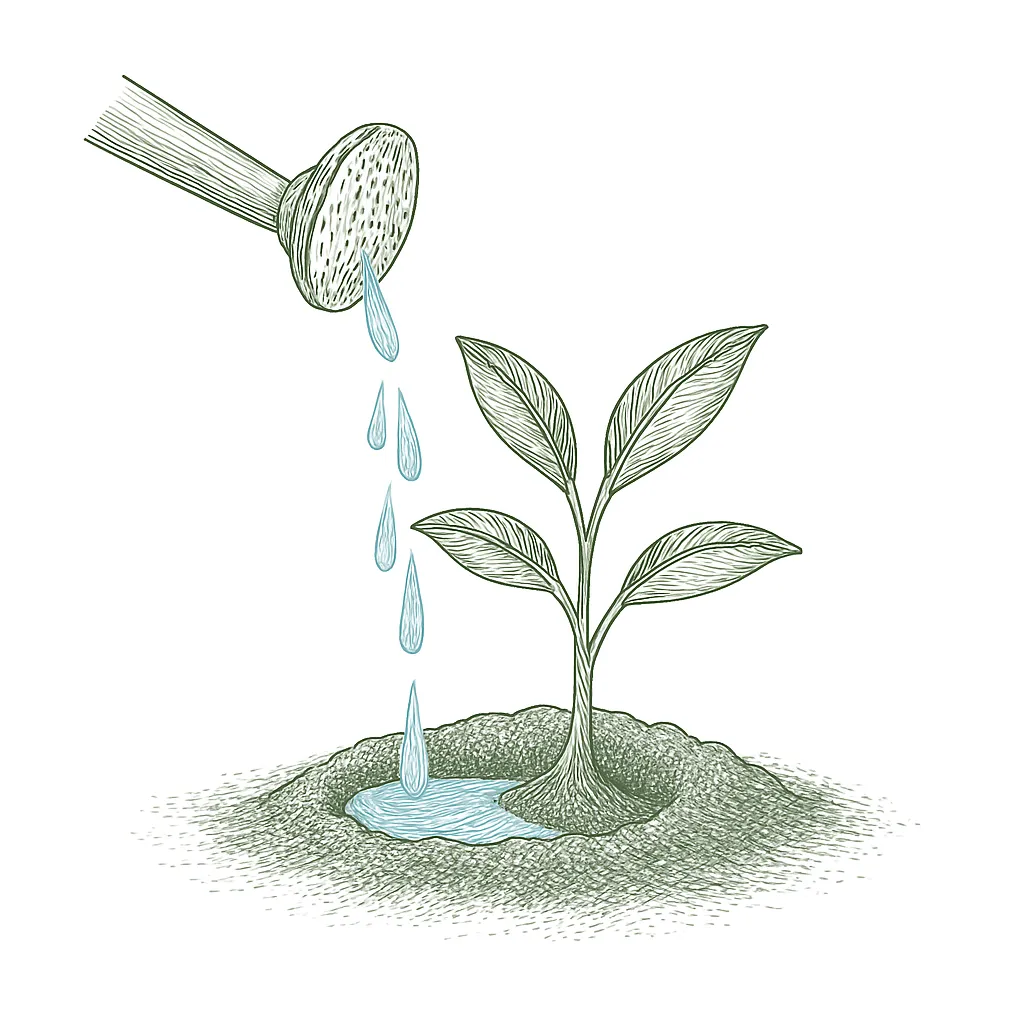
  1. 01
    Sow indoors →
    Mar 11 - Mar 25
    Start about 6 weeks before your last frost
  2. 02
    Transplant out →
    Apr 22 - May 6
    After hardening off
  3. 03
    First harvest
    From May 22
    60-90 days from transplant
Start method
Both
Soil temp
70-85°F
Hardening off
7-10 days
From seed to fruit

The growing journey

Stage 01 · Germination
01
Germination
Days 5-14 · current stage
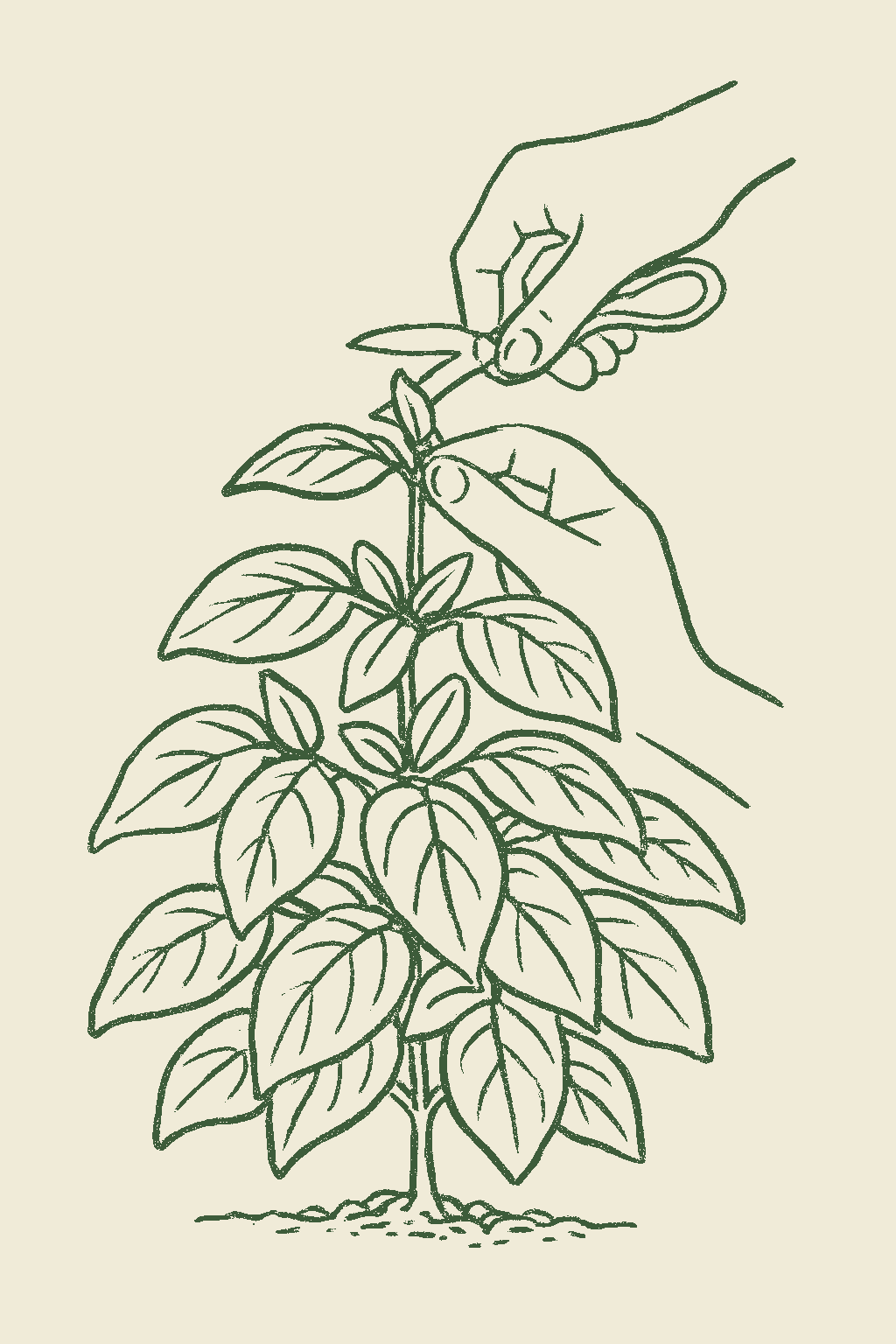
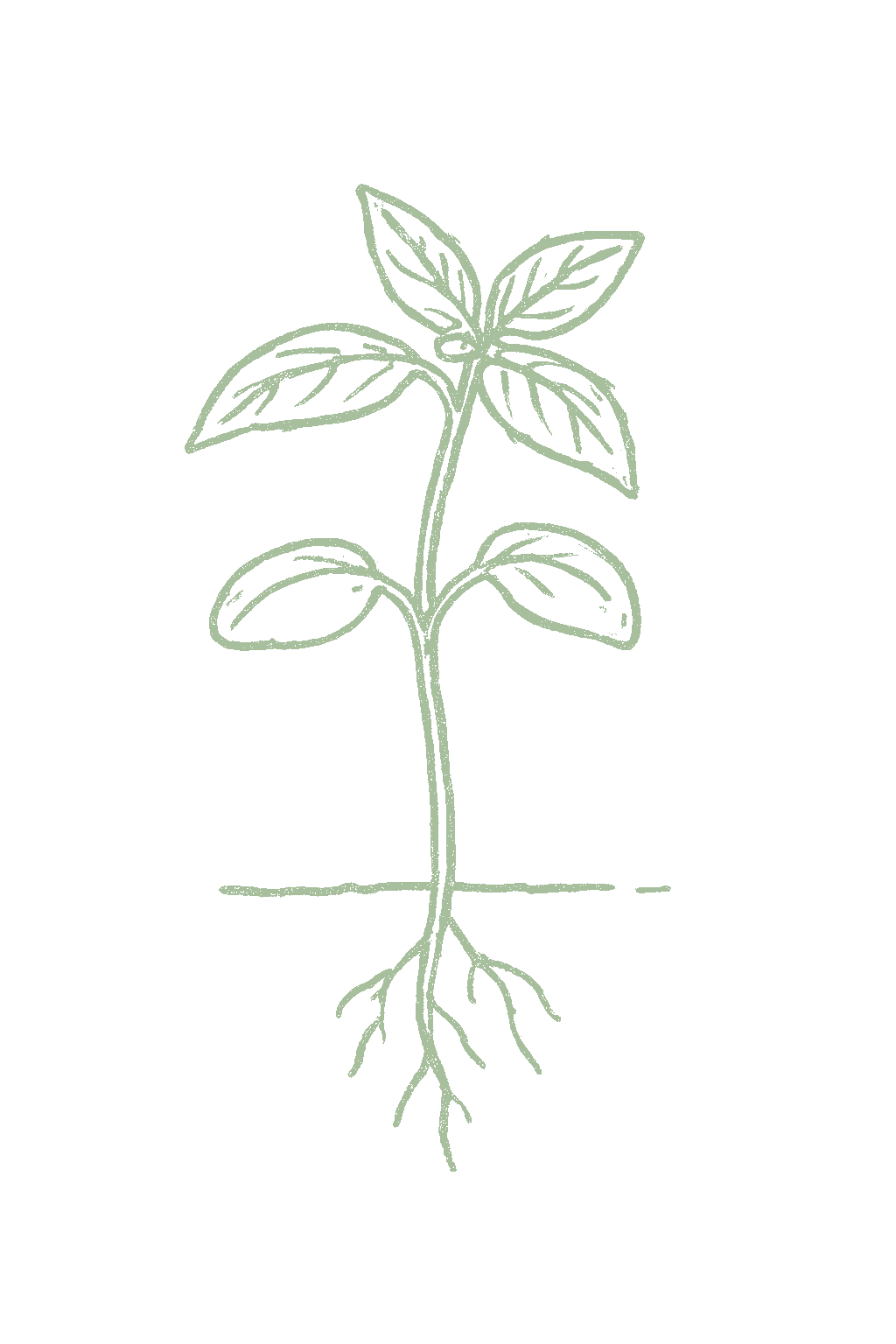
Small pale green seedlings pushing up through the soil. Basil seeds germinate in 5-14 days when warm. If nothing appears after 14 days, soil was likely too cold.First seed leaves (cotyledons) emerging, pale yellow-green initially then deepening to dark green within 1-2 days of light exposure. Basil cotyledons are oval and relatively large for a herb. At soil temperature below 65 °F, emergence is delayed or absent.
Keep the soil moist but not soggy and make sure it is warm. Remove any plastic cover the moment you see seedlings coming up.Maintain soil temperature at 70-85 °F and consistent surface moisture. Remove any humidity dome or plastic cover at first emergence to prevent damping off. Do not let the seedbed surface dry out during this window.
FROM PLANT · Basil needs warm soil to sprout well. Wait until soil temperatures are at least 70 °F before sowing outdoors, or use a heat mat indoors set to around 75 °F. Cold soil leads to poor, uneven germination. A basic soil thermometer (a probe you push into the ground) tells you when conditions are right.Soil temperature is the controlling variable at germination. Basil germinates reliably and quickly at 70-85 °F soil temperature; below 65 °F germination becomes erratic and slow, and seedlings from cold sowings often damp off before establishing. A seedling heat mat set to 75-80 °F is the most reliable method indoors. Direct-sow timing outdoors should be calibrated to soil temperature, not calendar date.
FROM PLANT · Plant basil seeds about 1/4 inch deep and keep the soil moist until they sprout (5-14 days). If starting indoors, cover the pot with plastic wrap to hold moisture in, and remove it as soon as you see green shoots appearing. Leaving the cover on after sprouting can cause seedlings to rot at the base.Sow seeds 1/4 inch deep and keep the seedbed or flat consistently moist but not saturated for the 5-14 day germination window. Surface drying is the most common cause of failed germination indoors; a humidity dome or plastic wrap over the flat maintains moisture without overwatering. Remove the dome the moment you see the first seedling to prevent damping off.
02
Seedling
Days 7-28
Real basil leaves (not the first rounded seed leaves) appearing above the base. The new leaves will smell like basil. Tall, floppy seedlings mean they need more light.True leaves developing above the cotyledons; true basil leaves are distinctly aromatic, ovate, and show the characteristic glossy surface. Seedlings should be compact, deep green, and upright; leggy, pale seedlings indicate light deficit.
Thin seedlings to one plant every 12 inches. Give them as much sun as possible. If they are getting leggy, move them closer to the window or under a light.Thin to the correct spacing once two sets of true leaves are present. Ensure maximum light exposure; supplement with a grow light if natural light is under 6 hours. Harden off 7-10 days before transplanting outdoors.
FROM PLANT · Once basil seedlings have their first real leaves (not the rounded seed leaves), thin them to one plant every 12 inches. Crowded seedlings are weaker. The ones you pull are edible and taste great in salads.Thin seedlings to one plant per 12-18 inches once they have their first true leaves. Crowded basil seedlings compete for light and air circulation, accelerating the damping-off conditions that kill seedlings at the base. The thinnings are edible; add them to salads or use as a first harvest.
FROM PLANT · If your basil seedlings grow tall and floppy, they need more light, not less water. Move them to a sunnier spot or closer to a grow light. Basil is a sun-loving herb and gets stretched out when light is low.Leggy, pale seedlings signal light deficit, not overwatering. Basil needs bright light from day one; on a windowsill, turn seedlings daily to prevent lean and supplement with a grow light if the windowsill receives fewer than 6 hours of direct sun. Leggy transplants can be buried deeper at transplant to compensate, but deep planting does not work for basil the way it does for tomatoes; addressing light is the root fix.
03
Established
Days 21-45
The plant looks full and healthy with several sets of leaves. It stands up on its own and is growing noticeably. This is the time to start pinching.Plant has 3-4 pairs of true leaves; main stem is sturdy and self-supporting; root system is established and the plant recovers quickly from watering gaps. This is the trigger point for first pinching.
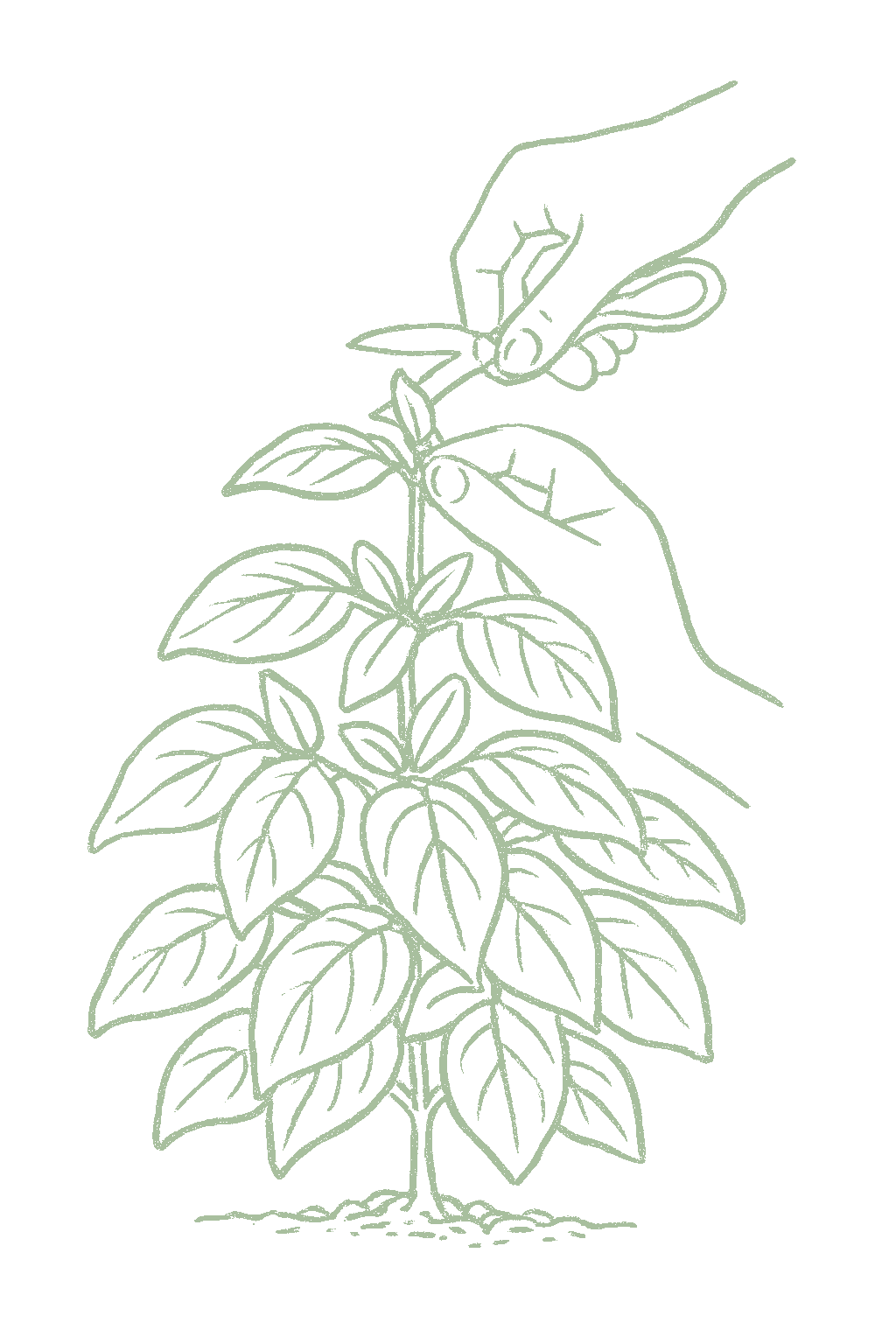
Pinch off the very top of each stem above a spot where two leaves meet it. Two new branches will grow from there instead of one, making the plant bushy. This single technique gives you far more basil all season long.Begin pinching above the third or fourth leaf pair. Initiate regular watering-at-base habit. Apply first fertilizer dose if not already done at transplant.
FROM PLANT · Start pinching basil as soon as it has 3-4 sets of leaves. Pinch means snipping or pinching off the top of the stem just above where two leaves meet the stem. The plant then grows two new branches instead of one, becoming bushy instead of tall. Do this every week or two all summer.Begin pinching the central growing tip as soon as the plant has 3-4 sets of true leaves. Cut directly above a node (where a pair of leaves meets the stem); the plant will branch at that node, producing two new shoots instead of one. Repeat every 7-10 days throughout the productive season. Consistent pinching is the single most effective yield-management technique for basil and is the primary mechanism for extending harvest by suppressing the bolt.
FROM PLANT · Always water basil at the base, not over the top. Wet leaves are the main way basil gets its two most serious diseases: downy mildew (a fast-spreading leaf disease) and Fusarium wilt. Keeping leaves dry is your best prevention.Water at soil level, never overhead. The foliar wetness nexus is the primary environmental driver of both downy mildew (Peronospora belbahrii) and Fusarium wilt: wet leaf surfaces and high humidity provide the conditions for sporulation and infection. Drip irrigation or hand watering at the stem base is the simplest preventive measure and carries more disease-prevention leverage than any fungicide.
04
Harvest
Days 30-90
A bushy plant with lots of leafy tips. Good basil at this stage smells strongly when you brush the leaves. No white or purple flowers visible yet.Actively branching, multi-stemmed plant producing multiple harvestable shoot tips. Leaves large, fragrant, and deeply green. No flower buds visible or immediately emerging. The plant is in the peak productive window.
Cut the tops of stems every week or two, always above where two leaves meet the stem. Check for any flower buds and pinch them off immediately. Pick in the morning for the best flavor.Harvest on a regular 7-10 day schedule, cutting above a node each time and removing no more than one-third of the plant. Conduct a flower-bud scan at each harvest visit. Harvest in the morning for peak essential oil concentration.
FROM PLANT · Pick basil in the morning before it gets hot for the best flavor. Snip the stem above a point where two leaves meet the main stem, and new branches grow there. Never pull single leaves from the base of the plant. Harvest no more than a third of the plant at any one time to keep it healthy and productive.Harvest in the morning after the dew dries but before midday heat, when essential oil concentration in the leaves is at its peak. Always cut above a leaf node rather than stripping individual leaves from the base; node-cuts cause branching that increases future yield, while leaf-stripping exposes woody stem and reduces plant productivity. Never remove more than one-third of the plant in a single harvest.
FROM PLANT · Do not put fresh basil in the refrigerator. It turns black quickly when cold, because basil is a warm-climate plant that is damaged by low temperatures. Instead, stand the cut stems in a small glass of water on the counter like a bouquet. To preserve a bigger harvest, puree the leaves with oil and pour into ice cube trays to freeze for winter cooking.Never refrigerate fresh basil. Chilling injury begins below 50 °F: cellular membranes are disrupted, releasing enzymes that oxidize chlorophyll and produce the characteristic blackening within hours. Store harvested stems like cut flowers in a glass of water at room temperature; they keep 1-2 weeks this way. For longer preservation, blend with olive oil and freeze in ice cube trays: the oil coating prevents oxidation and preserves volatile flavor compounds better than blanching.
05
Bolting
Days 45-90
A tall spike growing from the center of the plant with small leaves and what will become flowers at the tip. This is the bolt. Pinch or cut it off now.Central elongating flower spike with small, opposite leaves and visible flower buds at the tip. Basil flowers are small, white or pale purple, in whorls on the spike. Leaves on the flowering stem become smaller and more pointed. On Genovese-type basil, a sharp increase in clove-like aroma may accompany early bolting.
Cut off any flower spikes as soon as you see them. Then keep an eye out and remove new ones every few days. If the plant is covered in flowers, pull it out and replace it with a fresh young plant from a new sowing.Remove all flower spikes immediately, cutting back to just above a healthy leaf pair. Increase pinching frequency to every 5-7 days during the peak bolt risk period (midsummer in most zones). Consider planting a succession start if the main planting is approaching full bolt.
FROM PLANT · Basil starts trying to flower as summer days get longer and hotter. This is normal but you want to delay it as long as possible, because once the plant flowers the leaves become smaller and the flavor changes. The way to delay flowering is to pinch off any flower buds the moment you see them. Regular harvesting helps too.Bolting in basil is triggered primarily by increasing day length (photoperiod) combined with accumulating heat. The plant perceives long days as a signal to shift from vegetative to reproductive growth; warm nights accelerate the transition. Pinching suppresses bolting by removing the apical meristem (the growing tip that carries the flower initiation signal), redirecting the plant's hormone balance back toward vegetative branching. In practice, basil grown under consistent harvest pressure bolts 2-4 weeks later than unpinched plants of the same variety.
FROM PLANT · Once basil flowers fully, you can still use the leaves but the flavor is stronger and a bit different. Some people like it; some do not. Keep pinching off spent flowers to extend harvest. When the plant looks tired and woody, pull it out and plant a fresh one from your succession starts.When a plant enters full flower, flavor character shifts but the plant is not finished. For culinary herbs, the shift in essential oil profile after flowering is variety-dependent: Genovese-type sweet basil develops a clove-like and sometimes anise character as eugenol increases relative to linalool during flowering. Some growers harvest at this stage for pesto. Aggressive deadheading of spent flowers can squeeze 1-2 more weeks of usable leaf production from a flowering plant. If the plant is fully committed to seed production, pull it and start a fresh succession rather than managing an exhausted plant.
Beginner
Know your soil

Your soil

Identify yours

Not sure what soil you have? Grab a small handful of damp soil from your garden bed and squeeze it. If it crumbles apart easily, it's sandy. If it holds together but breaks when you poke it, it's loam (what most vegetables want). If it stays in a hard, slippery ball, it's clay.

What this crop wants

Basil prefers loose, well-draining soil that has been improved with compost. Avoid heavy clay that stays wet, which can rot roots and encourage disease.

If your soil doesn't match

You have sandy soil

Mix 2-3 inches of compost into the top 6 inches of your bed before planting. Compost holds moisture (which sandy soil drains too fast) and adds the nutrients sandy soil tends to lack. Repeat each season. Compost breaks down over time.

You have clay soil

Mix 2-3 inches of compost AND a few inches of coarse sand or perlite into the top 6 inches of your bed. The compost feeds the plants; the sand breaks up the clay so air and water can move through. Don't add sand without compost. It can compact like concrete.

Containers and raised beds

If amending your soil sounds like too much work, or if your soil is heavy clay, full of rocks, or contaminated, build over it. A raised bed at least 12 inches deep filled with a 50/50 mix of compost and sandy loam gives you ideal growing soil with no battles. A 5-gallon container with quality potting mix does the same for one plant at a time. Both bypass your native soil entirely.

Learn more about your soil
The specs

Care guide

The numbers that matter, at a glance.

Sunlight
Full sun · 6-8 hrs/day
Water
Regular
Spacing
6-12 inches
Soil
loam, sandy loam
Days to maturity
60-90 days from transplant
Soil pH
6 to 7.5
Container OK?
Yes · 1+ gal pot
Germination temp
70-85°F
Soil chemistry

Soil pH for basil

Preferred
6 to 7.5
Tolerated
5.5 to 7.5

Aim for a pH of 6.0-7.5. Most garden soil is fine for basil without any adjustment.Basil is tolerant across a wide pH range compared to most vegetables. The 6.0-7.5 optimum reflects nutrient availability across the typical mineral spectrum; very acidic soils (below 5.5) can impair uptake of calcium and magnesium, which may increase susceptibility to physiological disorders and disease.

Verified · 1 source View
Steady hand on the hose

Watering

When & how much
Frequency
Water every 5-7 days or when the top inch of soil feels dry. Container basil may need water every 1-2 days in summer.Every 5-7 days in garden beds; more frequently in containers (check daily in heat)
Amount
About 1 inch per week in the garden. In pots, water until it drains from the bottom.1-1.5 inches per week, adjusted for temperature and container vs. in-ground
Method
Water at the base of the plant, not over the leaves. Wet leaves can cause disease, especially in humid conditions.Water at soil level to keep foliage dry; overhead watering promotes Fusarium wilt and downy mildew. Drip irrigation is preferred at scale. In containers, avoid standing water in saucers.
Signs of trouble
Too much water
Yellow lower leaves or a soft, dark base on the stem are signs of too much water.Yellowing lower leaves; soft, dark stem bases; wilting despite wet soil (root rot); Fusarium wilt progression accelerated in waterlogged soil.
Too little water
Basil wilts dramatically when thirsty but usually recovers quickly once watered. If it's wilting in the evening when it's cool, it needs water.Wilting in the morning heat that does not recover by evening; leaf edges curling or browning; stunted growth and early bolting under water stress.
Feeding rhythm

Feeding

Frequency
every 3-4 weeks
Type
balanced or slightly nitrogen-forward liquid
When to start
At transplant and every 3-4 weeks through active growth; more frequently in containers

Feed basil with a balanced liquid fertilizer once a month in the garden, or every 2-3 weeks if it is in a pot. Do not overdo it: too much fertilizer makes the leaves less flavorful.Basil is a moderate feeder that responds well to consistent modest nitrogen supply, which supports the rapid vegetative growth that produces tender, flavorful leaves. Overfertilizing with high nitrogen produces lush growth but can reduce essential oil concentration and flavor intensity, and may attract aphids. A 5-10-5 balanced granular applied once or twice per season is sufficient in average garden soil; containers require more frequent supplementation (every 2-3 weeks at half-strength) because nutrients leach with regular watering. Liquid fertilizer applied at the base, not foliarly, reduces disease pressure.

N · P · K = 5-10-5

Any balanced fertilizer works well5-10-5 balanced to modest nitrogen-forward; avoid high-nitrogen formulations during peak harvest

Try 5-10-5 granular or balanced liquid (fish emulsion or all-purpose at half-strength for containers)
Who grows well together

Companion planting

Basil and tomatoes are classic garden companions. Plant basil near your tomatoes for a traditional combination that may also help deter some insects. Keep basil away from fennel, which inhibits many herbs and vegetables. The basil-tomato pairing is the most-studied companion combination in the kitchen garden. University of Minnesota research cites replicated field studies showing basil intercropping reduces thrip populations on tomatoes in both field and greenhouse conditions, and may promote tomato growth. Texas A&M notes basil as a useful disease indicator plant for tomatoes, as basil shows powdery mildew and other diseases earlier than tomatoes, providing an early-warning function. The pairing also serves as a space-efficiency strategy: basil planted early in a tomato bed can be harvested before tomato canopy fill-in, maximizing yield per square foot. Marigolds are not a direct basil companion but share the warm-season frame and contribute to pest management in the broader bed. Fennel is a general allelopath suppressing many vegetable crops; keep basil and other kitchen herbs away from fennel plantings.

Other
Marigolds
Marigolds are an easy, cheerful flower to tuck in beside basil. Their roots release a natural compound that helps keep soil pests called nematodes down, and their bright blooms pull in helpful insects. Drop a few around the edge of your basil and let them flower.Not a direct basil partner, but it shares the same warm-season bed and helps keep pests down across the whole planting. Research-backed
Tomatoes
Basil and tomatoes are the classic garden pair, and not just in the kitchen. Studies show basil can help cut down on thrips, a common tomato pest, and tomato plants often grow a little better with basil nearby. They like the same sun and watering, so they are easy to grow side by side.The most-studied pairing in the kitchen garden: basil grown among tomatoes can reduce thrips, may help the tomatoes along, and flags powdery mildew early because it shows symptoms before the tomatoes do. Sow it early and harvest before the tomato canopy fills in, and you get two crops from the same space. Research-backed
Peppers
Peppers want the same things basil does, lots of sun and steady water, so they make comfortable neighbors. Basil's scent helps draw in pollinators and confuse some pests, and the pepper plants give your basil a little afternoon shade. An easy, low-risk pairing.Peppers want the same heat, full sun, and steady moisture as basil, so the two share a bed easily and come ready to pick on a similar schedule. Well-grounded
Keep apart from
Sage Sage and basil want opposite things from the soil. Basil likes it rich and evenly moist; sage and other Mediterranean herbs like it lean and on the dry side. Keeping them together means one of them is always unhappy, so it is easier to give sage its own pot or a separate dry corner.Sage likes lean, dry soil while basil wants rich ground and steady moisture, so they work against each other in one spot. Give them separate beds. Well-grounded
Fennel Fennel is a poor neighbor for almost everything in the garden, basil included. It is said to release substances from its roots that can slow nearby plants down. The simple fix most gardeners use is to grow fennel off on its own, in a separate bed or a large pot.Fennel releases compounds that hold back many herbs and vegetables, basil included, so keep it in its own corner away from the kitchen-herb bed. Traditional
Provenance tagged inline · see methodology for the labeling system Key
Harvest signals

When to pick

You can start picking basil once the plant has a few sets of leaves. Cut the stem just above a pair of leaves and the plant will branch and regrow. Do not pull off individual leaves from the bottom; cut from the top to keep the plant bushy and productive.Begin harvesting once the plant has developed at least 3 pairs of true leaves, typically 3-4 weeks after transplanting or 6-8 weeks from seed. Always cut above a leaf node or a pair of leaves, not below, so the plant branches from the cut point and produces two new stems. The cut-and-come-again rhythm is the core of basil productivity: harvest the top 1/3 of each stem on a regular schedule (every 7-10 days once established) rather than stripping individual leaves. Harvest in the morning after dew dries but before peak heat, when essential oil concentration is highest.

Yield

What to expect

One basil plant can supply a family with fresh leaves all summer if you pick from it regularly. Expect a generous handful of leaves every week or two once the plant is established.A single Genovese basil plant in full sun, regularly pinched and succession-planted, yields 1/4 to 1/2 cup of fresh leaves per week at peak production, or roughly 2-4 oz of fresh leaves per harvest over a 10-14 week productive season. Container yields are proportional to pot size and sun exposure; a 2-gallon pot in full sun performs comparably to an in-ground plant.

Your first year growing basil can be just as productive as any year after, since basil is an annual that grows fresh each season. The key is learning to pinch the tips early: that one habit makes the difference between a lush plant and a tall, woody one.Basil is one of the few herbs where the first-season yield equals or exceeds subsequent years; it is a fast-maturing annual with no establishment lag. The main first-season variable is how quickly the grower develops the pinching habit; growers who pinch consistently from the fourth leaf pair onward produce significantly more usable leaf than those who let the plant grow unchecked.

What changes yield
Pinching frequency: the single largest yield driver; plants pinched every 7-10 days produce 2-3x more usable leaf than unpinched plants over the seasonFlower removal: immediate removal of any flower bud that escapes pinching prevents leaf quality decline and seed-energy diversionSunlight: basil is a high-light crop; below 6 hours of direct sun daily, yield drops substantially and plants become leggySoil nitrogen: modest, consistent nitrogen supply drives the tender leaf production basil needs for high yield; excessive nitrogen is counterproductive, reducing the concentration of essential oils that determine flavor qualitySuccession planting: staggering new plantings every 3 weeks provides a constant cohort of young, productive plants as older ones boltZone and season length: zones 9-11 can produce 2-3 successive basil crops per year; zones 3-5 have a compressed 10-12 week productive window
Verified · 2 sources View
Pick your variety

Recommended varieties

Start with Genovese basil for classic Italian flavor or, if you're in a humid area, choose a disease-resistant variety like Devotion or Prospera. Thai basil is a completely different herb with an anise flavor, great for Asian cooking.The variety decision for basil has two primary axes: culinary use and disease resistance. Genovese remains the standard for pesto, Italian cooking, and fresh eating, but it is highly susceptible to basil downy mildew (Peronospora belbahrii). In regions with humid summers or a history of downy mildew, the Rutgers DMR program varieties (Devotion, Obsession, Prospera) offer equivalent culinary quality with significantly reduced disease risk. Thai basil and lemon basil are distinct culinary herbs rather than substitutes for Genovese; growing one of each fills different kitchen roles. For container or windowsill production, dwarf/Greek types outperform full-size varieties in limited space.

Genovese
classic sweet basil, the pizza and pesto standard; susceptible to downy mildew; pair with a DMR variety if disease pressure is high in your region
Devotion / Obsession / Prospera
downy-mildew-resistant Genovese types from Rutgers University breeding program; same culinary use as Genovese; first line of defense in humid regions
Thai basil
Ocimum basilicum var. thyrsiflora; distinct anise and clove flavor; more heat-tolerant and slower to bolt than sweet; purple stems and flowers; essential for southeast Asian cooking
Lemon basil
O. x citriodorum; distinct lemon fragrance and lighter flavor; excellent in salads, iced teas, and desserts; 12-18 inches; slower to bolt than Genovese
Purple / Dark Opal basil
O. basilicum 'Purpurascens'; striking red-purple foliage; ornamental and culinary; basil vinegars and garnish; fully edible with a similar but slightly spicier flavor than Genovese
Spicy Globe / Greek dwarf basil
compact 8-10 inch mounding habit; excellent for containers and pot culture; slower to bolt; slightly spicier flavor; the windowsill variety of choice
Off the vine

Storing your harvest

Room temp
Store fresh basil like flowers in a small jar of water on the counter, not in the fridge. It will blacken in the refrigerator.1-2 weeks in a jar of water at room temperature, out of direct sun, like cut flowers. Change the water every 2 days. Do not refrigerate (chilling injury begins below 50 °F, causing blackening within hours).
Fridge
Avoid refrigerating fresh basil if possible. If you must, wrap it in a dry paper towel and use within 1-2 days.Not recommended for fresh leaves; refrigerator temperatures cause rapid chilling injury and blackening. If refrigeration is necessary, wrap loosely in a dry paper towel, place in a zip-close bag, and use within 1-2 days. Store in the warmest part of the refrigerator (door shelf).
Freezer
Blend basil with a little olive oil and freeze in an ice cube tray. These cubes are great to add to pasta sauces later.Blanching is not recommended; direct freezing in oil or as a puree preserves flavor best. Blend fresh basil with olive oil (approximately 2:1 oil-to-herb by volume) and freeze in ice cube trays, then transfer to bags. Frozen pesto-base cubes keep 3-6 months. Alternatively, freeze whole leaves on a tray and transfer to bags; texture is lost but flavor is retained for cooking.
Verified · 1 source View
When something goes wrong

Common problems

Plant killed or blackened by coldCold or frost damage
01 of 05
What happened Basil blackens and dies very quickly when it gets too cold. A frost will kill it overnight with no recovery. Even temperatures just above freezing (below 50 °F) can cause dark blotchy patches on the leaves. Basil is one of the most frost-sensitive crops you can grow. The mistake most beginners make is planting too early in spring before nights are consistently warm.Basil blackens and dies at or below 32 °F frost; chilling injury (cellular membrane disruption without ice crystal formation) begins below 50 °F and is visible as dark water-soaked patches within hours. This is the most abrupt and total failure mode in basil: there is no recovery from a frost event. The common misconception is that a mild frost will cause the plant to bounce back after warming; basil does not recover from frost-level temperatures. Next season Wait until your last frost date has passed and nights stay above 50 °F before planting basil outside. When in doubt, wait another week. Basil planted in warm conditions will grow fast and catch up to an early-planted but cold-stressed plant.Plant after last frost date when night temperatures are reliably above 50 °F. In zones 3-5, this is typically late May to early June. Use a soil thermometer to confirm soil temperature is above 60 °F at transplant. If you must plant early, use row covers or a cold frame that can maintain 50 °F+ overnight.
Plant is tall and spindly instead of bushyLeggy, tall plant with few leaves
02 of 05
What happened Basil gets tall and spindly for two reasons: not enough sun, and not being pinched. Both make the plant grow upward instead of outward. If your basil is leggy, check that it is getting at least 6 hours of direct sun, and start pinching the tips.Etiolation (excessive internode elongation) is caused by two independent mechanisms that are often conflated: (1) light deficit, where photoreceptors trigger elongation as the plant 'reaches' toward light; and (2) failure to pinch, where the intact apical meristem produces auxin that suppresses lateral bud development (apical dominance). In basil, both mechanisms are usually operating simultaneously. A plant getting only 3-4 hours of sun that has never been pinched will be the leggiest; one in full sun with consistent pinching will be the bushiest. Next season Plant basil in your sunniest spot and start pinching the top of each stem as soon as the plant has 3-4 sets of leaves. These two habits produce a bushy, productive plant.Site basil in the location with maximum direct sun exposure (minimum 6 hours, ideally 8). Begin pinching above the third leaf pair, and continue on a 7-10 day schedule. If the seedling stage was the leggy period, ensure maximum light from day one after emergence.
Yellow leaves with fuzzy gray growth underneathDowny mildew (Peronospora belbahrii)
03 of 05
What happened Basil downy mildew appears as uneven yellowing across leaf surfaces followed by a gray or purple coating on the underside. It is caused by a water mold that needs wet foliage to spread. Sweet basil varieties are especially susceptible. Once the plant is seriously infected, it usually cannot be saved. The best defense is choosing resistant varieties and never watering over the top of the leaves.Peronospora belbahrii, an oomycete, produces irregular yellow patches on the upper leaf surface; the diagnostic sign is gray-purple sporulation on the lower leaf surface visible under magnification or in bright light. The pathogen requires free moisture on leaf surfaces (from overhead watering, rain, or dew) to sporulate and spread. Sweet Genovese basil is highly susceptible; the disease has become the dominant foliar threat to basil in the eastern US since its introduction in 2007. No curative organic option exists once systemic infection is established. Next season Look for basil varieties labeled DMR (downy mildew resistant) such as Devotion, Prospera, or Obsession. These are much harder to kill with this disease. Always water at the base, not over the leaves.Plant downy-mildew-resistant varieties (labeled DMR): Devotion, Obsession, Prospera, Thunderstruck, or Amazel. Never water overhead; use drip or base watering. Ensure good air circulation through correct plant spacing (12-18 inches). In high-humidity regions, siting basil in a spot with afternoon airflow materially reduces risk.
Plant suddenly wilts and does not recoverFusarium wilt (Fusarium oxysporum f. sp. basilici)
04 of 05
What happened Fusarium wilt is a soil disease that attacks basil roots and stems. The plant suddenly wilts, does not recover when you water it, and often turns brown inside the stem. It can spread in the soil and in transplants bought from nurseries. Once a plant is infected, it cannot be saved. Remove it immediately.Fusarium oxysporum f. sp. basilici is a soil-borne and seed-borne vascular pathogen that colonizes the xylem, blocking water transport. Plants wilt suddenly and one-sidedly, initially resembling drought stress but not recovering after watering. Internal stem browning (visible when stem is cut) is diagnostic. The pathogen can persist in soil for years and be introduced via infected transplants, contaminated seed lots, or infected soil. There is no curative treatment; infected plants should be removed and not composted. Next season Move your basil to a different spot next year and buy seeds or transplants from a reputable source. Do not plant basil in the same spot if it had Fusarium wilt this year. Good drainage and base watering help prevent it.Purchase certified disease-free seed or transplants from reputable suppliers; inspect nursery transplants for wilted or yellowing lower leaves before buying. Rotate basil planting location by at least 2 years. Avoid overhead watering and waterlogged soil. Improve drainage if the bed stays wet.
Seeds did not sprout or germinated patchilyPoor or uneven germination
05 of 05
What happened Basil seeds usually fail to sprout for one of two reasons: the soil was too cold, or it dried out before they could germinate. Basil needs warm, moist soil to sprout. Cold conditions are the main culprit in spring. The seeds themselves are usually fine.Basil germination failure has two primary causes: soil temperature below 65 °F (most common in spring), and surface drying of the seedbed during the 5-14 day germination window. At temperatures below 60 °F, germination may be zero; seeds sit dormant and often rot rather than germinate as soil warms. The misconception is that seed failure is the cause of poor germination; in practice, viable commercial basil seed has high germination rates and fresh seed from reputable sources rarely fails under correct conditions. Next season Check soil temperature before sowing basil outdoors: use a soil thermometer and wait for at least 65 °F. Indoors, a heat mat greatly improves success. Keep the seedbed moist every day until sprouts appear.Calibrate outdoor direct-sow timing to soil temperature (minimum 65 °F, ideally 70+ °F) rather than calendar date. Use a seedling heat mat for indoor starts. Keep the seedbed or flat consistently moist during the germination window; a humidity dome or mist-spray schedule prevents surface drying.
Verified · 7 sources View
The usual suspects

Pests & diseases

Pests
Aphids
P · 01
Symptoms Look for clusters of tiny insects on new growth or under leaves. Leaves may curl or feel sticky.Clusters of soft-bodied insects, often green or black, on new growth and leaf undersides. Infested leaves curl downward or pucker. Honeydew excretion leads to sooty mold growth on leaf surfaces, reducing photosynthesis. Aphid feeding also vectors mosaic viruses in basil. Cause Aphids are tiny insects that suck sap from new growth. They multiply quickly in warm weather.Multiple aphid species, including Myzus persicae (green peach aphid) and Aphis spp. Populations explode in warm conditions and when plants are overfertilized with nitrogen, which produces the soft, sweet growth aphids prefer. Organic treatment Blast aphids off with a strong stream of water from a hose. Insecticidal soap spray also works.A strong jet of water dislodges colonies effectively without pesticides; repeat over several days. Insecticidal soap or neem oil applied directly to colonies (including undersides) is effective; avoid application in full sun or when temperatures exceed 90 °F. Introduce or encourage beneficial insects (ladybugs, parasitic wasps). Prevention Do not over-fertilize. Check plants regularly for aphids so you can catch them early.Avoid excess nitrogen fertilization, which produces the lush soft growth aphids favor. Plant flowering herbs and companion flowers nearby to attract beneficial predators. Inspect transplants before purchase.
Japanese beetle
P · 02
Symptoms Leaves have holes or look skeletonized with only the veins left. Look for shiny green-brown beetles.Skeletonized leaves with only the veins remaining, appearing to be eaten from the inside out. Metallic green and copper-brown beetles, about 0.5 inches long, visible on the plant in summer. Cause Japanese beetles are shiny green and brown bugs that feed on leaves in summer.Popillia japonica. Adults emerge in early to mid-summer and feed on foliage of many plants. Basil is a preferred host in regions where Japanese beetles are established (primarily eastern US). Organic treatment Hand-pick beetles into a jar of soapy water in the morning while they are slow. Do not use beetle traps near the garden.Hand-pick beetles into soapy water in the early morning when they are sluggish and temperatures are cool. Neem oil spray applied directly has some deterrent effect. Avoid pheromone traps near the garden; they attract more beetles than they catch. Prevention Row covers can protect plants during July and August when beetles are active.Row covers during peak beetle season (July-August) provide physical exclusion. Milky spore disease (Bacillus popilliae) applied to lawn areas reduces larval populations over multiple seasons.
Slugs and snails
P · 03
Symptoms Holes in leaves with silvery slime trails nearby. Worst on seedlings.Irregular, ragged holes in leaves, particularly toward the plant base; seedlings may be severed at soil level. Silvery slime trails visible on foliage and surrounding soil in the morning. Cause Slugs and snails feed on basil at night, especially when it is wet.Multiple slug and snail species. Active at night and in cool, moist conditions; populations are highest in spring and fall, or any time following heavy rain or overhead irrigation. Organic treatment Set out beer traps at ground level. Iron phosphate slug pellets are safe to use around food plants.Beer traps set at soil level are effective. Diatomaceous earth applied around plant bases acts as a physical barrier. Hand-pick at night. Iron phosphate-based slug pellets are organic-approved and low-risk to non-target organisms. Prevention Water at the base of plants, not overhead. Remove debris from around basil where slugs hide during the day.Avoid overhead watering and mulching heavily around basil stems, as both create the moist conditions slugs require. Eliminate debris and board piles that serve as daytime refuge. Transplants are most vulnerable; maintain tighter spacing so the canopy shades the soil and dries it faster.
Diseases
Downy mildew
D · 01
Symptoms Yellow patches on the tops of leaves, and a grayish-purple fuzzy growth on the undersides. This is the most serious basil disease and spreads fast in humid weather.Yellowing of leaves in irregular patches beginning on the upper leaf surface; affected areas turn uniformly yellow before browning. The diagnostic symptom is a gray-to-dark-purple fuzzy sporulation on the undersides of infected leaves, visible in humid conditions or in the morning. In warm, humid weather the disease spreads rapidly across a planting within days. Infected plants decline quickly once systemic. Cause A disease called basil downy mildew, caused by a water mold first found in the US in 2007. Sweet basil is the most susceptible type. Resistant varieties now exist.Peronospora belbahrii, an oomycete (a water mold, not a true fungus). First documented in the US in Florida in 2007, it has since become the dominant disease threat to sweet basil across North America. Obligate biotrophic parasite; sporangia spread via wind and water splash. Sweet Ocimum basilicum is the most susceptible basil type; spice and citrus basil types show greater resistance. Fungicide classes effective against true fungi are often ineffective against oomycetes. Organic treatment Remove infected plants immediately to stop spread. Copper fungicide spray can help prevent it in future plantings, but the best defense is choosing resistant varieties.No organic curative once systemic infection is established. Remove and destroy infected plants or heavily infected stems promptly to reduce spore load. Copper-based fungicides applied preventively at label rates have moderate efficacy; timing before infection is critical. Improve air circulation immediately. Resistant varieties are the most effective management tool. Prevention The best prevention is growing resistant varieties. Look for names like Devotion, Obsession, Prospera, or anything labeled DMR. Avoid watering from above and give plants room to breathe.Selecting downy-mildew-resistant (DMR) varieties is the single most effective control. Rutgers University breeding program varieties (Devotion, Obsession, Passion, Thunderstruck) and Prospera (organic-approved) showed strong resistance in replicated field trials. Avoid overhead irrigation; sporangia require leaf wetness for germination. Space plants for air circulation. Start with certified disease-free seed, which may include steam-treated lots.
Fusarium wilt
D · 02
Symptoms Basil suddenly wilts and does not recover even after watering. Stems may turn brown inside. Plants die quickly.Sudden wilting of one or more stems, initially resembling drought stress but not recovering when watered. Leaves yellow from the bottom up; affected stems may show brown streaking in vascular tissue when cut. Plants die rapidly. The disease can appear days after transplanting if infected nursery stock is planted. Cause A soil fungus that infects roots and rapidly kills the plant. It can be in the soil or in infected transplants or seeds.Fusarium oxysporum f. sp. basilici, a soil-borne fungus that persists in soil and infects through roots. Can be seed-borne or introduced via infected transplants. Warm soils (above 70 °F) and wet conditions accelerate symptom development. Rotating basil breaks the soil reservoir. Organic treatment Remove and throw away any infected plants right away. Do not plant basil in that spot again for a few years.No effective organic curative once a plant is infected. Remove and destroy infected plants immediately; do not compost. Do not replant basil in the same location for 2-3 years. Improve soil drainage. Prevention Buy certified disease-free seed or transplants, and rotate where you plant basil each year.Purchase certified disease-free seed or transplants; inspect transplants at the nursery before purchase. Rotate basil planting locations. Improve soil drainage. Some varieties carry Fusarium wilt resistance; check seed catalog disease-resistance notation.
Verified · 6 sources View
Seasoned
Where to plant next year

Crop rotation

Just move your basil to a different spot each year to keep the soil healthy.Basil's rotation driver is primarily Fusarium wilt, which is soil-persistent and also seed-borne. Because basil is typically grown in a small bed or container, rotation is easy to execute even in a small garden. The 2-year gap is sufficient for most gardens without a disease history.

Family
Mint family (Lamiaceae)
Years between
2 years
in the same bed
Avoid following
Do not plant basil where you grew basil (or other mints) last year, to avoid soil diseases.Avoid planting basil where basil or other Lamiaceae herbs (mint, oregano, thyme) grew the previous year, as Fusarium oxysporum f. sp. basilici can persist in soil. In beds with a known Fusarium wilt history, extend the rotation to 3 years.
Plant after
Legumes (nitrogen-improving), brassicas, root vegetables
Verified · 2 sources View
In the app · pre-launch

When plant taps you on the shoulder

The plant app sends a timely reminder at every critical moment of your basil season. The wording adjusts to whichever you pick: beginner or seasoned. Here are three you'll see in Zone 6.

p
plant
4 weeks before last frost
Time to start basil seeds indoors
Plant basil seeds indoors now, about 4 weeks before your last frost. Use a warm spot or a heat mat set to around 75 °F. Keep the soil moist. Do not put the plants outside until nights stay above 50 °F.
p
plant
Last frost arrives
Last frost has passed: get basil ready for outdoors
Your last frost date has passed. Start introducing your basil seedlings to the outdoors gradually over 7-10 days: a little time outside each day, starting in shade. Transplant to the garden once nights are reliably above 50 °F.
p
plant
NaN days after last frost
Time to start pinching your basil
Your basil is ready for its first pinch. Snip or pinch off the very top of the main stem just above where two leaves meet it. This makes the plant branch and grow bushy. Keep doing this every week or two all summer.
Get personalized alerts.

plant sends the right notification at exactly the right moment, for your zone, your weather, your crops. Founding members lock the rate forever.

Back the Kickstarter →
Ask the gardener

Common questions

Got a question we missed?

We're building this guide with real growers. Got a question we missed? Ask here. We read every one and add the best answers right to this page.

Grown this before?

Share a tip

Learned something the hard way? Pass it on. Real growers' tips make this guide better for the next person, and we credit you by name when yours goes live.

Seasoned
Spot something wrong?

Report a problem

If you've grown this crop and you see a date, a temperature, a companion claim, or a recommendation that doesn't match your experience, tell us. Real growers' corrections make this guide better for the next person.

How we built this guide

Methodology & sources

Every date, temperature, spacing, and recommendation on this page is sourced from university cooperative extension publications, peer-reviewed agricultural research, NOAA climate data, and direct extension calendars. Where claims are softer (traditional gardening wisdom not formally documented), we say so.

Research-backed Documented in cooperative extension publications or peer-reviewed research
Well-grounded A known agronomic principle, but not formally tested for this specific pair
Traditional Time-tested gardening wisdom, limited formal research support
Last reviewed
June 14, 2026
Data version
crops_data_final · v1.0 · schema 2.9
Sources cited on this page
16 publications
Verified entries
Companion-planting claims tagged inline · zone dates verified against 5+ extensions
See all sources cited on this page
  • University of Minnesota Extension umn_ext
  • University of Maryland Extension umd_ext
  • Cornell Cooperative Extension cornell_ext
  • Iowa State University Extension iastate_ext
  • Michigan State University Extension msu_ext
  • NC State Extension ncsu_ext
  • Penn State Extension psu_ext
  • U. of Illinois Urbana-Champaign Extension uiuc_ext
  • UC Davis Postharvest Center ucd_postharvest
  • Texas A&M AgriLife Extension tamu_agrilife
  • Virginia Cooperative Extension 426-331 vce_426_331
  • Piedmont Master Gardeners piedmont_mg
  • UGA Vegetable Garden Calendar uga_calendar
  • Clemson Home & Garden Information Center clemson_hgic
  • UC IPM Statewide IPM Program uc_ipm
  • NOAA 1991-2020 Climate Normals noaa_normals

Growing notes, weekly.

Zone-aware seasonal nudges, what's worth planting now, and the occasional recipe from the harvest. No spam, ever.

Vol. 003 · Basil · plant.lifestyle