Today · in your zone
What's happening right now
Off-season for chives in zone 11.
Tap to switch. plant calibrates to where you are in the journey.
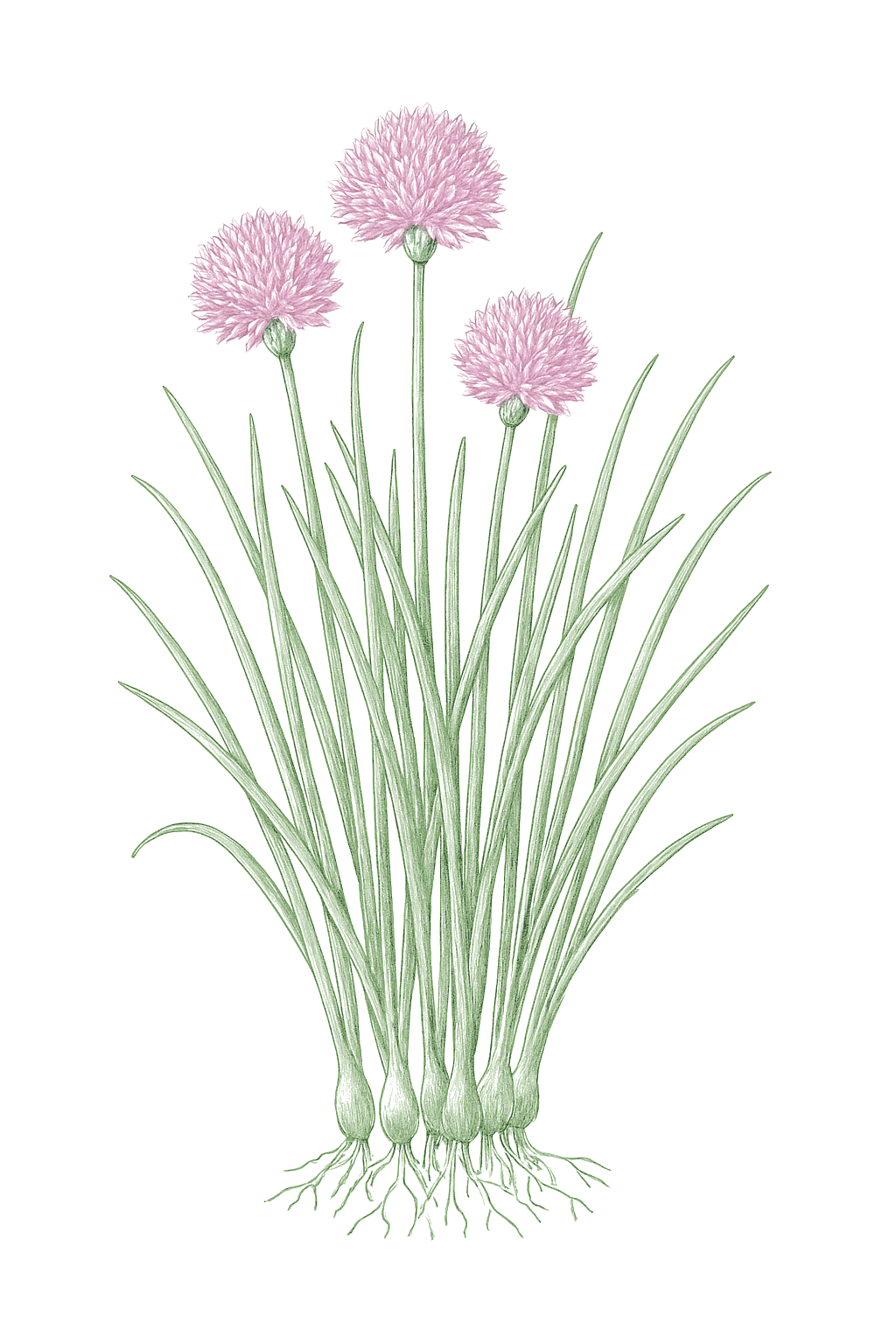
Chives are one of the easiest and hardiest herbs you can grow. They are a perennial in the onion family, so you plant them once and they come back every year on their own. The plant dies back over winter, then sends up fresh, thin, grassy green leaves very early in spring, and it carries pretty pink-purple flowers in early summer that you can eat too. Chives like full sun to a little shade, decent soil, and regular water, but they forgive a lot. The clump gets bigger each year, so dig it up and split it every few years. They have a mild oniony taste and hardly any pests. There is also a relative called garlic chives, with flat leaves and a mild garlic flavor. Chives (Allium schoenoprasum) are a hardy, clump-forming perennial in the onion family (Amaryllidaceae), grown for their slender, hollow, grass-like leaves and their edible pink to pale purple pom-pom flowers. Unlike the annual and biennial kitchen herbs, chives are planted once and come back on their own year after year: the clump dies back to the ground over winter, rests dormant, and pushes up fresh green blades as one of the very first herbs of spring. They are among the hardiest herbs grown, reliable to roughly USDA zone 3, and among the easiest, with a mild onion flavor and few real pests. Give them full sun to light shade, average to rich well-drained soil, and steady moisture, though an established clump tolerates short dry spells. The clumps slowly widen from year to year and are best lifted and divided every 2 to 3 years to keep them vigorous. Chives are cool-preferring: in cold regions they run right through the northern summer, while in the hot South and desert they are a cool-season herb that slows or rests in the worst summer heat and revives as it cools. A close relative, garlic chives (Allium tuberosum), is a distinct species with flat leaves, a mild garlic flavor, and white late-summer flowers.
Off-season for chives in zone 11.
In Zone 11, chives can be planted October through November, skipping the summer heat. Harvest runs January through December.
In Zone 11, chives can be planted October through November, skipping the summer heat. Harvest runs January through December.
In Zone 11, chives can be planted January through February. Harvest runs March through December.
In Zone 11, chives can be planted January through February. Harvest runs March through December.
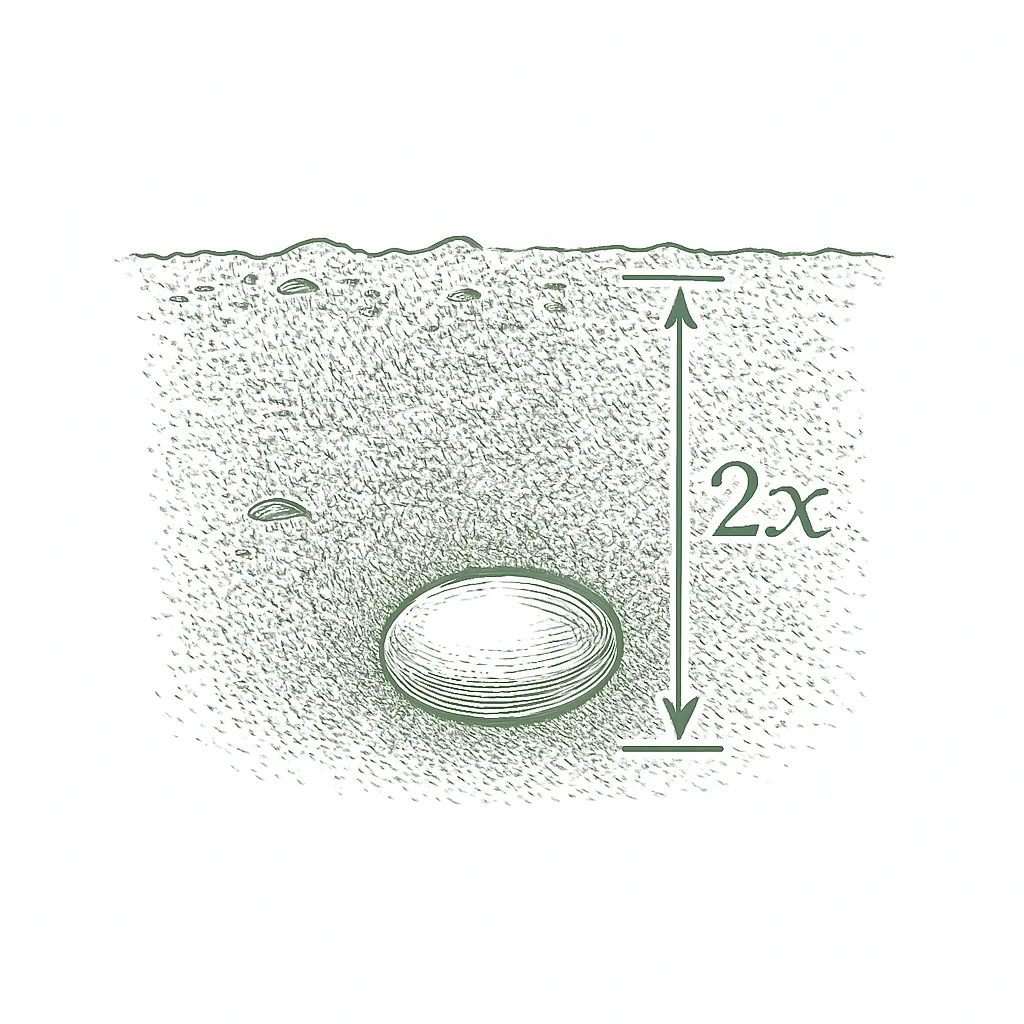
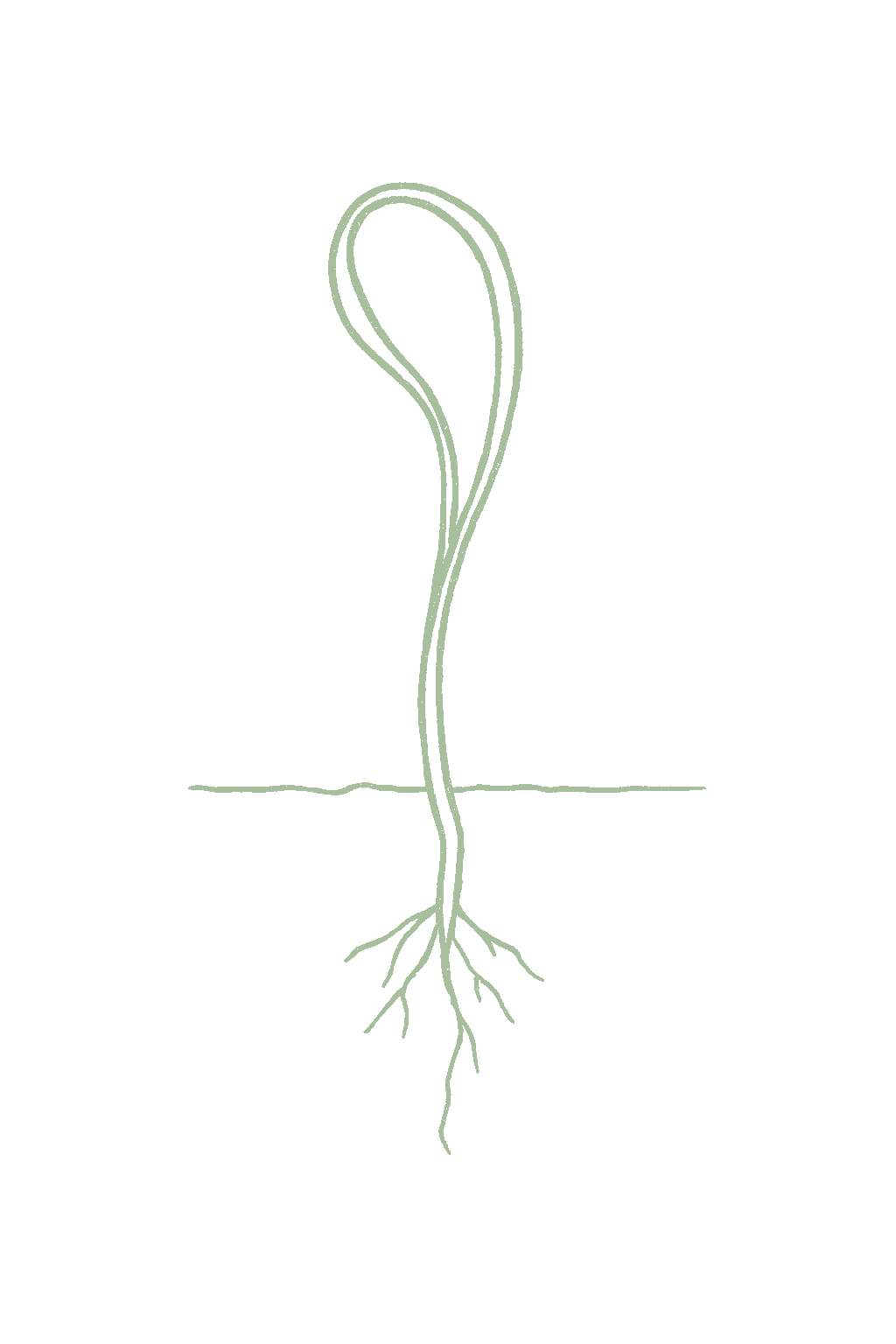
The easiest way to start chives is to buy a small pot or split a clump from a friend, which is ready to cut almost right away. You can also grow them from seed, but the seed is slow, taking a couple of weeks or more, so start it indoors about 6 to 8 weeks before the last frost, sowing a small pinch of seeds in each cell and growing them on as a little clump that you plant out whole without separating, or sow it outside once the soil is warm. Plant outside in spring in cold areas, or in fall through winter where summers are hot. Space plants about 8 to 12 inches apart, and remember one clump can be split into many.Chives are easiest to establish from a division or a nursery clump, which gives a cuttable plant in weeks, but they also grow readily from seed. The seed is slow, germinating over about 2 to 3 weeks (up to 4 to 6 in cool soil), so start it indoors 6 to 8 weeks before the last frost, sowing a pinch of about 8 to 10 seeds per cell and growing them on as an undivided clump that transplants out whole after hardening off, with no thinning (RHS), or direct-sow once the soil warms. Plant outdoors in spring after hard-frost danger passes in cold regions, or in fall through late winter in mild and hot regions. Set clumps 8 to 12 inches apart; they widen over the years and are the easiest herb to propagate by simply lifting and splitting an established clump.
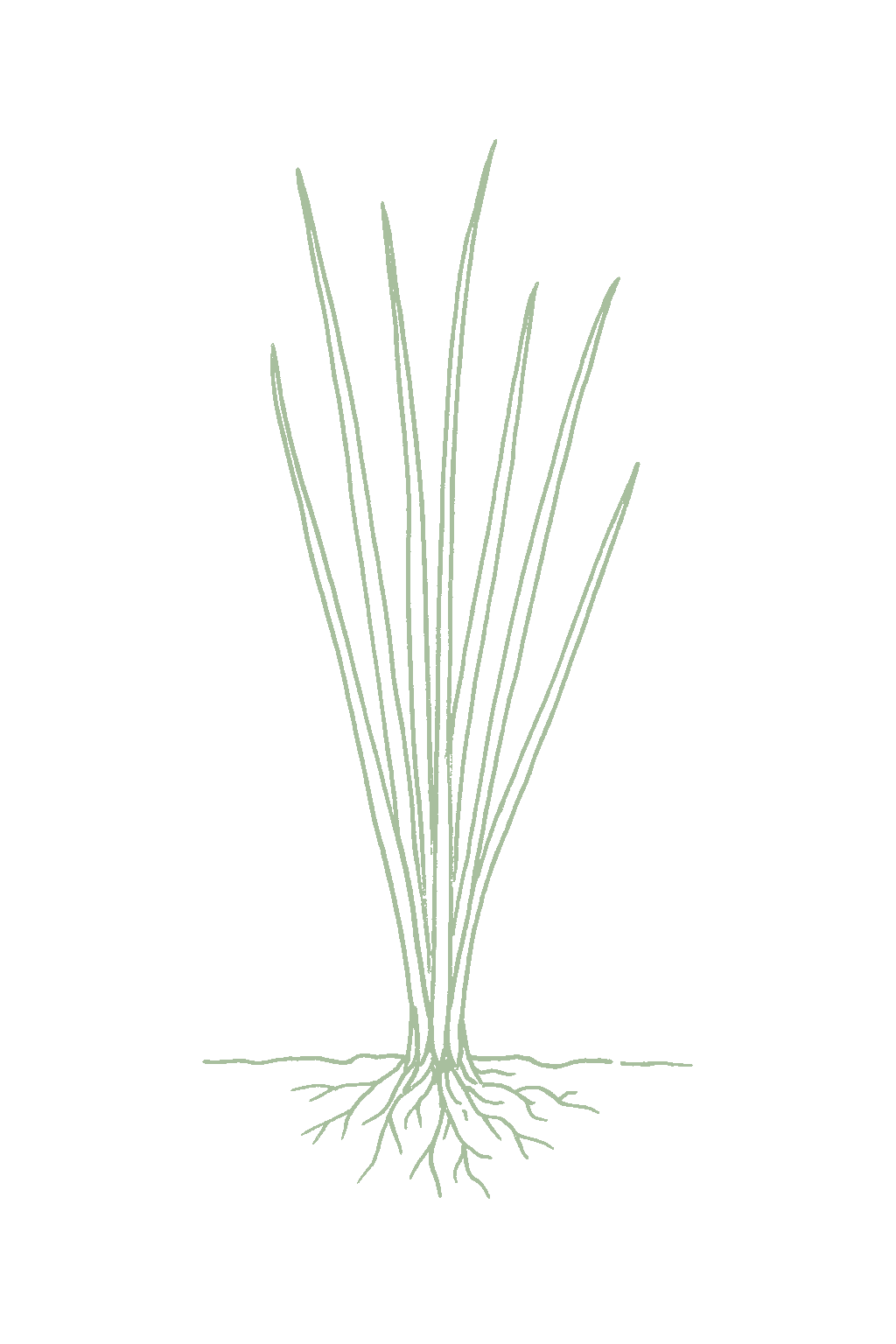
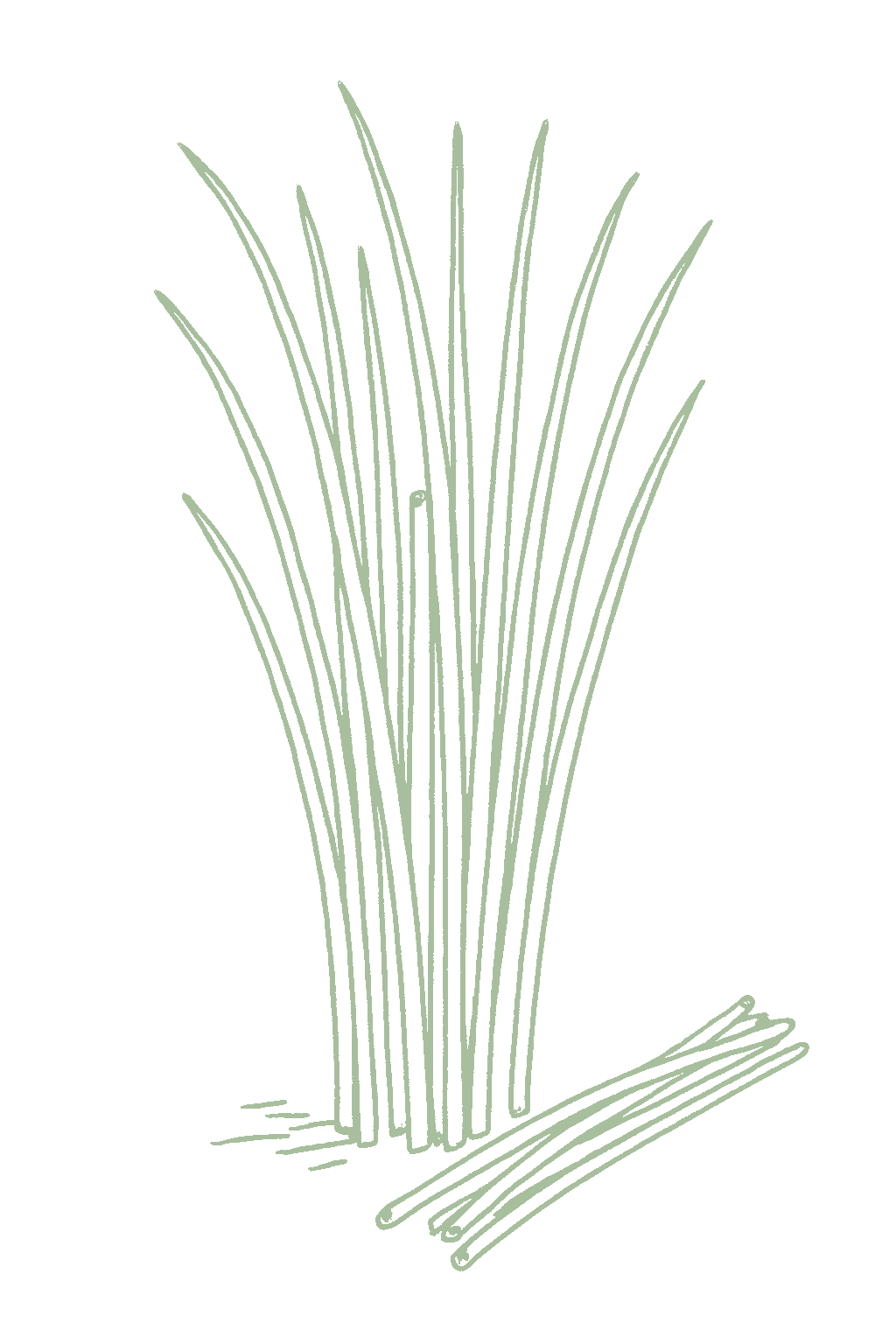
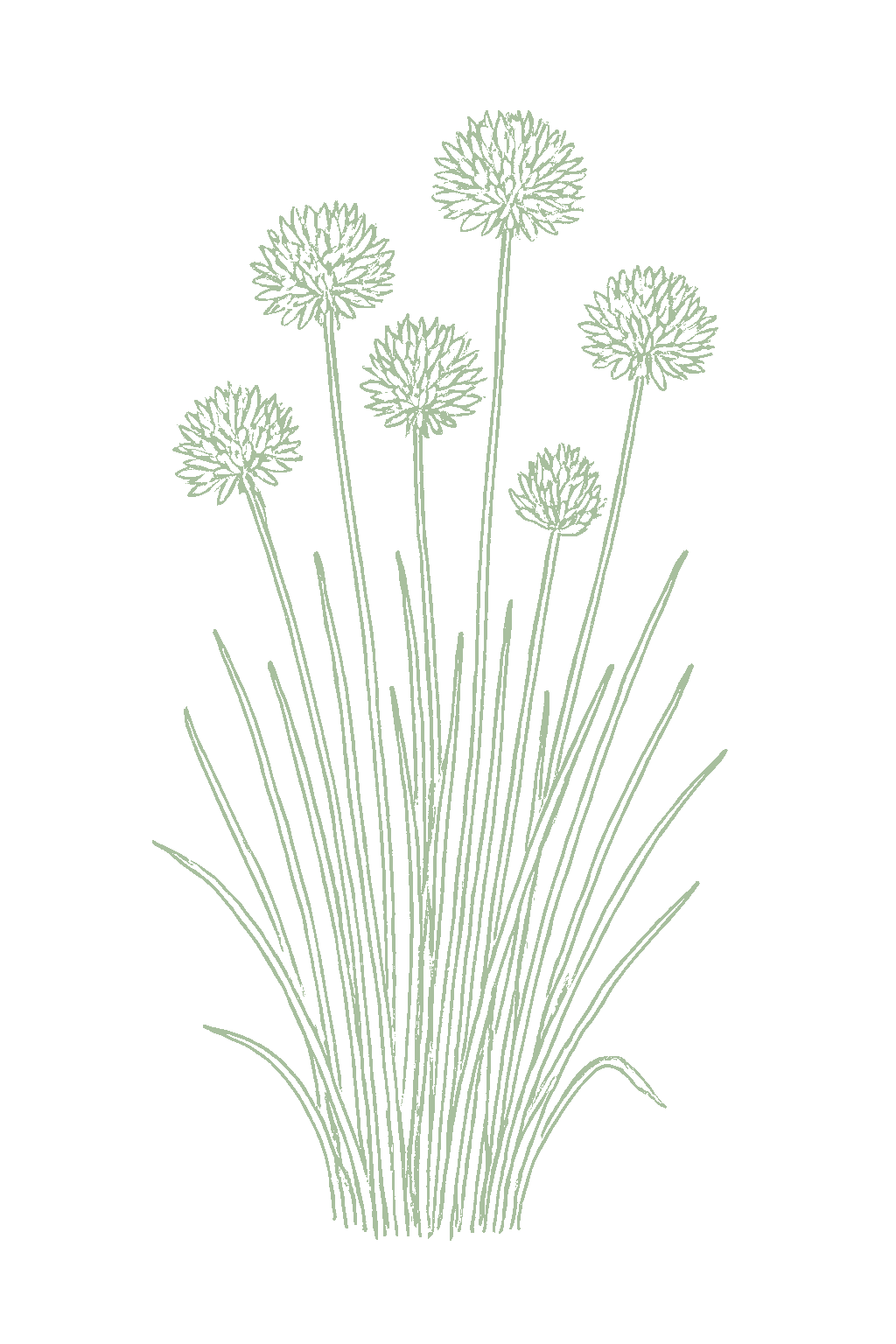
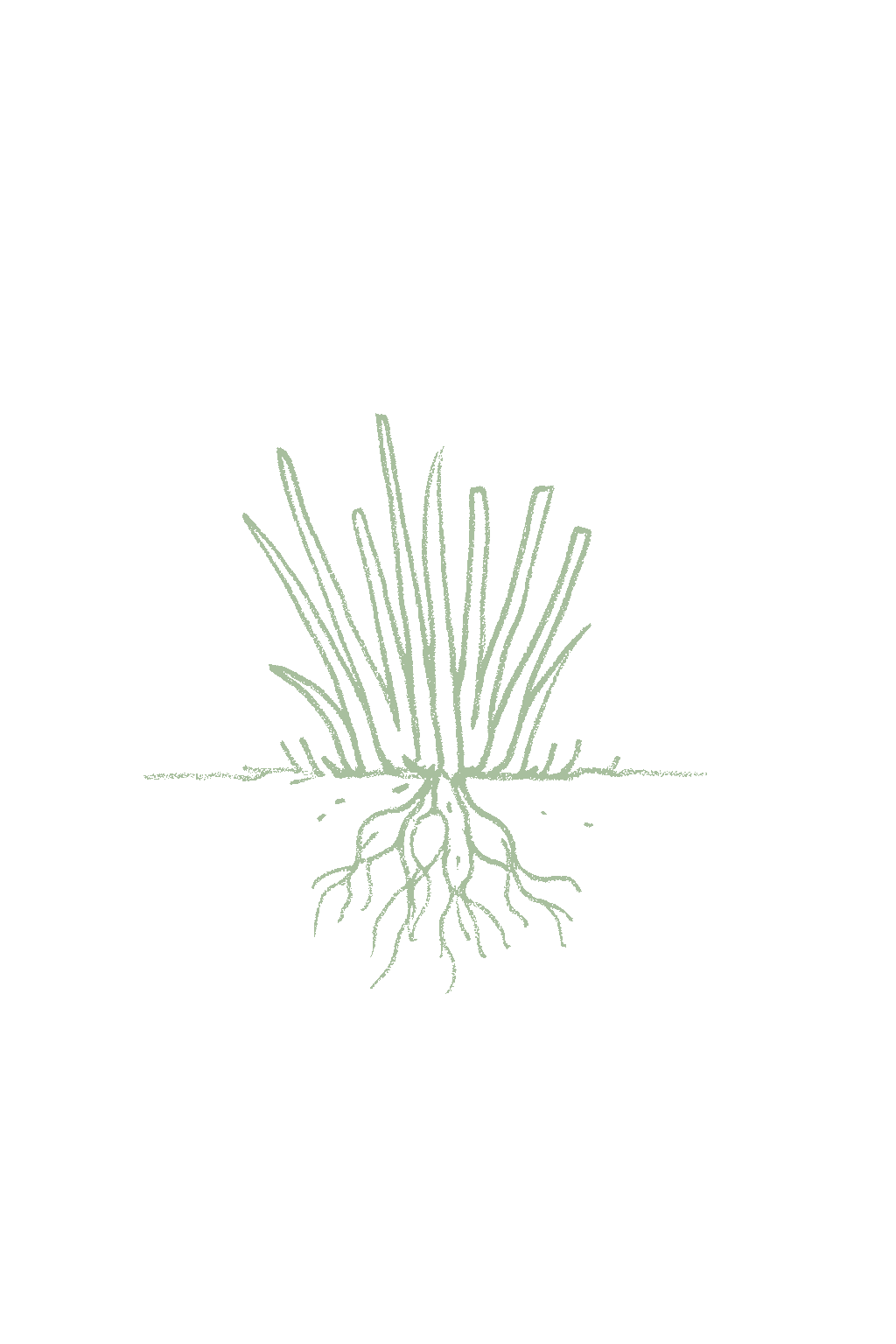
Not sure what soil you have? Grab a small handful of damp soil from your garden bed and squeeze it. If it crumbles apart easily, it's sandy. If it holds together but breaks when you poke it, it's loam (what most vegetables want). If it stays in a hard, slippery ball, it's clay.
Chives are not fussy about soil and grow in almost any kind, but they do best in loose, fertile ground with some compost mixed in, kept evenly moist but never soggy. Good drainage matters most: an established clump handles a short dry spell, but ground that stays wet through winter can rot the roots and crown.
Mix 2-3 inches of compost into the top 6 inches of your bed before planting. Compost holds moisture (which sandy soil drains too fast) and adds the nutrients sandy soil tends to lack. Repeat each season. Compost breaks down over time.
Mix 2-3 inches of compost AND a few inches of coarse sand or perlite into the top 6 inches of your bed. The compost feeds the plants; the sand breaks up the clay so air and water can move through. Don't add sand without compost. It can compact like concrete.
If amending your soil sounds like too much work, or if your soil is heavy clay, full of rocks, or contaminated, build over it. A raised bed at least 12 inches deep filled with a 50/50 mix of compost and sandy loam gives you ideal growing soil with no battles. A 5-gallon container with quality potting mix does the same for one plant at a time. Both bypass your native soil entirely.
The numbers that matter, at a glance.
Chives grow best in slightly acidic to neutral soil, about 6.0 to 7.0. Most garden soil is fine, and a simple soil test tells you where you stand.Aim for a soil pH of about 6.0 to 7.0, slightly acidic to neutral, the range the University of Minnesota and Michigan State both list as best for chives; they still do fine across roughly 5.5 to 7.5. Chives are not pH-sensitive, so in most gardens no adjustment is needed beyond a soil-test baseline.
Chives do not need much feeding. Mix some compost into the soil before planting, and that is often enough. If a clump looks weak or you cut it hard, give it a light feeding to bring back fresh green leaves. In a pot, feed lightly with a diluted liquid fertilizer every few weeks, since watering washes nutrients out.Chives are light feeders with low nutrient needs and rarely need regular fertilizer. The University of Minnesota suggests only a very light application of a 5-10-5 fertilizer once each spring if a clump looks weak, on top of compost worked in before planting. A clump you cut from repeatedly benefits from a light feeding after a hard shearing to push fresh tender regrowth; in containers, where frequent watering leaches nutrients, a dilute liquid feed every four to six weeks keeps leaves green. Avoid heavy nitrogen, which softens the flavor.
Use a balanced fertilizer such as 5-10-5, a little worked into the soil before planting, then feed lightly only if the plant looks weak or after you cut it hard.Light, balanced feeding for a low-demand perennial: a little 5-10-5 or balanced fertilizer worked in before planting, then an optional light feed in spring or after a hard cutting. Go easy on nitrogen, which softens flavor on a crop eaten fresh.
Chives are a classic companion herb: their oniony scent is said to help keep aphids and some other pests off nearby plants, and their early flowers feed pollinators and helpful insects. Gardeners traditionally tuck them at the base of roses (for black spot and aphids) and apple trees (for scab), and near carrots and tomatoes. The one plant to keep them away from is beans and peas, which onion-family plants can slow down. Much of the chive companion tradition rests on two real mechanisms: allium sulfur compounds that deter aphids and some fungal problems, and the flowering umbels' pull on hoverflies, ladybugs, and parasitoid wasps. Michigan State, citing Penn State, passes along the traditional pairings of chives at the base of apple trees (to help suppress apple scab) and roses (black spot), plus a reputed boost to carrots. These are hedged tradition with a plausible mechanism, not measured trials. The one well-grounded caution is the allium-legume antagonism: onions and their relatives are widely documented to inhibit beans and peas, so keep chives away from legumes.
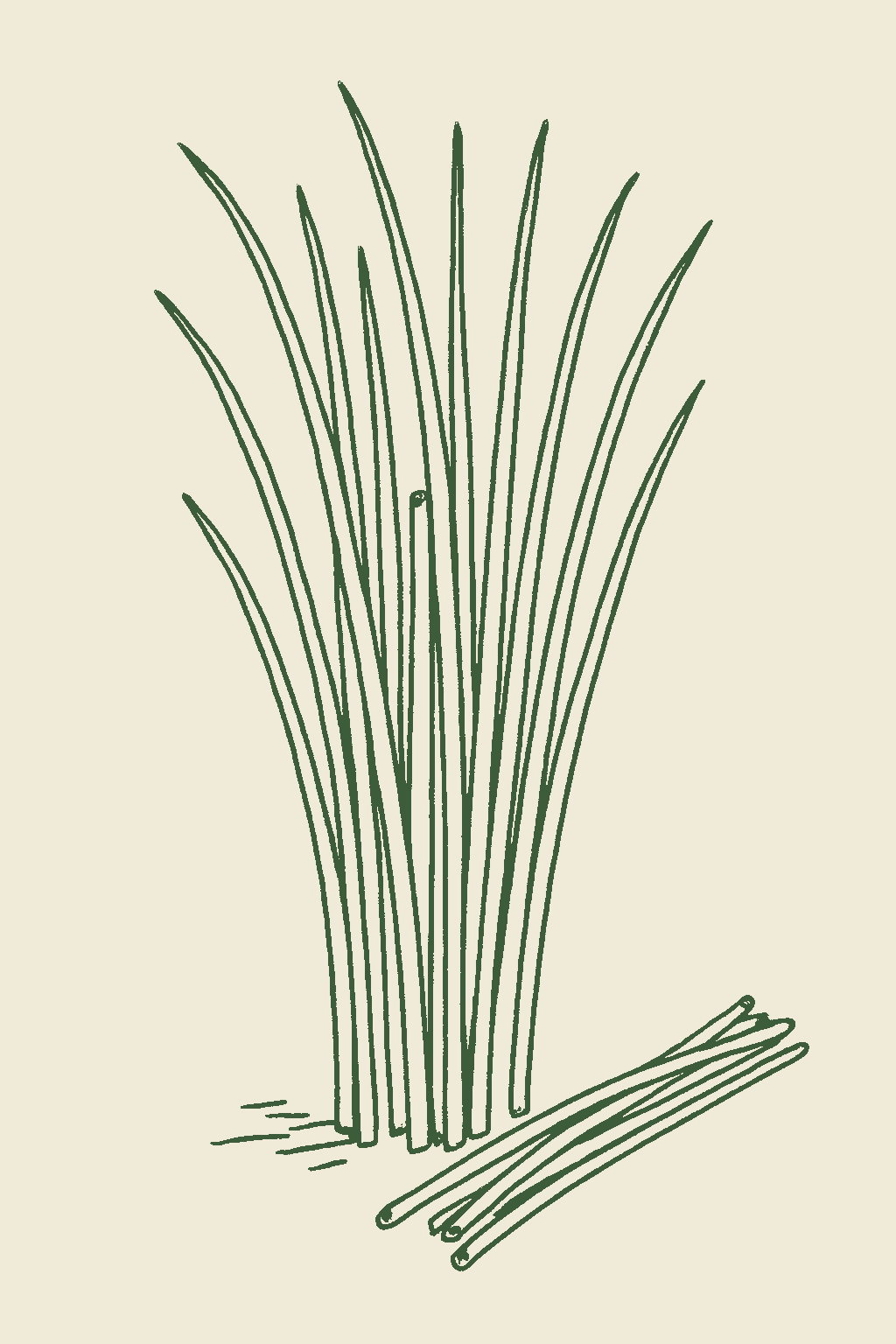
You can start cutting chives once the clump is about 6 inches tall. From seed that takes a couple of months, but a bought or divided plant is ready much sooner. Snip the leaves down to about 1 to 2 inches above the soil, taking some from each clump, and they grow right back so you can keep cutting all season. Always leave some green behind so the plant stays healthy, and go easy the first year. Cut in the cool morning and use the leaves fresh. The flowers are edible too.Start cutting chives once an established clump is 6 inches or more tall, which from seed is roughly 60 to 90 days but from a division or nursery clump can be just a few weeks. Harvest by shearing the outer leaves down to about 1 to 2 inches above the soil with scissors, taking some blades from each clump rather than shearing it bare; the leaves regrow and you can cut the same plant again and again through the season. Leave enough green so the plant keeps feeding itself, and in the first year cut sparingly so the young clump can build strength to overwinter. Pick in the cool morning, and use the leaves fresh for the best flavor. The pink-purple flowers are edible too and are best picked just as they open.
One chive clump gives you leaves for years and only gets bigger, so a plant or two is plenty for a kitchen. You can split a big clump into several new ones for free.A single established chive clump yields fresh leaves for years, cut repeatedly through each season; one clump supplies a kitchen, and it multiplies into many as you divide it. Yield builds as the clump widens, so a two- or three-year-old plant gives far more than a first-year one.
Chives are most productive in cool spring and fall weather. In cold areas they keep going through summer; in hot areas they slow down in the worst heat and pick back up when it cools.Production peaks in the cool of spring and again in fall. In cold regions chives run through the northern summer; in hot regions they slow or rest in peak heat and rebound as it cools. Cutting the clump back after flowering renews a flush of tender leaves. In its first year, go easy on cutting chives so the plant gets strong for winter; the big harvests come in later years. Cut low, not just the tips, and snip off flowers before they seed so you do not get seedlings everywhere.Chives are a rewarding, low-effort perennial, but the first year is about establishment: harvest sparingly so the young clump banks strength to overwinter, and expect the big yields from year two on. The main beginner mistakes are over-cutting a new clump, shearing only the tips instead of cutting low, and letting the flowers seed a lawn of volunteers.
There are really two kinds. Common chives have thin, hollow leaves and pink-purple flowers and taste mildly of onion; the named types just vary in how fine or sturdy the leaves are. Garlic chives are a different plant with flat leaves, a mild garlic taste, and white flowers in late summer, and they take heat well but spread by seed a lot. They all grow the same way, so pick by flavor and looks, and cut off the flowers if you do not want seedlings everywhere.Chives come in two distinct plants. Common chives (Allium schoenoprasum) are the familiar fine, hollow-leaved clump with pink-purple spring flowers and a mild onion taste; named selections differ mostly in leaf fineness and vigor, from the slender Fine Leaf and Grolau strains favored for pots and forcing, to the thick, easy-cutting Staro, to taller showy-flowered Forescate. Garlic chives (Allium tuberosum) are a separate species with flat leaves, a garlic flavor, and white late-summer flowers; they are tougher in heat and drought but self-sow aggressively. All are grown much the same way, so choice comes down to flavor (onion versus garlic), leaf form, and how much you value the flowers, while any chive self-seeds if you let the blooms set seed.
Chives are in the onion family, so they can pick up the same soil diseases as onions and garlic. Since a chive clump stays in one place for years, just choose a spot where you have not grown onion-family plants recently, ideally after leafy greens or beans. Chives that flower drop seed, so pull up stray seedlings where you do not want them.Chives are an allium, so they share the onion family's soilborne diseases (white rot, pink root) and pests (onion maggot, thrips, allium leafminer). Standard allium guidance keeps the family off the same ground for several years, but chives are a permanent perennial, so the practical rule is to establish a new clump in ground that has not recently grown onions, garlic, or leeks, and to follow a leafy or legume crop rather than another allium. A clump left to flower self-sows freely, so pull stray seedlings that come up out of place.
The plant app sends a timely reminder at every critical moment of your chives season. The wording adjusts to whichever you pick: beginner or seasoned. Here are three you'll see in Zone 11.
plant sends the right notification at exactly the right moment, for your zone, your weather, your crops. Founding members lock the rate forever.
We're building this guide with real growers. Got a question we missed? Ask here. We read every one and add the best answers right to this page.
Learned something the hard way? Pass it on. Real growers' tips make this guide better for the next person, and we credit you by name when yours goes live.
If you've grown this crop and you see a date, a temperature, a companion claim, or a recommendation that doesn't match your experience, tell us. Real growers' corrections make this guide better for the next person.
Every date, temperature, spacing, and recommendation on this page is sourced from university cooperative extension publications, peer-reviewed agricultural research, NOAA climate data, and direct extension calendars. Where claims are softer (traditional gardening wisdom not formally documented), we say so.
Spot a data point that doesn't match your experience? Submit a correction; accepted corrections earn full author credit on the page.
Zone-aware seasonal nudges, what's worth planting now, and the occasional recipe from the harvest. No spam, ever.