Today · in your zone
What's happening right now
Off-season for rosemary in zone 5.
Tap to switch. plant calibrates to where you are in the journey.
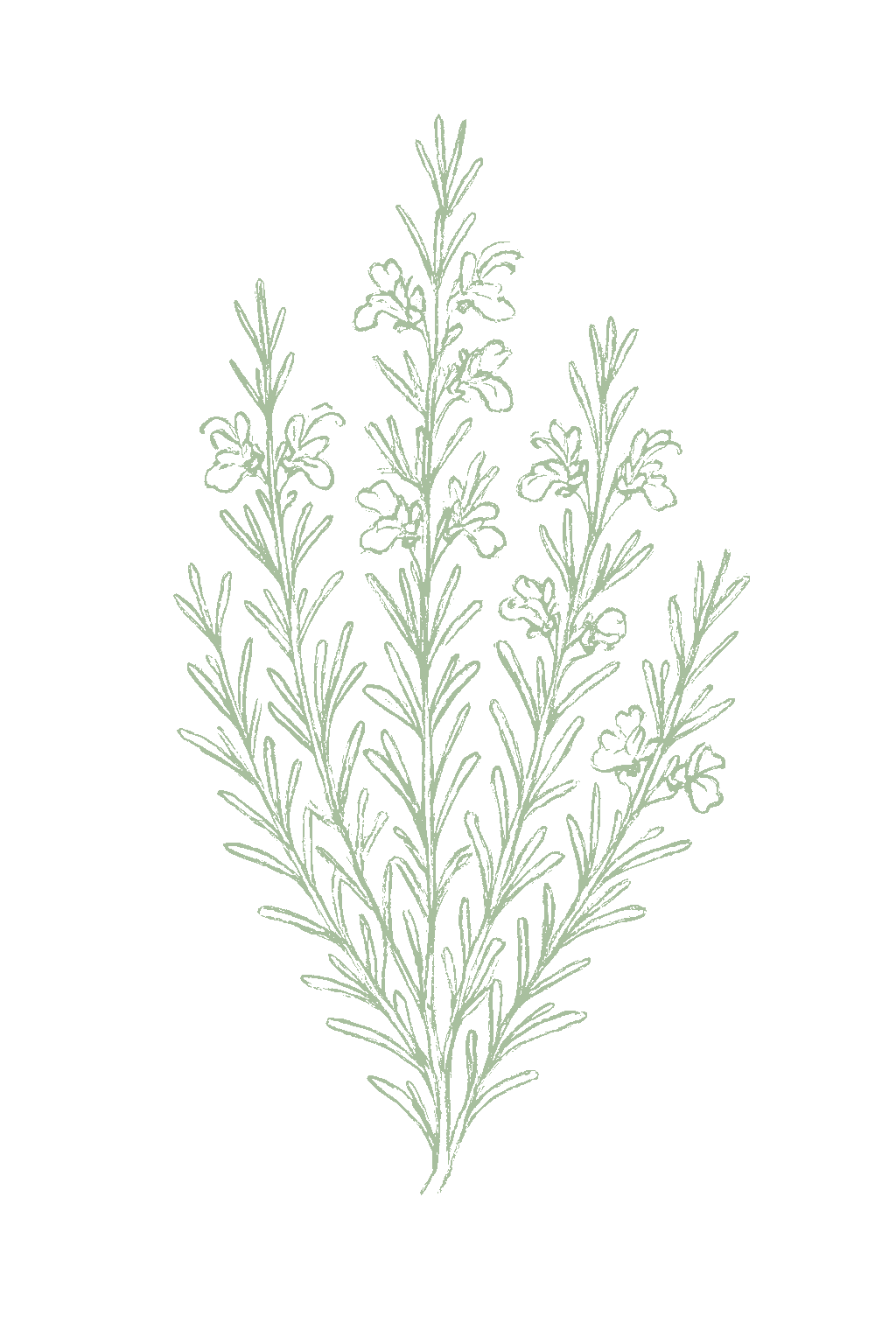
Rosemary is an evergreen shrubby herb with fragrant, needle-like leaves and small blue flowers. It comes from the dry Mediterranean, so it loves sun and hates wet feet. You grow it mostly for the leaves, which you can snip year round in mild climates. It is less cold hardy than sage or thyme: it lives outdoors year after year only in warmer areas (about zone 7 or 8 and up), and in cold-winter places most people grow it in a pot and bring it inside for the winter. Give it full sun, fast-draining soil, and go easy on the water, since too much water is the fastest way to kill it. Rosemary (Salvia rosmarinus, formerly Rosmarinus officinalis) is a woody evergreen Mediterranean subshrub in the mint family, grown mainly for its aromatic, needle-like culinary leaves and secondarily for its small blue flowers. It comes in upright forms that reach several feet and low trailing forms that spill over walls. Unlike hardier culinary perennials such as sage and thyme, rosemary is relatively cold tender: it is reliably perennial only in mild zones (roughly zone 7 or 8 and warmer, with the hardy cultivar Arp pushing into zone 6), and in colder regions it is grown as an annual or overwintered indoors in a pot. It wants full sun, lean sharply drained soil, and little water; overwatering and wet, poorly drained soil, not cold alone, are its most common killers.
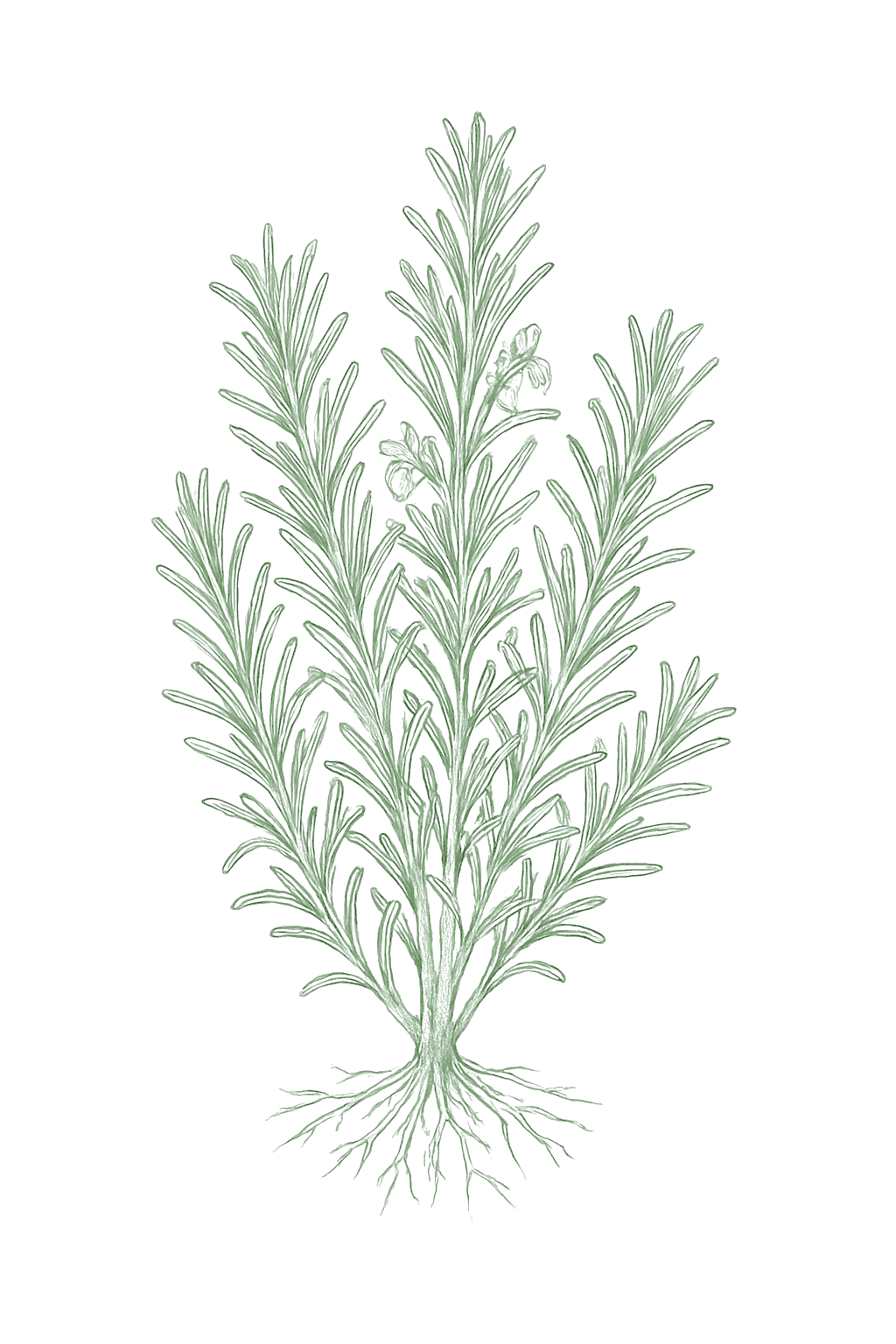
Off-season for rosemary in zone 5.
Rosemary usually will not survive a zone 5 winter in the ground. Either grow it for one season or, better, keep it in a pot you move somewhere bright and protected for the cold months, then set it back out in spring. The tough cultivar Arp can sometimes make it through in a sheltered spot.Annual or container. Zone 5 is colder than rosemary's reliable hardiness (about zone 7 to 8), so it is grown as a single-season plant or, better, kept in a container moved to a bright, cool, protected spot for winter and set back out after frost. Hardy cultivars such as Arp can overwinter in a very sheltered, sharply drained zone 6 microclimate, but this is not the reliable default.
Once established, lavender settles into the same rhythm year after year: a winter rest, fresh spring growth, an early-summer bloom you cut for fragrant bundles, then a hard cut-back that keeps the plant compact and flowering for years.
The easy, reliable way to grow rosemary is to buy a small plant or take a cutting from an existing one. Growing it from seed is slow and unpredictable, and seed-grown plants often do not match the parent, so most gardeners skip it. If you do want to try seed, surface-sow it and do not cover it, since the seed needs light to sprout, keep it warm around 70°F, and start indoors about 10 weeks before your last frost; expect slow, uneven germination.Rosemary is almost always started from a nursery transplant or from stem cuttings, not from seed. Seed germinates slowly and unevenly and can take about three years to reach a mature plant, and named cultivars do not come true from seed, so growers propagate them from cuttings. Take tip cuttings a few inches long, root them with warmth (bottom heat around 70 to 75°F), and they root in a couple of weeks. To grow from seed instead, surface-sow at about 70°F since the seed needs light, starting indoors roughly 10 weeks before the last frost; germination is slow and uneven and the seedlings size up gradually, which is why most growers still choose cuttings.



Not sure what soil you have? Grab a small handful of damp soil from your garden bed and squeeze it. If it crumbles apart easily, it's sandy. If it holds together but breaks when you poke it, it's loam (what most vegetables want). If it stays in a hard, slippery ball, it's clay.
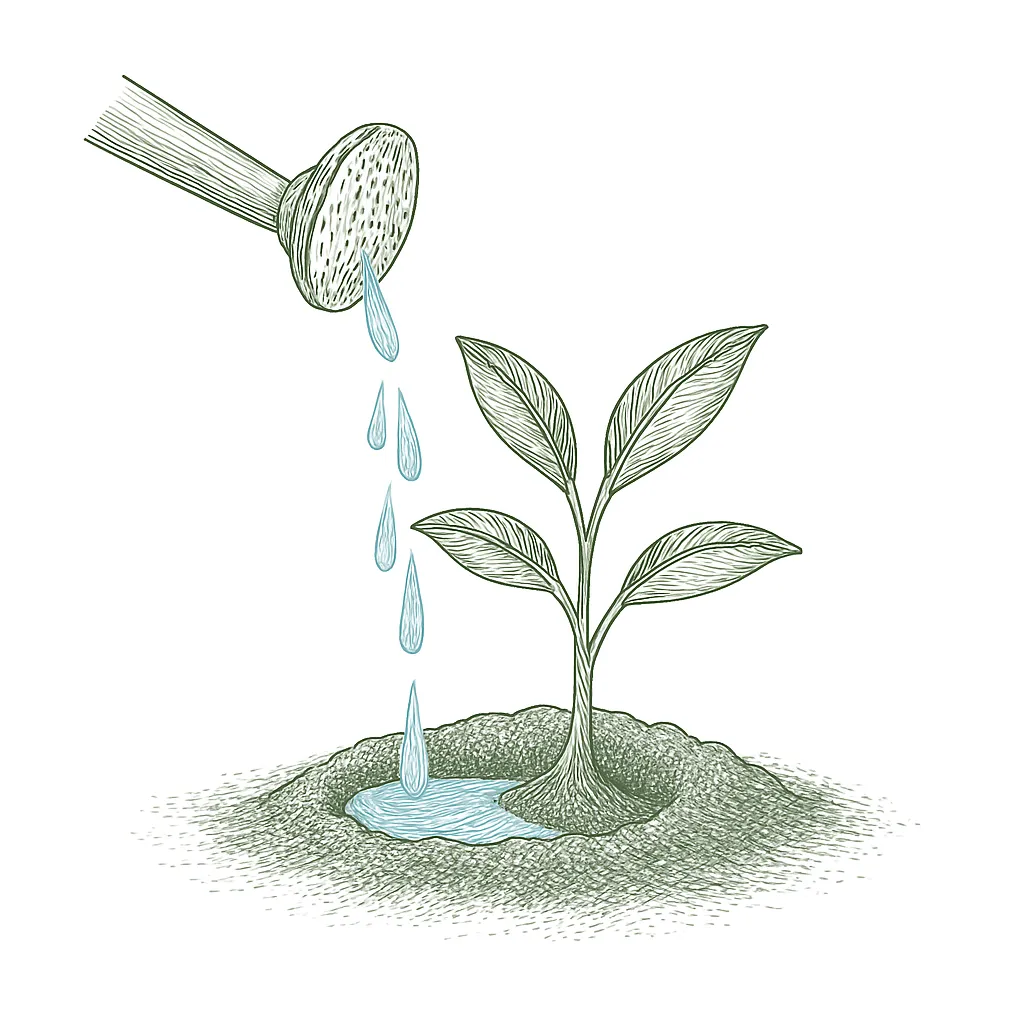
Rosemary likes poor, dry, gritty soil and full sun. Rich, damp soil and heavy clay make it weak and rot-prone, so the goal is fast drainage, not fertility. If your soil is heavy, plant rosemary on a mound or raised bed and mix in coarse sand or grit so water drains straight through.
Mix 2-3 inches of compost into the top 6 inches of your bed before planting. Compost holds moisture (which sandy soil drains too fast) and adds the nutrients sandy soil tends to lack. Repeat each season. Compost breaks down over time.
Mix 2-3 inches of compost AND a few inches of coarse sand or perlite into the top 6 inches of your bed. The compost feeds the plants; the sand breaks up the clay so air and water can move through. Don't add sand without compost. It can compact like concrete.
If amending your soil sounds like too much work, or if your soil is heavy clay, full of rocks, or contaminated, build over it. A raised bed at least 12 inches deep filled with a 50/50 mix of compost and sandy loam gives you ideal growing soil with no battles. A 5-gallon container with quality potting mix does the same for one plant at a time. Both bypass your native soil entirely.
The numbers that matter, at a glance.
Rosemary likes soil that is slightly acidic to neutral, about pH 6.0 to 7.0, and is not fussy within a fairly wide range. Do not worry too much about the exact number; good drainage matters much more to rosemary than pH does.Rosemary does best in slightly acidic to neutral soil, roughly pH 6.0 to 7.0, and tolerates a wider band from about 5.5 to 8.0. Extension herb guidance clusters around pH 6 to 7.5, and rosemary is adaptable as long as the soil drains sharply; getting drainage right matters far more than fine-tuning pH.
Rosemary barely needs feeding. A little compost at planting is enough. Feeding it heavily gives you a lot of soft leaves with weaker flavor and scent, and a plant that is more likely to get sick or die back in winter.Rosemary has low fertility needs and is easy to over-feed. A little compost worked in at planting, or a single light application of a balanced fertilizer in spring, is plenty. Excess fertilizer pushes soft, lush growth that has weaker flavor and fragrance, flowers less, and is more prone to disease and winter injury.
N/A. There is no fertilizer number to hit here, since the goal is to feed rosemary as little as possible.N/A. Rosemary is not fed to an N-P-K target; the aim is lean soil and minimal-to-no supplemental feed, so no fertilizer analysis applies.
Grow rosemary next to other plants that also like full sun and dry soil, such as sage, thyme, and oregano, so you can water the whole group the same light way. Its flowers bring in bees and helpful bugs. Keep it away from plants that need a lot of water, because that wet soil will rot your rosemary. Rosemary pairs naturally with other sun-loving, drought-tolerant, lean-soil plants that share its need for sharp drainage, especially fellow Mediterranean herbs like sage, thyme, and oregano that can all run on the same dry, waterwise schedule. As a small flowering plant it draws pollinators and beneficial insects such as bees and butterflies. Keep it away from thirsty, rich-soil neighbors that force the wet conditions which rot rosemary.
You grow rosemary for the leaves, and in mild areas you can snip sprigs almost any time of year. For the best flavor, cut sprigs from the soft green growth in the morning, especially just before it flowers. Snip stems just above a leafy joint so the plant grows back bushy, and take no more than about a fifth of the plant at once. To dry it, cut sprigs before or during flowering, hang small bunches somewhere warm and airy, and strip the leaves off once they are dry.Rosemary is grown for its leaves, and in mild climates you can snip fresh sprigs almost year round. For the strongest flavor and oil, harvest sprigs from the soft green growth in the morning, just before or as the plant begins to flower. Cut individual stems above a leafy node to encourage bushy regrowth, and do not remove more than about 20 percent of the plant at any one time. For drying, cut sprigs before or at flowering, then hang them in small bundles in a warm, airy place and strip the leaves once dry.
One grown rosemary plant gives you more sprigs than you will likely use, and in mild areas you can cut from it almost year round, as long as you do not take more than about a fifth at once.A mature plant supplies far more than a kitchen needs: sprigs can be cut continuously through the growing season, and nearly year round in mild climates, as long as you never remove more than about 20 percent at a time. Upright types yield the most cuttable growth once they reach full size in about three years.
Only harvest a little the first year. Pinching the tips helps the plant bulk up for bigger harvests later.Expect only light harvests the first year; pinching tips to build a bushy framework pays off in later seasons.
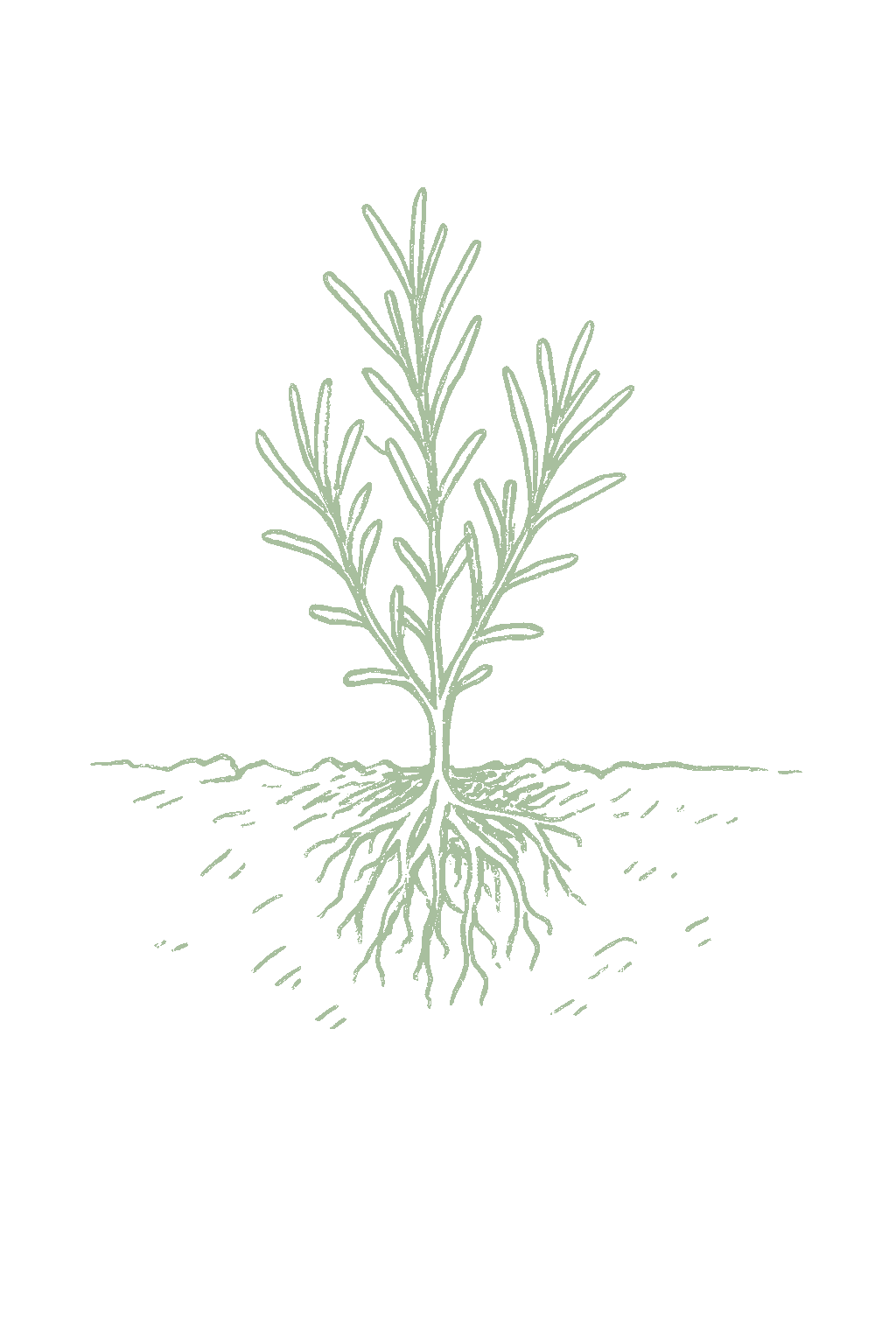
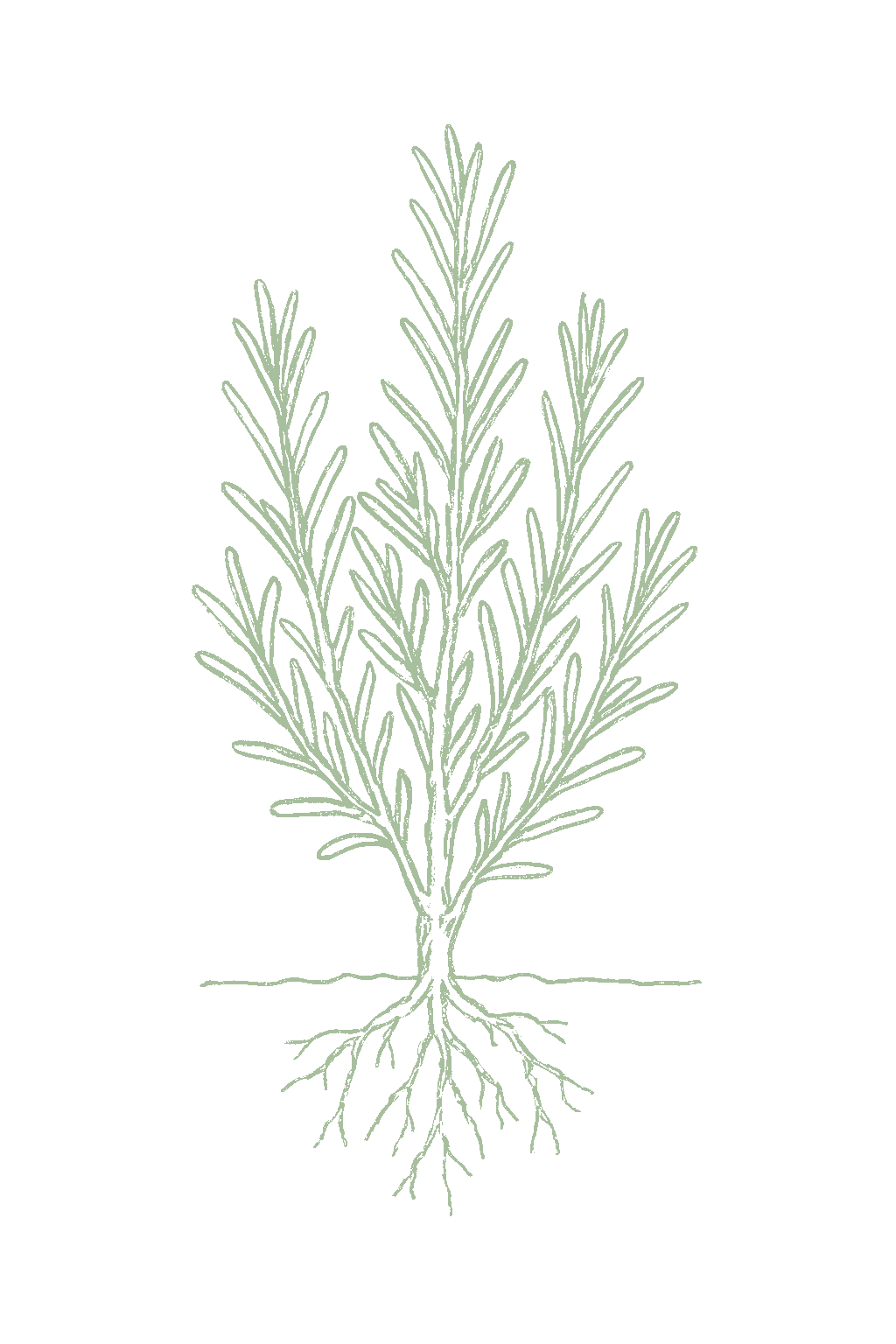
There are two main shapes of rosemary: tall upright types (like Tuscan Blue) that grow into shrubs, and low trailing types (like Prostratus) that hang over the edge of a pot or wall. In cold-winter areas the key is picking a hardy type: Arp is the toughest and can take zone 6, with Hill Hardy and Salem close behind for zone 7. Most other kinds only survive winter outdoors in warmer areas. For cooking, any upright green rosemary is great.Rosemary reaches the grower in two broad forms: upright types (Tuscan Blue, Barbecue, and the culinary standards) that make several-foot shrubs, and low, trailing types (Prostratus and similar) that spill over walls and pots. Because rosemary is cold tender, cultivar choice is really a hardiness choice in colder gardens: Arp is the hardiest, surviving into zone 6, and Hill Hardy and Salem are close behind for zone 7, while most other cultivars and the trailing forms are reliable only in about zones 8 to 10. For cooking, any of the upright green-needled types work well; for a container or a wall, choose a trailing form.
N/A. Rosemary is not rotated like a vegetable because it is a permanent plant that stays put for years. If you replace an old one, pick a fresh, well-draining spot.N/A. Rosemary is a long-lived perennial that stays in place for years, so annual crop rotation does not apply. When replanting an old rosemary spot, choose a fresh, well-drained site to avoid carrying over soil-borne root rot.
The plant app sends a timely reminder at every critical moment of your rosemary season. The wording adjusts to whichever you pick: beginner or seasoned. Here are three you'll see in Zone 5.
plant sends the right notification at exactly the right moment, for your zone, your weather, your crops. Founding members lock the rate forever.
We're building this guide with real growers. Got a question we missed? Ask here. We read every one and add the best answers right to this page.
Learned something the hard way? Pass it on. Real growers' tips make this guide better for the next person, and we credit you by name when yours goes live.
If you've grown this crop and you see a date, a temperature, a companion claim, or a recommendation that doesn't match your experience, tell us. Real growers' corrections make this guide better for the next person.
Every date, temperature, spacing, and recommendation on this page is sourced from university cooperative extension publications, peer-reviewed agricultural research, NOAA climate data, and direct extension calendars. Where claims are softer (traditional gardening wisdom not formally documented), we say so.
Spot a data point that doesn't match your experience? Submit a correction; accepted corrections earn full author credit on the page.
Zone-aware seasonal nudges, what's worth planting now, and the occasional recipe from the harvest. No spam, ever.