Today · in your zone
What's happening right now
Off-season for beefsteak tomato in zone 13.
Tap to switch. plant calibrates to where you are in the journey.
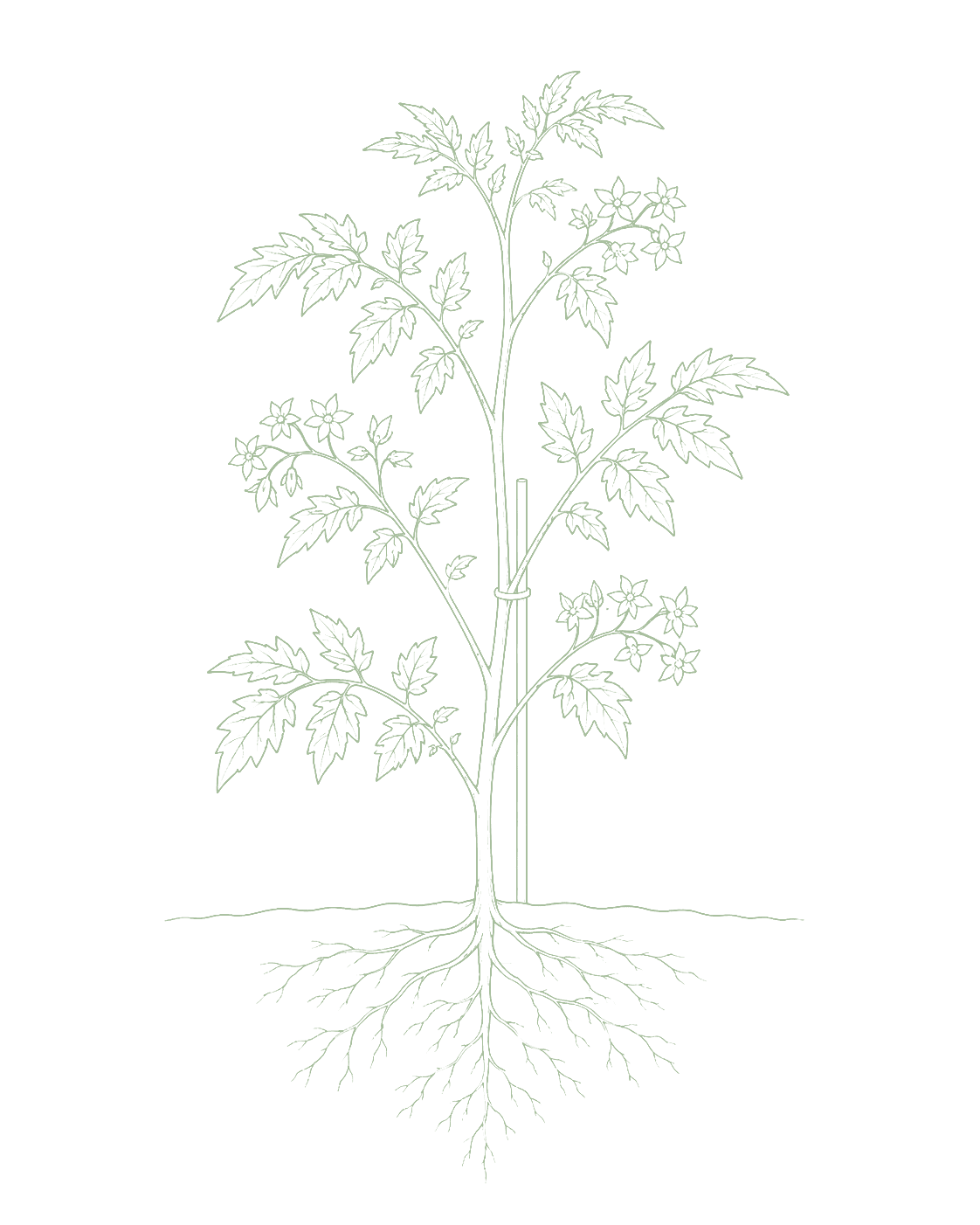
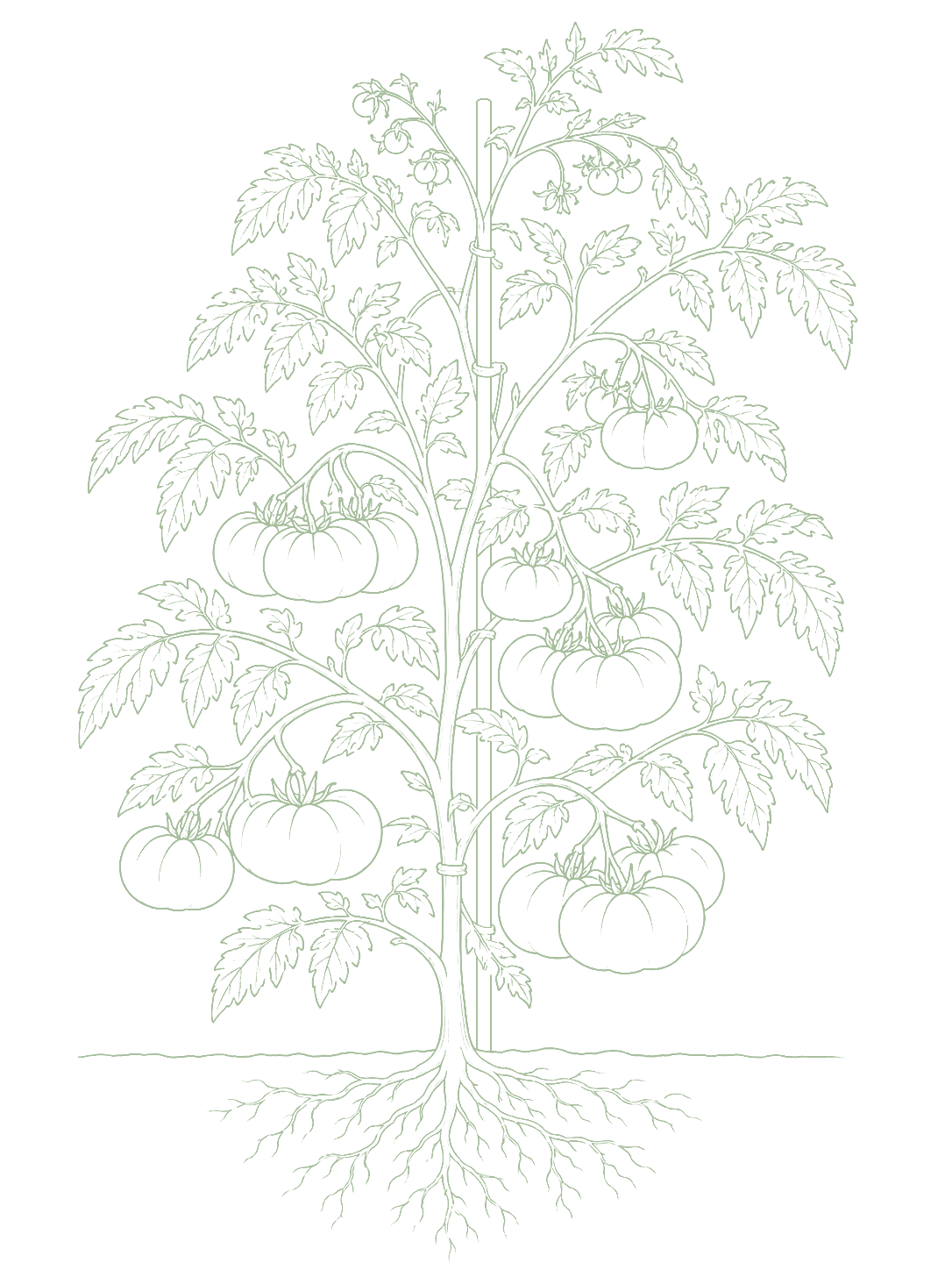
Beefsteak tomatoes are the big slicing tomatoes you see at farmers markets, the kind that fill an entire slice of bread. They take longer to ripen than cherry or roma types (most varieties need 75 to 100 days from transplant), so they need the full growing season. These are indeterminate plants, meaning they keep growing and setting new fruit until frost kills them, so they need a strong cage or stake from the start; plan for a plant that reaches 5 to 6 feet tall. They're more demanding than cherry tomatoes, but if you get the watering and support right, the payoff is big, meaty slices all summer. Good first choices include Celebrity (disease-resistant, widely adapted) and Early Girl (shorter maturity, better for short-season zones). Indeterminate, large-fruited tomatoes grown for slicing. The beefsteak label covers three biologically close sub-types: true beefsteak-shape varieties (Big Boy, Mortgage Lifter), oblate globe slicers commonly marketed as beefsteak (Celebrity), and large heirloom slicers (Brandywine), with uniform cultivation requirements across all. Indeterminate growth means the plant continues extending and setting fruit until frost kills it; this also means it requires strong caging or staking from the start. Large fruit mass places sustained calcium and water demand on the plant, which is the main reason blossom-end rot and cracking are more common in beefsteaks than in cherry or paste types. Requires a long frost-free window: most varieties need 75-100 days from transplant to first ripe fruit, making them marginal in short-season zones (3-4) without season-extension measures. In zones 9-11, the challenge reverses: summer heat above 90°F causes blossom drop, and fall planting is the standard workaround.
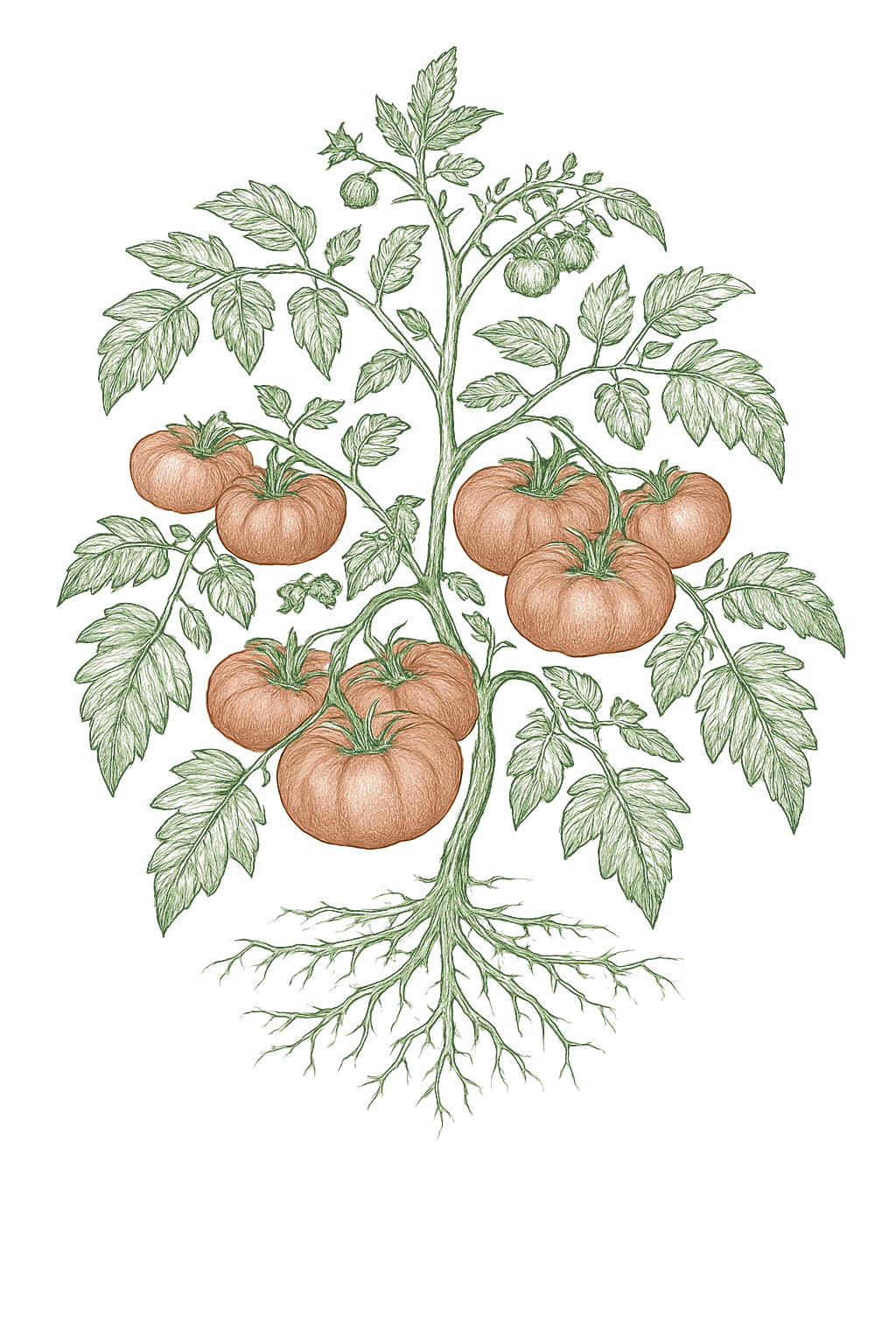
Off-season for beefsteak tomato in zone 13.
In Zone 13, beefsteak tomato grows year round here: plant in any month and harvest all year.
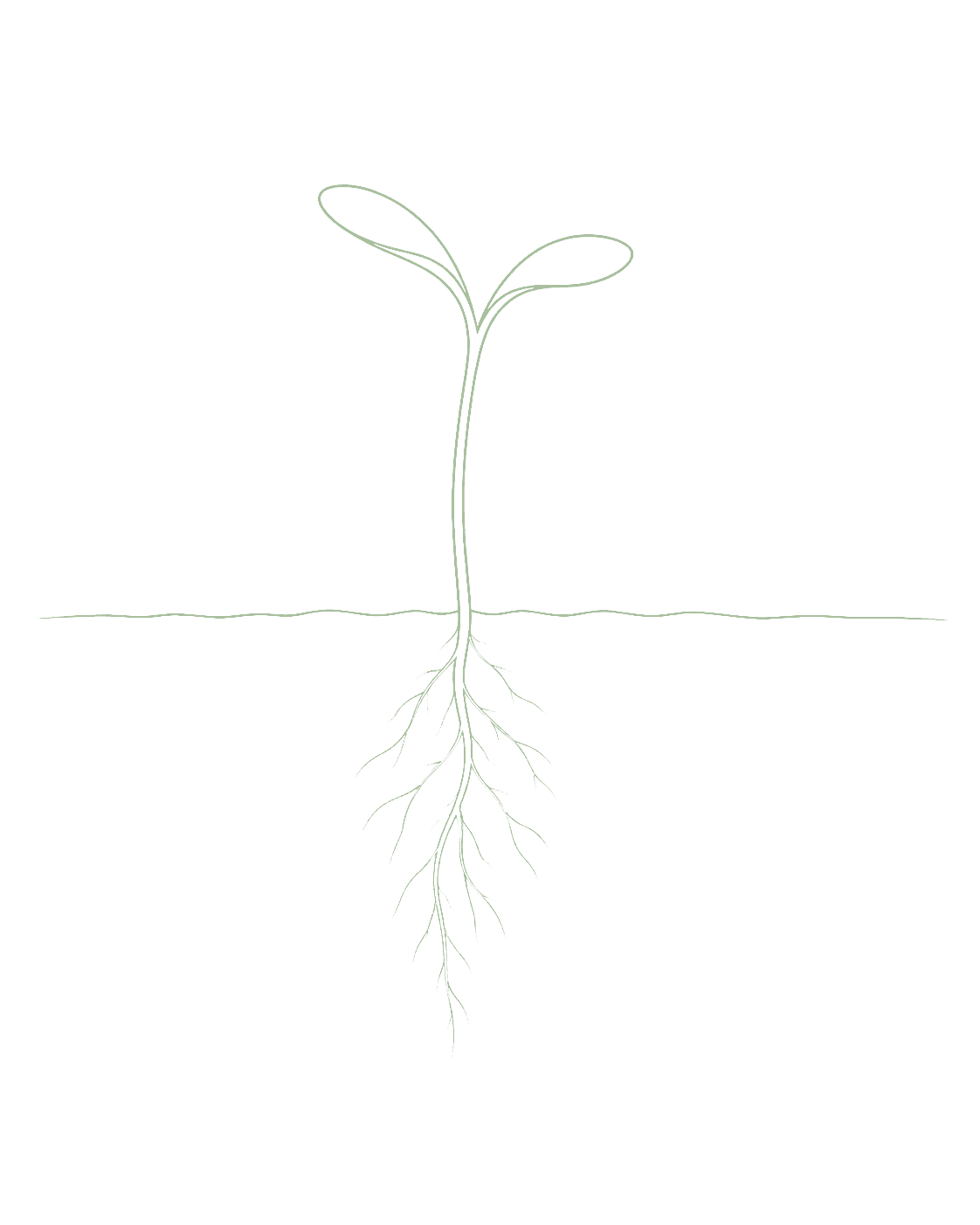
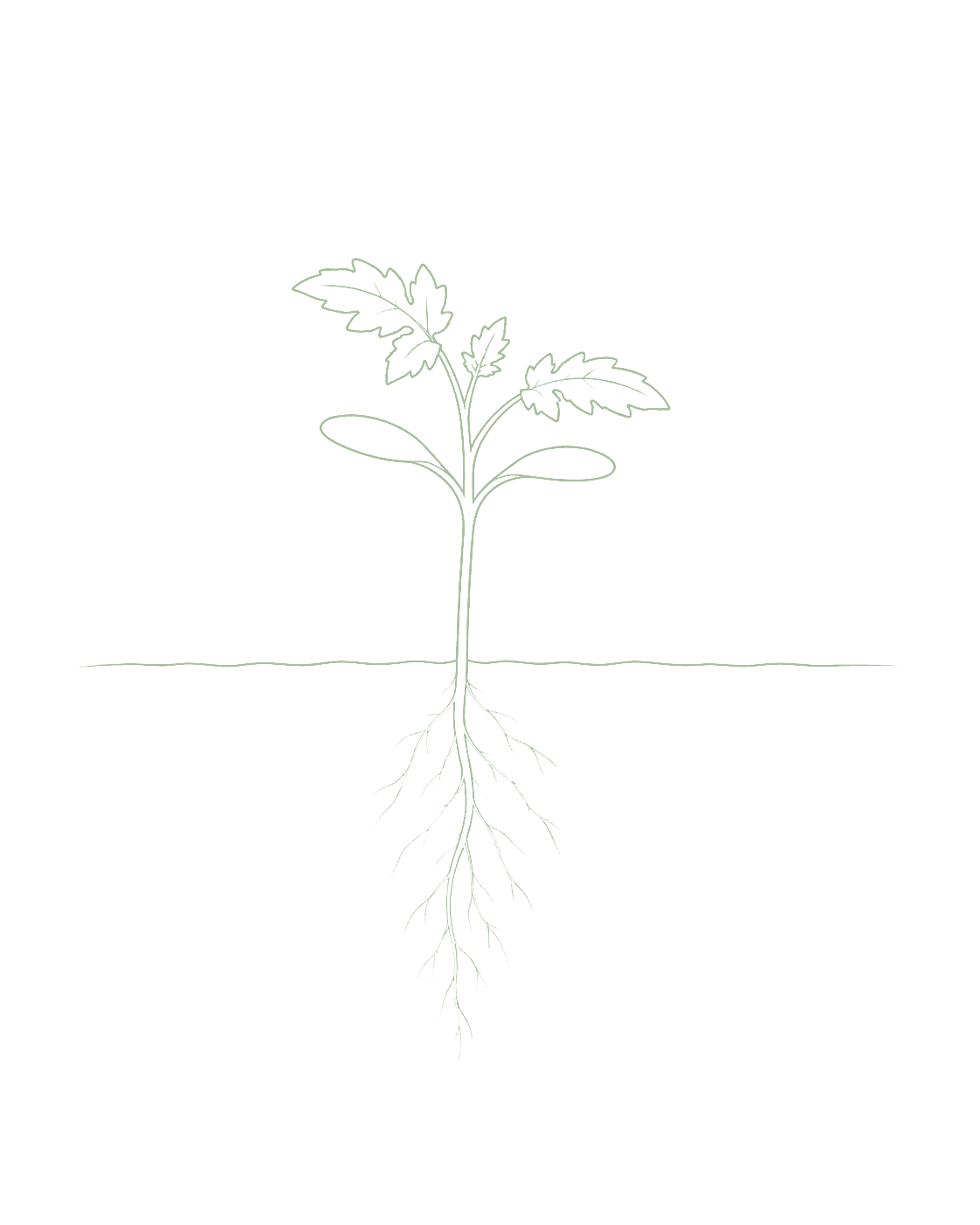
Start seeds 8 weeks before your last frost date; beefsteak tomatoes need a long season, so starting on time is important. Plant two seeds per cell about a quarter inch deep in seed-starting mix, somewhere warm (a heat mat helps a lot). At transplant time, bury the stem deeper than it sat in the pot: right up to the lowest set of leaves. New roots will form along the buried stem and give the plant a stronger, more drought-tolerant foundation.Start 8 weeks before last frost; beefsteaks need a long season. Harden off carefully. Bury stem deep at transplant.




Not sure what soil you have? Grab a small handful of damp soil from your garden bed and squeeze it. If it crumbles apart easily, it's sandy. If it holds together but breaks when you poke it, it's loam (what most vegetables want). If it stays in a hard, slippery ball, it's clay.
Beefsteaks do best in loose, well-draining soil with plenty of organic matter: think compost-rich garden beds rather than hard clay. Good drainage matters a lot: if water pools after rain and takes more than an hour to soak in, the bed needs improvement before planting. Working in 2 to 3 inches of compost before planting is the single most useful thing you can do for first-season beefsteaks. Avoid heavy clay soil if possible; if that's what you have, raised beds filled with a mix of topsoil and compost will work much better.
Mix 2-3 inches of compost into the top 6 inches of your bed before planting. Compost holds moisture (which sandy soil drains too fast) and adds the nutrients sandy soil tends to lack. Repeat each season. Compost breaks down over time.
Mix 2-3 inches of compost AND a few inches of coarse sand or perlite into the top 6 inches of your bed. The compost feeds the plants; the sand breaks up the clay so air and water can move through. Don't add sand without compost. It can compact like concrete.
If amending your soil sounds like too much work, or if your soil is heavy clay, full of rocks, or contaminated, build over it. A raised bed at least 12 inches deep filled with a 50/50 mix of compost and sandy loam gives you ideal growing soil with no battles. A 5-gallon container with quality potting mix does the same for one plant at a time. Both bypass your native soil entirely.
The numbers that matter, at a glance.
Beefsteaks want slightly acidic soil: a pH between 6.0 and 6.8. Outside that range, nutrients the plant needs get locked up in the soil even if they're there. Blossom-end rot (the dark sunken spot on the bottom of the fruit) is often triggered by pH problems limiting how much calcium the plant can absorb. If you've never tested your soil, an inexpensive test kit from a garden center is worth doing before your first season. Many extension offices also offer low-cost testing.Tomatoes are particularly sensitive to pH because it governs the solubility of phosphorus, calcium, and magnesium, three nutrients they consume in large quantities. At pH below 5.5, manganese and aluminum become increasingly available at phytotoxic levels; blossom-end rot risk rises as calcium uptake is impaired. Above 7.0, iron and manganese deficiencies drive interveinal chlorosis on younger leaves. In the alkaline soils common across the interior West and alkaline-irrigation regions, growers routinely need to acidify before planting. Eastern soils often run naturally in the preferred range; Pacific Northwest soils vary widely by parent material.
Beefsteak tomatoes are heavy feeders and need regular fertilizing throughout the season. Start with a balanced fertilizer at transplant time, then switch to a fertilizer higher in potassium once flowers appear: look for 'tomato fertilizer' or a formula where the third number on the bag (potassium) is the largest. Feed every two weeks through the fruiting period.Heavy feeder. Start with balanced feed at transplant, switch to high-potassium once flowering begins.
Look for a high-potassium formula, often labeled 'tomato food' or showing a higher third number on the bag (like 5-10-10). That third number is the potassium, which supports fruit development.high K, e.g. 5-10-10
The most reliable companion for beefsteak tomatoes is marigolds: plant them around the edges of the bed, not between the tomatoes, since beefsteak plants get large and will shade out anything too close. Nasturtiums at the bed perimeter draw aphids away from your tomatoes (aphids prefer the nasturtiums). Keep beefsteaks away from fennel, which stunts many neighboring plants, and away from potatoes and eggplant, which share the same diseases and pests. Basil is a popular choice to plant nearby and does well in the same sun and water conditions. Beefsteak tomato companions follow the same species-level lore as other tomatoes, with two beefsteak-specific nuances. First, beefsteak's large plant footprint (24-36 inch spacing, 6-foot cages) shades out many traditional companion candidates; prioritize companions that tolerate partial shade or position them at the drip-line edge rather than between plants. Second, the marigold/nematode connection is the best-documented pairing in this crop's companion set, effective as a dense pre-season cover crop, not as scattered concurrent interplanting. For most growers the practical guidance is: avoid fennel, avoid planting near potatoes or eggplant if disease pressure has been a problem, and consider nasturtiums as an aphid trap crop at the bed perimeter where they won't be shaded.
Pick when the fruit is fully colored all the way up to the shoulders; a tomato that's red-sided but still greenish at the top isn't done yet. Give it a gentle squeeze; it should have a little give without feeling mushy. The skin will look slightly less shiny than when it was still ripening. Large beefsteak fruit (bigger than a baseball) takes a few extra days compared to smaller types; give it time. If you're not sure, check again the next day; slightly under-ripe picked tomatoes will continue to ripen on the counter.Pick when the fruit has reached full variety color all the way to the shoulders, yields to gentle pressure without feeling mushy, and the skin has transitioned from a hard glossy sheen to a softer, slightly matte surface. Skin sheen loss signals the completion of cell-wall softening as lycopene (or variety-appropriate anthocyanins for dark varieties) accumulates and pectin in the outer cell layers begins breaking down. The abscission zone at the stem attachment weakens as the fruit ripens; slight twist resistance is still present at peak eating quality; zero resistance means overripe. Shoulders turning color last: a fruit that is red-sided but green-shouldered is underripe. For large beefsteak fruit (12-16 oz), allow a few extra days compared to cherry or slicer types; mass slows the ripening front.
Expect roughly 10 to 20 pounds of tomatoes per plant over the season. You get fewer tomatoes than cherry or roma types, but each one is big (about 8 to 16 ounces, and some heirlooms top 2 pounds). In short-season cold areas the total is smaller simply because the season is shorter, while in warmer zones a well-tended plant can top 20 pounds.10-20 lbs over the season; fewer fruit than cherry or roma types, but each fruit is large (8-16 oz for most varieties; heirloom types may reach 2+ lbs). Yield is heavily variety- and zone-dependent: in short-season zones (3-5), total yield is constrained by season length, not productivity. In zones 7-9, a well-managed indeterminate plant at peak often exceeds 20 lbs.
At its peak, a healthy plant gives you 1 to 3 big tomatoes a week. Plants start slow while they grow their vines, hit a busy stretch of about 4 to 8 weeks in midsummer, then taper off as fall cools down. Fruit sets best when nights stay between about 55 and 75°F; colder or hotter nights than that and the flowers often fail to set fruit.A healthy indeterminate beefsteak at peak produces 1-3 large fruits per week per plant. Production follows a seasonal arc: slow start as the plant builds its vine structure, then a peak window of 4-8 weeks in mid-season, tapering as autumn cool-down slows ripening. The arc is distinct from cherry, which produces more continuously and maintains higher counts. Beefsteak fruit set is most reliable when nighttime temperatures stay between 55-75°F; below 55°F, pollen viability drops; above 75°F, pollen becomes sterile. Your first beefsteak season will probably feel slow. The plant spends the first half of summer building its root system and vine structure before it really starts setting fruit. Getting 3 to 5 large tomatoes in your first season is a real success; don't measure yourself against experienced gardeners who know every trick. Focus on two things: get a strong cage or stake in place early (before you think you need it), and keep the watering consistent when the plant starts flowering.First-season beefsteaks frequently disappoint on yield, not because of mistakes, but because the plant architecture is building for the first half of the season. Getting 3-5 large fruit in a first season is a genuine success. Focus on getting the support structure right early and on consistent watering at fruit set; those two factors drive the difference between a partial and a full-season harvest.
If you're not sure which beefsteak variety to pick, Celebrity is a great starting point: it's widely available, disease-resistant, and more forgiving than many heirloom types. Mortgage Lifter and Big Boy are classic choices if you want a true heirloom flavor. Brandywine is delicious but takes longer to ripen and is less forgiving, so save it for once you have a season or two under your belt.Beefsteak-class tomatoes cover three rough sub-types: true beefsteak-shape large slicers (Big Boy, Mortgage Lifter), oblate globe slicers commonly sold under the beefsteak label (Celebrity), and large heirloom slicers (Brandywine). Cultivation is the same across all. Celebrity is the most disease-resistant option, great for beginners in humid climates.
Don't plant tomatoes in the same bed two years in a row. Move them to a fresh spot every year if you can, and wait at least 3 years before coming back to the same location. The same rule applies to peppers, eggplant, and potatoes; they're all in the same family and share the same soil diseases, so rotating one without rotating the others doesn't help much. If you've had plants wilt and die even with good watering, look for disease-resistant varieties: a 'V' or 'F' on the seed packet means the variety is bred to resist the most common soilborne wilts.Rotate nightshades to a fresh bed every 3 years. Fusarium oxysporum and Verticillium dahliae, the two primary soilborne wilts in tomatoes, persist as chlamydospores in soil for 4-6 years and infect through root wounds. Rotation delays pathogen buildup but does not eliminate it; in beds with confirmed wilt history, resistant varieties (coded VF or VFN on seed packets) are the stronger intervention.
The plant app sends a timely reminder at every critical moment of your beefsteak tomato season. The wording adjusts to whichever you pick: beginner or seasoned. Here are three you'll see in Zone 13.
plant sends the right notification at exactly the right moment, for your zone, your weather, your crops. Founding members lock the rate forever.
We're building this guide with real growers. Got a question we missed? Ask here. We read every one and add the best answers right to this page.
Learned something the hard way? Pass it on. Real growers' tips make this guide better for the next person, and we credit you by name when yours goes live.
If you've grown this crop and you see a date, a temperature, a companion claim, or a recommendation that doesn't match your experience, tell us. Real growers' corrections make this guide better for the next person.
Every date, temperature, spacing, and recommendation on this page is sourced from university cooperative extension publications, peer-reviewed agricultural research, NOAA climate data, and direct extension calendars. Where claims are softer (traditional gardening wisdom not formally documented), we say so.
Spot a data point that doesn't match your experience? Submit a correction; accepted corrections earn full author credit on the page.
Zone-aware seasonal nudges, what's worth planting now, and the occasional recipe from the harvest. No spam, ever.