Pick your zone and the dates re-calibrate.
The Guide Crops Vol. 003

Zucchini / Courgette

in Zone 11, this week

Zucchini is one of the easiest and most productive vegetables you can grow. It is a bushy summer squash that grows fast from seed and gives you tender squash all summer. One or two plants are usually plenty for a household. Each plant makes both male and female flowers, so you only need one plant to get fruit, and bees do the rest. The main things to know: pick the squash while it is still small and glossy, check the plants every day or two at peak, and keep an eye out for pests later in the season. Zucchini is a warm-season summer squash grown for its tender, immature fruit, harvested young before the skin hardens and the seeds mature. Plants are bushy rather than vining, fast from seed, and famously productive: a single plant in good soil can outpace a household at peak. It is monoecious, carrying separate male and female flowers on the same plant, so one plant sets fruit on its own with insect pollination. The two beats that shape a season are pests and pace. Squash vine borer and powdery mildew commonly take down a first planting by midsummer, which is why a second sowing pays off, and fruit sizes up so fast that picking every day or two at peak is the difference between tender squash and baseball-bat marrows.
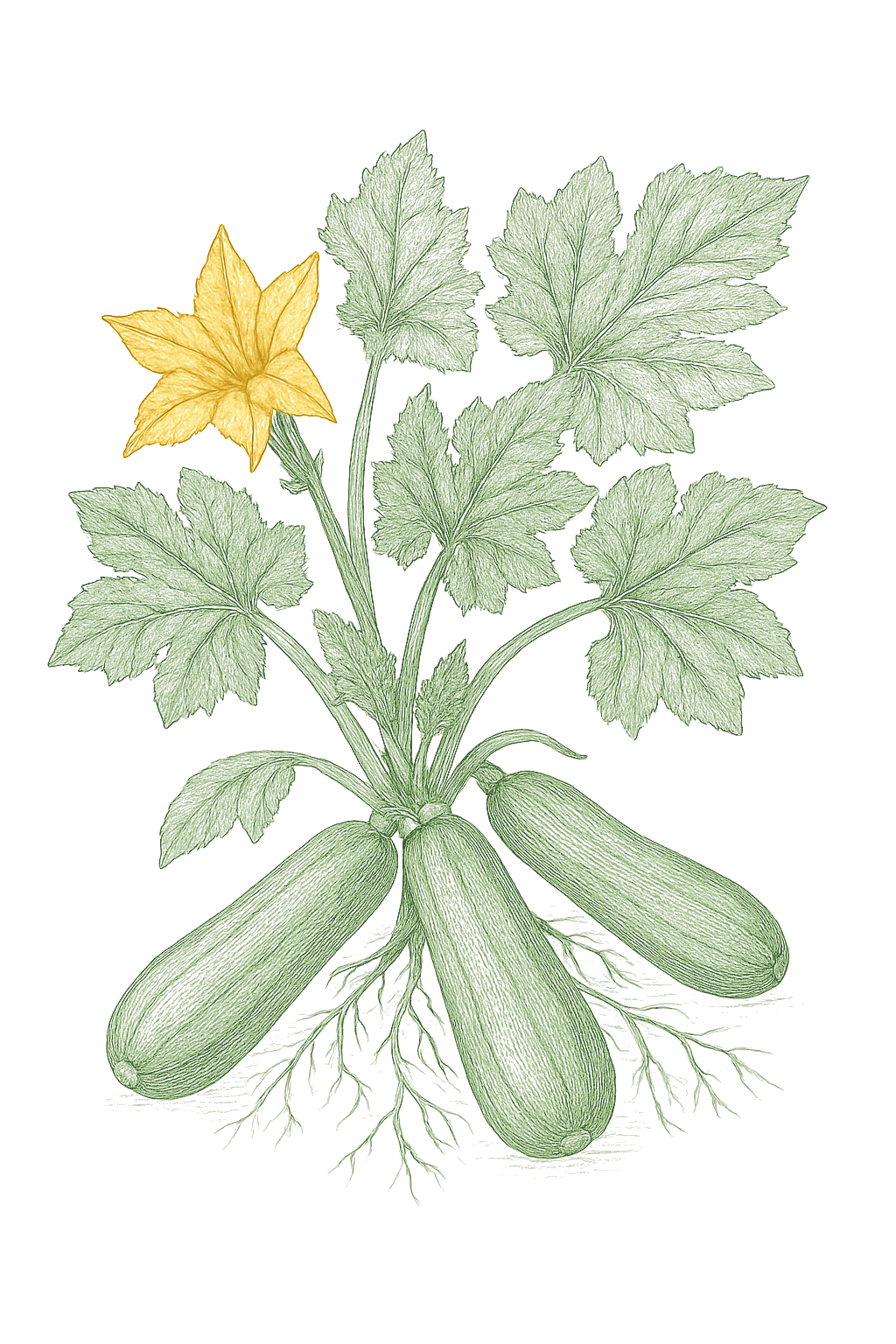
Zucchini / Courgette mature plant
Fig. 01 · Zucchini / Courgette, mature Zone 11
Mature in
50-65d
from transplant
Sunlight
Full sun
6-10 hrs daily
Water
Moderate
1 inch / week
Spacing
24-36"
between plants
Soil pH
6-6.5
slightly acidic
Today · in your zone

What's happening right now

July 24 · Zone 11 · Stage 01 · Germination

Off-season for zucchini / courgette in zone 11.

Your climate region in Zone 11
The season at a glance

Planting calendar

In Zone 11, zucchini / courgette can be planted September through March. Harvest runs November through May.

Jan
Feb
Mar
Apr
May
Jun
Jul
Aug
Sep
Oct
Nov
Dec
plant
plant
plant
plant
too late
too late
too late
too early
too early
plant
plant
plant
plant
harvest
harvest
harvest
harvest
harvest
harvest
harvest
harvest
indoors
plant out
harvest
Seasoned
Stagger your sowings

Succession planting

You rarely need more than one or two zucchini plants at a time, and a single planting can feed you for weeks. For a steadier supply, sow a few seeds now and a few more about three weeks later. A second planting in summer is a smart backup, since pests and disease often wear out the first plants by late summer.Zucchini is famous for overwhelming a garden, so resist sowing the whole crop at once. A first sowing after your last frost, then a second about three weeks later, spreads the harvest and keeps vigorous plants coming as the originals tire. The real payoff is late season: squash vine borer and powdery mildew often take down the first planting by midsummer, so a replacement sown in early to midsummer, counting back from your first fall frost so it has time to mature, frequently outproduces the spring crop on cleaner, less stressed plants.

Every 3 weeks · sow a short new rowUp to 12 sowings a season
Jan
Feb
Mar
Apr
May
Jun
Jul
Aug
Sep
Oct
Nov
Dec
sow
harvest
keep sowing
continuous harvest
The season, mapped

Seed to garden

The easiest way to grow zucchini is to sow seeds right where they will grow, once the soil is warm (about 70°F). Squash grows fast and does not transplant happily, so direct sowing usually works best. Start seeds indoors only if your season is short, and move them outside while they are still small.Because squash resents root disturbance, direct sowing once the soil warms past 60°F, ideally 70°F, is the simplest and most reliable method, and direct-sown plants quickly catch up to transplants. Start seeds indoors only to gain two to three weeks in a short season, using larger cells (3 inch or bigger) and setting plants out before the roots circle the pot.
  1. 01
    Sow outside
    Sep 1 - Mar 1
  2. 02
    First harvest
    From Nov 1
    50-65 days from sowing
Start method
Both
Soil temp
70-95°F
From seed to fruit

The growing journey

Stage 01 · Germination
01
Germination
Days 5-10 · current stage
In warm soil, seeds sprout in about a week. Two seed leaves push up first. If the soil is cold, seeds rot instead of sprouting.Seeds sprout in about 5 to 10 days in warm soil (70 to 95°F is ideal); cold soil below 60°F rots seed rather than germinating it.
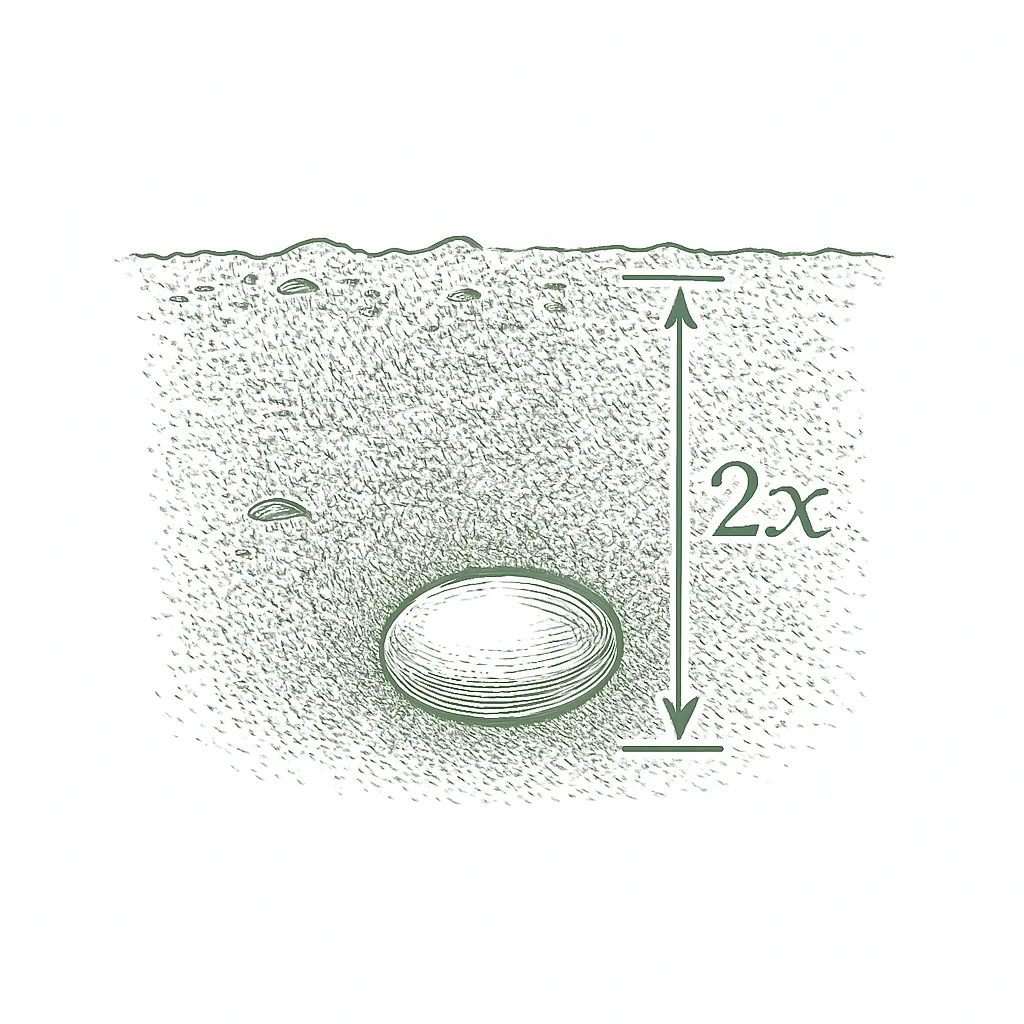
Plant seeds 1 inch deep once the soil is warm. Keep the soil damp until they sprout. If several come up together, keep the strongest one.Sow 1 inch deep in warm soil. Keep evenly moist, not soggy. If you sowed several seeds per spot, thin to the strongest seedling once true leaves appear.
FROM PLANT · Wait for warm soil before sowing. Zucchini seeds rot in cold ground but sprout fast once it warms up.Soil temperature, not the calendar, governs zucchini germination. Wait until soil is at least 70°F at 2 inches; seed sown in cold ground rots before it sprouts.
02
Seedling
Days 10-21
After the first two rounded leaves, true leaves appear and the plant grows quickly. Watch for beetles chewing the young leaves.Cotyledons followed by the first true leaves; growth is fast once warm. Watch for cucumber beetles, which target young plants and can transmit bacterial wilt.
Keep an eye out for beetles on young plants. Water regularly and keep weeds down. A light row cover can protect seedlings, but remove it once flowers form.Protect from cucumber beetles, with row cover if needed (remove it at flowering for pollination). Keep evenly watered and free of weeds.
FROM PLANT · Protect young plants from beetles. A light cover helps, but take it off once flowers appear so bees can reach them.Cucumber beetles swarm young squash and can spread bacterial wilt. A floating row cover protects seedlings, but pull it off at flowering so bees can pollinate.
03
Established and vining
Days 21-35
The plant grows fast, with big leaves and a thick stem, getting ready to flower. This is when you feed it.Rapid leafy growth and a thickening main stem as the plant bulks up before flowering. This is the window to side-dress and the time squash vine borer moths begin laying eggs at the stem base.
Give the plant one feeding of balanced fertilizer now. Add mulch to keep the soil moist. Start checking the base of the stem for pests.Side-dress once with balanced fertilizer. Mulch to hold moisture. Begin scouting the stem base for squash vine borer eggs and frass, especially from early summer.
FROM PLANT · Feed the plant once now, as it gets big and starts to flower. Do not overdo the fertilizer, too much makes leaves instead of squash.This is the one feeding zucchini needs: a single balanced side-dressing as the plant bulks up and starts to run. Resist piling on nitrogen, which gives leaves at the expense of fruit.
FROM PLANT · Check the bottom of the stem for pests starting in early summer. Look for sawdust-like specks, an early sign of a borer.Start scouting the stem base for squash vine borer from early summer. A ring of frass (sawdust-like waste) at the base is the early warning before the wilt.
04
Flowering
Days 30-45
Big yellow flowers open. The first flowers are usually male and fall off, which is normal. Female flowers have a tiny squash at their base.Large yellow flowers. Male flowers (on thin stalks) usually open first and may drop before females appear, which is normal; female flowers carry a tiny squash behind the bloom.
Let the bees do their work and do not spray the flowers. If tiny squash turn yellow and rot, the flowers were not pollinated, you can hand-pollinate with a small brush. Keep watering steadily.Encourage pollinators and avoid spraying open blooms. If small fruit yellow and rot at the tip, pollination is poor, hand-pollinate with a small brush in the morning. Keep moisture steady now.
FROM PLANT · The first flowers often fall off without making squash, that is normal. Real trouble is when tiny squash turn yellow and rot, which means poor pollination.Early male flowers opening and dropping with no fruit is normal; females come a little later. Judge pollination by whether small fruit size up or yellow and rot at the blossom end.
FROM PLANT · If squash are not forming, you can hand-pollinate. In the morning, pick a male flower, peel off the petals, and gently touch it to the center of a female flower.If set is poor in cool or pollinator-scarce conditions, hand-pollinate in the morning: pick a male flower, strip the petals, and dab pollen onto the center of each open female.
05
Harvest
Days 50-65
Shiny squash reaching about 6 to 8 inches. They grow fast, so they are ready before you expect.Glossy fruit reaching pickable size (6 to 8 inches for standard types), sizing up fast, often an inch or more per day at peak.
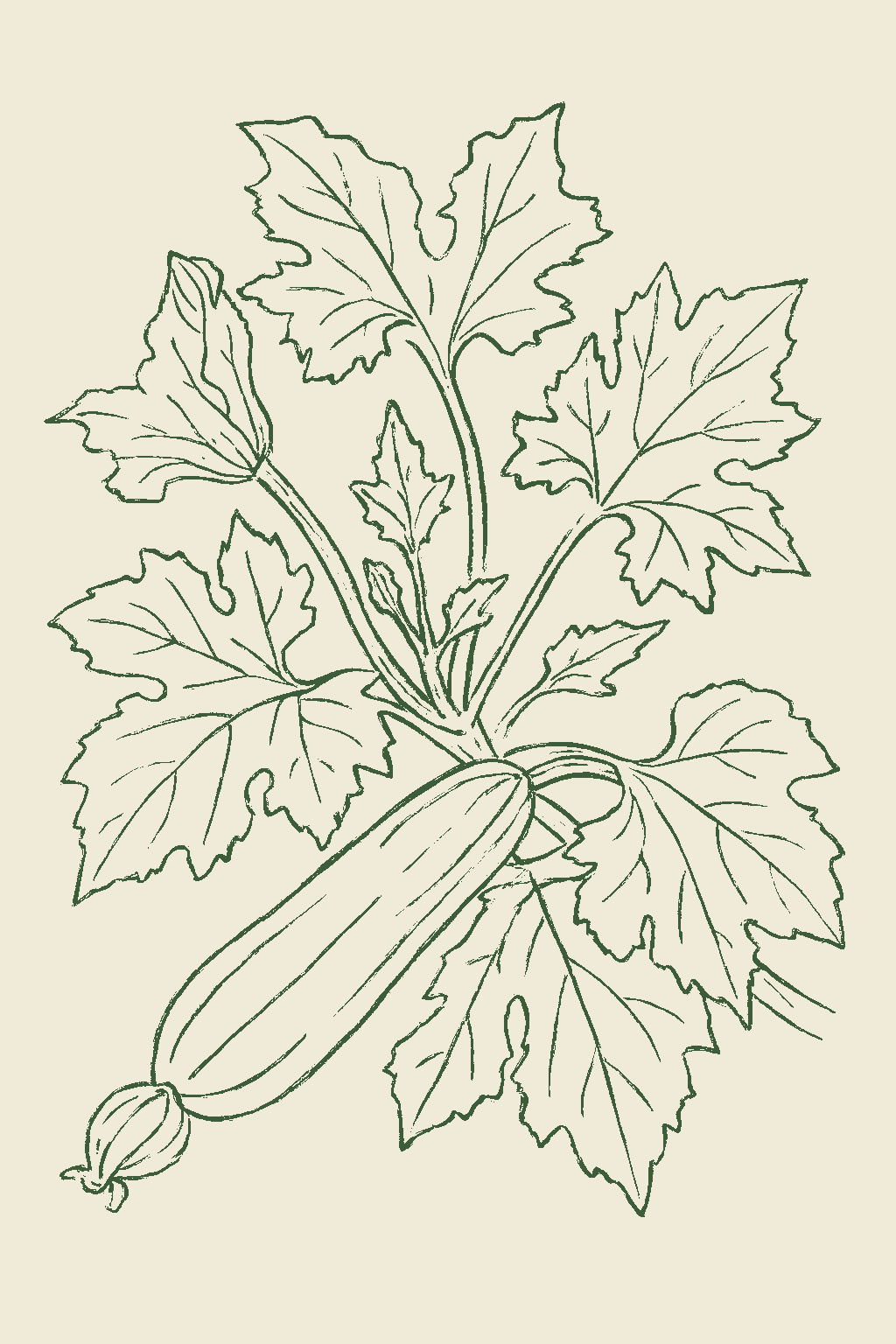
Check every day or two and pick the squash while they are still small and shiny. Cut the stem with a knife. Picking often keeps more coming.Pick every 1 to 2 days, cutting the stem with a knife. Harvest young for tenderness and to keep the plant producing; remove any oversized fruit you missed.
FROM PLANT · Pick zucchini while small and check every day or two, they grow fast. Picking often keeps more squash coming.Pick young and pick often. At peak, fruit can gain an inch a day, so check every 1 to 2 days, and harvesting promptly keeps the plant setting new fruit instead of slowing down.
FROM PLANT · If a squash got huge, pick it off anyway, even if you do not use it. Leaving big squash on the plant makes it stop producing.Missed a fruit and it turned into a marrow? Cut it off and compost or use it anyway; leaving mature, seedy fruit on the plant suppresses further production.
06
End of season
Days 70-110
The plant slows down and leaves may get powdery and white, or it wilts suddenly from pests. Frost kills it.Declining production, increasing powdery mildew, or sudden wilting from squash vine borer or bacterial wilt. The first frost kills the plant outright.
Pull out finished plants and clear them away at the end of the season. This helps prevent pests next year. A second planting made in summer often keeps producing after the first one is done.Pull and remove spent plants rather than tilling them in, to cut overwintering pest and disease sites. A summer-sown succession often crops cleanly after the first planting fades.
FROM PLANT · At the end of the season, pull up old plants and clear them away. This cuts down on pests and disease next year.Pull spent vines and remove them rather than tilling them under, which buries overwintering squash bugs and disease. Clean beds now mean fewer pests next season.
Beginner
Know your soil

Your soil

Identify yours

Not sure what soil you have? Grab a small handful of damp soil from your garden bed and squeeze it. If it crumbles apart easily, it's sandy. If it holds together but breaks when you poke it, it's loam (what most vegetables want). If it stays in a hard, slippery ball, it's clay.

What this crop wants

Plant zucchini in rich, well-drained soil. Mix a few inches of compost into the bed before you plant, and use raised beds or low mounds if your soil is heavy or stays wet. Good drainage plus plenty of compost gives you healthy, productive plants.

If your soil doesn't match

You have sandy soil

Mix 2-3 inches of compost into the top 6 inches of your bed before planting. Compost holds moisture (which sandy soil drains too fast) and adds the nutrients sandy soil tends to lack. Repeat each season. Compost breaks down over time.

You have clay soil

Mix 2-3 inches of compost AND a few inches of coarse sand or perlite into the top 6 inches of your bed. The compost feeds the plants; the sand breaks up the clay so air and water can move through. Don't add sand without compost. It can compact like concrete.

Containers and raised beds

If amending your soil sounds like too much work, or if your soil is heavy clay, full of rocks, or contaminated, build over it. A raised bed at least 12 inches deep filled with a 50/50 mix of compost and sandy loam gives you ideal growing soil with no battles. A 5-gallon container with quality potting mix does the same for one plant at a time. Both bypass your native soil entirely.

Learn more about your soil
The specs

Care guide

The numbers that matter, at a glance.

Sunlight
Full sun · 6-10 hrs/day
Water
moderate
Spacing
24-36 inches
Soil
loam
Days to maturity
50-65 days from transplant
Soil pH
6 to 6.5
Container OK?
Yes · 5+ gal pot
Germination temp
70-95°F
Soil chemistry

Soil pH for zucchini / courgette

Preferred
6 to 6.5
Tolerated
5.8 to 7.5

Zucchini likes soil close to neutral, around pH 6.0 to 6.5, and most garden soil is already in range. If you have never tested your soil, an inexpensive test kit tells you whether you need to adjust it.Zucchini does best in slightly acidic to neutral soil, around pH 6.0 to 6.5. It tolerates a wider band, roughly 5.8 to 7.5, and still produces in mildly alkaline soil, though uptake of iron and manganese tightens as pH climbs. A soil test is the only reliable guide before adding lime or sulfur.

Verified · 2 sources View
Steady hand on the hose

Watering

When & how much
Frequency
Give zucchini about 1 inch of water a week, more when it is hot. Water deeply rather than a little every day. Plants in pots dry out fast and may need water daily in summer.Aim for about 1 inch of water per week, more in heat or sandy soil, delivered deeply and less often rather than in light daily sprinkles. Container plants dry out faster and often need water every day or two at peak.
Amount
About 1 inch of water a week is a good target. Water more during hot weather and while the plant is setting and growing fruit.Around 1 inch per week is the baseline, equivalent to roughly two-thirds of a gallon per square foot. Push toward the higher end during fruit set and through hot, dry spells, when uneven water shows up directly in the fruit.
Method
Water the soil, not the leaves. Use a soaker hose or aim a watering wand at the base of the plant. Keeping the leaves dry helps prevent powdery mildew, a common zucchini problem. A layer of mulch keeps the soil evenly moist.Water at the base of the plant with a soaker hose, drip line, or a wand aimed at the soil, keeping the leaves as dry as possible. Wet foliage, especially overhead watering late in the day, invites powdery mildew on a plant already prone to it. A 2 to 3 inch mulch holds soil moisture even and keeps splashing down.
Signs of trouble
Too much water
If lower leaves turn yellow, the plant wilts even though the soil is wet, or the base gets soft and mushy, it is getting too much water or the soil drains poorly.Yellowing lower leaves, wilting even when the soil is wet, and soft or rotting stems at the base point to overwatering or poor drainage. Constantly saturated soil invites root and crown rot, particularly in heavy ground.
Too little water
Some midday wilting in hot weather is normal and passes by evening. Leaves that stay wilted mean the plant is too dry. Uneven watering can also make the squash come out misshapen.Midday wilting that recovers overnight is normal in heat, but leaves that stay limp, dull, and curled signal real drought. The clearest fruit-stage tell is misshapen or pinched squash, often narrow at the blossom end, which traces directly to inadequate or uneven water during sizing.
Feeding rhythm

Feeding

Frequency
At planting, then one side-dressing
Type
balanced
When to start
Work into the bed before planting, then side-dress from vining to flowering

Zucchini needs a moderate amount of feeding, not a lot. The biggest mistake is too much nitrogen, which gives you big leafy plants but fewer squash. Good compost in the soil plus one feeding when flowers appear is usually enough. Keep the plant evenly watered too, since feeding only helps a well-watered plant.Zucchini is a moderate feeder, hungrier than a light crop like beans but well short of a heavy feeder. The main pitfall is too much nitrogen, which drives lush leaves and shy fruiting, sometimes with poor set. A bed enriched with compost plus one balanced side-dressing as the plant comes into flower is usually all it needs. Pair feeding with steady, even moisture, since the nutrients only help if the plant is not also drought-stressed.

N · P · K = 10-10-10

Use a balanced fertilizer with equal numbers, like 10-10-10. Avoid high-nitrogen lawn fertilizer.A balanced ratio such as 10-10-10 suits zucchini. Avoid high-nitrogen lawn-type fertilizers, which push foliage at the expense of fruit.

Try balanced 10-10-10 or compost plus a nitrogen source
Who grows well together

Companion planting

Good companions for squash do one of three things: draw pests away, bring in bees, or feed the soil. Plant a few nasturtiums or marigolds nearby to lure squash bugs off your plants, add flowers like borage to attract the bees that pollinate your squash, and let beans share the bed to enrich the soil. Just give your squash plenty of room, since the plants get big. Squash benefits most from companions that pull pests away, feed beneficial insects, or fix nitrogen, rather than from plants packed in tight. Give sprawling vines their room and use companions as a border or light interplanting. The strongest evidence is for nasturtium, with marigold close behind, reducing squash bug and cucumber beetle pressure, while the Three Sisters trio (corn, beans, squash) earns its place through nitrogen, support, and pest confusion. Pollinator flowers like borage and sweet alyssum matter because squash is insect-pollinated, so anything that keeps bees working improves fruit set. Several herb and flower pairings here are traditional rather than trial-proven, and are labeled accordingly.

Other
Corn
Part of the classic Three Sisters planting. The tall stalks support climbing beans, and growing corn, beans, and squash together can confuse squash pests.Corn is zucchini's partner in the three-sisters planting, and the benefit is structural rather than chemical: the corn gives vertical height and light shade, the sprawling squash shades the soil to hold moisture and suppress weeds beneath it. The catch is that both are heavy feeders, so on a small bed they compete for nitrogen unless you feed well and space them properly; the trio works best with the beans in the mix to offset that draw. Traditional
Pole beans
Beans pull nitrogen from the air and feed the soil, which hungry squash appreciate. Let them climb the corn in a Three Sisters bed.Pole beans earn their place through nitrogen fixation. Working with Rhizobium bacteria on their roots, legumes convert atmospheric nitrogen into a plant-available form, which offsets some of the heavy nitrogen demand a vigorous zucchini puts on the bed. In the three-sisters arrangement they also climb the corn rather than the squash. Practical note: the nitrogen benefit largely reaches neighbors after the beans are spent and their roots break down, so treat it as season-long soil-building, not an instant feed. Well-grounded
Nasturtium
These easy flowers lure squash bugs and beetles away from your squash, and research backs it up. Bonus: the flowers are edible.Nasturtium is the best-evidenced flower companion for squash. Extension trial work shows it reduces squash bug pressure (and aphids and cucumber beetles in mixed plantings), partly as a trap crop drawing pests onto itself and partly by adding the foliage complexity that disrupts pest host-finding. Plant it around the perimeter or at the base of the hills. One honest caveat from growers: the aphid trap-crop effect is the most reliably observed; the squash-bug effect is real in the literature but more variable in practice. Research-backed
Flower
Marigold
Often planted with squash to deter pests. The evidence is mixed overall, but the same Iowa study that backs nasturtium also found marigolds reduced squash bug and cucumber beetle damage, so it earns a likely rating here. Well-grounded
Plant alongside
Sweet alyssum
A low carpet of sweet alyssum draws hoverflies and other beneficial insects. A Florida study found alyssum increased natural enemies of aphids on squash, and the blooms also feed pollinators. Well-grounded
Plant alongside
Herb
Borage
A classic pollinator magnet. Its bee-friendly blue flowers help keep pollinators working the squash blooms, which matters because zucchini is insect-pollinated. The pairing is traditional rather than trial-proven. Traditional
Plant alongside
Sage
An aromatic herb long planted near squash to discourage squash bugs. Treat this as traditional garden lore rather than a tested effect for squash. Traditional
Plant alongside
Keep apart from
Potatoes Keep potatoes in a separate bed. Both plants are big and hungry and will compete for food and space.Potatoes and zucchini are both large, hungry plants that pull heavily on the same nutrients and fight for the same ground and root space, so neither does its best when they share a bed. There is also some shared susceptibility to soil-borne trouble. This is a resource-competition call rather than a chemical antagonism: if space is tight, give them separate beds and rotate. Well-grounded
Fennel Plant fennel on its own, away from squash. It grows large and may crowd or stunt nearby vegetables.Fennel is a poor neighbor across the garden, and zucchini is no exception. It is reputed to release allelopathic compounds from its roots that can suppress nearby plants. As elsewhere, the standard handling is to isolate fennel in its own bed or a large container rather than work it into the squash patch. Traditional
Provenance tagged inline · see methodology for the labeling system Key
Harvest signals

When to pick

Pick zucchini while it is still small, about 6 to 8 inches long, with shiny skin. Round kinds are best picked at about the size of a tennis ball. Zucchini grows surprisingly fast, so check your plants every day or two, it can go from small to oversized in just a couple of days. Cut the stem with a knife instead of pulling. If you leave squash on the plant too long it gets big, tough, and seedy, and the plant slows down. Picking often keeps more squash coming.Pick zucchini young, at 6 to 8 inches long for a standard variety, while the skin is glossy and a thumbnail still dents it easily. Round and patty types are best harvested small as well, roughly tennis-ball to softball size. Fruit sizes up fast in warm weather, often gaining an inch or more a day at peak, so check plants every one to two days. Cut the stem with a knife or shears rather than twisting, leaving a short stub of stem on the fruit. Left too long, squash turns into a dull, seedy marrow with tough skin, and overripe fruit left on the plant signals it to slow new production, so frequent picking keeps a plant cropping.

Yield

What to expect

One zucchini plant produces a lot, usually several pounds over the season. One or two plants are plenty for most families.A healthy plant yields heavily, commonly 6 to 10 pounds of fruit over a season, often more in a long, warm climate. Two plants are plenty for most households, and a single plant at peak can produce more than one family can eat.

At its peak, a zucchini plant makes squash incredibly fast. Pick every day or two, picking often actually keeps more squash coming.At peak in warm weather a plant can set new fruit daily, and squash sizes up so fast that picking every 1 to 2 days is essential. Frequent harvest at this stage actually keeps the plant producing; leaving mature fruit on the vine signals it to slow down. Zucchini is one of the easiest crops for beginners, and the usual surprise is how much you get. Start with just one or two plants.Zucchini is forgiving and productive even for a first-time grower; the usual first-year surprise is not too little but too much. Plant only one or two, and be ready to pick constantly once it gets going.

What changes yield
Pollination: poor pollination in cool or pollinator-scarce conditions cuts yield and causes blossom-end rot of small fruit.Harvest frequency: picking young and often keeps a plant productive; letting fruit mature slows new set.Pest and disease pressure: squash vine borer and powdery mildew commonly end the first planting by midsummer.Even moisture: steady water through fruit set drives well-formed fruit and sustained production.Season length and heat: long warm seasons extend the productive window; a frost ends it.
Verified · 2 sources View
Pick your variety

Recommended varieties

Zucchini is forgiving, so pick a variety by the space you have. Bush types like Raven stay compact and do well in pots, while classics like Black Beauty are reliable in a garden bed. A yellow type such as Goldrush is easy to spot at picking size.For a first garden almost any zucchini succeeds, so choose by space and color. Compact bush habits like Raven or Dunja fit small beds and containers and keep airflow open to slow powdery mildew, while sprawling heirlooms like Costata Romanesco and Cocozelle reward more room with exceptional flavor. Mixing a green type with a yellow one such as Goldrush makes fruit easier to spot before it oversizes. Black Beauty remains the reliable green standard.

Black Beauty
Classic dark-green heirloom; compact, open-pollinated, and dependably productive.
Costata Romanesco
Ribbed Italian heirloom prized for nutty flavor; large, sprawling plants that reward room.
Raven
Compact dark-green hybrid that suits containers and small beds.
Goldrush
Bright golden-yellow hybrid with uniform, easy-to-spot fruit.
Cocozelle
Striped Italian heirloom with firm, flavorful fruit.
Dunja
Vigorous organic hybrid with an open, easy-to-pick habit.
Off the vine

Storing your harvest

Room temp
Zucchini does not keep long at room temperature, just a day or two. Put it in the fridge if you are not using it right away.Summer squash is tender and short-lived off the plant. At room temperature it keeps only a couple of days before softening, so refrigerate soon after picking unless you will use it right away.
Fridge
Keep zucchini in the fridge in a loosely closed bag for about a week. Do not wash it until you are ready to use it.Stored unwashed in a perforated or loosely closed bag in the crisper, zucchini keeps about 1 week, sometimes a few days more. It is chilling-sensitive below about 41°F, where prolonged cold causes pitting and soft spots, so it does not store as long or as cold as hardy vegetables.
Freezer
Zucchini freezes best shredded or sliced and quickly blanched first, then frozen for cooking later. Frozen raw, it turns watery, so it is best used in cooked dishes, not eaten fresh.Zucchini does not freeze well raw, turning watery and limp, but freezes fine for cooking when shredded or sliced and blanched briefly first. Shredded zucchini, drained and frozen in measured portions, is ideal for breads and soups later.
Verified · 2 sources View
When something goes wrong

Common problems

Tiny squash turned yellow and rottedSmall fruit yellowed and rotted at the blossom end
01 of 04
What happened The flower was not pollinated well, so the little squash died instead of growing. This often happens in cool or rainy weather, or when there are few bees.Poor pollination. The female flower was not adequately pollinated, so the young fruit aborts, yellowing and rotting at the blossom end instead of sizing up. Common in cool, wet, or pollinator-scarce conditions. Next season Grow some flowers nearby for the bees, and hand-pollinate early squash if needed. It usually gets better as the season goes on.Plant flowers to draw pollinators, avoid spraying open blooms, and hand-pollinate in the morning if early set is poor. It usually improves as more flowers open and bees get active.
Found a giant zucchini you missedSquash hidden under leaves until it was a giant marrow
02 of 04
What happened Zucchini grows so fast it hides under the leaves and gets huge in just a few days. Big squash are tough and seedy, and leaving them on slows the plant down.Fruit grows fast and hides under the large leaves, so a missed squash becomes an oversized, seedy, tough-skinned marrow within days. Mature fruit left on the plant also slows new production. Next season Check every day or two and look under the leaves. Pick squash small, and remove any big ones to keep more coming.Check plants every 1 to 2 days at peak, lifting leaves to find hidden fruit, and pick young. Remove any marrows you find to keep the plant cropping.
Plant suddenly wilted and diedHealthy plant wilted and collapsed in midsummer
03 of 04
What happened Usually a squash vine borer, a grub that tunnels into the stem and kills the plant in summer. Look for sawdust-like specks at the base. Beetle-spread bacterial wilt can look similar.Most likely squash vine borer: a larva tunneled into the stem and cut off water, collapsing a previously vigorous plant in mid- to late summer. Look for frass at the stem base. Bacterial wilt (beetle-vectored) causes similar sudden collapse. Next season Cover plants until they flower, check the stem base for pests, and plant a second crop in summer as a backup. Clean up old plants at the end of the season.Use row cover until flowering, scout the stem base for frass from early summer, and time a fall succession to crop after the borer's flight. Remove spent vines at season's end.
Leaves got white and powdery and the plant died backLeaves turned white and powdery, then the plant faded early
04 of 04
What happened Powdery mildew, a white coating on the leaves, spread until the leaves died and the plant stopped early.Powdery mildew defoliated the plant ahead of schedule. The white fungal coating spread across the leaves until they browned and died, cutting the productive season short and exposing fruit to sunscald. Next season Pick resistant varieties, give plants more room, water the soil not the leaves, and treat early spots. A second planting helps too.Choose resistant varieties, space plants generously, water at the base, and treat at the first spots. A summer-sown succession can carry harvest past the worst of it.
The usual suspects

Pests & diseases

Pests
Squash vine borer
P · 01
Symptoms The plant suddenly wilts in midsummer, even with wet soil. Look for sawdust-like specks at the base of the stem, a sign the borer is inside.Sudden wilting of the whole plant or individual vines in midsummer, often after looking healthy. A telltale ring of yellow-orange frass (sawdust-like waste) sits at the base of the stem near a small entry hole. Cause A moth lays eggs at the base of the plant in summer. The larvae hatch and tunnel inside the stem, blocking water and killing the plant.Larvae of a clearwing moth tunnel inside the stem, cutting off water flow. The adult lays eggs at the stem base from early to midsummer; the hatching larva bores in and feeds, collapsing the plant. Organic treatment If you catch it early, carefully cut a slit in the stem, remove the grub inside, and cover the spot with damp soil. Remove plants that are too damaged.At the first frass, slit the stem lengthwise with a knife, remove the larva, and mound moist soil over the wound so it can re-root. Promptly remove and destroy plants too far gone. Prevention Cover young plants until they flower to keep the moth away, and plant a second crop in summer that grows after the borer is gone. Clean up old plants at season's end.Time a fall succession to crop after the borer's main flight. Row cover until flowering excludes the egg-laying moth. Wrap the lower stem with foil, scout for eggs from early summer, and remove spent vines to break the cycle.
Squash bug
P · 02
Symptoms Leaves get yellow or brown spots and wilt. Check leaf undersides for shiny bronze eggs in clusters and gray bugs that scatter when disturbed.Leaves develop yellow then brown speckling and wilt; heavy infestations cause whole-vine collapse. Look for clusters of bronze, oval eggs on leaf undersides and fast-moving gray-brown nymphs. Cause A flat, gray bug that sucks sap from the plant and injects damaging saliva. It hides in old plant debris over winter and comes out to lay eggs in summer.A shield-shaped true bug that feeds by sucking sap from leaves and stems, injecting toxic saliva. Adults overwinter in garden debris and emerge to lay eggs on cucurbits in early summer. Organic treatment Squash the egg clusters and knock bugs into soapy water. A board left out overnight gives them a hiding spot you can check and clear each morning.Crush egg clusters by hand and drop adults and nymphs into soapy water. Lay a board near plants overnight; bugs gather under it and can be collected at dawn. Insecticidal soap works on young nymphs only. Prevention Clean up old plant debris, move squash to a new spot each year, and check leaf undersides for eggs through the summer so you can remove them early.Remove garden debris where adults overwinter, rotate cucurbits, and use row cover until flowering. Scout leaf undersides for eggs from early summer, before populations explode.
Cucumber beetle
P · 03
Symptoms Small yellow beetles with stripes or spots chewing the leaves and flowers. They are most damaging to young plants and can spread disease.Striped or spotted yellow-and-black beetles chewing leaves, flowers, and young fruit. Seedling damage can be severe, and the beetles transmit bacterial wilt as they feed. Cause These beetles feed on squash plants and carry bacterial wilt disease, which they pass on as they chew.Striped and spotted cucumber beetles feed on cucurbits and vector the bacterium that causes bacterial wilt. They overwinter nearby and move onto plants from emergence onward. Organic treatment Pick beetles off by hand in the morning when they are slow. Yellow sticky traps help you track them. Protecting young plants is the most important step.Hand-pick or vacuum beetles in the cool morning, and use yellow sticky traps to monitor. Kaolin clay deters feeding. Protecting seedlings matters most, since young plants and wilt transmission are the real risks. Prevention Cover young plants until they flower to keep beetles off, then remove the cover for the bees. Rotate crops and clean up debris.Row cover until flowering keeps beetles off vulnerable seedlings (remove for pollination). Rotate cucurbits and clear debris. Wilt-resistant practices matter more than killing every beetle.
Diseases
Powdery mildew
D · 01
Symptoms White powdery spots on the leaves, usually later in the season, that spread until leaves dry up and die.White, powdery patches on leaf surfaces, usually starting on older leaves in mid- to late season, spreading until leaves yellow, brown, and die. Severe defoliation exposes fruit and cuts yield. Cause A fungus that thrives in warm, humid weather. It spreads fastest on crowded plants with poor air flow.A fungal disease favored by warm days, cool nights, and high humidity. Unlike most leaf diseases it does not need leaf wetness to infect, but crowded, poorly ventilated plantings worsen it. Organic treatment Treat early spots with an approved fungicide like neem or potassium bicarbonate, and remove the worst leaves. Catching it early works best.At first spots, treat with a labeled fungicide such as potassium bicarbonate, neem, or sulfur (not in high heat), repeating per label. Remove the worst leaves. Treatment slows spread but does not cure infected tissue. Prevention Pick mildew-resistant varieties, give plants room to breathe, and water the soil instead of the leaves. Good air flow is the best prevention.Choose resistant varieties, space plants for airflow, and water at the base to keep humidity around foliage down. Full sun and good spacing matter more than spraying.
Bacterial wilt
D · 02
Symptoms The plant wilts and dies even though the soil is moist and the leaves still look green. It is caused by a disease beetles carry.Individual leaves or runners wilt and the whole plant collapses, often with leaves still green. A diagnostic test: cut a wilted stem, press the cut ends together and slowly pull apart, and a sticky white ooze strings between them. Cause A disease spread by cucumber beetles. It clogs the plant's water system, so controlling the beetles is the way to prevent it.A bacterium that clogs the plant's water-conducting tissue, transmitted by cucumber beetles as they feed. The bacterium overwinters in the beetles, not the soil, so beetle control is disease control. Organic treatment There is no cure once a plant has it. Pull out and remove affected plants quickly so the disease does not spread.There is no cure once a plant is infected. Remove and destroy wilting plants promptly to limit beetle spread to healthy ones. Prevention Prevent it by controlling cucumber beetles. Cover young plants until they flower, and remove any plant that wilts and dies suddenly.Control cucumber beetles, especially on seedlings: row cover until flowering, scouting, and prompt removal of infected plants. Resistant cucurbit types help where available.
Verified · 5 sources View
Seasoned
Where to plant next year

Crop rotation

Try not to grow zucchini or its relatives in the same spot more than once every 3 years. Moving it around the garden each year helps avoid a buildup of pests and disease. Clean up old plants at the end of the season too.Rotate cucurbits on a 2 to 3 year cycle, returning zucchini to a given bed no sooner than the third year. The point is to break the buildup of squash bug, vine borer, and soilborne disease. Clearing spent vines at season's end, rather than tilling them in, removes overwintering sites and makes rotation more effective.

Family
Cucurbitaceae
Years between
3 years
in the same bed
Avoid following
Do not plant zucchini where you grew cucumbers, melons, pumpkins, or other squash last year. They get the same pests and diseases, which build up in the soil.Avoid planting zucchini where another cucurbit grew last year, including cucumber, melon, pumpkin, winter squash, and other summer squash. They share squash bug, squash vine borer, cucumber beetle, and soilborne diseases that build up in the soil and on debris.
Plant after
Legumes (beans and peas), leafy greens, or alliums (onions and garlic) make good preceding crops, since they do not share the cucurbit pest and disease complex; a legume also leaves nitrogen behind.
Verified · 2 sources View
In the app · pre-launch

When plant taps you on the shoulder

The plant app sends a timely reminder at every critical moment of your zucchini / courgette season. The wording adjusts to whichever you pick: beginner or seasoned. Here are three you'll see in Zone 11.

p
plant
NaN days after established
Time to watch for stem pests
Your zucchini is growing fast now. Check the bottom of the stem for sawdust-like specks, an early sign of a borer, and keep checking through summer.
p
plant
NaN days after flowering
Plant a second zucchini now
Now is a good time to plant a second zucchini as a backup. Pests often wear out the first plants by late summer, so a fresh planting keeps squash coming.
p
plant
NaN days after harvest
Check for ready zucchini
Your zucchini is making fruit. Check every day or two and pick them while small and shiny, they grow fast.
Get personalized alerts.

plant sends the right notification at exactly the right moment, for your zone, your weather, your crops. Founding members lock the rate forever.

Back the Kickstarter →
Ask the gardener

Common questions

Got a question we missed?

We're building this guide with real growers. Got a question we missed? Ask here. We read every one and add the best answers right to this page.

Grown this before?

Share a tip

Learned something the hard way? Pass it on. Real growers' tips make this guide better for the next person, and we credit you by name when yours goes live.

Seasoned
Spot something wrong?

Report a problem

If you've grown this crop and you see a date, a temperature, a companion claim, or a recommendation that doesn't match your experience, tell us. Real growers' corrections make this guide better for the next person.

How we built this guide

Methodology & sources

Every date, temperature, spacing, and recommendation on this page is sourced from university cooperative extension publications, peer-reviewed agricultural research, NOAA climate data, and direct extension calendars. Where claims are softer (traditional gardening wisdom not formally documented), we say so.

Research-backed Documented in cooperative extension publications or peer-reviewed research
Well-grounded A known agronomic principle, but not formally tested for this specific pair
Traditional Time-tested gardening wisdom, limited formal research support
Last reviewed
June 23, 2026
Data version
crops_data_final · v1.0 · schema 2.9
Sources cited on this page
16 publications
Verified entries
Companion-planting claims tagged inline · zone dates verified against 5+ extensions
See all sources cited on this page
  • University of Minnesota Extension umn_ext
  • University of Maryland Extension umd_ext
  • Cornell Cooperative Extension cornell_ext
  • Iowa State University Extension iastate_ext
  • Michigan State University Extension msu_ext
  • NC State Extension ncsu_ext
  • Penn State Extension psu_ext
  • U. of Illinois Urbana-Champaign Extension uiuc_ext
  • UC Davis Postharvest Center ucd_postharvest
  • Texas A&M AgriLife Extension tamu_agrilife
  • Virginia Cooperative Extension 426-331 vce_426_331
  • Piedmont Master Gardeners piedmont_mg
  • UGA Vegetable Garden Calendar uga_calendar
  • Clemson Home & Garden Information Center clemson_hgic
  • UC IPM Statewide IPM Program uc_ipm
  • NOAA 1991-2020 Climate Normals noaa_normals

Growing notes, weekly.

Zone-aware seasonal nudges, what's worth planting now, and the occasional recipe from the harvest. No spam, ever.

Vol. 003 · Zucchini / Courgette · plant.lifestyle